

The DOI matches its Crossref record; 47 of the 48 references it cites were found in a registry or an index.
The acute inflammatory response to intranigral α-synuclein differs significantly from intranigral lipopolysaccharide and is exacerbated by peripheral inflammation
Open accessAbstract
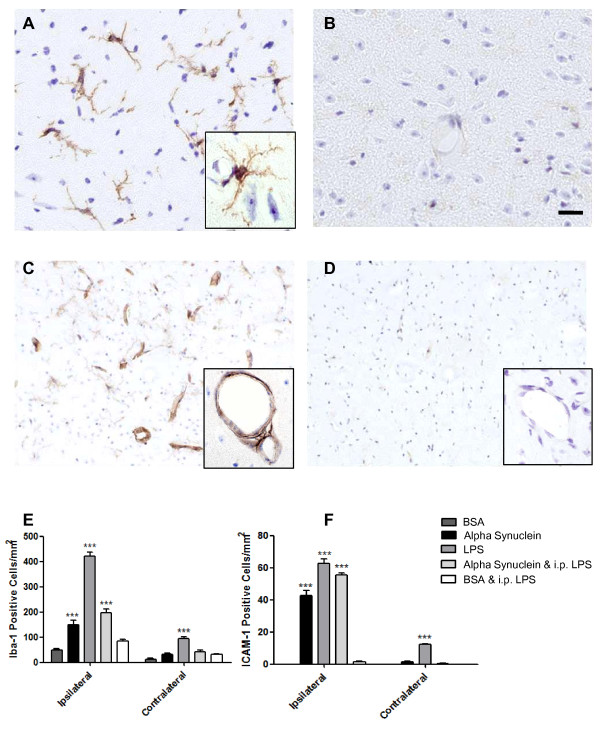
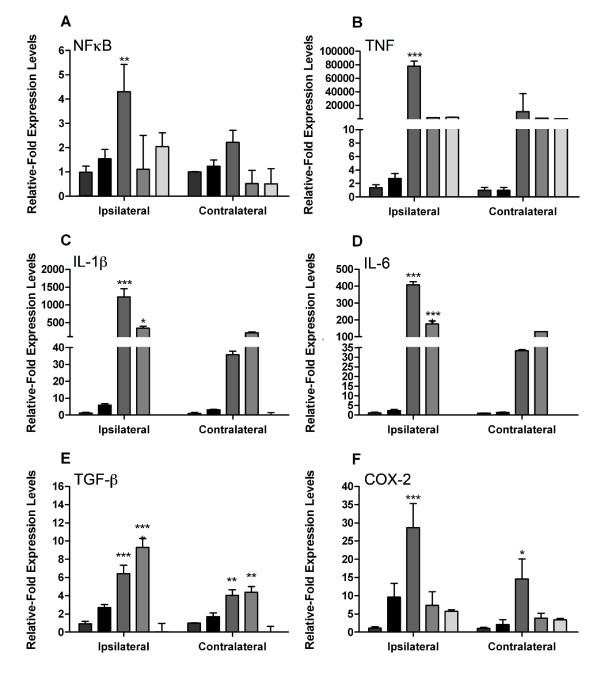
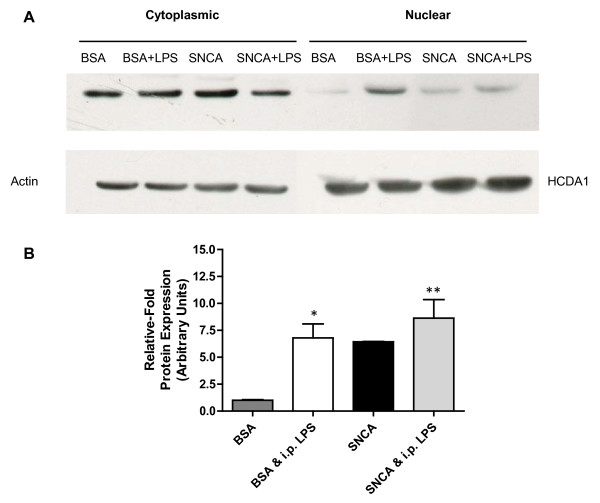
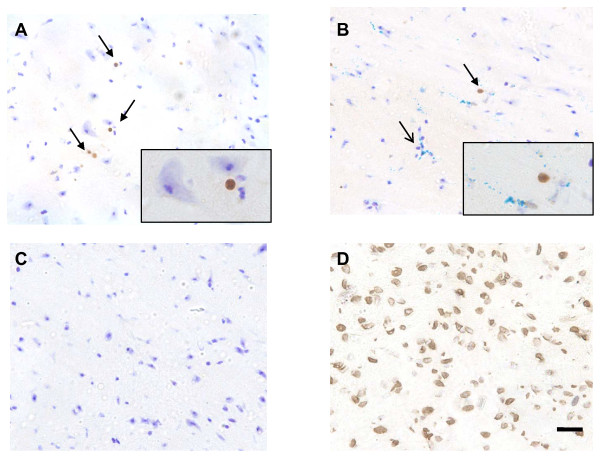
Background: Activated microglia are a feature of the host response to neurodegeneration in Parkinson's disease (PD) and are thought to contribute to disease progression. Recent evidence suggests that extracellular α-synuclein (eSNCA) may play an important role in the pathogenesis of PD and that this may be mediated by a microglial response. Methods: We wished to discover whether the host response to eSNCA would be sufficient to induce significant cytokine production. In vitro cultured BV-2 microglia were used to determine the basic inflammatory response to eSNCA. In vivo , 8-week old Biozzi mice were subjected to a single intranigral injection of either 3 μg SNCA, lipopolysaccharide (LPS) or serum protein (BSA) and allowed to recover for 24 hours. A second cohort of animals were peripherally challenged with LPS (0.5 mg/kg) 6 hours prior to tissue collection. Inflammation was studied by quantitative real-time PCR for a number of pro-inflammatory genes and immunohistochemistry for microglial activation, endothelial activation and cell death. Results: In vitro data showed a robust microglial response to SNCA, including a positive NFĸB response and the production of pro-inflammatory cytokines. Direct injection of SNCA into the substantia nigra resulted in the upregulation of mRNA expression of proinflammatory cytokines, the expression of endothelial markers of inflammation and microglial activation. However, these results were significantly different to those obtained after direct injection of LPS. By contrast, when the animals were injected intracerebrally with SNCA and subsequently challenged with systemic LPS, the level of production of IL-1β in the substantia nigra became comparable to that induced by the direct injection of LPS into the brain. The injection of albumin into the nigra with a peripheral LPS challenge did not provoke the production of a significant inflammatory response. Direct injection of LPS into the substantia nigra also induces cell death in a more robust manner than direct injection of either SNCA or BSA. Conclusion: These results suggest that the presence of eSNCA protein 'primes' microglia, making them susceptible to environmental proinflammatory challenge. For this reason, we hypothesise that where 'inflammation' contributes to the disease progression in PD, it does so in a punctuate manner (on-off) as a result of systemic events.
Overview
The claims and statistics of this paper haven’t been checked yet.
Run the check — free, no account needed. It reads the open-access text and checks the sources it cites.
Integrity signals
Registry
Cites
Statistics
Figures
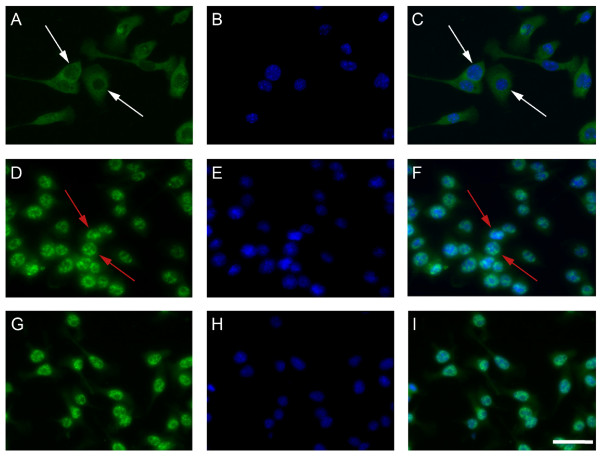
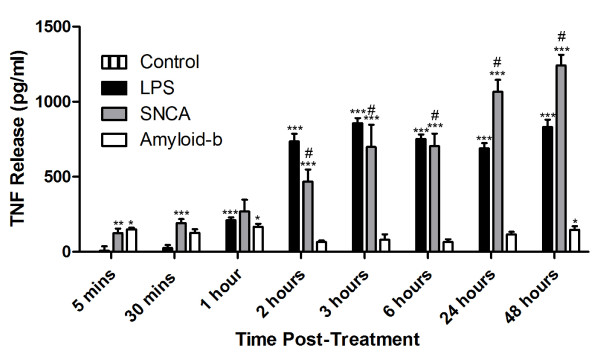
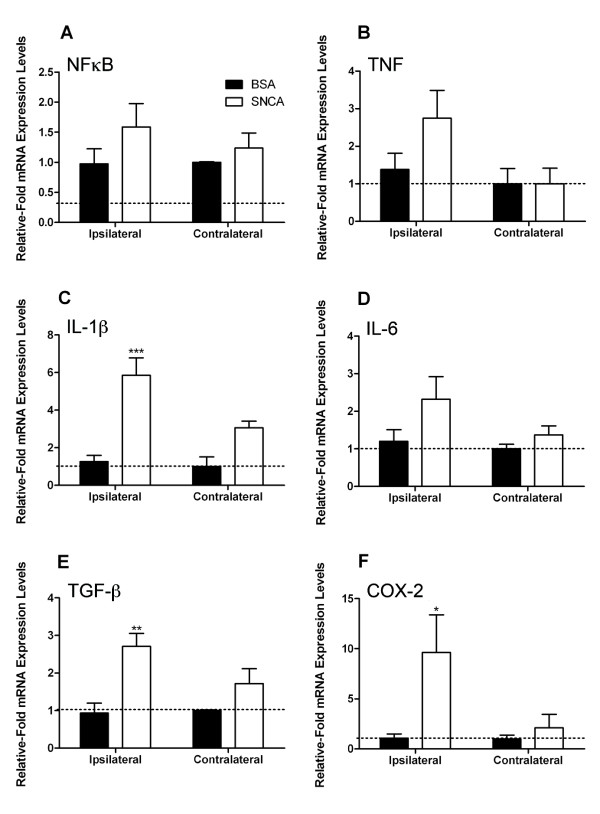
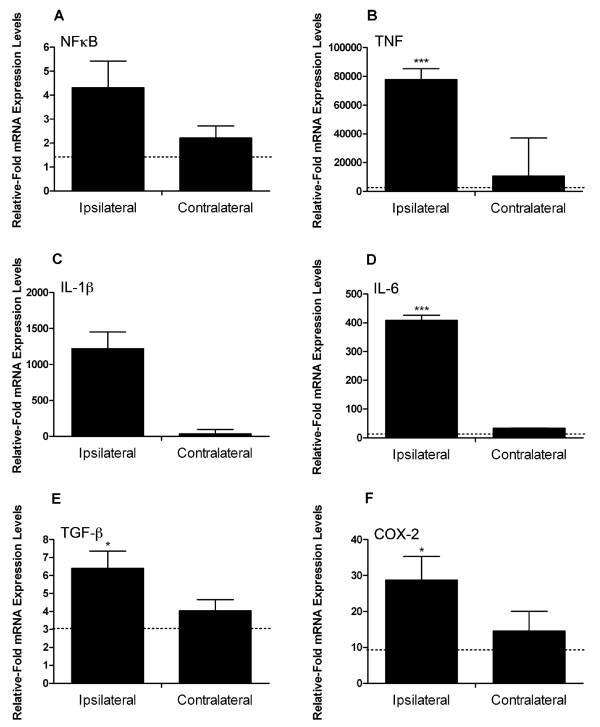
Verification
Claims the paper makes
The claims and statistics of this paper haven’t been checked yet.
Run the check — free, no account needed. It reads the open-access text and checks the sources it cites.
Claims other papers make about this one
Each is checked against this paper’s own text: does it say what the citing paper says it does?
In the citing paper
“Direct injection of LPS into the rodent brain is sufficient to induce neuronal loss [44, 46].”
From The endotoxin hypothesis of neurodegeneration (2019) · cites this paper as [46]
Self-check
Percentages, sums and reported differences re-computed from the paper’s own numbers.
The self-check needs the paper’s full text.
Citations
Cites
The mouse brain in stereotaxic coordinates
Konsman, J. (2003) · Psychoneuroendocrinology · doi:10.1016/s0306-4530(03)00088-x · Cited by 16,796
The Mouse Brain in Stereotaxic Coordinates
Paxinos, G. (2001) · Cited by 12,859
Spillantini, M. G., Crowther, R. A., Jakes, R., Hasegawa, M., & Goedert, M. (1998) · Proceedings of the National Academy of Sciences · doi:10.1073/pnas.95.11.6469 · Cited by 2,868
Systemic LPS causes chronic neuroinflammation and progressive neurodegeneration
Qin, L., Wu, X., Block, M. L., Liu, Y., Breese, G. R., Hong, J., Knapp, D. J., & Crews, F. T. (2007) · Glia · doi:10.1002/glia.20467 · Cited by 2,144
Li, J.-Y., Englund, E., Holton, J. L., Soulet, D., Hagell, P., Lees, A. J., Lashley, T., Quinn, N. P., Rehncrona, S., Björklund, A., et al. (2008) · Nature Medicine · doi:10.1038/nm1746 · Cited by 1,845
Zhang, W., Wang, T., Pei, Z., Miller, D. S., Wu, X., Block, M. L., Wilson, B., Zhang, W., Zhou, Y., Hong, J.-S., et al. (2005) · The FASEB Journal · doi:10.1096/fj.04-2751com · Cited by 1,265
Mogi, M., Harada, M., Riederer, P., Narabayashi, H., Fujita, K., & Nagatsu, T. (1994) · Neuroscience Letters · doi:10.1016/0304-3940(94)90746-3 · Cited by 986
Intravesicular Localization and Exocytosis of α-Synuclein and its Aggregates
Lee, H.-J., Patel, S. S., & Lee, S. (2005) · Journal of Neuroscience · doi:10.1523/jneurosci.0692-05.2005 · Cited by 824
Blum-Degena, D., Müller, T., Kuhn, W., Gerlach, M., Przuntek, H., & Riederer, P. (1995) · Neuroscience Letters · doi:10.1016/0304-3940(95)12192-7 · Cited by 801
Cunningham, C., Wilcockson, D. C., Campion, S., Lunnon, K., & Perry, V. H. (2005) · The Journal of Neuroscience · doi:10.1523/jneurosci.2614-05.2005 · Cited by 768
Cited by
Sorted by citations
Items 101–156 of 156
Alpha-synuclein alters the faecal viromes of rats in a gut-initiated model of Parkinson’s disease
Stockdale, S. R., Draper, L. A., O’Donovan, S. M., Barton, W., O’Sullivan, Ó., Volpicelli‐Daley, L. A., Sullivan, A. M., O’Neill, C., & Hill, C. (2021) · Communications Biology · doi:10.1038/s42003-021-02666-1 · Cited by 20
Delgado-Minjares, K. M., Martínez‐Fong, D., Martínez-Dávila, I. A., Bañuelos, C., Gutiérrez-Castillo, M. E., Blanco-Álvarez, V. M., Cárdenas‐Aguayo, M. D. C., Luna‐Muñoz, J., Pacheco‐Herrero, M., & Soto-Rojas, L. O. (2021) · International Journal of Molecular Sciences · doi:10.3390/ijms222111702 · Cited by 20
Current experimental disease-modifying therapeutics for multiple system atrophy
Lemos, M., Wenning, G. K., & Stefanova, N. (2021) · Journal of Neural Transmission · doi:10.1007/s00702-021-02406-z · Cited by 17
Carriere, C. H., Kang, N. H., & Niles, L. P. (2016) · Experimental and Toxicologic Pathology · doi:10.1016/j.etp.2016.12.007 · Cited by 17
Modulating Stress Proteins in Response to Therapeutic Interventions for Parkinson’s Disease
Silvestro, S., Raffaele, I., & Mazzon, E. (2023) · International Journal of Molecular Sciences · doi:10.3390/ijms242216233 · Cited by 19
Chen, Y., Wu, Y., Mesri, M., & Chen, C. (2016) · Medicine · doi:10.1097/md.0000000000002672 · Cited by 19
Prion-like propagation of α-synuclein in the gut-brain axis
Chen, Y., Shao, Q.-H., Yuan, Y., & Chen, N. (2018) · Brain Research Bulletin · doi:10.1016/j.brainresbull.2018.06.002 · Cited by 15
The Impact of microRNAs on Mitochondrial Function and Immunity: Relevance to Parkinson’s Disease
Guedes, B. F. S., Cardoso, S. M., & Esteves, A. R. (2023) · Biomedicines · doi:10.3390/biomedicines11051349 · Cited by 16
Michalak, S., Florczak‐Wyspianska, J., Rybacka-Mossakowska, J., Ambrosius, W., Osztynowicz, K., Baszczuk, A., Kozubski, W. P., & Wysocka, E. (2017) · Oxidative Medicine and Cellular Longevity · doi:10.1155/2017/9703574 · Cited by 15
Special issue commentary: The changing face of inflammation in the brain
Anthony, D. C., & Pitossi, F. J. (2012) · Molecular and Cellular Neuroscience · doi:10.1016/j.mcn.2012.11.005 · Cited by 15
Self-citationKelly, R. L., Bemelmans, A., Joséphine, C., Brouillet, E., McKernan, D. P., & Dowd, E. (2022) · Molecules · doi:10.3390/molecules27020507 · Cited by 14
Cheataini, F., Ballout, N., & Sagheer, T. A. (2023) · Journal of Neuroscience Research · doi:10.1002/jnr.25198 · Cited by 14
Parsafar, S., Aliakbari, F., Seyedfatemi, S. S., Najarzadeh, Z., Hourfar, H., Bardania, H., Farhadpour, M., Mohammadi, M., & Morshedi, D. (2022) · International Journal of Biological Macromolecules · doi:10.1016/j.ijbiomac.2022.03.092 · Cited by 14
Schneider, J. S., Singh, G., Williams, C. K., & Singh, V. (2022) · Molecular and Cellular Neuroscience · doi:10.1016/j.mcn.2022.103729 · Cited by 11
Effects of intravenous immunoglobulin on alpha synuclein aggregation and neurotoxicity
Smith, L. M., Klaver, A. C., Coffey, M. P., Dang, L., & Loeffler, D. A. (2012) · International Immunopharmacology · doi:10.1016/j.intimp.2012.09.007 · Cited by 12
Chailangkarn, T., Tanwattana, N., Jaemthaworn, T., Sriswasdi, S., Wanasen, N., Tangphatsornruang, S., Leetanasaksakul, K., Jantraphakorn, Y., Nawae, W., Chankeeree, P., et al. (2021) · International Journal of Molecular Sciences · doi:10.3390/ijms222111986 · Cited by 12
Immunocompetent brain organoids—microglia enter the stage
Sabaté‐Soler, S., Bernini, M., & Schwamborn, J. C. (2022) · Progress in Biomedical Engineering · doi:10.1088/2516-1091/ac8dcf · Cited by 10
Leucine-rich repeat kinase 2-related functions in GLIA: an update of the last years
Filippini, A., Gennarelli, M., & Russo, I. (2021) · Biochemical Society Transactions · doi:10.1042/bst20201092 · Cited by 12
Disease mechanisms as subtypes: Microbiome
Bonvegna, S., & Cilia, R. (2023) · Handbook of clinical neurology · doi:10.1016/b978-0-323-85555-6.00006-0 · Cited by 8
Yang, P.-N., Chen, W., Lee, J.-W., Lin, C., Chen, Y., Lin, C., Lin, W., Yao, C., Wu, Y., Chang, K., et al. (2023) · Aging · doi:10.18632/aging.204954 · Cited by 7
Infections and Changes in Commensal Bacteria and the Pathogenesis of Parkinson’s Disease
Shannon, K. M. (2022) · Journal of Parkinson s Disease · doi:10.3233/jpd-223271 · Cited by 9
Montilla, M., Pavas-Escobar, N., Guatibonza-Arévalo, I. M., Múnera, A., Rivera-Melo, R. E., & Ruiz, F. A. (2025) · Biomolecules · doi:10.3390/biom15081060 · Cited by 7
Guan, S., Lu, T., Li, L., Zhang, Y., Huang, C., Li, C., Li, B., Hu, J., & Wan, C. (2025) · Journal of Neuroinflammation · doi:10.1186/s12974-025-03582-5 · Cited by 7
Li, Y., Yu, C., Jiang, X., Fu, J., Sun, N., & Zhang, D. (2024) · Pathology - Research and Practice · doi:10.1016/j.prp.2024.155349 · Cited by 9
Immunological aspects of Parkinson's disease
Belova, O. V., Arefieva, T. I., & Moskvina, S. N. (2020) · S S Korsakov Journal of Neurology and Psychiatry · doi:10.17116/jnevro2020120021110 · Cited by 8
α‐Synuclein activates innate immunity but suppresses interferon‐γ expression in murine astrocytes
Wang, J., Chen, Z., Walston, J. D., Gao, P., Gao, M., & Leng, S. X. (2018) · European Journal of Neuroscience · doi:10.1111/ejn.13956 · Cited by 6
Couch, Y., Davis, A. E. M., Sá-Pereira, I., Campbell, S. J., & Anthony, D. C. (2014) · Journal of Neuroinflammation · doi:10.1186/s12974-014-0178-3 · Cited by 6
Self-citationOxidative Stress in Parkinson’s Disease: Role in Neurodegeneration and Targets for Therapeutics
Banerjee, R., Kaidery, N. A., & Thomas, B. (2015) · ACS symposium series · doi:10.1021/bk-2015-1200.ch005 · Cited by 7
Neuroinflammation in Alzheimer's, Parkinson's and Huntington's Diseases
Sastre, M., Katsouri, L., Birch, A. M., Renziehausen, A., Dexter, D. T., Crichton, R. R., & Ward, R. J. (2014) · Wiley eBooks · doi:10.1002/9781118406557.ch6 · Cited by 6
Yeman-Kıyak, B., Yurdakul, T., Selim, A., Elibol, B., Avşar, T., Neğiş, Y., Sürmen, M. G., Şeyhali-Abutayeh, R., Akbayır, R., Eren, M. C., et al. (2025) · Inflammation · doi:10.1007/s10753-025-02354-w · Cited by 5
Effects of common functional MMP12 gene polymorphisms on PD in a Polish population
Białecka, M. A., Kurzawski, M., Vlaykova, T. I., Tacheva, T., Dziedziejko, V., Pierzchlińska, A., & Droździk, M. (2017) · Neurologia i Neurochirurgia Polska · doi:10.1016/j.pjnns.2017.06.001 · Cited by 5
Potential Role of Aminoprocalcitonin in the Pathogenesis of Alzheimer Disease
Tavares, E., Antequera, D., López‐González, I., Ferrer, I., Miñano, F. J., & Carro, E. (2016) · American Journal Of Pathology · doi:10.1016/j.ajpath.2016.06.006 · Cited by 5
Unlocking the Secrets of Lrrk2 Function With Selective Kinase Inhibitors
Dzamko, N. L., & Halliday, G. M. (2013) · Future Neurology · doi:10.2217/fnl.13.9 · Cited by 4
Mitochondria at the Base of Neuronal Innate Immunity in Alzheimer’s and Parkinson’s Diseases
Esteves, A. R., Silva, D. F., Santos, D., Candeias, E., Filipe, F., & Cardoso, S. M. (2018) · InTech eBooks · doi:10.5772/intechopen.72612 · Cited by 4
Pereira, M. D. S., Bel, E. D., Raisman‐Vozari, R., Michel, P. P., González‐Lizárraga, F., Ferreira‐Junior, N. C., Francis, N., Ramírez, P., & Chehín, R. N. (2021) · doi:10.22541/au.162144021.19509352/v1 · Cited by 4
Coronin1A Regulates the Trafficking of Alpha Synuclein in Microglia
Biggs, K. E., Fikse, E. N., Anderson, F. L., Kettenbach, A. N., & Havrda, M. C. (2025) · Journal of Neuroscience · doi:10.1523/jneurosci.1337-24.2025 · Cited by 4
TLR4 in Neurodegenerative Diseases: Alzheimer’s and Parkinson’s Diseases
Balducci, C., & Forloni, G. (2020) · Progress in inflammation research · doi:10.1007/978-3-030-56319-6_7 · Cited by 4
Razia, R., Majeed, F., Amin, R., Mukhtar, S. M., Mahmood, K., Abualait, T., Bashir, S., & Baig, D. N. (2023) · PLoS ONE · doi:10.1371/journal.pone.0285022 · Cited by 5
Role of the Gut Microbiome and Bacterial Amyloids in the Development of Synucleinopathies
Trubitsina, N. P., Matiiv, A. B., Rogoza, T. M., Zudilova, A. A., Bezgina, M. D., Zhouravleva, G. A., & Bondarev, S. A. (2024) · Biochemistry (Moscow) · doi:10.1134/s0006297924030118 · Cited by 2
Role of the Innate and Adaptive Immune System in the Pathogenesis of PD
Kannarkat, G. T., & Tansey, M. G. (2014) · Springer eBooks · doi:10.1007/978-3-319-08046-8_3 · Cited by 2
Parkinson's disease: A chronic systemic inflammatory disorder
Khan, H., & Benskey, M. J. (2025) · Handbook of behavioral neuroscience · doi:10.1016/b978-0-443-21992-4.00006-3 · Cited by 1
Is Chronic Systemic Inflammation a Determinant Factor in Developing Parkinson’s Disease?
Ugalde‐Muñiz, P., Pérez‐Hernández, J., & Chavarría, A. (2016) · InTech eBooks · doi:10.5772/62955 · Cited by 1
Changes in the Immune System in Parkinson’s Disease
Romero‐Ramos, M. (2017) · Springer eBooks · doi:10.1007/978-3-319-64597-1_150-1 · Cited by 1
The Effect of Systemic Inflammation on Cognitive Function and Neurodegenerative Disease
Cunningham, C. M., & Skelly, D. (2021) · Cambridge University Press eBooks · doi:10.1017/9781108539623.010 · Cited by 1
Role of Microglia in Parkinson’s Disease Pathology
Ciolac, D., & González‐Escamilla, G. (2024) · Neuromethods · doi:10.1007/978-1-0716-4083-8_4 · Cited by 1
Ovallath, S., & Sulthana, B. (2018) · Annals of Movement Disorders · doi:10.4103/aomd.aomd_4_18 · Cited by 1
Couch, Y. (2025) · bioRxiv (Cold Spring Harbor Laboratory) · doi:10.1101/2025.05.13.653696 · Cited by 1
Self-citationThe Effects of Rifampicin on Neuronal Survival
Yurtsever, İ., & Emekli‐Alturfan, E. (2020) · Experimed · doi:10.26650/experimed.2019.19025
Immunoinflammatory Aspects of Parkinson’s Disease
Belova, O. V., Arefieva, T. I., & Moskvina, S. N. (2020) · Neuroscience and Behavioral Physiology · doi:10.1007/s11055-020-01014-w
Rotenone Could Activate Microglia Through NFjB Associated Pathway
YuanJian-dong, Y.-H., Wu, S.-M., & HuShan-ying, J.-F. (2013)
Changes in the Immune System in Parkinson’s Disease
Romero‐Ramos, M. (2019) · Springer eBooks · doi:10.1007/978-3-319-99375-1_150
Role of the Gut Microbiome and Bacterial Amyloids in the Development of Synucleinopathies (Review)
Trubitsina, N. P., Matiiv, A. B., Rogoza, T. M., Zudilova, A. A., Bezgina, M. D., Zhouravleva, G. A., & Bondarev, S. A. (2024) · Biochemistry (Moscow) · doi:10.31857/s0320972524030089
Rovere, G., Matas, Y. C., Vidal‐Villegas, B., Bernal-Garro, J. M., Sobrado‐Calvo, P., Salinas-Navarro, M., Nucci, C., Villegas‐Pérez, M. P., Vidal‐Sanz, M., Agudo‐Barriuso, M., et al. (2026) · International Journal of Molecular Sciences · doi:10.3390/ijms27031502
Étude moléculaire de l'inflammation chronique dans la maladie de Parkinson
Compagnion, A. (2019) · theses.fr (ABES) · doi:10.70675/04ca138dz3131z4e24z884czbba2f7954a99
Pakkhesal, S., Leilabadi, S. P., Hamzehzadeh, S., Zare, F., Gholipour-khalili, E., Malekinejad, F., Fakhkhari, S., Talebi, M., & Naseri, A. (2026) · Parkinson s Disease · doi:10.1155/padi/6914112
Metadata
- Authors
- Couch, Y., Alvarez-Erviti, L., Sibson, N. R., Wood, M. J., & Anthony, D. C.
- Affiliations
- University of Oxford (GB)
- Churchill Hospital (GB)
- Corresponding author
- Couch, Yvonne
- Sibson, Nicola R
- Wood, Matthew JA
- Anthony, Daniel C
- Venue
- Journal of Neuroinflammation
- Published
- 2011-11-28
- Volume
- 8
- Issue
- 1
- Pages
- 166-166
- ISSN
- 1742-2094 (ISSN-L)
- PMC
- PMC3239418
- OpenAlex
- W2064344027
- Semantic Scholar
- 8d36da2a381f6e870ef72f2ae121c4a93eb5d6ac
- Cited by
- 155
- References
- 48
- Citations by year
- 2026: 3 · 2025: 7 · 2024: 4 · 2023: 8 · 2022: 15 · 2021: 18 · 2020: 13 · 2019: 10 · 2018: 10 · 2017: 15 · 2016: 12 · 2015: 8 · 2014: 15 · 2013: 10 · 2012: 7
- FWCI
- 5.40
- Type
- journal article
- Language
- en
- Open access
- gold
- doi.org
- Licence
- cc-by
- Locations
- Journal of Neuroinflammation (publishedVersion, cc-by)
- Europe PMC (PubMed Central) (publishedVersion, cc-by)
- PubMed Central (publishedVersion, cc-by)
- PubMed (publishedVersion)
- DOAJ (DOAJ: Directory of Open Access Journals) (submittedVersion)
- UCL Discovery (University College London) (submittedVersion)
- Funders
- Biotechnology and Biological Sciences Research Council
- Topics
- Life Sciences › Neuroscience › Neurology › Neuroinflammation and Neurodegeneration Mechanisms
- Health Sciences › Medicine › Clinical Neurology › Parkinson's Disease Mechanisms and Treatments
- Life Sciences › Biochemistry, Genetics and Molecular Biology › Molecular Biology › Nuclear Receptors and Signaling
- Keywords
- extracellular alpha-synuclein, Parkinson's disease, microglial activation, neuroinflammation, lipopolysaccharide, substantia nigra, inflammatory cytokines, IL-1β, NF-κB, peripheral inflammation, microglial priming, neuronal cell death, endothelial activation, BV-2 cells, neurodegeneration
- MeSH terms
- Animals, Cell Line, Female, Inflammation, Lipopolysaccharides, Parkinson Disease, Serum Albumin, Substantia Nigra, Tumor Necrosis Factor-alpha, Cytokines, Amyloid beta-Peptides, Cell Death, Microglia, Mice, alpha-Synuclein, Transcription Factor RelA, Interleukin-1beta
About these checks
Registry, retraction, Cites and statistics results are computed, not judged, with one exception: a printed reference that no index lists is read once by a model before it counts as a citation error. Claims are extracted by a model and kept only when their quote appears verbatim in the text; each cited source is then checked, with a model’s help, for whether it says what the claim relies on. Those verdicts can be wrong — read the claim’s quote and the cited source before relying on one.
Statistics and arithmetic are recomputed, not judged.
Confidence bands are shown only for fields calibrated on our annotated test set. None is calibrated yet, so no band is shown.
What counts as a claim ›How we measure confidence ›How we check this ›
Are you an author, or do you see a problem with this page? Request a review
