

The DOI matches its Crossref record; 57 of the 57 references it cites were found in a registry or an index.
Loss of the receptor tyrosine kinase Axl leads to enhanced inflammation in the CNS and delayed removal of myelin debris during Experimental Autoimmune Encephalomyelitis
Open accessAbstract
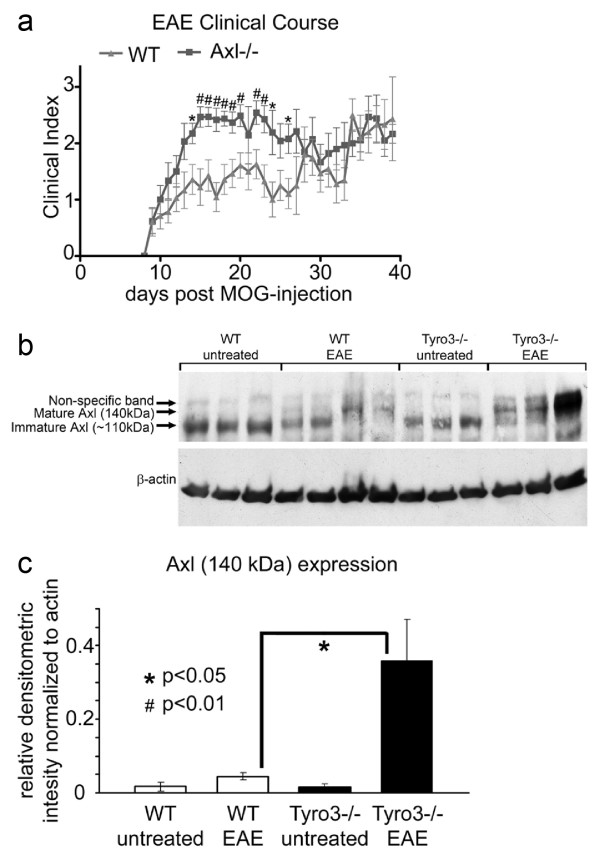
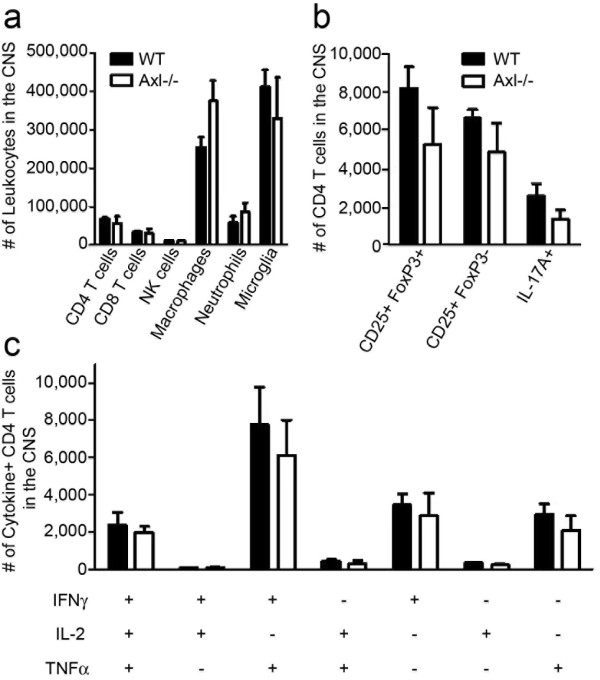
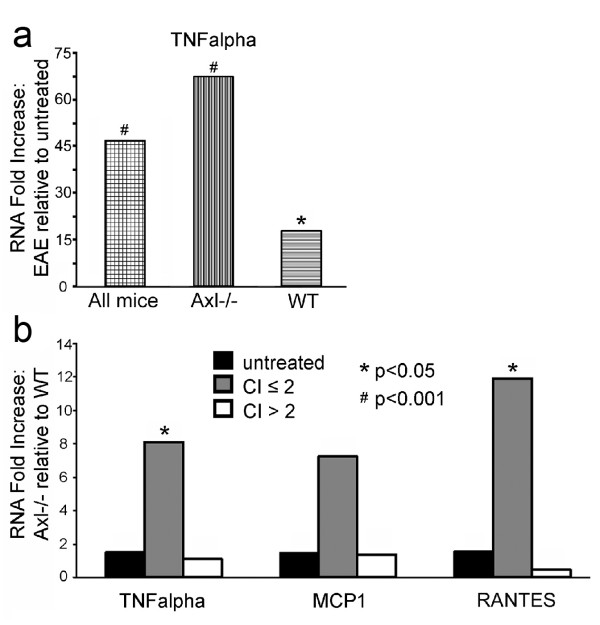
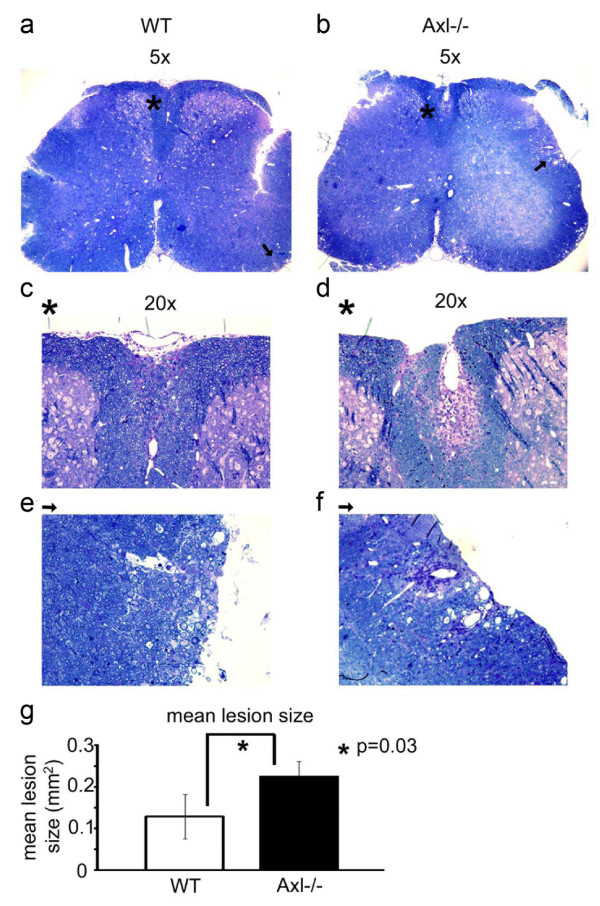
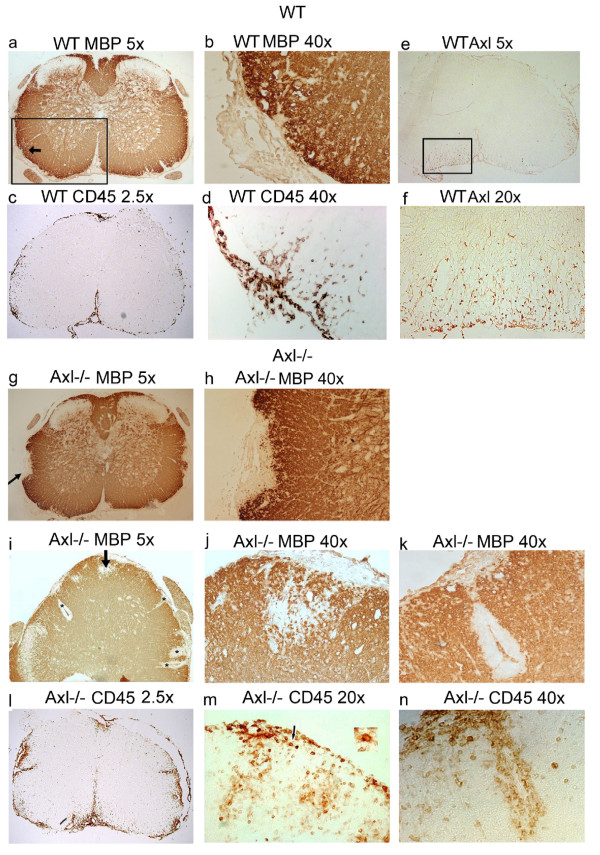
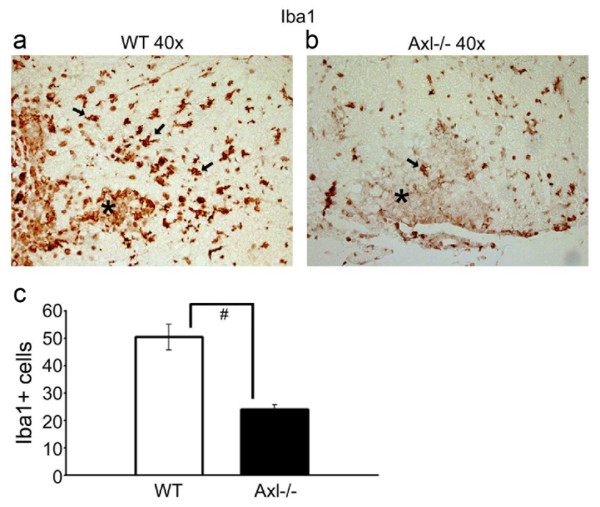
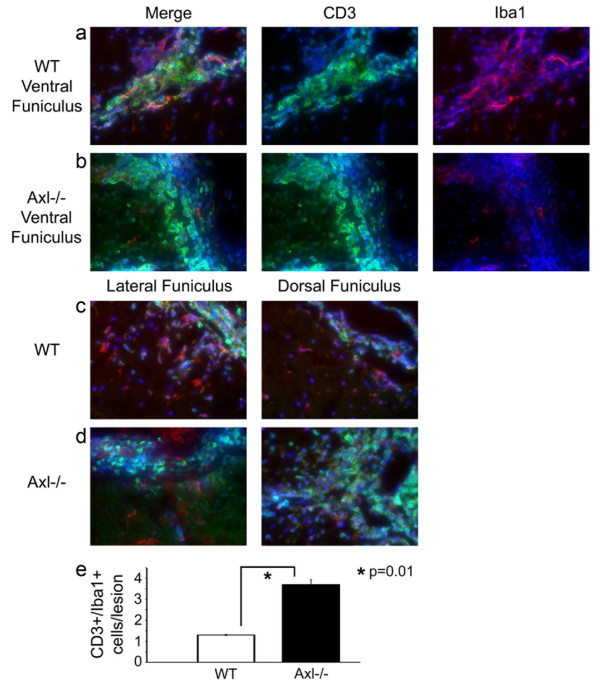
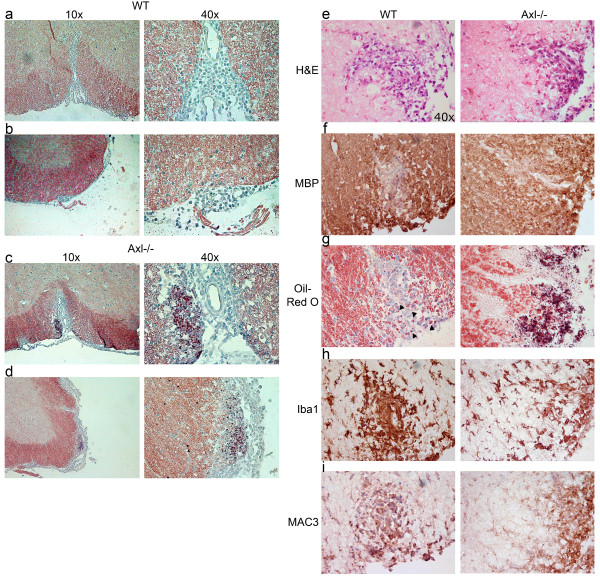
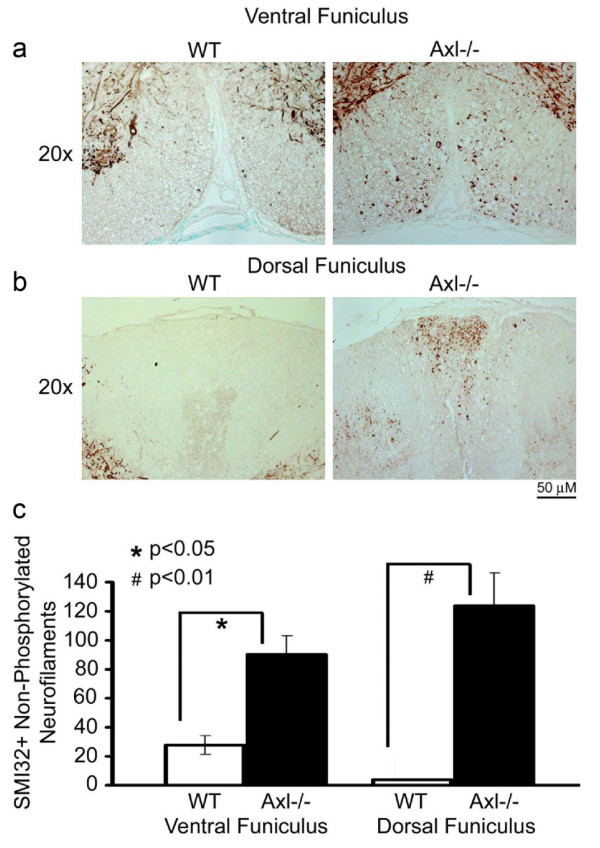
BACKGROUND: Axl, together with Tyro3 and Mer, constitute the TAM family of receptor tyrosine kinases. In the nervous system, Axl and its ligand Growth-arrest-specific protein 6 (Gas6) are expressed on multiple cell types. Axl functions in dampening the immune response, regulating cytokine secretion, clearing apoptotic cells and debris, and maintaining cell survival. Axl is upregulated in various disease states, such as in the cuprizone toxicity-induced model of demyelination and in multiple sclerosis (MS) lesions, suggesting that it plays a role in disease pathogenesis. To test for this, we studied the susceptibility of Axl-/- mice to experimental autoimmune encephalomyelitis (EAE), an animal model for multiple sclerosis. METHODS: WT and Axl-/- mice were immunized with myelin oligodendrocyte glycoprotein (MOG)35-55 peptide emulsified in complete Freund's adjuvant and injected with pertussis toxin on day 0 and day 2. Mice were monitored daily for clinical signs of disease and analyzed for pathology during the acute phase of disease. Immunological responses were monitored by flow cytometry, cytokine analysis and proliferation assays. RESULTS: Axl-/- mice had a significantly more severe acute phase of EAE than WT mice. Axl-/- mice had more spinal cord lesions with larger inflammatory cuffs, more demyelination, and more axonal damage than WT mice during EAE. Strikingly, lesions in Axl-/- mice had more intense Oil-Red-O staining indicative of inefficient clearance of myelin debris. Fewer activated microglia/macrophages (Iba1+) were found in and/or surrounding lesions in Axl-/- mice relative to WT mice. In contrast, no significant differences were noted in immune cell responses between naïve and sensitized animals. CONCLUSIONS: These data show that Axl alleviates EAE disease progression and suggests that in EAE Axl functions in the recruitment of microglia/macrophages and in the clearance of debris following demyelination. In addition, these data provide further support that administration of the Axl ligand Gas6 could be therapeutic for immune-mediated demyelinating diseases.
Overview
The claims and statistics of this paper haven’t been checked yet.
Run the check — free, no account needed. It reads the open-access text and checks the sources it cites.
Integrity signals
Registry
Cites
Statistics
Figures
Verification
Claims the paper makes
The claims and statistics of this paper haven’t been checked yet.
Run the check — free, no account needed. It reads the open-access text and checks the sources it cites.
Claims other papers make about this one
Each is checked against this paper’s own text: does it say what the citing paper says it does?
The source backs part of the claim, not all of it — or backs it for a different population, condition or comparison.
In the citing paper
“Furthermore, microglia at both 14 and 21 dpi up-regulated genes critical for the uptake and degradation of cellular and myelin debris, such as Apoe, Clec7a, and Axl (41–43).”
From Microglia depletion exacerbates demyelination and impairs remyelination in a neurotropic coronavirus infection (2020) · cites this paper as [43]
Experimental — accuracy not yet measuredThe cited source says what the claim attributes to it.
In the citing paper
“In particular, the clearance of myelin debris by microglia is believed to be critically required to limit neuronal damage in EAE (Cignarella et al., 2020; Takahashi et al., 2007; Weinger et al., 2011).”
From SYK coordinates neuroprotective microglial responses in neurodegenerative disease (2022) · cites this paper as Weinger et al., 2011
Self-check
Percentages, sums and reported differences re-computed from the paper’s own numbers.
The self-check needs the paper’s full text.
Citations
Cites
Cleavage of Structural Proteins during the Assembly of the Head of Bacteriophage T4
LAEMMLI, U. K. (1970) · Nature · doi:10.1038/227680a0 · Cited by 249,961
Towbin, H., Staehelin, T., & Gordon, J. (1979) · Proceedings of the National Academy of Sciences · doi:10.1073/pnas.76.9.4350 · Cited by 53,218
Microglia: Active sensor and versatile effector cells in the normal and pathologic brain
Hanisch, U.-K., & Kettenmann, H. (2007) · Nature Neuroscience · doi:10.1038/nn1997 · Cited by 3,676
Bethke, T. D. (2012) · Der Pneumologe · doi:10.1007/s10405-012-0601-3 · Cited by 3,286
Phagocytosis and clearance of apoptotic cells is mediated by MER
Scott, R. S., McMahon, E. J., Pop, S. M., Reap, E. A., Caricchio, R., Cohen, P. L., Earp, H. S., & Matsushima, G. K. (2001) · Nature · doi:10.1038/35075603 · Cited by 1,215
Microglia: Intrinsic immuneffector cell of the brain
Gehrmann, J., Matsumoto, Y., & Kreutzberg, G. W. (1995) · Brain Research Reviews · doi:10.1016/0165-0173(94)00015-h · Cited by 1,111
Debris clearance by microglia: an essential link between degeneration and regeneration
Neumann, H., Kotter, M. R., & Franklin, R. J. M. (2008) · Brain · doi:10.1093/brain/awn109 · Cited by 1,111
Injection of adult neurospheres induces recovery in a chronic model of multiple sclerosis
Pluchino, S., Quattrini, A., Brambilla, E., Gritti, A., Salani, G., Dina, G., Galli, R., Carro, U. D., Amadio, S., Bergami, A., et al. (2003) · Nature · doi:10.1038/nature01552 · Cited by 1,071
Immunobiology of the TAM receptors
Lemke, G., & Rothlin, C. V. (2008) · Nature reviews. Immunology · doi:10.1038/nri2303 · Cited by 893
Kuhlmann, T., Lingfeld, G., Bitsch, A., Schuchardt, J., & Brück, W. (2002) · Brain : a journal of neurology · doi:10.1093/brain/awf235 · Cited by 851
Tumor necrosis factor identified in multiple sclerosis brain.
Hofman, F. M., Hinton, D. R., Johnson, K. P., & Merrill, J. E. (1989) · The Journal of Experimental Medicine · doi:10.1084/jem.170.2.607 · Cited by 801
The adhesion molecule and cytokine profile of multiple sclerosis lesions
Cannella, B., & Raine, C. S. (1995) · Annals of Neurology · doi:10.1002/ana.410370404 · Cited by 759
O’Bryan, J. P., Frye, R. A., Cogswell, P. C., Neubauer, A., Kitch, B., Prokop, C. A., Espinosa, R., Beau, M. M. L., Earp, H. S., & Liu, E. (1991) · Molecular and Cellular Biology · doi:10.1128/mcb.11.10.5016 · Cited by 746
Identification of lymphotoxin and tumor necrosis factor in multiple sclerosis lesions.
Selmaj, K. W., Raine, C. S., Cannella, B., & Brosnan, C. F. (1991) · Journal of Clinical Investigation · doi:10.1172/jci115102 · Cited by 726
Homeostatic Regulation of the Immune System by Receptor Tyrosine Kinases of the Tyro 3 Family
Lu, Q., & Lemke, G. (2001) · Science · doi:10.1126/science.1061663 · Cited by 699
Manfioletti, G., Brancolini, C., Avanzi, G. C., & Schneider, C. (1993) · Molecular and Cellular Biology · doi:10.1128/mcb.13.8.4976 · Cited by 585
Neuroinflammatory processes in Alzheimer’s disease
Heneka, M. T., O’Banion, M. K., Terwel, D., & Kummer, M. P. (2010) · Journal of Neural Transmission · doi:10.1007/s00702-010-0438-z · Cited by 433
Seitz, H., Camenisch, T. D., Lemke, G., Earp, H. S., & Matsushima, G. K. (2007) · The Journal of Immunology · doi:10.4049/jimmunol.178.9.5635 · Cited by 403
Rieckmann, P., Albrecht, M., Kitze, B., Weber, T., Tumani, H., Broocks, A., Lüer, W., Helwig, A., & Poser, S. (1995) · Annals of Neurology · doi:10.1002/ana.410370115 · Cited by 334
Camenisch, T. D., Koller, B. H., Earp, H. S., & Matsushima, G. K. (1999) · PubMed · Cited by 321
Cloning and mRNA expression analysis of a novel human protooncogene, c-mer.
Graham, D. K., Dawson, T. L., Mullaney, D. L., Snodgrass, H. R., & Earp, H. S. (1994) · PubMed · Cited by 302
Camenisch, T. D., Koller, B. H., Earp, H. S., & Matsushima, G. K. (1999) · The Journal of Immunology · doi:10.4049/jimmunol.162.6.3498 · Cited by 290
Wujek, J. R., Bjartmar, C., Richer, E., Ransohoff, R. M., Yu, M., Tuohy, V. K., & Trapp, B. D. (2002) · Journal of Neuropathology & Experimental Neurology · doi:10.1093/jnen/61.1.23 · Cited by 289
CXCR3-Dependent Microglial Recruitment Is Essential for Dendrite Loss after Brain Lesion
Rappert, A., Bechmann, I., Pivneva, T., Mahlo, J., Biber, K., Nolte, C., Kovac, A. D., Gerard, C., Boddeke, H. W. G. M., Nitsch, R., et al. (2004) · The Journal of Neuroscience · doi:10.1523/jneurosci.2451-04.2004 · Cited by 259
Expression of MCP-1 by Reactive Astrocytes in Demyelinating Multiple Sclerosis Lesions
Voorn, P. V. D., Tekstra, J., Beelen, R. H. J., Tensen, C. P., van der Valk, P., & Groot, C. J. A. D. (1999) · American Journal Of Pathology · doi:10.1016/s0002-9440(10)65249-2 · Cited by 258
Role of microglia in the central nervous system's immune response
Streit, W. J., Conde, J. R., Fendrick, S. E., Flanary, B. E., & Mariani, C. L. (2005) · Neurological Research · doi:10.1179/016164105x49463a · Cited by 258
A novel putative tyrosine kinase receptor with oncogenic potential.
Janssen, J. W. G., Schulz, A. S., Steenvoorden, A. C. M., Schmidberger, M., Strehl, S., Ambros, P. F., & Bartram, C. R. (1991) · PubMed · Cited by 254
Twist mediates suppression of inflammation by type I IFNs and Axl
Sharif, M. N., Šošić, D., Rothlin, C. V., Kelly, E., Lemke, G., Olson, E. N., & Ivashkiv, L. B. (2006) · The Journal of Experimental Medicine · doi:10.1084/jem.20051725 · Cited by 251
Vajkoczy, P., Knyazev, P. G., Kunkel, A., Capelle, H., Behrndt, S., von Tengg‐Kobligk, H., Kiessling, F. M., Eichelsbacher, U., Essig, M., Read, T., et al. (2006) · Proceedings of the National Academy of Sciences · doi:10.1073/pnas.0510923103 · Cited by 239
O’Bryan, J. P., Fridell, Y.-W. C., Koski, R. K., Varnum, B. C., & Liu, E. T. (1995) · Journal of Biological Chemistry · doi:10.1074/jbc.270.2.551 · Cited by 166
Microglia, the first line of defence in brain pathologies.
Kreutzberg, G. W. (1995) · PubMed · Cited by 164
The biology of CNS remyelination
Franklin, R. J. M., & Kotter, M. (2008) · Journal of Neurology · doi:10.1007/s00415-008-1004-6 · Cited by 163
Remy, C. C., Fouilhé, N., Barba, I., Lai, E. S., Lahrech, H., Cucurella, M., Izquierdo, M., Moreno, A., Ziegler, A., MASSARELLI, R., et al. (1997) · PubMed · Cited by 140
dos Santos, A. C., Barsante, M. M., Arantes, R. M. E., Bernard, C. C. A., Teixeira, M. M., & Tavares, J. C. (2005) · Journal of Neuroimmunology · doi:10.1016/j.jneuroim.2005.01.020 · Cited by 138
Binder, M. D., Cate, H. S., Prieto, A. L., Kemper, D., Butzkueven, H., Gresle, M. M., Cipriani, T., Jokubaitis, V. G., Carmeliet, P., & Kilpatrick, T. J. (2008) · The Journal of Neuroscience · doi:10.1523/jneurosci.1180-08.2008 · Cited by 138
Chen, L., & Brosnan, C. F. (2006) · The Journal of Immunology · doi:10.4049/jimmunol.176.5.3115 · Cited by 135
Mueller, K. L., Hunter, L. A., Ethier, S. P., & Boerner, J. L. (2008) · Cancer Research · doi:10.1158/0008-5472.can-08-0132 · Cited by 131
Allen, M. P., Linseman, D. A., Udo, H., Xu, M., Schaack, J. B., Varnum, B. C., Kandel, E. R., Heidenreich, K. A., & Wierman, M. E. (2002) · Molecular and Cellular Biology · doi:10.1128/mcb.22.2.599-613.2002 · Cited by 131
Prieto, A. L., Weber, J. L., Tracy, S., Heeb, M. J., & Lai, C. (1999) · Brain Research · doi:10.1016/s0006-8993(98)01159-7 · Cited by 116
Weinger, J. G., Omari, K. M., Marsden, K. C., Raine, C. S., & Shafit‐Zagardo, B. (2009) · American Journal Of Pathology · doi:10.2353/ajpath.2009.080807 · Cited by 110
Glabinski, A. R., Tuohy, V. K., & Ransohoff, R. M. (1998) · NeuroImmunoModulation · doi:10.1159/000026333 · Cited by 106
Roles of tumor necrosis factor p55 and p75 receptors in TNF-α-induced vascular permeability
Ferrero, E., Zocchi, M. R., Magni, E., Panzeri, C., Curnis, F., Rugarli, C., Ferrero, M. E., & Corti, A. (2001) · American Journal of Physiology-Cell Physiology · doi:10.1152/ajpcell.2001.281.4.c1173 · Cited by 99
MR properties of rat sciatic nerve following trauma
Stanisz, G. J., Midha, R., Munro, C. A., & Henkelman, R. M. (2001) · Magnetic Resonance in Medicine · doi:10.1002/1522-2594(200103)45:3 · Cited by 96
Jia, R., & Hanafusa, H. (1994) · Journal of Biological Chemistry · doi:10.1016/s0021-9258(17)42103-x · Cited by 95
Shankar, S. L., O’Guin, K., Cammer, M., McMorris, F. A., Stitt, T. N., Basch, R. S., Varnum, B. C., & Shafit‐Zagardo, B. (2003) · Journal of Neuroscience · doi:10.1523/jneurosci.23-10-04208.2003 · Cited by 95
Funakoshi, H., Yonemasu, T., Nakano, T., Matumoto, K., & Nakamura, T. (2002) · Journal of Neuroscience Research · doi:10.1002/jnr.10211 · Cited by 92
TNFα induces expression of the chemoattractant cytokine RANTES in cultured mouse mesangial cells
Wolf, G., Aberle, S. W., Thaiss, F., Nelson, P. J., Krensky, A. M., Neilson, E. G., & Stahl, R. A. K. (1993) · Kidney International · doi:10.1038/ki.1993.314 · Cited by 91
Bertenshaw, G. P., Yip, P. F., Seshaiah, P., Zhao, J., Chen, T., Wiggins, W. S., Mapes, J. P., & Mansfield, B. C. (2008) · Cancer Epidemiology Biomarkers & Prevention · doi:10.1158/1055-9965.epi-08-0464 · Cited by 82
Urogenital distribution of a mouse membrane-associated prostaglandin E2synthase
Guan, Y., Zhang, Y., Schneider, A., Riendeau, D., Mancini, J. A., Davis, L. S., Kömhoff, M., BREYER, R. M., & Breyer, M. D. (2001) · American Journal of Physiology-Renal Physiology · doi:10.1152/ajprenal.0116.2001 · Cited by 78
Venkataswamy, M. M., Baena, A., Goldberg, M. F., Bricard, G., Im, J. S., Chan, J., Reddington, F., Besra, G. S., Jacobs, W. R., & Porcelli, S. A. (2009) · The Journal of Immunology · doi:10.4049/jimmunol.0900858 · Cited by 76
Axl−/− mice have delayed recovery and prolonged axonal damage following cuprizone toxicity
Hoehn, H. J., Kress, Y., Sohn, A. S. W., Brosnan, C. F., Bourdon, S., & Shafit‐Zagardo, B. (2008) · Brain Research · doi:10.1016/j.brainres.2008.08.076 · Cited by 64
Chen, Y., Chiang, W., Lin, S., Wu, K., Tsai, T., & Hsieh, B. (2004) · Journal of Pharmacology and Experimental Therapeutics · doi:10.1124/jpet.103.062620 · Cited by 63
Sainaghi, P. P., Collimedaglia, L., Alciato, F., Leone, M. A., Puta, E., Naldi, P., Castello, L. M., Monaco, F., & Avanzi, G. C. (2008) · Journal of the Neurological Sciences · doi:10.1016/j.jns.2008.01.005 · Cited by 27
Regulation and possible function of axl expression in immature human mast cells
Heide, I., Sokoll, A., Henz, B. M., Nagel, S., Kreißig, K., Grützkau, A., Grabbe, J., Wittig, B., & Neubauer, A. (1998) · Annals of Hematology · doi:10.1007/s002770050443 · Cited by 19
Fyn Phosphorylates Human MAP-2c on Tyrosine 67
Zamora-León, S. P., Bresnick, A. R., Backer, J., & Shafit‐Zagardo, B. (2004) · Journal of Biological Chemistry · doi:10.1074/jbc.m411380200 · Cited by 16
Pitfalls in the detection of lipid vectors in neural cell culture and in brain tissue
Rizk, T., Montero‐Menei, C. N., Jollivet, C., Benoît, J., & Meneï, P. (2003) · Journal of Biomedical Materials Research Part A · doi:10.1002/jbm.a.20060 · Cited by 11
Tanuma, N., Abe, S., Shin, T., Kojima, T., Ishihara, Y., Arai, Y. O., Toyoshima, S., & Matsumoto, Y. (1996) · Cellular Immunology · doi:10.1006/cimm.1996.0052 · Cited by 4
Cited by
Sorted by citations
Phagocytosis of apoptotic cells in homeostasis
Arandjelovic, S., & Ravichandran, K. S. (2015) · Nature Immunology · doi:10.1038/ni.3253 · Cited by 959
The TAM family: phosphatidylserine-sensing receptor tyrosine kinases gone awry in cancer
Graham, D. K., DeRyckere, D., Davies, K. D., & Earp, H. S. (2014) · Nature reviews. Cancer · doi:10.1038/nrc3847 · Cited by 717
Holtman, I. R., Raj, D. D., Miller, J. A., Schaafsma, W., Yin, Z., Brouwer, N., Wes, P. D., Möller, T., Orre, M., Kamphuis, W., et al. (2015) · Acta Neuropathologica Communications · doi:10.1186/s40478-015-0203-5 · Cited by 619
Lemke, G. (2013) · Cold Spring Harbor Perspectives in Biology · doi:10.1101/cshperspect.a009076 · Cited by 598
TAM Receptor Signaling in Immune Homeostasis
Rothlin, C. V., Silva, E. A. C., Bosurgi, L., & Ghosh, S. (2015) · Annual Review of Immunology · doi:10.1146/annurev-immunol-032414-112103 · Cited by 531
Metadata
- Authors
- Weinger, J. G., Brosnan, C. F., Loudig, O., Goldberg, M. F., Macian, F., Arnett, H. A., Prieto, A. L., Tsiperson, V., & Shafit-Zagardo, B.
- Affiliations
- Albert Einstein College of Medicine (US)
- Amgen (United States) (US)
- Indiana University Bloomington (US)
- Venue
- Journal of Neuroinflammation
- Published
- 2011-05-15
- Volume
- 8
- Issue
- 1
- Pages
- 49-49
- ISSN
- 1742-2094 (ISSN-L)
- PMC
- PMC3121615
- OpenAlex
- W2081982964
- Cited by
- 134
- References
- 57
- Citations by year
- 2026: 9 · 2025: 14 · 2024: 10 · 2023: 9 · 2022: 9 · 2021: 10 · 2020: 15 · 2019: 10 · 2018: 13 · 2017: 5 · 2016: 10 · 2015: 6 · 2014: 9 · 2013: 3 · 2012: 2
- FWCI
- 3.14
- Type
- journal article
- Language
- en
- Open access
- gold
- doi.org
- Licence
- cc-by
- Locations
- Journal of Neuroinflammation (publishedVersion, cc-by)
- PubMed Central (publishedVersion, cc-by)
- PubMed (publishedVersion)
- DOAJ (DOAJ: Directory of Open Access Journals) (submittedVersion)
- eScholarship (California Digital Library) (submittedVersion)
- Funders
- National Multiple Sclerosis Society
- Multiple Sclerosis Society
- National Institutes of Health
- National Institute of General Medical Sciences (GM 07491, T32GM007491)
- National Institute of Allergy and Infectious Diseases (R01AI059738)
- National Institute of Neurological Disorders and Stroke (R21NS061128)
- Topics
- Health Sciences › Medicine › Clinical Neurology › Multiple Sclerosis Research Studies
- Life Sciences › Immunology and Microbiology › Immunology › Phagocytosis and Immune Regulation
- Life Sciences › Neuroscience › Neurology › Neuroinflammation and Neurodegeneration Mechanisms
- Keywords
- AXL receptor tyrosine kinase, TAM receptors, Gas6, experimental autoimmune encephalomyelitis, multiple sclerosis, demyelination, myelin debris clearance, neuroinflammation, myelin oligodendrocyte glycoprotein, axonal injury
- MeSH terms
- Axl Receptor Tyrosine Kinase, Animals, Central Nervous System, Encephalomyelitis, Autoimmune, Experimental, Glycoproteins, Inflammation, Macrophages, Myelin Sheath, Peptide Fragments, Proto-Oncogene Proteins, Cytokines, Microglia, Mice, Knockout, Receptor Protein-Tyrosine Kinases, Mice, Myelin-Oligodendrocyte Glycoprotein
About these checks
Registry, retraction, Cites and statistics results are computed, not judged, with one exception: a printed reference that no index lists is read once by a model before it counts as a citation error. Claims are extracted by a model and kept only when their quote appears verbatim in the text; each cited source is then checked, with a model’s help, for whether it says what the claim relies on. Those verdicts can be wrong — read the claim’s quote and the cited source before relying on one.
Statistics and arithmetic are recomputed, not judged.
Confidence bands are shown only for fields calibrated on our annotated test set. None is calibrated yet, so no band is shown.
What counts as a claim ›How we measure confidence ›How we check this ›
Are you an author, or do you see a problem with this page? Request a review
