

Lipopolysaccharide impairs amyloid beta efflux from brain: altered vascular sequestration, cerebrospinal fluid reabsorption, peripheral clearance and transporter function at the blood–brain barrier
Open accessThe DOI matches its Crossref record; 73 of the 73 references it cites were found in a registry or an index.
Abstract
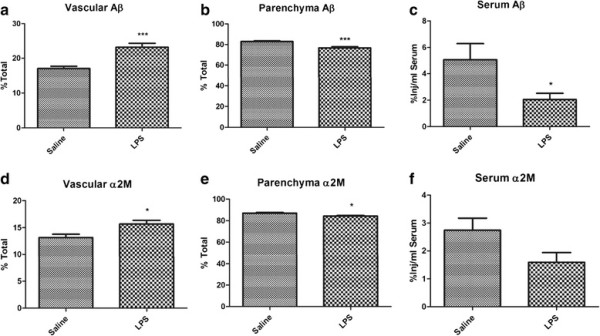
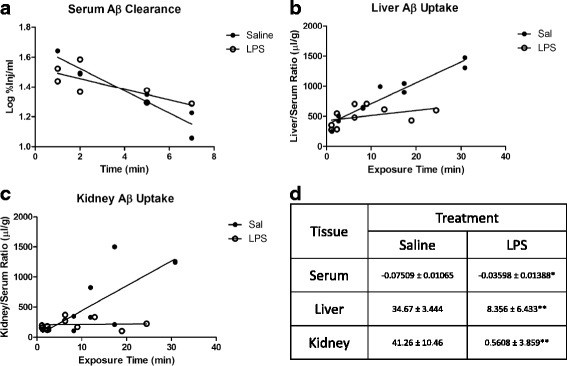
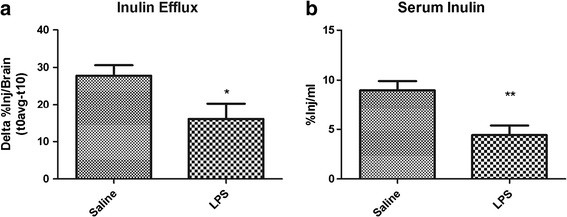
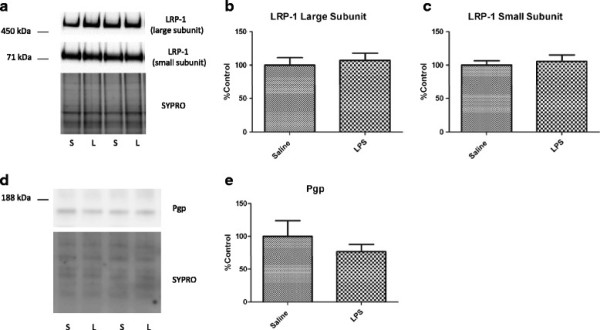
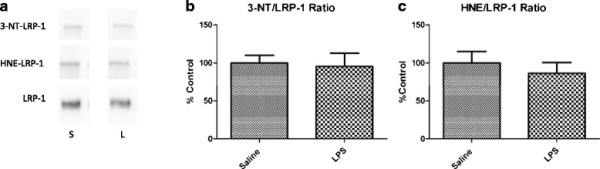
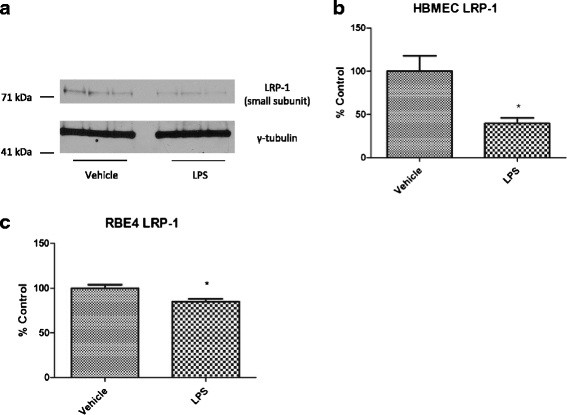
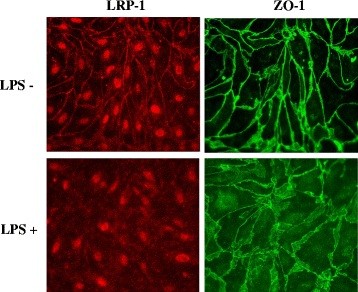
Background: Defects in the low density lipoprotein receptor-related protein-1 (LRP-1) and p-glycoprotein (Pgp) clearance of amyloid beta (Aβ) from brain are thought to contribute to Alzheimer’s disease (AD). We have recently shown that induction of systemic inflammation by lipopolysaccharide (LPS) results in impaired efflux of Aβ from the brain. The same treatment also impairs Pgp function. Here, our aim is to determine which physiological routes of Aβ clearance are affected following systemic inflammation, including those relying on LRP-1 and Pgp function at the blood–brain barrier. Methods: CD-1 mice aged between 6 and 8 weeks were treated with 3 intraperitoneal injections of 3 mg/kg LPS at 0, 6, and 24 hours and studied at 28 hours.125 I-Aβ 1-42 or 125 I-alpha-2-macroglobulin injected into the lateral ventricle of the brain (intracerebroventricular (ICV)) or into the jugular vein (intravenous (IV)) was used to quantify LRP-1-dependent partitioning between the brain vasculature and parenchyma and peripheral clearance, respectively. Disappearance of ICV-injected 14 C-inulin from brain was measured to quantify bulk flow of cerebrospinal fluid (CSF). Brain microvascular protein expression of LRP-1 and Pgp was measured by immunoblotting. Endothelial cell localization of LRP-1 was measured by immunofluorescence microscopy. Oxidative modifications to LRP-1 at the brain microvasculature were measured by immunoprecipitation of LRP-1 followed by immunoblotting for 4-hydroxynonenal and 3-nitrotyrosine. Results: We found that LPS: caused an LRP-1-dependent redistribution of ICV-injected Aβ from brain parenchyma to brain vasculature and decreased entry into blood; impaired peripheral clearance of IV-injected Aβ; inhibited reabsorption of CSF; did not significantly alter brain microvascular protein levels of LRP-1 or Pgp, or oxidative modifications to LRP-1; and downregulated LRP-1 protein levels and caused LRP-1 mislocalization in cultured brain endothelial cells. Conclusions: These results suggest that LRP-1 undergoes complex functional regulation following systemic inflammation which may depend on cell type, subcellular location, and post-translational modifications. Our findings that systemic inflammation causes deficits in both Aβ transport and bulk flow like those observed in AD indicate that inflammation could induce and promote the disease.
Overview
The claims and statistics of this paper haven’t been checked yet.
Free: it reads the open-access text and checks the first 5 claims that cite a source we can check. Create a free account to check every claim.
Integrity signals
Registry
Cites
Statistics
Figures
Verification
Claims the paper makes
The claims and statistics of this paper haven’t been checked yet.
Free: it reads the open-access text and checks the first 5 claims that cite a source we can check. Create a free account to check every claim.
Claims other papers make about this one
Each is checked against this paper’s own text: does it say what the citing paper says it does?
In the citing paper
“In addition, LPS impedes Aβ clearance by increasing the vascular sequestration of Aβ, reducing the bulk flow of cerebrospinal fluid and impairing Aβ transport across the BBB.238”
From Antiageing strategy for neurodegenerative diseases: from mechanisms to clinical advances (2025) · cites this paper as [238]
Self-check
Percentages, sums and reported differences re-computed from the paper’s own numbers.
The self-check needs the paper’s full text.
Citations
Cites
The Amyloid Hypothesis of Alzheimer’s Disease: Progress and Problems on the Road to Therapeutics
Hardy, J., & Selkoe, D. J. (2002) · Science · doi:10.1126/science.1072994 · Cited by 13,864
THE PREPARATION OF 131I-LABELLED HUMAN GROWTH HORMONE OF HIGH SPECIFIC RADIOACTIVITY
GREENWOOD, F., HUNTER, W., & GLOVER, J. (1963) · Biochemical Journal · doi:10.1042/bj0890114 · Cited by 10,152 · cited 1×
“Using the chloramine-T method [41], 5 μg of Aβ, albumin, or a2M was labeled with 0.”
MethodInflammation and Alzheimer’s disease
Akiyama, H. (2000) · Neurobiology of Aging · doi:10.1016/s0197-4580(00)00124-x · Cited by 4,514
Graphical Evaluation of Blood-to-Brain Transfer Constants from Multiple-Time Uptake Data
Patlak, C. S., Blasberg, R. G., & Fenstermacher, J. D. (1983) · Journal of Cerebral Blood Flow & Metabolism · doi:10.1038/jcbfm.1983.1 · Cited by 3,567 · cited 1×
“The rate of I-Aβ tissue uptake was determined using multiple-time regression analysis [43].”
2013 Alzheimer's disease facts and figures
Alzheimer's Association, Thies, W., & Bleiler, L. (2013) · Alzheimer's & Dementia · doi:10.1016/j.jalz.2013.02.003 · Cited by 3,328
RAGE mediates amyloid-β peptide transport across the blood-brain barrier and accumulation in brain
Deane, R., Du Yan, S., Submamaryan, R. K., LaRue, B., Jovanovic, S., Hogg, E., Welch, D., Manness, L., Lin, C., Yu, J., et al. (2003) · Nature Medicine · doi:10.1038/nm890 · Cited by 1,611 · cited 8×
“First, the receptor for advanced glycation endproducts (RAGE) has been identified as an influx transporter for Aβ [18].”
BackgroundInfluentialShibata, M., Yamada, S., Kumar, S. R., Calero, M., Bading, J., Frangione, B., Holtzman, D. M., Miller, C. A., Strickland, D. K., Ghiso, J., et al. (2000) · Journal of Clinical Investigation · doi:10.1172/jci10498 · Cited by 1,413 · cited 6×
“Other groups have shown LRP-1-dependent efflux of human forms of Aβ across the BBB [4,50], however, we have observed that murine Aβ1-42 also undergoes LRP-1-dependent BBB transport and is cleared at a faster rate across the murine BBB than human Aβ1-42 [7,51].”
BackgroundMethodInfluentialMolecular inflammation: Underpinnings of aging and age-related diseases
Chung, H. Y., Cesari, M., Anton, S., Marzetti, E., Giovannini, S., Seo, A. Y., Carter, C., Yu, B. P., & Leeuwenburgh, C. (2009) · Ageing Research Reviews · doi:10.1016/j.arr.2008.07.002 · Cited by 1,203 · cited 1×
“Because low-grade systemic inflammation is associated with many other diseases which have been considered comorbidities in AD [69], similar comparative studies would be useful in determining unifying pathological events at the neurovascular unit or related to brain fluid dynamics which would contribute to impaired Aβ…”
2011 Alzheimer's disease facts and figures
Alzheimer's Association (2011) · Alzheimer's & Dementia · doi:10.1016/j.jalz.2011.02.004 · Cited by 908
Multiplicity of cerebrospinal fluid functions: new challenges in health and disease
Johanson, C. E., Duncan, J. A., Klinge, P. M., Brinker, T., Stopa, E. G., & Silverberg, G. D. (2008) · Cerebrospinal Fluid Research · doi:10.1186/1743-8454-5-10 · Cited by 861
LRP/Amyloid β-Peptide Interaction Mediates Differential Brain Efflux of Aβ Isoforms
Deane, R., Wu, Z., Sagare, A., Davis, J., Du Yan, S., Hamm, K., Xu, F., Parisi, M., LaRue, B., Hu, H. W., et al. (2004) · Neuron · doi:10.1016/j.neuron.2004.07.017 · Cited by 828
Lee, J. W., Lee, Y. K., Yuk, D. Y., Choi, D. Y., Ban, S. B., Oh, K. W., & Hong, J. T. (2008) · Journal of Neuroinflammation · doi:10.1186/1742-2094-5-37 · Cited by 772
Bell, R. D., Sagare, A. P., Friedman, A. E., Bedi, G. S., Holtzman, D. M., Deane, R., & Zlokovic, B. V. (2007) · Journal of Cerebral Blood Flow & Metabolism · doi:10.1038/sj.jcbfm.9600419 · Cited by 670 · cited 1×
“This would not, however, be due to mechanisms that decrease binding interactions between Aβ and LRP-1 such as ligand competition [58,59] because this would be expected to decrease vascular partitioning.”
BackgroundCirrito, J. R. (2005) · Journal of Clinical Investigation · doi:10.1172/jci25247 · Cited by 660 · cited 1×
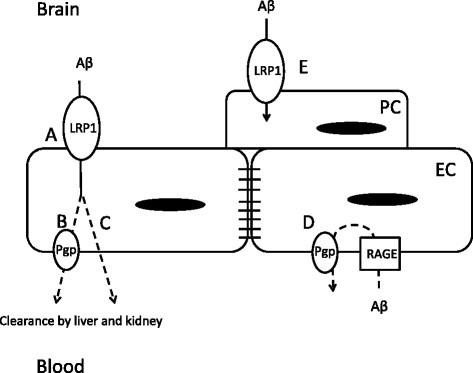
“Growing evidence also supports a role of a second efflux transporter, p-glycoprotein (Pgp), in Aβ efflux across the BBB [10].”
CD14 and Toll-Like Receptors 2 and 4 Are Required for Fibrillar Aβ-Stimulated Microglial Activation
Reed-Geaghan, E. G., Savage, J. C., Hise, A. G., & Landreth, G. E. (2009) · The Journal of Neuroscience · doi:10.1523/jneurosci.3158-09.2009 · Cited by 591 · cited 1×
“Aβ causes inflammation in the brain through Toll-like receptor and complement activation [21-23].”
BackgroundButterfield, D. A., Reed, T., Newman, S. F., & Sultana, R. (2007) · Free Radical Biology and Medicine · doi:10.1016/j.freeradbiomed.2007.05.037 · Cited by 564 · cited 1×
“Oligomeric Aβ1-42 can also cause oxidative stress by integrating into membranes and catalytically generating the lipid peroxidation product, 4-hydroxynonenal (HNE) [24], and through activation of the ROS-generating enzyme NADPH oxidase in microglia [25].”
BackgroundSelf-citationRAGE, LRP-1, and amyloid-beta protein in Alzheimer’s disease
Donahue, J. E., Flaherty, S. L., Johanson, C. E., Duncan, J. A., Silverberg, G. D., Miller, M. C., Tavares, R., Yang, W., Wu, Q., Sabo, E., et al. (2006) · Acta Neuropathologica · doi:10.1007/s00401-006-0115-3 · Cited by 519 · cited 2×
“A large body of work from multiple groups has shown that the lowdensity lipoprotein receptor-related protein-1 (LRP-1) transports Aβ across the BBB in the brain-to-blood direction, and becomes deficient in AD [4-8].”
BackgroundTriguero, D., Buciak, J., & Pardridge, W. M. (1990) · Journal of Neurochemistry · doi:10.1111/j.1471-4159.1990.tb04886.x · Cited by 460 · cited 2×
“To characterize the defect in Aβ transport by brain vasculature, the method of capillary depletion was applied which is routinely used to determine whether circulating compounds are sequestered by brain endothelial cells [42].”
MethodTLR2 Is a Primary Receptor for Alzheimer’s Amyloid β Peptide To Trigger Neuroinflammatory Activation
Liu, S., Liu, Y., Hao, W., Wolf, L., Kiliaan, A. J., Penke, B., Rübe, C. E., Walter, J., Heneka, M. T., Hartmann, T., et al. (2012) · The Journal of Immunology · doi:10.4049/jimmunol.1101121 · Cited by 439 · cited 1×
“Aβ causes inflammation in the brain through Toll-like receptor and complement activation [21-23].”
BackgroundClearance and binding of two electrophoretic “fast” forms of human alpha 2-macroglobulin.
Imber, M. J., & Pizzo, S. V. (1981) · Journal of Biological Chemistry · doi:10.1016/s0021-9258(18)43398-4 · Cited by 398 · cited 1×
“2 M methylamine overnight at room temperature as described previously [40].”
MethodSheng, J. (2003) · Neurobiology of Disease · doi:10.1016/s0969-9961(03)00069-x · Cited by 388
Altered cytokine production in the elderly
Rink, L., Cakman, I., & Kirchner, H. (1998) · Mechanisms of Ageing and Development · doi:10.1016/s0047-6374(97)00153-x · Cited by 378
Perrière, N., Demeuse, P., Garcia, E., Regina, A., Debray, M., Andreux, J. ‐., Couvreur, P., Scherrmann, J. ‐., Temsamani, J., Couraud, P. ‐., et al. (2005) · Journal of Neurochemistry · doi:10.1111/j.1471-4159.2004.03020.x · Cited by 330 · cited 1×
“Louis, MO, USA), basic fibroblast growth factor (bFGF, Roche Applied Sciences, Indianapolis, IN, USA, 1 ng/ml), heparin (100 μg/ml), insulin (5 μg/ml), transferrin (5 μg/ml), sodium selenite (5 ng/ml) (insulin-transferrin-sodium selenite media supplement), and gentamicin (50 μg/ml) at 37 °C with a humidified atmospher…”
Methodβ-Amyloid Activates the O⨪2 Forming NADPH Oxidase in Microglia, Monocytes, and Neutrophils
Della Bianca, V., Dusi, S., Bianchini, E., Dal Prà, I., & Rossi, F. (1999) · Journal of Biological Chemistry · doi:10.1074/jbc.274.22.15493 · Cited by 324 · cited 1×
“Oligomeric Aβ1-42 can also cause oxidative stress by integrating into membranes and catalytically generating the lipid peroxidation product, 4-hydroxynonenal (HNE) [24], and through activation of the ROSgenerating enzyme NADPH oxidase in microglia [25].”
BackgroundHartz, A. M. S., Miller, D. S., & Bauer, B. (2010) · Molecular Pharmacology · doi:10.1124/mol.109.061754 · Cited by 318 · cited 4×
“The model presented here, in line with a recently reported model [11], starts with extracellular Aβ first coming into contact with LRP-1 on the abluminal side of the brain endothelial cell (Figure 8a).”
BackgroundResultInfluentialJaeger, L. B., Dohgu, S., Sultana, R., Lynch, J. L., Owen, J. B., Erickson, M. A., Shah, G. N., Price, T. O., Fleegal-Demotta, M. A., Butterfiled, D. A., et al. (2009) · Brain, Behavior, and Immunity · doi:10.1016/j.bbi.2009.01.017 · Cited by 281 · cited 4×
“reported that peripheral administration of LPS inhibits Aβ efflux transport out of the brain [32].”
BackgroundMethodResultInfluentialSelf-citationZlokovic, B. V., Deane, R., Sagare, A. P., Bell, R. D., & Winkler, E. A. (2010) · Journal of Neurochemistry · doi:10.1111/j.1471-4159.2010.07002.x · Cited by 261
Erickson, M. A., & Banks, W. A. (2011) · Brain, Behavior, and Immunity · doi:10.1016/j.bbi.2011.06.006 · Cited by 261 · cited 1×
“Because Aβ is produced under normal physiological conditions, and our data utilizes an acute model of systemic inflammation [66], it may be that the mechanistic differences observed for Aβ efflux deficiency in inflammation and AD represent components of a physiological process.”
BackgroundSelf-citationSRF and myocardin regulate LRP-mediated amyloid-β clearance in brain vascular cells
Bell, R. D., Deane, R., Chow, N., Long, X., Sagare, A., Singh, I., Streb, J. W., Guo, H., Rubio, A., Van Nostrand, W., et al. (2009) · Nature Cell Biology · doi:10.1038/ncb1819 · Cited by 261 · cited 2×
“and vascular smooth muscle cells could contribute to vascular partitioning [60,61] because these cells remain”
BackgroundKovac, A., Erickson, M. A., & Banks, W. A. (2011) · Journal of Neuroinflammation · doi:10.1186/1742-2094-8-139 · Cited by 227 · cited 2×
“This is opposite to the effect we recently reported for primary cultured pericytes, which upregulate LRP-1 in response to LPS [48].”
BackgroundResultSelf-citationSystemic Catabolism of Alzheimer's Aβ40 and Aβ42
Ghiso, J., Shayo, M., Calero, M., Ng, D., Tomidokoro, Y., Gandy, S., Rostagno, A., & Frangione, B. (2004) · Journal of Biological Chemistry · doi:10.1074/jbc.m407668200 · Cited by 209
Neniskyte, U., Neher, J. J., & Brown, G. C. (2011) · Journal of Biological Chemistry · doi:10.1074/jbc.m111.267583 · Cited by 208 · cited 1×
“Modest, transient upregulation of Aβ in the brain may serve as an antioxidant defense [30] and promote clearance of damaged cells in the brain by microglia [31].”
BackgroundHartz, A. M., Bauer, B., Fricker, G., & Miller, D. S. (2006) · Molecular Pharmacology · doi:10.1124/mol.105.017954 · Cited by 203
Coisne, C., Dehouck, L., Faveeuw, C., Delplace, Y., Miller, F., Landry, C., Morissette, C., Fenart, L., Cecchelli, R., Tremblay, P., et al. (2005) · Laboratory Investigation · doi:10.1038/labinvest.3700281 · Cited by 183 · cited 1×
“Primary cultures of mouse brain capillary endothelial cells (MBECs) were isolated from 8-week-old CD1 mice according to published protocols [45] with modifications.”
MethodThe critical component to establish in vitro BBB model: Pericyte
Lai, C.-H., & Kuo, K.-H. (2005) · Brain Research Reviews · doi:10.1016/j.brainresrev.2005.07.004 · Cited by 182 · cited 1×
“Mechanical preparations of isolated brain microvessels include pericytes, due to their juxtaposition to endothelial cells [49].”
BackgroundKontush, A. (2001) · Free Radical Biology and Medicine · doi:10.1016/s0891-5849(01)00688-8 · Cited by 177 · cited 2×
“Modest, transient upregulation of Aβ in the brain may serve as an antioxidant defense [30] and promote clearance of damaged cells in the brain by microglia [31].”
BackgroundABC efflux transporters in brain vasculature of Alzheimer's subjects
Wijesuriya, H. C., Bullock, J. Y., Faull, R. L. M., Hladky, S. B., & Barrand, M. A. (2010) · Brain Research · doi:10.1016/j.brainres.2010.08.034 · Cited by 152
The Choroid Plexus Removes β-Amyloid from Brain Cerebrospinal Fluid
Crossgrove, J. S., Li, G. J., & Zheng, W. (2005) · Experimental Biology and Medicine · doi:10.1177/153537020523001011 · Cited by 149 · cited 1×
“Epithelial cells of the choroid plexus have saturable transport systems for Aβ [53], and LRP-1 at the choroid plexus participates in the clearance of Aβ from the CSF [54].”
Backgroundγ-Secretase Limits the Inflammatory Response Through the Processing of LRP1
Zurhove, K., Nakajima, C., Herz, J., Bock, H. H., & May, P. (2008) · Science Signaling · doi:10.1126/scisignal.1164263 · Cited by 145 · cited 2×
“macrophages and neurons [33,34].”
BackgroundLRP1 mediates bidirectional transcytosis of amyloid-β across the blood-brain barrier
Pflanzner, T., Janko, M. C., André-Dohmen, B., Reuss, S., Weggen, S., Roebroek, A. J. M., Kuhlmann, C. R. W., & Pietrzik, C. U. (2011) · Neurobiology of Aging · doi:10.1016/j.neurobiolaging.2010.05.025 · Cited by 141
A Physiological Role for Amyloid-β Protein: Enhancement of Learning and Memory
Morley, J. E., Farr, S. A., Banks, W. A., Johnson, S. N., Yamada, K. A., & Xu, L. (2010) · Journal of Alzheimer's Disease · doi:10.3233/jad-2010-1230 · Cited by 141 · cited 1×
“stress-response molecule [67], and at physiological levels has neuroprotective properties [30,68].”
BackgroundSelf-citationBoulton, M., Flessner, M., Armstrong, D., Mohamed, R., Hay, J., & Johnston, M. (1999) · American Journal of Physiology-Regulatory, Integrative and Comparative Physiology · doi:10.1152/ajpregu.1999.276.3.r818 · Cited by 139 · cited 1×
“Bulk flow denotes the reabsorption of CSF into peripheral compartments, including the systemic circulation [13].”
BackgroundWilhelmus, M. M. M., Otte-Höller, I., van Triel, J. J. J., Veerhuis, R., Maat-Schieman, M. L. C., Bu, G., de Waal, R. M. W., & Verbeek, M. M. (2007) · The American Journal of Pathology · doi:10.2353/ajpath.2007.070050 · Cited by 138 · cited 2×
“Furthermore, cerebrovascular accumulation of Aβ is cytotoxic [61].”
Relationship of senescence of cerebrospinal fluid circulatory system to dementias of the aged
Rubenstein, E. (1998) · The Lancet · doi:10.1016/s0140-6736(97)09234-9 · Cited by 136 · cited 2×
“CSF/ISF turnover is important for clearing catabolites from the brain, and maintaining an optimal environment for neuronal function [14,52].”
BackgroundJaeger, L. B., Dohgu, S., Hwang, M. C., Farr, S. A., Murphy, M. P., Fleegal-DeMotta, M. A., Lynch, J. L., Robinson, S. M., Niehoff, M. L., Johnson, S. N., et al. (2009) · Journal of Alzheimer's Disease · doi:10.3233/jad-2009-1074 · Cited by 133 · cited 4×
“We have found that this method of Aβ labeling shows specificity for LRP-1-dependent BBB efflux from brain [7].”
BackgroundMethodInfluentialSelf-citationAmyloid-beta transporter expression at the blood-CSF barrier is age-dependent
Pascale, C. L., Miller, M. C., Chiu, C., Boylan, M., Caralopoulos, I. N., Gonzalez, L., Johanson, C. E., & Silverberg, G. D. (2011) · Fluids and Barriers of the CNS · doi:10.1186/2045-8118-8-21 · Cited by 132
Owen, J. B., Sultana, R., Aluise, C. D., Erickson, M. A., Price, T. O., Bu, G., Banks, W. A., & Butterfield, D. A. (2010) · Free Radical Biology and Medicine · doi:10.1016/j.freeradbiomed.2010.09.013 · Cited by 129
Self-citationCandela, P., Gosselet, F., Saint-Pol, J., Sevin, E., Boucau, M.-C., Boulanger, E., Cecchelli, R., & Fenart, L. (2010) · Journal of Alzheimer's Disease · doi:10.3233/jad-2010-100462 · Cited by 128
Tamaki, C., Ohtsuki, S., Iwatsubo, T., Hashimoto, T., Yamada, K., Yabuki, C., & Terasaki, T. (2006) · Pharmaceutical Research · doi:10.1007/s11095-006-0208-7 · Cited by 119 · cited 2×
“Because LRP-1 mediates peripheral clearance of Aβ in liver [17] our findings suggest LRP-1 impairment may be occurring with LPS at peripheral sites.”
BackgroundKheir-Eldin, A. A., Motawi, T. K., Gad, M. Z., & Abdelgawad, H. M. (2001) · The International Journal of Biochemistry & Cell Biology · doi:10.1016/s1357-2725(01)00032-2 · Cited by 118 · cited 1×
“Because increased oxidative stress occurs in brains with systemic inflammation [35] and increased oxidative modifications on LRP1 are found in AD [9], it is also possible that oxidative modifications on LRP-1 contribute to its dysfunction following LPS.”
Cultured human and canine endothelial cells from brain microvessels
Gerhart, D. Z., Broderius, M. A., & Drewes, L. R. (1988) · Brain Research Bulletin · doi:10.1016/0361-9230(88)90047-0 · Cited by 112 · cited 1×
“Isolation of brain microvessels from mice treated with saline or LPS was performed according to a modified protocol [44].”
MethodSutcliffe, J. G., Hedlund, P. B., Thomas, E. A., Bloom, F. E., & Hilbush, B. S. (2011) · Journal of Neuroscience Research · doi:10.1002/jnr.22603 · Cited by 105
(2008) · doi:10.1074/jbc.m801487200 · Cited by 105 · cited 2×
“Because LRP-1 participates in Aβ internalization and transport in vitro [50,60,63], future studies are necessary to determine how these in vitro changes in LRP-1 alter the cellular uptake and transport of Aβ.”
BackgroundInterleukin-1 stimulates the beta-amyloid precursor protein promoter
DONNELLY, R. J., Friedhoff, A. J., Beer, B., Blume, A. J., & Vitek, M. P. (1990) · Cellular and Molecular Neurobiology · doi:10.1007/bf00712843 · Cited by 101
Banks, W. A., Robinson, S. M., Verma, S., & Morley, J. E. (2003) · Neuroscience · doi:10.1016/s0306-4522(03)00474-3 · Cited by 96
Self-citationIto, S., Ohtsuki, S., Kamiie, J., Nezu, Y., & Terasaki, T. (2007) · Journal of Neurochemistry · doi:10.1111/j.1471-4159.2007.04938.x · Cited by 85
Stopping a thief and killer: Alzheimer's disease crisis demands greater commitment to research
Thies, W. H. (2011) · Alzheimer s & Dementia · doi:10.1016/j.jalz.2011.02.002 · Cited by 81
Peripheral Amyloid-β Levels Regulate Amyloid-β Clearance from the Central Nervous System
Marques, M. A., Kulstad, J. J., Savard, C. E., Green, P. S., Lee, S. P., Craft, S., Watson, G. S., & Cook, D. G. (2009) · Journal of Alzheimer's Disease · doi:10.3233/jad-2009-0964 · Cited by 79 · cited 2×
“Second, decreased Aβ clearance from the periphery is associated with impaired efflux [19].”
Oxidative stress up-regulates presenilin 1 in lipid rafts in neuronal cells
Oda, A., Tamaoka, A., & Araki, W. (2010) · Journal of Neuroscience Research · doi:10.1002/jnr.22271 · Cited by 76 · cited 1×
“stress upregulates proteins involved in Aβ production, such as presenilin 1 [29].”
BackgroundSalkeni, M. A., Lynch, J. L., Otamis-Price, T., & Banks, W. A. (2009) · Journal of Neuroimmune Pharmacology · doi:10.1007/s11481-008-9138-y · Cited by 72 · cited 2×
“Although we found no changes in Pgp expression in vivo following LPS, this does not contradict other reports in the literature where Pgp is functionally inhibited despite unchanged or upregulated protein expression [36,37,64,65].”
MethodResultSelf-citationPhosphorylation of LRP1 Regulation of Transport and Signal Transduction
van der Geer, P. (2002) · Trends in Cardiovascular Medicine · doi:10.1016/s1050-1738(02)00154-8 · Cited by 68
Kandimalla, K. K., Curran, G. L., Holasek, S. S., Gilles, E. J., Wengenack, T. M., & Poduslo, J. F. (2005) · Journal of Pharmacology and Experimental Therapeutics · doi:10.1124/jpet.104.081901 · Cited by 63 · cited 1×
“A large body of work from multiple groups has shown that the lowdensity lipoprotein receptor-related protein-1 (LRP-1) transports Aβ across the BBB in the brain-to-blood direction, and becomes deficient in AD [4-8].”
BackgroundFujiyoshi, M., Tachikawa, M., Ohtsuki, S., Ito, S., Uchida, Y., Akanuma, S., Kamiie, J., Hashimoto, T., Hosoya, K., Iwatsubo, T., et al. (2011) · Journal of Neurochemistry · doi:10.1111/j.1471-4159.2011.07311.x · Cited by 58
Erickson, M. A., Niehoff, M. L., Farr, S. A., Morley, J. E., Dillman, L. A., Lynch, K. M., & Banks, W. A. (2012) · Journal of Alzheimer's Disease · doi:10.3233/jad-2011-111517 · Cited by 57
Self-citationPolavarapu, R., An, J., Zhang, C., & Yepes, M. (2008) · American Journal Of Pathology · doi:10.2353/ajpath.2008.070975 · Cited by 52 · cited 1×
“LPS also is known to increase LRP-1 proteolytic processing in macrophages and neurons [33,34].”
BackgroundJin, L., Li, J., Nation, R. L., & Nicolazzo, J. A. (2010) · Antimicrobial Agents and Chemotherapy · doi:10.1128/aac.01273-10 · Cited by 45 · cited 2×
“Many groups have observed decreased functional Pgp in inflammatory models [36-38], including the regimen shown to impair Aβ efflux [7].”
BackgroundMethodPan, W., Yu, C., Hsuchou, H., & Kastin, A. J. (2010) · Cellular Physiology and Biochemistry · doi:10.1159/000315081 · Cited by 39 · cited 2×
“Many groups have observed decreased functional Pgp in inflammatory models [36-38], including the regimen shown to impair Aβ efflux [7].”
Ray, B., Gaskins, D. L., Sajdyk, T. J., Spence, J. P., Fitz, S. D., Shekhar, A., & Lahiri, D. K. (2011) · Neuroscience · doi:10.1016/j.neuroscience.2011.03.067 · Cited by 37
Sagare, A. P., Winkler, E. A., Bell, R. D., Deane, R., & Zloković, B. V. (2011) · Journal of Neuroscience Research · doi:10.1002/jnr.22670 · Cited by 35
Banks, W. A., Kumar, V. B., Farr, S. A., Nakaoke, R., Robinson, S. M., & Morley, J. E. (2011) · Journal of Alzheimer's Disease · doi:10.3233/jad-2010-100021 · Cited by 35
Self-citationHawkins, B. T., Rigor, R. R., & Miller, D. S. (2010) · Journal of Cerebral Blood Flow & Metabolism · doi:10.1038/jcbfm.2010.117 · Cited by 30 · cited 1×
“Although we found no changes in Pgp expression in vivo following LPS, this does not contradict other reports in the literature where Pgp is functionally inhibited despite unchanged or upregulated protein expression [36,37,64,65].”
ResultFolin (2009) · International Journal of Molecular Medicine · doi:10.3892/ijmm_00000199 · Cited by 18 · cited 1×
“The mechanism governing this phenomenon is presently unclear, but could be attributed to concentration gradients or endothelial dysfunction due to RAGE activation [20].”
BackgroundMorley (2010) · doi:10.3233/jad-2009-1230 · cited 1×
“molecule [67], and at physiological levels has neuroprotective properties [30,68].”
BackgroundSelf-citation
Cited by
Impairment of paravascular clearance pathways in the aging brain
Kress, B. T., Iliff, J. J., Xia, M., Wang, M., Wei, H. S., Zeppenfeld, D., Xie, L., Kang, H., Xu, Q., Liew, J. A., et al. (2014) · Annals of Neurology · doi:10.1002/ana.24271 · Cited by 1,521
“Here it is intriguing to note that peripheral inflammation likewise slows interstitial bulk flow and the clearance Ab from the brain.(38) Based upon these findings, it is possible that peripheral inflammation may impair glymphatic pathway function and may contribute to the present age-related decline in paravascular C…”
BackgroundFrom blood–brain barrier to blood–brain interface: new opportunities for CNS drug delivery
Banks, W. A. (2016) · Nature Reviews Drug Discovery · doi:10.1038/nrd.2015.21 · Cited by 1,204
Self-citationThe blood-brain barrier in systemic inflammation
Varatharaj, A., & Galea, I. (2017) · Brain, Behavior, and Immunity · doi:10.1016/j.bbi.2016.03.010 · Cited by 1,172
“Reduced expression and abnormal localisation of LRP-1, which exports b-amyloid has been reported in vitro (Erickson et al., 2012).”
Plasma exosomal α-synuclein is likely CNS-derived and increased in Parkinson’s disease
Shi, M., Liu, C., Cook, T. J., Bullock, K. M., Zhao, Y., Ginghina, C., Li, Y., Aro, P., Dator, R., He, C., et al. (2014) · Acta Neuropathologica · doi:10.1007/s00401-014-1314-y · Cited by 676
“Although the efflux of CSF proteins into blood can be very fast (appearing within minutes in rodents), most likely through facilitated or active transport, and with consideration given to the perspective that the commonly accepted flow model for CSF circulation may need to be revised [5, 21, 26, 52, 57], it is unclear…”
Self-citationBanks, W. A., Gray, A. M., Erickson, M. A., Salameh, T. S., Damodarasamy, M., Sheibani, N., Meabon, J. S., Wing, E. E., Morofuji, Y., Cook, D. G., et al. (2015) · Journal of Neuroinflammation · doi:10.1186/s12974-015-0434-1 · Cited by 636
“For these studies, the three-injection regimen was used so as to match previously published BBB studies [6, 7, 38, 39].”
MethodSelf-citation
Metadata
- Authors
- Erickson, M. A., Hartvigson, P. E., Morofuji, Y., Owen, J. B., Butterfield, D. A., & Banks, W. A.
- Affiliations
- VA Puget Sound Health Care System (US)
- University of Washington (US)
- University of Kentucky (US)
- Corresponding author
- Banks, William A
- Venue
- Journal of Neuroinflammation
- Published
- 2012-06-29
- Volume
- 9
- Issue
- 1
- Pages
- 150-150
- ISSN
- 1742-2094 (ISSN-L)
- PMC
- PMC3410805
- OpenAlex
- W2116435444
- Cited by
- 145
- References
- 72
- Citations by year
- 2026: 13 · 2025: 13 · 2024: 13 · 2023: 7 · 2022: 11 · 2021: 12 · 2020: 7 · 2019: 6 · 2018: 10 · 2017: 11 · 2016: 11 · 2015: 6 · 2014: 13 · 2013: 10 · 2012: 2
- FWCI
- 6.65
- Type
- journal article
- Language
- en
- Open access
- gold
- doi.org
- Licence
- cc-by
- creativecommons.org/licenses/by/2.0 (tdm)
- creativecommons.org/licenses/by/2.0 (vor)
- Locations
- Journal of Neuroinflammation (publishedVersion, cc-by)
- Europe PMC (PubMed Central) (publishedVersion, cc-by)
- PubMed Central (publishedVersion, cc-by)
- PubMed (publishedVersion)
- UKnowledge (University of Kentucky) (submittedVersion, cc-by)
- DOAJ (DOAJ: Directory of Open Access Journals) (submittedVersion, cc-by-sa)
- Funders
- National Institutes of Health
- National Institute on Aging (R01AG029839, AG029839)
- National Institute of General Medical Sciences (T32GM008306)
- Topics
- Life Sciences › Neuroscience › Cellular and Molecular Neuroscience › Alzheimer's disease research and treatments
- Life Sciences › Neuroscience › Neurology › Barrier Structure and Function Studies
- Health Sciences › Medicine › Oncology › Drug Transport and Resistance Mechanisms
- Keywords
- lipopolysaccharide, amyloid-beta, blood-brain barrier, LRP1, P-glycoprotein, Alzheimer's disease, systemic inflammation, cerebrospinal fluid reabsorption, cerebral microvasculature, oxidative modification, brain endothelial cells, amyloid clearance, lipopolysaccharide-induced neuroinflammation
- MeSH terms
- Alzheimer Disease, Animals, Blood-Brain Barrier, Brain, Cell Movement, Cells, Cultured, Endothelium, Vascular, Humans, Lipopolysaccharides, Peptide Fragments, Subcellular Fractions, Amyloid beta-Peptides, Inflammation Mediators, Mice, Rats
About these checks
Registry, retraction, Cites and statistics results are computed, not judged, with one exception: a printed reference that no index lists is read once by a model before it counts as a citation error. Claims are extracted by a model and kept only when their quote appears verbatim in the text; each cited source is then checked, with a model’s help, for whether it says what the claim relies on. Those verdicts can be wrong — read the claim’s quote and the cited source before relying on one.
Statistics and arithmetic are recomputed, not judged.
Confidence bands are shown only for fields calibrated on our annotated test set. None is calibrated yet, so no band is shown.
What counts as a claim ›How we measure confidence ›How we check this ›
Are you an author, or do you see a problem with this page? Request a review
Data sources
Bibliographic data: Semantic Scholar, OpenAlex, Crossref.
Contains information from the Semantic Scholar Academic Graph Datasets, made available under the ODC Attribution License (ODC-BY 1.0).
Semantic Scholar’s data is described in: Kinney, R., et al. (2023). The Semantic Scholar Open Data Platform. arXiv:2301.10140.
