

Lipopolysaccharide impairs amyloid beta efflux from brain: altered vascular sequestration, cerebrospinal fluid reabsorption, peripheral clearance and transporter function at the blood–brain barrier
Open accessThe DOI matches its Crossref record; 73 of the 73 references it cites were found in a registry or an index.
Abstract
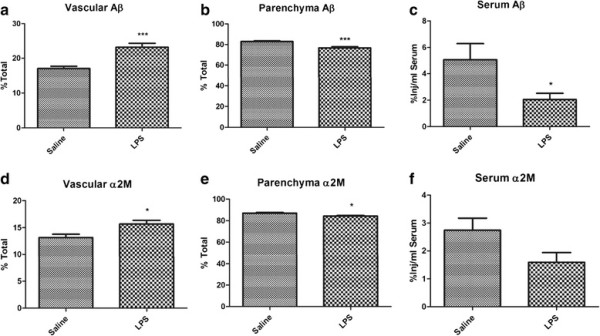
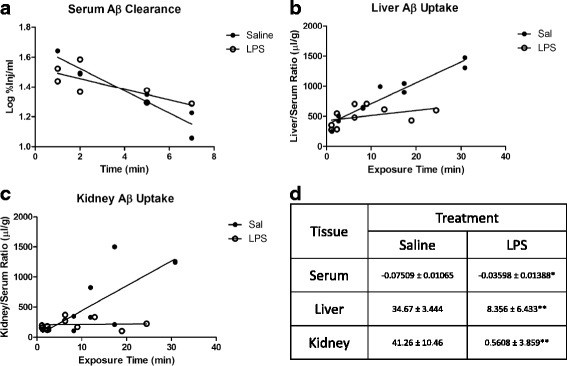
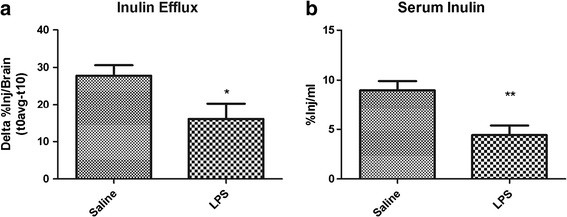
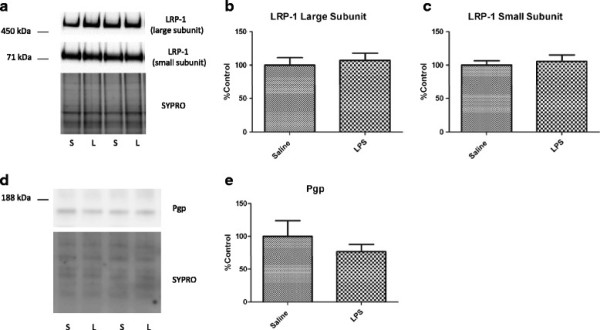
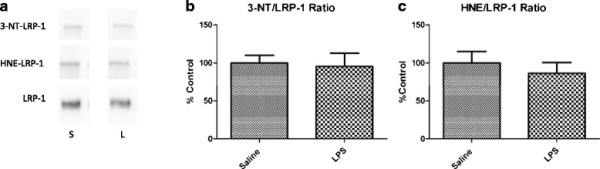
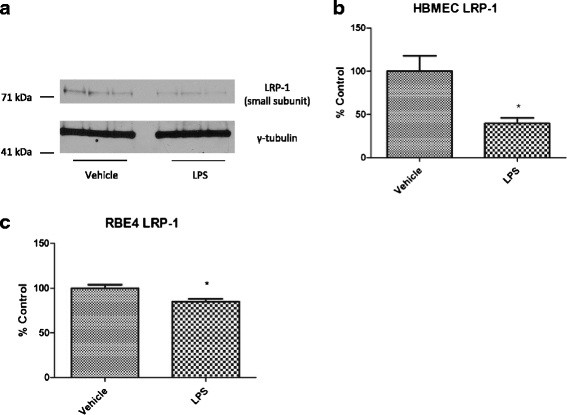
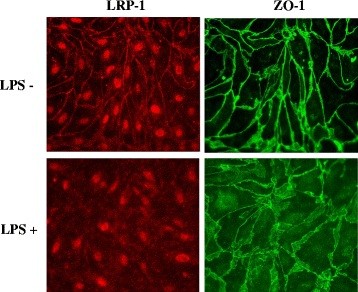
Background: Defects in the low density lipoprotein receptor-related protein-1 (LRP-1) and p-glycoprotein (Pgp) clearance of amyloid beta (Aβ) from brain are thought to contribute to Alzheimer’s disease (AD). We have recently shown that induction of systemic inflammation by lipopolysaccharide (LPS) results in impaired efflux of Aβ from the brain. The same treatment also impairs Pgp function. Here, our aim is to determine which physiological routes of Aβ clearance are affected following systemic inflammation, including those relying on LRP-1 and Pgp function at the blood–brain barrier. Methods: CD-1 mice aged between 6 and 8 weeks were treated with 3 intraperitoneal injections of 3 mg/kg LPS at 0, 6, and 24 hours and studied at 28 hours.125 I-Aβ 1-42 or 125 I-alpha-2-macroglobulin injected into the lateral ventricle of the brain (intracerebroventricular (ICV)) or into the jugular vein (intravenous (IV)) was used to quantify LRP-1-dependent partitioning between the brain vasculature and parenchyma and peripheral clearance, respectively. Disappearance of ICV-injected 14 C-inulin from brain was measured to quantify bulk flow of cerebrospinal fluid (CSF). Brain microvascular protein expression of LRP-1 and Pgp was measured by immunoblotting. Endothelial cell localization of LRP-1 was measured by immunofluorescence microscopy. Oxidative modifications to LRP-1 at the brain microvasculature were measured by immunoprecipitation of LRP-1 followed by immunoblotting for 4-hydroxynonenal and 3-nitrotyrosine. Results: We found that LPS: caused an LRP-1-dependent redistribution of ICV-injected Aβ from brain parenchyma to brain vasculature and decreased entry into blood; impaired peripheral clearance of IV-injected Aβ; inhibited reabsorption of CSF; did not significantly alter brain microvascular protein levels of LRP-1 or Pgp, or oxidative modifications to LRP-1; and downregulated LRP-1 protein levels and caused LRP-1 mislocalization in cultured brain endothelial cells. Conclusions: These results suggest that LRP-1 undergoes complex functional regulation following systemic inflammation which may depend on cell type, subcellular location, and post-translational modifications. Our findings that systemic inflammation causes deficits in both Aβ transport and bulk flow like those observed in AD indicate that inflammation could induce and promote the disease.
Overview
The claims and statistics of this paper haven’t been checked yet.
Free: it reads the open-access text and checks the first 5 claims that cite a source we can check. Create a free account to check every claim.
Integrity signals
Registry
Cites
Statistics
Figures
Verification
Claims the paper makes
The claims and statistics of this paper haven’t been checked yet.
Free: it reads the open-access text and checks the first 5 claims that cite a source we can check. Create a free account to check every claim.
Claims other papers make about this one
Each is checked against this paper’s own text: does it say what the citing paper says it does?
In the citing paper
“In addition, LPS impedes Aβ clearance by increasing the vascular sequestration of Aβ, reducing the bulk flow of cerebrospinal fluid and impairing Aβ transport across the BBB.238”
From Antiageing strategy for neurodegenerative diseases: from mechanisms to clinical advances (2025) · cites this paper as [238]
Self-check
Percentages, sums and reported differences re-computed from the paper’s own numbers.
The self-check needs the paper’s full text.
Citations
Cites
The Amyloid Hypothesis of Alzheimer’s Disease: Progress and Problems on the Road to Therapeutics
Hardy, J., & Selkoe, D. J. (2002) · Science · doi:10.1126/science.1072994 · Cited by 13,864
THE PREPARATION OF 131I-LABELLED HUMAN GROWTH HORMONE OF HIGH SPECIFIC RADIOACTIVITY
GREENWOOD, F., HUNTER, W., & GLOVER, J. (1963) · Biochemical Journal · doi:10.1042/bj0890114 · Cited by 10,152 · cited 1×
“Using the chloramine-T method [41], 5 μg of Aβ, albumin, or a2M was labeled with 0.”
MethodInflammation and Alzheimer’s disease
Akiyama, H. (2000) · Neurobiology of Aging · doi:10.1016/s0197-4580(00)00124-x · Cited by 4,514
Graphical Evaluation of Blood-to-Brain Transfer Constants from Multiple-Time Uptake Data
Patlak, C. S., Blasberg, R. G., & Fenstermacher, J. D. (1983) · Journal of Cerebral Blood Flow & Metabolism · doi:10.1038/jcbfm.1983.1 · Cited by 3,567 · cited 1×
“The rate of I-Aβ tissue uptake was determined using multiple-time regression analysis [43].”
2013 Alzheimer's disease facts and figures
Alzheimer's Association, Thies, W., & Bleiler, L. (2013) · Alzheimer's & Dementia · doi:10.1016/j.jalz.2013.02.003 · Cited by 3,328
RAGE mediates amyloid-β peptide transport across the blood-brain barrier and accumulation in brain
Deane, R., Du Yan, S., Submamaryan, R. K., LaRue, B., Jovanovic, S., Hogg, E., Welch, D., Manness, L., Lin, C., Yu, J., et al. (2003) · Nature Medicine · doi:10.1038/nm890 · Cited by 1,611 · cited 8×
“First, the receptor for advanced glycation endproducts (RAGE) has been identified as an influx transporter for Aβ [18].”
BackgroundInfluentialShibata, M., Yamada, S., Kumar, S. R., Calero, M., Bading, J., Frangione, B., Holtzman, D. M., Miller, C. A., Strickland, D. K., Ghiso, J., et al. (2000) · Journal of Clinical Investigation · doi:10.1172/jci10498 · Cited by 1,413 · cited 6×
“Other groups have shown LRP-1-dependent efflux of human forms of Aβ across the BBB [4,50], however, we have observed that murine Aβ1-42 also undergoes LRP-1-dependent BBB transport and is cleared at a faster rate across the murine BBB than human Aβ1-42 [7,51].”
BackgroundMethodInfluentialMolecular inflammation: Underpinnings of aging and age-related diseases
Chung, H. Y., Cesari, M., Anton, S., Marzetti, E., Giovannini, S., Seo, A. Y., Carter, C., Yu, B. P., & Leeuwenburgh, C. (2009) · Ageing Research Reviews · doi:10.1016/j.arr.2008.07.002 · Cited by 1,203 · cited 1×
“Because low-grade systemic inflammation is associated with many other diseases which have been considered comorbidities in AD [69], similar comparative studies would be useful in determining unifying pathological events at the neurovascular unit or related to brain fluid dynamics which would contribute to impaired Aβ…”
2011 Alzheimer's disease facts and figures
Alzheimer's Association (2011) · Alzheimer's & Dementia · doi:10.1016/j.jalz.2011.02.004 · Cited by 908
Multiplicity of cerebrospinal fluid functions: new challenges in health and disease
Johanson, C. E., Duncan, J. A., Klinge, P. M., Brinker, T., Stopa, E. G., & Silverberg, G. D. (2008) · Cerebrospinal Fluid Research · doi:10.1186/1743-8454-5-10 · Cited by 861
Cited by
Impairment of paravascular clearance pathways in the aging brain
Kress, B. T., Iliff, J. J., Xia, M., Wang, M., Wei, H. S., Zeppenfeld, D., Xie, L., Kang, H., Xu, Q., Liew, J. A., et al. (2014) · Annals of Neurology · doi:10.1002/ana.24271 · Cited by 1,521
“Here it is intriguing to note that peripheral inflammation likewise slows interstitial bulk flow and the clearance Ab from the brain.(38) Based upon these findings, it is possible that peripheral inflammation may impair glymphatic pathway function and may contribute to the present age-related decline in paravascular C…”
BackgroundFrom blood–brain barrier to blood–brain interface: new opportunities for CNS drug delivery
Banks, W. A. (2016) · Nature Reviews Drug Discovery · doi:10.1038/nrd.2015.21 · Cited by 1,204
Self-citationThe blood-brain barrier in systemic inflammation
Varatharaj, A., & Galea, I. (2017) · Brain, Behavior, and Immunity · doi:10.1016/j.bbi.2016.03.010 · Cited by 1,172
“Reduced expression and abnormal localisation of LRP-1, which exports b-amyloid has been reported in vitro (Erickson et al., 2012).”
Plasma exosomal α-synuclein is likely CNS-derived and increased in Parkinson’s disease
Shi, M., Liu, C., Cook, T. J., Bullock, K. M., Zhao, Y., Ginghina, C., Li, Y., Aro, P., Dator, R., He, C., et al. (2014) · Acta Neuropathologica · doi:10.1007/s00401-014-1314-y · Cited by 676
“Although the efflux of CSF proteins into blood can be very fast (appearing within minutes in rodents), most likely through facilitated or active transport, and with consideration given to the perspective that the commonly accepted flow model for CSF circulation may need to be revised [5, 21, 26, 52, 57], it is unclear…”
Self-citationBanks, W. A., Gray, A. M., Erickson, M. A., Salameh, T. S., Damodarasamy, M., Sheibani, N., Meabon, J. S., Wing, E. E., Morofuji, Y., Cook, D. G., et al. (2015) · Journal of Neuroinflammation · doi:10.1186/s12974-015-0434-1 · Cited by 636
“For these studies, the three-injection regimen was used so as to match previously published BBB studies [6, 7, 38, 39].”
MethodSelf-citationBlood–Brain Barrier Dysfunction as a Cause and Consequence of Alzheimer's Disease
Erickson, M. A., & Banks, W. A. (2013) · Journal of Cerebral Blood Flow & Metabolism · doi:10.1038/jcbfm.2013.135 · Cited by 572
Self-citationLipopolysaccharide-induced neuroinflammation as a bridge to understand neurodegeneration
Batista, C. R. A., Gomes, G. F., Candelario-Jalil, E., Fiebich, B. L., & de Oliveira, A. C. P. (2019) · International Journal of Molecular Sciences · doi:10.3390/ijms20092293 · Cited by 529
“A disruption of the BBB by LPS was observed in aging 5XFAD mice, which overexpress both mutant human APP and presenilin 1.”
BackgroundMethodInfluentialGram-negative bacterial molecules associate with Alzheimer disease pathology
Zhan, X., Stamova, B., Jin, L.-W., DeCarli, C., Phinney, B., & Sharp, F. R. (2016) · Neurology · doi:10.1212/wnl.0000000000003391 · Cited by 521
Age-associated Physiological and Pathological Changes at the Blood-Brain Barrier: A Review
Erdő, F., Denes, L., & de Lange, E. (2017) · Journal of Cerebral Blood Flow & Metabolism · doi:10.1177/0271678x16679420 · Cited by 426
“Defects in LRP-1-mediated Ab clearance from the brain are thought to be triggered by systemic inflammation by lipopolysaccharide, leading to increased brain accumulation of amyloid-b.(110,111)”
BackgroundErickson, M. A., & Banks, W. A. (2018) · Pharmacological Reviews · doi:10.1124/pr.117.014647 · Cited by 378
“LRP-1 transport activity is inhibited by inflammation and results in decreased efflux of Ab peptide from the brain (Erickson et al., 2012b).”
BackgroundInfluentialSelf-citationZhan, X., Stamova, B., & Sharp, F. R. (2018) · Frontiers in Aging Neuroscience · doi:10.3389/fnagi.2018.00042 · Cited by 351
“LPS also increases Aβ levels in brain by acting at the blood brain barrier and impairing LRP which is responsible for Aβ efflux from brain (Erickson et al., 2012; Banks et al., 2015).”
BackgroundThe Impact of Systemic Inflammation on Alzheimer’s Disease Pathology
Xie, J., Van Hoecke, L., & Vandenbroucke, R. E. (2022) · Frontiers in Immunology · doi:10.3389/fimmu.2021.796867 · Cited by 324
The blood-brain barrier in neuroimmunology: Tales of separation and assimilation
Banks, W. A. (2015) · Brain, Behavior, and Immunity · doi:10.1016/j.bbi.2014.08.007 · Cited by 292
“Impaired efflux of amyloid beta peptide can be induced by inflammation, including treatment with LPS (Erickson et al., 2012; Jaeger et al., 2009).”
Self-citationPeriodontal disease associates with higher brain amyloid load in normal elderly
Kamer, A. R., Pirraglia, E., Tsui, W., Rusinek, H., Vallabhajosula, S., Mosconi, L., Yi, L., McHugh, P., Craig, R. G., Svetcov, S., et al. (2015) · Neurobiology of Aging · doi:10.1016/j.neurobiolaging.2014.10.038 · Cited by 268
“, 2013), disrupting the brain blood barrier, and/or Ab trafficking (Erickson et al., 2012).”
The Glymphatic System (En)during Inflammation
Mogensen, F. L.-H., Delle, C., & Nedergaard, M. (2021) · International Journal of Molecular Sciences · doi:10.3390/ijms22147491 · Cited by 210
Shen, T., Yue, Y., Ba, F., He, T., Tang, X., Hu, X., Pu, J., Huang, C., Lv, W., Zhang, B., et al. (2022) · npj Parkinson's Disease · doi:10.1038/s41531-022-00437-1 · Cited by 209
Cherry, J. D., Liu, B., Frost, J. L., Lemere, C. A., Williams, J. P., Olschowka, J. A., & O’Banion, M. K. (2012) · PLoS ONE · doi:10.1371/journal.pone.0053275 · Cited by 198
Cheng, Y., Tian, D.-Y., & Wang, Y.-J. (2020) · Translational Neurodegeneration · doi:10.1186/s40035-020-00195-1 · Cited by 190
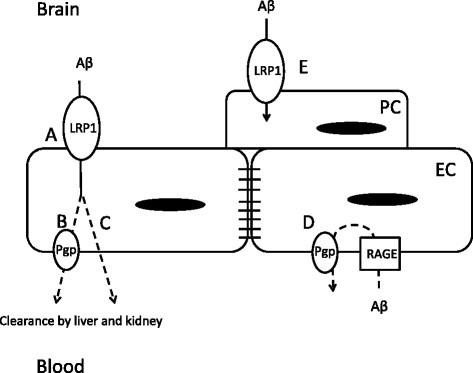
“Due to its special anatomical location, LRP1 has been suggested to facilitate the initial uptake of Aβ from the ISF, followed by Pgp pumping Aβ out of the endothelial cells into the blood [15, 16].”
Exploiting microglial and peripheral immune cell crosstalk to treat Alzheimer’s disease
Dionisio-Santos, D. A., Olschowka, J. A., & O’Banion, M. K. (2019) · Journal of Neuroinflammation · doi:10.1186/s12974-019-1453-0 · Cited by 184
Patel, J. P., & Frey, B. N. (2015) · Neural Plasticity · doi:10.1155/2015/708306 · Cited by 177
“Larger neuroactive peptides and proteins including enkephalins [19], arginine-vasopressin (AVP) [20], and luteinizing-hormone releasing hormone (LHRH) can generally not pass the BBB and thus rely upon highly specific transporter systems to move from blood to brain and vice versa.”
BackgroundChen, H.-L., Chen, P.-C., Lu, C.-H., Tsai, N.-W., Yu, C.-C., Chou, K.-H., Lai, Y.-R., Taoka, T., & Lin, W.-C. (2021) · Oxidative Medicine and Cellular Longevity · doi:10.1155/2021/4034509 · Cited by 184
“Increased systemic oxidative stress may also lead to malfunction of the glymphatic system by decreasing the convective flow, CSF-to-ISF turnover, resulting in impaired waste clearance [21].”
BackgroundInteraction between blood-brain barrier and glymphatic system in solute clearance
Verheggen, I. C. M., Van Boxtel, M. P. J., Verhey, F. R. J., Jansen, J. F. A., & Backes, W. H. (2018) · Neuroscience & Biobehavioral Reviews · doi:10.1016/j.neubiorev.2018.03.028 · Cited by 171
“Inflammation slows down the convective flow, decreases CSF-to-ISF turnover and impairs glymphatic clearance (Erickson et al., 2012).”
BackgroundLipopolysaccharide-Induced Memory Impairment in Rats: a Model of Alzheimer’s Disease
ZAKARIA, R., WAN YAACOB, W. M. H., OTHMAN, Z., LONG, I., AHMAD, A. H., & AL-RAHBI, B. (2017) · Physiological Research · doi:10.33549/physiolres.933480 · Cited by 167
“It has been pointed out in the literature that LPS-induced inflammation promotes AD pathology by altering Aβ transport at the blood brain barrier (BBB) (Jaeger et al. 2009) and decreasing the central clearance of Aβ (Erickson et al. 2012).”
BackgroundDá Mesquita, S., Ferreira, A. C., Sousa, J. C., Correia-Neves, M., Sousa, N., & Marques, F. (2016) · Neuroscience & Biobehavioral Reviews · doi:10.1016/j.neubiorev.2016.06.014 · Cited by 166
Antiageing strategy for neurodegenerative diseases: from mechanisms to clinical advances
Jiang, Q., Liu, J., Huang, S., Wang, X.-Y., Chen, X., Liu, G.-H., Ye, K., Song, W., Masters, C. L., Wang, J., et al. (2025) · Signal Transduction and Targeted Therapy · doi:10.1038/s41392-025-02145-7 · Cited by 165
Kim, H. S., Kim, S., Shin, S. J., Park, Y. H., Nam, Y., Kim, C. W., Lee, K. W., Kim, S.-M., Jung, I. D., Yang, H. D., et al. (2021) · Translational Neurodegeneration · doi:10.1186/s40035-021-00273-y · Cited by 148
The choroid plexus links innate immunity to CSF dysregulation in hydrocephalus
Robert, S. M., Reeves, B. C., Kiziltug, E., Duy, P. Q., Karimy, J. K., Mansuri, M. S., Marlier, A., Allington, G., Greenberg, A. B. W., DeSpenza, T., et al. (2023) · Cell · doi:10.1016/j.cell.2023.01.017 · Cited by 173
Blood-Brain Barriers in Obesity
Rhea, E. M., Salameh, T. S., Logsdon, A. F., Hanson, A. J., Erickson, M. A., & Banks, W. A. (2017) · The AAPS Journal · doi:10.1208/s12248-017-0079-3 · Cited by 149
“animal models, and downregulate brain-to-blood clearance (58).”
Self-citationTakeda, S., Sato, N., Ikimura, K., Nishino, H., Rakugi, H., & Morishita, R. (2013) · Neurobiology of Aging · doi:10.1016/j.neurobiolaging.2013.02.010 · Cited by 135
“Peripheral injection of LPS is routinely used to study alterations in BBB transport (Erickson and Banks, 2011; Erickson et al., 2012; Pan et al., 2008), BBB permeability (Lv et al.”
MethodSun, M., Ma, K., Wen, J., Wang, G., Zhang, C., Li, Q., Bao, X., & Wang, H. (2020) · Journal of Alzheimer’s Disease · doi:10.3233/jad-190872 · Cited by 113
Cai, Y., Zhang, Y., Leng, S., Ma, Y., Jiang, Q., Wen, Q., Ju, S., & Hu, J. (2024) · Neurobiology of Disease · doi:10.1016/j.nbd.2024.106426 · Cited by 135
“Increased activation of MMP-2 and -9 could lead to the digestion of the basement membrane proteins (Rosell et al., 2008; Hamann et al., 2002; Fukuda et al., 2004; Ding et al., 2015).”
BackgroundThe effect of systemic inflammation on human brain barrier function
Elwood, E., Lim, Z., Naveed, H., & Galea, I. (2017) · Brain, Behavior, and Immunity · doi:10.1016/j.bbi.2016.10.020 · Cited by 111
“The use of Qalb to evaluate BBB function has its own limitations, particularly the possibility of confounding by CSF bulk flow (Reiber, 1994; Thompson, 2005), which can be influenced by systemic inflammation (Erickson et al., 2012).”
Systemic and CNS Inflammation Crosstalk: Implications for Alzheimer’s Disease
Paouri, E., & Georgopoulos, S. (2019) · Current Alzheimer Research · doi:10.2174/1567205016666190321154618 · Cited by 110
Impaired brain glymphatic flow in experimental hepatic encephalopathy
Hadjihambi, A., Harrison, I. F., Costas-Rodríguez, M., Vanhaecke, F., Arias, N., Gallego-Durán, R., Mastitskaya, S., Hosford, P. S., Olde Damink, S. W. M., Davies, N., et al. (2019) · Journal of Hepatology · doi:10.1016/j.jhep.2018.08.021 · Cited by 102
“22 Several other factors, some known to be deranged in HE, such as reactive astrogliosis, 36 hemichannel dysfunction, 3 altered neuronal activity, 35 arterial pulse-pressure, 37 and central nervous system inflammation, 38 may also play a role.”
Systemic inflammation in early neonatal mice induces transient and lasting neurodegenerative effects
Cardoso, F. L., Herz, J., Fernandes, A., Rocha, J., Sepodes, B., Brito, M. A., McGavern, D. B., & Brites, D. (2015) · Journal of Neuroinflammation · doi:10.1186/s12974-015-0299-3 · Cited by 103
“Germany); n ≥ 4 per analysis] to induce systemic inflammation [51,52].”
BackgroundMethodErickson, M. A., Hansen, K., & Banks, W. A. (2012) · Brain, Behavior, and Immunity · doi:10.1016/j.bbi.2012.07.003 · Cited by 98
“We have recently shown that LPS does not significantly alter the expression of LRP-1 or Pgp in isolated brain microvessels (Erickson et al., 2012).”
InfluentialSelf-citationGlymphatic system: a gateway for neuroinflammation
Zou, K., Deng, Q., Zhang, H., & Huang, C. (2023) · Neural Regeneration Research · doi:10.4103/1673-5374.391312 · Cited by 115
The relationship between amyloid-beta and brain capillary endothelial cells in Alzheimer’s disease
Su, Q., Guo, J.-H., Zhang, Y.-L., Wang, J., & Zhang, Z.-N. (2022) · Neural Regeneration Research · doi:10.4103/1673-5374.335829 · Cited by 91
“…to Rab5-positive early endosomes and then to Rab11-positive sorting endosomes (Zhao et al., 2015), handing Aβ over to P-gp, which then pumps it out of the luminal side of endothelial cells directly into the blood (Erickson et al., 2012), or via a P-gp–independent pathway (Hartz et al., 2010).”
BackgroundAmenta, P. S., Jallo, J., Tuma, R. F., Hooper, D. C., & Elliott, M. B. (2014) · Journal of Neuroinflammation · doi:10.1186/s12974-014-0191-6 · Cited by 94
“[3,4].”
Glymphatic System Pathology and Neuroinflammation as Two Risk Factors of Neurodegeneration
Szlufik, S., Kopeć, K., Szleszkowski, S., & Koziorowski, D. (2024) · Cells · doi:10.3390/cells13030286 · Cited by 95
Divecha, Y. A., Rampes, S., Tromp, S., Boyanova, S., Fleckney, A. L., Fidanboylu, M., & Thomas, S. A. (2025) · Pharmacological Reviews · doi:10.1016/j.pharmr.2025.100052 · Cited by 92
“Systemic in fl ammation may augment production of A b , along with inhibiting mechanisms of A b clearance such as ef fl ux of A b across the BBB and CSF bulk fl ow (Jaeger et al, 2009; Erickson et al, 2012).”
Chlamydia pneumoniae: An Etiologic Agent for Late-Onset Dementia
Balin, B. J., Hammond, C. J., Little, C. S., Hingley, S. T., Al-Atrache, Z., Appelt, D. M., Whittum-Hudson, J. A., & Hudson, A. P. (2018) · Frontiers in Aging Neuroscience · doi:10.3389/fnagi.2018.00302 · Cited by 77
“Models utilizing direct injection of microbial products have shown induction of transient amyloid production and deposition, suggesting that bacterial products can induce this production (Erickson et al., 2012; Krstic et al., 2012).”
BackgroundLipopolysaccharide endotoxemia induces amyloid-β and p-tau formation in the rat brain.
Wang, L., Wu, Q., Kirk, R. A., Horn, K. P., Salem, A. E., Hoffman, J. M., Yap, J. T., Sonnen, J. A., Towner, R. A., Bozza, F. A., et al. (2018) · Europe PMC (PubMed Central) · Cited by 110
P‐glycoprotein (ABCB1) and Oxidative Stress: Focus on Alzheimer’s Disease
Sita, G., Hrelia, P., Tarozzi, A., & Morroni, F. (2017) · Oxidative Medicine and Cellular Longevity · doi:10.1155/2017/7905486 · Cited by 72
“[133] speculated that downregulation of BBB efflux transporters, as ABCB1, in AD may represent a pathological consequence of prolonged vascular sequestration of Aβ as a result of sustained systemic oxidative and inflammatory state.”
BackgroundLittle, C. S., Joyce, T. A., Hammond, C. J., Matta, H., Cahn, D., Appelt, D. M., & Balin, B. J. (2014) · Frontiers in Aging Neuroscience · doi:10.3389/fnagi.2014.00304 · Cited by 71
Luo, Y., Yang, L.-L., & Yao, X. (2024) · Molecular Neurodegeneration · doi:10.1186/s13024-024-00720-0 · Cited by 79
“LRP-1 is the primary metabolic receptor for APOE in the brain and involved in APOE-mediated lipid transport processes [116], indicating that LPS may indirectly regulate the function of APOE.”
BackgroundMarottoli, F. M., Katsumata, Y., Koster, K. P., Thomas, R., Fardo, D. W., & Tai, L. M. (2017) · ASN Neuro · doi:10.1177/1759091417719201 · Cited by 67
“, 2012), and decrease Ab clearance (Jaeger et al., 2009; Erickson et al., 2012).”
BackgroundStolp, H. B., Liddelow, S. A., Sá-Pereira, I., Dziegielewska, K. M., & Saunders, N. R. (2013) · Frontiers in Integrative Neuroscience · doi:10.3389/fnint.2013.00061 · Cited by 68
Martins, I. J. (2015) · International Journal of Molecular Sciences · doi:10.3390/ijms161226190 · Cited by 88
Tau Proteins Cross the Blood-Brain Barrier
Banks, W. A., Kovac, A., Majerova, P., Bullock, K. M., Shi, M., & Zhang, J. (2016) · Journal of Alzheimer's Disease · doi:10.3233/jad-160542 · Cited by 67
Self-citationAcute systemic LPS-exposure impairs perivascular CSF distribution in mice
Manouchehrian, O., Ramos, M., Bachiller, S., Lundgaard, I., & Deierborg, T. (2021) · Journal of Neuroinflammation · doi:10.1186/s12974-021-02082-6 · Cited by 68
“While Erickson studied more parameters with very interesting results, including decreased amyloid beta efflux after LPS exposure [4], our study used a less invasive method of CSF tracing [9].”
BackgroundMethodInfluentialSivilia, S., Lorenzini, L., Giuliani, A., Gusciglio, M., Fernández, M., Baldassarro, V. A., Mangano, C., Ferraro, L., Pietrini, V., Baroc, M. F., et al. (2013) · BMC Neuroscience · doi:10.1186/1471-2202-14-44 · Cited by 70
“However, microglia activation and neuroinflammation, are also triggered by intraneuronal Aβ accumulation at an early stage of the disease [66] and, conversely, inflammation negatively affects Aβ efflux from the brain [67].”
BackgroundDaulatzai, M. A. (2016) · Europe PMC (PubMed Central) · Cited by 68
RetractedVitamin D deficiency and Alzheimer disease: Common links
Keeney, J. T. R., & Butterfield, D. A. (2015) · Neurobiology of Disease · doi:10.1016/j.nbd.2015.06.020 · Cited by 71
Self-citationThe Role of the Microbiota-Gut-Brain Axis in the Development of Alzheimer’s Disease
Wiatrak, B., Balon, K., Jawień, P., Bednarz, D., Jęśkowiak, I., & Szeląg, A. (2022) · International Journal of Molecular Sciences · doi:10.3390/ijms23094862 · Cited by 58
“Additionally, generalized inflammation inhibits β-amyloid outflow from the cerebrospinal fluid [87].”
BackgroundInhibition of 2-AG hydrolysis differentially regulates blood brain barrier permeability after injury
Piro, J. R., Suidan, G. L., Quan, J., Pi, Y., O'Neill, S., Ilardi, M. C., Pozdnyakov, N., Lanz, T. A., Xi, H. S., Bell, R. D., et al. (2018) · Journal of Neuroinflammation · doi:10.1186/s12974-018-1166-9 · Cited by 58
Apolipoprotein E Isoform-Specific Effects on Lipoprotein Receptor Processing
Bachmeier, C., Shackleton, B., Ojo, J., Paris, D., Mullan, M., & Crawford, F. (2014) · NeuroMolecular Medicine · doi:10.1007/s12017-014-8318-6 · Cited by 50
“An equal volume of 40 % dextran solution was added to the brain homogenate for a final concentration of 20 % dextran (Erickson et al. 2012) and immediately centrifuged at 6,000g for 15 min at 4 °C (Fryer et al. 2003).”
Montoya, J. A. G., Barrios‐Rodríguez, R., Santana, S., Sánchez‐Lara, I., Pardo, C. C., Fornieles‐Rubio, F., Montes, J., Ramírez, C. D., González‐Moles, M. Á., & Burgos, J. S. (2017) · Journal of Periodontology · doi:10.1902/jop.2017.170071 · Cited by 61
Consequences of early postnatal lipopolysaccharide exposure on developing lungs in mice
Shrestha, A. K., Bettini, M. L., Menon, R., Gopal, V. Y. N., Huang, S., Edwards, D. P., Pammi, M., Barrios, R. J., & Shivanna, B. (2018) · American Journal of Physiology-Lung Cellular and Molecular Physiology · doi:10.1152/ajplung.00560.2017 · Cited by 47
Gut microbiota as a potential player in mn-induced neurotoxicity
Tinkov, A. A., Martins, A. C., Avila, D. S., Gritsenko, V. A., Skalny, A. V., Santamaria, A., Lee, E., Bowman, A. B., & Aschner, M. (2021) · Biomolecules · doi:10.3390/biom11091292 · Cited by 45
Drug Access to the Central Nervous System in Alzheimer’s Disease: Preclinical and Clinical Insights
Mehta, D. C., Short, J. L., Hilmer, S. N., & Nicolazzo, J. A. (2014) · Pharmaceutical Research · doi:10.1007/s11095-014-1522-0 · Cited by 51
Hang, Z., Lei, T., Zeng, Z., Cai, S., Bi, W., & Du, H. (2021) · Biomedicine & Pharmacotherapy · doi:10.1016/j.biopha.2021.112343 · Cited by 47
IKKβ Deficiency in Myeloid Cells Ameliorates Alzheimer's Disease-Related Symptoms and Pathology
Liu, Y., Liu, X., Hao, W., Decker, Y., Schomburg, R., Fülöp, L., Pasparakis, M., Menger, M. D., & Fassbender, K. (2014) · The Journal of Neuroscience · doi:10.1523/jneurosci.1348-14.2014 · Cited by 46
“…observation was surprising in light of the fact that neuroinflammation has been reported to change -secretase and -secretase expression and activity (Sheng et al., 2003; He et al., 2007; Xie et al., 2013) and to alter the A transporter function in the blood– brain barrier (Erickson et al., 2012).”
BackgroundPeroxisome Proliferator-activated Receptors and Alzheimer's Disease: Hitting the Blood–Brain Barrier
Zolezzi, J. M., & Inestrosa, N. C. (2013) · Molecular Neurobiology · doi:10.1007/s12035-013-8435-5 · Cited by 49
“ABCB1 (P-gp) is one of the most important members of the ABC transporters and its expression is often altered in AD [60, 71].”
BackgroundInfluentialUnveiling the impact of aging on BBB and Alzheimer's disease: Factors and therapeutic implications
Nelson, V. K., Jha, N. K., Nuli, M. V., Gupta, S. K., Kanna, S., Gahtani, R. M., Hani, U., Singh, A. K., Abomughaid, M. M., Abomughayedh, A. M., et al. (2024) · Ageing Research Reviews · doi:10.1016/j.arr.2024.102224 · Cited by 48
Kefir metabolites in a fly model for Alzheimer’s disease
Batista, L. L., Malta, S. M., Silva, H. C. G., Borges, L. D. F., Rocha, L. O., da Silva, J. R., Rodrigues, T. S., Venturini, G., Padilha, K., Pereira, A. C., et al. (2021) · Scientific Reports · doi:10.1038/s41598-021-90749-8 · Cited by 66
Zhan, X., Cox, C. D., Ander, B. P., Liu, D., Stamova, B. S., Jin, L., Jickling, G. C., & Sharp, F. R. (2015) · Journal of Alzheimer s Disease · doi:10.3233/jad-143072 · Cited by 43
“This is consistent with studies showing that systemic LPS alone can damage the BBB bilaterally at least in part via metallo-proteinases [29].”
BackgroundInfluentialLazzaro, M., Bettegazzi, B., Barbariga, M., Codazzi, F., Zacchetti, D., & Alessio, M. (2014) · Journal of Neuroinflammation · doi:10.1186/s12974-014-0164-9 · Cited by 33
“Therefore, a possible role of LPS-mediated neuroinflammation has been proposed also in the progression of PD and AD [35-39].”
BackgroundSoden, P. A., Henderson, A. R., & Lee, E. (2022) · Advanced Biology · doi:10.1002/adbi.202200027 · Cited by 40
Guardia, G. S., Li, H., Willemse, L., Lebenberg, J., Jouvent, É., & Tuladhar, A. M. (2025) · Alzheimer s & Dementia · doi:10.1002/alz.70212 · Cited by 34
“118 Neuroinflammation may also decrease CSF–ISF exchange by disrupting CSF inflow through blockage of PVS. 119 Several studies on sporadic SVD have demonstrated an association between the increased presence of MRI-visible PVS in disease burden and cognitive impairment.”
InfluentialWang, Q., Xia, X., Zhang, H., Li, Y., Zhu, L., Shi, Y., Tang, Y., Cheng, J., Hui, X., & Gao, H. (2025) · Nature Communications · doi:10.1038/s41467-025-61543-1 · Cited by 32
Joshi, Y. B., Giannopoulos, P. F., Chu, J., & Praticò, D. (2014) · Neurobiology of Aging · doi:10.1016/j.neurobiolaging.2013.11.016 · Cited by 30
ISO 10993 biological evaluation of novel hemostatic powder – 4SEAL®
Szymański, Ł., Gołaszewska, K., Wiatrowska, A. K., Dropik, M., Szymański, P., Gromadka, B., Krakowiak, P. A., Wierzchowska, J., & Matak, D. (2022) · Biomaterials Research · doi:10.1186/s40824-022-00258-6 · Cited by 27
Microglia–neuron–vascular interactions in ischemia
Lénárt, N., Cserép, C., Császár, E., Pósfai, B., & Dénes, Á. (2023) · Glia · doi:10.1002/glia.24487 · Cited by 31
“It has been demonstrated that both acute and chronic inflammation cause a reduction in CSF flow (Erickson et al., 2012; Manouchehrian et al., 2021).”
BackgroundPike, A. F., Kramer, N. I., Blaauboer, B. J., Seinen, W., & Brands, R. (2014) · Chemico-Biological Interactions · doi:10.1016/j.cbi.2014.12.006 · Cited by 27
Hoshi, Y., Uchida, Y., Tachikawa, M., Ohtsuki, S., & Terasaki, T. (2017) · Journal of Neurochemistry · doi:10.1111/jnc.13960 · Cited by 25
Ritson, M., Wheeler-Jones, C. P. D., & Stolp, H. B. (2024) · Journal of Neuroimmunology · doi:10.1016/j.jneuroim.2024.578363 · Cited by 27
“…ECs (see Finger et al., 2022), and acute systemic inflammation can reactivate dormant neuroinflammatory lesions (Serres et al., 2009) and affect amyloid clearance from the brain (Erickson et al., 2012), suggesting a complex interplay between (systemic) inflammation and neurological injury.”
Shrestha, A. K., Menon, R., El‐Saie, A., Barrios, R. J., Reynolds, C. L., & Shivanna, B. (2020) · American Journal of Physiology-Lung Cellular and Molecular Physiology · doi:10.1152/ajplung.00013.2020 · Cited by 26
Retinoic Acid and the Gut Microbiota in Alzheimer’s Disease: Fighting Back-to-Back?
Endres, K. (2019) · Current Alzheimer Research · doi:10.2174/1567205016666190321163705 · Cited by 26
Glymphatic system of the brain: structure and practical significance
Kondratyev, A. N., & Tsentsiper, L. M. (2019) · Russian Journal of Anesthesiology and Reanimatology · doi:10.17116/anaesthesiology201906172 · Cited by 27
Bahaidrah, K. A., Alzahrani, N. A., Aldhahri, R. S., Mansouri, R. A., & Alghamdi, B. S. A. (2022) · Clinical and Translational Neuroscience · doi:10.3390/ctn6030020 · Cited by 25
Cerebral glymphatic system: Structure, regulation, ageing, and mechanisms of encephalopathy
Zhao, D., Wang, J., Zhang, F., Wang, Q., Zang, M., Niu, H., & Tong, Z. (2025) · Ageing Research Reviews · doi:10.1016/j.arr.2025.102986 · Cited by 23
Krementsov, D. N., Wall, E. H., Martin, R. A., Subramanian, M., Noubade, R., del Río, R., Mawe, G. M., Bond, J. P., Poynter, M. E., Blankenhorn, E. P., et al. (2013) · PLoS ONE · doi:10.1371/journal.pone.0062743 · Cited by 21
“In this regard, both pertussis toxin (PTX) [36] and complete Freund’s adjuvant (CFA) [37] lead to increased BBB permeability and systemic exposure to lipopolysaccharide (LPS) directly disrupts endothelial cell barrier functions [38] including BBB transport of amyloid proteins [39,40], which have recently been shown to…”
BackgroundHu, Q., Yu, B., Chen, Q., Wang, Y., Ling, Y., Sun, S., Shi, Y., & Zhou, C. (2017) · Molecular Medicine Reports · doi:10.3892/mmr.2017.7983 · Cited by 28
Mansour, H. M., & El-Khatib, A. S. (2025) · European Journal of Pharmacology · doi:10.1016/j.ejphar.2025.177529 · Cited by 21
Environmental Subconcussive Injury, Axonal Injury, and Chronic Traumatic Encephalopathy
Morley, W. A. (2018) · Frontiers in Neurology · doi:10.3389/fneur.2018.00166 · Cited by 24
“Of clinical relevance, a rapid and prolonged drop in magnesium is correlated with a significantly worse prognosis (15), perhaps as a result of the generation of cytokines that stimulate α-amino-3-hydroxy-5-methyl-4isoxazole propionic acid receptors, making cells more sensitive to excitatory neurotransmitters like glut…”
BackgroundIloun, P., Abbasnejad, Z., Janahmadi, M., Ahmadiani, A., & Ghasemi, R. (2018) · EXCLI journal · doi:10.17179/excli2018-1387 · Cited by 18
“LPS mediated inflammation also increases glutamate release and triggers excitotoxicity (Espey et al., 1998; Fine et al., 1996), alters BBB integrity and by affecting Aβ transport, promotes formation of Aβ plaque (Erickson et al., 2012; Jaeger et al., 2009).”
BackgroundStrategies for blood–brain barrier rejuvenation and repair
Searson, P. C., & Banks, W. A. (2026) · Nature Reviews Drug Discovery · doi:10.1038/s41573-025-01364-5 · Cited by 16
Self-citationVillarreal, A. E., Barron, R., Rao, K. S. J., & Britton, G. B. (2014) · Journal of Alzheimer s Disease · doi:10.3233/jad-140144 · Cited by 16
“…clearance after and non-transgenic animals link ischemic episodes with increased ApoE expression, which may disrupt A clearance from the brain in a time-dependent manner Recentlyidentified genetic risk factors for late onset AD can be present at low frequency but can represent risk factor ApoE.”
Haque, S. E., Iqubal, A., Iqubal, M. K., Fazal, S. A., & Pottoo, F. H. (2021) · Current Molecular Pharmacology · doi:10.2174/1874467214666210309115605 · Cited by 20
Hashiesh, H. M., Jha, N. K., Sharma, C., Gupta, P. K., Jha, S. K., Patil, C. R., Goyal, S. N., & Ojha, S. K. (2021) · European Journal of Pharmacology · doi:10.1016/j.ejphar.2021.174398 · Cited by 16
Safety and Performance of Hemostatic Powders
Szymański, Ł., Gołaszewska, K., Małkowska, J., Kaczyńska, J., Gołębiewska, M., Gromadka, B., & Matak, D. (2023) · Medical Devices Evidence and Research · doi:10.2147/mder.s407838 · Cited by 19
“The presence of endotoxins in the medical device can lead to severe health complications such as impairment of amyloid-beta efflux, acute inflammation, and disturbed CSF distribution.(20,21) Therefore, the level of endotoxic contamination was tested for each product.”
BackgroundLRP1 at the crossroads of Aβ clearance and therapeutic targeting in Alzheimer’s disease
Deng, Y., Yin, H., Lu, Z., Lan, H., Liu, W., Zuo, C., Pan, N., Tian, X., & Gong, Q. (2026) · Frontiers in Aging Neuroscience · doi:10.3389/fnagi.2025.1669405 · Cited by 17
Erickson, M. A., Johnson, R. S., Damodarasamy, M., MacCoss, M. J., Keene, C. D., Banks, W. A., & Reed, M. J. (2024) · Fluids and Barriers of the CNS · doi:10.1186/s12987-024-00581-1 · Cited by 12
“Prior studies corroborate discordance of transporter protein abundance and transporter function, particularly for P-gp in AD [75] and for LRP-1 under inflammatory conditions [76].”
ResultSelf-citationInfluencing factors of glymphatic system during perioperative period
Dong, R., Liu, W., Han, Y., Wang, Z., Jiang, L., Wang, L., & Gu, X. (2024) · Frontiers in Neuroscience · doi:10.3389/fnins.2024.1428085 · Cited by 13
Martins, I. J. (2016) · Journal of Food Research · doi:10.5539/jfr.v5n6p45 · Cited by 19
“…as obesity and diabetes excessive food intake may increase plasma LPS levels with interference with Sirt 1’s circadian regulation (Martins, 2016) of Aβ metabolism by corruption of peripheral plasma Aβ metabolism in both Alzheimer’s disease and various neurological diseases (Erickson et al, 2012).”
BackgroundCao, W., Tian, S., Zhang, H., Zhu, W., An, K., Shi, J., Yuan, Y., & Wang, S. (2020) · Frontiers in Neuroscience · doi:10.3389/fnins.2020.00743 · Cited by 10
“In addition, Aβ deposition in the brain is the most significant pathological characteristic of AD (Erickson et al., 2012).”
BackgroundBiocompatibility of novel albumin-aldehyde surgical adhesive
Szymański, Ł., Gołaszewska, K., Wiatrowska, A. K., Dropik, M., Krakowiak, P. A., Małkowska, J., & Matak, D. (2022) · Scientific Reports · doi:10.1038/s41598-022-16853-5 · Cited by 10
Ragheb, A. Y., El-Ansari, M. A., Heikal, O. A., Galal, A. F., Salama, A., Kassem, M. E. S., & Saleh, N. A. M. (2023) · South African Journal of Botany · doi:10.1016/j.sajb.2023.03.045 · Cited by 11
Loeffler, D. A. (2024) · Frontiers in Aging Neuroscience · doi:10.3389/fnagi.2024.1368200 · Cited by 10
Metadata
- Authors
- Erickson, M. A., Hartvigson, P. E., Morofuji, Y., Owen, J. B., Butterfield, D. A., & Banks, W. A.
- Affiliations
- VA Puget Sound Health Care System (US)
- University of Washington (US)
- University of Kentucky (US)
- Corresponding author
- Banks, William A
- Venue
- Journal of Neuroinflammation
- Published
- 2012-06-29
- Volume
- 9
- Issue
- 1
- Pages
- 150-150
- ISSN
- 1742-2094 (ISSN-L)
- PMC
- PMC3410805
- OpenAlex
- W2116435444
- Cited by
- 145
- References
- 72
- Citations by year
- 2026: 13 · 2025: 13 · 2024: 13 · 2023: 7 · 2022: 11 · 2021: 12 · 2020: 7 · 2019: 6 · 2018: 10 · 2017: 11 · 2016: 11 · 2015: 6 · 2014: 13 · 2013: 10 · 2012: 2
- FWCI
- 6.65
- Type
- journal article
- Language
- en
- Open access
- gold
- doi.org
- Licence
- cc-by
- creativecommons.org/licenses/by/2.0 (tdm)
- creativecommons.org/licenses/by/2.0 (vor)
- Locations
- Journal of Neuroinflammation (publishedVersion, cc-by)
- Europe PMC (PubMed Central) (publishedVersion, cc-by)
- PubMed Central (publishedVersion, cc-by)
- PubMed (publishedVersion)
- UKnowledge (University of Kentucky) (submittedVersion, cc-by)
- DOAJ (DOAJ: Directory of Open Access Journals) (submittedVersion, cc-by-sa)
- Funders
- National Institutes of Health
- National Institute on Aging (R01AG029839, AG029839)
- National Institute of General Medical Sciences (T32GM008306)
- Topics
- Life Sciences › Neuroscience › Cellular and Molecular Neuroscience › Alzheimer's disease research and treatments
- Life Sciences › Neuroscience › Neurology › Barrier Structure and Function Studies
- Health Sciences › Medicine › Oncology › Drug Transport and Resistance Mechanisms
- Keywords
- lipopolysaccharide, amyloid-beta, blood-brain barrier, LRP1, P-glycoprotein, Alzheimer's disease, systemic inflammation, cerebrospinal fluid reabsorption, cerebral microvasculature, oxidative modification, brain endothelial cells, amyloid clearance, lipopolysaccharide-induced neuroinflammation
- MeSH terms
- Alzheimer Disease, Animals, Blood-Brain Barrier, Brain, Cell Movement, Cells, Cultured, Endothelium, Vascular, Humans, Lipopolysaccharides, Peptide Fragments, Subcellular Fractions, Amyloid beta-Peptides, Inflammation Mediators, Mice, Rats
About these checks
Registry, retraction, Cites and statistics results are computed, not judged, with one exception: a printed reference that no index lists is read once by a model before it counts as a citation error. Claims are extracted by a model and kept only when their quote appears verbatim in the text; each cited source is then checked, with a model’s help, for whether it says what the claim relies on. Those verdicts can be wrong — read the claim’s quote and the cited source before relying on one.
Statistics and arithmetic are recomputed, not judged.
Confidence bands are shown only for fields calibrated on our annotated test set. None is calibrated yet, so no band is shown.
What counts as a claim ›How we measure confidence ›How we check this ›
Are you an author, or do you see a problem with this page? Request a review
Data sources
Bibliographic data: Semantic Scholar, OpenAlex, Crossref.
Contains information from the Semantic Scholar Academic Graph Datasets, made available under the ODC Attribution License (ODC-BY 1.0).
Semantic Scholar’s data is described in: Kinney, R., et al. (2023). The Semantic Scholar Open Data Platform. arXiv:2301.10140.
