

The DOI matches its Crossref record; 68 of the 68 references it cites were found in a registry or an index.
The enteric bacterial metabolite propionic acid alters brain and plasma phospholipid molecular species: further development of a rodent model of autism spectrum disorders
Open accessAbstract
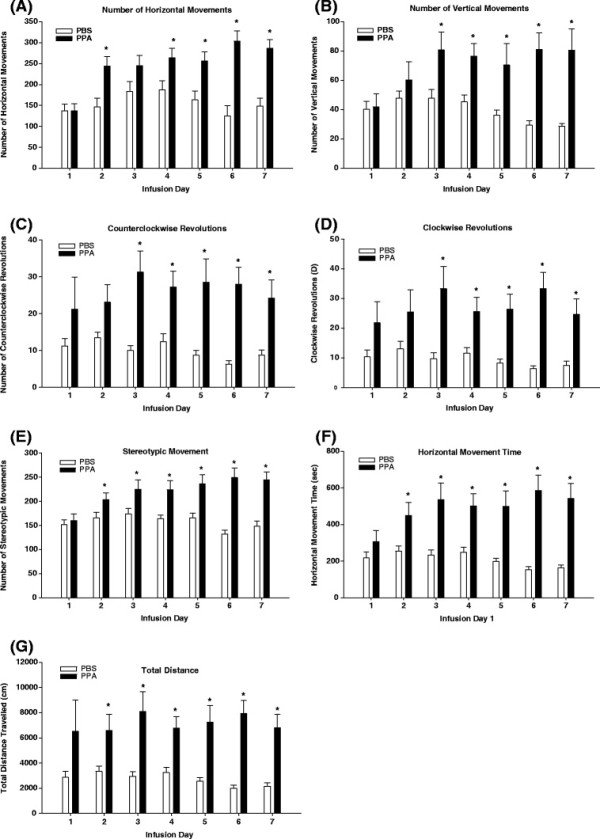
Gastrointestinal symptoms and altered blood phospholipid profiles have been reported in patients with autism spectrum disorders (ASD). Most of the phospholipid analyses have been conducted on the fatty acid composition of isolated phospholipid classes following hydrolysis. A paucity of information exists on how the intact phospholipid molecular species are altered in ASD. We applied ESI/MS to determine how brain and blood intact phospholipid species were altered during the induction of ASD-like behaviors in rats following intraventricular infusions with the enteric bacterial metabolite propionic acid. Animals were infused daily for 8 days, locomotor activity assessed, and animals killed during the induced behaviors. Propionic acid infusions increased locomotor activity. Lipid analysis revealed treatment altered 21 brain and 30 blood phospholipid molecular species. Notable alterations were observed in the composition of brain SM, diacyl mono and polyunsaturated PC, PI, PS, PE, and plasmalogen PC and PE molecular species. These alterations suggest that the propionic acid rat model is a useful tool to study aberrations in lipid metabolism known to affect membrane fluidity, peroxisomal function, gap junction coupling capacity, signaling, and neuroinflammation, all of which may be associated with the pathogenesis of ASD.
Overview
The claims and statistics of this paper haven’t been checked yet.
Run the check — free, no account needed. It reads the open-access text and checks the sources it cites.
Integrity signals
Registry
Cites
Statistics
Figures
Verification
Claims the paper makes
The claims and statistics of this paper haven’t been checked yet.
Run the check — free, no account needed. It reads the open-access text and checks the sources it cites.
Claims other papers make about this one
Each is checked against this paper’s own text: does it say what the citing paper says it does?
In the citing paper
“However, the accumulation of SCFAs, and specifically of propionate, has also been shown to have broad effects on the nervous system physiology, and it is associated to the pathogenesis of ASD [175,176].”
From Autism, Gastrointestinal Symptoms and Modulation of Gut Microbiota by Nutritional Interventions (2019) · cites this paper as [175]
Self-check
Percentages, sums and reported differences re-computed from the paper’s own numbers.
The self-check needs the paper’s full text.
Citations
Cites
A SIMPLE METHOD FOR THE ISOLATION AND PURIFICATION OF TOTAL LIPIDES FROM ANIMAL TISSUES
Folch, J., Lees, M., & Stanley, G. H. S. (1957) · Journal of Biological Chemistry · doi:10.1016/s0021-9258(18)64849-5 · Cited by 65,189
The Rat Brain in Stereotaxic Coordinates
Paxinos, G., & Watson, C. (1983) · Elsevier eBooks · doi:10.1016/c2009-0-63235-9 · Cited by 28,585
Neuroglial activation and neuroinflammation in the brain of patients with autism
Vargas, D. L., Nascimbene, C., Krishnan, C., Zimmerman, A. W., & Pardo, C. A. (2005) · Annals of Neurology · doi:10.1002/ana.20315 · Cited by 2,149 · cited 2×
“There is now emerging evidence that autism may be accompanied by abnormalities in the inflammatory response system [28], and that this abnormality may be related to the increases in oxidative stress [55-57], innate neuroinflammation [58], and altered lipid profiles [5,27,30,32,53] reported in ASD.”
BackgroundLe Poul, E., Loison, C., Struyf, S., Springael, J.-Y., Lannoy, V., Decobecq, M.-E., Brezillon, S., Dupriez, V., Vassart, G., Van Damme, J., et al. (2003) · Journal of Biological Chemistry · doi:10.1074/jbc.m301403200 · Cited by 1,651
Pyrosequencing study of fecal microflora of autistic and control children
Finegold, S. M., Dowd, S. E., Gontcharova, V., Liu, C., Henley, K. E., Wolcott, R. D., Youn, E., Summanen, P. H., Granpeesheh, D., Dixon, D., et al. (2010) · Anaerobe · doi:10.1016/j.anaerobe.2010.06.008 · Cited by 977
Autism and the pervasive developmental disorders
Volkmar, F. R., & Klin, A. (2012) · doi:10.1093/med/9780199696758.003.0214 · Cited by 931
Electrospray mass spectrometry of phospholipids
Pulfer, M. K., & Murphy, R. C. (2003) · Mass Spectrometry Reviews · doi:10.1002/mas.10061 · Cited by 909
Brügger, B., Erben, G., Sandhoff, R., Wieland, F., & Lehmann, W. D. (1997) · Proceedings of the National Academy of Sciences · doi:10.1073/pnas.94.6.2339 · Cited by 882
Gastrointestinal Microflora Studies in Late‐Onset Autism
Finegold, S. M., Molitoris, D., Song, Y., Liu, C., Vaisanen, M., Bolte, E., McTeague, M., Sandler, R., Wexler, H., Marlowe, E. M., et al. (2002) · Clinical Infectious Diseases · doi:10.1086/341914 · Cited by 742
Handbook of Thin-Layer Chromatography
(2003) · CRC Press eBooks · doi:10.1201/9780203912430 · Cited by 703
Chauhan, A., & Chauhan, V. (2006) · Pathophysiology · doi:10.1016/j.pathophys.2006.05.007 · Cited by 656
Autism and pervasive developmental disorders
Volkmar, F. R., Lord, C., Bailey, A., Schultz, R. T., & Klin, A. (2004) · Journal of Child Psychology and Psychiatry · doi:10.1046/j.0021-9630.2003.00317.x · Cited by 616
Short-Chain Fatty Acids in the Human Colon: Relation to Gastrointestinal Health and Disease
Mortensen, P. B., & Clausen, M. R. (1996) · Scandinavian Journal of Gastroenterology · doi:10.3109/00365529609094568 · Cited by 513
MACFABE, D., CAIN, D., RODRIGUEZCAPOTE, K., FRANKLIN, A., HOFFMAN, J., BOON, F., TAYLOR, A., KAVALIERS, M., & OSSENKOPP, K. (2007) · Behavioural Brain Research · doi:10.1016/j.bbr.2006.07.025 · Cited by 497
Self-citationChauhan, A., Chauhan, V., Brown, W. T., & Cohen, I. (2004) · Life Sciences · doi:10.1016/j.lfs.2004.04.038 · Cited by 424
MacFabe, D. F., Cain, N. E., Boon, F., Ossenkopp, K.-P., & Cain, D. P. (2011) · Behavioural Brain Research · doi:10.1016/j.bbr.2010.10.005 · Cited by 365
Self-citationAmminger, G. P., Berger, G. E., Schäfer, M. R., Klier, C., Friedrich, M. H., & Feucht, M. (2007) · Biological Psychiatry · doi:10.1016/j.biopsych.2006.05.007 · Cited by 355
Gap junctions and connexin expression in the normal and pathological central nervous system
Rouach, N., Avignone, E., Même, W., Koulakoff, A., Venance, L., Blomstrand, F., & Giaume, C. (2002) · Biology of the Cell · doi:10.1016/s0248-4900(02)00016-3 · Cited by 345
Short-Chain Fatty Acids Suppress Cholesterol Synthesis in Rat Liver and Intestine
Hara, H., Haga, S., Aoyama, Y., & Kiriyama, S. (1999) · Journal of Nutrition · doi:10.1093/jn/129.5.942 · Cited by 307
Schuchardt, J. P., Huß, M., Stauss‐Grabo, M., & Hahn, A. (2009) · European Journal of Pediatrics · doi:10.1007/s00431-009-1035-8 · Cited by 302
Plasma fatty acid levels in autistic children
Vancassel, S., Durand, G., Barthélémy, C., Lejeune, B., Martineau, J., Guilloteau, D., Andres, C. R., & Chalon, S. (2001) · Prostaglandins Leukotrienes and Essential Fatty Acids · doi:10.1054/plef.2001.0281 · Cited by 265
Sarachana, T., Zhou, R., Chen, G., Manji, H. K., & Hu, V. W. (2010) · Genome Medicine · doi:10.1186/gm144 · Cited by 237
The ether lipid-deficient mouse: Tracking down plasmalogen functions
Gorgas, K., Teigler, A., Komljenovic, D., & Just, W. W. (2006) · Biochimica et Biophysica Acta (BBA) - Molecular Cell Research · doi:10.1016/j.bbamcr.2006.08.038 · Cited by 235
Frye, R. E., & Rossignol, D. A. (2011) · Pediatric Research · doi:10.1203/pdr.0b013e318212f16b · Cited by 224
Shultz, S. R., MacFabe, D. F., Ossenkopp, K.-P., Scratch, S., Whelan, J., Taylor, R., & Cain, D. P. (2008) · Neuropharmacology · doi:10.1016/j.neuropharm.2008.01.013 · Cited by 217
Self-citationFukuchi, M., Nii, T., Ishimaru, N., Minamino, A., Hara, D., Takasaki, I., Tabuchi, A., & Tsuda, M. (2009) · Neuroscience Research · doi:10.1016/j.neures.2009.05.002 · Cited by 207
Hu, V. W., Frank, B. C., Heine, S. J., Lee, N. H., & Quackenbush, J. F. (2006) · BMC Genomics · doi:10.1186/1471-2164-7-118 · Cited by 206
Midbrain serotonergic neurons are central pH chemoreceptors
Severson, C., Wang, W., Pieribone, V. A., Dohle, C., & Richerson, G. B. (2003) · Nature Neuroscience · doi:10.1038/nn1130 · Cited by 202
Essential fatty acids and phospholipase A2 in autistic spectrum disorders
Bell, J. G., Mackinlay, E. E., Dick, J. R., MacDonald, D. J., Boyle, R. M., & Glen, A. C. A. (2004) · Prostaglandins Leukotrienes and Essential Fatty Acids · doi:10.1016/j.plefa.2004.03.008 · Cited by 199
On the mechanism of action of the antifungal agent propionate
Brock, M., & Buckel, W. (2004) · European Journal of Biochemistry · doi:10.1111/j.1432-1033.2004.04255.x · Cited by 194
Bayır, H., Tyurin, V. A., Tyurina, Y. Y., Viner, R., Ritov, V. B., Amoscato, A. A., Zhao, Q., Zhang, X. J., Janesko‐Feldman, K. L., Alexander, H. L., et al. (2007) · Annals of Neurology · doi:10.1002/ana.21168 · Cited by 193
Wajner, M., Latini, A., Wyse, Â. T. D. S., & Dutra‐Filho, C. S. (2004) · Journal of Inherited Metabolic Disease · doi:10.1023/b:boli.0000037353.13085.e2 · Cited by 191
Farooqui, A. A., Ong, W., & Horrocks, L. A. (2004) · Neurochemical Research · doi:10.1007/s11064-004-6871-3 · Cited by 187
A comparison of the molecular species compositions of mammalian lung surfactant phospholipids
Postle, A. D., Heeley, E. L., & Wilton, D. C. (2001) · Comparative Biochemistry and Physiology Part A Molecular & Integrative Physiology · doi:10.1016/s1095-6433(01)00306-3 · Cited by 185
Human lens lipids differ markedly from those of commonly used experimental animals
Deeley, J. M., Mitchell, T. W., Wei, X. E., Korth, J., Nealon, J. R., Blanksby, S. J., & Truscott, R. J. W. (2008) · Biochimica et Biophysica Acta (BBA) - Molecular and Cell Biology of Lipids · doi:10.1016/j.bbalip.2008.04.002 · Cited by 162
Shultz, S. R., MacFabe, D. F., Martin, S. P., Jackson, J., Taylor, R., Boon, F. H., Ossenkopp, K., & Cain, D. P. (2008) · Behavioural Brain Research · doi:10.1016/j.bbr.2008.12.023 · Cited by 159
Self-citationDeCastro, M., Nankova, B. B., Shah, P., Patel, P., Mally, P. V., Mishra, R., & La Gamma, E. F. (2005) · Molecular Brain Research · doi:10.1016/j.molbrainres.2005.09.002 · Cited by 149
Role of polyunsaturated fatty acids in the management of Egyptian children with autism
Meguid, N. A., Atta, H. M., Gouda, A. S., & Khalil, R. O. (2008) · Clinical Biochemistry · doi:10.1016/j.clinbiochem.2008.05.013 · Cited by 128
Thomas, R., Foley, K. A., Mepham, J. R., Tichenoff, L. J., Possmayer, F., & MacFabe, D. F. (2010) · Journal of Neurochemistry · doi:10.1111/j.1471-4159.2010.06614.x · Cited by 121
Self-citationKäkelä, R., Somerharju, P. J., & Tyynelä, J. (2003) · Journal of Neurochemistry · doi:10.1046/j.1471-4159.2003.01602.x · Cited by 116
The Neurobiology of Lipid Metabolism in Autism Spectrum Disorders
Tamiji, J., & Crawford, D. A. (2010) · Neurosignals · doi:10.1159/000323189 · Cited by 116
MacFabe, D. F., Rodríguez-Capote, K., Hoffman, J. E., Franklin, A. E., Mohammad-A, Y., Taylor, A. R., Boon, F. H., Cain, D. P., Kavaliers, M., Possmayer, F., et al. (2008) · American journal of biochemistry & biotechnology/American journal of biochemistry and biotechnology · doi:10.3844/ajbbsp.2008.146.166 · Cited by 115
Self-citationPlasmalogens, Phospholipase A2, and Docosahexaenoic Acid Turnover in Brain Tissue
Farooqui, A. A., & Horrocks, L. A. (2001) · Journal of Molecular Neuroscience · doi:10.1385/jmn:16:2-3:263 · Cited by 114
Rörig, B., Klausa, G., & Sutor, B. (1996) · The Journal of Physiology · doi:10.1113/jphysiol.1996.sp021125 · Cited by 107
Clinical trials of fatty acid treatment in ADHD, dyslexia, dyspraxia and the autistic spectrum
Richardson, A. J. (2004) · Prostaglandins Leukotrienes and Essential Fatty Acids · doi:10.1016/j.plefa.2003.12.020 · Cited by 104
Bell, J. G., SARGENT, J. R., Tocher, D. R., & Dick, J. R. (2000) · Prostaglandins Leukotrienes and Essential Fatty Acids · doi:10.1054/plef.2000.0186 · Cited by 103
Pastural, É., Ritchie, S. A., Lu, Y., Jin, W., Kavianpour, A., Su-Myat, K. K., Heath, D., Wood, P. L., Fisk, M., & Goodenowe, D. B. (2009) · Prostaglandins Leukotrienes and Essential Fatty Acids · doi:10.1016/j.plefa.2009.06.003 · Cited by 101
Plasma fatty acid profiles in autism: A case-control study
Wiest, M. M., German, J. B., Harvey, D. J., Watkins, S. M., & Hertz‐Picciotto, I. (2009) · Prostaglandins Leukotrienes and Essential Fatty Acids · doi:10.1016/j.plefa.2009.01.007 · Cited by 97
Zerrate, M. C., Pletnikov, M. V., Connors, S. L., Vargas, D. L., Seidler, F. J., Zimmerman, A. W., Slotkin, T. A., & Pardo, C. A. (2007) · Journal of Pharmacology and Experimental Therapeutics · doi:10.1124/jpet.107.121483 · Cited by 79
Selective cellular acidification and toxicity of weak organic acids in an acidic microenvironment
Karuri, A., Dobrowsky, E., & Tannock, I. F. (1993) · British Journal of Cancer · doi:10.1038/bjc.1993.485 · Cited by 79
Regulation of astrocyte gap junctions by hypoxia–reoxygenation
Martı́nez, A. D., & Sáez, J. C. (2000) · Brain Research Reviews · doi:10.1016/s0165-0173(99)00086-7 · Cited by 78
Regulation of type-II calmodulin kinase: functional implications.
Bronstein, J., Farber, D., & Wasterlain, C. (1993) · Brain research. Brain research reviews · doi:10.1016/0165-0173(93)90011-n · Cited by 72
Champeil‐Potokar, G., Chaumontet, C., Guesnet, P., Lavialle, M., & Denis, I. (2006) · European Journal of Neuroscience · doi:10.1111/j.1460-9568.2006.05185.x · Cited by 72
Little, S. J., Lynch, M. A., Manku, M. S., & Nicolaou, A. (2007) · Prostaglandins Leukotrienes and Essential Fatty Acids · doi:10.1016/j.plefa.2007.08.009 · Cited by 71
Fatty acid compositions of red blood cell phospholipids in children with autism
Bu, B., Ashwood, P., Harvey, D., King, I. B., de Water, J. V., & Jin, L. W. (2006) · Prostaglandins Leukotrienes and Essential Fatty Acids · doi:10.1016/j.plefa.2006.02.001 · Cited by 66
Characterization of alpha-keto acid transport across blood-brain barrier in rats
Conn, A. R., Fell, D. I., & Steele, R. D. (1983) · American Journal of Physiology-Endocrinology and Metabolism · doi:10.1152/ajpendo.1983.245.3.e253 · Cited by 65
PROPIONIC ACID STIMULATES SUPEROXIDE GENERATION IN HUMAN NEUTROPHILS
Nakao, S., Moriya, Y., Furuyama, S., Niederman, R., & Sugiya, H. (1998) · Cell Biology International · doi:10.1006/cbir.1998.0263 · Cited by 64
Cannizzaro, C., Monastero, R., Vacca, M., & Martire, M. (2003) · Neurochemistry International · doi:10.1016/s0197-0186(02)00211-5 · Cited by 51
Aylsworth, C. F., Trosko, J. E., & Welsch, C. W. (1986) · PubMed · Cited by 50
Maurer, M. H. (2003) · Neuroscience Letters · doi:10.1016/j.neulet.2003.10.056 · Cited by 48
Polyunsaturated fatty acids: do they have a role in the pathophysiology of autism?
Sliwinski, S., Croonenberghs, J., Christophe, A. B., Deboutte, D., & Maes, M. H. J. (2006) · PubMed · Cited by 47
Nakao, S., Fujii, A., & Niederman, R. (1992) · Infection and Immunity · doi:10.1128/iai.60.12.5307-5311.1992 · Cited by 46
Parab, S., Nankova, B. B., & Gamma, E. F. L. (2006) · Brain Research · doi:10.1016/j.brainres.2006.11.013 · Cited by 36
Allen, H. G., Allen, J. C., Boyd, L. C., Alston‐Mills, B., & Fenner, G. P. (2006) · Nutrition · doi:10.1016/j.nut.2006.07.007 · Cited by 33
Chauhan, V. P. S., Chauhan, A., Cohen, I. L., Brown, W. T., & Sheikh, A. M. (2003) · Life Sciences · doi:10.1016/j.lfs.2003.08.024 · Cited by 29
Red Blood Cell Membrane Fluidity in the Etiology of Multiple Sclerosis
Hon, G. M., Hassan, M. S., van Rensburg, S. J., Abel, S., van Jaarsveld, P. J., Erasmus, R. T., & Matsha, T. E. (2009) · The Journal of Membrane Biology · doi:10.1007/s00232-009-9213-1 · Cited by 26
Dommels, Y. E. M., Alink, G. M., Linssen, J. P. H., & van Ommen, B. (2002) · Nutrition and Cancer · doi:10.1207/s15327914nc421_17 · Cited by 24
Remblier, C., Pontcharraud, R., Tallineau, C., Piriou, A., & Huguet, F. (1999) · Brain Research · doi:10.1016/s0006-8993(99)01699-6 · Cited by 21
Cited by
Sorted by citations
Mind-altering microorganisms: the impact of the gut microbiota on brain and behaviour
Cryan, J. F., & Dinan, T. G. (2012) · Nature Reviews Neuroscience · doi:10.1038/nrn3346 · Cited by 4,572
The Intestinal Microbiome in Early Life: Health and Disease
Arrieta, M.-C., Stiemsma, L. T., Amenyogbe, N., Brown, E. M., & Finlay, B. (2014) · Frontiers in Immunology · doi:10.3389/fimmu.2014.00427 · Cited by 1,024
The neuropharmacology of butyrate: the bread and butter of the microbiota-gut-brain axis
Stilling, R. M., van de Wouw, M., Clarke, G., Stanton, C., Dinan, T. G., & Cryan, J. F. (2016) · Neurochemistry International · doi:10.1016/j.neuint.2016.06.011 · Cited by 891
The role of microbiome in central nervous system disorders
Wang, Y., & Kasper, L. H. (2014) · Brain Behavior and Immunity · doi:10.1016/j.bbi.2013.12.015 · Cited by 803
Microbial genes, brain & behaviour – epigenetic regulation of the gut–brain axis
Stilling, R. M., Dinan, T. G., & Cryan, J. F. (2014) · Genes, Brain and Behavior · doi:10.1111/gbb.12109 · Cited by 637
Metadata
- Authors
- Thomas, R. H., Meeking, M. M., Mepham, J. R., Tichenoff, L., Possmayer, F., Liu, S., & MacFabe, D. F.
- Affiliations
- Western University (CA)
- Corresponding author
- Thomas, Raymond H
- Venue
- Journal of Neuroinflammation
- Published
- 2012-07-02
- Volume
- 9
- Issue
- 1
- Pages
- 153-153
- ISSN
- 1742-2094 (ISSN-L)
- PMC
- PMC3472254
- OpenAlex
- W2103294794
- Cited by
- 200
- References
- 68
- Citations by year
- 2026: 9 · 2025: 9 · 2024: 6 · 2023: 10 · 2022: 17 · 2021: 22 · 2020: 19 · 2019: 17 · 2018: 17 · 2017: 10 · 2016: 22 · 2015: 15 · 2014: 11 · 2013: 12 · 2012: 4
- FWCI
- 6.88
- Type
- journal article
- Language
- en
- Open access
- gold
- doi.org
- Locations
- Journal of Neuroinflammation (publishedVersion, cc-by)
- Europe PMC (PubMed Central) (publishedVersion, cc-by)
- PubMed Central (publishedVersion, cc-by)
- PubMed (publishedVersion)
- DOAJ (DOAJ: Directory of Open Access Journals) (submittedVersion)
- Funders
- Autism Research Institute
- Topics
- Life Sciences › Neuroscience › Cognitive Neuroscience › Autism Spectrum Disorder Research
- Life Sciences › Biochemistry, Genetics and Molecular Biology › Molecular Biology › Metabolomics and Mass Spectrometry Studies
- Health Sciences › Nursing › Nutrition and Dietetics › Fatty Acid Research and Health
- Keywords
- autism spectrum disorder, propionic acid, gut-brain axis, phospholipid molecular species, brain phospholipids, plasma phospholipids, intraventricular infusion, locomotor activity, sphingomyelin, phosphatidylcholine, phosphatidylethanolamine, phosphatidylinositol, phosphatidylserine, plasmalogens, lipid metabolism, neuroinflammation, membrane fluidity
- MeSH terms
- Animals, Brain, Child Development Disorders, Pervasive, Child, Preschool, Disease Models, Animal, Enterobacteriaceae, Humans, Motor Activity, Phospholipids, Propionates, Biomarkers, Rats, Long-Evans, Rats, Infusions, Intraventricular
About these checks
Registry, retraction, Cites and statistics results are computed, not judged, with one exception: a printed reference that no index lists is read once by a model before it counts as a citation error. Claims are extracted by a model and kept only when their quote appears verbatim in the text; each cited source is then checked, with a model’s help, for whether it says what the claim relies on. Those verdicts can be wrong — read the claim’s quote and the cited source before relying on one.
Statistics and arithmetic are recomputed, not judged.
Confidence bands are shown only for fields calibrated on our annotated test set. None is calibrated yet, so no band is shown.
What counts as a claim ›How we measure confidence ›How we check this ›
Are you an author, or do you see a problem with this page? Request a review
