

Extensive innate immune gene activation accompanies brain aging, increasing vulnerability to cognitive decline and neurodegeneration: a microarray study
Open accessThe DOI matches its Crossref record; 128 of the 128 references it cites were found in a registry or an index.
Abstract
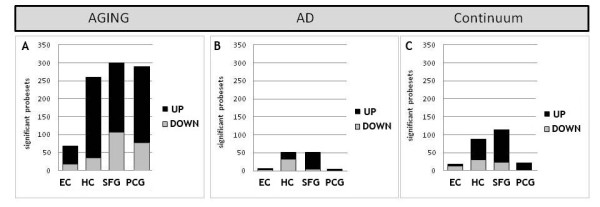
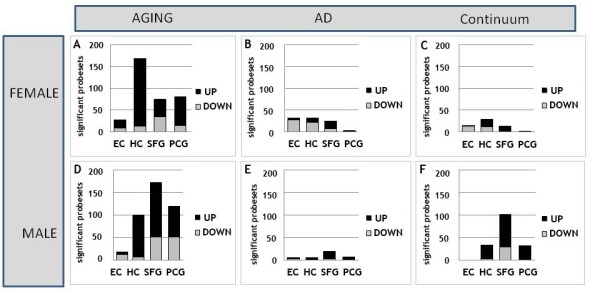
BACKGROUND: This study undertakes a systematic and comprehensive analysis of brain gene expression profiles of immune/inflammation-related genes in aging and Alzheimer's disease (AD). METHODS: In a well-powered microarray study of young (20 to 59 years), aged (60 to 99 years), and AD (74 to 95 years) cases, gene responses were assessed in the hippocampus, entorhinal cortex, superior frontal gyrus, and post-central gyrus. RESULTS: Several novel concepts emerge. First, immune/inflammation-related genes showed major changes in gene expression over the course of cognitively normal aging, with the extent of gene response far greater in aging than in AD. Of the 759 immune-related probesets interrogated on the microarray, approximately 40% were significantly altered in the SFG, PCG and HC with increasing age, with the majority upregulated (64 to 86%). In contrast, far fewer immune/inflammation genes were significantly changed in the transition to AD (approximately 6% of immune-related probesets), with gene responses primarily restricted to the SFG and HC. Second, relatively few significant changes in immune/inflammation genes were detected in the EC either in aging or AD, although many genes in the EC showed similar trends in responses as in the other brain regions. Third, immune/inflammation genes undergo gender-specific patterns of response in aging and AD, with the most pronounced differences emerging in aging. Finally, there was widespread upregulation of genes reflecting activation of microglia and perivascular macrophages in the aging brain, coupled with a downregulation of select factors (TOLLIP, fractalkine) that when present curtail microglial/macrophage activation. Notably, essentially all pathways of the innate immune system were upregulated in aging, including numerous complement components, genes involved in toll-like receptor signaling and inflammasome signaling, as well as genes coding for immunoglobulin (Fc) receptors and human leukocyte antigens I and II. CONCLUSIONS: Unexpectedly, the extent of innate immune gene upregulation in AD was modest relative to the robust response apparent in the aged brain, consistent with the emerging idea of a critical involvement of inflammation in the earliest stages, perhaps even in the preclinical stage, of AD. Ultimately, our data suggest that an important strategy to maintain cognitive health and resilience involves reducing chronic innate immune activation that should be initiated in late midlife.
Overview
The claims and statistics of this paper haven’t been checked yet.
Free: it reads the open-access text and checks the first 5 claims that cite a source we can check. Create a free account to check every claim.
Integrity signals
Registry
Cites
Statistics
Figures
Verification
Claims the paper makes
The claims and statistics of this paper haven’t been checked yet.
Free: it reads the open-access text and checks the first 5 claims that cite a source we can check. Create a free account to check every claim.
Claims other papers make about this one
Each is checked against this paper’s own text: does it say what the citing paper says it does?
The source backs part of the claim, not all of it — or backs it for a different population, condition or comparison.
In the citing paper
“We found that substantially more genes increase with age than decrease, a trend that mirrors whole-brain data (Cribbs et al., 2012).”
From The aging astrocyte transcriptome from multiple regions of the mouse brain. (2018) · cites this paper as Cribbs et al., 2012
Experimental — accuracy not yet measuredThe check wasn’t confident either way, so it gives no verdict — never disputed.
In the citing paper
“Similarly for controls, Braak stages less than III were most commonly used, but some studies included controls with Braak stages IV or higher.123, 127”
From Markers of microglia in post-mortem brain samples from patients with Alzheimer’s disease: a systematic review (2018) · cites this paper as [123]
Experimental — accuracy not yet measuredIn the citing paper
“MHC class I is upregulated in the CB, HTH, and VC (Figure 4G), and because this pathway presents antigen, its upregulation may be a sign of cellular stress (Cribbs et al., 2012), although, in the developing brain, MHC class I plays a role in promoting synapse elimination (Huh et al., 2000).”
From The aging astrocyte transcriptome from multiple regions of the mouse brain. (2018) · cites this paper as Cribbs et al., 2012
In the citing paper
“some of the genes (including CLU) showed a progressive upregulation across normal aging and AD tissue, a concept that the authors term an aging-AD “continuum” [44]”
From Microglial dysfunction in brain aging and Alzheimer's disease (2014) · cites this paper as [44]
In the citing paper
“several components of the complement system are also increased in the brain during aging [44]”
From Microglial dysfunction in brain aging and Alzheimer's disease (2014) · cites this paper as [44]
3 more claims about this paper
Create a free account to see every claim other papers make about this one.
Self-check
Percentages, sums and reported differences re-computed from the paper’s own numbers.
The self-check needs the paper’s full text.
Citations
Cites
Exploration, normalization, and summaries of high density oligonucleotide array probe level data
Irizarry, R. A. (2003) · Biostatistics · doi:10.1093/biostatistics/4.2.249 · Cited by 10,603 · cited 1×
“[32,33].”
Schroder, K., & Tschopp, J. (2010) · Cell · doi:10.1016/j.cell.2010.01.040 · Cited by 5,475 · cited 7×
“In addition, IL-18 was upregulated in aging in the HC and PCG.”
BackgroundInfluentialSummaries of Affymetrix GeneChip probe level data
Irizarry, R. A. (2003) · Nucleic Acids Research · doi:10.1093/nar/gng015 · Cited by 4,887
Hypothetical model of dynamic biomarkers of the Alzheimer's pathological cascade
Jack, C. R., Knopman, D. S., Jagust, W. J., Shaw, L. M., Aisen, P. S., Weiner, M. W., Petersen, R. C., & Trojanowski, J. Q. (2010) · The Lancet Neurology · doi:10.1016/s1474-4422(09)70299-6 · Cited by 4,806 · cited 1×
“Aβ is likely to be both an initiating trigger and chronic driver of innate immune activation [111], consistent with growing data suggesting that MCI cases with high Aβ are at increased probability for converting to AD [112].”
ResultInflammation and Alzheimer’s disease
Akiyama, H. (2000) · Neurobiology of Aging · doi:10.1016/s0197-4580(00)00124-x · Cited by 4,514
Toll-like receptors and innate immunity
Medzhitov, R. (2001) · Nature Reviews Immunology · doi:10.1038/35100529 · Cited by 4,308
Toll-like receptor control of the adaptive immune responses
Iwasaki, A., & Medzhitov, R. (2004) · Nature Immunology · doi:10.1038/ni1112 · Cited by 4,193 · cited 1×
“Key components of the innate immune system are complement, TLRs, inflammasomes, and scavenger and immunoglobulin receptors [61].”
BackgroundFcγ receptors as regulators of immune responses
Nimmerjahn, F., & Ravetch, J. V. (2008) · Nature Reviews Immunology · doi:10.1038/nri2206 · Cited by 2,947 · cited 1×
“FcRs are upregulated in response to innate immune activation, and are increasingly recognized for their contributions to the pathogenesis of neurological disorders [82-84].”
BackgroundDAMPs, PAMPs and alarmins: all we need to know about danger
Bianchi, M. E. (2007) · Journal of Leukocyte Biology · doi:10.1189/jlb.0306164 · Cited by 2,794 · cited 1×
“Recent findings demonstrate that TLR signaling can be activated by endogenous nonpathogenic ligands, in particular endogenous molecules released in response to injury or inflammation [67].”
BackgroundThe NALP3 inflammasome is involved in the innate immune response to amyloid-β
Halle, A., Hornung, V., Petzold, G. C., Stewart, C. R., Monks, B. G., Reinheckel, T., Fitzgerald, K. A., Latz, E., Moore, K. J., & Golenbock, D. T. (2008) · Nature Immunology · doi:10.1038/ni.1636 · Cited by 2,441
Cited by
Items 401–499 of 499
Mitigating cognitive impairment in aging mice: Exploring the therapeutic potential of ischelium
Chen, Y., Cheng, W., Tang, J., Xiao, B., Kuang, M., Xu, L., & Liu, H. (2023) · Biochemical and Biophysical Research Communications · doi:10.1016/j.bbrc.2023.149173 · Cited by 3
Verlinden, S. F. F. (2024) · Frontiers in Aging · doi:10.3389/fragi.2024.1452453 · Cited by 5
SIRT6-dependent functional switch via K494 modifications of RE-1 silencing transcription factor
Zaretsky, A., García-Venzor, A., Eremenko, E., Stein, D., Smirnov, D., Rabuah, Y., Dryer, R. A., Kriukov, D. V., Kaluski-Kopatch, S., Einav, M., et al. (2024) · Cell Death and Disease · doi:10.1038/s41419-024-07160-0 · Cited by 4
Liu, S.-T., Zhang, Y., Wu, X., Chang-xing, L., & Hu, Q. (2025) · Neurological Research · doi:10.1080/01616412.2025.2495933 · Cited by 3
“In recent years, the role of inflammasome-mediated inflammatory pathways in various central nervous system diseases has attracted increasing attention [14].”
Lietzau, G., Ntika, S., Pintana, H., Tracy, L. M., Klein, T., Nyström, T., Darsalia, V., Patrone, C., & Krizhanovskii, C. (2021) · Cellular and Molecular Neurobiology · doi:10.1007/s10571-021-01079-2 · Cited by 3
Du, J., Sudlow, L. C., Luzhansky, I. D., & Berezin, M. Y. (2023) · bioRxiv (Cold Spring Harbor Laboratory) · doi:10.1101/2023.10.05.560580 · Cited by 3
“In humans, elevated TXNIP levels have been associated with axonal damage seen in type 2 diabetes mellitus (82) and are notably higher in the neurons of older individuals (83).”
Mitochondrial double-stranded RNA accumulation in brain aging and Alzheimer’s diseasePreprint
Doser, R. L., & LaRocca, T. J. (2026) · bioRxiv (Cold Spring Harbor Laboratory) · doi:10.64898/2026.02.02.703345 · Cited by 3
“Similar to others’ findings 31–33 , the expression of genes related to dsRNA and type-I interferon (IFN) signaling was generally greater in older brains (Figure S1C).”
Multi Sensorial Stimulation Lab: A New Approach for Severe Dementia
Boccadamo, A., Luca, A. D., Palamà, L., Sancarlo, D., Leone, A., Diraco, G., Siciliano, P. A., Toma, A., Maffia, M., Riccardis, L. D., et al. (2021) · Lecture notes in electrical engineering · doi:10.1007/978-3-030-63107-9_6 · Cited by 2
Luz, I. S., Takaya, R., Ribeiro, D. G., Castro, M. S., & Fontes, W. (2024) · Advances in experimental medicine and biology · doi:10.1007/978-3-031-50624-6_12 · Cited by 3
Neuroinflammation in Alzheimer's Disease
(2020) · Case Medical Research · doi:10.31525/ct1-nct04274998 · Cited by 3
An in silico approach to identify early damage biomarker candidates in metachromatic leukodystrophy
Gómez, J., Artigas, L., Valls, R., & Gervas‐Arruga, J. (2023) · Molecular Genetics and Metabolism Reports · doi:10.1016/j.ymgmr.2023.100974 · Cited by 5
Ward, R. J. (2013) · Royal Society of Chemistry eBooks · doi:10.1039/9781849735896-00031 · Cited by 2
Neuroinflammation in Age-Related Neurodegenerative Diseases
MacPherson, K. P., Rodrigues, M. E. D. S., Cintron, A. F., & Tansey, M. G. (2018) · Elsevier eBooks · doi:10.1016/b978-0-12-811304-2.00016-x · Cited by 3
Peng, S., Zeng, L., Haure-mirande, J.-V., Wang, M., Huffman, D. M., Haroutunian, V., Ehrlich, M. E., Zhang, B., & Tu, Z. (2021) · bioRxiv (Cold Spring Harbor Laboratory) · doi:10.1101/2021.06.01.446628 · Cited by 2
Cardoso, F. D. S., Mansur, F., Araújo, B., Gonzalez-Lima, F., & da Silva, S. G. (2021) · Research Square · doi:10.21203/rs.3.rs-293139/v1 · Cited by 3
Complement system alteration in iPSC-derived astrocytes from individuals with Down syndromePreprint
Silva, A. L. T. E., de Oliveira, P. H. P., Yokota-Moreno, B. Y., Avila, J. P., Nakaya, H. I., Fausto, J. D. S., Sertie, A. L., & Zampieri, B. L. (2024) · Research Square · doi:10.21203/rs.3.rs-5319960/v1 · Cited by 2
Liharska, L. E., & Charney, A. W. (2024) · Current topics in behavioral neurosciences · doi:10.1007/7854_2024_466 · Cited by 1
Batista, A. F., Presumey, J., Singh, B. B., Yalçın, E., Schroeder, M. K., Khan, K., Spooner, E., Li, S. A., Carroll, M. C., & Lemere, C. A. (2025) · Molecular Neurodegeneration Advances · doi:10.1186/s44477-025-00010-z · Cited by 4
Wang, Z., lyu, D., Xiang, Y., Lu, Y., Yu, T., Zhou, W., Wu, M., Yin, X., & Chen, Z. (2026) · International Immunopharmacology · doi:10.1016/j.intimp.2026.116381 · Cited by 1
Human Microglial Molecular Alterations in Aging and Alzheimer’s Disease
Baldo, K. A. T., Gozlan, E., Chidebe, E. O., Awogbindin, I. O., Prieto, M. O., Dalmacio, L. M. M., Ben-Azu, B., Frenkel, D., & Tremblay, M. (2026) · Cells · doi:10.3390/cells15131159 · Cited by 1
“This may contribute to impairing microglial regulation of the CNS inflammatory milieu and confer increased susceptibility to neurodegeneration [28,102–105].”
Vascular Aging and Free Radicals
Ungvari, Z. I., Koller, Á., Toth, P. P., & Csiszár, A. (2014) · Springer eBooks · doi:10.1007/978-3-642-30018-9_52 · Cited by 1
Modeling Aging and Age-Associated Pathology in Zebrafish
houcke, J. V., Bollaerts, I., Groef, L. D., & Moons, L. (2018) · Elsevier eBooks · doi:10.1016/b978-0-12-811353-0.00025-7 · Cited by 2
BEYİN YAŞLANMASINDA MOLEKÜLER MEKANİZMALAR
ÖZDEK, E., & Han, S. (2022) · Ankara Universitesi Eczacilik Fakultesi Dergisi · doi:10.33483/jfpau.1099963 · Cited by 1
Добрынина, Л. А., Геннадьевна, М. А., Шабалина, А. А., Burmak, A. G., Shlapakova, P. S., Витальевна, Ш. К., Tsypushtanova, M. M., Trubitsyna, V. V., & Gnedovskaya, E. V. (2023) · S S Korsakov Journal of Neurology and Psychiatry · doi:10.17116/jnevro202312309158 · Cited by 1
Chen, Y., Ren, C.-Y., & Yu, C. (2024) · Frontiers in Psychiatry · doi:10.3389/fpsyt.2024.1435394 · Cited by 1
Lazaros, K., Gonidi, M., Kontara, N., Krokidis, M. G., Vrahatis, A. G., Exarchos, T., & Vlamos, P. (2024) · Applied Sciences · doi:10.3390/app14188372 · Cited by 1
Wu, X., Yang, Q., Xie, Y., Xia, L., Li, J., An, W., & Lu, X. (2025) · Journal of Alzheimer s Disease · doi:10.1177/13872877251335891 · Cited by 1
“30 Mendelian randomization (MR) leverages single-nucleotide polymorphisms (SNPs) as instrumental variables to infer causal exposure-outcome relationships, circumventing confounding biases through genetic randomization during gametogenesis.”
Pattern Recognition Receptors and Aging
Shalaby, K. H. (2013) · Springer eBooks · doi:10.1007/978-3-642-39495-9_8 · Cited by 1
Inflammasomes Action as an Important Mechanism in Experimental and Clinical Depression
Singhal, G., & Baune, B. T. (2018) · Elsevier eBooks · doi:10.1016/b978-0-12-811073-7.00009-x · Cited by 2
A New Approach to Batch Effect Removal Based on Distribution Matching in Latent Space
Li, H., Dogan, H., & Cui, J. (2019) · IEEE International Conference on Bioinformatics and Biomedicine (BIBM) · doi:10.1109/bibm47256.2019.8983417 · Cited by 2
Importance of Microglial Cytoskeleton and the Actin-interacting Proteins in Alzheimer's Disease
Choi, G.-E. (2020) · Journal of Experimental & Biomedical Sciences/Biomedical Science Letters · doi:10.15616/bsl.2020.26.1.1 · Cited by 2
“Several studies have shown an inflammatory response in post-mortem tissue samples of AD patients (Cribbs et al., 2012; Sudduth et al., 2013; Gomez-Nicola and Boche, 2015; Janssen et al., 2016; Knezevic and Mizrahi, 2018).”
BackgroundNeuroinflammation in Alzheimer's Disease Continuum
Sag, A. T., & Yemişçi, M. (2020) · Neurological Sciences and Neurophysiology · doi:10.4103/nsn.nsn_190_20 · Cited by 1
de Natale, E. R., Wilson, H., Udeh‐Momoh, C. T., Ford, J. K., Politis, M., & Middleton, L. T. (2022) · Elsevier eBooks · doi:10.1016/b978-0-12-823761-8.00022-7 · Cited by 2
An insight into plant polyphenols in prevention of brain aging
Singh, P., Konar, A., & Thakur, M. K. (2022) · Elsevier eBooks · doi:10.1016/b978-0-323-90581-7.00018-9 · Cited by 2
Malan‐Müller, S. (2014) · SUNScholar (Stellenbosch University) · Cited by 1
Janeiro, M. H., Puerta, E., Lanz, M., Milagro, F. I., Ramírez, M. J., & Solas, M. (2021) · bioRxiv (Cold Spring Harbor Laboratory) · doi:10.1101/2021.11.17.469001 · Cited by 1
“The peripheral inflammation is accompanied by a strong neuroinflammation as SAMP8 mice exhibited significant increases of cortical and hippocampal TNF-α and IL6 levels together with an elevated pJNK levels as well as GFAP protein and inmmunoreactivity, already at 2 months of age.”
BackgroundInfluentialBi, F., Bai, Y. M., Zhang, Y., Shi, M., & Liu, W. (2021) · SSRN Electronic Journal · doi:10.2139/ssrn.3960484 · Cited by 1
Causal links between mitophagy and Alzheimer’s disease: a Mendelian randomization studyPreprint
Zhang, W., Chen, W., Guo, Z., & Li, H. (2024) · medRxiv · doi:10.1101/2024.10.01.24314751 · Cited by 2
Microglial involvement in brain physiopathology: in vitro studies using rat primary cultures
Mengoni, I. (2014) · AMS Dottorato Institutional Doctoral Theses Repository (University of Bologna) · doi:10.6092/unibo/amsdottorato/6466
Mount, M. P. (2015) · uO Research (University of Ottawa) · doi:10.20381/ruor-2755
Age-associated increases in FKBP51 facilitate tau neurotoxicity
Blair, L. J. (2014) · Digital Commons - University of South Florida (University of South Florida) · Cited by 2
Dendritic Cells and Dysregulated Immunity in the Elderly
Agrawal, A., & Gupta, S. (2013) · Springer eBooks · doi:10.1007/978-3-642-39495-9_6
Maher, P. A. (2016) · Springer eBooks · doi:10.1007/978-3-319-28995-3_8 · Cited by 1
Perfil de expressão gênica da micróglia humana e suas alterações relacionadas ao glioma
Galatro, T. F. D. A. (2016) · Digital Library of Theses and Dissertations (Universidade de São Paulo) · doi:10.11606/t.5.2016.tde-17112016-164342 · Cited by 1
Aging and Microglial Activation in Neurodegenerative Diseases
Oyarzabal, E. A., Shih, Y. I., & Hong, J. (2016) · Oxidative stress in applied basic research and clinical practice · doi:10.1007/978-3-319-33486-8_7
The link between ceramide transporters, innate immunity and Alzheimer’s disease
Bode, G. H. (2016) · Research Publications (Maastricht University) · doi:10.26481/dis.20161014gb
The Link between Salivary Surfactant-Protein D and Dementia in Nursing Home Dementia Patients
Budding, C., & Holman, T. (2017) · Repository hosted by TU Delft Library (TU Delft) · doi:10.25609/sure.v3.2535
Cell type-specific complement expression from healthy and diseased retinaePreprint
Pauly, D., Schäfer, N., Graßmann, F., Pfaller, A. M., Straub, T., Weber, B. H. F., Hauck, S. M., & Grosche, A. (2018) · bioRxiv (Cold Spring Harbor Laboratory) · doi:10.1101/413088
A study of the global effects of Apolipoprotein E using lipidomics
Hawksworth, J. I. (2019) · ORCA Online Research @Cardiff (Cardiff University)
Monocyte-specific changes in gene expression implicate LACTB2 and PLIN2 in Alzheimer’s diseasePreprint
Harwood, J. C., Leonenko, G., Sims, R., Escott‐Price, V., Williams, J. H., & Holmans, P. (2020) · bioRxiv (Cold Spring Harbor Laboratory) · doi:10.1101/2020.06.05.136275
“Up-regulation of innate immune activation genes is greater in normal aging than in AD, suggesting that inflammation is involved in the aetiology of AD at an early stage, before the detection of the disease (Cribbs et al., 2012).”
BackgroundSaint, M., & Rath, P. C. (2020) · Springer eBooks · doi:10.1007/978-981-32-9005-1_3
Sex Differences in Immune Gene Expression in the Brain of a Small ShorebirdPreprint
Valdebenito, J. O., Maher, K. H., Zachár, G., Huang, Q., Zhang, Z., Young, L. J., Székely, T., Que, P., Liu, Y., & Urrutia, A. O. (2021) · Research Square · doi:10.21203/rs.3.rs-536989/v1
Evolución estilística de la expresión del sufrimiento en la poesía de alfonsina storni
Hernández, M., & Eduardo, J. (2013) · scholarworks - UTEP (The University of Texas at El Paso)
Immunopharmacology of Alzheimer’s disease
Nissar, K., Firdous, P., Ali, S., & Hussain, A. (2021) · Elsevier eBooks · doi:10.1016/b978-0-323-90053-9.00014-2
Identification of Molecular Biomarkers Associated With Stroke Progression Using WGCNA and SVM-RFEPreprint
Liu, S., Zhang, Y., Wu, X., Lu, C.-X., & Hu, Q. (2022) · Research Square · doi:10.21203/rs.3.rs-1221609/v1
Multi-omic analysis of the aging mouse brain
Kluever, V. (2021) · eDiss (Georg-August-Universität Göttingen) · doi:10.53846/goediss-9022
Patro, N., Kushwaha, S. S., & Patro, I. K. (2022) · Springer eBooks · doi:10.1007/978-981-16-8313-8_20
Morselli, E., & Criollo, A. (2016) · Springer eBooks · doi:10.1007/978-3-319-30079-5_15
Cellular Mechanisms of Dementia: Animal and Human Studies
Gan, L. (2017) · Oxford University Press eBooks · doi:10.1093/med/9780190681425.003.0054
Faculty Opinions recommendation of Neuroinflammation in Alzheimer's disease.
Perani, D. (2017) · Faculty Opinions – Post-Publication Peer Review of the Biomedical Literature · doi:10.3410/f.725413893.793537457
Longitudinal associations between serum cytokine levels and dementia
Kim, J., & JinSang, Y. (2018) · doi:10.26226/morressier.5b681763b56e9b005965bfd5
Hodges, T. E., Lieblich, S. E., Rechlin, R. K., & Galea, L. A. M. (2022) · Research Square · doi:10.21203/rs.3.rs-1746768/v1
Couch, C., Alawieh, A. M., Toutonji, A., Atkinson, C., & Tomlinson, S. (2022) · SSRN Electronic Journal · doi:10.2139/ssrn.4100295
Pisani, G., & Baron, B. (2022) · International Blood Research & Reviews · doi:10.9734/ibrr/2022/v13i430185
“For instance C1q, C3 and C4 levels have been shown to increase in the brain with age [12,45].”
BackgroundRole of Buccal Cells in Neurodegeneration
Gonidi, M., Kontara, N., Vrahatis, A. G., Exarchos, T., & Vlamos, P. (2023) · Springer eBooks · doi:10.1007/978-3-319-75479-6_13-1
Li, Y., Fang, Y., Chang, H., Gorczyca, M. T., Liu, P., & Tseng, G. C. (2023) · Genes · doi:10.3390/genes14040798
Microglia Mediated Neuroinflammation: A Silent Contributor to Alzheimer’s DiseasePreprint
Ripa, J. D., & Roy, R. K. (2023) · Preprints.org · doi:10.20944/preprints202305.1673.v1
Immune dysregulation and neurodegenerative diseases
Cipollini, V., Troili, F., & Giubilei, F. (2023) · Elsevier eBooks · doi:10.1016/b978-0-323-85841-0.00015-8
Role of Buccal Cells in Neurodegeneration
Gonidi, M., Kontara, N., Vrahatis, A. G., Exarchos, T. P., & Vlamos, P. (2023) · Springer eBooks · doi:10.1007/978-3-319-75922-7_13
Length-dependent RNA foci formation and RAN translation are associated with SCA12 disorderPreprint
Kumar, M., Sahni, S., Anand, V., Kumar, D., Kushwah, N. S., Goel, D., Kapoor, H., Srivastava, A. K., & Faruq, M. (2023) · bioRxiv (Cold Spring Harbor Laboratory) · doi:10.1101/2023.07.21.550051
“This interaction indicates that C1QBP may be involved in the production and buildup of amyloid plaques in Alzheimer's disease[25].”
BackgroundSilberman, J., Olagbiyan, M., & Moore, E. (2024) · Tissue Engineering Part A · doi:10.1089/ten.tea.2023.0327 · Cited by 1
“47 This could play a role in how > 65 macrophages interact with endothelial cells, as higher in-flammation has been associated with lower microvessel growth.”
Добрынина, Л. А., Makarova, A. G., Шабалина, А. А., Burmak, A. G., Shlapakova, P. S., Витальевна, Ш. К., Tsypushtanova, M. M., Trubitsyna, V. V., & Gnedovskaya, E. V. (2024) · Neuroscience and Behavioral Physiology · doi:10.1007/s11055-024-01587-w
Aomine, Y., Shimo, Y., Sakurai, K., Abe, M., Macpherson, T., Ozawa, T., & Hikida, T. (2024) · bioRxiv (Cold Spring Harbor Laboratory) · doi:10.1101/2024.04.29.591794
Ogholbake, A. A., & Cheng, Q. S. (2024) · Neural Computing and Applications · doi:10.1007/s00521-024-10316-w · Cited by 2
“Human Hippocampus Brain Region from GSE48350 [3, 5, 9] dataset contains 43 samples collected from normal controls and 19 samples collected from Alzheimer disease cases.”
Druzhkova, T. A., Zhanina, M. Y., Vladimirova, E. E., Guekht, A. B., & Gulyaeva, N. V. (2024) · Biochemistry (Moscow) · doi:10.1134/s0006297924090062
“Available data confirm association between neuroinflammation and cognitive dysfunction at the older age [35] implying that neuroinflammation could be one of the causes of less favorable neuropsychiatric prognosis for the older patients after IS in comparison with the younger patients.”
Maher, P. A. (2025) · Springer eBooks · doi:10.1007/978-3-031-96913-3_1
Application of synthetic biology in age-related and neurodegenerative disease
Ghosh, S., Kundu, S., Jana, R., Basu, B., & Prajapati, B. G. (2025) · Elsevier eBooks · doi:10.1016/b978-0-443-33649-2.00011-3
The Neuroprotective Effect of Garlic
Ross, I. A. (2025) · Springer eBooks · doi:10.1007/978-3-032-04239-2_4
Hodges, T. E., Lieblich, S. E., Rechlin, R. K., & Galea, L. A. M. (2022) · Figshare · doi:10.6084/m9.figshare.21293694
Porcher, L., Bruckmeier, S., Burbano, S. D., Finnell, J. E., Gorny, N., Klett, J., Wood, S. K., & Kelly, M. P. (2021) · Figshare · doi:10.6084/m9.figshare.16664591
Additional file 1 of Integrated analysis of the aging brain transcriptome and proteome in tauopathy
Mangleburg, C. G., Wu, T., Yalamanchili, H. K., Guo, C., Hsieh, Y.-C., Duong, D. M., Dammer, E. B., Jager, P. L. D., Seyfried, N. T., Liu, Z., et al. (2020) · Figshare · doi:10.6084/m9.figshare.13024037
Additional file 1 of Modulation of C5a–C5aR1 signaling alters the dynamics of AD progression
Carvalho, K., Schartz, N. D., Balderrama-Gutierrez, G., Liang, H. Y., Chu, S.-H., Selvan, P., Gómez-Arboledas, Á., Petrisko, T. J., Fonseca, M. I., Mortazavi, A., et al. (2022) · Figshare · doi:10.6084/m9.figshare.20296174
Self-citationSwanson, M. E. V., Scotter, E. L., Smyth, L. C. D., Murray, H. C., Ryan, B., Turner, C., Faull, R. L. M., Dragunow, M., & Curtis, M. A. (2020) · Figshare · doi:10.6084/m9.figshare.13120600
Kaur, P., Kumari, S., Singh, A. K., Koley, T., Rai, N., Ethayathulla, A. S., & Dey, S. (2026) · ACS Chemical Neuroscience · doi:10.1021/acschemneuro.5c00772
Chataigner, M. (2021) · theses.fr (ABES) · doi:10.70675/a4317690zc4c8z4ba6za738zd457c6bb9b74
Djuretić, J., Ivanović, J., Jezdić, K., Todorović, V., Bufan, B., Santrač, A., & Aranđelović, J. (2026) · npj Aging · doi:10.1038/s41514-026-00364-y
Ribeiro, L. W. (2023) · theses.fr (ABES) · doi:10.70675/68582d99z4406z4ad4zbd76z15927fb63da5
Liu, W., Qin, W., Li, Y., & Jia, J. (2026) · Brain Behavior and Immunity · doi:10.1016/j.bbi.2026.106888
Molecular Networks and Key Regulators Underlying Resilience of the Human Brain to Aging and Dementia
Guo, L., Grimaldi, N., Wang, M., Ho, L., Shackleton, B., Neff, R. A., Wang, E., Tu, Z., Gandy, S., Haroutunian, V. H., et al. (2026) · Biomolecules · doi:10.3390/biom16070992
“Many studies have suggested the critical role of the immune system in regulating the progression of brain aging and neurodegenerative diseases [21,28].”
Mathematical mapping of circadian genes in Alzheimer’s disease
Venkatesh, S., Venkadeswaran, K., Raja, R., & Reshma, A. (2026) · Chronobiology International · doi:10.1080/07420528.2026.2705386
Dysfunction of lipid metabolism and lysosomal capacity: at the core of microglial aging?
Šimončičová, E., & Tremblay, M. (2026) · Frontiers in Aging Neuroscience · doi:10.3389/fnagi.2026.1884230
“Upregulation of complement cascade-associated proteins, such as C1q, C3, or C3R, was further shown in the hippocampal tissue of aged humans (Cribbs et al., 2012).”
Impact of Helium Ions on Mouse Behavior, Memory, Microglia, and Blood Metabolome
Sorokina, S. S., Malkov, A., Zamyatina, E. A., Shemyakov, A. E., Belov, O., & Popova, N. R. (2026) · Biology · doi:10.3390/biology15201819
“However, depending on the context, TLR4 can induce either a pro-inflammatory, pro-survival response associated with cell proliferation, or an anti-inflammatory response leading to cell death [59,60].”
Mitochondrial dysfunction in Parkinson's disease and aging
Lu, X., Huang, Z., & Ying, Z. (2026) · Frontiers in Aging Neuroscience · doi:10.3389/fnagi.2026.1914316
“These mediators can directly injure neurons and further compromise blood-brain barrier integrity, creating a self-sustaining vicious cycle (Cribbs et al., 2012; Mattson and Arumugam, 2018).”
Metadata
- Authors
- Cribbs, D. H., Berchtold, N. C., Perreau, V., Coleman, P. D., Rogers, J., Tenner, A. J., & Cotman, C. W.
- Affiliations
- University of California, Irvine (US)
- The University of Melbourne (AU)
- University of Rochester Medicine (US)
- Banner Sun Health Research Institute (US)
- Corresponding author
- Cribbs, David H
- Berchtold, Nicole C
- Venue
- Journal of Neuroinflammation
- Published
- 2012-07-23
- Volume
- 9
- Issue
- 1
- Pages
- 179-179
- ISSN
- 1742-2094 (ISSN-L)
- PMC
- PMC3419089
- OpenAlex
- W2117266418
- Cited by
- 499
- References
- 128
- Citations by year
- 2026: 14 · 2025: 26 · 2024: 44 · 2023: 43 · 2022: 43 · 2021: 56 · 2020: 42 · 2019: 37 · 2018: 35 · 2017: 42 · 2016: 34 · 2015: 29 · 2014: 23 · 2013: 26 · 2012: 5
- FWCI
- 13.25
- Type
- journal article
- Language
- en
- Open access
- gold
- doi.org
- Locations
- Journal of Neuroinflammation (publishedVersion, cc-by)
- PubMed Central (publishedVersion, cc-by)
- PubMed (publishedVersion)
- Minerva Access (University of Melbourne) (submittedVersion, cc-by)
- DOAJ (DOAJ: Directory of Open Access Journals) (submittedVersion)
- eScholarship (California Digital Library) (submittedVersion, cc-by)
- eScholarship (California Digital Library) (submittedVersion)
- Funders
- Alzheimer's Association (IIRG-11-204835)
- University of Southern California
- University of Pennsylvania
- Johns Hopkins University
- University of Rochester
- Arizona Biomedical Research Commission (P30 AG19610, 05–901, 211002)
- National Institutes of Health (05-901, 211002, AG16573, AG19610, AG000538)
- National Institute on Aging (P01AG000538, R01AG034667, P50AG016573, R01AG023173, P30AG019610)
- Topics
- Life Sciences › Neuroscience › Neurology › Neuroinflammation and Neurodegeneration Mechanisms
- Life Sciences › Neuroscience › Cellular and Molecular Neuroscience › Alzheimer's disease research and treatments
- Health Sciences › Medicine › Psychiatry and Mental health › Dementia and Cognitive Impairment Research
- Keywords
- brain aging, Alzheimer's disease, innate immunity, neuroinflammation, immune gene expression, microglial activation, perivascular macrophages, cognitive decline, neurodegeneration, hippocampus, entorhinal cortex, superior frontal gyrus, postcentral gyrus, sex differences, Toll-like receptor signaling, inflammasome, complement system, Tollip, fractalkine, preclinical Alzheimer's disease
- MeSH terms
- Adult, Aged, Aged, 80 and over, Aging, Alzheimer Disease, Brain, Cognition Disorders, Female, Humans, Immunity, Innate, Male, Middle Aged, Neurodegenerative Diseases, Protein Array Analysis, Young Adult, Transcriptome
About these checks
Registry, retraction, Cites and statistics results are computed, not judged, with one exception: a printed reference that no index lists is read once by a model before it counts as a citation error. Claims are extracted by a model and kept only when their quote appears verbatim in the text; each cited source is then checked, with a model’s help, for whether it says what the claim relies on. Those verdicts can be wrong — read the claim’s quote and the cited source before relying on one.
Statistics and arithmetic are recomputed, not judged.
Confidence bands are shown only for fields calibrated on our annotated test set. None is calibrated yet, so no band is shown.
What counts as a claim ›How we measure confidence ›How we check this ›
Are you an author, or do you see a problem with this page? Request a review
Data sources
Bibliographic data: Semantic Scholar, OpenAlex, Crossref.
Contains information from the Semantic Scholar Academic Graph Datasets, made available under the ODC Attribution License (ODC-BY 1.0).
Semantic Scholar’s data is described in: Kinney, R., et al. (2023). The Semantic Scholar Open Data Platform. arXiv:2301.10140.
