

Extensive innate immune gene activation accompanies brain aging, increasing vulnerability to cognitive decline and neurodegeneration: a microarray study
Open accessThe DOI matches its Crossref record; 128 of the 128 references it cites were found in a registry or an index.
Abstract
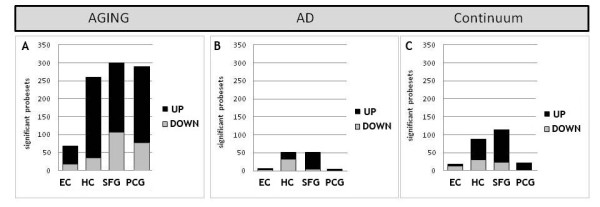
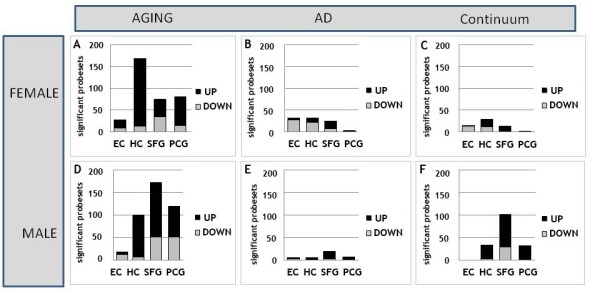
BACKGROUND: This study undertakes a systematic and comprehensive analysis of brain gene expression profiles of immune/inflammation-related genes in aging and Alzheimer's disease (AD). METHODS: In a well-powered microarray study of young (20 to 59 years), aged (60 to 99 years), and AD (74 to 95 years) cases, gene responses were assessed in the hippocampus, entorhinal cortex, superior frontal gyrus, and post-central gyrus. RESULTS: Several novel concepts emerge. First, immune/inflammation-related genes showed major changes in gene expression over the course of cognitively normal aging, with the extent of gene response far greater in aging than in AD. Of the 759 immune-related probesets interrogated on the microarray, approximately 40% were significantly altered in the SFG, PCG and HC with increasing age, with the majority upregulated (64 to 86%). In contrast, far fewer immune/inflammation genes were significantly changed in the transition to AD (approximately 6% of immune-related probesets), with gene responses primarily restricted to the SFG and HC. Second, relatively few significant changes in immune/inflammation genes were detected in the EC either in aging or AD, although many genes in the EC showed similar trends in responses as in the other brain regions. Third, immune/inflammation genes undergo gender-specific patterns of response in aging and AD, with the most pronounced differences emerging in aging. Finally, there was widespread upregulation of genes reflecting activation of microglia and perivascular macrophages in the aging brain, coupled with a downregulation of select factors (TOLLIP, fractalkine) that when present curtail microglial/macrophage activation. Notably, essentially all pathways of the innate immune system were upregulated in aging, including numerous complement components, genes involved in toll-like receptor signaling and inflammasome signaling, as well as genes coding for immunoglobulin (Fc) receptors and human leukocyte antigens I and II. CONCLUSIONS: Unexpectedly, the extent of innate immune gene upregulation in AD was modest relative to the robust response apparent in the aged brain, consistent with the emerging idea of a critical involvement of inflammation in the earliest stages, perhaps even in the preclinical stage, of AD. Ultimately, our data suggest that an important strategy to maintain cognitive health and resilience involves reducing chronic innate immune activation that should be initiated in late midlife.
Overview
The claims and statistics of this paper haven’t been checked yet.
Free: it reads the open-access text and checks the first 5 claims that cite a source we can check. Create a free account to check every claim.
Integrity signals
Registry
Cites
Statistics
Figures
Verification
Claims the paper makes
The claims and statistics of this paper haven’t been checked yet.
Free: it reads the open-access text and checks the first 5 claims that cite a source we can check. Create a free account to check every claim.
Claims other papers make about this one
Each is checked against this paper’s own text: does it say what the citing paper says it does?
The source backs part of the claim, not all of it — or backs it for a different population, condition or comparison.
In the citing paper
“We found that substantially more genes increase with age than decrease, a trend that mirrors whole-brain data (Cribbs et al., 2012).”
From The aging astrocyte transcriptome from multiple regions of the mouse brain. (2018) · cites this paper as Cribbs et al., 2012
Experimental — accuracy not yet measuredThe check wasn’t confident either way, so it gives no verdict — never disputed.
In the citing paper
“Similarly for controls, Braak stages less than III were most commonly used, but some studies included controls with Braak stages IV or higher.123, 127”
From Markers of microglia in post-mortem brain samples from patients with Alzheimer’s disease: a systematic review (2018) · cites this paper as [123]
Experimental — accuracy not yet measuredIn the citing paper
“MHC class I is upregulated in the CB, HTH, and VC (Figure 4G), and because this pathway presents antigen, its upregulation may be a sign of cellular stress (Cribbs et al., 2012), although, in the developing brain, MHC class I plays a role in promoting synapse elimination (Huh et al., 2000).”
From The aging astrocyte transcriptome from multiple regions of the mouse brain. (2018) · cites this paper as Cribbs et al., 2012
In the citing paper
“some of the genes (including CLU) showed a progressive upregulation across normal aging and AD tissue, a concept that the authors term an aging-AD “continuum” [44]”
From Microglial dysfunction in brain aging and Alzheimer's disease (2014) · cites this paper as [44]
In the citing paper
“several components of the complement system are also increased in the brain during aging [44]”
From Microglial dysfunction in brain aging and Alzheimer's disease (2014) · cites this paper as [44]
3 more claims about this paper
Create a free account to see every claim other papers make about this one.
Self-check
Percentages, sums and reported differences re-computed from the paper’s own numbers.
The self-check needs the paper’s full text.
Citations
Cites
Exploration, normalization, and summaries of high density oligonucleotide array probe level data
Irizarry, R. A. (2003) · Biostatistics · doi:10.1093/biostatistics/4.2.249 · Cited by 10,603 · cited 1×
“[32,33].”
Schroder, K., & Tschopp, J. (2010) · Cell · doi:10.1016/j.cell.2010.01.040 · Cited by 5,475 · cited 7×
“In addition, IL-18 was upregulated in aging in the HC and PCG.”
BackgroundInfluentialSummaries of Affymetrix GeneChip probe level data
Irizarry, R. A. (2003) · Nucleic Acids Research · doi:10.1093/nar/gng015 · Cited by 4,887
Hypothetical model of dynamic biomarkers of the Alzheimer's pathological cascade
Jack, C. R., Knopman, D. S., Jagust, W. J., Shaw, L. M., Aisen, P. S., Weiner, M. W., Petersen, R. C., & Trojanowski, J. Q. (2010) · The Lancet Neurology · doi:10.1016/s1474-4422(09)70299-6 · Cited by 4,806 · cited 1×
“Aβ is likely to be both an initiating trigger and chronic driver of innate immune activation [111], consistent with growing data suggesting that MCI cases with high Aβ are at increased probability for converting to AD [112].”
ResultInflammation and Alzheimer’s disease
Akiyama, H. (2000) · Neurobiology of Aging · doi:10.1016/s0197-4580(00)00124-x · Cited by 4,514
Toll-like receptors and innate immunity
Medzhitov, R. (2001) · Nature Reviews Immunology · doi:10.1038/35100529 · Cited by 4,308
Toll-like receptor control of the adaptive immune responses
Iwasaki, A., & Medzhitov, R. (2004) · Nature Immunology · doi:10.1038/ni1112 · Cited by 4,193 · cited 1×
“Key components of the innate immune system are complement, TLRs, inflammasomes, and scavenger and immunoglobulin receptors [61].”
BackgroundFcγ receptors as regulators of immune responses
Nimmerjahn, F., & Ravetch, J. V. (2008) · Nature Reviews Immunology · doi:10.1038/nri2206 · Cited by 2,947 · cited 1×
“FcRs are upregulated in response to innate immune activation, and are increasingly recognized for their contributions to the pathogenesis of neurological disorders [82-84].”
BackgroundDAMPs, PAMPs and alarmins: all we need to know about danger
Bianchi, M. E. (2007) · Journal of Leukocyte Biology · doi:10.1189/jlb.0306164 · Cited by 2,794 · cited 1×
“Recent findings demonstrate that TLR signaling can be activated by endogenous nonpathogenic ligands, in particular endogenous molecules released in response to injury or inflammation [67].”
BackgroundThe NALP3 inflammasome is involved in the innate immune response to amyloid-β
Halle, A., Hornung, V., Petzold, G. C., Stewart, C. R., Monks, B. G., Reinheckel, T., Fitzgerald, K. A., Latz, E., Moore, K. J., & Golenbock, D. T. (2008) · Nature Immunology · doi:10.1038/ni.1636 · Cited by 2,441
NLRP3 inflammasome activation: the convergence of multiple signalling pathways on ROS production?
Tschopp, J., & Schroder, K. (2010) · Nature Reviews Immunology · doi:10.1038/nri2725 · Cited by 1,850 · cited 8×
“In addition, IL-18 was upregulated in aging in the HC and PCG.”
BackgroundInfluentialControl of microglial neurotoxicity by the fractalkine receptor
Cardona, A. E., Pioro, E. P., Sasse, M. E., Kostenko, V., Cardona, S. M., Dijkstra, I. M., Huang, D., Kidd, G., Dombrowski, S., Dutta, R., et al. (2006) · Nature Neuroscience · doi:10.1038/nn1715 · Cited by 1,531 · cited 1×
“fractalkine receptor (CX3CR1) alters microglial responses and results in significant neurotoxicity [117], and impairs”
BackgroundVogl, T., Tenbrock, K., Ludwig, S., Leukert, N., Ehrhardt, C., van Zoelen, M. A. D., Nacken, W., Foell, D., van der Poll, T., Sorg, C., et al. (2007) · Nature Medicine · doi:10.1038/nm1638 · Cited by 1,418 · cited 1×
“One such ligand is calprotectin, which consist of a heterodimer of two members of the S100 calcium-binding family of proteins, S100A8 and S100A9, also respectively know as myeloid-related protein 8 (MRP8) and 14 (MRP14), that can act in synergy with endogenous and exogenous danger signals to promote inflammation via T…”
BackgroundWyss-Coray (2006) · doi:10.1038/nm1484 · Cited by 1,284 · cited 2×
“Innate immune activation can be neuroprotective when it is activated appropriately in response to non-self pathogens and in an acute fashion [4,50-53].”
BackgroundPropagation of Tau Misfolding from the Outside to the Inside of a Cell
Frost, B., Jacks, R. L., & Diamond, M. I. (2009) · Journal of Biological Chemistry · doi:10.1074/jbc.m808759200 · Cited by 1,252 · cited 1×
“Caspase-1-induced unconventional protein secretion may facilitate the cellular efflux of other cytoplasmic proteins, including misfolded tau and alpha-synuclein, thereby participating in the propagation of these proteinopathies [115,116], which in turn further contribute to innate immune activation.”
BackgroundHarrison, J. K., Jiang, Y., Chen, S., Xia, Y., Maciejewski, D., McNamara, R. K., Streit, W. J., Salafranca, M. N., Adhikari, S., Thompson, D. A., et al. (1998) · Proceedings of the National Academy of Sciences · doi:10.1073/pnas.95.18.10896 · Cited by 1,176 · cited 12×
“While there is evidence that TLR signaling can mediate some beneficial effects in CNS [54,70], it is believed that TLR-induced activation of microglia and release of proinflammatory molecules are responsible for neurotoxic processes in the course of various CNS diseases including AD [71].”
BackgroundInfluentialSystemic inflammation and disease progression in Alzheimer disease
Holmes, C., Cunningham, C., Zotova, E., Woolford, J., Dean, C., Kerr, S., Culliford, D., & Perry, V. H. (2009) · Neurology · doi:10.1212/wnl.0b013e3181b6bb95 · Cited by 1,139 · cited 1×
“A concept that has gained traction in recent years is that changes that occur during normal aging may prime the CNS for subsequent development of neurodegenerative disorders [29-31].”
BackgroundWada, K., Tanaka, K., & Nakashima, K. (2011) · PubMed · Cited by 1,132
Lehnardt, S., Massillon, L., Follett, P., Jensen, F. E., Ratan, R., Rosenberg, P. A., Volpe, J. J., & Vartanian, T. (2003) · Proceedings of the National Academy of Sciences · doi:10.1073/pnas.1432609100 · Cited by 1,052 · cited 1×
“or injury without activation of the adaptive arm of the immune system [54,97-102], and importantly, that the innate”
BackgroundSystemic infections and inflammation affect chronic neurodegeneration
Perry, V. H., Cunningham, C., & Holmes, C. (2007) · Nature Reviews Immunology · doi:10.1038/nri2015 · Cited by 1,027 · cited 2×
“However, chronic activation of the innate immune response in the brain is thought to contribute to neurodegeneration in AD [30,54].”
BackgroundIbuprofen Suppresses Plaque Pathology and Inflammation in a Mouse Model for Alzheimer's Disease
Lim, G. P., Yang, F., Chu, T., Chen, P., Beech, W., Teter, B., Tran, T., Ubeda, O., Ashe, K. H., Frautschy, S. A., et al. (2000) · The Journal of Neuroscience · doi:10.1523/jneurosci.20-15-05709.2000 · Cited by 884 · cited 1×
“In addition, epidemiological studies in humans suggest that long-term use of anti-inflammatory drugs during adult life protects brain function and delays the onset of cognitive decline [5,14,15], with animal studies providing additional support for this hypothesis [16-18].”
BackgroundActive Caspase-1 Is a Regulator of Unconventional Protein Secretion
Keller, M., Rüegg, A., Werner, S., & Beer, H.-D. (2008) · Cell · doi:10.1016/j.cell.2007.12.040 · Cited by 850 · cited 1×
“Further, inflammasome activation of caspase1 has been reported to initiate unconventional protein secretion (for example, independent of the endoplasmic reticulum-Golgi secretory pathway) to export cytokines from the cell, including IL-1β and IL-18, allowing these proinflammatory molecules to engage their extracellula…”
BackgroundEhrchen, J. M., Sunderkötter, C., Foell, D., Vogl, T., & Roth, J. (2009) · Journal of Leukocyte Biology · doi:10.1189/jlb.1008647 · Cited by 846 · cited 2×
“One such ligand is calprotectin, which consist of a heterodimer of two members of the S100 calcium-binding family of proteins, S100A8 and S100A9, also respectively know as myeloid-related protein 8 (MRP8) and 14 (MRP14), that can act in synergy with endogenous and exogenous danger signals to promote inflammation via T…”
BackgroundRegulation of innate immune responses in the brain
Rivest, S. (2009) · Nature Reviews Immunology · doi:10.1038/nri2565 · Cited by 843 · cited 14×
“While there is evidence that TLR signaling can mediate some beneficial effects in CNS [54,70], it is believed that TLR-induced activation of microglia and release of proinflammatory molecules are responsible for neurotoxic processes in the course of various CNS diseases including AD [71].”
BackgroundInfluentialComplement activation by beta-amyloid in Alzheimer disease.
Rogers, J., Cooper, N. R., Webster, S., Schultz, J., McGeer, P. L., Styren, S. D., Civin, W. H., Brachova, L., Bradt, B., & Ward, P. (1992) · Proceedings of the National Academy of Sciences · doi:10.1073/pnas.89.21.10016 · Cited by 817
Self-citationInflammatory processes in Alzheimer's disease
Heneka, M. T., & O'Banion, M. K. (2007) · Journal of Neuroimmunology · doi:10.1016/j.jneuroim.2006.11.017 · Cited by 782 · cited 2×
“point of contemporary research in aging and Alzheimer’s disease (AD) [1-4], and activation of inflammatory pathways in the brain is increasingly emphasized as a major risk factor for the development and progression of AD [2,5,6].”
BackgroundPrion-like mechanisms in neurodegenerative diseases
Frost, B., & Diamond, M. I. (2010) · Nature Reviews Neuroscience · doi:10.1038/nrn2786 · Cited by 776 · cited 1×
“Caspase-1-induced unconventional protein secretion may facilitate the cellular efflux of other cytoplasmic proteins, including misfolded tau and alpha-synuclein, thereby participating in the propagation of these proteinopathies [115,116], which in turn further contribute to innate immune activation.”
BackgroundCunningham, C., Wilcockson, D. C., Campion, S., Lunnon, K., & Perry, V. H. (2005) · The Journal of Neuroscience · doi:10.1523/jneurosci.2614-05.2005 · Cited by 768 · cited 1×
“A concept that has gained traction in recent years is that changes that occur during normal aging may prime the CNS for subsequent development of neurodegenerative disorders [29-31].”
BackgroundGriffin, W. S. T., Sheng, J. G., Royston, M. C., Gentleman, S. M., McKenzie, J. E., Graham, D. I., Roberts, G. W., & Mrak, R. E. (1998) · Brain Pathology · doi:10.1111/j.1750-3639.1998.tb00136.x · Cited by 708
Innate immunity: the missing link in neuroprotection and neurodegeneration?
Nguyen, M. D., Julien, J.-P., & Rivest, S. (2002) · Nature Reviews Neuroscience · doi:10.1038/nrn752 · Cited by 701 · cited 1×
“or injury without activation of the adaptive arm of the immune system [54,97-102], and importantly, that the innate”
BackgroundKitazawa, M., Oddo, S., Yamasaki, T. R., Green, K. N., & LaFerla, F. M. (2005) · The Journal of Neuroscience · doi:10.1523/jneurosci.2868-05.2005 · Cited by 697 · cited 1×
“Consistent with the idea that activation of the immune system in the brain is harmful, the majority of recent studies in transgenic mouse models of AD support the notion that immune activation can precipitate the onset of AD-like pathology [5-10] (but see [11-13]).”
BackgroundEndogenous ligands of Toll-like receptors
Tsan, M.-F., & Gao, B. (2004) · Journal of Leukocyte Biology · doi:10.1189/jlb.0304127 · Cited by 685 · cited 1×
“accumulate with age and AD, such as Aβ, and other ligands that are released by injured cells [62-66].”
BackgroundImmune activation in brain aging and neurodegeneration: too much or too little?
Lucin, K. M., & Wyss-Coray, T. (2009) · Neuron · doi:10.1016/j.neuron.2009.08.039 · Cited by 679 · cited 1×
“Innate immune activation can be neuroprotective when it is activated appropriately in response to non-self pathogens and in an acute fashion [4,50-53].”
BackgroundAge- and Gender-Related Differences in the Cortical Anatomical Network
Gong, G., Rosa-Neto, P., Carbonell, F., Chen, Z. J., He, Y., & Evans, A. C. (2009) · The Journal of Neuroscience · doi:10.1523/jneurosci.2308-09.2009 · Cited by 632 · cited 1×
“These results support accumulating evidence of a gender effect on brain aging, which have recently been documented at the gene expression level [28], morphometric level [103,104] and level of cortical connectivity networks [105].”
ResultGene expression changes in the course of normal brain aging are sexually dimorphic
Berchtold, N. C., Cribbs, D. H., Coleman, P. D., Rogers, J., Head, E., Kim, R., Beach, T., Miller, C., Troncoso, J., Trojanowski, J. Q., et al. (2008) · Proceedings of the National Academy of Sciences · doi:10.1073/pnas.0806883105 · Cited by 626 · cited 6×
“Using microarray analysis to identify functional classes of genes showing altered expression in cognitively normal aging across the adult lifespan (age 20 to 99 years), we found that immune activation is a highly prominent feature of cognitively normal brain aging [28].”
BackgroundMethodResultInfluentialSelf-citationCX3CR1 deficiency leads to impairment of hippocampal cognitive function and synaptic plasticity
Rogers, J. T., Morganti, J. M., Bachstetter, A. D., Hudson, C. E., Peters, M. M., Grimmig, B. A., Weeber, E. J., Bickford, P. C., & Gemma, C. (2011) · The Journal of Neuroscience · doi:10.1523/jneurosci.3667-11.2011 · Cited by 624 · cited 1×
“[118].”
Self-citationLehnardt, S. (2010) · Glia · doi:10.1002/glia.20928 · Cited by 597
Microglia in degenerative neurological disease
McGeer, P. L., Kawamata, T., Walker, D. G., Akiyama, H., Tooyama, I., & McGeer, E. G. (1993) · Glia · doi:10.1002/glia.440070114 · Cited by 596 · cited 1×
“Further, MHC molecules are upregulated on microglia and macrophages in response to elevated levels of cytokines associated with inflammation, and in response to chronic pathology and neurodegeneration such as occurs in AD and amyotrophic lateral sclerosis (ALS) [91-94].”
BackgroundCD14 and Toll-Like Receptors 2 and 4 Are Required for Fibrillar Aβ-Stimulated Microglial Activation
Reed-Geaghan, E. G., Savage, J. C., Hise, A. G., & Landreth, G. E. (2009) · The Journal of Neuroscience · doi:10.1523/jneurosci.3158-09.2009 · Cited by 591 · cited 3×
“which can in turn activate complement, TLRs, and the inflammasome (when in a fibrillar form), with consequent release of potent inflammatory peptides and proinflammatory cytokines [48,49,110].”
BackgroundHeneka, M. T., Sastre, M., Dumitrescu-Ozimek, L., Hanke, A., Dewachter, I., Kuiperi, C., O'Banion, K., Klockgether, T., Van Leuven, F., & Landreth, G. E. (2005) · Brain · doi:10.1093/brain/awh452 · Cited by 565 · cited 1×
“In addition, epidemiological studies in humans suggest that long-term use of anti-inflammatory drugs during adult life protects brain function and delays the onset of cognitive decline [5,14,15], with animal studies providing additional support for this hypothesis [16-18].”
BackgroundRole of the Toll-Like Receptor 4 in Neuroinflammation in Alzheimer’s Disease
Walter, S., Letiembre, M., Liu, Y., Heine, H., Penke, B., Hao, W., Bode, B., Manietta, N., Walter, J., Schulz-Schüffer, W., et al. (2007) · Cellular Physiology and Biochemistry · doi:10.1159/000110455 · Cited by 543 · cited 1×
“speculate that the beclin 1 deficit that develops during normal aging may contribute to Aβ accumulation, which can in turn activate complement, TLRs, and the inflammasome (when in a fibrillar form), with consequent release of potent inflammatory peptides and proinflammatory cytokines [48,49,110].”
BackgroundNSAIDs and Alzheimer disease: Epidemiological, animal model and clinical studies
McGeer, P. L., & McGeer, E. G. (2007) · Neurobiology of Aging · doi:10.1016/j.neurobiolaging.2006.03.013 · Cited by 498 · cited 3×
“point of contemporary research in aging and Alzheimer’s disease (AD) [1-4], and activation of inflammatory pathways in the brain is increasingly emphasized as a major risk factor for the development and progression of AD [2,5,6].”
BackgroundRole of toll-like receptor signalling in A uptake and clearance
Tahara, K., Kim, H.-D., Jin, J.-J., Maxwell, J. A., Li, L., & Fukuchi, K.-I. (2006) · Brain · doi:10.1093/brain/awl249 · Cited by 493
Philippidis, P., Mason, J. C., Evans, B. J., Nadra, I., Taylor, K. M., Haskard, D. O., & Landis, R. C. (2004) · Circulation Research · doi:10.1161/01.res.0000109414.78907.f9 · Cited by 476 · cited 1×
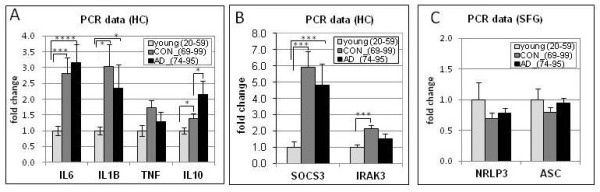
“CD163 can induce release of the anti-inflammatory interleukin IL-10 [89], which we found to be significantly elevated Figure 3 qPCR was used to assess expression profiles of several genes for which gene expression was below microarray detection”
MethodYan, Q., Zhang, J., Liu, H., Babu-Khan, S., Vassar, R., Biere, A. L., Citron, M., & Landreth, G. (2003) · The Journal of Neuroscience · doi:10.1523/jneurosci.23-20-07504.2003 · Cited by 469 · cited 1×
“In addition, epidemiological studies in humans suggest that long-term use of anti-inflammatory drugs during adult life protects brain function and delays the onset of cognitive decline [5,14,15], with animal studies providing additional support for this hypothesis [16-18].”
BackgroundThe macrophage scavenger receptor CD163
Fabriek, B. O., Dijkstra, C. D., & van den Berg, T. K. (2005) · Immunobiology · doi:10.1016/j.imbio.2005.05.010 · Cited by 454 · cited 1×
“Another system proposed to play a role in dampening the inflammatory response is CD163, a scavenger receptor expressed on microglia, monocytes and macrophages [87,88] with particularly high expression seen in macrophages of the ‘alternative activation’ phenotype [87].”
BackgroundImmunoglobulins and complement factors in senile plaques: An immunoperoxidase study
Eikelenboom, P., & Stam, F. C. (1982) · Acta Neuropathologica · doi:10.1007/bf00685397 · Cited by 454 · cited 1×
“on microglia, and evidence of complement activation within thioflavin-positive neuritic plaques [2,55,56,121,122].”
BackgroundProminent neurodegeneration and increased plaque formation in complement-inhibited Alzheimer's mice
Wyss-Coray, T., Yan, F., Lin, A. H.-T., Lambris, J. D., Alexander, J. J., Quigg, R. J., & Masliah, E. (2002) · Proceedings of the National Academy of Sciences · doi:10.1073/pnas.162350199 · Cited by 446 · cited 1×
“Innate immune activation can be neuroprotective when it is activated appropriately in response to non-self pathogens and in an acute fashion [4,50-53].”
BackgroundInflammation and Alzheimer's disease pathogenesis
Rogers, J., Webster, S., Lue, L.-F., Brachova, L., Harold Civin, W., Emmerling, M., Shivers, B., Walker, D., & McGeer, P. (1996) · Neurobiology of Aging · doi:10.1016/0197-4580(96)00115-7 · Cited by 442
Self-citationCD163: a regulated hemoglobin scavenger receptor with a role in the anti‐inflammatory response
Moestrup, S., & Møller, H. (2004) · Annals of Medicine · doi:10.1080/07853890410033171 · Cited by 442 · cited 1×
“Another system proposed to play a role in dampening the inflammatory response is CD163, a scavenger receptor expressed on microglia, monocytes and macrophages [87,88] with particularly high expression seen in macrophages of the ‘alternative activation’ phenotype [87].”
BackgroundShaftel, S. S., Kyrkanides, S., Olschowka, J. A., Miller, J.-N. H., Johnson, R. E., & O’Banion, M. K. (2007) · Journal of Clinical Investigation · doi:10.1172/jci31450 · Cited by 433 · cited 1×
“Consistent with the idea that activation of the immune system in the brain is harmful, the majority of recent studies in transgenic mouse models of AD support the notion that immune activation can precipitate the onset of AD-like pathology [5-10] (but see [11-13]).”
BackgroundThe impact of systemic infection on the progression of neurodegenerative disease
Perry, V. H., Newman, T. A., & Cunningham, C. (2003) · Nature Reviews Neuroscience · doi:10.1038/nrn1032 · Cited by 428 · cited 1×
“or injury without activation of the adaptive arm of the immune system [54,97-102], and importantly, that the innate”
BackgroundMicroglia and Inflammation in Alzheimers Disease
Mandrekar-Colucci, S., & Landreth, G. E. (2010) · CNS & Neurological Disorders - Drug Targets · doi:10.2174/187152710791012071 · Cited by 421 · cited 1×
“While microglia and macrophages can serve a neuroprotective function when they participate in the elimination of cellular debris, chronic activation is thought to be a major contributor to cognitive decline and neuropathogenesis in various neurodegenerative disorders including AD [80,81].”
BackgroundHawkes, C. A., & McLaurin, J. (2009) · Proceedings of the National Academy of Sciences · doi:10.1073/pnas.0805453106 · Cited by 397 · cited 1×
“Consistent with the idea that activation of the immune system in the brain is harmful, the majority of recent studies in transgenic mouse models of AD support the notion that immune activation can precipitate the onset of AD-like pathology [5-10] (but see [11-13]).”
BackgroundReimagining Alzheimer's Disease—An Age-Based Hypothesis
Herrup, K. (2010) · The Journal of Neuroscience · doi:10.1523/jneurosci.4521-10.2010 · Cited by 396
Expression profiles for macrophage alternative activation genes in AD and in mouse models of AD.
(2006) · Journal of Neuroinflammation · doi:10.1186/1742-2094-3-27 · Cited by 393
Sheng, J. (2003) · Neurobiology of Disease · doi:10.1016/s0969-9961(03)00069-x · Cited by 388
Protein homeostasis and aging in neurodegeneration
Douglas, P. M., & Dillin, A. (2010) · Journal of Cell Biology · doi:10.1083/jcb.201005144 · Cited by 372 · cited 1×
“Inefficient clearance of aberrant proteins, a process that becomes increasingly defective with age [106] may represent an initiating factor upregulating innate immune activity in the brain.”
BackgroundLPS receptor (CD14): a receptor for phagocytosis of Alzheimer's amyloid peptide
Liu, Y., Walter, S., Stagi, M., Cherny, D., Letiembre, M., Schulz-Schaeffer, W., Heine, H., Penke, B., Neumann, H., & Fassbender, K. (2005) · Brain · doi:10.1093/brain/awh531 · Cited by 349 · cited 2×
“For example, amyloid-beta (Aβ) has been shown to activate the complement cascade via both the classical and alternate pathways [37,38], to activate toll-like signaling (via activation of TLR2 and TLR4), and to activate the inflammasome, all of which lead to release of proinflammatory factors [37,39-49].”
BackgroundInflammation-associated S100 proteins: new mechanisms that regulate function
Goyette, J., & Geczy, C. L. (2011) · Amino Acids · doi:10.1007/s00726-010-0528-0 · Cited by 345 · cited 1×
“One such ligand is calprotectin, which consist of a heterodimer of two members of the S100 calcium-binding family of proteins, S100A8 and S100A9, also respectively know as myeloid-related protein 8 (MRP8) and 14 (MRP14), that can act in synergy with endogenous and exogenous danger signals to promote inflammation via T…”
BackgroundExtended results of the Alzheimer's disease anti‐inflammatory prevention trial
Breitner, J. C., Baker, L. D., Montine, T. J., Meinert, C. L., Lyketsos, C. G., Ashe, K. H., Brandt, J., Craft, S., Evans, D. E., Green, R. C., et al. (2011) · Alzheimer's & Dementia · doi:10.1016/j.jalz.2010.12.014 · Cited by 328
Novel anti-inflammatory therapy for Parkinson's disease
Gao, H.-M., Liu, B., Zhang, W., & Hong, J.-S. (2003) · Trends in Pharmacological Sciences · doi:10.1016/s0165-6147(03)00176-7 · Cited by 324 · cited 1×
“While microglia and macrophages can serve a neuroprotective function when they participate in the elimination of cellular debris, chronic activation is thought to be a major contributor to cognitive decline and neuropathogenesis in various neurodegenerative disorders including AD [80,81].”
BackgroundThe LPS receptor (CD14) links innate immunity with Alzheimer's disease
Fassbender, K., Walter, S., Kühl, S., Landmann, R., Ishii, K., Bertsch, T., Stalder, A. K., Muehlhauser, F., Liu, Y., Ulmer, A. J., et al. (2004) · The FASEB Journal · doi:10.1096/fj.03-0364fje · Cited by 307 · cited 2×
“For example, amyloid-beta (Aβ) has been shown to activate the complement cascade via both the classical and alternate pathways [37,38], to activate toll-like signaling (via activation of TLR2 and TLR4), and to activate the inflammasome, all of which lead to release of proinflammatory factors [37,39-49].”
BackgroundNLR functions beyond pathogen recognition
Kufer, T. A., & Sansonetti, P. J. (2011) · Nature Immunology · doi:10.1038/ni.1985 · Cited by 279 · cited 7×
“In addition, IL-18 was upregulated in aging in the HC and PCG.”
BackgroundInfluentialHugh Perry, V (1998) · Journal of Neuroimmunology · doi:10.1016/s0165-5728(98)00145-3 · Cited by 276 · cited 1×
“Further, MHC molecules are upregulated on microglia and macrophages in response to elevated levels of cytokines associated with inflammation, and in response to chronic pathology and neurodegeneration such as occurs in AD and amyotrophic lateral sclerosis (ALS) [91-94].”
BackgroundJin, J.-J., Kim, H.-D., Maxwell, J. A., Li, L., & Fukuchi, K.-I. (2008) · Journal of Neuroinflammation · doi:10.1186/1742-2094-5-23 · Cited by 275 · cited 2×
“For example, amyloid-beta (Aβ) has been shown to activate the complement cascade via both the classical and alternate pathways [37,38], to activate toll-like signaling (via activation of TLR2 and TLR4), and to activate the inflammasome, all of which lead to release of proinflammatory factors [37,39-49].”
BackgroundMcAlpine, F. E., Lee, J.-K., Harms, A. S., Ruhn, K. A., Blurton-Jones, M., Hong, J., Das, P., Golde, T. E., LaFerla, F. M., Oddo, S., et al. (2009) · Neurobiology of Disease · doi:10.1016/j.nbd.2009.01.006 · Cited by 268 · cited 1×
“Consistent with the idea that activation of the immune system in the brain is harmful, the majority of recent studies in transgenic mouse models of AD support the notion that immune activation can precipitate the onset of AD-like pathology [5-10] (but see [11-13]).”
BackgroundPickford, F., Masliah, E., Britschgi, M., Lucin, K., Narasimhan, R., Jaeger, P. A., Small, S., Spencer, B., Rockenstein, E., Levine, B., et al. (2008) · Journal of Clinical Investigation · doi:10.1172/jci33585 · Cited by 268 · cited 2×
“related protein that has been shown to decrease Aβ accumulation in mice [107-109].”
BackgroundFonseca, M. I., Ager, R. R., Chu, S.-H., Yazan, O., Sanderson, S. D., LaFerla, F. M., Taylor, S. M., Woodruff, T. M., & Tenner, A. J. (2009) · The Journal of Immunology · doi:10.4049/jimmunol.0901005 · Cited by 268 · cited 1×
“membrane attack complex have been proposed to contribute to AD pathogenesis [37,56-58].”
BackgroundSelf-citationRogers, J., Mastroeni, D., Leonard, B., Joyce, J., & Grover, A. (2007) · International Review of Neurobiology · doi:10.1016/s0074-7742(07)82012-5 · Cited by 260 · cited 1×
“IL-1β and IL-18 are elevated in the AD brain [2,75-77] and have been hypothesized to contribute to neurodegeneration and cognitive decline in AD [76,78].”
BackgroundSelf-citationWebster, S., Lue, L.-F., Brachova, L., Tenner, A. J., McGeer, P. L., Terai, K., Walker, D. G., Bradt, B., Cooper, N. R., & Rogers, J. (1997) · Neurobiology of Aging · doi:10.1016/s0197-4580(97)00042-0 · Cited by 258 · cited 1×
“membrane attack complex have been proposed to contribute to AD pathogenesis [37,56-58].”
BackgroundSelf-citationComplement-dependent Proinflammatory Properties of the Alzheimer's Disease β-Peptide
Bradt, B. M., Kolb, W. P., & Cooper, N. R. (1998) · The Journal of Experimental Medicine · doi:10.1084/jem.188.3.431 · Cited by 255 · cited 1×
“For example, amyloid-beta (Aβ) has been shown to activate the complement cascade via both the classical and alternate pathways [37,38], to activate toll-like signaling (via activation of TLR2 and TLR4), and to activate the inflammasome, all of which lead to release of proinflammatory factors [37,39-49].”
BackgroundGriffin, W. S. T., & Mrak, R. E. (2002) · Journal of Leukocyte Biology · doi:10.1189/jlb.72.2.233 · Cited by 248
Effects of filtering by Present call on analysis of microarray experiments
McClintick, J. N., & Edenberg, H. J. (2006) · BMC Bioinformatics · doi:10.1186/1471-2105-7-49 · Cited by 234 · cited 1×
“This threshold removes probe sets with unreliable signal and very effectively reduces the incidence of false positives [34], and in this case reduced the target list size from 1532 probesets to 759 reliably detectable probe sets related to immune/inflammation function.”
BackgroundTang, S.-C., Lathia, J. D., Selvaraj, P. K., Jo, D.-G., Mughal, M. R., Cheng, A., Siler, D. A., Markesbery, W. R., Arumugam, T. V., & Mattson, M. P. (2008) · Experimental Neurology · doi:10.1016/j.expneurol.2008.05.014 · Cited by 232
Immune reactive cells in senile plaques and cognitive decline in Alzheimer’s disease
Vehmas, A. K., Kawas, C. H., Stewart, W. F., & Troncoso, J. C. (2003) · Neurobiology of Aging · doi:10.1016/s0197-4580(02)00090-8 · Cited by 230 · cited 1×
“However, the findings that amyloid-beta (Aβ) deposits are associated with inflammatory proteins and microglia in the early stages of AD pathology [2,23,24]), coupled with the recent data that volume density of microglia is increased already in cognitively normal subjects who have frequent presence of plagues and tangl…”
Inflammation, anti-inflammatory agents and Alzheimer disease: The last 12 years
McGeer, P. L., Rogers, J., & McGeer, E. G. (2006) · Journal of Alzheimer's Disease · doi:10.3233/jad-2006-9s330 · Cited by 227 · cited 1×
“point of contemporary research in aging and Alzheimer’s disease (AD) [1-4], and activation of inflammatory pathways in the brain is increasingly emphasized as a major risk factor for the development and progression of AD [2,5,6].”
BackgroundSelf-citationLocalization and Cell Association of C1q in Alzheimer's Disease Brain
Afagh, A., Cummings, B. J., Cribbs, D. H., Cotman, C. W., & Tenner, A. J. (1996) · Experimental Neurology · doi:10.1006/exnr.1996.0043 · Cited by 224 · cited 1×
“on microglia, and evidence of complement activation within thioflavin-positive neuritic plaques [2,55,56,121,122].”
BackgroundSelf-citationIntrahippocampal LPS injections reduce Aβ load in APP+PS1 transgenic mice
DiCarlo, G. (2001) · Neurobiology of Aging · doi:10.1016/s0197-4580(01)00292-5 · Cited by 223 · cited 1×
“Consistent with the idea that activation of the immune system in the brain is harmful, the majority of recent studies in transgenic mouse models of AD support the notion that immune activation can precipitate the onset of AD-like pathology [5-10] (but see [11-13]).”
Interleukin-1β impairs brain derived neurotrophic factor-induced signal transduction
Tong, L., Balazs, R., Soiampornkul, R., Thangnipon, W., & Cotman, C. W. (2008) · Neurobiology of Aging · doi:10.1016/j.neurobiolaging.2007.02.027 · Cited by 222 · cited 1×
“[124], metabolic deficits [125], and other factors, ultimately converge to exceed the threshold for the onset of AD.”
BackgroundSelf-citationChen, K., Iribarren, P., Hu, J., Chen, J., Gong, W., Cho, E. H., Lockett, S., Dunlop, N. M., & Wang, J. M. (2006) · Journal of Biological Chemistry · doi:10.1074/jbc.m508125200 · Cited by 214 · cited 2×
“For example, amyloid-beta (Aβ) has been shown to activate the complement cascade via both the classical and alternate pathways [37,38], to activate toll-like signaling (via activation of TLR2 and TLR4), and to activate the inflammasome, all of which lead to release of proinflammatory factors [37,39-49].”
BackgroundTurrin, N. P., & Rivest, S. (2004) · Neurobiology of Disease · doi:10.1016/j.nbd.2004.03.010 · Cited by 212 · cited 1×
“or injury without activation of the adaptive arm of the immune system [54,97-102], and importantly, that the innate”
BackgroundThe role of complement and activated microglia in the pathogenesis of Alzheimer's disease
Eikelenboom, P., & Veerhuis, R. (1996) · Neurobiology of Aging · doi:10.1016/0197-4580(96)00108-x · Cited by 206 · cited 2×
“membrane attack complex have been proposed to contribute to AD pathogenesis [37,56-58].”
BackgroundPredicting MCI outcome with clinically available MRI and CSF biomarkers
Heister, D., Brewer, J. B., Magda, S., Blennow, K., McEvoy, L. K., & Initiative, F. T. A. D. N. (2011) · Neurology · doi:10.1212/wnl.0b013e3182343314 · Cited by 203 · cited 1×
“Aβ is likely to be both an initiating trigger and chronic driver of innate immune activation [111], consistent with growing data suggesting that MCI cases with high Aβ are at increased probability for converting to AD [112].”
ResultRegulation of Amyloid Precursor Protein Processing by the Beclin 1 Complex
Jaeger, P. A., Pickford, F., Sun, C.-H., Lucin, K. M., Masliah, E., & Wyss-Coray, T. (2010) · PLoS ONE · doi:10.1371/journal.pone.0011102 · Cited by 200 · cited 2×
“related protein that has been shown to decrease Aβ accumulation in mice [107-109].”
BackgroundWiendl, H., Feger, U., Mittelbronn, M., Jack, C., Schreiner, B., Stadelmann, C., Antel, J., Brueck, W., Meyermann, R., Bar-Or, A., et al. (2005) · Brain · doi:10.1093/brain/awh609 · Cited by 180
Risk of dementia and AD with prior exposure to NSAIDs in an elderly community-based cohort
Breitner, J. C. S., Haneuse, S. J. P. A., Walker, R., Dublin, S., Crane, P. K., Gray, S. L., & Larson, E. B. (2009) · Neurology · doi:10.1212/wnl.0b013e3181a18691 · Cited by 179
Toll-Like Receptors in Alzheimer's Disease
Landreth, G. E., & Reed-Geaghan, E. G. (2009) · Current Topics in Microbiology and Immunology · doi:10.1007/978-3-642-00549-7_8 · Cited by 176 · cited 2×
“For example, amyloid-beta (Aβ) has been shown to activate the complement cascade via both the classical and alternate pathways [37,38], to activate toll-like signaling (via activation of TLR2 and TLR4), and to activate the inflammasome, all of which lead to release of proinflammatory factors [37,39-49].”
BackgroundPeripheral clearance of amyloid β peptide by complement C3-dependent adherence to erythrocytes
Rogers, J., Li, R., Mastroeni, D., Grover, A., Leonard, B., Ahern, G., Cao, P., Kolody, H., Vedders, L., Kolb, W. P., et al. (2006) · Neurobiology of Aging · doi:10.1016/j.neurobiolaging.2005.09.043 · Cited by 175 · cited 1×
“Innate immune activation can be neuroprotective when it is activated appropriately in response to non-self pathogens and in an acute fashion [4,50-53].”
BackgroundSelf-citationUdan, M. L. D., Ajit, D., Crouse, N. R., & Nichols, M. R. (2008) · Journal of Neurochemistry · doi:10.1111/j.1471-4159.2007.05001.x · Cited by 174 · cited 2×
“For example, amyloid-beta (Aβ) has been shown to activate the complement cascade via both the classical and alternate pathways [37,38], to activate toll-like signaling (via activation of TLR2 and TLR4), and to activate the inflammasome, all of which lead to release of proinflammatory factors [37,39-49].”
BackgroundThe inflammasome in pathogen recognition and inflammation
Sutterwala, F. S., Ogura, Y., & Flavell, R. A. (2007) · Journal of Leukocyte Biology · doi:10.1189/jlb.1206755 · Cited by 167 · cited 1×
“Like the TLR system, inflammasomes can be activated by endogenous factors such as Aβ, as well as by oxidative stress [49,72,79], brain levels of which increase with advanced age.”
BackgroundTacnet-Delorme, P., Chevallier, S., & Arlaud, G. J. (2001) · The Journal of Immunology · doi:10.4049/jimmunol.167.11.6374 · Cited by 156 · cited 1×
“Increased expression of complement genes in aging is potentially a response to an increase in extracellular debris, such as Aβ [59].”
BackgroundNSAIDs and incident Alzheimer’s disease. The Rotterdam study
In ’t Veld, B. A., Launer, L. J., Hoes, A. W., Ott, A., Hofman, A., Breteler, M. M. B., & Stricker, B. H. C. (1998) · Neurobiology of Aging · doi:10.1016/s0197-4580(98)00096-7 · Cited by 145
Involvement of Fc Receptors in Disorders of the Central Nervous System
Okun, E., Mattson, M. P., & Arumugam, T. V. (2010) · NeuroMolecular Medicine · doi:10.1007/s12017-009-8099-5 · Cited by 141 · cited 1×
“FcRs are upregulated in response to innate immune activation, and are increasingly recognized for their contributions to the pathogenesis of neurological disorders [82-84].”
BackgroundMicroglia, amyloid and dementia in Alzheimer disease
Arends, Y. M., Duyckaerts, C., Rozemuller, J. M., Eikelenboom, P., & Hauw, J.-J. (2000) · Neurobiology of Aging · doi:10.1016/s0197-4580(00)00094-4 · Cited by 139 · cited 1×
“However, the findings that amyloid-beta (Aβ) deposits are associated with inflammatory proteins and microglia in the early stages of AD pathology [2,23,24]), coupled with the recent data that volume density of microglia is increased already in cognitively normal subjects who have frequent presence of plagues and tangl…”
The impact of endogenous triggers on trauma-associated inflammation
Zedler, S., & Faist, E. (2006) · Current Opinion in Critical Care · doi:10.1097/mcc.0b013e3280106806 · Cited by 127
Endogenous TLR Ligands and Autoimmunity
Wagner, H. (2006) · Advances in immunology · doi:10.1016/s0065-2776(06)91004-9 · Cited by 124 · cited 1×
“accumulate with age and AD, such as Aβ, and other ligands that are released by injured cells [62-66].”
BackgroundThe role of Toll‐like receptors in CNS response to microbial challenge
Konat, G. W., Kielian, T., & Marriott, I. (2006) · Journal of Neurochemistry · doi:10.1111/j.1471-4159.2006.04076.x · Cited by 120 · cited 1×
“or injury without activation of the adaptive arm of the immune system [54,97-102], and importantly, that the innate”
BackgroundNeuroinflammation‐induced acceleration of amyloid deposition in the APPV717F transgenic mouse
Qiao, X., Cummins, D. J., & Paul, S. M. (2001) · European Journal of Neuroscience · doi:10.1046/j.0953-816x.2001.01666.x · Cited by 119 · cited 1×
“Consistent with the idea that activation of the immune system in the brain is harmful, the majority of recent studies in transgenic mouse models of AD support the notion that immune activation can precipitate the onset of AD-like pathology [5-10] (but see [11-13]).”
BackgroundRelation of NSAIDs to incident AD, change in cognitive function, and AD pathology
Arvanitakis, Z., Grodstein, F., Bienias, J. L., Schneider, J. A., Wilson, R. S., Kelly, J. F., Evans, D. A., & Bennett, D. A. (2008) · Neurology · doi:10.1212/01.wnl.0000313813.48505.86 · Cited by 117 · cited 1×
“In addition, epidemiological studies in humans suggest that long-term use of anti-inflammatory drugs during adult life protects brain function and delays the onset of cognitive decline [5,14,15], with animal studies providing additional support for this hypothesis [16-18].”
BackgroundToll-like receptors are key players in neurodegeneration
Arroyo, D. S., Soria, J. A., Gaviglio, E. A., Rodriguez-Galan, M. C., & Iribarren, P. (2011) · International Immunopharmacology · doi:10.1016/j.intimp.2011.05.006 · Cited by 117 · cited 1×
“While there is evidence that TLR signaling can mediate some beneficial effects in CNS [54,70], it is believed that TLR-induced activation of microglia and release of proinflammatory molecules are responsible for neurotoxic processes in the course of various CNS diseases including AD [71].”
BackgroundO'Keefe, G. M., Nguyen, V. T., & Benveniste, E. N. (2002) · Journal of NeuroVirology · doi:10.1080/13550280290100941 · Cited by 116
Peress, N. S., Fleit, H. B., Perillo, E., Kuljiš, R. O., & Pezzullo, C. (1993) · Journal of Neuroimmunology · doi:10.1016/0165-5728(93)90060-c · Cited by 111
A longitudinal study of gray matter volume decline with age and modifying factors
Taki, Y., Kinomura, S., Sato, K., Goto, R., Kawashima, R., & Fukuda, H. (2009) · Neurobiology of Aging · doi:10.1016/j.neurobiolaging.2009.05.003 · Cited by 103 · cited 1×
“These results support accumulating evidence of a gender effect on brain aging, which have recently been documented at the gene expression level [28], morphometric level [103,104] and level of cortical connectivity networks [105].”
ResultAlzheimer's Disease Anti‐Inflammatory Prevention Trial: Design, methods, and baseline results
ADAPT Research Group (2009) · Alzheimer's & Dementia · doi:10.1016/j.jalz.2008.09.004 · Cited by 99
Beclin 1 Complex in Autophagy and Alzheimer Disease
Jaeger, P. A., & Wyss-Coray, T. (2010) · Archives of Neurology · doi:10.1001/archneurol.2010.258 · Cited by 90 · cited 2×
“related protein that has been shown to decrease Aβ accumulation in mice [107-109].”
BackgroundEikelenboom, P., Veerhuis, R., van Exel, E., J.M. Hoozemans, J., J.M. Rozemuller, A., & A. van Gool, W. (2011) · Current Alzheimer Research · doi:10.2174/156720511795256080 · Cited by 88 · cited 1×
“However, the findings that amyloid-beta (Aβ) deposits are associated with inflammatory proteins and microglia in the early stages of AD pathology [2,23,24]), coupled with the recent data that volume density of microglia is increased already in cognitively normal subjects who have frequent presence of plagues and tangl…”
Eikelenboom, P., Veerhuis, R., van Exel, E., Hoozemans, J. J. M., Rozemüller, A. J. M., & van Gool, W. A. (2011) · Current Alzheimer Research · doi:10.2174/1567211213451672050 · Cited by 83
Complement in Alzheimer's disease: opportunities for modulating protective and pathogenic events
Tenner, A. (2001) · Neurobiology of Aging · doi:10.1016/s0197-4580(01)00301-3 · Cited by 81
Self-citationGriffin, W. S. T., Nicoll, J. A. R., Grimaldi, L. M. E., Sheng, J. G., & Mrak, R. E. (2000) · Experimental Gerontology · doi:10.1016/s0531-5565(00)00110-8 · Cited by 80
Complement activation as a biomarker for Alzheimer's disease
Aiyaz, M., Lupton, M. K., Proitsi, P., Powell, J. F., & Lovestone, S. (2011) · Immunobiology · doi:10.1016/j.imbio.2011.07.023 · Cited by 77 · cited 1×
“However, chronic complement activation is likely to be harmful due to release of potent inflammatory peptides (such as anaphylatoxins C3a and C5), that bind their activating receptors C3aR1 and C5aR1 (CD88), and formation of the membrane attack complex, which can damage cell membranes [60].”
BackgroundEndogenous signals initiating inflammation in the injured nervous system
Pineau, I., & Lacroix, S. (2009) · Glia · doi:10.1002/glia.20763 · Cited by 76 · cited 1×
“accumulate with age and AD, such as Aβ, and other ligands that are released by injured cells [62-66].”
BackgroundInnate immunity in Alzheimer's disease: a model for local inflammatory reactions.
McGeer, E. G., & McGeer, P. L. (2001) · PubMed · Cited by 76
Vasilevko, V., Passos, G. F., Quiring, D., Head, E., Kim, R. C., Fisher, M., & Cribbs, D. H. (2010) · Annals of the New York Academy of Sciences · doi:10.1111/j.1749-6632.2010.05786.x · Cited by 74 · cited 2×
“Aβantibody immune complexes can initiate microglia and perivascular macrophage activation via FcRs, as well as trigger complement activation and release of inflammatory mediators, thereby potentially contributing to the adverse cerebral vascular events that have plagued the immunotherapy clinical trials [119,120].”
BackgroundSelf-citationDo Nonsteroidal Antiinflammatory Drugs Reduce the Risk of Alzheimer's Disease?
Breitner, J. C. S., & Zandi, P. P. (2001) · New England Journal of Medicine · doi:10.1056/nejm200111223452110 · Cited by 64
Cuello, A. C., Ferretti, M. T., Leon, W. C., Iulita, M. F., Melis, T., Ducatenzeiler, A., Bruno, M. A., & Canneva, F. (2010) · Neurodegenerative Diseases · doi:10.1159/000285514 · Cited by 54 · cited 1×
“Indeed, increased gene expression of MHC II has been extensively documented in both AD and transgenic mouse models of AD [95].”
BackgroundHoozemans, J. J., van Haastert, E. S., Veerhuis, R., Arendt, T., Scheper, W., Eikelenboom, P., & Rozemuller, A. J. (2005) · Journal of Neuroinflammation · doi:10.1186/1742-2094-2-27 · Cited by 52 · cited 1×
“However, the findings that amyloid-beta (Aβ) deposits are associated with inflammatory proteins and microglia in the early stages of AD pathology [2,23,24]), coupled with the recent data that volume density of microglia is increased already in cognitively normal subjects who have frequent presence of plagues and tangl…”
Popović, M., Caballero-Bleda, M., Puelles, L., & Popović, N. (1998) · International Journal of Neuroscience · doi:10.3109/00207459809003341 · Cited by 50 · cited 1×
“Further, MHC molecules are upregulated on microglia and macrophages in response to elevated levels of cytokines associated with inflammation, and in response to chronic pathology and neurodegeneration such as occurs in AD and amyotrophic lateral sclerosis (ALS) [91-94].”
Backgroundvan Lent, P. L., Grevers, L. C., Schelbergen, R. F. P., Blom, A. B., Geurts, J., Sloetjes, A. W., Vogl, T., Roth, J., & van den Berg, W. B. (2010) · Arthritis & Rheumatism · doi:10.1002/art.27654 · Cited by 47
Sex dimorphism in gray/white matter volume and diffusion tensor during normal aging
Abe, O., Yamasue, H., Yamada, H., Masutani, Y., Kabasawa, H., Sasaki, H., Takei, K., Suga, M., Kasai, K., Aoki, S., et al. (2010) · NMR in Biomedicine · doi:10.1002/nbm.1479 · Cited by 43 · cited 1×
“These results support accumulating evidence of a gender effect on brain aging, which have recently been documented at the gene expression level [28], morphometric level [103,104] and level of cortical connectivity networks [105].”
ResultJ.M. Hoozemans, J., Veerhuis, R., M. Rozemuller, J., & Eikelenboom, P. (2011) · CNS & Neurological Disorders - Drug Targets · doi:10.2174/187152711794488665 · Cited by 42 · cited 1×
“However, the findings that amyloid-beta (Aβ) deposits are associated with inflammatory proteins and microglia in the early stages of AD pathology [2,23,24]), coupled with the recent data that volume density of microglia is increased already in cognitively normal subjects who have frequent presence of plagues and tangl…”
Microglia kill amyloid-β1-42 damaged neurons by a CD14-dependent process
Bate, C., Veerhuis, R., Eikelenboom, P., & Williams, A. (2004) · NeuroReport · doi:10.1097/01.wnr.0000132203.76836.16 · Cited by 40
Abeta DNA Vaccination for Alzheimers Disease: Focus on Disease Prevention
Cribbs, D. H. (2010) · CNS & Neurological Disorders - Drug Targets · doi:10.2174/187152710791012080 · Cited by 38 · cited 1×
“Aβantibody immune complexes can initiate microglia and perivascular macrophage activation via FcRs, as well as trigger complement activation and release of inflammatory mediators, thereby potentially contributing to the adverse cerebral vascular events that have plagued the immunotherapy clinical trials [119,120].”
BackgroundSelf-citationDavis, B. K., & Ting, J. P.-Y. (2010) · Nature Immunology · doi:10.1038/ni0210-105 · Cited by 35 · cited 1×
“Further, inflammasome activation of caspase1 has been reported to initiate unconventional protein secretion (for example, independent of the endoplasmic reticulum-Golgi secretory pathway) to export cytokines from the cell, including IL-1β and IL-18, allowing these proinflammatory molecules to engage their extracellula…”
BackgroundInnate immunity—beginning to fulfill its promise?
Fearon, D. T. (2000) · Nature Immunology · doi:10.1038/77773 · Cited by 29
Chronic inflammation in Alzheimer’s disease offers therapeutic opportunities
McGeer, E. G., & McGeer, P. L. (2001) · Expert Review of Neurotherapeutics · doi:10.1586/14737175.1.1.53 · Cited by 15 · cited 1×
“on microglia, and evidence of complement activation within thioflavin-positive neuritic plaques [2,55,56,121,122].”
BackgroundThe Inflammatory Hypothesis of Alzheimer Disease: Dead or Alive?
Aisen, P. S. S. (2008) · Alzheimer Disease & Associated Disorders · doi:10.1097/wad.0b013e318166ca4c · Cited by 14
NSAIDs and Alzheimer’s disease: contribution of observational epidemiologic studies
Launer, L. J., & Veld, B. A. I. (1998) · Neurobiology of Aging · doi:10.1016/s0197-4580(98)00103-1 · Cited by 8
Cited by
Neuroinflammation in Alzheimer's disease
Heneka, M. T., Carson, M. J., Khoury, J. E., Landreth, G. E., Brosseron, F., Feinstein, D. L., Jacobs, A. H., Wyss-Coray, T., Vitorica, J., Ransohoff, R. M., et al. (2015) · The Lancet Neurology · doi:10.1016/s1474-4422(15)70016-5 · Cited by 6,226
“Normal aging is also associated with chronic glial activation 203 and more focal stage-dependent injury-induced factors.”
Inflammation as a central mechanism in Alzheimer's disease
Kinney, J. W., Bemiller, S. M., Murtishaw, A. S., Leisgang, A. M., Salazar, A. M., & Lamb, B. T. (2018) · Alzheimer's & Dementia: Translational Research & Clinical Interventions · doi:10.1016/j.trci.2018.06.014 · Cited by 2,253
“[51] Cribbs DH, Berchtold NC, Perreau V, Coleman PD, Rogers J, Tenner AJ, et al.”
BackgroundImmune attack: the role of inflammation in Alzheimer disease
Heppner, F. L., Ransohoff, R. M., & Becher, B. (2015) · Nature Reviews Neuroscience · doi:10.1038/nrn3880 · Cited by 2,134
The Cellular Phase of Alzheimer’s Disease
De Strooper, B., & Karran, E. (2016) · Cell · doi:10.1016/j.cell.2015.12.056 · Cited by 1,990
The microglial sensome revealed by direct RNA sequencing
Hickman, S. E., Kingery, N. D., Ohsumi, T. K., Borowsky, M. L., Wang, L.-C., Means, T. K., & El Khoury, J. (2013) · Nature Neuroscience · doi:10.1038/nn.3554 · Cited by 1,511
Metadata
- Authors
- Cribbs, D. H., Berchtold, N. C., Perreau, V., Coleman, P. D., Rogers, J., Tenner, A. J., & Cotman, C. W.
- Affiliations
- University of California, Irvine (US)
- The University of Melbourne (AU)
- University of Rochester Medicine (US)
- Banner Sun Health Research Institute (US)
- Corresponding author
- Cribbs, David H
- Berchtold, Nicole C
- Venue
- Journal of Neuroinflammation
- Published
- 2012-07-23
- Volume
- 9
- Issue
- 1
- Pages
- 179-179
- ISSN
- 1742-2094 (ISSN-L)
- PMC
- PMC3419089
- OpenAlex
- W2117266418
- Cited by
- 499
- References
- 128
- Citations by year
- 2026: 14 · 2025: 26 · 2024: 44 · 2023: 43 · 2022: 43 · 2021: 56 · 2020: 42 · 2019: 37 · 2018: 35 · 2017: 42 · 2016: 34 · 2015: 29 · 2014: 23 · 2013: 26 · 2012: 5
- FWCI
- 13.25
- Type
- journal article
- Language
- en
- Open access
- gold
- doi.org
- Locations
- Journal of Neuroinflammation (publishedVersion, cc-by)
- PubMed Central (publishedVersion, cc-by)
- PubMed (publishedVersion)
- Minerva Access (University of Melbourne) (submittedVersion, cc-by)
- DOAJ (DOAJ: Directory of Open Access Journals) (submittedVersion)
- eScholarship (California Digital Library) (submittedVersion, cc-by)
- eScholarship (California Digital Library) (submittedVersion)
- Funders
- Alzheimer's Association (IIRG-11-204835)
- University of Southern California
- University of Pennsylvania
- Johns Hopkins University
- University of Rochester
- Arizona Biomedical Research Commission (P30 AG19610, 05–901, 211002)
- National Institutes of Health (05-901, 211002, AG16573, AG19610, AG000538)
- National Institute on Aging (P01AG000538, R01AG034667, P50AG016573, R01AG023173, P30AG019610)
- Topics
- Life Sciences › Neuroscience › Neurology › Neuroinflammation and Neurodegeneration Mechanisms
- Life Sciences › Neuroscience › Cellular and Molecular Neuroscience › Alzheimer's disease research and treatments
- Health Sciences › Medicine › Psychiatry and Mental health › Dementia and Cognitive Impairment Research
- Keywords
- brain aging, Alzheimer's disease, innate immunity, neuroinflammation, immune gene expression, microglial activation, perivascular macrophages, cognitive decline, neurodegeneration, hippocampus, entorhinal cortex, superior frontal gyrus, postcentral gyrus, sex differences, Toll-like receptor signaling, inflammasome, complement system, Tollip, fractalkine, preclinical Alzheimer's disease
- MeSH terms
- Adult, Aged, Aged, 80 and over, Aging, Alzheimer Disease, Brain, Cognition Disorders, Female, Humans, Immunity, Innate, Male, Middle Aged, Neurodegenerative Diseases, Protein Array Analysis, Young Adult, Transcriptome
About these checks
Registry, retraction, Cites and statistics results are computed, not judged, with one exception: a printed reference that no index lists is read once by a model before it counts as a citation error. Claims are extracted by a model and kept only when their quote appears verbatim in the text; each cited source is then checked, with a model’s help, for whether it says what the claim relies on. Those verdicts can be wrong — read the claim’s quote and the cited source before relying on one.
Statistics and arithmetic are recomputed, not judged.
Confidence bands are shown only for fields calibrated on our annotated test set. None is calibrated yet, so no band is shown.
What counts as a claim ›How we measure confidence ›How we check this ›
Are you an author, or do you see a problem with this page? Request a review
Data sources
Bibliographic data: Semantic Scholar, OpenAlex, Crossref.
Contains information from the Semantic Scholar Academic Graph Datasets, made available under the ODC Attribution License (ODC-BY 1.0).
Semantic Scholar’s data is described in: Kinney, R., et al. (2023). The Semantic Scholar Open Data Platform. arXiv:2301.10140.
