

Dual inhibition of HIV-1 replication by integrase-LEDGF allosteric inhibitors is predominant at the post-integration stage
Open accessThe DOI matches its Crossref record; 55 of the 65 references it cites were found in a registry or an index.
Abstract
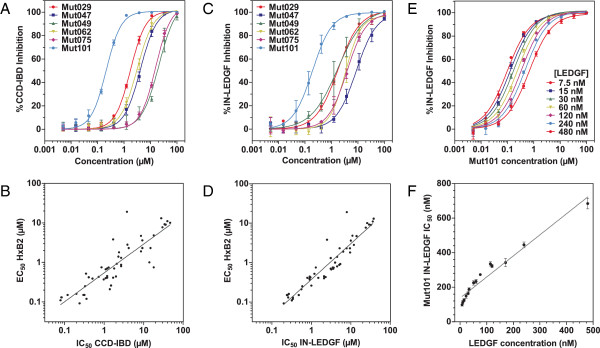
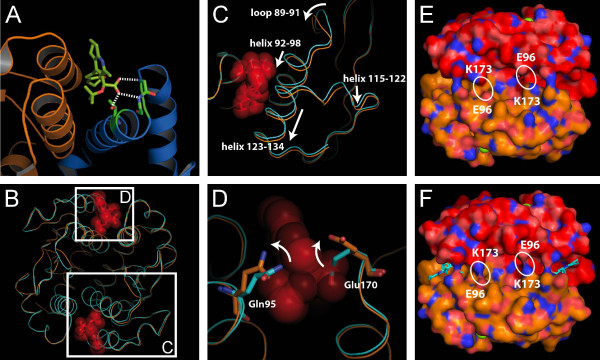
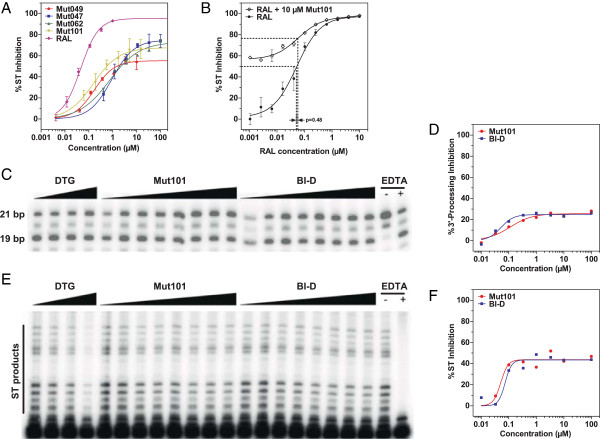
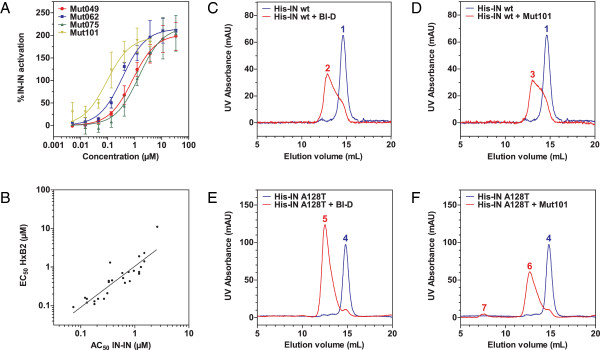
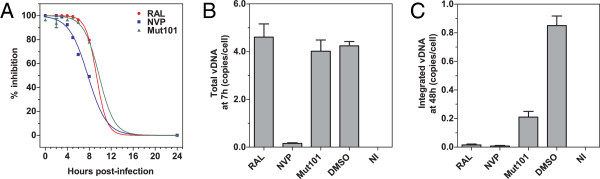
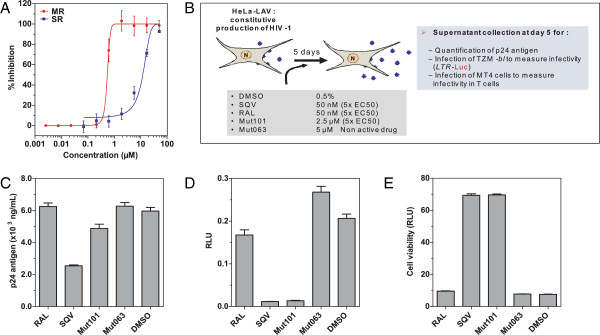
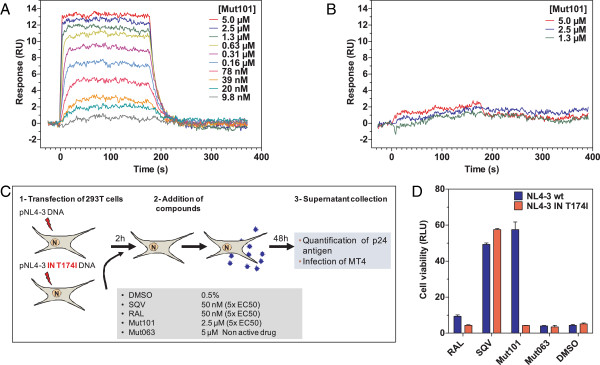
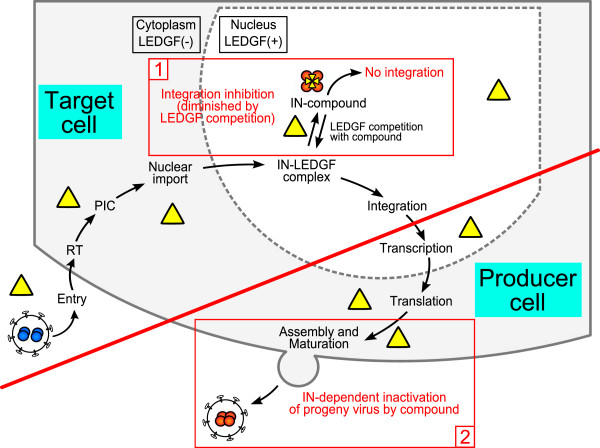
Background: LEDGF/p75 (LEDGF) is the main cellular cofactor of HIV-1 integrase (IN). It acts as a tethering factor for IN, and targets the integration of HIV in actively transcribed gene regions of chromatin. A recently developed class of IN allosteric inhibitors can inhibit the LEDGF-IN interaction. Results: We describe a new series of IN-LEDGF allosteric inhibitors, the most active of which is Mut101. We determined the crystal structure of Mut101 in complex with IN and showed that the compound binds to the LEDGF-binding pocket, promoting conformational changes of IN which explain at the atomic level the allosteric effect of the IN/LEDGF interaction inhibitor on IN functions. In vitro, Mut101 inhibited both IN-LEDGF interaction and IN strand transfer activity while enhancing IN-IN interaction. Time of addition experiments indicated that Mut101 behaved as an integration inhibitor. Mut101 was fully active on HIV-1 mutants resistant to INSTIs and other classes of anti-HIV drugs, indicative that this compound has a new mode of action. However, we found that Mut101 also displayed a more potent antiretroviral activity at a post-integration step. Infectivity of viral particles produced in presence of Mut101 was severely decreased. This latter effect also required the binding of the compound to the LEDGF-binding pocket. Conclusion: Mut101 has dual anti-HIV-1 activity, at integration and post-integration steps of the viral replication cycle, by binding to a unique target on IN (the LEDGF-binding pocket). The post-integration block of HIV-1 replication in virus-producer cells is the mechanism by which Mut101 is most active as an antiretroviral. To explain this difference between Mut101 antiretroviral activity at integration and post-integration stages, we propose the following model: LEDGF is a nuclear, chromatin-bound protein that is absent in the cytoplasm. Therefore, LEDGF can outcompete compound binding to IN in the nucleus of target cells lowering its antiretroviral activity at integration, but not in the cytoplasm where post-integration production of infectious viral particles takes place.
Overview
The claims and statistics of this paper haven’t been checked yet.
Free: it reads the open-access text and checks the first 5 claims that cite a source we can check. Create a free account to check every claim.
Integrity signals
Registry
Cites
Statistics
Figures
Verification
Claims the paper makes
The claims and statistics of this paper haven’t been checked yet.
Free: it reads the open-access text and checks the first 5 claims that cite a source we can check. Create a free account to check every claim.
Claims other papers make about this one
Each is checked against this paper’s own text: does it say what the citing paper says it does?
The cited source doesn’t support the claim as written.
In the citing paper
“Counterintuitively, the underlying mode of ALLINI action is not via inhibition of integration140,142,174–177,179–181.”
From Structure and function of retroviral integrase (2022) · cites this paper as [174]
Checked by a reasoning model — may be wrong.
Experimental — accuracy not yet measuredThe source backs part of the claim, not all of it — or backs it for a different population, condition or comparison.
In the citing paper
“Detailed analysis of virus particles produced in the presence of ALLINIs revealed that although viral RNA and proteins were incorporated properly, IN-RNA binding was disrupted, and the ribonucleoprotein complex was located eccentrically (Fig. 6B)140–142,174–176.”
From Structure and function of retroviral integrase (2022) · cites this paper as [174]
Experimental — accuracy not yet measuredThe cited source says what the claim attributes to it.
In the citing paper
“Many, though not all, of the ensuing compounds effectively inhibit IN-LEDGF/p75 binding in vitro171,173–175.”
From Structure and function of retroviral integrase (2022) · cites this paper as [174]
The cited source says what the claim attributes to it.
In the citing paper
“Many ALLINIs were co-crystallised with the isolated HIV-1 IN CCD, and the structures revealed the molecules grip onto the LEDGF/p75 IBD binding pocket at the IN CCD dimerization interface171,172,174,175,180,186,187.”
From Structure and function of retroviral integrase (2022) · cites this paper as [174]
The cited source says what the claim attributes to it.
In the citing paper
“Under these conditions, it became clear that HIV-1 was more susceptible to ALLINIs when exposed to the compounds during egress as compared to ingress140,142,174–176.”
From Structure and function of retroviral integrase (2022) · cites this paper as [174]
1 more claim about this paper
Create a free account to see every claim other papers make about this one.
Self-check
Percentages, sums and reported differences re-computed from the paper’s own numbers.
The self-check needs the paper’s full text.
Citations
Cites
Features and development of Coot
Emsley, P., Lohkamp, B., Scott, W. G., & Cowtan, K. (2010) · Acta Crystallographica Section D Biological Crystallography · doi:10.1107/s0907444910007493 · Cited by 29,915
The PyMOL Molecular Graphics System
DeLano, W. L. (2002) · Medical Entomology and Zoology · Cited by 18,147
Kabsch, W. (2010) · Acta Crystallographica Section D Biological Crystallography · doi:10.1107/s0907444909047337 · Cited by 16,463
REFMAC 5 for the refinement of macromolecular crystal structures
Murshudov, G. N., Skubák, P., Lebedev, A. A., Pannu, N. S., Steiner, R. A., Nicholls, R. A., Winn, M. D., Long, F., & Vagin, A. A. (2011) · Acta Crystallographica Section D Biological Crystallography · doi:10.1107/s0907444911001314 · Cited by 8,317
Molecular replacement with MOLREP
Vagin, A., & Teplyakov, A. (2010) · Acta Crystallographica Section D Biological Crystallography · doi:10.1107/s0907444909042589 · Cited by 3,604 · cited 2×
“Vagin A, Teplyakov A: Molecular replacement with MOLREP.”
MethodA graphical user interface to the CCP 4 program suite
Potterton, E., Briggs, P., Turkenburg, M., & Dodson, E. (2003) · Acta Crystallographica Section D Biological Crystallography · doi:10.1107/s0907444903008126 · Cited by 1,212 · cited 1×
“Structure determination was carried out using the CCP4 suite of programs [66].”
MethodIn vivo emergence of HIV-1 variants resistant to multiple protease inhibitors
Condra, J. H., Schleif, W. A., Blahy, O. M., Gabryelski, L. J., Graham, D. J., Quintero, J., Rhodes, A., Robbins, H. L., Roth, E., Shivaprakash, M., et al. (1995) · Nature · doi:10.1038/374569a0 · Cited by 974 · cited 1×
“The molecular clone containing L10R/M46I/L63P/V82T/I84V mutations within the PR-coding region [56] was used as a PR-resistant virus (PI); the clone with M41L/ D67N/T69N/K70R/T215F/K219E within the RT-coding region [57] was used as a NRTI-resistant virus; the clone with M41L/D67N/K103N/M184V/L210W/T215Y within the RT-c…”
MethodHIV-1 Integrase Forms Stable Tetramers and Associates with LEDGF/p75 Protein in Human Cells
Cherepanov, P., Maertens, G., Proost, P., Devreese, B., Van Beeumen, J., Engelborghs, Y., De Clercq, E., & Debyser, Z. (2003) · Journal of Biological Chemistry · doi:10.1074/jbc.m209278200 · Cited by 704 · cited 2×
“HIV-1 IN catalytic core (IN-CCD) and N-terminal domains are involved in the interaction with LEDGF [7-12].”
BackgroundRetroviral intasome assembly and inhibition of DNA strand transfer
Hare, S., Gupta, S. S., Valkov, E., Engelman, A., & Cherepanov, P. (2010) · Nature · doi:10.1038/nature08784 · Cited by 678 · cited 2×
“The mode of INSTI action was elucidated in complex with a retroviral IN for which the entire 3D structure was defined [2].”
BackgroundA role for LEDGF/p75 in targeting HIV DNA integration
Ciuffi, A., Llano, M., Poeschla, E., Hoffmann, C., Leipzig, J., Shinn, P., Ecker, J. R., & Bushman, F. (2005) · Nature Medicine · doi:10.1038/nm1329 · Cited by 658 · cited 1×
“LEDGF functions as a tethering factor for IN, targeting the integration of HIV in actively transcribed gene regions of chromatin [15].”
Background
Research works printed but not linked: 18
- 19. Yoakim C, Deroy P, Duplessis M, Gagnon A, Goulet S, Huecke O, Lemke C, Surprenant S: Preparation of pyrazolylbenzimidazole derivatives for use as HIV replication inhibitors. Boehringer Ingelheim International GmbH, Germany 2008. WO2008/067644 A1.
- 20. Tsantrizos YS, Bailey MD, Bilodeau F, Carson RJ, Coulombe R, Fader L, Halmos T, Kawai S, Landry S, Laplante S, et al: Preparation of 2-(tert-butyloxy)- 2-(2-methylquinolin-3-yl)acetic acid derivatives as inhibitors of human immuno- deficiency virus replication. Boehringer Ingelheim International GmbH, Germany; 2009. WO2009/062285 A1.
- 21. Yoakim C, Bailey MD, Bilodeau F, Carson RJ, Fader L, Kawai S, Laplante S, Simoneau B, Surprenant S, Thibeault C, Tsantrizos YS: Preparation of 2-alkoxy-2-(pyridin-3-yl)acetic acid derivatives as inhibitors of human immunodeficiency virus (HIV) replication. Boehringer Ingelheim International GmbH, Germany 2010. WO2010/130034 A1.
- 22. Fenwick C, Bethell R, Bonneau P, Duan J, Faucher A, Mason S, Poupart M, Simoneau B, Tsantrizos Y, Yoakim C: Identification of BI-C, a Novel HIV-1 non- Catalytic Site Integrase Inhibitor. Boston: 18th CROI; 2011.
- 23. Mitchell ML, Roethle PA, Xu L, Yang H, McFadden R, Babaoglu K: Benzothiazole Compounds and Their Pharmaceutical use. US: Gilead Sciences Inc; 2012. WO2012/145728 A1.
- 24. Bardiot D, Chaltin P, Christ F, Debyser Z, De MM, Marchand A, Marchand D, Voet A: Preparation of Thieno[2,3-b]Pyridine Derivatives as Viral Replication Inhibitors. Katholieke Universiteit Leuven, Belg; 2010. WO2010/130842 A1.
- 25. Chaltin P, Debyser Z, De MM, Marchand A, Marchand D, Smets W, Voet A, Christ F: Pyrimidine Derivatives as Novel Viral Replication Inhibitors and Their Preparation and use in the Treatment of HIV Infection. Katholieke Universiteit Leuven, Belg; 2011. WO2011/015641 A1.
- 26. Carlens G, Chaltin P, Christ F, Debyser Z, Marchand A, Marchand D, Voet A, De MM: Novel Antiviral Compounds. Katholieke Universiteit Leuven, Belg; 2011. WO2011/076765 A1.
- 27. Babaoglu K, Bjornson K, Guo H, Halcomb RL, Link JO, McFadden R, Mitchell ML, Roethle P, Trenkle JD, Vivian RW, Xu L: 2-(Naphth-2-yl)Acetic Acid Derivatives as HIV Antiviral Agents and Their Preparation and use for the Treatment of AIDS. USA: Gilead Sciences, Inc; 2012. WO2012/003497 A1.
- 28. Babaoglu K, Bjornson K, Guo H, Halcomb RL, Link JO, Liu H, Mitchell ML, Sun J, Vivian RW, Xu L: 2-(Quinolin-6-yl)Acetic Acid Derivatives as HIV Antiviral Agents and Their Preparation and use for the Treatment of AIDS. USA: Gilead Sciences, Inc; 2012. WO2012/003498 A1. http://www.retrovirology.com/content/10/1/144
- 29. Bell AS, Gardner IB, Gibson KR, Pryde DC, Wakenhut FM: Inhibitors of HIV Replication. Pfizer Ltd., GB; 2012. WO2012/066442 A1.
- 30. Gerritz S, Langley DR, Li G, Meanwell NA, Pendri A, Trainor GL: Inhibitors of Human Immunodeficiency Virus Replication. US: Bristol Myers Squibb Co; 2012. WO2012/033735 A1.
- 31. De La Rosa MA, Haidar SN, Johns BA, Velthuisen EJ: Isoquinoline Compounds and Methods for Treating HIV. US: Glaxo Smithkline LLC; 2012. WO2012/102985 A1.
- 32. Chasset S, Chevreuil F, Ledoussal B, Le Strat F, Benarous R: Inhibitors of Viral Replication, Their Process of Preparation and Their Therapeutical Uses. Laboratoire Biodim, FR; 2012. WO2012/137181 A1.
- 33. Chasset S, Chevreuil F, Ledoussal B, Le Strat F, Benarous R: Inhibitors of viral replication, their process of preparation and their therapeutical uses. Laboratoire Biodim FR 2012. WO2012/140243 A1.
- 34. Hattori K, Kurihara N, Iwaki T, Inoue T, Akiyama T, Hasegawa Y: HIV Replication Inhibitor. Shionogi & Co., JP; 2013. WO2013/002357 A1.
- 44. Yant S, Tsai L, O'Sullivan C, Cihlar T, Balakrishnan M: Non-Catalytic Site Integrase Inhibitors Target the Integrase Domain During Virus Production and Induce a Reverse Transcription Block, Conference on Retroviruses and Opportunistic Infections. Gilead Sciences: Atlanta, GA, USA; 2013.
- 48. Fenwick C, Tremblay S, Wardrop E, Bethell R, Coulombe R, Elston R, Faucher A-M, Mason S, Simoneau B, Tsantrizos Y, Yoakim C: Resistance Studies with HIV-1 non-Catalytic Site Integrase Inhibitors. Cabo, Mexico: In International Workshop on HIV & Hepatitis Virus Drug Resistance and Curative Strategies; 2011.
Cited by
Lesbats, P., Engelman, A. N., & Cherepanov, P. (2016) · Chemical Reviews · doi:10.1021/acs.chemrev.6b00125 · Cited by 233
Block-And-Lock Strategies to Cure HIV Infection
Vansant, G., Bruggemans, A., Janssens, J., & Debyser, Z. (2020) · Viruses · doi:10.3390/v12010084 · Cited by 169
HIV-1 Integrase Binds the Viral RNA Genome and Is Essential during Virion Morphogenesis
Kessl, J. J., Kutluay, S. B., Townsend, D., Rebensburg, S., Slaughter, A., Larue, R. C., Shkriabai, N., Bakouche, N., Fuchs, J. R., Bieniasz, P. D., et al. (2016) · Cell · doi:10.1016/j.cell.2016.07.044 · Cited by 152
Establishment of latent HIV-1 reservoirs: what do we really know?
Vanhamel, J., Bruggemans, A., & Debyser, Z. (2019) · Journal of Virus Eradication · doi:10.1016/s2055-6640(20)30275-2 · Cited by 152
Structure and function of retroviral integrase
Maertens, G. N., Engelman, A. N., & Cherepanov, P. (2022) · Nature Reviews Microbiology · doi:10.1038/s41579-021-00586-9 · Cited by 124
Vranckx, L. S., Demeulemeester, J., Saleh, S., Boll, A., Vansant, G., Schrijvers, R., Weydert, C., Battivelli, E., Verdin, E., Cereseto, A., et al. (2016) · EBioMedicine · doi:10.1016/j.ebiom.2016.04.039 · Cited by 113
“…3000 Leuven, Flanders, Belgium b Laboratory of Molecular Virology, Centre for Integrative Biology (CIBIO), University of Trento, Via delle Regole 101, 38123 Trento, Italy c Laboratory of Clinical Immunology, Department of Microbiology and Immunology, KU Leuven, Herestraat 49, 3000 Leuven,…”
BackgroundBelema, M., & Meanwell, N. A. (2014) · Journal of Medicinal Chemistry · doi:10.1021/jm500335h · Cited by 124
Nup153 unlocks the nuclear pore complex for HIV-1 nuclear translocation in nondividing cells
Buffone, C., Martinez-Lopez, A., Fricke, T., Opp, S., Severgnini, M., Cifola, I., Petiti, L., Frabetti, S., Skorupka, K., Zadrozny, K. K., et al. (2018) · Journal of Virology · doi:10.1128/jvi.00648-18 · Cited by 109
HIV-1 Maturation: Lessons Learned from Inhibitors
Kleinpeter, A. B., & Freed, E. O. (2020) · Viruses · doi:10.3390/v12090940 · Cited by 119
Cellular and molecular mechanisms of HIV-1 integration targeting
Engelman, A., & Singh, P. K. (2018) · Cellular and Molecular Life Sciences · doi:10.1007/s00018-018-2772-5 · Cited by 115
“Other terms include NCINIs for non-catalytic site integrase inhibitors [183, 185, 187] and INLAIs for integrase-LEDGF allosteric inhibitors [188].”
BackgroundFontana, J., Jurado, K. A., Cheng, N., Ly, N. L., Fuchs, J. R., Gorelick, R. J., Engelman, A. N., & Steven, A. C. (2015) · Journal of Virology · doi:10.1128/jvi.01522-15 · Cited by 96
Host factors for retroviral integration site selection
Debyser, Z., Christ, F., Rijck, J. D., & Gijsbers, R. (2014) · Trends in Biochemical Sciences · doi:10.1016/j.tibs.2014.12.001 · Cited by 104
LEDGINs, non-catalytic site inhibitors of HIV-1 integrase: a patent review (2006 – 2014)
Demeulemeester, J., Chaltin, P., Marchand, A., De Maeyer, M., Debyser, Z., & Christ, F. (2014) · Expert Opinion on Therapeutic Patents · doi:10.1517/13543776.2014.898753 · Cited by 83
“Although a consensus has yet to be reached on the precise extent of their relative contributions, both effects may contribute to inhibition of HIV-1 replication [23,54,58,111].”
BackgroundInfluentialMultifaceted HIV integrase functionalities and therapeutic strategies for their inhibition
Engelman, A. N. (2019) · Journal of Biological Chemistry · doi:10.1074/jbc.rev119.006901 · Cited by 78
“In addition to ALLINI (168), such compounds have been referred to as LEDGIN for LEDGF-interaction site (167), NCINI for noncatalytic site IN inhibitor (165, 169), IN-LAI for IN-LEDGF allosteric inhibitor (170), and MINI for multimeric IN inhibitor (171).”
BackgroundInfluentialAllosteric Inhibition of Human Immunodeficiency Virus Integrase
Gupta, K., Brady, T., Dyer, B. M., Malani, N., Hwang, Y., Male, F., Nolte, R. T., Wang, L., Velthuisen, E., Jeffrey, J., et al. (2014) · Journal of Biological Chemistry · doi:10.1074/jbc.m114.551119 · Cited by 81
“We thus conclude that GSK1264 exerts its effects primarily in the late steps of the viral replication cycle, resulting in the formation of replication-deficient particles, a conclusion that has also been reached by others in studies of structurally related molecules (20, 22, 23, 25, 26).”
ResultThe chromatin landscape at the HIV-1 provirus integration site determines viral expression
Vansant, G., Chen, H.-C., Zorita, E., Trejbalová, K., Miklík, D., Filion, G., & Debyser, Z. (2020) · Nucleic Acids Research · doi:10.1093/nar/gkaa536 · Cited by 78
Multiple cellular proteins interact with LEDGF/p75 through a conserved unstructured consensus motif
Tesina, P., Čermáková, K., Hořejší, M., Procházková, K., Fábry, M., Sharma, S., Christ, F., Demeulemeester, J., Debyser, Z., Rijck, J. D., et al. (2015) · Nature Communications · doi:10.1038/ncomms8968 · Cited by 74
Fadel, H. J., Morrison, J. H., Saenz, D. T., Fuchs, J. R., Kvaratskhelia, M., Ekker, S. C., & Poeschla, E. M. (2014) · Journal of Virology · doi:10.1128/jvi.01397-14 · Cited by 70
“As previously suggested (27, 29, 39), this enhanced potency may be due to the lack of competing endogenous LEDGF during early stages of the infection process.”
BackgroundStructural Basis for Inhibitor-Induced Aggregation of HIV Integrase
Gupta, K., Turkki, V., Sherrill-Mix, S., Hwang, Y., Eilers, G., Taylor, L., McDanal, C., Wang, P., Temelkoff, D., Nolte, R. T., et al. (2016) · PLOS Biology · doi:10.1371/journal.pbio.1002584 · Cited by 68
Integrase-RNA interactions underscore the critical role of integrase in HIV-1 virion morphogenesis
Elliott, J. L., Eschbach, J. E., Koneru, P. C., Li, W., Puray-Chavez, M., Townsend, D., Lawson, D. Q., Engelman, A. N., Kvaratskhelia, M., & Kutluay, S. B. (2020) · eLife · doi:10.7554/elife.54311 · Cited by 59
“ALLINIs induce aberrant IN multimerization in virions by engaging the V-shaped pocket at 73 the IN dimer interface, which also provides a principal binding site for the host integration 74 targeting cofactor lens epithelium-derived growth factor (LEDGF)/p75 [50, 54, 56-60].”
BackgroundHIV-1 Integrase Multimerization as a Therapeutic Target
Feng, L., Larue, R. C., Slaughter, A., Kessl, J. J., & Kvaratskhelia, M. (2015) · Current Topics in Microbiology and Immunology · doi:10.1007/82_2015_439 · Cited by 45
“When added to target cells, ALLINIs did not affect reverse transcription but instead blocked HIV-1 integration (Balakrishnan et al. 2013; Tsiang et al. 2012; Jurado et al. 2013; Christ et al. 2010; Le Rouzic et al. 2013; Desimmie et al. 2013).”
BackgroundHIV-1 integrase tetramers are the antiviral target of pyridine-based allosteric integrase inhibitors
Koneru, P. C., Francis, A. C., Deng, N., Rebensburg, S. V., Hoyte, A. C., Lindenberger, J., Adu-Ampratwum, D., Larue, R. C., Wempe, M. F., Engelman, A. N., et al. (2019) · eLife · doi:10.7554/elife.46344 · Cited by 49
Host Factors in Retroviral Integration and the Selection of Integration Target Sites
Craigie, R., & Bushman, F. D. (2014) · Microbiology Spectrum · doi:10.1128/microbiolspec.mdna3-0026-2014 · Cited by 45
Going beyond Integration: The Emerging Role of HIV-1 Integrase in Virion Morphogenesis
Elliott, J. L., & Kutluay, S. B. (2020) · Viruses · doi:10.3390/v12091005 · Cited by 51
Recent Advances in the Discovery of Small-Molecule Inhibitors of HIV-1 Integrase
Choi, E., Mallareddy, J. R., Lu, D., & Kolluru, S. (2018) · Future Science OA · doi:10.4155/fsoa-2018-0060 · Cited by 51
Bonnard, D., Le Rouzic, E., Eiler, S., Amadori, C., Orlov, I., Bruneau, J.-M., Brias, J., Barbion, J., Chevreuil, F., Spehner, D., et al. (2018) · Journal of Biological Chemistry · doi:10.1074/jbc.m117.816793 · Cited by 42
“Structures and structure factors have been deposited in the PDB database with codes 4LH4 (IN CCD TT) (15), 5OI3 (IN CCD AA), 5OI2 (IN CCD TT MUT-A), 5OI5 (IN CCD TT MUT-A03), 5OI8 (IN CCD AA MUT-A), and 5OIA (IN CCD AA MUT-A03).”
BackgroundMethodInfluentialSelf-citationTargeting HIV-1 integrase with strand transfer inhibitors
Li, Y., Xuan, S., Feng, Y., & Yan, A. (2014) · Drug Discovery Today · doi:10.1016/j.drudis.2014.12.001 · Cited by 44
Debyser, Z., Vansant, G., Bruggemans, A., Janssens, J., & Christ, F. (2018) · Viruses · doi:10.3390/v11010012 · Cited by 46
Peese, K. M., Allard, C. W., Connolly, T., Johnson, B. L., Li, C., Patel, M., Sorensen, M. E., Walker, M. A., Meanwell, N. A., McAuliffe, B., et al. (2019) · Journal of Medicinal Chemistry · doi:10.1021/acs.jmedchem.8b01473 · Cited by 39
Maehigashi, T., Ahn, S., Kim, U.-I., Lindenberger, J. J., Oo, A., Koneru, P. C., Mahboubi, B., Engelman, A., Kvaratskhelia, M., Kim, K., et al. (2021) · PLoS Pathogens · doi:10.1371/journal.ppat.1009671 · Cited by 40
Slaughter, A., Jurado, K. A., Deng, N., Feng, L., Kessl, J. J., Shkriabai, N., Larue, R. C., Fadel, H. J., Patel, P. A., Jena, N., et al. (2014) · Retrovirology · doi:10.1186/s12977-014-0100-1 · Cited by 39
“Unexpectedly though, the primary activity of ALLINIs occurs during the late stage of HIV-1 replication [39,41,42,45,46].”
BackgroundFeng, L., Dharmarajan, V., Serrao, E., Hoyte, A., Larue, R. C., Slaughter, A., Sharma, A., Plumb, M. R., Kessl, J. J., Fuchs, J. R., et al. (2016) · ACS Chemical Biology · doi:10.1021/acschembio.6b00167 · Cited by 37
“improper maturation of virus particles (26, 28, 35-37).”
Different Pathways Leading to Integrase Inhibitors Resistance
Thierry, E., Deprez, E., & Delelis, O. (2017) · Frontiers in Microbiology · doi:10.3389/fmicb.2016.02165 · Cited by 40
“Second, they can favor the formation of inactive IN multimers (Desimmie et al., 2013; Le Rouzic et al., 2013).”
BackgroundSelf-citationMultimodal Functionalities of HIV-1 Integrase
Engelman, A., & Kvaratskhelia, M. (2022) · Viruses · doi:10.3390/v14050926 · Cited by 41
“This latter interaction recapitulates the binding mode of LEDGF/p75 hotspot residue Asp366 [212,233], explaining why many ALLINIs are effective competitors of the IN-LEDGF/p75 interaction [140,209,222,226,227].”
BackgroundInfluentialZhang, D., Yan, H.-L., Xu, X., Xu, L., Yin, Z., Chang, S., & Luo, H. (2020) · Journal of Enzyme Inhibition and Medicinal Chemistry · doi:10.1080/14756366.2020.1743282 · Cited by 37
GS-9822, a Preclinical LEDGIN Candidate, Displays a Block-and-Lock Phenotype in Cell Culture
Bruggemans, A., Vansant, G., Balakrishnan, M., Mitchell, M. L., Cai, R., Christ, F., & Debyser, Z. (2021) · Antimicrobial Agents and Chemotherapy · doi:10.1128/aac.02328-20 · Cited by 35
Madison, M. K., Lawson, D. Q., Elliott, J., Ozantürk, A. N., Koneru, P. C., Townsend, D., Errando, M., Kvaratskhelia, M., & Kutluay, S. B. (2017) · Journal of Virology · doi:10.1128/jvi.00821-17 · Cited by 34
HUSH, a Link Between Intrinsic Immunity and HIV Latency
Chougui, G., & Margottin-Goguet, F. (2019) · Frontiers in Microbiology · doi:10.3389/fmicb.2019.00224 · Cited by 41
Indole-based allosteric inhibitors of HIV-1 integrase
Patel, P. A., Kvaratskhelia, N., Mansour, Y. E., Antwi, J., Feng, L., Koneru, P. C., Kobe, M. J., Jena, N., Shi, G., Mohamed, M. S., et al. (2016) · Bioorganic & Medicinal Chemistry Letters · doi:10.1016/j.bmcl.2016.08.037 · Cited by 36
Natural Product Kuwanon‐L Inhibits HIV‐1 Replication through Multiple Target Binding
Martini, R., Esposito, F., Corona, A., Ferrarese, R., Ceresola, E. R., Visconti, L. M., Tintori, C., Barbieri, A., Calcaterra, A., Iovine, V., et al. (2016) · ChemBioChem · doi:10.1002/cbic.201600592 · Cited by 34
Gallo, R. D. C., & Burtoloso, A. C. B. (2018) · Green Chemistry · doi:10.1039/c8gc02574f · Cited by 36
Impact of LEDGIN treatment during virus production on residual HIV-1 transcription
Vansant, G., Vranckx, L. S., Zurnic, I., Looveren, D. V., de Velde, P. V., Nobles, C. L., Gijsbers, R., Christ, F., & Debyser, Z. (2019) · Retrovirology · doi:10.1186/s12977-019-0472-3 · Cited by 33
“These results confirm that infectivity of HIV-1 produced in the presence of LEDGINs is reduced in a concentration dependent manner, as reported before [64, 66, 67].”
Guo, L., Meanwell, N. A., Krystal, M., Langley, D. R., Naidu, B. N., Sivaprakasam, P., Lewis, H. A., Kish, K., Khan, J., Ng, A., et al. (2020) · Journal of Medicinal Chemistry · doi:10.1021/acs.jmedchem.9b01681 · Cited by 35
Dynamic Oligomerization of Integrase Orchestrates HIV Nuclear Entry
Borrenberghs, D., Dirix, L., Wit, F. D., Rocha, S., Blokken, J., Houwer, S. D., Gijsbers, R., Christ, F., Hofkens, J., Hendrix, J., et al. (2016) · Scientific Reports · doi:10.1038/srep36485 · Cited by 38
“The phenotype requires binding of LEDGINs to the LEDGF/p75 binding pocket on IN 49,50 and is caused by enhanced multimer-ization of IN in the virions resulting in morphological defects as evidenced by electron microscopy 49,51–53 .”
HIV-1 Gag as an Antiviral Target: Development of Assembly and Maturation Inhibitors
Spearman, P. W. (2015) · Current Topics in Medicinal Chemistry · doi:10.2174/1568026615666150902102143 · Cited by 38
Zhang, Z., He, Z., Xie, Y., He, T., Fu, Y., Yu, Y., & Huang, F. (2021) · Organic Chemistry Frontiers · doi:10.1039/d0qo01401j · Cited by 31
Protein–protein and protein–chromatin interactions of LEDGF/p75 as novel drug targets
Blokken, J., Rijck, J. D., Christ, F., & Debyser, Z. (2017) · Drug Discovery Today Technologies · doi:10.1016/j.ddtec.2017.11.002 · Cited by 34
Shkriabai, N., Dharmarajan, V., Slaughter, A., Kessl, J. J., Larue, R. C., Feng, L., Fuchs, J. R., Griffin, P. R., & Kvaratskhelia, M. (2014) · Journal of Biological Chemistry · doi:10.1074/jbc.m114.589572 · Cited by 30
“However, the ALLINI antiviral potency is determined primarily through inhibiting the late stage of HIV-1 replication (12, 41, 42, 44, 45, 48).”
BackgroundHoyte, A. C., Jamin, A. V., Koneru, P. C., Kobe, M. J., Larue, R. C., Fuchs, J. R., Engelman, A. N., & Kvaratskhelia, M. (2017) · Journal of Biological Chemistry · doi:10.1074/jbc.m117.816645 · Cited by 30
“ALLINIs and MINIs both bind within the LEDGF/p75-binding pocket of the CCD dimer (1, 3, 4, 6, 7, 12, 18, 19).”
BackgroundRashamuse, T. J., Harrison, A. T., Mosebi, S., van Vuuren, S. F., Coyanis, E. M., & Bode, M. L. (2019) · Bioorganic & Medicinal Chemistry · doi:10.1016/j.bmc.2019.115210 · Cited by 30
Patel, D., Antwi, J., Koneru, P. C., Serrao, E., Forli, S., Kessl, J. J., Feng, L., Deng, N., Levy, R. M., Fuchs, J. R., et al. (2016) · Journal of Biological Chemistry · doi:10.1074/jbc.m116.753384 · Cited by 30
“site at the distant CCD-CCD dimer interface in the principal LEDGF/p75 binding pocket (16-22).”
BackgroundJanssens, J., De Wit, F., Parveen, N., & Debyser, Z. (2022) · mBio · doi:10.1128/mbio.00007-22 · Cited by 28
Konan, S. N., Ségéral, E., Bejjani, F., Bendoumou, M., Said, M. A., Gallois‐Montbrun, S., & Emiliani, S. (2022) · Retrovirology · doi:10.1186/s12977-022-00589-1 · Cited by 29
“In these cells, new rounds of infection do not occur due to the lack of CD4 receptor expression at the cell surface ([37] and data not shown).”
BackgroundSelf-citationAn Isoquinoline Scaffold as a Novel Class of Allosteric HIV-1 Integrase Inhibitors
Wilson, T. A., Koneru, P. C., Rebensburg, S. V., Lindenberger, J. J., Kobe, M. J., Cockroft, N. T., Adu‐Ampratwum, D., Larue, R. C., Kvaratskhelia, M., & Fuchs, J. R. (2019) · ACS Medicinal Chemistry Letters · doi:10.1021/acsmedchemlett.8b00633 · Cited by 27
van Bel, N., van der Velden, Y., Bonnard, D., Le Rouzic, E., Das, A. T., Benarous, R., & Berkhout, B. (2014) · PLoS ONE · doi:10.1371/journal.pone.0103552 · Cited by 23
“interaction accounts for the ‘‘early’’ block of HIV-1 replication, but it was recently described that the major impact of ALLINIs is exerted in the ‘‘late’’ phase, on IN multimerization and in particular virion maturation [10,11,15,16].”
BackgroundResultSelf-citationAnderson-Daniels, J., Singh, P. K., Sowd, G. A., Li, W., Engelman, A. N., & Aiken, C. (2019) · Journal of Virology · doi:10.1128/jvi.01118-19 · Cited by 23
Amadori, C., van der Velden, Y. U., Bonnard, D., Orlov, I., van Bel, N., Le Rouzic, E., Miralles, L., Brias, J., Chevreuil, F., Spehner, D., et al. (2017) · Retrovirology · doi:10.1186/s12977-017-0373-2 · Cited by 22
“HTRF®‐based IN‐LEDGF interaction assay The IN-LEDGF HTRF® assay was performed using Flag-tagged IN NL4-3 and His-tagged LEDGF/p75 as described in [12], and detailed in Additional file 1.”
BackgroundMethodInfluentialSelf-citationRetroviral integrase: Structure, mechanism, and inhibition
Passos, D. O., Li, M., Craigie, R., & Lyumkis, D. (2021) · The Enzymes · doi:10.1016/bs.enz.2021.06.007 · Cited by 23
“Although the blockage of this interaction can be clearly recapitulated in vitro [206,208,211], more recent data indicates that the compounds display the greatest potencies in the late phases of the viral replication cycle [138,203,207,209,212,213].”
BackgroundResultHIV-1 IN/Pol recruits LEDGF/p75 into viral particles
Desimmie, B. A., Weydert, C., Schrijvers, R., Vets, S., Demeulemeester, J., Proost, P., Paron, I., Rijck, J. D., Mast, J., Bannert, N., et al. (2015) · Retrovirology · doi:10.1186/s12977-014-0134-4 · Cited by 21
“[24,28,30-33], with virions produced in the presence of LEDGINs displaying severe replication defects at the level of reverse transcription (RT), nuclear import and integration [30,32,33].”
InfluentialGupta, K., Allen, A., Giraldo, C., Eilers, G., Sharp, R., Hwang, Y., Murali, H., Cruz, K., Janmey, P., Bushman, F., et al. (2021) · Structure · doi:10.1016/j.str.2020.12.001 · Cited by 19
Azzman, N., Gill, M. S. A., Hassan, S. S., Christ, F., Debyser, Z., Mohamed, W. A. S., & Ahemad, N. (2024) · Reviews in Medical Virology · doi:10.1002/rmv.2529 · Cited by 24
Small-Molecule Inhibitors of Protein–Protein Interactions
Liu, Z., Chen, H., Wold, E. A., & Zhou, J. (2016) · Elsevier eBooks · doi:10.1016/b978-0-12-409547-2.12326-1 · Cited by 19
The Drug-Induced Interface That Drives HIV-1 Integrase Hypermultimerization and Loss of Function
Singer, M. R., Dinh, T., Levintov, L., Annamalai, A. S., Rey, J. S., Briganti, L., Cook, N., Pye, V. E., Taylor, I. A., Kim, K., et al. (2023) · mBio · doi:10.1128/mbio.03560-22 · Cited by 21
Towards a Functional Cure of HIV-1: Insight Into the Chromatin Landscape of the Provirus
Janssens, J., Bruggemans, A., Christ, F., & Debyser, Z. (2021) · Frontiers in Microbiology · doi:10.3389/fmicb.2021.636642 · Cited by 18
Debyser, Z., Bruggemans, A., Belle, S. V., Janssens, J., & Christ, F. (2021) · Advances in experimental medicine and biology · doi:10.1007/978-981-16-0267-2_4 · Cited by 18
Exploring HIV-1 Maturation: A New Frontier in Antiviral Development
McGraw, A., Hillmer, G., Mehedincu, S. M., Hikichi, Y., Gagliardi, S., Narayan, K., Tibebe, H., Marquez, D., Bose, L. M., Keating, A., et al. (2024) · Viruses · doi:10.3390/v16091423 · Cited by 20
Mugisha, C. S., Dinh, T., Kumar, A., Tenneti, K., Eschbach, J. E., Davis, K., Gifford, R. J., Kvaratskhelia, M., & Kutluay, S. B. (2022) · mBio · doi:10.1128/mbio.00431-22 · Cited by 18
Biological and Structural Analyses of New Potent Allosteric Inhibitors of HIV-1 Integrase
Bonnard, D., Rouzic, E. L., Singer, M. R., Yu, Z., Strat, F. L., Batisse, C., Batisse, J., Amadori, C., Chasset, S., Pye, V. E., et al. (2023) · Antimicrobial Agents and Chemotherapy · doi:10.1128/aac.00462-23 · Cited by 17
Self-citationTargeting Virus-host Interactions of HIV Replication
Weydert, C., Rijck, J. D., Christ, F., & Debyser, Z. (2015) · Current Topics in Medicinal Chemistry · doi:10.2174/1568026615666150901115106 · Cited by 17
Zheng, Y., Jayappa, K. D., Ao, Z., Qiu, X., Su, R., & Yao, X. (2019) · Virology Journal · doi:10.1186/s12985-019-1134-8 · Cited by 18
Zhang, F.-H., Debnath, B., Xu, Z.-L., Yang, L.-M., Song, L.-R., Zheng, Y., Neamati, N., & Long, Y. (2016) · European Journal of Medicinal Chemistry · doi:10.1016/j.ejmech.2016.10.045 · Cited by 16
Quantitative evaluation of the antiretroviral efficacy of dolutegravir
Laskey, S. B., & Siliciano, R. F. (2016) · JCI Insight · doi:10.1172/jci.insight.90033 · Cited by 17
Jing, T., Shan, Z., Dinh, T., Biswas, A., Jang, S., Greenwood, J., Li, M., Zhang, Z., Gray, G., Shin, H. J., et al. (2025) · Nature Communications · doi:10.1038/s41467-025-64479-8 · Cited by 17
“…IN tetramers are the antiviral targets for investigational ALLINIs 29 , which are also known by alternative names such as LEDGF-IN site inhibitors (LEDGINs) 30 , IN-LEDGF allosteric inhibitors (INLAIs) 31,32 , multimerization IN inhibitors (MINIs) 33 , or noncatalytic IN inhibitors (NCINIs) 34,35 .”
HIV-1 integrase binding to genomic RNA 5′-UTR induces local structural changes in vitro and in virio
Liu, S., Koneru, P. C., Li, W., Pathirage, C., Engelman, A., Kvaratskhelia, M., & Musier‐Forsyth, K. (2021) · Retrovirology · doi:10.1186/s12977-021-00582-0 · Cited by 16
Burlein, C., Wang, C., Xu, M., Bhatt, T., Stahlhut, M. W., Ou, Y., Adam, G. C., Heath, J., Klein, D. J., Sanders, J. M., et al. (2017) · ACS Chemical Biology · doi:10.1021/acschembio.7b00550 · Cited by 14
Ohata, Y., Tomonaga, M., Watanabe, Y., Tomura, K., Kimura, K., Akaki, T., Adachi, K., Kodama, E. N., Matsuzaki, Y., & Hayashi, H. (2022) · Journal of Virology · doi:10.1128/jvi.01843-21 · Cited by 14
CLIP-related methodologies and their application to retrovirology
Bieniasz, P. D., & Kutluay, S. B. (2018) · Retrovirology · doi:10.1186/s12977-018-0417-2 · Cited by 19
Patel, M., Cianci, C., Allard, C. W., Parker, D. D., Simmermacher, J., Jenkins, S., McAuliffe, B. V., Minassian, B., Discotto, L. F., Krystal, M., et al. (2020) · Bioorganic & Medicinal Chemistry Letters · doi:10.1016/j.bmcl.2020.127516 · Cited by 15
Classification and Design of HIV-1 Integrase Inhibitors Based on Machine Learning
Zhou, J., Hao, J., Peng, L., Duan, H., Luo, Q., Yan, H., Wan, H., Hu, Y., Li, L., Xie, Z., et al. (2021) · Computational and Mathematical Methods in Medicine · doi:10.1155/2021/5559338 · Cited by 14
Lessons Learned: HIV Points the Way Towards Precision Treatment of Mixed-Lineage Leukemia
Čermáková, K., Weydert, C., Christ, F., Rijck, J. D., & Debyser, Z. (2016) · Trends in Pharmacological Sciences · doi:10.1016/j.tips.2016.05.005 · Cited by 14
Singh, P., Li, W., Bedwell, G., Fadel, H., Poeschla, E., & Engelman, A. (2022) · Viruses · doi:10.3390/v14091883 · Cited by 13
“ALLINIs [50], which are also referred to as LEDGINs for LEDGF site inhibitors [51], NCINIs for non-catalytic IN inhibitors [52], IN-LAIs for IN-LEDGF allosteric inhibitors [53], and MINIs for multimeric IN inhibitors [54], are a promising class of pre-clinical compounds.”
BackgroundSun, L., Gao, P., Zhan, P., & Liu, X. (2016) · Expert Opinion on Therapeutic Patents · doi:10.1080/13543776.2016.1210127 · Cited by 13
Rashamuse, T. J., Fish, M. Q., Coyanis, E. M., & Bode, M. L. (2021) · Molecules · doi:10.3390/molecules26206203 · Cited by 13
Virus–Host Interactions in Retrovirus Integration
Engelman, A. N., & Maertens, G. N. (2018) · Retrovirus-Cell Interactions · doi:10.1016/b978-0-12-811185-7.00004-2 · Cited by 12
Dinh, T., Tber, Z., Rey, J. S., Mengshetti, S., Annamalai, A. S., Haney, R., Briganti, L., Amblard, F., Fuchs, J. R., Cherepanov, P., et al. (2024) · mBio · doi:10.1128/mbio.00465-24 · Cited by 14
Eilers, G., Gupta, K., Allen, A., Montermoso, S., Murali, H., Sharp, R. B., Hwang, Y., Bushman, F. D., & Duyne, G. D. V. (2023) · PLoS Pathogens · doi:10.1371/journal.ppat.1011097 · Cited by 11
“Although ALLINIs were originally intended to interfere with viral integration, the major consequence of ALLINI treatment is observed late in the replication cycle, after viral DNA integration has already occurred [11,45,47,48,51].”
Agharbaoui, F. E., Hoyte, A. C., Ferro, S., Gitto, R., Buemi, M. R., Fuchs, J. R., Kvaratskhelia, M., & Luca, L. D. (2016) · European Journal of Medicinal Chemistry · doi:10.1016/j.ejmech.2016.07.077 · Cited by 11
Lindenberger, J. J., Kobe, M., & Kvaratskhelia, M. (2018) · Worldwide Protein Data Bank · doi:10.2210/pdb6eb2/pdb · Cited by 11
Optimizing the Multimerization Properties of Quinoline-Based Allosteric HIV-1 Integrase Inhibitors
Sun, J., & Kessl, J. J. (2024) · Viruses · doi:10.3390/v16020200 · Cited by 12
Characterization of the Role of Host Cellular Factor Histone Deacetylase 10 during HIV-1 Replication
Ran, X., Ao, Z., Olukitibi, T. A., & Yao, X. (2019) · Viruses · doi:10.3390/v12010028 · Cited by 10
Host Factors in Retroviral Integration and the Selection of Integration Target Sites
Craigie, R., & Bushman, F. D. (2015) · ASM Press eBooks · doi:10.1128/9781555819217.ch45 · Cited by 10
Batisse, C., Lapaillerie, D., Humbert, N., Réal, É., Zhu, R., Mély, Y., Parissi, V., Ruff, M., & Batisse, J. (2024) · Journal of Biological Chemistry · doi:10.1016/j.jbc.2024.107374 · Cited by 10
Self-citationA Conformational Escape Reaction of HIV-1 against an Allosteric Integrase Inhibitor
Nakamura, T., Nakamura, T., Amano, M., Miyakawa, T., Yamagata, Y., Matsuoka, M., & Nakata, H. (2020) · Journal of Virology · doi:10.1128/jvi.00486-20 · Cited by 9
“F185K substitution by crystallographic analysis (8, 14, 31).”
MethodMethods for the Analyses of Inhibitor-Induced Aberrant Multimerization of HIV-1 Integrase
Kessl, J. J., Sharma, A., & Kvaratskhelia, M. (2015) · Methods in molecular biology · doi:10.1007/978-1-4939-3046-3_10 · Cited by 9
New designs for HIV-1 integrase inhibitors: a patent review (2018-present)
Taoda, Y., Sugiyama, S., & Seki, T. (2023) · Expert Opinion on Therapeutic Patents · doi:10.1080/13543776.2023.2178300 · Cited by 7
Complex of HIV-1 Integrase with Cellular Ku Protein: Interaction Interface and Search for Inhibitors
Ilgova, E., Galkin, S., Khrenova, M. G., Serebryakova, M. V., Gottikh, M., & Anisenko, A. N. (2022) · International Journal of Molecular Sciences · doi:10.3390/ijms23062908 · Cited by 7
“interaction, a family of allosteric inhibitors was recently developed and characterized, first called LEDGINs [12,13], and then ALLINIs for allosteric IN inhibitors [14], NCINIs for non-catalytic IN inhibitors [15,16], MINIs for multimerization integrase inhibitors [17], or INLAIs for integrase-LEDGF allosteric inhibi…”
BackgroundSanna, C., D’Abrosca, B., Fiorentino, A., Giammarino, F., Vicenti, I., Corona, A., Caredda, A., Tramontano, E., & Esposito, F. (2023) · Pharmaceuticals · doi:10.3390/ph16081118 · Cited by 6
Adachi, K., Manabe, T., Yamasaki, T., Suma, A., Orita, T., Furuzono, T., Adachi, T., Ohata, Y., Akiyama, Y., & Miyazaki, S. (2024) · Bioorganic & Medicinal Chemistry Letters · doi:10.1016/j.bmcl.2024.129864 · Cited by 5
Thierry, E., Lebourgeois, S., Simon, F., Delelis, O., & Deprez, E. (2017) · Scientific Reports · doi:10.1038/s41598-017-14564-w · Cited by 5
Self-citationMontermoso, S., Eilers, G., Allen, A., Sharp, R., Hwang, Y., Bushman, F. D., Gupta, K., & Duyne, G. D. V. (2025) · Journal of Molecular Biology · doi:10.1016/j.jmb.2025.169224 · Cited by 5
“These inhibitors bind to a pocket on IN where the host cofactor LEDGF/p75 binds, thereby disrupting LEDGF-dependent integration site targeting in the early phase of replication [4,5,9–11 , 13– 15”
Metadata
- Authors
- Le Rouzic, E., Bonnard, D., Chasset, S., Bruneau, J.-M., Chevreuil, F., Le Strat, F., Nguyen, J., Beauvoir, R., Amadori, C., Brias, J., Vomscheid, S., Eiler, S., Lévy, N., Delelis, O., Deprez, E., Saïb, A., Zamborlini, A., Emiliani, S., Ruff, M., Ledoussal, B., Moreau, F., & Benarous, R.
- Affiliations
- Mutabilis (France) (FR)
- Centre National de la Recherche Scientifique (FR)
- École Normale Supérieure Paris-Saclay (FR)
- Conservatoire National des Arts et Métiers (FR)
- ORCID
- Venue
- Retrovirology
- Published
- 2013-11-21
- Volume
- 10
- Issue
- 1
- Pages
- 144-144
- ISSN
- 1742-4690 (ISSN-L)
- PMC
- PMC4222603
- OpenAlex
- W2150698261
- Cited by
- 127
- References
- 65
- Citations by year
- 2026: 2 · 2025: 7 · 2024: 8 · 2023: 8 · 2022: 10 · 2021: 10 · 2020: 12 · 2019: 13 · 2018: 12 · 2017: 10 · 2016: 16 · 2015: 8 · 2014: 11
- FWCI
- 8.47
- Type
- journal article
- Language
- en
- Open access
- gold
- doi.org
- Licence
- cc-by
- Locations
- Retrovirology (publishedVersion, cc-by)
- Europe PMC (PubMed Central) (publishedVersion, cc-by)
- PubMed Central (publishedVersion, cc-by)
- PubMed (publishedVersion)
- HAL (submittedVersion, other-oa)
- DORA PSI (Paul Scherrer Institute) (submittedVersion, cc-by)
- univOAK (4 institutions : Université de Strasbourg, Université de Haute Alsace, INSA Strasbourg, Bibliothèque Nationale et Universitaire de Strasbourg) (submittedVersion, cc-by)
- Funders
- Sidaction
- European Commission (305137)
- Agence Nationale de la Recherche (ANR-10-INSB-05-01., 10-INSB-05-01, ANR- 10-INSB-05, ANR-10, ANR-10-INBS-0005)
- Institut National de la Santé et de la Recherche Médicale
- Paul Scherrer Institut
- Centre National de la Recherche Scientifique
- Shionogi
- French Infrastructure for Integrated Structural Biology (FRISBI, ANR-10-INSB-05-01, ANR-10- INSB-05, ANR-10-INSB-0501, INSB-05)
- National Institutes of Health
- CHIST-ERA
- Topics
- Health Sciences › Medicine › Infectious Diseases › HIV/AIDS drug development and treatment
- Life Sciences › Immunology and Microbiology › Virology › HIV Research and Treatment
- Life Sciences › Biochemistry, Genetics and Molecular Biology › Genetics › Virus-based gene therapy research
- Keywords
- HIV-1 integrase, LEDGF/p75, allosteric inhibitors, viral infectivity, integrase inhibitor resistance, antiretroviral activity, crystal structure
- MeSH terms
- Cell Line, Humans, Protein Binding, Protein Conformation, Virus Replication, HIV-1, Virus Integration, Crystallography, X-Ray, HIV Integrase, HIV Integrase Inhibitors, Intercellular Signaling Peptides and Proteins
About these checks
Registry, retraction, Cites and statistics results are computed, not judged, with one exception: a printed reference that no index lists is read once by a model before it counts as a citation error. Claims are extracted by a model and kept only when their quote appears verbatim in the text; each cited source is then checked, with a model’s help, for whether it says what the claim relies on. Those verdicts can be wrong — read the claim’s quote and the cited source before relying on one.
Statistics and arithmetic are recomputed, not judged.
Confidence bands are shown only for fields calibrated on our annotated test set. None is calibrated yet, so no band is shown.
What counts as a claim ›How we measure confidence ›How we check this ›
Are you an author, or do you see a problem with this page? Request a review
Data sources
Bibliographic data: Semantic Scholar, OpenAlex, Crossref.
Contains information from the Semantic Scholar Academic Graph Datasets, made available under the ODC Attribution License (ODC-BY 1.0).
Semantic Scholar’s data is described in: Kinney, R., et al. (2023). The Semantic Scholar Open Data Platform. arXiv:2301.10140.
