

Dual inhibition of HIV-1 replication by integrase-LEDGF allosteric inhibitors is predominant at the post-integration stage
Open accessThe DOI matches its Crossref record; 55 of the 65 references it cites were found in a registry or an index.
Abstract
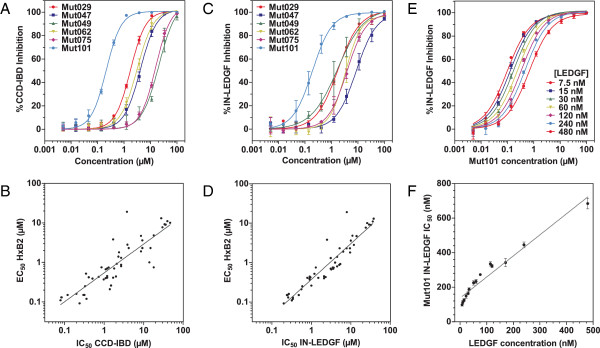
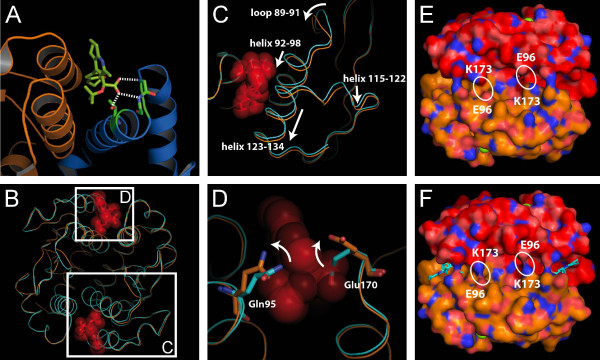
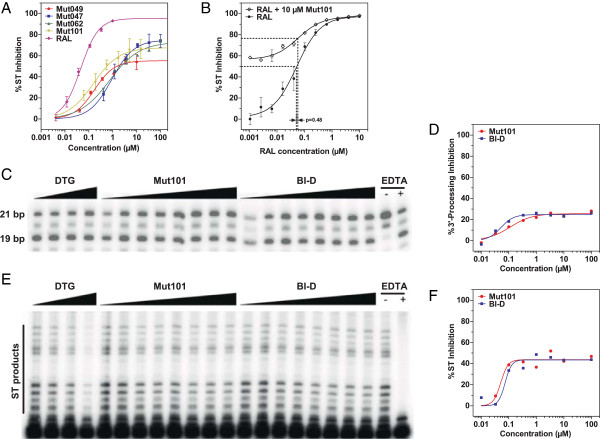
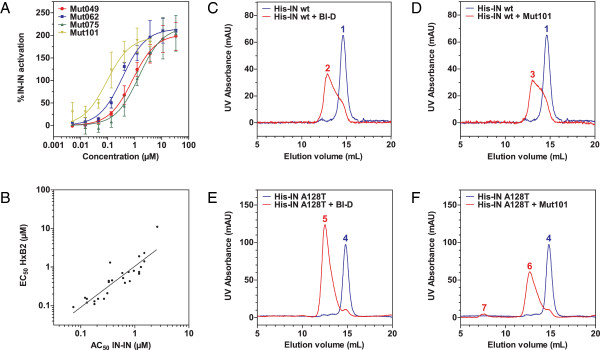
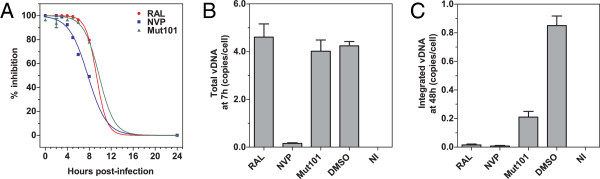
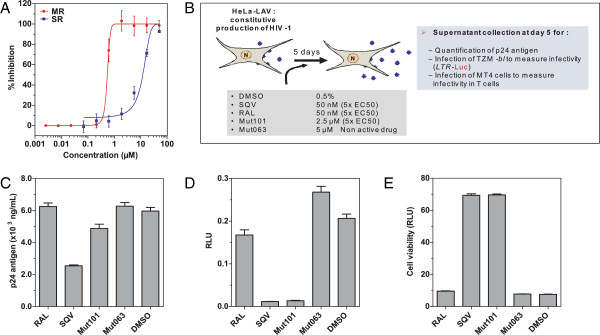
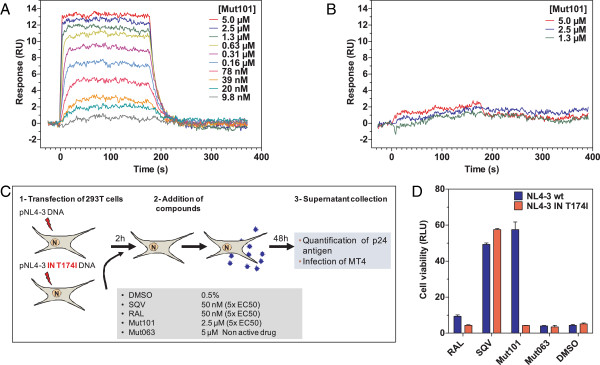
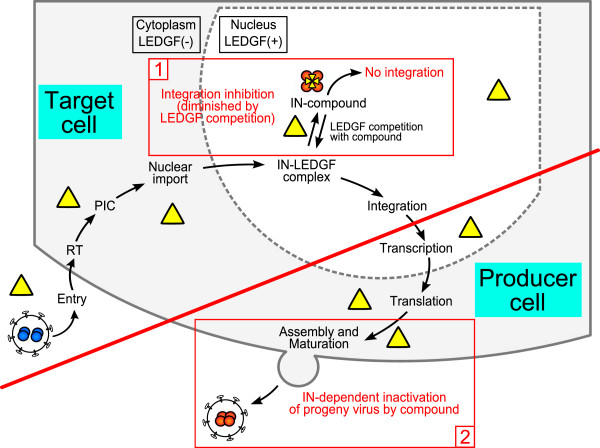
Background: LEDGF/p75 (LEDGF) is the main cellular cofactor of HIV-1 integrase (IN). It acts as a tethering factor for IN, and targets the integration of HIV in actively transcribed gene regions of chromatin. A recently developed class of IN allosteric inhibitors can inhibit the LEDGF-IN interaction. Results: We describe a new series of IN-LEDGF allosteric inhibitors, the most active of which is Mut101. We determined the crystal structure of Mut101 in complex with IN and showed that the compound binds to the LEDGF-binding pocket, promoting conformational changes of IN which explain at the atomic level the allosteric effect of the IN/LEDGF interaction inhibitor on IN functions. In vitro, Mut101 inhibited both IN-LEDGF interaction and IN strand transfer activity while enhancing IN-IN interaction. Time of addition experiments indicated that Mut101 behaved as an integration inhibitor. Mut101 was fully active on HIV-1 mutants resistant to INSTIs and other classes of anti-HIV drugs, indicative that this compound has a new mode of action. However, we found that Mut101 also displayed a more potent antiretroviral activity at a post-integration step. Infectivity of viral particles produced in presence of Mut101 was severely decreased. This latter effect also required the binding of the compound to the LEDGF-binding pocket. Conclusion: Mut101 has dual anti-HIV-1 activity, at integration and post-integration steps of the viral replication cycle, by binding to a unique target on IN (the LEDGF-binding pocket). The post-integration block of HIV-1 replication in virus-producer cells is the mechanism by which Mut101 is most active as an antiretroviral. To explain this difference between Mut101 antiretroviral activity at integration and post-integration stages, we propose the following model: LEDGF is a nuclear, chromatin-bound protein that is absent in the cytoplasm. Therefore, LEDGF can outcompete compound binding to IN in the nucleus of target cells lowering its antiretroviral activity at integration, but not in the cytoplasm where post-integration production of infectious viral particles takes place.
Overview
The claims and statistics of this paper haven’t been checked yet.
Free: it reads the open-access text and checks the first 5 claims that cite a source we can check. Create a free account to check every claim.
Integrity signals
Registry
Cites
Statistics
Figures
Verification
Claims the paper makes
The claims and statistics of this paper haven’t been checked yet.
Free: it reads the open-access text and checks the first 5 claims that cite a source we can check. Create a free account to check every claim.
Claims other papers make about this one
Each is checked against this paper’s own text: does it say what the citing paper says it does?
The cited source doesn’t support the claim as written.
In the citing paper
“Counterintuitively, the underlying mode of ALLINI action is not via inhibition of integration140,142,174–177,179–181.”
From Structure and function of retroviral integrase (2022) · cites this paper as [174]
Checked by a reasoning model — may be wrong.
Experimental — accuracy not yet measuredThe source backs part of the claim, not all of it — or backs it for a different population, condition or comparison.
In the citing paper
“Detailed analysis of virus particles produced in the presence of ALLINIs revealed that although viral RNA and proteins were incorporated properly, IN-RNA binding was disrupted, and the ribonucleoprotein complex was located eccentrically (Fig. 6B)140–142,174–176.”
From Structure and function of retroviral integrase (2022) · cites this paper as [174]
Experimental — accuracy not yet measuredThe cited source says what the claim attributes to it.
In the citing paper
“Many, though not all, of the ensuing compounds effectively inhibit IN-LEDGF/p75 binding in vitro171,173–175.”
From Structure and function of retroviral integrase (2022) · cites this paper as [174]
The cited source says what the claim attributes to it.
In the citing paper
“Many ALLINIs were co-crystallised with the isolated HIV-1 IN CCD, and the structures revealed the molecules grip onto the LEDGF/p75 IBD binding pocket at the IN CCD dimerization interface171,172,174,175,180,186,187.”
From Structure and function of retroviral integrase (2022) · cites this paper as [174]
The cited source says what the claim attributes to it.
In the citing paper
“Under these conditions, it became clear that HIV-1 was more susceptible to ALLINIs when exposed to the compounds during egress as compared to ingress140,142,174–176.”
From Structure and function of retroviral integrase (2022) · cites this paper as [174]
1 more claim about this paper
Create a free account to see every claim other papers make about this one.
Self-check
Percentages, sums and reported differences re-computed from the paper’s own numbers.
The self-check needs the paper’s full text.
Citations
Cites
Features and development of Coot
Emsley, P., Lohkamp, B., Scott, W. G., & Cowtan, K. (2010) · Acta Crystallographica Section D Biological Crystallography · doi:10.1107/s0907444910007493 · Cited by 29,915
The PyMOL Molecular Graphics System
DeLano, W. L. (2002) · Medical Entomology and Zoology · Cited by 18,147
Kabsch, W. (2010) · Acta Crystallographica Section D Biological Crystallography · doi:10.1107/s0907444909047337 · Cited by 16,463
REFMAC 5 for the refinement of macromolecular crystal structures
Murshudov, G. N., Skubák, P., Lebedev, A. A., Pannu, N. S., Steiner, R. A., Nicholls, R. A., Winn, M. D., Long, F., & Vagin, A. A. (2011) · Acta Crystallographica Section D Biological Crystallography · doi:10.1107/s0907444911001314 · Cited by 8,317
Molecular replacement with MOLREP
Vagin, A., & Teplyakov, A. (2010) · Acta Crystallographica Section D Biological Crystallography · doi:10.1107/s0907444909042589 · Cited by 3,604 · cited 2×
“Vagin A, Teplyakov A: Molecular replacement with MOLREP.”
MethodA graphical user interface to the CCP 4 program suite
Potterton, E., Briggs, P., Turkenburg, M., & Dodson, E. (2003) · Acta Crystallographica Section D Biological Crystallography · doi:10.1107/s0907444903008126 · Cited by 1,212 · cited 1×
“Structure determination was carried out using the CCP4 suite of programs [66].”
MethodIn vivo emergence of HIV-1 variants resistant to multiple protease inhibitors
Condra, J. H., Schleif, W. A., Blahy, O. M., Gabryelski, L. J., Graham, D. J., Quintero, J., Rhodes, A., Robbins, H. L., Roth, E., Shivaprakash, M., et al. (1995) · Nature · doi:10.1038/374569a0 · Cited by 974 · cited 1×
“The molecular clone containing L10R/M46I/L63P/V82T/I84V mutations within the PR-coding region [56] was used as a PR-resistant virus (PI); the clone with M41L/ D67N/T69N/K70R/T215F/K219E within the RT-coding region [57] was used as a NRTI-resistant virus; the clone with M41L/D67N/K103N/M184V/L210W/T215Y within the RT-c…”
MethodHIV-1 Integrase Forms Stable Tetramers and Associates with LEDGF/p75 Protein in Human Cells
Cherepanov, P., Maertens, G., Proost, P., Devreese, B., Van Beeumen, J., Engelborghs, Y., De Clercq, E., & Debyser, Z. (2003) · Journal of Biological Chemistry · doi:10.1074/jbc.m209278200 · Cited by 704 · cited 2×
“HIV-1 IN catalytic core (IN-CCD) and N-terminal domains are involved in the interaction with LEDGF [7-12].”
BackgroundRetroviral intasome assembly and inhibition of DNA strand transfer
Hare, S., Gupta, S. S., Valkov, E., Engelman, A., & Cherepanov, P. (2010) · Nature · doi:10.1038/nature08784 · Cited by 678 · cited 2×
“The mode of INSTI action was elucidated in complex with a retroviral IN for which the entire 3D structure was defined [2].”
BackgroundA role for LEDGF/p75 in targeting HIV DNA integration
Ciuffi, A., Llano, M., Poeschla, E., Hoffmann, C., Leipzig, J., Shinn, P., Ecker, J. R., & Bushman, F. (2005) · Nature Medicine · doi:10.1038/nm1329 · Cited by 658 · cited 1×
“LEDGF functions as a tethering factor for IN, targeting the integration of HIV in actively transcribed gene regions of chromatin [15].”
BackgroundAn essential role for LEDGF/p75 in HIV integration
Llano, M., Saenz, D. T., Meehan, A., Wongthida, P., Peretz, M., Walker, W. H., Teo, W., & Poeschla, E. M. (2006) · Science · doi:10.1126/science.1132319 · Cited by 537
Christ, F., Voet, A., Marchand, A., Nicolet, S., Desimmie, B. A., Marchand, D., Bardiot, D., Van der Veken, N. J., Van Remoortel, B., Strelkov, S. V., et al. (2010) · Nature Chemical Biology · doi:10.1038/nchembio.370 · Cited by 479 · cited 19×
“Several acronyms have been proposed for this class of compounds: LEDGIN [18], NCINI [36] and ALLINI [37] have been suggested to underline their mode of action either as LEDGF-IN inhibitors or as Allosteric IN inhibitors.”
BackgroundResultInfluentialShun, M.-C., Raghavendra, N. K., Vandegraaff, N., Daigle, J. E., Hughes, S., Kellam, P., Cherepanov, P., & Engelman, A. (2007) · Genes & Development · doi:10.1101/gad.1565107 · Cited by 467
Structural basis for the recognition between HIV-1 integrase and transcriptional coactivator p75
Cherepanov, P., Ambrosio, A. L. B., Rahman, S., Ellenberger, T., & Engelman, A. (2005) · Proceedings of the National Academy of Sciences · doi:10.1073/pnas.0506924102 · Cited by 408 · cited 3×
“HIV-1 IN catalytic core (IN-CCD) and N-terminal domains are involved in the interaction with LEDGF [7-12].”
BackgroundBushman, F. D., Engelman, A., Palmer, I., Wingfield, P., & Craigie, R. (1993) · Proceedings of the National Academy of Sciences · doi:10.1073/pnas.90.8.3428 · Cited by 350 · cited 1×
“His and has been previously described [61].”
Wang, J.-Y. (2001) · The EMBO Journal · doi:10.1093/emboj/20.24.7333 · Cited by 335 · cited 1×
“The LEDGF-binding pocket lies at the dimeric interface of IN, a region crucial for the formation of an active oligomerization state of IN required for its enzymatic activity and specificity [52-54].”
BackgroundMaignan, S., Guilloteau, J.-P., Zhou-Liu, Q., Clément-Mella, C., & Mikol, V. (1998) · Journal of Molecular Biology · doi:10.1006/jmbi.1998.2002 · Cited by 277 · cited 1×
“The structures of the integrase, both in complex with the Mut101 inhibitor or not, were determined by molecular replacement using the program MOLREP [67] and PDB entry 1BHL [68] as the starting model.”
MethodHare, S., Smith, S. J., Métifiot, M., Jaxa-Chamiec, A., Pommier, Y., Hughes, S. H., & Cherepanov, P. (2011) · Molecular Pharmacology · doi:10.1124/mol.111.073189 · Cited by 264 · cited 1×
“DTG belongs to the same class of compounds and remains sensitive to the strongest INSTI resistance mutations [5,6].”
BackgroundInterfacial inhibitors: targeting macromolecular complexes
Pommier, Y., & Marchand, C. (2012) · Nature Reviews Drug Discovery · doi:10.1038/nrd3404 · Cited by 259
Emiliani, S., Mousnier, A., Busschots, K., Maroun, M., Van Maele, B., Tempé, D., Vandekerckhove, L., Moisant, F., Ben-Slama, L., Witvrouw, M., et al. (2005) · Journal of Biological Chemistry · doi:10.1074/jbc.m501378200 · Cited by 242 · cited 1×
“The elucidation of the 3D structure of the INLEDGF interfaces [11,12], together with the mapping of the critical residues involved [11,17] suggested the “druggability” of this target.”
BackgroundSelf-citationThe lentiviral integrase binding protein LEDGF/p75 and HIV-1 replication
Engelman, A., & Cherepanov, P. (2008) · PLoS Pathogens · doi:10.1371/journal.ppat.1000046 · Cited by 231 · cited 2×
“HIV-1 IN catalytic core (IN-CCD) and N-terminal domains are involved in the interaction with LEDGF [7-12].”
BackgroundBrussel, A., & Sonigo, P. (2003) · Journal of Virology · doi:10.1128/jvi.77.18.10119-10124.2003 · Cited by 222 · cited 2×
“Primers, probes, and PCR run conditions were described previously [59].”
MethodThe Interaction of LEDGF/p75 with Integrase Is Lentivirus-specific and Promotes DNA Binding
Busschots, K., Vercammen, J., Emiliani, S., Benarous, R., Engelborghs, Y., Christ, F., & Debyser, Z. (2005) · Journal of Biological Chemistry · doi:10.1074/jbc.m411681200 · Cited by 208
Self-citationJurado, K. A., Wang, H., Slaughter, A., Feng, L., Kessl, J. J., Koh, Y., Wang, W., Ballandras-Colas, A., Patel, P. A., Fuchs, J. R., et al. (2013) · Proceedings of the National Academy of Sciences · doi:10.1073/pnas.1300703110 · Cited by 203 · cited 4×
“Gag maturation and CA composition of defective virions produced in the presence of these compounds was normal [42,43] (E.”
BackgroundInfluentialMultimode, Cooperative Mechanism of Action of Allosteric HIV-1 Integrase Inhibitors
Kessl, J. J., Jena, N., Koh, Y., Taskent-Sezgin, H., Slaughter, A., Feng, L., de Silva, S., Wu, L., Le Grice, S. F. J., Engelman, A., et al. (2012) · Journal of Biological Chemistry · doi:10.1074/jbc.m112.354373 · Cited by 182 · cited 7×
“Several acronyms have been proposed for this class of compounds: LEDGIN [18], NCINI [36] and ALLINI [37] have been suggested to underline their mode of action either as LEDGF-IN inhibitors or as Allosteric IN inhibitors.”
BackgroundResultInfluentialInhibiting HIV-1 integrase by shifting its oligomerization equilibrium
Hayouka, Z., Rosenbluh, J., Levin, A., Loya, S., Lebendiker, M., Veprintsev, D., Kotler, M., Hizi, A., Loyter, A., & Friedler, A. (2007) · Proceedings of the National Academy of Sciences · doi:10.1073/pnas.0700781104 · Cited by 181 · cited 1×
“pocket and mimicking the effect of LEDGF binding to IN [16,46].”
BackgroundChrist, F., Shaw, S., Demeulemeester, J., Desimmie, B. A., Marchand, A., Butler, S., Smets, W., Chaltin, P., Westby, M., Debyser, Z., et al. (2012) · Antimicrobial Agents and Chemotherapy · doi:10.1128/aac.00717-12 · Cited by 176 · cited 5×
“Such IN conformational change could negatively affect the formation of the stable synaptic complex (SSC) [37], or influence the currently undefined roles of IN during late stages in the HIV-1 replication cycle [51].”
BackgroundResultInfluentialNew Class of HIV-1 Integrase (IN) Inhibitors with a Dual Mode of Action
Tsiang, M., Jones, G. S., Niedziela-Majka, A., Kan, E., Lansdon, E. B., Huang, W., Hung, M., Samuel, D., Novikov, N., Xu, Y., et al. (2012) · Journal of Biological Chemistry · doi:10.1074/jbc.m112.347534 · Cited by 167 · cited 9×
“Several acronyms have been proposed for this class of compounds: LEDGIN [18], NCINI [36] and ALLINI [37] have been suggested to underline their mode of action either as LEDGF-IN inhibitors or as Allosteric IN inhibitors.”
BackgroundResultInfluentialHare, S., Shun, M.-C., Gupta, S. S., Valkov, E., Engelman, A., & Cherepanov, P. (2009) · PLoS Pathogens · doi:10.1371/journal.ppat.1000259 · Cited by 166 · cited 2×
“HIV-1 IN catalytic core (IN-CCD) and N-terminal domains are involved in the interaction with LEDGF [7-12].”
BackgroundRelationship between the Oligomeric Status of HIV-1 Integrase on DNA and Enzymatic Activity
Guiot, E., Carayon, K., Delelis, O., Simon, F., Tauc, P., Zubin, E., Gottikh, M., Mouscadet, J.-F., Brochon, J.-C., & Deprez, E. (2006) · Journal of Biological Chemistry · doi:10.1074/jbc.m602198200 · Cited by 145 · cited 1×
“Since both catalytic activities of IN, 3′ processing and strand transfer are dependent on the oligomeric state of IN [50], it is likely that the shift of IN dimer toward higher order oligomeric state of IN promoted by Mut101 or BI-D binding, is more detrimental to the strand transfer reaction rather than to the 3′ pro…”
BackgroundSelf-citationJenkins, T. M., Hickman, A. B., Dyda, F., Ghirlando, R., Davies, D. R., & Craigie, R. (1995) · Proceedings of the National Academy of Sciences · doi:10.1073/pnas.92.13.6057 · Cited by 143 · cited 2×
“Sol [62] into pET15b and pGEX-2 T-Flag, respectively.”
MethodDelelis, O., Malet, I., Na, L., Tchertanov, L., Calvez, V., Marcelin, A.-G., Subra, F., Deprez, E., & Mouscadet, J.-F. (2008) · Nucleic Acids Research · doi:10.1093/nar/gkn1050 · Cited by 139 · cited 1×
“The molecular clone containing G140S/Q148H within the IN-coding region obtained from J-F Mouscadet [58] was used as the INSTI-resistant virus.”
MethodSelf-citationLEDGINs inhibit late stage HIV-1 replication by modulating integrase multimerization in the virions
Desimmie, B. A., Schrijvers, R., Demeulemeester, J., Borrenberghs, D., Weydert, C., Thys, W., Vets, S., Van Remoortel, B., Hofkens, J., De Rijck, J., et al. (2013) · Retrovirology · doi:10.1186/1742-4690-10-57 · Cited by 139 · cited 5×
“An inhibitory effect of LEDGINs on the infectivity of progeny virions has been reported lately [35,41-45].”
BackgroundInfluentialThe LEDGF/p75 integrase interaction, a novel target for anti-HIV therapy
Christ, F., & Debyser, Z. (2012) · Virology · doi:10.1016/j.virol.2012.09.033 · Cited by 131 · cited 1×
“These compounds are considered as allosteric inhibitors of IN that are able to block HIV integration [18,35-40] and are also referred to as ALLINIs [37,40].”
BackgroundViral fitness cost prevents HIV-1 from evading dolutegravir drug pressure
Mesplède, T., Quashie, P. K., Osman, N., Han, Y., Singhroy, D. N., Lie, Y., Petropoulos, C. J., Huang, W., & Wainberg, M. A. (2013) · Retrovirology · doi:10.1186/1742-4690-10-22 · Cited by 131 · cited 1×
“DTG belongs to the same class of compounds and remains sensitive to the strongest INSTI resistance mutations [5,6].”
BackgroundBalakrishnan, M., Yant, S. R., Tsai, L., O’Sullivan, C., Bam, R. A., Tsai, A., Niedziela-Majka, A., Stray, K. M., Sakowicz, R., & Cihlar, T. (2013) · PLoS ONE · doi:10.1371/journal.pone.0074163 · Cited by 126 · cited 2×
“An inhibitory effect of LEDGINs on the infectivity of progeny virions has been reported lately [35,41-45].”
BackgroundStructural Basis for Functional Tetramerization of Lentiviral Integrase
Hare, S., Di Nunzio, F., Labeja, A., Wang, J., Engelman, A., & Cherepanov, P. (2009) · PLoS Pathogens · doi:10.1371/journal.ppat.1000515 · Cited by 122 · cited 2×
“pocket and mimicking the effect of LEDGF binding to IN [16,46].”
BackgroundStructural basis for HIV‐1 DNA integration in the human genome, role of the LEDGF/P75 cofactor
Michel, F., Crucifix, C., Granger, F., Eiler, S., Mouscadet, J. F., Korolev, S. V., Agapkina, J., Ziganshin, R., Gottikh, M., Nazabal, A., et al. (2009) · The EMBO Journal · doi:10.1038/emboj.2009.41 · Cited by 120 · cited 1×
“The His6-LEDGF plasmid has been previously described [60].”
MethodSelf-citationWang, H., Jurado, K. A., Wu, X., Shun, M.-C., Li, X., Ferris, A. L., Smith, S. J., Patel, P. A., Fuchs, J. R., Cherepanov, P., et al. (2012) · Nucleic Acids Research · doi:10.1093/nar/gks913 · Cited by 100 · cited 2×
“These compounds are considered as allosteric inhibitors of IN that are able to block HIV integration [18,35-40] and are also referred to as ALLINIs [37,40].”
BackgroundFeng, L., Sharma, A., Slaughter, A., Jena, N., Koh, Y., Shkriabai, N., Larue, R. C., Patel, P. A., Mitsuya, H., Kessl, J. J., et al. (2013) · Journal of Biological Chemistry · doi:10.1074/jbc.m112.443390 · Cited by 89 · cited 1×
“An inhibitory effect of LEDGINs on the infectivity of progeny virions has been reported lately [35,41-45].”
BackgroundThe ARP/wARP suite for automated construction and refinement of protein models
Lamzin, V. S., Anastassis Perrakis, A., & Wilson, K. S. (2006) · Cited by 87
Resistance to HIV-1 integrase inhibitors: A structural perspective
Mouscadet, J. F., Delelis, O., Marcelin, A., & Tchertanov, L. (2010) · Drug Resistance Updates · doi:10.1016/j.drup.2010.05.001 · Cited by 84 · cited 1×
“However, resistance to INSTIs has emerged in patients [3,4].”
BackgroundSelf-citationEvolution of HIV integrase resistance mutations
Quashie, P. K., Mesplède, T., & Wainberg, M. A. (2013) · Current Opinion in Infectious Diseases · doi:10.1097/qco.0b013e32835ba81c · Cited by 70 · cited 1×
“However, resistance to INSTIs has emerged in patients [3,4].”
BackgroundErratum: Interfacial inhibitors: targeting macromolecular complexes
Pommier, Y. G., & Marchand, C. (2012) · Nature Reviews Drug Discovery · doi:10.1038/nrd3665 · Cited by 56
Raltegravir: the first HIV‐1 integrase strand transfer inhibitor in the HIV armamentarium
Nguyen, B., Isaacs, R., Teppler, H., Leavitt, R. Y., Sklar, P. A., Iwamoto, M., Wenning, L. A., Miller, M. D., Chen, J., Kemp, R. K., et al. (2011) · Annals of the New York Academy of Sciences · doi:10.1111/j.1749-6632.2011.05972.x · Cited by 55 · cited 1×
“Background Raltegravir (Merck) and Elvitegravir (Gilead) were introduced in 2007 and 2012 respectively, as the first generation of integrase strand transfer inhibitors (INSTIs) and confirmed integrase (IN) as a clinically validated viral target for antiretroviral (ARV) therapy [1].”
BackgroundDelelis, O., Parissi, V., Leh, H., Mbemba, G., Petit, C., Sonigo, P., Deprez, E., & Mouscadet, J. F. (2007) · PLoS ONE · doi:10.1371/journal.pone.0000608 · Cited by 49 · cited 1×
“5 nM DNA (strand transfer) as described previously [64].”
MethodSelf-citationThe role of lysine 186 in HIV-1 integrase multimerization
Berthoux, L., Sebastian, S., Muesing, M. A., & Luban, J. (2007) · Virology · doi:10.1016/j.virol.2007.02.029 · Cited by 48 · cited 1×
“The LEDGF-binding pocket lies at the dimeric interface of IN, a region crucial for the formation of an active oligomerization state of IN required for its enzymatic activity and specificity [52-54].”
BackgroundDemeulemeester, J., Tintori, C., Botta, M., Debyser, Z., & Christ, F. (2012) · SLAS Discovery · doi:10.1177/1087057111436343 · Cited by 43 · cited 3×
“These include the inhibition of IN-LEDGF interaction, the inhibition of IN strand transfer and 3′ processing activities (independent of LEDGF), change in IN oligomerization toward stabilization of IN dimers and inhibition of the formation of the stable IN-viral DNA synaptic complex (SSC) [18,35-38].”
BackgroundLesbats, P., Métifiot, M., Calmels, C., Baranova, S., Nevinsky, G., Andreola, M. L., & Parissi, V. (2008) · Nucleic Acids Research · doi:10.1093/nar/gkn796 · Cited by 33 · cited 1×
“The LEDGF-binding pocket lies at the dimeric interface of IN, a region crucial for the formation of an active oligomerization state of IN required for its enzymatic activity and specificity [52-54].”
BackgroundHIV-1 Integrase Preassembled on Donor DNA Is Refractory to Activity Stimulation by LEDGF/p75
Yu, F., Jones, G. S., Hung, M., Wagner, A. H., MacArthur, H. L., Liu, X., Leavitt, S., McDermott, M. J., & Tsiang, M. (2007) · Biochemistry · doi:10.1021/bi602387u · Cited by 31 · cited 1×
“IN strand transfer ELISA assay has been adapted from [63].”
Method(2011) · Wiley eBooks · doi:10.1002/9781118015377 · Cited by 31
Gonzales, M. J., Johnson, E. A., Dupnik, K. M., Imamichi, T., & Shafer, R. W. (2003) · JAIDS Journal of Acquired Immune Deficiency Syndromes · doi:10.1097/00126334-200312010-00006 · Cited by 21
Pleiotropic Nature of HIV‐1 Integrase Mutations
Engelman, A. (2011) · HIV‐1 Integrase · doi:10.1002/9781118015377.ch6 · Cited by 20
HeLa-LAV, an epithelial cell line stably infected with HIV-1
Berg, J., Doe, B., Steimer, K. S., & Wabl, M. R. (1991) · Journal of Virological Methods · doi:10.1016/0166-0934(91)90097-j · Cited by 17 · cited 1×
“HIV-1 LAV virus [49] to test this hypothesis.”
BackgroundFragmentation-Tree Density Representation for Crystallographic Modelling of Bound Ligands
Langer, G. G., Evrard, G. X., Carolan, C. G., & Lamzin, V. S. (2012) · Journal of Molecular Biology · doi:10.1016/j.jmb.2012.03.012 · Cited by 10
Research works printed but not linked: 18
- 19. Yoakim C, Deroy P, Duplessis M, Gagnon A, Goulet S, Huecke O, Lemke C, Surprenant S: Preparation of pyrazolylbenzimidazole derivatives for use as HIV replication inhibitors. Boehringer Ingelheim International GmbH, Germany 2008. WO2008/067644 A1.
- 20. Tsantrizos YS, Bailey MD, Bilodeau F, Carson RJ, Coulombe R, Fader L, Halmos T, Kawai S, Landry S, Laplante S, et al: Preparation of 2-(tert-butyloxy)- 2-(2-methylquinolin-3-yl)acetic acid derivatives as inhibitors of human immuno- deficiency virus replication. Boehringer Ingelheim International GmbH, Germany; 2009. WO2009/062285 A1.
- 21. Yoakim C, Bailey MD, Bilodeau F, Carson RJ, Fader L, Kawai S, Laplante S, Simoneau B, Surprenant S, Thibeault C, Tsantrizos YS: Preparation of 2-alkoxy-2-(pyridin-3-yl)acetic acid derivatives as inhibitors of human immunodeficiency virus (HIV) replication. Boehringer Ingelheim International GmbH, Germany 2010. WO2010/130034 A1.
- 22. Fenwick C, Bethell R, Bonneau P, Duan J, Faucher A, Mason S, Poupart M, Simoneau B, Tsantrizos Y, Yoakim C: Identification of BI-C, a Novel HIV-1 non- Catalytic Site Integrase Inhibitor. Boston: 18th CROI; 2011.
- 23. Mitchell ML, Roethle PA, Xu L, Yang H, McFadden R, Babaoglu K: Benzothiazole Compounds and Their Pharmaceutical use. US: Gilead Sciences Inc; 2012. WO2012/145728 A1.
- 24. Bardiot D, Chaltin P, Christ F, Debyser Z, De MM, Marchand A, Marchand D, Voet A: Preparation of Thieno[2,3-b]Pyridine Derivatives as Viral Replication Inhibitors. Katholieke Universiteit Leuven, Belg; 2010. WO2010/130842 A1.
- 25. Chaltin P, Debyser Z, De MM, Marchand A, Marchand D, Smets W, Voet A, Christ F: Pyrimidine Derivatives as Novel Viral Replication Inhibitors and Their Preparation and use in the Treatment of HIV Infection. Katholieke Universiteit Leuven, Belg; 2011. WO2011/015641 A1.
- 26. Carlens G, Chaltin P, Christ F, Debyser Z, Marchand A, Marchand D, Voet A, De MM: Novel Antiviral Compounds. Katholieke Universiteit Leuven, Belg; 2011. WO2011/076765 A1.
- 27. Babaoglu K, Bjornson K, Guo H, Halcomb RL, Link JO, McFadden R, Mitchell ML, Roethle P, Trenkle JD, Vivian RW, Xu L: 2-(Naphth-2-yl)Acetic Acid Derivatives as HIV Antiviral Agents and Their Preparation and use for the Treatment of AIDS. USA: Gilead Sciences, Inc; 2012. WO2012/003497 A1.
- 28. Babaoglu K, Bjornson K, Guo H, Halcomb RL, Link JO, Liu H, Mitchell ML, Sun J, Vivian RW, Xu L: 2-(Quinolin-6-yl)Acetic Acid Derivatives as HIV Antiviral Agents and Their Preparation and use for the Treatment of AIDS. USA: Gilead Sciences, Inc; 2012. WO2012/003498 A1. http://www.retrovirology.com/content/10/1/144
- 29. Bell AS, Gardner IB, Gibson KR, Pryde DC, Wakenhut FM: Inhibitors of HIV Replication. Pfizer Ltd., GB; 2012. WO2012/066442 A1.
- 30. Gerritz S, Langley DR, Li G, Meanwell NA, Pendri A, Trainor GL: Inhibitors of Human Immunodeficiency Virus Replication. US: Bristol Myers Squibb Co; 2012. WO2012/033735 A1.
- 31. De La Rosa MA, Haidar SN, Johns BA, Velthuisen EJ: Isoquinoline Compounds and Methods for Treating HIV. US: Glaxo Smithkline LLC; 2012. WO2012/102985 A1.
- 32. Chasset S, Chevreuil F, Ledoussal B, Le Strat F, Benarous R: Inhibitors of Viral Replication, Their Process of Preparation and Their Therapeutical Uses. Laboratoire Biodim, FR; 2012. WO2012/137181 A1.
- 33. Chasset S, Chevreuil F, Ledoussal B, Le Strat F, Benarous R: Inhibitors of viral replication, their process of preparation and their therapeutical uses. Laboratoire Biodim FR 2012. WO2012/140243 A1.
- 34. Hattori K, Kurihara N, Iwaki T, Inoue T, Akiyama T, Hasegawa Y: HIV Replication Inhibitor. Shionogi & Co., JP; 2013. WO2013/002357 A1.
- 44. Yant S, Tsai L, O'Sullivan C, Cihlar T, Balakrishnan M: Non-Catalytic Site Integrase Inhibitors Target the Integrase Domain During Virus Production and Induce a Reverse Transcription Block, Conference on Retroviruses and Opportunistic Infections. Gilead Sciences: Atlanta, GA, USA; 2013.
- 48. Fenwick C, Tremblay S, Wardrop E, Bethell R, Coulombe R, Elston R, Faucher A-M, Mason S, Simoneau B, Tsantrizos Y, Yoakim C: Resistance Studies with HIV-1 non-Catalytic Site Integrase Inhibitors. Cabo, Mexico: In International Workshop on HIV & Hepatitis Virus Drug Resistance and Curative Strategies; 2011.
Cited by
Lesbats, P., Engelman, A. N., & Cherepanov, P. (2016) · Chemical Reviews · doi:10.1021/acs.chemrev.6b00125 · Cited by 233
Block-And-Lock Strategies to Cure HIV Infection
Vansant, G., Bruggemans, A., Janssens, J., & Debyser, Z. (2020) · Viruses · doi:10.3390/v12010084 · Cited by 169
HIV-1 Integrase Binds the Viral RNA Genome and Is Essential during Virion Morphogenesis
Kessl, J. J., Kutluay, S. B., Townsend, D., Rebensburg, S., Slaughter, A., Larue, R. C., Shkriabai, N., Bakouche, N., Fuchs, J. R., Bieniasz, P. D., et al. (2016) · Cell · doi:10.1016/j.cell.2016.07.044 · Cited by 152
Establishment of latent HIV-1 reservoirs: what do we really know?
Vanhamel, J., Bruggemans, A., & Debyser, Z. (2019) · Journal of Virus Eradication · doi:10.1016/s2055-6640(20)30275-2 · Cited by 152
Structure and function of retroviral integrase
Maertens, G. N., Engelman, A. N., & Cherepanov, P. (2022) · Nature Reviews Microbiology · doi:10.1038/s41579-021-00586-9 · Cited by 124
Metadata
- Authors
- Le Rouzic, E., Bonnard, D., Chasset, S., Bruneau, J.-M., Chevreuil, F., Le Strat, F., Nguyen, J., Beauvoir, R., Amadori, C., Brias, J., Vomscheid, S., Eiler, S., Lévy, N., Delelis, O., Deprez, E., Saïb, A., Zamborlini, A., Emiliani, S., Ruff, M., Ledoussal, B., Moreau, F., & Benarous, R.
- Affiliations
- Mutabilis (France) (FR)
- Centre National de la Recherche Scientifique (FR)
- École Normale Supérieure Paris-Saclay (FR)
- Conservatoire National des Arts et Métiers (FR)
- ORCID
- Venue
- Retrovirology
- Published
- 2013-11-21
- Volume
- 10
- Issue
- 1
- Pages
- 144-144
- ISSN
- 1742-4690 (ISSN-L)
- PMC
- PMC4222603
- OpenAlex
- W2150698261
- Cited by
- 127
- References
- 65
- Citations by year
- 2026: 2 · 2025: 7 · 2024: 8 · 2023: 8 · 2022: 10 · 2021: 10 · 2020: 12 · 2019: 13 · 2018: 12 · 2017: 10 · 2016: 16 · 2015: 8 · 2014: 11
- FWCI
- 8.47
- Type
- journal article
- Language
- en
- Open access
- gold
- doi.org
- Licence
- cc-by
- Locations
- Retrovirology (publishedVersion, cc-by)
- Europe PMC (PubMed Central) (publishedVersion, cc-by)
- PubMed Central (publishedVersion, cc-by)
- PubMed (publishedVersion)
- HAL (submittedVersion, other-oa)
- DORA PSI (Paul Scherrer Institute) (submittedVersion, cc-by)
- univOAK (4 institutions : Université de Strasbourg, Université de Haute Alsace, INSA Strasbourg, Bibliothèque Nationale et Universitaire de Strasbourg) (submittedVersion, cc-by)
- Funders
- Sidaction
- European Commission (305137)
- Agence Nationale de la Recherche (ANR-10-INSB-05-01., 10-INSB-05-01, ANR- 10-INSB-05, ANR-10, ANR-10-INBS-0005)
- Institut National de la Santé et de la Recherche Médicale
- Paul Scherrer Institut
- Centre National de la Recherche Scientifique
- Shionogi
- French Infrastructure for Integrated Structural Biology (FRISBI, ANR-10-INSB-05-01, ANR-10- INSB-05, ANR-10-INSB-0501, INSB-05)
- National Institutes of Health
- CHIST-ERA
- Topics
- Health Sciences › Medicine › Infectious Diseases › HIV/AIDS drug development and treatment
- Life Sciences › Immunology and Microbiology › Virology › HIV Research and Treatment
- Life Sciences › Biochemistry, Genetics and Molecular Biology › Genetics › Virus-based gene therapy research
- Keywords
- HIV-1 integrase, LEDGF/p75, allosteric inhibitors, viral infectivity, integrase inhibitor resistance, antiretroviral activity, crystal structure
- MeSH terms
- Cell Line, Humans, Protein Binding, Protein Conformation, Virus Replication, HIV-1, Virus Integration, Crystallography, X-Ray, HIV Integrase, HIV Integrase Inhibitors, Intercellular Signaling Peptides and Proteins
About these checks
Registry, retraction, Cites and statistics results are computed, not judged, with one exception: a printed reference that no index lists is read once by a model before it counts as a citation error. Claims are extracted by a model and kept only when their quote appears verbatim in the text; each cited source is then checked, with a model’s help, for whether it says what the claim relies on. Those verdicts can be wrong — read the claim’s quote and the cited source before relying on one.
Statistics and arithmetic are recomputed, not judged.
Confidence bands are shown only for fields calibrated on our annotated test set. None is calibrated yet, so no band is shown.
What counts as a claim ›How we measure confidence ›How we check this ›
Are you an author, or do you see a problem with this page? Request a review
Data sources
Bibliographic data: Semantic Scholar, OpenAlex, Crossref.
Contains information from the Semantic Scholar Academic Graph Datasets, made available under the ODC Attribution License (ODC-BY 1.0).
Semantic Scholar’s data is described in: Kinney, R., et al. (2023). The Semantic Scholar Open Data Platform. arXiv:2301.10140.
