

LEDGINs inhibit late stage HIV-1 replication by modulating integrase multimerization in the virions
Open accessThe DOI matches its Crossref record; 45 of the 46 references it cites were found in a registry or an index.
Abstract
Background: LEDGINs are novel allosteric HIV integrase (IN) inhibitors that target the lens epithelium-derived growth factor (LEDGF)/p75 binding pocket of IN. They block HIV-1 integration by abrogating the interaction between LEDGF/p75 and IN as well as by allosterically inhibiting the catalytic activity of IN. Results: Here we demonstrate that LEDGINs reduce the replication capacity of HIV particles produced in their presence. We systematically studied the molecular basis of this late effect of LEDGINs and demonstrate that HIV virions produced in their presence display a severe replication defect. Both the late effect and the previously described, early effect on integration contribute to LEDGIN antiviral activity as shown by time-of-addition, qPCR and infectivity assays. The late effect phenotype requires binding of LEDGINs to integrase without influencing proteolytic cleavage or production of viral particles. LEDGINs augment IN multimerization during virion assembly or in the released viral particles and severely hamper the infectivity of progeny virions. About 70% of the particles produced in LEDGIN-treated cells do not form a core or display aberrant empty cores with a mislocalized electron-dense ribonucleoprotein. The LEDGIN-treated virus displays defective reverse transcription and nuclear import steps in the target cells. The LEDGIN effect is possibly exerted at the level of the Pol precursor polyprotein. Conclusion: Our results suggest that LEDGINs modulate IN multimerization in progeny virions and impair the formation of regular cores during the maturation step, resulting in a decreased infectivity of the viral particles in the target cells. LEDGINs thus profile as unique antivirals with combined early (integration) and late (IN assembly) effects on the HIV replication cycle.
Overview
The claims and statistics of this paper haven’t been checked yet.
Free: it reads the open-access text and checks the first 5 claims that cite a source we can check. Create a free account to check every claim.
Integrity signals
Registry
Cites
Statistics
Figures
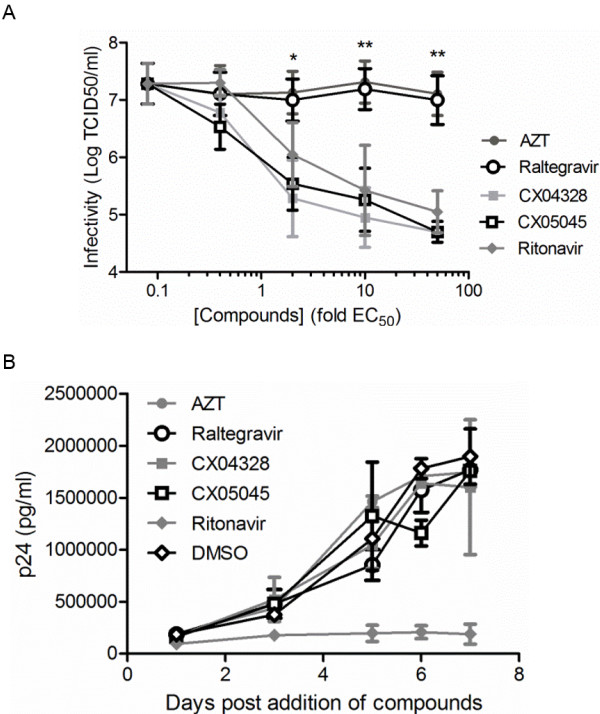
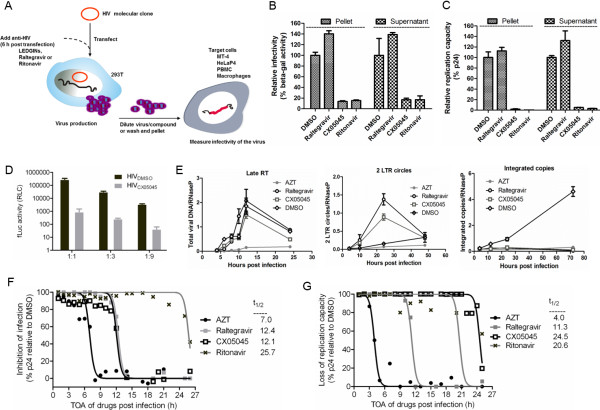
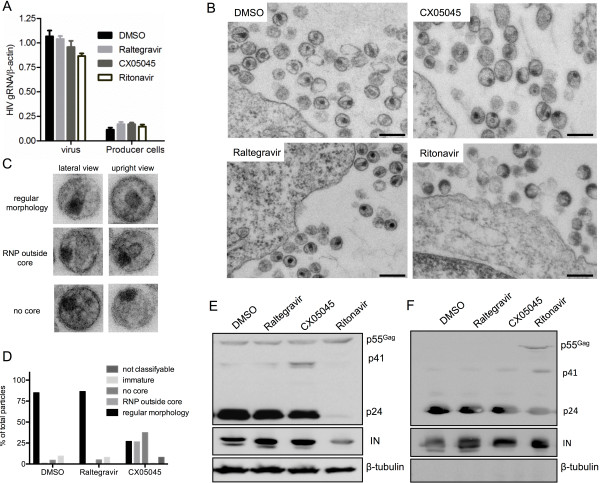
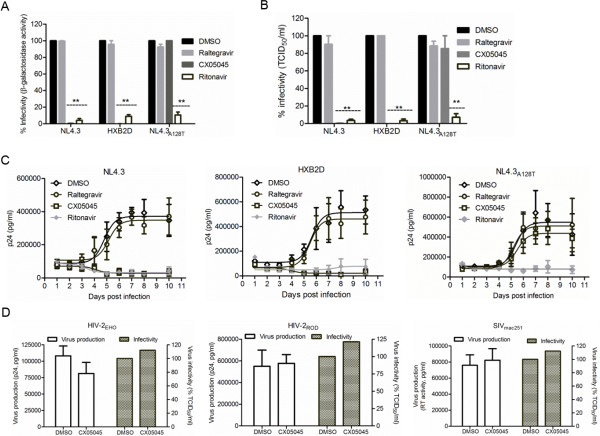
Verification
Claims the paper makes
The claims and statistics of this paper haven’t been checked yet.
Free: it reads the open-access text and checks the first 5 claims that cite a source we can check. Create a free account to check every claim.
Claims other papers make about this one
Each is checked against this paper’s own text: does it say what the citing paper says it does?
The cited source doesn’t support the claim as written.
In the citing paper
“Counterintuitively, the underlying mode of ALLINI action is not via inhibition of integration140,142,174–177,179–181.”
From Structure and function of retroviral integrase (2022) · cites this paper as [176]
Checked by a reasoning model — may be wrong.
Experimental — accuracy not yet measuredThe source backs part of the claim, not all of it — or backs it for a different population, condition or comparison.
In the citing paper
“Under these conditions, it became clear that HIV-1 was more susceptible to ALLINIs when exposed to the compounds during egress as compared to ingress140,142,174–176.”
From Structure and function of retroviral integrase (2022) · cites this paper as [176]
Experimental — accuracy not yet measuredThe source backs part of the claim, not all of it — or backs it for a different population, condition or comparison.
In the citing paper
“Detailed analysis of virus particles produced in the presence of ALLINIs revealed that although viral RNA and proteins were incorporated properly, IN-RNA binding was disrupted, and the ribonucleoprotein complex was located eccentrically (Fig. 6B)140–142,174–176.”
From Structure and function of retroviral integrase (2022) · cites this paper as [176]
Experimental — accuracy not yet measuredThe source backs part of the claim, not all of it — or backs it for a different population, condition or comparison.
In the citing paper
“The common biochemical consequence of ALLINI binding is aberrant HIV-1 IN hyper-multimerization140,142,174–181.”
From Structure and function of retroviral integrase (2022) · cites this paper as [176]
Experimental — accuracy not yet measured
Self-check
Percentages, sums and reported differences re-computed from the paper’s own numbers.
The self-check needs the paper’s full text.
Citations
Cites
Inhibitors of Strand Transfer That Prevent Integration and Inhibit HIV-1 Replication in Cells
Hazuda, D. J., Felock, P., Witmer, M., Wolfe, A., Stillmock, K., Grobler, J. A., Espeseth, A., Gabryelski, L., Schleif, W., Blau, C., et al. (2000) · Science · doi:10.1126/science.287.5453.646 · Cited by 1,131 · cited 2×
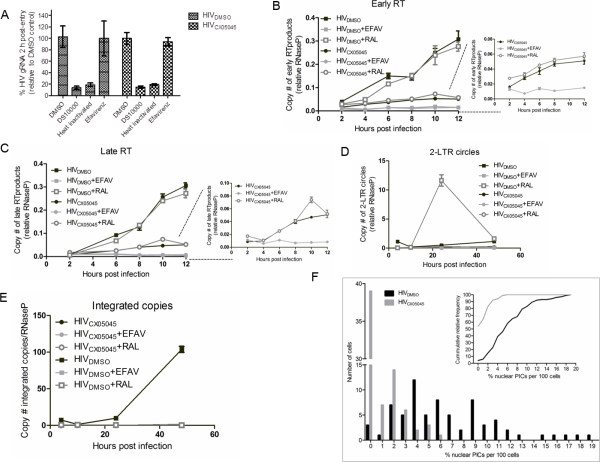
“While only AZT inhibited RT activity, both CX05045 and raltegravir significantly blocked integration resulting in an accumulation of 2long terminal repeat (2-LTR) circles at 24 hpi (Figure 2E), a hallmark of IN inhibitors [12,20,30].”
BackgroundHIV-1 Antiretroviral Drug Therapy
Arts, E. J., & Hazuda, D. J. (2012) · Cold Spring Harbor Perspectives in Medicine · doi:10.1101/cshperspect.a007161 · Cited by 851
HIV-1 Integrase Forms Stable Tetramers and Associates with LEDGF/p75 Protein in Human Cells
Cherepanov, P., Maertens, G., Proost, P., Devreese, B., Van Beeumen, J., Engelborghs, Y., De Clercq, E., & Debyser, Z. (2003) · Journal of Biological Chemistry · doi:10.1074/jbc.m209278200 · Cited by 704 · cited 1×
“Integration of lentiviruses including HIV is dictated by the specific interaction between IN and the cellular cofactor lens epithelium-derived growth factor (LEDGF/p75) that acts as a molecular tether linking IN to the chromatin [5-10].”
BackgroundSelf-citationA quantitative assay for HIV DNA integration in vivo
Butler, S. L., Hansen, M. S. T., & Bushman, F. D. (2001) · Nature Medicine · doi:10.1038/87979 · Cited by 687 · cited 2×
“DNA extractions and quantification of the kinetics of early and late reverse transcripts, 2-long terminal repeat (LTR) circles and integrants were done as described earlier [18,43].”
MethodA role for LEDGF/p75 in targeting HIV DNA integration
Ciuffi, A., Llano, M., Poeschla, E., Hoffmann, C., Leipzig, J., Shinn, P., Ecker, J. R., & Bushman, F. (2005) · Nature Medicine · doi:10.1038/nm1329 · Cited by 658 · cited 1×
“Integration of lentiviruses including HIV is dictated by the specific interaction between IN and the cellular cofactor lens epithelium-derived growth factor (LEDGF/p75) that acts as a molecular tether linking IN to the chromatin [5-10].”
BackgroundKim, S. Y., Byrn, R., Groopman, J., & Baltimore, D. (1989) · Journal of Virology · doi:10.1128/jvi.63.9.3708-3713.1989 · Cited by 577 · cited 1×
“Next, we designed and carried out a TOA experiment in MT-4 cells in which the antivirals were added every hour post infection and the supernatants were harvested 31 hpi, the average duration of a single HIV replication cycle in laboratory-adapted T cells [21,22].”
MethodAn essential role for LEDGF/p75 in HIV integration
Llano, M., Saenz, D. T., Meehan, A., Wongthida, P., Peretz, M., Walker, W. H., Teo, W., & Poeschla, E. M. (2006) · Science · doi:10.1126/science.1132319 · Cited by 537
LEDGF/p75 Is Essential for Nuclear and Chromosomal Targeting of HIV-1 Integrase in Human Cells
Maertens, G., Cherepanov, P., Pluymers, W., Busschots, K., De Clercq, E., Debyser, Z., & Engelborghs, Y. (2003) · Journal of Biological Chemistry · doi:10.1074/jbc.m303594200 · Cited by 493 · cited 1×
“Integration of lentiviruses including HIV is dictated by the specific interaction between IN and the cellular cofactor lens epithelium-derived growth factor (LEDGF/p75) that acts as a molecular tether linking IN to the chromatin [5-10].”
BackgroundSelf-citationChrist, F., Voet, A., Marchand, A., Nicolet, S., Desimmie, B. A., Marchand, D., Bardiot, D., Van der Veken, N. J., Van Remoortel, B., Strelkov, S. V., et al. (2010) · Nature Chemical Biology · doi:10.1038/nchembio.370 · Cited by 479
Self-citationMultiple effects of mutations in human immunodeficiency virus type 1 integrase on viral replication
Engelman, A., Englund, G., Orenstein, J. M., Martin, M. A., & Craigie, R. (1995) · Journal of Virology · doi:10.1128/jvi.69.5.2729-2736.1995 · Cited by 445 · cited 1×
“The phenotype of empty cores with misplaced RNP was previously observed with IN mutants [32].”
BackgroundChiu, J. (2004) · Nucleic Acids Research · doi:10.1093/nar/gnh172 · Cited by 355 · cited 3×
“Chiu J, March PE, Lee R, Tillett D: Site-directed, Ligase-Independent Mutagenesis (SLIM): a single-tube methodology approaching 100% efficiency in 4 h. Nucleic Acids Res 2004, 32:e174.”
MethodInfluentialDose-response curve slope sets class-specific limits on inhibitory potential of anti-HIV drugs
Shen, L., Peterson, S., Sedaghat, A. R., McMahon, M. A., Callender, M., Zhang, H., Zhou, Y., Pitt, E., Anderson, K. S., Acosta, E. P., et al. (2008) · Nature Medicine · doi:10.1038/nm1777 · Cited by 327 · cited 3×
“Recently, the superior antiviral activity of non-nucleoside reverse transcriptase inhibitors (NNRTIs) and especially protease inhibitors (PIs) has been explained by steep dose–response curves and cooperativity [36,37].”
BackgroundWiskerchen, M., & Muesing, M. A. (1995) · Journal of Virology · doi:10.1128/jvi.69.1.376-386.1995 · Cited by 273 · cited 2×
“While only AZT inhibited RT activity, both CX05045 and raltegravir significantly blocked integration resulting in an accumulation of 2long terminal repeat (2-LTR) circles at 24 hpi (Figure 2E), a hallmark of IN inhibitors [12,20,30].”
BackgroundTransportin-SR2 Imports HIV into the Nucleus
Christ, F., Thys, W., De Rijck, J., Gijsbers, R., Albanese, A., Arosio, D., Emiliani, S., Rain, J.-C., Benarous, R., Cereseto, A., et al. (2008) · Current Biology · doi:10.1016/j.cub.2008.07.079 · Cited by 245
Self-citationRetroviral DNA integration: reaction pathway and critical intermediates
Li, M., Mizuuchi, M., Burke, T. R., & Craigie, R. (2006) · The EMBO Journal · doi:10.1038/sj.emboj.7601005 · Cited by 233 · cited 1×
“The integration process proceeds through two canonical reactions called 3’ processing and strand transfer [1].”
BackgroundBusso, D., Delagoutte-Busso, B., & Moras, D. (2005) · Analytical Biochemistry · doi:10.1016/j.ab.2005.05.015 · Cited by 206
Multimode, Cooperative Mechanism of Action of Allosteric HIV-1 Integrase Inhibitors
Kessl, J. J., Jena, N., Koh, Y., Taskent-Sezgin, H., Slaughter, A., Feng, L., de Silva, S., Wu, L., Le Grice, S. F. J., Engelman, A., et al. (2012) · Journal of Biological Chemistry · doi:10.1074/jbc.m112.354373 · Cited by 182 · cited 8×
“By occupying the LEDGF/p75 binding pocket on the IN dimer interface, LEDGINs enhance IN multimerization and therefore allostericly interfere with its catalytic activities [14,16,17].”
BackgroundResultInfluentialHIV-1 integrase crosslinked oligomers are active in vitro
Faure, A. L. (2005) · Nucleic Acids Research · doi:10.1093/nar/gki241 · Cited by 181 · cited 2×
“The first reaction requires at least a dimer of IN on each viral DNA end, while a dimer of dimers binding both ends is required for the second [2,3].”
BackgroundInhibiting HIV-1 integrase by shifting its oligomerization equilibrium
Hayouka, Z., Rosenbluh, J., Levin, A., Loya, S., Lebendiker, M., Veprintsev, D., Kotler, M., Hizi, A., Loyter, A., & Friedler, A. (2007) · Proceedings of the National Academy of Sciences · doi:10.1073/pnas.0700781104 · Cited by 181 · cited 1×
“A shift in the multimerization equilibrium of IN may perturb its catalytic activities and structural functions in the preintegration complexes (PICs) resulting in defective integration [4].”
BackgroundChrist, F., Shaw, S., Demeulemeester, J., Desimmie, B. A., Marchand, A., Butler, S., Smets, W., Chaltin, P., Westby, M., Debyser, Z., et al. (2012) · Antimicrobial Agents and Chemotherapy · doi:10.1128/aac.00717-12 · Cited by 176 · cited 10×
“By occupying the LEDGF/p75 binding pocket on the IN dimer interface, LEDGINs enhance IN multimerization and therefore allostericly interfere with its catalytic activities [14,16,17].”
BackgroundResultInfluentialSelf-citationNew Class of HIV-1 Integrase (IN) Inhibitors with a Dual Mode of Action
Tsiang, M., Jones, G. S., Niedziela-Majka, A., Kan, E., Lansdon, E. B., Huang, W., Hung, M., Samuel, D., Novikov, N., Xu, Y., et al. (2012) · Journal of Biological Chemistry · doi:10.1074/jbc.m112.347534 · Cited by 167 · cited 5×
“By occupying the LEDGF/p75 binding pocket on the IN dimer interface, LEDGINs enhance IN multimerization and therefore allostericly interfere with its catalytic activities [14,16,17].”
BackgroundResultInfluentialIdentification of the LEDGF/p75 Binding Site in HIV-1 Integrase
Busschots, K., Voet, A. R. D., Maeyer, M. D., Rain, J., Emiliani, S., Bénarous, R., Desender, L., Debyser, Z., & Christ, F. (2006) · Journal of Molecular Biology · doi:10.1016/j.jmb.2006.10.094 · Cited by 161 · cited 1×
“3A128T, and HXB2D), HIV-2 (ROD, EHO) and SIVmac251 strains were described before [12,41].”
BackgroundSelf-citationLens Epithelium-derived Growth Factor/p75 Prevents Proteasomal Degradation of HIV-1 Integrase
Llano, M., Delgado, S., Vanegas, M., & Poeschla, E. M. (2004) · Journal of Biological Chemistry · doi:10.1074/jbc.m408508200 · Cited by 157 · cited 1×
“Therefore, the late effect of LEDGINs may additionally involve a block in the interaction between LEDGF/p75-IN in the late stage of HIV replication, and expose LEDGF/p75-stripped IN to proteasomal degradation in infected cells [33-35].”
BackgroundUpscaling of lentiviral vector production by tangential flow filtration
Geraerts, M., Michiels, M., Baekelandt, V., Debyser, Z., & Gijsbers, R. (2005) · The Journal of Gene Medicine · doi:10.1002/jgm.778 · Cited by 155 · cited 1×
“3A128T, HXB2D or YU-2) was carried out by transfecting 293T cells as described before [42].”
MethodSelf-citationHIV-1 Pre-Integration Complexes Selectively Target Decondensed Chromatin in the Nuclear Periphery
Albanese, A., Arosio, D., Terreni, M., & Cereseto, A. (2008) · PLoS ONE · doi:10.1371/journal.pone.0002413 · Cited by 138
Wagner, R., Graf, M., Bieler, K., Wolf, H., Grunwald, T., Foley, P., & Überla, K. (2000) · Human Gene Therapy · doi:10.1089/104303400750038507 · Cited by 138 · cited 1×
“[44].”
Schrijvers, R., De Rijck, J., Demeulemeester, J., Adachi, N., Vets, S., Ronen, K., Christ, F., Bushman, F. D., Debyser, Z., & Gijsbers, R. (2012) · PLoS Pathogens · doi:10.1371/journal.ppat.1002558 · Cited by 134 · cited 1×
“Integration of lentiviruses including HIV is dictated by the specific interaction between IN and the cellular cofactor lens epithelium-derived growth factor (LEDGF/p75) that acts as a molecular tether linking IN to the chromatin [5-10].”
BackgroundSelf-citationOligomeric States of the HIV-1 Integrase As Measured by Time-Resolved Fluorescence Anisotropy
Deprez, E., Tauc, P., Leh, H., Mouscadet, J.-F., Auclair, C., & Brochon, J.-C. (2000) · Biochemistry · doi:10.1021/bi000397j · Cited by 134 · cited 2×
“The first reaction requires at least a dimer of IN on each viral DNA end, while a dimer of dimers binding both ends is required for the second [2,3].”
BackgroundThe LEDGF/p75 integrase interaction, a novel target for anti-HIV therapy
Christ, F., & Debyser, Z. (2012) · Virology · doi:10.1016/j.virol.2012.09.033 · Cited by 131 · cited 1×
“The compounds within this class are hence referred to as LEDGINs (LEDGF/p75-IN interaction site) [13].”
BackgroundSelf-citationVan Maele, B., De Rijck, J., De Clercq, E., & Debyser, Z. (2003) · Journal of Virology · doi:10.1128/jvi.77.8.4685-4694.2003 · Cited by 129
Self-citationBalakrishnan, M., Yant, S. R., Tsai, L., O’Sullivan, C., Bam, R. A., Tsai, A., Niedziela-Majka, A., Stray, K. M., Sakowicz, R., & Cihlar, T. (2013) · PLoS ONE · doi:10.1371/journal.pone.0074163 · Cited by 126
Potent Nonnucleoside Reverse Transcriptase Inhibitors Target HIV-1 Gag-Pol
Figueiredo, A., Moore, K. L., Mak, J., Sluis-Cremer, N., de Bethune, M.-P., & Tachedjian, G. (2006) · PLoS Pathogens · doi:10.1371/journal.ppat.0020119 · Cited by 111 · cited 3×
“Recently, the superior antiviral activity of non-nucleoside reverse transcriptase inhibitors (NNRTIs) and especially protease inhibitors (PIs) has been explained by steep dose–response curves and cooperativity [36,37].”
BackgroundHIV-1 Gag Processing Intermediates Trans-dominantly Interfere with HIV-1 Infectivity
Müller, B., Anders, M., Akiyama, H., Welsch, S., Glass, B., Nikovics, K., Clavel, F., Tervo, H.-M., Keppler, O. T., & Kräusslich, H.-G. (2009) · Journal of Biological Chemistry · doi:10.1074/jbc.m109.027144 · Cited by 106
Murray, J. M., Kelleher, A. D., & Cooper, D. A. (2011) · Journal of Virology · doi:10.1128/jvi.05095-11 · Cited by 93
Bartonova, V., Igonet, S., Sticht, J., Glass, B., Habermann, A., Vaney, M.-C., Sehr, P., Lewis, J., Rey, F. A., & Kraüsslich, H.-G. (2008) · Journal of Biological Chemistry · doi:10.1074/jbc.m804230200 · Cited by 76
Novel therapeutic strategies targeting HIV integrase
Quashie, P. K., Sloan, R. D., & Wainberg, M. A. (2012) · BMC Medicine · doi:10.1186/1741-7015-10-34 · Cited by 74 · cited 1×
“This class includes raltegravir, elvitegravir and dolutegravir (a second-generation INSTI in phase-III clinical trials) [11], all potent antivirals with high safety profiles.”
BackgroundShen, L., Rabi, S. A., Sedaghat, A. R., Shan, L., Lai, J., Xing, S., & Siliciano, R. F. (2011) · Science Translational Medicine · doi:10.1126/scitranslmed.3002304 · Cited by 68 · cited 2×
“Recently, the superior antiviral activity of non-nucleoside reverse transcriptase inhibitors (NNRTIs) and especially protease inhibitors (PIs) has been explained by steep dose–response curves and cooperativity [36,37].”
BackgroundAllosteric Inhibitor Development Targeting HIV‐1 Integrase
Al‐Mawsawi, L. Q., & Neamati, N. (2011) · ChemMedChem · doi:10.1002/cmdc.201000443 · Cited by 61 · cited 1×
“[15], and does not refer to the specific and novel mechanism of action of LEDGINs.”
BackgroundIkeda, T., Nishitsuji, H., Zhou, X., Nara, N., Ohashi, T., Kannagi, M., & Masuda, T. (2004) · Journal of Virology · doi:10.1128/jvi.78.21.11563-11573.2004 · Cited by 59 · cited 1×
“The reduced number of 2-LTR circles raised the question whether HIVCX05045 is also defective for nuclear import of the PIC, an event believed to be at least partially dependent on the dynamic interaction between IN carried in the PIC and karyopherins [25,26].”
BackgroundPhage Display-directed Discovery of LEDGF/p75 Binding Cyclic Peptide Inhibitors of HIV Replication
Desimmie, B. A., Humbert, M., Lescrinier, E., Hendrix, J., Vets, S., Gijsbers, R., Ruprecht, R. M., Dietrich, U., Debyser, Z., & Christ, F. (2012) · Molecular Therapy · doi:10.1038/mt.2012.132 · Cited by 57 · cited 2×
“and will provide insight into the possible role of the LEDGF/p75-IN interaction in the late stage of HIV replication [29].”
BackgroundSelf-citationDemeulemeester, J., Tintori, C., Botta, M., Debyser, Z., & Christ, F. (2012) · SLAS Discovery · doi:10.1177/1087057111436343 · Cited by 43 · cited 2×
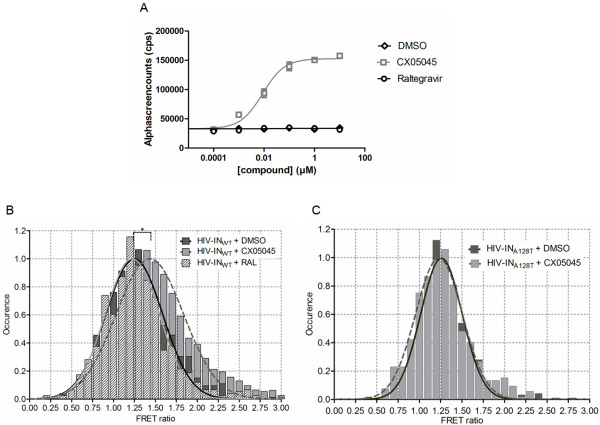
“05), strongly suggesting that LEDGINs enhance IN multimerization in the virion, consistent with previous in vitro data with recombinant IN [14,16,17,28].”
MethodResultSelf-citationIn Vitro DNA Tethering of HIV-1 Integrase by the Transcriptional Coactivator LEDGF/p75
McNeely, M., Hendrix, J., Busschots, K., Boons, E., Deleersnijder, A., Gérard, M., Christ, F., & Debyser, Z. (2011) · Journal of Molecular Biology · doi:10.1016/j.jmb.2011.03.073 · Cited by 39 · cited 1×
“Integration of lentiviruses including HIV is dictated by the specific interaction between IN and the cellular cofactor lens epithelium-derived growth factor (LEDGF/p75) that acts as a molecular tether linking IN to the chromatin [5-10].”
BackgroundSelf-citationMeehan, A. M., Saenz, D. T., Morrison, J. H., Hu, C., Peretz, M., & Poeschla, E. M. (2011) · Journal of Virology · doi:10.1128/jvi.01295-10 · Cited by 38 · cited 3×
“We propose that the dominant interference effect of the IBD of LEDGF/p75 in fact extends to the late stage of HIV replication as well and could contribute to the near complete inhibition of spreading HIV infections [33].”
BackgroundStefanidou, M., Herrera, C., Armanasco, N., & Shattock, R. J. (2012) · Antimicrobial Agents and Chemotherapy · doi:10.1128/aac.00399-12 · Cited by 29 · cited 1×
“Unlike other antiretroviral drugs, viruses generated in the presence of PIs display defective RT in subsequent infections [39,40], explaining their high cooperativity.”
BackgroundGérard, A., Soler, N., Ségéral, E., Belshan, M., & Emiliani, S. (2013) · Retrovirology · doi:10.1186/1742-4690-10-13 · Cited by 12 · cited 1×
“Therefore, the late effect of LEDGINs may additionally involve a block in the interaction between LEDGF/p75-IN in the late stage of HIV replication, and expose LEDGF/p75-stripped IN to proteasomal degradation in infected cells [33-35].”
Background
Research works printed but not linked: 2
- 19. Van Acker K, Lodewij K, Van Acker K, Lodewij k, August, BUNKENS L, Elisabeth, Louis, DAMS G, Karel, Julia, HERTOGS K, IVENS T, Pauline, Eduard, NIJS E, Jos, Amandus: Time-of-addition assay for identifying anti-viral compounds. World Intellectual Property Organization; 2005. WO/2005/ 028669.
- 31. Yant S, Tsai L, O'Sullivan C, Cihlar T, Balakrishnan M: Non-Catalytic Site Integrase Inhibitors Target the Integrase Domain during Virus Production and Induce a Reverse Transcription Block. 2013. http://www. retroconference.org/2013b/Abstracts/46625.htm.
Cited by
Lesbats, P., Engelman, A. N., & Cherepanov, P. (2016) · Chemical Reviews · doi:10.1021/acs.chemrev.6b00125 · Cited by 233
Hindmarsh, P., & Leis, J. (1999) · Microbiology and Molecular Biology Reviews · doi:10.1128/mmbr.63.4.836-843.1999 · Cited by 202
Nuclear landscape of HIV-1 infection and integration
Lušić, M., & Siliciano, R. F. (2016) · Nature Reviews Microbiology · doi:10.1038/nrmicro.2016.162 · Cited by 206
Block-And-Lock Strategies to Cure HIV Infection
Vansant, G., Bruggemans, A., Janssens, J., & Debyser, Z. (2020) · Viruses · doi:10.3390/v12010084 · Cited by 169
Self-citationHIV-1 Integrase Binds the Viral RNA Genome and Is Essential during Virion Morphogenesis
Kessl, J. J., Kutluay, S. B., Townsend, D., Rebensburg, S., Slaughter, A., Larue, R. C., Shkriabai, N., Bakouche, N., Fuchs, J. R., Bieniasz, P. D., et al. (2016) · Cell · doi:10.1016/j.cell.2016.07.044 · Cited by 152
Metadata
- Authors
- Desimmie, B. A., Schrijvers, R., Demeulemeester, J., Borrenberghs, D., Weydert, C., Thys, W., Vets, S., Van Remoortel, B., Hofkens, J., De Rijck, J., Hendrix, J., Bannert, N., Gijsbers, R., Christ, F., & Debyser, Z.
- Affiliations
- KU Leuven (BE)
- Robert Koch Institute (DE)
- Corresponding author
- Debyser, Zeger
- ORCID
- Venue
- Retrovirology
- Published
- 2013-05-30
- Volume
- 10
- Issue
- 1
- Pages
- 57-57
- ISSN
- 1742-4690 (ISSN-L)
- PMC
- PMC3671127
- OpenAlex
- W2129084136
- Cited by
- 139
- References
- 46
- Citations by year
- 2026: 2 · 2025: 7 · 2024: 4 · 2023: 9 · 2022: 10 · 2021: 9 · 2020: 13 · 2019: 10 · 2018: 15 · 2017: 11 · 2016: 19 · 2015: 11 · 2014: 14 · 2013: 5
- FWCI
- 11.86
- Type
- journal article
- Language
- en
- Update notices
- correction (2020-07-29)
- Open access
- gold
- doi.org
- Licence
- cc-by
- creativecommons.org/licenses/by/2.0 (tdm)
- creativecommons.org/licenses/by/2.0 (vor)
- Locations
- Retrovirology (publishedVersion, cc-by)
- Europe PMC (PubMed Central) (publishedVersion, cc-by)
- PubMed Central (publishedVersion, cc-by)
- PubMed (publishedVersion)
- Lirias (submittedVersion, other-oa)
- Publication server of the Robert Koch Institute (Robert Kock Institute) (submittedVersion)
- Funders
- Fonds Wetenschappelijk Onderzoek
- KU Leuven
- Vlaamse regering
- Topics
- Health Sciences › Medicine › Infectious Diseases › HIV/AIDS drug development and treatment
- Life Sciences › Immunology and Microbiology › Virology › HIV Research and Treatment
- Life Sciences › Biochemistry, Genetics and Molecular Biology › Genetics › Virus-based gene therapy research
- Keywords
- HIV-1 integrase inhibitors, integrase multimerization, LEDGF/p75, viral infectivity, reverse transcription, nuclear import, allosteric inhibition, HIV-1 integration
- MeSH terms
- Cells, Cultured, Humans, Leukocytes, Mononuclear, Virus Replication, HIV-1, Virus Assembly, HIV Integrase, HIV Integrase Inhibitors, Protein Multimerization
About these checks
Registry, retraction, Cites and statistics results are computed, not judged, with one exception: a printed reference that no index lists is read once by a model before it counts as a citation error. Claims are extracted by a model and kept only when their quote appears verbatim in the text; each cited source is then checked, with a model’s help, for whether it says what the claim relies on. Those verdicts can be wrong — read the claim’s quote and the cited source before relying on one.
Statistics and arithmetic are recomputed, not judged.
Confidence bands are shown only for fields calibrated on our annotated test set. None is calibrated yet, so no band is shown.
What counts as a claim ›How we measure confidence ›How we check this ›
Are you an author, or do you see a problem with this page? Request a review
Data sources
Bibliographic data: Semantic Scholar, OpenAlex, Crossref.
Contains information from the Semantic Scholar Academic Graph Datasets, made available under the ODC Attribution License (ODC-BY 1.0).
Semantic Scholar’s data is described in: Kinney, R., et al. (2023). The Semantic Scholar Open Data Platform. arXiv:2301.10140.
