

Identification, characterization, and comparative genomic distribution of the HERV-K (HML-2) group of human endogenous retroviruses
Open accessThe DOI matches its Crossref record; 96 of the 96 references it cites were found in a registry or an index.
Abstract
Background: Integration of retroviral DNA into a germ cell may lead to a provirus that is transmitted vertically to that host's offspring as an endogenous retrovirus (ERV). In humans, ERVs (HERVs) comprise about 8% of the genome, the vast majority of which are truncated and/or highly mutated and no longer encode functional genes. The most recently active retroviruses that integrated into the human germ line are members of the Betaretrovirus-like HERV-K (HML-2) group, many of which contain intact open reading frames (ORFs) in some or all genes, sometimes encoding functional proteins that are expressed in various tissues. Interestingly, this expression is upregulated in many tumors ranging from breast and ovarian tissues to lymphomas and melanomas, as well as schizophrenia, rheumatoid arthritis, and other disorders. Results: No study to date has characterized all HML-2 elements in the genome, an essential step towards determining a possible functional role of HML-2 expression in disease. We present here the most comprehensive and accurate catalog of all full-length and partial HML-2 proviruses, as well as solo LTR elements, within the published human genome to date. Furthermore, we provide evidence for preferential maintenance of proviruses and solo LTR elements on gene-rich chromosomes of the human genome and in proximity to gene regions. Conclusions: Our analysis has found and corrected several errors in the annotation of HML-2 elements in the human genome, including mislabeling of a newly identified group called HML-11. HML-elements have been implicated in a wide array of diseases, and characterization of these elements will play a fundamental role to understand the relationship between endogenous retrovirus expression and disease.
Overview
The claims and statistics of this paper haven’t been checked yet.
Free: it reads the open-access text and checks the first 5 claims that cite a source we can check. Create a free account to check every claim.
Integrity signals
Registry
Cites
Statistics
Figures
Verification
Claims the paper makes
The claims and statistics of this paper haven’t been checked yet.
Free: it reads the open-access text and checks the first 5 claims that cite a source we can check. Create a free account to check every claim.
Claims other papers make about this one
Each is checked against this paper’s own text: does it say what the citing paper says it does?
The source backs part of the claim, not all of it — or backs it for a different population, condition or comparison.
In the citing paper
“and provides a paradigm of potentially tumor-promoting effects of other HERV proteins 12,65.”
From Are human endogenous retroviruses pathogenic? An approach to testing the hypothesis (2013) · cites this paper as [12]
Experimental — accuracy not yet measuredThe source backs part of the claim, not all of it — or backs it for a different population, condition or comparison.
In the citing paper
“From its approximately 60 full-length members, 11 HERV-K (HML2) proviruses are known to be insertionally polymorphic within the population, i.e., specific integrations are found only in a proportion of individuals 12,81.”
From Are human endogenous retroviruses pathogenic? An approach to testing the hypothesis (2013) · cites this paper as [12]
Experimental — accuracy not yet measuredThe cited source says what the claim attributes to it.
In the citing paper
“HERV-K (HML2) proviruses can also naturally recombine 12,86”
From Are human endogenous retroviruses pathogenic? An approach to testing the hypothesis (2013) · cites this paper as [12]
The cited source says what the claim attributes to it.
In the citing paper
“For example, the HML2 group of HERV-K proviruses comprises the most recently active HERVs 12,81.”
From Are human endogenous retroviruses pathogenic? An approach to testing the hypothesis (2013) · cites this paper as [12]
Self-check
Percentages, sums and reported differences re-computed from the paper’s own numbers.
The self-check needs the paper’s full text.
Citations
Cites
Thompson, J. D., Higgins, D. G., & Gibson, T. J. (1994) · Nucleic Acids Research · doi:10.1093/nar/22.22.4673 · Cited by 64,617 · cited 4×
“All full-length sequences were initially aligned to K113 using ClustalW [88], and manually edited in BioEdit v.”
MethodInfluentialHall, T. A. (1999) · Nucleic Acids Symposium Series · doi:10.14601/phytopathol_mediterr-14998u1.29 · Cited by 38,297 · cited 1×
“0 [89], and the consensus sequence manually introduced into our HML-2 alignment (Additional File 1).”
MethodMrBayes 3: Bayesian phylogenetic inference under mixed models
Ronquist, F., & Huelsenbeck, J. P. (2003) · Bioinformatics · doi:10.1093/bioinformatics/btg180 · Cited by 29,077 · cited 1×
“2) [93,94] with four independent chains run for at least 1,000,000 generations until sufficient trees were sampled to generate > 99% credibility.”
BackgroundMRBAYES: Bayesian inference of phylogenetic trees.
Huelsenbeck, J. P., & Ronquist, F. (2001) · Bioinformatics · doi:10.1093/bioinformatics/17.8.754 · Cited by 21,937
Primer3 on the WWW for General Users and for Biologist Programmers
Rozen, S., & Skaletsky, H. (2003) · Bioinformatics Methods and Protocols · doi:10.1385/1-59259-192-2:365 · Cited by 15,013 · cited 1×
“0 [90] for this sequence including 1 kb flanking DNA in both directions (12q13.”
Background<tt>BLAT</tt> —The <tt>BLAST</tt> -Like Alignment Tool
Kent, W. J. (2002) · Genome Research · doi:10.1101/gr.229202 · Cited by 8,480 · cited 5×
“2 are represented in the current (and all previous) genome builds as solo LTRs. Full-length sequences for the K103 and K113 proviruses are available through GenBank (AF164611 and AY037928 respectively).”
MethodInfluentialMEGA2: molecular evolutionary genetics analysis software
Kumar, S., Tamura, K., Jakobsen, I. B., & Nei, M. (2001) · Bioinformatics · doi:10.1093/bioinformatics/17.12.1244 · Cited by 6,097 · cited 1×
“Neighbor-joining trees were generated with MEGA4 using the pair-wise deletion option and 5000 bootstraps [92].”
MethodHindorff, L. A., Sethupathy, P., Junkins, H. A., Ramos, E. M., Mehta, J. P., Collins, F. S., & Manolio, T. A. (2009) · Proceedings of the National Academy of Sciences · doi:10.1073/pnas.0903103106 · Cited by 4,013
Mobile Elements: Drivers of Genome Evolution
Kazazian, H. H. (2004) · Science · doi:10.1126/science.1089670 · Cited by 1,922 · cited 1×
“Although solo LTRs have lost the ability to express viral gene products, their inherent promoter activity can affect expression of neighboring genes [9,56-59].”
BackgroundHIV-1 Integration in the Human Genome Favors Active Genes and Local Hotspots
Schröder, A. R. W., Shinn, P., Chen, H., Berry, C., Ecker, J. R., & Bushman, F. (2002) · Cell · doi:10.1016/s0092-8674(02)00864-4 · Cited by 1,832 · cited 5×
“Finally, the strong correlation of HML-2 elements and gene regions, may reflect a propensity to integrate in such regions [71], or, conceivably some sort of protection against mechanisms designed to remove transposable elements [82].”
BackgroundInfluential
Cited by
Items 101–200 of 476
Pisano, M. P., Grandi, N., Cadeddu, M., Blomberg, J., & Tramontano, E. (2019) · Journal of Virology · doi:10.1128/jvi.00110-19 · Cited by 58
“Between the HERV groups, the human MMTV-like (HML) supergroup of class II is one of the most investigated, mainly due to the fact it includes some of the youngest and best conserved elements, belonging to the HML-2 clade (14).”
BackgroundBabarinde, I. A., Ma, G., Li, Y., Deng, B., Luo, Z., Liu, H., Abdul, M. M., Ward, C., Chen, M., Fu, X., et al. (2021) · Nucleic Acids Research · doi:10.1093/nar/gkab710 · Cited by 52
Reactivated endogenous retroviruses promote protein aggregate spreading
Liu, S., Heumüller, S.-E., Hossinger, A., Müller, S. A., Buravlova, O., Lichtenthaler, S. F., Denner, P., & Vorberg, I. M. (2023) · Nature Communications · doi:10.1038/s41467-023-40632-z · Cited by 48
“90 copies encoding functional proteins 40 .”
Retroviral integrations contribute to elevated host cancer rates during germline invasion
McEwen, G. K., Alquezar‐Planas, D. E., Dayaram, A., Gillett, A. K., Tarlinton, R. E., Mongan, N. P., Chappell, K. J., Henning, J., Tan, M., Timms, P., et al. (2021) · Nature Communications · doi:10.1038/s41467-021-21612-7 · Cited by 50
Upregulation of Human Endogenous Retroviruses in Bronchoalveolar Lavage Fluid of COVID-19 Patients
Kitsou, K. S., Kotanidou, A. N., Paraskevis, D. N., Karamitros, T., Katzourakis, A., Tedder, R. S., Hurst, T. P., Sapounas, S., Kotsinas, A., Gorgoulis, V. G., et al. (2021) · Microbiology Spectrum · doi:10.1128/spectrum.01260-21 · Cited by 57
“299 For the identification of the expression of endogenous retroviral elements, the 300 coordinates of HERV-K (HML-2), HERV-H, HERV-W HERV-L, HERV-E, HERV-I, 301 HERV-9, HERV-FRD, HERV-K (HML-1), HERV-K (HML-3), HERV-K (HML-4), 302 HERVK (HML-5) and HERV-K (HML-6) elements were found in the existing literature 303 (28…”
BackgroundHuman Endogenous Retrovirus-K and TDP-43 Expression Bridges ALS and HIV Neuropathology
Douville, R. N., & Nath, A. (2017) · Frontiers in Microbiology · doi:10.3389/fmicb.2017.01986 · Cited by 48
“In vitro modeling shows that HERV-K Gag and Env proteins can play an essential role as retroviral restriction factors, thus limiting HIV replication (Monde et al., 2017; Terry et al., 2017).”
BackgroundRetrotransposons as Drivers of Mammalian Brain Evolution
Ferrari, R., Grandi, N., Tramontano, E., & Dieci, G. (2021) · Life · doi:10.3390/life11050376 · Cited by 50
Ancient Adversary – HERV-K (HML-2) in Cancer
Dervan, E., Bhattacharyya, D. D., McAuliffe, J. D., Khan, F. H., & Glynn, S. A. (2021) · Frontiers in Oncology · doi:10.3389/fonc.2021.658489 · Cited by 48
“91 HML-2 sequences with varied coding capacity are littered throughout the human genome (22).”
BackgroundMacfarlane, C. M., & Badge, R. M. (2015) · Retrovirology · doi:10.1186/s12977-015-0162-8 · Cited by 47
“Furthermore, on the basis that ten of the twenty six now known human specific proviruses were successfully recovered (25 described in [25,37] and one in this study), we suggest that with GAPS new HERV-K(HML-2) insertions can be detected from 38% of the human genome.”
BackgroundMethodInfluentialIbba, G., Piu, C., Uleri, E., Serra, C., & Dolei, A. (2018) · Viruses · doi:10.3390/v10080412 · Cited by 47
“Of note, a study reported the anticancer role of a reverse transcription inhibitor (Abacavir), able to prevent the activity of HERVs reverse transcriptase [8].”
BackgroundInfluentialDoucet-O’Hare, T. T., Disanza, B., DeMarino, C., Atkinson, A. L., Rosenblum, J. S., Henderson, L. J., Johnson, K. R., Kowalak, J. A., Montojo, M. G., Allen, S. J., et al. (2021) · Scientific Reports · doi:10.1038/s41598-021-92223-x · Cited by 45
Human endogenous retrovirus K in the respiratory tract is associated with COVID-19 physiopathology
Temerozo, J. R., Rodrigues, N. F., dos Santos, M. C., Hottz, E. D., Sacramento, C. Q., da Silva, A. D. P. D., Mandacaru, S. C., Moraes, E. C. D. S., Trugilho, M. R. O., Gesto, J. S. M., et al. (2022) · Microbiome · doi:10.1186/s40168-022-01260-9 · Cited by 52
Young, G. R., Terry, S. N., Manganaro, L., Cuesta‐Domínguez, Á., Deikus, G. Y., Bernal‐Rubio, D., Campisi, L., Fernández-Sesma, A., Sebra, R., Simon, V. R., et al. (2017) · Journal of Virology · doi:10.1128/jvi.01507-17 · Cited by 44
“Indeed, more than 90 HERV-K HML-2 elements are present within the human genome, with an increasing number now recognized to be insertionally polymorphic between individuals and human populations (21, 22).”
BackgroundMethodInfluentialRNA Degradation in Neurodegenerative Disease
Weskamp, K., & Barmada, S. J. (2018) · Advances in neurobiology · doi:10.1007/978-3-319-89689-2_5 · Cited by 46
Mikhalkevich, N., O’Carroll, I. P., Tkavc, R., Lund, K., Sukumar, G., Dalgard, C. L., Johnson, K. R., Li, W., Wang, T., Nath, A., et al. (2021) · PLoS Pathogens · doi:10.1371/journal.ppat.1009305 · Cited by 44
“Interestingly, the highest ratio of transcription activation upon irradiation was detected for the env gene of HERVK HML-2 subfamily, probably because that region was relatively conservative among the proviral sequences within this evolutionary youngest and genetically homogenous HERV subgroup [89].”
BackgroundCellular senescence and neurodegeneration
Holloway, K., Neherin, K., Dam, K. U., & Zhang, H. (2023) · Human Genetics · doi:10.1007/s00439-023-02565-x · Cited by 43
Kahyo, T., Tao, H., Shinmura, K., Yamada, H., Mori, H., Funai, K., Kurabe, N., Suzuki, M., Tanahashi, M., Niwa, H., et al. (2013) · Carcinogenesis · doi:10.1093/carcin/bgt253 · Cited by 45
Expression of HERV Genes as Possible Biomarker and Target in Neurodegenerative Diseases
Dolei, A., Ibba, G., Piu, C., & Serra, C. (2019) · International Journal of Molecular Sciences · doi:10.3390/ijms20153706 · Cited by 42
“Only the HML-2 subgroup of HERV-K is present exclusively in humans, and some insertional polymorphism between individuals was detected [9].”
BackgroundAnderson, E. M., Simonetti, F. R., Gorelick, R. J., Hill, S., Gouzoulis, M. A., Bell, J., Rehm, C., Pérez, L., Boritz, E., Wu, X., et al. (2020) · Viruses · doi:10.3390/v12020136 · Cited by 41
“By contrast, HORMAD2 is involved in meiotic crossing over, not lymphocyte regulation, and its expression in lymphocytes has not been reported in the Genotype-Tissue Expression project analysis of human derived tissues [87].”
BackgroundSelf-citationHolloway, J. R., Williams, Z. H., Freeman, M. M., Bulow, U., & Coffin, J. M. (2019) · Proceedings of the National Academy of Sciences · doi:10.1073/pnas.1814203116 · Cited by 40
“45% per million y, based on previously described methods (13, 14).”
BackgroundMethodInfluentialSelf-citationThe reverse transcriptase inhibitor 3TC protects against age‐related cognitive dysfunction
Wahl, D., Smith, M. E., McEntee, C. M., Cavalier, A. N., Osburn, S. C., Burke, S. D., Grant, R. A., Nerguizian, D., Lark, D. S., Link, C. D., et al. (2023) · Aging Cell · doi:10.1111/acel.13798 · Cited by 40
“These sequences reflect HERVK elements encoding reverse transcriptases (Garcia- Montojo et al., 2018; Subramanian et al., 2011), which were recently reported to be increased with aging but targetable with reverse transcriptase inhibitors in other cells/tissues, and to play a key role in senescence…”
BackgroundAging-associated patterns in the expression of human endogenous retroviruses
Nevalainen, T., Autio, A., Mishra, B. H., Marttila, S., Jylhä, M. K., & Hurme, M. (2018) · PLoS ONE · doi:10.1371/journal.pone.0207407 · Cited by 41
The role of HIV integration in viral persistence: no more whistling past the proviral graveyard
Maldarelli, F. M. (2016) · Journal of Clinical Investigation · doi:10.1172/jci80564 · Cited by 43
“Analogous to numerous animal systems and endogenous retroviruses, where such “solo LTRs” have become common over millions of years of evolution (126, 127), all of these deleted proviral structures may influence persistence and expansion.”
Mechanisms of HERV-K (HML-2) Transcription during Human Mammary Epithelial Cell Transformation
Montesion, M., Bhardwaj, N., Williams, Z. H., Kuperwasser, C., & Coffin, J. M. (2017) · Journal of Virology · doi:10.1128/jvi.01258-17 · Cited by 40
“HERV sequences are the result of bursts of integration events, which occurred in humans as recently as 100,000 years ago and can be traced back through our primate ancestors (4, 5).”
BackgroundMethodInfluentialSelf-citationLi, W., Lin, L., Malhotra, R., Yang, L., Acharya, R. S., & Poss, M. L. (2019) · PLoS Computational Biology · doi:10.1371/journal.pcbi.1006564 · Cited by 40
Cancer Associated Endogenous Retroviruses: Ideal Immune Targets for Adenovirus-Based Immunotherapy
Bermejo, A. V., Ragonnaud, E., Daradoumis, J., & Holst, P. J. (2020) · International Journal of Molecular Sciences · doi:10.3390/ijms21144843 · Cited by 42
“It is part of a bigger group englobed by the HERV-K family and it has been implicated in several diseases [14].”
BackgroundFootprint of APOBEC3 on the Genome of Human Retroelements
Anwar, F., Davenport, M. P., & Ebrahimi, D. (2013) · Journal of Virology · doi:10.1128/jvi.00298-13 · Cited by 39
“have recently reported a comprehensive catalogue of the human ERV-K sequences (51).”
BackgroundHalo, J. V., Ram, D. R., Subramanian, R. P., Stevens, V. L., & Coffin, J. M. (2014) · Retrovirology · doi:10.1186/s12977-014-0062-3 · Cited by 41
“In support of this possibility, most human-specific and all polymorphic HML-2 proviruses have more than one intact open reading frame (ORF), and some encode functional proteins and even retrovirus-like particles (RVLPs) [19,22-27].”
BackgroundMethodResultSelf-citationMontesion, M., Williams, Z. H., Subramanian, R. P., Kuperwasser, C., & Coffin, J. M. (2018) · Retrovirology · doi:10.1186/s12977-018-0441-2 · Cited by 40
“4 [4], were chosen as our loci of interest.”
BackgroundMethodInfluentialSelf-citationTovo, P., Garazzino, S., Daprà, V., Alliaudi, C., Silvestro, E., Calvi, C., Montanari, P., Galliano, I., & Bergallo, M. (2020) · International Journal of Molecular Sciences · doi:10.3390/ijms21113980 · Cited by 38
“HERV-K accessory proteins, such as Np9 and Rec, are putative potent oncogenes [38] and a few envelope proteins may facilitate cell transformation and metastasis [45].”
BackgroundExpansion of a novel endogenous retrovirus throughout the pericentromeres of modern humans
Zahn, J., Kaplan, M. H., Fischer, S., Dai, M., Meng, F., Saha, A. K., Cervantes, P. W., Chan, S. M., Dube, D., Omenn, G. S., et al. (2015) · Genome biology · doi:10.1186/s13059-015-0641-1 · Cited by 40
“About 100 of these elements exist in several chromosome arms as full-length HERV-K (HML-2) proviruses [3,9], while several hundred more were found distributed in 15 centromeric regions [10].”
InfluentialA retrotransposon storm marks clinical phenoconversion to late-onset Alzheimer’s disease
Macciardi, F., Giulia Bacalini, M., Miramontes, R., Boattini, A., Taccioli, C., Modenini, G., Malhas, R., Anderlucci, L., Gusev, Y., Gross, T. J., et al. (2022) · GeroScience · doi:10.1007/s11357-022-00580-w · Cited by 37
Expression of the pol gene of human endogenous retroviruses HERV-K and -W in leukemia patients
Bergallo, M., Montanari, P., Mareschi, K., Merlino, C., Berger, M., Bini, I., Daprà, V., Galliano, I., & Fagioli, F. (2017) · Archives of Virology · doi:10.1007/s00705-017-3526-7 · Cited by 40
Glinsky, G. V. (2016) · Cancer Letters · doi:10.1016/j.canlet.2016.08.001 · Cited by 37
The Role of HERV-K in Cancer Stemness
Rivas, S. R., Valdez, M. J. M., Govindarajan, V., Seetharam, D., Doucet-O’Hare, T. T., Heiss, J. D., & Shah, A. H. (2022) · Viruses · doi:10.3390/v14092019 · Cited by 38
“the likelihood of tumorigenesis, by HERV-K long terminal repeat (LTR) cis-activation of host gene expression [29,30].”
BackgroundHanke, K., Höhn, O., Liedgens, L., Fiddeke, K., Wamara, J., Kurth, R., & Bannert, N. (2013) · Journal of Virology · doi:10.1128/jvi.03031-12 · Cited by 46
“HERV-K is a group of endogenized betaretroviruses whose early germ line integrations occurred as much as 40 million years ago (5, 6).”
BackgroundExpression of HERV-K108 envelope interferes with HIV-1 production
Terry, S. N., Manganaro, L., Cuesta‐Domínguez, Á., Brinzevich, D., Simon, V. R., & Mulder, L. C. F. (2017) · Virology · doi:10.1016/j.virol.2017.06.004 · Cited by 37
“The human MMTV-like-2 (HML-2) group of the HERV-K subfamily includes retroviruses that entered the germ-line relatively late during human evolution [2].”
BackgroundGustafson, J. A., Gibson, S. B., Damaraju, N., Zalusky, M. P., Hoekzema, K., Twesigomwe, D., Yang, L., Snead, A. A., Richmond, P. A., Coster, W. D., et al. (2024) · medRxiv · doi:10.1101/2024.03.05.24303792 · Cited by 36
“Although HERV-Ks (~9,000 bp) are unlikely to be actively replicating in modern humans, like LINE-1s, they are known to be polymorphic in the human population (Li et al. 2019; Subramanian et al. 2011).”
BackgroundUeda, M. T., Kryukov, K. A., Mitsuhashi, S., Mitsuhashi, H., Imanishi, T., & Nakagawa, S. (2020) · Mobile DNA · doi:10.1186/s13100-020-00224-w · Cited by 36
Cyclin-dependent kinases and CDK inhibitors in virus-associated cancers
Tavakolian, S., Goudarzi, H., & Faghihloo, E. (2020) · Infectious Agents and Cancer · doi:10.1186/s13027-020-00295-7 · Cited by 36
White, C., Beliakova‐Bethell, N., Lada, S. M., Breen, M. S., Hurst, T. P., Spina, C. A., Richman, D. D., Frater, J., Magiorkinis, G., & Woelk, C. H. (2018) · Frontiers in Immunology · doi:10.3389/fimmu.2018.00603 · Cited by 36
Stricker, E., Peckham‐Gregory, E. C., & Scheurer, M. E. (2023) · Journal of Virology · doi:10.1128/jvi.00059-23 · Cited by 36
Neandertal and Denisovan retroviruses
Agoni, L., Golden, A., Guha, C., & Lenz, J. (2012) · Current Biology · doi:10.1016/j.cub.2012.04.049 · Cited by 34
“Only one retrovirus, the HML2 subgroup of Human Endogenous Retrovirus K (HERV-K), reinfected the human lineage subsequent to the divergence from the lineage leading to chimpanzees (Pan troglodytes) and bonobos (Pan paniscus) [5–7] approximately 6 million years ago.”
Glinsky, G. V. (2016) · Cancer Letters · doi:10.1016/j.canlet.2016.04.014 · Cited by 32
Singh, M., Cai, H., Bunse, M., Feschotte, C., & Izsvák, Z. (2020) · Viruses · doi:10.3390/v12111303 · Cited by 36
“Due to recombination events and other post-insertional mutations, the vast majority of HERV-K (HML2) members (~950–1200) are either solitary long terminal repeats (solo LTRs) or variously truncated copies [6,7].”
BackgroundWeyerer, V., Strissel, P. L., Stöhr, C., Eckstein, M., Wach, S., Taubert, H. W., Brandl, L., Geppert, C. I., Wullich, B., Cynis, H., et al. (2021) · Frontiers in Oncology · doi:10.3389/fonc.2021.657187 · Cited by 32
“ERV-K represents one of the largest and most active ERV-groups, as well as one of the most recently integrated ERVs (ERV-K HML2) with multiple copies of intact ORFs (4, 13).”
BackgroundGrandi, N., Pisano, M. P., Pessiu, E., Scognamiglio, S., & Tramontano, E. (2021) · Biology · doi:10.3390/biology10050439 · Cited by 41
“A similar proportion (1:9) has been reported also for HML2 elements, the most characterized among HERV-K groups [16].”
BackgroundRetroviral Elements in Pathophysiology and as Therapeutic Targets for Amyotrophic Lateral Sclerosis
Li, W., Pandya, D., Pasternack, N., Montojo, M. G., Henderson, L. J., Kozak, C. A., & Nath, A. (2022) · Neurotherapeutics · doi:10.1007/s13311-022-01233-8 · Cited by 32
“HERV-K is a member of the beta-retrovirus-like HERV and has 11 subtypes called HML-1 through HML-11 [17].”
BackgroundInterfaces à transmissão e spillover do coronavírus entre florestas e cidades
Acosta, A. L., Xavier, F. W., Chaves, L. S. M., Sabino, É. C., Saraiva, A. M., & Sallum, M. A. M. (2020) · Estudos Avançados · doi:10.1590/s0103-4014.2020.3499.012 · Cited by 56
“Para se ter ideia, cerca de 8% do genoma humano consistem de fragmentos retrovirais, e parte deles são remanescentes de processos seletivos impostos por doenças epidêmicas do passado (Subramanian et al., 2011).”
BackgroundHSV-1 and Endogenous Retroviruses as Risk Factors in Demyelination
Bello‐Morales, R., Andreu, S., Ripa, I., & López‐Guerrero, J. A. (2021) · International Journal of Molecular Sciences · doi:10.3390/ijms22115738 · Cited by 32
The HERV-K Human Endogenous Retrovirus Envelope Protein Antagonizes Tetherin Antiviral Activity
Lemaître, C., Harper, F., Pierron, G., Heidmann, T., & Dewannieux, M. (2014) · Journal of Virology · doi:10.1128/jvi.02234-14 · Cited by 36
Phylogenetic Analysis Reveals That ERVs "Die Young" but HERV-H Is Unusually Conserved
Gemmell, P., Hein, J., & Katzourakis, A. (2016) · PLoS Computational Biology · doi:10.1371/journal.pcbi.1004964 · Cited by 32
Liu, M., Jia, L., Li, H., Liu, Y., Han, J., Wang, X., Li, T., Li, J., Zhang, B., Zhai, X., et al. (2022) · Microbiology Spectrum · doi:10.1128/spectrum.00485-22 · Cited by 30
“pendently originated from the LTR5B group (2).”
BackgroundMethodInfluentialA human-specific regulatory mechanism revealed in a pre-implantation model
Fueyo, R., Wang, S., Crocker, O. J., Swigut, T., Nakauchi, H., & Wysocka, J. (2025) · Nature · doi:10.1038/s41586-025-09571-1 · Cited by 30
“As a result, the approximately 700 LTR5Hs insertions in the human genome are unique to hominoids, with a subset being specific to humans 12,13 .”
Santander, C. G., Gambron, P., Marchi, E., Karamitros, T., Katzourakis, A., & Magiorkinis, G. (2017) · Virus Evolution · doi:10.1093/ve/vex023 · Cited by 30
Maze, E. A., Agit, B., Reeves, S., Hilton, D. A., Parkinson, D. B., Laraba, L., Ercolano, E., Kurian, K. M., Hanemann, C. O., Belshaw, R. D., et al. (2021) · Cancer Research · doi:10.1158/0008-5472.can-20-3857 · Cited by 29
“This failure to confirm binding might be caused by the approximately 1,000 fragments of HERV-K scattered across the genome (3).”
BackgroundMethodInfluentialPosso‐Osorio, I., Tobón, G. J., & Cañas, C. A. (2021) · Journal of Translational Autoimmunity · doi:10.1016/j.jtauto.2021.100137 · Cited by 32
Garazha, A., Ivanova, A., Suntsova, M., Malakhova, G., Roumiantsev, S. A., Zhavoronkov, A. A., & Buzdin, A. A. (2015) · Cell Cycle · doi:10.1080/15384101.2015.1022696 · Cited by 32
Expression of evolutionarily novel genes in tumors
Kozlov, A. P. (2016) · Infectious Agents and Cancer · doi:10.1186/s13027-016-0077-6 · Cited by 30
Quadruplex-forming DNA sequences spread by retrotransposons may serve as genome regulators
Kejnovský, E., & Lexa, M. (2014) · Mobile Genetic Elements · doi:10.4161/mge.28084 · Cited by 29
Xue, B., Zeng, T., Jia, L., Yang, D., Lin, S. L., Sechi, L. A., & Kelvin, D. J. (2020) · Retrovirology · doi:10.1186/s12977-020-00519-z · Cited by 28
Bao, H., Yan, J., Huang, J., Deng, W., Zhang, C., Liu, C., Huang, A., Zhang, Q., Xiong, Y., Wang, Q., et al. (2023) · Journal of Neuroinflammation · doi:10.1186/s12974-023-02724-x · Cited by 31
Anti-HERV-K (HML-2) capsid antibody responses in HIV elite controllers
Rougvie, M. D. M., SenGupta, D., Deeks, S. G., Martin, J. N., Pilcher, C. D., Hecht, F. M., Sacha, J. B., Nixon, D. F., & Michaud, H. (2017) · Retrovirology · doi:10.1186/s12977-017-0365-2 · Cited by 30
“Their ability to replicate or produce infectious particles is impaired by host restriction [2, 3] and they are now considered to be stably integrated, largely silent, and transmitted in a Mendelian fashion [4].”
Neukirch, L., Nielsen, T. K., Laursen, H., Daradoumis, J., Thirion, C., & Holst, P. J. (2019) · Oncotarget · doi:10.18632/oncotarget.26680 · Cited by 30
Liu, C., Grandi, N., Palanivelu, L., Tramontano, E., & Lin, L. (2020) · Viruses · doi:10.3390/v12080852 · Cited by 31
Endogenous Retrovirus-K and Nervous System Diseases
Manghera, M., Ferguson, J., & Douville, R. N. (2014) · Current Neurology and Neuroscience Reports · doi:10.1007/s11910-014-0488-y · Cited by 29
Genomic Flexibility of Human Endogenous Retrovirus Type K
Dube, D., Contreras-Galindo, R., He, S., King, S. R., Gonzalez-Hernandez, M. J., Gitlin, S. D., Kaplan, M. H., & Markovitz, D. M. (2014) · Journal of Virology · doi:10.1128/jvi.01147-14 · Cited by 28
Xu, L., ELKAHLOUN, A. G., Candotti, F., Grajkowski, A., Beaucage, S. L., Petricoin, E. F., Calvert, V. S., Juhl, H. H., Mills, F., Mason, K. P., et al. (2012) · Journal of Virology · doi:10.1128/jvi.01648-12 · Cited by 27
“in multiple tissues, it is possible that there may be additional beneficial activities not yet uncovered (1).”
BackgroundReconstruction of the cell entry pathway of an extinct virus
Robinson‐McCarthy, L. R., McCarthy, K. R., Raaben, M., Piccinotti, S., Nieuwenhuis, J., Stubbs, S. H., Bakkers, M. J. G., & Whelan, S. P. J. (2018) · PLoS Pathogens · doi:10.1371/journal.ppat.1007123 · Cited by 28
Endogenous retroviral solo-LTRs in human genome
Chen, M., Huang, X., Wang, C., Wang, S., Jia, L., & Li, L. (2024) · Frontiers in Genetics · doi:10.3389/fgene.2024.1358078 · Cited by 30
Rodríguez‐Frias, F., Quer, J., Tabernero, D., Cortese, M. F., García-García, S., Rando‐Segura, A., & Pumarola, T. (2021) · Microorganisms · doi:10.3390/microorganisms9122518 · Cited by 31
Ormsby, C. E., SenGupta, D., Tandon, R., Deeks, S. G., Martin, J. N., Jones, R. B., Ostrowski, M., Garrison, K. E., Vázquez-Pérez, J. A., Reyes‐Terán, G., et al. (2012) · PLoS ONE · doi:10.1371/journal.pone.0041021 · Cited by 28
Liu, S., Gao, G., Layer, R. M., Thorgaard, G. H., Wiens, G. D., Leeds, T. D., Martin, K. E., & Palti, Y. (2021) · Frontiers in Genetics · doi:10.3389/fgene.2021.639355 · Cited by 29
“These SV sequences were not fulllength Gypsy retrotransposons, and they were solo LTRs. Solo LTRs are derived from ectopic recombination between LTRs (Thomas et al., 2018), and about 90% LTR retrotransposons in human genome are represented by solo LTRs (Subramanian et al., 2011).”
BackgroundPosttranscriptional regulation of human endogenous retroviruses by RNA-binding motif protein 4, RBM4
Foroushani, A. B. K., Chim, B., Wong, M., Rastegar, A. T., Smith, P. T., Wang, S., Barbian, K., Martens, C., Hafner, M., & Muljo, S. A. (2020) · Proceedings of the National Academy of Sciences · doi:10.1073/pnas.2005237117 · Cited by 25
Autio, A., Nevalainen, T., Mishra, B. H., Jylhä, M. K., Flinck, H., & Hurme, M. (2020) · Immunity & Ageing · doi:10.1186/s12979-020-00182-0 · Cited by 25
“We focused our analysis on the HERV-K (HML-2) provirus at 1q22, also known as ERVK-7.”
BackgroundInfluentialEngel, K., Wieland, L., Krüger, A., Volkmer, I., Cynis, H., Emmer, A., & Staege, M. S. (2021) · Frontiers in Oncology · doi:10.3389/fonc.2021.637981 · Cited by 27
“Among the HERV families, the HERVK group includes the highest number of members that still have complete sequences for viral genes (12, 13).”
BackgroundLee, H.-E., Huh, J., & Kim, H. (2020) · Life · doi:10.3390/life10060095 · Cited by 25
Fowler, M., Theunissen, F., Carr, J. M., & Rogers, M. (2023) · Molecular Neurobiology · doi:10.1007/s12035-023-03472-y · Cited by 24
“HERV-K is further classified into 10 families denoted from HML-1 to HML-10 based on their similarity with the mouse mammary tumour virus (MMTV), a prototype used for comparison when new HERVs first became to be described [163].”
BackgroundMethodMichaud, H., SenGupta, D., Rougvie, M. D. M., Deeks, S. G., Martin, J. N., Kobie, J. J., Sacha, J. B., & Nixon, D. F. (2014) · The Journal of Immunology · doi:10.4049/jimmunol.1302108 · Cited by 24
“Human endogenous retroviruses (HERVs) make up ∼8% of the human genome, but these evolutionary ancient viral sequences are largely considered to be silent (2, 3).”
BackgroundBalestrieri, E., Argaw-Denboba, A., Gambacurta, A., Cipriani, C., Bei, R., Serafino, A., Vallebona, P. S., & Matteucci, C. (2018) · Frontiers in Microbiology · doi:10.3389/fmicb.2018.01448 · Cited by 24
“Manifold HERV families have been identified; the HERV-K family is the most recently integrated in human genome, comprising 10 so-called HML subgroups (Subramanian et al., 2011).”
BackgroundLi, X., Guo, Y., Li, H., Huang, X., Pei, Z., Wang, X., Liu, Y., Jia, L., Li, T., Bao, Z., et al. (2021) · Frontiers in Microbiology · doi:10.3389/fmicb.2021.662573 · Cited by 26
“…maintains open reading frames encoding functional viral proteins that are expressed but form Frontiers in Microbiology | www.frontiersin.org 5 May 2021 | Volume 12 | Article 662573 noninfectious particles (Büscher et al., 2005; Subramanian et al., 2011; Schmitt et al., 2013; White et al., 2018).”
BackgroundEndogenous Retroviruses and Human Cancer: Is There Anything to the Rumors?
Bhardwaj, N., & Coffin, J. M. (2014) · Cell Host & Microbe · doi:10.1016/j.chom.2014.02.013 · Cited by 23
“Additionally, proviruses and solo LTRs provide sites of identity on the same chromosome or between different chromosomes that could lead to genomic rearrangements (Feschotte and Gilbert, 2012).”
BackgroundInfluentialSelf-citationTransposable elements that have recently been mobile in the human genome
Autio, M. I., Amin, T. B., Perrin, A., Wong, J. Y., Foo, R., & Prabhakar, S. (2021) · BMC Genomics · doi:10.1186/s12864-021-08085-0 · Cited by 26
Neanderthal and Denisovan retroviruses in modern humans
Marchi, E., Kanapin, A. A., Byott, M., Magiorkinis, G., & Belshaw, R. D. (2013) · Current Biology · doi:10.1016/j.cub.2013.10.028 · Cited by 23
Liu, X., Jiao, H., Zhang, B., Zhang, S., Yan, K., Qu, J., Zhang, W., Yu, L., & Liu, G.-H. (2023) · Life Medicine · doi:10.1093/lifemedi/lnad050 · Cited by 22
Structural basis for Fullerene geometry in a human endogenous retrovirus capsid
Acton, O., Grant, T., Nicastro, G., Ball, N. J., Goldstone, D. C., Robertson, L. E., Sader, K., Nans, A., Ramos, A., Stoye, J. P., et al. (2019) · Nature Communications · doi:10.1038/s41467-019-13786-y · Cited by 22
Exploring HERV-K (HML-2) Influence in Cancer and Prospects for Therapeutic Interventions
Costa, B., & Vale, N. (2023) · International Journal of Molecular Sciences · doi:10.3390/ijms241914631 · Cited by 25
“The HERV-K group can be divided into ten families [11,12].”
BackgroundInfluentialAnti-HERV-K Drugs and Vaccines, Possible Therapies against Tumors
Hosseiniporgham, S., & Sechi, L. A. (2023) · Vaccines · doi:10.3390/vaccines11040751 · Cited by 22
“, MMTV) and type D retroviruses and includes 11 groups [18] of HERV-K (HML-1), HERVK (HML-2), HERV-K (HML3), HERV-K (HML-4), HERV-K (HML-5), HERV-K (HML-6), HERV-K (HML-7), HERV-K (HML-8), HERV-K (HML-9), HERV-K (HML-10) [19], and HERV-K (HML-11); this multitude means that various infections occurred at the germ-line…”
BackgroundAgoni, L., Lenz, J., & Guha, C. (2013) · PLoS ONE · doi:10.1371/journal.pone.0076472 · Cited by 24
Reconstruction of a replication-competent ancestral murine endogenous retrovirus-L
Blanco-Melo, D., Gifford, R. J., & Bieniasz, P. D. (2018) · Retrovirology · doi:10.1186/s12977-018-0416-3 · Cited by 21
“5 × 10⁻⁹ substitutions per site per year [29] (K/2r) [32, 33].”
Epstein-Barr Virus-Positive Cancers Show Altered B-Cell Clonality
Selitsky, S. R., Marron, D. L., Mose, L. E., Parker, J. S., & Dittmer, D. P. (2018) · mSystems · doi:10.1128/msystems.00081-18 · Cited by 22
“As a positive control, we used human endogenous retrovirus transcription (HERV-K group) mRNA, which was detected in every sample (15).”
MethodLi, C., Qian, Q., Yan, C., Lu, M., Li, L., Li, P., Fan, Z., Lei, W., Shang, K., Wang, P., et al. (2023) · Nucleic Acids Research · doi:10.1093/nar/gkad904 · Cited by 22
“…conducted a comprehensive annotation for the HERVs through the following steps: (i) Manual curation : Details such as group ( 3 ), alias ( 3 ,44–46 ), virus source ( 42 , 47 , 48 ), earliest shared ancestor ( 46 , 47 , 49–56 ) and description ( 42 ,44 ) were manually curated from additional…”
MethodImplications of Endogenous Retroelements in the Etiopathogenesis of Systemic Lupus Erythematosus
Ukadike, K. C., & Mustelin, T. (2021) · Journal of Clinical Medicine · doi:10.3390/jcm10040856 · Cited by 23
“The resulting HERVs were subsequently passed on to ffspring in a Mendelian fashion and most of them exist in all now living humans [62].”
BackgroundInfluentialEndogenous retroviruses are dysregulated in ALS
Pasternack, N., Doucet-O’Hare, T. T., Johnson, K. R., Paulsen, O., & Nath, A. (2024) · iScience · doi:10.1016/j.isci.2024.110147 · Cited by 21
Transcription of Endogenous Retroviruses: Broad and Precise Mechanisms of Control
Jarosz, A. S., & Halo, J. V. (2024) · Viruses · doi:10.3390/v16081312 · Cited by 21
“4) [53,54].”
BackgroundMethodPisano, M. P., Grandi, N., & Tramontano, E. (2020) · Viruses · doi:10.3390/v12060633 · Cited by 20
“Furthermore, also some of the proviruses present in the human genome assemblies hg19 and hg38 are known to be unfixed among the population [39,47,64].”
BackgroundMovements of Ancient Human Endogenous Retroviruses Detected in SOX2-Expressing Cells
Monde, K., Satou, Y., Goto, M., Uchiyama, Y., Ito, J., Kaitsuka, T., Terasawa, H., Monde, N., Yamaga, S., Matsusako, T., et al. (2022) · Journal of Virology · doi:10.1128/jvi.00356-22 · Cited by 20
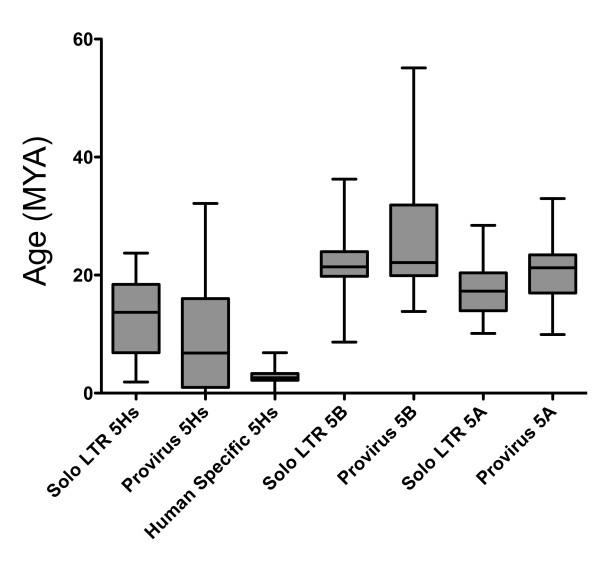
“…include the oldest insertions (around 27.9 million years ago), and LTR5A proviruses (around 20.1 million years ago) are originating from LTR5B at an estimated-standard mutation rate of 0.24-0.45% per million years based on the LTR-based and internal-based phylogenies (Subramanian et al, 2011).”
BackgroundResultInfluentialHuman Endogenous Retrovirus Expression in Primary Cutaneous T-Cell Lymphomas
Fava, P., Bergallo, M., Astrua, C., Brizio, M. G., Galliano, I., Montanari, P., Tovo, P., Novelli, M., Savoia, P., Quaglino, P., et al. (2015) · Dermatology · doi:10.1159/000438669 · Cited by 20
Tatkiewicz, W. I., Dickie, J., Bedford, F., Jones, A., Atkin, M., Kiernan, M., Maze, E. A., Agit, B., Farnham, G., Kanapin, A. A., et al. (2020) · Mobile DNA · doi:10.1186/s13100-020-0204-1 · Cited by 21
Beyond pathogens: the intriguing genetic legacy of endogenous retroviruses in host physiology
da Silva, A. L., Guedes, B. L. M., Santos, S. N., Correa, G. F., Nardy, A., Nali, L. H. D. S., Bachi, A. L. L., & Romano, C. M. (2024) · Frontiers in Cellular and Infection Microbiology · doi:10.3389/fcimb.2024.1379962 · Cited by 19
Metadata
- Authors
- Subramanian, R. P., Wildschutte, J. H., Russo, C., & Coffin, J. M.
- Affiliations
- Tufts University (US)
- Corresponding author
- Coffin, John M
- ORCID
- Coffin, John M
- Venue
- Retrovirology
- Published
- 2011-11-08
- Volume
- 8
- Issue
- 1
- Pages
- 90-90
- ISSN
- 1742-4690 (ISSN-L)
- PMC
- PMC3228705
- OpenAlex
- W2141488802
- Cited by
- 439
- References
- 96
- Citations by year
- 2026: 20 · 2025: 27 · 2024: 42 · 2023: 36 · 2022: 40 · 2021: 38 · 2020: 40 · 2019: 32 · 2018: 30 · 2017: 23 · 2016: 25 · 2015: 30 · 2014: 21 · 2013: 23 · 2012: 12
- FWCI
- 21.60
- Type
- journal article
- Language
- en
- Open access
- gold
- doi.org
- Licence
- cc-by
- Locations
- Retrovirology (publishedVersion, cc-by)
- Europe PMC (PubMed Central) (publishedVersion, cc-by)
- PubMed Central (publishedVersion, cc-by)
- PubMed (publishedVersion)
- DOAJ (DOAJ: Directory of Open Access Journals) (submittedVersion, cc-by-sa)
- Funders
- U.S. Public Health Service (F31 M4084487-03)
- National Institute of Mental Health (F31MH084487)
- National Cancer Institute (R37CA089441)
- Topics
- Life Sciences › Biochemistry, Genetics and Molecular Biology › Genetics › Chromosomal and Genetic Variations
- Life Sciences › Biochemistry, Genetics and Molecular Biology › Genetics › Genomic variations and chromosomal abnormalities
- Life Sciences › Biochemistry, Genetics and Molecular Biology › Genetics › Genome Rearrangement Algorithms
- Keywords
- HERV-K(HML-2), human endogenous retroviruses, open reading frames
- MeSH terms
- Humans, Molecular Sequence Data, Phylogeny, Proviruses, Retroviridae Infections, Genome, Human, Genome, Viral, Endogenous Retroviruses, Terminal Repeat Sequences, Databases, Nucleic Acid
About these checks
Registry, retraction, Cites and statistics results are computed, not judged, with one exception: a printed reference that no index lists is read once by a model before it counts as a citation error. Claims are extracted by a model and kept only when their quote appears verbatim in the text; each cited source is then checked, with a model’s help, for whether it says what the claim relies on. Those verdicts can be wrong — read the claim’s quote and the cited source before relying on one.
Statistics and arithmetic are recomputed, not judged.
Confidence bands are shown only for fields calibrated on our annotated test set. None is calibrated yet, so no band is shown.
What counts as a claim ›How we measure confidence ›How we check this ›
Are you an author, or do you see a problem with this page? Request a review
Data sources
Bibliographic data: Semantic Scholar, OpenAlex, Crossref.
Contains information from the Semantic Scholar Academic Graph Datasets, made available under the ODC Attribution License (ODC-BY 1.0).
Semantic Scholar’s data is described in: Kinney, R., et al. (2023). The Semantic Scholar Open Data Platform. arXiv:2301.10140.
