

Identification, characterization, and comparative genomic distribution of the HERV-K (HML-2) group of human endogenous retroviruses
Open accessThe DOI matches its Crossref record; 96 of the 96 references it cites were found in a registry or an index.
Abstract
Background: Integration of retroviral DNA into a germ cell may lead to a provirus that is transmitted vertically to that host's offspring as an endogenous retrovirus (ERV). In humans, ERVs (HERVs) comprise about 8% of the genome, the vast majority of which are truncated and/or highly mutated and no longer encode functional genes. The most recently active retroviruses that integrated into the human germ line are members of the Betaretrovirus-like HERV-K (HML-2) group, many of which contain intact open reading frames (ORFs) in some or all genes, sometimes encoding functional proteins that are expressed in various tissues. Interestingly, this expression is upregulated in many tumors ranging from breast and ovarian tissues to lymphomas and melanomas, as well as schizophrenia, rheumatoid arthritis, and other disorders. Results: No study to date has characterized all HML-2 elements in the genome, an essential step towards determining a possible functional role of HML-2 expression in disease. We present here the most comprehensive and accurate catalog of all full-length and partial HML-2 proviruses, as well as solo LTR elements, within the published human genome to date. Furthermore, we provide evidence for preferential maintenance of proviruses and solo LTR elements on gene-rich chromosomes of the human genome and in proximity to gene regions. Conclusions: Our analysis has found and corrected several errors in the annotation of HML-2 elements in the human genome, including mislabeling of a newly identified group called HML-11. HML-elements have been implicated in a wide array of diseases, and characterization of these elements will play a fundamental role to understand the relationship between endogenous retrovirus expression and disease.
Overview
The claims and statistics of this paper haven’t been checked yet.
Free: it reads the open-access text and checks the first 5 claims that cite a source we can check. Create a free account to check every claim.
Integrity signals
Registry
Cites
Statistics
Figures
Verification
Claims the paper makes
The claims and statistics of this paper haven’t been checked yet.
Free: it reads the open-access text and checks the first 5 claims that cite a source we can check. Create a free account to check every claim.
Claims other papers make about this one
Each is checked against this paper’s own text: does it say what the citing paper says it does?
The source backs part of the claim, not all of it — or backs it for a different population, condition or comparison.
In the citing paper
“and provides a paradigm of potentially tumor-promoting effects of other HERV proteins 12,65.”
From Are human endogenous retroviruses pathogenic? An approach to testing the hypothesis (2013) · cites this paper as [12]
Experimental — accuracy not yet measuredThe source backs part of the claim, not all of it — or backs it for a different population, condition or comparison.
In the citing paper
“From its approximately 60 full-length members, 11 HERV-K (HML2) proviruses are known to be insertionally polymorphic within the population, i.e., specific integrations are found only in a proportion of individuals 12,81.”
From Are human endogenous retroviruses pathogenic? An approach to testing the hypothesis (2013) · cites this paper as [12]
Experimental — accuracy not yet measuredThe cited source says what the claim attributes to it.
In the citing paper
“HERV-K (HML2) proviruses can also naturally recombine 12,86”
From Are human endogenous retroviruses pathogenic? An approach to testing the hypothesis (2013) · cites this paper as [12]
The cited source says what the claim attributes to it.
In the citing paper
“For example, the HML2 group of HERV-K proviruses comprises the most recently active HERVs 12,81.”
From Are human endogenous retroviruses pathogenic? An approach to testing the hypothesis (2013) · cites this paper as [12]
Self-check
Percentages, sums and reported differences re-computed from the paper’s own numbers.
The self-check needs the paper’s full text.
Citations
Cites
Thompson, J. D., Higgins, D. G., & Gibson, T. J. (1994) · Nucleic Acids Research · doi:10.1093/nar/22.22.4673 · Cited by 64,617 · cited 4×
“All full-length sequences were initially aligned to K113 using ClustalW [88], and manually edited in BioEdit v.”
MethodInfluentialHall, T. A. (1999) · Nucleic Acids Symposium Series · doi:10.14601/phytopathol_mediterr-14998u1.29 · Cited by 38,297 · cited 1×
“0 [89], and the consensus sequence manually introduced into our HML-2 alignment (Additional File 1).”
MethodMrBayes 3: Bayesian phylogenetic inference under mixed models
Ronquist, F., & Huelsenbeck, J. P. (2003) · Bioinformatics · doi:10.1093/bioinformatics/btg180 · Cited by 29,077 · cited 1×
“2) [93,94] with four independent chains run for at least 1,000,000 generations until sufficient trees were sampled to generate > 99% credibility.”
BackgroundMRBAYES: Bayesian inference of phylogenetic trees.
Huelsenbeck, J. P., & Ronquist, F. (2001) · Bioinformatics · doi:10.1093/bioinformatics/17.8.754 · Cited by 21,937
Primer3 on the WWW for General Users and for Biologist Programmers
Rozen, S., & Skaletsky, H. (2003) · Bioinformatics Methods and Protocols · doi:10.1385/1-59259-192-2:365 · Cited by 15,013 · cited 1×
“0 [90] for this sequence including 1 kb flanking DNA in both directions (12q13.”
Background<tt>BLAT</tt> —The <tt>BLAST</tt> -Like Alignment Tool
Kent, W. J. (2002) · Genome Research · doi:10.1101/gr.229202 · Cited by 8,480 · cited 5×
“2 are represented in the current (and all previous) genome builds as solo LTRs. Full-length sequences for the K103 and K113 proviruses are available through GenBank (AF164611 and AY037928 respectively).”
MethodInfluentialMEGA2: molecular evolutionary genetics analysis software
Kumar, S., Tamura, K., Jakobsen, I. B., & Nei, M. (2001) · Bioinformatics · doi:10.1093/bioinformatics/17.12.1244 · Cited by 6,097 · cited 1×
“Neighbor-joining trees were generated with MEGA4 using the pair-wise deletion option and 5000 bootstraps [92].”
MethodHindorff, L. A., Sethupathy, P., Junkins, H. A., Ramos, E. M., Mehta, J. P., Collins, F. S., & Manolio, T. A. (2009) · Proceedings of the National Academy of Sciences · doi:10.1073/pnas.0903103106 · Cited by 4,013
Mobile Elements: Drivers of Genome Evolution
Kazazian, H. H. (2004) · Science · doi:10.1126/science.1089670 · Cited by 1,922 · cited 1×
“Although solo LTRs have lost the ability to express viral gene products, their inherent promoter activity can affect expression of neighboring genes [9,56-59].”
BackgroundHIV-1 Integration in the Human Genome Favors Active Genes and Local Hotspots
Schröder, A. R. W., Shinn, P., Chen, H., Berry, C., Ecker, J. R., & Bushman, F. (2002) · Cell · doi:10.1016/s0092-8674(02)00864-4 · Cited by 1,832 · cited 5×
“Finally, the strong correlation of HML-2 elements and gene regions, may reflect a propensity to integrate in such regions [71], or, conceivably some sort of protection against mechanisms designed to remove transposable elements [82].”
BackgroundInfluential
Cited by
Pegtel, D. M., & Gould, S. J. (2019) · Annual Review of Biochemistry · doi:10.1146/annurev-biochem-013118-111902 · Cited by 2,682
Intrinsic retroviral reactivation in human preimplantation embryos and pluripotent cells
Grow, E. J., Flynn, R. A., Chavez, S. L., Bayless, N. L., Wossidlo, M., Wesche, D. J., Martin, L., Ware, C. B., Blish, C. A., Chang, H. Y., et al. (2015) · Nature · doi:10.1038/nature14308 · Cited by 647
Human endogenous retrovirus-K contributes to motor neuron disease
Li, W., Lee, M.-H., Henderson, L., Tyagi, R., Bachani, M., Steiner, J., Campanac, E., Hoffman, D. A., von Geldern, G., Johnson, K., et al. (2015) · Science Translational Medicine · doi:10.1126/scitranslmed.aac8201 · Cited by 482
“Multiple complete sequences of the most recently acquired HERV-K are present in the human genome (2).”
BackgroundOrigins and evolutionary consequences of ancient endogenous retroviruses
Johnson, W. E. (2019) · Nature Reviews Microbiology · doi:10.1038/s41579-019-0189-2 · Cited by 404
Resurrection of endogenous retroviruses during aging reinforces senescence
Liu, X., Liu, Z., Wu, Z., Ren, J., Fan, Y., Sun, L., Cao, G., Niu, Y., Zhang, B., Ji, Q., et al. (2023) · Cell · doi:10.1016/j.cell.2022.12.017 · Cited by 390
Classification and characterization of human endogenous retroviruses; mosaic forms are common
Vargiu, L., Rodriguez-Tomé, P., Sperber, G. O., Cadeddu, M., Grandi, N., Blikstad, V., Tramontano, E., & Blomberg, J. (2016) · Retrovirology · doi:10.1186/s12977-015-0232-y · Cited by 315
“[98] Table 4 continued”
Human Endogenous Retroviruses in Neurological Diseases
Küry, P., Nath, A., Créange, A., Dolei, A., Marche, P., Gold, J., Giovannoni, G., Hartung, H.-P., & Perron, H. (2018) · Trends in Molecular Medicine · doi:10.1016/j.molmed.2018.02.007 · Cited by 288
“The number of insertions can vary between human populations, and copies are not necessarily found at a fixed chromosomal site in all carrier individuals [90,91], while new insertions are thought to have occurred within the past 2 million years after the appearance of modern human [89].”
BackgroundDiscovery of unfixed endogenous retrovirus insertions in diverse human populations
Wildschutte, J. H., Williams, Z. H., Montesion, M., Subramanian, R. P., Kidd, J. M., & Coffin, J. M. (2016) · Proceedings of the National Academy of Sciences · doi:10.1073/pnas.1602336113 · Cited by 278
“We performed in silico read-based genotyping to obtain estimations of the allele frequencies of 27 nonreference insertions with clear integration coordinates, and extended the analysis to include 13 annotated polymorphic HML-2 loci from the hg19 human reference (5, 8) (Dataset S2).”
BackgroundMethodResultInfluentialSelf-citationImmune responses to endogenous retroelements: taking the bad with the good
Kassiotis, G., & Stoye, J. P. (2016) · Nature Reviews Immunology · doi:10.1038/nri.2016.27 · Cited by 274
Mammalian Endogenous Retroviruses
Mager, D. L., & Stoye, J. P. (2015) · Microbiology Spectrum · doi:10.1128/microbiolspec.mdna3-0009-2014 · Cited by 233
“56); (iv) in some species, including humans, germ line colonization by novel ERVs has virtually ceased,whereas in others, like mice, it continues apparently unabated (57, 58).”
BackgroundHERV-H RNA is abundant in human embryonic stem cells and a precise marker for pluripotency
Santoni, F. A., Guerra, J., & Luban, J. (2012) · Retrovirology · doi:10.1186/1742-4690-9-111 · Cited by 219
“Phylogenetic analyses identified HERV-K, a betaretrovirus, and HERV-H, a gammaretrovirus, as the most recent entries into the genomes of primates, 10 and 25 million years ago, respectively [3,4].”
BackgroundTransposable elements: genome innovation, chromosome diversity, and centromere conflict
Klein, S. J., & O’Neill, R. J. (2018) · Chromosome Research · doi:10.1007/s10577-017-9569-5 · Cited by 223
“A caveat to the observation that mobile TEs in humans are restricted to LINE1s, Alus, and SVAs was recently discovered when members of the human endogenous retrovirus family HERV-Ks, also known a s HML2 s ( ~ 1% o f t h e h uman g e n ome (Subramanian et al. 2011)), were found to contain full, intact open reading fram…”
BackgroundHERV Envelope Proteins: Physiological Role and Pathogenic Potential in Cancer and Autoimmunity
Grandi, N., & Tramontano, E. (2018) · Frontiers in Microbiology · doi:10.3389/fmicb.2018.00462 · Cited by 223
“…includes the evolutionarily youngest HERV sequences, showing a remarkably recent activity that led to the formation of both human-specific loci (i.e., present in humans but not in non-human primates) (Subramanian et al., 2011) and unfixed insertions within human population (Marchi et al., 2014).”
BackgroundBendall, M. L., de Mulder, M., Iñiguez, L. P., Lecanda-Sánchez, A., Pérez-Losada, M., Ostrowski, M. A., Jones, R. B., Mulder, L. C. F., Reyes-Terán, G., Crandall, K. A., et al. (2019) · PLOS Computational Biology · doi:10.1371/journal.pcbi.1006453 · Cited by 193
Human endogenous retrovirus-K (HML-2): a comprehensive review
Garcia-Montojo, M., Doucet-O’Hare, T., Henderson, L., & Nath, A. (2018) · Critical Reviews in Microbiology · doi:10.1080/1040841x.2018.1501345 · Cited by 210
“In fact, solo LTRs outnumber full length proviruses by a factor of 10 (Subramanian et al. 2011).”
BackgroundInfluentialChromatin Accessibility Landscape in Human Early Embryos and Its Association with Evolution
Gao, L., Wu, K., Liu, Z., Yao, X., Yuan, S., Tao, W., Yi, L., Yu, G., Hou, Z., Fan, D., et al. (2018) · Cell · doi:10.1016/j.cell.2018.02.028 · Cited by 210
Endogenous Retroviruses and the Development of Cancer
Kassiotis, G. (2014) · The Journal of Immunology · doi:10.4049/jimmunol.1302972 · Cited by 195
“shown to occur naturally (14, 32) and may be facilitated by exogenous retroviruses, as in the case of HIV-1 infection (33).”
BackgroundERVmap analysis reveals genome-wide transcription of human endogenous retroviruses
Tokuyama, M., Kong, Y., Song, E., Jayewickreme, T., Kang, I., & Iwasaki, A. (2018) · Proceedings of the National Academy of Sciences · doi:10.1073/pnas.1814589115 · Cited by 199
Hohn, O., Hanke, K., & Bannert, N. (2013) · Frontiers in Oncology · doi:10.3389/fonc.2013.00246 · Cited by 196
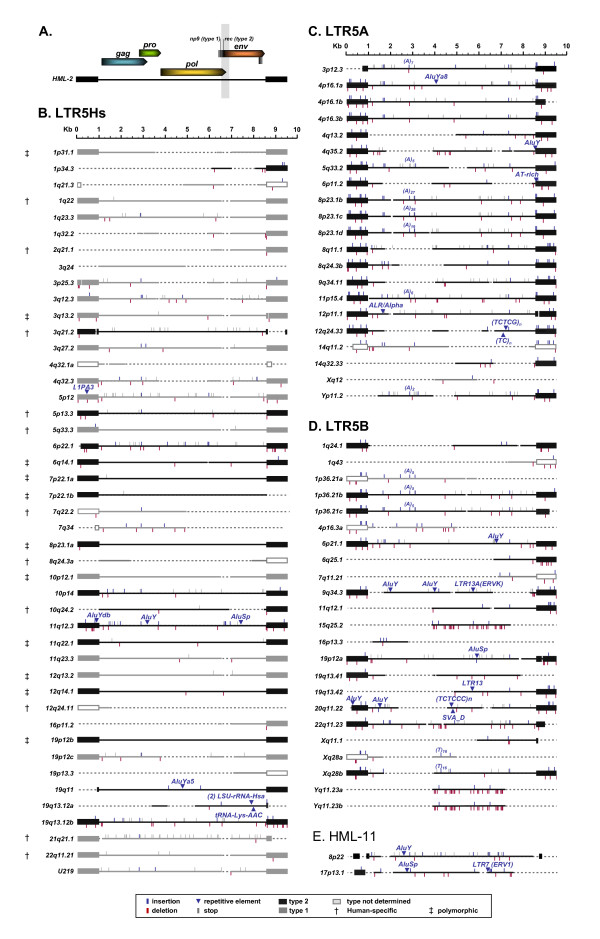
“The black bar represents a 292-bp deletion that results in the Np9 gene product for type I proviruses instead of the Rec (an HIV-1 Rev homolog) characteristic of the type II proviruses.”
BackgroundInfluentialFuentes, D. R., Swigut, T., & Wysocka, J. (2018) · eLife · doi:10.7554/elife.35989 · Cited by 190
Ito, J., Sugimoto, R., Nakaoka, H., Yamada, S., Kimura, T., Hayano, T., & Inoue, I. (2017) · PLOS Genetics · doi:10.1371/journal.pgen.1006883 · Cited by 178
Nomenclature for endogenous retrovirus (ERV) loci
Gifford, R. J., Blomberg, J., Coffin, J. M., Fan, H., Heidmann, T., Mayer, J. M., Stoye, J. P., Tristem, M., & Johnson, W. E. (2018) · Retrovirology · doi:10.1186/s12977-018-0442-1 · Cited by 161
Self-citationEndogenous retroviruses in the origins and treatment of cancer
Jansz, N., & Faulkner, G. J. (2021) · Genome Biology · doi:10.1186/s13059-021-02357-4 · Cited by 155
“The reference genome contains at least 600 annotated HERV-K copies [30, 31] and population-scale analyses have found up to six polymorphic HERV-K loci per Table 1 Intersection of RepeatMasker defined reference genome (hg38) ERV sequences with ENCODE candidate cis-regulatory elements [2].”
BackgroundEndogenous retrovirus-K promoter: a landing strip for inflammatory transcription factors?
Manghera, M., & Douville, R. N. (2013) · Retrovirology · doi:10.1186/1742-4690-10-16 · Cited by 151
“ERVK LTR subgroups exhibiting specific base insertions may also influence the transcriptional regulation of these elements [24].”
BackgroundTransposable elements in the mammalian embryo: pioneers surviving through stealth and service
Gerdes, P., Richardson, S. R., Mager, D. L., & Faulkner, G. J. (2016) · Genome Biology · doi:10.1186/s13059-016-0965-5 · Cited by 156
“HERV-K is the most recently active HERV family and many HERV-K copies retain their protein-coding potential [50].”
BackgroundMetagenomics and the Human Virome in Asymptomatic Individuals
Rascovan, N., Duraisamy, R., & Desnues, C. (2016) · Annual Review of Microbiology · doi:10.1146/annurev-micro-102215-095431 · Cited by 157
Unfixed Endogenous Retroviral Insertions in the Human Population
Marchi, E., Kanapin, A., Magiorkinis, G., & Belshaw, R. (2014) · Journal of Virology · doi:10.1128/jvi.00919-14 · Cited by 141
Human endogenous retrovirus K and cancer: Innocent bystander or tumorigenic accomplice?
Downey, R. F., Sullivan, F. J., Wang‐Johanning, F., Ambs, S., Giles, F. J., & Glynn, S. A. (2014) · International Journal of Cancer · doi:10.1002/ijc.29003 · Cited by 145
“Solo LTRs are the result of unequal crossing over due to highly homologous sequences.(5) Two main types of HERV-K (HML-2) are found in humans: type I is characterized by a 292 base pair deletion at the boundary of the pol and env (envelope) genes (Fig.”
BackgroundInfluentialHuman endogenous retrovirus HERV-K(HML-2) RNA causes neurodegeneration through Toll-like receptors
Dembny, P., Newman, A. G., Singh, M., Hinz, M., Szczepek, M., Krüger, C., Adalbert, R., Dzaye, O., Trimbuch, T., Wallach, T., et al. (2020) · JCI Insight · doi:10.1172/jci.insight.131093 · Cited by 134
Gustafson, J. A., Gibson, S. B., Damaraju, N., Zalusky, M. P., Hoekzema, K., Twesigomwe, D., Yang, L., Snead, A. A., Richmond, P. A., Coster, W. D., et al. (2024) · Genome Research · doi:10.1101/gr.279273.124 · Cited by 154
“Although HERV-Ks ( ∼ 9000 bp) are unlikely to be actively replicating in modern humans, like LINE-1s, they are known to be polymorphic in the human population (Subramanian et al. 2011; Li et al. 2019).”
Endogenous Retroviruses in the Genomics Era
Johnson, W. E. (2015) · Annual Review of Virology · doi:10.1146/annurev-virology-100114-054945 · Cited by 133
Human transposable elements in Repbase: genomic footprints from fish to humans
Kojima, K. K. (2018) · Mobile DNA · doi:10.1186/s13100-017-0107-y · Cited by 119
“HERVK is the only lineage of ERVs that has continued to replicate within humans in the past few million years [66], and this lineage exhibits polymorphic insertions in the human population [67].”
BackgroundExpression of Human Endogenous Retrovirus Type K (HML-2) Is Activated by the Tat Protein of HIV-1
Gonzalez-Hernandez, M. J., Swanson, M. D., Contreras-Galindo, R., Cookinham, S., King, S. R., Noel, R. J., Kaplan, M. H., & Markovitz, D. M. (2012) · Journal of Virology · doi:10.1128/jvi.07215-11 · Cited by 122
Genetic Engineering of T Cells to Target HERV-K, an Ancient Retrovirus on Melanoma
Krishnamurthy, J., Rabinovich, B. A., Mi, T., Switzer, K. C., Olivares, S., Maiti, S. N., Plummer, J. B., Singh, H., Kumaresan, P. R., Huls, H. M., et al. (2015) · Clinical Cancer Research · doi:10.1158/1078-0432.ccr-14-3197 · Cited by 119
Wang‐Johanning, F., Li, M., Esteva, F. J., Hess, K. R., Yin, B., Rycaj, K., Plummer, J. B., Garza, J. G., Ambs, S., & Johanning, G. L. (2013) · International Journal of Cancer · doi:10.1002/ijc.28389 · Cited by 126
“The HML-2 group includes the most recently active retroviruses, and a comprehensive analysis of HML-2 element distribution within the human genome has recently been reported.(15) Some cancers have well-accepted biomarker-based screening techniques for early detection, such as human papillomavirus for cervical cancer a…”
BackgroundInfluentialThe epigenomic landscape of transposable elements across normal human development and anatomy
Pehrsson, E. C., Choudhary, M. N. K., Sundaram, V., & Wang, T. (2019) · Nature Communications · doi:10.1038/s41467-019-13555-x · Cited by 111
Transcriptional Profiling of Human Endogenous Retrovirus Group HERV-K(HML-2) Loci in Melanoma
Schmitt, K., Reichrath, J., Roesch, A., Meese, E., & Mayer, J. (2013) · Genome Biology and Evolution · doi:10.1093/gbe/evt010 · Cited by 112
“1 was not identified in our initial BLAT search for compiling HML-2 sequences from the human reference genome nor was it included in a recent study that described full-length and partial HML-2 loci in the human genome (Subramanian et al. 2011).”
BackgroundHuman Endogenous Retrovirus K (HML-2) in Health and Disease
Xue, B., Sechi, L. A., & Kelvin, D. J. (2020) · Frontiers in Microbiology · doi:10.3389/fmicb.2020.01690 · Cited by 126
Variation in proviral content among human genomes mediated by LTR recombination
Thomas, J., Perron, H., & Feschotte, C. (2018) · Mobile DNA · doi:10.1186/s13100-018-0142-3 · Cited by 114
“Two of the three HERV-K candidates have been previously identified and experimentally validated as dimorphic in prior studies [29, 44, 46] (Table 1).”
BackgroundResultInfluentialCo-option of an endogenous retrovirus envelope for host defense in hominid ancestors
Blanco-Melo, D., Gifford, R. J., & Bieniasz, P. D. (2017) · eLife · doi:10.7554/elife.22519 · Cited by 115
“The resulting K was divided by two times the neutral substitution rate (r) in order to obtain the estimated integration date (K/2r) (Lebedev et al., 2000; Subramanian et al., 2011).”
Fuchs, N. V., Loewer, S., Daley, G. Q., Izsvák, Z., Löwer, J., & Löwer, R. (2013) · Retrovirology · doi:10.1186/1742-4690-10-115 · Cited by 104
Implication of Human Endogenous Retrovirus Envelope Proteins in Placental Functions
Lokossou, A. G., Toudic, C., & Barbeau, B. (2014) · Viruses · doi:10.3390/v6114609 · Cited by 108
“In fact, no ERVs, including the most recently acquired ERV-K members, have been shown to be replication competent [7–9].”
BackgroundMolecular functions of human endogenous retroviruses in health and disease
Suntsova, M., Garazha, A., Ivanova, A., Kaminsky, D., Zhavoronkov, A. A., & Buzdin, A. A. (2015) · Cellular and Molecular Life Sciences · doi:10.1007/s00018-015-1947-6 · Cited by 112
“cataloged all available HERV-K/HML2 (ERVK) sequences of the human genome, including both proviruses and solitary LTRs [223].”
Human endogenous retroviruses and cancer
María, G.-C., Paola, I., Niki, K., Mariacarmela, S., Julià, B., & Rafael, R. (2016) · Cancer Biology & Medicine · doi:10.20892/j.issn.2095-3941.2016.0080 · Cited by 100
Johanning, G. L., Malouf, G. G., Zheng, X., Esteva, F. J., Weinstein, J. N., Wang‐Johanning, F., & Su, X. (2017) · Scientific Reports · doi:10.1038/srep41960 · Cited by 164
Grandi, N., Cadeddu, M., Blomberg, J., & Tramontano, E. (2016) · Retrovirology · doi:10.1186/s12977-016-0301-x · Cited by 103
HERV-K–specific T cells eliminate diverse HIV-1/2 and SIV primary isolates
Jones, R. B., Garrison, K. E., Mujib, S., Mihajlovic, V., Aidarus, N., Hunter, D. V., Martin, E., John, V. M., Zhan, W., Faruk, N. F., et al. (2012) · Journal of Clinical Investigation · doi:10.1172/jci64560 · Cited by 91
“Of particular relevance to this study is the relatively young and intact HERV-K human mouse mammary tumor virus-like type 2 (HML-2) family, which is present at an estimated 89 proviral copies per haploid genome (6).”
Bhardwaj, N., Maldarelli, F. M., Mellors, J. W., & Coffin, J. M. (2014) · Journal of Virology · doi:10.1128/jvi.01623-14 · Cited by 92
“Furthermore, the subgroup contributes at least 89 full or partial proviral sequences to the human genome, many of which contain an ORF for gag, pro, pol, and/or env, genes essential for retroviral infectivity (7).”
BackgroundMethodSelf-citationHuman Endogenous Retrovirus K in Cancer: A Potential Biomarker and Immunotherapeutic Target
Curty, G., Marston, J. L., Rougvie, M. D. M., Leal, F. E., Nixon, D. F., & Soares, M. A. (2020) · Viruses · doi:10.3390/v12070726 · Cited by 88
“Moreover, phylogenetic analysis using LTR sequences can be used to classify HERV-K, HML-2 subtype, into three subgroups, known as LTR5Hs, LTR5A and LTR5B [2,19,24,25].”
BackgroundMethodHIV infection reveals widespread expansion of novel centromeric human endogenous retroviruses
Contreras-Galindo, R., Kaplan, M. H., He, S., Contreras-Galindo, A. C., Gonzalez-Hernandez, M. J., Kappes, F., Dube, D., Chan, S. M., Robinson, D., Meng, F., et al. (2013) · Genome Research · doi:10.1101/gr.144303.112 · Cited by 83
“…we report that in addition to the 91 full-length HERV-K (HML-2) proviruses previously found in the human genome draft sequence (GRCh37/hg19; Feb. 2009; Subramanian et al. 2011), hundreds more HERV-K (HML-2) proviruses not yet published or deposited in the NCBI database exist in the human genome.”
BackgroundResultInfluentialHuman-Specific HERV-K Insertion Causes Genomic Variations in the Human Genome
Shin, W., Lee, J., Son, S.-Y., Ahn, K., Kim, H., & Han, K. (2013) · PLoS ONE · doi:10.1371/journal.pone.0060605 · Cited by 85
HIV-associated motor neuron disease: HERV-K activation and response to antiretroviral therapy
Bowen, L. N., Tyagi, R., Li, W., Alfahad, T., Smith, B., Wright, M., Singer, E. J., & Nath, A. (2016) · Neurology · doi:10.1212/wnl.0000000000003258 · Cited by 81
“However, the deletion also disrupted the env and pol genes such that the env and reverse transcriptase proteins cannot be formed at this site.(15) Thus, a complete viral particle can only be formed by a recombination event whereby the env and reverse transcriptase proteins would come from other loci of HERV-K in the g…”
BackgroundInfluentialChen, J., Foroozesh, M. K., & Qin, Z. (2019) · Oncogenesis · doi:10.1038/s41389-018-0114-y · Cited by 84
Human endogenous retroviruses in development and disease
Mao, J., Zhang, Q., & Cong, Y.-S. (2021) · Computational and Structural Biotechnology Journal · doi:10.1016/j.csbj.2021.10.037 · Cited by 76
“Tumor type HERVs Detected HERVs-Products/Oncogenic Mechanisms Breast HERV-K (HML-2) Env induces EMT and activates the ERK pathway [61] Env [81,111] Env splice variants [112] Reverse Transcriptase [113] HERV-H Env [111] LTR7, etc. contribute to lncRNA linc-ROR [75] HERV-R Env [111] HERV-P Env [111] ERVW-1/syncytin-1 Sy…”
BackgroundInfluentialEndogenous Retroviruses: With Us and against Us
Meyer, T. J., Rosenkrantz, J. L., Carbone, L., & Chavez, S. L. (2017) · Frontiers in Chemistry · doi:10.3389/fchem.2017.00023 · Cited by 81
“…and ERV-K expression has been observed within placental trophoblast cells at the maternal-fetal interface, although corresponding in vitro functional assays have not yet been completed to directly support in vivo findings (Kammerer et al., 2011; Subramanian et al., 2011; Supplementary Table 1).”
BackgroundRegulation of stem cell function and neuronal differentiation by HERV-K via mTOR pathway
Wang, T., Medynets, M., Johnson, K. R., Doucet-O’Hare, T. T., Disanza, B., Li, W., Xu, Y., Bagnell, A. M., Tyagi, R., Sampson, K., et al. (2020) · Proceedings of the National Academy of Sciences · doi:10.1073/pnas.2002427117 · Cited by 81
“1 is also termed as K119, K(C12), K41, or ERVK-21 and the locus on 19q11 as K (C19) or ERVK-19 (15).”
BackgroundAre human endogenous retroviruses pathogenic? An approach to testing the hypothesis
Young, G. R., Stoye, J. P., & Kassiotis, G. (2013) · BioEssays · doi:10.1002/bies.201300049 · Cited by 78
“, specific integrations are found only in a proportion of individuals [12, 81].”
BackgroundInfluentialInhibition of human endogenous retrovirus-K by antiretroviral drugs
Tyagi, R., Li, W., Parades, D., Bianchet, M. A., & Nath, A. (2017) · Retrovirology · doi:10.1186/s12977-017-0347-4 · Cited by 78
“genome and hence has several intact open reading frames [8].”
Association of Endogenous Retroviruses and Long Terminal Repeats with Human Disorders
Katoh, I., & Kurata, S.-I. (2013) · Frontiers in Oncology · doi:10.3389/fonc.2013.00234 · Cited by 75
“A recent study identified 944 HERV-K (HML-2) solitary LTRs versus 91 copies of full-length and nearly full-length HERVK (HML-2) (14).”
BackgroundInfluentialMaking a virtue of necessity: the pleiotropic role of human endogenous retroviruses in cancer
Kassiotis, G., & Stoye, J. P. (2017) · Philosophical Transactions of the Royal Society B Biological Sciences · doi:10.1098/rstb.2016.0277 · Cited by 83
Balestrieri, E., Pica, F., Matteucci, C., Zenobi, R., Sorrentino, R., Argaw-Denboba, A., Cipriani, C., Bucci, I., & Sinibaldi-Vallebona, P. (2015) · BioMed Research International · doi:10.1155/2015/164529 · Cited by 71
“Many HERVs are still exceptionally well preserved and maintain open reading frames encoding functional viral proteins [12].”
BackgroundDetection of Human Endogenous Retrovirus K (HERV-K) Transcripts in Human Prostate Cancer Cell Lines
Agoni, L., Guha, C., & Lenz, J. (2013) · Frontiers in Oncology · doi:10.3389/fonc.2013.00180 · Cited by 87
“This is not surprising in that these are more abundant than HERV-K internal segments in the human genome (16).”
BackgroundInfluentialDhillon, P., Mulholland, K. A., Hu, H., Park, J., Sheng, X., Abedini, A., Liu, H., Vassalotti, A., Wu, J., & Suszták, K. (2023) · Nature Communications · doi:10.1038/s41467-023-36212-w · Cited by 80
Widespread expression of the ancient HERV-K (HML-2) provirus group in normal human tissues
Burn, A., Roy, F., Freeman, M., & Coffin, J. M. (2022) · PLoS Biology · doi:10.1371/journal.pbio.3001826 · Cited by 76
Self-citationEndogenous Retroviruses as Modulators of Innate Immunity
Russ, E. U., & Iordanskiy, S. (2023) · Pathogens · doi:10.3390/pathogens12020162 · Cited by 80
“However, in approximately 90% of the time, positive selection of an ERV provirus results in homologous recombination of the flanking LTRs, leaving behind only a solitary (“solo”) LTR [8,9] (Figure 1).”
BackgroundVincendeau, M., Göttesdorfer, I., Schreml, J., Wetie, A. G. N., Mayer, J. M., Greenwood, A. D., Helfer, M., Kramer, S., Seifarth, W., Hadian, K., et al. (2015) · Retrovirology · doi:10.1186/s12977-015-0156-6 · Cited by 82
“Human-specific HERV-K (HML-2) proviruses [89].”
BackgroundWhat Integration Sites Tell Us about HIV Persistence
Hughes, S. H., & Coffin, J. M. (2016) · Cell Host & Microbe · doi:10.1016/j.chom.2016.04.010 · Cited by 80
Self-citationBhardwaj, N., Montesion, M., Roy, F., & Coffin, J. (2015) · Viruses · doi:10.3390/v7030939 · Cited by 70
“Interestingly, many proviruses in the HML-2 group retain close to full-length genomic sequence and some have maintained open reading frames for the retroviral genes gag, pro, pol and env [5].”
BackgroundMethodInfluentialSelf-citationTokuyama, M., Gunn, B. M., Venkataraman, A., Kong, Y., Kang, I., Rakib, T., Townsend, M. J., Costenbader, K. H., Alter, G., & Iwasaki, A. (2021) · The Journal of Experimental Medicine · doi:10.1084/jem.20191766 · Cited by 78
Regulation of the Human Endogenous Retrovirus K (HML-2) Transcriptome by the HIV-1 Tat Protein
Gonzalez-Hernandez, M. J., Cavalcoli, J. D., Sartor, M. A., Contreras-Galindo, R., Meng, F., Dai, M., Dube, D., Saha, A. K., Gitlin, S. D., Omenn, G. S., et al. (2014) · Journal of Virology · doi:10.1128/jvi.00556-14 · Cited by 72
“Analysis of the HERV-K (HML-2) long terminal repeats (LTRs) for mutations and deletions was performed using published sequences (9, 45).”
BackgroundMethodCampos-Sánchez, R., Cremona, M. A., Pini, A., Chiaromonte, F., & Makova, K. D. (2016) · PLOS Computational Biology · doi:10.1371/journal.pcbi.1004956 · Cited by 69
“Fixed HERV-K 1036 826 826 [63] Control regions 1690 1543”
MethodInfluentialTransposable Elements: No More 'Junk DNA'
Kim, Y., Lee, J., & Han, K. (2012) · Genomics & Informatics · doi:10.5808/gi.2012.10.4.226 · Cited by 76
Magiorkinis, G., Belshaw, R., & Katzourakis, A. (2013) · Philosophical Transactions of the Royal Society B: Biological Sciences · doi:10.1098/rstb.2012.0504 · Cited by 68
Activation of an endogenous retrovirus-associated long non-coding RNA in human adenocarcinoma
Gibb, E. A., Warren, R. M., Wilson, G. W., Brown, S. D., Robertson, G., Morin, G. B., & Holt, R. A. (2015) · Genome Medicine · doi:10.1186/s13073-015-0142-6 · Cited by 72
“Approximately 8% of the human genome is composed of ERV elements [58-60], with a number of ERV1, ERVLMaLR, ERVL and ERVK elements overlapping a substantial number of lncRNAs [18].”
BackgroundHutchins, A. P., & Pei, D. (2015) · 中国科学通报:英文版 · doi:10.1007/s11434-015-0905-x · Cited by 79
“LTR elements are endogenous retroviruses, and they are generally non-functional due to the accumulation of genomic mutations, although 16–18 ERVs are predicted to have a valid coding sequence for viral envelope proteins [8, 9], and there are many intact open-reading frames for viral capsids [10].”
BackgroundIdentification of diverse full-length endogenous betaretroviruses in megabats and microbats
Hayward, J. A., Tachedjian, M., Cui, J., Field, H. E., Holmes, E. C., Wang, L., & Tachedjian, G. (2013) · Retrovirology · doi:10.1186/1742-4690-10-35 · Cited by 69
“The up-regulation of gene products derived from the human endogenous retrovirus-K (HERV-K) group of betaretroviruses has been linked to a diverse range of cancers such as those of the breast, ovaries, and prostate alongside other significant human maladies [9,10].”
BackgroundKraus, B., Fischer, K., Büchner, S. M., Wels, W. S., Löwer, R., Sliva, K., & Schnierle, B. S. (2013) · PLoS ONE · doi:10.1371/journal.pone.0072756 · Cited by 65
Human Endogenous Retrovirus Type K (HERV-K) Particles Package and Transmit HERV-K–Related Sequences
Contreras-Galindo, R., Kaplan, M. H., Dube, D., Gonzalez-Hernandez, M. J., Chan, S., Meng, F., Dai, M., Omenn, G. S., Gitlin, S. D., & Markovitz, D. M. (2015) · Journal of Virology · doi:10.1128/jvi.00544-15 · Cited by 64
The decline of human endogenous retroviruses: extinction and survival
Magiorkinis, G., Blanco-Melo, D., & Belshaw, R. D. (2015) · Retrovirology · doi:10.1186/s12977-015-0136-x · Cited by 71
“We attempt to explain the patterns using viral and host life-history factors that we have shown previously to be correlated with the ERV integration rate [11,12], and examine in detail the family HERVK(HML2) [13], called here HK2 for brevity.”
BackgroundGrandi, N., Cadeddu, M., Pisano, M. P., Esposito, F., Blomberg, J., & Tramontano, E. (2017) · Mobile DNA · doi:10.1186/s13100-017-0099-7 · Cited by 72
Garson, J. A., Usher, L., Al-Chalabi, A., Huggett, J., Day, E. F., & McCormick, A. L. (2019) · Acta Neuropathologica Communications · doi:10.1186/s40478-019-0698-2 · Cited by 63
“The most recently integrated HERVs such as HERV-K (HML-2) are thought to be the most intact and potentially biologically active [30] and it was therefore of great interest when elevated HERV-K RNA levels were reported in the cerebral cortex of patients with ALS [9, 19].”
BackgroundGuffanti, G., Bartlett, A. A., Klengel, T., Klengel, C., Hunter, R. G., Glinsky, G. V., & Macciardi, F. M. (2018) · Molecular Biology and Evolution · doi:10.1093/molbev/msy143 · Cited by 65
“Functionally active TEs have been described and classified as lncRNAs, enhancers, insulators, or promoters of neighboring genes in various tissues with a putative functional role in neuropsychiatric disorders, like schizophrenia (Subramanian et al. 2011; Perron, Germi, et al. 2012; Perron, Hamdani, et al. 2012; Hegyi…”
BackgroundMicroarray analysis reveals global modulation of endogenous retroelement transcription by microbes
Young, G. R., Mavrommatis, B., & Kassiotis, G. (2014) · Retrovirology · doi:10.1186/1742-4690-11-59 · Cited by 58
“The potential influence of ERVs polymorphic in the human population [5] is unknown, however, and ERVs and other REs are increasingly implicated in distinct physiological and pathological processes of the host [4,6].”
BackgroundDo Human Endogenous Retroviruses Contribute to Multiple Sclerosis, and if So, How?
Morris, G., Maes, M. H. J., Murdjeva, M., & Puri, B. K. (2018) · Molecular Neurobiology · doi:10.1007/s12035-018-1255-x · Cited by 63
Mayer, J., Harz, C., Sanchez, L., Pereira, G. C., Maldener, E., Heras, S. R., Ostrow, L. W., Ravits, J., Batra, R., Meese, E., et al. (2018) · Molecular Neurodegeneration · doi:10.1186/s13024-018-0275-3 · Cited by 60
Brinzevich, D., Young, G. R., Sebra, R., Ayllón, J., Maio, S. M., Deikus, G. Y., Chen, B. K., Fernández-Sesma, A., Simon, V. R., & Mulder, L. C. F. (2014) · Journal of Virology · doi:10.1128/jvi.00669-14 · Cited by 61
“HERV-Ks are among the most recent HERVs to invade the human genome (3, 4); therefore, they are the ones most likely to harbor functional open reading frames (ORFs).”
BackgroundMethodResultInfluentialThe role of endogenous retroviruses‐K in human cancer
Salavatiha, Z., Soleimani‐Jelodar, R., & Jalilvand, S. (2020) · Reviews in Medical Virology · doi:10.1002/rmv.2142 · Cited by 60
“an important member and the most studied in the field of cancer development.(11) HERV-K (HML2) proviruses are classified into two types due to”
BackgroundHuman Endogenous Retrovirus K Envelope in Spinal Fluid of Amyotrophic Lateral Sclerosis Is Toxic
Steiner, J. P., Bachani, M., Malik, N., DeMarino, C., Li, W., Sampson, K., Lee, M., Kowalak, J., Bhaskar, M., Doucet‐O'Hare, T., et al. (2022) · Annals of Neurology · doi:10.1002/ana.26452 · Cited by 53
“HML-2 does not produce a protein equivalent of Tat, but has several loci in the human genome that can produce an intact Env protein.(30) Similar to the HIV Env protein, the HML-2 Env neurotoxicity is mediated by a conformationally dependent epitope.”
BackgroundContribution of Syncytins and Other Endogenous Retroviral Envelopes to Human Placenta Pathologies
Bolze, P., Mommert, M., & Mallet, F. (2017) · Progress in molecular biology and translational science · doi:10.1016/bs.pmbts.2016.12.005 · Cited by 60
Human endogenous retroviruses in cancer: Expression, regulation and function (Review)
Gao, Y., Yu, X., & Chen, T. (2020) · Oncology Letters · doi:10.3892/ol.2020.12382 · Cited by 62
“Hence, the transcription activity of HERVs has differed in the course of human evolution due to the changing binding strength between transcription factors and their binding sites in the LTR regions (51,56).”
BackgroundSusceptibility of Human Endogenous Retrovirus Type K to Reverse Transcriptase Inhibitors
Contreras-Galindo, R., Dube, D., Fujinaga, K., Kaplan, M. H., & Markovitz, D. M. (2017) · Journal of Virology · doi:10.1128/jvi.01309-17 · Cited by 57
“recent of those infections, attributed to the human endogenous retrovirus type K (HERV-K) HML-2 family, here referred to as HK2, have led to preserved provirus sequences that are partially intact and can code for all the viral proteins (2, 3).”
BackgroundMethodHuman endogenous retrovirus K contributes to a stem cell niche in glioblastoma
Shah, A. H., Rivas, S. R., Doucet-O’Hare, T. T., Govindarajan, V., DeMarino, C., Wang, T., Ampie, L., Zhang, Y., Banasavadi‐Siddegowda, Y., Walbridge, S., et al. (2023) · Journal of Clinical Investigation · doi:10.1172/jci167929 · Cited by 56
Michaud, H., Rougvie, M. D. M., SenGupta, D., Deeks, S. G., Martin, J. N., Pilcher, C. D., Hecht, F. M., Sacha, J. B., & Nixon, D. F. (2014) · Retrovirology · doi:10.1186/1742-4690-11-10 · Cited by 58
“Their ability to replicate or produce infectious particles is inhibited by host restriction [2,3] and they are now considered to be stably integrated, largely silent, and transmitted in a Mendelian fashion [4].”
BackgroundMustelin, T., & Ukadike, K. C. (2020) · Frontiers in Immunology · doi:10.3389/fimmu.2020.593891 · Cited by 60
“HERV-K (HML-2)—The Youngest and Most Intact HERV Family Although the now (presumably) extinct free retrovirus that gave rise to the HERV-K (HML-2) provirus family (26) repeatedly infected our ancestors for tens of millions of years, we will probably never know what kind of disease it caused at that time.”
BackgroundHERV ‐K( HML ‐2), a seemingly silent subtenant – but still waters run deep
Hanke, K., Höhn, O., & Bannert, N. (2016) · Apmis · doi:10.1111/apm.12475 · Cited by 60
“Human ERV-K is a group of betaretrovirus-like endogenous human retroviruses that consists of 11 families related to the mouse mammary tumor virus (MMTV) (5), hence the acronym HML (‘Human MMTV-like’) that is usually appended in parenthe-Received 16 June 2015.”
BackgroundInfluentialXiang, X., Tao, Y., DiRusso, J., Hsu, F., Zhang, J., Xue, Z., Pontis, J., Trono, D., Liu, W., & Clark, A. T. (2022) · Nature Communications · doi:10.1038/s41467-022-28105-1 · Cited by 55
“Phylogeny analysis indicates that LTR5_Hs and LTR5A were 108 derived from independent viral infections similar to the virus that created LTR5B 109 (Subramanian et al., 2011).”
ResultHuman Endogenous Retrovirus as Therapeutic Targets in Neurologic Disease
Giménez-Orenga, K., Perron, H., & Oltra, E. (2021) · Pharmaceuticals · doi:10.3390/ph14060495 · Cited by 53
“The HML-2 group comprises the most recent set of integrations for this element in humans, with more than 90 proviruses that maintain ORFs (open reading frames) encoding functional proteins [96].”
BackgroundSherrill-Mix, S. A., Ocwieja, K. E., & Bushman, F. D. (2015) · Retrovirology · doi:10.1186/s12977-015-0205-1 · Cited by 54
“In HERV-K (HML-2), the most recently active endogenous retrovirus in the human genome [80–82], we saw that integrations unique to the human genome [82] were more likely to be differentially expressed than older HERV-Ks (odds ratio: 5.”
BackgroundHuman endogenous retrovirus HERV-K(HML-2) activity in prostate cancer is dominated by a few loci
Goering, W., Schmitt, K., Dostert, M., Schaal, H., Deenen, R., Mayer, J. M., & Schulz, W. A. (2015) · The Prostate · doi:10.1002/pros.23095 · Cited by 55
“The HML-2 subgroup comprises more than 900 solitary LTRs and roughly 90 more or less intact full-length proviruses [6,7], including a few not yet fixed in the entire human population [8–11].”
BackgroundThe HERV-K accessory protein Np9 controls viability and migration of teratocarcinoma cells
Chan, S. M., Sapir, T., Park, S. S., Rual, J.-F. M., Contreras-Galindo, R., Reiner, O., & Markovitz, D. M. (2019) · PLoS ONE · doi:10.1371/journal.pone.0212970 · Cited by 51
Metadata
- Authors
- Subramanian, R. P., Wildschutte, J. H., Russo, C., & Coffin, J. M.
- Affiliations
- Tufts University (US)
- Corresponding author
- Coffin, John M
- ORCID
- Coffin, John M
- Venue
- Retrovirology
- Published
- 2011-11-08
- Volume
- 8
- Issue
- 1
- Pages
- 90-90
- ISSN
- 1742-4690 (ISSN-L)
- PMC
- PMC3228705
- OpenAlex
- W2141488802
- Cited by
- 439
- References
- 96
- Citations by year
- 2026: 20 · 2025: 27 · 2024: 42 · 2023: 36 · 2022: 40 · 2021: 38 · 2020: 40 · 2019: 32 · 2018: 30 · 2017: 23 · 2016: 25 · 2015: 30 · 2014: 21 · 2013: 23 · 2012: 12
- FWCI
- 21.60
- Type
- journal article
- Language
- en
- Open access
- gold
- doi.org
- Licence
- cc-by
- Locations
- Retrovirology (publishedVersion, cc-by)
- Europe PMC (PubMed Central) (publishedVersion, cc-by)
- PubMed Central (publishedVersion, cc-by)
- PubMed (publishedVersion)
- DOAJ (DOAJ: Directory of Open Access Journals) (submittedVersion, cc-by-sa)
- Funders
- U.S. Public Health Service (F31 M4084487-03)
- National Institute of Mental Health (F31MH084487)
- National Cancer Institute (R37CA089441)
- Topics
- Life Sciences › Biochemistry, Genetics and Molecular Biology › Genetics › Chromosomal and Genetic Variations
- Life Sciences › Biochemistry, Genetics and Molecular Biology › Genetics › Genomic variations and chromosomal abnormalities
- Life Sciences › Biochemistry, Genetics and Molecular Biology › Genetics › Genome Rearrangement Algorithms
- Keywords
- HERV-K(HML-2), human endogenous retroviruses, open reading frames
- MeSH terms
- Humans, Molecular Sequence Data, Phylogeny, Proviruses, Retroviridae Infections, Genome, Human, Genome, Viral, Endogenous Retroviruses, Terminal Repeat Sequences, Databases, Nucleic Acid
About these checks
Registry, retraction, Cites and statistics results are computed, not judged, with one exception: a printed reference that no index lists is read once by a model before it counts as a citation error. Claims are extracted by a model and kept only when their quote appears verbatim in the text; each cited source is then checked, with a model’s help, for whether it says what the claim relies on. Those verdicts can be wrong — read the claim’s quote and the cited source before relying on one.
Statistics and arithmetic are recomputed, not judged.
Confidence bands are shown only for fields calibrated on our annotated test set. None is calibrated yet, so no band is shown.
What counts as a claim ›How we measure confidence ›How we check this ›
Are you an author, or do you see a problem with this page? Request a review
Data sources
Bibliographic data: Semantic Scholar, OpenAlex, Crossref.
Contains information from the Semantic Scholar Academic Graph Datasets, made available under the ODC Attribution License (ODC-BY 1.0).
Semantic Scholar’s data is described in: Kinney, R., et al. (2023). The Semantic Scholar Open Data Platform. arXiv:2301.10140.
