

An autoimmune disease prevented by anti-retroviral drugs
Open accessThe DOI matches its Crossref record; 20 of the 20 references it cites were found in a registry or an index.
Abstract
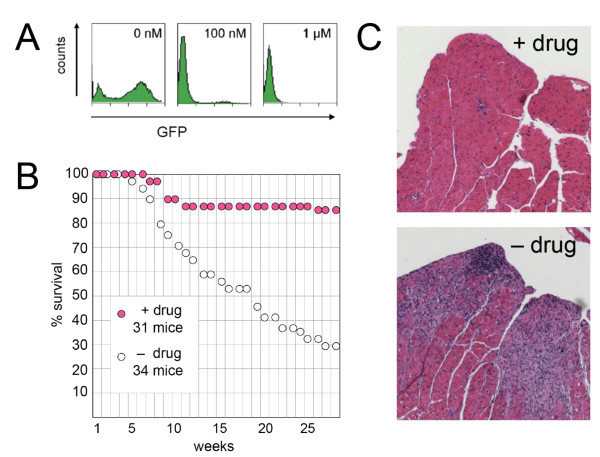
Background: Both Aicardi-Goutières syndrome, a Mendelian mimic of congenital infection, and the autoimmune disease systemic lupus erythematosus can result from mutations in the gene encoding the enzyme Trex1. In mice, the absence of Trex1 causes severe myocarditis. The enzyme is thought to degrade endogenous retroelements, thus linking them to autoimmune disease. However, inhibition of reverse transcription by the inhibitor zidovudine (AZT) did not ameliorate the disease, weakening the link to retroelements. Findings: Here, we show that two other FDA-approved drugs that inhibit reverse transcriptase can ameliorate the myocarditis in Trex1-null mouse. Conclusions: The result suggests that retroelements contribute to this hereditary form of autoimmunity, and that treatment with retroelement inhibitors might ameliorate Aicardi-Goutières syndrome in humans.
Overview
The claims and statistics of this paper haven’t been checked yet.
Free: it reads the open-access text and checks the first 5 claims that cite a source we can check. Create a free account to check every claim.
Integrity signals
Registry
Cites
Statistics
Figures
Verification
Claims the paper makes
The claims and statistics of this paper haven’t been checked yet.
Free: it reads the open-access text and checks the first 5 claims that cite a source we can check. Create a free account to check every claim.
Claims other papers make about this one
Each is checked against this paper’s own text: does it say what the citing paper says it does?
The source backs part of the claim, not all of it — or backs it for a different population, condition or comparison.
In the citing paper
“Treating TREX-deficient mice with a cocktail of NRTIs rescued their mortality120.”
From The role of retrotransposable elements in ageing and age-associated diseases (2021) · cites this paper as [120]
Experimental — accuracy not yet measured
Self-check
Percentages, sums and reported differences re-computed from the paper’s own numbers.
The self-check needs the paper’s full text.
Citations
Cites
Trex1 prevents cell-intrinsic initiation of autoimmunity
Stetson, D. B., Ko, J. S., Heidmann, T., & Medzhitov, R. (2008) · Cell · doi:10.1016/j.cell.2008.06.032 · Cited by 1,280 · cited 5×
“Trex1 is a ubiquitous DNA 3’ exonuclease [8] that can degrade retroelements (retroviruses and retrotransposons) [9-11].”
BackgroundInfluentialRecognition of Cytosolic DNA Activates an IRF3-Dependent Innate Immune Response
Stetson, D. B., & Medzhitov, R. (2006) · Immunity · doi:10.1016/j.immuni.2005.12.003 · Cited by 1,008
Crow, Y. J., Hayward, B. E., Parmar, R., Robins, P., Leitch, A., Ali, M., Black, D. N., van Bokhoven, H., Brunner, H. G., Hamel, B. C., et al. (2006) · Nature Genetics · doi:10.1038/ng1845 · Cited by 903 · cited 4×
“Like AGS [2], SLE is associated with a perturbation of type I interferon metabolism [3].”
BackgroundInfluentialInhibition of HIV-1 Replication by a Nonnucleoside Reverse Transcriptase Inhibitor
Merluzzi, V. J., Hargrave, K. D., Labadia, M., Grozinger, K., Skoog, M., Wu, J. C., Shih, C.-K., Eckner, K., Hattox, S., Adams, J., et al. (1990) · Science · doi:10.1126/science.1701568 · Cited by 743 · cited 1×
“Viramune (nevirapine) [20] blocks the reproduction of retrovirus earlier in its cycle than Truvada.”
BackgroundLee-Kirsch, M. A., Gong, M., Chowdhury, D., Senenko, L., Engel, K., Lee, Y.-A., de Silva, U., Bailey, S. L., Witte, T., Vyse, T. J., et al. (2007) · Nature Genetics · doi:10.1038/ng2091 · Cited by 730 · cited 1×
“Furthermore, mutations in TREX1 represent the single most common cause of monogenic SLE identified to date [7].”
BackgroundTrex1 Exonuclease Degrades ssDNA to Prevent Chronic Checkpoint Activation and Autoimmune Disease
Yang, Y.-G., Lindahl, T., & Barnes, D. E. (2007) · Cell · doi:10.1016/j.cell.2007.10.017 · Cited by 579 · cited 10×
“The interrupted or slowed reverse transcription may create persistent exposure to cytoplasmic DNA products that elicit an antiviral innate immune response [16] coordinated by activation of type I IFNs (the so-called IFN-stimulatory DNA response [17]).”
BackgroundInfluentialYan, N., Regalado-Magdos, A. D., Stiggelbout, B., Lee-Kirsch, M. A., & Lieberman, J. (2010) · Nature Immunology · doi:10.1038/ni.1941 · Cited by 529 · cited 1×
“Trex1 is a ubiquitous DNA 3’ exonuclease [8] that can degrade retroelements (retroviruses and retrotransposons) [9-11].”
BackgroundAbortive HIV Infection Mediates CD4 T Cell Depletion and Inflammation in Human Lymphoid Tissue
Doitsh, G., Cavrois, M., Lassen, K. G., Zepeda, O., Yang, Z., Santiago, M. L., Hebbeler, A. M., & Greene, W. C. (2010) · Cell · doi:10.1016/j.cell.2010.11.001 · Cited by 452 · cited 1×
“The interrupted or slowed reverse transcription may create persistent exposure to cytoplasmic DNA products that elicit an antiviral innate immune response [16] coordinated by activation of type I IFNs (the so-called IFN-stimulatory DNA response [17]).”
Rice, G., Newman, W. G., Dean, J., Patrick, T., Parmar, R., Flintoff, K., Robins, P., Harvey, S., Hollis, T., O’Hara, A., et al. (2007) · The American Journal of Human Genetics · doi:10.1086/513443 · Cited by 410 · cited 1×
“Both AGS [4], and a cutaneous subtype of SLE called familial chilblain lupus [5,6], can result from mutations in TREX1.”
BackgroundMorita, M., Stamp, G., Robins, P., Dulic, A., Rosewell, I., Hrivnak, G., Daly, G., Lindahl, T., & Barnes, D. E. (2004) · Molecular and Cellular Biology · doi:10.1128/mcb.24.15.6719-6727.2004 · Cited by 380 · cited 2×
“In Trex1-deficient mice, single-stranded DNA [12] derived from retroelement cDNA [9] accumulates in the cytoplasm of cells in the heart and is thought to trigger the sterile inflammatory myocarditis [13].”
Background
Cited by
Items 101–130 of 130
Chaudhary, R., Rehman, M., Agarwal, V., Kumar, A., Kaushik, A. S., Srivastava, S., Srivastava, S., Verma, R., Rajinikanth, P. S., & Mishra, V. (2024) · Life Sciences · doi:10.1016/j.lfs.2024.122953 · Cited by 3
Maze, E. A., Ham, C., Kelly, J., Ussher, L., Almond, N. M., Towers, G. J., Berry, N. J., & Belshaw, R. D. (2019) · Frontiers in Immunology · doi:10.3389/fimmu.2019.00901 · Cited by 3
“In autoimmune TREX1-deficient mice, ERV DNA accumulates in the cytoplasm, associated with inflammatory phenotypes (23) which can be treated using RT inhibitors (68).”
BackgroundMendelian disorders of immunity related to an upregulation of type I interferon
Frémond, M., & Crow, Y. J. (2020) · Elsevier eBooks · doi:10.1016/b978-0-12-816768-7.00032-6 · Cited by 3
Infectivity and insertional mutagenesis of endogenous retrovirus in autoimmune NZB and B/W mice
Beck‐Engeser, G., Ahrends, T., Knittel, G., Wabl, R., Metzner, M., Eilat, D., & Wabl, M. R. (2015) · Journal of General Virology · doi:10.1099/jgv.0.000271 · Cited by 3
Self-citationTüngler, V., & Lee‐Kirsch, M. A. (2014) · Arthritis und Rheuma · doi:10.1055/s-0037-1617993 · Cited by 3
Childhood-inherited white matter disorders with calcification
Livingston, J. H. (2024) · Handbook of clinical neurology · doi:10.1016/b978-0-323-99209-1.00013-2 · Cited by 2
Type I Interferonopathies: From Pathophysiology to Clinical Expression
Flessa, C., Argiriou, E., & Mavragani, C. P. (2019) · Springer eBooks · doi:10.1007/978-3-319-96929-9_10 · Cited by 2
Blencowe, M., Saleem, Z., Liu, R., Wang, M., Tseng, I.-H., Wier, J. R., Mutter, S., Vaida, F., Guo, Y., Sandholm, N., et al. (2026) · Diabetologia · doi:10.1007/s00125-026-06721-6 · Cited by 1
“The reverse transcriptase inhibitor tenofovir, administered as a component of the HIV medication Truvada, has been shown to improve hereditary autoimmune inflammation thought to be caused by build-up of retroelement cDNA in mice [79].”
Mendelian Disorders of Immunity Related to an Upregulation of Type I Interferon
Crow, Y. J. (2014) · Elsevier eBooks · doi:10.1016/b978-0-12-405546-9.00028-5 · Cited by 1
Clinical and molecular characterisation of type I interferonopathies
Melki, I. (2017) · theses.fr (ABES) · doi:10.70675/56be76a9z1a05z4438zabf7zaf769da7e2fc · Cited by 1
A 4‐Year‐Old Amish Boy With Weakness, Arthritis, Rash, Verbal Delay, and Failure to Thrive
Gurion, R., Nwankwo, C., Nanda, K., Brooks, E. B., Mitchell, A. L., Wiznitzer, M., & Robinson, A. B. (2013) · Arthritis Care & Research · doi:10.1002/acr.22019
“Retroelement inhibitors were shown to improve myocarditis in TREX1-null mice, and were theorized to improve symptoms of AGS (49).”
BackgroundGenomic Approaches to Dissect Innate Immune Pathways
Lee, M. N. (2013) · Digital Access to Scholarship at Harvard (DASH) (Harvard University)
Dissecting the meiotic defects of Tex19.1-/- mouse spermatocytes
Crichton, J. H. (2015) · ERA
Role of SAMHD1 in the replication stress response and in the production of type I IFNs
Coquel, F. (2018) · theses.fr (ABES) · doi:10.70675/216c7159z5541z4921zb98ez87c3cb5ed27b
THE POSSIBLE ROLE OF ENDOGENOUS RETROVIRUSES IN TUMOUR DEVELOPMENT AND INNATE SIGNALLING
Maze, E. A. (2018) · PEARL (University of Plymouth) · doi:10.24382/703
Die Rolle der humanen RNase H2 bei der Mobilisierung von non-LTR-Retrotransposonen
Knittler, K. (2017) · MACAU: Open Access Repository of Kiel University
Involvement of retroelements in the autoimmune response in humans
Okay, S. (2022) · Exploration of Medicine · doi:10.37349/emed.2022.00092
Salinero, A. C. (2017) · Scholars Archive - University at Albany (University at Albany, State University of New York) · doi:10.54014/h0fb-t4b6
The role of viral sensing in the development of autoimmunity
Loetsch, C. (2016) · UNSWorks (UNSW Sydney) · doi:10.26190/unsworks/19420
The role of SAMHD1 in restriction and immune sensing of retroviruses and retroelements
Herrmann, A. (2018) · OPUS FAU (Kooperativer Bibliotheksverbund Berlin-Brandenburg (KOBV), on behalf of the Universitätsbibliothek Erlangen-Nürnberg)
Davis, R. R. (2018) · WakeSpace Scholarship (Wake Forest University)
Wolf, C. (2015) · Qucosa (Saxon State and University Library Dresden)
T CELLS PRODUCE TYPE I INTERFERON IN THE TREX1 D18N MODEL OF CGAS-STING-DEPENDENT INTERFERONOPATHY
Simpson, S. (2020) · WakeSpace Scholarship (Wake Forest University)
ADAR1 Regulation of Innate RNA Sensing in Immune Disease
Maurano, M. M. (2021) · ResearchWorks at the University of Washington (University of Washington)
The role of RNase H2 in genome maintenance and autoimmune disease
Hiller, B. (2015) · Qucosa (Saxon State and University Library Dresden)
Demange, A. (2013) · theses.fr (ABES) · doi:10.70675/9217d32az79daz4ec4zba4bzcb7944636e73
Cellular factors controlling human L1 retrotransposition
Galantonu, R. N. (2017) · theses.fr (ABES) · doi:10.70675/f24810a8z4f50z444fz84f0z11863b900b95
Clinical and molecular characterisation of the type I interferonopathies and approaches to therapy
Frémond, M. (2018) · theses.fr (ABES) · doi:10.70675/a5e8252azb7f7z4f38zb08dzd8e8c7df0db2
Ultra-sensitive biomarkers to characterise interferon associated autoimmune diseases
Forbes, D. L. (2026) · ERA · doi:10.7488/era/7949
Supporting information 1 of Genome Replication Is Associated With Release of Immunogenic DNA Waste
Schubert, N., Schumann, T., Daum, E., Flade, K., Ge, Y., Hagedorn, L., Edelmann, W., Müller, L., Schmitz, M., Kuut, G., et al. (2022) · doi:10.3389/fimmu.2022.880413.s001
Metadata
- Authors
- Beck-Engeser, G. B., Eilat, D., & Wabl, M.
- Affiliations
- Hebrew University of Jerusalem (IL)
- University of California, San Francisco (US)
- Corresponding author
- Wabl, Matthias
- Venue
- Retrovirology
- Published
- 2011-11-08
- Volume
- 8
- Issue
- 1
- Pages
- 91-91
- ISSN
- 1742-4690 (ISSN-L)
- PMC
- PMC3264515
- OpenAlex
- W2128211133
- Cited by
- 117
- References
- 20
- Citations by year
- 2026: 1 · 2025: 1 · 2024: 7 · 2023: 4 · 2022: 4 · 2021: 11 · 2020: 9 · 2019: 9 · 2018: 7 · 2017: 12 · 2016: 9 · 2015: 9 · 2014: 9 · 2013: 17 · 2012: 8
- FWCI
- 7.92
- Type
- journal article
- Language
- en
- Open access
- gold
- doi.org
- Licence
- cc-by
- Locations
- Retrovirology (publishedVersion, cc-by)
- Europe PMC (PubMed Central) (publishedVersion, cc-by)
- PubMed Central (publishedVersion, cc-by)
- PubMed (publishedVersion)
- DOAJ (DOAJ: Directory of Open Access Journals) (submittedVersion)
- eScholarship (California Digital Library) (submittedVersion)
- Funders
- Lupus Research Institute
- Lupus Research Alliance
- National Institutes of Health
- National Institute of Allergy and Infectious Diseases (R01AI041570)
- Topics
- Health Sciences › Medicine › Rheumatology › Systemic Lupus Erythematosus Research
- Life Sciences › Immunology and Microbiology › Immunology › interferon and immune responses
- Health Sciences › Medicine › Infectious Diseases › Viral Infections and Immunology Research
- Keywords
- Aicardi-Goutières syndrome, TREX1, systemic lupus erythematosus, reverse transcriptase inhibitors, zidovudine, retroelements, autoimmunity, myocarditis
- MeSH terms
- Emtricitabine, Tenofovir Disoproxil Fumarate Drug Combination, Animals, Autoimmune Diseases, Deoxycytidine, Drug Combinations, Exodeoxyribonucleases, Lupus Erythematosus, Systemic, Myocarditis, Nervous System Malformations, Organophosphorus Compounds, Phosphoproteins, Zidovudine, Mice, Knockout, Retroelements, Reverse Transcriptase Inhibitors, Nevirapine, Autoimmune Diseases of the Nervous System, Green Fluorescent Proteins, Mice
About these checks
Registry, retraction, Cites and statistics results are computed, not judged, with one exception: a printed reference that no index lists is read once by a model before it counts as a citation error. Claims are extracted by a model and kept only when their quote appears verbatim in the text; each cited source is then checked, with a model’s help, for whether it says what the claim relies on. Those verdicts can be wrong — read the claim’s quote and the cited source before relying on one.
Statistics and arithmetic are recomputed, not judged.
Confidence bands are shown only for fields calibrated on our annotated test set. None is calibrated yet, so no band is shown.
What counts as a claim ›How we measure confidence ›How we check this ›
Are you an author, or do you see a problem with this page? Request a review
Data sources
Bibliographic data: Semantic Scholar, OpenAlex, Crossref.
Contains information from the Semantic Scholar Academic Graph Datasets, made available under the ODC Attribution License (ODC-BY 1.0).
Semantic Scholar’s data is described in: Kinney, R., et al. (2023). The Semantic Scholar Open Data Platform. arXiv:2301.10140.
