

The DOI matches its Crossref record; 55 of the 56 references it cites were found in a registry or an index.
Effect of gait speed on gait rhythmicity in Parkinson's disease: variability of stride time and swing time respond differently
Open accessAbstract
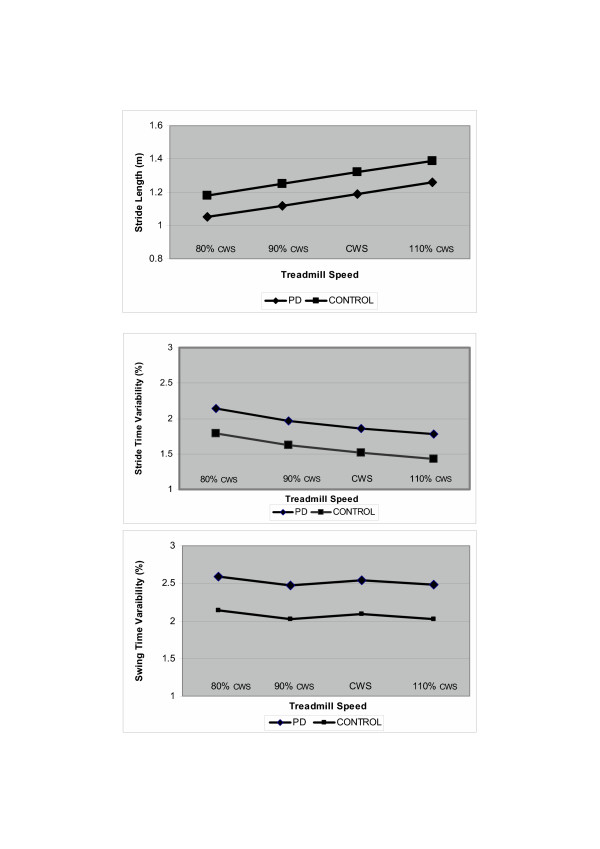
BACKGROUND: The ability to maintain a steady gait rhythm is impaired in patients with Parkinson's disease (PD). This aspect of locomotor dyscontrol, which likely reflects impaired automaticity in PD, can be quantified by measuring the stride-to-stride variability of gait timing. Previous work has shown an increase in both the variability of the stride time and swing time in PD, but the origins of these changes are not fully understood. Patients with PD also generally walk with a reduced gait speed, a potential confounder of the observed changes in variability. The purpose of the present study was to examine the relationship between walking speed and gait variability. METHODS: Stride time variability and swing time variability were measured in 36 patients with PD (Hoehn and Yahr stage 2-2.5) and 30 healthy controls who walked on a treadmill at four different speeds: 1) Comfortable walking speed (CWS), 2) 80% of CWS 3) 90% of CWS, and 4) 110% of CWS. In addition, we studied the effects of walking slowly on level ground, both with and without a walker. RESULTS: Consistent with previous findings, increased variability of stride time and swing time was observed in the patients with PD in CWS, compared to controls. In both groups, there was a small but significant association between treadmill gait speed and stride time variability such that higher speeds were associated with lower (better) values of stride time variability (p = 0.0002). In contrast, swing time variability did not change in response to changes in gait speed. Similar results were observed with walking on level ground. CONCLUSION: The present results demonstrate that swing time variability is independent of gait speed, at least over the range studied, and therefore, that it may be used as a speed-independent marker of rhythmicity and gait steadiness. Since walking speed did not affect stride time variability and swing time variability in the same way, it appears that these two aspects of gait rhythmicity are not entirely controlled by the same mechanisms. The present findings also suggest that the increased gait variability in PD is disease-related, and not simply a consequence of bradykinesia.
Overview
The claims and statistics of this paper haven’t been checked yet.
Run the check — free, no account needed. It reads the open-access text and checks the sources it cites.
Integrity signals
Registry
Cites
Statistics
Figures
Verification
Claims the paper makes
The claims and statistics of this paper haven’t been checked yet.
Run the check — free, no account needed. It reads the open-access text and checks the sources it cites.
Claims other papers make about this one
Each is checked against this paper’s own text: does it say what the citing paper says it does?
In the citing paper
“Gait impairments that involve reductions in speed and step length as well as increased stride length variability are common in PD and impact quality of life 23.”
From Exercise-enhanced neuroplasticity targeting motor and cognitive circuitry in Parkinson's disease (2013) · cites this paper as [23]
Self-check
Percentages, sums and reported differences re-computed from the paper’s own numbers.
The self-check needs the paper’s full text.
Citations
Cites
Folstein, M. F., Folstein, S. E., & McHugh, P. R. (1975) · Journal of Psychiatric Research · doi:10.1016/0022-3956(75)90026-6 · Cited by 88,282
Hirono, N., Mori, E., Ikejiri, Y., Imamura, T., Shimomura, T., Hashimoto, M., Yamashita, H., & Ikeda, M. (1997) · PubMed · Cited by 21,012
Kok, J. S., Berg, I. J., & Scherder, E. J. A. (2013) · Dementia and Geriatric Cognitive Disorders Extra · doi:10.1159/000353441 · Cited by 20,589
Older Adults' Reasons for Using Technology while Aging in Place
Peek, S. T. M., Luijkx, K. G., Rijnaard, M. D., Nieboer, M. E., van der Voort, C. S., Aarts, S., van Hoof, J., Vrijhoef, H. J., & Wouters, E. (2015) · Gerontology · doi:10.1159/000430949 · Cited by 19,852
Sensitivity and False Alarm Rate of a Fall Sensor in Long-Term Fall Detection in the Elderly
Kangas, M., Korpelainen, R., Vikman, I., Nyberg, L., & Jämsä, T. J. (2014) · Gerontology · doi:10.1159/000362720 · Cited by 19,007
Parkinsonism: onset, progression, and mortality
Hoehn, M. M., & Yahr, M. D. (1967) · Neurology · doi:10.1212/wnl.17.5.427 · Cited by 12,107
Overdependence on degraded gist memory in Alzheimer's disease.
Gallo, D. A., Shahid, K. R., Olson, M. A., Solomon, T. M., Schacter, D. L., & Budson, A. E. (2006) · Neuropsychology · doi:10.1037/0894-4105.20.6.625 · Cited by 4,757
Predicting the Probability for Falls in Community-Dwelling Older Adults Using the Timed Up & Go Test
Shumway‐Cook, A., Brauer, S., & Woollacott, M. H. (2000) · Physical Therapy · doi:10.1093/ptj/80.9.896 · Cited by 3,355
Unified Parkinson's Disease Rating Scale
(2012) · Springer eBooks · doi:10.1007/springerreference_184495 · Cited by 3,071
Diagnostic Criteria for Parkinson Disease
Gelb, D. J., Oliver, E., & Gilman, S. (1999) · Archives of Neurology · doi:10.1001/archneur.56.1.33 · Cited by 2,822
Research works printed but not linked: 3
- Baltadjieva R, Giladi N, Balash Y, Herman T, Hausdorff JM: Gait changes in de novo Parkinson's disease patients: A force/rhythm dichotomy. Movement Disorders 2004, 19: S138-S138.
- Lowenthal J, Gruedlinger L, Baltadjieva R, Herman T, Hausdorff JM, Giladi N: Effects of rhythmic auditory stimulation on gait dynamics in Parkinson's disease. Movement Disorders 2004, 19: S139-S139.
- Rochester L, Hetherington V, Jones D, Nieuwboer A, Willems AM, Kwakkel G, Van Wegen G: The effect of rhythmical cues on walking during a simple and dual functional motor task in a complex environment in people with Parkinson's disease. Arch Phys Med Rehabil 2005, in press.
Cited by
Sorted by citations
Items 101–200 of 285
Arellano, C. J., O’Connor, D. P., Layne, C. S., & Kurz, M. J. (2009) · Journal of Experimental Biology · doi:10.1242/jeb.026153 · Cited by 29
GAIT SPECTRAL ANALYSIS: AN EASY FAST QUANTITATIVE METHOD FOR DIAGNOSING PARKINSON'S DISEASE
Sarbaz, Y., Towhidkhah, F., Gharibzadeh, S., & Jafari, A. (2011) · Journal of Mechanics in Medicine and Biology · doi:10.1142/s0219519411004691 · Cited by 28
Bollens, B., Crevecoeur, F., Detrembleur, C., Guillery, E., & Lejeune, T. M. (2012) · Neuroscience · doi:10.1016/j.neuroscience.2012.02.039 · Cited by 28
Arcolin, I., Corna, S., Giardini, M., Giordano, A., Nardone, A., & Godi, M. (2019) · BioMedical Engineering OnLine · doi:10.1186/s12938-019-0689-3 · Cited by 28
Classification of Subjects with Parkinson's Disease Using Gait Data Analysis
Mittra, Y., & Rustagi, V. (2018) · International Conference Automation and Computational Engineering · doi:10.1109/icace.2018.8687022 · Cited by 27
Boripuntakul, S., Kamnardsiri, T., Lord, S. R., Maiarin, S., Worakul, P., & Sungkarat, S. (2022) · PLoS ONE · doi:10.1371/journal.pone.0276658 · Cited by 27
A Gait Analysis Approach to Track Parkinson's Disease Evolution Using Principal Component Analysis
de Medeiros, L. M., de Almeida, H. O., da Silva, L. D., Perkusich, M., & Fischer, R. (2016) · Proceedings - IEEE Symposium on Computer-Based Medical Systems · doi:10.1109/cbms.2016.14 · Cited by 27
Lowry, K. A., Carrel, A. J., McIlrath, J. M., & Smiley‐Oyen, A. L. (2010) · Archives of Physical Medicine and Rehabilitation · doi:10.1016/j.apmr.2009.12.016 · Cited by 26
Impact of depression on gait variability in Parkinson’s disease
Mišković, N., Bobic, V. N., Kostic, M. V., Stanković, I., Radovanovic, S. M., Dimitrijević, K., Svetel, M. V., Petrović, I. N., & Djuric-Jovicic, M. D. (2020) · Clinical Neurology and Neurosurgery · doi:10.1016/j.clineuro.2020.106324 · Cited by 26
Parkinson’s Disease Wearable Gait Analysis: Kinematic and Dynamic Markers for Diagnosis
di Biase, L., Raiano, L., Caminiti, M. L., Pecoraro, P. M., & Lazzaro, V. D. (2022) · Sensors · doi:10.3390/s22228773 · Cited by 26
The validity of the Gait Variability Index for individuals with mild to moderate Parkinson’s disease
Rennie, L., Dietrichs, E., Moe‐Nilssen, R., Opheim, A. I., & Franzén, E. (2017) · Gait & Posture · doi:10.1016/j.gaitpost.2017.03.023 · Cited by 26
A chronic mouse model of Parkinson's disease has a reduced gait pattern certainty
Kurz, M. J., Pothakos, K., Jamaluddin, S., Scott-Pandorf, M. M., Arellano, C., & Lau, Y. (2007) · Neuroscience Letters · doi:10.1016/j.neulet.2007.09.060 · Cited by 26
Self-paced and reprogrammed saccades: Differences between melancholic and non-melancholic depression
Gurvich, C., Georgiou‐Karistianis, N., Fitzgerald, P. B., Millist, L., & White, O. B. (2006) · Neuroscience Research · doi:10.1016/j.neures.2006.07.003 · Cited by 26
A comparative study of machine learning algorithms for physiological signal classification
Biagetti, G., Crippa, P., Falaschetti, L., Tanoni, G., & Turchetti, C. (2018) · Procedia Computer Science · doi:10.1016/j.procs.2018.07.255 · Cited by 29
Defective corticomuscular connectivity during walking in patients with Parkinson’s disease
Yokoyama, H., Yoshida, T., Zabjek, K., Chen, R. E., & Masani, K. (2020) · Journal of Neurophysiology · doi:10.1152/jn.00109.2020 · Cited by 25
Keloth, S. M., Viswanathan, R., Jelfs, B., Arjunan, S. P., Raghav, S., & Kumar, D. (2019) · Biosensors · doi:10.3390/bios9020059 · Cited by 24
A type-2 neuro-fuzzy system with a novel learning method for Parkinson’s disease diagnosis
Salimi-Badr, A., Hashemi, M., & Saffari, H. (2022) · Applied Intelligence · doi:10.1007/s10489-022-04276-8 · Cited by 24
Kim, U., Lim, J., Park, Y., & Bae, Y. (2025) · Scientific Reports · doi:10.1038/s41598-025-02128-2 · Cited by 27
Dutta, S., Ghosh, D. C., & Samanta, S. (2015) · Physica A Statistical Mechanics and its Applications · doi:10.1016/j.physa.2015.12.074 · Cited by 23
Gait Study of Parkinson’s Disease Subjects Using Haptic Cues with A Motorized Walker
Zhang, M., Artan, N. S., Gu, H., Dong, Z., Ganatra, L. B., Shermon, S., & Rabin, E. (2018) · Sensors · doi:10.3390/s18103549 · Cited by 23
James, E. G., Conatser, P., Karabulut, M., Leveille, S. G., Hausdorff, J. M., Travison, T. G., & Bean, J. F. (2020) · Archives of Physical Medicine and Rehabilitation · doi:10.1016/j.apmr.2020.04.009 · Cited by 23
Hypokinetic gait changes induced by bilateral pallidal deep brain stimulation for segmental dystonia
Wolf, M. E., Capelle, H. H., Bäzner, H., Hennerici, M. G., Krauss, J. K., & Blahak, C. (2016) · Gait & Posture · doi:10.1016/j.gaitpost.2016.07.301 · Cited by 22
Parkinson’s Disease Diagnosis With Gait Characteristics Extracted Using Wavelet Transforms
Vimalajeewa, D., McDonald, E., Tung, M., & Vidaković, B. (2023) · IEEE Journal of Translational Engineering in Health and Medicine · doi:10.1109/jtehm.2023.3272796 · Cited by 22
Assessing Walking Behaviors of Selected Subpopulations
Masurier, G. C. L., Bauman, A. E., Corbin, C. B., Konopack, J. F., UMSTATTD, R. M., & van Emmerik, R. E. A. (2008) · Medicine & Science in Sports & Exercise · doi:10.1249/mss.0b013e31817c68b1 · Cited by 22
Chastan, N., Bair, W.-N., Resnick, S. M., Studenski, S. A., & Decker, L. M. (2018) · Gait & Posture · doi:10.1016/j.gaitpost.2018.12.039 · Cited by 22
Single- and dual-task gait performance and their diagnostic value in early-stage Parkinson's disease
Zhang, X., Fan, W., Hu, Y., Li, L., Chen, Z., & Guan, Q. (2022) · Frontiers in Neurology · doi:10.3389/fneur.2022.974985 · Cited by 21
Recognizing Parkinson’s disease gait patterns by vibes algorithm and Hilbert-Huang transform
Aydın, F., & Aslan, Z. (2021) · Engineering Science and Technology an International Journal · doi:10.1016/j.jestch.2020.12.005 · Cited by 21
Lee, M., Youm, C., Noh, B., Park, H., & Cheon, S. (2020) · Sensors · doi:10.3390/s20072132 · Cited by 20
Parkinson’s Disease Detection from Gait Patterns
Andrei, A.-G., Tăuţan, A.-M., & Ionescu, B. E. (2019) · E-Health and Bioengineering Conference (EHB) · doi:10.1109/ehb47216.2019.8969942 · Cited by 20
Farashi, S. (2020) · Biomedical Signal Processing and Control · doi:10.1016/j.bspc.2020.102132 · Cited by 20
β-amyloid deposition is associated with gait variability in usual aging
Tian, Q., Bair, W.-N., Resnick, S. M., Bilgel, M., Wong, D. F., & Studenski, S. A. (2018) · Gait & Posture · doi:10.1016/j.gaitpost.2018.02.002 · Cited by 20
A computerized method to assess Parkinson’s disease severity from gait variability based on gender
Cantürk, İ. (2021) · Biomedical Signal Processing and Control · doi:10.1016/j.bspc.2021.102497 · Cited by 19
Kim, B., Youm, C., Park, H., Lee, M., & Noh, B. (2021) · International Journal of Environmental Research and Public Health · doi:10.3390/ijerph18094704 · Cited by 19
Gait monitoring system for patients with Parkinson's disease using wearable sensors
Perumal, S. V., & Sankar, R. T. (2016) · IEEE Healthcare Innovations and Point of Care Technologies Conference (HI-POCT) · doi:10.1109/hic.2016.7797687 · Cited by 19
Actigraphy features for predicting mobility disability in older adults
Kheirkhahan, M., Tudor-Locke, C. E., Axtell, R. S., Buman, M. P., Fielding, R. A., Glynn, N. W., Guralnik, J. M., King, A. C., White, D. K., Miller, M. E., et al. (2016) · Physiological Measurement · doi:10.1088/0967-3334/37/10/1813 · Cited by 18
Keloth, S. M., Arjunan, S. P., & Kumar, D. (2020) · Applied Sciences · doi:10.3390/app10020577 · Cited by 18
Models of Parkinson's Disease Patient Gait
Hughes, J. A., Houghten, S. K., & Brown, J. A. (2019) · IEEE Journal of Biomedical and Health Informatics · doi:10.1109/jbhi.2019.2961808 · Cited by 18
Zajac, J. A., Porciuncula, F., Cavanaugh, J. T., McGregor, C., Harris, B. A., Smayda, K., Awad, L. N., Pantelyat, A. Y., & Ellis, T. D. (2023) · Journal of Parkinson s Disease · doi:10.3233/jpd-230169 · Cited by 17
Intelligent IoT Anklets for Monitoring the Assessment of Parkinson’s Diseases
Zhao, Y., Liu, Y., Lu, W., Li, J., Shan, P., Lian, C., Wang, X., Fu, C., Ma, C., & Wang, Y. (2023) · IEEE Sensors Journal · doi:10.1109/jsen.2023.3331277 · Cited by 17
Exploring Machine Learning to Analyze Parkinson's Disease Patients
Urcuqui, C. C., Castaño, Y., Delgado, J., Andres Navarro, C., Diaz, J., Muñoz, B., & Orozco, J. (2018) · International Conference on Semantics, Knowledge and Grid (SKG) · doi:10.1109/skg.2018.00029 · Cited by 17
Comparing the effects of rhythmic auditory cueing and visual cueing in acute hemiparetic stroke
Chouhan, S., & Kumar, S. (2012) · International Journal of Therapy and Rehabilitation · doi:10.12968/ijtr.2012.19.6.344 · Cited by 17
Recognizing Parkinsonian Gait Pattern by Exploiting Fine-Grained Movement Function Features
Wang, T., Wang, Z., Zhang, D., Gu, T., Ni, H., Jia, J., Zhou, X., & Lv, J. G. (2016) · ACM Transactions on Intelligent Systems and Technology · doi:10.1145/2890511 · Cited by 17
Groff, B. R., Antonellis, P., Schmid, K. K., Knarr, B. A., & Stergiou, N. (2018) · Neuroscience Letters · doi:10.1016/j.neulet.2018.10.022 · Cited by 17
Solanki, D., & Lahiri, U. (2020) · IEEE Access · doi:10.1109/access.2020.2994081 · Cited by 17
Bhatt, M., Mahana, B., Ko, J. H., Kolesar, T. A., Kanitkar, A., & Szturm, T. J. (2021) · Frontiers in Human Neuroscience · doi:10.3389/fnhum.2021.706230 · Cited by 16
Barefoot walking is more stable in the gait of balance recovery in older adults
Ren, X., Kebbach, M., Bruhn, S., Yang, Q., Lin, H., Bader, R., Tischer, T., & Lutter, C. (2022) · BMC Geriatrics · doi:10.1186/s12877-022-03628-w · Cited by 17
Impact of sub-thalamic nucleus deep brain stimulation on dual tasking gait in Parkinson’s disease
Seri-Fainshtat, E., Israel, Z. H., Weiss, A., & Hausdorff, J. M. (2013) · Journal of NeuroEngineering and Rehabilitation · doi:10.1186/1743-0003-10-38 · Cited by 16
Pedestrian Fall Incidence and Slip Resistance Measurements
Kim, I. (2017) · Springer eBooks · doi:10.1007/978-3-319-56242-1_2 · Cited by 15
Sheikh, M., & Hosseini, H. A. (2020) · Physiotherapy Theory and Practice · doi:10.1080/09593985.2020.1771799 · Cited by 14
Goodworth, A. D., Paquette, C., Jones, G. M., Block, E. W., Fletcher, W. A., Hu, B., & Horak, F. B. (2012) · Experimental Brain Research · doi:10.1007/s00221-012-3074-z · Cited by 14
König, N., Ravi, D. K., Orter, S., Nasab, S. H. H., Taylor, W. R., & Singh, N. B. (2019) · PLoS ONE · doi:10.1371/journal.pone.0217460 · Cited by 14
Broom, L., Worley, A., Gao, F., Hernandez, L. D., Ashton, C., Shih, L. C., & VanderHorst, V. (2019) · Scientific Reports · doi:10.1038/s41598-019-38623-6 · Cited by 13
A novel plantar pressure analysis method to signify gait dynamics in Parkinson's disease
Sun, Y., Cheng, Y., You, Y., Wang, Y., Zhu, Z., Yu, Y., Han, J., Wu, J., & Yu, N. (2023) · Mathematical Biosciences & Engineering · doi:10.3934/mbe.2023601 · Cited by 13
Systematic Development of a Simple Human Gait Index
Faisal, A. I., Mondal, T. K., & Deen, M. J. (2023) · IEEE Reviews in Biomedical Engineering · doi:10.1109/rbme.2023.3279655 · Cited by 13
Evaluation of Motor Skills in Children with Rubinstein–Taybi Syndrome
Cazalets, J., Bestaven, E., Doat, E., Baudier, M.-P., Gallot, C., Amestoy, A., Bouvard, M. P., Guillaud, É., Guillain, I., Grech, E., et al. (2017) · Journal of Autism and Developmental Disorders · doi:10.1007/s10803-017-3259-1 · Cited by 12
Posturo-locomotor markers of preclinical Parkinson's disease
Chastan, N., & Decker, L. M. (2019) · Neurophysiologie Clinique · doi:10.1016/j.neucli.2019.01.001 · Cited by 12
Regression models using shapes of functions as predictors
Ahn, K., Tucker, J. D., Wu, W., & Srivastava, A. (2020) · Computational Statistics & Data Analysis · doi:10.1016/j.csda.2020.107017 · Cited by 12
Age-gender specific prediction model for Parkinson’s severity assessment using gait biomarkers
Khera, P., & Kumar, N. (2021) · Engineering Science and Technology an International Journal · doi:10.1016/j.jestch.2021.05.009 · Cited by 12
Bradley, M., O’Loughlin, S., Donlon, E., Gallagher, A., O’Keeffe, C., Inocentes, J., Ruggieri, F., Reilly, R. B., Walsh, R. A., Lynch, T., et al. (2025) · Sensors · doi:10.3390/s25134071 · Cited by 11
Research on healthy subject gait cycle phase at different walking speeds
Zhang, H., Qian, J., Shen, L., & Zhang, Y. (2012) · IEEE International Conference on Robotics and Biomimetics (ROBIO) · doi:10.1109/robio.2012.6491156 · Cited by 11
Developing a motion language: Gait analysis from accelerometer sensor systems
Sant’Anna, A., & Wickström, N. (2009) · International Conference on Pervasive Computing Technologies for Healthcare · doi:10.4108/icst.pervasivehealth2009.5913 · Cited by 11
Spatiotemporal variability after stroke reflects more than just slow walking velocity
Koren, Y., Barzel, O., Shmuelof, L., & Handelzalts, S. (2024) · Gait & Posture · doi:10.1016/j.gaitpost.2024.03.003 · Cited by 10
Yoshida, T., Masani, K., Zabjek, K., Popović, M. R., & Chen, R. E. (2018) · PLoS ONE · doi:10.1371/journal.pone.0196177 · Cited by 11
Fu, C., Suzuki, Y., Morasso, P., & Nomura, T. (2020) · Biological Cybernetics · doi:10.1007/s00422-020-00816-y · Cited by 10
Implementation of Artifact Removal Algorithms in Gait Signals for Diagnosis of Parkinson Disease
Özel, E., Teki̇n, R., & Kaya, Y. (2021) · Traitement du signal · doi:10.18280/ts.380306 · Cited by 10
Bange, M., González‐Escamilla, G., Lang, N. S. C., Ding, H., Radetz, A., Herz, D. M., Schöllhorn, W. I., Muthuraman, M., & Groppa, S. (2022) · Journal of Parkinson s Disease · doi:10.3233/jpd-223225 · Cited by 10
Parkinson’s Disease Influences the Structural Variations Present in the Leg Swing Kinematics
Ivković, V., & Kurz, M. J. (2011) · Motor Control · doi:10.1123/mcj.15.3.359 · Cited by 10
Scott-Pandorf, M. M., O’Connor, D. P., Layne, C. S., Josić́, K., & Kurz, M. J. (2009) · Journal of Biomechanical Engineering · doi:10.1115/1.3148465 · Cited by 10
Zhang, C., Yu, Z., Wang, X., Chen, Z., & Deng, C. (2025) · Engineering Applications of Artificial Intelligence · doi:10.1016/j.engappai.2025.110106 · Cited by 9
Winkler, P., DeMarch, E., Campbell, H., & Smith, M. (2022) · Clinical Parkinsonism & Related Disorders · doi:10.1016/j.prdoa.2022.100132 · Cited by 9
AlHakeem, N., Ouellette, E. A., Travascio, F., & ASFOUR, S. S. (2020) · Frontiers in Bioengineering and Biotechnology · doi:10.3389/fbioe.2020.00116 · Cited by 9
Priya, S. J., Durai, C. A. D., Subathra, M. S. P., George, S. T., & Jeyabose, A. (2025) · IEEE Access · doi:10.1109/access.2025.3562566 · Cited by 8
Meral, M., & Özbilgin, F. (2025) · Diagnostics · doi:10.3390/diagnostics15162046 · Cited by 9
Identifying Fallers Based on Functional Parameters: A Machine Learning Approach
Fahimi, F., Taylor, W. R., Dietzel, R., Armbrecht, G., & Singh, N. B. (2021) · IEEE Asia-Pacific Conference on Computer Science and Data Engineering (CSDE) · doi:10.1109/csde53843.2021.9718435 · Cited by 7
A Machine Learning Approach for Early Identification of Prodromal Parkinson’s Disease
Vaish, A. (2024) · Cureus · doi:10.7759/cureus.63240 · Cited by 7
Predicting executive functioning from walking features in Parkinson’s disease using machine learning
Piet, A., Geritz, J., Garcia, P., Irsfeld, M., Li, F., Huang, X., Irshad, M. T., Welzel, J., Hansen, C., Maetzler, W., et al. (2024) · Scientific Reports · doi:10.1038/s41598-024-80144-4 · Cited by 7
van Doorn, P. F., Geerse, D. J., van Bergem, J. S., Hoogendoorn, E. M., Nyman, E., & Roerdink, M. (2025) · Sensors · doi:10.3390/s25041230 · Cited by 7
Visual Inertial Odometry-Based Gait Analysis Using Waist-Attached RGB-D Camera and Inertial Sensors
Dang, D. C., & Suh, Y. S. (2022) · IEEE Sensors Journal · doi:10.1109/jsen.2022.3227950 · Cited by 7
Szturm, T. J., Kolesar, T. A., Mahana, B., Goertzen, A. L., Hobson, D. E., Marotta, J. J., Strafella, A. P., & Ko, J. H. (2021) · Frontiers in Aging Neuroscience · doi:10.3389/fnagi.2021.680270 · Cited by 7
Wang, Z., Shang, P., & Shang, B. (2022) · Communications in Nonlinear Science and Numerical Simulation · doi:10.1016/j.cnsns.2022.106985 · Cited by 6
Biomarkers for rhythmic and discrete dynamic primitives in locomotion
Coelho, R. M., Hirai, H., Martins, J. M., & Krebs, H. I. (2022) · Scientific Reports · doi:10.1038/s41598-022-24565-z · Cited by 5
Keloth, S. M., Arjunan, S. P., & Kumar, D. (2017) · Annual International Conference of the IEEE Engineering in Medicine and Biology Society (EMBC) · doi:10.1109/embc.2017.8037348 · Cited by 6
Assessment of Insole Based Gait Feature Variation with Progression of Parkinson's Disease
Mazumder, O., Khandelwal, P., Gavas, R. D., & Sinha, A. (2018) · Proceedings of IEEE Sensors/Proceedings of IEEE Sensors ... · doi:10.1109/icsens.2018.8589635 · Cited by 6
Improving the prediction accuracy of Parkinson’s Disease based on pattern techniques
Priya, S., Rani, P. A. J., & Ubendran, N. (2020) · International Conference on Devices, Circuits and Systems (ICDCS) · doi:10.1109/icdcs48716.2020.243578 · Cited by 6
Human gait analysis based on automatic recognition: A review
González-Islas, J.-C., Domínguez-Ramírez, O. A., Castillejos, H., & Castro-Espinoza, F. A. (2022) · PÄDI Boletín Científico de Ciencias Básicas e Ingenierías del ICBI · doi:10.29057/icbi.v10iespecial3.8927 · Cited by 6
Prefrontal Cortex Activity During Gait in People With Persistent Symptoms After Concussion
Martini, D. N., Mancini, M., Antonellis, P., McDonnell, P., Vitório, R., Stuart, S., & King, L. A. (2024) · Neurorehabilitation and neural repair · doi:10.1177/15459683241240423 · Cited by 7
A WEARABLE GAIT ANALYSIS SYSTEM USING INERTIAL SENSORS PART II - Evaluation in a Clinical Setting
Sant, A., Wickström, N., Eklund, H., & Tranberg, R. (2012) · International Conference on Bio-inspired Systems and Signal Processing · doi:10.5220/0003707700050014 · Cited by 6
Wang, T., Zhang, D., Wang, Z., Jia, J., Ni, H., & Zhou, X. (2015) · IEEE International Conference on Ubiquitous Intelligence and Computing, Autonomic and Trusted Computing, and Scalable Computing and Communications (UIC-ATC-ScalCom) · doi:10.1109/uic-atc-scalcom-cbdcom-iop.2015.26 · Cited by 6
Gait Model Analysis of Parkinson’s Disease Patients under Cognitive Load
Hughes, J. A., Houghten, S. K., & Brown, J. A. (2020) · IEEE Congress on Evolutionary Computation (CEC) · doi:10.1109/cec48606.2020.9185621 · Cited by 6
Descriptive Symbolic Models of Gaits from Parkinson's Disease Patients
Hughes, J. A., Houghten, S. K., & Brown, J. A. (2019) · IEEE Conference on Computational Intelligence in Bioinformatics and Computational Biology (CIBCB) · doi:10.1109/cibcb.2019.8791459 · Cited by 6
Mostafavi, S. M., Soumma, S. B., Peterson, D. S., Mehta, S. H., & Ghasemzadeh, H. G. (2025) · Sensors · doi:10.3390/s25113421 · Cited by 8
Unveiling Patterns and Abnormalities of Human Gait: A Comprehensive Study
Singhal, P., Yadav, R. K., & Dwivedi, U. (2024) · Indian Journal of Information Sources and Services · doi:10.51983/ijiss-2024.14.1.3754 · Cited by 8
Life course epidemiology and analysis
Kuh, D. J., Ben‐Shlomo, Y., Tilling, K. M., & Hardy, R. (2015) · doi:10.1093/med/9780199661756.003.0123 · Cited by 5
Negi, P. C. B. S., Pandey, S., Sharma, S., & Sharma, N. (2024) · Journal of Medical and Biological Engineering · doi:10.1007/s40846-024-00864-w · Cited by 5
Walking in simulated Martian gravity: Influence of added weight on sagittal dynamic stability
Scott-Pandorf, M. M., O’Connor, D. P., Layne, C. S., Josić́, K., & Kurz, M. J. (2009) · Acta Astronautica · doi:10.1016/j.actaastro.2009.10.032 · Cited by 5
The Effects of Vertical Yoked Prisms on Gait
Errington, J. A., Menant, J. C., Suttle, C., Bruce, J., & Asper, L. J. (2013) · Investigative Ophthalmology & Visual Science · doi:10.1167/iovs.12-10955 · Cited by 5
Fu, X., Ni, S., & Al‐qaness, M. A. A. (2025) · Engineering Applications of Artificial Intelligence · doi:10.1016/j.engappai.2025.113506 · Cited by 4
The repeatability of stride time variability, regularity, and long-range correlations
Slattery, P., Wheat, J. S., Lizama, L. E. C., Gastin, P. B., Dascombe, B. J., Huynh, M., & Middleton, K. J. (2024) · Gait & Posture · doi:10.1016/j.gaitpost.2024.10.014 · Cited by 4
Nguyen, M. T. P., Tran, M., Nakano, T., Tran, T. H., & Nguyen, Q. D. N. (2024) · Information · doi:10.3390/info16010001 · Cited by 4
Zhang, J., Zhang, Y., Weng, Y., Hosseini, A. A., Wang, B., Dening, T., Fan, W., & Xiao, W. (2025) · Artificial Intelligence Review · doi:10.1007/s10462-025-11347-y · Cited by 7
Metadata
- Authors
- Frenkel-Toledo, S., Giladi, N., Peretz, C., Herman, T., Gruendlinger, L., & Hausdorff, J. M.
- Affiliations
- Tel Aviv University (IL)
- Tel Aviv Sourasky Medical Center (IL)
- Harvard University (US)
- Corresponding author
- Hausdorff, Jeffrey M
- Venue
- Journal of NeuroEngineering and Rehabilitation
- Published
- 2005-07-31
- Volume
- 2
- Issue
- 1
- Pages
- 23-23
- ISSN
- 1743-0003 (ISSN-L)
- PMC
- PMC1188069
- OpenAlex
- W2095634651
- Cited by
- 285
- References
- 56
- Citations by year
- 2026: 16 · 2025: 20 · 2024: 12 · 2023: 14 · 2022: 16 · 2021: 18 · 2020: 26 · 2019: 24 · 2018: 19 · 2017: 17 · 2016: 18 · 2015: 12 · 2014: 4 · 2013: 8 · 2012: 12
- FWCI
- 22.76
- Type
- journal article
- Language
- en
- Open access
- gold
- doi.org
- Licence
- cc-by
- Locations
- Journal of NeuroEngineering and Rehabilitation (publishedVersion, cc-by)
- Europe PMC (PubMed Central) (publishedVersion, cc-by)
- PubMed Central (publishedVersion, cc-by)
- PubMed (publishedVersion)
- Digital Access to Scholarship at Harvard (DASH) (Harvard University) (submittedVersion, cc-by)
- DOAJ (DOAJ: Directory of Open Access Journals) (submittedVersion, cc-by-sa)
- Funders
- Parkinson's Disease Foundation
- National Institute on Aging
- National Center for Research Resources
- Topics
- Health Sciences › Health Professions › Physical Therapy, Sports Therapy and Rehabilitation › Balance, Gait, and Falls Prevention
- Life Sciences › Neuroscience › Cognitive Neuroscience › Motor Control and Adaptation
- Health Sciences › Medicine › Clinical Neurology › Deep Brain Stimulation and Movement Disorders
- Keywords
- Parkinson's disease, walking speed, stride time variability, gait variability, automaticity, bradykinesia, treadmill walking, walker use
About these checks
Registry, retraction, Cites and statistics results are computed, not judged, with one exception: a printed reference that no index lists is read once by a model before it counts as a citation error. Claims are extracted by a model and kept only when their quote appears verbatim in the text; each cited source is then checked, with a model’s help, for whether it says what the claim relies on. Those verdicts can be wrong — read the claim’s quote and the cited source before relying on one.
Statistics and arithmetic are recomputed, not judged.
Confidence bands are shown only for fields calibrated on our annotated test set. None is calibrated yet, so no band is shown.
What counts as a claim ›How we measure confidence ›How we check this ›
Are you an author, or do you see a problem with this page? Request a review
