

The DOI matches its Crossref record; 55 of the 56 references it cites were found in a registry or an index.
Effect of gait speed on gait rhythmicity in Parkinson's disease: variability of stride time and swing time respond differently
Open accessAbstract
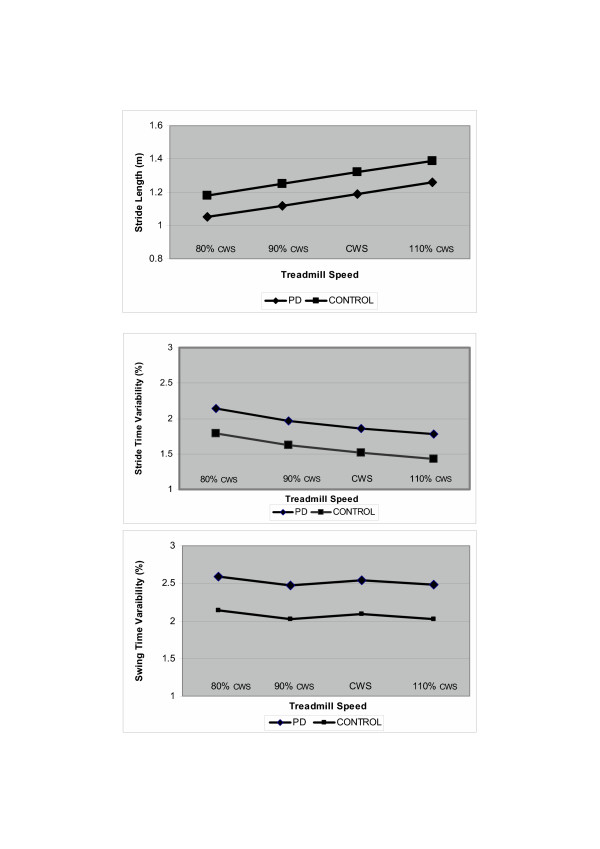
BACKGROUND: The ability to maintain a steady gait rhythm is impaired in patients with Parkinson's disease (PD). This aspect of locomotor dyscontrol, which likely reflects impaired automaticity in PD, can be quantified by measuring the stride-to-stride variability of gait timing. Previous work has shown an increase in both the variability of the stride time and swing time in PD, but the origins of these changes are not fully understood. Patients with PD also generally walk with a reduced gait speed, a potential confounder of the observed changes in variability. The purpose of the present study was to examine the relationship between walking speed and gait variability. METHODS: Stride time variability and swing time variability were measured in 36 patients with PD (Hoehn and Yahr stage 2-2.5) and 30 healthy controls who walked on a treadmill at four different speeds: 1) Comfortable walking speed (CWS), 2) 80% of CWS 3) 90% of CWS, and 4) 110% of CWS. In addition, we studied the effects of walking slowly on level ground, both with and without a walker. RESULTS: Consistent with previous findings, increased variability of stride time and swing time was observed in the patients with PD in CWS, compared to controls. In both groups, there was a small but significant association between treadmill gait speed and stride time variability such that higher speeds were associated with lower (better) values of stride time variability (p = 0.0002). In contrast, swing time variability did not change in response to changes in gait speed. Similar results were observed with walking on level ground. CONCLUSION: The present results demonstrate that swing time variability is independent of gait speed, at least over the range studied, and therefore, that it may be used as a speed-independent marker of rhythmicity and gait steadiness. Since walking speed did not affect stride time variability and swing time variability in the same way, it appears that these two aspects of gait rhythmicity are not entirely controlled by the same mechanisms. The present findings also suggest that the increased gait variability in PD is disease-related, and not simply a consequence of bradykinesia.
Overview
The claims and statistics of this paper haven’t been checked yet.
Run the check — free, no account needed. It reads the open-access text and checks the sources it cites.
Integrity signals
Registry
Cites
Statistics
Figures
Verification
Claims the paper makes
The claims and statistics of this paper haven’t been checked yet.
Run the check — free, no account needed. It reads the open-access text and checks the sources it cites.
Claims other papers make about this one
Each is checked against this paper’s own text: does it say what the citing paper says it does?
In the citing paper
“Gait impairments that involve reductions in speed and step length as well as increased stride length variability are common in PD and impact quality of life 23.”
From Exercise-enhanced neuroplasticity targeting motor and cognitive circuitry in Parkinson's disease (2013) · cites this paper as [23]
Self-check
Percentages, sums and reported differences re-computed from the paper’s own numbers.
The self-check needs the paper’s full text.
Citations
Cites
Folstein, M. F., Folstein, S. E., & McHugh, P. R. (1975) · Journal of Psychiatric Research · doi:10.1016/0022-3956(75)90026-6 · Cited by 88,282
Hirono, N., Mori, E., Ikejiri, Y., Imamura, T., Shimomura, T., Hashimoto, M., Yamashita, H., & Ikeda, M. (1997) · PubMed · Cited by 21,012
Kok, J. S., Berg, I. J., & Scherder, E. J. A. (2013) · Dementia and Geriatric Cognitive Disorders Extra · doi:10.1159/000353441 · Cited by 20,589
Older Adults' Reasons for Using Technology while Aging in Place
Peek, S. T. M., Luijkx, K. G., Rijnaard, M. D., Nieboer, M. E., van der Voort, C. S., Aarts, S., van Hoof, J., Vrijhoef, H. J., & Wouters, E. (2015) · Gerontology · doi:10.1159/000430949 · Cited by 19,852
Sensitivity and False Alarm Rate of a Fall Sensor in Long-Term Fall Detection in the Elderly
Kangas, M., Korpelainen, R., Vikman, I., Nyberg, L., & Jämsä, T. J. (2014) · Gerontology · doi:10.1159/000362720 · Cited by 19,007
Parkinsonism: onset, progression, and mortality
Hoehn, M. M., & Yahr, M. D. (1967) · Neurology · doi:10.1212/wnl.17.5.427 · Cited by 12,107
Overdependence on degraded gist memory in Alzheimer's disease.
Gallo, D. A., Shahid, K. R., Olson, M. A., Solomon, T. M., Schacter, D. L., & Budson, A. E. (2006) · Neuropsychology · doi:10.1037/0894-4105.20.6.625 · Cited by 4,757
Predicting the Probability for Falls in Community-Dwelling Older Adults Using the Timed Up & Go Test
Shumway‐Cook, A., Brauer, S., & Woollacott, M. H. (2000) · Physical Therapy · doi:10.1093/ptj/80.9.896 · Cited by 3,355
Unified Parkinson's Disease Rating Scale
(2012) · Springer eBooks · doi:10.1007/springerreference_184495 · Cited by 3,071
Diagnostic Criteria for Parkinson Disease
Gelb, D. J., Oliver, E., & Gilman, S. (1999) · Archives of Neurology · doi:10.1001/archneur.56.1.33 · Cited by 2,822
Research works printed but not linked: 3
- Baltadjieva R, Giladi N, Balash Y, Herman T, Hausdorff JM: Gait changes in de novo Parkinson's disease patients: A force/rhythm dichotomy. Movement Disorders 2004, 19: S138-S138.
- Lowenthal J, Gruedlinger L, Baltadjieva R, Herman T, Hausdorff JM, Giladi N: Effects of rhythmic auditory stimulation on gait dynamics in Parkinson's disease. Movement Disorders 2004, 19: S139-S139.
- Rochester L, Hetherington V, Jones D, Nieuwboer A, Willems AM, Kwakkel G, Van Wegen G: The effect of rhythmical cues on walking during a simple and dual functional motor task in a complex environment in people with Parkinson's disease. Arch Phys Med Rehabil 2005, in press.
Cited by
Sorted by citations
Hausdorff, J. M. (2007) · Human Movement Science · doi:10.1016/j.humov.2007.05.003 · Cited by 927
Exercise-enhanced neuroplasticity targeting motor and cognitive circuitry in Parkinson's disease
Petzinger, G. M., Fisher, B. E., McEwen, S., Beeler, J. A., Walsh, J. P., & Jakowec, M. W. (2013) · The Lancet Neurology · doi:10.1016/s1474-4422(13)70123-6 · Cited by 798
Dual‐tasking effects on gait variability: The role of aging, falls, and executive function
Springer, S., Giladi, N., Peretz, C., Yogev‐Seligmann, G., Simon, E. S., & Hausdorff, J. M. (2006) · Movement Disorders · doi:10.1002/mds.20848 · Cited by 720
Hausdorff, J. M. (2009) · Chaos An Interdisciplinary Journal of Nonlinear Science · doi:10.1063/1.3147408 · Cited by 633
Rhythmic auditory stimulation modulates gait variability in Parkinson’s disease
Hausdorff, J. M., Lowenthal, J., Herman, T., Gruendlinger, L., Peretz, C., & Giladi, N. (2007) · European Journal of Neuroscience · doi:10.1111/j.1460-9568.2007.05810.x · Cited by 489
Fisher, B. E., Wu, A. D., Salem, G. J., Song, J., Lin, C.-H. (., Yip, J., Cen, S., Gordon, J., Jakowec, M., & Petzinger, G. (2008) · Archives of Physical Medicine and Rehabilitation · doi:10.1016/j.apmr.2008.01.013 · Cited by 474
Dual-Task Decrements in Gait: Contributing Factors Among Healthy Older Adults
Hausdorff, J. M., Schweiger, A., Herman, T., Yogev‐Seligmann, G., & Giladi, N. (2008) · The Journals of Gerontology Series A · doi:10.1093/gerona/63.12.1335 · Cited by 449
Deep 1D-Convnet for accurate Parkinson disease detection and severity prediction from gait
Maâchi, I. E., Bilodeau, G.-A., & Bouachir, W. (2019) · Expert Systems with Applications · doi:10.1016/j.eswa.2019.113075 · Cited by 295
Prakash, C., Kumar, R., & Mittal, N. (2016) · Artificial Intelligence Review · doi:10.1007/s10462-016-9514-6 · Cited by 287
Marked alterations in the gait timing and rhythmicity of patients withde novoParkinson's disease
Baltadjieva, R., Giladi, N., Gruendlinger, L., Peretz, C., & Hausdorff, J. M. (2006) · European Journal of Neuroscience · doi:10.1111/j.1460-9568.2006.05033.x · Cited by 270
Balasubramanian, C. K., Neptune, R. R., & Kautz, S. A. (2008) · Gait & Posture · doi:10.1016/j.gaitpost.2008.10.061 · Cited by 252
Zanardi, A. P. J., da Silva, E. S., Costa, R. R., Monteiro, E. P., dos Santos, I. O., Kruel, L. F. M., & Peyré‐Tartaruga, L. A. (2021) · Scientific Reports · doi:10.1038/s41598-020-80768-2 · Cited by 250
Effects of rhythmic sensory stimulation (auditory, visual) on gait in Parkinson’s disease patients
Arias, P., & Cudeiro, J. (2008) · Experimental Brain Research · doi:10.1007/s00221-007-1263-y · Cited by 212
Latt, M. D., Menz, H. B., Fung, V. S. C., & Lord, S. R. (2007) · Experimental Brain Research · doi:10.1007/s00221-007-1094-x · Cited by 217
An adaptive gyroscope-based algorithm for temporal gait analysis
Greene, B. R., McGrath, D., O’Neill, R., O’Donovan, K. J., Burns, A., & Caulfield, B. (2010) · Medical & Biological Engineering & Computing · doi:10.1007/s11517-010-0692-0 · Cited by 199
Weiss, A., Sharifi, S., Plotnik, M., van Vugt, J. P. P., Giladi, N., & Hausdorff, J. M. (2011) · Neurorehabilitation and neural repair · doi:10.1177/1545968311424869 · Cited by 198
Herman, T., Giladi, N., & Hausdorff, J. M. (2009) · Journal of Neural Transmission · doi:10.1007/s00702-008-0139-z · Cited by 193
Walking speed-related changes in stride time variability: effects of decreased speed
Beauchet, O., Annweiler, C., Lecordroch, Y., Allali, G., Dubost, V., Herrmann, F. R., & Kressig, R. W. (2009) · Journal of NeuroEngineering and Rehabilitation · doi:10.1186/1743-0003-6-32 · Cited by 178
Stride-time variability and sensorimotor cortical activation during walking
Kurz, M. J., Wilson, T. W., & Arpin, D. J. (2011) · NeuroImage · doi:10.1016/j.neuroimage.2011.08.084 · Cited by 168
The brain map of gait variability in aging, cognitive impairment and dementia—A systematic review
Tian, Q., Chastan, N., Bair, W.-N., Resnick, S. M., Ferrucci, L., & Studenski, S. A. (2017) · Neuroscience & Biobehavioral Reviews · doi:10.1016/j.neubiorev.2017.01.020 · Cited by 158
Statistical Analysis of Gait Rhythm in Patients With Parkinson's Disease
Wu, Y., & Krishnan, S. (2009) · IEEE Transactions on Neural Systems and Rehabilitation Engineering · doi:10.1109/tnsre.2009.2033062 · Cited by 152
Gait alterations in healthy carriers of the LRRK2 G2019S mutation
Mirelman, A., Gurevich, T., Giladi, N., Bar‐Shira, A., Orr‐Urtreger, A., & Hausdorff, J. M. (2011) · Annals of Neurology · doi:10.1002/ana.22165 · Cited by 149
Tăuţan, A.-M., Ionescu, B. E., & Santarnecchi, E. (2021) · Artificial Intelligence in Medicine · doi:10.1016/j.artmed.2021.102081 · Cited by 156
Vienne-Jumeau, A., Barrois, R., Buffat, S., Ricard, D., & Vidal, P. (2017) · Frontiers in Psychology · doi:10.3389/fpsyg.2017.00817 · Cited by 148
Vertical ground reaction force marker for Parkinson’s disease
Alam, M. Z., Garg, A., Munia, T. T. K., Fazel-Rezai, R., & Tavakolian, K. (2017) · PLoS ONE · doi:10.1371/journal.pone.0175951 · Cited by 143
Two independent contributions to step variability during over-ground human walking
Collins, S. H., & Kuo, A. D. (2013) · PLoS ONE · doi:10.1371/journal.pone.0073597 · Cited by 129
Flexible Electrodes for Brain–Computer Interface System
Wang, J., Wang, T., Liu, H., Wang, K., Kumi, M., Feng, Z., Li, P., & Huang, W. (2023) · Advanced Materials · doi:10.1002/adma.202211012 · Cited by 142
Gilat, M., Bell, P. T., Martens, K. A. E., Georgiades, M., Hall, J. M., Walton, C. C., Lewis, S. J. G., & Shine, J. M. (2017) · NeuroImage · doi:10.1016/j.neuroimage.2017.02.073 · Cited by 136
Detection of Parkinson's disease by Shifted One Dimensional Local Binary Patterns from gait
Ertuğrul, Ö. F., Kaya, Y., Teki̇n, R., & ALMALI, M. N. (2016) · Expert Systems with Applications · doi:10.1016/j.eswa.2016.03.018 · Cited by 133
An automatic non-invasive method for Parkinson's disease classification
Joshi, D., Khajuria, A., & Joshi, P. (2017) · Computer Methods and Programs in Biomedicine · doi:10.1016/j.cmpb.2017.04.007 · Cited by 130
SVM based machine learning approach to identify Parkinson's disease using gait analysis
Shetty, S. S., & Rao, Y. S. (2016) · International Conference on Inventive Computation Technologies (ICICT) · doi:10.1109/inventive.2016.7824836 · Cited by 127
Gait and tremor assessment for patients with Parkinson’s disease using wearable sensors
Perumal, S. V., & Sankar, R. T. (2016) · ICT Express · doi:10.1016/j.icte.2016.10.005 · Cited by 118
Speed influences on the scaling behavior of gait cycle fluctuations during treadmill running
Jordan, K., Challis, J. H., & Newell, K. M. (2006) · Human Movement Science · doi:10.1016/j.humov.2006.10.001 · Cited by 119
Data-Driven Based Approach to Aid Parkinson’s Disease Diagnosis
Khoury, N., Attal, F., Amirat, Y., Oukhellou, L., & Mohammed, S. (2019) · Sensors · doi:10.3390/s19020242 · Cited by 114
Walking stability using harmonic ratios in Parkinson's disease
Lowry, K. A., Smiley‐Oyen, A. L., Carrel, A. J., & Kerr, J. P. (2008) · Movement Disorders · doi:10.1002/mds.22352 · Cited by 113
Wittwer, J. E., Webster, K. E., & Hill, K. (2012) · Gait & Posture · doi:10.1016/j.gaitpost.2012.07.006 · Cited by 105
Gouwanda, D., & Gopalai, A. A. (2015) · Medical Engineering & Physics · doi:10.1016/j.medengphy.2014.12.004 · Cited by 108
Nancy Jane, Y., Khanna Nehemiah, H., & Arputharaj, K. (2016) · Journal of Biomedical Informatics · doi:10.1016/j.jbi.2016.01.014 · Cited by 98
Turning in Parkinson's disease patients and controls: The effect of auditory cues
Willems, A., Nieuwboer, A., Chavret, F., Desloovere, K., Dom, R., Rochester, L., Kwakkel, G., van Wegen, E. E. H., & Jones, D. E. (2007) · Movement Disorders · doi:10.1002/mds.21445 · Cited by 101
A Comprehensive Review on AI-Enabled Models for Parkinson’s Disease Diagnosis
Dixit, S., Bohre, K., Singh, Y., Himeur, Y., Mansoor, W., Atalla, S., & Srinivasan, K. (2023) · Electronics · doi:10.3390/electronics12040783 · Cited by 97
Gait variability in Parkinson’s disease: influence of walking speed and dopaminergic treatment
Bryant, M. S., Rintala, D. H., Hou, J. G., Charness, A., Fernandez, A. L., Collins, R. L., Baker, J. M., Lai, E. C., & Protas, E. J. (2011) · Neurological Research · doi:10.1179/1743132811y.0000000044 · Cited by 91
Residual attentional capacity amongst young and elderly during dual and triple task walking
Læssøe, U., Hoeck, H. C., Simonsen, O. H., & Voigt, M. (2008) · Human Movement Science · doi:10.1016/j.humov.2007.12.001 · Cited by 87
Deep brain stimulation effects on gait variability in Parkinson's disease
Hausdorff, J. M., Gruendlinger, L., Scollins, L., O’Herron, S., & Tarsy, D. (2009) · Movement Disorders · doi:10.1002/mds.22554 · Cited by 79
Kirchner, M., Schubert, P., Liebherr, M., & Haas, C. T. (2014) · PLoS ONE · doi:10.1371/journal.pone.0085787 · Cited by 77
Khandoker, A. H., Taylor, S. B., Karmakar, C. K., Begg, R. K., & Palaniswami, M. S. (2008) · IEEE Transactions on Neural Systems and Rehabilitation Engineering · doi:10.1109/tnsre.2008.925071 · Cited by 76
Priya, S., Rani, P. A. J., Subathra, M. S. P., Mohammed, M. A., Damaševičius, R., & Ubendran, N. (2021) · Diagnostics · doi:10.3390/diagnostics11081395 · Cited by 74
Quantifying Dynamic Balance in Young, Elderly and Parkinson's Individuals: A Systematic Review
Siragy, T., & Nantel, J. (2018) · Frontiers in Aging Neuroscience · doi:10.3389/fnagi.2018.00387 · Cited by 72
Mechanics of very slow human walking
Wu, A. R., Simpson, C. S., van Asseldonk, E. H. F., van der Kooij, H., & Ijspeert, A. J. (2019) · Scientific Reports · doi:10.1038/s41598-019-54271-2 · Cited by 72
Eltoukhy, M. A., Kuenze, C. M., Andersen, M. S., Oh, J., & Signorile, J. F. (2017) · Medical Engineering & Physics · doi:10.1016/j.medengphy.2017.10.004 · Cited by 70
Rennie, L., Löfgren, N., Moe‐Nilssen, R., Opheim, A. I., Dietrichs, E., & Franzén, E. (2018) · Gait & Posture · doi:10.1016/j.gaitpost.2018.04.011 · Cited by 69
König, N., Taylor, W. R., Baumann, C. R., Wenderoth, N., & Singh, N. B. (2016) · Neuroscience & Biobehavioral Reviews · doi:10.1016/j.neubiorev.2016.03.035 · Cited by 69
Data-driven gait analysis for diagnosis and severity rating of Parkinson’s disease
Balaji, E., Brindha, D., Elumalai, V. K., & Umesh, K. (2021) · Medical Engineering & Physics · doi:10.1016/j.medengphy.2021.03.005 · Cited by 71
Almarwani, M., VanSwearingen, J. M., Perera, S., Sparto, P. J., & Brach, J. S. (2016) · Archives of Gerontology and Geriatrics · doi:10.1016/j.archger.2016.05.001 · Cited by 67
Jones, C. A., & Ciucci, M. R. (2016) · Journal of Parkinson s Disease · doi:10.3233/jpd-150687 · Cited by 66
A Random Forest Method to Detect Parkinson’s Disease via Gait Analysis
Açıcı, K., Erdaş, Ç. B., Aşuroğlu, T., Toprak, M. K., Erdem, H., & Oğul, H. (2017) · Communications in computer and information science · doi:10.1007/978-3-319-65172-9_51 · Cited by 65
A translational approach to capture gait signatures of neurological disorders in mice and humans
Broom, L., Ellison, B. A., Worley, A., Wagenaar, L., Sörberg, E., Ashton, C., Bennett, D. A., Buchman, A. S., Saper, C. B., Shih, L. C., et al. (2017) · Scientific Reports · doi:10.1038/s41598-017-03336-1 · Cited by 64
Gait Rhythm Fluctuation Analysis for Neurodegenerative Diseases by Empirical Mode Decomposition
Ren, P., Tang, S., Fang, F., Luo, L., Xu, L., Bringas-Vega, M. L., Yao, D., Kendrick, K. M., & Valdes-Sosa, P. A. (2016) · IEEE Transactions on Biomedical Engineering · doi:10.1109/tbme.2016.2536438 · Cited by 64
Sant’Anna, A., & Wickström, N. (2010) · IEEE Transactions on Information Technology in Biomedicine · doi:10.1109/titb.2010.2047402 · Cited by 63
Moreau, C., Defebvre, L., Bleuse, S., Blatt, J. –., Duhamel, A., Bloem, B. R., Destée, A., & Krystkowiak, P. C. (2008) · Journal of Neural Transmission · doi:10.1007/s00702-008-0099-3 · Cited by 62
Parkinsonism and Related Disorders
Slow, E., & Lang, A. E. (2019) · DeckerMed Transitional Year Weekly Curriculum™ · doi:10.2310/tywc.1178 · Cited by 62
Dynamics of turning sharpness influences freezing of gait in Parkinson's disease
Bhatt, H., Pieruccini‐Faria, F., & Almeida, Q. J. (2012) · Parkinsonism & Related Disorders · doi:10.1016/j.parkreldis.2012.09.006 · Cited by 61
Tensor Decomposition of Gait Dynamics in Parkinson's Disease
Pham, T. D., & Yan, H. (2017) · IEEE Transactions on Biomedical Engineering · doi:10.1109/tbme.2017.2779884 · Cited by 61
Afsar, O., Tırnaklı, U., & Marwan, N. (2018) · Scientific Reports · doi:10.1038/s41598-018-27369-2 · Cited by 58
Coates, L., Shi, J. Q., Rochester, L., Din, S. D., & Pantall, A. (2020) · Sensors · doi:10.3390/s20092631 · Cited by 55
Gait variability is sensitive to detect Parkinson’s disease patients at high fall risk
Ma, L., Mi, T., Jia, Q., Han, C., Chhetri, J. K., & Chan, P. (2020) · International Journal of Neuroscience · doi:10.1080/00207454.2020.1849189 · Cited by 54
Luessi, F., Mueller, L., Breimhorst, M., & VOGT, T. M. (2011) · Journal of the Neurological Sciences · doi:10.1016/j.jns.2011.10.027 · Cited by 52
Assessment of Cognitive Decline Through Quantitative Analysis of the Timed Up and Go Test
Greene, B. R., & Kenny, R. A. (2011) · IEEE Transactions on Biomedical Engineering · doi:10.1109/tbme.2011.2181844 · Cited by 50
Inter-stride variability triggers gait transitions in mammals and birds
Granatosky, M. C., Bryce, C. M., Hanna, J. B., Fitzsimons, A., Laird, M. F., Stilson, K. T., Wall, C. E., & Ross, C. F. (2018) · Proceedings of the Royal Society B Biological Sciences · doi:10.1098/rspb.2018.1766 · Cited by 50
Antwi‐Afari, M. F., Li, H., Anwer, S., Yevu, S. K., Wu, Z., Antwi-Afari, P., & Kim, I. (2020) · Safety Science · doi:10.1016/j.ssci.2020.104855 · Cited by 50
Ren, P., Zhao, W., Zhao, Z., Bringas-Vega, M. L., Valdes-Sosa, P. A., & Kendrick, K. M. (2015) · IEEE Transactions on Neural Systems and Rehabilitation Engineering · doi:10.1109/tnsre.2015.2477325 · Cited by 47
A Manipulation of Visual Feedback during Gait Training in Parkinson's Disease
Almeida, Q. J., & Bhatt, H. (2011) · Parkinson s Disease · doi:10.1155/2012/508720 · Cited by 45
König, N., Singh, N. B., Baumann, C. R., & Taylor, W. R. (2016) · Frontiers in Human Neuroscience · doi:10.3389/fnhum.2016.00319 · Cited by 44
Characterization of gait variability in multiple system atrophy and Parkinson’s disease
Sidoroff, V., Raccagni, C., Kaindlstorfer, C., Eschlboeck, S., Fanciulli, A., Granata, R., Eskofier, B. M., Seppi, K., Poewe, W. H., Willeit, J., et al. (2020) · Journal of Neurology · doi:10.1007/s00415-020-10355-y · Cited by 43
Influence of urinary urgency and other urinary disturbances on falls in Parkinson's disease
Sakushima, K., Yamazaki, S., Fukuma, S., Hayashino, Y., Yabe, I., Fukuhara, S., & Sasaki, H. (2015) · Journal of the Neurological Sciences · doi:10.1016/j.jns.2015.11.055 · Cited by 44
Impairments of balance, stepping reactions and gait in people with cervical dystonia
Barr, C., Barnard, R., Edwards, L. L., Lennon, S., & Bradnam, L. V. (2017) · Gait & Posture · doi:10.1016/j.gaitpost.2017.04.004 · Cited by 42
Speeding Up Gait in Parkinson’s Disease
Peterson, D. S., Mancini, M., Fino, P. C., Horak, F. B., & Smulders, K. (2019) · Journal of Parkinson s Disease · doi:10.3233/jpd-191682 · Cited by 42
Namazi, H. (2021) · Biomedical Signal Processing and Control · doi:10.1016/j.bspc.2021.102956 · Cited by 42
Demonceau, M., Donneau, A., Croisier, J., Skawiniak, E., Boutaayamou, M., Maquet, D., & Garraux, G. (2015) · IEEE Journal of Biomedical and Health Informatics · doi:10.1109/jbhi.2015.2469540 · Cited by 42
Gait Performance in People with Symptomatic, Chronic Mild Traumatic Brain Injury
Martini, D. N., Parrington, L., Stuart, S., Fino, P. C., & King, L. A. (2020) · Journal of Neurotrauma · doi:10.1089/neu.2020.6986 · Cited by 40
Detecting Parkinson’s Disease through Gait Measures Using Machine Learning
Li, A., & Li, C. (2022) · Diagnostics · doi:10.3390/diagnostics12102404 · Cited by 39
Detection of Parkinson’s Disease from gait using Neighborhood Representation Local Binary Patterns
Yurdakul, O. C., Subathra, M. S. P., & George, S. T. (2020) · Biomedical Signal Processing and Control · doi:10.1016/j.bspc.2020.102070 · Cited by 39
Wilkins, K. B., Parker, J. E., & Bronte-Stewart, H. M. (2020) · Neurobiology of Disease · doi:10.1016/j.nbd.2020.105134 · Cited by 37
Transformers for 1D signals in Parkinson’s disease detection from gait
Nguyen, D. M. D., Miah, M., Bilodeau, G.-A., & Bouachir, W. (2022) · Proceedings - International Conference on Pattern Recognition/Proceedings/International Conference on Pattern Recognition · doi:10.1109/icpr56361.2022.9956330 · Cited by 44
Panyakaew, P., & Bhidayasiri, R. (2013) · Journal of Neural Transmission · doi:10.1007/s00702-013-1051-8 · Cited by 41
Balash, Y., Hadar-Frumer, M., Herman, T., Peretz, C., Giladi, N., & Hausdorff, J. M. (2007) · Journal of Neural Transmission · doi:10.1007/s00702-007-0771-z · Cited by 38
Random forest–based classsification and analysis of hemiplegia gait using low-cost depth cameras
Luo, G., Zhu, Y., Wang, R., Tong, Y., Lu, W. B., & Wang, H. (2019) · Medical & Biological Engineering & Computing · doi:10.1007/s11517-019-02079-7 · Cited by 38
Temporal-spatial gait parameter models of very slow walking
Smith, A., & Lemaire, E. D. (2018) · Gait & Posture · doi:10.1016/j.gaitpost.2018.01.003 · Cited by 37
Ravi, D. K., Gwerder, M., König, N., Baumann, C. R., Uhl, M., van Dieën, J. H., Taylor, W. R., & Singh, N. B. (2019) · Neuroscience & Biobehavioral Reviews · doi:10.1016/j.neubiorev.2019.10.008 · Cited by 38
Attractor divergence as a metric for assessing walking balance.
Kurz, M. J., Markopoulou, K., & Stergiou, N. (2010) · PubMed · Cited by 36
Solanki, D., & Lahiri, U. (2018) · Frontiers in Neuroscience · doi:10.3389/fnins.2018.00459 · Cited by 35
Harrison, E. C., Horin, A. P., & Earhart, G. M. (2019) · Neurology Report · doi:10.1097/npt.0000000000000288 · Cited by 36
Effect of Rhythmic Auditory Cueing on Gait in People With Alzheimer Disease
Wittwer, J. E., Webster, K. E., & Hill, K. (2012) · Archives of Physical Medicine and Rehabilitation · doi:10.1016/j.apmr.2012.11.009 · Cited by 35
Dual-Task Does Not Increase Slip and Fall Risk in Healthy Young and Older Adults during Walking
Soangra, R., & Lockhart, T. E. (2017) · Applied Bionics and Biomechanics · doi:10.1155/2017/1014784 · Cited by 32
Castiglia, S. F., Tatarelli, A., Trabassi, D., Icco, R. D., Grillo, V., Ranavolo, A., Varrecchia, T., Magnifica, F., Lenola, D. D., Coppola, G., et al. (2021) · Sensors · doi:10.3390/s21103449 · Cited by 31
Kinematic and Kinetic Patterns Related to Free-Walking in Parkinson’s Disease
Martı́nez, M., Villagra, F., Castellote, J. M., & Pastor, M. A. (2018) · Sensors · doi:10.3390/s18124224 · Cited by 30
Ghaderyan, P., & Fathi, G. (2021) · Measurement · doi:10.1016/j.measurement.2021.109249 · Cited by 30
Does Load Carrying Influence Sagittal Plane Locomotive Stability?
Arellano, C. J., Layne, C. S., O’Connor, D. P., Scott-Pandorf, M. M., & Kurz, M. J. (2009) · Medicine & Science in Sports & Exercise · doi:10.1249/mss.0b013e31818a0ea4 · Cited by 30
Postural threat during walking: effects on energy cost and accompanying gait changes
IJmker, T., Lamoth, C. J. C., Houdijk, H., van der Woude, L. H. V., & Beek, P. J. (2014) · Journal of NeuroEngineering and Rehabilitation · doi:10.1186/1743-0003-11-71 · Cited by 29
Quantitative clinical assessment of motor function during and following LSVT-BIG® therapy
Flood, M. W., O’Callaghan, B., Diamond, P., Liegey, J., Hughes, G., & Lowery, M. M. (2020) · Journal of NeuroEngineering and Rehabilitation · doi:10.1186/s12984-020-00729-8 · Cited by 29
Setiawan, F., & Lin, C. (2021) · Sensors · doi:10.3390/s21155207 · Cited by 29
Metadata
- Authors
- Frenkel-Toledo, S., Giladi, N., Peretz, C., Herman, T., Gruendlinger, L., & Hausdorff, J. M.
- Affiliations
- Tel Aviv University (IL)
- Tel Aviv Sourasky Medical Center (IL)
- Harvard University (US)
- Corresponding author
- Hausdorff, Jeffrey M
- Venue
- Journal of NeuroEngineering and Rehabilitation
- Published
- 2005-07-31
- Volume
- 2
- Issue
- 1
- Pages
- 23-23
- ISSN
- 1743-0003 (ISSN-L)
- PMC
- PMC1188069
- OpenAlex
- W2095634651
- Cited by
- 285
- References
- 56
- Citations by year
- 2026: 16 · 2025: 20 · 2024: 12 · 2023: 14 · 2022: 16 · 2021: 18 · 2020: 26 · 2019: 24 · 2018: 19 · 2017: 17 · 2016: 18 · 2015: 12 · 2014: 4 · 2013: 8 · 2012: 12
- FWCI
- 22.76
- Type
- journal article
- Language
- en
- Open access
- gold
- doi.org
- Licence
- cc-by
- Locations
- Journal of NeuroEngineering and Rehabilitation (publishedVersion, cc-by)
- Europe PMC (PubMed Central) (publishedVersion, cc-by)
- PubMed Central (publishedVersion, cc-by)
- PubMed (publishedVersion)
- Digital Access to Scholarship at Harvard (DASH) (Harvard University) (submittedVersion, cc-by)
- DOAJ (DOAJ: Directory of Open Access Journals) (submittedVersion, cc-by-sa)
- Funders
- Parkinson's Disease Foundation
- National Institute on Aging
- National Center for Research Resources
- Topics
- Health Sciences › Health Professions › Physical Therapy, Sports Therapy and Rehabilitation › Balance, Gait, and Falls Prevention
- Life Sciences › Neuroscience › Cognitive Neuroscience › Motor Control and Adaptation
- Health Sciences › Medicine › Clinical Neurology › Deep Brain Stimulation and Movement Disorders
- Keywords
- Parkinson's disease, walking speed, stride time variability, gait variability, automaticity, bradykinesia, treadmill walking, walker use
About these checks
Registry, retraction, Cites and statistics results are computed, not judged, with one exception: a printed reference that no index lists is read once by a model before it counts as a citation error. Claims are extracted by a model and kept only when their quote appears verbatim in the text; each cited source is then checked, with a model’s help, for whether it says what the claim relies on. Those verdicts can be wrong — read the claim’s quote and the cited source before relying on one.
Statistics and arithmetic are recomputed, not judged.
Confidence bands are shown only for fields calibrated on our annotated test set. None is calibrated yet, so no band is shown.
What counts as a claim ›How we measure confidence ›How we check this ›
Are you an author, or do you see a problem with this page? Request a review
