

Review on solving the inverse problem in EEG source analysis
Open accessThe DOI matches its Crossref record; 100 of the 100 references it cites were found in a registry or an index.
Abstract
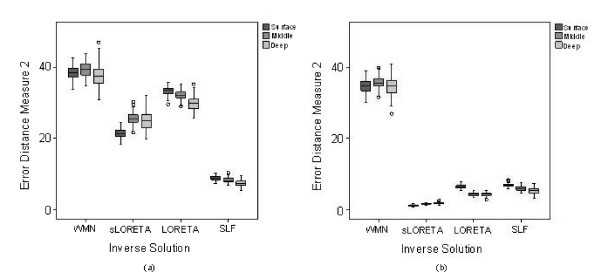
In this primer, we give a review of the inverse problem for EEG source localization. This is intended for the researchers new in the field to get insight in the state-of-the-art techniques used to find approximate solutions of the brain sources giving rise to a scalp potential recording. Furthermore, a review of the performance results of the different techniques is provided to compare these different inverse solutions. The authors also include the results of a Monte-Carlo analysis which they performed to compare four non parametric algorithms and hence contribute to what is presently recorded in the literature. An extensive list of references to the work of other researchers is also provided. This paper starts off with a mathematical description of the inverse problem and proceeds to discuss the two main categories of methods which were developed to solve the EEG inverse problem, mainly the non parametric and parametric methods. The main difference between the two is to whether a fixed number of dipoles is assumed a priori or not. Various techniques falling within these categories are described including minimum norm estimates and their generalizations, LORETA, sLORETA, VARETA, S-MAP, ST-MAP, Backus-Gilbert, LAURA, Shrinking LORETA FOCUSS (SLF), SSLOFO and ALF for non parametric methods and beamforming techniques, BESA, subspace techniques such as MUSIC and methods derived from it, FINES, simulated annealing and computational intelligence algorithms for parametric methods. From a review of the performance of these techniques as documented in the literature, one could conclude that in most cases the LORETA solution gives satisfactory results. In situations involving clusters of dipoles, higher resolution algorithms such as MUSIC or FINES are however preferred. Imposing reliable biophysical and psychological constraints, as done by LAURA has given superior results. The Monte-Carlo analysis performed, comparing WMN, LORETA, sLORETA and SLF, for different noise levels and different simulated source depths has shown that for single source localization, regularized sLORETA gives the best solution in terms of both localization error and ghost sources. Furthermore the computationally intensive solution given by SLF was not found to give any additional benefits under such simulated conditions.
Overview
The claims and statistics of this paper haven’t been checked yet.
Free: it reads the open-access text and checks the first 5 claims that cite a source we can check. Create a free account to check every claim.
Integrity signals
Registry
Cites
Statistics
Figures
Verification
Claims the paper makes
The claims and statistics of this paper haven’t been checked yet.
Free: it reads the open-access text and checks the first 5 claims that cite a source we can check. Create a free account to check every claim.
Claims other papers make about this one
Each is checked against this paper’s own text: does it say what the citing paper says it does?
The cited source says what the claim attributes to it.
In the citing paper
“This is due to the inverse problem of being unable to predict the pattern of neural firing responsible for generating a particular EEG signal, solely from the EEG signal (Grech et al., 2008; Baillet, 2014).”
From Consciousness: Matter or EMF? (2023) · cites this paper as Grech et al., 2008
Self-check
Percentages, sums and reported differences re-computed from the paper’s own numbers.
The self-check needs the paper’s full text.
Citations
Cites
Press, W. H., Teukolsky, S. A., Vetterling, W. T., & Flannery, B. P. (1994) · Cited by 15,411
Standardized low-resolution brain electromagnetic tomography (sLORETA): technical details.
Pascual-Marqui, R. D. (2002) · PubMed · Cited by 4,070
Rank-Deficient and Discrete Ill-Posed Problems: Numerical Aspects of Linear Inversion
Hansen, P. C. (1998) · Society for Industrial and Applied Mathematics eBooks · doi:10.1137/1.9780898719697 · Cited by 2,909
Introductory functional analysis with applications
Kreyszig, E. (1978) · Cited by 2,889
Van Veen, B. D., Van Drongelen, W., Yuchtman, M., & Suzuki, A. (1997) · IEEE Transactions on Biomedical Engineering · doi:10.1109/10.623056 · Cited by 2,561
Computational Methods for Inverse Problems
Vogel, C. R. (2002) · Society for Industrial and Applied Mathematics eBooks · doi:10.1137/1.9780898717570 · Cited by 2,370
Dale, A. M., & Sereno, M. I. (1993) · Journal of Cognitive Neuroscience · doi:10.1162/jocn.1993.5.2.162 · Cited by 2,003
Sparse signal reconstruction from limited data using FOCUSS: a re-weighted minimum norm algorithm
Gorodnitsky, I. F., & Rao, B. D. (1997) · IEEE Transactions on Signal Processing · doi:10.1109/78.558475 · Cited by 1,834
Rue, H., & Held, L. (2005) · Chapman & Hall/CRC eBooks · doi:10.1201/9780203492024 · Cited by 1,823
Dynamic Statistical Parametric Mapping
Dale, A. M., Liu, A. K., Fischl, B. R., Buckner, R. L., Belliveau, J. W., Lewine, J. D., & Halgren, E. (2000) · Neuron · doi:10.1016/s0896-6273(00)81138-1 · Cited by 1,787
Electroencephalography and clinical neurophysiology
(1994) · Electroencephalography and Clinical Neurophysiology · doi:10.1016/0013-4694(94)90118-x · Cited by 1,759
REGULARIZATION TOOLS: A Matlab package for analysis and solution of discrete ill-posed problems
Hansen, P. C. (1994) · Numerical Algorithms · doi:10.1007/bf02149761 · Cited by 1,710
Baillet, S., Mosher, J. C., & Leahy, R. M. (2001) · IEEE Signal Processing Magazine · doi:10.1109/79.962275 · Cited by 1,692
Michel, C. M., Murray, M. M., Lantz, G., Gonzalez, S., Spinelli, L., & Grave de Peralta, R. (2004) · Clinical Neurophysiology · doi:10.1016/j.clinph.2004.06.001 · Cited by 1,655
Markov Random Field Modeling in Computer Vision
Li, S. Z. (1995) · Computer Science Workbench · doi:10.1007/978-4-431-66933-3 · Cited by 1,276
Gaussian Markov Random Fields: Theory and Applications
Rue, H., & Held, L. (2005) · Thammasat University Digital Collections · Cited by 1,240
Multiple dipole modeling and localization from spatio-temporal MEG data
Mosher, J. C., Lewis, P. S., & Leahy, R. M. (1992) · IEEE Transactions on Biomedical Engineering · doi:10.1109/10.141192 · Cited by 1,048
?sparse? temporal sampling in auditory fMRI
Hall, D. A., Haggard, M. P., Akeroyd, M. A., Palmer, A. R., Summerfield, A. Q., Elliott, M. R., Gurney, E. M., & Bowtell, R. W. (1999) · Human Brain Mapping · doi:10.1002/(sici)1097-0193(1999)7:3<213::aid-hbm5>3.0.co;2-n · Cited by 869
The L-curve and its use in the numerical treatment of inverse problems
Hansen, P. C. (2000) · Cited by 824
Review of methods for solving the EEG inverse problem
Pascual-Marqui, R. D. (1999) · Cited by 784
Discovering statistics using SPSS: (and sex, drugs and rock 'n' roll)
(2006) · Choice Reviews Online · doi:10.5860/choice.43-3433 · Cited by 715
Neuromagnetic source imaging with FOCUSS: a recursive weighted minimum norm algorithm
Gorodnitsky, I. F., George, J. S., & Rao, B. D. (1995) · Electroencephalography and Clinical Neurophysiology · doi:10.1016/0013-4694(95)00107-a · Cited by 567
Review on solving the forward problem in EEG source analysis
Hallez, H., Vanrumste, B., Grech, R., Muscat, J., De Clercq, W., Vergult, A., D'Asseler, Y., Camilleri, K. P., Fabri, S. G., Van Huffel, S., et al. (2007) · Journal of NeuroEngineering and Rehabilitation · doi:10.1186/1743-0003-4-46 · Cited by 527
Self-citationHuang, C., Wahlund, L.-O., Dierks, T., Julin, P., Winblad, B., & Jelic, V (2000) · Clinical Neurophysiology · doi:10.1016/s1388-2457(00)00454-5 · Cited by 466
Inverse Problems in the Mathematical Sciences.
Cheney, M., & Groetsch, C. W. (1994) · Mathematics of Computation · doi:10.2307/2153303 · Cited by 405
Source localization using recursively applied and projected (RAP) MUSIC
Mosher, J. C., & Leahy, R. M. (1999) · IEEE Transactions on Signal Processing · doi:10.1109/78.740118 · Cited by 398
Electrical neuroimaging based on biophysical constraints
Grave de Peralta Menendez, R., Murray, M. M., Michel, C. M., Martuzzi, R., & Gonzalez Andino, S. L. (2004) · NeuroImage · doi:10.1016/j.neuroimage.2003.09.051 · Cited by 365
Recursive MUSIC: A framework for EEG and MEG source localization
Mosher, J. C., & Leahy, R. M. (1998) · IEEE Transactions on Biomedical Engineering · doi:10.1109/10.725331 · Cited by 362
Monte Carlo simulation studies of EEG and MEG localization accuracy
Liu, A. K., Dale, A. M., & Belliveau, J. W. (2002) · Human Brain Mapping · doi:10.1002/hbm.10024 · Cited by 349
A Bayesian approach to introducing anatomo-functional priors in the EEG/MEG inverse problem
Baillet, S., & Garnero, L. (1997) · IEEE Transactions on Biomedical Engineering · doi:10.1109/10.568913 · Cited by 322
Invariant Reversible QEEG Effects of Anesthetics
John, E. R., Prichep, L. S., Kox, W., Valdés-Sosa, P., Bosch-Bayard, J., Aubert, E., Tom, M., diMichele, F., & Gugino, L. D. (2001) · Consciousness and Cognition · doi:10.1006/ccog.2001.0507 · Cited by 274
International Journal of Bioelectromagnetism
Eskola, H. J., & Heinonen, T. (1999) · Cited by 259
Mathematical dipoles are adequate to describe realistic generators of human brain activity
de Munck, J. C., van Dijk, B. W., & Spekreijse, H. (1988) · IEEE Transactions on Biomedical Engineering · doi:10.1109/10.8677 · Cited by 225
A solution to the dynamical inverse problem of EEG generation using spatiotemporal Kalman filtering
Galka, A., Yamashita, O., Ozaki, T., Biscay, R., & Valdés-Sosa, P. (2004) · NeuroImage · doi:10.1016/j.neuroimage.2004.02.022 · Cited by 176
A critical analysis of linear inverse solutions to the neuroelectromagnetic inverse problem
De Peralta-Menendez, R. G., & Gonzalez-Andino, S. L. (1998) · IEEE Transactions on Biomedical Engineering · doi:10.1109/10.664200 · Cited by 175
Frei, E., Gamma, A., Pascual‐Marqui, R., Lehmann, D., Hell, D., & Vollenweider, F. X. (2001) · Human Brain Mapping · doi:10.1002/hbm.1049 · Cited by 173
Yao, J., & Dewald, J. P. A. (2005) · NeuroImage · doi:10.1016/j.neuroimage.2004.11.036 · Cited by 168
Source localization of EEG activity during hypnotically induced anxiety and relaxation
Isotani, T., Tanaka, H., Lehmann, D., Pascual-Marqui, R. D., Kochi, K., Saito, N., Yagyu, T., Kinoshita, T., & Sasada, K. (2001) · International Journal of Psychophysiology · doi:10.1016/s0167-8760(00)00197-5 · Cited by 165
Global optimization in the localization of neuromagnetic sources
Uutela, K., Hamalainen, M., & Salmelin, R. (1998) · IEEE Transactions on Biomedical Engineering · doi:10.1109/10.678606 · Cited by 159
Bayesian inference applied to the electromagnetic inverse problem
Schmidt, D. M., George, J. S., & Wood, C. C. (1999) · Human Brain Mapping · doi:10.1002/(sici)1097-0193(1999)7:3<195::aid-hbm4>3.0.co;2-f · Cited by 156
Independent component analysis for EEG source localization
Zhukov, L., Weinstein, D., & Johnson, C. (2000) · IEEE Engineering in Medicine and Biology Magazine · doi:10.1109/51.844386 · Cited by 133
Linear inverse solutions with optimal resolution kernels applied to electromagnetic tomography
Grave de Peralta Menendez, R., Hauk, O., Gonzalez Andino, S., Vogt, H., & Michel, C. (1997) · Human Brain Mapping · doi:10.1002/(sici)1097-0193(1997)5:6<454::aid-hbm6>3.0.co;2-2 · Cited by 125
Lubar, J. F., Congedo, M., & Askew, J. (2003) · International Journal of Psychophysiology · doi:10.1016/s0167-8760(03)00115-6 · Cited by 120
A method for localizing EEG sources in realistic head models
Cuffin, B. N. (1995) · IEEE Transactions on Biomedical Engineering · doi:10.1109/10.362917 · Cited by 107
Effects of dipole position, orientation and noise on the accuracy of EEG source localization
Whittingstall, K., Stroink, G., Gates, L., Connolly, J. F., & Finley, G. A. (2003) · BioMedical Engineering OnLine · doi:10.1186/1475-925x-2-14 · Cited by 104
Liu, H., Schimpf, P. H., Dong, G., Gao, X., Yang, F., & Gao, S. (2005) · IEEE Transactions on Biomedical Engineering · doi:10.1109/tbme.2005.855720 · Cited by 104
An improved method for localizing electric brain dipoles
Salu, Y., Cohen, L. G., Rose, D., Sxato, S., Kufta, C., & Hallett, M. (1990) · IEEE Transactions on Biomedical Engineering · doi:10.1109/10.55680 · Cited by 103
Surgical treatment of medically refractory epilepsy in childhood
Snead, O. C. (2001) · Brain and Development · doi:10.1016/s0387-7604(01)00204-2 · Cited by 99
Madden, D. J., Turkington, T. G., Provenzale, J. M., Hawk, T. C., Hoffman, J. M., & Coleman, R. E. (1997) · Human Brain Mapping · doi:10.1002/(sici)1097-0193(1997)5:6<389::aid-hbm1>3.0.co;2-# · Cited by 98
Magnetoencephalography in Presurgical Evaluation of Children with the Landau‐Kleffner Syndrome
Paetau, R., Granström, M., Blomstedt, G. C., Jousmäki, V., Korkman, M., & Liukkonen, E. (1999) · Epilepsia · doi:10.1111/j.1528-1157.1999.tb00713.x · Cited by 96
The estimation of time varying dipoles on the basis of evoked potentials
de Munck, J. C. (1990) · Electroencephalography and Clinical Neurophysiology/Evoked Potentials Section · doi:10.1016/0168-5597(90)90032-9 · Cited by 91
Cheng, L. K., Bodley, J. M., & Pullan, A. J. (2003) · IEEE Transactions on Biomedical Engineering · doi:10.1109/tbme.2002.807326 · Cited by 87
High‐resolution electroencephalography and source localization in neonates
Roche‐Labarbe, N., Aarabi, A., Kongolo, G., Gondry‐Jouet, C., Dümpelmann, M., Grebe, R., & Wallois, F. (2007) · Human Brain Mapping · doi:10.1002/hbm.20376 · Cited by 86
Accuracy of EEG dipole source localization using implanted sources in the human brain
Krings, T., Chiappa, K. H., Cuffin, B. N., Cochius, J. I., Connolly, S., & Cosgrove, G. R. (1999) · Clinical Neurophysiology · doi:10.1016/s0013-4694(98)00106-0 · Cited by 82
A test of brain electrical source analysis (BESA): a simulation study
Miltner, W. H. R., Braun, C., Johnson, R., Simpson, G. V., & Ruchkin, D. S. (1994) · Electroencephalography and Clinical Neurophysiology · doi:10.1016/0013-4694(94)90193-7 · Cited by 81
Merlet, I., & Gotman, J. (2001) · Clinical Neurophysiology · doi:10.1016/s1388-2457(01)00458-8 · Cited by 79
An alternative subspace approach to EEG dipole source localization
Xu, X.-L., Xu, B., & He, B. (2004) · Physics in Medicine and Biology · doi:10.1088/0031-9155/49/2/010 · Cited by 73
Lantz, G., Menéndez, R. G. D. P., Andino, S. L. G., & Michel, C. M. (2001) · Brain Topography · doi:10.1023/a:1012996930489 · Cited by 72
Electroencephalogram processing using neural networks
Robert, C., Gaudy, J., & Limoge, A. (2002) · Clinical Neurophysiology · doi:10.1016/s1388-2457(02)00033-0 · Cited by 67
Paired MEG data set source localization using recursively applied and projected (RAP) MUSIC
Ermer, J. J., Mosher, J. C., Huang, M., & Leahy, R. M. (2000) · IEEE Transactions on Biomedical Engineering · doi:10.1109/10.867959 · Cited by 64
Gençer, N. G., & Williamson, S. J. (1998) · IEEE Transactions on Biomedical Engineering · doi:10.1109/10.686790 · Cited by 56
EEG dipole source localization
Cuffin, B. N. (1998) · IEEE Engineering in Medicine and Biology Magazine · doi:10.1109/51.715495 · Cited by 55
A multiresolution framework to MEG/EEG source imaging
Gavit, L., Baillet, S., Mangin, J.-F., Pescatore, J., & Garnero, L. (2001) · IEEE Transactions on Biomedical Engineering · doi:10.1109/10.951510 · Cited by 53
2000 ieee international conference on acoustics, speech, and signal processing proceedings
(2000) · IEEE International Conference on Acoustics Speech and Signal Processing · doi:10.1109/icassp.2000.859904 · Cited by 52
Liu, H., Gao, X., Schimpf, P. H., Yang, F., & Gao, S. (2004) · IEEE Transactions on Biomedical Engineering · doi:10.1109/tbme.2004.831537 · Cited by 51
Artificial neural networks for source localization in the human brain
Abeyratne, U. R., Kinouchi, Y., Oki, H., Okada, J., Shichijo, F., & Matsumoto, K. (1991) · Brain Topography · doi:10.1007/bf01129661 · Cited by 49
Multiple source localization using genetic algorithms
McNay, D., Michielssen, E., Rogers, R. L., Taylor, S., Akhtari, M., & Sutherling, W. W. (1996) · Journal of Neuroscience Methods · doi:10.1016/0165-0270(95)00122-0 · Cited by 49
Evaluation of L1 and L2 minimum norm performances on EEG localizations
Silva, C., Maltez, J., Trindade, E. A., Arriaga, A., & Ducla‐Soares, E. (2004) · Clinical Neurophysiology · doi:10.1016/j.clinph.2004.02.009 · Cited by 48
EEG dipole source localization using artificial neural networks
Hoey, G. V., Clercq, J. D., Vanrumste, B., Walle, R. V. D., Lemahieu, I. A., D’Havé, M., & Boon, P. (2000) · Physics in Medicine and Biology · doi:10.1088/0031-9155/45/4/314 · Cited by 47
Self-citationde Peralta, R. G., & Andino, S. L. G. (2002) · Cited by 46
The forward EEG solutions can be computed using artificial neural networks
Sun, M., & Sclabassi, R. J. (2000) · IEEE Transactions on Biomedical Engineering · doi:10.1109/10.855931 · Cited by 40
Variable Resolution Electric-Magnetic Tomography
Valdes-Sosa, P. A., Marti, F., Garcia, F., & Casanova, R. (2000) · Springer eBooks · doi:10.1007/978-1-4612-1260-7_91 · Cited by 33
Ding, L., & He, B. (2006) · IEEE Transactions on Biomedical Engineering · doi:10.1109/tbme.2006.878118 · Cited by 31
A new method for implementation of regularization in cortical potential imaging
Lian, J., Yao, D., & He, B. (2002) · Annual International Conference of the IEEE Engineering in Medicine and Biology Society (EMBC) · doi:10.1109/iembs.1998.747036 · Cited by 30
Electrical brain activity in schizophrenia described by equivalent dipoles of FFT-data
Dierks, T., Strik, W. K., & Maurer, K. (1995) · Schizophrenia Research · doi:10.1016/0920-9964(94)00032-4 · Cited by 30
Subtyping of psychiatric patients by cluster analysis of QEEG
John, E. R., Prichep, L. S., & Almas, M. (1992) · Brain Topography · doi:10.1007/bf01135569 · Cited by 28
Frequency source analysis in patients with brain lesions
Thal�a, H., Fernández-Bouzas, A., Marosi, E., Fern�ndez, T., Vald�s, P., Bosch, J., Riera, J. J., Bernal, J., Rodr�guez, M., Reyes, A., et al. (1995) · Brain Topography · doi:10.1007/bf01199774 · Cited by 26
A resampling method for estimating the signal subspace of spatio-temporal eeg/meg data
Maris, E. (2003) · IEEE Transactions on Biomedical Engineering · doi:10.1109/tbme.2003.814293 · Cited by 26
Dipole modelling and intracranial EEG recording: Correlation between dipole and ictal onset zone
Boon, P., D’Havé, M., Vandekerckhove, T., Achten, E., Adam, C., Clémenceau, S., Baulac, M., Goossens, L., Calliauw, L., & Reuck, J. D. (1997) · Acta Neurochirurgica · doi:10.1007/bf01412000 · Cited by 25
Ochi, A., Otsubo, H., Chitoku, S., Hunjan, A., Sharma, R. K., Rutka, J. T., Chuang, S. H., Kamijo, K., Yamazaki, T., & Snead, O. C. (2001) · Epilepsia · doi:10.1046/j.1528-1157.2001.27000.x · Cited by 23
Finke, S., Gulrajani, R. M., & Gotman, J. (2003) · IEEE Transactions on Biomedical Engineering · doi:10.1109/tbme.2003.812198 · Cited by 23
EEG SOURCE LOCALIZATION: A COMPARATIVE STUDY OF CLASSICAL AND NEURAL NETWORK METHODS
Abeyratne, U. R., Zhang, G., & Saratchandran, P. (2001) · International Journal of Neural Systems · doi:10.1142/s0129065701000813 · Cited by 21
Single dipole source localization from conventional EEG using BP neural networks
Zhang, Q., Yuasa, M., Nagashino, H., & Kinouchi, Y. (2002) · Annual International Conference of the IEEE Engineering in Medicine and Biology Society (EMBC) · doi:10.1109/iembs.1998.747038 · Cited by 20
[Surgical treatment of medically refractory epilepsy in childhood].
Snead, O. C. (2001) · PubMed · Cited by 20
EEG source localization: A neural network approach
Sclabassi, R. J., Sonmez, M., & Sun, M. (2001) · Neurological Research · doi:10.1179/016164101101198848 · Cited by 19
INDEPENDENT COMPONENT ANALYSIS FOR EEG SOURCE LOCALIZATION IN REALISTIC HEAD MODELS
Евгеньевич, Ж. Л., Weinstein, D. M., & Johnson, C. R. (1999) · Cited by 19
Efficient Electromagnetic Source Imaging With Adaptive Standardized LORETA/FOCUSS
Schimpf, P. H., Liu, H., Ramon, C., & Haueisen, J. (2005) · IEEE Transactions on Biomedical Engineering · doi:10.1109/tbme.2005.845365 · Cited by 18
Rodriguez-Rivera, A., Veen, B. D. V., & Wakai, R. T. (2003) · IEEE Transactions on Biomedical Engineering · doi:10.1109/tbme.2002.807661 · Cited by 17
DUCHOWNY, M. S., Jayakar, P., & Koh, S. (2000) · Epileptic Disorders · doi:10.1684/j.1950-6945.2000.tb00447.x · Cited by 15
Dipole modeling of interictal and ictal EEG and MEG paroxysms.
Merlet, I. (2001) · PubMed · Cited by 15
Frequency domain source localization shows state-dependent diazepam effects in 47-channel EEG
Michel, C. M., Pascual-Marqui, R. D., Strik, W. K., Koenig, T. W., & Lehmann, D. (1995) · Journal of Neural Transmission · doi:10.1007/bf01271476 · Cited by 15
EEG source localization for two dipoles by neural networks
Yuasa, M., Zhang, Q., Nagashino, H., & Kinouchi, Y. (2002) · Annual International Conference of the IEEE Engineering in Medicine and Biology Society (EMBC) · doi:10.1109/iembs.1998.747045 · Cited by 13
Source localization using a current-density minimization approach
Miga, M. I., Kerner, T. E., & Darcey, T. M. (2002) · IEEE Transactions on Biomedical Engineering · doi:10.1109/tbme.2002.1010860 · Cited by 10
Analyse dipolaire des paroxysmes intercritiques et critiques en EEG et MEG
Merlet, I. (2001) · Epileptic Disorders · doi:10.1684/j.1950-6945.2001.tb00409.x · Cited by 8
RBF Networks for Source Localization in Quantitative Electrophysiology
Abeyratne, U. R., Tun, A. K., Lye, N. T., Zhang, G., & Saratchandran, P. (2000) · Critical Reviews in Biomedical Engineering · doi:10.1615/critrevbiomedeng.v28.i34.190 · Cited by 8
Paired MEG data set source localization using recursively applied and projected (RAP) MUSIC
Ermer, J. J., Mosher, J. C., Leahy, R. M., & Huang, M. (2002) · Asilomar Conference on Signals, Systems and Computers (ACSSC) · doi:10.1109/acssc.1998.750879 · Cited by 7
The realistic versus the spherical head model in EEG dipole source analysis in the presence of noise
Vanrumste, B., Hoey, G. V., Rik Van De Walle, B., Hese, P. V., D’Havé, M., Boon, P., & Lemahieu, I. A. (2005) · Annual International Conference of the IEEE Engineering in Medicine and Biology Society (EMBC) · doi:10.1109/iembs.2001.1019121 · Cited by 7
Self-citationDing, L., & He, B. (2005) · Annual International Conference of the IEEE Engineering in Medicine and Biology Society (EMBC) · doi:10.1109/iembs.2005.1615462 · Cited by 5
A new algorithm for EEG source reconstruction based on LORETA by contracting the source region
Guan, -, X., -, M., Xinshan, Xie, & Yaoqin (2002) · Progress in Natural Science Materials International · Cited by 1
Research works printed but not linked: 6
- Hansen PC Rank-Deficient and Discrete Ill-Posed Problems SIAM 1998
- Baillet S Toward Functional Brain Imaging of Cortical Electrophysiology Markovian Models for Magneto and Electroencephalogram Source Estimation and Experimental Assessments PhD thesis 1998 University of Paris-ParisXI, Orsay, France
- Riera JJ Valdes PA Fuentes ME Oharriz Y Explicit Backus and Gilbert EEG Inverse Solution for Spherical Symmetry Department of Neurophysics, Cuban Neuroscience Center, Havana, Cuba 2002
- Kinouchi Y Oki H Okada J Shichijo F Matsumoto K Artificial neural networks for source localization in the human brain Brain Topography 1991 4 3 21 1764347 10.1007/BF01129661 · DOI
- Tun AK Lye NT Guanglan Z Abeyratne UR Saratchandran P RBF networks for source localization in quantitative electrophysiology Critical Reviews in Biomedical Engineering 2000 28 463 472 11108216 · DOI
- Weinstein DM Zhukov L Potts G Localization of Multiple Deep Epileptic Sources in a Realistic Head Model via Independent Component Analysis 2000 Tech. rep., School of Computing, University of Utah
Cited by
The steady-state visual evoked potential in vision research: A review
Norcia, A. M., Appelbaum, L. G., Ales, J. M., Cottereau, B. R., & Rossion, B. (2015) · Journal of Vision · doi:10.1167/15.6.4 · Cited by 1,234
EEG artifact removal—state-of-the-art and guidelines
Urigüen, J. A., & Garcia-Zapirain, B. (2015) · Journal of Neural Engineering · doi:10.1088/1741-2560/12/3/031001 · Cited by 963
Review of advanced techniques for the estimation of brain connectivity measured with EEG/MEG
Sakkalis, V. (2011) · Computers in Biology and Medicine · doi:10.1016/j.compbiomed.2011.06.020 · Cited by 637
Self-citationEEG source localization: Sensor density and head surface coverage
Song, J., Davey, C., Poulsen, C., Luu, P., Turovets, S., Anderson, E., Li, K., & Tucker, D. (2015) · Journal of Neuroscience Methods · doi:10.1016/j.jneumeth.2015.08.015 · Cited by 356
Revil, A., Karaoulis, M., Johnson, T., & Kemna, A. (2012) · Hydrogeology Journal · doi:10.1007/s10040-011-0819-x · Cited by 339
Metadata
- Authors
- Grech, R., Cassar, T., Muscat, J., Camilleri, K. P., Fabri, S. G., Zervakis, M., Xanthopoulos, P., Sakkalis, V., & Vanrumste, B.
- Affiliations
- University of Malta (MT)
- Technical University of Crete (GR)
- KU Leuven (BE)
- ORCID
- Venue
- Journal of NeuroEngineering and Rehabilitation
- Published
- 2008-11-07
- Volume
- 5
- Issue
- 1
- Pages
- 25-25
- ISSN
- 1743-0003 (ISSN-L)
- PMC
- PMC2605581
- OpenAlex
- W2127786259
- Cited by
- 1,193
- References
- 99
- Citations by year
- 2026: 66 · 2025: 72 · 2024: 76 · 2023: 103 · 2022: 96 · 2021: 74 · 2020: 87 · 2019: 87 · 2018: 84 · 2017: 93 · 2016: 71 · 2015: 68 · 2014: 65 · 2013: 46 · 2012: 54
- FWCI
- 1.25
- Type
- journal article
- Language
- en
- Open access
- gold
- doi.org
- Licence
- cc-by
- Locations
- Journal of NeuroEngineering and Rehabilitation (publishedVersion, cc-by)
- PubMed Central (publishedVersion, cc-by)
- PubMed (publishedVersion)
- DOAJ (DOAJ: Directory of Open Access Journals) (submittedVersion, cc-by-sa)
- Topics
- Life Sciences › Neuroscience › Cognitive Neuroscience › EEG and Brain-Computer Interfaces
- Physical Sciences › Mathematics › Mathematical Physics › Numerical methods in inverse problems
- Physical Sciences › Computer Science › Signal Processing › Direction-of-Arrival Estimation Techniques
- Keywords
- EEG source localization, inverse problems, non-parametric methods, parametric methods, minimum norm estimation, LORETA, sLORETA, S-map, Laura, subspace methods, beamforming, fines, simulated annealing, computational intelligence, source depth, noise level, Monte Carlo comparison
- MeSH terms
- Algorithms, Animals, Brain, Electroencephalography, Humans, Models, Neurological, Models, Theoretical
About these checks
Registry, retraction, Cites and statistics results are computed, not judged, with one exception: a printed reference that no index lists is read once by a model before it counts as a citation error. Claims are extracted by a model and kept only when their quote appears verbatim in the text; each cited source is then checked, with a model’s help, for whether it says what the claim relies on. Those verdicts can be wrong — read the claim’s quote and the cited source before relying on one.
Statistics and arithmetic are recomputed, not judged.
Confidence bands are shown only for fields calibrated on our annotated test set. None is calibrated yet, so no band is shown.
What counts as a claim ›How we measure confidence ›How we check this ›
Are you an author, or do you see a problem with this page? Request a review
Data sources
Bibliographic data: Semantic Scholar, OpenAlex, Crossref.
Contains information from the Semantic Scholar Academic Graph Datasets, made available under the ODC Attribution License (ODC-BY 1.0).
Semantic Scholar’s data is described in: Kinney, R., et al. (2023). The Semantic Scholar Open Data Platform. arXiv:2301.10140.
