

Interactions with DCAF1 and DDB1 in the CRL4 E3 ubiquitin ligase are required for Vpr-mediated G2 arrest
Open accessThe DOI matches its Crossref record; 57 of the 57 references it cites were found in a registry or an index.
Abstract
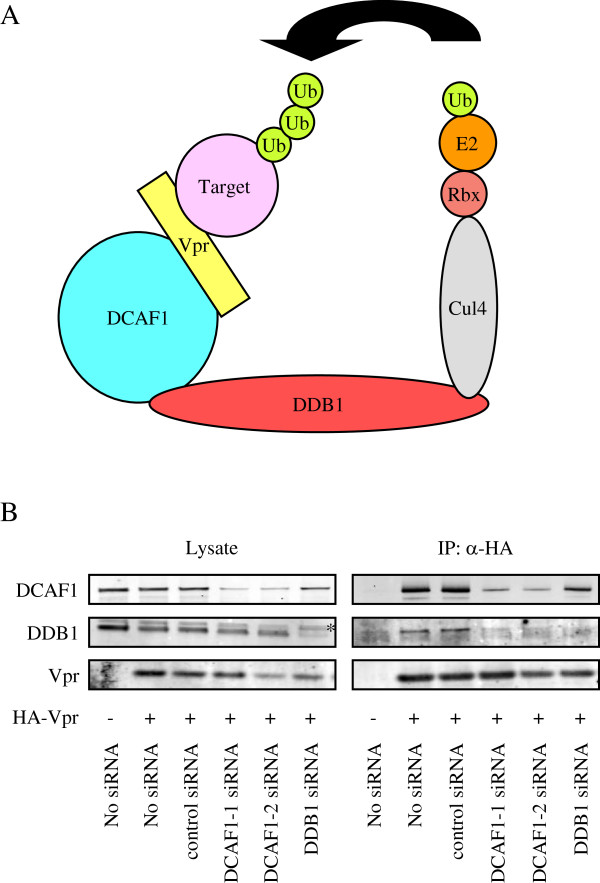
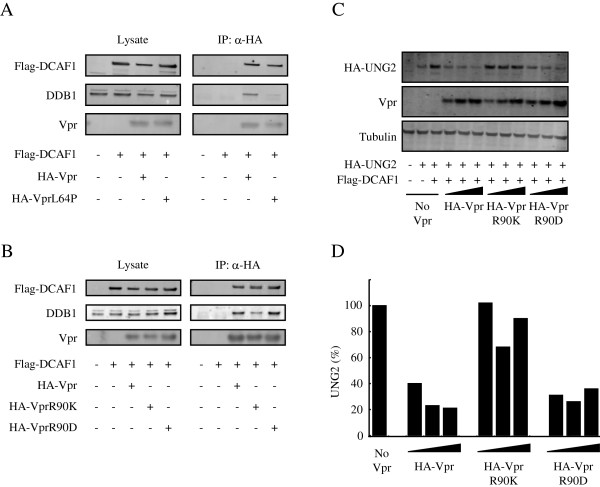
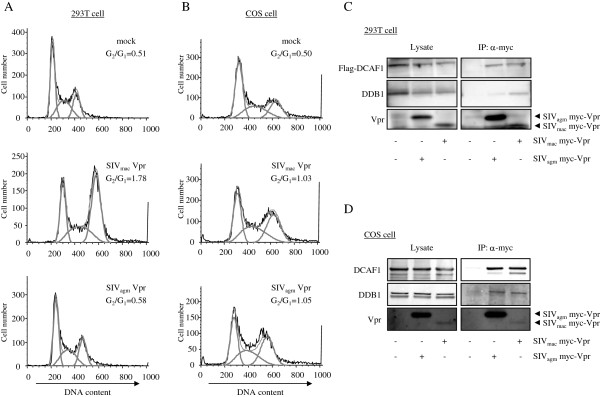
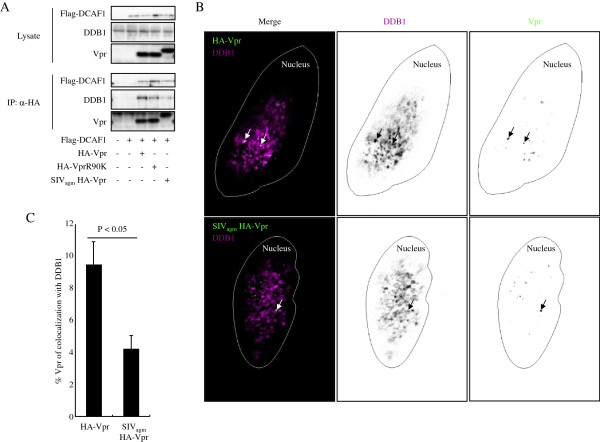
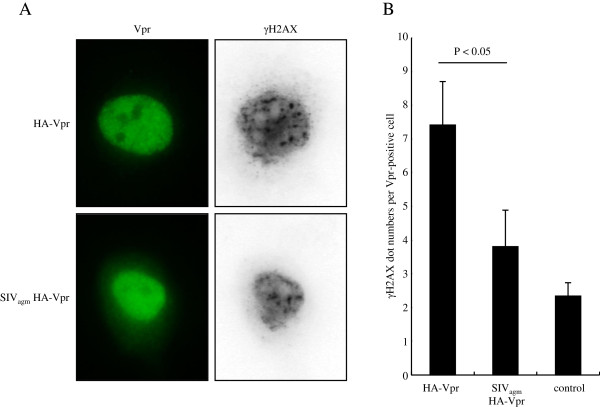
BACKGROUND: HIV-1 Vpr-mediated G2 cell cycle arrest is dependent on the interaction of Vpr with an E3 ubiquitin ligase that contains damage-specific DNA binding protein 1 (DDB1), Cullin 4A (Cul4A), DDB1 and Cul4-associated factor 1 (DCAF1), and Rbx1. Vpr is thought to associate directly with DCAF1 in the E3 ubiquitin ligase complex although the exact interaction pattern of the proteins in the complex is not completely defined. The Vpr of SIVagm induces G2 arrest of cognate African Green Monkey (AGM) cells but not human cells. The molecular mechanism by which SIVagm Vpr exhibits its species-specific function remained unknown. METHODS: Physical interaction of proteins in the E3 ubiquitin ligase complex was assessed by co-immunoprecipitation followed by western blotting. In addition, co-localization of the proteins in cells was investigated by confocal microscopy. The cell cycle was analyzed by propidium iodide staining and flow cytometry. DNA damage response elicited by Vpr was evaluated by detecting phosphorylation of H2AX, a marker for DNA damage response. RESULTS: We show that RNAi knock-down of DCAF1 prevented the co-immunoprecipitation of DDB1 with HIV-1 Vpr while DDB1 knock-down did not influence the binding of Vpr to DCAF1. HIV-1 Vpr mutants with a L64P or a R90K mutation maintained the ability to associate with DCAF1 but did not appear to be in a complex with DDB1. SIVagm Vpr associated with AGM DCAF1 and DDB1 while, in human cells, it binds to human DCAF1 but hardly binds to human DDB1, resulting in the reduced activation of H2AX. CONCLUSIONS: The identification of Vpr mutants which associate with DCAF1 but only poorly with DDB1 suggests that DCAF1 is necessary but the simple binding of Vpr to DCAF1 is not sufficient for the Vpr association with DDB1-containing E3 ligase complex. Vpr may interact both with DCAF1 and DDB1 in the E3 ligase complex. Alternatively, the interaction of Vpr and DCAF1 may induce a conformational change in DCAF1 or Vpr that promotes the interaction with DDB1. The ability of SIVagm Vpr to associate with DDB1, but not DCAF1, can explain the species-specificity of SIVagm Vpr-mediated G2 arrest.
Overview
The claims and statistics of this paper haven’t been checked yet.
Free: it reads the open-access text and checks the first 5 claims that cite a source we can check. Create a free account to check every claim.
Integrity signals
Registry
Cites
Statistics
Figures
Verification
Claims the paper makes
The claims and statistics of this paper haven’t been checked yet.
Free: it reads the open-access text and checks the first 5 claims that cite a source we can check. Create a free account to check every claim.
Claims other papers make about this one
Each is checked against this paper’s own text: does it say what the citing paper says it does?
The cited source says what the claim attributes to it.
In the citing paper
“Through DCAF1, Vpr interacts with damaged DNA binding protein 1 (DDB1) as part of the Cul4A E3 ubiquitin ligase complex where host proteins recruited by Vpr are ubiquitylated and degraded17–22.”
From HIV-1 Vpr combats the PU.1-driven antiviral response in primary human macrophages (2024) · cites this paper as [19]
Self-check
Percentages, sums and reported differences re-computed from the paper’s own numbers.
The self-check needs the paper’s full text.
Citations
Cites
SAMHD1 is the dendritic- and myeloid-cell-specific HIV-1 restriction factor counteracted by Vpx
Laguette, N., Sobhian, B., Casartelli, N., Ringeard, M., Chable-Bessia, C., Ségéral, E., Yatim, A., Emiliani, S., Schwartz, O., & Benkirane, M. (2011) · Nature · doi:10.1038/nature10117 · Cited by 1,511 · cited 1×
“By interacting with the CRL4DCAF1 E3 ligase complex, Vpx targets sterile alpha motif domain- and HD domain-containing protein 1 (SAMHD1) for proteasomal degradation to counteract the SAMHD1mediated lentivirus restriction [36,37].”
BackgroundConnor, R. I., Chen, B. K., Choe, S., & Landau, N. R. (1995) · Virology · doi:10.1006/viro.1995.1016 · Cited by 1,253
Self-citationVpx relieves inhibition of HIV-1 infection of macrophages mediated by the SAMHD1 protein
Hrecka, K., Hao, C., Gierszewska, M., Swanson, S. K., Kesik-Brodacka, M., Srivastava, S., Florens, L., Washburn, M. P., & Skowronski, J. (2011) · Nature · doi:10.1038/nature10195 · Cited by 1,200 · cited 1×
“By interacting with the CRL4DCAF1 E3 ligase complex, Vpx targets sterile alpha motif domain- and HD domain-containing protein 1 (SAMHD1) for proteasomal degradation to counteract the SAMHD1mediated lentivirus restriction [36,37].”
BackgroundHeinzinger, N. K., Bukinsky, M. I., Haggerty, S. A., Ragland, A. M., Kewalramani, V, Lee, M. A., Gendelman, H. E., Ratner, L., Stevenson, M., & Emerman, M. (1994) · Proceedings of the National Academy of Sciences · doi:10.1073/pnas.91.15.7311 · Cited by 854 · cited 1×
“While several functions have been proposed for Vpr such as nuclear import of the preintegration complex, transactivation of viral genes, dysregulation of cellular gene expression, and impairment of mitochondrial functions [7-19], the”
BackgroundMolecular architecture and assembly of the DDB1–CUL4A ubiquitin ligase machinery
Angers, S., Li, T., Yi, X., MacCoss, M. J., Moon, R. T., & Zheng, N. (2006) · Nature · doi:10.1038/nature05175 · Cited by 674 · cited 1×
“Many DCAFs identified so far contain specific WDXR motifs [31-34] and the WDXR motif in DCAF1 has been reported to be necessary for the association both with DDB1 and Vpr [25].”
BackgroundJin, J., Arias, E. E., Chen, J., Harper, J. W., & Walter, J. C. (2006) · Molecular Cell · doi:10.1016/j.molcel.2006.08.010 · Cited by 632 · cited 1×
“Many DCAFs identified so far contain specific WDXR motifs [31-34] and the WDXR motif in DCAF1 has been reported to be necessary for the association both with DDB1 and Vpr [25].”
BackgroundJowett, J. B., Planelles, V, Poon, B., Shah, N. P., Chen, M. L., & Chen, I. S. (1995) · Journal of Virology · doi:10.1128/jvi.69.10.6304-6313.1995 · Cited by 526
Characteristics of γ-H2AX foci at DNA double-strand breaks sites
Pilch, D. R., Sedelnikova, O. A., Redon, C., Celeste, A., Nussenzweig, A., & Bonner, W. M. (2003) · Biochemistry and Cell Biology · doi:10.1139/o03-042 · Cited by 451
Jacotot, E., Ravagnan, L., Loeffler, M., Ferri, K. F., Vieira, H. L. A., Zamzami, N., Costantini, P., Druillennec, S., Hoebeke, J., Briand, J. P., et al. (2000) · The Journal of Experimental Medicine · doi:10.1084/jem.191.1.33 · Cited by 450
Higa, L. A., Wu, M., Ye, T., Kobayashi, R., Sun, H., & Zhang, H. (2006) · Nature Cell Biology · doi:10.1038/ncb1490 · Cited by 413
Rogel, M. E., Wu, L. I., & Emerman, M. (1995) · Journal of Virology · doi:10.1128/jvi.69.2.882-888.1995 · Cited by 406
Human immunodeficiency virus vpr product is a virion-associated regulatory protein
Cohen, E. A., Dehni, G., Sodroski, J. G., & Haseltine, W. A. (1990) · Journal of Virology · doi:10.1128/jvi.64.6.3097-3099.1990 · Cited by 372
Paxton, W., Connor, R. I., & Landau, N. R. (1993) · Journal of Virology · doi:10.1128/jvi.67.12.7229-7237.1993 · Cited by 371
Self-citationDDB1 functions as a linker to recruit receptor WD40 proteins to CUL4–ROC1 ubiquitin ligases
He, Y. J., McCall, C. M., Hu, J., Zeng, Y., & Xiong, Y. (2006) · Genes & Development · doi:10.1101/gad.1483206 · Cited by 330
Jacotot, E., Ferri, K. F., El Hamel, C., Brenner, C., Druillennec, S., Hoebeke, J., Rustin, P., Métivier, D., Lenoir, C., Geuskens, M., et al. (2001) · The Journal of Experimental Medicine · doi:10.1084/jem.193.4.509 · Cited by 273
Le Rouzic, E., Belaïdouni, N., Estrabaud, E., Morel, M., Rain, J.-C., Transy, C., & Margottin-Goguet, F. (2007) · Cell Cycle · doi:10.4161/cc.6.2.3732 · Cited by 267
Lim, E. S., Fregoso, O. I., McCoy, C. O., Matsen, F. A., Malik, H. S., & Emerman, M. (2012) · Cell Host & Microbe · doi:10.1016/j.chom.2012.01.004 · Cited by 261
Identification of HIV-1 vpr product and function.
Cohen, É. A., Ef, T., Jalinoos, Y., Proulx, J., Sodroski, J., & Haseltine, W. A. (1990) · PubMed · Cited by 251
Progression to AIDS in the absence of a gene for vpr or vpx
Gibbs, J. S., Lackner, A. A., Lang, S. M., Simon, M. A., Sehgal, P. K., Daniel, M. D., & Desrosiers, R. C. (1995) · Journal of Virology · doi:10.1128/jvi.69.4.2378-2383.1995 · Cited by 246
Balliet, J. W., Kolson, D. L., Eiger, G., Kim, F. M., McGann, K. A., Srinivasan, A., & Collman, R. (1994) · Virology · doi:10.1006/viro.1994.1225 · Cited by 236 · cited 1×
“Vpr is not required for virus replication in activated CD4 T cells but enhances the ability of the virus to infect macrophages [3,4].”
BackgroundLentiviral Vpr usurps Cul4–DDB1[VprBP] E3 ubiquitin ligase to modulate cell cycle
Hrecka, K., Gierszewska, M., Srivastava, S., Kozaczkiewicz, L., Swanson, S. K., Florens, L., Washburn, M. P., & Skowronski, J. (2007) · Proceedings of the National Academy of Sciences · doi:10.1073/pnas.0702102104 · Cited by 228
Li, T., Robert, E. I., van Breugel, P. C., Strubin, M., & Zheng, N. (2010) · Nature Structural & Molecular Biology · doi:10.1038/nsmb.1719 · Cited by 224
Importance of vpr for infection of rhesus monkeys with simian immunodeficiency virus
Lang, S. M., Weeger, M., Stahl-Hennig, C., Coulibaly, C., Hunsmann, G., Müller, J., Müller-Hermelink, H., Fuchs, D., Wachter, H., & Daniel, M. M. (1993) · Journal of Virology · doi:10.1128/jvi.67.2.902-912.1993 · Cited by 221 · cited 1×
“Vpr-deleted SIVmac replicates in Rhesus macaques but tends to revert back to the wild-type, suggesting an important role of this accessory protein in pathogenesis [5,6].”
BackgroundSchröfelbauer, B., Yu, Q., Zeitlin, S. G., & Landau, N. R. (2005) · Journal of Virology · doi:10.1128/jvi.79.17.10978-10987.2005 · Cited by 218
Self-citationLaguette, N., Brégnard, C., Hue, P., Basbous, J., Yatim, A., Larroque, M., Kirchhoff, F., Constantinou, A., Sobhian, B., & Benkirane, M. (2014) · Cell · doi:10.1016/j.cell.2013.12.011 · Cited by 212
Srivastava, S., Swanson, S. K., Manel, N., Florens, L., Washburn, M. P., & Skowronski, J. (2008) · PLoS Pathogens · doi:10.1371/journal.ppat.1000059 · Cited by 209 · cited 1×
“Mutation of the conserved glutamine Q76 residue in this motif, which is corresponding to the Q65 residue of Vpr, disrupts the binding of Vpx to DCAF1, suggesting that Vpx uses the conserved helix domain for interaction with DCAF1 in a manner similar to Vpr [25,35].”
BackgroundActivation of the ATR-mediated DNA Damage Response by the HIV-1 Viral Protein R
Roshal, M., Kim, B., Zhu, Y., Nghiem, P., & Planelles, V. (2003) · Journal of Biological Chemistry · doi:10.1074/jbc.m303948200 · Cited by 200
Vpr-induced cell cycle arrest is conserved among primate lentiviruses
Planelles, V, Jowett, J. B., Li, Q. X., Xie, Y., Hahn, B., & Chen, I. S. (1996) · Journal of Virology · doi:10.1128/jvi.70.4.2516-2524.1996 · Cited by 194
HIV-1 Vpr-Mediated G2 Arrest Involves the DDB1-CUL4AVPRBP E3 Ubiquitin Ligase
Belzile, J.-P., Duisit, G., Rougeau, N., Mercier, J., Finzi, A., & Cohen, É. A. (2007) · PLoS Pathogens · doi:10.1371/journal.ppat.0030085 · Cited by 189 · cited 5×
“In previous reports, the association of Vpr with DCAF1 and DDB1 was examined by co-immunoprecipitation using several Vpr mutants and the results indicated that the binding to DCAF1 fully coincided with the association with DDB1 for all tested mutants [22-24,27].”
BackgroundInfluentialHIV-1 Vpr function is mediated by interaction with the damage-specific DNA-binding protein DDB1
Schröfelbauer, B., Hakata, Y., & Landau, N. R. (2007) · Proceedings of the National Academy of Sciences · doi:10.1073/pnas.0610167104 · Cited by 187
Self-citationWang, L., Mukherjee, S., Jia, F., Narayan, O., & Zhao, L.-J. (1995) · Journal of Biological Chemistry · doi:10.1074/jbc.270.43.25564 · Cited by 180
Richard, J., Sindhu, S., Pham, T. N. Q., Belzile, J.-P., & Cohen, É. A. (2010) · Blood · doi:10.1182/blood-2009-08-237370 · Cited by 164
HIV-1 Vpr activates the G2 checkpoint through manipulation of the ubiquitin proteasome system
DeHart, J. L., Zimmerman, E. S., Ardon, O., Monteiro-Filho, C. M., Argañaraz, E. R., & Planelles, V. (2007) · Virology Journal · doi:10.1186/1743-422x-4-57 · Cited by 152 · cited 5×
“In previous reports, the association of Vpr with DCAF1 and DDB1 was examined by co-immunoprecipitation using several Vpr mutants and the results indicated that the binding to DCAF1 fully coincided with the association with DDB1 for all tested mutants [22-24,27].”
BackgroundInfluentialWen, X., Duus, K. M., Friedrich, T. D., & de Noronha, C. M. C. (2007) · Journal of Biological Chemistry · doi:10.1074/jbc.m703955200 · Cited by 150
Ward, J., Davis, Z., DeHart, J., Zimmerman, E., Bosque, A., Brunetta, E., Mavilio, D., Planelles, V., & Barker, E. (2009) · PLoS Pathogens · doi:10.1371/journal.ppat.1000613 · Cited by 141
Simian immunodeficiency virus from African green monkeys
Daniel, M. D., Li, Y., Naidu, Y. M., Durda, P. J., Schmidt, D. K., Troup, C. D., Silva, D. P., MacKey, J. J., Kestler, H. W., & Sehgal, P. K. (1988) · Journal of Virology · doi:10.1128/jvi.62.11.4123-4128.1988 · Cited by 138
Biochemical mechanism of HIV-I Vpr function. Specific interaction with a cellular protein.
Zhao, L. J., Mukherjee, S., & Narayan, O. (1994) · Journal of Biological Chemistry · doi:10.1016/s0021-9258(17)40719-8 · Cited by 129 · cited 2×
“DCAF1 is identical to Vpr binding protein (VprBP) that was previously identified [29,30].”
BackgroundDDB1 and Cul4A Are Required for Human Immunodeficiency Virus Type 1 Vpr-Induced G 2 Arrest
Tan, L., Ehrlich, E., & Yu, X.-F. (2007) · Journal of Virology · doi:10.1128/jvi.01380-07 · Cited by 128
Structural basis of lentiviral subversion of a cellular protein degradation pathway
Schwefel, D., Groom, H. C. T., Boucherit, V. C., Christodoulou, E., Walker, P. A., Stoye, J. P., Bishop, K. N., & Taylor, I. A. (2014) · Nature · doi:10.1038/nature12815 · Cited by 127
Majumder, B., Janket, M. L., Schafer, E. A., Schaubert, K., Huang, X.-L., Kan-Mitchell, J., Rinaldo, C. R., & Ayyavoo, V. (2005) · Journal of Virology · doi:10.1128/jvi.79.13.7990-8003.2005 · Cited by 127
Zimmerman, E. S., Chen, J., Andersen, J. L., Ardon, O., DeHart, J. L., Blackett, J., Choudhary, S. K., Camerini, D., Nghiem, P., & Planelles, V. (2004) · Molecular and Cellular Biology · doi:10.1128/mcb.24.21.9286-9294.2004 · Cited by 119
Selig, L., Benichou, S., Rogel, M. E., Wu, L. I., Vodicka, M. A., Sire, J., Benarous, R., & Emerman, M. (1997) · Journal of Virology · doi:10.1128/jvi.71.6.4842-4846.1997 · Cited by 118
Zhang, S., Feng, Y., Narayan, O., & Zhao, L.-J. (2001) · Gene · doi:10.1016/s0378-1119(00)00583-7 · Cited by 106 · cited 2×
“mac, and DCAF1/ VprBP expression system including pFSZ2-VprBP-FH, pcRev, and pcTat plasmids have been previously described [26,29].”
BackgroundHuman Immunodeficiency Virus Type 1 (HIV-1) Vpr Enhances Expression from Unintegrated HIV-1 DNA
Poon, B., & Chen, I. S. Y. (2003) · Journal of Virology · doi:10.1128/jvi.77.7.3962-3972.2003 · Cited by 105
Ahn, J., Vu, T., Novince, Z., Guerrero-Santoro, J., Rapic-Otrin, V., & Gronenborn, A. M. (2010) · Journal of Biological Chemistry · doi:10.1074/jbc.m110.133181 · Cited by 104
Human Immunodeficiency Virus Type 1 Vpr Induces DNA Replication Stress InVitro and In Vivo
Zimmerman, E. S., Sherman, M. P., Blackett, J. L., Neidleman, J. A., Kreis, C., Mundt, P., Williams, S. A., Warmerdam, M., Kahn, J., Hecht, F. M., et al. (2006) · Journal of Virology · doi:10.1128/jvi.01212-06 · Cited by 103
Stivahtis, G. L., Soares, M. A., Vodicka, M. A., Hahn, B. H., & Emerman, M. (1997) · Journal of Virology · doi:10.1128/jvi.71.6.4331-4338.1997 · Cited by 102
HIV-1 Vpr inhibits the maturation and activation of macrophages and dendritic cells in vitro
Muthumani, K., Hwang, D. S., Choo, A. Y., Mayilvahanan, S., Dayes, N. S., Thieu, K. P., & Weiner, D. B. (2004) · International Immunology · doi:10.1093/intimm/dxh190 · Cited by 98
Lai, M., Zimmerman, E. S., Planelles, V., & Chen, J. (2005) · Journal of Virology · doi:10.1128/jvi.79.24.15443-15451.2005 · Cited by 91
HIV-1 Vpr induces TLR4/MyD88-mediated IL-6 production and reactivates viral production from latency
Hoshino, S., Konishi, M., Mori, M., Shimura, M., Nishitani, C., Kuroki, Y., Koyanagi, Y., Kano, S., Itabe, H., & Ishizaka, Y. (2010) · Journal of Leukocyte Biology · doi:10.1189/jlb.0809547 · Cited by 91
HIV-1 Vpr induces ATM-dependent cellular signal with enhanced homologous recombination
Nakai-Murakami, C., Shimura, M., Kinomoto, M., Takizawa, Y., Tokunaga, K., Taguchi, T., Hoshino, S., Miyagawa, K., Sata, T., Kurumizaka, H., et al. (2006) · Oncogene · doi:10.1038/sj.onc.1209831 · Cited by 68
Kitayama, H., Miura, Y., Ando, Y., Hoshino, S., Ishizaka, Y., & Koyanagi, Y. (2007) · Journal of Virology · doi:10.1128/jvi.02094-07 · Cited by 62
Belzile, J.-P., Abrahamyan, L. G., Gérard, F. C. A., Rougeau, N., & Cohen, É. A. (2010) · PLoS Pathogens · doi:10.1371/journal.ppat.1001080 · Cited by 57
Leupin, O., Bontron, S., & Strubin, M. (2003) · Journal of Virology · doi:10.1128/jvi.77.11.6274-6283.2003 · Cited by 52
The HIV1 Protein Vpr Acts to Enhance Constitutive DCAF1-Dependent UNG2 Turnover
Wen, X., Casey Klockow, L., Nekorchuk, M., Sharifi, H. J., & de Noronha, C. M. C. (2012) · PLoS ONE · doi:10.1371/journal.pone.0030939 · Cited by 41
Assembly with the Cul4A-DDB1DCAF1 Ubiquitin Ligase Protects HIV-1 Vpr from Proteasomal Degradation
Rouzic, E. L., Morel, M., Ayinde, D., Belaïdouni, N., Letienne, J., Transy, C., & Margottin-Goguet, F. (2008) · Journal of Biological Chemistry · doi:10.1074/jbc.m710298200 · Cited by 39
Venkatachari, N. J., Majumder, B., & Ayyavoo, V. (2006) · Virology · doi:10.1016/j.virol.2006.08.030 · Cited by 33
Cited by
RNA Viruses: RNA Roles in Pathogenesis, Coreplication and Viral Load
Poltronieri, P., Sun, B., & Mallardo, M. (2015) · Current Genomics · doi:10.2174/1389202916666150707160613 · Cited by 125
Degradation of SAMHD1 by Vpx Is Independent of Uncoating
Jáuregui, P., Logue, E. C., Schultz, M. L., Fung, S., & Landau, N. R. (2015) · Journal of Virology · doi:10.1128/jvi.03575-14 · Cited by 24
Self-citationReconstructing the temporal progression of HIV-1 immune response pathways
Jain, S., Arrais, J. P., Venkatachari, N. J., Ayyavoo, V., & Bar‐Joseph, Z. (2016) · Bioinformatics · doi:10.1093/bioinformatics/btw254 · Cited by 16
CRL4 Ubiquitin Pathway and DNA Damage Response
Zhou, P., & Fan, Y. (2020) · Advances in experimental medicine and biology · doi:10.1007/978-981-15-1025-0_14 · Cited by 15
HIV-1 Vpr combats the PU.1-driven antiviral response in primary human macrophages
Virgilio, M. C., Ramnani, B., Chen, T., Disbennett, W. M., Lubow, J., Welch, J. D., & Collins, K. L. (2024) · Nature Communications · doi:10.1038/s41467-024-49635-w · Cited by 14
Metadata
- Authors
- Hakata, Y., Miyazawa, M., & Landau, N. R.
- Affiliations
- New York University (US)
- Kindai University (JP)
- Corresponding author
- Hakata, Yoshiyuki
- Venue
- Virology Journal
- Published
- 2014-06-09
- Volume
- 11
- Issue
- 1
- Pages
- 108-108
- ISSN
- 1743-422X (ISSN-L)
- PMC
- PMC4058697
- OpenAlex
- W2119654660
- Cited by
- 13
- References
- 57
- Citations by year
- 2026: 1 · 2024: 3 · 2023: 3 · 2022: 2 · 2020: 1 · 2016: 1 · 2015: 2
- FWCI
- 0.45
- Type
- journal article
- Language
- en
- Open access
- gold
- doi.org
- Licence
- cc-by
- Locations
- Virology Journal (publishedVersion, cc-by)
- Europe PMC (PubMed Central) (publishedVersion, cc-by)
- PubMed Central (publishedVersion, cc-by)
- PubMed (publishedVersion)
- Funders
- National Institutes of Health
- Japan Society for the Promotion of Science (23790510, 24390116, 25460573)
- National Institute of Allergy and Infectious Diseases (AI067059, R01AI067059)
- Topics
- Life Sciences › Immunology and Microbiology › Virology › HIV Research and Treatment
- Life Sciences › Biochemistry, Genetics and Molecular Biology › Molecular Biology › Ubiquitin and proteasome pathways
- Health Sciences › Medicine › Oncology › Cancer-related Molecular Pathways
- Keywords
- HIV-1 Vpr, DCAF1, DDB1, CRL4 E3 ubiquitin ligase, G2 cell cycle arrest, SIVagm, protein-protein interaction, DNA damage response, H2AX phosphorylation, RBX1, HIV-1 pathogenesis
- MeSH terms
- Animals, Carrier Proteins, Cell Cycle, Chlorocebus aethiops, DNA-Binding Proteins, Flow Cytometry, HeLa Cells, Humans, Models, Biological, Protein Binding, Blotting, Western, HIV-1, Protein Serine-Threonine Kinases, Microscopy, Confocal, Ubiquitin-Protein Ligases, Immunoprecipitation, Mutant Proteins, vpr Gene Products, Human Immunodeficiency Virus
About these checks
Registry, retraction, Cites and statistics results are computed, not judged, with one exception: a printed reference that no index lists is read once by a model before it counts as a citation error. Claims are extracted by a model and kept only when their quote appears verbatim in the text; each cited source is then checked, with a model’s help, for whether it says what the claim relies on. Those verdicts can be wrong — read the claim’s quote and the cited source before relying on one.
Statistics and arithmetic are recomputed, not judged.
Confidence bands are shown only for fields calibrated on our annotated test set. None is calibrated yet, so no band is shown.
What counts as a claim ›How we measure confidence ›How we check this ›
Are you an author, or do you see a problem with this page? Request a review
Data sources
Bibliographic data: Semantic Scholar, OpenAlex, Crossref.
Contains information from the Semantic Scholar Academic Graph Datasets, made available under the ODC Attribution License (ODC-BY 1.0).
Semantic Scholar’s data is described in: Kinney, R., et al. (2023). The Semantic Scholar Open Data Platform. arXiv:2301.10140.
