

Effect of prolonged exposure to diesel engine exhaust on proinflammatory markers in different regions of the rat brain
Open accessThe DOI matches its Crossref record; 41 of the 42 references it cites were found in a registry or an index, and 1 are not checked yet.
Abstract
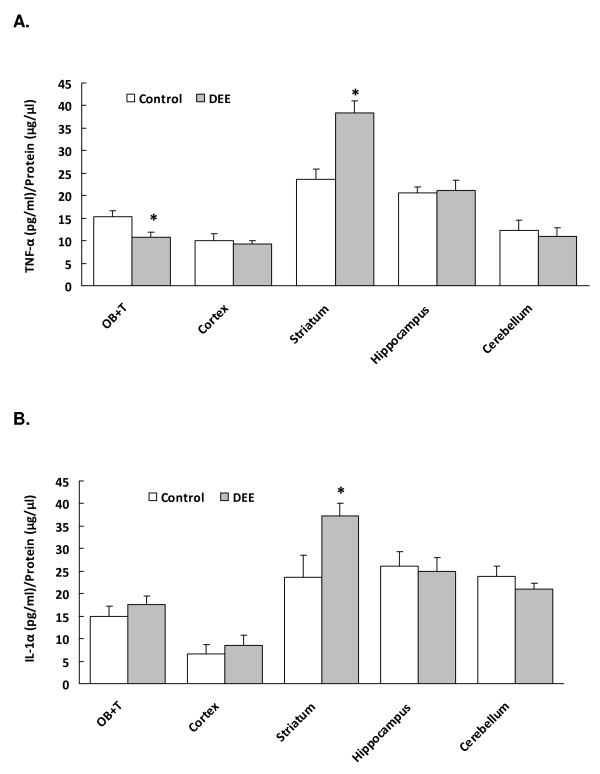
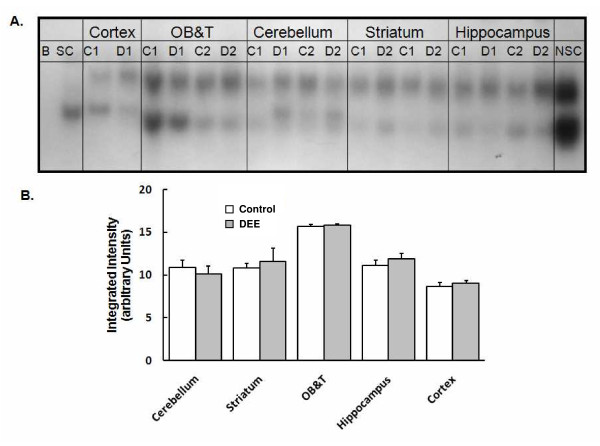
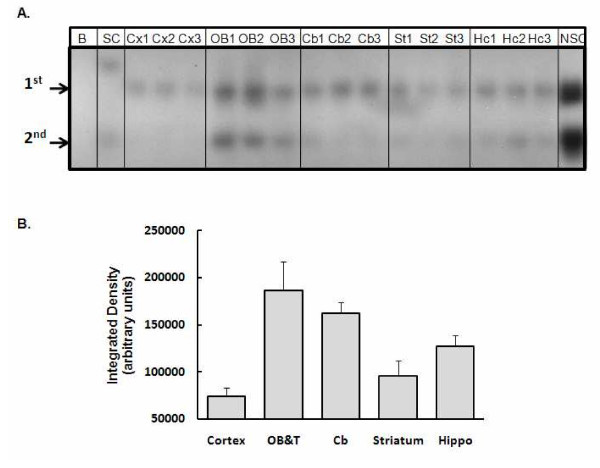
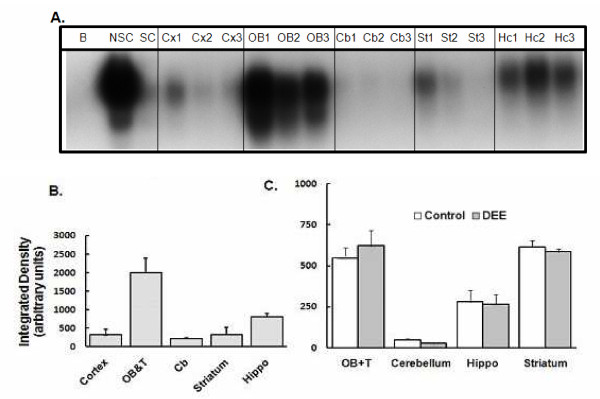
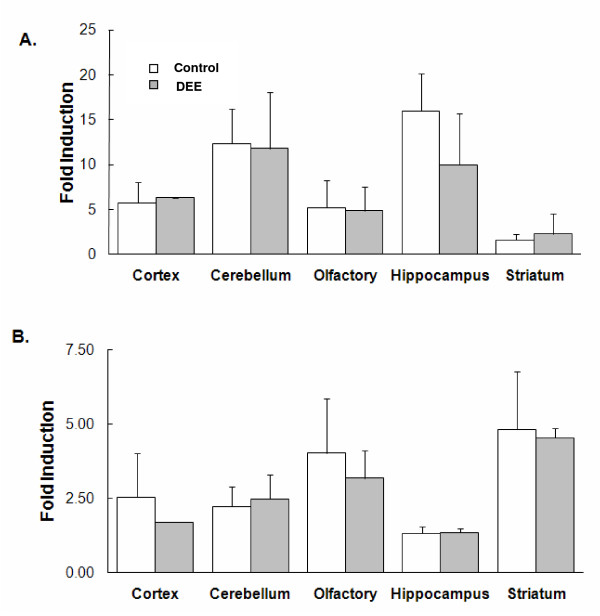
Background: The etiology and progression of neurodegenerative disorders depends on the interactions between a variety of factors including: aging, environmental exposures, and genetic susceptibility factors. Enhancement of proinflammatory events appears to be a common link in different neurological impairments, including Alzheimer's disease, Parkinson's disease, amyotrophic lateral sclerosis, and multiple sclerosis. Studies have shown a link between exposure to particulate matter (PM), present in air pollution, and enhancement of central nervous system proinflammatory markers. In the present study, the association between exposure to air pollution (AP), derived from a specific source (diesel engine), and neuroinflammation was investigated. To elucidate whether specific regions of the brain are more susceptible to exposure to diesel-derived AP, various loci of the brain were separately analyzed. Rats were exposed for 6 hrs a day, 5 days a week, for 4 weeks to diesel engine exhaust (DEE) using a nose-only exposure chamber. The day after the final exposure, the brain was dissected into the following regions: cerebellum, frontal cortex, hippocampus, olfactory bulb and tubercles, and the striatum. Results: Baseline levels of the pro-inflammatory cytokines tumor necrosis factor alpha (TNF-α) and interleukin-1 alpha (IL-1α) were dependent on the region analyzed and increased in the striatum after exposure to DEE. In addition, baseline level of activation of the transcription factors (NF-κB) and (AP-1) was also region dependent but the levels were not significantly altered after exposure to DEE. A similar, though not significant, trend was seen with the mRNA expression levels of TNF-α and TNF Receptor-subtype I (TNF-RI). Conclusions: Our results indicate that different brain regions may be uniquely responsive to changes induced by exposure to DEE. This study once more underscores the role of neuroinflammation in response to ambient air pollution, however, it is valuable to assess if and to what extent the observed changes may impact the normal function and cellular integrity of unique brain regions.
Overview
The claims and statistics of this paper haven’t been checked yet.
Free: it reads the open-access text and checks the first 5 claims that cite a source we can check. Create a free account to check every claim.
Integrity signals
Registry
Cites
Statistics
Figures
Verification
Claims the paper makes
The claims and statistics of this paper haven’t been checked yet.
Free: it reads the open-access text and checks the first 5 claims that cite a source we can check. Create a free account to check every claim.
Claims other papers make about this one
Each is checked against this paper’s own text: does it say what the citing paper says it does?
The source backs part of the claim, not all of it — or backs it for a different population, condition or comparison.
In the citing paper
“Studies in animals have also found that developmental exposure to air pollution is related to functional and structural brain effects [11–15].”
From A Systematic Review and Meta-Analysis of Multiple Airborne Pollutants and Autism Spectrum Disorder (2016) · cites this paper as [13]
Experimental — accuracy not yet measuredIn the citing paper
“Adverse reactions linked to air pollution include neuroinflammation and oxidative stress [187–190]”
From The contribution of environmental exposure to the etiology of autism spectrum disorder (2019) · cites this paper as [188]
Self-check
Percentages, sums and reported differences re-computed from the paper’s own numbers.
The self-check needs the paper’s full text.
Citations
Cites
Analysis of Relative Gene Expression Data Using Real-Time Quantitative PCR and the 2−ΔΔCT Method
Livak, K. J., & Schmittgen, T. D. (2001) · Methods · doi:10.1006/meth.2001.1262 · Cited by 180,860
Lung cancer, cardiopulmonary mortality, and long-term exposure to fine particulate air pollution
Pope III, C. A. (2002) · JAMA · doi:10.1001/jama.287.9.1132 · Cited by 8,447 · cited 1×
“Background There is an association between chronic exposure to combustion-related fine particles (present in air pollution) and an increased risk of mortality attributed to lung cancer and cardiopulmonary causes [1].”
BackgroundBrunekreef, B., & Holgate, S. T. (2002) · The Lancet · doi:10.1016/s0140-6736(02)11274-8 · Cited by 4,638
Brook, R. D., Franklin, B., Cascio, W., Hong, Y., Howard, G., Lipsett, M., Luepker, R., Mittleman, M., Samet, J., Smith, S. C., et al. (2004) · Circulation · doi:10.1161/01.cir.0000128587.30041.c8 · Cited by 2,380
Translocation of Inhaled Ultrafine Manganese Oxide Particles to the CentralNervous System
Elder, A., Gelein, R., Silva, V., Feikert, T., Opanashuk, L., Carter, J., Potter, R., Maynard, A., Ito, Y., Finkelstein, J., et al. (2006) · Environmental Health Perspectives · doi:10.1289/ehp.9030 · Cited by 1,180 · cited 1×
“For inhaled manganese, the olfactory route has been shown to allow access of this metal into the brain [35,36].”
BackgroundMogi, M., Harada, M., Riederer, P., Narabayashi, H., Fujita, K., & Nagatsu, T. (1994) · Neuroscience Letters · doi:10.1016/0304-3940(94)90746-3 · Cited by 986 · cited 1×
“TNF-α levels are increased in the striatum and cerebrospinal fluid of Parkinson's disease patients when compared to controls [25].”
BackgroundCalderón-Garcidueñas, L., Solt, A. C., Henríquez-Roldán, C., Torres-Jardón, R., Nuse, B., Herritt, L., Villarreal-Calderón, R., Osnaya, N., Stone, I., García, R., et al. (2008) · Toxicologic Pathology · doi:10.1177/0192623307313011 · Cited by 937 · cited 1×
“In a recent study, the same investigators have validated their earlier findings by showing enhanced neuroinflammation, altered bloodbrain barrier characteristics, and particulate deposition in the brain of children and young adults living in cities with high air pollution [11].”
BackgroundCombustion-derived nanoparticles: A review of their toxicology following inhalation exposure
Donaldson, K., Tran, L., Jimenez, L. A., Duffin, R., Newby, D. E., Mills, N., MacNee, W., & Stone, V. (2005) · Particle and Fibre Toxicology · doi:10.1186/1743-8977-2-10 · Cited by 926
Adverse cardiovascular effects of air pollution
Mills, N. L., Donaldson, K., Hadoke, P. W., Boon, N. A., MacNee, W., Cassee, F. R., Sandström, T., Blomberg, A., & Newby, D. E. (2009) · Nature Clinical Practice Cardiovascular Medicine · doi:10.1038/ncpcardio1399 · Cited by 781 · cited 1×
“While the connection between exposure to particulate matter and harmful cardiopulmonary effects has been reasonably well established [18,19], there is growing evidence that the CNS may be another target [5].”
BackgroundSelf-citationPulmonary and systemic distribution of inhaled ultrafine silver particles in rats.
Takenaka, S., Karg, E., Roth, C., Schulz, H., Ziesenis, A., Heinzmann, U., Schramel, P., & Heyder, J. (2001) · Environmental Health Perspectives · doi:10.1289/ehp.01109s4547 · Cited by 730 · cited 1×
“The same scenario was observed in rats exposed to inhaled nano-sized silver particles [38].”
BackgroundBrain Inflammation and Alzheimer's-Like Pathology in Individuals Exposed to Severe Air Pollution
Calderón-Garcidueñas, L., Reed, W., Maronpot, R. R., Henriquez-Roldán, C., Delgado-Chavez, R., Calderón-Garcidueñas, A., Dragustinovis, I., Franco-Lira, M., Aragón-Flores, M., Solt, A. C., et al. (2004) · Toxicologic Pathology · doi:10.1080/01926230490520232 · Cited by 583 · cited 1×
“In a later study, using human post-mortem tissue, it was discovered that markers of both neuroinflammation and Alzheimer's disease (AD) pathology are increased in residents living in high (compared to low) pollution cities [10].”
BackgroundAir Pollution and Brain Damage
Calderón-Garcidueñas, L., Azzarelli, B., Acuna, H., Garcia, R., Gambling, T. M., Osnaya, N., Monroy, S., Del Rosario Tizapantzi, M., Carson, J. L., Villarreal-Calderon, A., et al. (2002) · Toxicologic Pathology · doi:10.1080/01926230252929954 · Cited by 507 · cited 1×
“One of the first studies which pointed towards the potential adverse central nervous system (CNS) effects of air pollution showed that in dogs living in polluted areas of Mexico City, there is an increase in cerebral inflammation [9].”
BackgroundParticulate Matter in Polluted Air May Increase Biomarkers of Inflammation in Mouse Brain
Campbell, A., Oldham, M., Becaria, A., Bondy, S. C., Meacher, D., Sioutas, C., Misra, C., Mendez, L. B., & Kleinman, M. (2005) · NeuroToxicology · doi:10.1016/j.neuro.2004.08.003 · Cited by 421
Self-citationLong-term exposure to traffic-related particulate matter impairs cognitive function in the elderly
Ranft, U., Schikowski, T., Sugiri, D., Krutmann, J., & Krämer, U. (2009) · Environmental Research · doi:10.1016/j.envres.2009.08.003 · Cited by 410 · cited 1×
“Children may not be the only sensitive subpopulation since mild cognitive impairment, associated with long-term exposure to traffic-related particulate air pollution, was also identified in elderly women [ 7 ].”
BackgroundAssociation of Black Carbon with Cognition among Children in a Prospective Birth Cohort Study
Suglia, S. F., Gryparis, A., Wright, R. O., Schwartz, J., & Wright, R. J. (2007) · American Journal of Epidemiology · doi:10.1093/aje/kwm308 · Cited by 404 · cited 1×
“sure to black carbon was associated with a decline in cognitive function [6].”
BackgroundSriram, K., Matheson, J. M., Benkovic, S. A., Miller, D. B., Luster, M. I., & O'Callaghan, J. P. (2002) · The FASEB Journal · doi:10.1096/fj.02-0216fje · Cited by 362 · cited 1×
“As an example, in TNF receptor deficient mice, there is less striatal dopaminergic cell death induced by 1-methyl-4-phenyl1,2,3,6-tetrahydropyridine (MPTP), a selective toxin for dopaminergic cells [24].”
BackgroundDo Inhaled Carbon Nanoparticles Translocate Directly into the Circulation in Humans?
Mills, N. L., Amin, N., Robinson, S. D., Anand, A., Davies, J., Patel, D., de la Fuente, J. M., Cassee, F. R., Boon, N. A., MacNee, W., et al. (2006) · American Journal of Respiratory and Critical Care Medicine · doi:10.1164/rccm.200506-865oc · Cited by 323 · cited 1×
“In humans, inhaled radiolabeled particles in the ultrafine size range entered the systemic circulation and were detected in extrapulmonary organs [37].”
BackgroundSelf-citationBauer, B., Hartz, A. M. S., & Miller, D. S. (2007) · Molecular Pharmacology · doi:10.1124/mol.106.029512 · Cited by 275 · cited 1×
“Exposure to TNF-α has been shown to increase the levels of the transporter protein P-glycoprotein which is thought to tighten the BBB by increasing the efflux of compounds out of the CNS [39].”
BackgroundMetal-rich Ambient Particles (Particulate Matter 2.5 ) Cause Airway Inflammation in Healthy Subjects
Schaumann, F., Borm, P. J. A., Herbrich, A., Knoch, J., Pitz, M., Schins, R. P. F., Luettig, B., Hohlfeld, J. M., Heinrich, J., & Krug, N. (2004) · American Journal of Respiratory and Critical Care Medicine · doi:10.1164/rccm.200403-423oc · Cited by 275 · cited 1×
“Exposure to particles derived from ambient air pollution increases inflammatory processes in the lungs [32,33] and intratracheal instillation of washed diesel exhaust particles can aggravate lung and systemic inflammation in mice [34].”
BackgroundSelf-citationHartz, A. M. S., Bauer, B., Block, M. L., Hong, J.-S., & Miller, D. S. (2008) · The FASEB Journal · doi:10.1096/fj.08-106997 · Cited by 268 · cited 1×
“This effect was dependent on TNF-α released after exposure to DEP [40].”
BackgroundParticulate matter, oxidative stress and neurotoxicity
MohanKumar, S. M. J., Campbell, A., Block, M., & Veronesi, B. (2008) · NeuroToxicology · doi:10.1016/j.neuro.2007.12.004 · Cited by 233 · cited 2×
“The brain may be another potential target [4, 5 ].”
BackgroundSelf-citationSriram, K., Matheson, J. M., Benkovic, S. A., Miller, D. B., Luster, M. I., & O'Callaghan, J. P. (2006) · The FASEB Journal · doi:10.1096/fj.05-5106com · Cited by 222 · cited 1×
“This dichotomy in TNF-α-related pathways may be attributed to the intensity [22] or CNS location [23] of neuroinflammation.”
Brenneman, K. A., Wong, B. A., Buccellato, M. A., Costa, E. R., Gross, E. A., & Dorman, D. C. (2000) · Toxicology and Applied Pharmacology · doi:10.1006/taap.2000.9073 · Cited by 194 · cited 1×
“For inhaled manganese, the olfactory route has been shown to allow access of this metal into the brain [ 35 ,36].”
MethodKleinman, M. T., Araujo, J. A., Nel, A., Sioutas, C., Campbell, A., Cong, P. Q., Li, H., & Bondy, S. C. (2008) · Toxicology Letters · doi:10.1016/j.toxlet.2008.03.001 · Cited by 177 · cited 2×
“Exposure to ambient particles, present in urban air pollution, enhances neuroinflammatory markers in the brain of mouse models [4,12-14].”
BackgroundSelf-citationExposure to diesel exhaust induces changes in EEG in human volunteers
Crüts, B., van Etten, L., Törnqvist, H., Blomberg, A., Sandström, T., Mills, N. L., & Borm, P. J. (2008) · Particle and Fibre Toxicology · doi:10.1186/1743-8977-5-4 · Cited by 167
Lai, A. Y., & Todd, K. G. (2008) · Glia · doi:10.1002/glia.20610 · Cited by 144 · cited 1×
“This dichotomy in TNF-α-related pathways may be attributed to the intensity [22] or CNS location [23] of neuroinflammation.”
BackgroundInflammatory Cytokine Gene Polymorphisms and Increased Risk of Parkinson Disease
Wahner, A. D., Sinsheimer, J. S., Bronstein, J. M., & Ritz, B. (2007) · Archives of Neurology · doi:10.1001/archneur.64.6.836 · Cited by 141 · cited 1×
“Furthermore, several studies show that certain TNF-α polymorphisms in genotype or promoter sequences increase the risk for Parkinson's disease [ 26-28 ].”
BackgroundPulmonary and Systemic Distribution of Inhaled Ultrafine Silver Particles in Rats
Takenaka, S., Karg, E. W., Roth, C., et al. (2001) · Environmental Health Perspectives · doi:10.2307/3454667 · Cited by 140
Veronesi, B., Makwana, O., Pooler, M., & Chen, L. C. (2005) · Inhalation Toxicology · doi:10.1080/08958370590912888 · Cited by 132
Chapter 24 NF‐KappaB Dimers in the Regulation of Neuronal Survival
Sarnico, I., Lanzillotta, A., Benarese, M., Alghisi, M., Baiguera, C., Battistin, L., Spano, P., & Pizzi, M. (2009) · International review of neurobiology · doi:10.1016/s0074-7742(09)85024-1 · Cited by 105
Taoufik, E., Petit, E., Divoux, D., Tseveleki, V., Mengozzi, M., Roberts, M. L., Valable, S., Ghezzi, P., Quackenbush, J., Brines, M., et al. (2008) · Proceedings of the National Academy of Sciences · doi:10.1073/pnas.0801447105 · Cited by 103 · cited 1×
“For instance, TNF-α and TNF-RI have been shown to be involved in both neuroprotection [20] as well as neurodegeneration [21].”
BackgroundTran, T. A., McCoy, M. K., Sporn, M. B., & Tansey, M. G. (2008) · Journal of Neuroinflammation · doi:10.1186/1742-2094-5-14 · Cited by 96 · cited 1×
“For instance, TNF-α and TNF-RI have been shown to be involved in both neuroprotection [20] as well as neurodegeneration [21].”
BackgroundTumor necrosis factor gene polymorphisms in patients with sporadic Parkinson's disease
Nishimura, M., Mizuta, I., Mizuta, E., Yamasaki, S., Ohta, M., Kaji, R., & Kuno, S. (2001) · Neuroscience Letters · doi:10.1016/s0304-3940(01)02111-5 · Cited by 95 · cited 1×
“Furthermore, several studies show that certain TNF-α polymorphisms in genotype or promoter sequences increase the risk for Parkinson's disease [26-28].”
BackgroundCampbell, A., Araujo, J. A., Li, H., Sioutas, C., & Kleinman, M. (2009) · Journal of Nanoscience and Nanotechnology · doi:10.1166/jnn.2009.gr07 · Cited by 88 · cited 1×
“Exposure to ambient particles, present in urban air pollution, enhances neuroinflammatory markers in the brain of mouse models [4,12-14].”
BackgroundSelf-citationLahiri, D. K., & Ge, Y. (2000) · Brain Research Protocols · doi:10.1016/s1385-299x(00)00021-0 · Cited by 84 · cited 1×
“Sample preparation for ELISA and gel shift mobility assays Cytoplasmic and nuclear protein fractions were prepared using the method of Lahiri and Ge [16].”
MethodDick, C. A. J., Singh, P., Daniels, M., Evansky, P., Becker, S., & Gilmour, M. I. (2003) · Journal of Toxicology and Environmental Health, Part A · doi:10.1080/716100636 · Cited by 84 · cited 1×
“Exposure to particles derived from ambient air pollution increases inflammatory processes in the lungs [ 32 ,33] and intratracheal instillation of washed diesel exhaust particles can aggravate lung and systemic inflammation in mice [34].”
BackgroundInoue, K.-I., Takano, H., Sakurai, M., Oda, T., Tamura, H., Yanagisawa, R., Shimada, A., & Yoshikawa, T. (2006) · Experimental Biology and Medicine · doi:10.1177/153537020623101007 · Cited by 59 · cited 1×
“Exposure to particles derived from ambient air pollution increases inflammatory processes in the lungs [32,33] and intratracheal instillation of washed diesel exhaust particles can aggravate lung and systemic inflammation in mice [ 34 ].”
BackgroundTumor necrosis factor‐α promoter polymorphism is associated with the risk of Parkinson's disease
Wu, Y., Feng, I., Lyu, R., Chang, K., Lin, Y., Chan, H., Hu, F., Lee‐Chen, G., & Chen, C. (2007) · American Journal of Medical Genetics Part B: Neuropsychiatric Genetics · doi:10.1002/ajmg.b.30435 · Cited by 49
Kurushima, H., Ohno, M., Miura, T., Nakamura, T. Y., Horie, H., Kadoya, T., Ooboshi, H., Kitazono, T., Ibayashi, S., Iida, M., et al. (2005) · Cell Death and Differentiation · doi:10.1038/sj.cdd.4401648 · Cited by 42
Meeuwsen, S., Bsibsi, M., Persoon-Deen, C., Ravid, R., & van Noort, J. M. (2005) · NeuroImmunoModulation · doi:10.1159/000085655 · Cited by 27 · cited 1×
“similar basal gene expression profiles (for many cytokines, chemokines, and growth factors) treatment with TNF-α leads to a completely different response depending on the individual source of the microglia [41].”
BackgroundSignals Regulating Neurogenesis in the Adult Olfactory Bulb
Kuhn, H. G., Cooper-Kuhn, C., Eriksson, P., & Nilsson, M. (2005) · Chemical Senses · doi:10.1093/chemse/bjh138 · Cited by 17 · cited 1×
“For example, the olfactory bulb is a region where progenitor cells can give rise to new neurons [29] and this may underlie the high basal level of AP-1 and NF-κB activity detected.”
BackgroundToxicity of inhaled traffic related particulate matter
Gerlofs-Nijland, M. E., Campbell, A., Miller, M. R., Newby, D. E., & Cassee, F. R. (2009) · Journal of Physics Conference Series · doi:10.1088/1742-6596/151/1/012049 · Cited by 8 · cited 1×
“These cardiopulmonary effects were studied in the presence of a mild inflammation status induced by ozone [15].”
BackgroundSelf-citation
Cited by
The Adverse Effects of Air Pollution on the Nervous System
Genc, S., Zadeoglulari, Z., Fuss, S. H., & Genc, K. (2012) · Journal of Toxicology · doi:10.1155/2012/782462 · Cited by 717
“Region specific inflammation and alterations in gene expression were also seen after DEPs exposure, suggesting a selective vulnerability of specific neuronal subpopulations similarly to the selective loss of specific neurons that is typical for certain neurodegenerative diseases [69, 83].”
BackgroundHealth effects of particulate air pollution: A review of epidemiological evidence
Rückerl, R., Schneider, A., Breitner, S., Cyrys, J., & Peters, A. (2011) · Inhalation Toxicology · doi:10.3109/08958378.2011.593587 · Cited by 653
“Prolonged exposure to diesel exhaust was also shown to induce a neuroinflammatory response in the rat brain (Gerlofs-Nijland et al., 2010).”
BackgroundSunyer, J., Esnaola, M., Alvarez-Pedrerol, M., Forns, J., Rivas, I., López-Vicente, M., Suades-González, E., Foraster, M., Garcia-Esteban, R., Basagaña, X., et al. (2015) · PLOS Medicine · doi:10.1371/journal.pmed.1001792 · Cited by 590
“In animals, inhalation of diesel exhaust and ultrafine particles results in elevated cytokine expression and oxidative stress in the brain [2,3] and altered animal behavior [4,5].”
BackgroundThe outdoor air pollution and brain health workshop
Block, M. L., Elder, A., Auten, R. L., Bilbo, S. D., Chen, H., Chen, J.-C., Cory-Slechta, D. A., Costa, D., Diaz-Sanchez, D., Dorman, D. C., et al. (2012) · NeuroToxicology · doi:10.1016/j.neuro.2012.08.014 · Cited by 539
The contribution of environmental exposure to the etiology of autism spectrum disorder
Bölte, S., Girdler, S., & Marschik, P. B. (2019) · Cellular and Molecular Life Sciences · doi:10.1007/s00018-018-2988-4 · Cited by 509
Metadata
- Authors
- Gerlofs-Nijland, M. E., van Berlo, D., Cassee, F. R., Schins, R. P., Wang, K., & Campbell, A.
- Affiliations
- National Institute for Public Health and the Environment (NL)
- Heinrich Heine University Düsseldorf (DE)
- Western University of Health Sciences (US)
- Corresponding author
- Campbell, Arezoo
- Venue
- Particle and Fibre Toxicology
- Published
- 2010-05-17
- Volume
- 7
- Issue
- 1
- Pages
- 12-12
- ISSN
- 1743-8977 (ISSN-L)
- PMC
- PMC2883965
- OpenAlex
- W2141353565
- Cited by
- 170
- References
- 41
- Citations by year
- 2025: 2 · 2024: 10 · 2023: 8 · 2022: 15 · 2021: 5 · 2020: 16 · 2019: 10 · 2018: 17 · 2017: 18 · 2016: 17 · 2015: 11 · 2014: 14 · 2013: 8 · 2012: 8
- FWCI
- 6.60
- Type
- journal article
- Language
- en
- Open access
- gold
- doi.org
- Licence
- cc-by
- Locations
- Particle and Fibre Toxicology (publishedVersion, cc-by)
- PubMed Central (publishedVersion, cc-by)
- PubMed (publishedVersion)
- DOAJ (DOAJ: Directory of Open Access Journals) (submittedVersion, cc-by-sa)
- Rivm Repository (Netherlands National Institute for Public Health and the Environment) (submittedVersion)
- Funders
- Western University of Health Sciences
- Rijksinstituut voor Volksgezondheid en Milieu
- Topics
- Physical Sciences › Environmental Science › Health, Toxicology and Mutagenesis › Air Quality and Health Impacts
- Life Sciences › Neuroscience › Neurology › Neuroinflammation and Neurodegeneration Mechanisms
- Life Sciences › Immunology and Microbiology › Immunology › Immunotoxicology and immune responses
- Keywords
- diesel exhaust, air pollution, neuroinflammation, inflammatory cytokines, TNF-α, interleukin-1 alpha, NF-κB, AP-1, TNF receptor 1, striatum, cerebellum, hippocampus, olfactory bulb, frontal cortex, particulate matter
- MeSH terms
- Air Pollutants, Animals, Vehicle Emissions, Brain, Male, Rats, Inbred F344, RNA, Messenger, Tumor Necrosis Factor-alpha, Biomarkers, Gene Expression, Inhalation Exposure, Rats, Interleukin-1alpha
About these checks
Registry, retraction, Cites and statistics results are computed, not judged, with one exception: a printed reference that no index lists is read once by a model before it counts as a citation error. Claims are extracted by a model and kept only when their quote appears verbatim in the text; each cited source is then checked, with a model’s help, for whether it says what the claim relies on. Those verdicts can be wrong — read the claim’s quote and the cited source before relying on one.
Statistics and arithmetic are recomputed, not judged.
Confidence bands are shown only for fields calibrated on our annotated test set. None is calibrated yet, so no band is shown.
What counts as a claim ›How we measure confidence ›How we check this ›
Are you an author, or do you see a problem with this page? Request a review
Data sources
Bibliographic data: Semantic Scholar, OpenAlex, Crossref.
Contains information from the Semantic Scholar Academic Graph Datasets, made available under the ODC Attribution License (ODC-BY 1.0).
Semantic Scholar’s data is described in: Kinney, R., et al. (2023). The Semantic Scholar Open Data Platform. arXiv:2301.10140.
