

Preclinical Toxicity Evaluation of AAV for Pain: Evidence from Human AAV Studies and from the Pharmacology of Analgesic Drugs
Open accessThe DOI matches its Crossref record; 109 of the 109 references it cites were found in a registry or an index.
Abstract
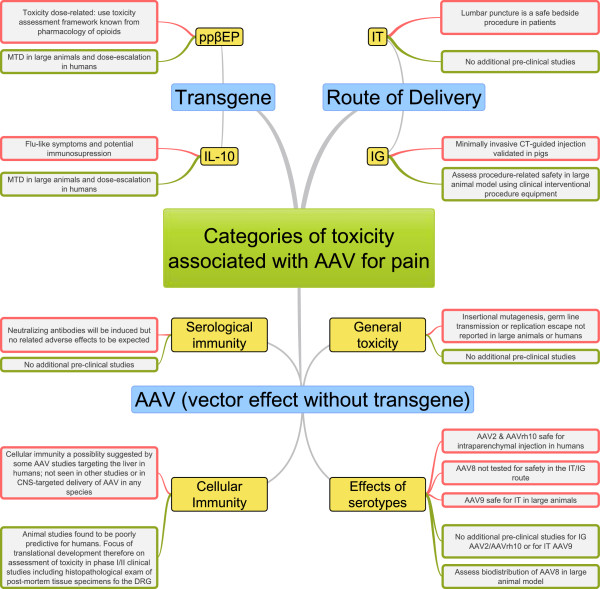
Gene therapy with adeno-associated virus (AAV) has advanced in the last few years from promising results in animal models to >100 clinical trials (reported or under way). While vector availability was a substantial hurdle a decade ago, innovative new production methods now routinely match the scale of AAV doses required for clinical testing. These advances may become relevant to translational research in the chronic pain field. AAV for pain targeting the peripheral nervous system was proven to be efficacious in rodent models several years ago, but has not yet been tested in humans. The present review addresses the steps needed for translation of AAV for pain from the bench to the bedside focusing on pre-clinical toxicology. We break the potential toxicities into three conceptual categories of risk: First, risks related to the delivery procedure used to administer the vector. Second, risks related to AAV biology, i.e., effects of the vector itself that may occur independently of the transgene. Third, risks related to the effects of the therapeutic transgene. To identify potential toxicities, we consulted the existing evidence from AAV gene therapy for other nervous system disorders (animal toxicology and human studies) and from the clinical pharmacology of conventional analgesic drugs. Thereby, we identified required preclinical studies and charted a hypothetical path towards a future phase I/II clinical trial in the oncology-palliative care setting.
Overview
The claims and statistics of this paper haven’t been checked yet.
Free: it reads the open-access text and checks the first 5 claims that cite a source we can check. Create a free account to check every claim.
Integrity signals
Registry
Cites
Statistics
Figures
Verification
Claims the paper makes
The claims and statistics of this paper haven’t been checked yet.
Free: it reads the open-access text and checks the first 5 claims that cite a source we can check. Create a free account to check every claim.
Claims other papers make about this one
Each is checked against this paper’s own text: does it say what the citing paper says it does?
The cited source doesn’t support the claim as written.
In the citing paper
“Use of intrathecal delivery for gene therapy vectors has been limited to studies involving spinal cord and peripheral nerve disease.”
From AAVrh.10-Mediated APOE2 Central Nervous System Gene Therapy for APOE4-Associated Alzheimer's Disease (2018) · cites this paper as [90]
Checked by a reasoning model — may be wrong.
Experimental — accuracy not yet measuredThe source backs part of the claim, not all of it — or backs it for a different population, condition or comparison.
In the citing paper
“The vectors stay predominantly in the lower spine in intrathecal delivery administrations.”
From AAVrh.10-Mediated APOE2 Central Nervous System Gene Therapy for APOE4-Associated Alzheimer's Disease (2018) · cites this paper as [90]
Experimental — accuracy not yet measuredThe cited source says what the claim attributes to it.
In the citing paper
“rAAV injections have been very safe with a low number of serious adverse events (SAE) in clinical trials [26].”
From Recombinant Adeno-Associated Viral Vectors (rAAV)-Vector Elements in Ocular Gene Therapy Clinical Trials and Transgene Expression and Bioactivity Assays (2020) · cites this paper as [26]
Self-check
Percentages, sums and reported differences re-computed from the paper’s own numbers.
The self-check needs the paper’s full text.
Citations
Cites
RELIEVING PAIN IN AMERICA: A BLUEPRINT FOR TRANSFORMING PREVENTION, CARE, EDUCATION, AND RESEARCH
Simon, L. S. (2012) · Journal of Pain & Palliative Care Pharmacotherapy · doi:10.3109/15360288.2012.678473 · Cited by 2,183
Manno, C. S., Pierce, G. F., Arruda, V. R., Glader, B., Ragni, M., Rasko, J. J. E., Ozelo, M. C., Hoots, K., Blatt, P., Konkle, B., et al. (2006) · Nature Medicine · doi:10.1038/nm1358 · Cited by 2,163 · cited 2×
“While AAV particles were detected in the semen of subjects receiving AAV2 into the hepatic artery [26], this was temporary.”
BackgroundPrevalence of pain in patients with cancer: a systematic review of the past 40 years
van den Beuken-van Everdingen, M. H. J., de Rijke, J. M., Kessels, A. G., Schouten, H. C., van Kleef, M., & Patijn, J. (2007) · Annals of Oncology · doi:10.1093/annonc/mdm056 · Cited by 1,923
Adenovirus-Associated Virus Vector–Mediated Gene Transfer in Hemophilia B
Nathwani, A. C., Tuddenham, E. G. D., Rangarajan, S., Rosales, C., McIntosh, J., Linch, D. C., Chowdary, P., Riddell, A., Pie, A. J., Harrington, C., et al. (2011) · New England Journal of Medicine · doi:10.1056/nejmoa1108046 · Cited by 1,864
Gene therapy clinical trials worldwide to 2012 – an update
Ginn, S. L., Alexander, I. E., Edelstein, M. L., Abedi, M. R., & Wixon, J. (2013) · The Journal of Gene Medicine · doi:10.1002/jgm.2698 · Cited by 1,159 · cited 1×
“However, AAV is arguably the most advanced and widely studied vector in terms of clinical trials seeking long-term gene expression in non-malignant tissues [5].”
BackgroundKaplitt, M. G., Feigin, A., Tang, C., Fitzsimons, H. L., Mattis, P., Lawlor, P. A., Bland, R. J., Young, D., Strybing, K., Eidelberg, D., et al. (2007) · The Lancet · doi:10.1016/s0140-6736(07)60982-9 · Cited by 1,067 · cited 4×
“AAV2 to the brain has been demonstrated in the setting of Canavan disease [64], late infantile neuronal ceroid lipofuscinosis, LINCL [40], Parkinson disease [37,41, 65-67], and Alzheimer disease [54].”
BackgroundInfluentialImmune responses to AAV vectors: overcoming barriers to successful gene therapy
Mingozzi, F., & High, K. A. (2013) · Blood · doi:10.1182/blood-2013-01-306647 · Cited by 955
Long-term opioid management for chronic noncancer pain
Noble, M., Treadwell, J. R., Tregear, S. J., Coates, V. H., Wiffen, P. J., Akafomo, C., Schoelles, K. M., & Chou, R. (2010) · Cochrane Database of Systematic Reviews · doi:10.1002/14651858.cd006605.pub2 · Cited by 735 · cited 1×
“The most common adverse effects of opioids in the CNS are nausea and vomiting, mental status changes, pruritus, urinary retention, and respiratory depression [84-87], while the peripheral adverse effects include constipation, cardiovascular adverse events, derangement of hypothalamopituitary axis, and immune-modulatio…”
BackgroundMarks, W. J., Bartus, R. T., Siffert, J., Davis, C. S., Lozano, A., Boulis, N., Vitek, J., Stacy, M., Turner, D., Verhagen, L., et al. (2010) · The Lancet Neurology · doi:10.1016/s1474-4422(10)70254-4 · Cited by 684
AAV vector integration sites in mouse hepatocellular carcinoma
Donsante, A., Miller, D. G., Li, Y., Vogler, C., Brunt, E. M., Russell, D. W., & Sands, M. S. (2007) · Science · doi:10.1126/science.1142658 · Cited by 662 · cited 1×
“1 – 1% of transduction events [23,24] resulting in the development of hepatocellular carcinoma [25].”
BackgroundMarks, W. J., Ostrem, J. L., Verhagen, L., Starr, P. A., Larson, P. S., Bakay, R. A., Taylor, R., Cahn-Weiner, D. A., Stoessl, A. J., Olanow, C. W., et al. (2008) · The Lancet Neurology · doi:10.1016/s1474-4422(08)70065-6 · Cited by 596 · cited 1×
“AAV2 to the brain has been demonstrated in the setting of Canavan disease [64], late infantile neuronal ceroid lipofuscinosis, LINCL [40], Parkinson disease [37,41, 65-67], and Alzheimer disease [54].”
BackgroundThe effects of opioids and opioid analogs on animal and human endocrine systems
Vuong, C., Van Uum, S. H. M., O'Dell, L. E., Lutfy, K., & Friedman, T. C. (2010) · Endocrine Reviews · doi:10.1210/er.2009-0009 · Cited by 564 · cited 1×
“The most common adverse effects of opioids in the CNS are nausea and vomiting, mental status changes, pruritus, urinary retention, and respiratory depression [84-87], while the peripheral adverse effects include constipation, cardiovascular adverse events, derangement of hypothalamopituitary axis, and immune-modulatio…”
BackgroundSide effects of intrathecal and epidural opioids
Chaney, M. A. (1995) · Canadian Journal of Anaesthesia · doi:10.1007/bf03011037 · Cited by 562 · cited 1×
“The most common adverse effects of opioids in the CNS are nausea and vomiting, mental status changes, pruritus, urinary retention, and respiratory depression [84-87], while the peripheral adverse effects include constipation, cardiovascular adverse events, derangement of hypothalamopituitary axis, and immune-modulatio…”
BackgroundA method to perform direct transcutaneous intrathecal injection in rats
Mestre, C., Pélissier, T., Fialip, J., Wilcox, G., & Eschalier, A. (1994) · Journal of Pharmacological and Toxicological Methods · doi:10.1016/1056-8719(94)90087-6 · Cited by 518 · cited 1×
“The IT route delivers the vector to the cerebrospinal fluid (CSF) and has been achieved in rats by inserting an IT catheter through the cisterna magna and advancing it caudally to the lumbar level [7-10].”
MethodSelf-complementary AAV vectors; advances and applications
McCarty, D. M. (2008) · Molecular Therapy · doi:10.1038/mt.2008.171 · Cited by 515 · cited 1×
“The improved transduction efficiency has been demonstrated by using self-complementary (sc-) AAV vectors [69] and while no sc-AAV has so far been used in the CNS in humans, systemic delivery of sc-AAV8 showed safety in the clinical trial for hemophilia B [49].”
BackgroundGray, S. J., Matagne, V., Bachaboina, L., Yadav, S., Ojeda, S. R., & Samulski, R. J. (2011) · Molecular Therapy · doi:10.1038/mt.2011.72 · Cited by 501 · cited 4×
“AAV9 has also been reported to transduce the CNS after intravascular delivery, suggesting the ability of this serotype to cross the blood brain barrier (BBB) [43,44].”
BackgroundInfluentialSelf-citationBell, T. J., Panchal, S. J., Miaskowski, C., Bolge, S. C., Milanova, T., & Williamson, R. (2009) · Pain Medicine · doi:10.1111/j.1526-4637.2008.00495.x · Cited by 500
The AAV Vector Toolkit: Poised at the Clinical Crossroads
Asokan, A., Schaffer, D. V., & Jude Samulski, R. (2012) · Molecular Therapy · doi:10.1038/mt.2011.287 · Cited by 465 · cited 1×
“The improved tissue tropism of AAV has been achieved by rational capsid engineering [70].”
BackgroundSelf-citationSafety and efficacy of recombinant human interleukin 10 in chronic active Crohn's disease
Schreiber, S., Fedorak, R. N., Nielsen, O. H., Wild, G., Williams, C. N., Nikolaus, S., Jacyna, M., Lashner, B. A., Gangl, A., Rutgeerts, P., et al. (2000) · Gastroenterology · doi:10.1053/gast.2000.20196 · Cited by 458
Safety and tolerability of putaminal AADC gene therapy for Parkinson disease
Christine, C. W., Starr, P. A., Larson, P. S., Eberling, J. L., Jagust, W. J., Hawkins, R. A., VanBrocklin, H. F., Wright, J. F., Bankiewicz, K. S., & Aminoff, M. J. (2009) · Neurology · doi:10.1212/wnl.0b013e3181c29356 · Cited by 445 · cited 1×
“The clinical trials employing intraparenchymal infusion of AAV to the brain also demonstrated a rise of circulating NAb in some but not all patients [36-42].”
Gaudet, D., Méthot, J., Déry, S., Brisson, D., Essiembre, C., Tremblay, G., Tremblay, K., de Wal, J., Twisk, J., van den Bulk, N., et al. (2013) · Gene Therapy · doi:10.1038/gt.2012.43 · Cited by 404 · cited 3×
“Bell TJ, Panchal SJ, Miaskowski C, Bolge SC, Milanova T, Williamson R: The prevalence, severity, and impact of opioid-induced bowel dysfunction: results of a US and European Patient Survey (PROBE 1).”
BackgroundInfluentialWorgall, S., Sondhi, D., Hackett, N. R., Kosofsky, B., Kekatpure, M. V., Neyzi, N., Dyke, J. P., Ballon, D., Heier, L., Greenwald, B. M., et al. (2008) · Human Gene Therapy · doi:10.1089/hum.2008.022 · Cited by 402
Phase 1 Gene Therapy for Duchenne Muscular Dystrophy Using a Translational Optimized AAV Vector
Bowles, D. E., McPhee, S. W., Li, C., Gray, S. J., Samulski, J. J., Camp, A. S., Li, J., Wang, B., Monahan, P. E., Rabinowitz, J. E., et al. (2012) · Molecular Therapy · doi:10.1038/mt.2011.237 · Cited by 400 · cited 1×
“5, selected for muscle tropism, has been brought to a phase I clinical trial for Duchenne muscle dystrophy [71].”
BackgroundSelf-citationGray, S. J., Nagabhushan Kalburgi, S., McCown, T. J., & Jude Samulski, R. (2013) · Gene Therapy · doi:10.1038/gt.2012.101 · Cited by 377 · cited 5×
“IT AAV9 transduces both the PNS and CNS [34,35, 44,62,63] and is in the final stages of preclinical development for mucopolysaccharidosis IIIA and giant axonal neuropathy [34,58], with studies suggesting an excellent safety profile for IT doses of up to 2 × 10¹³ genome copies (GC) in NHP (with projected dose of 3.5 ×…”
BackgroundMethodResultInfluentialSelf-citationResults from a phase I safety trial of hAADC gene therapy for Parkinson disease
Eberling, J. L., Jagust, W. J., Christine, C. W., Starr, P., Larson, P., Bankiewicz, K. S., & Aminoff, M. J. (2008) · Neurology · doi:10.1212/01.wnl.0000312381.29287.ff · Cited by 370 · cited 1×
“AAV2 to the brain has been demonstrated in the setting of Canavan disease [64], late infantile neuronal ceroid lipofuscinosis, LINCL [40], Parkinson disease [37,41, 65-67], and Alzheimer disease [54].”
BackgroundLumbar catheterization of the spinal subarachnoid space in the rat
Størkson, R. V., Kjørsvik, A., Tjølsen, A., & Hole, K. (1996) · Journal of Neuroscience Methods · doi:10.1016/0165-0270(95)00164-6 · Cited by 358 · cited 1×
“The IT route delivers the vector to the cerebrospinal fluid (CSF) and has been achieved in rats by inserting an IT catheter through the cisterna magna and advancing it caudally to the lumbar level [7-10].”
MethodA phase I study of aromatic L-amino acid decarboxylase gene therapy for Parkinson’s disease
Muramatsu, S.-I., Fujimoto, K.-I., Kato, S., Mizukami, H., Asari, S., Ikeguchi, K., Kawakami, T., Urabe, M., Kume, A., Sato, T., et al. (2010) · Molecular Therapy · doi:10.1038/mt.2010.135 · Cited by 344 · cited 1×
“AAV2 to the brain has been demonstrated in the setting of Canavan disease [64], late infantile neuronal ceroid lipofuscinosis, LINCL [40], Parkinson disease [37,41, 65-67], and Alzheimer disease [54].”
BackgroundLong-term follow-up after gene therapy for canavan disease
Leone, P., Shera, D., McPhee, S. W. J., Francis, J. S., Kolodny, E. H., Bilaniuk, L. T., Wang, D.-J., Assadi, M., Goldfarb, O., Goldman, H. W., et al. (2012) · Science Translational Medicine · doi:10.1126/scitranslmed.3003454 · Cited by 307
Self-citationAdeno-Associated Virus Serotype 9 Transduction in the Central Nervous System of Nonhuman Primates
Samaranch, L., Salegio, E. A., San Sebastian, W., Kells, A. P., Foust, K. D., Bringas, J. R., Lamarre, C., Forsayeth, J., Kaspar, B. K., & Bankiewicz, K. S. (2012) · Human Gene Therapy · doi:10.1089/hum.2011.200 · Cited by 299 · cited 21×
“IT AAV9 transduces both the PNS and CNS [34,35, 44,62,63] and is in the final stages of preclinical development for mucopolysaccharidosis IIIA and giant axonal neuropathy [34,58], with studies suggesting an excellent safety profile for IT doses of up to 2 × 10¹³ genome copies (GC) in NHP (with projected dose of 3.5 ×…”
BackgroundInfluentialLong-Term Evaluation of a Phase 1 Study of AADC Gene Therapy for Parkinson's Disease
Mittermeyer, G., Christine, C. W., Rosenbluth, K. H., Baker, S. L., Starr, P., Larson, P., Kaplan, P. L., Forsayeth, J., Aminoff, M. J., & Bankiewicz, K. S. (2012) · Human Gene Therapy · doi:10.1089/hum.2011.220 · Cited by 298 · cited 1×
“When compared to systemic administration, delivery of AAV directly to the nervous system did not result in cell-mediated immunity to the AAV capsid for either the intraparenchymal route, tested in both large animals and humans [32-34,36,41,42,50-56] or the IT route, tested to date in large animals only [34,57,58].”
BackgroundCOMPLICATIONS OF LUMBAR PUNCTURE
Evans, R. W. (1998) · Neurologic Clinics · doi:10.1016/s0733-8619(05)70368-6 · Cited by 285 · cited 1×
“In humans, IT delivery can be easily performed by lumbar puncture (LP), a routine bedside procedure with excellent safety profile [14].”
BackgroundHigh prevalence of pain in patients with cancer in a large population-based study in The Netherlands
van den Beuken-van Everdingen, M. H. J., de Rijke, J. M., Kessels, A. G., Schouten, H. C., van Kleef, M., & Patijn, J. (2007) · Pain · doi:10.1016/j.pain.2007.08.022 · Cited by 278 · cited 1×
“Pain is an especially common problem in patients with advanced cancer, with some studies reporting that the majority of patients dying from metastatic solid tumors experience severe unrelieved pain despite treatment with available analgesics [2,3].”
BackgroundCancer‐related chronic pain: Examining quality of life in diverse cancer survivors
Green, C. R., Hart‐Johnson, T., & Loeffler, D. R. (2011) · Cancer · doi:10.1002/cncr.25761 · Cited by 266 · cited 1×
“Pain is an especially common problem in patients with advanced cancer, with some studies reporting that the majority of patients dying from metastatic solid tumors experience severe unrelieved pain despite treatment with available analgesics [2,3].”
BackgroundAdeno-associated virus: from defective virus to effective vector
Gonçalves, M. A. (2005) · Virology Journal · doi:10.1186/1743-422x-2-43 · Cited by 264 · cited 1×
“AAV vectors persist in cells in two states, as episomal concatamers and, for a small minority of vector copies, chromosomal integration [22].”
BackgroundTardieu, M., Zérah, M., Husson, B., de Bournonville, S., Deiva, K., Adamsbaum, C., Vincent, F., Hocquemiller, M., Broissand, C., Furlan, V., et al. (2014) · Human Gene Therapy · doi:10.1089/hum.2013.238 · Cited by 261
A Review of Potential Adverse Effects of Long-Term Opioid Therapy: A Practitioner’s Guide
Baldini, A., Von Korff, M., & Lin, E. H. B. (2012) · The Primary Care Companion For CNS Disorders · doi:10.4088/pcc.11m01326 · Cited by 260
Janson, C., McPhee, S., Bilaniuk, L., Haselgrove, J., Testaiuti, M., Freese, A., Wang, D.-J., Shera, D., Hurh, P., Rupin, J., et al. (2002) · Human Gene Therapy · doi:10.1089/104303402760128612 · Cited by 255 · cited 1×
“AAV2 to the brain has been demonstrated in the setting of Canavan disease [64], late infantile neuronal ceroid lipofuscinosis, LINCL [40], Parkinson disease [37,41, 65-67], and Alzheimer disease [54].”
BackgroundGene Therapy for Aromatic l -Amino Acid Decarboxylase Deficiency
Hwu, W.-L., Muramatsu, S.-I., Tseng, S.-H., Tzen, K.-Y., Lee, N.-C., Chien, Y.-H., Snyder, R. O., Byrne, B. J., Tai, C.-H., & Wu, R.-M. (2012) · Science Translational Medicine · doi:10.1126/scitranslmed.3003640 · Cited by 246 · cited 2×
“AAV2 to the brain has been demonstrated in the setting of Canavan disease [64], late infantile neuronal ceroid lipofuscinosis, LINCL [40], Parkinson disease [37,41, 65-67], and Alzheimer disease [54].”
BackgroundImmune responses to AAV in a phase I study for Canavan disease
McPhee, S. W. J., Janson, C. G., Li, C., Samulski, R. J., Camp, A. S., Francis, J., Shera, D., Lioutermann, L., Feely, M., Freese, A., et al. (2006) · The Journal of Gene Medicine · doi:10.1002/jgm.885 · Cited by 241 · cited 2×
“When compared to systemic administration, delivery of AAV directly to the nervous system did not result in cell-mediated immunity to the AAV capsid for either the intraparenchymal route, tested in both large animals and humans [32-34,36,41,42,50-56] or the IT route, tested to date in large animals only [34,57,58].”
BackgroundSelf-citationA phase1 study of stereotactic gene delivery of AAV2-NGF for Alzheimer’s disease
Rafii, M. S., Baumann, T. L., Bakay, R. A. E., Ostrove, J. M., Siffert, J., Fleisher, A. S., Herzog, C. D., Barba, D., Pay, M., Salmon, D. P., et al. (2014) · Alzheimer's & Dementia · doi:10.1016/j.jalz.2013.09.004 · Cited by 223 · cited 2×
“AAV2 to the brain has been demonstrated in the setting of Canavan disease [64], late infantile neuronal ceroid lipofuscinosis, LINCL [40], Parkinson disease [37,41, 65-67], and Alzheimer disease [54].”
BackgroundMilligan, E. D., Langer, S. J., Sloane, E. M., He, L., Wieseler‐Frank, J., O'Connor, K., Martin, D., Forsayeth, J. R., Maier, S. F., Johnson, K., et al. (2005) · European Journal of Neuroscience · doi:10.1111/j.1460-9568.2005.04057.x · Cited by 217 · cited 2×
“Vector systems that were initially used in gene therapy for pain, such as adenovirus [77,78] or plasmids [74,79] transduced only meningeal lining fibroblasts, which secreted the transgene product into the spinal CSF emulating an IT pump.”
BackgroundSafety/feasibility of targeting the substantia nigra with AAV2-neurturin in Parkinson patients
Bartus, R. T., Baumann, T. L., Siffert, J., Herzog, C. D., Alterman, R., Boulis, N., Turner, D. A., Stacy, M., Lang, A. E., Lozano, A. M., et al. (2013) · Neurology · doi:10.1212/wnl.0b013e3182904faa · Cited by 215
Whole body correction of mucopolysaccharidosis IIIA by intracerebrospinal fluid gene therapy
Haurigot, V., Marcó, S., Ribera, A., Garcia, M., Ruzo, A., Villacampa, P., Ayuso, E., Añor, S., Andaluz, A., Pineda, M., et al. (2013) · Journal of Clinical Investigation · doi:10.1172/jci66778 · Cited by 215 · cited 5×
“[34] demonstrated only moderately reduced CNS- and PNS transduction rates for NAb titers as high as 1:1000, suggesting that an immune privilegelike status may apply to the PNS.”
BackgroundMethodInfluentialHeparin binding directs activation of T cells against adeno-associated virus serotype 2 capsid
Vandenberghe, L. H., Wang, L., Somanathan, S., Zhi, Y., Figueredo, J., Calcedo, R., Sanmiguel, J., Desai, R. A., Chen, C. S., Johnston, J., et al. (2006) · Nature Medicine · doi:10.1038/nm1445 · Cited by 208 · cited 1×
“The choice of AAV serotype may affect the cellular immunity through direct, antigen presenting cell-independent activation of T-lymphocytes by an AAV capsid [48,49].”
BackgroundLoss of Siglec expression on T lymphocytes during human evolution
Nguyen, D. H., Hurtado-Ziola, N., Gagneux, P., & Varki, A. (2006) · Proceedings of the National Academy of Sciences · doi:10.1073/pnas.0510484103 · Cited by 204 · cited 1×
“A comparison of rodents, large animal species, and humans showed that humans are prone to mount a cellular immune response to systemic AAV more readily than other species [46,47].”
BackgroundKing, S., Forbes, K., Hanks, G., Ferro, C., & Chambers, E. (2011) · Palliative Medicine · doi:10.1177/0269216311406313 · Cited by 203 · cited 1×
“The most common adverse effects of opioids in the CNS are nausea and vomiting, mental status changes, pruritus, urinary retention, and respiratory depression [84-87], while the peripheral adverse effects include constipation, cardiovascular adverse events, derangement of hypothalamopituitary axis, and immune-modulatio…”
BackgroundOpioids and immune modulation: more questions than answers
Al-Hashimi, M., Scott, S. W. M., Thompson, J. P., & Lambert, D. G. (2013) · British Journal of Anaesthesia · doi:10.1093/bja/aet153 · Cited by 193 · cited 1×
“The most common adverse effects of opioids in the CNS are nausea and vomiting, mental status changes, pruritus, urinary retention, and respiratory depression [84-87], while the peripheral adverse effects include constipation, cardiovascular adverse events, derangement of hypothalamopituitary axis, and immune-modulatio…”
BackgroundComparison of AAV Serotypes for Gene Delivery to Dorsal Root Ganglion Neurons
Mason, M. R., Ehlert, E. M., Eggers, R., Pool, C. W., Hermening, S., Huseinovic, A., Timmermans, E., Blits, B., & Verhaagen, J. (2010) · Molecular Therapy · doi:10.1038/mt.2010.19 · Cited by 183 · cited 1×
“This was a very favorable, while unexpected, finding and has subsequently been confirmed by several groups in different animal models [16,18,59-61,80-82].”
Resultβ-Endorphin: Analgesic and hormonal effects in humans
Foley, K. M., Kourides, I. A., Inturrisi, C. E., Kaiko, R. F., Zaroulis, C. G., Posner, J. B., Houde, R. W., & Li, C. H. (1979) · Proceedings of the National Academy of Sciences · doi:10.1073/pnas.76.10.5377 · Cited by 183 · cited 1×
“When IT administration of ß-endorphin was tested in humans, it resulted in profound analgesia similar to that attainable with exogenous opioids [92-97].”
BackgroundMilligan, E. D., Sloane, E. M., Langer, S. J., Cruz, P. E., Chacur, M., Spataro, L., Wieseler-Frank, J., Hammack, S. E., Maier, S. F., Flotte, T. R., et al. (2005) · Molecular Pain · doi:10.1186/1744-8069-1-9 · Cited by 181 · cited 1×
“The therapeutic efficacies of these two genes have been investigated and validated in multiple vector systems including AAV by several independent groups including ours [61,72-74].”
BackgroundPROFOUND ANALGESIC EFFECTS OF β-ENDORPHIN IN MAN
Oyama, T., Jin, T., Yamaya, R., Ling, N., & Guillemin, R. (1980) · The Lancet · doi:10.1016/s0140-6736(80)90606-6 · Cited by 176 · cited 1×
“When IT administration of ß-endorphin was tested in humans, it resulted in profound analgesia similar to that attainable with exogenous opioids [92-97].”
BackgroundMilligan, E. D., Sloane, E. M., Langer, S. J., Hughes, T. S., Jekich, B. M., Frank, M. G., Mahoney, J. H., Levkoff, L. H., Maier, S. F., Cruz, P. E., et al. (2006) · Pain · doi:10.1016/j.pain.2006.07.009 · Cited by 175 · cited 10×
“When measured, the CSF NAb levels were consistently lower compared to the systemic NAb, suggesting the systemic origin of the humoral immune response.”
BackgroundInfluentialPlunkett, J. A., Yu, C.-G., Easton, J. M., Bethea, J. R., & Yezierski, R. P. (2001) · Experimental Neurology · doi:10.1006/exnr.2000.7604 · Cited by 174 · cited 9×
“When measured, the CSF NAb levels were consistently lower compared to the systemic NAb, suggesting the systemic origin of the humoral immune response.”
BackgroundInfluentialGene therapy for pain: Results of a phase I clinical trial
Fink, D. J., Wechuck, J., Mata, M., Glorioso, J. C., Goss, J., Krisky, D., & Wolfe, D. (2011) · Annals of Neurology · doi:10.1002/ana.22446 · Cited by 172 · cited 2×
“Of note, a high degree of DRG-neuron selectivity has been the fundamental rationale for the HSV-based approach to pain gene therapy by the subcutaneous route of vector administration [4,83].”
BackgroundGoss, J. R., Mata, M., Goins, W. F., Wu, H. H., Glorioso, J. C., & Fink, D. J. (2001) · Gene Therapy · doi:10.1038/sj.gt.3301430 · Cited by 172 · cited 1×
“Of note, a high degree of DRG-neuron selectivity has been the fundamental rationale for the HSV-based approach to pain gene therapy by the subcutaneous route of vector administration [4,83].”
BackgroundRobust spinal motor neuron transduction following intrathecal delivery of AAV9 in pigs
Federici, T., Taub, J. S., Baum, G. R., Gray, S. J., Grieger, J. C., Matthews, K. A., Handy, C. R., Passini, M. A., Samulski, R. J., & Boulis, N. M. (2012) · Gene Therapy · doi:10.1038/gt.2011.130 · Cited by 168 · cited 18×
“IT AAV9 transduces both the PNS and CNS [34,35, 44,62,63] and is in the final stages of preclinical development for mucopolysaccharidosis IIIA and giant axonal neuropathy [34,58], with studies suggesting an excellent safety profile for IT doses of up to 2 × 10¹³ genome copies (GC) in NHP (with projected dose of 3.5 ×…”
BackgroundInfluentialSelf-citationDorsal root ganglion – a potential new therapeutic target for neuropathic pain
Sapunar, D., Kostić, S., Banožić, A., & Puljak, L. (2012) · Journal of Pain Research · doi:10.2147/jpr.s26603 · Cited by 156 · cited 1×
“IG studies in rats accessed the DRG by an open neurosurgical procedure [15-19], which would not be attractive in humans because it would require a complicated and invasive procedure.”
BackgroundHuhn, R., Radwanski, E., O'Connell, S., Sturgill, M., Clarke, L., Cody, R., Affrime, M., & Cutler, D. (1996) · Blood · doi:10.1182/blood.v87.2.699.bloodjournal872699 · Cited by 155 · cited 1×
“Safety studies showed that a single intravenous injection of up 100 μg/kg IL-10 in healthy humans led to transient, dose-related flu-like symptoms accompanied by neutrophilia, monocytosis, lymphopenia, and down-regulation of pro-inflammatory cytokines IL-1 and TNF-α [108].”
BackgroundCytokine involvement in dynorphin-induced allodynia
Laughlin, T. M., Bethea, J. R., Yezierski, R. P., & Wilcox, G. L. (2000) · Pain · doi:10.1016/s0304-3959(99)00195-5 · Cited by 154 · cited 1×
“Recombinant IL-10 administered IT has been found to be efficacious in animal models of chronic pain [99,100].”
BackgroundCarman, W. J., Su, S., Cook, S. F., Wurzelmann, J. I., & McAfee, A. (2011) · Pharmacoepidemiology and Drug Safety · doi:10.1002/pds.2131 · Cited by 149 · cited 1×
“The most common adverse effects of opioids in the CNS are nausea and vomiting, mental status changes, pruritus, urinary retention, and respiratory depression [84-87], while the peripheral adverse effects include constipation, cardiovascular adverse events, derangement of hypothalamopituitary axis, and immune-modulatio…”
BackgroundTowne, C., Pertin, M., Beggah, A. T., Aebischer, P., & Decosterd, I. (2009) · Molecular Pain · doi:10.1186/1744-8069-5-52 · Cited by 145
Samaranch, L., Sebastian, W. S., Kells, A. P., Salegio, E. A., Heller, G., Bringas, J. R., Pivirotto, P., DeArmond, S., Forsayeth, J., & Bankiewicz, K. S. (2014) · Molecular Therapy · doi:10.1038/mt.2013.266 · Cited by 142
Ellinwood, N. M., Ausseil, J., Desmaris, N., Bigou, S., Liu, S., Jens, J. K., Snella, E. M., Mohammed, E. E., Thomson, C. B., Raoul, S., et al. (2011) · Molecular Therapy · doi:10.1038/mt.2010.265 · Cited by 137 · cited 1×
“When compared to systemic administration, delivery of AAV directly to the nervous system did not result in cell-mediated immunity to the AAV capsid for either the intraparenchymal route, tested in both large animals and humans [32-34,36,41,42,50-56] or the IT route, tested to date in large animals only [34,57,58].”
BackgroundAdeno‐associated virus gene repair corrects a mouse model of hereditary tyrosinemia in vivo†‡
Paulk, N. K., Wursthorn, K., Wang, Z., Finegold, M. J., Kay, M. A., & Grompe, M. (2010) · Hepatology · doi:10.1002/hep.23481 · Cited by 135 · cited 1×
“1 – 1% of transduction events [23,24] resulting in the development of hepatocellular carcinoma [25].”
BackgroundSensory neuron targeting by self-complementary AAV8 via lumbar puncture for chronic pain
Storek, B., Reinhardt, M., Wang, C., Janssen, W. G. M., Harder, N. M., Banck, M. S., Morrison, J. H., & Beutler, A. S. (2008) · Proceedings of the National Academy of Sciences · doi:10.1073/pnas.0708003105 · Cited by 121 · cited 12×
“When measured, the CSF NAb levels were consistently lower compared to the systemic NAb, suggesting the systemic origin of the humoral immune response.”
BackgroundResultInfluentialSelf-citationFinegold, A. A., Mannes, A. J., & Iadarola, M. J. (1999) · Human Gene Therapy · doi:10.1089/10430349950018238 · Cited by 119 · cited 1×
“Vector systems that were initially used in gene therapy for pain, such as adenovirus [77,78] or plasmids [74,79] transduced only meningeal lining fibroblasts, which secreted the transgene product into the spinal CSF emulating an IT pump.”
A procedure for direct lumbar puncture in rats
de la Calle, J. L., & Paíno, C. L. (2002) · Brain Research Bulletin · doi:10.1016/s0361-9230(02)00866-3 · Cited by 117 · cited 1×
“The IT route delivers the vector to the cerebrospinal fluid (CSF) and has been achieved in rats by inserting an IT catheter through the cisterna magna and advancing it caudally to the lumbar level [7-10].”
MethodVulchanova, L., Schuster, D. J., Belur, L. R., Riedl, M. S., Podetz-Pedersen, K. M., Kitto, K. F., Wilcox, G. L., McIvor, R. S., & Fairbanks, C. A. (2010) · Molecular Pain · doi:10.1186/1744-8069-6-31 · Cited by 112 · cited 2×
“AAV8 effectively transduced the DRG neurons, while showing limited brain penetration upon IT administration in rodents [59-61], which might limit toxicities associated with CNS transduction.”
BackgroundResultDirect injection into the dorsal root ganglion: Technical, behavioral, and histological observations
Fischer, G. J., Kostić, S., Nakai, H., Park, F., Sapunar, D., Yu, H., & Hogan, Q. H. (2011) · Journal of Neuroscience Methods · doi:10.1016/j.jneumeth.2011.04.021 · Cited by 109 · cited 1×
“This was a very favorable, while unexpected, finding and has subsequently been confirmed by several groups in different animal models [16,18,59-61,80-82].”
ResultGene targeting in vivo by adeno‐associated virus vectors
Miller, D. G., Wang, P.-R., Petek, L. M., Hirata, R. K., Sands, M. S., & Russell, D. W. (2006) · Nature Biotechnology · doi:10.1038/nbt1231 · Cited by 105 · cited 1×
“1 – 1% of transduction events [23,24] resulting in the development of hepatocellular carcinoma [25].”
BackgroundThomé, C., Leheta, O., Krauss, J. K., & Zevgaridis, D. (2006) · Journal of Neurosurgery Spine · doi:10.3171/spi.2006.4.1.1 · Cited by 104
Spinal Interleukin-10 Therapy to Treat Peripheral Neuropathic Pain
Milligan, E. D., Penzkover, K. R., Soderquist, R. G., & Mahoney, M. J. (2012) · Neuromodulation Technology at the Neural Interface · doi:10.1111/j.1525-1403.2012.00462.x · Cited by 103 · cited 1×
“IL-10 is of interest for pain therapy because it may be the first/only available agent to target a mechanism of chronic pain first described about a decade ago, glial activation [98].”
BackgroundHadaczek, P., Forsayeth, J., Mirek, H., Munson, K., Bringas, J., Pivirotto, P., L McBride, J., Davidson, B. L., & Bankiewicz, K. S. (2009) · Human Gene Therapy · doi:10.1089/hum.2008.151 · Cited by 90 · cited 4×
“However, xenogeneic transgenes induced immunity in large animals [32].”
BackgroundMethodInfluentialSondhi, D., Johnson, L., Purpura, K., Monette, S., Souweidane, M. M., Kaplitt, M. G., Kosofsky, B., Yohay, K., Ballon, D., Dyke, J., et al. (2012) · Human Gene Therapy Methods · doi:10.1089/hgtb.2012.120 · Cited by 90
Arthritis gene therapy's first death
Evans, C. H., Ghivizzani, S. C., & Robbins, P. D. (2008) · Arthritis Research & Therapy · doi:10.1186/ar2411 · Cited by 87 · cited 1×
“The most serious adverse event in the setting of a AAV human trial occurred in 2007 when a patient died 22 days after receiving intra-articular AAV encoding etanercept, a tumor necrosis factor receptor blocker [28,29], from a large retroperitoneal hematoma and systemic histoplasmosis.”
BackgroundSelf-citationFriedrich, M., Döcke, W., Klein, A., Philipp, S., Volk, H., Sterry, W., & Asadullah, K. (2002) · Journal of Investigative Dermatology · doi:10.1046/j.1523-1747.2002.01731.x · Cited by 85 · cited 1×
“Furthermore, systemic toxicities of IL-10 have been thoroughly characterized in trials of recombinant IL-10 for Crohn disease, rheumatoid arthritis, Wegener granulomatosis, and psoriatic arthritis [103-107].”
BackgroundLi, H., Lasaro, M. O., Jia, B., Lin, S. W., Haut, L. H., High, K. A., & Ertl, H. C. (2011) · Molecular Therapy · doi:10.1038/mt.2011.81 · Cited by 83
Chacur, M., Milligan, E. D., Sloan, E. M., Wieseler‐Frank, J., Barrientos, R. M., Martin, D., Poole, S., Lomonte, B., Gutiérrez, J. M., Maier, S. F., et al. (2004) · Pain · doi:10.1016/j.pain.2003.12.023 · Cited by 81 · cited 1×
“Recombinant IL-10 administered IT has been found to be efficacious in animal models of chronic pain [99,100].”
BackgroundIntrathecal Catheterization and Drug Delivery in the Rat
Malkmus, S. A., & Yaksh, T. L. (2004) · Humana Press eBooks · doi:10.1385/1-59259-770-x:011 · Cited by 78
Xu, Y., Gu, Y., Wu, P., Li, G.-W., & Huang, L.-Y. M. (2003) · Human Gene Therapy · doi:10.1089/104303403765701187 · Cited by 76
Herzog, C. D., Brown, L., Gammon, D., Kruegel, B., Lin, R., Wilson, A., Bolton, A., Printz, M., Gasmi, M., Bishop, K. M., et al. (2009) · Neurosurgery · doi:10.1227/01.neu.0000340682.06068.01 · Cited by 75 · cited 2×
“AAV delivered IT or by direct infusion into the brain parenchyma led to >100-fold increase in the titer of circulating NAb in large animal models as shown for AAV2 [30,31], AAV1 [32], AAVrh10 [33], and AAV9 [34,35].”
BackgroundMethodInvestigation of the Cause of Death in a Gene-Therapy Trial
Frank, K. M., Hogarth, D. K., Miller, J. L., Mandal, S., Mease, P. J., Samulski, R. J., Weisgerber, G. A., & Hart, J. (2009) · New England Journal of Medicine · doi:10.1056/nejmoa0801066 · Cited by 72 · cited 1×
“The most serious adverse event in the setting of a AAV human trial occurred in 2007 when a patient died 22 days after receiving intra-articular AAV encoding etanercept, a tumor necrosis factor receptor blocker [28,29], from a large retroperitoneal hematoma and systemic histoplasmosis.”
BackgroundSelf-citationHerzog, C. D., Dass, B., Gasmi, M., Bakay, R., Stansell, J. E., Tuszynski, M., Bankiewicz, K., Chen, E.-Y., Chu, Y., Bishop, K., et al. (2008) · Molecular Therapy · doi:10.1038/mt.2008.170 · Cited by 72 · cited 1×
“When compared to systemic administration, delivery of AAV directly to the nervous system did not result in cell-mediated immunity to the AAV capsid for either the intraparenchymal route, tested in both large animals and humans [32-34,36,41,42,50-56] or the IT route, tested to date in large animals only [34,57,58].”
BackgroundKimball, A. B., Kawamura, T., Tejura, K., Boss, C., Hancox, A. R., Vogel, J. C., Steinberg, S. M., Turner, M. L., & Blauvelt, A. (2002) · Archives of Dermatology · doi:10.1001/archderm.138.10.1341 · Cited by 71
Yu, C.-G., Fairbanks, C. A., Wilcox, G. L., & Yezierski, R. P. (2003) · Journal of Pain · doi:10.1054/jpai.2003.11 · Cited by 69 · cited 9×
“When measured, the CSF NAb levels were consistently lower compared to the systemic NAb, suggesting the systemic origin of the humoral immune response.”
BackgroundInfluentialCunningham, J., Pivirotto, P., Bringas, J., Suzuki, B., Vijay, S., Sanftner, L., Kitamura, M., Chan, C., & Bankiewicz, K. S. (2008) · Molecular Therapy · doi:10.1038/mt.2008.111 · Cited by 68 · cited 17×
“Bartus RT, Baumann TL, Siffert J, Herzog CD, Alterman R, Boulis N, Turner DA, Stacy M, Lang AE, Lozano AM, Olanow CW: Safety/feasibility of targeting the substantia nigra with AAV2-neurturin in Parkinson patients.”
MethodInfluentialJacques, S. J., Ahmed, Z., Forbes, A., Douglas, M. R., Vigenswara, V., Berry, M., & Logan, A. (2012) · Molecular and Cellular Neuroscience · doi:10.1016/j.mcn.2012.03.002 · Cited by 67 · cited 2×
“AAV8 effectively transduced the DRG neurons, while showing limited brain penetration upon IT administration in rodents [59-61], which might limit toxicities associated with CNS transduction.”
BackgroundResultβ-Endorphin in obstetric analgesia
Oyama, T., Matsuki, A., Taneichi, T., LING, N. C., & Guillemin, R. (1980) · American Journal of Obstetrics and Gynecology · doi:10.1016/0002-9378(80)90706-1 · Cited by 67
Semi-Quantitative Real-Time PCR for Pain Research
Guo, H. Q., & Chaplan, S. R. (2004) · Pain Research · doi:10.1385/1-59259-770-x:109 · Cited by 63 · cited 1×
“The IT route delivers the vector to the cerebrospinal fluid (CSF) and has been achieved in rats by inserting an IT catheter through the cisterna magna and advancing it caudally to the lumbar level [7-10].”
MethodLau, D., Harte, S. E., Morrow, T., Wang, S., Mata, M. M., & Fink, D. J. (2012) · Neurorehabilitation and neural repair · doi:10.1177/1545968312445637 · Cited by 62 · cited 1×
“The therapeutic efficacies of these two genes have been investigated and validated in multiple vector systems including AAV by several independent groups including ours [61,72-74].”
BackgroundHackett, N. R., Redmond, D. E., Sondhi, D., Giannaris, E. L., Vassallo, E., Stratton, J., Qiu, J., Kaminsky, S. M., Lesser, M. L., Fisch, G. S., et al. (2005) · Human Gene Therapy · doi:10.1089/hum.2005.16.1484 · Cited by 57
Storek, B., Harder, N. M., Banck, M. S., Wang, C., McCarty, D. M., Janssen, W. G., Morrison, J. H., Walsh, C. E., & Beutler, A. S. (2006) · Molecular Pain · doi:10.1186/1744-8069-2-4 · Cited by 52 · cited 1×
“This was a very favorable, while unexpected, finding and has subsequently been confirmed by several groups in different animal models [16,18,59-61,80-82].”
ResultSelf-citationYu, H., Fischer, G., Ferhatovic, L., Fan, F., Light, A. R., Weihrauch, D., Sapunar, D., Nakai, H., Park, F., & Hogan, Q. H. (2013) · PLoS ONE · doi:10.1371/journal.pone.0061266 · Cited by 50 · cited 2×
“This was a very favorable, while unexpected, finding and has subsequently been confirmed by several groups in different animal models [16,18,59-61,80-82].”
BackgroundResultIntrathecal opioids for intractable pain syndromes
Koulousakis, A., Kuchta, J., Bayarassou, A., & Sturm, V. (2007) · Springer eBooks · doi:10.1007/978-3-211-33079-1_5 · Cited by 50 · cited 1×
“This principle is firmly established through animal studies [11,12] and the use of IT pumpmediated delivery of opioids in patients with the most severe pain states [76].”
BackgroundBucher, T., Colle, M.-A., Wakeling, E., Dubreil, L., Fyfe, J., Briot-Nivard, D., Maquigneau, M., Raoul, S., Cherel, Y., Astord, S., et al. (2013) · Human Gene Therapy · doi:10.1089/hum.2012.218 · Cited by 44
Preclinical Safety Evaluation of Recombinant Human Interleukin-10
Rosenblum, I., Johnson, R. C., & Schmahai, T. J. (2002) · Regulatory Toxicology and Pharmacology · doi:10.1006/rtph.2001.1504 · Cited by 39 · cited 2×
“The choice of AAV serotype may affect the cellular immunity through direct, antigen presenting cell-independent activation of T-lymphocytes by an AAV capsid [48,49].”
BackgroundPleticha, J., Maus, T. P., Jeng-Singh, C., Marsh, M. P., Al-Saiegh, F., Christner, J. A., Lee, K. H., & Beutler, A. S. (2013) · Journal of Neuroscience Methods · doi:10.1016/j.jneumeth.2013.03.006 · Cited by 39 · cited 1×
“In pigs, we recently reported an alternative: direct injection into the lumbar CSF by a lateral lumbar puncture under interventional image guidance with a computed tomography (CT) scanner [13].”
Self-citationPEGylation of interleukin‐10 for the mitigation of enhanced pain states
Soderquist, R. G., Milligan, E. D., Harrison, J. A., Chavez, R. A., Johnson, K. W., Watkins, L. R., & Mahoney, M. J. (2009) · Journal of Biomedical Materials Research Part A · doi:10.1002/jbm.a.32611 · Cited by 39 · cited 1×
“Vector systems that were initially used in gene therapy for pain, such as adenovirus [77,78] or plasmids [74,79] transduced only meningeal lining fibroblasts, which secreted the transgene product into the spinal CSF emulating an IT pump.”
Safety Assessment and Pharmacokinetics of Intrathecal Methylprednisolone Acetate in Dogs
Rijsdijk, M., van Wijck, A. J. M., Kalkman, C. J., Meulenhoff, P. C. W., Grafe, M. R., Steinauer, J., & Yaksh, T. L. (2012) · Anesthesiology · doi:10.1097/aln.0b013e31823cf035 · Cited by 36
Yaksh, T. L., Rathbun, M. L., Dragani, J. C., Malkmus, S., Bourdeau, A. R., Richter, P., Powell, H., Myers, R. R., & Lebel, C. P. (1997) · Fundamental and Applied Toxicology · doi:10.1006/faat.1997.2314 · Cited by 34
Reducing the Risk of Adeno-Associated Virus (AAV) Vector Mobilization with AAV Type 5 Vectors
Hewitt, F. C., Li, C., Gray, S. J., Cockrell, S., Washburn, M., & Samulski, R. J. (2009) · Journal of Virology · doi:10.1128/jvi.02466-08 · Cited by 31 · cited 1×
“The potential of replication escape of the recombinant AAV was shown in vitro in the setting of co-infection with the wild type AAV2 and a helper virus [27].”
BackgroundSelf-citationWen, H. L., Mehal, Z. D., Ong, B. H., Ho, W. K. K., & Wen, D. (1985) · Life Sciences · doi:10.1016/0024-3205(85)90132-8 · Cited by 31 · cited 1×
“When IT administration of ß-endorphin was tested in humans, it resulted in profound analgesia similar to that attainable with exogenous opioids [92-97].”
BackgroundTargeted delivery of pharmacological agents into rat dorsal root ganglion
Puljak, L., Kojundžić, S. L., Hogan, Q. H., & Sapunar, D. (2008) · Journal of Neuroscience Methods · doi:10.1016/j.jneumeth.2008.10.029 · Cited by 31 · cited 1×
“IG studies in rats accessed the DRG by an open neurosurgical procedure [15-19], which would not be attractive in humans because it would require a complicated and invasive procedure.”
BackgroundEpidural β-endorphin in treatment of pain
Oyama, T., Fukushi, S., & Jin, T. (1982) · Canadian Journal of Anesthesia/Journal canadien d anesthésie · doi:10.1007/bf03007943 · Cited by 27
Pleticha, J., Maus, T. P., Christner, J. A., Marsh, M. P., Lee, K. H., Hooten, W. M., & Beutler, A. S. (2014) · Journal of neurosurgery · doi:10.3171/2014.6.jns132364 · Cited by 26 · cited 1×
“Using a customized needle assemble for convection enhanced delivery (CED), we then demonstrated efficacy of CED to deliver AAV into the DRG parenchyma [20].”
MethodSelf-citationRetrovirus‐Mediated Expression of an Artificial β‐Endorphin Precursor in Primary Fibroblasts
Beutler, A. S., Banck, M. S., Bach, F. W., Gage, F. H., Porreca, F., Bilsky, E. J., & Yaksh, T. L. (1995) · Journal of Neurochemistry · doi:10.1046/j.1471-4159.1995.64020475.x · Cited by 26
Self-citationGofeld, M., Brown, M. N., Bollag, L. A., Hanlon, J. G., & Theodore, B. R. (2013) · Regional Anesthesia & Pain Medicine · doi:10.1097/aap.0000000000000032 · Cited by 14 · cited 1×
“Ultrasound ablation of the spinal sensory nerve root has also been reported [21].”
BackgroundAl-Hashimi, H., Scott, S. W. M., Thompson, J. P., & Lambert, D. G. (2014) · Survey of Anesthesiology · doi:10.1097/01.sa.0000446260.49015.81 · Cited by 7
Plasma beta-endorphin levels during obstetrical analgesia with synthetic beta-endorphin.
MATSUKI, A., Kudo, T., Ishihara, H., Jin, T., Taneichi, T., Oyama, T., Guillemin, R., & LING, N. C. (1986) · PubMed · Cited by 3
Research works printed but not linked: 3
- Sames L Bonnemann C Gray SJ Samulski RJ Dastgir J Giant Axonal Neuropathy Gene Therapy 2013 National Institutes of Health: Recombinant Advisory Committee
- Crystal RG Direct CNS Administration of a Replication Deficient Adeno-associated Virus Gene Transfer Serotype rh.10 Expressing the Human CLN2 cDNA to Children with Late Infantile Neuronal Ceroid Lipofuscinosis 2009 Bethesda, MD: Recombinant DNA Advisory Committee, National Institutes of Health
- Mani R Paulus H Breedveld F RHuIL-10 in subjects with active rheumatoid arthritis: a phase I and cytokine response study [abstract] Arthritis Rheum 1997 40 224
Cited by
Soft, stretchable, fully implantable miniaturized optoelectronic systems for wireless optogenetics
Park, S. I., Brenner, D. S., Shin, G., Morgan, C. D., Copits, B. A., Chung, H. U., Pullen, M. Y., Noh, K. N., Davidson, S., Oh, S. J., et al. (2015) · Nature Biotechnology · doi:10.1038/nbt.3415 · Cited by 794
AAVrh.10-Mediated APOE2 Central Nervous System Gene Therapy for APOE4-Associated Alzheimer's Disease
Rosenberg, J. B., Kaplitt, M. G., De, B. P., Chen, A., Flagiello, T., Salami, C., Pey, E., Zhao, L., Ricart Arbona, R. J., Monette, S., et al. (2018) · Human Gene Therapy Clinical Development · doi:10.1089/humc.2017.231 · Cited by 176
“The intracisternal route has been shown by multiple studies in large animals to result in transgene expression throughout the CNS as effectively as the more invasive surgical intraventricular route, and involves a simple puncture to reach the CSF reservoir with minimal side effects.(90) Use of intrathecal delivery for…”
Beyond the brain: Optogenetic control in the spinal cord and peripheral nervous system
Montgomery, K. L., Iyer, S. M., Christensen, A. J., Deisseroth, K., & Delp, S. L. (2016) · Science Translational Medicine · doi:10.1126/scitranslmed.aad7577 · Cited by 147
“Characterization of the persistence of opsin expression and the immune response, both to the viral construct used and to the opsin expressed, should be a part of optogenetic experiments in the periphery, particularly if the study may have clinical feasibility or requires stable optogenetic neuromodulation over long ti…”
BackgroundBuck, T., & Wijnholds, J. (2020) · International Journal of Molecular Sciences · doi:10.3390/ijms21124197 · Cited by 92
“very safe with a low number of serious adverse events (SAE) in clinical trials [26].”
BackgroundGene therapy and peripheral nerve repair: a perspective
Hoyng, S. A., de Winter, F., Tannemaat, M. R., Blits, B., Malessy, M. J. A., & Verhaagen, J. (2015) · Frontiers in Molecular Neuroscience · doi:10.3389/fnmol.2015.00032 · Cited by 58
“Pleticha and colleagues presented a roadmap for the preclinical evaluation of AAV-based genetic modification of dorsal root ganglia (DRG) for clinical trials on pain (Pleticha et al., 2014a).”
BackgroundInfluential
Metadata
- Authors
- Pleticha, J., Heilmann, L. F., Evans, C. H., Asokan, A., Samulski, R. J., & Beutler, A. S.
- Affiliations
- Mayo Clinic (US)
- University of North Carolina at Chapel Hill (US)
- Corresponding author
- Beutler, Andreas S
- Venue
- Molecular Pain
- Publisher
- SAGE Publications
- Published
- 2014-01-01
- Volume
- 10
- Pages
- 54-54
- ISSN
- 1744-8069 (ISSN-L)
- PMC
- PMC4237902
- OpenAlex
- W2162739328
- Cited by
- 21
- References
- 108
- Citations by year
- 2025: 1 · 2024: 1 · 2023: 2 · 2022: 2 · 2021: 1 · 2020: 3 · 2018: 1 · 2017: 3 · 2016: 2 · 2015: 5
- FWCI
- 0.44
- Type
- journal article
- Language
- en
- Open access
- gold
- doi.org
- Licence
- cc-by
- journals.sagepub.com/page/policies/text-and-data-mining-license (tdm)
- Locations
- Molecular Pain (publishedVersion, cc-by)
- Europe PMC (PubMed Central) (publishedVersion, cc-by)
- PubMed Central (publishedVersion, cc-by)
- PubMed (publishedVersion)
- Carolina Digital Repository (University of North Carolina at Chapel Hill) (submittedVersion, cc-by)
- Carolina Digital Repository (University of North Carolina at Chapel Hill) (submittedVersion)
- DOAJ (DOAJ: Directory of Open Access Journals) (submittedVersion, cc-by-sa)
- UNC Libraries
- Funders
- National Heart, Lung, and Blood Institute (R01HL089221)
- Topics
- Life Sciences › Biochemistry, Genetics and Molecular Biology › Genetics › Virus-based gene therapy research
- Health Sciences › Medicine › Physiology (medical) › Pain Mechanisms and Treatments
- Life Sciences › Biochemistry, Genetics and Molecular Biology › Molecular Biology › RNA Interference and Gene Delivery
- Keywords
- adeno-associated virus, gene therapy, chronic pain, preclinical toxicity, analgesics, pharmacology, peripheral nervous system, vector delivery, clinical translation, palliative care
- MeSH terms
- Analgesics, Animals, Drug Evaluation, Preclinical, Genetic Vectors, Humans, Pain, Satellite Viruses, Genetic Therapy, Pain Management
About these checks
Registry, retraction, Cites and statistics results are computed, not judged, with one exception: a printed reference that no index lists is read once by a model before it counts as a citation error. Claims are extracted by a model and kept only when their quote appears verbatim in the text; each cited source is then checked, with a model’s help, for whether it says what the claim relies on. Those verdicts can be wrong — read the claim’s quote and the cited source before relying on one.
Statistics and arithmetic are recomputed, not judged.
Confidence bands are shown only for fields calibrated on our annotated test set. None is calibrated yet, so no band is shown.
What counts as a claim ›How we measure confidence ›How we check this ›
Are you an author, or do you see a problem with this page? Request a review
Data sources
Bibliographic data: Semantic Scholar, OpenAlex, Crossref.
Contains information from the Semantic Scholar Academic Graph Datasets, made available under the ODC Attribution License (ODC-BY 1.0).
Semantic Scholar’s data is described in: Kinney, R., et al. (2023). The Semantic Scholar Open Data Platform. arXiv:2301.10140.
