

The DOI matches its Crossref record; 35 of the 35 references it cites were found in a registry or an index.
Oxytocin-Induced Antinociception in the Spinal Cord is Mediated by a Subpopulation of Glutamatergic Neurons in Lamina I-II Which Amplify GABAergic Inhibition
Open accessAbstract
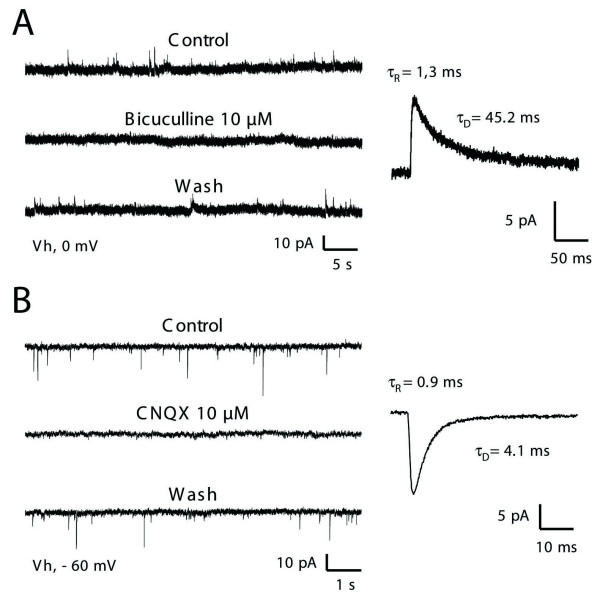
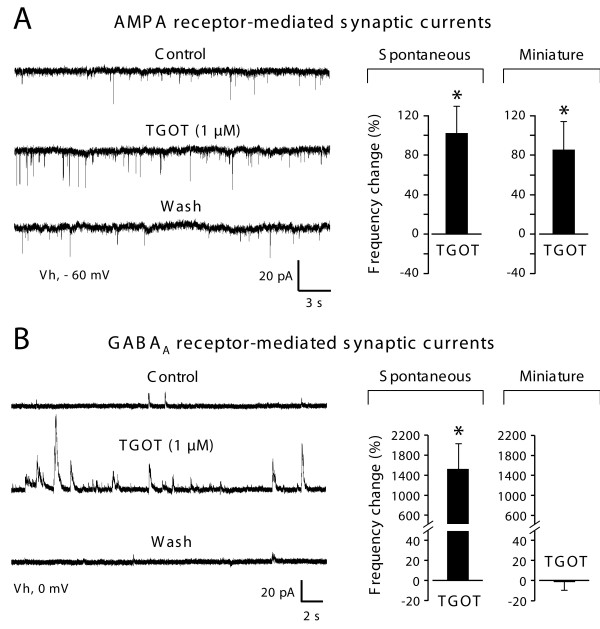
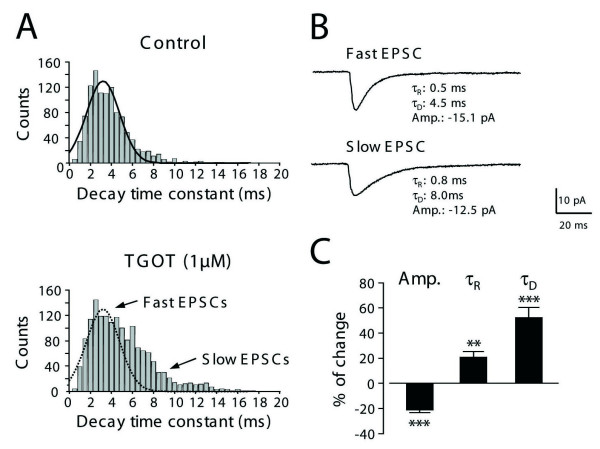
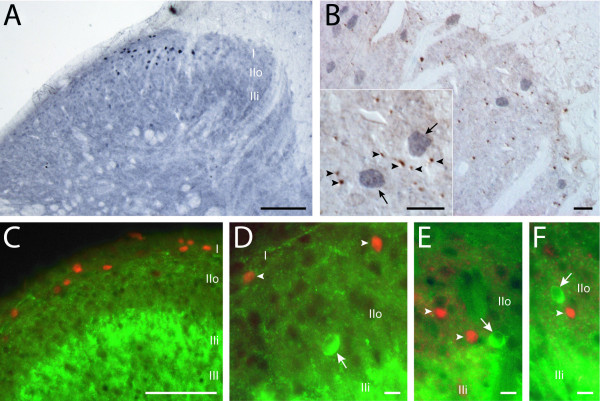
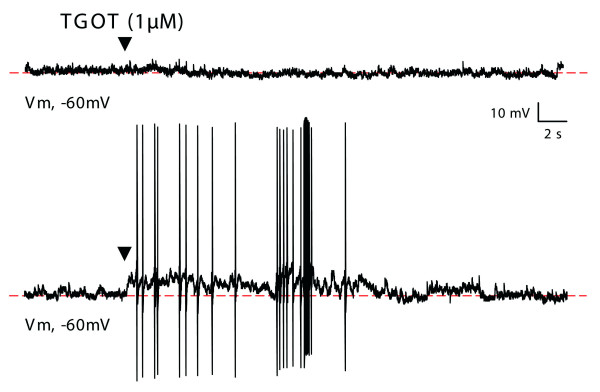
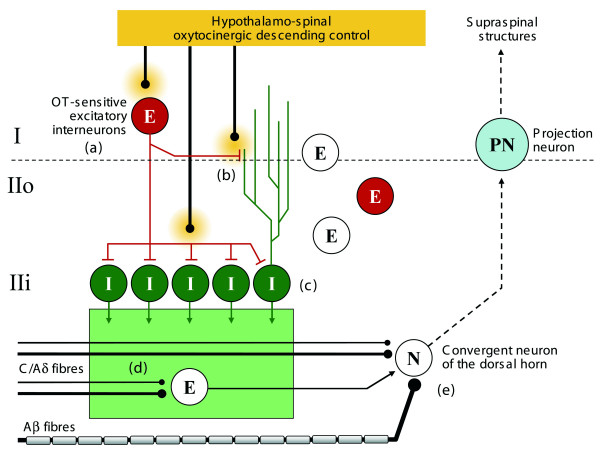
Background: Recent evidence suggests that oxytocin (OT), secreted in the superficial spinal cord dorsal horn by descending axons of paraventricular hypothalamic nucleus (PVN) neurons, produces antinociception and analgesia. The spinal mechanism of OT is, however, still unclear and requires further investigation. We have used patch clamp recording of lamina II neurons in spinal cord slices and immunocytochemistry in order to identify PVN-activated neurons in the superficial layers of the spinal cord and attempted to determine how this neuronal population may lead to OT-mediated antinociception. Results: We show that OT released during PVN stimulation specifically activates a subpopulation of lamina II glutamatergic interneurons which are localized in the most superficial layers of the dorsal horn of the spinal cord (lamina I-II). This OT-specific stimulation of glutamatergic neurons allows the recruitment of all GABAergic interneurons in lamina II which produces a generalized elevation of local inhibition, a phenomenon which might explain the reduction of incoming Aδ and C primary afferent-mediated sensory messages. Conclusion: Our results obtained in lamina II of the spinal cord provide the first clear evidence of a specific local neuronal network that is activated by OT release to induce antinociception. This OT-specific pathway might represent a novel and interesting therapeutic target for the management of neuropathic and inflammatory pain.
Overview
The claims and statistics of this paper haven’t been checked yet.
Run the check — free, no account needed. It reads the open-access text and checks the sources it cites.
Integrity signals
Registry
Cites
Statistics
Figures
Verification
Claims the paper makes
The claims and statistics of this paper haven’t been checked yet.
Run the check — free, no account needed. It reads the open-access text and checks the sources it cites.
Claims other papers make about this one
Each is checked against this paper’s own text: does it say what the citing paper says it does?
In the citing paper
“One mechanism involves the engagement of GABA‐mediated inhibitory circuits at the superficial layers of spinal cord dorsal horn neurones, which express oxytocin receptors 7 and receive direct projections from hypothalamic oxytocin neurones 8, 9, reducing Aδ/C‐fibre afferent signalling and ascending nociceptive input 10, 11, 12, 13, 14.”
From The Analgesic Effect of Oxytocin in Humans: A Double‐Blind, Placebo‐Controlled Cross‐Over Study Using Laser‐Evoked Potentials (2016) · cites this paper as [11]
In the citing paper
“animal studies have shown that oxytocin can specifically reduce Aδ/C‐fibre afferent signalling and ascending nociceptive input at the level of spinal cord dorsal horn neurones by engaging GABA‐mediated inhibitory cellular mechanisms 10, 11, 12, 13, 14, 29.”
From The Analgesic Effect of Oxytocin in Humans: A Double‐Blind, Placebo‐Controlled Cross‐Over Study Using Laser‐Evoked Potentials (2016) · cites this paper as [11]
Self-check
Percentages, sums and reported differences re-computed from the paper’s own numbers.
The self-check needs the paper’s full text.
Citations
Cites
1 retracted
Lund, I., Yu, L., Uvnas‐Moberg, K., Wang, J., Yu, C., Kurosawa, M., Agren, G., Rosén, A., Lekman, M., & Lundeberg, T. (2002) · European Journal of Neuroscience · doi:10.1046/j.1460-9568.2002.02087.x · Cited by 181
RetractedThe oxytocin receptor system: structure, function, and regulation
Gimpl, G., & Fahrenholz, F. (2001) · Physiological Reviews · doi:10.1152/physrev.2001.81.2.629 · Cited by 3,089
Direct hypothalamo-autonomic connections
Saper, C. B., Loewy, A. D., Swanson, L. W., & Cowan, W. M. (1976) · Brain Research · doi:10.1016/0006-8993(76)90738-1 · Cited by 1,199
Jitsukawa, K., Sueki, H., Sato, S., & Anzai, T. (1987) · American Journal of Dermatopathology · doi:10.1097/00000372-198704000-00003 · Cited by 1,130
Neurochemical organization of the hypothalamic projection to the spinal cord in the rat
Cechetto, D. F., & Saper, C. B. (1988) · The Journal of Comparative Neurology · doi:10.1002/cne.902720410 · Cited by 346
Swanson, L. W., & McKellar, S. (1979) · Journal of Comparative Neurology · doi:10.1002/cne.901880108 · Cited by 336
Activation of Silent Synapses by Rapid Activity-Dependent Synaptic Recruitment of AMPA Receptors
Liao, D., Scannevin, R. H., & Huganir, R. L. (2001) · Journal of Neuroscience · doi:10.1523/jneurosci.21-16-06008.2001 · Cited by 288
Silent glutamatergic synapses and nociception in mammalian spinal cord
Li, P., & Zhuo, M. (1998) · Nature · doi:10.1038/31496 · Cited by 264
125I-labelled d(CH2)5[Tyr(Me)2,Thr4,Tyr-NH29]OVT: a selective oxytocin receptor ligand
Elands, J., Barberis, C., Jard, S., Tribollet, E., Dreifuss, J.-J., Bankowski, K., Manning, M., & Sawyer, W. H. (1988) · European Journal of Pharmacology · doi:10.1016/0014-2999(88)90778-9 · Cited by 245
Keller, A. F., Coull, J. A. M., Chéry, N., Poisbeau, P., & Koninck, Y. D. (2001) · Journal of Neuroscience · doi:10.1523/jneurosci.21-20-07871.2001 · Cited by 227
Self-citation
Research works printed but not linked: 3
- Sofroniew MV, 1981, Acta Histochem Suppl, 24, 79
- Shiraishi T, 1995, Neurobiology (Bp), 3, 393
- Elands J, 1988, Am J Physiol, 254, E31
Cited by
Sorted by citations
Items 101–152 of 152
Rojas‐Piloni, G., Rodríguez-Jiménez, J., Martı́nez-Lorenzana, G., & Condés‐Lara, M. (2012) · Brain Research · doi:10.1016/j.brainres.2012.04.042 · Cited by 8
Rash, J. A., Toivonen, K., Robert, M., Nasr‐Esfahani, M., Jarrell, J. F., & Campbell, T. S. (2017) · BMJ Open · doi:10.1136/bmjopen-2016-014909 · Cited by 8
Dorsolateral prefrontal cortex sensing analgesia
Ito, E., Oka, K., & Koshikawa, F. (2022) · Biophysics and Physicobiology · doi:10.2142/biophysico.bppb-v19.0014 · Cited by 8
Protective Effects of Oxytocin and Progesterone on Paclitaxel-Induced Neuropathy in Rats
Eki̇ci̇, M., & Balkaya, M. (2021) · Neurological Sciences and Neurophysiology · doi:10.4103/nsn.nsn_113_21 · Cited by 7
Tsuji, T., Inatani, M., Tsuji, C., Cheranov, S. M., & Kadonosono, K. (2020) · Tissue and Cell · doi:10.1016/j.tice.2019.101328 · Cited by 7
Wirkung von Oxytocin auf das menschliche Schmerzerleben
Pfeifer, A.-C., Ditzen, B., Neubauer, E., & Schiltenwolf, M. (2016) · Der Schmerz · doi:10.1007/s00482-016-0164-z · Cited by 7
Oxytocin Modulation of Spinal Circuits Drives Therapeutic Benefits of MassagePreprint
Bohic, M., Salamone, P., Zuo, W., Negm, A., Fulton, S. L., Du, S., Jayakumar, S., Keating, J., Soubeyre, V., Gradwell, M. A., et al. (2026) · bioRxiv (Cold Spring Harbor Laboratory) · doi:10.64898/2026.01.11.698886 · Cited by 11
Adipose Tissue and Central Nervous System Crosstalk: Roles in Pain and Cognitive Dysfunction
Li, J., Li, Z., Chen, K., Wu, Y., Yang, X., He, Z., & Xiang, H. (2025) · Biomedicines · doi:10.3390/biomedicines14010054 · Cited by 8
Usami, N., Maegawa, H., Hayashi, M., Kudo, C., & Niwa, H. (2024) · PLoS ONE · doi:10.1371/journal.pone.0300081 · Cited by 6
Tom, N., & Assinder, S. J. (2010) · BioMolecular Concepts · doi:10.1515/bmc.2010.036 · Cited by 7
Matsuura, T., Kawasaki, M., Hashimoto, H., Yoshimura, M., Motojima, Y., Saito, R., Ueno, H., Maruyama, T., Sabanai, K., Mori, T., et al. (2016) · Neuroscience Letters · doi:10.1016/j.neulet.2016.04.010 · Cited by 5
Jiang, C., Fujita, T., & Kumamoto, E. (2016) · Biochemistry and Biophysics Reports · doi:10.1016/j.bbrep.2016.06.011 · Cited by 5
CLARITY with neuronal tracing and immunofluorescence to study the somatosensory system in rats
Martı́nez-Lorenzana, G., Gamal‐Eltrabily, M., Tello-García, I. A., Martínez‐Torres, A., Becerra-González, M., González‐Hernández, A., & Condés‐Lara, M. (2020) · Journal of Neuroscience Methods · doi:10.1016/j.jneumeth.2020.109048 · Cited by 5
Rash, J. A., Campbell, T. S., Cooper, L., Flusk, D., MacInnes, A. I., Nasr‐Esfahani, M., Mekhael, A. A., Poulin, P. A., Robert, M., & Yi, Y. (2021) · BMJ Open · doi:10.1136/bmjopen-2021-055039 · Cited by 4
Ba, X., Ran, C., Guo, W., Guo, J., Zeng, Q., Liu, T., Sun, W., Xiao, L., Xiong, D., Huang, Y., et al. (2022) · Frontiers in Pharmacology · doi:10.3389/fphar.2022.845018 · Cited by 4
Oxytocin prevents neuronal network pain-related changes on spinal cord dorsal horn in vitro
Tello-García, I. A., Pérez-Ortega, J., Martı́nez-Lorenzana, G., González‐Hernández, A., & Condés‐Lara, M. (2020) · Cell Calcium · doi:10.1016/j.ceca.2020.102246 · Cited by 4
The Impact of Genetics and Other Factors on Intra- and Post-partum Pain
Landau, R., Ortner, C. M., & Vuilleumier, P. H. (2013) · Current anesthesiology reports · doi:10.1007/s40140-013-0029-2 · Cited by 4
Kawasaki, Y., Fujita, T., Yang, K., & Kumamoto, E. (2015) · Pharmacology & Pharmacy · doi:10.4236/pp.2015.63013 · Cited by 3
Azizah, N., Rosydah, R., & Mahfudloh, H. (2018) · Journal of Physics Conference Series · doi:10.1088/1742-6596/1114/1/012009 · Cited by 3
RetractedChow, L., Chen, Y.-H., Chen, Y.-J., Hung, H.-Y., Lin, P.-C., & Huang, E. Y. (2024) · Peptides · doi:10.1016/j.peptides.2024.171150 · Cited by 2
The nociceptive inputs of the paraventricular hypothalamic nucleus in formalin stimulated mice
Ren, S., Wang, S., Lv, S., Gao, J., Mao, Y., Liu, Y., Xie, Q., Zhang, T., Zhao, L., & Shi, J. (2024) · Neuroscience Letters · doi:10.1016/j.neulet.2024.137948 · Cited by 2
Role of dopaminergic system in oxytocin analgesia: The missing part in a puzzle
Taştemur, Y., Taşkıran, A. Ş., Altun, A., Filiz, A. K., Gülmez, K., Çimen, K., & Özdemir, E. (2020) · Tropical Journal of Pharmaceutical Research · doi:10.4314/tjpr.v19i5.26 · Cited by 2
Anesthesiologic management of major obstetrical hemorrhage
Vuilleumier, P. H., & Surbek, D. (2015) · Trends in Anaesthesia and Critical Care · doi:10.1016/j.tacc.2015.10.009 · Cited by 2
Guyo, F. B. (2009) · OhioLink ETD Center (Ohio Library and Information Network) · Cited by 2
Hormones and the Regulation of Neuronal Voltage-Sensing Ion Channels
Lyons, D. J. (2019) · Elsevier eBooks · doi:10.1016/b978-0-12-813814-4.00011-0 · Cited by 1
Heni, H. E., Kemenesi-Gedei, P. B., Pálvölgyi, L., Szeredi, I. D., & Kis, G. (2023) · International Journal of Molecular Sciences · doi:10.3390/ijms25010007 · Cited by 1
Neonatal Procedural Pain Disrupts Phosphorylation of KCC2 in the Spinal Cord
Baudat, M., Joosten, E. A. J., Simons, S. H. P., van den Hove, D., & Riemens, R. J. M. (2025) · Developmental Neurobiology · doi:10.1002/dneu.22993 · Cited by 1
Inflammatory pain alters colorectal motility via spinal oxytocinergic pathways
Sawamura, T., Mori, A., Yuki, N., Takashima, K., Horii, Y., Yoshimura, M., Ueta, Y., Shiina, T., & Shimizu, Y. (2026) · American Journal of Physiology-Gastrointestinal and Liver Physiology · doi:10.1152/ajpgi.00427.2025 · Cited by 1
Vuilleumier, P. H., & Prager, S. (2015) · Trends in Anaesthesia and Critical Care · doi:10.1016/j.tacc.2015.06.004 · Cited by 1
Posterior Pituitary Hormones and Pain
Matsuura, T., Kawasaki, M., Sakai, A., & Ueta, Y. (2015) · Interdisciplinary Information Sciences · doi:10.4036/iis.2015.b.05 · Cited by 1
Pathophysiological bases of pain syndrome during labor
Upryamova, E. Y., Krasnopolsky, K. V. I., & Shifman, E. M. (2017) · Russian Bulletin of Obstetrician-Gynecologist · doi:10.17116/rosakush201717513-17 · Cited by 1
Effects of oxytocin on glutamate mediated neurotoxicity in neuroblastoma cell culture
Özgür, B. G., Vural, K., & Tuğlu, M. İ. (2023) · Nöro Psikiyatri Arşivi · doi:10.29399/npa.28377 · Cited by 1
Jiang, C., Fujita, T., Xu, Z.-H., Ohtsubo, S., Matsushita, A., & Kumamoto, E. (2014) · PAIN RESEARCH · doi:10.11154/pain.29.215
The role of central vasopressin V2 receptors in cardiovascular homeostasis
Milutinović‐Smiljanić, S. (2013) · doi:10.2298/bg20130620milutinovicsmiljanic
Sassano, M. F. (2019) · Carolina Digital Repository (University of North Carolina at Chapel Hill) · doi:10.17615/wwr3-7m34
Kumamoto, E., Fujita, T., & Wang, C. (2019) · PAIN RESEARCH · doi:10.11154/pain.34.228
Fujitani, T., Matsuura, T., Kawasaki, M., Suzuki, H., Nishimura, H., Baba, K., Yamanaka, Y., Ohnishi, H., Ueta, Y., & Sakai, A. (2019) · doi:10.21203/rs.2.18454/v1
Oxytocin: An Important Aspect for Designing Neuropsychiatric Drugs
Thakur, P. (2019) · Psychology & Psychological Research International Journal · doi:10.23880/pprij-16000203
Reciprocal interactions between the oxytocin and somatosensory systems
Küppers, S., Lefèvre, A., & Grinevich, V. (2024) · Elsevier eBooks · doi:10.1016/b978-0-12-820480-1.00085-1
The Goldilocks Zone of Healing An unexploited resource for advanced healingPreprint
Feoli, E., Redondo, G. M., Flores, J. S., & Jara, D. P. (2024) · OSF Preprints (OSF Preprints) · doi:10.31219/osf.io/zxcm6
Song, S. H., Kim, J. S., Park, S.-I., & Park, S. M. (2024) · Open Access Journal of Surgery · doi:10.19080/oajs.2024.15.555916
Repetitive daily oxytocin treatment reduces weight gain but not acute neonatal procedural pain
Baudat, M., Joosten, E. A. J., & Simons, S. H. P. (2024) · Pediatric Research · doi:10.1038/s41390-024-03680-9
Okamura, Y., Takayama, S., Namiki, K., Koshikawa, F., & Ito, E. (2024) · Biophysics and Physicobiology · doi:10.2142/biophysico.bppb-v22.0001 · Cited by 1
Oxytocin as a Positive Allosteric Modulator for Particular Opioid Receptors
Fujii, H., Mizuguchi, T., & Uezono, Y. (2025) · Pharmaceutical science. · doi:10.5772/intechopen.1011093
The oxytocinergic descending control of pain and its modulation by neonatal maternal separation
Melchior, M. (2018) · theses.fr (ABES) · doi:10.70675/368c73c0ze731z4b57zb52cz8f31049fb33c
Impact du stress périnatal chez le rongeur : évaluation comportementale et mécanismes d’action
Gazzo, G. (2020) · theses.fr (ABES) · doi:10.70675/6cf2a187z793az4bb8z81b6zf7e4e711cb51
New regulators in oxytocin and vasopressin release : role of the endolysosomal two-pore channels
Martucci, L. L. (2021) · theses.fr (ABES) · doi:10.70675/027d1ae2zd2ebz4677za019ze6ccd94cafe9
In vivo analysis of the antihyperalgesic activity of innovative compounds
Hilfiger, L. (2022) · theses.fr (ABES) · doi:10.70675/75d118c6zbe5ez4d20z9c25zd658f8cf399a
Oxytocin and Nociceptive Processing: Mechanisms and Therapeutic Potential
Maruyama, T., Ueno, H., Fujihara, H., & Ueta, Y. (2026) · Neuroendocrinology · doi:10.1159/000551710
Central Neural Circuits Underlying Stress-Associated Bowel Disorders
Yuki, N., Sawamura, T., Shiina, T., & Shimizu, Y. (2026) · Pathophysiology · doi:10.3390/pathophysiology33040077
Metadata
- Authors
- Breton, J.-D., Veinante, P., Uhl-Bronner, S., Vergnano, A. M., Freund-Mercier, M. J., Schlichter, R., & Poisbeau, P.
- Affiliations
- Centre National de la Recherche Scientifique (FR)
- Department Nociception and Pain, Institut des Neurosciences Cellulaires et Intégratives, Unité Mixte de Recherche 7168, Centre National de la Recherche Scientifique/Université Louis Pasteur, Strasbourg, France
- Corresponding author
- Breton, Jean-Didier
- Veinante, Pierre
- Vergnano, Angela Maria
- Schlichter, Rémy
- Poisbeau, Pierrick
- Venue
- Molecular Pain
- Publisher
- SAGE Publications
- Published
- 2008-01-01
- Volume
- 4
- Pages
- 19-19
- ISSN
- 1744-8069 (ISSN-L)
- PMC
- PMC2430948
- OpenAlex
- W2146655845
- Cited by
- 152
- References
- 35
- Citations by year
- 2026: 4 · 2025: 4 · 2024: 11 · 2023: 8 · 2022: 9 · 2021: 12 · 2020: 8 · 2019: 13 · 2018: 13 · 2017: 11 · 2016: 6 · 2015: 9 · 2014: 9 · 2013: 12 · 2012: 6
- FWCI
- 3.85
- Type
- journal article
- Language
- en
- Open access
- gold
- doi.org
- Locations
- Molecular Pain (publishedVersion, cc-by)
- PubMed Central (publishedVersion, cc-by)
- PubMed (publishedVersion)
- HAL (submittedVersion)
- DOAJ (DOAJ: Directory of Open Access Journals) (submittedVersion, cc-by-sa)
- Funders
- Fondation pour la Recherche Médicale
- Centre National de la Recherche Scientifique
- Institut Universitaire de France
- Topics
- Health Sciences › Medicine › Physiology (medical) › Pain Mechanisms and Treatments
- Life Sciences › Neuroscience › Cellular and Molecular Neuroscience › Neuropeptides and Animal Physiology
- Life Sciences › Neuroscience › Cellular and Molecular Neuroscience › Neuroscience and Neuropharmacology Research
- Keywords
- oxytocin, antinociception, dorsal horn, lamina II, glutamatergic interneurons, GABAergic inhibition, paraventricular nucleus, descending pain modulation, neuropathic pain, inflammatory pain
- MeSH terms
- Analgesia, Animals, Electrophysiology, gamma-Aminobutyric Acid, Neurons, Oxytocin, Pain, Paraventricular Hypothalamic Nucleus, Spinal Cord, Rats, Wistar, Glutamic Acid, GABA Antagonists, Rats
About these checks
Registry, retraction, Cites and statistics results are computed, not judged, with one exception: a printed reference that no index lists is read once by a model before it counts as a citation error. Claims are extracted by a model and kept only when their quote appears verbatim in the text; each cited source is then checked, with a model’s help, for whether it says what the claim relies on. Those verdicts can be wrong — read the claim’s quote and the cited source before relying on one.
Statistics and arithmetic are recomputed, not judged.
Confidence bands are shown only for fields calibrated on our annotated test set. None is calibrated yet, so no band is shown.
What counts as a claim ›How we measure confidence ›How we check this ›
Are you an author, or do you see a problem with this page? Request a review
