

The DOI matches its Crossref record; 35 of the 35 references it cites were found in a registry or an index.
Oxytocin-Induced Antinociception in the Spinal Cord is Mediated by a Subpopulation of Glutamatergic Neurons in Lamina I-II Which Amplify GABAergic Inhibition
Open accessAbstract
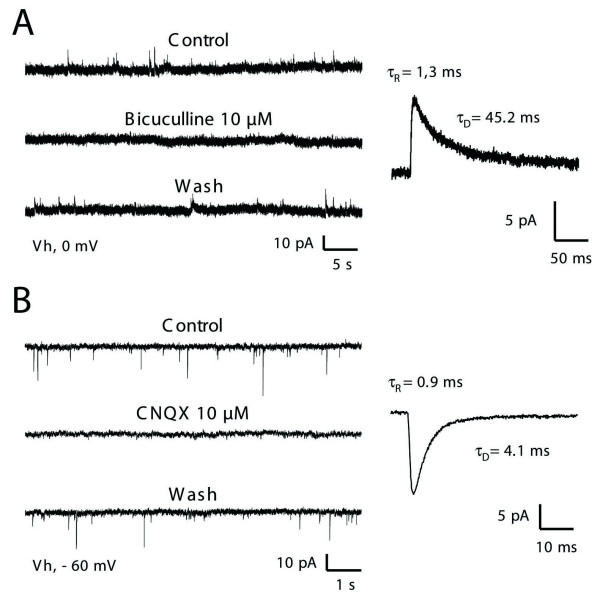
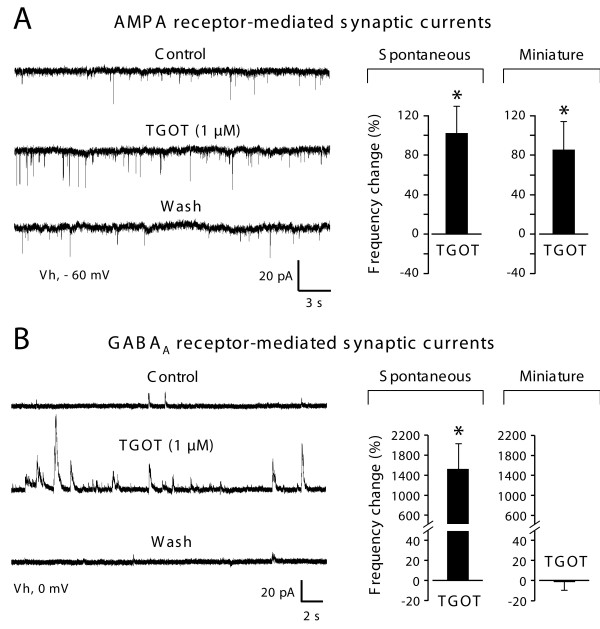
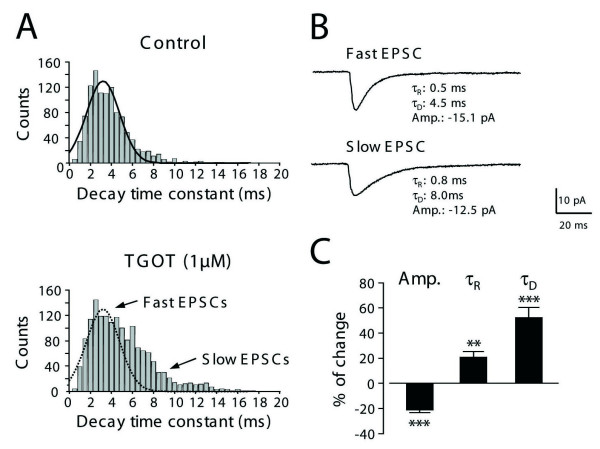
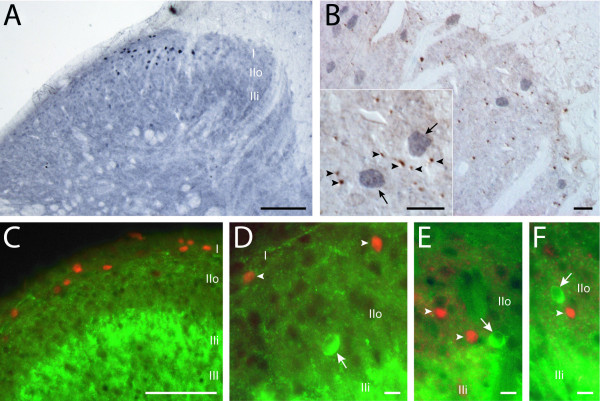
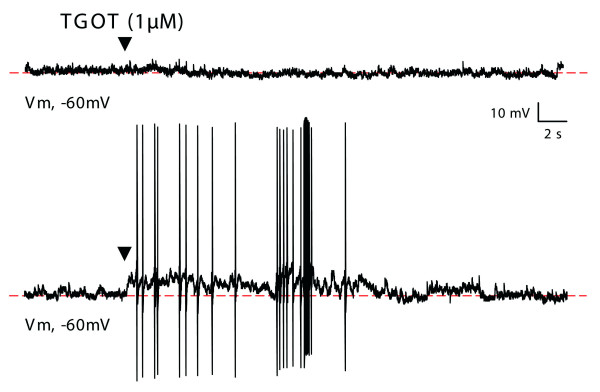
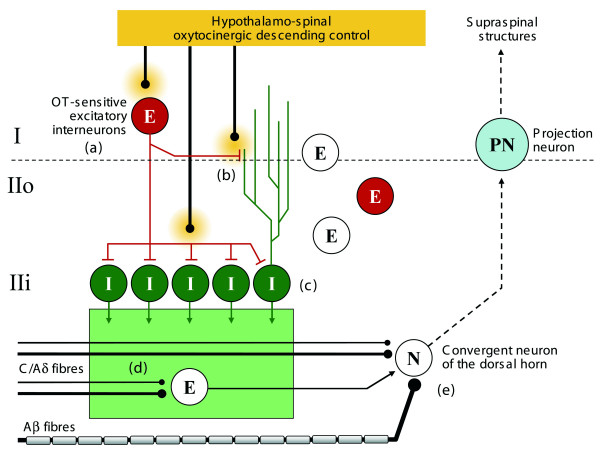
Background: Recent evidence suggests that oxytocin (OT), secreted in the superficial spinal cord dorsal horn by descending axons of paraventricular hypothalamic nucleus (PVN) neurons, produces antinociception and analgesia. The spinal mechanism of OT is, however, still unclear and requires further investigation. We have used patch clamp recording of lamina II neurons in spinal cord slices and immunocytochemistry in order to identify PVN-activated neurons in the superficial layers of the spinal cord and attempted to determine how this neuronal population may lead to OT-mediated antinociception. Results: We show that OT released during PVN stimulation specifically activates a subpopulation of lamina II glutamatergic interneurons which are localized in the most superficial layers of the dorsal horn of the spinal cord (lamina I-II). This OT-specific stimulation of glutamatergic neurons allows the recruitment of all GABAergic interneurons in lamina II which produces a generalized elevation of local inhibition, a phenomenon which might explain the reduction of incoming Aδ and C primary afferent-mediated sensory messages. Conclusion: Our results obtained in lamina II of the spinal cord provide the first clear evidence of a specific local neuronal network that is activated by OT release to induce antinociception. This OT-specific pathway might represent a novel and interesting therapeutic target for the management of neuropathic and inflammatory pain.
Overview
The claims and statistics of this paper haven’t been checked yet.
Run the check — free, no account needed. It reads the open-access text and checks the sources it cites.
Integrity signals
Registry
Cites
Statistics
Figures
Verification
Claims the paper makes
The claims and statistics of this paper haven’t been checked yet.
Run the check — free, no account needed. It reads the open-access text and checks the sources it cites.
Claims other papers make about this one
Each is checked against this paper’s own text: does it say what the citing paper says it does?
In the citing paper
“One mechanism involves the engagement of GABA‐mediated inhibitory circuits at the superficial layers of spinal cord dorsal horn neurones, which express oxytocin receptors 7 and receive direct projections from hypothalamic oxytocin neurones 8, 9, reducing Aδ/C‐fibre afferent signalling and ascending nociceptive input 10, 11, 12, 13, 14.”
From The Analgesic Effect of Oxytocin in Humans: A Double‐Blind, Placebo‐Controlled Cross‐Over Study Using Laser‐Evoked Potentials (2016) · cites this paper as [11]
In the citing paper
“animal studies have shown that oxytocin can specifically reduce Aδ/C‐fibre afferent signalling and ascending nociceptive input at the level of spinal cord dorsal horn neurones by engaging GABA‐mediated inhibitory cellular mechanisms 10, 11, 12, 13, 14, 29.”
From The Analgesic Effect of Oxytocin in Humans: A Double‐Blind, Placebo‐Controlled Cross‐Over Study Using Laser‐Evoked Potentials (2016) · cites this paper as [11]
Self-check
Percentages, sums and reported differences re-computed from the paper’s own numbers.
The self-check needs the paper’s full text.
Citations
Cites
1 retracted
Lund, I., Yu, L., Uvnas‐Moberg, K., Wang, J., Yu, C., Kurosawa, M., Agren, G., Rosén, A., Lekman, M., & Lundeberg, T. (2002) · European Journal of Neuroscience · doi:10.1046/j.1460-9568.2002.02087.x · Cited by 181
RetractedThe oxytocin receptor system: structure, function, and regulation
Gimpl, G., & Fahrenholz, F. (2001) · Physiological Reviews · doi:10.1152/physrev.2001.81.2.629 · Cited by 3,089
Direct hypothalamo-autonomic connections
Saper, C. B., Loewy, A. D., Swanson, L. W., & Cowan, W. M. (1976) · Brain Research · doi:10.1016/0006-8993(76)90738-1 · Cited by 1,199
Jitsukawa, K., Sueki, H., Sato, S., & Anzai, T. (1987) · American Journal of Dermatopathology · doi:10.1097/00000372-198704000-00003 · Cited by 1,130
Neurochemical organization of the hypothalamic projection to the spinal cord in the rat
Cechetto, D. F., & Saper, C. B. (1988) · The Journal of Comparative Neurology · doi:10.1002/cne.902720410 · Cited by 346
Swanson, L. W., & McKellar, S. (1979) · Journal of Comparative Neurology · doi:10.1002/cne.901880108 · Cited by 336
Activation of Silent Synapses by Rapid Activity-Dependent Synaptic Recruitment of AMPA Receptors
Liao, D., Scannevin, R. H., & Huganir, R. L. (2001) · Journal of Neuroscience · doi:10.1523/jneurosci.21-16-06008.2001 · Cited by 288
Silent glutamatergic synapses and nociception in mammalian spinal cord
Li, P., & Zhuo, M. (1998) · Nature · doi:10.1038/31496 · Cited by 264
125I-labelled d(CH2)5[Tyr(Me)2,Thr4,Tyr-NH29]OVT: a selective oxytocin receptor ligand
Elands, J., Barberis, C., Jard, S., Tribollet, E., Dreifuss, J.-J., Bankowski, K., Manning, M., & Sawyer, W. H. (1988) · European Journal of Pharmacology · doi:10.1016/0014-2999(88)90778-9 · Cited by 245
Keller, A. F., Coull, J. A. M., Chéry, N., Poisbeau, P., & Koninck, Y. D. (2001) · Journal of Neuroscience · doi:10.1523/jneurosci.21-20-07871.2001 · Cited by 227
Self-citationOxytocin mediates stress‐induced analgesia in adult mice
Robinson, D. A., Wei, F., Wang, G. D., Li, P., Kim, S. J., Vogt, S. K., Muglia, L. J., & Zhuo, M. (2002) · The Journal of Physiology · doi:10.1113/jphysiol.2001.013492 · Cited by 148
Oxytocinergic innervation of autonomic nuclei controlling penile erection in the rat
Véronneau-Longueville, F., Rampin, O., Freund‐Mercier, M. J., Tang, Y., Calas, A., Marson, L., McKenna, K. E., Stoeckel, M. E., Benoît, G., & Giuliano, F. (1999) · Neuroscience · doi:10.1016/s0306-4522(99)00262-6 · Cited by 140
Self-citationAnti-nociceptive effects of oxytocin in rats and mice
Lundeberg, T., Uvnäs‐Moberg, K., Ågren, G., & BRUZELIUS, G. (1994) · Neuroscience Letters · doi:10.1016/0304-3940(94)90262-3 · Cited by 139
Miranda-Cardenas, Y., Rojas‐Piloni, G., Martı́nez-Lorenzana, G., Rodríguez-Jiménez, J., López-Hidalgo, M. A., Freund‐Mercier, M. J., & Condés‐Lara, M. (2006) · Pain · doi:10.1016/j.pain.2006.01.029 · Cited by 131
Self-citation‘Deaf, mute and whispering’ silent synapses: their role in synaptic plasticity
Voronin, L. L., & Cherubini, E. (2004) · The Journal of Physiology · doi:10.1113/jphysiol.2003.058966 · Cited by 131
Oxytocin decreases carrageenan induced inflammation in rats
Petersson, M., Wiberg, U., Lundeberg, T., & Uvnäs‐Moberg, K. (2001) · Peptides · doi:10.1016/s0196-9781(01)00469-7 · Cited by 131
(1981) · PubMed · Cited by 117
Involvement of oxytocin in spinal antinociception in rats with inflammation
Yu, S.-Q., Lundeberg, T., & Yu, L. (2003) · Brain Research · doi:10.1016/s0006-8993(03)03019-1 · Cited by 98
Paraventricular hypothalamic influences on spinal nociceptive processing
Condés‐Lara, M., Rojas‐Piloni, G., Martı́nez-Lorenzana, G., Rodríguez-Jiménez, J., López-Hidalgo, M. A., & Freund‐Mercier, M. J. (2006) · Brain Research · doi:10.1016/j.brainres.2006.01.050 · Cited by 94
Self-citationJo, Y.-H., Stoeckel, M.-E., Freund-Mercier, M.-J., & Schlichter, R. (1998) · The Journal of Neuroscience · doi:10.1523/jneurosci.18-07-02377.1998 · Cited by 90
Self-citationKeller, A. F., Breton, J., Schlichter, R., & Poisbeau, P. (2004) · Journal of Neuroscience · doi:10.1523/jneurosci.4642-03.2004 · Cited by 90
Self-citation[3H]-[Thr4,Gly7]OT: a highly selective ligand for central and peripheral OT receptors
Elands, J., Barberis, C., & Jard, S. (1988) · American Journal of Physiology-Endocrinology and Metabolism · doi:10.1152/ajpendo.1988.254.1.e31 · Cited by 88
Reiter, M. K., Krémarik, P., Freund‐Mercier, M. J., Stoeckel, M. E., Desaulles, E., & FELTZ, P. (1994) · European Journal of Neuroscience · doi:10.1111/j.1460-9568.1994.tb00251.x · Cited by 85
Self-citationOxytocinergic innervation of the rat spinal cord. An electron microscopic study
Rousselot, P., Papadopoulos, G. C., Merighi, A., Poulain, D. A., & Theodosis, D. T. (1990) · Brain Research · doi:10.1016/0006-8993(90)90825-v · Cited by 78
Condés‐Lara, M., Maie, I. A. S., & Dickenson, A. H. (2005) · Brain Research · doi:10.1016/j.brainres.2005.03.020 · Cited by 71
Rojas-Piloni, G., López-Hidalgo, M., Martínez-Lorenzana, G., Rodríguez-Jiménez, J., & Condés-Lara, M. (2007) · Brain Research · doi:10.1016/j.brainres.2006.12.045 · Cited by 67
Angiotensin-converting enzyme in discrete forebrain areas of spontaneously hypertensive rats
Chevillard, C., Niwa, M., & Saavedra, J. M. (1984) · Brain Research · doi:10.1016/0006-8993(84)90611-5 · Cited by 58
Condés‐Lara, M., Marina, N., Martı́nez-Lorenzana, G., Luis‐Delgado, O. E., & Freund‐Mercier, M. J. (2003) · Brain Research · doi:10.1016/s0006-8993(03)02690-8 · Cited by 58
Self-citationYirmiya, R., Ben‐Eliyahu, S., Shavit, Y., Marek, P., & Liebeskind, J. C. (1990) · Brain Research · doi:10.1016/0006-8993(90)90354-e · Cited by 55
Millan, M. J., Schmauss, C., Millan, M. H., & Herz, A. (1984) · Brain Research · doi:10.1016/0006-8993(84)90610-3 · Cited by 53
Oxytocin modulates the effects of galanin in carrageenan-induced hyperalgesia in rats
Lundeberg, T., Meister, B., Björkstrand, E., & Uvnäs‐Moberg, K. (1993) · Brain Research · doi:10.1016/0006-8993(93)91456-3 · Cited by 49
Shiraishi, T., Onoe, M., Kojima, T., Sameshima, Y., & 影山, 照. (1995) · PubMed · Cited by 40
Olfactory cues from an oxytocin-injected male rat can induce anti-nociception in its cagemates
Ågren, G., Uvnäs‐Moberg, K., & Lundeberg, T. (1997) · Neuroreport · doi:10.1097/00001756-199709290-00013 · Cited by 36
Speaking Out of Turn: A Role for Silent Synapses in Pain
Kerchner, G. A., Li, P., & Zhuo, M. (1999) · IUBMB Life · doi:10.1080/713803505 · Cited by 27
Intrathecal oxytocin facilitates the spinal nociceptive flexor reflex in the rat
Xu, X., & Wiesenfeld‐Hallin, Z. (1994) · Neuroreport · doi:10.1097/00001756-199403000-00003 · Cited by 14
Research works printed but not linked: 3
- Sofroniew MV, 1981, Acta Histochem Suppl, 24, 79
- Shiraishi T, 1995, Neurobiology (Bp), 3, 393
- Elands J, 1988, Am J Physiol, 254, E31
Cited by
Sorted by citations
Oxytocin: The Great Facilitator of Life
Lee, H.-J., Macbeth, A. H., Pagani, J., & Young, W. S. (2009) · Progress in Neurobiology · doi:10.1016/j.pneurobio.2009.04.001 · Cited by 1,037
Neuromodulation by Oxytocin and Vasopressin
Stoop, R. (2012) · Neuron · doi:10.1016/j.neuron.2012.09.025 · Cited by 506
Oxytocin and Vasopressin Agonists and Antagonists as Research Tools and Potential Therapeutics
Manning, M., Misicka, A., Olma, A., Bankowski, K., Stoev, S., Chini, B., Durroux, T., Mouillac, B., Corbani, M., & Guillon, G. (2012) · Journal of Neuroendocrinology · doi:10.1111/j.1365-2826.2012.02303.x · Cited by 423
REVIEW: Oxytocin: Crossing the Bridge between Basic Science and Pharmacotherapy
Viéro, C., Shibuya, I., Kitamura, N., Verkhratsky, A., Fujihara, H., Katoh, A., Ueta, Y., Zingg, H. H., Chvátal, A., Syková, E., et al. (2010) · CNS Neuroscience & Therapeutics · doi:10.1111/j.1755-5949.2010.00185.x · Cited by 259
Wahis, J., Baudon, A., Althammer, F., Kerspern, D., Goyon, S., Hagiwara, D., Lefèvre, A., Barteczko, L., Boury‐Jamot, B., Bellanger, B., et al. (2021) · Nature Neuroscience · doi:10.1038/s41593-021-00800-0 · Cited by 199
Self-citation
Metadata
- Authors
- Breton, J.-D., Veinante, P., Uhl-Bronner, S., Vergnano, A. M., Freund-Mercier, M. J., Schlichter, R., & Poisbeau, P.
- Affiliations
- Centre National de la Recherche Scientifique (FR)
- Department Nociception and Pain, Institut des Neurosciences Cellulaires et Intégratives, Unité Mixte de Recherche 7168, Centre National de la Recherche Scientifique/Université Louis Pasteur, Strasbourg, France
- Corresponding author
- Breton, Jean-Didier
- Veinante, Pierre
- Vergnano, Angela Maria
- Schlichter, Rémy
- Poisbeau, Pierrick
- Venue
- Molecular Pain
- Publisher
- SAGE Publications
- Published
- 2008-01-01
- Volume
- 4
- Pages
- 19-19
- ISSN
- 1744-8069 (ISSN-L)
- PMC
- PMC2430948
- OpenAlex
- W2146655845
- Cited by
- 152
- References
- 35
- Citations by year
- 2026: 4 · 2025: 4 · 2024: 11 · 2023: 8 · 2022: 9 · 2021: 12 · 2020: 8 · 2019: 13 · 2018: 13 · 2017: 11 · 2016: 6 · 2015: 9 · 2014: 9 · 2013: 12 · 2012: 6
- FWCI
- 3.85
- Type
- journal article
- Language
- en
- Open access
- gold
- doi.org
- Locations
- Molecular Pain (publishedVersion, cc-by)
- PubMed Central (publishedVersion, cc-by)
- PubMed (publishedVersion)
- HAL (submittedVersion)
- DOAJ (DOAJ: Directory of Open Access Journals) (submittedVersion, cc-by-sa)
- Funders
- Fondation pour la Recherche Médicale
- Centre National de la Recherche Scientifique
- Institut Universitaire de France
- Topics
- Health Sciences › Medicine › Physiology (medical) › Pain Mechanisms and Treatments
- Life Sciences › Neuroscience › Cellular and Molecular Neuroscience › Neuropeptides and Animal Physiology
- Life Sciences › Neuroscience › Cellular and Molecular Neuroscience › Neuroscience and Neuropharmacology Research
- Keywords
- oxytocin, antinociception, dorsal horn, lamina II, glutamatergic interneurons, GABAergic inhibition, paraventricular nucleus, descending pain modulation, neuropathic pain, inflammatory pain
- MeSH terms
- Analgesia, Animals, Electrophysiology, gamma-Aminobutyric Acid, Neurons, Oxytocin, Pain, Paraventricular Hypothalamic Nucleus, Spinal Cord, Rats, Wistar, Glutamic Acid, GABA Antagonists, Rats
About these checks
Registry, retraction, Cites and statistics results are computed, not judged, with one exception: a printed reference that no index lists is read once by a model before it counts as a citation error. Claims are extracted by a model and kept only when their quote appears verbatim in the text; each cited source is then checked, with a model’s help, for whether it says what the claim relies on. Those verdicts can be wrong — read the claim’s quote and the cited source before relying on one.
Statistics and arithmetic are recomputed, not judged.
Confidence bands are shown only for fields calibrated on our annotated test set. None is calibrated yet, so no band is shown.
What counts as a claim ›How we measure confidence ›How we check this ›
Are you an author, or do you see a problem with this page? Request a review
