

Mobile health for non-communicable diseases in Sub-Saharan Africa: a systematic review of the literature and strategic framework for research
Open accessThe DOI matches its Crossref record; 36 of the 37 references it cites were found in a registry or an index.
Abstract
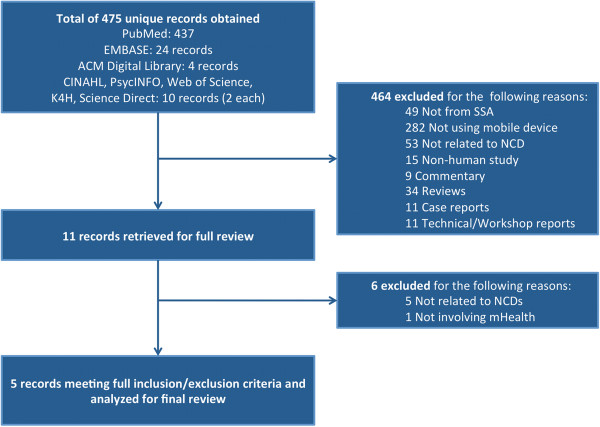
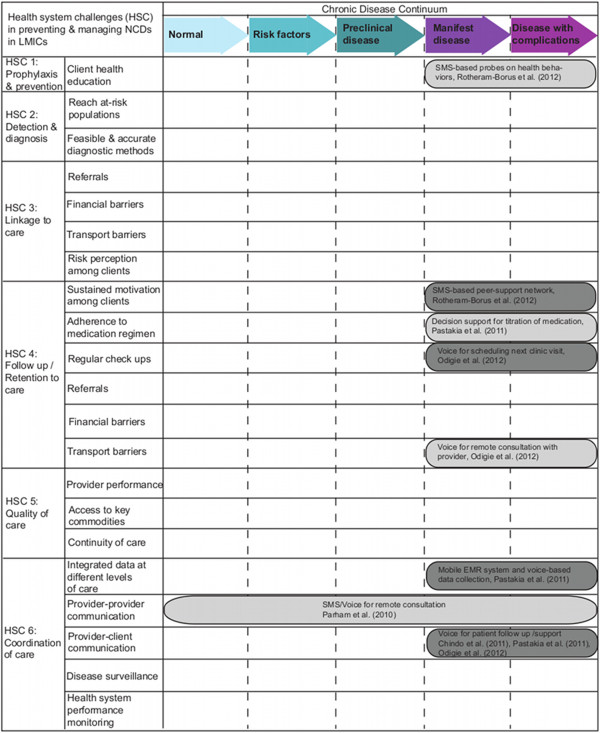
BACKGROUND: Mobile health (mHealth) approaches for non-communicable disease (NCD) care seem particularly applicable to sub-Saharan Africa given the penetration of mobile phones in the region. The evidence to support its implementation has not been critically reviewed. METHODS: We systematically searched PubMed, Embase, Web of Science, Cochrane Central Register of Clinical Trials, a number of other databases, and grey literature for studies reported between 1992 and 2012 published in English or with an English abstract available. We extracted data using a standard form in accordance with Preferred Reporting Items for Systematic Reviews and Meta-Analyses guidelines. RESULTS: Our search yielded 475 citations of which eleven were reviewed in full after applying exclusion criteria. Five of those studies met the inclusion criteria of using a mobile phone for non-communicable disease care in sub-Saharan Africa. Most studies lacked comparator arms, clinical endpoints, or were of short duration. mHealth for NCDs in sub-Saharan Africa appears feasible for follow-up and retention of patients, can support peer support networks, and uses a variety of mHealth modalities. Whether mHealth is associated with any adverse effect has not been systematically studied. Only a small number of mHealth strategies for NCDs have been studied in sub-Saharan Africa. CONCLUSIONS: There is insufficient evidence to support the effectiveness of mHealth for NCD care in sub-Saharan Africa. We present a framework for cataloging evidence on mHealth strategies that incorporates health system challenges and stages of NCD care. This framework can guide approaches to fill evidence gaps in this area. Systematic review registration: PROSPERO CRD42014007527.
Overview
The claims and statistics of this paper haven’t been checked yet.
Free: it reads the open-access text and checks the first 5 claims that cite a source we can check. Create a free account to check every claim.
Integrity signals
Registry
Cites
Statistics
Figures
Verification
Claims the paper makes
The claims and statistics of this paper haven’t been checked yet.
Free: it reads the open-access text and checks the first 5 claims that cite a source we can check. Create a free account to check every claim.
Claims other papers make about this one
Each is checked against this paper’s own text: does it say what the citing paper says it does?
The source backs part of the claim, not all of it — or backs it for a different population, condition or comparison.
In the citing paper
“Potential advantages include streamlined data collection to inform policy makers, standardisation of advice and access to telemedicine for remote communities, but current evidence in SSA remains limited. 15”
From Effectiveness of App-Based Cognitive Screening for Dementia by Lay Health Workers in Low Resource Settings. A Validation and Feasibility Study in Rural Tanzania (2021) · cites this paper as [15]
Experimental — accuracy not yet measuredThe cited source says what the claim attributes to it.
In the citing paper
“Three recent systematic reviews, two specifically focusing on the use of mHealth interventions for the care and management of NCDs in SSA [6] and in developing countries [9], and the other looking more broadly at the use of mHealth interventions against chronic diseases in developing countries [10], found that the included studies generally reported positive outcomes.”
From A realist review of mobile phone-based health interventions for non-communicable disease management in sub-Saharan Africa (2017) · cites this paper as [6]
The cited source says what the claim attributes to it.
In the citing paper
“Bloomfield et al. [16] performed a review of mHealth interventions against NCDs focusing only on Sub-Saharan African countries.”
From A systematic review of randomized controlled trials of mHealth interventions against non-communicable diseases in developing countries (2016) · cites this paper as [16]
The cited source says what the claim attributes to it.
In the citing paper
“Use of technological solutions may improve access to diagnosis, particularly in the context of a task-shifting approach. Mobile health (m-health) and similar initiatives have been investigated in chronic disease management in similar low-resource settings 15 and form part of current WHO recommendations for non-communicable diseases in low-resource settings. 16”
The check wasn’t confident either way, so it gives no verdict — never disputed.
In the citing paper
“Most reviews of use of digital communication with patients in sub-Saharan Africa, comment on the problems of implementation of the communication system, particularly technical and maintenance issues.26–28 54–58”
From mHealth text and voice communication for monitoring people with chronic diseases in low-resource settings: a realist review (2018) · cites this paper as [26]
Experimental — accuracy not yet measured
5 more claims about this paper
Create a free account to see every claim other papers make about this one.
Self-check
Percentages, sums and reported differences re-computed from the paper’s own numbers.
The self-check needs the paper’s full text.
Citations
Cites
Lozano, R., Naghavi, M., Foreman, K., Lim, S., Shibuya, K., Aboyans, V., Abraham, J., Adair, T., Aggarwal, R., Ahn, S. Y., et al. (2012) · The Lancet · doi:10.1016/s0140-6736(12)61728-0 · Cited by 14,070
Lim, S. S., Vos, T., Flaxman, A. D., Danaei, G., Shibuya, K., Adair-Rohani, H., AlMazroa, M. A., Amann, M., Anderson, H. R., Andrews, K. G., et al. (2012) · The Lancet · doi:10.1016/s0140-6736(12)61766-8 · Cited by 11,805
Murray, C. J. L., Vos, T., Lozano, R., Naghavi, M., Flaxman, A. D., Michaud, C., Ezzati, M., Shibuya, K., Salomon, J. A., Abdalla, S., et al. (2012) · The Lancet · doi:10.1016/s0140-6736(12)61689-4 · Cited by 8,888
The Epidemiologic Transition: A Theory of the Epidemiology of Population Change
OMRAN, A. R. (2005) · The Milbank Quarterly · doi:10.1111/j.1468-0009.2005.00398.x · Cited by 3,823
The Epidemiologic Transition: A Theory of the Epidemiology of Population Change
Omran, A. R. (1971) · The Milbank Memorial Fund Quarterly · doi:10.2307/3349375 · Cited by 2,887
Preventing chronic diseases: a vital investment
Vita-Finzi, L., & Who, G. E. (2005) · Cited by 1,679
Human resources for health: overcoming the crisis
Chen, L., Evans, T., Anand, S., Boufford, J. I., Brown, H., Chowdhury, M., Cueto, M., Dare, L., Dussault, G., Elzinga, G., et al. (2004) · The Lancet · doi:10.1016/s0140-6736(04)17482-5 · Cited by 1,552 · cited 1×
“even basic healthcare needs [1,2].”
Text messaging as a tool for behavior change in disease prevention and management
Cole-Lewis, H., & Kershaw, T. (2010) · Epidemiologic Reviews · doi:10.1093/epirev/mxq004 · Cited by 1,190 · cited 1×
“Mobile phones have been leveraged for client health education using text messaging to address risk factors for NCDs in developed countries [35].”
BackgroundFree, C., Phillips, G., Watson, L., Galli, L., Felix, L., Edwards, P., Patel, V., & Haines, A. (2013) · PLoS Medicine · doi:10.1371/journal.pmed.1001363 · Cited by 1,187 · cited 2×
“There have been a number of systematic reviews of the effectiveness of mHealth for improving adherence to clinic attendance [26], improving health care service delivery [27], and healthcare in general [28].”
BackgroundHealthcare via Cell Phones: A Systematic Review
Krishna, S., Boren, S. A., & Balas, E. A. (2009) · Telemedicine and e-Health · doi:10.1089/tmj.2008.0099 · Cited by 882
Cited by
The impact of mHealth interventions: systematic review of systematic reviews
Marcolino, M. S., Oliveira, J. A. Q., D'Agostino, M., Ribeiro, A. L., Alkmim, M. B. M., & Novillo-Ortiz, D. (2018) · JMIR mHealth and uHealth · doi:10.2196/mhealth.8873 · Cited by 1,163
“However, one study showed reduced benefit: educational group sessions for diabetic women via SMS showed higher diastolic blood pressure (+7 mmHg) and less spiritual hope at 6 months, and frequent texters had higher BMI and more sedentary time [35]”
Prevention of stroke: a global perspective
Pandian, J. D., Gall, S. L., Kate, M. P., Silva, G. S., Akinyemi, R. O., Ovbiagele, B. I., Lavados, P. M., Gandhi, D. B. C., & Thrift, A. G. (2018) · The Lancet · doi:10.1016/s0140-6736(18)31269-8 · Cited by 450
Mobile Health (mHealth) in Low- and Middle-Income Countries
McCool, J., Dobson, R., Whittaker, R., & Paton, C. (2022) · Annual Review of Public Health · doi:10.1146/annurev-publhealth-052620-093850 · Cited by 269
Müller, A. M., Alley, S., Schoeppe, S., & Vandelanotte, C. (2016) · International Journal of Behavioral Nutrition and Physical Activity · doi:10.1186/s12966-016-0434-2 · Cited by 213
Anstey Watkins, J. O. T., Goudge, J., Gómez-Olivé, F. X., & Griffiths, F. (2018) · Social Science & Medicine · doi:10.1016/j.socscimed.2018.01.011 · Cited by 196
“In South Africa, 84.2 percent of households own a mobile phone (Gillwald et al., 2012, 49).”
BackgroundInfluentialMobile Health in the Developing World: Review of Literature and Lessons From a Case Study
Latif, S., Rana, R., Qadir, J., Ali, A., Imran, M. A., & Younis, M. S. (2017) · IEEE Access · doi:10.1109/access.2017.2710800 · Cited by 177
Hampshire, K., Porter, G., Owusu, S. A., Mariwah, S., Abane, A., Robson, E., Munthali, A., DeLannoy, A., Bango, A., Gunguluza, N., et al. (2015) · Social Science & Medicine · doi:10.1016/j.socscimed.2015.07.033 · Cited by 154
“The potential for mobile phones to bridge healthcare gaps in low-resource settings has been grasped enthusiastically by the global health community, with significant investment in mobile health (m-health) initiatives (see reviews by Bloomfield et al., 2014; Aranda-Jan et al., 2014).”
BackgroundChallenges in Prevention and Care Delivery for Women with Cervical Cancer in Sub-Saharan Africa
Randall, T. C., & Ghebre, R. G. (2016) · Frontiers in Oncology · doi:10.3389/fonc.2016.00160 · Cited by 180
Abaza, H., & Marschollek, M. (2017) · Methods of Information in Medicine · doi:10.3414/me17-05-0003 · Cited by 138
SERIES: eHealth in primary care. Part 1: Concepts, conditions and challenges
van der Kleij, R., Kasteleyn, M. J., Meijer, E., Bonten, T. N., Houwink, E. J. F., Teichert, M., van Luenen, S., Vedanthan, R., Evers, A. W. M., Car, J., et al. (2019) · European Journal of General Practice · doi:10.1080/13814788.2019.1658190 · Cited by 159
Self-citationMüller, A. M., Khoo, S., & Morris, T. (2016) · Journal of Medical Internet Research · doi:10.2196/jmir.5235 · Cited by 127
“In contrast, in non-HICs, SMS text-messaging interventions were primarily implemented to address maternal, child, and sexual health as well as disease management [26,37-40].”
Using WhatsApp messenger for health systems research: a scoping review of available literature
Manji, K., Hanefeld, J., Vearey, J., Walls, H., & de Gruchy, T. (2021) · Health Policy and Planning · doi:10.1093/heapol/czab024 · Cited by 156
“WhatsApp is a prevalent and affordable platform in South and Southern Africa (Shambare, 2014; Pindayi, 2017; Dahir, 2018).”
BackgroundInfluentialXiong, S., Lu, H., Peoples, N., Duman, E. K., Najarro, A., Ni, Z., Gong, E., Yin, R., Ostbye, T., Palileo-Villanueva, L. M., et al. (2023) · npj Digital Medicine · doi:10.1038/s41746-023-00764-4 · Cited by 126
Stephani, V., Opoku, D., & Quentin, W. (2016) · BMC Public Health · doi:10.1186/s12889-016-3226-3 · Cited by 118
“However, we can only repeat the conclusions of previous reviews [15, 16] that more research is needed to fill the many gaps in knowledge about mHealth interventions for NCDs in LaMICs.”
BackgroundInfluentialColeman, J., Bohlin, K. C., Thorson, A., Black, V., Mechael, P., Mangxaba, J., & Eriksen, J. (2017) · AIDS Care · doi:10.1080/09540121.2017.1280126 · Cited by 102
“…changes for the sake of their children and have been shown to have a positive health impact (ArandaJan, Neo, & Svetla, 2014; Betjeman, Soghoian, & Foran, 2013; Bloomfield et al., 2014; Deshmukh & Mechael, 2013; Gurman, Rubin, & Roess, 2012; Lund et al., 2014; Watterson, Julia, & Isheeta, 2015).”
BackgroundOpoku, D., Stephani, V., & Quentin, W. (2017) · BMC Medicine · doi:10.1186/s12916-017-0782-z · Cited by 97
“Following a realist methodology, it has included a wider scope of evidence than previous reviews [6, 10], and it has focused on the policy-relevant questions of how, for whom, and in what circumstances mHealth interventions facilitate access to care.”
BackgroundMethodInfluentialShiferaw, S., Spigt, M., Tekie, M., Abdullah, M., Fantahun, M., & Dinant, G.-J. (2016) · PLOS ONE · doi:10.1371/journal.pone.0158600 · Cited by 90
Lodhia, V., Karanja, S., Lees, S., & Bastawrous, A. (2016) · JMIR mHealth and uHealth · doi:10.2196/mhealth.4746 · Cited by 86
“The subthemes were based on three other frameworks proposed for guiding assessment of mHealth in strengthening HSs [9,30,32,33].”
Vedanthan, R., Blank, E., Tuikong, N., Kamano, J., Misoi, L., Tulienge, D., Hutchinson, C., Ascheim, D. D., Kimaiyo, S., Fuster, V., et al. (2015) · International Journal of Medical Informatics · doi:10.1016/j.ijmedinf.2014.12.005 · Cited by 79
“[12] G.”
BackgroundSelf-citationStanifer, J. W., Turner, E. L., Egger, J. R., Thielman, N. M., Karia, F. P., Maro, V. P., Kilonzo, K., Patel, U. D., & Yeates, K. (2016) · PLoS ONE · doi:10.1371/journal.pone.0156336 · Cited by 86
Innovative Approaches to Hypertension Control in Low- and Middle-Income Countries
Vedanthan, R., Bernabe-Ortiz, A., Herasme, O. I., Joshi, R., Lopez-Jaramillo, P., Thrift, A. G., Webster, J., Webster, R., Yeates, K., Gyamfi, J., et al. (2017) · Cardiology Clinics · doi:10.1016/j.ccl.2016.08.010 · Cited by 73
Self-citationVedanthan, R., Kamano, J. H., Bloomfield, G. S., Manji, I., Pastakia, S. D., & Kimaiyo, S. N. (2015) · Global Heart · doi:10.1016/j.gheart.2015.09.003 · Cited by 73
“For individuals with known CVD, novel strategies to use mHealth to strengthen the link between patients and providers may improve retention and adherence to care; however, the literature lacks strong evidence in this regard [24].”
Self-citationNelissen, H. E., Cremers, A. L., Okwor, T. J., Kool, S., van Leth, F., Brewster, L., Makinde, O., Gerrets, R., Hendriks, M. E., Schultsz, C., et al. (2018) · BMC Health Services Research · doi:10.1186/s12913-018-3740-3 · Cited by 58
Hossain, M. M., Tasnim, S., Sharma, R., Sultana, A., Shaik, A. F., Faizah, F., Kaur, R., Uppuluri, M., Sribhashyam, M., & Bhattacharya, S. (2019) · DIGITAL HEALTH · doi:10.1177/2055207619896153 · Cited by 57
Krah, E. F., & de Kruijf, J. G. (2016) · DIGITAL HEALTH · doi:10.1177/2055207616679264 · Cited by 56
“Bloomfield et al. ‘14 Non-communicable diseases Evidence base is weak, more research needed 90.”
BackgroundCurrent evidence on the use of mHealth approaches in Sub-Saharan Africa: A scoping review
Aboye, G. T., Vande Walle, M., Simegn, G. L., & Aerts, J.-M. (2023) · Health Policy and Technology · doi:10.1016/j.hlpt.2023.100806 · Cited by 55
Moodley, J., Constant, D., Botha, M. H., der Merwe, F. H. V., Edwards, A., & Momberg, M. (2019) · BMC Women s Health · doi:10.1186/s12905-018-0702-1 · Cited by 57
van Olmen, J., Erwin, E., García-Ulloa, A. C., Meessen, B., Miranda, J. J., Bobrow, K., Iwelunmore, J., Nwaozuru, U., Obiezu Umeh, C., Smith, C., et al. (2020) · Wellcome Open Research · doi:10.12688/wellcomeopenres.15581.2 · Cited by 51
Adewuya, A. O., Momodu, O., Olibamoyo, O., Adegbaju, A., Adesoji, O., & Adegbokun, A. (2019) · Journal of Affective Disorders · doi:10.1016/j.jad.2019.04.025 · Cited by 56
Bartlett, R., Boyle, J. A., Smith, J. S., Khan, N. N., Robinson, T., & Ramaswamy, R. (2021) · Research Involvement and Engagement · doi:10.1186/s40900-021-00273-2 · Cited by 60
“[10, 29, 30] were created to answer the second and third evaluation questions as well as to obtain clarification and confirmation of the data obtained through”
MethodHaenssgen, M. J., & Ariana, P. (2017) · World Development · doi:10.1016/j.worlddev.2017.01.014 · Cited by 59
“…reviews focusing on patient end-users and with reference to LMICs, see e.g. Al Dahdah, Desgrées Du Lou, & Méadel, 2015; Beratarrechea et al., 2014; Bloomfield et al., 2014; Cole-Lewis, 2013; Hall, Cole-Lewis, & Bernhardt, 2015; Hall, Fottrell, Wilkinson, & Byass, 2014; Mbuagbaw et al., 2015;…”
BackgroundmHealth applications: potentials, limitations, current quality and future directions
Messner, E.-M., Probst, T., O’Rourke, T., Stoyanov, S., & Baumeister, H. (2019) · Studies in neuroscience, psychology and behavioral economics · doi:10.1007/978-3-030-31620-4_15 · Cited by 49
Van Olmen, J., Kegels, G., Korachais, C., de Man, J., Van Acker, K., Kalobu, J. C., van Pelt, M., Ku, G. M., Hen, H., Kanda, D., et al. (2017) · Journal of Clinical & Translational Endocrinology · doi:10.1016/j.jcte.2016.12.005 · Cited by 48
Islam, S. M. S., Tabassum, R., Liu, Y., Chen, S., Redfern, J., Kim, S., Ball, K., Maddison, R., & Chow, C. K. (2019) · Health Policy and Technology · doi:10.1016/j.hlpt.2019.01.001 · Cited by 49
Anstey Watkins, J., Goudge, J., Gómez-Olivé, F. X., Huxley, C., Dodd, K., & Griffiths, F. (2018) · BMJ Global Health · doi:10.1136/bmjgh-2017-000543 · Cited by 45
“26–28 54–58 In our included studies, implementation issues had been resolved. strengths and limitations A realist approach was methodologically appropriate for our research question.”
MethodJemere, A. T., Yeneneh, Y. E., Tilahun, B. C., Fritz, F., Alemu, S., & Kebede, M. M. (2019) · BMJ Open · doi:10.1136/bmjopen-2018-021766 · Cited by 50
“Another systematic review on mHealth in Africa indicated mHealth appears to be feasible mainly on supporting follow-up and retention of patients on the chronic care continuum.(37) In Ethiopia, there has been no report of mobile-based interventions to support diabetes prevention and care.”
BackgroundShuvo, T. A., Islam, R., Hossain, S., Evans, J. A., Khatun, F., Ahmed, T., Gazi, R., & Adams, A. M. (2015) · Innovation and Entrepreneurship in Health · doi:10.2147/ieh.s88809 · Cited by 50
“In fact, the lack of empirical evidence has been described as a roadblock to the scaling-up of eHealth programs in reviews by Aranda-Jan et al and Bloomfield et al.(12,28) eHealth programs can only be considered essential for health systems in the presence of credible evidence on cost, performance and health outcomes.”
BackgroundAllsop, M. J., Powell, R. A., & Namisango, E. (2016) · BMJ Supportive & Palliative Care · doi:10.1136/bmjspcare-2015-001034 · Cited by 44
Allsop, M. J., Namisango, E., & Powell, R. A. (2018) · Journal of Telemedicine and Telecare · doi:10.1177/1357633x18767187 · Cited by 43
Rossman, A. H., Reid, H., Pieters, M. M., Mizelle, C., von Isenburg, M., Ramanujam, N., Huchko, M. J., & Vasudevan, L. (2021) · Journal of Medical Internet Research · doi:10.2196/23350 · Cited by 45
Self-citationTranstheoretical model-based mobile health application for PCOS
Wang, L., Liu, Y., Tan, H., & Huang, S. (2022) · Reproductive Health · doi:10.1186/s12978-022-01422-w · Cited by 38
Ali, J., Labrique, A. B., Gionfriddo, K., Pariyo, G. W., Gibson, D. G., Pratt, B., Deutsch-Feldman, M., & Hyder, A. A. (2017) · Journal of Medical Internet Research · doi:10.2196/jmir.7326 · Cited by 37
“A research framework, developed by Bloomfield and colleagues [16] for advancing mHealth technology, to help address NCDs specifically in sub-Saharan Africa can help guide future activities as interest expands.”
BackgroundPaddick, S.-M., Yoseph, M., Gray, W. K., Andrea, D., Barber, R., Colgan, A., Dotchin, C., Urasa, S., Kissima, J., Haule, I., et al. (2021) · Journal of Geriatric Psychiatry and Neurology · doi:10.1177/0891988720957105 · Cited by 34
“Potential advantages include streamlined data collection to inform policy makers, standardisation of advice and access to telemedicine for remote communities, but current evidence in SSA remains limited.(15) Our team have previously-validated culturally appropriate low-literacy paper and pencil dementia screening tool…”
Pariyo, G. W., Wosu, A. C., Gibson, D. G., Labrique, A. B., Ali, J., & Hyder, A. A. (2017) · Journal of Medical Internet Research · doi:10.2196/jmir.7302 · Cited by 32
“Bloomfield et al [48] found limited evidence on use or J Med Internet Res 2017 | vol. 19 | iss.”
BackgroundInfluentialTesfalul, M. A., Littman–Quinn, R., Antwi, C., Ndlovu, S., Motsepe, D., Phuthego, M., Tau, B., Mohutsiwa-Dibe, N., & Kovarik, C. (2015) · Journal of the American Medical Informatics Association · doi:10.1093/jamia/ocv140 · Cited by 35
Improve Health of the Elderly People With M-Health and Technology
Safdari, R., Shamsabadi, A., & Pahlevanynejad, S. (2018) · Salmand · doi:10.32598/sija.13.3.288 · Cited by 40
Few Losses to Follow-up in a Sub-Saharan African Cancer Cohort via Active Mobile Health Follow-up
Foerster, M., Anele, A., Adisa, C., Galukande, M., Parham, G., Zietsman, A., Oyamienlen, C. S., Iwuoha, K. C., Ezeigbo, E., Bakengesa, E., et al. (2020) · American Journal of Epidemiology · doi:10.1093/aje/kwaa070 · Cited by 31
“mHealth has been incorporated as a research tool in the study of infectious diseases and noncommunicable diseases, usually embedded in disease surveillance programs, but less often for active follow-up (16, 17).”
MethodApplying citizen science for malaria prevention in Rwanda: An integrated conceptual framework
Asingizwe, D., Poortvliet, P. M., Koenraadt, C. J. M., van Vliet, A. J. H., Murindahabi, M. M., Ingabire, M. C., Mutesa, L., & Feindt, P. H. (2018) · NJAS - Wageningen Journal of Life Sciences · doi:10.1016/j.njas.2018.06.002 · Cited by 35
Xie, J., Burstein, F., Teede, H., Boyle, J., & Garad, R. (2018) · Seminars in Reproductive Medicine · doi:10.1055/s-0038-1667156 · Cited by 30
Mercer, T., Njuguna, B., Bloomfield, G. S., Dick, J. J., Finkelstein, E. A., Kamano, J. H., Mwangi, A., Yebei, V. N., Pastakia, S. D., Valente, T. W., et al. (2019) · Trials · doi:10.1186/s13063-019-3661-4 · Cited by 33
Self-citationFarmer, A., Bobrow, K., Leon, N., Williams, N., Phiri, E., Namadingo, H., Cooper, S., Prince, J., Crampin, A., Besada, D., et al. (2021) · BMC Public Health · doi:10.1186/s12889-021-11874-7 · Cited by 29
Unmet Need: Improving mHealth Evaluation Rigor to Build the Evidence Base
Mookherji, S., Mehl, G., Kaonga, N., & Mechael, P. (2015) · Journal of Health Communication · doi:10.1080/10810730.2015.1018624 · Cited by 27
“Our findings are supported by other studies that also identify that the rigor of mHealth evaluations must be improved to increase both the scientific value and programmatic utility of evaluation results (Bloomfield et al., 2014; Kumar et al., 2013; Nilsen et al., 2012; Tomlinson et al., 2013; WHO, 2011).”
ResultKabukye, J. K., Namugga, J., Mpamani, C., Katumba, A., Nabende, J. N., Nabuuma, H., Musoke, S. S., Nankya, E., Soomre, E., Nakisige, C., et al. (2023) · Journal of Medical Internet Research · doi:10.2196/45132 · Cited by 36
What’s Past is Prologue: A Scoping Review of Recent Public and Global Health Informatics Literature
Dixon, B. E., Pina, J., Kharrazi, H. H. K., Gharghabi, F., & Richards, J. (2015) · Online Journal of Public Health Informatics · doi:10.5210/ojphi.v7i2.5931 · Cited by 32
“Determining the extent of adoption and use of EHRs in LMICs and understanding the level of computer literacy as a barrier to adoption continued in the literature over the two years [98-116].”
BackgroundDigital health in oncology in Africa: A scoping review and cross-sectional survey
Kabukye, J. K., Kakungulu, E., de Keizer, N. F., & Cornet, R. (2021) · International Journal of Medical Informatics · doi:10.1016/j.ijmedinf.2021.104659 · Cited by 31
Innovative tools and OpenHDS for health and demographic surveillance on Rusinga Island, Kenya
Homan, T., Pasquale, A. D., Kiche, I., Onoka, K., Hiscox, A., Mweresa, C. K., Mukabana, W. R., Takken, W., & Maire, N. (2015) · BMC Research Notes · doi:10.1186/s13104-015-1373-8 · Cited by 30
“In high and middle income countries there are numerous examples of ways to utilize the available technologies to improve health [11, 12].”
BackgroundPardoel, Z., Reijneveld, S. A., Lensink, R., Widyaningsih, V., Probandari, A. N., Stein, C., Hoang, G. N., Koot, J. A. R., Fenenga, C., Postma, M. J., et al. (2021) · BMC Public Health · doi:10.1186/s12889-021-11244-3 · Cited by 45
Community-based screening for cardiovascular risk using a novel mHealth tool in rural Kenya
Mannik, J. R., Figol, A., Churchill, V., Aw, J., Francis, S., Karino, E., Chesire, J. K., Opot, D., Ochieng, B., & Hawkes, M. T. (2018) · BMJ Health & Care Informatics · doi:10.14236/jhi.v25i3.1012 · Cited by 25
“show us? The Lancet Diabetes & Endocrinology 2016;4(10):”
BackgroundMorse, R. S., Lambden, K., Quinn, E., Ngoma, T., Mushi, B., Ho, Y. X., Ngoma, M., Mahuna, H., Sagan, S. B., Mmari, J., et al. (2021) · JMIR Cancer · doi:10.2196/24062 · Cited by 25
“Few studies have examined mobile palliative care solutions in low-resource countries among those with noncommunicable diseases (NCDs), despite increasing awareness of the symptom control needs of patients with chronic diseases, including patients with cancer, and knowledge that by 2030, NCDs will be more prevalent tha…”
BackgroundAntelo, V. S., Kohler, R. E., Curotto, M., Viswanath, K., Paolino, M., & Arrossi, S. (2020) · JMIR Formative Research · doi:10.2196/14652 · Cited by 28
“Various studies have shown that mobile health (mHealth) interventions are effective in changing health behaviors, such as following doctors’ recommendations, and in strengthening communication between users and health care professionals [19-23].”
BackgroundOchieng, B., Smith, L. A., Orton, B., Hayter, M., Kaseje, M., Wafula, C., Ocholla, P., Onukwugha, F. I., & Kaseje, D. (2022) · Social Sciences · doi:10.3390/socsci11050196 · Cited by 35
(2020) · doi:10.2196/preprints.24062 · Cited by 25
Yepes, M., Maurer, J., Viswanathan, B., Gédéon, J., & Bovet, P. (2016) · Journal of Medical Internet Research · doi:10.2196/jmir.5592 · Cited by 30
“However, evidence in support of these approaches in addressing the burden of NCDs in African countries is growing, mainly aimed at improving patient-provider communication [17].”
BackgroundOpoku, D., Busse, R., & Quentin, W. (2019) · JMIR mhealth and uhealth · doi:10.2196/11497 · Cited by 36
“Numerous studies and reviews have reported positive results of mHealth interventions against NCDs [11-15].”
BackgroundThe Health Impact of mHealth Interventions in India: Systematic Review and Meta-Analysis
Joshi, V., Joshi, N. K., Bhardwaj, P., Singh, K., Ojha, D., & Jain, Y. K. (2023) · Online Journal of Public Health Informatics · doi:10.2196/50927 · Cited by 33
Akokuwebe, M. E., & Odimegwu, C. O. (2019) · Oman Medical Journal · doi:10.5001/omj.2019.81 · Cited by 22
Retrospective assessment of the quality of diabetes care in a rural diabetes clinic in Western Kenya
Pastakia, S. D., Nuche‐Berenguer, B., Pekny, C., Njuguna, B., O’Hara, E. G., Cheng, S. Y., Laktabai, J., Buckwalter, V., Kirui, N., & Chege, P. (2018) · BMC Endocrine Disorders · doi:10.1186/s12902-018-0324-5 · Cited by 23
The clinic-level perspective on mHealth implementation: a South African case study
Wolff-Piggott, B., Coleman, J., & Rivett, U. (2018) · Information Technology for Development · doi:10.1080/02681102.2016.1233858 · Cited by 21
“In a similar vein, a number of scholars have discussed the potential of mHealth to improve health outcomes as a result of the ubiquity and accessibility of this technology (Bloomfield et al., 2014; Chib, 2013).”
BackgroundStokes, K., Oronti, I. B., Cappuccio, F. P., & Pecchia, L. (2022) · BMJ Open · doi:10.1136/bmjopen-2021-058840 · Cited by 29
Bello‐Bravo, J. (2020) · Scientific African · doi:10.1016/j.sciaf.2020.e00321 · Cited by 25
“Whatever media public health officials have used for messaging in the past in Madagascar, a number of studies have explored the use and effectiveness of electronic messaging, especially texting [9 , 23 , 58] .”
BackgroundSoloe, C. S., Burrus, O., & Subramanian, S. (2021) · Journal of Cancer Education · doi:10.1007/s13187-021-01961-z · Cited by 26
Craig, A. T., Lawford, H. L. S., Miller, M., Chen-Cao, L., Woods, L. S., Liaw, S., & Godinho, M. A. (2025) · Journal of Medical Internet Research · doi:10.2196/66288 · Cited by 32
Bernabé‐Ortiz, A., Pauschardt, J., Diez‐Canseco, F., & Miranda, J. J. (2020) · Journal of Medical Internet Research · doi:10.2196/14595 · Cited by 22
“Two relatively recent systematic reviews highlighted the limited number of mHealth interventions in resource-constrained settings, especially from the prevention perspective [6,12].”
BackgroundProtecting the vulnerable during COVID-19: Treating and preventing chronic disease disparities
Mobula, L. M., Heller, D. J., Commodore-Mensah, Y. Y., Harris, V. W., & Cooper, L. A. (2020) · Gates Open Research · doi:10.12688/gatesopenres.13181.1 · Cited by 20
Abane, A., Mariwah, S., Owusu, S. A., Kasim, A., Robson, E., & Hampshire, K. (2021) · World Development Perspectives · doi:10.1016/j.wdp.2021.100317 · Cited by 18
“However, some scholars and practitioners are skeptical about the effectiveness of mhealth innovations, with a few even suggesting that patients feel distracted and disregarded when health workers make references to their mobile phones in the course of consultation (Bloomfield et al., 2014; Watkins, Todd, Goudge, Gómez…”
BackgroundJeem, Y. A., Andriani, R. N., Nabila, R., Emelia, D. D., Lazuardi, L., & Josef, H. K. (2022) · International Journal of Environmental Research and Public Health · doi:10.3390/ijerph192013638 · Cited by 22
“Despite this, evidence on the effectiveness of mobile health interventions for some chronic conditions and non-communicable diseases has been inconsistent and remains weak [27,28].”
BackgroundLee, S., Begley, C. E., Morgan, R. O., Chan, W., & Kim, S. Y. (2018) · Telemedicine Journal and e-Health · doi:10.1089/tmj.2017.0278 · Cited by 22
Muiruri, C., Manavalan, P., Jazowski, S. A., Knettel, B. A., Vilme, H., & Zullig, L. L. (2019) · Current Hypertension Reports · doi:10.1007/s11906-019-0983-2 · Cited by 22
“Telehealth innovations targeting communicable diseases and maternal and child health have been found to be highly acceptable and feasible and have significantly improved medication adherence, engagement in care, and use of health services [40].”
Bloomfield, G. S., Wang, T. Y., Boulware, L. E., Califf, R. M., Hernandez, A. F., Velazquez, E. J., & Li, J. S. (2015) · Global Heart · doi:10.1016/j.gheart.2014.12.010 · Cited by 18
“The results of these activities have the potential to affect how evidencebased care is delivered to patients with chronic noncommunicable diseases in rural settings in sub-Saharan Africa and globally.”
BackgroundInfluentialSelf-citationChham, S., van Olmen, J., Damme, W. V., Chhim, S., Buffel, V., Wouters, E., & Ir, P. (2023) · Frontiers in Public Health · doi:10.3389/fpubh.2023.1136520 · Cited by 20
“This strategy has been used in the case of tuberculosis referral (56) and for NCDs in Sub-Saharan Africa (57).”
MethodOyugi, B., Makunja, S., Kabuti, W., Nyongesa, C., Schömburg, M., Kibe, V., Chege, M., Gathu, S., Wanyee, S., & Sahal, M. (2020) · International Journal of Medical Informatics · doi:10.1016/j.ijmedinf.2020.104220 · Cited by 18
Mercer, T., Nulu, S., & Vedanthan, R. (2020) · Current Hypertension Reports · doi:10.1007/s11906-020-01045-1 · Cited by 15
Self-citationAboye, G. T., Walle, M. V., Simegn, G. L., & Aerts, J. (2023) · Digital Health · doi:10.1177/20552076231178420 · Cited by 21
“SSA does have a lack of documentation on mHealth success factors;(47) and there is insufficient evidence to support its effectiveness.(48) It is critical to invest in simple, cost-effective, and dependable telemonitoring approaches to increase acceptability, uptake, and retention in health systems.”
BackgroundIslam, A. F. M., Lambert, É., Islam, S. M. S., Hosen, M. A., Thompson, B. R., & Lambert, G. W. (2021) · BMC Public Health · doi:10.1186/s12889-021-12418-9 · Cited by 16
Accessibility to First-Mile health services: A time-cost model for rural Uganda
Visconti, R. M., Larocca, A., & Marconi, M. (2020) · Social Science & Medicine · doi:10.1016/j.socscimed.2020.113410 · Cited by 14
Fischer, A. E., Van Tonder, T., Gumede, S. B., & Lalla-Edward, S. T. (2021) · JMIR Formative Research · doi:10.2196/25273 · Cited by 11
“Despite high mobile penetration in low- and middle-income countries [20,21], there are still individuals who have not embraced technology for various reasons, including security and privacy concerns, data costs, and an inability to understand modern electronics [22].”
Yebei, V. N., Njuguna, B., Koros, H., Andesia, J., Kamano, J. H., Mercer, T., Bloomfield, G. S., Pastakia, S. D., Vedanthan, R., & Akwanalo, C. O. (2023) · BMC Health Services Research · doi:10.1186/s12913-023-09847-0 · Cited by 16
Self-citationDiCarlo, J., Gopakumar, S., Dhillon, P. K., & Krishnan, S. (2016) · Journal of Global Oncology · doi:10.1200/jgo.2015.002063 · Cited by 13
“Another looked to mHealth to address noncommunicable diseases in sub-SaharanAfricaandconcluded (aswehave) that there is insufficient evidence in support of mHealth for noncommunicable disease prevention and control in that setting.(31) It is also worth noting that the literature suggests that ICT-supported chronic dis…”
BackgroundBauer, S., Mwanza, M. W., Chilengi, R., Holmes, C. B., Zyambo, Z., Furrer, H., Egger, M., Wandeler, G., & Vinikoor, M. J. (2017) · Global Health Action · doi:10.1080/16549716.2017.1359923 · Cited by 13
“an efficient way to assess and distribute public-health information [14].”
BackgroundPienaar, J., Day, S., Setswe, G., Wasunna, B., Ncube, V., Ndebele, F., Oni, F., Waweru, E., Makhele, C., Tweya, H. M., et al. (2023) · Digital Health · doi:10.1177/20552076231194924 · Cited by 11
Mbunge, E., Jack, C. L., Sibiya, M. N., & Batani, J. (2025) · Telematics and Informatics Reports · doi:10.1016/j.teler.2025.100228 · Cited by 15
McMahan, L. D., Lombe, M., Evans, C. B. R., Enelamah, N. V., Chu, Y., Simms, S., Verkamp‐Ruthven, J., Reyes‐Martínez, J., Mweemba, O., LaForest, L., et al. (2021) · Health & Social Care in the Community · doi:10.1111/hsc.13444 · Cited by 9
Bogale, B., Habte, A., Haile, D., Guteta, M., Guta, N. M., & Gebremichael, M. A. (2022) · Patient Preference and Adherence · doi:10.2147/ppa.s364604 · Cited by 11
“One of the systematic reviews conducted in sub-Saharan Africa indicated the feasibility of empowering diabetic patients and enhancing retention of the patient in chronic disease care.(33) Despite DM being an ideal candidate public health problem for mHealth intervention, it is not well implemented and explored in SSA…”
BackgroundHypertension Diagnosis and Management in Africa Using Mobile Phones: A Scoping Review
Oronti, I. B., Iadanza, E., & Pecchia, L. (2022) · IEEE Reviews in Biomedical Engineering · doi:10.1109/rbme.2022.3186828 · Cited by 11
“of care [7] with health care providers.”
BackgroundOtu, A. A., Effa, E., Onwusaka, O., Omoyele, C., Arakelyan, S., Okuzu, O., & Walley, J. D. (2022) · BMJ Open · doi:10.1136/bmjopen-2021-060304 · Cited by 9
Perceptions of the use of mobile phones to access reproductive health care services in Tamale, Ghana
Agbenyo, J. S., Nzengya, D. M., & Mwangi, S. K. (2022) · Frontiers in Public Health · doi:10.3389/fpubh.2022.1026393 · Cited by 8
Fischer, A. E., Chadyiwa, M., Tshuma, N., & Nkosi, V. (2019) · JMIR Diabetes · doi:10.2196/12600 · Cited by 12
Scherr, T., Moore, C. P., Thuma, P. E., & Wright, D. W. (2020) · JMIR mhealth and uhealth · doi:10.2196/18413 · Cited by 9
Hypertension in Sub-Saharan Africa: A Scoping Review…
Joubert, J., Lacroix, P., Preux, P., & Dumas, M. (2021) · Journal of Clinical and Preventive Cardiology · doi:10.4103/jcpc.jcpc_55_20 · Cited by 9
Galson, S. W., Pesambili, M., Vissoci, J. R. N., Manavalan, P., Hertz, J. T., Temu, G. A., Staton, C. A., & Stanifer, J. W. (2023) · PLoS ONE · doi:10.1371/journal.pone.0279377 · Cited by 12
Metadata
- Authors
- Bloomfield, G. S., Vedanthan, R., Vasudevan, L., Kithei, A., Were, M., & Velazquez, E. J.
- Affiliations
- Duke University (US)
- Icahn School of Medicine at Mount Sinai (US)
- Johns Hopkins University (US)
- Moi University (KE)
- Regenstrief Institute (US)
- Corresponding author
- Bloomfield, Gerald S
- Venue
- Globalization and Health
- Published
- 2014
- Volume
- 10
- Issue
- 1
- Pages
- 49
- ISSN
- 1744-8603 (ISSN-L)
- PMC
- PMC4064106
- OpenAlex
- W2138414452
- Cited by
- 154
- References
- 37
- Citations by year
- 2026: 4 · 2025: 6 · 2024: 6 · 2023: 14 · 2022: 13 · 2021: 23 · 2020: 18 · 2019: 15 · 2018: 17 · 2017: 14 · 2016: 14 · 2015: 10
- FWCI
- 2.16
- Type
- journal article
- Language
- en
- Open access
- gold
- doi.org
- Licence
- cc-by
- Locations
- Globalization and Health (publishedVersion, cc-by)
- Europe PMC (PubMed Central) (publishedVersion, cc-by)
- PubMed Central (publishedVersion, cc-by)
- PubMed (publishedVersion)
- DukeSpace (Duke University) (submittedVersion, cc-by-nc-nd)
- IUScholarWorks (Indiana University) (submittedVersion, cc-by)
- Funders
- National Institutes of Health
- Fogarty International Center (K01TW009218, K01TW008407)
- Topics
- Health Sciences › Health Professions › General Health Professions › Mobile Health and mHealth Applications
- Physical Sciences › Computer Science › Information Systems › Mobile Learning in Education
- Physical Sciences › Computer Science › Information Systems › ICT in Developing Communities
- Keywords
- mobile health, non-communicable diseases, sub-Saharan Africa, evidence gaps, research framework, patient retention, peer support networks, health system challenges
- MeSH terms
- Chronic Disease, Health Services Research, Humans, Global Health, Telemedicine, Africa South of the Sahara
About these checks
Registry, retraction, Cites and statistics results are computed, not judged, with one exception: a printed reference that no index lists is read once by a model before it counts as a citation error. Claims are extracted by a model and kept only when their quote appears verbatim in the text; each cited source is then checked, with a model’s help, for whether it says what the claim relies on. Those verdicts can be wrong — read the claim’s quote and the cited source before relying on one.
Statistics and arithmetic are recomputed, not judged.
Confidence bands are shown only for fields calibrated on our annotated test set. None is calibrated yet, so no band is shown.
What counts as a claim ›How we measure confidence ›How we check this ›
Are you an author, or do you see a problem with this page? Request a review
Data sources
Bibliographic data: Semantic Scholar, OpenAlex, Crossref.
Contains information from the Semantic Scholar Academic Graph Datasets, made available under the ODC Attribution License (ODC-BY 1.0).
Semantic Scholar’s data is described in: Kinney, R., et al. (2023). The Semantic Scholar Open Data Platform. arXiv:2301.10140.
