

Trait impulsivity and impaired prefrontal impulse inhibition function in adolescents with internet gaming addiction revealed by a Go/No-Go fMRI study
Open accessThe DOI matches its Crossref record; 72 of the 72 references it cites were found in a registry or an index.
Abstract
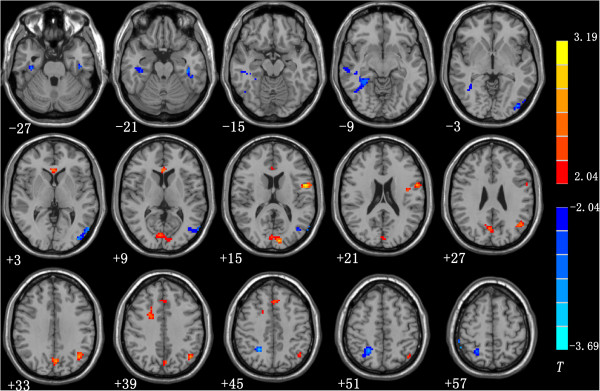
BACKGROUND: Recent studies suggest that Internet gaming addiction (IGA) is an impulse disorder, or is at least related to impulse control disorders. In the present study, we hypothesized that different facets of trait impulsivity may be specifically linked to the brain regions with impaired impulse inhibition function in IGA adolescents. METHODS: Seventeen adolescents with IGA and seventeen healthy controls were scanned during performance of a response-inhibition Go/No-Go task using a 3.0 T MRI scanner. The Barratt Impulsiveness Scale (BIS)-11 was used to assess impulsivity. RESULTS: There were no differences in the behavioral performance on the Go/No-Go task between the groups. However, the IGA group was significantly hyperactive during No-Go trials in the left superior medial frontal gyrus, right anterior cingulate cortex, right superior/middle frontal gyrus, left inferior parietal lobule, left precentral gyrus, and left precuneus and cuneus. Further, the bilateral middle temporal gyrus, bilateral inferior temporal gyrus, and right superior parietal lobule were significantly hypoactive during No-Go trials. Activation of the left superior medial frontal gyrus was positively associated with BIS-11 and Chen Internet Addiction Scale (CIAS) total score across IGA participants. CONCLUSIONS: Our data suggest that the prefrontal cortex may be involved in the circuit modulating impulsivity, while its impaired function may relate to high impulsivity in adolescents with IGA, which may contribute directly to the Internet addiction process.
Overview
The claims and statistics of this paper haven’t been checked yet.
Free: it reads the open-access text and checks the first 5 claims that cite a source we can check. Create a free account to check every claim.
Integrity signals
Registry
Cites
Statistics
Figures
Verification
Claims the paper makes
The claims and statistics of this paper haven’t been checked yet.
Free: it reads the open-access text and checks the first 5 claims that cite a source we can check. Create a free account to check every claim.
Claims other papers make about this one
Each is checked against this paper’s own text: does it say what the citing paper says it does?
The source backs part of the claim, not all of it — or backs it for a different population, condition or comparison.
In the citing paper
“Most studies to date of inhibitory control using the Go/No-Go Task have employed versions with neutral stimuli (i.e., without addiction-related stimuli) and observed no reductions in behavioral performance (Ding et al., 2014), although results are mixed across the existing studies (see meta-analysis by Smith et al., 2014).”
From Integrating psychological and neurobiological considerations regarding the development and maintenance of specific Internet-use disorders: An Interaction of Person-Affect-Cognition-Execution (I-PACE) model (2016) · cites this paper as Ding et al., 2014
Experimental — accuracy not yet measuredThe cited source says what the claim attributes to it.
In the citing paper
“Both neuro imaging and electrophysiology techniques have uncovered slight cognitive differences that were not apparent behaviorally (Ding et al., 2014; Gao et al., 2019).”
From Problematic social media use and inhibitory control among post-secondary students (2025) · cites this paper as Ding et al., 2014
Self-check
Percentages, sums and reported differences re-computed from the paper’s own numbers.
The self-check needs the paper’s full text.
Citations
Cites
Diagnostic and Statistical Manual of Mental Disorders
American Psychiatric Association (2013) · doi:10.1176/appi.books.9780890425596 · Cited by 116,369
Diagnostic and Statistical Manual of Mental Disorders
Williams, J. B. W., & First, M. (2013) · Encyclopedia of Social Work · doi:10.1093/acrefore/9780199975839.013.104 · Cited by 109,519
Control of goal-directed and stimulus-driven attention in the brain
Corbetta, M., & Shulman, G. L. (2002) · Nature Reviews Neuroscience · doi:10.1038/nrn755 · Cited by 12,881 · cited 1×
“These circuits appear to be critical for the executive control needed to guide goaldirected and stimulus-driven attention [54].”
BackgroundA self-rating depression scale
ZUNG, W. W. K. (1965) · Archives of General Psychiatry · doi:10.1001/archpsyc.1965.01720310065008 · Cited by 9,813 · cited 1×
“Before scanning, four questionnaires were used to assess the participants’ behavioral and personality features: the Chen Internet Addiction Scale (CIAS) [29], the Self-Rating Anxiety Scale (SAS) [30], the Self-rating Depression Scale (SDS) [31], and the Barratt Impulsiveness Scale-11 (BIS-11) [32].”
MethodThe Brain's Default Network: Anatomy, Function, and Relevance to Disease
Buckner, R. L., Andrews‐Hanna, J. R., & Schacter, D. L. (2008) · Annals of the New York Academy of Sciences · doi:10.1196/annals.1440.011 · Cited by 9,761
Functional connectivity in the resting brain: a network analysis of the default mode hypothesis
Greicius, M. D., Krasnow, B., Reiss, A. L., & Menon, V. (2003) · Proceedings of the National Academy of Sciences · doi:10.1073/pnas.0135058100 · Cited by 6,358 · cited 1×
“As both the medial PFC and precuneus are part of the default-mode network (regions that are typically deactivated during active task performance [64], the increased deactivation in these regions in IGA group compared with controls suggests an impairment in turning off the default mode during attempts to inhibit.”
Internet Addiction: The Emergence of a New Clinical Disorder
YOUNG, K. S. (1998) · CyberPsychology & Behavior · doi:10.1089/cpb.1998.1.237 · Cited by 5,513 · cited 6×
“The diagnostic questionnaire for Internet addiction was adapted from DSM-IV criteria for pathological gambling by Young [28].”
MethodInfluentialA Rating Instrument For Anxiety Disorders
Zung, W. W. K. (1971) · Psychosomatics · doi:10.1016/s0033-3182(71)71479-0 · Cited by 4,578
The role of the medial frontal cortex in cognitive control
Ridderinkhof, K. R., Ullsperger, M., Crone, E. A., & Nieuwenhuis, S. (2004) · Science · doi:10.1126/science.1100301 · Cited by 2,974 · cited 1×
“Moreover, the VMPFC has an anatomically intrinsic corticocortical network [50,51] and an extrinsic connection with the striatum, thalamus, brain stem, and limbic structures, including the amygdale, a circuit that is thought to contribute to impulsivity control [50,52].”
BackgroundOngur, D. (2000) · Cerebral Cortex · doi:10.1093/cercor/10.3.206 · Cited by 2,627 · cited 1×
“Moreover, the VMPFC has an anatomically intrinsic corticocortical network [50,51] and an extrinsic connection with the striatum, thalamus, brain stem, and limbic structures, including the amygdale, a circuit that is thought to contribute to impulsivity control [50,52].”
Background
Research works printed but not linked: 2
- Young K Internet addiction: symptoms, evaluation and treatment Innovat Clin Practice A Source Book 1999 10 19 31
- Chen SHWL Su YJ Wu HM Yang PF Development of Chinese internet addcition scale and its psychometric study Chin J Psychol 2003 10 279 294
Cited by
Items 101–200 of 293
Vargas, T., Maloney, J., Gupta, T., Damme, K. S. F., Kelley, N. J., & Mittal, V. A. (2019) · Psychiatry Research · doi:10.1016/j.psychres.2019.03.032 · Cited by 35
“One PIU individual was excluded from the Go/NoGo task due to missing data, comprising a total of 31 PIU (Ding et al., 2014) and 30 no-PIU individuals.”
BackgroundMethodResultInfluentialThe psychometric properties of the Chinese version internet gaming disorder scale
Lei, W., Liu, K., Zeng, Z., Liang, X., Huang, C., Gong, K., He, W., Xiang, B., Zhang, J., Zheng, X., et al. (2020) · Addictive Behaviors · doi:10.1016/j.addbeh.2020.106392 · Cited by 47
Piani, M. C., Maggioni, E., Delvecchio, G., & Brambilla, P. (2022) · Journal of Affective Disorders · doi:10.1016/j.jad.2022.02.003 · Cited by 45
Disrupted white matter structural connectivity in heroin abusers
Sun, Y., Wang, G., Lin, Q., Lü, L., Shu, N., Meng, S., Wang, J., Han, H., He, Y., & Shi, J. (2015) · Addiction Biology · doi:10.1111/adb.12285 · Cited by 36
“This finding is consistent with a recent study that found that the MTG is significantly hypoactive during No-Go trials (Ding et al. 2014), suggesting that the MTG plays an inhibitory”
Self-citationAltered Heart Rate Variability During Gaming in Internet Gaming Disorder
Lee, D., Hong, S. J., Jung, Y., Park, J., Kim, I. Y., & Namkoong, K. (2018) · Cyberpsychology Behavior and Social Networking · doi:10.1089/cyber.2017.0486 · Cited by 36
“14,15 We speculate that these findings may be due to the lack of gaming-specific cues in the course of performing the tasks.”
Weigard, A. S., Soules, M. E., Ferris, B., Zucker, R. A., Sripada, C., & Heitzeg, M. M. (2019) · Biological Psychiatry Cognitive Neuroscience and Neuroimaging · doi:10.1016/j.bpsc.2019.11.013 · Cited by 41
Suenderhauf, C., Walter, A., Lenz, C., Lang, U. E., & Borgwardt, S. (2016) · Neuroscience & Biobehavioral Reviews · doi:10.1016/j.neubiorev.2016.03.018 · Cited by 38
Zhai, Z. W., Hoff, R. A., Howell, J. C., Wampler, J., Krishnan‐Sarin, S., & Potenza, M. N. (2019) · Journal of Psychiatric Research · doi:10.1016/j.jpsychires.2019.11.005 · Cited by 37
Connectome‐based prediction of craving for gaming in internet gaming disorder
Zhou, W., Wang, Y., Wang, M., Wang, Z., Zheng, H., Wang, M., Potenza, M. N., & Dong, G. (2021) · Addiction Biology · doi:10.1111/adb.13076 · Cited by 36
“Connection between the ITG and other brain areas related to inhibitory control have been suggested to be impaired in IGD,(41) and the ITG has been previously implicated in gaming-related craving.(42) We also identified the insula and OFC as key nodes in the prediction of IGD subjects' craving.”
Bozkurt, A., Demirdöğen, E. Y., & Akıncı, M. A. (2024) · Eurasian Journal of Medicine · doi:10.5152/eurasianjmed.2024.23379 · Cited by 61
“20,21 Furthermore, neurocognitive research suggests that addictions may harm brain regions related to an individual’s self-regulation abilities.”
BackgroundZsido, A. N., Darnai, G., Inhóf, O., Perlaki, G., Orsi, G., Nagy, S. A., Lábadi, B., Lénárd, K., Kovács, N., Doczi, T. P., et al. (2019) · Journal of Behavioral Addictions · doi:10.1556/2006.8.2019.03 · Cited by 38
“It has been suggested that long-term hyperactivity in such regions could lead to impaired auditory– visual abilities (Ding et al., 2014), language-processing impairment (Söderström, Horne, Mannfolk, van Westen, & Roll, 2017), and learning problems (Cone-Wesson, 2005).”
BackgroundResultNasser, N. S., Sharifat, H., Rashid, A. A., Hamid, S. A., Rahim, E. B. A., Loh, J. L., Ching, S. M., Hoo, F. K., Ismail, S. I. F., Tyagi, R., et al. (2020) · Frontiers in Psychology · doi:10.3389/fpsyg.2020.556060 · Cited by 38
Costes, J., & Bonnaire, C. (2022) · International Journal of Environmental Research and Public Health · doi:10.3390/ijerph192315709 · Cited by 53
Impulsivity and aggression as risk factors for internet gaming disorder among university students
Hammad, M. A., & AL-shahrani, H. F. (2024) · Scientific Reports · doi:10.1038/s41598-024-53807-5 · Cited by 54
“with and without internet gaming addiction found that the former group exhibited higher scores on the Barratt Impulsivity Scale 11 and showed impaired functioning in the brain regions responsible for impulse control 17 .”
BackgroundProfiles of Impulsivity in Problematic Internet Users and Cigarette Smokers
Liu, S.-J., Lan, Y., Wu, L., & Yan, W.-S. (2019) · Frontiers in Psychology · doi:10.3389/fpsyg.2019.00772 · Cited by 35
Hing, N., Russell, A. M. T., King, D. L., Rockloff, M., Browne, M., Newall, P. W. S., & Greer, N. L. (2022) · Addictive Behaviors · doi:10.1016/j.addbeh.2022.107525 · Cited by 41
The roles of impulsivity, self-regulation, and emotion regulation in the experience of self-disgust
Lazuras, L., Ypsilanti, A., Powell, P. A., & Overton, P. G. (2018) · Motivation and Emotion · doi:10.1007/s11031-018-9722-2 · Cited by 52
“, reduced P300 amplitude) and fMRI studies (Asahi et al. 2004; Ding et al. 2014; Moeller et al. 2001; Russo et al. 2008; Spinella 2007).”
BackgroundInternet Gaming Disorder, Obsessive-Compulsive Disorder, and Addiction
Starčević, V., & Aboujaoude, E. N. (2017) · Current Addiction Reports · doi:10.1007/s40429-017-0158-7 · Cited by 37
Wypych, M., Michałowski, J. M., Droździel, D., Borczykowska, M., Szczepanik, M., & Marchewka, A. (2019) · Scientific Reports · doi:10.1038/s41598-019-48008-4 · Cited by 34
Zou, L., Wu, X., Tao, S., Yang, Y., Zhang, Q., Hong, X., Xie, Y., Li, T., Zheng, S., & Tao, F. (2021) · Social Cognitive and Affective Neuroscience · doi:10.1093/scan/nsab016 · Cited by 32
“These results suggest that the GMV of the ACC and right FFG, as well as FA in the body of the corpus callosum, was related to PMPU, and we further found that increased GMV of the ACC could reduce the relationship between PMPU and depressive symptoms in college students.”
ResultInfluentialLai, C., Altavilla, D., Mazza, M., Scappaticci, S., Tambelli, R., Aceto, P., Luciani, M., Corvino, S., Martinelli, D., Alimonti, F., et al. (2017) · Journal of Mental Health · doi:10.1080/09638237.2017.1294745 · Cited by 33
“…involving limbic (as insula, hippocampus, amygdala, parahippocampus), cingulate (anterior and posterior), frontal, parietal and temporal areas (Ding et al., 2013, 2014; Dong et al., 2013a,b; Hong et al., 2013; Ko et al., 2014, 2015; Luijten et al., 2015; Park et al., 2016; Qi et al., 2015;…”
BackgroundMethodTrait impulsivity components correlate differently with proactive and reactive control
Huang, S., Zhu, Z., Zhang, W., Chen, Y., & Zhen, S. (2017) · PLoS ONE · doi:10.1371/journal.pone.0176102 · Cited by 30
Kim, H., Kim, Y. K., Lee, J. Y., Choi, A. R., Kim, D., & Choi, J. (2019) · Progress in Neuro-Psychopharmacology and Biological Psychiatry · doi:10.1016/j.pnpbp.2019.109680 · Cited by 33
Lee, D., Park, J., Namkoong, K., Hong, S. J., Kim, I. Y., & Jung, Y. (2020) · Progress in Neuro-Psychopharmacology and Biological Psychiatry · doi:10.1016/j.pnpbp.2020.110127 · Cited by 30
Static and dynamic changes of intrinsic brain local connectivity in internet gaming disorder
Niu, X., Gao, X., Zhang, M., Dang, J., Sun, J., Yan, L., Wang, W., Wei, Y., Cheng, J., Han, S., et al. (2023) · BMC Psychiatry · doi:10.1186/s12888-023-05009-y · Cited by 30
“Previous study found that the IGD group was remarkably hyperactive during the No-Go trials in the left mSFG, which may indicate that IGD subjects showed decreased efficiency in response inhibition process and needed greater levels of neuronal involvement[43].”
ResultSelf-citationBrown, M., Benoit, J. R. A., Juhás, M., Dametto, E., Tse, T. T., MacKay, M., Sen, B., Carroll, A. M., Hodlevskyy, O., Silverstone, P. H., et al. (2015) · Frontiers in Systems Neuroscience · doi:10.3389/fnsys.2015.00124 · Cited by 34
“…to response conflict processing (see Ridderinkhof et al., 2004) as well as to response selection and response inhibition in the Go/NoGo task (Simmonds et al., 2008). dmPFC is also thought to be involved in resolution of response conflict and outcome value-related aspects of decision making…”
BackgroundSeok, J., & Sohn, J. (2020) · Journal of Behavioral Addictions · doi:10.1556/2006.2020.00003 · Cited by 32
“Previous studies have revealed correlations between diminished control and other addictive behaviors such as internet gaming disorder (Ding et al., 2014; Dong, Devito, Du, & Cui, 2012; Liu et al., 2014) and gambling disorder (Odlaug, Chamberlain, Kim, Schreiber, & Grant, 2011; Van Holst, Van…”
Pathological Video Gaming and Its Relationship to Substance Use Disorders
Smith, K. L., Hummer, T. A., & Hulvershorn, L. A. (2015) · Current Addiction Reports · doi:10.1007/s40429-015-0075-6 · Cited by 32
Functional neuroimaging for addiction medicine
Ekhtiari, H., Faghiri, A., Oghabian, M. A., & Paulus, M. P. (2015) · Progress in brain research · doi:10.1016/bs.pbr.2015.10.001 · Cited by 27
Wang, J., Tang, L., Liu, Y., Wu, X., Zhou, Z., & Zhu, S. (2025) · Scientific Reports · doi:10.1038/s41598-025-07487-4 · Cited by 32
Zhang, M., & Bian, Y. (2020) · Addictive Behaviors · doi:10.1016/j.addbeh.2020.106632 · Cited by 25
Neural substrates of deficient cognitive control in individuals with severe internet gaming disorder
Wang, L., Yang, G., Zheng, Y., Li, Z., Wei, P., Li, Q., Hu, K., & Liu, X. (2021) · NeuroImage Clinical · doi:10.1016/j.nicl.2021.102828 · Cited by 30
“However, in the two studies (Ding et al., 2014; Ko et al., 2014), the HCs were recreational game players.”
Moshel, M. L., Warburton, W., Batchelor, J., Bennett, J. M., & Ko, K. Y. (2023) · Neuropsychology Review · doi:10.1007/s11065-023-09612-4 · Cited by 45
“…et al., 2016, 2017), whilst the remainder used Problematic Video Gaming (Collins & Freeman, 2014; Irvine et al., 2013), Internet gaming addiction (Ding et al., 2014), problematic online gaming addiction (Han et al., 2012), problematic gaming (Luijten et al., 2015), Addicted First-Person Shooter…”
BackgroundMethodAnjum, R., Nodi, N. H., Das, P. R., Roknuzzaman, A. S. M., Sarker, R., & Islam, M. R. (2024) · Health Science Reports · doi:10.1002/hsr2.70043 · Cited by 24
“66 69 A gender gap in gaming addiction can maintain or exacerbate pre ‐ existing gender ‐ based disparities, which may then influence people's choices about their futures and jobs.”
BackgroundNetwork-Based Analysis Reveals Functional Connectivity Related to Internet Addiction Tendency
Wen, T., & Hsieh, S. (2016) · Frontiers in Human Neuroscience · doi:10.3389/fnhum.2016.00006 · Cited by 27
“…studies have found that participants with internet addiction showed higher fronto-striatal and frontoparietal activation during the Go/Nogo task (Ding et al., 2014; Ko et al., 2014; Chen et al., 2015) and Stroop task (Dong The proportions were calculated by dividing the number of edges between…”
BackgroundAltered topological connectivity of internet addiction in resting-state EEG through network analysis
Sun, Y., Wang, H., & Bo, S. (2019) · Addictive Behaviors · doi:10.1016/j.addbeh.2019.02.015 · Cited by 25
Self-citationMoretta, T., Sarlo, M., & Buodo, G. (2019) · Cyberpsychology Behavior and Social Networking · doi:10.1089/cyber.2019.0059 · Cited by 24
“…(non-PUs), as indicated by greater recruitment of anterior and posterior cingulate cortex, dorsolateral prefrontal, pre-motor, and parietal cortices, 3 and reduced amplitude of the N2 component of the ERPs in the NoGo condition, 4–6 which reflect impaired conflict monitoring and inhibitory control.”
Gaming disorder and bidirectional relationships with aggression and impulsivity
Jeong, H., Lee, H. K., Kweon, Y., Yim, H. W., & Lee, S. (2019) · Current Opinion in Behavioral Sciences · doi:10.1016/j.cobeha.2019.12.003 · Cited by 34
Ko, M., Chi, S., Lee, J., Suh, S., & Lee, M. (2023) · Clinical Psychopharmacology and Neuroscience · doi:10.9758/cpn.2023.21.2.304 · Cited by 23
“Some studies [40,41] have reported changes in the precentral gyrus in Internet gaming disorder and smartphone addiction.”
BackgroundLorenzetti, V., Gaillard, A., Beyer, E., Kowalczyk, M. A., Kamboj, S. K., Manning, V., & Gleeson, J. (2023) · BMC Psychiatry · doi:10.1186/s12888-023-04789-7 · Cited by 28
“, tobacco and alcohol; [51]) and impulsivity [52].”
BackgroundWang, G.-Y., van Eijk, J., Demirakça, T., Sack, M., Krause-Utz, A., Cackowski, S., Schmahl, C. G., & Ende, G. (2016) · NeuroImage · doi:10.1016/j.neuroimage.2016.12.013 · Cited by 29
Tahmasian, M., Rochhausen, L., Maier, F., Williamson, K. L., Drzezga, A. E., Timmermann, L., van Eimeren, T., & Eggers, C. (2015) · Frontiers in Behavioral Neuroscience · doi:10.3389/fnbeh.2015.00317 · Cited by 21
“Interestingly, activation of the superior medial frontal gyrus was positively associated with BIS-11, suggesting an association between impulsivity and impaired prefrontal impulse inhibition (Ding et al., 2014).”
BackgroundDu, X., Liu, L., Yang, Y., Qi, X., Gao, P., Zhang, Y., Zhu, J., Du, G., Dai, S., Li, X., et al. (2017) · Brain and Behavior · doi:10.1002/brb3.753 · Cited by 23
“…greater impulsivity and lower inhibitory control accompanied by aberrant brain activations in the precentral gyrus and supplemental motor area in IGD adolescents compared with healthy subjects (Chen et al., 2015; Ding et al., 2014; Dong et al., 2012; Liu et al., 2014; Luijten et al., 2015).”
BackgroundResultInfluentialSelf-citationNeuroanatomical correlates of time perspective: A voxel-based morphometry study
Chen, Z., Guo, Y., & Feng, T. (2017) · Behavioural Brain Research · doi:10.1016/j.bbr.2017.11.004 · Cited by 23
Implicações neuropsicológicas e comportamentais na infância e adolescência a partir do uso de telas
Peixoto, M. J. R., Cassel, P. A., & Bredemeier, J. (2020) · Research Society and Development · doi:10.33448/rsd-v9i9.7188 · Cited by 62
Cascio, C. N., Lauharatanahirun, N., Lawson, G. M., Farah, M. J., & Falk, E. B. (2022) · Scientific Reports · doi:10.1038/s41598-021-04152-4 · Cited by 25
Kubera, K. M., Schmitgen, M. M., Maier-Hein, K. H., Thomann, P. A., Hirjak, D., & Wolf, R. C. (2018) · Behavioural Brain Research · doi:10.1016/j.bbr.2018.05.006 · Cited by 18
“Previous brain imaging studies in psychiatric patients exhibiting higher impulsiveness have yielded information on morphological changes of cuneus [3,55].”
Vally, Z. (2020) · Psychiatric Quarterly · doi:10.1007/s11126-020-09799-2 · Cited by 21
“This preceding literature has contended that the obtained association between heightened impulsivity and IGD risk may be explained by the observation that impulse-control deficits appear to be a common feature between these two constructs [33, 34].”
BackgroundNeuropsychological Constructs in Gaming Disorders: a Systematic Review
Legault, M. C. B., Liu, H. Z., & Balodis, I. M. (2021) · Current Behavioral Neuroscience Reports · doi:10.1007/s40473-021-00230-z · Cited by 22
Neural mechanisms of behavioral addiction: An ALE meta-analysis and MACM analysis
Li, Z., He, Q., Elhai, J. D., Montag, C., & Yang, H. (2025) · Journal of Behavioral Addictions · doi:10.1556/2006.2024.00082 · Cited by 21
“Previous studies have indicated a correlation between addiction and decreased inhibitory control (Kräplin et al., 2020), with greater impairment of response inhibitory observed in IGD (Shen et al., 2023) and functional abnormalities identi fi ed in the prefrontal regions (Ding et al., 2014).”
InfluentialLi, H., Turel, O., & He, Q. (2023) · Current Addiction Reports · doi:10.1007/s40429-023-00481-8 · Cited by 19
Problematic social media use and inhibitory control among post-secondary students
Shannon, H., Montgomery, M., Guimond, S., & Hellemans, K. (2025) · Addictive Behaviors · doi:10.1016/j.addbeh.2025.108307 · Cited by 16
Kim, S., Kim, M.-K., Shin, Y., Kim, H. E., Kwon, J. H., & Kim, J. (2021) · Journal of Behavioral Addictions · doi:10.1556/2006.2021.00005 · Cited by 17
“Impulsivity-related neural processes may underlie addiction processes in IGD (Ding et al., 2014).”
BackgroundMohamed, N. F., Manan, N. A., Chan, M. F. M. F., Rahmatullah, B., Wahab, R. A., Baharudin, S. N. A., Govindasamy, P., & Abdulla, K. (2023) · Clinical Child Psychology and Psychiatry · doi:10.1177/13591045231164870 · Cited by 22
“For instance, several studies suggest higher impulsiveness in the IGD group as compared to the healthy control group (Ding et al., 2014; Du et al., 2016; Feng et al., 2013; Y. Wang et al., 2015).”
ResultWu, R. T., Yang, J. F., Zucconi, W. B., Lacadie, C., Swallow, M. S., Sun, A. H., Eilbott, J. A., Mayes, L. C., Steinbacher, D. M., Pelphrey, K. A., et al. (2019) · Plastic & Reconstructive Surgery · doi:10.1097/prs.0000000000005850 · Cited by 16
Chen, Y., Yu, H., & Gao, X. (2022) · International Journal of Environmental Research and Public Health · doi:10.3390/ijerph192316264 · Cited by 16
Gül, A., & Gül, H. (2023) · Research in Developmental Disabilities · doi:10.1016/j.ridd.2023.104557 · Cited by 16
Park, M., Jang, J. H., Yoo, S. Y., Choi, A., Kim, H., & Choi, J. (2023) · Journal of Behavioral Addictions · doi:10.1556/2006.2023.00063 · Cited by 17
“Adolescents with IGD reportedly exhibit greater response inhibition activity in the SFG, while SFG activation is correlated with symptom severity and impulsivity scores; thus, adolescents with IGD may exhibit decreased response inhibition and prefrontal cortex dysfunction (Ding et al., 2014).”
BackgroundLuo, D., He, W., Shen, D., Tang, B., Tao, H., Tang, Q., Lai, M., Liu, J., Liu, Y., Xu, J., et al. (2024) · Cerebral Cortex · doi:10.1093/cercor/bhad523 · Cited by 16
Self-citationTseng, Y., Su, Y.-K., Chou, W., Miyakoshi, M., Tsai, C., Li, C.-J., Lee, S.-Y., & Wang, L. (2024) · IEEE Transactions on Neural Systems and Rehabilitation Engineering · doi:10.1109/tnsre.2024.3363756 · Cited by 17
“The IA group exhibited significant hyperactivity during inhibitory control in the left and right superior/medial frontal gyrus, dorsal lateral prefrontal cortex, right anterior cingulate cortex, left inferior parietal lobule, left precentral gyrus, left precuneus, and cuneus [23], [24].”
BackgroundAltered brain network topology related to working memory in internet addiction
Wang, H., Sun, Y., Lan, F., & Liu, Y. (2020) · Journal of Behavioral Addictions · doi:10.1556/2006.2020.00020 · Cited by 17
“*Corresponding author’s e-mail: sunyan@lnnu.edu.cn (Chen et al., 2015; Ding et al., 2014).”
ResultSelf-citationMichałowski, J. M., Koziejowski, W., Droździel, D., Harciarek, M., & Wypych, M. (2017) · Personality and Individual Differences · doi:10.1016/j.paid.2017.06.010 · Cited by 14
Caldiroli, A., Serati, M., & Buoli, M. (2018) · The Journal of Nervous and Mental Disease · doi:10.1097/nmd.0000000000000861 · Cited by 20
The neuropsychological profile of work addiction
Berta, K., Pesthy, Z. V., Vékony, T., Farkas, B. C., Németh, D., & Kun, B. (2023) · Scientific Reports · doi:10.1038/s41598-023-47515-9 · Cited by 16
“In a functional magnetic resonance imaging (fMRI) study conducted by Ding et al. 95 with individuals with gaming disorder, no differences were observed at the behavioral level, but hyperactivation in several brain areas (e.g., medial frontal gyrus, right anterior cingulate cortex) was found in the group with addiction.”
BackgroundP3 Component as a Potential Endophenotype for Control Inhibition in Offspring of Alcoholics
Centeno, I. D., Barba, R. J., Sión, A., Martínez-Maldonado, A., Castillo-Parra, G., Lopez-Munoz, F. J., Rubio, G., & Martínez‐Gras, I. (2018) · Alcohol and Alcoholism · doi:10.1093/alcalc/agy051 · Cited by 14
“The differences in the No-Go P3 amplitude in frontal areas may be in line with the theory that the cognitive functions related with the prefrontal cortex may be considered as a marker for alcoholism (Cohen et al., 1993; Claus et al., 2011; Ding et al., 2014).”
ResultAcute and Chronic Effects of Betel Quid Chewing on Brain Functional Connectivity
Sariah, A., Guo, S., Zuo, J., Pu, W., Liu, H., Rolls, E. T., Xue, Z., Liu, Z., & Huang, X. (2020) · Frontiers in Psychiatry · doi:10.3389/fpsyt.2020.00198 · Cited by 14
“We also found increased FC in the right medial SFG, which mirrors a reduced efficiency of response inhibition processes in the PFC (87).”
BackgroundAppetitive Needs and Addiction
Sussman, S. Y., & Pakdaman, S. (2020) · Cambridge University Press eBooks · doi:10.1017/9781108632591.004 · Cited by 12
Gaming disorder: Neural mechanisms and ongoing debates
Zheng, Y., Zhang, S.-N., Tang, H.-D., Wang, S.-W., Lin, X., Bao, Y., Wang, Y.-M., Griffiths, M. D., Sun, J., Han, Y., et al. (2025) · Journal of Behavioral Addictions · doi:10.1556/2006.2024.00071 · Cited by 17
“Moreover, individuals with GD generally exhibit higher ACC activation when performing executive tasks, such as the Go/No-Go task (Ding et al., 2014; Ko et al., 2014) and cue-reactivity tasks (Zhang et al., 2021).”
Self-citationUnderstanding internet gaming addiction in clinical practice
Gupta, D., Bennett-Li, L., Velleman, R. D. B., George, S., & Nadkarni, A. (2020) · BJPsych Advances · doi:10.1192/bja.2020.81 · Cited by 17
Yu, F., Li, J., Xu, L., Zheng, X., Fu, M., Li, K., Yao, S., Kendrick, K. M., Montag, C., & Becker, B. (2022) · Journal of Behavioral Addictions · doi:10.1556/2006.2022.00078 · Cited by 12
“…and emotional control impairments were associated with abnormal engagement of fronto-parietal, insular and temporal regions (Chen et al., 2015; Ding et al., 2014; Dong, Devito, Du, & Cui, 2012; Dong, Zhou, & Zhao, 2010; Ko et al., 2014; Liu et al., 2014; Shin, Kim, Kim, & Kim, 2021; Turel,…”
BackgroundAmygdala-frontal connectivity predicts internalizing symptom recovery among inpatient adolescents
Venta, A. C., Sharp, C., Patriquin, M. A., Salas, R., Newlin, E., Curtis, K. N., Baldwin, P. R., Fowler, C., & Frueh, B. C. (2017) · Journal of Affective Disorders · doi:10.1016/j.jad.2017.08.064 · Cited by 13
Meta-analysis of structural and functional abnormalities in behavioral addictions
Mei, B., Tao, Q., Dang, J., Niu, X., Sun, J., Zhang, M., Wang, W., Han, S., Zhang, Y., & Cheng, J. (2024) · Addictive Behaviors · doi:10.1016/j.addbeh.2024.108088 · Cited by 12
Self-citationPsychological and electrophysiological indices of inattention in hoarding
Baldwin, P. A., Whitford, T. J., & Grisham, J. R. (2018) · Psychiatry Research · doi:10.1016/j.psychres.2018.11.009 · Cited by 13
Dissociation of impulsive traits by subthalamic metabotropic glutamate receptor 4
Piszczek, L., Constantinescu, A., Kargl, D., Lazović, J., Pekcec, A., Nicholson, J. R., & Haubensak, W. E. (2022) · eLife · doi:10.7554/elife.62123 · Cited by 11
The influences and neural correlates of past and present during gambling in humans
Sacré, P., Subramanian, S., Kerr, M. S. D., Kahn, K., Johnson, M. A., Bulacio, J. C., Gonzalez-Martinez, J. A., Sarma, S. V., & Gale, J. T. (2017) · Scientific Reports · doi:10.1038/s41598-017-16862-9 · Cited by 10
Herrero, L., & Carriedo, N. (2020) · Current Psychology · doi:10.1007/s12144-020-00983-y · Cited by 15
“…been extensively used as a measure of inhibition of the prepotent response both in cognitive psychology and in cognitive neuroscience, as well as in studies with adolescents (Ding et al. 2014; Somerville et al. 2011) and adults (Cheung et al. 2004; Kang et al. 2015; Rodríguez-Villagra et al. 2013).”
MethodLi, C., McHaney, K. M., Sederberg, P. B., & Cang, J. (2022) · eNeuro · doi:10.1523/eneuro.0419-22.2022 · Cited by 11
“Such tasks have thus become more suitable for studying impulsion and inhibition (Eagle et al., 2008; Dong et al., 2010; na Ding et al., 2014).”
BackgroundSchwartz, F., Tahmasian, M., Maier, F., Rochhausen, L., Schnorrenberg, K. L., Samea, F., Seemiller, J., Zarei, M., Sorg, C., Drzezga, A. E., et al. (2018) · Brain Imaging and Behavior · doi:10.1007/s11682-017-9812-x · Cited by 13
“Interestingly, activation of the left superior medial frontal gyrus was positively linked with the BIS-11 scores (Ding et al. 2014).”
BackgroundYu, Q., Wang, X., Cao, Y., Lu, J., Gao, F., Fan, J., & Zhu, X. (2023) · Journal of Affective Disorders · doi:10.1016/j.jad.2023.01.039 · Cited by 10
Keshky, M. E. S. E., & Alballa, T. (2023) · Frontiers in Public Health · doi:10.3389/fpubh.2023.1231550 · Cited by 11
Huang, H.-W., Li, P.-Y., Chen, M.-C., Chang, Y.-X., Liu, C., Chen, P.-W., Lin, Q., Lin, C., Huang, C., & Wu, S. (2025) · Psychological Medicine · doi:10.1017/s0033291725001035 · Cited by 13
“Other studies have reported increased intrahemi-spheric coherence in the beta and gamma bands among IA participants (Park et al., 2017, 2018), implicating the brain ’ s reward system, cognitive functions, and impulse control mechanisms (Ding et al., 2014).”
Problematic social media use in youths cause response inhibition impairment
Gou, S., Yuan, R., Zhang, W., Tang, Y., & Zhang, W. (2023) · Current Psychology · doi:10.1007/s12144-023-05425-z · Cited by 14
“…the application of the Go/No Go task and its adaptations has been extensively explored in studies related to behavioral addictions, such as IGD (Ding et al., 2014; Li et al., 2020) and gambling disorder (Harris et al., 2021; Pallanti et al., 2021), research in this context has been relatively…”
InfluentialIndividualized prediction of online shopping addiction from whole-brain functional connectivity
Shi, L., Ren, Z., Feng, Q., & Qiu, J. (2024) · Neuropsychologia · doi:10.1016/j.neuropsychologia.2024.108967 · Cited by 13
Wei, M., Luo, X., Fu, J., Dong, Y.-S., Liu, J., Liu, J., & Dong, G.-H. (2025) · Journal of Psychiatric Research · doi:10.1016/j.jpsychires.2025.04.012 · Cited by 11
Smart Healthcare Systems and Precision Medicine
Paik, S.-H., & Kim, D. (2019) · Advances in experimental medicine and biology · doi:10.1007/978-981-32-9721-0_13 · Cited by 9
Soshi, T., Ando, K., Noda, T., Nakazawa, K., Tsumura, H., & Okada, T. (2015) · Frontiers in Human Neuroscience · doi:10.3389/fnhum.2014.01072 · Cited by 9
“Li et al. (2008b), on the other hand, observed enhanced post-error activation of the ventrolateral prefrontal (PFC) area, which is connected with several areas including the SMA (Ide and Li, 2011).”
InfluentialWang, Y., & Li, X. (2025) · Frontiers in Human Neuroscience · doi:10.3389/fnhum.2025.1500399 · Cited by 9
Zhang, Z., Wang, M., Meng, G., Qi, Y., Wang, L., & Dong, G. (2025) · Journal of Behavioral Addictions · doi:10.1556/2006.2025.00036 · Cited by 9
“By using an emotion reappraisal task, researchers found that adults participants with IGD showed greater activation in the ACC and insula and stronger FC between the insula and DLPFC than HCs did, which implied their poor downregulation of negative emotions despite putting in more cognitive resources (Jialin Zhang et…”
InfluentialQualitative Approaches to the Study of Substance and Behavioral Addictions
Simpson, K. A., & Bluthenthal, R. N. (2020) · Cambridge University Press eBooks · doi:10.1017/9781108632591.013 · Cited by 11
High-dimensional Metaverse Platforms and the Virtually Extended Self
Parsons, T. D. (2024) · Journal of Cognition · doi:10.5334/joc.327 · Cited by 8
Online gaming addiction in youth: Some comments on Rosendo-Rios et al. (2022)
Griffiths, M. D. (2022) · Addictive Behaviors · doi:10.1016/j.addbeh.2022.107311 · Cited by 16
“Game (not) Over”: A Systematic Review of Video Game Disorder in Adolescents
Rojas-Jara, C., Polanco-Carrasco, R., Navarro-Castillo, R., Faúndez-Castillo, F., & Chamorro-Gallardo, M. (2022) · Revista Colombiana de Psicología · doi:10.15446/rcp.v31n2.90741 · Cited by 18
“For example, scientists have observed that alterations in the prefrontal cortex —involved in the circuitry that modulates impulsivity— may be the basis of thoughtless behavior (Ding et al., 2014).”
BackgroundJiang, W., Liu, X., Xu, Z., Zhou, Z., Tie, C., Liu, X., Yang, J., Li, H., & Lai, W. (2023) · Brain and Behavior · doi:10.1002/brb3.3315 · Cited by 5
“In addition, impulsivity was found to be related to alterations of prefrontal function in GD (Ding et al., 2014) and in drug use disorder (Büchel et al., 2017; Du et al., 2022).”
BackgroundMaleki, F., Shakiba, S., Dolatshahi, B., Yoosefi, A., & Jamialahmadi, S. (2024) · Current Psychology · doi:10.1007/s12144-024-07140-9 · Cited by 5
Wang, J., Peng, J., Dong, J., Peng, H., Yi, Z., Liu, Y., & Tang, W. (2025) · Journal of Family Violence · doi:10.1007/s10896-025-00924-y · Cited by 7
Functional MRI of inhibitory control processing in problematic mobile video gamers
Shen, X., Li, Z., Sheng, J.-R., Zhou, X., & Wang, J. (2023) · Psychiatry Research · doi:10.1016/j.psychres.2023.115220 · Cited by 8
Video Game Use in the Treatment of Amblyopia: Weighing the Risks of Addiction.
Xu, C. S., Chen, J. S., & Adelman, R. A. (2015) · PubMed Central · Cited by 9
Wang, H., Sun, Y., Lv, J., & Bo, S. (2019) · Brain and Behavior · doi:10.1002/brb3.1218 · Cited by 6
“For example, Ding et al. (2014) suggested that impaired function of the prefrontal cortex may relate to high impulsivity in adolescents with IA, which may contribute directly to the IA process.”
BackgroundSelf-citationSports Augmented Cognitive Benefits: An fMRI Study of Executive Function with Go/NoGo Task
Ding, Q., Huang, L., Chen, J., Dehghani, F., Du, J., Li, Y., Li, Q., Zhang, H., Qian, Z., Shen, W., et al. (2021) · Neural Plasticity · doi:10.1155/2021/7476717 · Cited by 7
“[34] observed both enhanced and reduced responses in different brain areas with the NoGo task.”
BackgroundRetractedThe inhibitory control deficit of internet gaming disorder: An Event-Related Potentials(ERPs) study
Yu, J., Abdullah, M. F. I. L. B., & Mansor, N. S. (2024) · Behavioural Brain Research · doi:10.1016/j.bbr.2024.115253 · Cited by 6
Metadata
- Authors
- Ding, W.-N., Sun, J.-H., Sun, Y.-W., Chen, X., Zhou, Y., Zhuang, Z.-G., Li, L., Zhang, Y., Xu, J.-R., & Du, Y.-S.
- Affiliations
- Shanghai Jiao Tong University (CN)
- Corresponding author
- Zhou, Yan
- Venue
- Behavioral and Brain Functions
- Published
- 2014-05-30
- Volume
- 10
- Issue
- 1
- Pages
- 20-20
- ISSN
- 1744-9081 (ISSN-L)
- PMC
- PMC4050412
- OpenAlex
- W2161562531
- Cited by
- 294
- References
- 72
- Citations by year
- 2026: 8 · 2025: 23 · 2024: 22 · 2023: 27 · 2022: 20 · 2021: 17 · 2020: 70 · 2019: 29 · 2018: 15 · 2017: 27 · 2016: 14 · 2015: 20 · 2014: 2
- FWCI
- 68.44
- Type
- journal article
- Language
- en
- Open access
- gold
- doi.org
- Licence
- cc-by
- Locations
- Behavioral and Brain Functions (publishedVersion, cc-by)
- Europe PMC (PubMed Central) (publishedVersion, cc-by)
- PubMed Central (publishedVersion, cc-by)
- PubMed (publishedVersion)
- Funders
- National Natural Science Foundation of China (81201172, S30203, 81171325)
- Science and Technology Commission of Shanghai Municipality
- Shanghai Leading Academic Discipline Project (81201172, 81171325, S30203)
- Topics
- Social Sciences › Sociology and Political Science › Impact of Technology on Adolescents
- Life Sciences › Neuroscience › Cognitive Neuroscience › Neural and Behavioral Psychology Studies
- Social Sciences › Psychology › Clinical Psychology › Gambling Behavior and Treatments
- Keywords
- online game addiction, trait impulsivity, impulse inhibition, prefrontal cortex, adolescents, go/no-go task, response inhibition, anterior cingulate cortex, Barratt Impulsiveness Scale, Chen Internet Addiction Scale
- MeSH terms
- Adolescent, Female, Humans, Image Processing, Computer-Assisted, Impulsive Behavior, Magnetic Resonance Imaging, Male, Neuropsychological Tests, Personality, Surveys and Questionnaires, Behavior, Addictive, Prefrontal Cortex, Video Games, Internet, Young Adult
About these checks
Registry, retraction, Cites and statistics results are computed, not judged, with one exception: a printed reference that no index lists is read once by a model before it counts as a citation error. Claims are extracted by a model and kept only when their quote appears verbatim in the text; each cited source is then checked, with a model’s help, for whether it says what the claim relies on. Those verdicts can be wrong — read the claim’s quote and the cited source before relying on one.
Statistics and arithmetic are recomputed, not judged.
Confidence bands are shown only for fields calibrated on our annotated test set. None is calibrated yet, so no band is shown.
What counts as a claim ›How we measure confidence ›How we check this ›
Are you an author, or do you see a problem with this page? Request a review
Data sources
Bibliographic data: Semantic Scholar, OpenAlex, Crossref.
Contains information from the Semantic Scholar Academic Graph Datasets, made available under the ODC Attribution License (ODC-BY 1.0).
Semantic Scholar’s data is described in: Kinney, R., et al. (2023). The Semantic Scholar Open Data Platform. arXiv:2301.10140.
