

Trait impulsivity and impaired prefrontal impulse inhibition function in adolescents with internet gaming addiction revealed by a Go/No-Go fMRI study
Open accessThe DOI matches its Crossref record; 72 of the 72 references it cites were found in a registry or an index.
Abstract
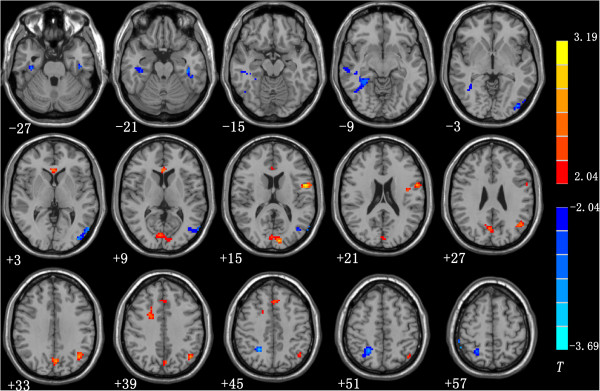
BACKGROUND: Recent studies suggest that Internet gaming addiction (IGA) is an impulse disorder, or is at least related to impulse control disorders. In the present study, we hypothesized that different facets of trait impulsivity may be specifically linked to the brain regions with impaired impulse inhibition function in IGA adolescents. METHODS: Seventeen adolescents with IGA and seventeen healthy controls were scanned during performance of a response-inhibition Go/No-Go task using a 3.0 T MRI scanner. The Barratt Impulsiveness Scale (BIS)-11 was used to assess impulsivity. RESULTS: There were no differences in the behavioral performance on the Go/No-Go task between the groups. However, the IGA group was significantly hyperactive during No-Go trials in the left superior medial frontal gyrus, right anterior cingulate cortex, right superior/middle frontal gyrus, left inferior parietal lobule, left precentral gyrus, and left precuneus and cuneus. Further, the bilateral middle temporal gyrus, bilateral inferior temporal gyrus, and right superior parietal lobule were significantly hypoactive during No-Go trials. Activation of the left superior medial frontal gyrus was positively associated with BIS-11 and Chen Internet Addiction Scale (CIAS) total score across IGA participants. CONCLUSIONS: Our data suggest that the prefrontal cortex may be involved in the circuit modulating impulsivity, while its impaired function may relate to high impulsivity in adolescents with IGA, which may contribute directly to the Internet addiction process.
Overview
The claims and statistics of this paper haven’t been checked yet.
Free: it reads the open-access text and checks the first 5 claims that cite a source we can check. Create a free account to check every claim.
Integrity signals
Registry
Cites
Statistics
Figures
Verification
Claims the paper makes
The claims and statistics of this paper haven’t been checked yet.
Free: it reads the open-access text and checks the first 5 claims that cite a source we can check. Create a free account to check every claim.
Claims other papers make about this one
Each is checked against this paper’s own text: does it say what the citing paper says it does?
The source backs part of the claim, not all of it — or backs it for a different population, condition or comparison.
In the citing paper
“Most studies to date of inhibitory control using the Go/No-Go Task have employed versions with neutral stimuli (i.e., without addiction-related stimuli) and observed no reductions in behavioral performance (Ding et al., 2014), although results are mixed across the existing studies (see meta-analysis by Smith et al., 2014).”
From Integrating psychological and neurobiological considerations regarding the development and maintenance of specific Internet-use disorders: An Interaction of Person-Affect-Cognition-Execution (I-PACE) model (2016) · cites this paper as Ding et al., 2014
Experimental — accuracy not yet measuredThe cited source says what the claim attributes to it.
In the citing paper
“Both neuro imaging and electrophysiology techniques have uncovered slight cognitive differences that were not apparent behaviorally (Ding et al., 2014; Gao et al., 2019).”
From Problematic social media use and inhibitory control among post-secondary students (2025) · cites this paper as Ding et al., 2014
Self-check
Percentages, sums and reported differences re-computed from the paper’s own numbers.
The self-check needs the paper’s full text.
Citations
Cites
Diagnostic and Statistical Manual of Mental Disorders
American Psychiatric Association (2013) · doi:10.1176/appi.books.9780890425596 · Cited by 116,369
Diagnostic and Statistical Manual of Mental Disorders
Williams, J. B. W., & First, M. (2013) · Encyclopedia of Social Work · doi:10.1093/acrefore/9780199975839.013.104 · Cited by 109,519
Control of goal-directed and stimulus-driven attention in the brain
Corbetta, M., & Shulman, G. L. (2002) · Nature Reviews Neuroscience · doi:10.1038/nrn755 · Cited by 12,881 · cited 1×
“These circuits appear to be critical for the executive control needed to guide goaldirected and stimulus-driven attention [54].”
BackgroundA self-rating depression scale
ZUNG, W. W. K. (1965) · Archives of General Psychiatry · doi:10.1001/archpsyc.1965.01720310065008 · Cited by 9,813 · cited 1×
“Before scanning, four questionnaires were used to assess the participants’ behavioral and personality features: the Chen Internet Addiction Scale (CIAS) [29], the Self-Rating Anxiety Scale (SAS) [30], the Self-rating Depression Scale (SDS) [31], and the Barratt Impulsiveness Scale-11 (BIS-11) [32].”
MethodThe Brain's Default Network: Anatomy, Function, and Relevance to Disease
Buckner, R. L., Andrews‐Hanna, J. R., & Schacter, D. L. (2008) · Annals of the New York Academy of Sciences · doi:10.1196/annals.1440.011 · Cited by 9,761
Functional connectivity in the resting brain: a network analysis of the default mode hypothesis
Greicius, M. D., Krasnow, B., Reiss, A. L., & Menon, V. (2003) · Proceedings of the National Academy of Sciences · doi:10.1073/pnas.0135058100 · Cited by 6,358 · cited 1×
“As both the medial PFC and precuneus are part of the default-mode network (regions that are typically deactivated during active task performance [64], the increased deactivation in these regions in IGA group compared with controls suggests an impairment in turning off the default mode during attempts to inhibit.”
Internet Addiction: The Emergence of a New Clinical Disorder
YOUNG, K. S. (1998) · CyberPsychology & Behavior · doi:10.1089/cpb.1998.1.237 · Cited by 5,513 · cited 6×
“The diagnostic questionnaire for Internet addiction was adapted from DSM-IV criteria for pathological gambling by Young [28].”
MethodInfluentialA Rating Instrument For Anxiety Disorders
Zung, W. W. K. (1971) · Psychosomatics · doi:10.1016/s0033-3182(71)71479-0 · Cited by 4,578
The role of the medial frontal cortex in cognitive control
Ridderinkhof, K. R., Ullsperger, M., Crone, E. A., & Nieuwenhuis, S. (2004) · Science · doi:10.1126/science.1100301 · Cited by 2,974 · cited 1×
“Moreover, the VMPFC has an anatomically intrinsic corticocortical network [50,51] and an extrinsic connection with the striatum, thalamus, brain stem, and limbic structures, including the amygdale, a circuit that is thought to contribute to impulsivity control [50,52].”
BackgroundOngur, D. (2000) · Cerebral Cortex · doi:10.1093/cercor/10.3.206 · Cited by 2,627 · cited 1×
“Moreover, the VMPFC has an anatomically intrinsic corticocortical network [50,51] and an extrinsic connection with the striatum, thalamus, brain stem, and limbic structures, including the amygdale, a circuit that is thought to contribute to impulsivity control [50,52].”
Background
Research works printed but not linked: 2
- Young K Internet addiction: symptoms, evaluation and treatment Innovat Clin Practice A Source Book 1999 10 19 31
- Chen SHWL Su YJ Wu HM Yang PF Development of Chinese internet addcition scale and its psychometric study Chin J Psychol 2003 10 279 294
Cited by
Brand, M., Young, K. S., Laier, C., Wölfling, K., & Potenza, M. N. (2016) · Neuroscience & Biobehavioral Reviews · doi:10.1016/j.neubiorev.2016.08.033 · Cited by 2,416
“…control using the Go/No-Go Task have employed versions with neutral stimuli (i.e., without addiction-related stimuli) and observed no reductions in behavioral performance (Ding et al., 2014), although results are mixed across the existing studies (see meta-analysis by Smith et al., 2014).”
Internet gaming disorder in children and adolescents: a systematic review
Paulus, F. W., Ohmann, S., von Gontard, A., & Popow, C. (2018) · Developmental Medicine & Child Neurology · doi:10.1111/dmcn.13754 · Cited by 637
Neurobiological correlates in Internet gaming disorder: a systematic literature review
Kuss, D. J., Pontes, H. M., & Griffiths, M. D. (2018) · Frontiers in Psychiatry · doi:10.3389/fpsyt.2018.00166 · Cited by 281
“…parietal lobe in comparison to matched casual gaming controls, indicating that problem gamers have a lower inhibitory control [similar to the results regarding impaired inhibitory control outlined in Ding et al.’s study (28)], with no differences found in attention control and error processing.”
InfluentialHow Has the Internet Reshaped Human Cognition?
Loh, K. K., & Kanai, R. (2016) · The Neuroscientist · doi:10.1177/1073858415595005 · Cited by 272
Internet Gaming Disorder in the DSM-5
Petry, N. M., Rehbein, F., Ko, C.-H., & O’Brien, C. P. (2015) · Current Psychiatry Reports · doi:10.1007/s11920-015-0610-0 · Cited by 269
Zhang, M. X., & Wu, A. M. S. (2020) · Addictive Behaviors · doi:10.1016/j.addbeh.2020.106552 · Cited by 265
Neuroscience of Internet Pornography Addiction: A Review and Update
Love, T., Laier, C., Brand, M., Hatch, L., & Hajela, R. (2015) · Behavioral Sciences · doi:10.3390/bs5030388 · Cited by 262
“Categorized by technology, these brain studies comprise 44 fMRI studies [103,132,134,135,160–199],”
MethodNew developments in brain research of internet and gaming disorder
Weinstein, A., Livny, A., & Weizman, A. (2017) · Neuroscience & Biobehavioral Reviews · doi:10.1016/j.neubiorev.2017.01.040 · Cited by 257
Cognitive deficits in problematic internet use: meta-analysis of 40 studies
Ioannidis, K., Hook, R., Goudriaan, A. E., Vlies, S., Fineberg, N. A., Grant, J. E., & Chamberlain, S. R. (2019) · British Journal of Psychiatry · doi:10.1192/bjp.2019.3 · Cited by 246
“G O T A SK ST O PSI G N A L TA SK Ding et al (2014)26 Dong et al (2010)27 Kim et al (2017)28 Ko et al (2014)29 Littel et al (2012)30 Liu et al (2004)31 Luijten et al (2015)32 Metcalf & Pammer (2014)33 Sun et al (2009)34 Yao et al (2015)35 Zhou et al (2010)36 Zhou et al (2016)37 Zhou et al…”
Yao, Y.-W., Liu, L., Ma, S.-S., Shi, X.-H., Zhou, N., Zhang, J.-T., & Potenza, M. N. (2017) · Neuroscience & Biobehavioral Reviews · doi:10.1016/j.neubiorev.2017.10.029 · Cited by 242
Revisiting the role of impulsivity and compulsivity in problematic sexual behaviors
Bőthe, B., Tóth-Király, I., Potenza, M. N., Griffiths, M. D., Orosz, G., & Demetrovics, Z. (2019) · The Journal of Sex Research · doi:10.1080/00224499.2018.1480744 · Cited by 220
“…future studies to investigate both behavioral and self-report measures related to hypothesized predictors of the given behavior (e.g., using the cued go/no-go task [Fillmore, 2003] or the stop signal task [Logan, 1994] with a self-reported measure in the case of impulsivity [Ding et al., 2014]).”
MethodYen, J.-Y., Liu, T.-L., Wang, P.-W., Chen, C.-S., Yen, C.-F., & Ko, C.-H. (2017) · Addictive Behaviors · doi:10.1016/j.addbeh.2016.04.024 · Cited by 204
Sugaya, N., Shirasaka, T., Takahashi, K., & Kanda, H. (2019) · BioPsychoSocial Medicine · doi:10.1186/s13030-019-0144-5 · Cited by 194
Neurobiological mechanisms underlying internet gaming disorder
Weinstein, A., & Lejoyeux, M. (2020) · Dialogues in Clinical Neuroscience · doi:10.31887/dcns.2020.22.2/aweinstein · Cited by 191
Choi, S.-W., Kim, H., Kim, G.-Y., Jeon, Y., Park, S., Lee, J.-Y., Jung, H., Sohn, B., Choi, J.-S., & Kim, D.-J. (2014) · Journal of Behavioral Addictions · doi:10.1556/jba.3.2014.4.6 · Cited by 174
“Previous studies have shown increased impulsivities in IGD patients compared with HC, as measured by the stop-signal test of the CANTAB (assessing response inhibition) and the BIS-11 (Cao et al., 2007; Choi et al., 2014; Dalbudak et al., 2013; Ding et al., 2014).”
BackgroundMethodInfluentialSu, C., Zhou, H., Gong, L., Teng, B., Geng, F., & Hu, Y. (2021) · NeuroImage · doi:10.1016/j.neuroimage.2021.118136 · Cited by 155
Neurobiology of cue-reactivity, craving, and inhibitory control in non-substance addictive behaviors
Antons, S., Brand, M., & Potenza, M. N. (2020) · Journal of the Neurological Sciences · doi:10.1016/j.jns.2020.116952 · Cited by 165
Gaming disorder: A summary of its characteristics and aetiology
Király, O., Koncz, P., Griffiths, M. D., & Demetrovics, Z. (2023) · Comprehensive Psychiatry · doi:10.1016/j.comppsych.2023.152376 · Cited by 212
Wang, Y., Wu, L., Wang, L., Zhang, Y., Du, X., & Dong, G. (2017) · Addiction Biology · doi:10.1111/adb.12458 · Cited by 153
“Furthermore, it has been noted that IGD exhibited abnormal activities in those regions, suggesting impaired executive control and impulse inhibition (Ding et al. 2014; Dong et al. 2012).”
BackgroundSelf-citationResponse inhibition and internet gaming disorder: a meta-analysis
Argyriou, E., Davison, C. B., & Lee, T. T. C. (2017) · Addictive Behaviors · doi:10.1016/j.addbeh.2017.02.026 · Cited by 142
“The average age of the IGD participants was 21.0 years and the average age of the healthy controls was 20.5, with only one study using participants younger than 18 years (Ding et al., 2014).”
BackgroundInfluentialKim, H. S., & Hodgins, D. C. (2018) · Frontiers in Psychiatry · doi:10.3389/fpsyt.2018.00406 · Cited by 143
“For example, impulsivity, the tendency to act rashly without forethought, has been found to be a key characteristic in a wide array of behavioral addictions including gambling (19), video games (20), sex (21), and shopping (22).”
The Association Between Internet Gaming Disorder and Impulsivity: A Systematic Review of Literature
Şalvarlı, Ş. İ., & Griffiths, M. D. (2022) · International Journal of Mental Health and Addiction · doi:10.1007/s11469-019-00126-w · Cited by 141
Neurobiological correlates of internet gaming disorder: Similarities to pathological gambling
Fauth‐Bühler, M., & Mann, K. F. (2015) · Addictive Behaviors · doi:10.1016/j.addbeh.2015.11.004 · Cited by 171
A Tripartite Neurocognitive Model of Internet Gaming Disorder
Wei, L., Zhang, S., Turel, O., Bechara, A., & He, Q. (2017) · Frontiers in Psychiatry · doi:10.3389/fpsyt.2017.00285 · Cited by 117
“Using the go/no-go task, a significantly hyperactive left superior medial frontal and right anterior cingulate cortex during no-go trials was found (105).”
MethodAn Update Overview on Brain Imaging Studies of Internet Gaming Disorder
Weinstein, A. M. (2017) · Frontiers in Psychiatry · doi:10.3389/fpsyt.2017.00185 · Cited by 114
“In adolescents with IGD, there was increased activity in attention, and motor areas during No-Go trials (68).”
BackgroundRisk and protective factors of Internet gaming disorder among Chinese people: A meta-analysis
Ji, Y., Yin, M. X. C., Zhang, A. Y., & Wong, D. F. K. (2021) · Australian & New Zealand Journal of Psychiatry · doi:10.1177/00048674211025703 · Cited by 138
“Exhibiting impulsivity suggests a breakdown in the process underlying cognitive inhibitory control (Ding et al., 2014).”
BackgroundZheng, H., Hu, Y., Wang, Z., Wang, M., Du, X., & Dong, G. (2019) · Progress in Neuro-Psychopharmacology and Biological Psychiatry · doi:10.1016/j.pnpbp.2019.109656 · Cited by 107
Trait and state impulsivity in males with tendency towards Internet-pornography-use disorder
Antons, S., & Brand, M. (2017) · Addictive Behaviors · doi:10.1016/j.addbeh.2017.12.029 · Cited by 121
“…context, trait impulsivity has been identified as an important predisposing factor of IUD (Cao, Su, Liu, & Gao, 2007; Choi, Park, et al., 2014; Lee et al., 2012) and of Internet-gaming disorder in particular (Choi, Kim, et al., 2014; Ding et al., 2014; Metcalf & Pammer, 2014; Nuyens et al., 2016).”
BackgroundRyu, H., Lee, J.-Y., Choi, A., Park, S., Kim, D.-J., & Choi, J.-S. (2018) · International Journal of Environmental Research and Public Health · doi:10.3390/ijerph15030458 · Cited by 104
“In particular, impulsivity assessed by neuropsychological tests, such as the Stop Signal Test and Go/No-Go Task, was related to IGD symptoms [13,17,18].”
MethodWang, H., Jin, C., Yuan, K., Shakir, T. M., Mao, C., Niu, X., Niu, C., Guo, L., & Zhang, M. (2015) · Frontiers in Behavioral Neuroscience · doi:10.3389/fnbeh.2015.00064 · Cited by 104
“…(ACC) was involved in value assessment for cues pictures, emotional responses induced by craving, and the dorsal lateral prefrontal cortex (DLPFC) participated in cognitive processing for expecting reward and response after received reward (Sun et al., 2012; Brand et al., 2014; Ding et al., 2014).”
BackgroundDeleuze, J., Nuyens, F., Rochat, L., Rothen, S., Maurage, P., & Billieux, J. (2017) · Journal of Behavioral Addictions · doi:10.1556/2006.6.2017.074 · Cited by 102
“…e.g., shown that individuals with IGD are characterized by reduced response inhibition and mental flexibility (Choi et al., 2014; Yao et al., 2015; Zhou, Yuan, & Yao, 2012), whereas another study failed to identify inhibitory control impairment in IGD with a Go/No-Go (GNG) task (Ding et al., 2014).”
BackgroundPsychological and Neurobiological Correlates of Food Addiction
Kalon, E., Hong, J. Y., Tobin, C., & Schulte, T. (2016) · International Review of Neurobiology · doi:10.1016/bs.irn.2016.06.003 · Cited by 101
Stavropoulos, V., Adams, B. L. M., Beard, C. L., Dumble, E., Trawley, S., Gomez, R., & Pontes, H. M. (2019) · Addictive Behaviors Reports · doi:10.1016/j.abrep.2018.100158 · Cited by 101
“Past hypothesized explanations suggested that the relationship between hyperactivity-impulsivity and IGD symptoms may be due to the impulse control deficits shared by the two clinical presentations (Ding et al., 2014; Yen et al., 2017).”
BackgroundResultAznar, S., & Hervig, M. E.-S. (2016) · Neuroscience & Biobehavioral Reviews · doi:10.1016/j.neubiorev.2016.02.008 · Cited by 108
Qi, X., Du, X., Yang, Y., Du, G., Gao, P., Zhang, Y., Qin, W., Li, X., & Zhang, Q. (2015) · Frontiers in Behavioral Neuroscience · doi:10.3389/fnbeh.2015.00296 · Cited by 90
Self-citationMobile phone short video use negatively impacts attention functions: an EEG study
Yan, T., Su, C., Xue, W., Hu, Y., & Zhou, H. (2024) · Frontiers in Human Neuroscience · doi:10.3389/fnhum.2024.1383913 · Cited by 85
Wang, Y., Yin, Y., Sun, Y.-W., Zhou, Y., Chen, X., Ding, W.-N., Wang, W., Li, W., Xu, J.-R., & Du, Y.-S. (2015) · PLOS ONE · doi:10.1371/journal.pone.0118733 · Cited by 78
Self-citationAltered default mode, fronto-parietal and salience networks in adolescents with Internet addiction
Wang, L., Shen, H., Lei, Y., Zeng, L., Cao, F., Su, L., Zheng, Y., Yao, S., & Hu, D. (2017) · Addictive Behaviors · doi:10.1016/j.addbeh.2017.01.021 · Cited by 89
The role of emotional inhibitory control in specific internet addiction – an fMRI study
Dieter, J., Hoffmann, S., Mier, D., Reinhard, I., Beutel, M., Vollstädt-Klein, S., Kiefer, F., Mann, K., & Leménager, T. (2017) · Behavioural Brain Research · doi:10.1016/j.bbr.2017.01.046 · Cited by 75
Wang, Y., Wu, L., Zhou, H., Lin, X., Zhang, Y., Du, X., & Dong, G. (2016) · European Archives of Psychiatry and Clinical Neuroscience · doi:10.1007/s00406-016-0721-6 · Cited by 81
“A Go/No-Go fMRI study has reported significant hyperactivities in the right ACC, the superior frontal gyrus, the middle temporal gyrus, and the inferior parietal lobule during No-Go trials [15].”
BackgroundSelf-citationAn fMRI study of cognitive control in problem gamers
Luijten, M., Meerkerk, G.-J., Franken, I. H. A., van de Wetering, B. J. M., & Schoenmakers, T. M. (2015) · Psychiatry Research: Neuroimaging · doi:10.1016/j.pscychresns.2015.01.004 · Cited by 68
“, 2006), and it has previously been found to be hypoactive in problem gamers when inhibitory control is required (Ding et al., 2014).”
InfluentialKim, Y.-J., Lim, J. A., Lee, J. Y., Oh, S., Kim, S. N., Kim, D., Ha, J. E., Kwon, J. S., & Choi, J. (2017) · Journal of Behavioral Addictions · doi:10.1556/2006.6.2017.069 · Cited by 67
“Previous studies using the SST have reported impaired response inhibition compared with the control group, suggesting behavioral impulsivity in IGD (Choi, Park, et al., 2014; Ding et al., 2014).”
ResultHudak, J., Blume, F., Dresler, T., Haeussinger, F. B., Renner, T., Fallgatter, A. J., Gawrilow, C., & Ehlis, A. (2017) · Frontiers in Human Neuroscience · doi:10.3389/fnhum.2017.00425 · Cited by 74
“Highly impulsive subgroups require a stronger activation of the CCN than healthy controls to achieve comparable response inhibition (Horn et al., 2003; Ding et al., 2014).”
BackgroundImpact of social media use on executive function
Reed, P. (2023) · Computers in Human Behavior · doi:10.1016/j.chb.2022.107598 · Cited by 64
Schettler, L. M., Thomasius, R., & Paschke, K. (2021) · Addiction Biology · doi:10.1111/adb.13093 · Cited by 81
“Ding and colleagues demonstrated an increased activation of prefrontal regions during the no-go condition in adolescents with PG compared with HCs.(17) In addition, among PG adolescents, the superior medial frontal gyrus and medial frontal gyrus, anterior cingulate cortex (ACC), and prefrontal gyrus showed an enhanced…”
The Cambridge Handbook of Substance and Behavioral Addictions
Sussman, S. Y. (2020) · Cambridge University Press eBooks · doi:10.1017/9781108632591 · Cited by 69
Chen, C.-Y., Yen, J.-Y., Wang, P.-W., Liu, G.-C., Yen, C.-F., & Ko, C.-H. (2016) · European Addiction Research · doi:10.1159/000440716 · Cited by 63
Abnormal gray matter volume and impulsivity in young adults with Internet gaming disorder
Lee, D., Namkoong, K., Lee, J., & Jung, Y. (2018) · Addiction Biology · doi:10.1111/adb.12552 · Cited by 63
“While numerous executive control problems have been implicated in IGD, including failure of response inhibition (Ding et al. 2014), impaired error monitoring (Dong et al. 2013) and cognitive inflexibility (Dong et al. 2014), IGD is most consistently associated with high impulsivity (Cao et al.…”
BackgroundInfluentialMarraudino, M., Bonaldo, B., Vitiello, B., Bergui, G. C., & Panzica, G. (2022) · Journal of Clinical Medicine · doi:10.3390/jcm11041018 · Cited by 81
Psychometric Assessment of Internet Gaming Disorder in Neuroimaging Studies: A Systematic Review
Pontes, H. M., Kuss, D. J., & Griffiths, M. D. (2017) · Studies in Neuroscience, Psychology and Behavioral Economics · doi:10.1007/978-3-319-46276-9_11 · Cited by 60
Ding, K., Shen, Y., Liu, Q., & Li, H. (2023) · Healthcare · doi:10.3390/healthcare12010015 · Cited by 113
“These results suggest that adolescents with IGD invested more effort in response–inhibition systems [35,37,41].”
BackgroundMethodResultD’Hondt, F., Billieux, J., & Maurage, P. (2015) · Neuroscience & Biobehavioral Reviews · doi:10.1016/j.neubiorev.2015.10.005 · Cited by 74
Han, X., Wang, Y., Jiang, W., Bao, X., Sun, Y., Ding, W., Cao, M., Wu, X., Du, Y., & Zhou, Y. (2018) · Frontiers in Psychiatry · doi:10.3389/fpsyt.2018.00341 · Cited by 74
Self-citationCognitive factors associated with gaming disorder
Billieux, J., Potenza, M. N., Maurage, P., Brevers, D., Brand, M., & King, D. L. (2020) · Cognition and Addiction · doi:10.1016/b978-0-12-815298-0.00016-2 · Cited by 53
Shin, Y., Kim, H., Kim, S., & Kim, J. (2020) · Addiction Biology · doi:10.1111/adb.12916 · Cited by 60
“Most neuroimaging studies of response inhibition in patients with IGD have used a traditional go/no-go task with a single go stimulus and a single no-go stimulus at a moderate pace and have not reported a group difference in task performance.(4,14,15) Although one study reported that inhibiting no-go response was sign…”
BackgroundResultWang, L., Wu, L., Lin, X., Zhang, Y., Zhou, H., Du, X., & Dong, G. (2016) · Psychiatry Research Neuroimaging · doi:10.1016/j.pscychresns.2016.07.001 · Cited by 60
Self-citationThe impulsive brain: Neural underpinnings of binge eating behavior in normal-weight adults
Oliva, R., Morys, F., Horstmann, A., Castiello, U., & Begliomini, C. (2019) · Appetite · doi:10.1016/j.appet.2018.12.043 · Cited by 56
Tsai, J.-K., Lu, W.-H., Hsiao, R. C.-J., Hu, H., & Yen, C. (2020) · International Journal of Environmental Research and Public Health · doi:10.3390/ijerph17134766 · Cited by 70
“Related cross-sectional studies have found a significant association between impulsivity and Internet gaming disorder in adolescents and young adults [37,38].”
BackgroundKim, M., Lee, T. H., Choi, J.-S., Kwak, Y. B., Hwang, W. J., Kim, T., Lee, J. Y., Lim, J.-A., Park, M., Kim, Y. J., et al. (2017) · Scientific Reports · doi:10.1038/srep41742 · Cited by 53
Foerster, M., & Röösli, M. (2017) · Computers in Human Behavior · doi:10.1016/j.chb.2017.02.015 · Cited by 64
“Excessive online gaming has been linked to impulsive, aggressive and ADHD-like behavior, depressive tendencies, sleep problems or anxiety (Ding et al., 2014; Lam, 2014; Mehroof et al., 2010; Stetina et al., 2011).”
BackgroundGao, X., Zhang, M., Yang, Z., Wen, M., Huang, H., Zheng, R., Wang, W., Wei, Y., Cheng, J., Han, S., et al. (2021) · Frontiers in Psychiatry · doi:10.3389/fpsyt.2021.679437 · Cited by 67
“These two disorders share some key features such as impulsivity, seeking immediate rewards, motivation deficit, and hostility (12, 13).”
BackgroundSelf-citationIs the Internet gaming‐addicted brain close to be in a pathological state?
Park, C.-H., Chun, J.-W., Cho, H.-M., Jung, Y., Choi, J., & Kim, D.-J. (2017) · Addiction Biology · doi:10.1111/adb.12282 · Cited by 52
“In this regard, Internet gaming addiction (IGA), the most popular subtype of Internet addiction, has been extensively studied and it is currently included in Section 3 of the research appendix of the Diagnostic and Statistical Manual version 5 (Ding et al. 2014).”
BackgroundLee, D., Lee, J., Lee, J. E., & Jung, Y. (2017) · Progress in Neuro-Psychopharmacology and Biological Psychiatry · doi:10.1016/j.pnpbp.2017.02.005 · Cited by 58
“Indeed, various studies on IGD report impulsivity (Lee et al., 2015), impaired inhibition (Ding et al., 2014), and compulsivity (Dong et al., 2014), characteristics that can lead to loss of control during internet gaming.”
BackgroundThe Correlation between the Frontostriatal Network and Impulsivity in Internet Gaming Disorder
Kim, J.-Y., Chun, J., Park, C.-H., Cho, H., Choi, J., Yang, S., Ahn, K. J., & Kim, D. (2019) · Scientific Reports · doi:10.1038/s41598-018-37702-4 · Cited by 53
Reed, D. D., Naudé, G. P., Gelino, B. W., & Amlung, M. T. (2020) · Cambridge University Press eBooks · doi:10.1017/9781108632591.011 · Cited by 48
Gaming Disorder in Children and Adolescents: Risk Factors and Preventive Approaches
Bender, P. K., Kim, E., & Gentile, D. A. (2020) · Current Addiction Reports · doi:10.1007/s40429-020-00337-5 · Cited by 65
Qiu, Z., & Wang, J. (2021) · Psychological Medicine · doi:10.1017/s0033291721000362 · Cited by 49
“…hyperactivity of this region and the cingulate cortex (e.g. Dong et al., 2012), another region often showing hypoactivity in SD, was reported in individuals with internet gaming disorder during response inhibition and was interpreted as a result of gaming skill acquisition (Ding et al., 2014).”
BackgroundInternet Gaming Disorder: Evidence for a Risk and Resilience Approach
Warburton, W., Parkes, S., & Sweller, N. (2022) · International Journal of Environmental Research and Public Health · doi:10.3390/ijerph19095587 · Cited by 56
“For example, executive dysfunction and self-regulation deficits have been demonstrated in various addictive behaviours [51] as well as in screen-based addictions [23].”
BackgroundGaming passion contributes to the definition and identification of problematic gaming
Infanti, A., Valls-Serrano, C., Perales, J. C., Vögele, C., & Billieux, J. (2023) · Addictive Behaviors · doi:10.1016/j.addbeh.2023.107805 · Cited by 59
“Regarding impulsivity, several studies have found that impulsivity traits positively correlate with the severity of problematic gaming symptoms (Ding et al., 2014; Ryu et al., 2018).”
Dong, H., Wang, M., Zhang, J., Hu, Y., Potenza, M. N., & Dong, G. (2020) · Addiction Biology · doi:10.1111/adb.12985 · Cited by 48
Functional characteristics of the brain in college students with internet gaming disorder
Liu, J., Li, W., Zhou, S., Zhang, L., Wang, Z., Zhang, Y., Jiang, Y., & Li, L. (2015) · Brain Imaging and Behavior · doi:10.1007/s11682-015-9364-x · Cited by 54
Self-citationThe Prevention and Treatment of Gambling Disorders: Some Art, Some Science
Derevensky, J. L. (2020) · Cambridge University Press eBooks · doi:10.1017/9781108632591.024 · Cited by 47
The adaptive decision-making, risky decision, and decision-making style of Internet gaming disorder
Ko, C., Wang, P., Liu, T.-Y., Chen, C.-S., Yen, C.-F., & Yen, J. (2017) · European Psychiatry · doi:10.1016/j.eurpsy.2017.05.020 · Cited by 53
“Impulsivity is one of the most critical factors contributing to both substance use disorder and behavioral addiction [23], such as IGD [24,25].”
BackgroundConsidering the Overlap and Nonoverlap of Compulsivity, Impulsivity, and Addiction
Blum, A. W., & Grant, J. E. (2020) · Cambridge University Press eBooks · doi:10.1017/9781108632591.038 · Cited by 44
Neurobiological Foundations of Behavioral Addictions
Vaccaro, A. G., & Potenza, M. N. (2020) · Cambridge University Press eBooks · doi:10.1017/9781108632591.016 · Cited by 45
Neurobiology of Substance Addictions
Christie, N. C., & Bechara, A. (2020) · Cambridge University Press eBooks · doi:10.1017/9781108632591.015 · Cited by 44
Sensitization of Incentive Salience and the Transition to Addiction
Warlow, S. M., Baumgartner, H. M., Freeland, C. M., Naffziger, E. E., Olney, J. J., Berridge, K. C., & Robinson, M. J. F. (2020) · Cambridge University Press eBooks · doi:10.1017/9781108632591.006 · Cited by 47
Mindfulness-Based Interventions Applied to Addiction Treatments
Kechter, A., & Black, D. S. (2020) · Cambridge University Press eBooks · doi:10.1017/9781108632591.040 · Cited by 44
Multiple Memory Systems, Addiction, and Health Habits: New Routes for Translational Science
Stacy, A. W., Pike, J. R., & Lee, A. Y. (2020) · Cambridge University Press eBooks · doi:10.1017/9781108632591.017 · Cited by 43
Tanning as an Addiction: The State of the Research and Implications for Intervention
Miller, K. A., & Mays, D. M. (2020) · Cambridge University Press eBooks · doi:10.1017/9781108632591.037 · Cited by 43
Schulte, E. M., Schiestl, E. T., & Gearhardt, A. N. (2020) · Cambridge University Press eBooks · doi:10.1017/9781108632591.035 · Cited by 43
Behavioral Economics and Addictive Disorders
Jarmolowicz, D. P., & Schneider, T. D. (2020) · Cambridge University Press eBooks · doi:10.1017/9781108632591.005 · Cited by 42
Prevention and Treatment of Compulsive Buying Disorder
Galimov, A., & Black, D. W. (2020) · Cambridge University Press eBooks · doi:10.1017/9781108632591.027 · Cited by 42
Blum, K., Roy, A. K., Podesta, A., Modestino, E. J., Steinberg, B., Gondré-Lewis, M. C., Baron, D. A., Thanos, P. K., Lott, L., Badgaiyan, S., et al. (2020) · Cambridge University Press eBooks · doi:10.1017/9781108632591.031 · Cited by 42
Prevention and Treatment of “Food Addiction”
Davis, C., & Mason, A. E. (2020) · Cambridge University Press eBooks · doi:10.1017/9781108632591.023 · Cited by 42
Human Neurobiological Approaches to Hedonically Motivated Behaviors
Burger, K. S., Shearrer, G. E., & Sadler, J. R. (2020) · Cambridge University Press eBooks · doi:10.1017/9781108632591.009 · Cited by 42
Feedback Models for Gambling Control: The Use and Efficacy of Online Responsible Gambling Tools
Griffiths, M. D. (2020) · Cambridge University Press eBooks · doi:10.1017/9781108632591.034 · Cited by 42
Yan, W.-S., Chen, R.-T., Liu, M., & Zheng, D.-H. (2021) · Frontiers in Psychiatry · doi:10.3389/fpsyt.2021.628933 · Cited by 48
Neural connectivity moderates the association between sleep and impulsivity in adolescents
Tashjian, S. M., Goldenberg, D., & Galván, A. (2017) · Developmental Cognitive Neuroscience · doi:10.1016/j.dcn.2017.07.006 · Cited by 42
“Prior work has similarly found stronger links between brain activation during GNG tasks and trait measures of impulsivity compared with task performance (Ding et al., 2014).”
BackgroundMeta-analysis of structural and functional brain alterations in internet gaming disorder
Niu, X., Gao, X., Zhang, M., Yang, Z., Yu, M., Wang, W., Wei, Y., Cheng, J., Han, S., & Zhang, Y. (2022) · Frontiers in Psychiatry · doi:10.3389/fpsyt.2022.1029344 · Cited by 52
Self-citationIn need of constraint: Understanding the role of the cingulate cortex in the impulsive mind
Golchert, J., Smallwood, J., Jefferies, E., Liem, F., Huntenburg, J. M., Falkiewicz, M., Lauckner, M. E., Oligschläger, S., Villringer, A., & Margulies, D. S. (2016) · NeuroImage · doi:10.1016/j.neuroimage.2016.10.041 · Cited by 47
Concerto, C., Rodolico, A., Avanzato, C., Fusar‐Poli, L., Signorelli, M. S., Battaglia, F., & Aguglia, E. (2021) · Brain Sciences · doi:10.3390/brainsci11060774 · Cited by 49
“The prefrontal cortex may be involved in the circuit modulating impulsivity, while its impaired function may be related to high impulsivity, contributing directly to IGD [41].”
BackgroundBouna-Pyrrou, P., Aufleger, B., Braun, S., Gattnar, M., Kallmayer, S., Wagner, H., Kornhuber, J., Mühle, C., & Lenz, B. (2018) · Frontiers in Psychiatry · doi:10.3389/fpsyt.2018.00692 · Cited by 40
Chen, J., Li, X., Zhang, Q., Zhou, Y., Wang, R., Tian, C., & Xiang, H. (2021) · Frontiers in Psychiatry · doi:10.3389/fpsyt.2020.618319 · Cited by 46
“Some studies (10, 11) have observed abnormal activation of brain areas associated with impulsivity and inhibitory function in individuals with IGD.”
BackgroundSelf-citationWu, L., Zhu, L., Shi, X., Zhou, N., Wang, R., Liu, G., Song, K., Xu, L., Potenza, M. N., & Zhang, J. (2020) · Psychiatry Research · doi:10.1016/j.psychres.2020.112892 · Cited by 38
Altered core networks of brain connectivity and personality traits in internet gaming disorder
Chun, J., Park, C.-H., Kim, J.-Y., Choi, J., Cho, H., Jung, D. J., Ahn, K. J., Choi, J., Kim, D., & Choi, I. Y. (2020) · Journal of Behavioral Addictions · doi:10.1556/2006.2020.00014 · Cited by 44
“In previous studies, it has been reported that individuals with IGD showed impulsivity characteristics similar to other addictive disorders (Choi et al., 2014b; Ding et al., 2014; Kim et al., 2017; Wang et al., 2016).”
BackgroundResponse inhibition in problematic social network sites use: an ERP study
Moretta, T., & Buodo, G. (2021) · Cognitive, Affective, & Behavioral Neuroscience · doi:10.3758/s13415-021-00879-9 · Cited by 37
Neuropsychological and neurophysiological insights into hoarding disorder
Grisham, J. R., & Baldwin, P. A. (2015) · Neuropsychiatric Disease and Treatment · doi:10.2147/ndt.s62084 · Cited by 51
“Excessive precentral gyrus activation during basic, fast-reaction tasks may indicate relatively greater demand of cognitive resources(81) and has been associated with impulsivity in ADHD adults.(82) Relatively poor superior frontal gyrus activation may negatively affect self-regulation;(83) however, this would not exp…”
Impact of digital addiction on youth health: A systematic review and meta-analysis
Shiferaw, B. D., Tang, J., Wang, Y., Wang, Y., Wang, Y., Mackay, L. E., Luo, Y., Yan, N., Shen, X., Zhou, T., et al. (2025) · Journal of Behavioral Addictions · doi:10.1556/2006.2025.00081 · Cited by 68
“Moreover, functional MRI studies on digital addiction consistently identify altered brain activity in the ACC and right fusiform gyrus (W. N. Ding et al., 2014; Jin et al., 2016; Qi et al., 2016).”
Wang, H., & Cheng, C. (2020) · Frontiers in Psychiatry · doi:10.3389/fpsyt.2020.577366 · Cited by 39
“, (60, 61)], brief assessment tools are preferable for use among individuals with high levels of impulsivity (2).”
Background
Metadata
- Authors
- Ding, W.-N., Sun, J.-H., Sun, Y.-W., Chen, X., Zhou, Y., Zhuang, Z.-G., Li, L., Zhang, Y., Xu, J.-R., & Du, Y.-S.
- Affiliations
- Shanghai Jiao Tong University (CN)
- Corresponding author
- Zhou, Yan
- Venue
- Behavioral and Brain Functions
- Published
- 2014-05-30
- Volume
- 10
- Issue
- 1
- Pages
- 20-20
- ISSN
- 1744-9081 (ISSN-L)
- PMC
- PMC4050412
- OpenAlex
- W2161562531
- Cited by
- 294
- References
- 72
- Citations by year
- 2026: 8 · 2025: 23 · 2024: 22 · 2023: 27 · 2022: 20 · 2021: 17 · 2020: 70 · 2019: 29 · 2018: 15 · 2017: 27 · 2016: 14 · 2015: 20 · 2014: 2
- FWCI
- 68.44
- Type
- journal article
- Language
- en
- Open access
- gold
- doi.org
- Licence
- cc-by
- Locations
- Behavioral and Brain Functions (publishedVersion, cc-by)
- Europe PMC (PubMed Central) (publishedVersion, cc-by)
- PubMed Central (publishedVersion, cc-by)
- PubMed (publishedVersion)
- Funders
- National Natural Science Foundation of China (81201172, S30203, 81171325)
- Science and Technology Commission of Shanghai Municipality
- Shanghai Leading Academic Discipline Project (81201172, 81171325, S30203)
- Topics
- Social Sciences › Sociology and Political Science › Impact of Technology on Adolescents
- Life Sciences › Neuroscience › Cognitive Neuroscience › Neural and Behavioral Psychology Studies
- Social Sciences › Psychology › Clinical Psychology › Gambling Behavior and Treatments
- Keywords
- online game addiction, trait impulsivity, impulse inhibition, prefrontal cortex, adolescents, go/no-go task, response inhibition, anterior cingulate cortex, Barratt Impulsiveness Scale, Chen Internet Addiction Scale
- MeSH terms
- Adolescent, Female, Humans, Image Processing, Computer-Assisted, Impulsive Behavior, Magnetic Resonance Imaging, Male, Neuropsychological Tests, Personality, Surveys and Questionnaires, Behavior, Addictive, Prefrontal Cortex, Video Games, Internet, Young Adult
About these checks
Registry, retraction, Cites and statistics results are computed, not judged, with one exception: a printed reference that no index lists is read once by a model before it counts as a citation error. Claims are extracted by a model and kept only when their quote appears verbatim in the text; each cited source is then checked, with a model’s help, for whether it says what the claim relies on. Those verdicts can be wrong — read the claim’s quote and the cited source before relying on one.
Statistics and arithmetic are recomputed, not judged.
Confidence bands are shown only for fields calibrated on our annotated test set. None is calibrated yet, so no band is shown.
What counts as a claim ›How we measure confidence ›How we check this ›
Are you an author, or do you see a problem with this page? Request a review
Data sources
Bibliographic data: Semantic Scholar, OpenAlex, Crossref.
Contains information from the Semantic Scholar Academic Graph Datasets, made available under the ODC Attribution License (ODC-BY 1.0).
Semantic Scholar’s data is described in: Kinney, R., et al. (2023). The Semantic Scholar Open Data Platform. arXiv:2301.10140.
