

Trait impulsivity and impaired prefrontal impulse inhibition function in adolescents with internet gaming addiction revealed by a Go/No-Go fMRI study
Open accessThe DOI matches its Crossref record; 72 of the 72 references it cites were found in a registry or an index.
Abstract
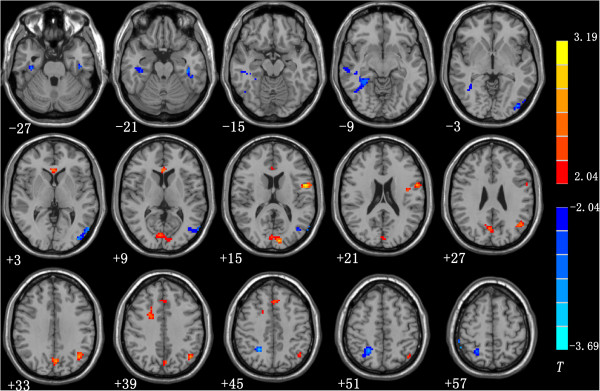
BACKGROUND: Recent studies suggest that Internet gaming addiction (IGA) is an impulse disorder, or is at least related to impulse control disorders. In the present study, we hypothesized that different facets of trait impulsivity may be specifically linked to the brain regions with impaired impulse inhibition function in IGA adolescents. METHODS: Seventeen adolescents with IGA and seventeen healthy controls were scanned during performance of a response-inhibition Go/No-Go task using a 3.0 T MRI scanner. The Barratt Impulsiveness Scale (BIS)-11 was used to assess impulsivity. RESULTS: There were no differences in the behavioral performance on the Go/No-Go task between the groups. However, the IGA group was significantly hyperactive during No-Go trials in the left superior medial frontal gyrus, right anterior cingulate cortex, right superior/middle frontal gyrus, left inferior parietal lobule, left precentral gyrus, and left precuneus and cuneus. Further, the bilateral middle temporal gyrus, bilateral inferior temporal gyrus, and right superior parietal lobule were significantly hypoactive during No-Go trials. Activation of the left superior medial frontal gyrus was positively associated with BIS-11 and Chen Internet Addiction Scale (CIAS) total score across IGA participants. CONCLUSIONS: Our data suggest that the prefrontal cortex may be involved in the circuit modulating impulsivity, while its impaired function may relate to high impulsivity in adolescents with IGA, which may contribute directly to the Internet addiction process.
Overview
The claims and statistics of this paper haven’t been checked yet.
Free: it reads the open-access text and checks the first 5 claims that cite a source we can check. Create a free account to check every claim.
Integrity signals
Registry
Cites
Statistics
Figures
Verification
Claims the paper makes
The claims and statistics of this paper haven’t been checked yet.
Free: it reads the open-access text and checks the first 5 claims that cite a source we can check. Create a free account to check every claim.
Claims other papers make about this one
Each is checked against this paper’s own text: does it say what the citing paper says it does?
The source backs part of the claim, not all of it — or backs it for a different population, condition or comparison.
In the citing paper
“Most studies to date of inhibitory control using the Go/No-Go Task have employed versions with neutral stimuli (i.e., without addiction-related stimuli) and observed no reductions in behavioral performance (Ding et al., 2014), although results are mixed across the existing studies (see meta-analysis by Smith et al., 2014).”
From Integrating psychological and neurobiological considerations regarding the development and maintenance of specific Internet-use disorders: An Interaction of Person-Affect-Cognition-Execution (I-PACE) model (2016) · cites this paper as Ding et al., 2014
Experimental — accuracy not yet measuredThe cited source says what the claim attributes to it.
In the citing paper
“Both neuro imaging and electrophysiology techniques have uncovered slight cognitive differences that were not apparent behaviorally (Ding et al., 2014; Gao et al., 2019).”
From Problematic social media use and inhibitory control among post-secondary students (2025) · cites this paper as Ding et al., 2014
Self-check
Percentages, sums and reported differences re-computed from the paper’s own numbers.
The self-check needs the paper’s full text.
Citations
Cites
Diagnostic and Statistical Manual of Mental Disorders
American Psychiatric Association (2013) · doi:10.1176/appi.books.9780890425596 · Cited by 116,369
Diagnostic and Statistical Manual of Mental Disorders
Williams, J. B. W., & First, M. (2013) · Encyclopedia of Social Work · doi:10.1093/acrefore/9780199975839.013.104 · Cited by 109,519
Control of goal-directed and stimulus-driven attention in the brain
Corbetta, M., & Shulman, G. L. (2002) · Nature Reviews Neuroscience · doi:10.1038/nrn755 · Cited by 12,881 · cited 1×
“These circuits appear to be critical for the executive control needed to guide goaldirected and stimulus-driven attention [54].”
BackgroundA self-rating depression scale
ZUNG, W. W. K. (1965) · Archives of General Psychiatry · doi:10.1001/archpsyc.1965.01720310065008 · Cited by 9,813 · cited 1×
“Before scanning, four questionnaires were used to assess the participants’ behavioral and personality features: the Chen Internet Addiction Scale (CIAS) [29], the Self-Rating Anxiety Scale (SAS) [30], the Self-rating Depression Scale (SDS) [31], and the Barratt Impulsiveness Scale-11 (BIS-11) [32].”
MethodThe Brain's Default Network: Anatomy, Function, and Relevance to Disease
Buckner, R. L., Andrews‐Hanna, J. R., & Schacter, D. L. (2008) · Annals of the New York Academy of Sciences · doi:10.1196/annals.1440.011 · Cited by 9,761
Functional connectivity in the resting brain: a network analysis of the default mode hypothesis
Greicius, M. D., Krasnow, B., Reiss, A. L., & Menon, V. (2003) · Proceedings of the National Academy of Sciences · doi:10.1073/pnas.0135058100 · Cited by 6,358 · cited 1×
“As both the medial PFC and precuneus are part of the default-mode network (regions that are typically deactivated during active task performance [64], the increased deactivation in these regions in IGA group compared with controls suggests an impairment in turning off the default mode during attempts to inhibit.”
Internet Addiction: The Emergence of a New Clinical Disorder
YOUNG, K. S. (1998) · CyberPsychology & Behavior · doi:10.1089/cpb.1998.1.237 · Cited by 5,513 · cited 6×
“The diagnostic questionnaire for Internet addiction was adapted from DSM-IV criteria for pathological gambling by Young [28].”
MethodInfluentialA Rating Instrument For Anxiety Disorders
Zung, W. W. K. (1971) · Psychosomatics · doi:10.1016/s0033-3182(71)71479-0 · Cited by 4,578
The role of the medial frontal cortex in cognitive control
Ridderinkhof, K. R., Ullsperger, M., Crone, E. A., & Nieuwenhuis, S. (2004) · Science · doi:10.1126/science.1100301 · Cited by 2,974 · cited 1×
“Moreover, the VMPFC has an anatomically intrinsic corticocortical network [50,51] and an extrinsic connection with the striatum, thalamus, brain stem, and limbic structures, including the amygdale, a circuit that is thought to contribute to impulsivity control [50,52].”
BackgroundOngur, D. (2000) · Cerebral Cortex · doi:10.1093/cercor/10.3.206 · Cited by 2,627 · cited 1×
“Moreover, the VMPFC has an anatomically intrinsic corticocortical network [50,51] and an extrinsic connection with the striatum, thalamus, brain stem, and limbic structures, including the amygdale, a circuit that is thought to contribute to impulsivity control [50,52].”
BackgroundConflict monitoring versus selection-for-action in anterior cingulate cortex
Botvinick, M., Nystrom, L. E., Fissell, K., Carter, C. S., & Cohen, J. D. (1999) · Nature · doi:10.1038/46035 · Cited by 2,044 · cited 5×
“Further, the dorsolateral prefrontal cortex was suggested to play a role in motivation and cognitive processes after receiving rewarding expectations [47,48], while the ventromedial prefrontal (VMPFC) region, including the orbitofrontal cortex (OFC), anterior cingulate cortex (ACC), and medial prefrontal cortex (MPFC)…”
InfluentialVerdejo-García, A., Lawrence, A. J., & Clark, L. (2008) · Neuroscience & Biobehavioral Reviews · doi:10.1016/j.neubiorev.2007.11.003 · Cited by 1,422
Right hemispheric dominance of inhibitory control: An event-related functional MRI study
Garavan, H., Ross, T. J., & Stein, E. A. (1999) · Proceedings of the National Academy of Sciences · doi:10.1073/pnas.96.14.8301 · Cited by 1,394 · cited 1×
“Some studies have hypothesized that the parietal cortex may play a role in regulating attention or withholding the motor response during response inhibition tasks [55,56].”
BackgroundKarni, A., Meyer, G., Rey-Hipolito, C., Jezzard, P., Adams, M. M., Turner, R., & Ungerleider, L. G. (1998) · Proceedings of the National Academy of Sciences · doi:10.1073/pnas.95.3.861 · Cited by 1,388 · cited 1×
“The precentral cortex is mainly involved in planning and executing movements [61,62].”
BackgroundIssues for DSM-V: Internet Addiction
Block, J. J. (2008) · American Journal of Psychiatry · doi:10.1176/appi.ajp.2007.07101556 · Cited by 1,385 · cited 1×
“Introduction Internet addiction (IA) is a newly identified condition that has attracted worldwide attention and involves loss of control over Internet use [1-4].”
BackgroundIncidence and correlates of pathological Internet use among college students
Morahan-Martin, J., & Schumacher, P. (2000) · Computers in Human Behavior · doi:10.1016/s0747-5632(99)00049-7 · Cited by 1,291 · cited 1×
“Converging evidence from diverse sources indicates that adolescents who compulsively use the Internet are at increased risk of suffering from a number of negative social, behavioral, and health consequences, including poor school performance, disorganized daily life, and poor personal relationships [6-11].”
BackgroundCyders, M. A., Smith, G. T., Spillane, N. S., Fischer, S., Annus, A. M., & Peterson, C. (2007) · Psychological Assessment · doi:10.1037/1040-3590.19.1.107 · Cited by 1,193 · cited 1×
“Impulsivity is viewed as a multifaceted trait that varies normally across the population, although high levels may predisposeto a range of dysfunctional behaviors, including addiction [12,13].”
BackgroundA Parametric Manipulation of Factors Affecting Task-induced Deactivation in Functional Neuroimaging
McKiernan, K. A., Kaufman, J. N., Kucera-Thompson, J., & Binder, J. R. (2003) · Journal of Cognitive Neuroscience · doi:10.1162/089892903321593117 · Cited by 1,080 · cited 1×
“[65,66].”
Anterior Cingulate Cortex and Response Conflict: Effects of Frequency, Inhibition and Errors
Braver, T. S. (2001) · Cerebral Cortex · doi:10.1093/cercor/11.9.825 · Cited by 1,016
Modification in the Proposed Diagnostic Criteria for Internet Addiction
Beard, K. W., & Wolf, E. M. (2001) · CyberPsychology & Behavior · doi:10.1089/109493101300210286 · Cited by 1,008 · cited 5×
“Later, Beard and Wolf [23] modified the YDQ criteria.”
BackgroundMethodInfluentialInternet Addiction: Definition, Assessment, Epidemiology and??Clinical Management
Shaw, M., & Black, D. W. (2008) · CNS Drugs · doi:10.2165/00023210-200822050-00001 · Cited by 807
Frontal-subcortical circuits and neuropsychiatric disorders
(1994) · The Journal of Neuropsychiatry and Clinical Neurosciences · doi:10.1176/jnp.6.4.358 · Cited by 725 · cited 1×
“Moreover, the VMPFC has an anatomically intrinsic corticocortical network [50,51] and an extrinsic connection with the striatum, thalamus, brain stem, and limbic structures, including the amygdale, a circuit that is thought to contribute to impulsivity control [50,52].”
BackgroundInternet addiction, usage, gratification, and pleasure experience: the Taiwan college students’ case
Chou, C., & Hsiao, M.-C. (2000) · Computers & Education · doi:10.1016/s0360-1315(00)00019-1 · Cited by 698 · cited 1×
“Converging evidence from diverse sources indicates that adolescents who compulsively use the Internet are at increased risk of suffering from a number of negative social, behavioral, and health consequences, including poor school performance, disorganized daily life, and poor personal relationships [6-11].”
BackgroundHester, R., & Garavan, H. (2004) · The Journal of Neuroscience · doi:10.1523/jneurosci.3321-04.2004 · Cited by 657 · cited 1×
“PFC impairments in addiction were also reported to result in executive dysfunction in the brain, which was considered to contribute directly to the addiction process [46].”
BackgroundComparison of Internet addicts and non-addicts in Taiwanese high school
Yang, S. C., & Tung, C.-J. (2007) · Computers in Human Behavior · doi:10.1016/j.chb.2004.03.037 · Cited by 596 · cited 1×
“Converging evidence from diverse sources indicates that adolescents who compulsively use the Internet are at increased risk of suffering from a number of negative social, behavioral, and health consequences, including poor school performance, disorganized daily life, and poor personal relationships [6-11].”
BackgroundInternet addiction among Chinese adolescents: prevalence and psychological features
Cao, F., & Su, L. (2007) · Child: Care, Health and Development · doi:10.1111/j.1365-2214.2006.00715.x · Cited by 530 · cited 1×
“Recent studies using self-report measures have also found impulsivity to be positively correlated with excessive computer game playing and excessive Internet use in general [20,21].”
BackgroundImpaired inhibitory control of behavior in chronic cocaine users
Fillmore, M. T., & Rush, C. R. (2002) · Drug and Alcohol Dependence · doi:10.1016/s0376-8716(01)00206-x · Cited by 519 · cited 1×
“Reduced response inhibition has been observed in several substance-dependent patient populations including alcohol- [15], cocaine- [16], and opioid- [17] dependent patients, and smokers [18,19].”
BackgroundComeau, N., Stewart, S. H., & Loba, P. (2001) · Addictive Behaviors · doi:10.1016/s0306-4603(01)00238-6 · Cited by 484 · cited 1×
“Converging evidence from diverse sources indicates that adolescents who compulsively use the Internet are at increased risk of suffering from a number of negative social, behavioral, and health consequences, including poor school performance, disorganized daily life, and poor personal relationships [6-11].”
BackgroundTransition of Brain Activation from Frontal to Parietal Areas in Visuomotor Sequence Learning
Sakai, K., Hikosaka, O., Miyauchi, S., Takino, R., Sasaki, Y., & Pütz, B. (1998) · The Journal of Neuroscience · doi:10.1523/jneurosci.18-05-01827.1998 · Cited by 468 · cited 1×
“Further, the dorsolateral prefrontal cortex was suggested to play a role in motivation and cognitive processes after receiving rewarding expectations [47,48], while the ventromedial prefrontal (VMPFC) region, including the orbitofrontal cortex (OFC), anterior cingulate cortex (ACC), and medial prefrontal cortex (MPFC)…”
BackgroundInvolvement of Primary Motor Cortex in Motor Imagery: A Neuromagnetic Study
Schnitzler, A., Salenius, S., Salmelin, R., Jousmäki, V., & Hari, R. (1997) · NeuroImage · doi:10.1006/nimg.1997.0286 · Cited by 434 · cited 1×
“The precentral cortex is mainly involved in planning and executing movements [61,62].”
BackgroundRegional homogeneity changes in patients with Parkinson's disease
Wu, T., Long, X., Zang, Y., Wang, L., Hallett, M., Li, K., & Chan, P. (2009) · Human Brain Mapping · doi:10.1002/hbm.20622 · Cited by 397
Connection Patterns Distinguish 3 Regions of Human Parietal Cortex
Rushworth, M. F. S., Behrens, T. E. J., & Johansen-Berg, H. (2006) · Cerebral Cortex · doi:10.1093/cercor/bhj079 · Cited by 382 · cited 1×
“Further, the inferior parietal cortex has extensive reciprocal connections with the prefrontal cortex [53].”
BackgroundNeural correlates of cognitive efficiency
Rypma, B., Berger, J. S., Prabhakaran, V., Martin Bly, B., Kimberg, D. Y., Biswal, B. B., & D'Esposito, M. (2006) · NeuroImage · doi:10.1016/j.neuroimage.2006.05.065 · Cited by 334 · cited 1×
“Cognitive efficiency refers to the concept that performance may be optimized and may require less resources when a task is performed quickly [38].”
BackgroundQuality of Interpersonal Relationships and Problematic Internet Use in Adolescence
Milani, L., Osualdella, D., & Di Blasio, P. (2009) · CyberPsychology & Behavior · doi:10.1089/cpb.2009.0071 · Cited by 321 · cited 1×
“Converging evidence from diverse sources indicates that adolescents who compulsively use the Internet are at increased risk of suffering from a number of negative social, behavioral, and health consequences, including poor school performance, disorganized daily life, and poor personal relationships [6-11].”
BackgroundFunctional MRI of inhibitory processing in abstinent adolescent marijuana users
Tapert, S. F., Schweinsburg, A. D., Drummond, S. P. A., Paulus, M. P., Brown, S. A., Yang, T. T., & Frank, L. R. (2007) · Psychopharmacology · doi:10.1007/s00213-007-0823-y · Cited by 299 · cited 1×
“[35] reported no significant behavioral differences between a group of adolescent cannabis users and non-using controls when completing a Go/No-Go paradigm.”
BackgroundDong, G., Lu, Q., Zhou, H., & Zhao, X. (2010) · Neuroscience Letters · doi:10.1016/j.neulet.2010.09.002 · Cited by 296
Dong, G., DeVito, E. E., Du, X., & Cui, Z. (2012) · Psychiatry Research: Neuroimaging · doi:10.1016/j.pscychresns.2012.02.001 · Cited by 289 · cited 2×
“Moreover, several neuroimaging studies have suggested diminished efficiency of response-inhibition processes in IA groups relative to healthy controls [25-27].”
BackgroundResultDorsolateral Prefrontal Cortex Drives Mesolimbic Dopaminergic Regions to Initiate Motivated Behavior
Ballard, I. C., Murty, V. P., Carter, R. M., MacInnes, J. J., Huettel, S. A., & Adcock, R. A. (2011) · Journal of Neuroscience · doi:10.1523/jneurosci.0895-11.2011 · Cited by 288 · cited 1×
“Further, the dorsolateral prefrontal cortex was suggested to play a role in motivation and cognitive processes after receiving rewarding expectations [47,48], while the ventromedial prefrontal (VMPFC) region, including the orbitofrontal cortex (OFC), anterior cingulate cortex (ACC), and medial prefrontal cortex (MPFC)…”
BackgroundAlterations in regional homogeneity of resting-state brain activity in autism spectrum disorders
Paakki, J.-J., Rahko, J., Long, X., Moilanen, I., Tervonen, O., Nikkinen, J., Starck, T., Remes, J., Hurtig, T., Haapsamo, H., et al. (2010) · Brain Research · doi:10.1016/j.brainres.2009.12.081 · Cited by 286 · cited 1×
“Long-term hyperactivity of visual attention can impair the subject’s visual functions, while noise can impair their hearing abilities [69-71].”
BackgroundKwon, J.-H., Chung, C.-S., & Lee, J. (2011) · Community Mental Health Journal · doi:10.1007/s10597-009-9236-1 · Cited by 258 · cited 1×
“Converging evidence from diverse sources indicates that adolescents who compulsively use the Internet are at increased risk of suffering from a number of negative social, behavioral, and health consequences, including poor school performance, disorganized daily life, and poor personal relationships [6-11].”
BackgroundImpaired response inhibition function in abstinent heroin dependents: An fMRI study
Fu, L.-P., Bi, G.-H., Zou, Z.-T., Wang, Y., Ye, E.-M., Ma, L., Ming-Fan, & Yang, Z. (2008) · Neuroscience Letters · doi:10.1016/j.neulet.2008.04.033 · Cited by 229 · cited 1×
“Reduced response inhibition has been observed in several substance-dependent patient populations including alcohol- [15], cocaine- [16], and opioid- [17] dependent patients, and smokers [18,19].”
BackgroundCommon neural mechanisms supporting spatial working memory, attention and motor intention
Ikkai, A., & Curtis, C. E. (2011) · Neuropsychologia · doi:10.1016/j.neuropsychologia.2010.12.020 · Cited by 221 · cited 1×
“The prefrontal cortex (PFC) is considered to play an important role in cognitive processes [43-45].”
BackgroundRubio, G., Jiménez, M., Rodríguez‐Jiménez, R., Martínez, I., Ávila, C., Ferre, F., Jiménez‐Arriero, M. A., Ponce, G., & Palomo, T. (2008) · Alcoholism: Clinical and Experimental Research · doi:10.1111/j.1530-0277.2008.00746.x · Cited by 209
Is compulsive internet use related to sensitivity to reward and punishment, and impulsivity?
Meerkerk, G.-J., van den Eijnden, R. J. J. M., Franken, I. H. A., & Garretsen, H. F. L. (2010) · Computers in Human Behavior · doi:10.1016/j.chb.2010.01.009 · Cited by 195 · cited 1×
“Recent studies using self-report measures have also found impulsivity to be positively correlated with excessive computer game playing and excessive Internet use in general [20,21].”
BackgroundFunctional networks for cognitive control in a stop signal task: Independent component analysis
Zhang, S., & Li, C. R. (2012) · Human Brain Mapping · doi:10.1002/hbm.21197 · Cited by 190
Cortical Thickness Abnormalities in Late Adolescence with Online Gaming Addiction
Yuan, K., Cheng, P., Dong, T., Bi, Y., Xing, L., Yu, D., Zhao, L., Dong, M., von Deneen, K. M., Liu, Y., et al. (2013) · PLoS ONE · doi:10.1371/journal.pone.0053055 · Cited by 185 · cited 2×
“[63] reported increased cortical thickness in the left precentral cortex in late adolescence with online gaming addiction, and the cortical thicknesses of the left precentral cortex were correlated with duration of online gaming addiction.”
BackgroundGroman, S. M., James, A. S., & Jentsch, J. D. (2009) · Neuroscience & Biobehavioral Reviews · doi:10.1016/j.neubiorev.2008.08.008 · Cited by 177 · cited 1×
“A core component of executive functioning is response inhibition, which is generally defined as the ability to adaptively suppress behavior when environmental contingences demand this [14].”
BackgroundDong, G., Zhou, H., & Zhao, X. (2011) · Neuroscience Letters · doi:10.1016/j.neulet.2011.05.047 · Cited by 167
Luijten, M., Littel, M., & Franken, I. H. A. (2011) · PLoS ONE · doi:10.1371/journal.pone.0018898 · Cited by 163
Decision-making and prepotent response inhibition functions in excessive internet users
Sun, D.-L., Chen, Z.-J., Ma, N., Zhang, X.-C., Fu, X.-M., & Zhang, D.-R. (2009) · CNS Spectrums · doi:10.1017/s1092852900000225 · Cited by 143
Brain Activity in Cigarette Smokers Performing a Working Memory Task: Effect of Smoking Abstinence
Xu, J., Mendrek, A., Cohen, M. S., Monterosso, J. R., Rodriguez, P. F., Simon, S. L., Brody, A. L., Jarvik, M. E., Domier, C. P., Olmstead, R. E., et al. (2005) · Biological Psychiatry · doi:10.1016/j.biopsych.2005.03.028 · Cited by 142
Self-citationAn approach to the neurology of aggression
Weiger, W. A., & Bear, D. M. (1988) · Journal of Psychiatric Research · doi:10.1016/0022-3956(88)90073-8 · Cited by 137 · cited 1×
“Further, the dorsolateral prefrontal cortex was suggested to play a role in motivation and cognitive processes after receiving rewarding expectations [47,48], while the ventromedial prefrontal (VMPFC) region, including the orbitofrontal cortex (OFC), anterior cingulate cortex (ACC), and medial prefrontal cortex (MPFC)…”
Backgroundvan Holst, R. J., Lemmens, J. S., Valkenburg, P. M., Peter, J., Veltman, D. J., & Goudriaan, A. E. (2012) · Journal of Adolescent Health · doi:10.1016/j.jadohealth.2011.07.006 · Cited by 133 · cited 1×
“With regards to Go/No-Go performance, no differences were observed between the IGA group and controls, which is consistent with one previous IA study [25] but not with others [39-41].”
ResultGetting plugged in: An overview of Internet addiction
Flisher, C. (2010) · Journal of Paediatrics and Child Health · doi:10.1111/j.1440-1754.2010.01879.x · Cited by 129 · cited 1×
“Introduction Internet addiction (IA) is a newly identified condition that has attracted worldwide attention and involves loss of control over Internet use [1-4].”
BackgroundAlterations in regional homogeneity of resting-state brain activity in internet gaming addicts
Dong, G., Huang, J., & Du, X. (2012) · Behavioral and Brain Functions · doi:10.1186/1744-9081-8-41 · Cited by 115
Internet addiction over the decade: a personal look back
YOUNG, K. (2010) · World Psychiatry · doi:10.1002/j.2051-5545.2010.tb00279.x · Cited by 106 · cited 1×
“Introduction Internet addiction (IA) is a newly identified condition that has attracted worldwide attention and involves loss of control over Internet use [1-4].”
BackgroundThe Role of the Parietal Lobe in Visual Extinction Studied with Transcranial Magnetic Stimulation
Battelli, L., Alvarez, G. A., Carlson, T. A., & Pascual‐Leone, Á. (2009) · Journal of Cognitive Neuroscience · doi:10.1162/jocn.2008.21149 · Cited by 105 · cited 1×
“These regions are suspected to be responsible for visual and auditory functions [67,68].”
BackgroundEfficiency of Go/No-Go Task Performance Implemented in the Left Hemisphere
Hirose, S., Chikazoe, J., Watanabe, T., Jimura, K., Kunimatsu, A., Abe, O., Ohtomo, K., Miyashita, Y., & Konishi, S. (2012) · Journal of Neuroscience · doi:10.1523/jneurosci.0540-12.2012 · Cited by 94 · cited 1×
“[36] developed the efficiency index for evaluating the efficiency of response inhibition in the Go/No-Go tasks.”
MethodCorrelations between orbitofrontal dysfunction and tobacco smoking
Spinella, M. (2002) · Addiction Biology · doi:10.1080/1355621021000005964 · Cited by 92 · cited 1×
“Reduced response inhibition has been observed in several substance-dependent patient populations including alcohol- [15], cocaine- [16], and opioid- [17] dependent patients, and smokers [18,19].”
BackgroundDopaminergic modulation of response inhibition: an fMRI study
Hershey, T. G., BLACK, K. J., Hartlein, J. M., Braver, T. S., Barch, D. M., Carl, J. L., & Perlmutter, J. S. (2004) · Cognitive Brain Research · doi:10.1016/j.cogbrainres.2004.03.018 · Cited by 89 · cited 2×
“[33] also suggested that parietal over-activity is either an underlying cause of poor inhibition or a response to failures of inhibition (e.”
BackgroundMethodCognitive-bias toward gaming-related words and disinhibition in World of Warcraft gamers
Decker, S. A., & Gay, J. N. (2010) · Computers in Human Behavior · doi:10.1016/j.chb.2010.11.005 · Cited by 86
Artifactual fMRI group and condition differences driven by performance confounds
Murphy, K., & Garavan, H. (2003) · NeuroImage · doi:10.1016/j.neuroimage.2003.09.016 · Cited by 83 · cited 1×
“, frustration) that may confound the group comparison [42].”
BackgroundEvidence of increased activation underlying cognitive control in ecstasy and cannabis users
Roberts, G. M. P., & Garavan, H. (2010) · NeuroImage · doi:10.1016/j.neuroimage.2010.04.192 · Cited by 79 · cited 1×
“current recreational drug users, whose predominant drug of choice was ecstasy, demonstrate hyperactive neural responses for successful inhibition in the right dorsolateral PFC (DLPFC), inferior frontal gyrus (IFG), and parietal lobule compared with well-matched controls [34].”
BackgroundZhou, Z.-H., Yuan, G.-Z., Yao, J.-J., Li, C., & Cheng, Z.-H. (2010) · Acta Neuropsychiatrica · doi:10.1111/j.1601-5215.2010.00444.x · Cited by 79 · cited 1×
“Some authors suggest that IA is an impulse disorder or is at least related to impulse control disorders [22-24].”
BackgroundAzizian, A., Nestor, L. J., Payer, D., Monterosso, J. R., Brody, A. L., & London, E. D. (2010) · Neuropsychopharmacology · doi:10.1038/npp.2009.186 · Cited by 69 · cited 1×
“The cognitive inefficiency observed in the IA group in the present study could arise from impaired “top-down” cognitive-control processes, which have been associated with increased neural activity in the ACC [57], and have been observed in nicotine-dependent participants performing the Stroop and working memory tasks…”
Peng, D., Jiang, K.-D., Fang, Y., Xu, Y., Shen, T., Long, X., 刘, J. 军. L., & Zang, Y. (2011) · PubMed · Cited by 67
Peng, Dai-hui, Jiang, Kai-da, Fang, Yiru, Xu, Y., Yifeng, , S., Ting, A. S. Y., et al. (2011) · 中华医学杂志:英文版 · Cited by 60
Xu, J., Mendrek, A., Cohen, M. S., Monterosso, J. R., Simon, S. L., Jarvik, M. E., Olmstead, R. E., Brody, A. L., Ernst, M., & London, E. D. (2006) · Neuropsychopharmacology · doi:10.1038/sj.npp.1301272 · Cited by 59
Self-citationProvost, J., Petrides, M., & Monchi, O. (2010) · European Journal of Neuroscience · doi:10.1111/j.1460-9568.2010.07333.x · Cited by 49 · cited 1×
“The prefrontal cortex (PFC) is considered to play an important role in cognitive processes [43-45].”
BackgroundLewald, J., Staedtgen, M., Sparing, R., & Meister, I. G. (2010) · Neuropsychologia · doi:10.1016/j.neuropsychologia.2010.11.038 · Cited by 35 · cited 1×
“These regions are suspected to be responsible for visual and auditory functions [67,68].”
BackgroundGoldstein, K. E., Hazlett, E. A., Savage, K. R., Berlin, H. A., Hamilton, H. K., Zelmanova, Y., Look, A. E., Koenigsberg, H. W., Mitsis, E. M., Tang, C. Y., et al. (2011) · Behavioural Brain Research · doi:10.1016/j.bbr.2010.11.042 · Cited by 31
Factor structure of the Barratt impulsiveness scale
Patton, J. H., Stanford, M. S., & Barratt, E. S. (1995) · Journal of Clinical Psychology · doi:10.1002/1097-4679(199511)51:6<768::aid-jclp2270510607>3.0.co;2-1 · cited 8×
“Group differences in demographic variables, BIS-11, and CIAS scores were analyzed using the independent t-test and chi-square test.”
BackgroundMethodInfluential
Research works printed but not linked: 2
- Young K Internet addiction: symptoms, evaluation and treatment Innovat Clin Practice A Source Book 1999 10 19 31
- Chen SHWL Su YJ Wu HM Yang PF Development of Chinese internet addcition scale and its psychometric study Chin J Psychol 2003 10 279 294
Cited by
Brand, M., Young, K. S., Laier, C., Wölfling, K., & Potenza, M. N. (2016) · Neuroscience & Biobehavioral Reviews · doi:10.1016/j.neubiorev.2016.08.033 · Cited by 2,416
“…control using the Go/No-Go Task have employed versions with neutral stimuli (i.e., without addiction-related stimuli) and observed no reductions in behavioral performance (Ding et al., 2014), although results are mixed across the existing studies (see meta-analysis by Smith et al., 2014).”
Internet gaming disorder in children and adolescents: a systematic review
Paulus, F. W., Ohmann, S., von Gontard, A., & Popow, C. (2018) · Developmental Medicine & Child Neurology · doi:10.1111/dmcn.13754 · Cited by 637
Neurobiological correlates in Internet gaming disorder: a systematic literature review
Kuss, D. J., Pontes, H. M., & Griffiths, M. D. (2018) · Frontiers in Psychiatry · doi:10.3389/fpsyt.2018.00166 · Cited by 281
“…parietal lobe in comparison to matched casual gaming controls, indicating that problem gamers have a lower inhibitory control [similar to the results regarding impaired inhibitory control outlined in Ding et al.’s study (28)], with no differences found in attention control and error processing.”
InfluentialHow Has the Internet Reshaped Human Cognition?
Loh, K. K., & Kanai, R. (2016) · The Neuroscientist · doi:10.1177/1073858415595005 · Cited by 272
Internet Gaming Disorder in the DSM-5
Petry, N. M., Rehbein, F., Ko, C.-H., & O’Brien, C. P. (2015) · Current Psychiatry Reports · doi:10.1007/s11920-015-0610-0 · Cited by 269
Metadata
- Authors
- Ding, W.-N., Sun, J.-H., Sun, Y.-W., Chen, X., Zhou, Y., Zhuang, Z.-G., Li, L., Zhang, Y., Xu, J.-R., & Du, Y.-S.
- Affiliations
- Shanghai Jiao Tong University (CN)
- Corresponding author
- Zhou, Yan
- Venue
- Behavioral and Brain Functions
- Published
- 2014-05-30
- Volume
- 10
- Issue
- 1
- Pages
- 20-20
- ISSN
- 1744-9081 (ISSN-L)
- PMC
- PMC4050412
- OpenAlex
- W2161562531
- Cited by
- 294
- References
- 72
- Citations by year
- 2026: 8 · 2025: 23 · 2024: 22 · 2023: 27 · 2022: 20 · 2021: 17 · 2020: 70 · 2019: 29 · 2018: 15 · 2017: 27 · 2016: 14 · 2015: 20 · 2014: 2
- FWCI
- 68.44
- Type
- journal article
- Language
- en
- Open access
- gold
- doi.org
- Licence
- cc-by
- Locations
- Behavioral and Brain Functions (publishedVersion, cc-by)
- Europe PMC (PubMed Central) (publishedVersion, cc-by)
- PubMed Central (publishedVersion, cc-by)
- PubMed (publishedVersion)
- Funders
- National Natural Science Foundation of China (81201172, S30203, 81171325)
- Science and Technology Commission of Shanghai Municipality
- Shanghai Leading Academic Discipline Project (81201172, 81171325, S30203)
- Topics
- Social Sciences › Sociology and Political Science › Impact of Technology on Adolescents
- Life Sciences › Neuroscience › Cognitive Neuroscience › Neural and Behavioral Psychology Studies
- Social Sciences › Psychology › Clinical Psychology › Gambling Behavior and Treatments
- Keywords
- online game addiction, trait impulsivity, impulse inhibition, prefrontal cortex, adolescents, go/no-go task, response inhibition, anterior cingulate cortex, Barratt Impulsiveness Scale, Chen Internet Addiction Scale
- MeSH terms
- Adolescent, Female, Humans, Image Processing, Computer-Assisted, Impulsive Behavior, Magnetic Resonance Imaging, Male, Neuropsychological Tests, Personality, Surveys and Questionnaires, Behavior, Addictive, Prefrontal Cortex, Video Games, Internet, Young Adult
About these checks
Registry, retraction, Cites and statistics results are computed, not judged, with one exception: a printed reference that no index lists is read once by a model before it counts as a citation error. Claims are extracted by a model and kept only when their quote appears verbatim in the text; each cited source is then checked, with a model’s help, for whether it says what the claim relies on. Those verdicts can be wrong — read the claim’s quote and the cited source before relying on one.
Statistics and arithmetic are recomputed, not judged.
Confidence bands are shown only for fields calibrated on our annotated test set. None is calibrated yet, so no band is shown.
What counts as a claim ›How we measure confidence ›How we check this ›
Are you an author, or do you see a problem with this page? Request a review
Data sources
Bibliographic data: Semantic Scholar, OpenAlex, Crossref.
Contains information from the Semantic Scholar Academic Graph Datasets, made available under the ODC Attribution License (ODC-BY 1.0).
Semantic Scholar’s data is described in: Kinney, R., et al. (2023). The Semantic Scholar Open Data Platform. arXiv:2301.10140.
