

Evolutionary primacy of sodium bioenergetics
Open accessThe DOI matches its Crossref record; 109 of the 111 references it cites were found in a registry or an index.
Abstract
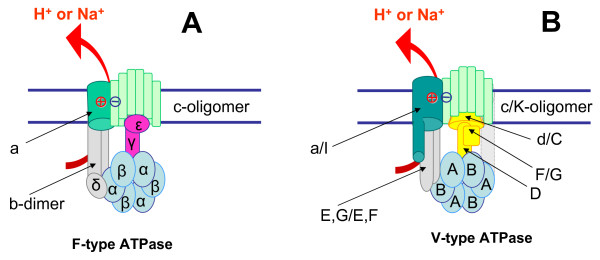
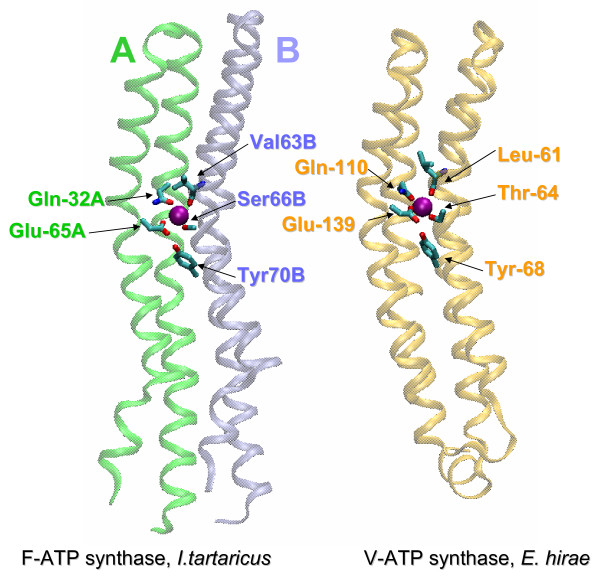
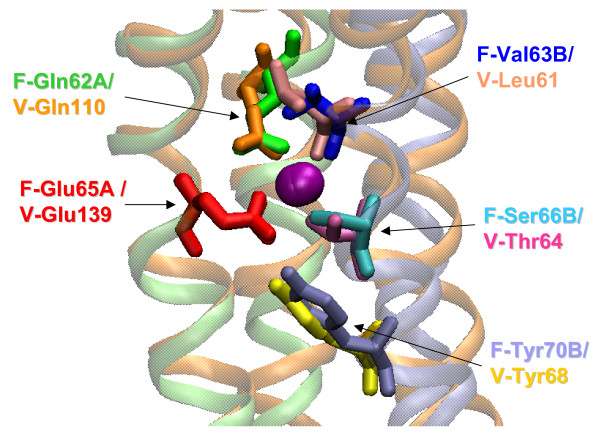
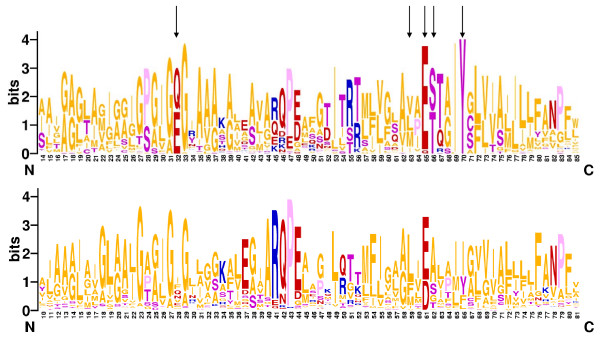
Background: The F- and V-type ATPases are rotary molecular machines that couple translocation of protons or sodium ions across the membrane to the synthesis or hydrolysis of ATP. Both the F-type (found in most bacteria and eukaryotic mitochondria and chloroplasts) and V-type (found in archaea, some bacteria, and eukaryotic vacuoles) ATPases can translocate either protons or sodium ions. The prevalent proton-dependent ATPases are generally viewed as the primary form of the enzyme whereas the sodium-translocating ATPases of some prokaryotes are usually construed as an exotic adaptation to survival in extreme environments. Results: We combine structural and phylogenetic analyses to clarify the evolutionary relation between the proton- and sodium-translocating ATPases. A comparison of the structures of the membrane-embedded oligomeric proteolipid rings of sodium-dependent F- and V-ATPases reveals nearly identical sets of amino acids involved in sodium binding. We show that the sodium-dependent ATPases are scattered among proton-dependent ATPases in both the F- and the V-branches of the phylogenetic tree. Conclusion: Barring convergent emergence of the same set of ligands in several lineages, these findings indicate that the use of sodium gradient for ATP synthesis is the ancestral modality of membrane bioenergetics. Thus, a primitive, sodium-impermeable but proton-permeable cell membrane that harboured a set of sodium-transporting enzymes appears to have been the evolutionary predecessor of the more structurally demanding proton-tight membranes. The use of proton as the coupling ion appears to be a later innovation that emerged on several independent occasions. Reviewers: This article was reviewed by J. Peter Gogarten, Martijn A. Huynen, and Igor B. Zhulin. For the full reviews, please go to the Reviewers' comments section.
Overview
The claims and statistics of this paper haven’t been checked yet.
Free: it reads the open-access text and checks the first 5 claims that cite a source we can check. Create a free account to check every claim.
Integrity signals
Registry
Cites
Statistics
Figures
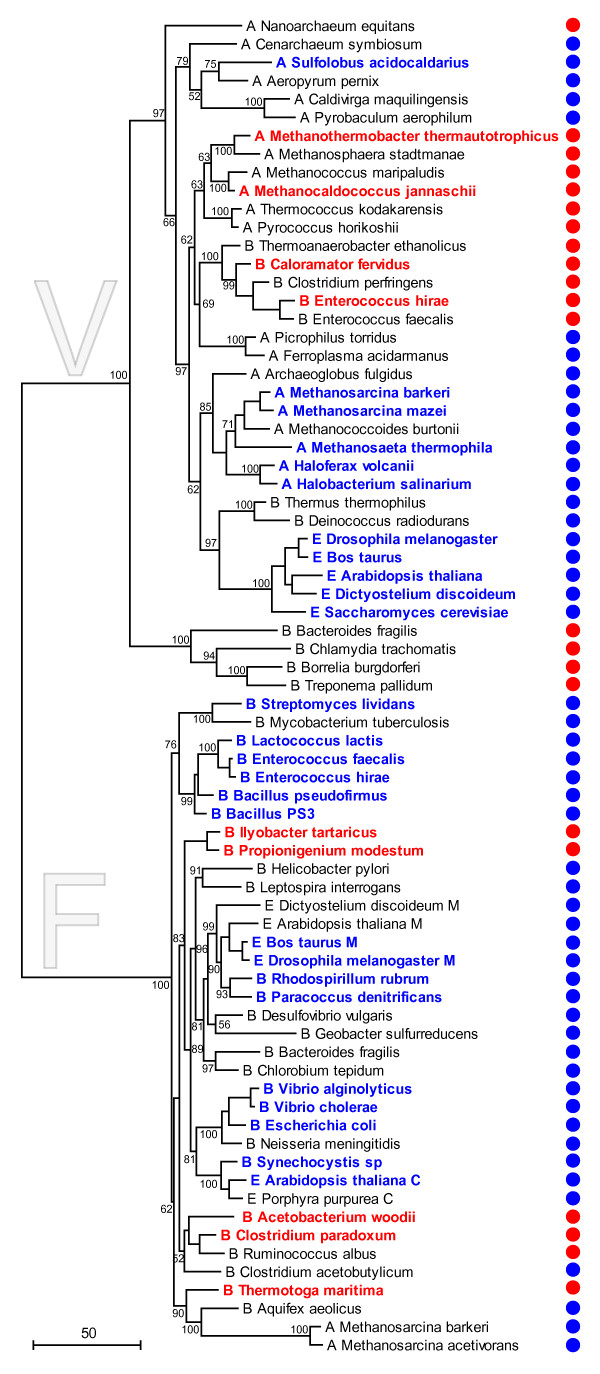
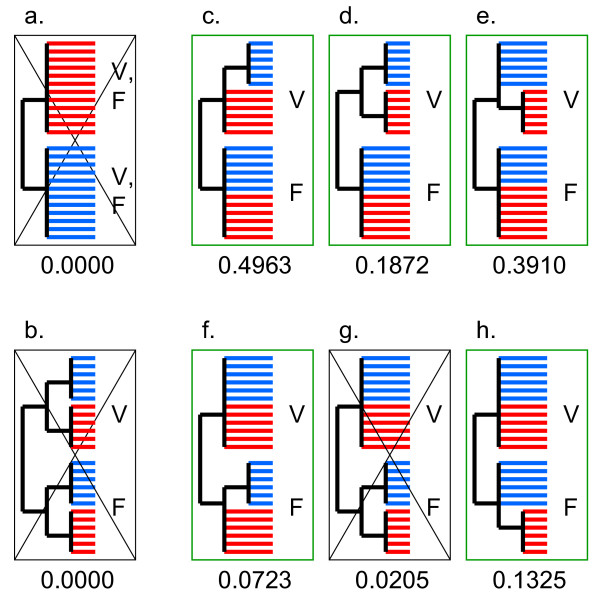
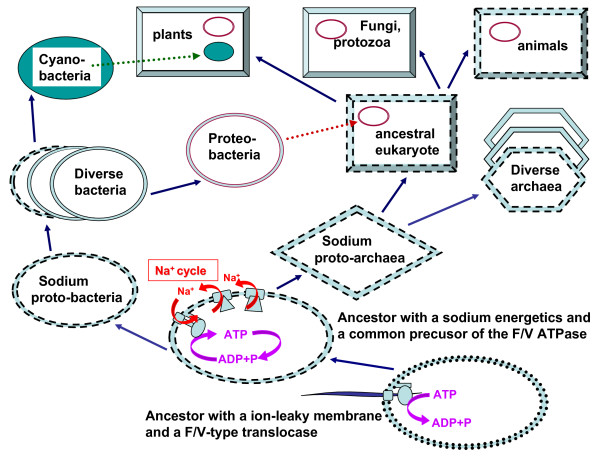
Verification
Claims the paper makes
The claims and statistics of this paper haven’t been checked yet.
Free: it reads the open-access text and checks the first 5 claims that cite a source we can check. Create a free account to check every claim.
Claims other papers make about this one
Each is checked against this paper’s own text: does it say what the citing paper says it does?
The source backs part of the claim, not all of it — or backs it for a different population, condition or comparison.
In the citing paper
“The catalytic and non-catalytic subunits comprising the soluble hetero-hexameric R1 component, are paralogs to each other. They arose prior to LUCA through an ancient duplication of a RecA family protein (P-loop NTPase) followed by the loss of the catalytic function in one subunit”
From ATP synthase evolution on a cross-braced dated tree of life (2023) · cites this paper as [35]
Experimental — accuracy not yet measuredThe cited source says what the claim attributes to it.
In the citing paper
“Archaea and Bacteria contain primarily A/V-type and F-type subunits, respectively, and eukaryotes harbor complexes of both types”
From ATP synthase evolution on a cross-braced dated tree of life (2023) · cites this paper as [35]
The check wasn’t confident either way, so it gives no verdict — never disputed.
In the citing paper
“our analysis agrees with the consensus view31,32,35,40, that the deepest split lies between those families”
From ATP synthase evolution on a cross-braced dated tree of life (2023) · cites this paper as [35]
Experimental — accuracy not yet measured
Self-check
Percentages, sums and reported differences re-computed from the paper’s own numbers.
The self-check needs the paper’s full text.
Citations
Cites
1 retracted
RETRACTED ARTICLE: TREEFINDER: a powerful graphical analysis environment for molecular phylogenetics
Jobb, G., von Haeseler, A., & Strimmer, K. (2004) · BMC Evolutionary Biology · doi:10.1186/1471-2148-4-18 · Cited by 1,112
RetractedGapped BLAST and PSI-BLAST: a new generation of protein database search programs
Altschul, S. (1997) · Nucleic Acids Research · doi:10.1093/nar/25.17.3389 · Cited by 73,302 · cited 3×
“Y a The table lists bacterial species (with strain numbers) whose genomes have been found to encode V-type ATPases based on BLAST [109] searches of the NCBI non-redundant protein database.”
MethodInfluentialVMD: visual molecular dynamics
Humphrey, W., Dalke, A., & Schulten, K. (1996) · Journal of Molecular Graphics · doi:10.1016/0263-7855(96)00018-5 · Cited by 66,952 · cited 1×
“Superposition of protein structures was performed using the VMD software [80].”
MethodMUSCLE: multiple sequence alignment with high accuracy and high throughput
Edgar, R. C. (2004) · Nucleic Acids Research · doi:10.1093/nar/gkh340 · Cited by 44,662 · cited 1×
“Methods Multiple alignments of protein sequences were constructed using the MUSCLE program [79].”
MethodWebLogo: A Sequence Logo Generator: Figure 1
Crooks, G. E., Hon, G., Chandonia, J.-M., & Brenner, S. E. (2004) · Genome Research · doi:10.1101/gr.849004 · Cited by 12,386
Woese, C. R. (1987) · Microbiological Reviews · doi:10.1128/mr.51.2.221-271.1987 · Cited by 5,042
Architecture of the Photosynthetic Oxygen-Evolving Center
Ferreira, K. N., Iverson, T. M., Maghlaoui, K., Barber, J., & Iwata, S. (2004) · Science · doi:10.1126/science.1093087 · Cited by 3,329 · cited 1×
“As noted above, proton energetics has a major advantage over sodium energetics because proton transfer can be chemically coupled to redox reactions, thus, enabling the advent of efficient redox-driven generators of proton potential, such as cytochrome bc1 complex [55], cytochrome oxidase [54], or the oxygen-evolving p…”
BackgroundWhelan, S., & Goldman, N. (2001) · Molecular Biology and Evolution · doi:10.1093/oxfordjournals.molbev.a003851 · Cited by 2,849 · cited 1×
“Statistical analysis of tree topology was performed using the TreeFinder program [83], with the Whelan and Goldman (WAG) evolutionary model [84] and gamma-distributed site rates.”
MethodAn approximately unbiased test of phylogenetic tree selection
Shimodaira, H. (2002) · Systematic Biology · doi:10.1080/10635150290069913 · Cited by 2,791 · cited 1×
“Tree topologies were compared using the Approximately Unbiased (AU) test [85] implemented in the TreeFinder program.”
MethodDirect observation of the rotation of F1-ATPase
Noji, H., Yasuda, R., Yoshida, M., & Kinosita, K. (1997) · Nature · doi:10.1038/386299a0 · Cited by 2,236 · cited 2×
“The F/V type ATPases, however, are unique functionally, because they can efficiently operate in the ATP synthase regimen, and mechanistically, in that their reaction cycle is accompanied by rotation of one enzyme part (rotor) relative to the other (stator) [3,15-17].”
Background
Research works printed but not linked: 1
- Adachi J Hasegawa M MOLPHY: Programs for Molecular Phylogenetics 1992 Tokyo, Institute of Statistical Mathematics
Cited by
Items 101–163 of 163
The molecular mechanism of ATP synthase constrains the evolutionary landscape of chemiosmosis
Macdonald, J. E., & Ashby, P. D. (2025) · Biophysical Journal · doi:10.1016/j.bpj.2025.05.017 · Cited by 15
“Evolution of a sodium pump before a proton pump might ease this particular constraint in view of the lower permeability of Na + ions (123,124), and it is thought that simple fatty acids could provide sufficient resistance to proton diffusion that they comprise cell membranes while phospholipid…”
Trutschel, L. R., Kruger, B. R., Sackett, J., Chadwick, G. L., & Rowe, A. R. (2023) · Frontiers in Microbiology · doi:10.3389/fmicb.2023.1182497 · Cited by 8
“As described previously, most of the MAGs appear to encode for H+ binding rather than Na+ binding ATPases based on amino acid sequence despite the low concentrations of H+ at pH 12 (Mulkidjanian et al., 2008; Trutschel et al., 2022).”
BackgroundMulkidjanian, A. Y. (2011) · Springer eBooks · doi:10.1007/978-3-642-21625-1_1 · Cited by 10
Self-citationExpansion of the “Sodium World” through Evolutionary Time and Taxonomic Space
Kozlova, M. I., Bushmakin, I. M., Belyaeva, J., Shalaeva, D. N., Dibrova, D. V., Cherepanov, D. A., & Mulkidjanian, A. Y. (2020) · Biochemistry (Moscow) · doi:10.1134/s0006297920120056 · Cited by 8
Self-citationWang, Y., Li, W., Baker, B. J., Zhou, Y., He, L., Danchin, A., Li, Q., & Gao, Z. (2022) · Environmental Microbiology Reports · doi:10.1111/1758-2229.13052 · Cited by 10
Baltscheffsky, H., & Persson, B. (2014) · Journal of Molecular Evolution · doi:10.1007/s00239-014-9610-7 · Cited by 9
“!) a H? pump may have preceded the Na? pump is in contrast to data from a somewhat later evolutionary phase (Mulkidjanian et al. 2008).”
Mulkidjanian, A. Y., Dibrova, D. V., & Bychkov, A. Y. (2025) · Life · doi:10.3390/life15030399 · Cited by 7
Self-citationNamirimu, T., Yang, J.-A., Yang, S., Yu, J., Kim, Y. J., & Kwon, K. K. (2022) · INTERNATIONAL JOURNAL OF SYSTEMATIC AND EVOLUTIONARY MICROBIOLOGY · doi:10.1099/ijsem.0.005275 · Cited by 6
Marshansky, V. N. (2022) · Biochemistry (Moscow) · doi:10.1134/s000629792208003x · Cited by 8
“It must be mentioned that the results obtained in these studies indicate primacy of the Na+-dependent over H+-dependent bioenergetics in the course of evolution of life on Earth [150, 154].”
BackgroundInfluentialRavin, N. V., Muntyan, M. S., Smolyakov, D. D., Rudenko, T. S., Beletsky, A. V., Mardanov, A. V., & Grabovich, M. Y. (2023) · International Journal of Molecular Sciences · doi:10.3390/ijms241814199 · Cited by 7
“The 16S rRNA gene sequences of these two MAGs correspond to a pair of OTUs of the family Thiotrichaceae revealed in the microbial mat by 16S rRNA gene profiling.”
MethodStructural impact of proline mutations in the loop region of an ancestral membrane protein
Nadeau, V. G., & Deber, C. M. (2016) · Biopolymers · doi:10.1002/bip.22765 · Cited by 5
The Neverending Story—Using the Narrative as a Fundamental Approach to Teaching Biology and Beyond
Kumala, M. (2010) · Evolution Education and Outreach · doi:10.1007/s12052-010-0277-2 · Cited by 7
Khlebovich, V. V. (2015) · Biology Bulletin Reviews · doi:10.1134/s2079086415040039 · Cited by 4
“The sodium pump served as a prototype for many other types of transmembrane transport, and for electrogenesis as well (Boldyrev, 2008; Mulkidjanian et al., 2008; Sáez et al., 2009; Khlebovich, 2012).”
BackgroundHooper, S. L., & Burstein, H. J. (2014) · Biology Direct · doi:10.1186/1745-6150-9-24 · Cited by 5
“Some prokaryotes pump Na in respiration [23,139].”
BackgroundKozlova, M. I., Shalaeva, D. N., Dibrova, D. V., & Mulkidjanian, A. Y. (2022) · bioRxiv (Cold Spring Harbor Laboratory) · doi:10.1101/2022.06.23.497301 · Cited by 4
Self-citationSpatio-temporal resolution of primary processes of photosynthesis
Junge, W. (2015) · Faraday Discussions · doi:10.1039/c5fd90015h · Cited by 3
Esercizio, N., Lanzilli, M., Landi, S., Caso, L., Xu, Z., Nuzzo, G., Gallo, C., Manzo, E., Esposito, S., Fontana, A., et al. (2022) · International Journal of Molecular Sciences · doi:10.3390/ijms231912049 · Cited by 4
Klimchuk, O. I., Dibrova, D. V., & Mulkidjanian, A. Y. (2016) · Biochemistry (Moscow) · doi:10.1134/s0006297916050059 · Cited by 5
Self-citationFu, J., Liu, Y., Yoshioka, T., Igai, K., Mabuchi, T., Kihara, K., Murakami, T., Lo, N. C., Ohkuma, M., & Hongoh, Y. (2025) · The ISME Journal · doi:10.1093/ismejo/wraf178 · Cited by 2
“The substrates of F-type and V-type ATPases were predicted accor ding to a previously study [56].”
The cytochrome bc1 complex and the evolution of membrane bioenergetics
Dibrova, D. V., Galperin, M. Y., & Mulkidjanian, A. Y. (2012) · Biochimica et Biophysica Acta (BBA) - Bioenergetics · doi:10.1016/j.bbabio.2012.06.246 · Cited by 2
Self-citationAlternative enzymes as a special strategy for the adaptation of procaryotic organisms (Review)
Ryzhkova, E. P. (2017) · Applied Biochemistry and Microbiology · doi:10.1134/s0003683817050131 · Cited by 2
On the Effect of Melittin on Surface Properties of Erythrocyte and Mitochondrial Membranes
Doltchinkova, V. R., Vitkova, V., Kitanova, M., Shkodrova, M., Lozanova, S. V., Ivanov, A. J., & Roumenin, C. S. (2025) · Membranes · doi:10.3390/membranes16010011 · Cited by 3
“Changes in the energetic state of mitochondria, including both energization and de-energization, are known to alter the electrostatic characteristics of their membranes [30–32].”
InfluentialEvolution and diversity of oxidoreductases involved in redox balance and energy conservation
Garcia, P. S., Anda, V. D., Baker, B. J., Gribaldo, S., & Borrel, G. (2026) · Nature Ecology & Evolution · doi:10.1038/s41559-025-02969-0 · Cited by 2
Heo, K., Jung, D.-J., Yoo, J., Goh, B., Kasper, D. L., & Oh, S. F. (2026) · Cell · doi:10.1016/j.cell.2026.08.011 · Cited by 1
Luoto, H. H., Baykov, A. A., Lahti, R., & Malinen, A. M. (2012) · Biochimica et Biophysica Acta (BBA) - Bioenergetics · doi:10.1016/j.bbabio.2012.06.106 · Cited by 1
ProAD – A database of rotary ion-translocating ATPases in prokaryotic genomes
Litvin, A. V., Lapashina, A. S., Ermidis, A.-P., Gelfand, M. S., & Feniouk, B. A. (2025) · Frontiers in Molecular Biosciences · doi:10.3389/fmolb.2024.1471556 · Cited by 3
“If the ion-binding site contained the complete Na + -motif described in Mulkidjanian et al. (2008), we considered it Na + -specific.”
High‐Throughput Evaluation of Natural Diversity of F‐Type ATP Synthase Rotor Ring Stoichiometries
Osipov, S. D., Zinovev, E. V., Anuchina, A. A., Kuzmin, A., Minaeva, A. V., Ryzhykau, Y. L., Vlasov, A. V., & Gushchin, I. (2025) · Proteins Structure Function and Bioinformatics · doi:10.1002/prot.26790 · Cited by 3
Report from the 10th International Congress on Extremophiles
Panda, A. K., Bisht, S. S., Kumar, N. S., & Mandal, S. D. (2015) · Genomics Data · doi:10.1016/j.gdata.2015.07.015 · Cited by 1
“Mulkidjanian and co-workers [2] explained the early evolution of sodium bioenergetics and the prevalence of the Na-coupled membrane transport systems over H-coupled ones in the extremophiles to adapt new Na-rich habitats.”
BackgroundLigrone, R. (2019) · Springer eBooks · doi:10.1007/978-3-030-16057-9_3 · Cited by 1
LUCA – letzter gemeinsamer Vorfahre allen Lebens
Mulkidjanian, A. Y., & Lankenau, D. (2011) · Wiley eBooks · doi:10.1002/9783527653935.ch7
Self-citationAbad, J. P. (2023) · Encyclopedia of Astrobiology · doi:10.1007/978-3-662-65093-6_135 · Cited by 1
Skulachev, V. P., Bogachev, A. V., & Kasparinsky, F. O. (2012) · Springer eBooks · doi:10.1007/978-3-642-33430-6_13
$$ \Updelta \bar{\mu }_{{{\text{Na}}^{ + } }} $$ Generators
Skulachev, V. P., Bogachev, A. V., & Kasparinsky, F. O. (2012) · Springer eBooks · doi:10.1007/978-3-642-33430-6_12
Respectively, Asp, PPi and Na+-pump emerged before Glu, ATP and H+-pump
Baltscheffsky, H., & Holm, N. G. (2012) · Biochimica et Biophysica Acta (BBA) - Bioenergetics · doi:10.1016/j.bbabio.2012.06.099
Class A GPCRs use the membrane potential to increase their sensitivity and selectivityPreprint
Shalaeva, D. N., Cherepanov, D. A., Galperin, M. Y., Vriend, G., & Mulkidjanian, A. Y. (2019) · bioRxiv (Cold Spring Harbor Laboratory) · doi:10.1101/587576
Self-citationPrebiological Organization of Molecules in Models and in the Matter of the Origin of Life
Zhogol, R. A., & . (2018) · International Journal of Engineering & Technology · doi:10.14419/ijet.v7i3.14.17044
“[31] Mulkidjanian AY, Galperin MY, Makarova KS, Wolf YI, Koonin EV (2008) Evolutionary primacy of sodium bioenergetics.”
BackgroundРоторные ион-транслоцирующие АТФазы/АТФ-синтазы: разнообразие, общие черты и отличия
Zubareva, V. M., Lapashina, A. S., Shugaeva, T. E., Litvin, A. V., & Фенюк, Б. А. (2020) · Biochemistry (Moscow) · doi:10.31857/s0320972520120131
Экспансия «Натриевого мира» сквозь эволюционное время и таксономическое пространство
Kozlova, M. I., Bushmakin, I. M., Беляева, Ю. Д., Shalaeva, D. N., Dibrova, D. V., Cherepanov, D. A., & Мулкиджанян, А. Я. (2020) · Biochemistry (Moscow) · doi:10.31857/s0320972520120052 · Cited by 1
Structural investigations of the light-driven sodium-pumping rhodopsin KR2
Kovalev, K. (2020) · RWTH Publications (RWTH Aachen) · doi:10.18154/rwth-2021-00834
Relations Between the Proton and Sodium Worlds
Skulachev, V. P., Bogachev, A. V., & Kasparinsky, F. O. (2012) · Springer eBooks · doi:10.1007/978-3-642-33430-6_14
Abad, J. P. (2022) · Encyclopedia of Astrobiology · doi:10.1007/978-3-642-27833-4_135-3
Trutschel, L. R., Chadwick, G. L., Kruger, B. R., Blank, J. G., Brazelton, W. J., Dart, E. R., & Rowe, A. R. (2021) · SSRN Electronic Journal · doi:10.2139/ssrn.3981247
Abad, J. P. (2015) · Encyclopedia of Astrobiology · doi:10.1007/978-3-662-44185-5_135
Sorokin, D. Y., & Merkel, A. Y. (2019) · Bergey's Manual of Systematics of Archaea and Bacteria · doi:10.1002/9781118960608.gbm01696
Amils, R. (2014) · Encyclopedia of Astrobiology · doi:10.1007/978-3-642-27833-4_746-2
Amils, R. (2015) · Encyclopedia of Astrobiology · doi:10.1007/978-3-662-44185-5_746
Abad, J. P. (2014) · Encyclopedia of Astrobiology · doi:10.1007/978-3-642-27833-4_135-2
Nelson, N., & Saroussi, S. (2010) · Faculty Opinions – Post-Publication Peer Review of the Biomedical Literature · doi:10.3410/f.5551956.5547055
Faculty Opinions recommendation of Microbial genome analysis: the COG approach.
Gao, F. (2017) · Faculty Opinions – Post-Publication Peer Review of the Biomedical Literature · doi:10.3410/f.731288498.793537176
Litty, D. (2022) · Publication Server of Goethe University Frankfurt am Main (Goethe University Frankfurt) · doi:10.21248/gups.66881
Abad, J. P. (2022) · Encyclopedia of Astrobiology · doi:10.1007/978-3-642-27833-4_141-3
Gargaud, M., Irvine, W. M., Amils, R., Claeys, P., Cleaves, H. J., Gérin, M., Rouan, D., Spohn, T., Tirard, S., & Viso, M. (2023) · Encyclopedia of Astrobiology · doi:10.1007/978-3-662-65093-6_300040
Amils, R. (2023) · Encyclopedia of Astrobiology · doi:10.1007/978-3-662-65093-6_746
Abad, J. P. (2023) · Encyclopedia of Astrobiology · doi:10.1007/978-3-662-65093-6_141
Unicellular cyanobacteria rely on sodium energetics to fix N 2Preprint
Tang, S., Cheng, X., Liu, Y., Liu, L., Liu, D., Yan, Q., Zhu, J., Zhou, J., Hammerschmidt, K., & Cai, Z. (2024) · bioRxiv (Cold Spring Harbor Laboratory) · doi:10.1101/2024.03.08.584021
Lynch, M. (2024) · Oxford University Press eBooks · doi:10.1093/oso/9780192847287.003.0002
Biological Energy Transformation
Knoflacher, M. (2024) · Springer eBooks · doi:10.1007/978-3-662-69423-7_7 · Cited by 2
Bruman, S. M., Litvin, A. V., Lapashina, A. S., & Фенюк, Б. А. (2024) · Микробиология · doi:10.31857/s0026365624030119
The Cell as a Complex System and the S-Space Axiomatic Wave Model Adequacy Checking
(2024) · Advances in religious and cultural studies (ARCS) book series · doi:10.4018/978-1-6684-8509-5.ch002
Structural studies of cyanobacterial anion pump
Astashkin, R. (2022) · theses.fr (ABES) · doi:10.70675/d4a365b7zc3e1z457fza286zf5419a661091
Bouderka, F. (2024) · theses.fr (ABES) · doi:10.70675/3d2ed8abz09a5z42a4z9c14z58de20b92eb9
Cruz, E. Y. H., & Uribe‐Carvajal, S. (2026) · Experimental Cell Research · doi:10.1016/j.yexcr.2026.115026 · Cited by 1
Metadata
- Authors
- Mulkidjanian, A. Y., Galperin, M. Y., Makarova, K. S., Wolf, Y. I., & Koonin, E. V.
- Affiliations
- Osnabrück University (DE)
- National Institutes of Health (US)
- Corresponding author
- Koonin, Eugene V
- Venue
- Biology Direct
- Published
- 2008-04-01
- Volume
- 3
- Issue
- 1
- Pages
- 13-13
- ISSN
- 1745-6150 (ISSN-L)
- PMC
- PMC2359735
- OpenAlex
- W2145026561
- Cited by
- 163
- References
- 111
- Citations by year
- 2026: 3 · 2025: 8 · 2024: 7 · 2023: 11 · 2022: 16 · 2021: 4 · 2020: 8 · 2019: 11 · 2018: 5 · 2017: 7 · 2016: 10 · 2015: 16 · 2014: 9 · 2013: 5 · 2012: 18
- FWCI
- 3.43
- Type
- journal article
- Language
- en
- Open access
- gold
- doi.org
- Licence
- cc-by
- Locations
- Biology Direct (publishedVersion, cc-by)
- PubMed Central (publishedVersion, cc-by)
- PubMed (publishedVersion)
- DOAJ (DOAJ: Directory of Open Access Journals) (submittedVersion)
- Funders
- Deutsche Forschungsgemeinschaft
- Volkswagen Foundation
- National Institutes of Health (Z99 LM999999)
- U.S. National Library of Medicine
- Topics
- Life Sciences › Biochemistry, Genetics and Molecular Biology › Molecular Biology › ATP Synthase and ATPases Research
- Life Sciences › Biochemistry, Genetics and Molecular Biology › Molecular Biology › Ion Transport and Channel Regulation
- Life Sciences › Biochemistry, Genetics and Molecular Biology › Genetics › Bacterial Genetics and Biotechnology
- Keywords
- F0F1-ATP synthase, V-type ATPase, proton-translocating ATPase, membrane bioenergetics, sodium gradient, ATP production, sodium binding site, phylogenetic analysis, convergent evolution
- MeSH terms
- Adenosine Triphosphatases, Sodium-Potassium-Exchanging ATPase, Bacteria, Energy Metabolism, Phylogeny, Sodium, Structure-Activity Relationship, Evolution, Molecular, Protein Subunits, Vacuolar Proton-Translocating ATPases, Cation Transport Proteins
About these checks
Registry, retraction, Cites and statistics results are computed, not judged, with one exception: a printed reference that no index lists is read once by a model before it counts as a citation error. Claims are extracted by a model and kept only when their quote appears verbatim in the text; each cited source is then checked, with a model’s help, for whether it says what the claim relies on. Those verdicts can be wrong — read the claim’s quote and the cited source before relying on one.
Statistics and arithmetic are recomputed, not judged.
Confidence bands are shown only for fields calibrated on our annotated test set. None is calibrated yet, so no band is shown.
What counts as a claim ›How we measure confidence ›How we check this ›
Are you an author, or do you see a problem with this page? Request a review
Data sources
Bibliographic data: Semantic Scholar, OpenAlex, Crossref.
Contains information from the Semantic Scholar Academic Graph Datasets, made available under the ODC Attribution License (ODC-BY 1.0).
Semantic Scholar’s data is described in: Kinney, R., et al. (2023). The Semantic Scholar Open Data Platform. arXiv:2301.10140.
