

The origins of phagocytosis and eukaryogenesis
Open accessThe DOI matches its Crossref record; 151 of the 151 references it cites were found in a registry or an index; 4 of the 48 sources its claims cite were checked for support.
Abstract
BACKGROUND: Phagocytosis, that is, engulfment of large particles by eukaryotic cells, is found in diverse organisms and is often thought to be central to the very origin of the eukaryotic cell, in particular, for the acquisition of bacterial endosymbionts including the ancestor of the mitochondrion. RESULTS: Comparisons of the sets of proteins implicated in phagocytosis in different eukaryotes reveal extreme diversity, with very few highly conserved components that typically do not possess readily identifiable prokaryotic homologs. Nevertheless, phylogenetic analysis of those proteins for which such homologs do exist yields clues to the possible origin of phagocytosis. The central finding is that a subset of archaea encode actins that are not only monophyletic with eukaryotic actins but also share unique structural features with actin-related proteins (Arp) 2 and 3. All phagocytic processes are strictly dependent on remodeling of the actin cytoskeleton and the formation of branched filaments for which Arp2/3 are responsible. The presence of common structural features in Arp2/3 and the archaeal actins suggests that the common ancestors of the archaeal and eukaryotic actins were capable of forming branched filaments, like modern Arp2/3. The Rho family GTPases that are ubiquitous regulators of phagocytosis in eukaryotes appear to be of bacterial origin, so assuming that the host of the mitochondrial endosymbiont was an archaeon, the genes for these GTPases come via horizontal gene transfer from the endosymbiont or in an earlier event. CONCLUSION: The present findings suggest a hypothetical scenario of eukaryogenesis under which the archaeal ancestor of eukaryotes had no cell wall (like modern Thermoplasma) but had an actin-based cytoskeleton including branched actin filaments that allowed this organism to produce actin-supported membrane protrusions. These protrusions would facilitate accidental, occasional engulfment of bacteria, one of which eventually became the mitochondrion. The acquisition of the endosymbiont triggered eukaryogenesis, in particular, the emergence of the endomembrane system that eventually led to the evolution of modern-type phagocytosis, independently in several eukaryotic lineages.
Overview
CoChat Summary
TL;DR
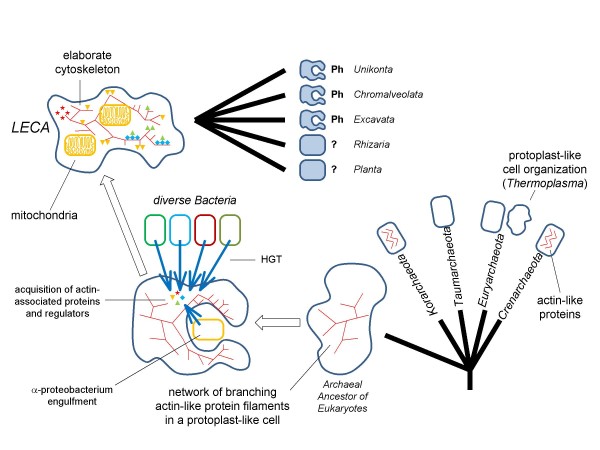
This paper compares phagosome proteomes across five eukaryotes and traces the evolutionary histories of actin-family proteins and small GTPases to infer how phagocytosis and eukaryogenesis may have arisen. The authors propose a speculative scenario in which an archaeal ancestor with an actin-based cytoskeleton could make primitive membrane protrusions and occasionally engulf bacteria, one of which became the mitochondrion.
Key findings
- Across 7 phagosome proteomes from 5 eukaryotes, the authors identified ~2000 phagosome-associated proteins and clustered them into over 900 orthologous sets; only 118 proteins were found in at least 3 of the 5 species, 29 in 4 species, and 9 in all 5 species.
- The conserved phagocytic core is actin-centered: actin, Arp2/3, WASP/N-WASP or WAVE/SCAR, and actin-binding proteins such as gelsolin, profilin, cofilin, formin, and coronin were described as conserved in nearly all eukaryotes.
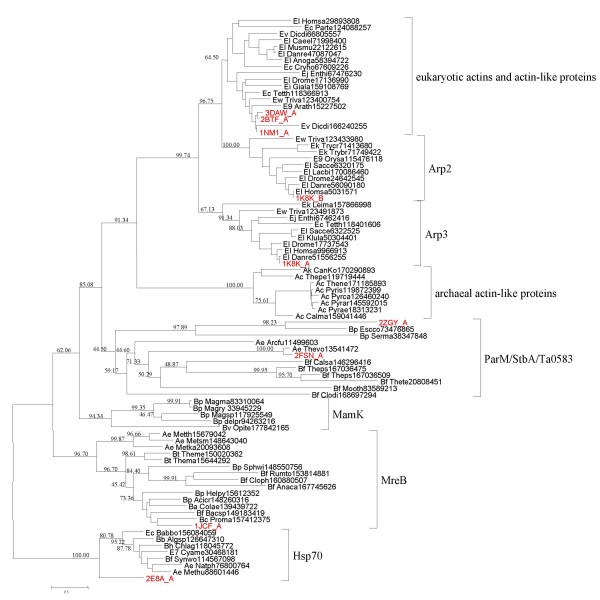
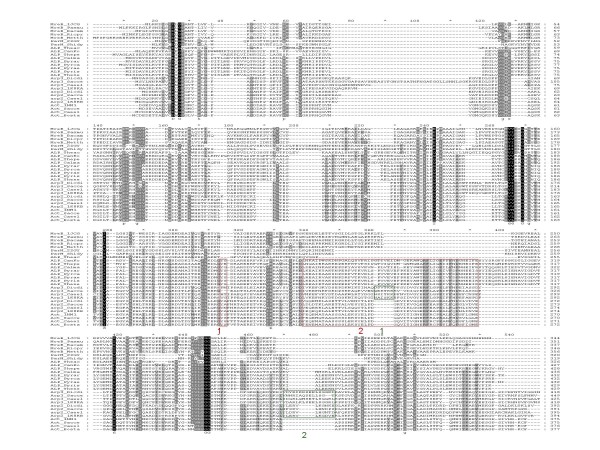
- Archaeal actin-like proteins were found in a subset of Crenarchaeota and in Korarchaeum; these proteins were monophyletic with eukaryotic actins and shared two homologous inserts plus another conserved region missing from bacterial MreB-like proteins.
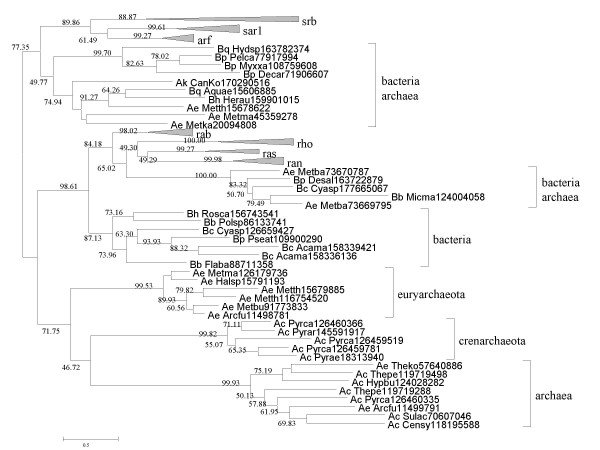
- The authors identified 67 predicted prokaryotic homologs of Rab/Ran/Ras/Rho-family GTPases, of which 61 were bacterial and 6 archaeal, and interpreted this as evidence that these eukaryotic GTPases are of bacterial origin.
Methods
- Comparative proteomic analysis of phagosomes from mouse macrophages, Drosophila S2 cells, Dictyostelium discoideum, Entamoeba histolytica, and Tetrahymena thermophila; the paper states these studies yielded approximately 2000 proteins associated with phagosomes.
- Proteins were clustered into likely orthologous sets using eukaryotic clusters of orthologous domains (KODs), then screened with BLAST/PSI-BLAST and MUSCLE alignments; phylogenies were inferred with Maximum Likelihood trees in TreeFinder, and a PhyML tree was used for Rho-family relationships.
- The actin superfamily tree was rooted with HSP70 as an outgroup, and the authors used structural comparison plus sequence alignment to identify shared inserts in archaeal actins and eukaryotic actins.
Limitations
- The paper explicitly states that phagosome proteomics has many false positives and false negatives; proteins can be contaminants or transiently associated and thus missed by proteomics.
- The authors note that the current archaeal genome collection is “unlikely to be a full representation of the actual diversity of the archaea,” which limits inference about actin-like proteins in archaea.
- The text makes evident that the evolutionary scenario is speculative: it depends heavily on a small number of prokaryotic homologous protein families and on interpreting sparse, incomplete proteomic coverage.
Model-written summary. Check it against the paper before relying on it.
Integrity signals
Registry
Cites
Statistics
Figures
Verification
Claims the paper makes
3 Valid · 6 Not valid · 23 Not checked · 58 Own results and interpretations
A result the paper reports from its own data — it cites no other source for it, so there is none to check. The quote shows it is in the paper.
In the paper
“The small GTPases are mostly represented by the Rab family members that are involved in vesicular fusion and trafficking.”
§ The origins of phagocytosis and eukaryogenesis > Results > The core set of proteins involved in phagocytosis identified by comparison of the proteomics results
plainstates an association- Asserted: passes — The authors put it forward as true.
- Checkable: passes — It can be checked against evidence.
- Load-bearing: unclear — It is unclear whether the paper’s conclusions depend on it.
- Based: passes — The paper gives a reason why it holds.
A result the paper reports from its own data — it cites no other source for it, so there is none to check. The quote shows it is in the paper.
In the paper
“this set included numerous ribosomal proteins, translation elongation factors, and several mitochondrial and metabolic proteins.”
§ The origins of phagocytosis and eukaryogenesis > Results > The core set of proteins involved in phagocytosis identified by comparison of the proteomics results
plain- Asserted: passes — The authors put it forward as true.
- Checkable: passes — It can be checked against evidence.
- Load-bearing: passes — The paper’s conclusions depend on it.
- Based: passes — The paper gives a reason why it holds.
A result the paper reports from its own data — it cites no other source for it, so there is none to check. The quote shows it is in the paper.
In the paper
“Receptors are a poorly conserved part of the phagocytic machinery: indeed, no universal phagocytic receptors have been identified (Table 1).”
§ The origins of phagocytosis and eukaryogenesis > Results > The major proteins involved in phagocytosis and their phyletic distribution: the conserved actin-centered core of phagocytosis
plain- Asserted: passes — The authors put it forward as true.
- Checkable: passes — It can be checked against evidence.
- Load-bearing: passes — The paper’s conclusions depend on it.
- Based: passes — The paper gives a reason why it holds.
The paper states this without a source or data behind it here, so there is nothing to check it against. The quote shows it is in the paper.
In the paper
“The Rho family GTPases that are ubiquitous regulators of phagocytosis in eukaryotes appear to be of bacterial origin”
§ The origins of phagocytosis and eukaryogenesis > Abstract > Results
hedged- Asserted: passes — The authors put it forward as true.
- Checkable: passes — It can be checked against evidence.
- Load-bearing: passes — The paper’s conclusions depend on it.
- Based: unclear — It is unclear why the paper says it holds.
A result the paper reports from its own data — it cites no other source for it, so there is none to check. The quote shows it is in the paper.
In the paper
“Components of the TCP1-ring chaperonin complex that mediates the folding of various cytoplasmic proteins including actin and tubulin, as well as the HSP70 and HSP90 chaperones (heat shock proteins), whose role in endocytosis has been demonstrated, also belonged to the conserved phagosomal protein set.”
§ The origins of phagocytosis and eukaryogenesis > Results > The core set of proteins involved in phagocytosis identified by comparison of the proteomics results
boostedstates an association- Asserted: passes — The authors put it forward as true.
- Checkable: passes — It can be checked against evidence.
- Load-bearing: unclear — It is unclear whether the paper’s conclusions depend on it.
- Based: passes — The paper gives a reason why it holds.
44 more claims
Create a free account to see all 90 claims and to verify the 8 references still open.
- Probably not a substantial claim. 13
- It may state two separate claims as one. 33
Self-check
Percentages, sums and reported differences re-computed from the paper’s own numbers.
Self-check results appear here once an independent check has confirmed them.
Cited works that were retracted
Works this paper cites that were later retracted, from the retraction notices publishers deposit. Major when the notice came out before this paper was published.
A note, not an issue: for example, a cited work that was retracted only after this paper was published, which its authors could not have known.
In the paper
“Jobb G, von Haeseler A, Strimmer K: TREEFINDER: a powerful graphical analysis environment for molecular phylogenetics. BMC Evol Biol. 2004, 4: 18-”
Cited work 10.1186/1471-2148-4-18 · retracted 2015-11-05 · notice 10.1186/s12862-015-0513-z · this paper published 2009-02-26
Citations
Cites
1 retracted
RETRACTED ARTICLE: TREEFINDER: a powerful graphical analysis environment for molecular phylogenetics
Jobb, G., von Haeseler, A., & Strimmer, K. (2004) · BMC Evolutionary Biology · doi:10.1186/1471-2148-4-18 · Cited by 1,112
RetractedGapped BLAST and PSI-BLAST: a new generation of protein database search programs
Altschul, S. (1997) · Nucleic Acids Research · doi:10.1093/nar/25.17.3389 · Cited by 73,302
MUSCLE: multiple sequence alignment with high accuracy and high throughput
Edgar, R. C. (2004) · Nucleic Acids Research · doi:10.1093/nar/gkh340 · Cited by 44,662 · cited 3×
“The sequences for phylogenetic analysis were retrieved from the RefSeq database [143] and aligned using MUSCLE [141].”
MethodA Simple, Fast, and Accurate Algorithm to Estimate Large Phylogenies by Maximum Likelihood
Guindon, S., & Gascuel, O. (2003) · Systematic Biology · doi:10.1080/10635150390235520 · Cited by 16,806 · cited 1×
“tree [144] was built to resolve the subfamily (Cdc42, RhoA, Rac1) relationships.”
BackgroundRegulated portals of entry into the cell
Conner, S. D., & Schmid, S. L. (2003) · Nature · doi:10.1038/nature01451 · Cited by 3,805 · cited 1×
“Phagocytosis (uptake of large particles) is a distinct form of the more general mechanism, endocytosis (uptake of extracellular substances), the other form of which is pinocytosis, the uptake of solutes and small particles [32].”
BackgroundWhelan, S., & Goldman, N. (2001) · Molecular Biology and Evolution · doi:10.1093/oxfordjournals.molbev.a003851 · Cited by 2,849 · cited 1×
“Maximum Likelihood trees were constructed using the TreeFinder program [145], with the estimated site rates heterogeneity and with the WAG (Whelan and Goldman) substitution model [146].”
MethodOn the origin of mitosing cells
Sagan, L. (1967) · Journal of Theoretical Biology · doi:10.1016/0022-5193(67)90079-3 · Cited by 1,870 · cited 2×
“Background It is universally accepted that mitochondria and related organelles, that so far have been discovered in all eukaryotes studied in sufficient detail, have evolved via endosymbiosis, most likely, a single endosymbiotic event that involved an alpha-proteobacterium, the apparent ancestor of the mitochondria [1…”
BackgroundThe Hydrogen Hypothesis for the First Eukaryote
Martin, W., & Müller, M. (1998) · Nature · doi:10.1038/32096 · Cited by 1,282 · cited 1×
“Under the symbiotic scenarios that differ in details, the host that engulfed the alpha-proteobacterial ancestor of the mitochondria is posited to have been not a protoeukaryote but rather an archaeon that closely resembled the currently known archaea, at least, in terms of the cell organization [1,11-13].”
BackgroundMesophilic crenarchaeota: proposal for a third archaeal phylum, the Thaumarchaeota
Brochier-Armanet, C., Boussau, B., Gribaldo, S., & Forterre, P. (2008) · Nature Reviews Microbiology · doi:10.1038/nrmicro1852 · Cited by 1,197 · cited 1×
“Of course, one has to keep in mind that the current genomic collection is unlikely to be a full representation of the actual diversity of the archaea [115], so this scenario might need revision in the future.”
BackgroundClassification and evolution of P-loop GTPases and related ATPases
Leipe, D. D., Wolf, Y. I., Koonin, E. V., & Aravind, L. (2002) · Journal of Molecular Biology · doi:10.1006/jmbi.2001.5378 · Cited by 1,148 · cited 3×
“Bacterial small GTPases of the MglA family appeared to be the closest prokaryotic relatives of the Ras GTPases [121] and were used to root the Ras phylogenetic tree [122] prior to the recent discovery of a set of previously unknown, closer prokaryotic Ras homologs [123].”
BackgroundMethodSelf-citation
Cited by
Items 101–200 of 249
Diversity and evolution of actin-dependent phenotypes
Velle, K., & Fritz‐Laylin, L. K. (2019) · Current Opinion in Genetics & Development · doi:10.1016/j.gde.2019.07.016 · Cited by 39
Expression of genes involved in phagocytosis in uncultured heterotrophic flagellates
Labarre, A., Obiol, A., Wilken, S., Forn, I., & Massana, R. (2019) · Limnology and Oceanography · doi:10.1002/lno.11379 · Cited by 41
“Phagocytosis is a specific form of endocytosis (uptake of extracellular material) that involves engulfing large particles (Niedergang and Grinstein 2018) and that originated billions of years ago (Yutin et al. 2009).”
BackgroundComparative genomics reveals new functional insights in uncultured MAST species
Labarre, A., López‐Escardó, D., Latorre, F., Leonard, G., Bucchini, F., Obiol, A., Cruaud, C., Sieracki, M. E., Jaillon, O., Wincker, P., et al. (2021) · The ISME Journal · doi:10.1038/s41396-020-00885-8 · Cited by 44
Origin and Evolution of the Self-Organizing Cytoskeleton in the Network of Eukaryotic Organelles
Jekely, G. (2014) · Cold Spring Harbor Perspectives in Biology · doi:10.1101/cshperspect.a016030 · Cited by 38
Burns, J. A., Paasch, A., Narechania, A., & Kim, E. (2015) · Genome Biology and Evolution · doi:10.1093/gbe/evv144 · Cited by 38
“The distribution of phagocytosis across a wide range of eukaryotic groups suggests that phagocytosis was present in the last eukaryotic common ancestor (LECA), although it has since been lost in several lineages after they diverged from LECA (Cavalier-Smith 2002; Yutin et al. 2009).”
BackgroundInfluentialStadnichuk, I. N., & Kusnetsov, V. V. (2023) · International Journal of Molecular Sciences · doi:10.3390/ijms24032290 · Cited by 39
Eco-Evolutionary Perspectives on Mixoplankton
Mansour, J. S., & Anestis, K. (2021) · Frontiers in Marine Science · doi:10.3389/fmars.2021.666160 · Cited by 39
Richards, T. A., Massana, R., Pagliara, S., & Hall, N. (2019) · Philosophical Transactions of the Royal Society B Biological Sciences · doi:10.1098/rstb.2019.0076 · Cited by 32
“Furthermore, cellular and genomic markers for such behaviour are ill-defined both in terms of cellular staining protocols and the lack of identifiable proteome characteristics uniquely responsible for phagocytosis [87].”
BackgroundAn archaeal origin for the actin cytoskeleton: Implications for eukaryogenesis
Bernander, R., Lind, A. E., & Ettema, T. J. G. (2011) · Communicative & Integrative Biology · doi:10.4161/cib.16974 · Cited by 32
Regulation of phagosome functions by post-translational modifications: a new paradigm
Dean, P., Heunis, T. D. J., Härtlová, A., & Trost, M. (2018) · Current Opinion in Chemical Biology · doi:10.1016/j.cbpa.2018.11.001 · Cited by 36
Matveeva, O. V., Nechipurenko, Y. D., Lagutkin, D., Yegorov, Y. E., & Kzhyshkowska, J. G. (2022) · Frontiers in Immunology · doi:10.3389/fimmu.2022.1050478 · Cited by 34
“This process is the most ancient form of endocytosis, and the origin of proteins involved in this type of endocytic pathway can be traced back to prokaryotes (2, 3).”
BackgroundEvolutionary transitions revisited: Holobiont evo‐devo
Gilbert, S. F. (2019) · Journal of Experimental Zoology Part B Molecular and Developmental Evolution · doi:10.1002/jez.b.22903 · Cited by 36
Close Encounters of the Third Domain: The Emerging Genomic View of Archaeal Diversity and Evolution
Spang, A., Martijn, J., Saw, J. H., Lind, A. E., Guy, L., & Ettema, T. J. G. (2013) · Archaea · doi:10.1155/2013/202358 · Cited by 30
“Examples include actin [53, 130], tubulin [28], H3/H4type histones [55], ESCRT-III [24, 25, 131], and components of the ubiquitin modifier system [45].”
BackgroundBosurgi, L., Hughes, L. D., Rothlin, C. V., & Ghosh, S. (2017) · Immunological Reviews · doi:10.1111/imr.12585 · Cited by 33
A case for an active eukaryotic marine biosphere during the Proterozoic era
Eckford-Soper, L., Andersen, K. H., Hansen, T. F., & Canfield, D. E. (2022) · Proceedings of the National Academy of Sciences · doi:10.1073/pnas.2122042119 · Cited by 31
Barreda, D. R., Neely, H. R., & Flajnik, M. F. (2016) · Microbiology Spectrum · doi:10.1128/microbiolspec.mchd-0007-2015 · Cited by 31
“Despite continued debate over the morphological features for this archeal ancestor and the relative efficiency of its phagocytic machinery, support for this dominant model outlining the origins of Eukaryota can be found in cell biology, palaeontology and biochemical datasets (18, 20, 21).”
BackgroundInfluentialAkanni, W. A., Siu-Ting, K., Creevey, C. J., McInerney, J. O., Wilkinson, M., Foster, P. G., & Pisani, D. (2015) · Philosophical Transactions of the Royal Society B Biological Sciences · doi:10.1098/rstb.2014.0337 · Cited by 30
Evaluation of Mixotrophy-Associated Gene Expression in Two Species of Polar Marine Algae
McKie-Krisberg, Z. M., Sanders, R. W., & Gast, R. J. (2018) · Frontiers in Marine Science · doi:10.3389/fmars.2018.00273 · Cited by 29
“Some molecular targets involved in the process of cellular phagotrophy have been previously identified, including receptors associated with phagocytosis, actin filament remodeling and regulatory gene families (Yutin et al., 2009).”
BackgroundBremer, N., Tria, F. D. K., Skejo, J., Garg, S. G., & Martin, W. F. (2022) · Genome Biology and Evolution · doi:10.1093/gbe/evac079 · Cited by 25
“A previous study based on the comparative analyses of gene expression data for phagocytic-related genes (Yutin et al. 2009) also suggested a late origin of phagocytosis, as did a study of microfossil evidence for the late origin of phagocytosis (Mills 2020).”
BackgroundMethodResultInfluentialStructure of crenactin, an archaeal actin homologue active at 90°C
Lindås, A., Chruszcz, M., Bernander, R., & Valegard, K. (2014) · Acta Crystallographica Section D Biological Crystallography · doi:10.1107/s1399004714000935 · Cited by 26
“Archaea belonging to the order Thermoproteales within the phylum Crenarchaeota also encode an actin-family protein (Yutin et al., 2009), crenactin (Ettema et al., 2011), which Acta Cryst.”
BackgroundRole of stellar physics in regulating the critical steps for life
Lingam, M., & Loeb, A. (2019) · International Journal of Astrobiology · doi:10.1017/s1473550419000016 · Cited by 25
“The origin of eukaryotes, entailing the putative endosymbiosis of mitochondria (followed by the acquisition of plastids and other organelles), has gained near-universal acceptance as a seminal innovation from the standpoints of phagocytosis, gene expression, bioenergetics, organismal complexity and cellular evolution…”
BackgroundThe Structure, Function and Roles of the Archaeal ESCRT Apparatus
Samson, R. Y., Dobro, M. J., Jensen, G. J., & Bell, S. D. (2017) · Sub-cellular biochemistry/Subcellular biochemistry · doi:10.1007/978-3-319-53047-5_12 · Cited by 27
A cellular and molecular atlas reveals the basis of chytrid development
Laundon, D., Chrismas, N. A. M., Bird, K. E., Thomas, S. R., Möck, T., & Cunliffe, M. (2022) · eLife · doi:10.7554/elife.73933 · Cited by 30
The ring of life hypothesis for eukaryote origins is supported by multiple kinds of data
McInerney, J. O., Pisani, D., & O’Connell, M. J. (2015) · Philosophical Transactions of the Royal Society B Biological Sciences · doi:10.1098/rstb.2014.0323 · Cited by 31
Nested Bacterial Boxes: Nuclear and Other Intracellular Compartments in Planctomycetes
Fuerst, J. A., & Sagulenko, E. (2013) · Microbial Physiology · doi:10.1159/000346544 · Cited by 22
Functional Modules of Minimal Cell Division for Synthetic Biology
Hürtgen, D., Härtel, T., Murray, S., Sourjik, V., & Schwille, P. (2019) · Advanced Biosystems · doi:10.1002/adbi.201800315 · Cited by 25
Descent of Bacteria and Eukarya From an Archaeal Root of Life
Long, X., Xue, H., & Wong, J. T.-F. (2020) · Evolutionary Bioinformatics · doi:10.1177/1176934320908267 · Cited by 19
Trogocytosis in Unicellular Eukaryotes
Nakada‐Tsukui, K., & Nozaki, T. (2021) · Cells · doi:10.3390/cells10112975 · Cited by 27
“Although comparative genomics and proteomics are powerful tools to elucidate molecular mechanisms of the ubiquitous core units of biological processes, central components of phagocytosis ubiquitous in eukaryotes have not been identified with an exception of actin, by phagosome proteomics of 5 eukaryotic organisms [155…”
BackgroundThe falsifiability of the models for the origin of eukaryotes
Vesteg, M., & Krajčovič, J. (2011) · Current Genetics · doi:10.1007/s00294-011-0357-z · Cited by 22
Godde, J. S. (2012) · Cell & Bioscience · doi:10.1186/2045-3701-2-29 · Cited by 22
“have opened up the host to invasion [102,103].”
BackgroundGene expression during bacterivorous growth of a widespread marine heterotrophic flagellate
Massana, R., Labarre, A., López‐Escardó, D., Obiol, A., Bucchini, F., Hackl, T., Fischer, M., Vandepoele, K., Tikhonenkov, D. V., Husník, F., et al. (2020) · The ISME Journal · doi:10.1038/s41396-020-00770-4 · Cited by 26
“Phagocytosis is an ancient trait that marked the origin of eukaryotic cells [11] and allowed critical evolutionary innovations [12, 13].”
BackgroundProtein Targeting and Transport as a Necessary Consequence of Increased Cellular Complexity
Sommer, M., & Schleiff, E. (2014) · Cold Spring Harbor Perspectives in Biology · doi:10.1101/cshperspect.a016055 · Cited by 23
“Possible scenarios are outlined, for example, in Cavalier-Smith (2009) or Yutin et al. (2009).”
BackgroundGarvetto, A., Murúa, P., Kirchmair, M., Salvenmoser, W., Hittorf, M., Ciaghi, S., Harikrishnan, S. L., Gachon, C. M. M., Burns, J. A., & Neuhauser, S. (2023) · New Phytologist · doi:10.1111/nph.18828 · Cited by 19
From Species to Regional and Local Specialization of Intestinal Macrophages
Arroyo-Portilla, C., Tomas, J., Gorvel, J., & Lelouard, H. (2021) · Frontiers in Cell and Developmental Biology · doi:10.3389/fcell.2020.624213 · Cited by 19
Evolution of Phytoplankton in Relation to Their Physiological Traits
Raven, J. A., & Beardall, J. (2022) · Journal of Marine Science and Engineering · doi:10.3390/jmse10020194 · Cited by 21
Immune system aging and the aging-related diseases in the COVID-19 era
Witkowski, J. M. (2022) · Immunology Letters · doi:10.1016/j.imlet.2022.01.005 · Cited by 21
“when some of these protobacteria had become mitochondria [5].”
An Introduction to Phagocytosis
Hallett, M. B. (2020) · Advances in experimental medicine and biology · doi:10.1007/978-3-030-40406-2_1 · Cited by 29
Slaby, S., Geffard, A., Fisson, C., Bonnevalle-Normand, M., Allonier-Fernandes, A.-S., Amara, R., Bado‐Nilles, A., Bonnard, I., Bonnard, M., Burlion-Giorgi, M., et al. (2024) · Journal of Environmental Management · doi:10.1016/j.jenvman.2024.120784 · Cited by 17
The Major Transitions of Life from a Network Perspective
Suki, B. (2012) · Frontiers in Physiology · doi:10.3389/fphys.2012.00094 · Cited by 17
“The development of phagocytosis directly depends on the actin network (Yutin et al., 2009) and phagocytosis in turn might have allowed the development of the nucleus (Maynard Smith and Szathmáry, 1999).”
BackgroundThe actin cytoskeleton orchestra in Entamoeba histolytica
Rath, P. P., & Gourinath, S. (2020) · Proteins Structure Function and Bioinformatics · doi:10.1002/prot.25955 · Cited by 19
“C4M576 EHI_111780 Glucocorticoid receptor like (30-45, 47-71), LIM (188-244)”
InfluentialWhat Defines the “Kingdom” Fungi?
Richards, T. A., Leonard, G., & Wideman, J. G. (2017) · ASM Press eBooks · doi:10.1128/9781555819583.ch3 · Cited by 23
To forge a solid immune recognition
Shi, Y. (2012) · Protein & Cell · doi:10.1007/s13238-012-2933-5 · Cited by 21
“Eukaryogenesis (circa 2 billion years ago) itself has been thought to be the result of phagocytosis as cellular organelles such as mitochondria likely came from engulfment of prokaryotic life forms (Yutin et al., 2009).”
BackgroundInfluentialEvolutionary innovation, fungal cell biology, and the lateral gene transfer of a viral KilA-N domain
Medina, E. M., Walsh, E. S., & Buchler, N. E. G. (2019) · Current Opinion in Genetics & Development · doi:10.1016/j.gde.2019.08.004 · Cited by 16
Guillonneau, R., Murphy, A. R. J., Teng, Z., Wang, P., Zhang, Y., Scanlan, D. J., & Chen, Y. (2022) · Proceedings of the National Academy of Sciences · doi:10.1073/pnas.2203057119 · Cited by 16
Cyanobacterial membrane dynamics in the light of eukaryotic principles
Siebenaller, C., & Schneider, D. (2023) · Bioscience Reports · doi:10.1042/bsr20221269 · Cited by 17
Bacterial leaf glands in Styrax camporum (Styracaceae): first report for the family
Machado, S. R., Teixeira, S. P., & Rodrigues, T. M. (2014) · Botany · doi:10.1139/cjb-2013-0297 · Cited by 15
“The strands of actin filaments near the endocytical vesicles in S. camporum are consistent with the phagocytosis process, as this process is an actin-dependent process that occurs in all eukaryotic cells (Yutin et al. 2009).”
BackgroundChen, J., Deng, L., Pang, M., Li, Y., Xu, Z., Zhang, X., & Liu, H. (2024) · ISME Communications · doi:10.1093/ismeco/ycae087 · Cited by 15
“Considering phagocytosis is an ancient trait that marked the origin of eukaryotic cells [69], and many of the genes involved are evolutionarily conserved among protists [70, 71], the expression profile of phagocytosis genes can be regarded as a promising target to indicate relevant phagotrophic…”
BackgroundEndosymbiotic Origin of Chloroplasts in Plant Cells’ Evolution
Stadnichuk, I. N., & Kusnetsov, V. V. (2021) · Russian Journal of Plant Physiology · doi:10.1134/s1021443721010179 · Cited by 18
Herbst, F., Lang, T. J. L., Eckert, E., Wünsche, P., Wurm, A. A., Kindinger, T., Laaber, K., Hemmati, S., Hotz‐Wagenblatt, A., Zavidij, O., et al. (2021) · Leukemia · doi:10.1038/s41375-021-01267-5 · Cited by 14
“of actin-associated processes for phagocytosis and that genes involved in actin filament formation, actin binding or nucleation are highly conserved throughout eukaryotes [54].”
BackgroundMonocyte/Macrophage: NK Cell Cooperation—Old Tools for New Functions
Wałajtys-Rode, E., & Dzik, J. M. (2017) · Results and problems in cell differentiation · doi:10.1007/978-3-319-54090-0_5 · Cited by 15
Advanced Praise for The Sentient Cell: The Cellular Foundations of Consciousness
Reber, A. S., Baluška, F., & Miller, W. B. (2023) · Oxford University Press eBooks · doi:10.1093/oso/9780198873211.002.0008 · Cited by 13
Bright, L. J., Goût, J.-F., & Lynch, M. (2017) · Molecular Biology of the Cell · doi:10.1091/mbc.e16-06-0361 · Cited by 13
“…localization pattern of a pair of Rab11 clades uncovered by this study (a subset of all Rab11 clades in Paramecium genomes, it must be noted) strengthens the case for the conservation of extensive interactions between the phagocytic and endocytic pathways (Yutin et al., 2009; Boulais et al., 2010).”
BackgroundKnopp, M. R., Stockhorst, S., van der Giezen, M., Garg, S. G., & Gould, S. B. (2021) · Genome Biology and Evolution · doi:10.1093/gbe/evab085 · Cited by 12
(2023) · doi:10.1093/gbe/evad218 · Cited by 11
“While the origins of eukaryotic phagocytosis remain unclear (Yutin et al. 2009; Mills 2020), our analyses Structural superpositions were first performed for each exemplar SR-B with the metazoan consensus SR-B sequence, and alignments were generated based on the most spatially adjacent residues for…”
MethodKörber, S., Junemann, A., Litschko, C., Winterhoff, M., & Faix, J. (2023) · Proceedings of the National Academy of Sciences · doi:10.1073/pnas.2220825120 · Cited by 15
“Despite serving different purposes in higher and lower eukaryotes, the regulation and the core mechanisms of phagocytosis and macropinocytosis driven by actin polymerization are highly conserved across species (9, 10).”
BackgroundTransmembrane formins as active cargoes of membrane trafficking
Cvrčková, F., Ghosh, R., & Kočová, H. (2024) · Journal of Experimental Botany · doi:10.1093/jxb/erae078 · Cited by 10
For Quite a Few Chromosomes More: The Origin of Eukaryotes…
Lodé, T. (2012) · Journal of Molecular Biology · doi:10.1016/j.jmb.2012.07.005 · Cited by 12
Evolutionary patterns of archaea predominant in acidic environment
Bargiela, R., Korzhenkov, A. A., McIntosh, O. A., Toshchakov, S. V., Yakimov, M. M., Golyshin, P. N., & Golyshina, O. V. (2023) · Environmental Microbiome · doi:10.1186/s40793-023-00518-5 · Cited by 10
“acidophilum Ta0583, an actin ATPase was not related to shape determination, but in chromosome separation and plasmid partitioning [70, 71].”
BackgroundEmerging Research Topics in the Vibrionaceae and the Squid–Vibrio Symbiosis
Soto, W. (2022) · Microorganisms · doi:10.3390/microorganisms10101946 · Cited by 12
Proteomic profiling of tumor-initiating cells in HT-29 human colorectal cancer cells
Lee, H. N., Park, S., Lee, E. K., Bernardo, R., & Kim, C. (2012) · Biochemical and Biophysical Research Communications · doi:10.1016/j.bbrc.2012.09.036 · Cited by 10
Phagocytosis of insect haemocytes as a new alternative model
Berger, J., & Jurčová, M. (2012) · Journal of Applied Biomedicine · doi:10.2478/v10136-012-0003-1 · Cited by 10
“Phagocytosis is an evolutionarily conserved cellular response in all eukaryotic phyla (Yutin et al. 2009) but most of the available data refer to mammalian Josef Berger, Department of Clinical and Preclinical Studies, Faculty of Health and Social Studies, University of South Bohemia, Emy Destinové…”
BackgroundTaefehshokr, N., Yin, C., & Heit, B. (2021) · PubMed · doi:10.14670/hh-18-252 · Cited by 18
In search of the primordial actin filament
Ghoshdastider, U., Jiang, S., Popp, D., & Robinson, R. C. (2015) · Proceedings of the National Academy of Sciences · doi:10.1073/pnas.1511568112 · Cited by 10
Brinkworth, J. F., & Alvarado, A. S. (2020) · The Quarterly Review of Biology · doi:10.1086/710389 · Cited by 9
“…strategies that emerged in cellular life starting approximately 4.3 billion years ago (Nölling and de Vos 1992; Battistuzzi and Hedges 2009; Yutin et al. 2009; Boulais et al. 2010; Parfrey et al. 2011;Marín 2012; Yue et al. 2012; Nathan and Cunningham-Bussel 2013; Bassham and Crespo2014;…”
BackgroundInfluentialTracing the evolutionary pathway: on the origin of mitochondria and eukaryogenesis
Bravo‐Arévalo, J. E. (2025) · FEBS Journal · doi:10.1111/febs.70109 · Cited by 11
Multi-parametric analysis of phagocyte antimicrobial responses using imaging flow cytometry
Havixbeck, J. J., Wong, M. E., Juan More, B., & Barreda, D. R. (2015) · Journal of Immunological Methods · doi:10.1016/j.jim.2015.03.016 · Cited by 9
Grattepanche, J., & Katz, L. A. (2020) · Frontiers in Marine Science · doi:10.3389/fmars.2019.00818 · Cited by 11
Toward a Membrane-Centric Biology
Shi, Y., & Ruan, H. (2020) · Frontiers in Immunology · doi:10.3389/fimmu.2020.01909 · Cited by 7
“On the flip side, receptor-independent sensing of environment, such as phagocytosis (21, 22), was a daily occurrence that had propelled the evolution for at least 1.”
BackgroundSystema Naturae or the outline of living world classification
SHIPUNOV, A. B. (2009) · Protistology · Cited by 7
Merino, F., & Raunser, S. (2016) · eLife · doi:10.7554/elife.23354 · Cited by 6
“As mentioned above, it is thought a similar mechanism gave rise to the first eukaryotes (Yutin et al., 2009), and the presence of a working actin-like cytoskeleton in the ancestral archaea would certainly support this idea.”
BackgroundA brief history of metal recruitment in protozoan predation
Yu, Y., Li, Y., Ren, K., Hao, X., Fru, E. C., Rønn, R., Rivera, W. L., Becker, K., Feng, R., Yang, J., et al. (2023) · Trends in Microbiology · doi:10.1016/j.tim.2023.11.008 · Cited by 6
Boudreau, V., Albright, A. R., Larson, B. T., Gerbich, T. M., Fadero, T., Yan, V., Lucas-DeMott, A., Yung, J., Moulin, S., Descovich, C. P., et al. (2025) · Molecular Biology of the Cell · doi:10.1091/mbc.e24-12-0571 · Cited by 6
“…precursor cells that eventually gave rise to mitochondria were ingested by a cell that already contained the necessary phagocytic machinery (Yutin et al. , 2009; Guy and Ettema, 2011), but instead of being digested, they were maintained as endosymbionts which then gradually became more…”
The Biological Information Cycle: The Terms of Consciousness
Reber, A. S., Baluška, F., & Miller, W. B. (2023) · Oxford University Press eBooks · doi:10.1093/oso/9780198873211.003.0007 · Cited by 5
de Lima, F. M. R., Abrahão, I., Pentagna, N., & Carneiro, K. (2022) · Developmental Dynamics · doi:10.1002/dvdy.543 · Cited by 7
“It seems clear that PACs are inherent key players of the tissue repair machinery, be it by regeneration or wound healing, across Metazoa.”
BackgroundInfluentialGleich, S. J., Hu, S. K., Krinos, A. I., & Caron, D. A. (2023) · Environmental Microbiology · doi:10.1111/1462-2920.16556 · Cited by 7
The Rise of Algae promoted eukaryote predation in the Neoproterozoic benthos
Mills, D. B., Vuillemin, A., Muschler, K., Coskun, Ö. K., & Orsi, W. D. (2025) · Science Advances · doi:10.1126/sciadv.adt2147 · Cited by 9
“…included genes encoding Rab guanosine triphosphatases (GTPases), SNAP receptor proteins, and vacuolar sorting proteins, all involved in phagosome formation ( 37 , 38 ), as well as genes encoding clathrin, coronin, and formin-like proteins, which are involved in cytoskeleton remodeling ( 38 , 39 ).”
Isolation of mononuclear phagocytes from the mouse gut
Chiaranunt, P., Burrows, K., Ngai, L., & Mortha, A. (2019) · Methods in enzymology on CD-ROM/Methods in enzymology · doi:10.1016/bs.mie.2019.10.004 · Cited by 6
The bilaterian roots of cordon-bleu
Schultz, J., & Terhoeven, N. (2013) · BMC Research Notes · doi:10.1186/1756-0500-6-393 · Cited by 7
Marulanda-Gómez, Á. M., Mueller, B., Bayer, K., Abukhalaf, M., Cassidy, L., Tholey, A., Fraune, S., Pita, L., & Hentschel, U. (2025) · mBio · doi:10.1128/mbio.01474-25 · Cited by 4
The Perils and Promise of Cellular Cannibalism in Development, Homeostasis, and Disease
Rodríguez, M. M. D., Mishra, A. K., & Montell, D. J. (2025) · Annual Review of Cell and Developmental Biology · doi:10.1146/annurev-cellbio-101323-121655 · Cited by 4
Charvet, S., Bock, N. A., Kim, E., & Duhamel, S. (2024) · ISME Communications · doi:10.1093/ismeco/ycae083 · Cited by 8
“Most of the knowledge on phagocytosis comes from what is known about the immune system of mammals and insects [74, 75].”
BackgroundHooper, S. L., & Burstein, H. J. (2014) · Biology Direct · doi:10.1186/1745-6150-9-24 · Cited by 5
Acid digestion and symbiont: Proton sharing at the origin of mitochondriogenesis?
Mencía, M. (2022) · BioEssays · doi:10.1002/bies.202200136 · Cited by 5
“We can hypothesize that the capture and digestion of bacteria would require multiple genes: to direct the membrane processes for entanglement [22,21] ; receptors to latch onto the surface of bacteria [37,38] ; and exportable hydrolytic enzymes directed against bacterial polymers and components.”
BackgroundEffects of therapeutic passive exercise of hip and knee joints on the soleus H-reflex.
Tanabe, S., Sugawara, K., Muraoka, Y., KONDO, M., Tomita, Y., & Tsubahara, A. (2003) · PubMed · Cited by 4
Cox, R. M., Papoulas, O., Shril, S., et al. (2024) · bioRxiv (Cold Spring Harbor Laboratory) · doi:10.1101/2024.05.26.595818 · Cited by 4
Barreda, D. R., Neely, H. R., & Flajnik, M. F. (2017) · ASM Press eBooks · doi:10.1128/9781555819194.ch4 · Cited by 3
Thermotogales origin scenario of eukaryogenesis
Kuwabara, T., & Igarashi, K. (2020) · Journal of Theoretical Biology · doi:10.1016/j.jtbi.2020.110192 · Cited by 5
Origin and evolution of the self-organizing cytoskeleton in the network of eukaryotic organellesPreprint
Jékely, G. (2014) · bioRxiv · doi:10.1101/005868 · Cited by 38
“…Jékely and Arendt 2006; Mitchell 2004; Satir et al. 2008), centrioles (Carvalho-Santos et al. 2010), phagocytosis (Cavalier-Smith 2002; Jékely 2007; Yutin et al. 2009), a midbody during cell division (Eme et al. 2009), mitosis (Raikov 1994), and meiosis (Ramesh et al. 2005) were all ancestral…”
BackgroundInfluentialCholesterol, Eukaryotic Lipid Domains, and an Evolutionary Perspective of Transmembrane Signaling
Shi, Y., Ruan, H., Xu, Y., & Zou, C. (2023) · Cold Spring Harbor Perspectives in Biology · doi:10.1101/cshperspect.a041418 · Cited by 4
Cox, R. M., Papoulas, O., Shril, S., Lee, C., Gardner, T. P., Ansari, Z. T., Battenhouse, A. M., Lee, M., Drew, K., McWhite, C. D., et al. (2026) · Cell Genomics · doi:10.1016/j.xgen.2026.101254 · Cited by 8
“…are conflicting; at least three independent studies conclude phagocytosis probably evolved independently in multiple eukaryotic lineages, 90–92 while others argue that the trait was present in LECA and the absence of phagocytosis in certain eukaryotic groups is due to secondary loss…”
Reber, A. S., Baluška, F., & Miller, W. B. (2023) · Oxford University Press eBooks · doi:10.1093/oso/9780198873211.003.0011 · Cited by 2
What Is Life? The Vitalism–Mechanism Debate and the Origins of Life
Reber, A. S., Baluška, F., & Miller, W. B. (2023) · Oxford University Press eBooks · doi:10.1093/oso/9780198873211.003.0003 · Cited by 2
The role of archaea in the origin of eukaryotes
Shestakov, S. V. (2017) · Ecological genetics · doi:10.17816/ecogen15452-59 · Cited by 2
“У прокариот отсутствует способность к фагоцитозу, и предположения о возможности использования такого механизма в эукариогенезе недостаточно убедительны [54, 55].”
Organisms Without Mitochondria, How It May Happen?
Hampl, V. (2019) · Microbiology monographs · doi:10.1007/978-3-030-17941-0_13 · Cited by 2
Li, R., Dharamshi, J. E., Kwok, K., Ruiz‐Trillo, I., & Gerdt, J. P. (2025) · bioRxiv (Cold Spring Harbor Laboratory) · doi:10.1101/2025.05.14.654023 · Cited by 2
“113 Previously investigated phagocytosis-related genes 11,139 and meiosis-related genes 140,141 were identified on the basis of the presence of conserved protein domains and functional annotation data (Data S11).”
Hyperactive Rac converts sublethal to lethal trogocytosis in vivo
Penfield, L., Mishra, A. K., Smith, M., & Montell, D. J. (2026) · Proceedings of the National Academy of Sciences · doi:10.1073/pnas.2534451123 · Cited by 4
R olf B ernander (1956–2014): pioneer of the archaeal cell cycle
Ettema, T. J. G., Lindås, A., Hjort, K., Poplawski, A. B., Kaessmann, H., Grogan, D. W., Kelman, Z., Andersson, A. F., Pelve, E. A., Lundgren, M., et al. (2014) · Molecular Microbiology · doi:10.1111/mmi.12608 · Cited by 1
Archaeal genome and cancerogenesis
Milanko, S., & Slavica, S. (2017) · Hematology & Medical Oncology · doi:10.15761/hmo.1000148 · Cited by 1
“This scenario, esspecially with small GTPase, contrast with previous studies suggesting that small GTPase originated from alphaproteobacteria progenitor of mitochondria [15].”
ResultReber, A. S., Baluška, F., & Miller, W. B. (2023) · Oxford University Press eBooks · doi:10.1093/oso/9780198873211.003.0002 · Cited by 1
First Bacterial Endosymbionts Found in the Phylum Ascomycota
Fitzpatrick, E. (2000) · doi:10.15760/etd.675 · Cited by 1
“Perhaps the oldest and best known symbiotic relationship however, is the one that occurs between the mitochondrion, an apparent descendant of an α-Proteobacterium, and eukaryotic cells [51, 58, 59].”
Background
Metadata
- Authors
- Yutin, N., Wolf, M. Y., Wolf, Y. I., & Koonin, E. V.
- Affiliations
- National Institutes of Health (US)
- Corresponding author
- Koonin, Eugene V
- Venue
- Biology Direct
- Published
- 2009-02-26
- Volume
- 4
- Issue
- 1
- Pages
- 9-9
- ISSN
- 1745-6150 (ISSN-L)
- PMC
- PMC2651865
- OpenAlex
- W1999184733
- Semantic Scholar
- 6aca33a0d717bc1a03b8eb92329bb185d6c4db72
- Cited by
- 247
- References
- 151
- Citations by year
- 2026: 8 · 2025: 9 · 2024: 10 · 2023: 34 · 2022: 15 · 2021: 12 · 2020: 20 · 2019: 17 · 2018: 8 · 2017: 19 · 2016: 8 · 2015: 17 · 2014: 18 · 2013: 9 · 2012: 11
- FWCI
- 5.50
- Type
- journal article
- Language
- en
- Open access
- gold
- doi.org
- Licence
- cc-by
- Locations
- Biology Direct (publishedVersion, cc-by)
- PubMed Central (publishedVersion, cc-by)
- PubMed (publishedVersion)
- DOAJ (DOAJ: Directory of Open Access Journals) (submittedVersion, cc-by-sa)
- Funders
- U.S. Department of Health and Human Services
- National Institutes of Health
- U.S. National Library of Medicine
- Topics
- Life Sciences › Agricultural and Biological Sciences › Ecology, Evolution, Behavior and Systematics › Protist diversity and phylogeny
- Life Sciences › Biochemistry, Genetics and Molecular Biology › Cell Biology › Cellular transport and secretion
- Life Sciences › Biochemistry, Genetics and Molecular Biology › Cell Biology › Microtubule and mitosis dynamics
- Keywords
- phagocytosis, eukaryotic origin, branched actin filaments, Rho GTPases, horizontal gene transfer, mitochondrial endosymbiosis, endomembrane system, archaea, Thermoplasma, actin cytoskeleton, membrane protrusions
- MeSH terms
- Actins, Amino Acid Sequence, Animals, Archaea, Bacteria, Eukaryotic Cells, Microfilament Proteins, Molecular Sequence Data, Phagocytosis, Phylogeny, Symbiosis, Conserved Sequence, Sequence Homology, Amino Acid, ras Proteins, Monomeric GTP-Binding Proteins, Proteomics
About these checks
Registry, retraction, Cites and statistics results are computed, not judged, with one exception: a printed reference that no index lists is read once by a model before it counts as a citation error. Claims are extracted by a model and kept only when their quote appears verbatim in the text; each cited source is then checked, with a model’s help, for whether it says what the claim relies on. Those verdicts can be wrong — read the claim’s quote and the cited source before relying on one.
The claim verdicts this report counts are experimental: their accuracy is not yet measured.
A language model drew the claims from the paper on 2026-10-10, under version 3 of the claim definition (model deepseek-v4.1-flash, prompt extract-v3).
A second model labelled each claim on 2026-10-10 (model jev-1.13-20260917, definition revision gold-guideline-v0.2).
Statistics and arithmetic are recomputed, not judged.
Confidence bands are shown only for fields calibrated on our annotated test set. None is calibrated yet, so no band is shown.
What counts as a claim ›How we measure confidence ›How we check this ›
Are you an author, or do you see a problem with this page? Request a review
Data sources
Bibliographic data: Semantic Scholar, OpenAlex, Crossref.
Contains information from the Semantic Scholar Academic Graph Datasets, made available under the ODC Attribution License (ODC-BY 1.0).
Semantic Scholar’s data is described in: Kinney, R., et al. (2023). The Semantic Scholar Open Data Platform. arXiv:2301.10140.
