

The origins of phagocytosis and eukaryogenesis
Open accessThe DOI matches its Crossref record; 151 of the 151 references it cites were found in a registry or an index; 4 of the 48 sources its claims cite were checked for support.
Abstract
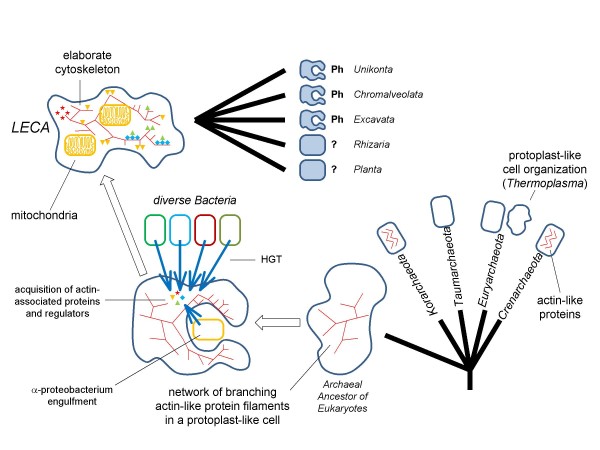
BACKGROUND: Phagocytosis, that is, engulfment of large particles by eukaryotic cells, is found in diverse organisms and is often thought to be central to the very origin of the eukaryotic cell, in particular, for the acquisition of bacterial endosymbionts including the ancestor of the mitochondrion. RESULTS: Comparisons of the sets of proteins implicated in phagocytosis in different eukaryotes reveal extreme diversity, with very few highly conserved components that typically do not possess readily identifiable prokaryotic homologs. Nevertheless, phylogenetic analysis of those proteins for which such homologs do exist yields clues to the possible origin of phagocytosis. The central finding is that a subset of archaea encode actins that are not only monophyletic with eukaryotic actins but also share unique structural features with actin-related proteins (Arp) 2 and 3. All phagocytic processes are strictly dependent on remodeling of the actin cytoskeleton and the formation of branched filaments for which Arp2/3 are responsible. The presence of common structural features in Arp2/3 and the archaeal actins suggests that the common ancestors of the archaeal and eukaryotic actins were capable of forming branched filaments, like modern Arp2/3. The Rho family GTPases that are ubiquitous regulators of phagocytosis in eukaryotes appear to be of bacterial origin, so assuming that the host of the mitochondrial endosymbiont was an archaeon, the genes for these GTPases come via horizontal gene transfer from the endosymbiont or in an earlier event. CONCLUSION: The present findings suggest a hypothetical scenario of eukaryogenesis under which the archaeal ancestor of eukaryotes had no cell wall (like modern Thermoplasma) but had an actin-based cytoskeleton including branched actin filaments that allowed this organism to produce actin-supported membrane protrusions. These protrusions would facilitate accidental, occasional engulfment of bacteria, one of which eventually became the mitochondrion. The acquisition of the endosymbiont triggered eukaryogenesis, in particular, the emergence of the endomembrane system that eventually led to the evolution of modern-type phagocytosis, independently in several eukaryotic lineages.
Overview
CoChat Summary
TL;DR
This paper compares phagosome proteomes across five eukaryotes and traces the evolutionary histories of actin-family proteins and small GTPases to infer how phagocytosis and eukaryogenesis may have arisen. The authors propose a speculative scenario in which an archaeal ancestor with an actin-based cytoskeleton could make primitive membrane protrusions and occasionally engulf bacteria, one of which became the mitochondrion.
Key findings
- Across 7 phagosome proteomes from 5 eukaryotes, the authors identified ~2000 phagosome-associated proteins and clustered them into over 900 orthologous sets; only 118 proteins were found in at least 3 of the 5 species, 29 in 4 species, and 9 in all 5 species.
- The conserved phagocytic core is actin-centered: actin, Arp2/3, WASP/N-WASP or WAVE/SCAR, and actin-binding proteins such as gelsolin, profilin, cofilin, formin, and coronin were described as conserved in nearly all eukaryotes.
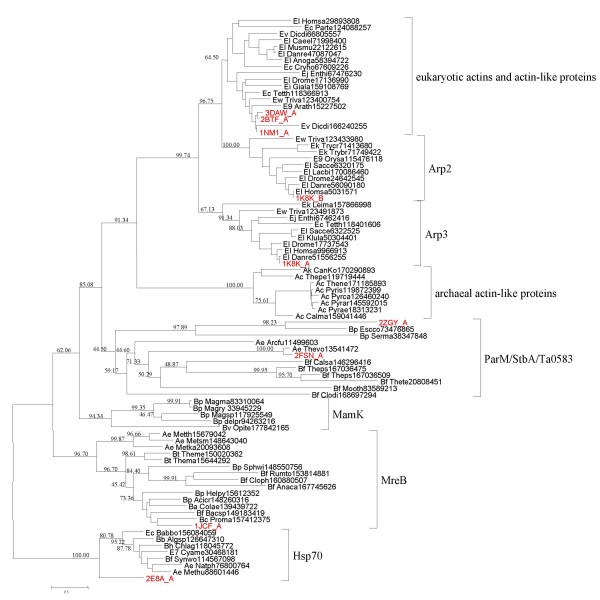
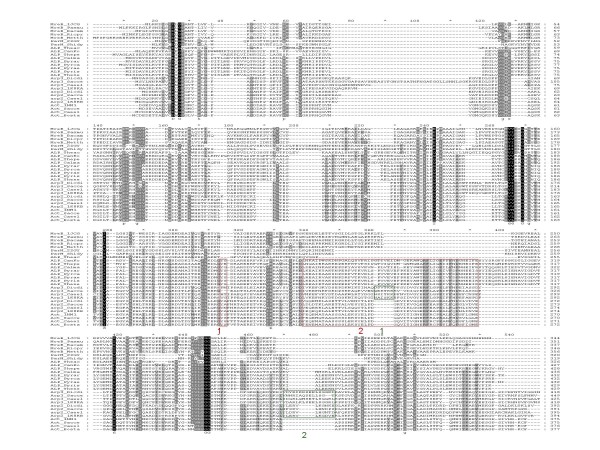
- Archaeal actin-like proteins were found in a subset of Crenarchaeota and in Korarchaeum; these proteins were monophyletic with eukaryotic actins and shared two homologous inserts plus another conserved region missing from bacterial MreB-like proteins.
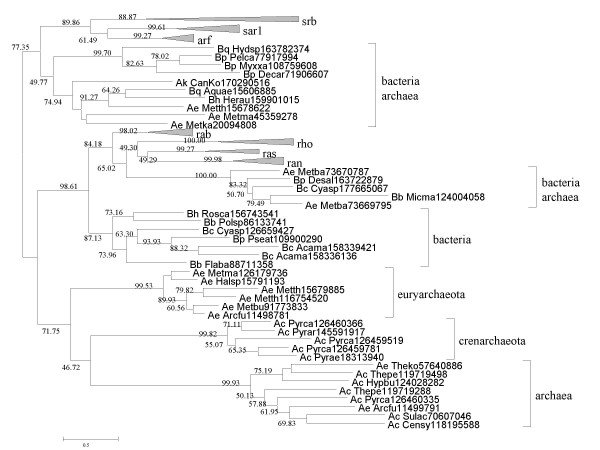
- The authors identified 67 predicted prokaryotic homologs of Rab/Ran/Ras/Rho-family GTPases, of which 61 were bacterial and 6 archaeal, and interpreted this as evidence that these eukaryotic GTPases are of bacterial origin.
Methods
- Comparative proteomic analysis of phagosomes from mouse macrophages, Drosophila S2 cells, Dictyostelium discoideum, Entamoeba histolytica, and Tetrahymena thermophila; the paper states these studies yielded approximately 2000 proteins associated with phagosomes.
- Proteins were clustered into likely orthologous sets using eukaryotic clusters of orthologous domains (KODs), then screened with BLAST/PSI-BLAST and MUSCLE alignments; phylogenies were inferred with Maximum Likelihood trees in TreeFinder, and a PhyML tree was used for Rho-family relationships.
- The actin superfamily tree was rooted with HSP70 as an outgroup, and the authors used structural comparison plus sequence alignment to identify shared inserts in archaeal actins and eukaryotic actins.
Limitations
- The paper explicitly states that phagosome proteomics has many false positives and false negatives; proteins can be contaminants or transiently associated and thus missed by proteomics.
- The authors note that the current archaeal genome collection is “unlikely to be a full representation of the actual diversity of the archaea,” which limits inference about actin-like proteins in archaea.
- The text makes evident that the evolutionary scenario is speculative: it depends heavily on a small number of prokaryotic homologous protein families and on interpreting sparse, incomplete proteomic coverage.
Model-written summary. Check it against the paper before relying on it.
Integrity signals
Registry
Cites
Statistics
Figures
Verification
Claims the paper makes
3 Valid · 6 Not valid · 23 Not checked · 58 Own results and interpretations
A result the paper reports from its own data — it cites no other source for it, so there is none to check. The quote shows it is in the paper.
In the paper
“The small GTPases are mostly represented by the Rab family members that are involved in vesicular fusion and trafficking.”
§ The origins of phagocytosis and eukaryogenesis > Results > The core set of proteins involved in phagocytosis identified by comparison of the proteomics results
plainstates an association- Asserted: passes — The authors put it forward as true.
- Checkable: passes — It can be checked against evidence.
- Load-bearing: unclear — It is unclear whether the paper’s conclusions depend on it.
- Based: passes — The paper gives a reason why it holds.
A result the paper reports from its own data — it cites no other source for it, so there is none to check. The quote shows it is in the paper.
In the paper
“this set included numerous ribosomal proteins, translation elongation factors, and several mitochondrial and metabolic proteins.”
§ The origins of phagocytosis and eukaryogenesis > Results > The core set of proteins involved in phagocytosis identified by comparison of the proteomics results
plain- Asserted: passes — The authors put it forward as true.
- Checkable: passes — It can be checked against evidence.
- Load-bearing: passes — The paper’s conclusions depend on it.
- Based: passes — The paper gives a reason why it holds.
A result the paper reports from its own data — it cites no other source for it, so there is none to check. The quote shows it is in the paper.
In the paper
“Receptors are a poorly conserved part of the phagocytic machinery: indeed, no universal phagocytic receptors have been identified (Table 1).”
§ The origins of phagocytosis and eukaryogenesis > Results > The major proteins involved in phagocytosis and their phyletic distribution: the conserved actin-centered core of phagocytosis
plain- Asserted: passes — The authors put it forward as true.
- Checkable: passes — It can be checked against evidence.
- Load-bearing: passes — The paper’s conclusions depend on it.
- Based: passes — The paper gives a reason why it holds.
The paper states this without a source or data behind it here, so there is nothing to check it against. The quote shows it is in the paper.
In the paper
“The Rho family GTPases that are ubiquitous regulators of phagocytosis in eukaryotes appear to be of bacterial origin”
§ The origins of phagocytosis and eukaryogenesis > Abstract > Results
hedged- Asserted: passes — The authors put it forward as true.
- Checkable: passes — It can be checked against evidence.
- Load-bearing: passes — The paper’s conclusions depend on it.
- Based: unclear — It is unclear why the paper says it holds.
A result the paper reports from its own data — it cites no other source for it, so there is none to check. The quote shows it is in the paper.
In the paper
“Components of the TCP1-ring chaperonin complex that mediates the folding of various cytoplasmic proteins including actin and tubulin, as well as the HSP70 and HSP90 chaperones (heat shock proteins), whose role in endocytosis has been demonstrated, also belonged to the conserved phagosomal protein set.”
§ The origins of phagocytosis and eukaryogenesis > Results > The core set of proteins involved in phagocytosis identified by comparison of the proteomics results
boostedstates an association- Asserted: passes — The authors put it forward as true.
- Checkable: passes — It can be checked against evidence.
- Load-bearing: unclear — It is unclear whether the paper’s conclusions depend on it.
- Based: passes — The paper gives a reason why it holds.
44 more claims
Create a free account to see all 90 claims and to verify the 8 references still open.
- Probably not a substantial claim. 13
- It may state two separate claims as one. 33
Self-check
Percentages, sums and reported differences re-computed from the paper’s own numbers.
Self-check results appear here once an independent check has confirmed them.
Cited works that were retracted
Works this paper cites that were later retracted, from the retraction notices publishers deposit. Major when the notice came out before this paper was published.
A note, not an issue: for example, a cited work that was retracted only after this paper was published, which its authors could not have known.
In the paper
“Jobb G, von Haeseler A, Strimmer K: TREEFINDER: a powerful graphical analysis environment for molecular phylogenetics. BMC Evol Biol. 2004, 4: 18-”
Cited work 10.1186/1471-2148-4-18 · retracted 2015-11-05 · notice 10.1186/s12862-015-0513-z · this paper published 2009-02-26
Citations
Cites
1 retracted
RETRACTED ARTICLE: TREEFINDER: a powerful graphical analysis environment for molecular phylogenetics
Jobb, G., von Haeseler, A., & Strimmer, K. (2004) · BMC Evolutionary Biology · doi:10.1186/1471-2148-4-18 · Cited by 1,112
RetractedGapped BLAST and PSI-BLAST: a new generation of protein database search programs
Altschul, S. (1997) · Nucleic Acids Research · doi:10.1093/nar/25.17.3389 · Cited by 73,302
MUSCLE: multiple sequence alignment with high accuracy and high throughput
Edgar, R. C. (2004) · Nucleic Acids Research · doi:10.1093/nar/gkh340 · Cited by 44,662 · cited 3×
“The sequences for phylogenetic analysis were retrieved from the RefSeq database [143] and aligned using MUSCLE [141].”
MethodA Simple, Fast, and Accurate Algorithm to Estimate Large Phylogenies by Maximum Likelihood
Guindon, S., & Gascuel, O. (2003) · Systematic Biology · doi:10.1080/10635150390235520 · Cited by 16,806 · cited 1×
“tree [144] was built to resolve the subfamily (Cdc42, RhoA, Rac1) relationships.”
BackgroundRegulated portals of entry into the cell
Conner, S. D., & Schmid, S. L. (2003) · Nature · doi:10.1038/nature01451 · Cited by 3,805 · cited 1×
“Phagocytosis (uptake of large particles) is a distinct form of the more general mechanism, endocytosis (uptake of extracellular substances), the other form of which is pinocytosis, the uptake of solutes and small particles [32].”
BackgroundWhelan, S., & Goldman, N. (2001) · Molecular Biology and Evolution · doi:10.1093/oxfordjournals.molbev.a003851 · Cited by 2,849 · cited 1×
“Maximum Likelihood trees were constructed using the TreeFinder program [145], with the estimated site rates heterogeneity and with the WAG (Whelan and Goldman) substitution model [146].”
MethodOn the origin of mitosing cells
Sagan, L. (1967) · Journal of Theoretical Biology · doi:10.1016/0022-5193(67)90079-3 · Cited by 1,870 · cited 2×
“Background It is universally accepted that mitochondria and related organelles, that so far have been discovered in all eukaryotes studied in sufficient detail, have evolved via endosymbiosis, most likely, a single endosymbiotic event that involved an alpha-proteobacterium, the apparent ancestor of the mitochondria [1…”
BackgroundThe Hydrogen Hypothesis for the First Eukaryote
Martin, W., & Müller, M. (1998) · Nature · doi:10.1038/32096 · Cited by 1,282 · cited 1×
“Under the symbiotic scenarios that differ in details, the host that engulfed the alpha-proteobacterial ancestor of the mitochondria is posited to have been not a protoeukaryote but rather an archaeon that closely resembled the currently known archaea, at least, in terms of the cell organization [1,11-13].”
BackgroundMesophilic crenarchaeota: proposal for a third archaeal phylum, the Thaumarchaeota
Brochier-Armanet, C., Boussau, B., Gribaldo, S., & Forterre, P. (2008) · Nature Reviews Microbiology · doi:10.1038/nrmicro1852 · Cited by 1,197 · cited 1×
“Of course, one has to keep in mind that the current genomic collection is unlikely to be a full representation of the actual diversity of the archaea [115], so this scenario might need revision in the future.”
BackgroundClassification and evolution of P-loop GTPases and related ATPases
Leipe, D. D., Wolf, Y. I., Koonin, E. V., & Aravind, L. (2002) · Journal of Molecular Biology · doi:10.1006/jmbi.2001.5378 · Cited by 1,148 · cited 3×
“Bacterial small GTPases of the MglA family appeared to be the closest prokaryotic relatives of the Ras GTPases [121] and were used to root the Ras phylogenetic tree [122] prior to the recent discovery of a set of previously unknown, closer prokaryotic Ras homologs [123].”
BackgroundMethodSelf-citation
Cited by
Complex archaea that bridge the gap between prokaryotes and eukaryotes
Spang, A., Saw, J. H., Jørgensen, S. L., Zaremba-Niedzwiedzka, K., Martijn, J., Lind, A. E., van Eijk, R., Schleper, C., Guy, L., & Ettema, T. J. G. (2015) · Nature · doi:10.1038/nature14447 · Cited by 1,324
The energetics of genome complexity.
Lane, N., & Martin, W. (2010) · Nature · doi:10.1038/nature09486 · Cited by 1,289
Asgard archaea illuminate the origin of eukaryotic cellular complexity
Zaremba-Niedzwiedzka, K., Caceres, E. F., Saw, J. H., Bäckström, D., Juzokaite, L., Vancaester, E., Seitz, K. W., Anantharaman, K., Starnawski, P., Kjeldsen, K. U., et al. (2017) · Nature · doi:10.1038/nature21031 · Cited by 1,226
Endosymbiotic theories for eukaryote origin
Martin, W. F., Garg, S., & Zimorski, V. (2015) · Philosophical Transactions of the Royal Society B: Biological Sciences · doi:10.1098/rstb.2014.0330 · Cited by 583
“Without question, phagocytosis greatly increases the frequency with which endosymbionts become established within eukaryotic cells [122], but—notably—none of those countless cases of phagocytosis-dependent bacterial symbiosis have ever led to anything resembling a second origin of mitochondria.”
BackgroundOrigins and evolution of viruses of eukaryotes: The ultimate modularity
Koonin, E. V., Dolja, V. V., & Krupovic, M. (2015) · Virology · doi:10.1016/j.virol.2015.02.039 · Cited by 570
“…of eukaryotes, the host of the protomitochondrial endosymbiont, could have possessed relatively complex intracellular organization that would facilitate engulfment of bacteria and evolution of the compartmentalized eukaryotic cell (Guy et al., 2014; Koonin and Yutin, 2014; Yutin et al., 2009).”
BackgroundSelf-citationArchaea and the origin of eukaryotes
Eme, L., Spang, A., Lombard, J., Stairs, C. W., & Ettema, T. J. G. (2017) · Nature Reviews Microbiology · doi:10.1038/nrmicro.2017.133 · Cited by 550
The archaeal ‘TACK’ superphylum and the origin of eukaryotes
Guy, L., & Ettema, T. J. G. (2011) · Trends in Microbiology · doi:10.1016/j.tim.2011.09.002 · Cited by 347
The origin and early evolution of eukaryotes in the light of phylogenomics
Koonin, E. V. (2010) · Genome Biology · doi:10.1186/gb-2010-11-5-209 · Cited by 345
Self-citationEndocytosis and signaling: Cell logistics shape the eukaryotic cell plan
Sigismund, S., Confalonieri, S., Ciliberto, A., Polo, S., Scita, G., & Di Fiore, P. P. (2012) · Physiological Reviews · doi:10.1152/physrev.00005.2011 · Cited by 338
“In addition, the family of RHO GTPases, that are ubiquitous regulators of actin dynamics in eukaryotes, appears to be of bacterial origin (874).”
BackgroundThe evolution of the cytoskeleton
Wickstead, B., & Gull, K. (2011) · Journal of Cell Biology · doi:10.1083/jcb.201102065 · Cited by 324
“, 2007) has not been supported by subsequent analyses (Yutin et al., 2009; Ettema et al., 2011).”
BackgroundResultInfluentialDzutsev, A., Badger, J. H., Perez-Chanona, E., Roy, S., Salcedo, R., Smith, C. K., & Trinchieri, G. (2017) · Annual Review of Immunology · doi:10.1146/annurev-immunol-051116-052133 · Cited by 302
“Phagocytosis was probably the key trait that eventually gave rise to eukaryotes, by enabling the acquisition of bacterial endosymbionts that evolved into mitochondria (2, 3).”
BackgroundThe Role of the Microbiota in Inflammation, Carcinogenesis, and Cancer Therapy
Dzutsev, A., Goldszmid, R. S., Viaud, S., Zitvogel, L., & Trinchieri, G. (2015) · European Journal of Immunology · doi:10.1002/eji.201444972 · Cited by 300
Olson, K. R., & Straub, K. D. (2016) · Physiology · doi:10.1152/physiol.00024.2015 · Cited by 268
“Life began early in the Archean eon (3.8 bya; FIGURE 1) in a warm and ferrungous (anoxic and Fe2 dominated) ocean (138, 149).”
BackgroundInfluentialPhylogenomics of Prokaryotic Ribosomal Proteins
Yutin, N., Puigbò, P., Koonin, E. V., & Wolf, Y. I. (2012) · PLoS ONE · doi:10.1371/journal.pone.0036972 · Cited by 254
“This observation agrees with the proposed origin of eukaryotes from a complex, possibly transient archaeal form [47,48].”
BackgroundSelf-citationMolecular paleontology and complexity in the last eukaryotic common ancestor
Koumandou, V. L., Wickstead, B., Ginger, M. L., van der Giezen, M., Dacks, J. B., & Field, M. C. (2013) · Critical Reviews in Biochemistry and Molecular Biology · doi:10.3109/10409238.2013.821444 · Cited by 231
“This was resolved by the discovery of ‘‘crenactin’’ – an archaeal actin-like protein with a localization similar to bacterial MreB in bacteria, but which is monophyletic with eukaryotic actin (Ettema et al., 2011; Yutin et al., 2009).”
BackgroundEvolution of diverse cell division and vesicle formation systems in Archaea
Makarova, K. S., Yutin, N., Bell, S. D., & Koonin, E. V. (2010) · Nature Reviews Microbiology · doi:10.1038/nrmicro2406 · Cited by 228
“1 ) and is unambiguously monophyletic with eukaryotic actins and actin-related proteins (ARPs”
BackgroundSelf-citationOrigin of the cell nucleus, mitosis and sex: roles of intracellular coevolution
Cavalier-Smith, T. (2010) · Biology Direct · doi:10.1186/1745-6150-5-7 · Cited by 218
“[402]provided no new convincing evidence for their assumption that mitochondria arose before the nucleus, nor any reason for their calling the hypothetical primitively phagotrophic intermediate an archaebacterium rather than an intermediate pre-eukaryotic derivative of the ancestral neomuran.”
BackgroundInfluentialEarly evolution of the Eukaryota
Butterfield, N. J. (2015) · Palaeontology · doi:10.1111/pala.12139 · Cited by 213
“The taxonomic gappiness of extant diversity is most reasonably understood as the consequence of intervening extinction (Budd 2003; Zhaxybayeva and Gogarten 2004), presumably the same uniformitarian process responsible for the deep phylogenetic divisions that separate Metazoa from Fungi,…”
BackgroundMixotrophic protists and a new paradigm for marine ecology: where does plankton research go now?
Flynn, K. J., Mitra, A., Anestis, K., Anschütz, A. A., Calbet, A., Ferreira, G. D., Gypens, N., Hansen, P. J., John, U., Martin, J. L., et al. (2019) · Journal of Plankton Research · doi:10.1093/plankt/fbz026 · Cited by 212
“One prerequisite for this event is that the host must have had an actin filament system that enabled the formation of protrusions and the subsequent engulfment of bacteria (Yutin et al., 2009).”
BackgroundThe Syntrophy hypothesis for the origin of eukaryotes revisited
López-García, P., & Moreira, D. (2020) · Nature Microbiology · doi:10.1038/s41564-020-0710-4 · Cited by 201
Actin cytoskeleton and complex cell architecture in an Asgard archaeon
Rodrigues-Oliveira, T., Wollweber, F., Ponce-Toledo, R. I., Xu, J., Rittmann, S. K.-M. R., Klingl, A., Pilhofer, M., & Schleper, C. (2023) · Nature · doi:10.1038/s41586-022-05550-y · Cited by 195
An actin‐based cytoskeleton in archaea
Ettema, T. J. G., Lindås, A., & Bernander, R. (2011) · Molecular Microbiology · doi:10.1111/j.1365-2958.2011.07635.x · Cited by 165
“Despite limited sequence similarity between Crenactin and MreB the proteins are, consequently, united by similar functional characteristics, while the phylogenetic analysis revealed that Crenactin evolutionarily is most similar to eukaryotic actins (above; see also Yutin et al., 2009).”
BackgroundInfluentialThe Physiology of Phagocytosis in the Context of Mitochondrial Origin
Martin, W. F., Tielens, A. G. M., Mentel, M., Garg, S. G., & Gould, S. B. (2017) · Microbiology and Molecular Biology Reviews · doi:10.1128/mmbr.00008-17 · Cited by 152
“nisms requires tight spatiotemporal regulation of numerous proteins, protein complexes, vesicular compartments, and the cytoskeleton (209, 212–220), the components of which can differ across eukaryotic lineages, with one report suggesting that phagocytosis even evolved several times independently in eukaryotes (6).”
BackgroundMolecular characterization of the evolution of phagosomes
Boulais, J., Trost, M., Landry, C. R., Dieckmann, R., Levy, E. D., Soldati, T., Michnick, S. W., Thibault, P., & Desjardins, M. (2010) · Molecular Systems Biology · doi:10.1038/msb.2010.80 · Cited by 153
“The presence of these elements could be explained by their involvement in the advent of phagocytosis in pre-eukaryotic cells (Cavalier-Smith, 2009; Yutin et al, 2009).”
BackgroundInfluentialKoonin, E. V. (2016) · F1000Research · doi:10.12688/f1000research.8737.1 · Cited by 152
Self-citationKoonin, E. V. (2015) · Philosophical Transactions of the Royal Society B: Biological Sciences · doi:10.1098/rstb.2014.0333 · Cited by 145
“Sequence analysis of the crenactins has indicated that these proteins contained several insert that are present in eukaryotic actin-related proteins (ARPs) but not in actins themselves [110].”
BackgroundInfluentialSelf-citationEnergetics and genetics across the prokaryote-eukaryote divide
Lane, N. (2011) · Biology Direct · doi:10.1186/1745-6150-6-35 · Cited by 141
Triggers, cascades, and endpoints: connecting the dots of coral bleaching mechanisms
Helgoe, J., Davy, S. K., Weis, V. M., & Rodríguez‐Lanetty, M. (2024) · Biological reviews/Biological reviews of the Cambridge Philosophical Society · doi:10.1111/brv.13042 · Cited by 171
“…core proteins involved in phagocytic processes across Eukaryota, much of what we understand about these mechanisms is based on studies of the professional phagocytes, neutrophils, and macrophages in mammals, and so caution should be exercised when extrapolating to cnidar-ians (Yutin et al ., 2009).”
BackgroundThe hybrid nature of the Eukaryota and a consilient view of life on Earth
McInerney, J. O., O’Connell, M. J., & Pisani, D. (2014) · Nature Reviews Microbiology · doi:10.1038/nrmicro3271 · Cited by 158
Open Questions on the Origin of Eukaryotes
López-García, P., & Moreira, D. (2015) · Trends in Ecology & Evolution · doi:10.1016/j.tree.2015.09.005 · Cited by 135
“Before the discovery of the Lokiarchaeota, symbiogenetic models proposing a direct endosymbiosis of the mitochondrial ancestor within one archaeon had gained popularity [24,26,50] (Figure 2.”
BackgroundBioenergetic Constraints on the Evolution of Complex Life
Lane, N. (2014) · Cold Spring Harbor Perspectives in Biology · doi:10.1101/cshperspect.a015982 · Cited by 133
“In this regard, it is revealing that phagocytosis might have arisen on three separate occasions in eukaryotes (Yutin et al. 2009).”
BackgroundThe Cytoskeleton and Its Regulation by Calcium and Protons
Hepler, P. K. (2016) · Plant Physiology · doi:10.1104/pp.15.01506 · Cited by 133
“…with its elaboration on internal membranes and organelles, and with its ability to phagocytose and endocytose, demanded substantial modifications in its cytoskeleton, the cellular component best suited to support such a significant change in cell development and organization (Yutin et al., 2009).”
BackgroundInfluentialNeurofibromin controls macropinocytosis and phagocytosis in Dictyostelium
Bloomfield, G., Traynor, D., Sander, S. P., Veltman, D. M., Pachebat, J. A., & Kay, R. R. (2015) · eLife · doi:10.7554/elife.04940 · Cited by 128
“A wide range of unicellular eukaryotes grow in this way, suggesting that it is extremely old in evolutionary terms (Stanier, 1970; Cavalier-Smith, 2002; Yutin et al., 2009).”
BackgroundBoguszewska, K., Szewczuk, M., Kaźmierczak-Barańska, J., & Karwowski, B. T. (2020) · Molecules · doi:10.3390/molecules25122857 · Cited by 127
“It is probable to some extent that one membrane could come from a prokaryotic ancestor and the other could indicate the vesicle that was formed upon the symbiont engulfment [61].”
BackgroundFrom archaeon to eukaryote: the evolutionary dark ages of the eukaryotic cell
Martijn, J., & Ettema, T. J. G. (2013) · Biochemical Society Transactions · doi:10.1042/bst20120292 · Cited by 124
The Dispersed Archaeal Eukaryome and the Complex Archaeal Ancestor of Eukaryotes
Koonin, E. V., & Yutin, N. (2014) · Cold Spring Harbor Perspectives in Biology · doi:10.1101/cshperspect.a016188 · Cited by 117
“Specifically, the hypothetical eukaryotic ancestor probably possessed a fairly advanced cytoskeleton that encompassed both actin filaments and tubulin microtubules and could provide for a primitive phagocytic capability (Yutin et al. 2009; Martijn and Ettema 2013).”
BackgroundInfluentialSelf-citationThe energy expansions of evolution
Judson, O. P. (2017) · Nature Ecology & Evolution · doi:10.1038/s41559-017-0138 · Cited by 118
The emerging view on the origin and early evolution of eukaryotic cells
Vosseberg, J., van Hooff, J. J. E., Köstlbacher, S., Panagiotou, K., Tamarit, D., & Ettema, T. J. G. (2024) · Nature · doi:10.1038/s41586-024-07677-6 · Cited by 161
“Recent studies 101,102 have questioned the generally accepted phagocytic nature of LECA 16,103 .”
Eukaryotic Origins: How and When Was the Mitochondrion Acquired?
Poole, A. M., & Gribaldo, S. (2014) · Cold Spring Harbor Perspectives in Biology · doi:10.1101/cshperspect.a015990 · Cited by 115
“Comparative genomic studies of the molecular machinery for both phagocytosis (Yutin et al. 2009) and endocytosis (Dacks et al. 2008) reveal that components of each do trace back to the LECA (Koumandou et al. 2013).”
BackgroundInfluentialThe Common Ancestor of Archaea and Eukarya Was Not an Archaeon
Forterre, P. (2013) · Archaea · doi:10.1155/2013/372396 · Cited by 113
“, actin, tubulin, and DNA topoisomerase IB) have recently lost this status following the discovery of archaeal homologues [12, 13, 19].”
BackgroundInfluentialPhagocytosis-like cell engulfment by a planctomycete bacterium
Shiratori, T., Suzuki, S., Kakizawa, Y., & Ishida, K. (2019) · Nature Communications · doi:10.1038/s41467-019-13499-2 · Cited by 122
Forterre, P. (2010) · Research in Microbiology · doi:10.1016/j.resmic.2010.10.005 · Cited by 118
“…that the thaumarchaeon at the origin of Eukarya also contained the archaeal actin protein (Arch-actin) recently detected in Thermoproteales (members of the phylum Crenarchaeaota) and in the only Korarchaeon whose genome has been sequenced, "Candidatus Korarchaeum cryptofilum" (Yutin et al., 2009).”
BackgroundCohen, N. R., McIlvin, M. R., Moran, D. M., Held, N. A., Saunders, J. K., Hawco, N. J., Brosnahan, M. L., DiTullio, G. R., Lamborg, C. H., McCrow, J. P., et al. (2021) · Nature Microbiology · doi:10.1038/s41564-020-00814-7 · Cited by 126
Yutin, N., & Koonin, E. V. (2012) · Biology Direct · doi:10.1186/1745-6150-7-10 · Cited by 101
“The archaeal actin homologs, denoted crenactins, which are the probable ancestors of the eukaryotic actin family [29], are represented in Thermoproteales, Korarchaeum cryptofilum, and C.”
Self-citationProtein-Carbohydrate Interactions as Part of Plant Defense and Animal Immunity
Schutter, K. D., & Damme, E. J. M. V. (2015) · Molecules · doi:10.3390/molecules20059029 · Cited by 122
“Compared to animals, not many examples of intracellular microorganisms are known in plant cells since due to their rigid cell wall, plant cells are usually not phagocytic [77].”
BackgroundPredation between prokaryotes and the origin of eukaryotes
Davidov, Y., & Jurkevitch, E. (2009) · BioEssays · doi:10.1002/bies.200900018 · Cited by 99
“An analysis of proteins involved in phagocytosis in different eukaryotic groups reveals an extreme diversity and suggests that phagocytosis evolved independently at least three times.((56))”
BackgroundKoenderman, L., Buurman, W. A., & Daha, M. R. (2014) · Immunology Letters · doi:10.1016/j.imlet.2014.10.010 · Cited by 140
Buckley, C. M., Gopaldass, N., Bosmani, C., Johnston, S. A., Soldati, T., Insall, R. H., & King, J. S. (2016) · Proceedings of the National Academy of Sciences · doi:10.1073/pnas.1524532113 · Cited by 96
“What do we learn from Dictyostelium discoideum? Protist 150(3):235–243.”
BackgroundNanoparticle entry into cells; the cell biology weak link
Griffiths, G. W., Grüenberg, J., Marsh, M., Wohlmann, J., Jones, A. T., & Parton, R. G. (2022) · Advanced Drug Delivery Reviews · doi:10.1016/j.addr.2022.114403 · Cited by 104
Torruella, G., Grau‐Bové, X., Moreira, D., Karpov, S. A., Burns, J. A., Sebé-Pedrós, A., Völcker, E., & López‐García, P. (2018) · Communications Biology · doi:10.1038/s42003-018-0235-z · Cited by 94
Hydrogen sulfide, reactive sulfur species and coping with reactive oxygen species
Olson, K. R. (2019) · Free Radical Biology and Medicine · doi:10.1016/j.freeradbiomed.2019.01.020 · Cited by 91
Gene-based predictive models of trophic modes suggest Asgard archaea are not phagocytotic
Burns, J. A., Pittis, A. A., & Kim, E. (2018) · Nature Ecology & Evolution · doi:10.1038/s41559-018-0477-7 · Cited by 94
Phylogenomic Test of the Hypotheses for the Evolutionary Origin of Eukaryotes
Rochette, N. C., Brochier-Armanet, C., & Gouy, M. (2014) · Molecular Biology and Evolution · doi:10.1093/molbev/mst272 · Cited by 82
“…(which are derived alphaproteobacteria; Embley and Martin 2006; Gabaldón and Huynen 2007), a cytoskeleton based on microtubules and actin (Yutin et al. 2009; Hammesfahr and Kollmar 2012), a complete vesicle and membrane-trafficking system allowing for endocytosis (Dacks et al. 2009;…”
BackgroundExploring microbial dark matter to resolve the deep archaeal ancestry of eukaryotes
Saw, J. H., Spang, A., Zaremba-Niedzwiedzka, K., Juzokaite, L., Dodsworth, J. A., Murugapiran, S. K., Colman, D. R., Takacs-Vesbach, C., Hedlund, B. P., Guy, L., et al. (2015) · Philosophical Transactions of the Royal Society B: Biological Sciences · doi:10.1098/rstb.2014.0328 · Cited by 81
On the Archaeal Origins of Eukaryotes and the Challenges of Inferring Phenotype from Genotype
Dey, G., Thattai, M., & Baum, B. (2016) · Trends in Cell Biology · doi:10.1016/j.tcb.2016.03.009 · Cited by 78
“Indeed, specialized phagocytic machinery in eukaryotes does not appear to be ancestral [31].”
BackgroundWhat Defines the “Kingdom” Fungi?
Richards, T. A., Leonard, G., & Wideman, J. G. (2017) · Microbiology Spectrum · doi:10.1128/microbiolspec.funk-0044-2017 · Cited by 113
The origin of phagocytosis in Earth history
Mills, D. B. (2020) · Interface Focus · doi:10.1098/rsfs.2020.0019 · Cited by 84
“In this case, falsifying a post-LECA origin of phagocytosis would probably have to rely on the comparative analysis of neontological data [26,112].”
BackgroundMethodResultInfluentialA Modern Descendant of Early Green Algal Phagotrophs
Maruyama, S., & Kim, E. (2013) · Current Biology · doi:10.1016/j.cub.2013.04.063 · Cited by 80
From the scala naturae to the symbiogenetic and dynamic tree of life
Kutschera, U. (2011) · Biology Direct · doi:10.1186/1745-6150-6-33 · Cited by 86
“Koonin EV: On the origin of cells and viruses.”
BackgroundInfluentialSerial endosymbiosis or singular event at the origin of eukaryotes?
Lane, N. J. (2017) · Journal of Theoretical Biology · doi:10.1016/j.jtbi.2017.04.031 · Cited by 76
Cavalier‐Smith, T., & Chao, E. E. Y. (2020) · PROTOPLASMA · doi:10.1007/s00709-019-01442-7 · Cited by 74
“Neomuran actins group on sequence trees more closely with eubacterial filament proteins MamK and ParM, both with two parallel protofilaments, than to MreB (Hara et al. 2007; Lindås et al. 2014; Yutin et al. 2009).”
BackgroundInfluentialEvolution of the Ras-like small GTPases and their regulators
van Dam, T. J. P., Bos, J., & Snel, B. (2011) · Small GTPases · doi:10.4161/sgtp.2.1.15113 · Cited by 70
Early evolution without a tree of life
Martin, W. F. (2011) · Biology Direct · doi:10.1186/1745-6150-6-36 · Cited by 68
“Despite the circumstance that prokaryotes can harbour other prokaryotes as endosymbionts [25,139] and despite evidence for multiple origins of phagocytosis in eukaryote evolution [140] some maintain the position that phagotrophy, rather than the origin of mitochondria, just absolutely has to be the first step in the p…”
BackgroundNew Insights into the Mechanisms of Cytomotive Actin and Tubulin Filaments
Aylett, C. H. S., Löwe, J., & Amos, L. (2011) · International review of cytology · doi:10.1016/b978-0-12-386033-0.00001-3 · Cited by 76
“10) is in full agreement with results obtained by comparing all known sequences (Yutin et al., 2009).”
InfluentialThe Archaeal Legacy of Eukaryotes: A Phylogenomic Perspective
Guy, L., Saw, J. H., & Ettema, T. J. G. (2014) · Cold Spring Harbor Perspectives in Biology · doi:10.1101/cshperspect.a016022 · Cited by 65
“These ESPs are generally involved in pivotal processes in eukaryotes and, among others, include bona fide archaeal orthologs of actin (Yutin et al. 2009; Bernander et al. 2011; Ettema et al. 2011), tubulin (Yutin and Koonin 2012), ESCRT proteins (Lindås et al.”
BackgroundCavalier-Smith, T. (2014) · Cold Spring Harbor Perspectives in Biology · doi:10.1101/cshperspect.a016006 · Cited by 65
“2013), all here grouped as subphylum Filarchaeota (Table 2) to emphasize that they ancestrally had two eukaryote-like filamentous cytoskeletal proteins: actin (Yutin et al. 2009) and ESCRT-III filaments for cytokinesis (Hobel et al.”
BackgroundHow cells engulf: a review of theoretical approaches to phagocytosis
Richards, D. M., & Endres, R. G. (2017) · Reports on Progress in Physics · doi:10.1088/1361-6633/aa8730 · Cited by 73
Archaeal ancestors of eukaryotes: not so elusive any more
Koonin, E. V. (2015) · BMC Biology · doi:10.1186/s12915-015-0194-5 · Cited by 63
“Equally consequential is the discovery of archaeal actins (dubbed crenactins) that are present in several groups of Proteoarchaeota [64] and have been shown to form filaments resembling the eukaryotic cytoskeleton [65].”
BackgroundInfluentialSelf-citationThe first eukaryote cell: an unfinished history of contestation
O’Malley, M. A. (2010) · Studies in History and Philosophy of Science Part C Studies in History and Philosophy of Biological and Biomedical Sciences · doi:10.1016/j.shpsc.2010.07.010 · Cited by 69
Keys to eukaryality: Planctomycetes and ancestral evolution of cellular complexity
Fuerst, J. A., & Sagulenko, E. (2012) · Frontiers in Microbiology · doi:10.3389/fmicb.2012.00167 · Cited by 68
Dying to Replicate: The Orchestration of the Viral Life Cycle, Cell Death Pathways, and Immunity
Yatim, N., & Albert, M. L. (2011) · Immunity · doi:10.1016/j.immuni.2011.10.010 · Cited by 73
The Sentient Cell: The Cellular Foundations of Consciousness
Reber, A. S., Baluška, F., & Miller, W. B. (2023) · doi:10.1093/oso/9780198873211.001.0001 · Cited by 89
Zachar, I., & Szathmáry, E. (2017) · Biology Direct · doi:10.1186/s13062-017-0190-5 · Cited by 58
“Recent phylogenomics support that LECA was most likely a heterotroph capable at least of a primitive process of particle engulfment [4, 90].”
BackgroundPhysiology and Pathology of Innate Immune Response Against Pathogens
Muñoz‐Carrillo, J. L., Rodríguez, F. P. C., Gutiérrez-Coronado, O., García, M. A. M., & Contreras‐Cordero, J. F. (2017) · InTech eBooks · doi:10.5772/intechopen.70556 · Cited by 90
“All these cells have specialized functions for defense against invading pathogens [2, 10].”
BackgroundUniting sex and eukaryote origins in an emerging oxygenic world
Gross, J., & Bhattacharya, D. (2010) · Biology Direct · doi:10.1186/1745-6150-5-53 · Cited by 71
“This depends on the polymerization of actin filaments that mediate deformation of the plasma membrane around the prey [50], a highly complex and ATP spending activity [5].”
BackgroundResultEndosymbiotic selective pressure at the origin of eukaryotic cell biology
Raval, P. K., Garg, S. G., & Gould, S. B. (2022) · eLife · doi:10.7554/elife.81033 · Cited by 65
“Reports of a patchy distribution of homologues of the eukaryotic ESCRTIII, a ubiquitin modifying system, and eukaryotelike actin in the TACK superphylum, triggered thoughts about phagocytosing archaea (Guy and Ettema, 2011; Yutin et al., 2009).”
The Archaeal Roots of the Eukaryotic Dynamic Actin Cytoskeleton
Stairs, C. W., & Ettema, T. J. G. (2020) · Current Biology · doi:10.1016/j.cub.2020.02.074 · Cited by 64
Siebers, B., Zaparty, M., Raddatz, G., Tjaden, B., Albers, S., Bell, S. D., Blombach, F., Kletzin, A., Kyrpides, N. C., Lanz, C., et al. (2011) · PLoS ONE · doi:10.1371/journal.pone.0024222 · Cited by 67
“One of these proteins is a ParA family ATPase (TTX_1301) involved in chromosome and plasmid partitioning [96] and the other is an actin-like protein (TTX_0752), the closest homolog of the major component of the cytoskeleton in Eucarya [97].”
BackgroundInfluentialWas the Mitochondrion Necessary to Start Eukaryogenesis?
Hampl, V., Čepička, I., & Eliáš, M. (2018) · Trends in Microbiology · doi:10.1016/j.tim.2018.10.005 · Cited by 60
Makarova, K. S., & Koonin, E. V. (2010) · Biology Direct · doi:10.1186/1745-6150-5-33 · Cited by 54
“of the diversity of cytoskeleton systems in the Planctomycete-Verrucomicrobia-Chlamydia superphylum of bacteria [29]; and the detection of highly conserved homologs of the eukaryotic actins in the third crenarchaeal order, Thermoproteales [30].”
BackgroundSelf-citationEvolution and Diversity of the Ras Superfamily of Small GTPases in Prokaryotes
Wuichet, K., & Søgaard‐Andersen, L. (2014) · Genome Biology and Evolution · doi:10.1093/gbe/evu264 · Cited by 66
How cortical waves drive fission of motile cells
Flemming, S., Font, F., Alonso, S., & Beta, C. (2020) · Proceedings of the National Academy of Sciences · doi:10.1073/pnas.1912428117 · Cited by 62
The need to account for cell biology in characterizing predatory mixotrophs in aquatic environments
Wilken, S., Yung, C. C. M., Hamilton, M., Hoadley, K. D., Nzongo, J., Eckmann, C. A., Luque, M. C., Poirier, C. L., & Worden, A. Z. (2019) · Philosophical Transactions of the Royal Society B Biological Sciences · doi:10.1098/rstb.2019.0090 · Cited by 59
“Phagocytosis is an ancient trait and a uniquely eukaryotic form of nutrition [1] that allows a predatory lifestyle in protists—and additional roles in multicellular organisms [2].”
BackgroundPhagocytosis: what’s on the menu?
Lancaster, C. E., Ho, C. Y., Hipolito, V. E. B., Botelho, R. J., & Terebiznik, M. R. (2019) · Biochemistry and Cell Biology · doi:10.1139/bcb-2018-0008 · Cited by 49
Yutin, N., & Koonin, E. V. (2009) · Biology Direct · doi:10.1186/1745-6150-4-51 · Cited by 52
“To the best of our understanding, this scenario is best compatible both with comparative-genomic results and with more general considerations stemming from the parsimony principle [41-44].”
ResultSelf-citationMu, L., Tu, Z., Miao, L., Ruan, H., Kang, N., Hei, Y., Chen, J., Wei, W., Gong, F., Wang, B., et al. (2018) · Nature Communications · doi:10.1038/s41467-018-06744-7 · Cited by 51
Cell cycles and cell division in the archaea
Samson, R. Y., & Bell, S. D. (2011) · Current Opinion in Microbiology · doi:10.1016/j.mib.2011.04.005 · Cited by 52
Pore timing: the evolutionary origins of the nucleus and nuclear pore complex
Field, M. C., & Rout, M. P. (2019) · F1000Research · doi:10.12688/f1000research.16402.1 · Cited by 50
Are Reactive Sulfur Species the New Reactive Oxygen Species?
Olson, K. R. (2020) · Antioxidants and Redox Signaling · doi:10.1089/ars.2020.8132 · Cited by 52
“It was here that the first eukaryotes appeared * 1.5 bya when a sulfur-reducing Archeon enveloped a sulfide-oxidizing a protobacteria, ‘‘Lokiarchaeota’’ (28, 36, 103, 160, 166, 187).”
InfluentialTracing the evolutionary history of blood cells to the unicellular ancestor of animals
Nagahata, Y., Masuda, K., Nishimura, Y., Ikawa, T., Kawaoka, S., Kitawaki, T., Nannya, Y., Ogawa, S., Suga, H., Satou, Y., et al. (2022) · Blood · doi:10.1182/blood.2022016286 · Cited by 49
Mishra, A. K., Rodríguez, M. M. D., Torres, A. Y., Smith, M., Rodriguez, A. G., Bond, A., Morrissey, M. A., & Montell, D. J. (2023) · Proceedings of the National Academy of Sciences · doi:10.1073/pnas.2310221120 · Cited by 47
“Rac mediates phagocytosis in organisms ranging from single - celled amoebae to human macrophages (30–32).”
Eukarya the chimera: eukaryotes, a secondary innovation of the two domains of life?
Nobs, S.-J., MacLeod, F. I., Wong, H. L., & Burns, B. P. (2021) · Trends in Microbiology · doi:10.1016/j.tim.2021.11.003 · Cited by 50
Poole, A. M., & Neumann, N. (2010) · Research in Microbiology · doi:10.1016/j.resmic.2010.10.002 · Cited by 48
“Given that a rudimentary mechanism had certainly developed early in the evolutionary history of the eukaryote lineage (Yutin et al., 2009), there seems no compelling reason to favour engulfment by a direct archaeal ancestor, especially as such an unsupported cell biological event is not requisite…”
BackgroundInfluentialThe legacy of Carl Woese and Wolfram Zillig: from phylogeny to landmark discoveries
Albers, S., Forterre, P., Prangishvili, D. A., & Schleper, C. (2013) · Nature Reviews Microbiology · doi:10.1038/nrmicro3124 · Cited by 51
Fuerst, J. A., & Sagulenko, E. (2010) · Communicative & Integrative Biology · doi:10.4161/cib.3.6.13061 · Cited by 43
Rho GTPases: Deciphering the Evolutionary History of a Complex Protein Family
Eliáš, M., & Klimeš, V. (2011) · Methods in molecular biology · doi:10.1007/978-1-61779-442-1_2 · Cited by 43
Strasburger’s legacy to mitosis and cytokinesis and its relevance for the Cell Theory
Baluška, F., Volkmann, D., Menzel, D., & Barlow, P. W. (2012) · PROTOPLASMA · doi:10.1007/s00709-012-0404-8 · Cited by 43
“Although final proof is still difficult to provide, there are several features inherent to the nucleus (or Energide), which are incompatible with the currently favoured autogenous origin of the nucleus (Jekely 2003; Yutin et al. 2009; Cavalier-Smith 2010).”
BackgroundA trophic framework for animal origins
Mills, D. B., & Canfield, D. E. (2017) · Geobiology · doi:10.1111/gbi.12216 · Cited by 38
Encapsulated bacteria deform lipid vesicles into flagellated swimmers
Nagard, L. L., Brown, A. T., Dawson, A., Martinez, V. A., Poon, W. C. K., & Staykova, M. (2022) · Proceedings of the National Academy of Sciences · doi:10.1073/pnas.2206096119 · Cited by 44
“Similar actin-supported membrane protrusions are thought to have facilitated the accidental engulfment of bacteria that led to the emergence of eukaryotic cells [4].”
BackgroundReview: origin of complex algae by secondary endosymbiosis: a journey through time
Gentil, J., Hempel, F., Moog, D., Zauner, S., & Maier, U. (2017) · PROTOPLASMA · doi:10.1007/s00709-017-1098-8 · Cited by 50
Metadata
- Authors
- Yutin, N., Wolf, M. Y., Wolf, Y. I., & Koonin, E. V.
- Affiliations
- National Institutes of Health (US)
- Corresponding author
- Koonin, Eugene V
- Venue
- Biology Direct
- Published
- 2009-02-26
- Volume
- 4
- Issue
- 1
- Pages
- 9-9
- ISSN
- 1745-6150 (ISSN-L)
- PMC
- PMC2651865
- OpenAlex
- W1999184733
- Semantic Scholar
- 6aca33a0d717bc1a03b8eb92329bb185d6c4db72
- Cited by
- 247
- References
- 151
- Citations by year
- 2026: 8 · 2025: 9 · 2024: 10 · 2023: 34 · 2022: 15 · 2021: 12 · 2020: 20 · 2019: 17 · 2018: 8 · 2017: 19 · 2016: 8 · 2015: 17 · 2014: 18 · 2013: 9 · 2012: 11
- FWCI
- 5.50
- Type
- journal article
- Language
- en
- Open access
- gold
- doi.org
- Licence
- cc-by
- Locations
- Biology Direct (publishedVersion, cc-by)
- PubMed Central (publishedVersion, cc-by)
- PubMed (publishedVersion)
- DOAJ (DOAJ: Directory of Open Access Journals) (submittedVersion, cc-by-sa)
- Funders
- U.S. Department of Health and Human Services
- National Institutes of Health
- U.S. National Library of Medicine
- Topics
- Life Sciences › Agricultural and Biological Sciences › Ecology, Evolution, Behavior and Systematics › Protist diversity and phylogeny
- Life Sciences › Biochemistry, Genetics and Molecular Biology › Cell Biology › Cellular transport and secretion
- Life Sciences › Biochemistry, Genetics and Molecular Biology › Cell Biology › Microtubule and mitosis dynamics
- Keywords
- phagocytosis, eukaryotic origin, branched actin filaments, Rho GTPases, horizontal gene transfer, mitochondrial endosymbiosis, endomembrane system, archaea, Thermoplasma, actin cytoskeleton, membrane protrusions
- MeSH terms
- Actins, Amino Acid Sequence, Animals, Archaea, Bacteria, Eukaryotic Cells, Microfilament Proteins, Molecular Sequence Data, Phagocytosis, Phylogeny, Symbiosis, Conserved Sequence, Sequence Homology, Amino Acid, ras Proteins, Monomeric GTP-Binding Proteins, Proteomics
About these checks
Registry, retraction, Cites and statistics results are computed, not judged, with one exception: a printed reference that no index lists is read once by a model before it counts as a citation error. Claims are extracted by a model and kept only when their quote appears verbatim in the text; each cited source is then checked, with a model’s help, for whether it says what the claim relies on. Those verdicts can be wrong — read the claim’s quote and the cited source before relying on one.
The claim verdicts this report counts are experimental: their accuracy is not yet measured.
A language model drew the claims from the paper on 2026-10-10, under version 3 of the claim definition (model deepseek-v4.1-flash, prompt extract-v3).
A second model labelled each claim on 2026-10-10 (model jev-1.13-20260917, definition revision gold-guideline-v0.2).
Statistics and arithmetic are recomputed, not judged.
Confidence bands are shown only for fields calibrated on our annotated test set. None is calibrated yet, so no band is shown.
What counts as a claim ›How we measure confidence ›How we check this ›
Are you an author, or do you see a problem with this page? Request a review
Data sources
Bibliographic data: Semantic Scholar, OpenAlex, Crossref.
Contains information from the Semantic Scholar Academic Graph Datasets, made available under the ODC Attribution License (ODC-BY 1.0).
Semantic Scholar’s data is described in: Kinney, R., et al. (2023). The Semantic Scholar Open Data Platform. arXiv:2301.10140.
