

A hundred years of Dunaliella research: 1905–2005
Open accessThe DOI matches its Crossref record; 58 of the 58 references it cites were found in a registry or an index.
Abstract
A hundred years have passed since the description of the genus Dunaliella, the unicellular green alga which is responsible for most of the primary production in hypersaline environments worldwide. The present paper provides an historical survey of research on Dunaliella, from the early work in the 19th century to the thorough taxonomic studies by Teodoresco, Hamburger, Lerche and others from the beginning of the 20th century onwards. It attempts to trace the origin of some of the most important breakthroughs that have contributed to our present understanding of this alga that plays such a key role in many hypersaline environments.
Overview
The claims and statistics of this paper haven’t been checked yet.
Free: it reads the open-access text and checks the first 5 claims that cite a source we can check. Create a free account to check every claim.
Integrity signals
Registry
Cites
Statistics
Figures
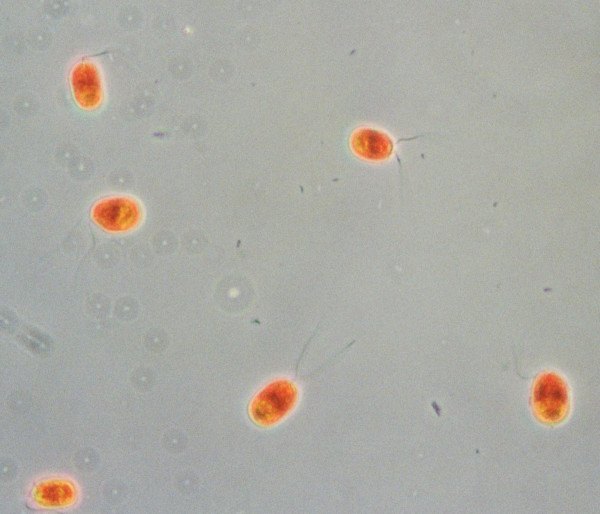
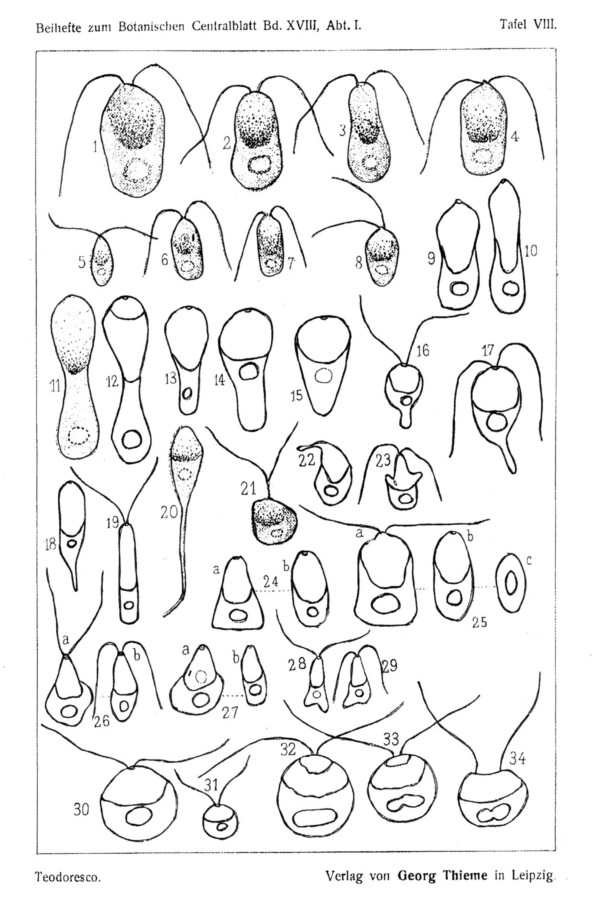
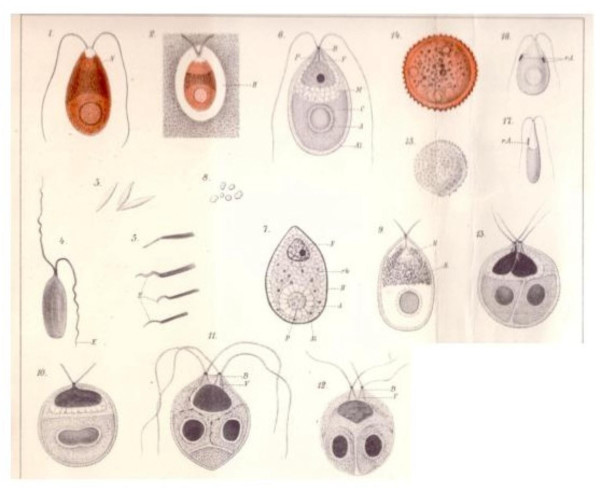
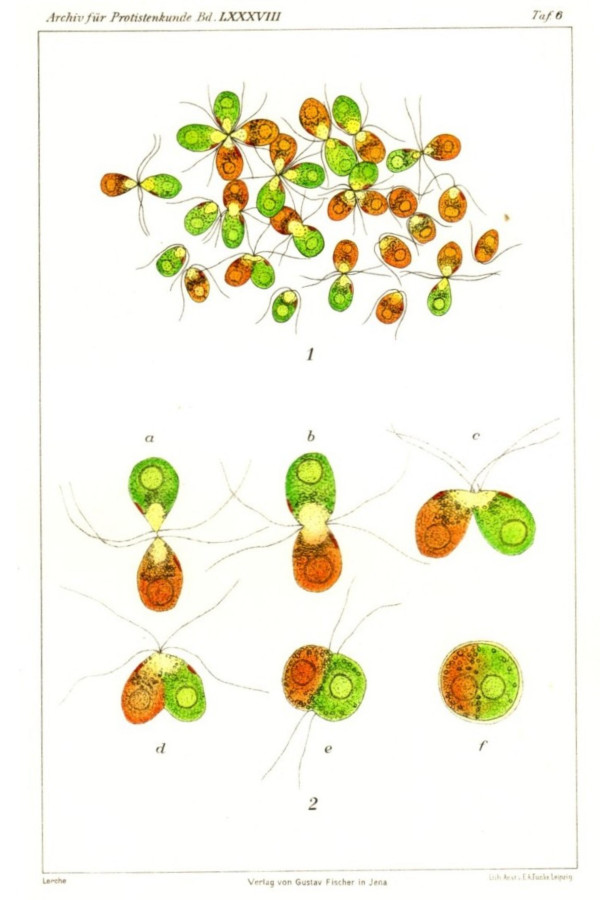
Verification
Claims the paper makes
The claims and statistics of this paper haven’t been checked yet.
Free: it reads the open-access text and checks the first 5 claims that cite a source we can check. Create a free account to check every claim.
Claims other papers make about this one
Each is checked against this paper’s own text: does it say what the citing paper says it does?
The source backs part of the claim, not all of it — or backs it for a different population, condition or comparison.
In the citing paper
“Dunaliella and Haematococcus are also among the successful products based on their long-chain isoprenoid compounds, e.g., carotenoids [15,16].”
From Overview and Challenges of Large-Scale Cultivation of Photosynthetic Microalgae and Cyanobacteria (2023) · cites this paper as [15]
Experimental — accuracy not yet measuredThe cited source says what the claim attributes to it.
In the citing paper
“In this case, the microalgae in question is a species without a rigid cell wall [15], facilitating the extraction of β-carotene.”
From Overview and Challenges of Large-Scale Cultivation of Photosynthetic Microalgae and Cyanobacteria (2023) · cites this paper as [15]
Self-check
Percentages, sums and reported differences re-computed from the paper’s own numbers.
The self-check needs the paper’s full text.
Citations
Cites
Lund, J. W. G., & Hendey, N. I. (1965) · The Journal of Ecology · doi:10.2307/2258001 · Cited by 873
Halophilic Microorganisms and their Environments
Oren, A. (2002) · Cellular Origin, Life in Extreme Habitats and Astrobiology · doi:10.1007/0-306-48053-0 · Cited by 522
Self-citationBen‐Amotz, A., Katz, A., & Avron, M. (1982) · Journal of Phycology · doi:10.1111/j.1529-8817.1982.tb03219.x · Cited by 372 · cited 1×
“[45,46]), but she was mistaken about the location of the pigment:”
BackgroundThe Role of Glycerol in the Osmotic Regulation of the Halophilic Alga Dunaliella parva
Ben-Amotz, A., & Avron, M. (1973) · Plant Physiology · doi:10.1104/pp.51.5.875 · Cited by 367 · cited 13×
“Katz A, Pick U, Avron M: Characterization and reconstitution of the Na+/H+ antiporter from the plasma membrane of the halophilic alga Dunaliella.”
BackgroundInfluentialBorowitzka, L. J., & Brown, A. D. (1974) · Archives of Microbiology · doi:10.1007/bf00590161 · Cited by 351 · cited 5×
“Borowitzka LJ, Brown AD: The salt relations of marine and halophilic species of the unicellular green alga, Dunaliella.”
InfluentialEffects of Salts on the Halophilic Alga Dunaliella viridis
Johnson, M. K., Johnson, E. J., MacElroy, R. D., Speer, H. L., & Bruff, B. S. (1968) · Journal of Bacteriology · doi:10.1128/jb.95.4.1461-1468.1968 · Cited by 285 · cited 3×
“Intracellular Salt and Solute Concentrations of Dunaliella Marrè and Servetta ([63], as cited in [61]) described measurements of the freezing point of the cytoplasmic fluid of D.”
BackgroundLiska, A. J., Shevchenko, A., Pick, U., & Katz, A. (2004) · Plant Physiology · doi:10.1104/pp.104.039438 · Cited by 268 · cited 1×
“[81], Dunaliella research has entered the era of modern proteomics.”
BackgroundThe microbial ecology of the Great Salt Lake
Post, F. J. (1977) · Microbial Ecology · doi:10.1007/bf02010403 · Cited by 241 · cited 1×
“Post [56] reported that in the cold season, round cyst-like cells of D.”
BackgroundACCUMULATION OF METABOLITES BY HALOTOLERANT ALGAE AND ITS INDUSTRIAL POTENTIAL
Ben-Amotz, A., & Avron, M. (1983) · Annual Review of Microbiology · doi:10.1146/annurev.mi.37.100183.000523 · Cited by 236 · cited 2×
“The commercial cultivation of Dunaliella for the production of β-carotene throughout the world is now one of the success stories of halophile biotechnology [51-53].”
BackgroundAlgal and cyanobacterial biotechnology
Cresswell, R. C., Rees, T. A. V., & Shah, N. (1989) · Longman Scientific & Technical , Wiley eBooks · Cited by 216
Research works printed but not linked: 29
- Dunal F Extrait d'un mémoire sur les algues qui colorent en rouge certains eaux des marais salants méditerranéens Ann Sc Nat Bot 2 Sér 1838 9 172
- Teodoresco EC Organisation et développement du Dunaliella, nouveau genre de Volvocacée-Polyblepharidée Beih z Bot Centralbl 1905 Bd. XVIII 215 232
- Turpin PJF Quelques observations nouvelles sur les Protococcus, qui colorent en rouge les eaux des marais salants Comp Rend Acad Sci 1839
- Hamburger C Zur Kenntnis der Dunaliella salina und einer Amöbe aus Salinenwasser von Cagliari Arch f Protistenkd 1905 6 111 131
- Geleznow N Über die Ursache der Färbung des Salzwassers im See Sak in der Krim Bull de l'Académie Imp des Sciences de St Petersburg 1872 17 557
- Butschinsky P Die Protozoenfauna der Salzseelimane bei Odessa Zool Anz 1897 20
- Blanchard R Résultats d'une excursion zoologique en Algérie Mém de la Soc Zool de France 1891 IV
- Florentin R Faune des Mares Salées de Lorraine 1899 Nancy
- Bujor P Contributions à la faune des lacs salées de Roumanie Ann Sci de l'Université de Jassy 1900 1
- Blanchard R Note préliminaire sur Monas Dunalii, flagellé, qui cause la rubéfaction des marais salants Bull de la Soc Zool de France 1888 13 153
- Dujardin F Histoire Naturelle des Zoophytes (Infusoires) 1841 Paris
- Cohn F Chlamydomonas marina Cohn Hedwigia 1865 4 97
- Hansgirg A Prodromus d. Algenflora von Böhmen 1866 1 106
- Teodoresco EC Observations morphologiques et biologiques sur le genre Dunaliella Rev Gén Bot 1906 18 353 371 18: 409–427
- Cavara F Alcune osservazione sulla Dunaliella salina (Dun.) Teod. delle saline di Cagliari Rend della R Acad delle Sc Fis e Matemat. di Napoli Ser. 3 1906 12
- Labbé A Sur les modifications adaptives de Dunaliella salina Dunal C R Acad Sci 1921 172 1074 1076
- Labbé A Le cycle évolutif de Dunaliella salina C R Acad Sci 1921 172 1689 1690
- Labbé A Les variations de la concentration en ions hydrogène dans les marais salants, comme facteur biologique C R Acad Sci 1922 175 843 845
- Baas Becking LGM On organisms living in concentrated brine Tijdschr Ned Dierk Ver Ser III 1928 1 6 9
- Nicolai FE Baas Becking LGM Einige Notizen über Salzflagellaten Arch f Protistenkd 1935 85 319 328
- Lerche W Untersuchungen über Entwicklung und Fortpflanzung in der Gattung Dunaliella Arch f Protistenkd 1937 88 236 268
- Massyuk NP Morphology, Taxonomy, Ecology and Geographic Distribution of the Genus Dunaliella Teod. and Prospects for its Potential Utilization 1973 Kiev: Naukova Dumka (in Russian)
- Kalina T Zur Morphologie und Taxonomie der Gattung Spermatozopsis Korschikow (Volvocales). Spermatozopsis acidophila sp. nov Preslia 1965 37 9 12
- Gimmler H Weis U Ben-Amotz A, Avron M Dunaliella acidophila – life at pH 1.0 Dunaliella: Physiology, Biochemistry and Biotechnology 1992 Boca Raton: CRC Press 99 133
- Ruinen J Notizen über Salzflagellaten. II. Über die Verbreitung der Salzflagellaten Arch Protistenkd 1938 90 210 258
- Drokova IH The alga Dunaliella salina as a source of β-carotene Ukr Bot Zh 1961 18 110
- Ben-Amotz A Shelef G, Soeder CJ Glycerol, β-carotene and dry algal meal production by commercial cultivation of Dunaliella Algae Biomass 1980 Amsterdam: Elsevier 603 610
- Volcani BE The microorganisms of the Dead Sea Papers Collected to Commemorate the 70th Anniversary of Dr. Chaim Weizmann. Collective volume 1944 Rehovoth: Daniel Sieff Research Institute 71 85
- Marrè E Servettaz A Sul meccanismo di adattemento a condizioni osmotiche estreme in Dunaliella salina. II. Rapporto fra concentrazioni del mezzo esterno e composizione del succo cellulare Atti Accad Naz Lincei Cl Sci Fis Mat Nat Rend Ser 8 1959 26 272 278
Cited by
Items 301–400 of 422
Acevedo, H. E. H., Ramos, L. F., Cifuentes, F. V., Soto, A. R., & Samanamud, C. P. A. (2021) · Journal of the World Aquaculture Society · doi:10.1111/jwas.12859 · Cited by 4
Bioprospection of marine microalgae for novel antioxidants in human health and medicine
Berde, C. V., Berde, V. B., & Bramhachari, P. V. (2023) · Elsevier eBooks · doi:10.1016/b978-0-323-95086-2.00029-1 · Cited by 5
Solar Salterns and Pollution: Valorization of Some Endemic Species as Sentinels in Ecotoxicology
Guermazi, W., Annabi-Trabelsi, N., Belmonte, G., Guermazi, K., Ayadi, H., & Leignel, V. (2023) · Toxics · doi:10.3390/toxics11060524 · Cited by 4
Plemenitaš, A., & Gunde‐Cimerman, N. (2011) · Springer eBooks · doi:10.1007/978-3-642-20198-1_7 · Cited by 4
Salehipour-Bavarsad, F., Riahi, H., Hejazi, M. A., & Shariatmadari, Z. (2021) · Journal of Applied Phycology · doi:10.1007/s10811-021-02645-3 · Cited by 4
“But the optimum pH for most of species is about 6–9 (Oren 2005).”
BackgroundBen‐Amotz, A. (2009) · Science Publishers eBooks · doi:10.1201/b10300-9 · Cited by 4
Wen, J., Rapp, K., Dahlin, L. R., Li, C.-T., Sebesta, J., Barry, A. N., Guarnieri, M. T., Peebles, C., & Betenbaugh, M. (2021) · Algal Research · doi:10.1016/j.algal.2021.102520 · Cited by 3
Metabolic adaptations of extremophiles and their applications in environmental biotechnology
Krempaská, V., Murgašová, M., & Vesteg, M. (2026) · World Journal of Microbiology and Biotechnology · doi:10.1007/s11274-026-05124-4 · Cited by 3
Akbari, P., Gholamhosseini, A., Ali, M., Aminikhoei, Z., Tavabe, K. R., & Kuchaksaraei, B. S. (2022) · Iranian Journal of Science · doi:10.1007/s40995-022-01396-1 · Cited by 3
“…and White shrimp diets (Hanel et al. 2007; Jaime-Ceballos et al. 2005; Liñán-Cabello et al. 2003; Macias-Sancho et al. 2014; Nakagawa et al. 1995; Pakravan et al. 2017; Wang et al. 2000) and the role of Dunaliella sp. on shrimp resistance against bacterial infections has been investigated…”
BackgroundInfluentialExtraction and Purification of Microbial Pigments
Toki, G. F. I., Mia, R., & Alave, R. K. K. (2025) · Wiley eBooks · doi:10.1002/9781394287888.ch8 · Cited by 3
Medium Improvement for Higher Growth and Longer Stationary Phase of Dunaliella
Nguyen, S. N., Tran, D., Portilla, S. E., & Võ, T. (2014) · doi:10.11648/j.jps.20140201.13 · Cited by 3
“There are currently 23 recognized Dunaliella species (Pick 1992, Oren 2005).”
BackgroundKaram, A. L., Reyes, F. L. D. L., & Ducoste, J. J. (2018) · Environmental Science & Technology · doi:10.1021/acs.est.8b02056 · Cited by 3
Khramov, D. E., Matalin, D. A., Karpichev, I. V., Balnokin, Y. V., & Popova, L. G. (2019) · Doklady Biochemistry and Biophysics · doi:10.1134/s1607672919050119 · Cited by 3
Visualization of smaller chromosomes from unicellular microalgae
Sánchez-Gárate, J. D., Cira‐Chávez, L. A., & Rout, N. P. (2020) · Revista Brasileira de Botânica · doi:10.1007/s40415-020-00619-2 · Cited by 3
“…species of microorganisms, Dunaliella salina (Teodoresco, 1905) is a well-known model organism because of its dynamic salt and radiation adaptability, biotechnological applications and more than a hundred years of research information (Oren 2005; Priyadarshani and Rath 2012; Venkatesan et al.”
BackgroundThe Role of Fructans in Stress Responses
Livingston, D. P., Heyer, A. G., & Kırtel, O. (2023) · Elsevier eBooks · doi:10.1016/b978-0-323-85410-8.00016-8 · Cited by 5
Ancestors in the Extreme: A Genomics View of Microbial Diversity in Hypersaline Aquatic Environments
Tilahun, L., Asrat, A., Wessel, G. M., & Simachew, A. (2023) · Results and problems in cell differentiation · doi:10.1007/978-3-031-37936-9_10 · Cited by 3
Biological consequences of Kuyalnik estuary filling with marine water from Odessa
Medinets, V., Kovalova, N., Дерезюк, Н. В., Snigirov, S. M., Cherkez, Y. A., Medinets, S., & Gazyetov Ye., I. (2017) · Man and Environment Issues of Neoecology · doi:10.26565/1992-4224-2017-27-04 · Cited by 3
Karsten, U. (2024) · Cambridge University Press eBooks · doi:10.1017/9781139049979.013 · Cited by 3
Effect of Fe2+ and Mn2+ addition on growth and β-carotene production of Dunaliella salina
Mayasari, E., Raya, I., & Natsir, H. (2018) · Journal of Physics Conference Series · doi:10.1088/1742-6596/979/1/012012 · Cited by 3
Studies of biflagellated microalgae adhesion using an optical trap system
Juarez-Alvarez, B. A., Garces, V. G., Cordero-Esquivel, B., O’Donnell, K. A., & Spalding, G. C. (2018) · Optical Trapping and Optical Micromanipulation · doi:10.1117/12.2323221 · Cited by 3
“The genus Dunaliella has been studied for more of one hundred years and is responsible for most of the primary production in hypersaline environments.(13) There are no studies reported on this specie using optical trapping systems.”
BackgroundDetachment of Dunaliella tertiolecta Microalgae from a Glass Surface by a Near-Infrared Optical Trap
Juarez-Alvarez, B. A., Garces, V. G., Cordero-Esquivel, B., Spalding, G. C., & O’Donnell, K. A. (2020) · Sensors · doi:10.3390/s20195656 · Cited by 3
Wang, F., Feng, J., & Xie, S. (2014) · Plant · doi:10.11648/j.plant.20140202.12 · Cited by 3
Calça, C. P. (2008) · Digital Library of Theses and Dissertations (Universidade de São Paulo) · doi:10.11606/d.44.2008.tde-15052008-160651 · Cited by 3
Zheng, Y., Wan, S., Jiang, X., Dai, H., Xu, L., You, Q., Pang, W., & Wang, Q. (2025) · Photosynthesis Research · doi:10.1007/s11120-025-01168-z · Cited by 2
“Approximately 600 different carotenoids have been isolated from nature, and the environmental conditions significantly influence the accumulation of carotenoids, particularly β-carotene, in microalgae (Oren et al. 2005).”
Dai, J.-L., Ling, X., Yuan, Y.-L., Liang, M., & Jiang, J. (2025) · Bioresource Technology · doi:10.1016/j.biortech.2025.133597 · Cited by 2
Habashy, M. M., Li, L., Angulo-Mosquera, L. S., Bayar, B., Abubackar, H. N., Keskin, T., Güngörmüşler, M., Noman, M. A. A., Lohar, A. K., Chavan, P. R., et al. (2026) · 3 Biotech · doi:10.1007/s13205-025-04620-y · Cited by 3
“A study comparing the effect of two salt stressors showed that NaCl stress increased saturated fatty acid (SFA) content but reduced PUFA content, while KCl stress raised both SFA and PUFA content (Atikij et al. 2019).”
InfluentialMacchiarella, A. L., Colli, A., Pellegrino, L., Merli, M., & Pastero, L. (2026) · Minerals · doi:10.3390/min16070681 · Cited by 2
Charioui, I., Chikhaoui, M., Banaoui, A., Abbassi, M., Filali, F. E., & Kaaya, A. (2016) · Journal of Pharmacy and Pharmacology · doi:10.17265/2328-2150/2016.12.001 · Cited by 2
Harnessing the potential of microalgal species Dunaliella: A biofuel and biocommodities perspective
Kalra, R., Gaur, S., & Goel, M. (2022) · Elsevier eBooks · doi:10.1016/b978-0-323-90476-6.00008-x · Cited by 4
Potensi Klorofil dan Karotenoid Fitoplankton Dunaliella salina sebagai Sumber Antioksidan
Dewi, R., Winanto, T., Haryono, F. E. D., Marhaeni, B., Hanifa, G., Nabila, D., Muis, D. R., & Khalisa, S. (2023) · BULETIN OSEANOGRAFI MARINA · doi:10.14710/buloma.v12i1.49006 · Cited by 4
“Demikian pula ukuran sel yang beragam, sebagai bentuk penyesuaian fase pertumbuhan serta sebagai respon terhadap intensitas cahaya (Oren, 2005).”
Antioxidant potential of pigments produced by halophilic archaea isolated from salt pans of India
Nagar, D. N., Das, D., & Braganca, J. M. (2024) · Environmental Sustainability · doi:10.1007/s42398-024-00313-z · Cited by 2
Downstream process design for microalgae
Ólafsson, S. F. (2013) · Cited by 2
Çamaltı Tuzlasının (Sasalı/İzmir) alg florası ve mevsimsel değişimleri
Koru, E., & Deniz, M. (2017) · Ege Journal of Fisheries and Aquatic Sciences · doi:10.12714/egejfas.2017.34.4.10 · Cited by 2
Alansari, A. (2019) · Journal of King Abdulaziz University-Meteorology Environment and Arid Land Agriculture Sciences · doi:10.4197/met.28-2.1 · Cited by 2
“A 100 years of research was performed on Dunaliella salina reported the survival under hyper saline condition (Liska et al., 2004; Oren, 2005).”
BackgroundKüçükyıldırım, S., & Ünal, H. (2020) · European Journal of Science and Technology · doi:10.31590/ejosat.682557 · Cited by 2
“D. salina daha önce hipersalin habitatların örneklendiği farklı çalışmalarda da baskın ökaryotik tür olarak rapor edilmiştir (Elevi Bardavit ve ark., 2007; Oren, 2005). e-ISSN: 2148-2683 372 Şekil 4.”
Kouidhi, S., Mnif, W., Alqarni, N., Abdelwahed, S., Redissi, A., Ammous-Boukhris, N., Selmi, B., Gargouri, A. F., Achour, S., Cherif, A., et al. (2022) · Food Science & Nutrition · doi:10.1002/fsn3.2809 · Cited by 2
“It is crucial to mention that Dunaliella salina and some other algal species have complex life cycles that include, in addition to the division of mobile vegetative cells, the possibility of sexual reproduction (Oren, 2005).”
BackgroundXu, G., Deng, Y., Song, D., & Sui, L. (2013) · Lecture notes in electrical engineering · doi:10.1007/978-3-642-37922-2_109 · Cited by 2
Metabolomics of carotenoid accumulation in Dunaliella salina
Lamers, P. P. (2011) · doi:10.18174/162126 · Cited by 4
“Even though D. salina’s capacity for accumulating massive amounts of β‐carotene has been studied and commercially exploited for many years now (Oren 2005), the regulatory mechanisms underlying carotenoid accumulation are not yet unraveled (see Chapter 2 for a review).”
Insa, C. M. M. (2010) · RiuNet (Universitat Politècnica de València) · doi:10.4995/thesis/10251/9034 · Cited by 2
Dolma, P., & Chauhan, A. (2023) · Research Square · doi:10.21203/rs.3.rs-2462712/v1 · Cited by 2
Masmoudi, S. (2014) · theses.fr (ABES) · doi:10.70675/fca7feb8zf7eaz42f3z9a39z30ccfd692a00 · Cited by 3
Sharma, Y., Yadav, R., Sharma, H., & Singh, C. P. (2025) · Biologia · doi:10.1007/s11756-025-02008-0 · Cited by 2
“…Dunaliella has evolved as a separate lineage with robust physiological and biochemical mechanisms of stress tolerance and has gained attention as a model organism to study abiotic stress regulation in photosynthetic eukaryotes (Oren 2005; Preetha et al. 2012; Takaichi 2011; Zhao et al. 2007).”
Algal nutraceuticals: a potential alternative to health supplementation for athletes
Kumawat, K. R., Pareek, A., & Singh, N. (2025) · Sport Sciences for Health · doi:10.1007/s11332-025-01545-0 · Cited by 2
“This unicellular biflagellate alga is the primary producer in hypersaline environments across the world and is known for the majority of production [177].”
Runzheimer, K., Schwab, L., Engel, D., Schaudinn, C., Laue, M. M., Rebrošová, K., Beblo‐Vranesevic, K., Azizah, M., & Leuko, S. (2025) · Frontiers in Microbiology · doi:10.3389/fmicb.2025.1625916 · Cited by 2
“…the genus Salinibacter, which were reported to be prevalent in 5%–25% of the total prokaryotic community within crystallizer ponds from solar salterns (Antón et al., 2000), while the algae Dunaliella accounts for the majority of primary production in hypersaline environments worldwide (Oren, 2005).”
Villafañe, P. G., Lezcano, M. Á., Vedova, M. D., Sánchez‐García, L., Parro, V., & Carrizo, D. (2025) · Limnology and Oceanography · doi:10.1002/lno.70229 · Cited by 1
“(Oren 2005), among others.”
Benabouche, S., Chikhaoui, M., Baazizi, H., Filali, F. E., & Banaoui, A. (2026) · African Journal of Marine Science · doi:10.2989/1814232x.2025.2586064 · Cited by 1
Ayvazoğlu, B. Ş., Bayram, C., & Gültekinoğlu, M. (2026) · Algal Research · doi:10.1016/j.algal.2026.104872 · Cited by 2
Genetic engineering of Dunaliella:Potential for improved biofuel production
Wirshing, A. C. E. (2012) · University of New Hampshire Scholars Repository (University of New Hampshire at Manchester) · Cited by 1
Detection of novel key residues of MnSOD enzyme and its role in salinity management across species
Rao, A. R., Dash, M., Sahu, T. K., Behera, B. K., & Mohapatra, T. (2014) · Journal of Genetics · doi:10.1007/s12041-014-0333-8 · Cited by 3
Kharati-Koupaei, M., Zamani, H., & Moradshahi, A. (2012) · Molecular biology research communications/Molecular biology research communications · doi:10.22099/mbrc.2012.205 · Cited by 1
“Based on this information and morphological descriptions presented by several authors [2, 4, 17], a strain of Dunaliella viridis was isolated from Maharlu salt lake in Shiraz, Iran.”
BackgroundIdentification of Dunaliella Viridis Using its Markers
Tran, D., Louime, C. J., Võ, T., Giordano, M., Portilla, S. E., Doan, N. T., Tran, D. Q., Mai, T., & Le, B. V. (2013) · Università Politecnica delle Marche (Università Politecnica delle Marche) · Cited by 1
Biological Treatment of Hydraulic Fracturing Produced Water
Akyon, B. (2017) · D-Scholarship@Pitt (University of Pittsburgh) · Cited by 1
Modeling the transformation of atmospheric CO 2 into microalgal biomass
Hasan, M. F., & Vogt, F. (2017) · The Analyst · doi:10.1039/c7an01054k · Cited by 1
Haloarchaea May Contribute to the Colour of Avian Plumage in Marine Ecosystems
Martínez‐Espinosa, R. M., & Torregrosa‐Crespo, J. (2021) · IntechOpen eBooks · doi:10.5772/intechopen.96414 · Cited by 1
Effect of Dunaliella salina on enhancing viability of probiotic and the nutritional value
Alslibi, Z. A., Çelekli, A., & Bozkurt, H. (2021) · European Journal of Science and Technology · doi:10.31590/ejosat.1013107 · Cited by 1
“The operation is a chance for commercial biological incubation of these materials (Oren, 2005).”
BackgroundEffect of environmental factors on β-carotene production in green algae – A review
Al-Khafaji, A. S., & Al-Taee, I. A. (2023) · Chemical and Environmental Science Archives · doi:10.47587/cesa.2023.3301 · Cited by 1
“Due to the difficulty of identifying Dunaliella only by morphological-based taxonomic analysis, numerous taxa have been incorrectly recognized in published works of literature due to the absence of a hard cell wall, which in turn results in great phenotypic flexibility (Oren, 2005; Borowitzka and Siva, 2007).”
BackgroundPhysiology of Photosynthetic Autotrophs in Present-Day Environments
Giordano, M., Beardall, J., Raven, J. A., & Maberly, S. C. (2024) · Cambridge University Press eBooks · doi:10.1017/9781139049979.009 · Cited by 1
Ussami, K. A. (2007) · Digital Library of Theses and Dissertations (Universidade de São Paulo) · doi:10.11606/d.21.2007.tde-05112007-170347 · Cited by 1
das Chagas, A. L. (2014) · Americanae (AECID Library) · Cited by 2
The effect of chaotropic magnesium chloride on the growth of microbes
Patel, S. (2019) · Open Access at Essex (University of Essex) · Cited by 1
Lewis, L. A., Hall, J. D., & Zechman, F. W. (2011) · Wiley eBooks · doi:10.1002/9780470015902.a0000333.pub2 · Cited by 2
Cultivable Marine Organisms as a Source of New Products
Kornprobst, J. (2014) · Wiley eBooks · doi:10.1002/9783527683321.ch15 · Cited by 1
Characterization of New Viruses from Hypersaline Environments
Kukkaro, P. (2009) · Helda - University of Helsinki Institutional Repository
Grove, F. M. (2013) · Unisa Institutional Repository (University of South Africa)
BIOFIXAÇÃO DE CO2 DE FERMENTAÇÃO DE CERVEJA UTILIZANDO A MICROALGA Dunaliella tertiolecta
das Chagas, A. L., JARENKOW, A., FOGAÇA, T. F., Steckert, E. V., Ayub, M. A. Z., & RECH, R. (2015) · Anais do Congresso Brasileiro de Engenharia Química · doi:10.5151/chemeng-cobeq2014-0878-22901-146204
(2011) · Chinese Journal of Appplied Environmental Biology · doi:10.3724/sp.j.1145.2011.00029
DUNALIELLA ЗАМГИЙН ФИЗИОЛОГИ, БИОХИМИЙН СУДАЛГААНЫ ДҮН
Одгэрэл, Б., & Цэрэндулам, Д. (2016) · Proceedings of the Mongolian Academy of Sciences · doi:10.5564/pmas.v56i3.691
Karam, A. L. (2016) · NCSU Libraries Repository (North Carolina State University Libraries)
Microbial Protein: An Essential Component for Future Food Security
Saklani, A., & Navneet (2018) · Advances in business strategy and competitive advantage book series · doi:10.4018/978-1-5225-7350-0.ch006
Expression, purification, and subcellular localization of phospholipase C in Dunaliella salina
Cong, Y., Wang, Y., Yue, J., Xing, Z., Gao, X., & Chai, X. (2018) · Journal of Oceanology and Limnology · doi:10.1007/s00343-019-8183-0
“It is a recognized model organism for studying plant adaptation to high salinity (Oren, 2005; Gong et al., 2014; Liu et al., 2015; Arroussi et al., 2018), and previous studies have attempted to reveal the physiological and molecular mechanisms of its salt resistance (Chen et al., 2011; Zhao et al.,…”
BackgroundDunaliella salina and Haloferax volcanii Synergistically Attenuate Skin Cancer in Vitro
Raz, O., Fahham, A., Kuchina, N., Bentwich, Z., & Cohen, G. (2019) · Journal of Cancer Therapy · doi:10.4236/jct.2019.109063
“Dunaliella salina is a green microalga that had been reported to possess several health beneficial effects [11] [12].”
BackgroundNikookar, K., Moghaddam, A. G., Niazi, A., Kholdebarin, B., & Mohsenzadeh, S. (2017) · Iranian Journal of Science and Technology Transactions A Science · doi:10.1007/s40995-017-0290-1
“Molecular phylogeny techniques have been used in taxonomic studies of Dunaliella since 1999 (Oren, 2005).”
MethodCheban, L. M., Trebysh, Y., & Marchenko, M. M. (2019) · Biolohichni systemy · doi:10.31861/biosystems2019.02.148
Future of Mariculture with the Advent of Modern Biotechnology Tools
Bhaskar, T. C. J. (2020) · Wiley eBooks · doi:10.1002/9781119143802.ch141
Hotos, G. N. (2021) · Preprints.org · doi:10.20944/preprints202111.0141.v1
Exploiting the beneficial properties of microalgae for food and feed use
Szabó, E. K., & Takács, K. (2021) · Élelmiszervizsgálati Közlemények · doi:10.52091/evik-2021/4-1-eng
Mikroalgák előnyős tulajdonságainak kiaknázása élelmiszeripari és takarmányozási felhasználásra
Szabó, E. K., & Takács, K. (2021) · Élelmiszervizsgálati Közlemények · doi:10.52091/evik-2021/4-1-hun
(2009) · Elsevier eBooks · doi:10.1016/b978-0-12-370873-1.00054-x
What are the criteria for morphological cell death in Dunaliella salina ?Preprint
Barmshuri, M., Kholdebarin, B., Sadeghi, S., & Faghih, Z. S. (2022) · bioRxiv (Cold Spring Harbor Laboratory) · doi:10.1101/2022.12.13.520199
ALGUMAS PAISAGENS SOB UM OLHAR QUÍMICO
Eichler, M. L., Guterres, J. D. O., & Pino, J. C. D. (2009) · Caminhos de Geografia · doi:10.14393/rcg92815910
Samia, B. H., Bayer, W. B., Wassila, I., & Ismail, B. (2023) · Egyptian Academic Journal of Biological Sciences. C, Physiology and Molecular Biology/Egyptian Academic Journal of Biological Sciences. C, Physiology and Molecular Biology · doi:10.21608/eajbsc.2023.280112
Phạm, T. B. Đ. (2022) · Tạp chí Nghiên cứu Khoa học và Phát triển · doi:10.58902/tcnckhpt.v1i2.22
Screening of Dunaliella salina with High Carotene Content
徐, 雪. (2023) · Hans Journal of Agricultural Sciences · doi:10.12677/hjas.2023.134042
Phytoplankton of the Kuyalnik estuary in 2015 – 2017
Дерезюк, Н. В. (2017) · Man and Environment Issues of Neoecology · doi:10.26565/1992-4224-2017-27-05
Dunaliella salina and Haloferax Volcanii Synergistically Attenuate Skin Cancer in Vitro
Cohen, G. (2019) · Open Access Journal of Cancer & Oncology · doi:10.23880/oajco-16000148
Bechar, A., Er-Rahmani, S., Hassi, M., Sadiki, M., Elabed, S., Ouaddi, O., Tizar, F., Alouani, M., & Koraichi, S. I. (2024) · Biofouling · doi:10.1080/08927014.2024.2380404
“The identification of D. salina was carried out using morphological features with an optical microscope according to Oren (2005).”
Zhu, L.-Y., Zhang, H., Shi, T., & Tang, P. (2025) · Palaeoworld · doi:10.1016/j.palwor.2025.200936
Khorwal, A., Prajapat, P., Saini, S., Jain, S., Parihar, M., Singh, N., & Pareek, A. (2025) · International Journal on Algae · doi:10.1615/interjalgae.v27.i3.60
Brine to Bioresource: Transforming Brine Waste into Microalgal Wealth
Kumar, V. V., Kumar, V., Al-Musallam, L., & Bhandary, H. (2025) · IntechOpen eBooks · doi:10.5772/intechopen.1012740
Attaran, G., Sadeghi, P., & Shirzaii, R. (2017) · AquaDocs (United Nations Educational, Scientific and Cultural Organization)
Degradation of organic materials in an L/ILW repository
Guillemot, T., Wieland, E., Mosberger, L., & Warthmann, R. (2023) · Zürcher Hochschule für Angewandte Wissenschaften digital collection (Zurich University of Applied Sciences) · Cited by 2
Varner, R. I. (2024) · eScholarship (California Digital Library)
Extracción de compuestos bioactivos de microalgas mediante fluidos supercríticos
Mendiola León, J. A. (2008) · LA Referencia (Red Federada de Repositorios Institucionales de Publicaciones Científicas) · Cited by 9
Sulfur Metabolism in Microalgae
LIN, H. (2018) · Università Politecnica delle Marche (Università Politecnica delle Marche) · Cited by 1
Khemakhem, H. (2012) · theses.fr (ABES) · doi:10.70675/3ffdd8caz10b0z4a4dzb17cze7aba7db181d · Cited by 1
Besson, A. (2013) · theses.fr (ABES) · doi:10.70675/524a629dzc755z4ae4z8f1cz58828b91ac81 · Cited by 7
Metadata
- Authors
- Oren, A.
- Affiliations
- Hebrew University of Jerusalem (IL)
- Corresponding author
- Oren, Aharon
- ORCID
- Oren, Aharon
- Venue
- Saline Systems
- Published
- 2005-07-04
- Volume
- 1
- Issue
- 1
- Pages
- 2-2
- ISSN
- 1746-1448 (ISSN-L)
- PMC
- PMC1224875
- OpenAlex
- W2142457064
- Cited by
- 400
- References
- 57
- Citations by year
- 2026: 14 · 2025: 13 · 2024: 17 · 2023: 23 · 2022: 22 · 2021: 25 · 2020: 25 · 2019: 30 · 2018: 20 · 2017: 23 · 2016: 21 · 2015: 24 · 2014: 26 · 2013: 26 · 2012: 12
- FWCI
- 2.52
- Type
- journal article
- Language
- en
- Open access
- hybrid
- doi.org
- Licence
- cc-by
- Locations
- Saline Systems (publishedVersion, cc-by)
- PubMed Central (publishedVersion, cc-by)
- PubMed (publishedVersion)
- Topics
- Life Sciences › Agricultural and Biological Sciences › Ecology, Evolution, Behavior and Systematics › Protist diversity and phylogeny
- Physical Sciences › Earth and Planetary Sciences › Oceanography › Marine and coastal plant biology
- Social Sciences › Arts and Humanities › History and Philosophy of Science › History of Science and Natural History
- Keywords
- Dunaliella, history of research, green algae, hypersaline environments, primary production, algal taxonomy, halophilic algae
About these checks
Registry, retraction, Cites and statistics results are computed, not judged, with one exception: a printed reference that no index lists is read once by a model before it counts as a citation error. Claims are extracted by a model and kept only when their quote appears verbatim in the text; each cited source is then checked, with a model’s help, for whether it says what the claim relies on. Those verdicts can be wrong — read the claim’s quote and the cited source before relying on one.
Statistics and arithmetic are recomputed, not judged.
Confidence bands are shown only for fields calibrated on our annotated test set. None is calibrated yet, so no band is shown.
What counts as a claim ›How we measure confidence ›How we check this ›
Are you an author, or do you see a problem with this page? Request a review
Data sources
Bibliographic data: Semantic Scholar, OpenAlex, Crossref.
Contains information from the Semantic Scholar Academic Graph Datasets, made available under the ODC Attribution License (ODC-BY 1.0).
Semantic Scholar’s data is described in: Kinney, R., et al. (2023). The Semantic Scholar Open Data Platform. arXiv:2301.10140.
