

Factors influencing the adoption of an innovation: An examination of the uptake of the Canadian Heart Health Kit (HHK)
Open accessThe DOI matches its Crossref record; 27 of the 27 references it cites were found in a registry or an index.
Abstract
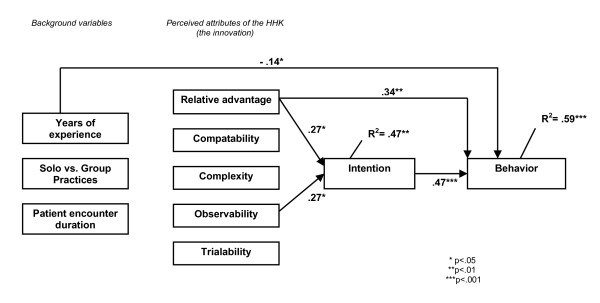
BACKGROUND: There is an emerging knowledge base on the effectiveness of strategies to close the knowledge-practice gap. However, less is known about how attributes of an innovation and other contextual and situational factors facilitate and impede an innovation's adoption. The Healthy Heart Kit (HHK) is a risk management and patient education resource for the prevention of cardiovascular disease (CVD) and promotion of cardiovascular health. Although previous studies have demonstrated the HHK's content validity and practical utility, no published study has examined physicians' uptake of the HHK and factors that shape its adoption. OBJECTIVES: Conceptually informed by Rogers' Diffusion of Innovation theory, and Theory of Planned Behaviour, this study had two objectives: (1) to determine if specific attributes of the HHK as well as contextual and situational factors are associated with physicians' intention and actual usage of the HHK kit; and (2), to determine if any contextual and situational factors are associated with individual or environmental barriers that prevent the uptake of the HHK among those physicians who do not plan to use the kit. METHODS: A sample of 153 physicians who responded to an invitation letter sent to all family physicians in the province of Alberta, Canada were recruited for the study. Participating physicians were sent a HHK, and two months later a study questionnaire assessed primary factors on the physicians' clinical practice, attributes of the HHK (relative advantage, compatibility, complexity, trialability, observability), confidence and control using the HHK, barriers to use, and individual attributes. All measures were used in path analysis, employing a causal model based on Rogers' Diffusion of Innovations Theory and Theory of Planned Behaviour. RESULTS: 115 physicians (follow up rate of 75%) completed the questionnaire. Use of the HHK was associated with intention to use the HHK, relative advantage, and years of experience. Relative advantage and the observability of the HHK benefits were also significantly associated with physicians' intention to use the HHK. Physicians working in solo medical practices reported experiencing more individual and environmental barriers to using the HHK. CONCLUSION: The results of this study suggest that future information innovations must demonstrate an advantage over current resources and the research evidence supporting the innovation must be clearly visible. Findings also suggest that the innovation adoption process has a social element, and collegial interactions and discussions may facilitate that process. These results could be valuable for knowledge translation researchers and health promotion developers in future innovation adoption planning.
Overview
The claims and statistics of this paper haven’t been checked yet.
Free: it reads the open-access text and checks the first 5 claims that cite a source we can check. Create a free account to check every claim.
Integrity signals
Registry
Cites
Statistics
Figures
Verification
Claims the paper makes
The claims and statistics of this paper haven’t been checked yet.
Free: it reads the open-access text and checks the first 5 claims that cite a source we can check. Create a free account to check every claim.
Claims other papers make about this one
Each is checked against this paper’s own text: does it say what the citing paper says it does?
The cited source says what the claim attributes to it.
In the citing paper
“Many of these measures assessed constructs outlined in Roger’s diffusion of innovations theory [18] such as relative advantage, compatibility, complexity, trialability, and observability [26].”
Self-check
Percentages, sums and reported differences re-computed from the paper’s own numbers.
The self-check needs the paper’s full text.
Citations
Cites
The theory of planned behavior
Ajzen, I. (1991) · Organizational Behavior and Human Decision Processes · doi:10.1016/0749-5978(91)90020-t · Cited by 90,587
Rogers, E. M., Singhal, A., & Quinlan, M. M. (2019) · An Integrated Approach to Communication Theory and Research · doi:10.4324/9780203710753-35 · Cited by 37,322
Diffusion of Innovations in Service Organizations: Systematic Review and Recommendations
GREENHALGH, T., ROBERT, G., MACFARLANE, F., BATE, P., & KYRIAKIDOU, O. (2004) · The Milbank Quarterly · doi:10.1111/j.0887-378x.2004.00325.x · Cited by 7,448 · cited 4×
“Current research evidence indicates that if a potential user sees no relative advantage in using the innovation, it will not be adopted [6].”
InfluentialThe diffusion of innovations: Some examples of finnish civil servant's professional tours in Europe
Hietala, M. (1983) · Scandinavian Journal of History · doi:10.1080/03468758308579015 · Cited by 6,162
The Theory of Planned Behaviour
Conner, M. T., & McMillan, B. (2004) · Research Explorer (The University of Manchester) · Cited by 4,463
(2001) · PubMed · Cited by 1,709
Canadian journal of public health
(1949) · Tubercle · doi:10.1016/s0041-3879(49)80069-9 · Cited by 1,537
Systematic Review: The Relationship between Clinical Experience and Quality of Health Care
Choudhry, N. K., Fletcher, R. H., & Soumerai, S. B. (2005) · Annals of Internal Medicine · doi:10.7326/0003-4819-142-4-200502150-00008 · Cited by 1,468 · cited 1×
“One study [20] that systematically reviewed data from several studies linked the physician's age or years since graduation with inferior knowledge of the latest cancer-screening techniques, and poorer diagnosis and treatment of other chronic diseases.”
Interventions to change health behaviours: evidence-based or evidence-inspired?
Michie, S., & Abraham, C. (2004) · Psychology & Health · doi:10.1080/0887044031000141199 · Cited by 784 · cited 1×
“Furthermore, existing social-cognitive theories can help guide investigations in this field of study, especially considering that, in general, theory-based interventions are more efficacious than atheoretical approaches for behaviour change [11].”
Changing Provider Behavior: An Overview of Systematic Reviews of Interventions
Grimshaw, J. M., Shirran, L., Thomas, R., Mowatt, G., Fraser, C., Bero, L., Grilli, R., Harvey, E., Oxman, A., & O’Brien, M. A. (2001) · Medical Care · doi:10.1097/00005650-200108002-00002 · Cited by 778 · cited 1×
“Intermediaries such as opinion leaders, change agents, and knowledge brokers are considered to play an important role in convincing others to adopt an innovation or use research in their practice [18,19].”
Research works printed but not linked: 2
- Rogers EM Diffusion of Innovations 1995 4 New York: Free Press
- Birdsell J Thornley R Landry R Estabrooks C Mayan M The utilization of health research results in Alberta 2005 Edmonton, AB: Alberta Heritage Foundation for Medical Research
Cited by
Making sense of implementation theories, models and frameworks
Nilsen, P. (2015) · Implementation Science · doi:10.1186/s13012-015-0242-0 · Cited by 4,447
“[74-77]) that essentially view the context in terms of a physical “environment or set-”
Clinical Practice Guidelines We Can Trust
Committee on Standards for Developing Trustworthy Clinical Practice Guidelines, Board on Health Care Services, & Institute of Medicine (2011) · National Academies Press eBooks · doi:10.17226/13058 · Cited by 3,081
Chaudoir, S. R., Dugan, A. G., & Barr, C. H. (2013) · Implementation Science · doi:10.1186/1748-5908-8-22 · Cited by 800
“These aspects could include the relative advantage of utilizing an innovation above existing practices [26] and quality of evidence supporting the innovation’s efficacy (Organization Readiness to Change Assessment, or ORCA [27]).”
BackgroundInfluentialAdoption of telemedicine: from pilot stage to routine delivery
Zanaboni, P., & Wootton, R. (2012) · BMC Medical Informatics and Decision Making · doi:10.1186/1472-6947-12-1 · Cited by 317
“Research shows that relative advantage is the most important factor for the adoption of technology [35,36].”
BackgroundMaking Sense of Implementation Theories, Models, and Frameworks
Nilsen, P. (2020) · Implementation Science 3.0 · doi:10.1007/978-3-030-03874-8_3 · Cited by 322
Woodward, E. N., Singh, R. S., Ndebele-Ngwenya, P., Melgar Castillo, A., Dickson, K. S., & Kirchner, J. E. (2021) · Implementation Science Communications · doi:10.1186/s43058-021-00146-5 · Cited by 270
Resistance, motivations, trust and intention to use mobile financial services
Chemingui, H., & Ben lallouna, H. (2013) · International Journal of Bank Marketing · doi:10.1108/ijbm-12-2012-0124 · Cited by 243
Integration of Industry 4.0 technologies into Total Productive Maintenance practices
Tortorella, G. L., Fogliatto, F. S., Cauchick-Miguel, P. A., Kurnia, S., & Jurburg, D. (2021) · International Journal of Production Economics · doi:10.1016/j.ijpe.2021.108224 · Cited by 179
Kastner, M., Bhattacharyya, O., Hayden, L., Makarski, J., Estey, E., Durocher, L., Chatterjee, A., Perrier, L., Graham, I. D., Straus, S. E., et al. (2015) · Journal of Clinical Epidemiology · doi:10.1016/j.jclinepi.2014.12.013 · Cited by 214
Raine, R., Fitzpatrick, R., Barratt, H., Bevan, G., Black, N., Boaden, R., Bower, P., Campbell, M., Denis, J.-L., Devers, K., et al. (2016) · Health Services and Delivery Research · doi:10.3310/hsdr04160 · Cited by 186
Park, I., Kim, D., Moon, J., Kim, S., Kang, Y., & Bae, S.-S. (2022) · Sustainability · doi:10.3390/su14010579 · Cited by 194
Dryden‐Palmer, K., Parshuram, C. S., & Berta, W. B. (2020) · BMC Health Services Research · doi:10.1186/s12913-020-4935-y · Cited by 165
“Failure to address context was the most commonly cited consideration in implementations that failed to achieve the desired goals [35, 43].”
BackgroundClimate change information for regional impact and risk assessment
(2023) · Frontiers research topics · doi:10.3389/978-2-8325-2533-3 · Cited by 159
Coury, J., Schneider, J. L., Rivelli, J. S., Petrik, A. F., Seibel, E., D’Agostini, B., Taplin, S. H., Green, B. B., & Coronado, G. D. (2017) · BMC Health Services Research · doi:10.1186/s12913-017-2364-3 · Cited by 128
“Because new innovations require investing time, energy and resources, organizations prefer innovations that can be tried before being fully implemented [26].”
BackgroundEngagement in research: an innovative three-stage review of the benefits for health-care performance
Hanney, S. R., Boaz, A., Jones, T. H., & Soper, B. (2013) · Health Services and Delivery Research · doi:10.3310/hsdr01080 · Cited by 147
Planning for Implementation of Evidence-Based Practice
Cullen, L., & Adams, S. L. (2012) · JONA The Journal of Nursing Administration · doi:10.1097/nna.0b013e31824ccd0a · Cited by 111
Akwaowo, C., Sabi, H. M., Ekpenyong, N., Isiguzo, C. M., Andem, N. F., Maduka, O., Dan, E., Umoh, E., Ekpin, V. I., & Uzoka, F. (2022) · Frontiers in Digital Health · doi:10.3389/fdgth.2022.1017231 · Cited by 128
“(49) on uptake of the Canadian Heart Health Kit which found that relative advantage significantly influences physicians’ intention to use the new innovation.”
BackgroundPharmacogenomics‐Based Point‐of‐Care Clinical Decision Support Significantly Alters Drug Prescribing
O'Donnell, P., Wadhwa, N. R., Danahey, K., Borden, B., Lee, S., Hall, J. P., Klammer, C., Hussain, S., Siegler, M. A., Sorrentino, M. J., et al. (2017) · Clinical Pharmacology & Therapeutics · doi:10.1002/cpt.709 · Cited by 103
Reimagining Rural: Shifting Paradigms About Health and Well-Being in the Rural United States
Afifi, R., Parker, E. A., Dino, G., Hall, D. M., & Ulin, B. F. (2021) · Annual Review of Public Health · doi:10.1146/annurev-publhealth-052020-123413 · Cited by 94
“Key features of successful diffusion in agriculture, which remain critical to IS, include the relative advantage of the innovative practice over the current one and the ability to try out the innovative practice prior to rollout, among others (73, 109).”
BackgroundOptimizing the language and format of guidelines to improve guideline uptake
Gupta, S., Rai, N., Bhattacharrya, O., Cheng, A. Y. Y., Connelly, K. A., Boulet, L.-P., Kaplan, A., Brouwers, M. C., & Kastner, M. (2016) · Canadian Medical Association Journal · doi:10.1503/cmaj.151102 · Cited by 82
Peeters, J. M., de Veer, A. J., van der Hoek, L., & Francke, A. L. (2012) · Journal of Clinical Nursing · doi:10.1111/j.1365-2702.2012.04173.x · Cited by 77
Innovation as emergence in healthcare: Unpacking change from within
Essén, A., & Lindblad, S. (2012) · Social Science & Medicine · doi:10.1016/j.socscimed.2012.08.035 · Cited by 95
Zulu, J. M., Hurtig, A., Kinsman, J., & Michelo, C. (2015) · BMC Health Services Research · doi:10.1186/s12913-015-0696-4 · Cited by 84
“will adopt an innovation [28], is one of the most widely used theories in health system and health services research [29-31].”
MethodPredicting implementation from organizational readiness for change: A study protocol
Helfrich, C. D., Blevins, D., Smith, J. L., Kelly, P. A., Hogan, T. P., Hagedorn, H., Dubbert, P. M., & Sales, A. E. (2011) · Implementation Science · doi:10.1186/1748-5908-6-76 · Cited by 66
“Examples may include implementation of a best-practices bundle for cardiovascular disease risk management [16], or a collaborative care model for treating depression in primary care [17].”
BackgroundDiffusion of Innovations: How Adoption of New Technology Spreads in Society
Mbatha, B. (2024) · Synthesis lectures on information concepts, retrieval, and services · doi:10.1007/978-3-031-60267-2_1 · Cited by 65
Nkomo, L. I., & Kalisz, D. E. (2023) · Digital Transformation and Society · doi:10.1108/dts-11-2022-0059 · Cited by 75
Pickard, K. E., Kilgore, A. N., & Ingersoll, B. R. (2016) · American Journal of Community Psychology · doi:10.1002/ajcp.12050 · Cited by 67
Leroux, E., & Pupion, P.-C. (2021) · Technological Forecasting and Social Change · doi:10.1016/j.techfore.2021.121195 · Cited by 61
Trialability, observability and risk reduction accelerating individual innovation adoption decisions
Hayes, K. J., Eljiz, K., Dadich, A., Fitzgerald, A., & Sloan, T. (2015) · Journal of Health Organization and Management · doi:10.1108/jhom-08-2013-0171 · Cited by 71
Kegler, M. C., Liang, S., Weiner, B. J., Tu, S. P., Friedman, D. B., Glenn, B. A., Herrmann, A. K., Risendal, B., & Fernández, M. E. (2018) · Health Services Research · doi:10.1111/1475-6773.13035 · Cited by 59
“In addition to documenting that relative advantage predicted adoption in the study from which we obtained the measure, Scott et al. (2008) noted correlations between relative advantage and other measures of Intervention Characteristics, including compatibility and complexity.”
BackgroundMethodOverview of theories, models and frameworks in implementation science
Nilsen, P. (2020) · Edward Elgar Publishing eBooks · doi:10.4337/9781788975995.00008 · Cited by 76
“The role afforded the context varies from studies (e.g., Ashton et al., 2007; Mohr et al., 2008; Scott et al., 2008; Zardo and Collie, 2014) that essentially view the context in terms of a physical ‘environment or setting in which the proposed change is to be implemented’ (Kitson et al.”
BackgroundSanni, S. A., Ngah, Z. A., Karim, N. H. A., Abdullah, N., & Waheed, M. (2013) · Serials Review · doi:10.1016/j.serrev.2013.10.001 · Cited by 54
Mallappa, V. K. H., & Pathak, T. B. (2023) · Frontiers in Sustainable Food Systems · doi:10.3389/fsufs.2023.1202485 · Cited by 63
“Additionally, a number of factors have been linked to the awareness and adoption—or non-adoption—of technologies (Scott et al., 2008; Petronilla et al., 2016).”
BackgroundFelgner, S., Ex, P., & Henschke, C. (2018) · Value in Health · doi:10.1016/j.jval.2018.03.006 · Cited by 47
Factors influencing E-learning adoption in India: Learners' perspective
Vanitha, P. S., & Alathur, S. (2021) · Education and Information Technologies · doi:10.1007/s10639-021-10504-4 · Cited by 47
“It would improve the learners’ communication skills and make them adopt e-learning platforms (Kapoor et al., 2014; Scott et al., 2008).”
BackgroundA New Research Model for Artificial Intelligence–Based Well-Being Chatbot Engagement: Survey Study
Yang, Y., Tavares, J., & Oliveira, T. (2024) · JMIR Human Factors · doi:10.2196/59908 · Cited by 50
“…is that early adopters of new technologies, as in the case of our study, have a higher cognitive ability and are more accustomed to managing complexity, so they do not perceive complexity as an obstacle to using new technologies, including AI-based well-being chatbots [13,91,94,157,160].”
BackgroundResultInfluentialPynnönen, S., Haltia, E., & Hujala, T. (2021) · Forest Policy and Economics · doi:10.1016/j.forpol.2021.102404 · Cited by 48
Predicting the adoption of evidence-based practice using “Rogers diffusion of innovation model”
Pashaeypoor, S., Ashktorab, T., Rassouli, M., & Majd, H. A. (2016) · Contemporary Nurse · doi:10.1080/10376178.2016.1188019 · Cited by 43
Community coalition readiness for implementing something new: Using a Delphi methodology
Domlyn, A. M., & Wandersman, A. (2019) · Journal of Community Psychology · doi:10.1002/jcop.22161 · Cited by 47
Galvin, J. E., Meuser, T. M., & Morris, J. C. (2011) · Alzheimer Disease & Associated Disorders · doi:10.1097/wad.0b013e318212c0df · Cited by 41
“As innovation adoption has a strong social component, collegial interactions and discussions, along with enlisting key local opinion leaders, may facilitate adoption among practitioners.(44,45) Thus, CPP graduates provide an excellent platform for diffusion of information back to their communities, engaging colleagues…”
BackgroundDadzie, S. K. N., Ndebugri, J., Inkoom, E. W., & Akuamoah-Boateng, S. (2022) · Agriculture & Food Security · doi:10.1186/s40066-022-00376-3 · Cited by 45
Digital transformation of health services: a value stream-oriented approach
Tortorella, G. L., Fogliatto, F. S., Tlapa, D., Pepper, M., & Capurro, D. (2022) · International Journal of Production Research · doi:10.1080/00207543.2022.2048115 · Cited by 42
“…and use; ( iv ) trialability, representing the degree to which an innovation may be experimented with on a limited basis; and ( v ) observability, which is the degree to which an innovation’s results are visible to the adopters (Greenhalgh et al. 2004; Scott et al. 2008; Straub2009; Kaminski 2011).”
BackgroundFitzsimmons‐Craft, E. E., Taylor, C. B., Newman, M. G., Zainal, N. H., Rojas-Ashe, E. E., Lipson, S. K., Firebaugh, M., Ceglarek, P. J. D., Topooco, N., Jacobson, N. C., et al. (2021) · Contemporary Clinical Trials · doi:10.1016/j.cct.2021.106320 · Cited by 40
“Stakeholders’ intended adoption as a result of using the platform offered as part of the present study will be assessed with an adapted item [73] at the end of the study.”
MethodChang, H. H., Huang, C. Y., Fu, C. S., & Hsu, M. T. (2017) · Information Technology and People · doi:10.1108/itp-10-2015-0266 · Cited by 48
Lutta, A. I., Wasonga, O. V., Nyangito, M. M., Sudan, F. K., & Robinson, L. W. (2020) · ENVIRONMENTAL SYSTEMS RESEARCH · doi:10.1186/s40068-020-00202-4 · Cited by 34
Coert, R. M. H., Timmis, J. K., Boorsma, A., & Pasman, W. J. (2021) · Journal of Medical Internet Research · doi:10.2196/26813 · Cited by 38
Ejigu, A. K., & Yeshitela, K. (2024) · Frontiers in Environmental Science · doi:10.3389/fenvs.2024.1371659 · Cited by 37
Determinants of Islamic banking products and services adoption in Morocco: a conceptual framework
Mallouli, A. E., & Sassi, H. (2021) · Journal of Islamic marketing · doi:10.1108/jima-06-2020-0194 · Cited by 36
Factors predicting sustainability of the schoolwide positive behavior intervention support model
Chitiyo, J., & May, M. E. (2017) · Preventing School Failure Alternative Education for Children and Youth · doi:10.1080/1045988x.2017.1385446 · Cited by 37
“Existing research on the implementation of practices states that in order for a practice to be implemented and sustained it is supposed to be compatible with the beliefs and values of the users (Rogers, 2003; Scott et al., 2008).”
ResultJacobson, N. A., Horst, J., Wilcox-Warren, L., Toy, A., Knudsen, H. K., Brown, R., Haram, E., Madden, L. M., & Molfenter, T. D. (2020) · The Journal of Behavioral Health Services & Research · doi:10.1007/s11414-020-09706-4 · Cited by 32
“Negative attitudes toward an EBP impede its adoption.(36) Negative attitudes on the part of counselors,(37) physicians,(38) patients,(28) and administrators(39) can impact MOUD capacity building and use rates.”
BackgroundInnovative marketing and sales promotion: catalysts or inhibitors of SME performance in Ghana
Amoa‐Gyarteng, K., Dhliwayo, S., & Adekomaya, V. O. (2024) · Cogent Business & Management · doi:10.1080/23311975.2024.2353851 · Cited by 40
“…innovation; and ‘observability’, which pertains to identifying the extent to which the benefits or results of the innovation are visible to others (scott et al.,2008). the Doi theory underscores the strategic imperative of focusing on early adopters by employing meticulously planned, targeted…”
Risk Management for the 21st Century: Current Status and Future Needs
Mouchantaf, R., Auth, D., Moride, Y., Raine, J. M., Han, S. Y., & Smith, M. Y. (2021) · Drug Safety · doi:10.1007/s40264-020-01033-z · Cited by 37
Pickard, K. E., Rowless, S., & Ingersoll, B. R. (2017) · Autism · doi:10.1177/1362361317744078 · Cited by 35
“…factors that drive behavior (Ajzen, 1991; Sheeran, 2002; Webb and Sheeran, 2006) and are associated with and predictive of both the adoption and sustained use of health behaviors across a variety of fields (Eccles et al., 2006; Godin et al., 2008; Quine et al., 2001; Scott et al., 2008).”
BackgroundMethodInfluentialOkeke‐Ogbuafor, N., Taylor, A. L., Dougill, A. J., Stead, S. M., & Gray, T. S. (2022) · Frontiers in Environmental Science · doi:10.3389/fenvs.2022.951245 · Cited by 29
“The more an innovation can co-exist or integrate with the existing values, beliefs, and needs of potential users, the greater the chances for diffusion and adoption (Tornatzky and Klein, 1982; Scott et al., 2008; Wisdom et al., 2014).”
BackgroundMidamba, D. C., Kwesiga, M., & Ouko, K. O. (2023) · Cogent Social Sciences · doi:10.1080/23311886.2023.2286034 · Cited by 33
“The farmer then analyses the technology over the current ones while considering other factors such as the costs of the technology, trialability and relative advantage (Scott et al., 2008).”
Shrubsole, K., Worrall, L. E., & Power, E. (2018) · Aphasiology · doi:10.1080/02687038.2018.1510112 · Cited by 30
Çakıroğlu, Ü., Saylan, E., Çevik, İ., Mollamehmetoğlu, M. Z., & Timuçin, E. (2022) · Australasian Journal of Educational Technology · doi:10.14742/ajet.7307 · Cited by 36
“…more easily, (4) trialability, where innovations which can be experimented with for risks and uses before full implementation are more likely to be adopted, and (5) observability, where innovations with clear and visible outcomes have a higher likelihood of being adopted (Scott et al., 2008).”
Lavoie‐Tremblay, M., Aubry, M., Cyr, G., Richer, M., Fortin-Verreault, J.-F., Fortin, C., & Marchionni, C. (2017) · Journal of Nursing Management · doi:10.1111/jonm.12505 · Cited by 28
Huang, Q., Kumarasinghe, P. J., & Jayarathna, R. M. G. S. (2024) · Interdisciplinary Journal of Information Knowledge and Management · doi:10.28945/5277 · Cited by 29
“However, the study challenges some existing literature by indicating non-significant impacts of compatibility, complexity, and observability on the intention to use AI technologies in education (Khan & Qudrat -Ullah , 2021; Scott et al. , 2008).”
Banda, E., Svanemyr, J., Sandøy, I. F., Goicolea, I., & Zulu, J. M. (2019) · Global Health Action · doi:10.1080/16549716.2019.1685808 · Cited by 30
“Traditions and social norms that indicated the ‘right and appropriate behaviour’ according to the target audience threatened this compatibility [23].”
BackgroundDiffusion of Innovation, Consumer Attitudes and Intentions to use Mobile Banking
Yunus, M. (2014) · Journals & Books Hosting (International Knowledge Sharing Platform) · Cited by 44
Zadeh, A. V., Ramayah, T., Wong, W. P., & Hanifah, H. M. (2017) · VINE Journal of Information and Knowledge Management Systems · doi:10.1108/vjikms-09-2016-0052 · Cited by 28
Zabaleta‐del‐Olmo, E., Casajuana‐Closas, M., López‐Jiménez, T., Pombo, H., Pons‐Vigués, M., Ribera, E. P., Cabezas, C., Llobera, J., Martí‐Lluch, R., Vicens, C., et al. (2021) · BMC Public Health · doi:10.1186/s12889-021-11982-4 · Cited by 28
“The definitions of implementation outcomes [51], related terms [52] and other measurement instruments available [53] constituted the conceptual model to define the items.”
Adoption of community-based strategies for sustainable vector control and prevention
Rivera, E. P., Arrivillaga, M. R., Juarez, J. G., Urioste-Stone, S. M. D., Berganza, E., & Pennington, P. M. (2023) · BMC Public Health · doi:10.1186/s12889-023-16516-8 · Cited by 31
“Although relative advantage has been found in other studies as one of the best predictors of adoption [18, 33, 34], we obtained mixed results, as for the indoor cleaning and environmental management innovations, it”
BackgroundResultHarden, S. M., Ramalingam, N., Breig, S. A., & Estabrooks, P. A. (2019) · Journal of Nutrition Education and Behavior · doi:10.1016/j.jneb.2018.12.010 · Cited by 28
Nursing Science and Evidence-Based Practice
Titler, M. G. (2011) · Western Journal of Nursing Research · doi:10.1177/0193945910388984 · Cited by 25
Aziz, M. A., Ayob, N. H., Ayob, N. A., Ahmad, Y., & Abdulsomad, K. (2024) · Human Technology · doi:10.14254/1795-6889.2024.20-1.4 · Cited by 23
“Relative advantage, compatibility, complexity, observability, and trialability are considered the five constructs underlying DOI theory (Scott et al., 2008).”
BackgroundHealth Promotion Interventions: Lessons from the Transfer of Good Practices in CHRODIS-PLUS
Barnfield, A., Savolainen, N., & Lounamaa, A. (2020) · International Journal of Environmental Research and Public Health · doi:10.3390/ijerph17041281 · Cited by 26
“We found that it was essential to have participation by key decision-makers throughout the process of preparing for transfer and implementation [30].”
BackgroundWhat factors influence the usage of mobile banking among digital natives?
Hakimi, T. I., Jaafar, J. A., & Aziz, N. A. A. (2023) · Journal of Financial Services Marketing · doi:10.1057/s41264-023-00212-0 · Cited by 26
“It proposes five aspects of innovation that could influence adoption: relative advantage, compatibility, complexity, trialability, and observability (Payne et al. 2018; Scott et al. 2008).”
BackgroundThe Adoption of Digital Technology in SMEs
Distanont, A., & Khongmalai, O. (2022) · European Conference on Management, Leadership and Governance (ECMLG) · doi:10.34190/ecmlg.18.1.541 · Cited by 26
Fewer Family Physicians Are in Solo Practices
Peterson, L. E., Baxley, E. G., Jaén, C. R., & Phillips, R. L. (2015) · The Journal of the American Board of Family Medicine · doi:10.3122/jabfm.2015.01.140217 · Cited by 22
“Other research suggests that solo physicians experience more environmental and individual barriers to the adoption of innovation.(4,5) Regional extension centers were established in part for this very reason: to provide resources and facilitation to small and solo practices to speed the adoption of electronic health r…”
BackgroundTabriz, A. A., Flocke, S. A., Shires, D. A., Dyer, K. E., Schreiber, M., & Lafata, J. E. (2019) · BMJ Quality & Safety · doi:10.1136/bmjqs-2019-010059 · Cited by 24
Şahin, S. (2012) · Computers & Education · doi:10.1016/j.compedu.2012.04.007 · Cited by 22
Implementing collaborative practices in healthcare settings using champions: a scoping review
Lüchinger, R., Audétat, M., Blondon, K., & Perron, N. J. (2025) · Implementation Science · doi:10.1186/s13012-025-01463-2 · Cited by 20
Radisic, S., & Newbold, K. B. (2016) · BMC Health Services Research · doi:10.1186/s12913-016-1355-0 · Cited by 22
“In public health, diffusion of innovations has been used to better understand dissemination and implementation of interventions in various areas such as skin cancer [15], cardiovascular disease (CVD) [16], HIV/AIDS [17] and substance abuse [18].”
BackgroundImplementation of Febrile Infant Management Guidelines Reduces Hospitalization
Foster, L. Z., Beiner, J., Duh‐Leong, C., Mascho, K., Giordani, V., Rinke, M. L., Trasande, L., Wiener, E., & Rosenberg, R. E. (2020) · Pediatric Quality and Safety · doi:10.1097/pq9.0000000000000252 · Cited by 20
Agent-based computational models to explore diffusion of medical innovations among cardiologists
Borracci, R. A., & Giorgi, M. A. (2018) · International Journal of Medical Informatics · doi:10.1016/j.ijmedinf.2018.02.008 · Cited by 20
Li, M., Xiong, X., & Xu, B. (2024) · Frontiers in Digital Health · doi:10.3389/fdgth.2024.1371302 · Cited by 21
Sustainability, Innovation, and Value Creation in Developing Countries: Evidence from Iraq
Khaghaany, M., Shaker, A. S., Dawood, A. N., & Almagtome, A. H. H. (2024) · Innovar · doi:10.15446/innovar.v34n94.116817 · Cited by 18
Kroon, D., van Dulmen, S. A., Westert, G. P., Jeurissen, P., & Kool, R. B. (2022) · BMJ Open · doi:10.1136/bmjopen-2022-062902 · Cited by 20
McCoy, A. P., Ahn, Y., & Pearce, A. R. (2012) · Journal of Green Building · doi:10.3992/jgb.7.2.153 · Cited by 25
“These attributes have been accepted by many researchers across multiple domains of inquiry, including Black et al. (2001), Rogers (2003), Habets et al. (2006), Atun and Sheridan (2007), and Scott et al. (2008).”
BackgroundMeerhoff, G. A., van Dulmen, S. A., Cruijsberg, J. K., der Sanden, M. W. G. N., & van der Wees, P. J. (2019) · Physiotherapy Canada · doi:10.3138/ptc-2018-0028 · Cited by 18
Tabak, R. G., Schwarz, C. D., Kemner, A. L., Schechtman, K. B., Steger-May, K., Byrth, V., & Haire-Joshu, D. L. (2019) · Implementation Science · doi:10.1186/s13012-019-0916-0 · Cited by 17
Adoption of E-Voting System in Nigeria: A Conceptual Framework
IshaqSalimonu, R., Osman, W. R. B. S., Shittu, A. J. K., JIMOH, J., & G, R. (2013) · International Journal of Applied Information Systems · doi:10.5120/ijais13-450912 · Cited by 24
“INTRODUCTION Integrating and combining constructs of two or more theoretical models have improved the understanding of a complex Information Technology (IT) or technological innovations compared with using one theoretical model for the same study ([22], [17], [14], [3]).”
BackgroundNgangue, P., Brown, J. B., Forgues, C., Ahmed, M. A. A., Nguyen, T. N., Sasseville, M., Loignon, C., Gallagher, F., Stewart, M., & Fortin, M. (2021) · BMJ Open · doi:10.1136/bmjopen-2020-046914 · Cited by 15
“Participation in this study was voluntary and limited to managers and HCPs involved in implementing the intervention in Saguenay- Lac- Saint-Jean, Quebec.”
Ellis, S. D., Nielsen, M. E., Carpenter, W. R., Jackson, G. L., Wheeler, S. B., Liu, H., & Weinberger, M. (2015) · Prostate Cancer and Prostatic Diseases · doi:10.1038/pcan.2015.10 · Cited by 14
“Studies examining physician characteristics of GnRH agonist overuse have not considered practice type (27, 45), but solo practice has been identified as a barrier to innovation adoption (47).”
BackgroundWilson, D. S., Redman, R. W., Talsma, A., & Aebersold, M. (2012) · Nursing Research and Practice · doi:10.1155/2012/847626 · Cited by 17
“Notwithstanding, there are many organizational barriers that limit the implementation of practice guidelines [20, 21].”
BackgroundMoore, G., Todd, A., & Redman, S. (2009) · Cited by 21
Wulandari, S., Keni, K., & Teoh, A. P. (2023) · Jurnal Muara Ilmu Ekonomi dan Bisnis · doi:10.24912/jmieb.v7i1.21228 · Cited by 18
“Kemudian, menurut Scott et al .”
Acceptance of open source software amongst Thai users: an integrated model approach
Bhatiasevi, V., & Krairit, D. (2013) · Information Development · doi:10.1177/0266666912465880 · Cited by 17
“However, Park and Chen (2007) and Kim et al (2009) decided not to measure the relationship between the two variables, and Lean et al (2010) and Scott et al (2008) did not find the two variables to be significant in any way.”
BackgroundCharacteristics of successful innovations
Grol, R. P. T. M., & Wensing, M. (2013) · Wiley eBooks · doi:10.1002/9781118525975.ch5 · Cited by 14
Oh, H., Ahn, H., & Park, E. (2025) · Behaviour and Information Technology · doi:10.1080/0144929x.2025.2486583 · Cited by 12
“Multiple studies have highlighted trialabil-ity as a significant factor influencing attitudes, emphasising users’ propensity to adopt innovations more readily when afforded the opportunity to experiment with a technology or service before full implementation (Salloum et al. 2023; Scott et al. 2008).”
Nayak, K. M., Rajai, R., Bhatt, V., & Aggarwal, M. (2025) · Tourism Recreation Research · doi:10.1080/02508281.2025.2503996 · Cited by 12
“These advantages can be in the form of financial gain, self-esteem, convenience and satisfaction (Scott et al., 2008).”
Awuah-Frimpong, R., Tham-Agyekum, E. K., Ankuyi, F., Freeman, C., Annor-Frempong, F., & Bakang, J.-E. A. (2023) · Social Sciences & Humanities Open · doi:10.1016/j.ssaho.2023.100796 · Cited by 12
Food Safety Research and Extension Needs for the U.S. Low-Moisture Food Industry
Chen, H., Anderson, N. M., Grasso‐Kelley, E. M., Harris, L. J., Marks, B. P., McGowen, L., Scharff, R. L., Subbiah, J., Tang, J., Wu, F., et al. (2024) · Journal of Food Protection · doi:10.1016/j.jfp.2024.100358 · Cited by 12
Harmon, J., Higgins, I., Summons, P., & Bellchambers, H. (2010) · International Journal of Older People Nursing · doi:10.1111/j.1748-3743.2010.00261.x · Cited by 16
“This is known as compatibility, or appropriateness, and is a level of assessment that must occur before dissemination or trialling (Osborne & Webster, 2005; Scott et al., 2008).”
BackgroundZulu, J. M., Munsaka, E., Okonji, E. F., Gaillard, C., Ngoma, K., Mwamba, M., & Mudekunye, L. (2020) · Community Mental Health Journal · doi:10.1007/s10597-020-00682-9 · Cited by 12
“The factors which facilitated integration process which have been documented in other studies focusing on other social interventions included relative advantage of the programme, programme compatibility and simplicity as well as trialability and observability of the programme results (Zulu et al. 2014a; Atun et al. 20…”
BackgroundLearning medical microbiology and infectious diseases by means of a board game: Can it work?
Struwig, M. C., Beylefeld, A., & Joubert, G. (2013) · Innovations in Education and Teaching International · doi:10.1080/14703297.2013.774139 · Cited by 12
“Observability refers to the degree to which the results of an innovation are visible to its users (Scott et al., 2008).”
BackgroundMethodInfluentialExamining the key determinants of the jordanian customer’s adoption of genetically modified food
Alalwan, A. A., Abu-Romman, S. M., Al-Weshah, G. A., Dwivedi, Y. K., & Albanna, H. (2023) · Heliyon · doi:10.1016/j.heliyon.2023.e16920 · Cited by 11
Shamu, P., Mullick, S., & Christofides, N. J. (2024) · AIDS Care · doi:10.1080/09540121.2024.2383878 · Cited by 13
“TheDOI has beenusedin fi eldssuchasagri-culture, social work and public health, especially in nursing, to introduce new practices, policies, interventions or technologies (Dearing, 2009; Lin et al.,2016; Putteeraj et al., 2022; Scott et al., 2008; Zhang et al., 2015).”
Metadata
- Authors
- Scott, S. D., Plotnikoff, R. C., Karunamuni, N., Bize, R., & Rodgers, W.
- Affiliations
- University of Alberta (CA)
- University of Lausanne (CH)
- Corresponding author
- Scott, Shannon D
- Venue
- Implementation Science
- Published
- 2008-10-02
- Volume
- 3
- Issue
- 1
- Pages
- 41-41
- ISSN
- 1748-5908 (ISSN-L)
- PMC
- PMC2567341
- OpenAlex
- W2082260995
- Cited by
- 217
- References
- 25
- Citations by year
- 2026: 9 · 2025: 17 · 2024: 25 · 2023: 20 · 2022: 21 · 2021: 27 · 2020: 14 · 2019: 9 · 2018: 7 · 2017: 9 · 2016: 8 · 2015: 11 · 2014: 5 · 2013: 8 · 2012: 12
- FWCI
- 9.67
- Type
- journal article
- Language
- en
- Open access
- gold
- doi.org
- Licence
- Locations
- Implementation Science (publishedVersion, cc-by)
- PubMed Central (publishedVersion, cc-by)
- PubMed (publishedVersion)
- SERVAL (Université de Lausanne) (publishedVersion, other-oa)
- IRIS (submittedVersion)
- DOAJ (DOAJ: Directory of Open Access Journals) (submittedVersion)
- Funders
- National Science Foundation
- Canadian Child Health Clinician Scientist Program
- University of Alberta
- Schweizerischer Nationalfonds zur Förderung der Wissenschaftlichen Forschung
- Fondation pour la Recherche Médicale
- Canadian Institutes of Health Research
- Topics
- Health Sciences › Health Professions › General Health Professions › Health Policy Implementation Science
- Health Sciences › Medicine › Public Health, Environmental and Occupational Health › Clinical practice guidelines implementation
- Health Sciences › Health Professions › General Health Professions › Health Sciences Research and Education
- Keywords
- innovation adoption, cardiovascular disease prevention, patient education, general practitioners, diffusion of innovation theory, theory of planned behavior, relative advantage, observability, barriers to use, knowledge-practice gap, knowledge translation, health promotion resources
About these checks
Registry, retraction, Cites and statistics results are computed, not judged, with one exception: a printed reference that no index lists is read once by a model before it counts as a citation error. Claims are extracted by a model and kept only when their quote appears verbatim in the text; each cited source is then checked, with a model’s help, for whether it says what the claim relies on. Those verdicts can be wrong — read the claim’s quote and the cited source before relying on one.
Statistics and arithmetic are recomputed, not judged.
Confidence bands are shown only for fields calibrated on our annotated test set. None is calibrated yet, so no band is shown.
What counts as a claim ›How we measure confidence ›How we check this ›
Are you an author, or do you see a problem with this page? Request a review
Data sources
Bibliographic data: Semantic Scholar, OpenAlex, Crossref.
Contains information from the Semantic Scholar Academic Graph Datasets, made available under the ODC Attribution License (ODC-BY 1.0).
Semantic Scholar’s data is described in: Kinney, R., et al. (2023). The Semantic Scholar Open Data Platform. arXiv:2301.10140.
