

Validation of the theoretical domains framework for use in behaviour change and implementation research
Open accessThe DOI matches its Crossref record; 59 of the 61 references it cites were found in a registry or an index; 12 of the 35 sources its claims cite were checked for support.
Abstract
BACKGROUND: An integrative theoretical framework, developed for cross-disciplinary implementation and other behaviour change research, has been applied across a wide range of clinical situations. This study tests the validity of this framework. METHODS: Validity was investigated by behavioural experts sorting 112 unique theoretical constructs using closed and open sort tasks. The extent of replication was tested by Discriminant Content Validation and Fuzzy Cluster Analysis. RESULTS: There was good support for a refinement of the framework comprising 14 domains of theoretical constructs (average silhouette value 0.29): 'Knowledge', 'Skills', 'Social/Professional Role and Identity', 'Beliefs about Capabilities', 'Optimism', 'Beliefs about Consequences', 'Reinforcement', 'Intentions', 'Goals', 'Memory, Attention and Decision Processes', 'Environmental Context and Resources', 'Social Influences', 'Emotions', and 'Behavioural Regulation'. CONCLUSIONS: The refined Theoretical Domains Framework has a strengthened empirical base and provides a method for theoretically assessing implementation problems, as well as professional and other health-related behaviours as a basis for intervention development.
Overview
CoChat Summary
TL;DR
This validation study used open and closed card-sort tasks with behaviour-change experts to test the Theoretical Domains Framework, yielding a refined 14-domain, 84-construct framework. It supports the TDF’s structure while dropping “Nature of the Behaviours” and splitting or adding domains such as Optimism, Reinforcement, Intentions, and Goals.
Key findings
- The refined framework contains 14 domains and 84 component constructs: Knowledge, Skills, Social/Professional Role and Identity, Beliefs about Capabilities, Optimism, Beliefs about Consequences, Reinforcement, Intentions, Goals, Memory/Attention and Decision Processes, Environmental Context and Resources, Social Influences, Emotions, and Behavioural Regulation.
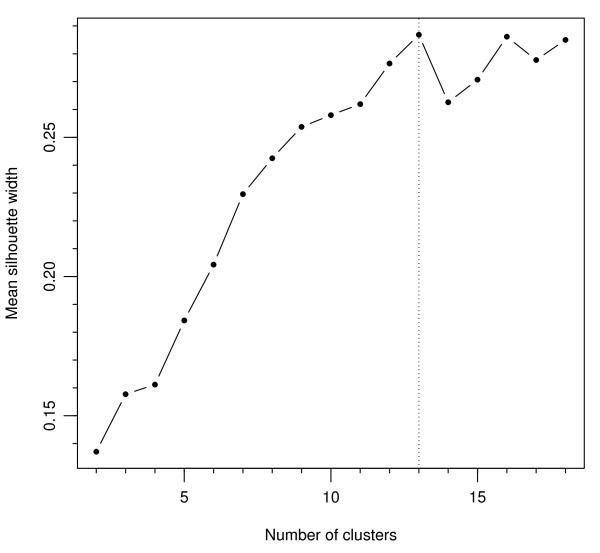
- The open sort produced a 13-cluster solution with the highest overall average silhouette value of 0.29; after removing low-silhouette constructs, 10 clusters had average silhouette values greater than 0.25, with an average of 0.47 across those 10 domains.
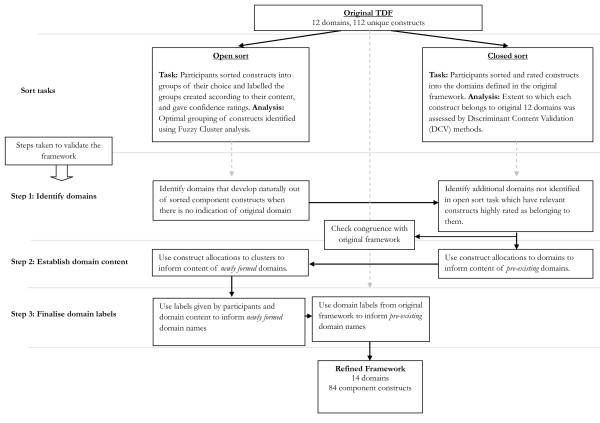
- Of the original 112 unique constructs, 34 were removed, leaving 84; “Nature of the Behaviours” was dropped because it was not represented by a single open-sort cluster and had only one construct assigned in the closed sort.
- Closed-sort congruence was >69% for Emotion, Skills, Motivation and Goals, Social/Professional Role and Identity, Beliefs about Capabilities, and Memory/Attention and Decision Processes, with fair ICCs (0.31–0.40); lower congruence was found for Knowledge, Environmental Context and Resources, and Social Influences (27%–50%), and for Behavioural Regulation, Nature of the Behaviours, and Beliefs about Consequences (<27%).
Methods
- Cross-sectional validation design. Eligible participants had a good understanding of behaviour change theory and were unaware of the original framework; 37 completed the tasks (18 closed sort, 19 open sort), mean age 36.54 years, 27 women and 10 men, mostly from the UK.
- Participants sorted 112 unique theoretical constructs after 12 duplicates were removed. The open sort asked participants to create and label their own groups (up to 24); the closed sort asked them to assign constructs to the original 12 labelled domains and rate confidence from 1 to 10.
- Analysis used Fuzzy Cluster Analysis with silhouette values for the open sort, Mantel correlations and Kendall’s W for sorting concordance, Discriminant Content Validation with one-sample t-tests against zero and Hochberg correction, and intraclass correlation coefficients for closed-sort agreement.
Limitations
- The paper states that two domains showed weak clustering: “Environmental Context and Resources” and “Behavioural Regulation.” It also states that the refined framework is limited to constructs identified in the original framework and does not cover all theories of behaviour change.
- Evident from the text: the sample was small and self-selected (37 completers; 18 closed, 19 open), mostly UK-based, and open-sort concordance was low (W = 0.22, p = 0.01). Several clusters had low silhouette values (<0.25) before construct removal, and “Knowledge” had no open-sort cluster, being retained based on closed-sort confidence ratings.
Model-written summary. Check it against the paper before relying on it.
Integrity signals
Registry
Cites
Statistics
Figures
Verification
Claims the paper makes
8 Valid · 2 Not valid · 7 Not checked · 74 Own results and interpretations
The cited sources support only part of this claim — read each source’s verdict below.
In the paper
“In a review of 235 guideline development and implementation studies, only 22.5% were judged to have used theories of behaviour change”
§ Validation of the theoretical domains framework for use in behaviour change and implementation research > Background
What the sources say
- Partly supportedcites [10] Davies P Walker AE Grimshaw J A systematic review of the use of theory in the design and implementation strategies and interpretation of the results of rigorous evaluations Implement Sci 2010 5 1 6 10.1186/1748-5908-5-1 20181130 PMC2832624 sourceExperimental — accuracy not yet measured
The Results report that 53 of 235 studies (22.5%) were judged to have employed theories of behaviour or behaviour change. The Abstract Methods identifies the studies as rigorous evaluations of guideline dissemination and implementation, not guideline development and implementation. (LLM, conf=0.86)
plain- Asserted: passes — The authors put it forward as true.
- Checkable: passes — It can be checked against evidence.
- Load-bearing: passes — The paper’s conclusions depend on it.
- Based: passes — The paper gives a reason why it holds.
- Partly supported
The cited sources support only part of this claim — read each source’s verdict below.
In the paper
“Research using the TDF has identified lack of knowledge as a potential barrier to a number of professional health behaviours, including hand hygiene [17], changing transfusion practice [19], and the adoption of tobacco use cessation counseling in dental practices [21].”
§ Validation of the theoretical domains framework for use in behaviour change and implementation research > Discussion
What the sources say
- Not checked — no full text of the sourcecites [17] Dyson J Lawton R Jackson C Cheater F Does the use of a theoretical approach tell us more about hand hygiene behaviour? The barriers and levers to hand hygiene J Infection Prev 2010 12 17 source
- Partly supportedcites [19] Francis J Tinmouth A Stanworth SJ Using theories of behaviour change to understand transfusion prescribing three clinical contexts in two countries: development work for and implementation trial Implement Sci 2009 4 70 10.1186/1748-5908-4-70 19852832 PMC2777847 sourceExperimental — accuracy not yet measured
The Abstract (Methods) and Methods (Interview study) say the planned TDF-based interviews will examine knowledge as a possible influence on transfusion decisions. The Background (UK and Canadian blood services) says factors hindering change in these clinical contexts had not yet been investigated. This paper therefore does not report that lack of knowledge was identified as a barrier to changing transfusion practice; the other behaviours have separate citations in the citing sentence. (LLM, conf=0.86)
- Partly supportedcites [21] Amemori M Korhonen T Kinnunen T Michie S Murtomaa H Enhancing implementation of tobacco use prevention and cessation counselling guideline among dental providers: a cluster randomised controlled trial Implement Sci 2011 6 13 10.1186/1748-5908-6-13 21320312 PMC3055178 sourceExperimental — accuracy not yet measured
The Background section lists knowledge as a domain in the theoretical-domains framework, and the Methods section says the authors planned to use that framework to assess difficulties with tobacco-cessation counselling in dental practices. But this paper does not report that it identified a lack of knowledge as a barrier; it says the assessment results will be reported elsewhere. This verdict addresses only the dental-practice clause attached to this citation. (LLM, conf=0.83)
hedgedstates an association- Asserted: passes — The authors put it forward as true.
- Checkable: passes — It can be checked against evidence.
- Load-bearing: passes — The paper’s conclusions depend on it.
- Based: passes — The paper gives a reason why it holds.
The cited sources that could be checked couldn’t confirm or dispute this claim.
In the paper
“Furthermore, where the domain has been used, in relation to changing transfusion practice, it was noted that when participants were asked questions relating to the ‘Nature of the Behaviours’ domain they often repeated answers that were previously given in response to questions relating to the ‘Behavioural Regulation’ domain [19]”
§ Validation of the theoretical domains framework for use in behaviour change and implementation research > Discussion
What the sources say
- Could not verifycites [19] Francis J Tinmouth A Stanworth SJ Using theories of behaviour change to understand transfusion prescribing three clinical contexts in two countries: development work for and implementation trial Implement Sci 2009 4 70 10.1186/1748-5908-4-70 19852832 PMC2777847 sourceExperimental — accuracy not yet measured
Split into 2 atoms — 0 confirmed, 0 partially supported, 0 disputed, 0 misattributed, 2 unverifiable. Expand the claim to see per-atom verdicts.
plainstates an association- Asserted: passes — The authors put it forward as true.
- Checkable: passes — It can be checked against evidence.
- Load-bearing: passes — The paper’s conclusions depend on it.
- Based: passes — The paper gives a reason why it holds.
- Could not verify
A result the paper reports from its own data — it cites no other source for it, so there is none to check. The quote shows it is in the paper.
In the paper
“This revealed that the majority of constructs (74/112) were strongly associated with only one cluster (i.e., showed membership values over 80% to one specific cluster, see Additional file 5).”
§ Validation of the theoretical domains framework for use in behaviour change and implementation research > Results > Sample size suitability and open sort pattern concordance
plainstates an association- Asserted: passes — The authors put it forward as true.
- Checkable: passes — It can be checked against evidence.
- Load-bearing: passes — The paper’s conclusions depend on it.
- Based: passes — The paper gives a reason why it holds.
A result the paper reports from its own data — it cites no other source for it, so there is none to check. The quote shows it is in the paper.
In the paper
“However, none of the multiple memberships indicated in the open sort results were replicated in the closed sort task where three different constructs, ‘Professional confidence’, ‘Beliefs’, and ‘Group identity’, were allocated to multiple domains.”
§ Validation of the theoretical domains framework for use in behaviour change and implementation research > Results > Sample size suitability and open sort pattern concordance
plain- Asserted: passes — The authors put it forward as true.
- Checkable: passes — It can be checked against evidence.
- Load-bearing: passes — The paper’s conclusions depend on it.
- Based: passes — The paper gives a reason why it holds.
35 more claims
Create a free account to see all 91 claims and to verify the 1 reference still open.
- Probably not a substantial claim. 29
- It may state two separate claims as one. 31
- The quote only partly states this claim. 2
Claims other papers make about this one
Each is checked against this paper’s own text: does it say what the citing paper says it does?
The source backs part of the claim, not all of it — or backs it for a different population, condition or comparison.
In the citing paper
“Theoretical Domains Framework represents another approach to developing determinant frameworks. It was constructed on the basis of a synthesis of 128 constructs related to behaviour change found in 33 behaviour change theories, including many social cognitive theories [10]. The constructs are sorted into 14 theoretical domains (originally 12 domains), e.g. knowledge, skills, intentions, goals,”
From Making sense of implementation theories, models and frameworks (2015) · cites this paper as [10]
Experimental — accuracy not yet measuredThe source backs part of the claim, not all of it — or backs it for a different population, condition or comparison.
In the citing paper
“Overarching change domains were chosen from the Theoretical Domains Framework (TDF) (68), an integrative framework that provides intervention developers with a possible selection of 14 change domains e.g., behavioral regulation and 84 change mechanisms e.g., self-monitoring from evidence-based behavior change theories.”
From Developing a mechanism-based therapy for acute psychiatric inpatients with psychotic symptoms: an Intervention Mapping approach (2023) · cites this paper as [68]
Experimental — accuracy not yet measuredThe source backs part of the claim, not all of it — or backs it for a different population, condition or comparison.
In the citing paper
“It has been increasingly acknowledged that consideration of patient acceptability using theories of behaviour change are key to effective evaluation, design and implementation of healthcare interventions [23–25] .”
From 'I didn't know what to expect': Exploring patient perspectives to identify targets for change to improve telephone-delivered psychological interventions (2020) · cites this paper as [25]
Experimental — accuracy not yet measuredThe source backs part of the claim, not all of it — or backs it for a different population, condition or comparison.
In the citing paper
“the TDF is a theoretical framework rather than a theory; it does not propose testable relationships between elements but provides a theoretical lens through which to view the cognitive, affective, social and environmental influences on behaviour.”
From A guide to using the Theoretical Domains Framework of behaviour change to investigate implementation problems (2017) · cites this paper as [16]
Experimental — accuracy not yet measuredThe source backs part of the claim, not all of it — or backs it for a different population, condition or comparison.
In the citing paper
“The central tenet of this model is that capability, opportunity and motivation interact to produce behaviour.”
From A guide to using the Theoretical Domains Framework of behaviour change to investigate implementation problems (2017) · cites this paper as [16]
Experimental — accuracy not yet measured
28 more claims about this paper
Create a free account to see every claim other papers make about this one.
Self-check
Percentages, sums and reported differences re-computed from the paper’s own numbers.
Each contradiction between two passages listed here was confirmed by an independent check.
Rated minor: it would not touch a result — a value no result rests on, a p-value that stays on the same side of the significance level, or a conflict that is clerical, resolved elsewhere in the paper, or outside its own findings.
In the paper
“This revealed that the majority of constructs (74/112) were strongly associated with only one cluster (i.e., showed membership values over 80% to one specific cluster, see Additional file 5). A further 32 constructs showed moderately high associations with one cluster (memberships values between 28% to 79%), with the remaining proportion of memberships for these constructs spread over other clusters. Only eight constructs”
§ Validation of the theoretical domains framework for use in behaviour change and implementation research > Results > Sample size suitability and open sort pattern concordance
Reported 112 · recomputed 114
Rated minor: it would not touch a result — a value no result rests on, a p-value that stays on the same side of the significance level, or a conflict that is clerical, resolved elsewhere in the paper, or outside its own findings.
In the paper
§ Validation of the theoretical domains framework for use in behaviour change and implementation research > Discussion
“Second, the ‘Nature of the Behaviours’ domain was dropped in the new framework, because its original component constructs were not assigned to the domain in the closed sort, and there was no cluster representing the ‘Nature of the Behaviours’ in the open sort.”
§ Validation of the theoretical domains framework for use in behaviour change and implementation research > Results > Sample size suitability and open sort pattern concordance
“‘Nature of the Behaviours’ only had one construct (Routine/automatic/habit) included from the original six constructs.”
Rated minor: it would not touch a result — a value no result rests on, a p-value that stays on the same side of the significance level, or a conflict that is clerical, resolved elsewhere in the paper, or outside its own findings.
In the paper
§ Validation of the theoretical domains framework for use in behaviour change and implementation research > Discussion
“Two domains showed weak clustering: ‘Environmental Context and Resources’ and ‘Behavioural Regulation’.”
§ Validation of the theoretical domains framework for use in behaviour change and implementation research > Results > Sample size suitability and open sort pattern concordance
“Three clusters remained with silhouettes below 0.25, ‘Environmental Context and Resources’, ‘Memory, Attention, and Decision Processes’, and ‘Behavioural Regulation’.”
Citations
Cites
The theory of planned behavior
Ajzen, I. (1991) · Organizational Behavior and Human Decision Processes · doi:10.1016/0749-5978(91)90020-t · Cited by 90,587
The Measurement of Observer Agreement for Categorical Data
Landis, J. R., & Koch, G. G. (1977) · Biometrics · doi:10.2307/2529310 · Cited by 81,148 · cited 1×
“61 as good to excellent agreement [44].”
Silhouettes: A graphical aid to the interpretation and validation of cluster analysis
Rousseeuw, P. J. (1987) · Journal of Computational and Applied Mathematics · doi:10.1016/0377-0427(87)90125-7 · Cited by 21,392 · cited 2×
“Silhouette values are calculated for each construct and range from +1, indicating strong association with a cluster and distance from neighboring clusters, through 0, indicating no distinct association with clusters, to −1, indicating that a construct is probably assigned to the wrong cluster and should be considered…”
BackgroundMethodMichie, S., van Stralen, M. M., & West, R. (2011) · Implementation Science · doi:10.1186/1748-5908-6-42 · Cited by 13,697 · cited 4×
“In designing interventions, the TDF fits well with the Behaviour Change Wheel (BCW) [46] referred to above.”
BackgroundMethodInfluentialSelf-citationFinding groups in data: an introduction to cluster analysis
(1991) · Choice Reviews Online · doi:10.5860/choice.28-4558 · Cited by 10,474
Finding Groups in Data: An Introduction to Cluster Analysis
Kaufman, L., & Rousseeuw, P. J. (1990) · Wiley Series in Probability and Statistics · doi:10.1002/9780470316801 · Cited by 7,344
Forming inferences about some intraclass correlation coefficients.
McGraw, K. O., & Wong, S. P. (1996) · Psychological Methods · doi:10.1037/1082-989x.1.1.30 · Cited by 6,903 · cited 1×
“To examine the agreement of these construct x domain ratings and construct assignment across participants, two-way intraclass correlation coefficient (ICC) measures of consistency were used within each domain [43].”
MethodDetermination and Quantification Of Content Validity
LYNN, M. R. (1986) · Nursing Research · doi:10.1097/00006199-198611000-00017 · Cited by 6,775 · cited 1×
“For contentvalidation tasks, such as those proposed in the closed sort task, two to 24 participants have been shown to be sufficient [29-32], with more than five participants reducing the influence of rater outliers [33].”
MethodReliability and Validity Assessment
Carmines, E., & Zeller, R. (1979) · doi:10.4135/9781412985642 · Cited by 5,884 · cited 1×
“For contentvalidation tasks, such as those proposed in the closed sort task, two to 24 participants have been shown to be sufficient [29-32], with more than five participants reducing the influence of rater outliers [33].”
MethodReliability and Validity Assessment
(2011) · The Encyclopedia of Political Science · doi:10.4135/9781608712434.n1341 · Cited by 5,040
Research works printed but not linked: 6
- Clinical Effectiveness Research Agenda Group (CERAG) An Implementation Research Agenda: A report prepared for the High Level Group on Clinical Effectiveness 2008 CERAG, London
- Paul CL A modified approach to a new card sorting methodology J Usability Stud 2008 4 7 30
- Taylor SE Health Psychology (5th Edition) 2003 MacGraw-Hill, Boston
- Oxford English Dictionary Online www.oed.com
- Ogden J Health Psychology: a textbook (2nd Edition) 2000 Open University Press, Buckingham
- Forsyth DR Group Dynamics (5th Edition) 2006 Wadsworth, Cengage Learning
Cited by
Items 1,301–1,400 of 4,858
Furtado, T., Perkins, E., Pinchbeck, G. L., McGowan, C. M., Watkins, F., & Christley, R. (2022) · Frontiers in Veterinary Science · doi:10.3389/fvets.2022.961537 · Cited by 22
“The COM-B model is well-recognized and validated (20), and has been used in multiple human health settings (21–25).”
MethodVoorheis, P., Bhuiya, A. R., Kuluski, K., Phạm, Q., & Petch, J. (2023) · Journal of Medical Internet Research · doi:10.2196/45095 · Cited by 27
“For example, the Theoretical Domains Framework summarizes 14 domains that are suggested to influence behavior [12].”
Wendt, J., Scheller, D. A., Flechtner‐Mors, M., Meshkovska, B., Łuszczyńska, A., Lien, N., Forberger, S., Banik, A., Łobczowska, K., & Steinacker, J. M. (2023) · Frontiers in Public Health · doi:10.3389/fpubh.2023.935292 · Cited by 25
“Using the Theoretical Domains Framework (52), Nathan et al. (25) and Weatherson et al. (26) identified factors such as “lack of time,” “lack of funds,” “lack of sports facilities,” “lack of training” and “teachers’ attitudes toward physical activity (intention)” that may hamper implementation success.”
MethodAlwidyan, T., McCorry, N., & Parsons, C. (2023) · International Journal of Pharmacy Practice · doi:10.1093/ijpp/riad005 · Cited by 20
Bouwman, E., Pluijm, S. M. F., Stollman, I., Araújo‐Soares, V., Blijlevens, N. M. A., Follin, C., Winther, J. F., Hjorth, L., Kepák, T., Kepáková, K., et al. (2023) · Cancer Medicine · doi:10.1002/cam4.5911 · Cited by 21
Westafer, L. M., Jessen, E., Zampi, M., Boccio, E., Casey, S. D., Lindenauer, P. K., & Vinson, D. R. (2023) · Annals of Emergency Medicine · doi:10.1016/j.annemergmed.2023.02.021 · Cited by 21
Barnden, R., Snowdon, D. A., Lannin, N. A., Lynch, E. A., Srikanth, V. K., & Andrew, N. E. (2023) · BMC Health Services Research · doi:10.1186/s12913-023-09609-y · Cited by 21
“The frameworks used most frequently in combination were the KTA with the TDF (3 studies) [49, 51, 67].”
BackgroundInfluentialDuran, A. T., Keener-DeNoia, A., Stavrolakes, K., Fraser, A., Blanco, L., Fleisch, E., Pieszchata, N., Cannone, D. E., McKay, C. K., Whittman, E., et al. (2023) · JMIR Formative Research · doi:10.2196/47264 · Cited by 31
“To guide the UCD process, we used the Theoretical Domains Framework (TDF; 84 theoretical constructs within 14 domains [eg, knowledge, skills, and social or professional role]) [34-36] and the Consolidated Framework for Implementation Research (CFIR; 39 constructs within 5 domains [eg, inner setting and outer setting])…”
MethodFulop, N., Walton, H., Crellin, N. E., Georghiou, T., Herlitz, L., Litchfield, I. J., Massou, E., Sherlaw‐Johnson, C., Sidhu, M. S., Tomini, S. M., et al. (2023) · Health and Social Care Delivery Research · doi:10.3310/fvqw4410 · Cited by 21
Chen, D., Shao, J., Zhang, H., Wu, J., Xue, E., Guo, P., Tang, L., Cui, N., Wang, X., Chen, L., et al. (2023) · Annals of Medicine · doi:10.1080/07853890.2023.2267587 · Cited by 16
“…behavioural regulation, and physical skills); opportunity (social influences, environmental context, and resources); and motivation (reinforcement, optimism, emotions, social/professional role and identity, beliefs about capabilities, beliefs about consequences, goals, and intentions) [30].”
BackgroundMethodHearn, J. H., Bryson, K., Barsauskaite, L., & Bullo, S. (2024) · Journal of Health Communication · doi:10.1080/10810730.2023.2299003 · Cited by 21
“Questions were developed to identify and explain the potential determinants of help-seeking behavior for endometriosis, and identify areas for behavior change, guided by the Theoretical Domains Framework (Atkins et al., 2017).”
BackgroundMethodMerle, J. L., Benbow, N., Li, D. H., Zapata, J. P., Queiroz, A. A. F. L. N., Zamantakis, A., McKay, V., Keiser, B., Villamar, J. A., Mustanski, B. S., et al. (2024) · AIDS and Behavior · doi:10.1007/s10461-024-04331-0 · Cited by 21
“Digital tools, like mobile apps and websites, can offer accurate and up-to-date information on PrEP, allowing users to make informed 33] and adjunctive interventions according to the TDF [40, 41] and the COM-B taxonomies [42 ].”
Rodrigues, A., Nichol, B., Wilson, R., Charlton, C., Gibson, B., Finch, T. L., Haighton, C., Maniatopoulos, G., Giles, E. L., Harrison, D., et al. (2024) · BMJ Open · doi:10.1136/bmjopen-2024-084208 · Cited by 17
“The TDF, a synthesis framework of factors known to influence behaviour change, 28 29 is employed to facilitate identification of cognitive, affective, social and environmental barriers and facilitators to MECC implementation.”
MethodStreamlining COM-B model: Insights from the Healthy Eating Context
Isbanner, S., Carins, J., Babakhani, N., & Kitunen, A. (2024) · Appetite · doi:10.1016/j.appet.2024.107693 · Cited by 23
“Automatic motivation directs behaviour through emotions and impulses (Cane et al., 2012).”
InfluentialPharmacy students’ experiences in provision of community pharmacy mental health services
Murphy, A. L., Szumilas, M., Rowe, D., Landry, K., Martin‐Misener, R., Kutcher, S., & Gardner, D. M. (2014) · Canadian Pharmacists Journal / Revue des Pharmaciens du Canada · doi:10.1177/1715163513514170 · Cited by 18
McGrady, M. E., Ryan, J. L., Brown, G. A., & Cushing, C. C. (2015) · Journal of Pediatric Psychology · doi:10.1093/jpepsy/jsv025 · Cited by 18
“Applying the TDF to Adherence-Promotion Interventions Method Two authors coded the domains targeted by each intervention according to previously published TDF definitions (Cane et al., 2012, 2015).”
MethodThomas, S., & Mackintosh, S. F. (2016) · Physical Therapy · doi:10.2522/ptj.20150215 · Cited by 20
Morrissey, E. C., Durand, H., Nieuwlaat, R., Navarro, T., Haynes, R. B., Walsh, J. C., & Molloy, G. J. (2016) · Systematic Reviews · doi:10.1186/s13643-016-0278-5 · Cited by 26
“[16].”
BackgroundSupporting genetics in primary care: investigating how theory can inform professional education
Wilson, B. J., Islam, R., Francis, J., Grimshaw, J., Permaul, J., Allanson, J. E., Blaine, S., Graham, I. D., Meschino, W. S., Ramsay, C. R., et al. (2016) · European Journal of Human Genetics · doi:10.1038/ejhg.2016.68 · Cited by 19
Dennis, S. M., Reddel, H. K., Middleton, S., Hasan, I., Hermiz, O. S., Phillips, R., Crockett, A. J., Vagholkar, S., Marks, G. B., & Zwar, N. A. (2016) · Family Practice · doi:10.1093/fampra/cmw103 · Cited by 23
“The results of the PN and GP interviews are described under the headings of the TDF (12).”
MethodInfluentialSelwood, A., Senthuran, S., Blakely, B. D., Lane, P., North, J. B., & Clay‐Williams, R. (2017) · BMJ Open · doi:10.1136/bmjopen-2016-014906 · Cited by 16
“It includes 14 domains, each with several component constructs: knowledge; skills; social/professional role and identity; beliefs about capabilities; optimism; beliefs about consequences; reinforcement; intentions; goals; memory, attention and decision processes; environmental context and resources; social influences;…”
BackgroundMethodInfluentialDumas, A., Lemieux, S., Lapointe, A., Provencher, V., Robitaille, J., & Desroches, S. (2017) · JMIR Research Protocols · doi:10.2196/resprot.7147 · Cited by 21
“Behavior change techniques were grouped by the theoretical domains of the Theoretical Domains Framework [25], based on the structure proposed by Cane et al [35].”
InfluentialCessation support for smokers with mental health problems: a survey of resources and training needs
Simonavičius, E., Robson, D., McEwen, A., & Brose, L. S. (2017) · Journal of Substance Abuse Treatment · doi:10.1016/j.jsat.2017.06.008 · Cited by 19
Bloom, R., Beeri, M. S., Ravona‐Springer, R., Heymann, A. D., Dabush, H., Bar, L., Slater, S., Rassovsky, Y., & Bahar‐Fuchs, A. (2017) · Alzheimer s & Dementia Translational Research & Clinical Interventions · doi:10.1016/j.trci.2017.10.003 · Cited by 18
“Understanding and effectively targeting determinants of sustained health-related behavior change has been the subject of much research interest in recent years, as reflected in theoretical advances [37,38] and the development of taxonomies of behavior-change techniques (BCTs) [39].”
BackgroundMethodChanging health behaviour with rehabilitation in thoracic cancer: A systematic review and synthesis
Bayly, J., Wakefield, D., Hepgul, N., Wilcock, A., Higginson, I. J., & Maddocks, M. M. (2018) · Psycho-Oncology · doi:10.1002/pon.4684 · Cited by 20
“(25) The synthesis was carried out in four stages: (i) we summarised study characteristics and health-related behaviours targeted; (ii) we describe reported use of theory supporting intervention design and delivery; (iii) we coded BCTs performed by intervention providers and/or recipients by health behaviour targeted;…”
MethodImproving medication adherence in stroke survivors: the intervention development process
Crayton, E., Wright, A. J., & Ashworth, M. J. (2018) · BMC Health Services Research · doi:10.1186/s12913-018-3572-1 · Cited by 19
“fluences; Emotions; & Behavioural regulation [22]).”
BackgroundPeter, B., Potter, N. L., Davis, J., Donenfeld-Peled, I., Finestack, L. H., Stoel‐Gammon, C., Lien, K., Bruce, L., Vose, C., Eng, L., et al. (2019) · F1000Research · doi:10.12688/f1000research.18062.4 · Cited by 17
Walker, R., Bennett, C., Kumar, A., Adamski, M. M., Blumfield, M., Mazza, D., & Truby, H. (2019) · Journal of Continuing Education in the Health Professions · doi:10.1097/ceh.0000000000000261 · Cited by 17
“This is consistent with the COM-B system,(30) where the complex interplay between HPs’ capability, opportunity, and motivation play an important role in changing practice and influencing clinical outcomes.(30,43) Interestingly, quantitative evaluation of the acquisition of knowledge showed no change.”
ResultA survey of Canadian healthcare professionals’ practices regarding reactive balance training
Mansfield, A., Danells, C. J., Inness, E. L., Musselman, K. E., & Salbach, N. M. (2019) · Physiotherapy Theory and Practice · doi:10.1080/09593985.2019.1650856 · Cited by 20
“…stages of the TDF are to develop a feasible, relevant, and acceptable intervention to change practice by identifying behavior-change strategies to overcome barriers and enhance facilitators; and determine if the intervention changed behavior (Cane, O’Connor, and Michie, 2012; French et al., 2012).”
BackgroundMethod‘Weighty issues’ in GP-led antenatal care: a qualitative study
Walker, R., Choi, T. S. T., Alexander, K., Mazza, D., & Truby, H. (2019) · BMC Family Practice · doi:10.1186/s12875-019-1026-4 · Cited by 21
“This theme aligned with TDF domains social influences and reinforcement [32].”
BackgroundMethodInfluentialDowson, L., Friedman, N. D., Marshall, C. L., Stuart, R. L., Buising, K. L., Rajkhowa, A., Gotterson, F., & Kong, D. C. M. (2019) · International Journal of Nursing Studies · doi:10.1016/j.ijnurstu.2019.103502 · Cited by 20
Craig, S. S., Babl, F. E., Dalziel, S. R., Gray, C. S., Powell, C., Ansari, K. A., Lyttle, M. D., Roland, D., Benito, J., Velasco, R., et al. (2020) · Trials · doi:10.1186/s13063-019-3785-6 · Cited by 18
Jones, L. F., Cooper, E., Joseph, A., Allison, R., Gold, N., Donald, I., & McNulty, C. A. M. (2020) · BJGP Open · doi:10.3399/bjgpopen20x101044 · Cited by 22
Gneezy, U., Kajackaite, A., & Meier, S. (2020) · Cambridge University Press eBooks · doi:10.1017/9781108677318.036 · Cited by 28
Chater, A., Family, H. E., Lim, R. H. M., & Courtenay, M. (2020) · Journal of Antimicrobial Chemotherapy · doi:10.1093/jac/dkaa335 · Cited by 16
Freund, J., Titzler, I., Thielecke, J., Braun, L., Baumeister, H., Berking, M., & Ebert, D. D. (2020) · BMC Psychiatry · doi:10.1186/s12888-020-02800-z · Cited by 17
“Determinants in the implementation process: The Theoretical Domains Framework (TDF) provides an integrative framework model to identify drivers of behavioural change that could influence determinants in the implementation process [45].”
BackgroundMethodInfluentialVesnaver, E., Goldman, M., O’Brien, S. F., MacPherson, P. A., Butler‐Foster, T., Lapierre, D., Otis, J., Devine, D. V., Germain, M., Rosser, A., et al. (2020) · Health Research Policy and Systems · doi:10.1186/s12961-020-00643-4 · Cited by 15
“To enhance the trustworthiness of our findings, we will use a combination of duplicate coding by two researchers trained in both inductive analysis and the use of the TDF, peer debriefing activities and consensus-building measures.”
BackgroundInfluentialWalburn, J., Sainsbury, K., Foster, L., Weinman, J. A., Morgan, M., Norton, S., Canfield, M., Chadwick, P., Sarkany, B., & Araújo‐Soares, V. (2020) · Health Psychology and Behavioral Medicine · doi:10.1080/21642850.2020.1819287 · Cited by 17
“TDF Theoretical Domains Framework (Cane et al., 2012).”
Brown, M. C., Araújo‐Soares, V., Skinner, R., Glaser, A., Sarwar, N., Saxton, J., Montague, K., Hall, J. M., Burns, O., & Sharp, L. (2020) · BMJ Open · doi:10.1136/bmjopen-2020-041073 · Cited by 23
Laur, C. V., Sribaskaran, T., Simeoni, M., Desveaux, L., Daneman, N., Mulhall, C. L., Lam, J. M. C., & Ivers, N. M. (2021) · BMJ Open Quality · doi:10.1136/bmjoq-2020-001088 · Cited by 18
Bell, J., Sharma, S., Malone, S. C., Levy, M., Reast, J., Ciecieląg, J., Gogolina, S., Ansons, T. L., Fourie, S., Braz, R., et al. (2021) · PLoS ONE · doi:10.1371/journal.pone.0247483 · Cited by 18
Lee, D. S., Straus, S. E., Austin, P. C., Mohamed, S., Taljaard, M., Chong, A. S., Fang, J., Prasad, T. J., Farkouh, M. E., Schull, M. J., et al. (2021) · American Heart Journal · doi:10.1016/j.ahj.2021.05.003 · Cited by 17
Neurotrauma Registry Implementation in Colombia: A Qualitative Assessment
Johnson, E. D., Oak, S., Griswold, D. P., Olaya, S., Puyana, J. C., & Rubiano, A. M. (2021) · Journal of Neurosciences in Rural Practice · doi:10.1055/s-0041-1727577 · Cited by 17
“17,18 This method was selected to encourage communication between the researcher and those working locally Neurotrauma Registry Implementation in Colombia Johnson et al. on the registry.”
Suntornsut, P., Teparrukkul, P., Wongsuvan, G., Chaowagul, W., Michie, S., Day, N., & Limmathurotsakul, D. (2021) · PLoS neglected tropical diseases · doi:10.1371/journal.pntd.0009060 · Cited by 19
“The intervention was a multifaceted prevention programme for melioidosis developed using two behavioral frameworks: Theoretical Domains Framework [12,13] and the Behaviour Change Wheel [14,15].”
MethodInfluentialSelf-citationHammarström, S., Lindroth, M., Nilsén, P., Nolskog, P., & Bernhardsson, S. (2021) · Sexual & Reproductive Healthcare · doi:10.1016/j.srhc.2021.100643 · Cited by 20
Griffiths, S. E., Naughton, F., & Brown, K. (2021) · British Journal of Health Psychology · doi:10.1111/bjhp.12574 · Cited by 21
“One such framework is the Theoretical Domains Framework (TDF) – an integrative framework that synthesizes behaviour change theories and key constructs into 14 theoretical domains (Cane, O’Connor, & Michie, 2012; Michie et al., 2005).”
BackgroundLuke, M. J., Krupetsky, N., Liu, H., Korenvain, C., Crown, N., Toenjes, S., Sproule, B. A., Piquette‐Miller, M., Guirguis, L. M., & McCarthy, L. M. (2021) · Pharmacy · doi:10.3390/pharmacy9040201 · Cited by 22
McKean, C., Watson, R., Charlton, J., Roulstone, S., Holme, C., Gilroy, V., & Law, J. (2022) · Pilot and Feasibility Studies · doi:10.1186/s40814-022-00978-5 · Cited by 22
“A four-step deductive analysis was completed to (1) map identified barriers and enablers and intervention techniques identified in the workshops and the research papers to the Theoretical Domains Framework (TDF) (e.g. Physical skills, Knowledge, Memory, Attention and Decision processes); (2) map the identified theoret…”
BackgroundMethodInfluentialOccupational Physicians’ Reasoning about Recommending Early Return to Work with Work Modifications
Horppu, R., Martimo, K.-P., Viikari-Juntura, E. R. A., Lallukka, T. M., & MacEachen, E. (2016) · PLoS ONE · doi:10.1371/journal.pone.0158588 · Cited by 21
Rushworth, G. F., Cunningham, S., Pfleger, S., Hall, J. M., & Stewart, D. C. (2017) · Research in Social and Administrative Pharmacy · doi:10.1016/j.sapharm.2017.01.002 · Cited by 21
Hansen, C. R., Byrne, S., O’Mahony, D., Kearney, P. M., & Sahm, L. J. (2018) · European Journal of Clinical Pharmacology · doi:10.1007/s00228-018-2578-2 · Cited by 18
“An interview topic guide (see Online Resource II) was designed to explore the 14 domains of the framework [30, 31] whilst also allowing the participants to freely share their opinions.”
BackgroundMethodCourtenay, M., Lim, R. H. M., Deslandes, R. E., Ferriday, R., Gillespie, D., Hodson, K., Reid, N., Thomas, N., & Chater, A. (2019) · BMJ Open · doi:10.1136/bmjopen-2018-028326 · Cited by 21
“Stage 3: identify content and implementation options Step 7: identify behaviour change techniques Behaviour change techniques (BCTs) are the smallest components of behaviour change interventions that on their own have the potential to change behaviour.(27) BCTs selected to be used in the intervention have been identif…”
Mapping KT interventions to barriers and facilitators
Colquhoun, H. L., Grimshaw, J., & Wensing, M. (2013) · Wiley eBooks · doi:10.1002/9781118413555.ch12 · Cited by 20
Amirova, A., Lucas, R., Cowie, M. R., & Haddad, M. (2022) · PLOS ONE · doi:10.1371/journal.pone.0271743 · Cited by 17
“(Continued) Theoretical Domains Framework and constituting belief statements Exemplar quote Construct Barrier/ Enabler Num. participants (N) Num. quotes (k) My HF treatment (i.e., medication) helps me in engaging in physical activity ’I find it quicker and better to sit down and rest until it settles down, take my inh…”
MethodInfluentialRosário, F., Santos, M. I., Angus, K., Pas, L., & Fitzgerald, N. (2018) · Acta Médica Portuguesa · doi:10.20344/amp.9753 · Cited by 16
Simpson, A., Beauchamp, M. R., Dimmock, J. A., Willis, C., & Jackson, B. (2025) · Psychology of sport and exercise · doi:10.1016/j.psychsport.2025.102918 · Cited by 26
Sissons, A., Grant, A. M., Kirkland, A., & Currie, S. (2019) · Psychology Health & Medicine · doi:10.1080/13548506.2019.1679846 · Cited by 25
“Deductive analysis was used to code participants’ responses into the relevant TDF domains (Cane et al., 2012).”
MethodHand hygiene knowledge, attitudes, and practices among hospital inpatients: A descriptive study
Srigley, J. A., Cho, S. M., O’Neill, C., et al. (2019) · American Journal of Infection Control · doi:10.1016/j.ajic.2019.11.020 · Cited by 16
An Interprofessional Workshop to Enhance De-prescribing Practices Among Health Care Providers
Zimmerman, K. M., Linsky, A. M., Donohoe, K. L., Hobgood, S. E., Sargent, L. J., & Salgado, T. M. (2020) · Journal of Continuing Education in the Health Professions · doi:10.1097/ceh.0000000000000280 · Cited by 16
“The Theoretical Domains Framework (TDF) was used to identify areas that should be considered when designing learning for adults when the ultimate goal is to implement changes in behavior.(40) The TDF includes 14 key implementation domains addressing cognitive, affective, social, and environmental factors of behavior (…”
MethodYazdizadeh, B., Walker, R., Skouteris, H., Olander, E. K., & Hill, B. (2020) · Health Promotion International · doi:10.1093/heapro/daaa039 · Cited by 18
Stewart, D. C., Paudyal, V., Cadogan, C. A., Hazen, A. C. M., Okuyan, B., Lutters, M., Henman, M. C., & Fialová, D. (2020) · International Journal of Clinical Pharmacy · doi:10.1007/s11096-020-01054-9 · Cited by 16
“Incorporation of behaviour change theory permits the identification of possible theoretical mechanisms of behaviour change leading to the development of targeted intervention(s) [9].”
BackgroundSkolarus, T. A., Forman, J. H., Sparks, J. B., Metreger, T., Hawley, S. T., Caram, M. E. V., Dossett, L. A., Cruz, A. P., Makarov, D. V., Leppert, J. T., et al. (2021) · Implementation Science Communications · doi:10.1186/s43058-021-00224-8 · Cited by 17
Gibson, J. M. E., Coupe, J., & Watkins, C. L. (2021) · Journal of research in nursing · doi:10.1177/1744987121993505 · Cited by 28
“Other models of behaviour change, for example the Theoretical Domains Framework (Cane et al., 2012) could also be useful but are not specifically designed to address the topic of medication adherence.”
A novel method for assessing design fidelity in web-based behavioral interventions.
Lambert, J. D., Elliott, L. R., Taylor, A. H., Farrand, P. A., Haase, A. M., & Greaves, C. J. (2021) · Health Psychology · doi:10.1037/hea0001046 · Cited by 17
“Muchworkhasalreadybeenconductedtospecifyaprocessfor mappingBCTstotheoreticaldeterminants(Caneetal.,2012)andde-scribeBCTsusingacommonlanguage(Abraham&Michie,2008; Michieetal.,2013).”
Mugweni, E., Goodliffe, S., Jaswal, S., Walker, M., Emrys‐Jones, A., Adams, C., & Kendall, S. A. (2021) · Primary Health Care Research & Development · doi:10.1017/s1463423620000651 · Cited by 16
Bennett, S. E., Walsh, N., Moss, T., & Palmer, S. (2022) · Disability and Rehabilitation · doi:10.1080/09638288.2021.1933618 · Cited by 16
“The TDF is based on a synthesis of thirty-three theories of behaviour and behaviour change, clustered into firstly twelve [24], and later fourteen domains to create one combined theory of behaviour change [23].”
Wilkie, S., & Davinson, N. (2021) · Journal of the British Academy · doi:10.5871/jba/009s7.033 · Cited by 19
Kwan, Y. H., Yoon, S., Tan, C. S., Tai, B. C., Tan, W. B., Phang, J. K., Tan, N. C., Tan, C. Y. L., Quah, Y. L., Koot, D., et al. (2022) · Frontiers in Public Health · doi:10.3389/fpubh.2022.805856 · Cited by 17
“, primary care physicians, healthcare professionals or management) will be conducted to collect their feedback on the EMPOWER app and nudges in educating and motivating behavior change for T2DM based on intervention components embedded to theoretical domain framework (32, 33).”
Wright, C., Kelly, J. T., Healy, R., Musial, J., Campbell, K. L., & Hamilton, K. (2022) · Australian Journal of Psychology · doi:10.1080/00049530.2022.2046445 · Cited by 17
Epton, T., Ghio, D., Ballard, L. M., Allen, S. F., Kassianos, A. P., Hewitt, R. M., Swainston, K., Fynn, W. I., Rowland, V., Westbrook, J., et al. (2022) · Social Science & Medicine · doi:10.1016/j.socscimed.2022.114946 · Cited by 21
“To design effective behavior change interventions, it is essential to identify exactly what behavior needs to change and the influences on said behavior (i.e., constructs from the Theoretical Domains Framework (TDF); Cane et al., 2012; and Behavior Change Wheel COM-B model, Michie et al., 2014).”
Self-citationHawkes, R. E., Miles, L. M., & French, D. (2022) · Journal of Medical Internet Research · doi:10.2196/34253 · Cited by 20
“4 | e34253 | p. 10https://www.jmir.org/2022/4/e34253 (page number not for citation purposes) XSL•FO RenderX the design of the digital diabetes prevention program. bCOM-B: Capability, Opportunity, Motivation–Behavior. cGROW: Goal, Reality, Options, and Way forward. dConstructs were grouped together based on the Theoret…”
BackgroundMethodInfluentialDo corporate social responsibility ratings have any effect on traffic congestion?
Bakare, B., Motuba, D., & Szmerekovsky, J. G. (2022) · Transportation Research Part A Policy and Practice · doi:10.1016/j.tra.2022.09.005 · Cited by 17
Skibdal, K. M., Emme, C., & Hansen, H. (2022) · Patient Preference and Adherence · doi:10.2147/ppa.s380832 · Cited by 9
“The healthcare professionals’ (HCP) perspective towards delivering PTR, including barriers and enablers, has been explored in a qualitative study using the Theoretical Domains Framework (TDF).(19,20) Especially attention towards involvement of the HCP in the decision process and sufficient education and skill training…”
MethodReicherzer, L., Wirz, M., Wieber, F., & Graf, E. S. (2022) · Frontiers in Psychology · doi:10.3389/fpsyg.2022.982302 · Cited by 22
“A semi structured topic guide was developed based on the TDF (Cane et al., 2012).”
BackgroundMethodGhammachi, N., Mihrshahi, S., & Ronto, R. (2022) · Sustainability · doi:10.3390/su142215207 · Cited by 18
Brassel, S., Brunner, M., Power, E., Campbell, A., & Togher, L. (2022) · American Journal of Speech-Language Pathology · doi:10.1044/2022_ajslp-22-00077 · Cited by 18
Adams, E. L., Edgar, A., Mosher, P., Armstrong, B., Burkart, S. A., Weaver, R. G., Beets, M. W., Siceloff, E. R., & Prinz, R. J. (2023) · International Journal of Environmental Research and Public Health · doi:10.3390/ijerph20010862 · Cited by 17
“TDF was developed through a synthesis of 33 theories on behavior change, which distilled 84 theoretical constructs into 14 clustered domains [25].”
MethodInfluentialAlHarthi, M. S., Wright, D. J., Scott, S., & Birt, L. (2023) · Research in Social and Administrative Pharmacy · doi:10.1016/j.sapharm.2023.01.013 · Cited by 16
Chao, G. F., Lindquist, K. M., Vitous, C. A., Tolentino, D. A., Delaney, L. D., Alimi, Y., Jafri, S. M., & Telem, D. A. (2023) · Surgical Endoscopy · doi:10.1007/s00464-023-10030-z · Cited by 18
“These 14 domains are (1) knowledge; (2) skills; (3) social or professional role and identity; (4) beliefs about capabilities; (5) optimism; (6) beliefs about consequences; (7) reinforcement; (8) intentions; (9) goals; (10) memory, attention, and decision processes; (11) environmental context; (12) social influences; (…”
Fernando, M., Abell, B., Tyack, Z. F., Donovan, T., McPhail, S., & Naicker, S. (2023) · Journal of Medical Internet Research · doi:10.2196/45163 · Cited by 27
“RenderX example of such a theory is the theoretical domain’s framework [34].”
BackgroundRevising and evaluating falls prevention education for older adults in hospital
Francis‐Coad, J., Farlie, M. K., Haines, T. P., Weselman, T., Black, L., Cummings, P., & Hill, A. (2023) · Health Education Journal · doi:10.1177/00178969231204329 · Cited by 19
“First, behaviour change frameworks identify that recognising one’s own personal risk of a health problem is a strong motivator for being willing to take action to mitigate risk (Cane et al., 2012; Michie et al., 2011).”
BackgroundGooden, T. E., Mkhoi, M. L., Mdoe, M. B., Mwalukunga, L. J., Senkoro, E., Kibusi, S. M., Thomas, G. N., Nirantharakumar, K., Manaseki‐Holland, S., & Greenfield, S. (2023) · BMC Public Health · doi:10.1186/s12889-023-17069-6 · Cited by 19
“The topic guide for HCPs was developed based on the Theoretical Domains Framework [30] to understand how future changes to care could be successfully implemented (manuscript under review); however, the first two questions of the topic guide asked about barriers and facilitators for prevention,…”
BackgroundMethodCook, E., Kabasinguzi, I., Randhawa, G., & Ali, N. (2024) · Urban forestry & urban greening · doi:10.1016/j.ufug.2024.128210 · Cited by 16
Bourke, B. C., McCarthy, M. B., & McCarthy, S. N. (2024) · International Journal of Consumer Studies · doi:10.1111/ijcs.13078 · Cited by 26
Why we still perform arthroscopy in knee osteoarthritis: a multi-methods study
Barlow, T., & Plant, C. E. (2015) · BMC Musculoskeletal Disorders · doi:10.1186/s12891-015-0537-y · Cited by 17
“This approach was based in the Theoretical Domains Framework (TDF) [15], which is a theoretical framework developed to aid implementation strategies within healthcare.”
MethodGyftopoulos, S., Smith, S. W., Simon, E., Kuznetsova, M., Horwitz, L. I., & Makarov, D. V. (2017) · Journal of the American College of Radiology · doi:10.1016/j.jacr.2017.08.022 · Cited by 18
Boeckmann, M., Nohavová, I., Dogar, O. F., Králíková, E., Pánková, A., Zvolská, K., Huque, R., Fatima, R., Noor, M., Elsey, H., et al. (2018) · BMJ Open · doi:10.1136/bmjopen-2017-019878 · Cited by 17
Clarke, A. L., Roscoe, J., Appleton, R., Dale, J. R., & Nanton, V. (2019) · BMC Health Services Research · doi:10.1186/s12913-019-3941-4 · Cited by 20
“interventions [16–18], and can be applied to both qualitative and quantitative data [19].”
BackgroundBar‐Zeev, Y., Bovill, M., Bonevski, B., Gruppetta, M., Oldmeadow, C. J., Palazzi, K. L., Atkins, L., Reath, J., & Gould, G. S. (2019) · BMJ Open · doi:10.1136/bmjopen-2018-025293 · Cited by 17
“45 The TDF covers a range of domains known to be relevant to professional behaviour change and has been applied across a wide range of clinical situations.(45) Both the Behaviour Change Wheel and the TDF are used to practically identify and remediate barriers to achieving evidence-based care.”
BackgroundSummers, C., & Curtis, K. (2020) · JMIR Diabetes · doi:10.2196/15030 · Cited by 18
“Social influences can be defined as “interpersonal processes that can cause individuals to change their thoughts, feelings, or behaviours” and includes constructs such as social norms, social comparisons, modelling, social support, and social pressure [50].”
BackgroundRuiter, R. A. C., Crutzen, R., de Leeuw, E., & Kok, G. (2020) · Cambridge University Press eBooks · doi:10.1017/9781108677318.018 · Cited by 23
Giroux, E. E., Casemore, S., Clarke, T., McBride, C. B., Wuerstl, K. R., & Gainforth, H. L. (2020) · Spinal Cord · doi:10.1038/s41393-020-00555-8 · Cited by 16
Goldstein, R. F., Walker, R., Teede, H. J., Harrison, C. L., & Boyle, J. A. (2020) · Journal of Clinical Medicine · doi:10.3390/jcm9124073 · Cited by 18
“Implementation research has identified 14 domains within the Theoretical Domains Framework (TDF) that are related to behaviour change, allowing for targeting of intervention to increase guideline implementation [24,25].”
BackgroundMethodInfluentialUtilizing behavioral theories to explain hospital visitors’ observed hand hygiene behavior
Gaube, S., Schneider‐Brachert, W., Holzmann, T., Fischer, P., & Lermer, E. (2021) · American Journal of Infection Control · doi:10.1016/j.ajic.2021.01.003 · Cited by 18
Schexnayder, J. K., Longenecker, C. T., Muiruri, C., Bosworth, H. B., Gebhardt, D., Gonzales, S. E., Hanson, J. E., Hileman, C. O., Okeke, N. L., Sico, I. P., et al. (2021) · Implementation Science Communications · doi:10.1186/s43058-021-00114-z · Cited by 18
“It distills 84 theoretical constructs into 14 domains, and provides a validated taxonomy of implementation determinants that are applicable to health professional and patient behaviors [12].”
BackgroundHand, K. S. P., Clancy, B., Allen, M., Mayes, A., Patel, Y., & Latter, S. M. (2021) · JAC-Antimicrobial Resistance · doi:10.1093/jacamr/dlab111 · Cited by 17
Wallace, S. J., Sullivan, B., Rose, T., Worrall, L. E., Dorze, G. L., & Shrubsole, K. (2021) · Journal of Speech Language and Hearing Research · doi:10.1044/2021_jslhr-20-00683 · Cited by 19
Barnden, R., Cadilhac, D. A.-M., Lannin, N. A., Kneebone, I., Hersh, D., Godecke, E., Stolwyk, R. J., Purvis, T. L., Nicks, R. J., Farquhar, M., et al. (2021) · PEC Innovation · doi:10.1016/j.pecinn.2021.100008 · Cited by 16
“This framework provided a comprehensive guide to help identify design issues and perceived enablers and barriers that would assist with future implementation of the package in healthcare settings [44-46].”
BackgroundMethodInfluentialFrench, S. D., O’Connor, D. A., Green, S., Page, M. J., Mortimer, D., Turner, S., Walker, B. F., Keating, J. L., Grimshaw, J., Michie, S., et al. (2022) · Trials · doi:10.1186/s13063-022-06053-x · Cited by 18
“The Theoretical Domains Framework (TDF) is a broad-based, comprehensive framework for designing implementation interventions offering coverage of potential change pathways [25, 26].”
BackgroundSelf-citationInness, E. L., Jagroop, D., Andreoli, A., Bayley, M. T., Biasin, L., Danells, C. J., Hall, J., Mansfield, A., McDonald, A., Nishri, D., et al. (2022) · Physical Therapy · doi:10.1093/ptj/pzac014 · Cited by 22
Metadata
- Authors
- Cane, J., O’Connor, D., & Michie, S.
- Affiliations
- University of Kent (GB)
- Monash University (AU)
- University College London (GB)
- Corresponding author
- Michie, Susan
- Venue
- Implementation Science
- Published
- 2012-04-24
- Volume
- 7
- Issue
- 1
- Pages
- 37-37
- ISSN
- 1748-5908 (ISSN-L)
- PMC
- PMC3483008
- OpenAlex
- W2077109464
- Semantic Scholar
- 6d95ed679dcdd72dec679184e21654702ce8f33d
- Cited by
- 4,888
- References
- 61
- Citations by year
- 2026: 531 · 2025: 566 · 2024: 568 · 2023: 504 · 2022: 575 · 2021: 597 · 2020: 496 · 2019: 294 · 2018: 237 · 2017: 167 · 2016: 135 · 2015: 108 · 2014: 62 · 2013: 39 · 2012: 6
- FWCI
- 122.09
- Type
- journal article
- Language
- en
- Open access
- gold
- doi.org
- Licence
- cc-by
- creativecommons.org/licenses/by/2.0/ (tdm)
- creativecommons.org/licenses/by/2.0/ (vor)
- Locations
- Implementation Science (publishedVersion, cc-by)
- Europe PMC (PubMed Central) (publishedVersion, cc-by)
- PubMed Central (publishedVersion, cc-by)
- PubMed (publishedVersion)
- Create (Canterbury Christ Church University) (acceptedVersion)
- Kent Academic Repository (University of Kent) (acceptedVersion)
- DOAJ (DOAJ: Directory of Open Access Journals) (submittedVersion)
- UCL Discovery (University College London) (submittedVersion)
- Funders
- University College London
- University of Aberdeen
- Medical Research Council
- National Health and Medical Research Council
- Topics
- Health Sciences › Health Professions › General Health Professions › Health Policy Implementation Science
- Social Sciences › Psychology › Applied Psychology › Behavioral Health and Interventions
- Health Sciences › Nursing › Research and Theory › Health Education and Validation
- Keywords
- Theoretical Domains Framework, behaviour change interventions, implementation research, theoretical constructs, construct validity, fuzzy clustering, health professionals' practices, intervention development, behavioral regulation, social influence
- MeSH terms
- Adult, Behavior Therapy, Cross-Sectional Studies, Female, Humans, Male, Middle Aged, Reproducibility of Results, Behavior Control, Young Adult
About these checks
Registry, retraction, Cites and statistics results are computed, not judged, with one exception: a printed reference that no index lists is read once by a model before it counts as a citation error. Claims are extracted by a model and kept only when their quote appears verbatim in the text; each cited source is then checked, with a model’s help, for whether it says what the claim relies on. Those verdicts can be wrong — read the claim’s quote and the cited source before relying on one.
The claim verdicts this report counts are experimental: their accuracy is not yet measured.
A language model drew the claims from the paper on 2026-10-10, under version 3 of the claim definition (model deepseek-v4.1-flash, prompt extract-v3).
A second model labelled each claim on 2026-10-10 (model jev-1.13-20260917, definition revision gold-guideline-v0.2).
Cited sources are checked with a language model’s help (gpt-6-sol).
Statistics and arithmetic are recomputed, not judged.
Confidence bands are shown only for fields calibrated on our annotated test set. None is calibrated yet, so no band is shown.
What counts as a claim ›How we measure confidence ›How we check this ›
Are you an author, or do you see a problem with this page? Request a review
Data sources
Bibliographic data: Semantic Scholar, OpenAlex, Crossref.
Contains information from the Semantic Scholar Academic Graph Datasets, made available under the ODC Attribution License (ODC-BY 1.0).
Semantic Scholar’s data is described in: Kinney, R., et al. (2023). The Semantic Scholar Open Data Platform. arXiv:2301.10140.
