

Validation of the theoretical domains framework for use in behaviour change and implementation research
Open accessThe DOI matches its Crossref record; 59 of the 61 references it cites were found in a registry or an index; 12 of the 35 sources its claims cite were checked for support.
Abstract
BACKGROUND: An integrative theoretical framework, developed for cross-disciplinary implementation and other behaviour change research, has been applied across a wide range of clinical situations. This study tests the validity of this framework. METHODS: Validity was investigated by behavioural experts sorting 112 unique theoretical constructs using closed and open sort tasks. The extent of replication was tested by Discriminant Content Validation and Fuzzy Cluster Analysis. RESULTS: There was good support for a refinement of the framework comprising 14 domains of theoretical constructs (average silhouette value 0.29): 'Knowledge', 'Skills', 'Social/Professional Role and Identity', 'Beliefs about Capabilities', 'Optimism', 'Beliefs about Consequences', 'Reinforcement', 'Intentions', 'Goals', 'Memory, Attention and Decision Processes', 'Environmental Context and Resources', 'Social Influences', 'Emotions', and 'Behavioural Regulation'. CONCLUSIONS: The refined Theoretical Domains Framework has a strengthened empirical base and provides a method for theoretically assessing implementation problems, as well as professional and other health-related behaviours as a basis for intervention development.
Overview
CoChat Summary
TL;DR
This validation study used open and closed card-sort tasks with behaviour-change experts to test the Theoretical Domains Framework, yielding a refined 14-domain, 84-construct framework. It supports the TDF’s structure while dropping “Nature of the Behaviours” and splitting or adding domains such as Optimism, Reinforcement, Intentions, and Goals.
Key findings
- The refined framework contains 14 domains and 84 component constructs: Knowledge, Skills, Social/Professional Role and Identity, Beliefs about Capabilities, Optimism, Beliefs about Consequences, Reinforcement, Intentions, Goals, Memory/Attention and Decision Processes, Environmental Context and Resources, Social Influences, Emotions, and Behavioural Regulation.
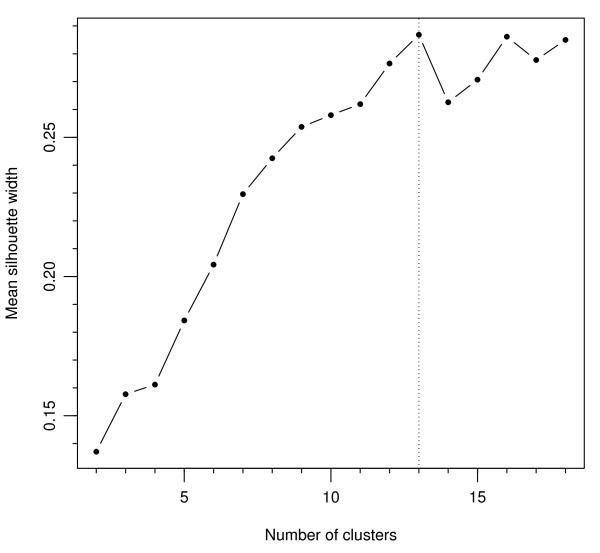
- The open sort produced a 13-cluster solution with the highest overall average silhouette value of 0.29; after removing low-silhouette constructs, 10 clusters had average silhouette values greater than 0.25, with an average of 0.47 across those 10 domains.
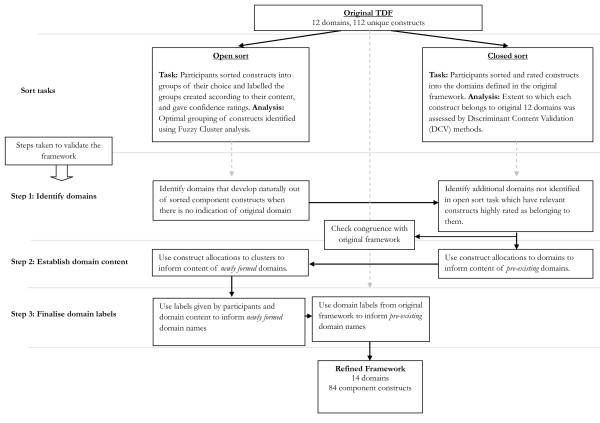
- Of the original 112 unique constructs, 34 were removed, leaving 84; “Nature of the Behaviours” was dropped because it was not represented by a single open-sort cluster and had only one construct assigned in the closed sort.
- Closed-sort congruence was >69% for Emotion, Skills, Motivation and Goals, Social/Professional Role and Identity, Beliefs about Capabilities, and Memory/Attention and Decision Processes, with fair ICCs (0.31–0.40); lower congruence was found for Knowledge, Environmental Context and Resources, and Social Influences (27%–50%), and for Behavioural Regulation, Nature of the Behaviours, and Beliefs about Consequences (<27%).
Methods
- Cross-sectional validation design. Eligible participants had a good understanding of behaviour change theory and were unaware of the original framework; 37 completed the tasks (18 closed sort, 19 open sort), mean age 36.54 years, 27 women and 10 men, mostly from the UK.
- Participants sorted 112 unique theoretical constructs after 12 duplicates were removed. The open sort asked participants to create and label their own groups (up to 24); the closed sort asked them to assign constructs to the original 12 labelled domains and rate confidence from 1 to 10.
- Analysis used Fuzzy Cluster Analysis with silhouette values for the open sort, Mantel correlations and Kendall’s W for sorting concordance, Discriminant Content Validation with one-sample t-tests against zero and Hochberg correction, and intraclass correlation coefficients for closed-sort agreement.
Limitations
- The paper states that two domains showed weak clustering: “Environmental Context and Resources” and “Behavioural Regulation.” It also states that the refined framework is limited to constructs identified in the original framework and does not cover all theories of behaviour change.
- Evident from the text: the sample was small and self-selected (37 completers; 18 closed, 19 open), mostly UK-based, and open-sort concordance was low (W = 0.22, p = 0.01). Several clusters had low silhouette values (<0.25) before construct removal, and “Knowledge” had no open-sort cluster, being retained based on closed-sort confidence ratings.
Model-written summary. Check it against the paper before relying on it.
Integrity signals
Registry
Cites
Statistics
Figures
Verification
Claims the paper makes
8 Valid · 2 Not valid · 7 Not checked · 74 Own results and interpretations
The cited sources support only part of this claim — read each source’s verdict below.
In the paper
“In a review of 235 guideline development and implementation studies, only 22.5% were judged to have used theories of behaviour change”
§ Validation of the theoretical domains framework for use in behaviour change and implementation research > Background
What the sources say
- Partly supportedcites [10] Davies P Walker AE Grimshaw J A systematic review of the use of theory in the design and implementation strategies and interpretation of the results of rigorous evaluations Implement Sci 2010 5 1 6 10.1186/1748-5908-5-1 20181130 PMC2832624 sourceExperimental — accuracy not yet measured
The Results report that 53 of 235 studies (22.5%) were judged to have employed theories of behaviour or behaviour change. The Abstract Methods identifies the studies as rigorous evaluations of guideline dissemination and implementation, not guideline development and implementation. (LLM, conf=0.86)
plain- Asserted: passes — The authors put it forward as true.
- Checkable: passes — It can be checked against evidence.
- Load-bearing: passes — The paper’s conclusions depend on it.
- Based: passes — The paper gives a reason why it holds.
- Partly supported
The cited sources support only part of this claim — read each source’s verdict below.
In the paper
“Research using the TDF has identified lack of knowledge as a potential barrier to a number of professional health behaviours, including hand hygiene [17], changing transfusion practice [19], and the adoption of tobacco use cessation counseling in dental practices [21].”
§ Validation of the theoretical domains framework for use in behaviour change and implementation research > Discussion
What the sources say
- Not checked — no full text of the sourcecites [17] Dyson J Lawton R Jackson C Cheater F Does the use of a theoretical approach tell us more about hand hygiene behaviour? The barriers and levers to hand hygiene J Infection Prev 2010 12 17 source
- Partly supportedcites [19] Francis J Tinmouth A Stanworth SJ Using theories of behaviour change to understand transfusion prescribing three clinical contexts in two countries: development work for and implementation trial Implement Sci 2009 4 70 10.1186/1748-5908-4-70 19852832 PMC2777847 sourceExperimental — accuracy not yet measured
The Abstract (Methods) and Methods (Interview study) say the planned TDF-based interviews will examine knowledge as a possible influence on transfusion decisions. The Background (UK and Canadian blood services) says factors hindering change in these clinical contexts had not yet been investigated. This paper therefore does not report that lack of knowledge was identified as a barrier to changing transfusion practice; the other behaviours have separate citations in the citing sentence. (LLM, conf=0.86)
- Partly supportedcites [21] Amemori M Korhonen T Kinnunen T Michie S Murtomaa H Enhancing implementation of tobacco use prevention and cessation counselling guideline among dental providers: a cluster randomised controlled trial Implement Sci 2011 6 13 10.1186/1748-5908-6-13 21320312 PMC3055178 sourceExperimental — accuracy not yet measured
The Background section lists knowledge as a domain in the theoretical-domains framework, and the Methods section says the authors planned to use that framework to assess difficulties with tobacco-cessation counselling in dental practices. But this paper does not report that it identified a lack of knowledge as a barrier; it says the assessment results will be reported elsewhere. This verdict addresses only the dental-practice clause attached to this citation. (LLM, conf=0.83)
hedgedstates an association- Asserted: passes — The authors put it forward as true.
- Checkable: passes — It can be checked against evidence.
- Load-bearing: passes — The paper’s conclusions depend on it.
- Based: passes — The paper gives a reason why it holds.
The cited sources that could be checked couldn’t confirm or dispute this claim.
In the paper
“Furthermore, where the domain has been used, in relation to changing transfusion practice, it was noted that when participants were asked questions relating to the ‘Nature of the Behaviours’ domain they often repeated answers that were previously given in response to questions relating to the ‘Behavioural Regulation’ domain [19]”
§ Validation of the theoretical domains framework for use in behaviour change and implementation research > Discussion
What the sources say
- Could not verifycites [19] Francis J Tinmouth A Stanworth SJ Using theories of behaviour change to understand transfusion prescribing three clinical contexts in two countries: development work for and implementation trial Implement Sci 2009 4 70 10.1186/1748-5908-4-70 19852832 PMC2777847 sourceExperimental — accuracy not yet measured
Split into 2 atoms — 0 confirmed, 0 partially supported, 0 disputed, 0 misattributed, 2 unverifiable. Expand the claim to see per-atom verdicts.
plainstates an association- Asserted: passes — The authors put it forward as true.
- Checkable: passes — It can be checked against evidence.
- Load-bearing: passes — The paper’s conclusions depend on it.
- Based: passes — The paper gives a reason why it holds.
- Could not verify
A result the paper reports from its own data — it cites no other source for it, so there is none to check. The quote shows it is in the paper.
In the paper
“This revealed that the majority of constructs (74/112) were strongly associated with only one cluster (i.e., showed membership values over 80% to one specific cluster, see Additional file 5).”
§ Validation of the theoretical domains framework for use in behaviour change and implementation research > Results > Sample size suitability and open sort pattern concordance
plainstates an association- Asserted: passes — The authors put it forward as true.
- Checkable: passes — It can be checked against evidence.
- Load-bearing: passes — The paper’s conclusions depend on it.
- Based: passes — The paper gives a reason why it holds.
A result the paper reports from its own data — it cites no other source for it, so there is none to check. The quote shows it is in the paper.
In the paper
“However, none of the multiple memberships indicated in the open sort results were replicated in the closed sort task where three different constructs, ‘Professional confidence’, ‘Beliefs’, and ‘Group identity’, were allocated to multiple domains.”
§ Validation of the theoretical domains framework for use in behaviour change and implementation research > Results > Sample size suitability and open sort pattern concordance
plain- Asserted: passes — The authors put it forward as true.
- Checkable: passes — It can be checked against evidence.
- Load-bearing: passes — The paper’s conclusions depend on it.
- Based: passes — The paper gives a reason why it holds.
35 more claims
Create a free account to see all 91 claims and to verify the 1 reference still open.
- Probably not a substantial claim. 29
- It may state two separate claims as one. 31
- The quote only partly states this claim. 2
Claims other papers make about this one
Each is checked against this paper’s own text: does it say what the citing paper says it does?
The source backs part of the claim, not all of it — or backs it for a different population, condition or comparison.
In the citing paper
“Theoretical Domains Framework represents another approach to developing determinant frameworks. It was constructed on the basis of a synthesis of 128 constructs related to behaviour change found in 33 behaviour change theories, including many social cognitive theories [10]. The constructs are sorted into 14 theoretical domains (originally 12 domains), e.g. knowledge, skills, intentions, goals,”
From Making sense of implementation theories, models and frameworks (2015) · cites this paper as [10]
Experimental — accuracy not yet measuredThe source backs part of the claim, not all of it — or backs it for a different population, condition or comparison.
In the citing paper
“Overarching change domains were chosen from the Theoretical Domains Framework (TDF) (68), an integrative framework that provides intervention developers with a possible selection of 14 change domains e.g., behavioral regulation and 84 change mechanisms e.g., self-monitoring from evidence-based behavior change theories.”
From Developing a mechanism-based therapy for acute psychiatric inpatients with psychotic symptoms: an Intervention Mapping approach (2023) · cites this paper as [68]
Experimental — accuracy not yet measuredThe source backs part of the claim, not all of it — or backs it for a different population, condition or comparison.
In the citing paper
“It has been increasingly acknowledged that consideration of patient acceptability using theories of behaviour change are key to effective evaluation, design and implementation of healthcare interventions [23–25] .”
From 'I didn't know what to expect': Exploring patient perspectives to identify targets for change to improve telephone-delivered psychological interventions (2020) · cites this paper as [25]
Experimental — accuracy not yet measuredThe source backs part of the claim, not all of it — or backs it for a different population, condition or comparison.
In the citing paper
“the TDF is a theoretical framework rather than a theory; it does not propose testable relationships between elements but provides a theoretical lens through which to view the cognitive, affective, social and environmental influences on behaviour.”
From A guide to using the Theoretical Domains Framework of behaviour change to investigate implementation problems (2017) · cites this paper as [16]
Experimental — accuracy not yet measuredThe source backs part of the claim, not all of it — or backs it for a different population, condition or comparison.
In the citing paper
“The central tenet of this model is that capability, opportunity and motivation interact to produce behaviour.”
From A guide to using the Theoretical Domains Framework of behaviour change to investigate implementation problems (2017) · cites this paper as [16]
Experimental — accuracy not yet measured
28 more claims about this paper
Create a free account to see every claim other papers make about this one.
Self-check
Percentages, sums and reported differences re-computed from the paper’s own numbers.
Each contradiction between two passages listed here was confirmed by an independent check.
Rated minor: it would not touch a result — a value no result rests on, a p-value that stays on the same side of the significance level, or a conflict that is clerical, resolved elsewhere in the paper, or outside its own findings.
In the paper
“This revealed that the majority of constructs (74/112) were strongly associated with only one cluster (i.e., showed membership values over 80% to one specific cluster, see Additional file 5). A further 32 constructs showed moderately high associations with one cluster (memberships values between 28% to 79%), with the remaining proportion of memberships for these constructs spread over other clusters. Only eight constructs”
§ Validation of the theoretical domains framework for use in behaviour change and implementation research > Results > Sample size suitability and open sort pattern concordance
Reported 112 · recomputed 114
Rated minor: it would not touch a result — a value no result rests on, a p-value that stays on the same side of the significance level, or a conflict that is clerical, resolved elsewhere in the paper, or outside its own findings.
In the paper
§ Validation of the theoretical domains framework for use in behaviour change and implementation research > Discussion
“Second, the ‘Nature of the Behaviours’ domain was dropped in the new framework, because its original component constructs were not assigned to the domain in the closed sort, and there was no cluster representing the ‘Nature of the Behaviours’ in the open sort.”
§ Validation of the theoretical domains framework for use in behaviour change and implementation research > Results > Sample size suitability and open sort pattern concordance
“‘Nature of the Behaviours’ only had one construct (Routine/automatic/habit) included from the original six constructs.”
Rated minor: it would not touch a result — a value no result rests on, a p-value that stays on the same side of the significance level, or a conflict that is clerical, resolved elsewhere in the paper, or outside its own findings.
In the paper
§ Validation of the theoretical domains framework for use in behaviour change and implementation research > Discussion
“Two domains showed weak clustering: ‘Environmental Context and Resources’ and ‘Behavioural Regulation’.”
§ Validation of the theoretical domains framework for use in behaviour change and implementation research > Results > Sample size suitability and open sort pattern concordance
“Three clusters remained with silhouettes below 0.25, ‘Environmental Context and Resources’, ‘Memory, Attention, and Decision Processes’, and ‘Behavioural Regulation’.”
Citations
Cites
The theory of planned behavior
Ajzen, I. (1991) · Organizational Behavior and Human Decision Processes · doi:10.1016/0749-5978(91)90020-t · Cited by 90,587
The Measurement of Observer Agreement for Categorical Data
Landis, J. R., & Koch, G. G. (1977) · Biometrics · doi:10.2307/2529310 · Cited by 81,148 · cited 1×
“61 as good to excellent agreement [44].”
Silhouettes: A graphical aid to the interpretation and validation of cluster analysis
Rousseeuw, P. J. (1987) · Journal of Computational and Applied Mathematics · doi:10.1016/0377-0427(87)90125-7 · Cited by 21,392 · cited 2×
“Silhouette values are calculated for each construct and range from +1, indicating strong association with a cluster and distance from neighboring clusters, through 0, indicating no distinct association with clusters, to −1, indicating that a construct is probably assigned to the wrong cluster and should be considered…”
BackgroundMethodMichie, S., van Stralen, M. M., & West, R. (2011) · Implementation Science · doi:10.1186/1748-5908-6-42 · Cited by 13,697 · cited 4×
“In designing interventions, the TDF fits well with the Behaviour Change Wheel (BCW) [46] referred to above.”
BackgroundMethodInfluentialSelf-citationFinding groups in data: an introduction to cluster analysis
(1991) · Choice Reviews Online · doi:10.5860/choice.28-4558 · Cited by 10,474
Finding Groups in Data: An Introduction to Cluster Analysis
Kaufman, L., & Rousseeuw, P. J. (1990) · Wiley Series in Probability and Statistics · doi:10.1002/9780470316801 · Cited by 7,344
Forming inferences about some intraclass correlation coefficients.
McGraw, K. O., & Wong, S. P. (1996) · Psychological Methods · doi:10.1037/1082-989x.1.1.30 · Cited by 6,903 · cited 1×
“To examine the agreement of these construct x domain ratings and construct assignment across participants, two-way intraclass correlation coefficient (ICC) measures of consistency were used within each domain [43].”
MethodDetermination and Quantification Of Content Validity
LYNN, M. R. (1986) · Nursing Research · doi:10.1097/00006199-198611000-00017 · Cited by 6,775 · cited 1×
“For contentvalidation tasks, such as those proposed in the closed sort task, two to 24 participants have been shown to be sufficient [29-32], with more than five participants reducing the influence of rater outliers [33].”
MethodReliability and Validity Assessment
Carmines, E., & Zeller, R. (1979) · doi:10.4135/9781412985642 · Cited by 5,884 · cited 1×
“For contentvalidation tasks, such as those proposed in the closed sort task, two to 24 participants have been shown to be sufficient [29-32], with more than five participants reducing the influence of rater outliers [33].”
MethodReliability and Validity Assessment
(2011) · The Encyclopedia of Political Science · doi:10.4135/9781608712434.n1341 · Cited by 5,040
Research works printed but not linked: 6
- Clinical Effectiveness Research Agenda Group (CERAG) An Implementation Research Agenda: A report prepared for the High Level Group on Clinical Effectiveness 2008 CERAG, London
- Paul CL A modified approach to a new card sorting methodology J Usability Stud 2008 4 7 30
- Taylor SE Health Psychology (5th Edition) 2003 MacGraw-Hill, Boston
- Oxford English Dictionary Online www.oed.com
- Ogden J Health Psychology: a textbook (2nd Edition) 2000 Open University Press, Buckingham
- Forsyth DR Group Dynamics (5th Edition) 2006 Wadsworth, Cengage Learning
Cited by
Items 801–900 of 4,858
Kennedy, S. G., Peralta, L. R., Lubans, D. R., Foweather, L., & Smith, J. J. (2019) · Physical Education and Sport Pedagogy · doi:10.1080/17408989.2019.1571182 · Cited by 38
How Implementation Science in Surgery Is Done
Smith, A. B., & Brooke, B. S. (2019) · JAMA Surgery · doi:10.1001/jamasurg.2019.1515 · Cited by 29
Smith, D., Sekhon, M., Francis, J. J., & Aitken, L. M. (2019) · Journal of Clinical Nursing · doi:10.1111/jocn.15005 · Cited by 29
Etherington, C., Usama, A., Patey, A. M., Trudel, C. M. J., Przybylak‐Brouillard, A., Presseau, J., Grimshaw, J., & Boet, S. (2019) · BMJ Open Quality · doi:10.1136/bmjoq-2019-000686 · Cited by 34
Tweed, L. M., Rogers, E. N., & Kinnafick, F. (2020) · Health Psychology Review · doi:10.1080/17437199.2020.1715812 · Cited by 36
Lalu, M. M., Foster, M., Presseau, J., Dowlatshahi, D. D., Castillo, G., Cardenas, A., Tam, W., Zlepnig, J., Timpson, D., Dong, Y., et al. (2020) · BMJ Open · doi:10.1136/bmjopen-2019-034354 · Cited by 29
Cheung, J. L. S., Paolucci, N., Price, C. M., Sykes, J. R., & Gupta, S. (2020) · Journal of the American Medical Informatics Association · doi:10.1093/jamia/ocaa019 · Cited by 32
What Is Slowing Us Down? Six Challenges to Accelerating Advances in Health Behavior Change
Rothman, A. J., & Sheeran, P. (2020) · Annals of Behavioral Medicine · doi:10.1093/abm/kaaa090 · Cited by 31
Michail, N., Torun, A. Ö., Parnell, R., & Wilkie, S. (2021) · International Journal of Environmental Research and Public Health · doi:10.3390/ijerph18094992 · Cited by 34
“Behaviour change frameworks taking built and social environment into consideration: (a) Theoretical Domains Framework (adapted by [54]); (b) COM-B model (adapted by [55]).”
BackgroundMethodInfluentialQureshi, S., Latif, A., Condon, L. A., Akyea, R. K., Kai, J., & Qureshi, N. (2021) · Pharmacogenomics · doi:10.2217/pgs-2021-0131 · Cited by 39
Presseau, J., Kasperavicius, D., Rodrigues, I. B., Braimoh, J., Chambers, A., Etherington, C., Giangregorio, L., Gibbs, J. C., Giguere, A. M. C., Graham, I. D., et al. (2022) · BMC Medical Research Methodology · doi:10.1186/s12874-022-01682-x · Cited by 35
“Abbreviations CFIR: Consolidated Framework for Implementation Research; KTA: Knowledge‑ to‑Action; KTIS: Knowledge Translation and Implementation Science; MTFs: models, theories, and frameworks; TDF: Theoretical Domains Framework.”
BackgroundInfluentialHooper, E., BROWN, L. J. E., Cross, H. L., Dawes, P., Leroi, I., & Armitage, C. J. (2022) · Journal of the American Medical Directors Association · doi:10.1016/j.jamda.2022.07.011 · Cited by 35
Aventin, Á., Lohan, M., O’Halloran, P. D., & Henderson, M. (2014) · Evaluation and Program Planning · doi:10.1016/j.evalprogplan.2014.11.003 · Cited by 29
“…consequences; other socio-cultural influences such as peer norms, gender norms and parental values and beliefs; beliefs about capabilities; and intentions (Ajzen & Madden, 1986; Cane, O’Connor, & Michie, 2012; Michie, Johnston, Abraham, Francis, & Eccles, 2013; Rivis, Sheeran, & Armitage, 2009).”
Anstey, K. J., Bahar‐Fuchs, A., Herath, P. M., Rebok, G. W., & Cherbuin, N. (2013) · Trials · doi:10.1186/1745-6215-14-60 · Cited by 33
“Consequently, a complex intervention based on an emerging theoretical and empirical model of health-related behavior change [13-15] has been developed for the current project.”
BackgroundLynch, E. A., Luker, J. A., Cadilhac, D. A.-M., Fryer, C. E., & Hillier, S. (2016) · Clinical Rehabilitation · doi:10.1177/0269215516658938 · Cited by 29
Khong, L. A. M., Berlach, R. G., Hill, K., & Hill, A. (2017) · European Journal of Ageing · doi:10.1007/s10433-016-0408-x · Cited by 37
Cottrell, E., Roddy, E., Rathod‐Mistry, T., Porcheret, M., & Foster, N. E. (2016) · BMC Family Practice · doi:10.1186/s12875-016-0570-4 · Cited by 29
Fisher, C. C., Cox, V. R. V., Gorman, S. K., Lesko, N., Holdsworth, K., Delaney, N. M., & McKenna, C. (2018) · American Journal of Infection Control · doi:10.1016/j.ajic.2018.05.020 · Cited by 34
Stewart, C. E., Power, E., McCluskey, A., & Kuys, S. S. (2019) · Disability and Rehabilitation · doi:10.1080/09638288.2019.1597178 · Cited by 35
It's more than just a referral: Development of an evidence-informed exercise and depression toolkit
Glowacki, K., Arbour‐Nicitopoulos, K. P., Burrows, M., Chesick, L., Heinemann, L., Irving, S., Lam, R. W. M., Macridis, S., Michalak, E. E., Scott, A., et al. (2019) · Mental health and physical activity · doi:10.1016/j.mhpa.2019.100297 · Cited by 41
“(Caspersen, Powell, & Christenson, 1985; Ravindran et al., 2016 (Cane et al., 2012; Cane et al., 2015; Glowacki et al., 2017; Michie et al., 2013) ( continued on next page ) understand the di ff erence between PA and exercise.”
Riemann-Lorenz, K., Wienert, J., Streber, R., Motl, R. W., Coote, S. B., & Heesen, C. (2019) · Disability and Rehabilitation · doi:10.1080/09638288.2019.1584253 · Cited by 36
Toomey, M., Gyawali, R., Stapleton, F. J., Ho, K. C., Keay, L. J., & Jalbert, I. (2021) · Ophthalmic and Physiological Optics · doi:10.1111/opo.12801 · Cited by 35
“The linked theoretical frameworks used assisted in analysis of the barriers and facilitators and identification of potential intervention functions that may be employed to improve eye care delivery.(16,20) This review also has some limitations.”
BackgroundMethodCompendium of dyadic intervention techniques (DITs) to change health behaviours: a systematic review
Maio, S. D., Villinger, K., Knoll, N., Scholz, U., Stadler, G., Gawrilow, C., & Berli, C. (2024) · Health Psychology Review · doi:10.1080/17437199.2024.2307534 · Cited by 31
“† Labels and de fi nitions originate from the TDF (Atkins et al., 2017; Cane et al.,2012 ). adopts a positive attitude to provide support to the other partner ( n = 6) or one partner identi fi es e ff ective support behaviours for the other partner ( n = 9).”
InfluentialBuckel, A., Afakye, K., Koka, E., Price, C., Kabali, E., & Caudell, M. A. (2024) · Frontiers in Veterinary Science · doi:10.3389/fvets.2024.1324233 · Cited by 42
“In this section, COM-B components are first presented, and TDF domains are then discussed under the corresponding COM-B component according to Cane (28), with two exceptions: The TDF domain “Memory, Attention, and Decision Processes” and “Beliefs about Consequences” were both grouped under “Reflective Motivation”.”
InfluentialHuijg, J. M., Dusseldorp, E., Gebhardt, W. A., Verheijden, M. W., van der Zouwe, N., Middelkoop, B. J., Duijzer, G., & Crone, M. R. (2014) · Physical Therapy · doi:10.2522/ptj.20130457 · Cited by 34
Alqubaisi, M., Tonna, A. P., Strath, A., & Stewart, D. C. (2016) · European Journal of Clinical Pharmacology · doi:10.1007/s00228-016-2054-9 · Cited by 43
Skoien, W., Page, K., Parsonage, W. A., Ashover, S., Milburn, T., & Cullen, L. (2016) · Implementation Science · doi:10.1186/s13012-016-0500-9 · Cited by 37
“[10], and three domains were excluded as their study did not demonstrate discriminant content validity of the items measuring those domains (Huijg ref ).”
BackgroundInfluentialBehaviour change and self-management interventions in persistent low back pain
Mansell, G., Hall, A. M., & Toomey, E. C. (2016) · Best Practice & Research Clinical Rheumatology · doi:10.1016/j.berh.2017.07.004 · Cited by 41
“The TDF consists of 14 domains, which make links between 36 theories of behaviour change and the constructs that are represented within them [32].”
BackgroundInfluentialAdvertising appeals and Malaysian culture norms: Scale content validation
Raza, S. H., Abu Bakar, H., & Mohamad, B. (2018) · Journal of Asian Pacific Communication · doi:10.1075/japc.00004.raz · Cited by 19
Earp, M. A., Sinnarajah, A., Kerba, M., Tang, P. A., Rodriguez-Arguello, J., King, S., Watanabe, S., & Simon, J. E. (2018) · Current Oncology · doi:10.3747/co.25.4021 · Cited by 32
Zoubi, F. A., Mayo, N. E., Rochette, A., & Thomas, A. (2018) · Implementation Science · doi:10.1186/s13012-018-0844-4 · Cited by 35
“Furthermore, these measures will ease the study of behaviour change mechanisms like those presumed in the Theoretical Domains Framework [74] or Theory of Planned Behaviour [75].”
BackgroundInfluentialUse of a maternal newborn audit and feedback system in Ontario: a collective case study
Reszel, J., Dunn, S., Sprague, A. E., Graham, I. D., Grimshaw, J., Peterson, W. E., Ockenden, H., Wilding, J., Quosdorf, A., Darling, E., et al. (2019) · BMJ Quality & Safety · doi:10.1136/bmjqs-2018-008354 · Cited by 31
“…uptake of evidence into practice, including the attributes of the innovation and the adopters and structural and social factors within the practice environment; 9–12 barriers to behaviour change; 13 implementation strategies 10 14 15 and the organisational receptiveness/readiness for change.”
Jolliffe, L. J., Hoffmann, T., & Lannin, N. A. (2019) · Australian Occupational Therapy Journal · doi:10.1111/1440-1630.12599 · Cited by 29
French cross-cultural adaptation of the Organizational Readiness for Implementing Change (ORIC)
Ruest, M., Léonard, G., Thomas, A., Desrosiers, J., & Guay, M. (2019) · BMC Health Services Research · doi:10.1186/s12913-019-4361-1 · Cited by 33
Håkonsen, S. J., Pedersen, P. U., Bygholm, A., Thisted, C. N., & Bjerrum, M. B. (2019) · BMC Health Services Research · doi:10.1186/s12913-019-4450-1 · Cited by 42
Barnett, A., Campbell, K. L., Mayr, H. L., Keating, S. E., Macdonald, G. A., & Hickman, I. J. (2020) · Journal of Telemedicine and Telecare · doi:10.1177/1357633x19900459 · Cited by 28
Stander, J., Grimmer, K. A., & Brink, Y. (2020) · Journal of Evaluation in Clinical Practice · doi:10.1111/jep.13397 · Cited by 32
Bechard, L., Beaton, D., McGilton, K. S., Tartaglia, M. C., & Black, S. E. (2020) · Applied Physiology, Nutrition, and Metabolism · doi:10.1139/apnm-2019-0730 · Cited by 38
Riley, I. L., Jackson, B., Crabtree, D., Riebl, S. K., Que, L. G., Pleasants, R. A., & Boulware, L. E. (2020) · The Journal of Allergy and Clinical Immunology In Practice · doi:10.1016/j.jaip.2020.08.021 · Cited by 27
Investigating the Adoption of Clinical Genomics in Australia. An Implementation Science Case Study
Best, S., Long, J. C., Gaff, C., Braithwaite, J., & Taylor, N. J. (2021) · Genes · doi:10.3390/genes12020317 · Cited by 32
“Table S3: TDF definitions in context [38].”
Hayes, D., Edbrooke-Childs, J. H., Town, R., Wolpert, M., & Midgley, N. (2021) · European Child & Adolescent Psychiatry · doi:10.1007/s00787-021-01782-x · Cited by 38
“How‐ ever, the Theoretical Domains Framework [58] should also be considered, as it incorporates a greater number of theories and may be used flexibly to change SDM behaviour through targeting capability, opportunity, and motivation [16].”
BackgroundClarkson, J., Ramsay, C. R., Ricketts, D., Banerjee, A., Deery, C., Lamont, T., Boyers, D., Marshman, Z., Goulão, B., Banister, K., et al. (2021) · BMC Oral Health · doi:10.1186/s12903-021-01637-6 · Cited by 43
“A topic guide based on the TDF has been developed by the research team.”
BackgroundInfluentialDevelopment of targeted, theory-informed interventions to improve bronchiolitis management
Haskell, L., Tavender, E. J., Wilson, C. L., O’Brien, S., Babl, F. E., Borland, M. L., Cotterell, E., Sheridan, N., Oakley, E. A., & Dalziel, S. R. (2021) · BMC Health Services Research · doi:10.1186/s12913-021-06724-6 · Cited by 29
“The Theoretical Domains Framework (TDF) was designed to incorporate a wide range of behaviour change theories for use in implementation research with subsequent validation [8, 9].”
BackgroundMethodInfluentialA codesigned fit‐for‐purpose implementation framework for aged care
Meyer, C., Ogrin, R., Golenko, X., Cyarto, E., Paine, K., Walsh, W., Hutchinson, A. M., & Lowthian, J. A. (2022) · Journal of Evaluation in Clinical Practice · doi:10.1111/jep.13660 · Cited by 29
“Interventions have greater success when underpinned by theory and, in response, the Theoretical Domains Framework (TDF) was developed to guide implementers in theory selection for the most suitable behaviour change techniques.(66) Mapping the barriers and enablers to intervention implementation using the Behaviour Cha…”
MethodBondaronek, P., Dicken, S. J., Jennings, S. S., Mallion, V., & Stefanidou, C. (2022) · JMIR Human Factors · doi:10.2196/35070 · Cited by 37
“physical activity; capability, opportunity, and motivation—behavior; COM-B; Theoretical Domains Framework; TDF; primary care professionals; health care professionals; physical activity advice”
MethodInfluentialFlynn, R., Stevens, B., Bains, A., Kennedy, M., & Scott, S. D. (2022) · Systematic Reviews · doi:10.1186/s13643-022-02093-1 · Cited by 39
“One study that used the NHS SM [84] as its primary evaluation approach also drew upon the Theoretical Domains Framework [86] to develop their interview guide [58].”
MethodFarrell, S., Benson, T., McKernan, C., Regan, Á., Burrell, A., & Dean, M. (2023) · Research in Veterinary Science · doi:10.1016/j.rvsc.2023.01.019 · Cited by 40
Nisselle, A. E., King, E., Terrill, B., Davey, B., McClaren, B., Dunlop, K. L. A., Graves, D., Metcalfe, S. A., & Gaff, C. (2023) · npj Genomic Medicine · doi:10.1038/s41525-023-00360-1 · Cited by 34
“The behavior was de fi ned as engagement in genomic testing practices, with con fi dence to practice related to motivation to perform the behavior 27 .”
An ontology of mechanisms of action in behaviour change interventions
Schenk, P. M., Wright, A. J., West, R., Hastings, J., Lorencatto, F., Moore, C., Hayes, E., Schneider, V., Howes, E., & Michie, S. (2023) · Wellcome Open Research · doi:10.12688/wellcomeopenres.19489.1 · Cited by 33
Self-citationSkinner, E. H., Williams, C., & Haines, T. P. (2015) · Australian Health Review · doi:10.1071/ah14212 · Cited by 35
Connell, L., McMahon, N. E., Tyson, S. F., Watkins, C. L., & Eng, J. J. (2016) · BMC Health Services Research · doi:10.1186/s12913-016-1793-8 · Cited by 33
“Interview transcripts were coded by LC and NM using predetermined codes based on the Theoretical Domains Framework (TDF) [16].”
MethodHumphries, B., Collins, S., Guillaumie, L., Lemieux, J., Dionne, A. R., Provencher, L., Moisan, J., & Lauzier, S. (2018) · Pharmacy · doi:10.3390/pharmacy6020053 · Cited by 35
A theory-informed systematic review of clinicians’ genetic testing practices
Paul, J. L., Leslie, H., Trainer, A. H., & Gaff, C. (2018) · European Journal of Human Genetics · doi:10.1038/s41431-018-0190-7 · Cited by 33
Jeggle-Engbert, L.-M., Baker, S. R., & Schwendicke, F. (2018) · Journal of Dentistry · doi:10.1016/j.jdent.2018.12.010 · Cited by 32
Nakku-Joloba, E., Kiguli, J., Nalwadda, C. K., Twimukye, A., Kimeze, J., Parkes-Ratanshi, R. M., Birungi, M., Kyenkya, J., Byamugisha, J. K., Gaydos, C. A., et al. (2019) · BMC Infectious Diseases · doi:10.1186/s12879-019-3695-y · Cited by 39
“Future studies could employ the COM-B theoretical domains framework [18] to better identify barriers and facilitators of uptake of STD notification services.”
Sayner, A. M., Tang, C. Y., Toohey, K. L., Mendoza, C., & Nahon, I. (2022) · Physical Therapy · doi:10.1093/ptj/pzac106 · Cited by 29
Xu, P., Jin, Y. H., Guo, P., Xu, X., Wang, X., Zhang, W., Mao, M., & Feng, S. (2023) · BMC Pregnancy and Childbirth · doi:10.1186/s12884-023-05633-2 · Cited by 38
“, "Beliefs about consequences" and "Optimism") are difficult to distinguish [58], previous research has noted that the optimism domain focuses on general disposition [22].”
Hall, P., Lawrence, M., Blake, C. M., & Lennon, O. C. (2023) · Cerebrovascular Diseases · doi:10.1159/000531138 · Cited by 42
“The second phase (reported separately) synthesises primary studies identi-fi ed across reviews by secondary prevention outcomes and the underpinning theoretical approach using the Theoretical Domains Framework [24].”
BackgroundMethodLienhart, G., Masson, E., Farge, P., Schott, A., Thivichon‐Prince, B., & Chanelière, M. (2023) · BMC Oral Health · doi:10.1186/s12903-023-03458-1 · Cited by 48
Wolfe, D. M., Hutton, B., Corace, K., Chaiyakunapruk, N., Ngorsuraches, S., Nochaiwong, S., Presseau, J., Grant, A., Dowson, M., Palumbo, A., et al. (2023) · Frontiers in Public Health · doi:10.3389/fpubh.2023.1296239 · Cited by 37
“…that environmental factors, such as service-level barriers, can decrease engagement in treatment, even when the necessary positive attitude toward the behavior (i.e., engagement in treatment), social factors, and the skills and capacity required to perform the behavior are all present (27, 28).”
BackgroundAn ontology of mechanisms of action in behaviour change interventions
Schenk, P. M., Wright, A. J., West, R., Hastings, J., Lorencatto, F., Moore, C., Hayes, E., Schneider, V., Howes, E., & Michie, S. (2024) · Wellcome Open Research · doi:10.12688/wellcomeopenres.19489.2 · Cited by 43
“…MoA Ontology aligned with the 26 MoA groups of the Theories and Techniques (TaT) Tool (Connell et al. , 2019; Johnston et al. , 2018; Michie et al. , 2018) which included the widely used 14 MoAs of the Theoretical Domains Framework (Cane et al. , 2012; Dyson & Cowdell, 2021; Michie et al. , 2005).”
BackgroundMethodSelf-citationPauwels, I., Versporten, A., Ashiru-Oredope, D. A. I., Costa, S. F., Maldonado, H., Porto, A. P. M., Mehtar, S., Goossens, H., Anthierens, S., & Vlieghe, E. (2025) · Antimicrobial Resistance and Infection Control · doi:10.1186/s13756-025-01541-6 · Cited by 43
Curtis, K. A., Van, C., Lam, M. K., Asha, S. E., Unsworth, A., Clements, A., & Atkins, L. (2017) · Journal of Clinical Nursing · doi:10.1111/jocn.13782 · Cited by 35
“To identify and categorise any implementation problems, the survey (see Appendix S1) was designed and mapped to the Theoretical Domains Framework (TDF) (Cane, O’Connor, & Michie, 2012).”
MethodInfluentialKick.it: The development of an evidence-based smoking cessation smartphone app
van Agteren, J. E. M., Lawn, S., Bonevski, B., & Smith, B. J. (2018) · Translational Behavioral Medicine · doi:10.1093/tbm/ibx031 · Cited by 27
Griffiths, A., White, C. M., Thain, P. K., & Bearne, L. (2018) · Rheumatology International · doi:10.1007/s00296-018-4010-8 · Cited by 29
“However, changing behaviour is complex and requires the implementation of evidencebased principles [27].”
BackgroundYoong, S. L., Grady, A., Seward, K., Finch, M., Wiggers, J., Lecathelinais, C., Wedesweiler, T., & Wolfenden, L. (2019) · American Journal of Health Promotion · doi:10.1177/0890117119837461 · Cited by 32
Nelligan, R. K., Hinman, R. S., Kasza, J., & Bennell, K. L. (2019) · BMC Musculoskeletal Disorders · doi:10.1186/s12891-019-2714-x · Cited by 31
Coaches’ Mental Health Literacy and Role Perceptions for Supporting Young People’s Mental Health
Duffy, J., Rooney, B., & Matthews, J. J. (2019) · Journal of Applied Sport Psychology · doi:10.1080/10413200.2019.1646840 · Cited by 35
Hargreaves, E. A., Hayr, K. T., Jenkins, M., Perry, T., & Peddie, M. C. (2020) · Journal of Occupational and Environmental Medicine · doi:10.1097/jom.0000000000001832 · Cited by 32
Naseri, C., McPhail, S., Haines, T. P., Morris, M. E., Shorr, R. I., Etherton‐Beer, C., Netto, J., Flicker, L. A., Bulsara, M. K., Lee, D. A., et al. (2020) · Health & Social Care in the Community · doi:10.1111/hsc.12996 · Cited by 38
Katenga-Kaunda, L. Z., Iversen, P. O., Holmboe‐Ottesen, G., Fjeld, H., Mdala, I., & Kamudoni, P. R. (2020) · Public Health Nutrition · doi:10.1017/s1368980020000294 · Cited by 33
“Counselling and education have the capacity to change individual attitudes through manipulation of their cognitive processes(26,36) and can equip the women with better understanding of the importance of an adequate diet in pregnancy and help to stimulate continued efforts to sustain a diverse diet(37).”
Clarke, N., Kearney, P. M., Gallagher, P., McNamara, D. A., O’Morain, C. A., & Sharp, L. (2021) · Preventive Medicine · doi:10.1016/j.ypmed.2021.106430 · Cited by 37
Rhodes, A., Smith, A. D., Llewellyn, C. H., & Croker, H. A. (2021) · BMC Pregnancy and Childbirth · doi:10.1186/s12884-021-03917-z · Cited by 38
“The TDF provides an additional layer of granularity to COM-B, tying it to 14 domains of key constructs from behaviour change theories(20).”
BackgroundMohammed, E., Khanal, S., Jalal, Z., Cheema, E. U., Abutaleb, M., & Paudyal, V. (2021) · Journal of Pharmaceutical Policy and Practice · doi:10.1186/s40545-021-00307-w · Cited by 27
Shrubsole, K., Lin, T., Burton, C., Scott, J., & Finch, E. (2021) · International Journal of Language & Communication Disorders · doi:10.1111/1460-6984.12618 · Cited by 32
Sivrikaya, E. C., Yılmaz, O., & SİVRİKAYA, P. (2021) · Scandinavian Journal of Psychology · doi:10.1111/sjop.12769 · Cited by 38
Aspirin non-adherence in pregnant women at risk of preeclampsia (ANA): a qualitative study
Vinogradov, R., Smith, V. J., Robson, S. C., & Araújo‐Soares, V. (2021) · Health Psychology and Behavioral Medicine · doi:10.1080/21642850.2021.1951273 · Cited by 31
“The TDF was developed as an overarching framework that integrates behaviour enactment and change theories under a series of domains.”
MethodInfluentialGondi, S., Ellis, S. D., Gupta, M., Ellerbeck, E. F., Richter, K. P., Burns, J. M., & Gupta, A. (2021) · PLoS ONE · doi:10.1371/journal.pone.0255578 · Cited by 32
“The responses were then organized within the three major behavioral determinants based on the BCW [27, 28].”
BackgroundMethodInfluentialAntimicrobial stewardship in Australia: the role of qualitative research in programme development
Thursky, K., Hardefeldt, L. Y., Rajkhowa, A., Ierano, C., Bishop, J. L., Hawes, L. A., Biezen, R., Saha, S. K., Dowson, L., Bailey, K. E., et al. (2021) · JAC-Antimicrobial Resistance · doi:10.1093/jacamr/dlab166 · Cited by 32
Pike, A. E., Patey, A. M., Lawrence, R., Aubrey‐Bassler, K., Grimshaw, J., Mortazhejri, S., Dowling, S. K., Jasaui, Y., Bhatia, S., Duquettes, D., et al. (2022) · BMC Family Practice · doi:10.1186/s12875-022-01751-6 · Cited by 31
“These include the Behaviour Change Wheel—a systematic guide for designing BCIs and the Behaviour Change Technique Taxonomy – an extensive list of 93 techniques, divided into 16 categories that will form the active components of an intervention [27, 45, 46].”
MethodMcKeon, G., Mastrogiovanni, C., Teychenne, M. J., & Rosenbaum, S. (2022) · International Journal of Environmental Research and Public Health · doi:10.3390/ijerph191912312 · Cited by 30
Chung, O. S., Dowling, N. L., Brown, C., Robinson, T., Johnson, A. M., Ng, C. H., Yücel, M., & Segrave, R. A. (2022) · Administration and Policy in Mental Health and Mental Health Services Research · doi:10.1007/s10488-022-01235-w · Cited by 28
“The TDF synthesises 33 psychological theories and 128 theoretical constructs identified by implementation as most relevant to implementation problems (Cane et al., 2012; Michie et al., 2005).”
BackgroundBarriers and enablers to translating gestational diabetes guidelines into practice
Wilkinson, S. A., McCray, S. J., Beckmann, M. M., Parry, A., & McIntyre, D. H. (2014) · Practical Diabetes · doi:10.1002/pdi.1833 · Cited by 27
Advance Care Planning: Identifying System-Specific Barriers and Facilitators
Hagen, N. A., Howlett, J. G., Sharma, N., Biondo, P. D., Holroyd-Leduc, J. M., Fassbender, K., & Simon, J. E. (2015) · Current Oncology · doi:10.3747/co.22.2488 · Cited by 33
van Peet, P. G., Drewes, Y. M., Gussekloo, J., & de Ruijter, W. (2015) · British Journal of General Practice · doi:10.3399/bjgp15x687373 · Cited by 33
Seguin, M., Dodds, C., Mugweni, E., McDaid, L. M., Flowers, P., Wayal, S., Zomer, E., Weatherburn, P., Fakoya, I., Hartney, T., et al. (2018) · Health Technology Assessment · doi:10.3310/hta22220 · Cited by 34
“Behavioural regulation Anything aimed at managing or changing objectively observed or measured actions Adapted from Cane et al.(35) This article is published under license to BioMed Central Ltd.”
BackgroundYamada, J., Potestio, M. L., Cave, A., Sharpe, H. M., Johnson, D. W., Patey, A. M., Presseau, J., & Grimshaw, J. (2017) · Journal of Asthma · doi:10.1080/02770903.2017.1408820 · Cited by 31
“Modifiable barriers and enablers from the key TDF domains in this study will be mapped to effective behavior change techniques using a behavior change taxonomy (36,39).”
BackgroundMethodInfluentialKettlewell, J., Phillips, J. S., Radford, K., & das Nair, R. (2018) · BMC Medical Informatics and Decision Making · doi:10.1186/s12911-018-0611-0 · Cited by 32
“The BCW used alongside TDF may provide better understanding of the nature of the intervention, and identify domains that could influence behaviour change [45, 50].”
MethodMurphy, A. L., Gardner, D. M., & Jacobs, L. M. (2018) · BMC Psychiatry · doi:10.1186/s12888-018-1746-3 · Cited by 35
“Informed by the BCW, the core components of the Bloom Program, such as conducting community outreach and forming linkages with community mental health and addictions services and supports, and collaborating with other health care providers such as family physicians and psychiatrists, were intended to support pharmacis…”
BackgroundMethodInfluentialShrubsole, K., Worrall, L. E., & Power, E. (2018) · Aphasiology · doi:10.1080/02687038.2018.1510112 · Cited by 30
A mixed method study evaluating the integration of pregnancy weight gain charts into antenatal care
de Jersey, S., Guthrie, T. M., Tyler, J., Ling, W. Y., Powlesland, H., Byrne, C., & New, K. (2018) · Maternal and Child Nutrition · doi:10.1111/mcn.12750 · Cited by 28
Chater, A., Williams, J. H., & Courtenay, M. (2019) · Journal of Advanced Nursing · doi:10.1111/jan.14170 · Cited by 27
Brandt, L., Beima‐Sofie, K., Hamunime, N., Shepard, M., Ferris, L., Ingo, P., John-Stewart, G. C., & O’Malley, G. (2015) · AIDS · doi:10.1097/qad.0000000000000667 · Cited by 31
Price, L., Gozdzielewska, L., Hendry, K., McFarland, A., & Reilly, J. (2023) · The Lancet Infectious Diseases · doi:10.1016/s1473-3099(23)00049-x · Cited by 36
Hayes, D., Olsson, A., Begum, S., Bertotti, M., Jarvis-Beesley, P., & Stapley, E. (2023) · European Child & Adolescent Psychiatry · doi:10.1007/s00787-023-02257-x · Cited by 28
“The lead and senior researchers were experienced in either qualitative methods, social prescribing and/or the TDF [24, 25] and research assistants were trained in qualitative methods and data analysis and had experience shadowing or conducting interviews.”
BackgroundMethodInfluentialKamarova, S., Gagné, M., Holtrop, D., & Dunlop, P. D. (2024) · Journal of Organizational Behavior · doi:10.1002/job.2832 · Cited by 64
“Removing anything that makes the change aversive is important to avoid discouraging engagement in the new behaviors (i.e., barriers; Cane et al., 2012; Carey et al., 2019; Reay et al., 2006; Soenen et al., 2017; Teixeira et al., 2020).”
Liu, S., Hu, Y., Pfaff, H., Lei, X., Qi, Z., & Feng, X. (2025) · BMC Public Health · doi:10.1186/s12889-025-21912-3 · Cited by 45
“The application of TDF in medical research has demonstrated its value in systematically identifying determinants of complex behaviour [19] and informing the design of targeted interventions aimed at promoting desired behavioural changes [20].”
Ball, H., Eisner, E., Nicholas, J., Wilson, P. M., & Bucci, S. (2025) · BMC Public Health · doi:10.1186/s12889-025-22189-2 · Cited by 29
“…has led to the development of over 150 different TMFs [69] and researchers have high-lighted difficulties in selecting the most appropriate TMF for a given research project [70, 71], meaning TMF choice is often based on convenience or prior familiarity rather than systematic consideration [32].”
Assessing Connections Between Behavior Change Theories Using Network Analysis
Gainforth, H. L., West, R., & Michie, S. (2015) · Annals of Behavioral Medicine · doi:10.1007/s12160-015-9710-7 · Cited by 32
“Two such frameworks are the COM-B model and the Theoretical Domains Framework (TDF) (31-34).”
BackgroundMethodInfluentialSelf-citationLi, A. H., Garg, A. X., Prakash, V., Grimshaw, J., Taljaard, M., Mitchell, J., Matti, D., Linklater, S., Naylor, K. L., Dixon, S. N., et al. (2017) · Trials · doi:10.1186/s13063-017-2333-5 · Cited by 30
“The interview guide was based on the Theoretical Domains Framework [15].”
MethodInfluential
Metadata
- Authors
- Cane, J., O’Connor, D., & Michie, S.
- Affiliations
- University of Kent (GB)
- Monash University (AU)
- University College London (GB)
- Corresponding author
- Michie, Susan
- Venue
- Implementation Science
- Published
- 2012-04-24
- Volume
- 7
- Issue
- 1
- Pages
- 37-37
- ISSN
- 1748-5908 (ISSN-L)
- PMC
- PMC3483008
- OpenAlex
- W2077109464
- Semantic Scholar
- 6d95ed679dcdd72dec679184e21654702ce8f33d
- Cited by
- 4,888
- References
- 61
- Citations by year
- 2026: 531 · 2025: 566 · 2024: 568 · 2023: 504 · 2022: 575 · 2021: 597 · 2020: 496 · 2019: 294 · 2018: 237 · 2017: 167 · 2016: 135 · 2015: 108 · 2014: 62 · 2013: 39 · 2012: 6
- FWCI
- 122.09
- Type
- journal article
- Language
- en
- Open access
- gold
- doi.org
- Licence
- cc-by
- creativecommons.org/licenses/by/2.0/ (tdm)
- creativecommons.org/licenses/by/2.0/ (vor)
- Locations
- Implementation Science (publishedVersion, cc-by)
- Europe PMC (PubMed Central) (publishedVersion, cc-by)
- PubMed Central (publishedVersion, cc-by)
- PubMed (publishedVersion)
- Create (Canterbury Christ Church University) (acceptedVersion)
- Kent Academic Repository (University of Kent) (acceptedVersion)
- DOAJ (DOAJ: Directory of Open Access Journals) (submittedVersion)
- UCL Discovery (University College London) (submittedVersion)
- Funders
- University College London
- University of Aberdeen
- Medical Research Council
- National Health and Medical Research Council
- Topics
- Health Sciences › Health Professions › General Health Professions › Health Policy Implementation Science
- Social Sciences › Psychology › Applied Psychology › Behavioral Health and Interventions
- Health Sciences › Nursing › Research and Theory › Health Education and Validation
- Keywords
- Theoretical Domains Framework, behaviour change interventions, implementation research, theoretical constructs, construct validity, fuzzy clustering, health professionals' practices, intervention development, behavioral regulation, social influence
- MeSH terms
- Adult, Behavior Therapy, Cross-Sectional Studies, Female, Humans, Male, Middle Aged, Reproducibility of Results, Behavior Control, Young Adult
About these checks
Registry, retraction, Cites and statistics results are computed, not judged, with one exception: a printed reference that no index lists is read once by a model before it counts as a citation error. Claims are extracted by a model and kept only when their quote appears verbatim in the text; each cited source is then checked, with a model’s help, for whether it says what the claim relies on. Those verdicts can be wrong — read the claim’s quote and the cited source before relying on one.
The claim verdicts this report counts are experimental: their accuracy is not yet measured.
A language model drew the claims from the paper on 2026-10-10, under version 3 of the claim definition (model deepseek-v4.1-flash, prompt extract-v3).
A second model labelled each claim on 2026-10-10 (model jev-1.13-20260917, definition revision gold-guideline-v0.2).
Cited sources are checked with a language model’s help (gpt-6-sol).
Statistics and arithmetic are recomputed, not judged.
Confidence bands are shown only for fields calibrated on our annotated test set. None is calibrated yet, so no band is shown.
What counts as a claim ›How we measure confidence ›How we check this ›
Are you an author, or do you see a problem with this page? Request a review
Data sources
Bibliographic data: Semantic Scholar, OpenAlex, Crossref.
Contains information from the Semantic Scholar Academic Graph Datasets, made available under the ODC Attribution License (ODC-BY 1.0).
Semantic Scholar’s data is described in: Kinney, R., et al. (2023). The Semantic Scholar Open Data Platform. arXiv:2301.10140.
