

The DOI matches its Crossref record; 16 of the 16 references it cites were found in a registry or an index.
Making change last: applying the NHS institute for innovation and improvement sustainability model to healthcare improvement
Open accessAbstract
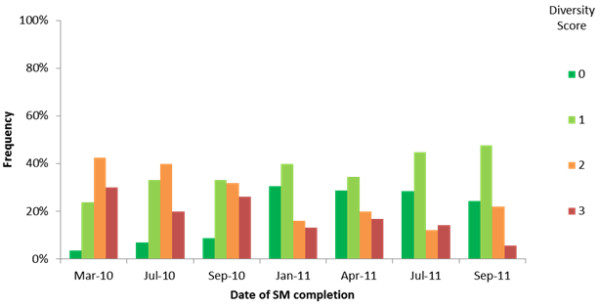
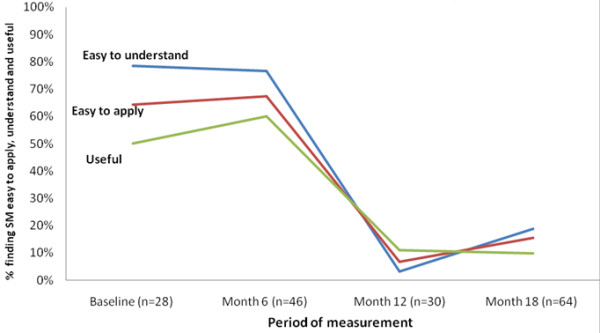
The implementation of evidence-based treatments to deliver high-quality care is essential to meet the healthcare demands of aging populations. However, the sustainable application of recommended practice is difficult to achieve and variable outcomes well recognised. The NHS Institute for Innovation and Improvement Sustainability Model (SM) was designed to help healthcare teams recognise determinants of sustainability and take action to embed new practice in routine care. This article describes a formative evaluation of the application of the SM by the National Institute for Health Research Collaboration for Leadership in Applied Health Research and Care for Northwest London (CLAHRC NWL). Data from project teams' responses to the SM and formal reviews was used to assess acceptability of the SM and the extent to which it prompted teams to take action. Projects were classified as 'engaged,' 'partially engaged' and 'non-engaged.' Quarterly survey feedback data was used to explore reasons for variation in engagement. Score patterns were compared against formal review data and a 'diversity of opinion' measure was derived to assess response variance over time. Of the 19 teams, six were categorized as 'engaged,' six 'partially engaged,' and seven as 'non-engaged.' Twelve teams found the model acceptable to some extent. Diversity of opinion reduced over time. A minority of teams used the SM consistently to take action to promote sustainability but for the majority SM use was sporadic. Feedback from some team members indicates difficulty in understanding and applying the model and negative views regarding its usefulness. The SM is an important attempt to enable teams to systematically consider determinants of sustainability, provide timely data to assess progress, and prompt action to create conditions for sustained practice. Tools such as these need to be tested in healthcare settings to assess strengths and weaknesses and findings disseminated to aid development. This study indicates the SM provides a potentially useful approach to measuring teams' views on the likelihood of sustainability and prompting action. Securing engagement of teams with the SM was challenging and redesign of elements may need to be considered. Capacity building and facilitation appears necessary for teams to effectively deploy the SM.
Overview
The claims and statistics of this paper haven’t been checked yet.
Run the check — free, no account needed. It reads the open-access text and checks the sources it cites.
Integrity signals
Registry
Cites
Statistics
Figures
Verification
Claims the paper makes
The claims and statistics of this paper haven’t been checked yet.
Run the check — free, no account needed. It reads the open-access text and checks the sources it cites.
Claims other papers make about this one
Each is checked against this paper’s own text: does it say what the citing paper says it does?
The cited source says what the claim attributes to it.
In the citing paper
“The fifth most-cited article is entitled “Making change last: applying the NHS institute for innovation and improvement sustainability model to healthcare improvement” [87], and was published in Implementation Science in 2013 by a UK research team.”
From Towards Green and Sustainable Healthcare: A Literature Review and Research Agenda for Green Leadership in the Healthcare Sector (2023) · cites this paper as [87]
In the citing paper
“Effectively engaging staff, and in our case, clients, establishes a sense of empowerment that they are a part of the change process, enhances staff motivation to participate in the change process, and leads to more actionable steps by staff to promote sustainment of the change [40,44-48].”
From Successful Organizational Strategies to Sustain Use of A-CHESS: A Mobile Intervention for Individuals With Alcohol Use Disorders (2015) · cites this paper as [45]
Self-check
Percentages, sums and reported differences re-computed from the paper’s own numbers.
The self-check needs the paper’s full text.
Citations
Cites
Levitt, B., & March, J. G. (1988) · Annual Review of Sociology · doi:10.1146/annurev.so.14.080188.001535 · Cited by 6,669
The Improvement Guide: A Practical Approach to Enhancing Organizational Performance
(1997) · Quality Management Journal · doi:10.1080/10686967.1998.11919154 · Cited by 2,878
Wiltsey Stirman, S., Kimberly, J., Cook, N., Calloway, A., Castro, F., & Charns, M. (2012) · Implementation Science · doi:10.1186/1748-5908-7-17 · Cited by 1,355
Shediac-Rizkallah, M. C., & Bone, L. R. (1998) · Health Education Research · doi:10.1093/her/13.1.87 · Cited by 1,129
An Agenda for Research on the Sustainability of Public Health Programs
Scheirer, M. A., & Dearing, J. W. (2011) · American Journal of Public Health · doi:10.2105/ajph.2011.300193 · Cited by 775
Research methods used in developing and applying quality indicators in primary care
Campbell, S., Braspenning, J., Hutchinson, A., & Marshall, M. (2003) · BMJ · doi:10.1136/bmj.326.7393.816 · Cited by 735
Is Sustainability Possible? A Review and Commentary on Empirical Studies of Program Sustainability
Scheirer, M. A. (2005) · American Journal of Evaluation · doi:10.1177/1098214005278752 · Cited by 710
Making public health programs last: conceptualizing sustainability
Pluye, P., Potvin, L., & Denis, J.-L. (2004) · Evaluation and Program Planning · doi:10.1016/j.evalprogplan.2004.01.001 · Cited by 374
Garside, P. (1998) · PubMed · Cited by 143
Redesigning Work Processes in Health Care: Lessons from the National Health Service
Ham, C., Kipping, R., & McLeod, H. (2003) · Milbank Quarterly · doi:10.1111/1468-0009.t01-3-00062 · Cited by 118
Research works printed but not linked: 2
- Department of Health: Innovation, health and wealth: accelerating adoption and diffusion in the NHS department of health. 2011, Department of Health
- Smith R: Cuts being made to frontline NHS services survey reveals. 2010, London: The Daily Telegraph
Cited by
Sorted by citations
The Sustainability of Evidence-Based Interventions and Practices in Public Health and Health Care
Shelton, R. C., Cooper, B. R., & Stirman, S. W. (2018) · Annual Review of Public Health · doi:10.1146/annurev-publhealth-040617-014731 · Cited by 806
Developing a comprehensive definition of sustainability
Moore, J. E., Mascarenhas, A., Bain, J., & Straus, S. E. (2017) · Implementation Science · doi:10.1186/s13012-017-0637-1 · Cited by 630
Evidence-based intervention sustainability strategies: a systematic review
Hailemariam, M., Bustos, T., Montgomery, B., Barajas, R., Evans, L. B., & Drahota, A. (2019) · Implementation Science · doi:10.1186/s13012-019-0910-6 · Cited by 398
Simple rules for evidence translation in complex systems: A qualitative study
Reed, J. E., Howe, C., Doyle, C., & Bell, D. (2018) · BMC Medicine · doi:10.1186/s12916-018-1076-9 · Cited by 181
Self-citationTricco, A. C., Ashoor, H. M., Cardoso, R., MacDonald, H. R., Cogo, E., Kastner, M., Perrier, L., McKibbon, A., Grimshaw, J., & Straus, S. E. (2015) · Implementation Science · doi:10.1186/s13012-016-0421-7 · Cited by 154
Côté-Boileau, É., Denis, J.-L., Callery, B., & Sabean, M. (2019) · Health Research Policy and Systems · doi:10.1186/s12961-019-0482-6 · Cited by 133
Berniak-Woźny, J., & Rataj, M. (2023) · International Journal of Environmental Research and Public Health · doi:10.3390/ijerph20020908 · Cited by 129
Pronovost, P. J., Watson, S. R., Goeschel, C. A., Hyzy, R. C., & Berenholtz, S. M. (2015) · American Journal of Medical Quality · doi:10.1177/1062860614568647 · Cited by 113
Reed, J. E., McNicholas, C., Woodcock, T. M., Issen, L., & Bell, D. (2014) · BMJ Quality & Safety · doi:10.1136/bmjqs-2014-003103 · Cited by 102
Self-citationFlynn, R., Rotter, T., Hartfield, D. S., Newton, A. S., & Scott, S. D. (2019) · BMC Health Services Research · doi:10.1186/s12913-019-4744-3 · Cited by 103
Penno, L. N., Davies, B., Graham, I. D., Backman, C., MacDonald, I., Bain, J., Johnson, A. M., Moore, J. E., & Squires, J. E. (2019) · Implementation Science · doi:10.1186/s13012-019-0952-9 · Cited by 98
Making change last? Exploring the value of sustainability approaches in healthcare: a scoping review
Lennox, L., Linwood-Amor, A., Maher, L., & Reed, J. E. (2020) · Health Research Policy and Systems · doi:10.1186/s12961-020-00601-0 · Cited by 101
Ford II, J. H., Alagoz, E., Dinauer, S., Johnson, K. A., Pe-Romashko, K., & Gustafson, D. H. (2015) · Journal of Medical Internet Research · doi:10.2196/jmir.3965 · Cited by 73
Emergence of Sustainability Based Approaches in Healthcare: Expanding Research and Practice
Marimuthu, M., & Paulose, H. (2016) · Procedia - Social and Behavioral Sciences · doi:10.1016/j.sbspro.2016.05.437 · Cited by 78
Ament, S. M. C., Gillissen, F., Moser, A., Maessen, J. M. C., Dirksen, C. D., MEYENFELDT, M. F. V., & van der Weijden, T. (2014) · BMC Health Services Research · doi:10.1186/s12913-014-0641-y · Cited by 76
Sayer, N. A., Rosen, C. S., Bernardy, N. C., Cook, J. M., Orazem, R. J., Chard, K. M., Mohr, D. C., Kehle-Forbes, S. M., Eftekhari, A., Crowley, J., et al. (2017) · Administration and Policy in Mental Health and Mental Health Services Research · doi:10.1007/s10488-017-0809-y · Cited by 68
Ament, S. M. C., Gillissen, F., Moser, A., Maessen, J. M. C., Dirksen, C. D., MEYENFELDT, M. F. V., & van der Weijden, T. (2017) · Journal of Evaluation in Clinical Practice · doi:10.1111/jep.12735 · Cited by 73
Lennox, L., Doyle, C., Reed, J. E., & Bell, D. (2017) · BMJ Open · doi:10.1136/bmjopen-2016-014417 · Cited by 59
Self-citationThe sustainability of Lean in pediatric healthcare: a realist review
Flynn, R., Newton, A. S., Rotter, T., Hartfield, D. S., Walton, S., Fiander, M., & Scott, S. D. (2018) · Systematic Reviews · doi:10.1186/s13643-018-0800-z · Cited by 69
Colon-Emeric, C. S., Toles, M., Cary, M. P., Batchelor‐Murphy, M., Yap, T. L., Song, Y., Hall, R. K., Anderson, A. L., Burd, A., & Anderson, R. A. (2015) · Implementation Science · doi:10.1186/s13012-016-0454-y · Cited by 62
Reed, J. E., Kaplan, H. C., & Ismail, S. (2018) · BMC Health Services Research · doi:10.1186/s12913-018-3348-7 · Cited by 57
The Role of Collaborative Healthcare in Improving Social Sustainability: A Conceptual Framework
Maghsoudi, T., Cascón‐Pereira, R., & Hernández‐Lara, A. B. (2020) · Sustainability · doi:10.3390/su12083195 · Cited by 56
Crespo-González, C., Benrimoj, S. I., Scerri, M., & García‐Cárdenas, V. (2020) · Research in Social and Administrative Pharmacy · doi:10.1016/j.sapharm.2020.01.015 · Cited by 54
Spreading and sustaining best practices for home care of older adults: a grounded theory study
Ploeg, J., Markle‐Reid, M., Davies, B., Higuchi, K. S., Gifford, W., Bajnok, I., McConnell, H., Plenderleith, J. M., Foster, S., & Bookey‐Bassett, S. (2014) · Implementation Science · doi:10.1186/s13012-014-0162-4 · Cited by 49
Kastner, M., Sayal, R., Oliver, D., Straus, S. E., & Dolovich, L. R. (2017) · BMC Health Services Research · doi:10.1186/s12913-017-2468-9 · Cited by 48
Mahomed, O. H., Asmall, S., & Voce, A. S. (2016) · African Journal of Primary Health Care & Family Medicine · doi:10.4102/phcfm.v8i1.1248 · Cited by 44
Moore, J. L., Virva, R., Henderson, C. E., Lenca, L., Butzer, J. F., Lovell, L. L., Roth, E. J., Graham, I. D., & Hornby, T. G. (2020) · Archives of Physical Medicine and Rehabilitation · doi:10.1016/j.apmr.2020.10.133 · Cited by 45
Challenges and insights in inter-organizational collaborative healthcare networks
Mervyn, K., Amoo, N., & Malby, R. (2019) · International journal of organizational analysis · doi:10.1108/ijoa-05-2018-1415 · Cited by 44
Approaches to Spread, Scale-Up, and Sustainability
Papoutsi, C., Greenhalgh, T., & Marjanovic, S. (2024) · Cambridge University Press eBooks · doi:10.1017/9781009326049 · Cited by 38
Sustainability in critical care practice: A grounded theory study
Baid, H., Richardson, J., Scholes, J. D., & Hebron, C. (2019) · Nursing in Critical Care · doi:10.1111/nicc.12493 · Cited by 37
Koh, S., Lee, M., Brotzman, L., & Shelton, R. C. (2018) · Translational Behavioral Medicine · doi:10.1093/tbm/iby095 · Cited by 38
Tucker, S., Sheikholeslami, D., Farrington, M. M., Picone, D. M., Johnson, J. L., Matthews, G., Evans, R., Gould, R., Bohlken, D., Comried, L., et al. (2019) · Worldviews on Evidence-Based Nursing · doi:10.1111/wvn.12353 · Cited by 40
Kim, B., Lucatorto, M. A., Hawthorne, K., Hersh, J., Myers, R., Elwy, A. R., & Graham, G. D. (2015) · Journal of Multidisciplinary Healthcare · doi:10.2147/jmdh.s73469 · Cited by 35
Pawlowski, C. S., Schmidt, T., Nielsen, J. V., Troelsen, J., & Schipperijn, J. (2019) · Evaluation and Program Planning · doi:10.1016/j.evalprogplan.2019.101706 · Cited by 33
Marini, A. L., Khan, R., & Mundekkadan, S. (2016) · BMJ Quality Improvement Reports · doi:10.1136/bmjquality.u205566.w2278 · Cited by 32
for the More-2-Eat team, Keller, H., Laur, C. V., Valaitis, R. F., Bell, J., McNicholl, T., Ray, S., Murphy, J., & Barnes, S. (2017) · BMC Nutrition · doi:10.1186/s40795-017-0127-5 · Cited by 31
González, M. L., Aristizabal, P., Loera-Reyna, A., Torres, D., Ornelas-Sánchez, M., Nuño-Vázquez, L., Aguilera, M., Sánchez, A., Romano, M., Rivera-Gómez, R., et al. (2021) · JCO Global Oncology · doi:10.1200/go.20.00578 · Cited by 31
Mohr, D. C., Rosen, C. S., Schnurr, P. P., Orazem, R. J., Noorbaloochi, S., Clothier, B. A., Eftekhari, A., Bernardy, N. C., Chard, K. M., Crowley, J. J., et al. (2018) · Psychiatric Services · doi:10.1176/appi.ps.201700432 · Cited by 26
Flynn, R., Stevens, B., Bains, A., Kennedy, M., & Scott, S. D. (2022) · Systematic Reviews · doi:10.1186/s13643-022-02093-1 · Cited by 34
Igwesi-Chidobe, C. N., Bishop, A., Humphreys, K., Hughes, E., Protheroe, J., Maddison, J., & Bartlam, B. (2020) · Physiotherapy · doi:10.1016/j.physio.2020.07.002 · Cited by 28
Leadership for Knowledge Translation
Spyridonidis, D., Hendy, J., & Barlow, J. G. (2015) · Qualitative Health Research · doi:10.1177/1049732315583268 · Cited by 25
Family care map: Sustaining family-centered care in Polytrauma Rehabilitation Centers
Ford, J. H., Wise, M., Krahn, D., Oliver, K. A., Hall, C., & Sayer, N. (2014) · Journal of Rehabilitation Research and Development · doi:10.1682/jrrd.2014.03.0066 · Cited by 24
de Kok, K., van der Scheer, W. K., Ketelaars, C. A. J., & Leistikow, I. P. (2023) · BMC Health Services Research · doi:10.1186/s12913-023-09562-w · Cited by 24
Marvin, V., Kuo, S., Poots, A. J., Woodcock, T. M., Vaughan, L., & Bell, D. (2016) · BMJ Open · doi:10.1136/bmjopen-2015-010230 · Cited by 22
Self-citationGiles, M., Graham, L., Ball, J., King, J., Watts, W., Harris, A., Oldmeadow, C. J., Ling, R., Paul, M., O’Brien, A. P., et al. (2019) · Journal of Clinical Nursing · doi:10.1111/jocn.15142 · Cited by 22
Badacho, A. S., & Mahomed, O. H. (2023) · BMC Family Practice · doi:10.1186/s12875-023-02204-4 · Cited by 21
Khurshid, Z., Brún, A. D., Martin, J. R., & McAuliffe, É. (2021) · Journal of Continuing Education in the Health Professions · doi:10.1097/ceh.0000000000000331 · Cited by 21
Towards a theoretical framework for Integrated Team Leadership (IgTL)
Smith, T., Fowler‐Davis, S., Nancarrow, S., Ariss, S., & Enderby, P. (2019) · Journal of Interprofessional Care · doi:10.1080/13561820.2019.1676209 · Cited by 19
Flynn, R., & Scott, S. D. (2019) · Journal of Nursing Scholarship · doi:10.1111/jnu.12527 · Cited by 22
Porter, R. B., Cullen, L., Farrington, M. M., Matthews, G., & Tucker, S. (2018) · AJN American Journal of Nursing · doi:10.1097/01.naj.0000532806.35972.29 · Cited by 20
Is privacy a problem during bedside handovers? A practice-oriented discussion paper
Malfait, S., Hecke, A. V., Biesen, W. V., & Eeckloo, K. (2018) · Nursing Ethics · doi:10.1177/0969733018791348 · Cited by 17
Factors for Sustainability of Evidence-Based Practice Innovations: Part I
Chambers, L. L. (2015) · Research and theory for nursing practice · doi:10.1891/1541-6577.29.2.89 · Cited by 17
Archambault, P. M., Rivard, J., Smith, P. Y., Sinha, S. K., Morin, M., LeBlanc, A., Couturier, Y., Pelletier, I., Ghandour, E. K., Légaré, F., et al. (2020) · JMIR Research Protocols · doi:10.2196/17363 · Cited by 16
Veroniki, A. A., Soobiah, C., Nincic, V., Lai, Y., Rios, P. D. L., MacDonald, H. R., Khan, P. A., Ghassemi, M., Yazdi, F., Brownson, R. C., et al. (2023) · BMC Medicine · doi:10.1186/s12916-023-02966-9 · Cited by 16
Maintaining Perioperative Normothermia: Sustaining an Evidence‐Based Practice Improvement Project
Levin, R. F., Wright, F., Pecoraro, K., & Kopec, W. (2016) · AORN Journal · doi:10.1016/j.aorn.2015.12.020 · Cited by 16
Kempegowda, P., Chandan, J. S., Coombs, B., de Bray, A., Jawahar, N., James, S., Ghosh, S., & Narendran, P. (2019) · BMJ Open Diabetes Research & Care · doi:10.1136/bmjdrc-2019-000695 · Cited by 16
Chan, Y. Y., Chu, D. I., Hirsch, J. A., Kim, S., Rosoklija, I., Studer, A., Brockel, M. A., Cheng, E. Y., Raval, M. V., Burjek, N. E., et al. (2021) · Journal of Pediatric Urology · doi:10.1016/j.jpurol.2021.08.023 · Cited by 15
Al‐Dorzi, H. M., Ghanem, A. G., Hegazy, M. M., AlMatrood, A., Alchin, J. D., Mutairi, M. M. A., Aqeil, A., & Arabi, Y. M. (2022) · Annals of Thoracic Medicine · doi:10.4103/atm.atm_135_21 · Cited by 14
The making and sustaining of leaders in health care
Boyle, T. J., & Mervyn, K. (2019) · Journal of Health Organization and Management · doi:10.1108/jhom-07-2018-0210 · Cited by 14
Getting the most out of knowledge and innovation transfer agents in health care: a qualitative study
Bullock, A. D., Barnes, E., Morris, Z. S., Fairbank, J., de Pury, J., Howell, R., & Denman, S. J. (2016) · Health Services and Delivery Research · doi:10.3310/hsdr04330 · Cited by 14
Ploeg, J., Ireland, S. E., Cziraki, K., Northwood, M., Zecevic, A., Davies, B., Murray, M. A., & Higuchi, K. S. (2018) · SAGE Open Nursing · doi:10.1177/2377960818775433 · Cited by 13
Bravata, D. M., Miech, E. J., Myers, L. J., Perkins, A. J., Zhang, Y., Rattray, N. A., Baird, S. A., Penney, L., Austin, C., & Damush, T. M. (2022) · BMC Health Services Research · doi:10.1186/s12913-022-08207-8 · Cited by 14
Improving Environmental Sustainability of Operating Theatres
Lodhia, S., Pegna, V., Abrams, R., Jackson, D., Rockall, T., & Rizan, C. (2024) · Annals of Surgery · doi:10.1097/sla.0000000000006337 · Cited by 12
Brevik, H. S., Hufthammer, K. O., Hernes, M. E., Bjørneklett, R. O., & Brattebø, G. (2022) · BMJ Open Quality · doi:10.1136/bmjoq-2021-001730 · Cited by 10
The Collaborative Improvement and Innovation Network project to drive quality improvement
Tosoc-Haskell, H., Sisaithong, K., & Carrico, R. J. (2018) · Current Opinion in Organ Transplantation · doi:10.1097/mot.0000000000000596 · Cited by 12
Sustaining and spreading quality improvement: Decreasing intrapartum malpractice risk
Santos, P., Joglekar, A., Faughnan, K., Darden, J., Masters, L., Hendrich, A. L., & McCoy, C. K. (2018) · Journal of Healthcare Risk Management · doi:10.1002/jhrm.21329 · Cited by 11
Toward a Comprehensive Understanding and Evaluation of the Sustainability of E-Health Solutions
Alajlan, A., & Baslyman, M. (2023) · Applied Sciences · doi:10.3390/app13095811 · Cited by 14
Lai, J., Maher, L. M., Li, C., Zhou, C., Alelayan, H., Fu, J., & Wu, Y. (2023) · BMC Nursing · doi:10.1186/s12912-023-01293-x · Cited by 11
Tonjang, S., & Thawesaengskulthai, N. (2022) · Applied System Innovation · doi:10.3390/asi5040070 · Cited by 10
Lopez, C. J., Jones, J. M., Campbell, K. L., Bender, J. L., Strudwick, G., Langelier, D. M., Reiman, T., Greenland, J., & Neil‐Sztramko, S. (2024) · BMC Health Services Research · doi:10.1186/s12913-023-10445-3 · Cited by 12
Applying Frailty Syndrome to the Skin: A Review and Guide for Prevention and Management
Langemo, D. K., Campbell, K. E., Holloway, S., LeBlanc, K. A., Tariq, G., & Beeckman, D. (2021) · Advances in Skin & Wound Care · doi:10.1097/01.asw.0000757392.83467.8a · Cited by 9
Developmental Coordination Disorder in Alberta: A Journey into Knowledge Translation
Schell, S., Roth, K., & Duchow, H. (2019) · Physical & Occupational Therapy In Pediatrics · doi:10.1080/01942638.2019.1664704 · Cited by 9
Ford, J. H., & Gilson, A. M. (2021) · BMC Health Services Research · doi:10.1186/s12913-020-06026-3 · Cited by 12
Choosing Wisely: An idea worth sustaining
Kastner, M., Makarski, J., Mossman, K., Harris, K., Hayden, L., Giraldo, M., Sharma, D., Asalya, M., Jussaume, L., Eisen, D., et al. (2021) · Health Services Research · doi:10.1111/1475-6773.13917 · Cited by 12
Noort, B. A. C., van der Vaart, T., & Ahaus, K. (2021) · PLoS ONE · doi:10.1371/journal.pone.0258337 · Cited by 8
Optimizing Quality Improvement Methods in Practice
Reynolds, S. S., & Waldrop, J. B. (2024) · Journal of Nursing Care Quality · doi:10.1097/ncq.0000000000000785 · Cited by 7
Lennox, L., Eftychiou, L., Matthew, D., Dowell, J., & Winn, T. (2021) · BMJ Open · doi:10.1136/bmjopen-2021-048815 · Cited by 7
Cowie, J., Campbell, P., Dimova, E. D., Nicoll, A., & Duncan, E. (2018) · BMJ Open · doi:10.1136/bmjopen-2018-025069 · Cited by 7
McNeil, M. J., Garcia-Quintero, X., González, M. L., Zheng, Y., Olivares, C. U., Morales, R., Boldrini, É., de Campos, D. R., Ferreira, D., Coopasamy, K., et al. (2024) · Cancers · doi:10.3390/cancers16051025 · Cited by 28
Improving venous thromboembolism risk assessment rates in a tertiary urology department
Mabey, E., Ismail, S., & Tailor, F. (2017) · BMJ Open Quality · doi:10.1136/bmjoq-2017-000171 · Cited by 6
Lennox, L., French, C. E., & Reed, J. E. (2020) · Organizational behaviour in health care · doi:10.1007/978-3-030-26684-4_12 · Cited by 6
Adewuya, A. O., Ola, B. A., Abímbọ́lá, Ṣ., & Abdulmalik, J. O. (2025) · Journal of Global Health · doi:10.7189/jogh.15.04305 · Cited by 5
Baradaran, A., Meng, F., Jaberi, M. M., Finlayson, R. J., & Thibaudeau, S. (2022) · Hand · doi:10.1177/15589447221092061 · Cited by 5
Leigh, J. P., Brundin‐Mather, R., Whalen-Browne, L., Kashyap, D., Sauro, K. M., Soo, A., Petersen, J. A., Taljaard, M., & Stelfox, H. T. (2021) · JMIR Research Protocols · doi:10.2196/18675 · Cited by 5
Hilton, C. E. (2023) · Health Psychology Open · doi:10.1177/20551029231198938 · Cited by 4
Amoo, N., Malby, R., & Mervyn, K. (2016) · International Journal of Sustainable Strategic Management · doi:10.1504/ijssm.2016.080465 · Cited by 4
Scale-up and Sustainment of Effective Interventions
Wolfenden, L., Sutherland, R., Shelton, R. C., Yoong, S. L., & Nathan, N. (2023) · Oxford University Press eBooks · doi:10.1093/oso/9780197660690.003.0029 · Cited by 4
McCabe, L. A., Ruberti, M. R., & Endres, T. (2022) · Evaluation and Program Planning · doi:10.1016/j.evalprogplan.2022.102049 · Cited by 6
Ishii, K., Takemura, Y., & Kida, R. (2024) · Journal of Health Organization and Management · doi:10.1108/jhom-04-2023-0096 · Cited by 4
Rosen, J. G., Arnold, T. L., & Crane, M. E. (2025) · Current Opinion in HIV and AIDS · doi:10.1097/coh.0000000000000976 · Cited by 3
Turning evidence into action using a senior friendly hospital framework and a collaborative network
Ryan, D. P., Zeh, W., Tsang, A., Schwartz, R. R., Wong, K. S., Straus, S. E., & Liu, B. (2022) · Healthcare Management Forum · doi:10.1177/08404704221121800 · Cited by 3
Lai, J., Maher, L. M., Zhou, C., Zhou, Y., Li, C., Fu, J., Deng, S., Zhang, Y., Guo, Z., & Wu, Y. (2023) · International Journal of Nursing Practice · doi:10.1111/ijn.13214 · Cited by 3
Safaeinili, N., Chuang, E., Fleming, M. D., Ramanadhan, S., Pourat, N., & Brewster, A. L. (2024) · Health Services Research · doi:10.1111/1475-6773.14418 · Cited by 2
Making quality improvement stick and stay
Weaver, L. A., Bossé, I., Sinclair, D., Blais, B., & Pereira, J. L. (2015) · Healthcare Management Forum · doi:10.1177/0840470415616318 · Cited by 3
Health Innovation: A Review of The Scientific Literature from The Past Decade
Ibarra, E. R. B., Pulido, K. L. A., & Cárdenas, L. F. S. (2016) · Dimensión Empresarial · doi:10.15665/rde.v15i1.559 · Cited by 5
Dusso, M. I. D. S. (2019) · Digital Library of Theses and Dissertations (Universidade de São Paulo) · doi:10.11606/t.22.2019.tde-20052019-200404 · Cited by 3
Kastner, M., Makarski, J., Mossman, K., Harris, K., Hayden, L., Giraldo, M., Sharma, D., Asalya, M., Jussaume, L., Eisen, D., et al. (2020) · Research Square · doi:10.21203/rs.3.rs-63468/v1 · Cited by 3
Improving the Sustainability of Public Health Interventions: The INNOVATE Model
Haregu, T., Kwaśnicka, D., Shrestha, A., Lynch, C., Absetz, P., Miranda, J. J., Thankappan, K. R., & Oldenburg, B. F. (2025) · Global Implementation Research and Applications · doi:10.1007/s43477-025-00149-7 · Cited by 5
Odoom, D., Annor-Frempong, F., Akaba, S., & Mensah, A. O. (2023) · Ghana Journal of Development Studies · doi:10.4314/gjds.v20i1.10 · Cited by 2
Application of the ERAS guidelines in pediatric urological surgery: a systematic review
Stangl‐Kremser, J., Olivera, L., Giudici, S., Pradère, B., Mertens, L. S., Albisinni, S., Laukhtina, E., Giudice, F. D., AFFERI, L., Soria, F., et al. (2024) · Minerva Urology and Nephrology · doi:10.23736/s2724-6051.24.05511-3 · Cited by 2
Metadata
- Authors
- Doyle, C., Howe, C., Woodcock, T., Myron, R., Phekoo, K., McNicholas, C., Saffer, J., & Bell, D.
- Affiliations
- Chelsea and Westminster Hospital (GB)
- Corresponding author
- Doyle, Cathal
- Venue
- Implementation Science
- Published
- 2013-10-26
- Volume
- 8
- Issue
- 1
- Pages
- 127-127
- ISSN
- 1748-5908 (ISSN-L)
- PMC
- PMC3827618
- OpenAlex
- W2156517163
- Cited by
- 166
- References
- 15
- Citations by year
- 2026: 8 · 2025: 8 · 2024: 20 · 2023: 17 · 2022: 15 · 2021: 20 · 2020: 13 · 2019: 17 · 2018: 15 · 2017: 9 · 2016: 9 · 2015: 9 · 2014: 5
- FWCI
- 13.89
- Type
- journal article
- Language
- en
- Open access
- gold
- doi.org
- Licence
- Locations
- Implementation Science (publishedVersion, cc-by)
- Europe PMC (PubMed Central) (publishedVersion, cc-by)
- PubMed Central (publishedVersion, cc-by)
- PubMed (publishedVersion)
- UWL Repository (University of West London) (acceptedVersion)
- Spiral (Imperial College London) (submittedVersion, cc-by)
- Funders
- National Institute for Health and Care Research (NIHR-KMF-2012-01-08)
- Topics
- Health Sciences › Health Professions › General Health Professions › Health Policy Implementation Science
- Health Sciences › Medicine › Public Health, Environmental and Occupational Health › Healthcare Quality and Management
- Health Sciences › Health Professions › General Health Professions › Health Sciences Research and Education
- Keywords
- evidence-based practice implementation, team engagement, sustainability drivers, formative assessment, opinion diversity, capacity building, healthcare quality improvement
- MeSH terms
- Diffusion of Innovation, United Kingdom, Hospitals, Public, Patient Care Team, Quality Assurance, Health Care, State Medicine, Program Evaluation, Models, Organizational, Evidence-Based Medicine, Quality Improvement
About these checks
Registry, retraction, Cites and statistics results are computed, not judged, with one exception: a printed reference that no index lists is read once by a model before it counts as a citation error. Claims are extracted by a model and kept only when their quote appears verbatim in the text; each cited source is then checked, with a model’s help, for whether it says what the claim relies on. Those verdicts can be wrong — read the claim’s quote and the cited source before relying on one.
Statistics and arithmetic are recomputed, not judged.
Confidence bands are shown only for fields calibrated on our annotated test set. None is calibrated yet, so no band is shown.
What counts as a claim ›How we measure confidence ›How we check this ›
Are you an author, or do you see a problem with this page? Request a review
