

Estimation of alternative splicing isoform frequencies from RNA-Seq data
Open accessThe DOI matches its Crossref record; 32 of the 32 references it cites were found in a registry or an index.
Abstract
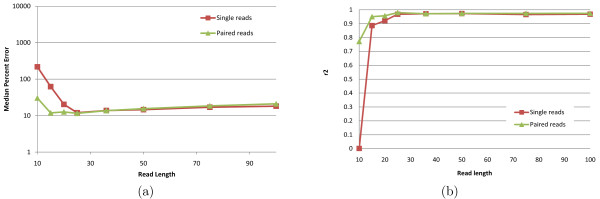
BACKGROUND: Massively parallel whole transcriptome sequencing, commonly referred as RNA-Seq, is quickly becoming the technology of choice for gene expression profiling. However, due to the short read length delivered by current sequencing technologies, estimation of expression levels for alternative splicing gene isoforms remains challenging. RESULTS: In this paper we present a novel expectation-maximization algorithm for inference of isoform- and gene-specific expression levels from RNA-Seq data. Our algorithm, referred to as IsoEM, is based on disambiguating information provided by the distribution of insert sizes generated during sequencing library preparation, and takes advantage of base quality scores, strand and read pairing information when available. The open source Java implementation of IsoEM is freely available at http://dna.engr.uconn.edu/software/IsoEM/. CONCLUSIONS: Empirical experiments on both synthetic and real RNA-Seq datasets show that IsoEM has scalable running time and outperforms existing methods of isoform and gene expression level estimation. Simulation experiments confirm previous findings that, for a fixed sequencing cost, using reads longer than 25-36 bases does not necessarily lead to better accuracy for estimating expression levels of annotated isoforms and genes.
Overview
The claims and statistics of this paper haven’t been checked yet.
Free: it reads the open-access text and checks the first 5 claims that cite a source we can check. Create a free account to check every claim.
Integrity signals
Registry
Cites
Statistics
Figures
Verification
Claims the paper makes
The claims and statistics of this paper haven’t been checked yet.
Free: it reads the open-access text and checks the first 5 claims that cite a source we can check. Create a free account to check every claim.
Claims other papers make about this one
Each is checked against this paper’s own text: does it say what the citing paper says it does?
The source backs part of the claim, not all of it — or backs it for a different population, condition or comparison.
In the citing paper
“At the transcript level, sample-specific biases that current methods correct for include the fragment length distribution induced by size selection, positional bias along the transcript due to RNA degradation and mRNA selection techniques, and sequence-based bias in read start positions arising from the differential binding efficiency of random hexamer primers2,12-16”
From Modeling of RNA-seq fragment sequence bias reduces systematic errors in transcript abundance estimation (2016) · cites this paper as [15]
Experimental — accuracy not yet measuredThe cited source says what the claim attributes to it.
In the citing paper
“The posterior probability that a read originated from one of the loci to which it aligns can be computed using an expectation-maximization (EM) algorithm (Li et al. 2010; Nicolae et al. 2011; Roberts and Pachter 2013; Patro et al. 2014).”
From RNA-Seq Alignment to Individualized Genomes Improves Transcript Abundance Estimates in Multiparent Populations (2014) · cites this paper as Nicolae et al. 2011
The cited source says what the claim attributes to it.
In the citing paper
“The inclusion of multireads adds complexity to the abundance estimation problem but EM algorithms are well suited to this task (Li and Dewey 2011; Nicolae et al. 2011; Turro et al. 2011; Roberts and Pachter 2013).”
From RNA-Seq Alignment to Individualized Genomes Improves Transcript Abundance Estimates in Multiparent Populations (2014) · cites this paper as Nicolae et al. 2011
In the citing paper
“Collapsing fragments into equivalence classes is a well-established idea in the transcript quantification literature, and numerous different notions of equivalence classes have been previously introduced, and shown to greatly reduce the time required to perform iterative optimization such as that described in Offline phase.”
From Salmon provides fast and bias-aware quantification of transcript expression (2017) · cites this paper as [26]
Self-check
Percentages, sums and reported differences re-computed from the paper’s own numbers.
The self-check needs the paper’s full text.
Citations
Cites
Ultrafast and memory-efficient alignment of short DNA sequences to the human genome.
Langmead, B., Trapnell, C., Pop, M., & Salzberg, S. L. (2009) · Genome Biology · doi:10.1186/gb-2009-10-3-r25 · Cited by 21,849 · cited 4×
“Our approach is to map them onto the library of known isoforms using any one of the many available ungapped aligners (we used Bowtie [26] with default parameters in our experiments).”
MethodInfluentialTrapnell, C., Williams, B. A., Pertea, G., Mortazavi, A., Kwan, G., van Baren, M. J., Salzberg, S. L., Wold, B. J., & Pachter, L. (2010) · Nature Biotechnology · doi:10.1038/nbt.1621 · Cited by 15,556
Mapping and quantifying mammalian transcriptomes by RNA-Seq
Mortazavi, A., Williams, B. A., McCue, K., Schaeffer, L., & Wold, B. (2008) · Nature Methods · doi:10.1038/nmeth.1226 · Cited by 13,696 · cited 4×
“Mortazavi et al. [9] proposed a multiread “ rescue ” method whereby initial gene expression levels are estimated from unique reads and used to fractionally allocate multireads, with final expression levels obtained by re-estimation based on total counts obtained after multiread allocation.”
MethodInfluentialRNA-Seq: a revolutionary tool for transcriptomics
Wang, Z., Gerstein, M., & Snyder, M. (2009) · Nature Reviews Genetics · doi:10.1038/nrg2484 · Cited by 13,174 · cited 1×
“Massively parallel whole transcriptome sequencing, commonly referred to as RNA-Seq, is quickly replacing microarrays as the technology of choice for performing GE due to their wider dynamic range and digital quantitation capabilities [8].”
BackgroundTopHat: discovering splice junctions with RNA-Seq
Trapnell, C., Pachter, L., & Salzberg, S. L. (2009) · Bioinformatics · doi:10.1093/bioinformatics/btp120 · Cited by 11,617
Alternative isoform regulation in human tissue transcriptomes
Wang, E. T., Sandberg, R., Luo, S., Khrebtukova, I., Zhang, L., Mayr, C., Kingsmore, S. F., Schroth, G. P., & Burge, C. B. (2008) · Nature · doi:10.1038/nature07509 · Cited by 5,181 · cited 1×
“Most prevalently, alternative splicing is estimated to take place for over 90% of the multi-exon human genes across diverse cell types [1], with as much as 68% of multi-exon genes expressing multiple isoforms in a clonal cell line of colorectal cancer origin [2].”
BackgroundReal-Time DNA Sequencing from Single Polymerase Molecules
Eid, J., Fehr, A., Gray, J., Luong, K., Lyle, J., Otto, G., Peluso, P., Rank, D., Baybayan, P., Bettman, B., et al. (2009) · Science · doi:10.1126/science.1162986 · Cited by 3,732
The Transcriptional Landscape of the Mammalian Genome
Carninci, P., Kasukawa, T., Katayama, S., Gough, J., Frith, M. C., Maeda, N., Oyama, R., Ravasi, T., Lenhard, B., Wells, C., et al. (2005) · Science · doi:10.1126/science.1112014 · Cited by 3,499
Continuous base identification for single-molecule nanopore DNA sequencing
Clarke, J., Wu, H.-C., Jayasinghe, L., Patel, A., Reid, S., & Bayley, H. (2009) · Nature Nanotechnology · doi:10.1038/nnano.2009.12 · Cited by 1,810 · cited 1×
“…these libraries is expected to continue to increase rapidly following ultra-deep paired-end transcriptome sequencing projects such as [19,20] and the widely anticipated deployment of third-generation sequencing technologies such as [24,25], which deliver reads with significantly increased length.”
BackgroundImproving RNA-Seq expression estimates by correcting for fragment bias
Roberts, A., Trapnell, C., Donaghey, J., Rinn, J. L., & Pachter, L. (2011) · Genome Biology · doi:10.1186/gb-2011-12-3-r22 · Cited by 1,725 · cited 1×
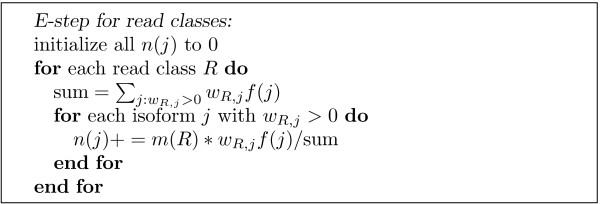
“:3) j : w R,j > 0 w R,j f ( j ) for each isoform j with w R,j > 0 do n ( j )+ = m ( R ) ∗ w R,j f ( j ) / sum end for end for methods [29] also target biases surrounding the start site of the read in addition to within reads.”
Background
Cited by
Items 101–200 of 201
Srivastava, A., Sarkar, H., Malik, L. I., & Patro, R. (2016) · arXiv (Cornell University) · doi:10.48550/arxiv.1604.03250 · Cited by 12
DBATE: database of alternative transcripts expression
Bianchi, V., Colantoni, A., Calderone, A., Ausiello, G., Ferrè, F., & Helmer‐Citterich, M. (2013) · Database · doi:10.1093/database/bat050 · Cited by 11
“Splicing variant expression deconvolution algorithms, such as Cufflinks (6), IsoEM (7), Scripture (8), RSEM (9) and SpliceSeq (10), allow the reliable (as validated in many instances by RT-PCR) quantitative estimation of the transcription of individual splicing variants of a gene from RNA-seq data.”
MethodInfluentialQi, W., Fu, H., Luo, X., Ren, Y., Liu, X., Dai, H., Zheng, Q., & Liang, F. (2022) · Journal of Cardiovascular Translational Research · doi:10.1007/s12265-022-10245-w · Cited by 10
Papastamoulis, P., & Rattray, M. (2017) · Journal of the Royal Statistical Society Series C (Applied Statistics) · doi:10.1111/rssc.12213 · Cited by 10
“There are numerous methods that estimate transcript expression from RNA-Seq data, including RSEM [11], IsoEM [17], Cufflinks [27, 28], BitSeq (Stage 1)[6], TIGAR [16] and Casper [22].”
MethodMangul, S., Caciula, A., Glebova, O., Măndoiu, I., & Zelikovsky, A. (2012) · In Silico Biology · doi:10.3233/isb-2012-0459 · Cited by 10
Self-citationDosage Compensation of the X Chromosomes in Bovine Germline, Early Embryos, and Somatic Tissues
Duan, J. E., Shi, W. F., Jue, N. K., Jiang, Z., Kuo, L., O'Neill, R. J. W., Wolf, E., Dong, H., Zheng, X., Chen, J., et al. (2018) · Genome Biology and Evolution · doi:10.1093/gbe/evy270 · Cited by 10
Bayesian estimation of differential transcript usage from RNA-seq data
Papastamoulis, P., & Rattray, M. (2017) · Statistical Applications in Genetics and Molecular Biology · doi:10.1515/sagmb-2017-0005 · Cited by 10
Dosage Compensation and Gene Expression of the X Chromosome in Sheep
Duan, J. E., Flock, K., Jue, N., Zhang, M., Jones, A. K., Seesi, S. A., Măndoiu, I., Pillai, S. M., Hoffman, M. L., O'Neill, R. J. W., et al. (2018) · G3 Genes Genomes Genetics · doi:10.1534/g3.118.200815 · Cited by 9
“Both X chromosome upregulation and XCI are necessary components of the X chromosome dosage compensation in mammals (Ohno 1966).”
BackgroundSelf-citationFactorial study of the RNA-seq computational workflow identifies biases as technical gene signatures
Simoneau, J., Gosselin, R., & Scott, M. S. (2020) · NAR Genomics and Bioinformatics · doi:10.1093/nargab/lqaa043 · Cited by 9
“[78] [77] [76] [75] [74] [28] [73] [72] [71] [31] [70] [30] [69] [68] [29] [50] [67] [66] [64] [63] [62] [27] [61] [60] [59] [58] [57] [56]”
RNA-Seq based discovery and reconstruction of unannotated transcripts in partially annotated genomes
Mangul, S., Caciula, A., Măndoiu, I., & Zelikovsky, A. (2011) · IEEE International Conference on Bioinformatics and Biomedicine Workshops (BIBMW) · doi:10.1109/bibmw.2011.6112363 · Cited by 7
“first human tissue of the GNFAtlas2 table, and a probability distribution over the isoforms inside a gene cluster [15].”
BackgroundMethodSelf-citationMaximum Likelihood Estimation of Incomplete Genomic Spectrum from HTS Data
Mangul, S., Astrovskaya, I., Nicolae, M., Tork, B., Măndoiu, I., & Zelikovsky, A. (2011) · Lecture notes in computer science · doi:10.1007/978-3-642-23038-7_19 · Cited by 7
“Anyway, one can see a reasonable improvement in frequency estimation of IsoVSEM over IsoEM.”
BackgroundMethodInfluentialSelf-citationDeterministic column subset selection for single-cell RNA-Seq
McCurdy, S. R., Ntranos, V., & Pachter, L. S. (2019) · PLoS ONE · doi:10.1371/journal.pone.0210571 · Cited by 7
In the Spotlight: Bioinformatics
Wang, M. D. (2012) · IEEE Reviews in Biomedical Engineering · doi:10.1109/rbme.2012.2228311 · Cited by 6
“The Multinomial Model-Based Quantification includes MISO (Mixture of ISOforms) model that statistically estimates the expression of alternatively spliced exons to assess the confidence in these estimates, and offers functional insight into pre-mRNA processing [24]; IsoEM that uses a modified expectation-maximization a…”
MethodKarunakaran, D. K. P., Seesi, S. A., Banday, A. R., Baumgartner, M., Olthof, A. M., Lemoine, C., Măndoiu, I., & Kanadia, R. (2016) · BMC Genomics · doi:10.1186/s12864-016-2822-z · Cited by 6
“Gene expression is estimated using IsoEM [6].”
MethodSelf-citationPlant Genetic Engineering and GM Crops: Merits and Demerits
Parray, J. A., Mir, M. Y., & Shameem, N. (2019) · Springer eBooks · doi:10.1007/978-981-13-8840-8_4 · Cited by 6
Stupnikov, A., Glazko, G. V., & Emmert‐Streib, F. (2015) · 癌症:英文版 · doi:10.1186/s40880-015-0040-8 · Cited by 5
“, for identifying alternative splicing, finding differentially expressed genes, or detecting differentially expressed pathways [9–14].”
BackgroundA Robust Method for Transcript Quantification with RNA-seq Data
Huang, Y., Hu, Y., Jones, C. D., MacLeod, J. N., Chiang, D. Y., Liu, Y., Prins, J. F., & Liu, J. (2012) · Lecture notes in computer science · doi:10.1007/978-3-642-29627-7_12 · Cited by 5
Differential mRNA Alternative Splicing
Lahat, A., & Grellscheid, S. N. (2016) · Springer eBooks · doi:10.1007/978-3-319-31350-4_5 · Cited by 5
Computational methods for differentially expressed gene analysis from RNA-Seq: an overviewPreprint
Silva, J. C., Domingues, D. S., Menotti, D., Hungría, M., & Lopes, F. M. (2021) · arXiv (Cornell University) · doi:10.48550/arxiv.2109.03625 · Cited by 5
“RSEM defines a probabilistic model for RNA-Seq data and calculates maximum likelihood estimates of isoform expression levels using the Expectation-Maximization algorithm [91].”
MethodImproving RNA-Seq Precision with MapAl
Łabaj, P. P., Linggi, B. E., Wiley, H. S., & Kreil, D. P. (2012) · Frontiers in Genetics · doi:10.3389/fgene.2012.00028 · Cited by 4
“…forms is now possible with modern tools like ERANGE (Mortazavi et al., 2008), ALEXA-seq (Griffith et al., 2010), NEUMA (Lee et al., 2011), IsoEM (Nicolae et al., 2010), RSEM (Li et al., 2010; Li and Dewey, 2011), or TopHat + Cufflinks (Trapnell et al., 2009, 2010). first aligning reads to the…”
MethodiQuant: A fast yet accurate GUI tool for transcript quantification
Nguyen, T., Deng, N., Xu, G., Duan, Z., & Zhu, D. (2011) · IEEE International Conference on Bioinformatics and Biomedicine Workshops (BIBMW) · doi:10.1109/bibmw.2011.6112556 · Cited by 4
Statistical Analyses of Next Generation Sequencing Data: An Overview
Mitra, R., Gill, R. S., Datta, S., & Datta, S. (2014) · Springer eBooks · doi:10.1007/978-3-319-07212-8_1 · Cited by 6
Nguyen, T., Deng, N., & Zhu, D. (2012) · arXiv (Cornell University) · doi:10.48550/arxiv.1208.3619 · Cited by 4
“Existing approaches are either based on statistical modeling of read counts, such as Poisson [19, 20, 21, 22, 23], Gaussian [24], Multinomial [25, 26], and Dirichlet-Multinomial [27], or are based on mathematical modeling of the relationships between per-base exonic coverage signal and transcript structures [28, 29].”
MethodDumpster diving in RNA-sequencing to find the source of every last read
Mangul, S. (2016) · doi:10.13140/rg.2.1.2385.7525 · Cited by 4
Self-citationA revisit of RSEM generative model and its EM algorithm for quantifying transcript abundances.Preprint
Vuong, H., Truong, T., Tran, T., & Pham, S. (2018) · bioRxiv (Cold Spring Harbor Laboratory) · doi:10.1101/503672 · Cited by 5
“com 1We also noticed that IsoEM [8] uses a different equivalent relation definition to build equivalent classes, which also requires the conditional probabilities of the alignments to be the same.”
BackgroundAlqahtani, F. A., & Măndoiu, I. (2020) · Lecture notes in computer science · doi:10.1007/978-3-030-57821-3_1 · Cited by 3
Self-citationIAOseq: inferring abundance of overlapping genes using RNA-seq data
Sun, H., Yang, S., Tun, L., & Li, Y. (2015) · BMC Bioinformatics · doi:10.1186/1471-2105-16-s1-s3 · Cited by 3
“Cufflinks [30], Isoem [40], RSEM [38], eXpress [41] and Bitseq [42].”
MethodNomoto, Y., Kubota, Y., Ohnishi, Y., Kasahara, K., Tomita, A., Oshime, T., Yamashita, H., Fahmi, M., & Ito, M. (2019) · PLoS ONE · doi:10.1371/journal.pone.0215187 · Cited by 3
Genomics-Guided Immunotherapy of Human Epithelial Ovarian Cancer
Seesi, S. A., Duan, F., Măndoiu, I., Srivastava, P. K., & Kueck, A. S. (2015) · Elsevier eBooks · doi:10.1016/b978-0-12-799961-6.00010-x · Cited by 3
Self-citationNOVEL COMPUTATIONAL METHODS FOR TRANSCRIPT RECONSTRUCTION AND QUANTIFICATION USING RNA-SEQ DATA
Huang, Y. (2015) · UKnowledge (University of Kentucky) · Cited by 3
Reconstructing isoform graphs from RNA-Seq data
Beretta, S., Bonizzoni, P., Rizzi, R., & Vedova, G. D. (2012) · IEEE International Conference on Bioinformatics and Biomedicine (BIBM) · doi:10.1109/bibm.2012.6392734 · Cited by 2
“nscripts (or isoforms), and some of the challenging tasks in RNA-Seq data analysis are mapping the sequenced short reads to a reference genome, inferring full-length isoforms and its expression level [2,4,10], and assembling the reads into contigs DISCo, Univ. Milano-Bicocca, Milan, Italy emailfberetta,bonizzoni,rizzi…”
BackgroundDeterministic regression algorithm for transcriptome frequency estimation
Caciula, A., Glebova, O., Artyomenko, A., Mangul, S., Lindsay, J. R., Măndoiu, I., & Zelikovsky, A. (2014) · IEEE International Conference on Computational Advances in Bio and Medical Sciences · doi:10.1109/iccabs.2014.6863946 · Cited by 2
“The results show better correlation (0.995) for MCReg2 compared with currently best methods MCReg (0.97), RSEM [3] (0.924), and IsoEM [4] (0.92).”
ResultSelf-citationThe selection of quantification pipelines for Illumina RNA-seq data using a subsampling approach
Wu, P.-Y., & Wang, M. D. (2016) · IEEE-EMBS International Conference on Biomedical and Health Informatics (BHI ...) · doi:10.1109/bhi.2016.7455839 · Cited by 3
“Multiple researchers have conducted comparative studies for several widely used quantification pipelines [2] [3].”
Transcriptome Quantification and Differential Expression from NGS Data
Glebova, O., Temate‐Tiagueu, Y., Caciula, A., Seesi, S. A., Artyomenko, A., Mangul, S., Lindsay, J. R., Măndoiu, I., & Zelikovsky, A. (2016) · Wiley eBooks · doi:10.1002/9781119272182.ch14 · Cited by 2
Self-citationMangul, S., Caciula, A., Seesi, S. A., Brinza, D., Banday, A. R., Kanadia, R., Măndoiu, I., & Zelikovsky, A. (2013) · Cited by 2
Self-citationLocality Sensitive Imputation for Single-Cell RNA-Seq Data
Moussa, M. R., & Măndoiu, I. (2018) · Lecture notes in computer science · doi:10.1007/978-3-319-94968-0_33 · Cited by 2
Self-citationThe impact of multi-mappings in short read mapping
Oloomi, S. M. H. (2018) · Minerva Access (University of Melbourne) · Cited by 2
High-throughput Analysis of WNT Signaling Pathway in Osteoblasts
Sebastian, A. (2016) · eScholarship (California Digital Library) · Cited by 2
Talikka, M., Boué, S., Frentzel, S., Kogel, U., Sierro, N., Titz, B., Veljkovic, E., Hoeng, J., & Peitsch, M. C. (2016) · Wiley eBooks · doi:10.1002/9780470921920.edm143 · Cited by 2
Optimization Techniques For Next-Generation Sequencing Data Analysis
Caciula, A. (2014) · Digital Archive @ GSU · doi:10.57709/5825568 · Cited by 2
Oh, S. (2015) · Communications for Statistical Applications and Methods · doi:10.5351/csam.2015.22.2.181 · Cited by 1
“…2012; Li et al. , 2011; Li and Jiang, 2012; Ma and Zhang, 2013; Mezlini et al. , 2013; Mills et al. , 2013; Nariai et al. , 2013; Nariai et al. , 2014; Nicolae et al. , 2011; Niu et al. , 2014; Patro et al. , 2014; Rehrauer et al. , 2013; Safikhani et al. , 2013; Shi and Jiang, 2013; Suo et al. ,…”
InfluentialMonte-Carlo Regression algorithm for isoform frequency estimation from RNA-Seq data
Caciula, A., Zelikovsky, A., Mangul, S., Lindsay, J. R., & Măndoiu, I. (2013) · IEEE International Conference on Computational Advances in Bio and Medical Sciences · doi:10.1109/iccabs.2013.6629228 · Cited by 1
“Regression-Based Estimation of Isoform Frequencies Regression-based estimation of f ′ t’s minimizes squared deviation between observed and expected read frequencies minimize: ∑ (er̃′ − or̃)(2) (2) Substituting (1) in (2) we obtain the following program minimize: ∑ ( ∑”
BackgroundSelf-citationWorkshop: Inference of allele specific expression levels from RNA-Seq data
Seesi, S. A., & Măndoiu, I. (2012) · IEEE International Conference on Computational Advances in Bio and Medical Sciences · doi:10.1109/iccabs.2012.6182666 · Cited by 1
“In this work, we integrate a recent method for SNV detection and genotyping from RNA-Seq data [4] with the scalable haplotype reconstruction algorithm of [2] and a diploid version of the Expectation Maximization (EM) algorithm for isoform expression estimation of [9] into a pipeline for estimation of allele-specific i…”
MethodSelf-citationMangul, S., Caciula, A., Măndoiu, I., & Zelikovsky, A. (2012) · IEEE International Conference on Computational Advances in Bio and Medical Sciences · doi:10.1109/iccabs.2012.6182673 · Cited by 1
“The common computational problems include: gene and isoform expression level estimation [1], find transcriptome quantification, transcriptome discovery and reconstruction.”
BackgroundSelf-citationComputational Approaches for Studying Alternative Splicing in Nonmodel Organisms from RNA‐SEQ Data
Sze, S. (2016) · Wiley eBooks · doi:10.1002/9781119272182.ch13 · Cited by 1
Mangul, S., Yang, H. T., & Zaitlen, N. (2018) · ACM International Conference on Bioinformatics, Computational Biology, and Health Informatics (ACM-BCB) · doi:10.1145/3233547.3233726 · Cited by 1
Self-citationLinear Programming and Integer Linear Programming in Bioinformatics
Andreotti, S. (2015) · Universitätsbibliothek der FU Berlin Hochschulschriftenstelle u. Dokumentenserver · doi:10.17169/refubium-17199 · Cited by 2
“A promising approach is the application of some expectation maximization method, like IsoEM [Nicolae et al., 2011], that operates on the level of individual mapped reads instead of segment cover counts.”
MethodAn island-based approach for RNA-SEQ differential expression analysis.
Eteleeb, A. M. (2015) · ThinkIR: The University of Louisville's Institutional Repository (University of Louisville) · doi:10.18297/etd/2072 · Cited by 1
“For a detailed description of IsoEM model, refer to [114].”
BackgroundMethodCsaba, G. (2013) · Electronic Theses of LMU Munich (Ludwig-Maximilians-Universität München) · doi:10.5282/edoc.15725 · Cited by 1
Transcriptome assembly and quantification from Ion Torrent RNA-Seq data
Mangul, S., Seesi, S. A., Măndoiu, I., Caciula, A., Zelikovsky, A., & Brinza, D. (2013) · IEEE International Conference on Computational Advances in Bio and Medical Sciences · doi:10.1109/iccabs.2013.6629235 · Cited by 1
Self-citationLi, M. (2015) · Cited by 1
Symbiont Dependent Host Reproduction In The Marine Bryozoan, Bugula neritina
Mathew, M. (2016) · Digital Archive @ GSU · doi:10.57709/9440610 · Cited by 1
Proteomic and genomic data mining with applications in plant science
Luo, H. (2023) · doi:10.18174/579767 · Cited by 1
Brasseur, M. V., Leese, F., & Mayer, C. (2025) · bioRxiv (Cold Spring Harbor Laboratory) · doi:10.1101/2025.08.01.668104 · Cited by 1
“Inferring transcript abundances comprises two steps: identifying the source of all transcriptomic reads in a given sample, followed by transcript abundance estimation (Li & Dewey, 2011; Nicolae et al., 2011; Patro et al., 2017).”
Algorithms for Transcriptome Quantification and Reconstruction from RNA-Seq Data
Mangul, S. (2012) · Digital Archive @ GSU · doi:10.57709/3489378 · Cited by 1
Self-citationDetermining differential expression of Splice Variants in RNA-seq
Weistra, W. (2012) · Utrecht University Repository (Utrecht University)
A Method for Isoform Prediction from RNA-Seq Data by Iterative Mapping
Ohno, T., Seno, S., Takenaka, Y., & Matsuda, H. (2012) · IPSJ Transactions on Bioinformatics · doi:10.2197/ipsjtbio.5.27
“In order to estimate the expression levels of isoforms using RNA-Seq data, many meth-ods, including those of Li et al. [31], Nicolae et al. [32], and Richard et al. [33] have been proposed to distribute reads onto each isoform within a gene location using EM algorithms.”
MethodKorir, P. K. (2014) · Arrow@dit (Dublin Institute of Technology) · doi:10.13025/17615
Accurate Estimation of Isoform and Gene Expression Levels from Next Generation Sequencing Data
Nicolae, M. (2011) · OpenCommons - UConn (University of Connecticut)
Self-citationAlgorithms for next generation sequencing data analysis
Beretta, S. (2013) · BOA (University of Milano-Bicocca)
Efficient Computational Genetics Methods for Multiparent Crosses
Zhang, Z. (2014) · Carolina Digital Repository (University of North Carolina at Chapel Hill) · doi:10.17615/v6tg-tf12
Methods for Differential Analysis of Gene Expression and Metabolic Pathway Activity
Temate‐Tiagueu, Y. (2016) · Digital Archive @ GSU · doi:10.57709/8382486
Oh, S., & Kim, C. S. (2016) · Journal of the Korean Data and Information Science Society · doi:10.7465/jkdi.2016.27.1.225
The impact of hybridization on alternative splicing revealed by transcriptome analysis
Baute, G. J. (2011) · cIRcle (University of British Columbia) · doi:10.14288/1.0105083
Characterization of the Iberian pig genome and transcriptome using high throughput sequencing
Esteve‐Codina, A. (2012) · LA Referencia (Red Federada de Repositorios Institucionales de Publicaciones Científicas)
Finding neoepitopes in mouse models of personalized cancer immunotherapy
Seesi, S. A., Mohapatra, A. D., Pawashe, A., Măndoiu, I., & Duan, F. (2016) · Frontiers in Biology · doi:10.1007/s11515-016-1422-2
“Finally, the problem being addressed also affects the choice of mapping settings.”
BackgroundMethodSelf-citationComputational Methods for Sequencing and Analysis of Heterogeneous RNA Populations
Glebova, O. (2016) · Digital Archive @ GSU · doi:10.57709/9440255
Fast and accurate quantification and differential analysis of transcriptomes
Pimentel, H. (2016) · UC Berkeley
Software for Estimation of Human Transcriptome Isoform Expression Using RNA-Seq Data
Johnson, K. (2012) · ScholarWorks @ The University of New Orleans (The University of New Orleans)
Kutlu, M., Agrawal, G., & Blachly, J. S. (2017) · IEEE International Symposium on Parallel & Distributed Processing, Workshops and Phd Forum · doi:10.1109/ipdpsw.2017.169
“inference [6] and Expectation Maximization [5], [7], [13], [14] are among popular approaches for this problem.”
BackgroundComputational Techniques for the Analysis of Large Scale Biological Systems
Ahn, T.-H. (2012) · VTechWorks (Virginia Tech)
Pseudoalignment for metagenomic and metatranscriptomic read assignment
Schaeffer, L. (2016) · eScholarship (California Digital Library)
Computational Discovery of Splicing Events from High-Throughput Omics Data
Lin, Y. Y. (2017) · Summit (Simon Fraser University)
Genomic Imprinting and X Chromosome Dosage Compensation in Domestic Ruminants
Duan, J. E. (2018) · OpenCommons - UConn (University of Connecticut)
Hidden Treasures in Contemporary RNA Sequencing
Mangul, S., Yang, H. T., Eskin, E., & Zaitlen, N. (2019) · SpringerBriefs in computer science · doi:10.1007/978-3-030-13973-5_1
Self-citationComputational Methods for the Analysis of Single-Cell RNA-Seq Data
Moussa, M. R. (2019) · OpenCommons at University of Connecticut (University of Connecticut)
Reconstructing Isoform Graphs from RNA-Seq dataPreprint
Beretta, S., Bonizzoni, P., Vedova, G. D., & Rizzi, R. (2011) · arXiv (Cornell University) · doi:10.48550/arxiv.1108.0047
Bioinformática funcional y su aplicación en genómica, proteogenómica y reposicionamiento de fármacos
Sarto, M. F. (2018) · LA Referencia (Red Federada de Repositorios Institucionales de Publicaciones Científicas)
Arefeen, A. (2019) · eScholarship (California Digital Library)
L’utilisation d’annotation génomique est un paramètre expérimental en bio-informatique
Simoneau, J. (2020) · Knowledge UdeS (Institutional Deposit of the University of Sherbrooke)
Acı, M. (2018) · OakTrust (Texas A&M University Libraries)
Computational approaches for improving the accuracy and efficiency of RNA-seq analysis
Sarkar, H. (2020) · University Libraries (University of Maryland) · doi:10.13016/tuy4-kjcc
Reghbati, M. K. (2020) · TSpace (University of Toronto)
(2016) · CRC Press eBooks · doi:10.1201/b19532-22
Faculty Opinions recommendation of Systematic benchmarking of omics computational tools.
Thompson, J. (2019) · Faculty Opinions – Post-Publication Peer Review of the Biomedical Literature · doi:10.3410/f.735401949.793560098
Additional file 1 of Technology dictates algorithms: recent developments in read alignment
Alser, M., Rotman, J., Deshpande, D., Taraszka, K., Shi, H., Baykal, P. I., Yang, H. T., Xue, V., Knyazev, S., Singer, B. D., et al. (2021) · Figshare · doi:10.6084/m9.figshare.16456908
Self-citationBaaijens, J. A., Zulli, A., Ott, I. M., Nika, I., van der Lugt, M. J., Petrone, M. E., Alpert, T., Fauver, J. R., Kalinich, C. C., Vogels, C. B. F., et al. (2022) · Figshare · doi:10.6084/m9.figshare.21524237
Additional file 2 of Technology dictates algorithms: recent developments in read alignment
Alser, M., Rotman, J., Deshpande, D., Taraszka, K., Shi, H., Baykal, P. I., Yang, H. T., Xue, V., Knyazev, S., Singer, B. D., et al. (2021) · Figshare · doi:10.6084/m9.figshare.16456914
Self-citationInvestigating the Endogenous Role of MicroRNAs in Glioblastoma
Muskovic, W. (2018) · UNSWorks (University of New South Wales, Sydney, Australia) · doi:10.26190/unsworks/3533
Additional file 2 of LIQA: long-read isoform quantification and analysis
Hu, Y., Fang, L., Chen, X., Zhong, J. F., Li, M., & Wang, K. (2021) · Figshare · doi:10.6084/m9.figshare.14803829
Baaijens, J. A., Zulli, A., Ott, I. M., Nika, I., van der Lugt, M. J., Petrone, M. E., Alpert, T., Fauver, J. R., Kalinich, C. C., Vogels, C. B. F., et al. (2022) · Figshare · doi:10.6084/m9.figshare.21524234
Additional file 1 of LIQA: long-read isoform quantification and analysis
Hu, Y., Fang, L., Chen, X., Zhong, J. F., Li, M., & Wang, K. (2021) · Figshare · doi:10.6084/m9.figshare.14803826
Optimization of RNA-Sequencing Analysis and a Role for the Epidermis in Sensation
Williams, C. R. (2019) · ResearchWorks at the University of Washington (University of Washington)
Deciphering splicing with sparse regression techniques in the era of high-throughput RNA sequencing.
Bernard, E. (2016) · theses.fr (ABES) · doi:10.70675/1074a190z4aa6z4e52zb386z0491fcaff5f3
“RSEM (Li and Dewey, 2011), IsoEM (Nicolae et al., 2011), BitSeq (Glaus et al.”
MethodSupporting information 1 of RNA-seq data science: From raw data to effective interpretation
Deshpande, D., Chhugani, K., Chang, Y., Karlsberg, A., Loeffler, C., Zhang, J., Muszyńska, A., Munteanu, V., Yang, H., Rotman, J., et al. (2023) · doi:10.3389/fgene.2023.997383.s001
Self-citationPredicting Variants of Alternative Splicing from NGS data without the GenomePreprint
Beretta, S., Bonizzoni, P., Vedova, G. D., & Rizzi, R. (2011) · arXiv (Cornell University)
Metadata
- Authors
- Nicolae, M., Mangul, S., Măndoiu, I. I., & Zelikovsky, A.
- Affiliations
- University of Connecticut (US)
- Georgia State University (US)
- Corresponding author
- Nicolae, Marius
- Venue
- Algorithms for Molecular Biology
- Published
- 2011-04-19
- Volume
- 6
- Issue
- 1
- Pages
- 9-9
- ISSN
- 1748-7188 (ISSN-L)
- PMC
- PMC3107792
- OpenAlex
- W2093253451
- Cited by
- 178
- References
- 32
- Citations by year
- 2025: 2 · 2023: 2 · 2022: 9 · 2021: 9 · 2020: 6 · 2019: 12 · 2018: 17 · 2017: 14 · 2016: 24 · 2015: 14 · 2014: 14 · 2013: 16 · 2012: 23
- FWCI
- 8.97
- Type
- journal article
- Language
- en
- Open access
- gold
- doi.org
- Licence
- cc-by
- creativecommons.org/licenses/by/2.0 (tdm)
- Locations
- Algorithms for Molecular Biology (publishedVersion, cc-by)
- PubMed Central (publishedVersion, cc-by)
- PubMed (publishedVersion)
- DROPS (Schloss Dagstuhl – Leibniz Center for Informatics) (submittedVersion, cc-by)
- Digital Archive @ GSU (submittedVersion, cc-by)
- DOAJ (DOAJ: Directory of Open Access Journals) (submittedVersion)
- Counseling And Psychological Services Dissertations (Georgia State University) (submittedVersion, cc-by)
- DROPS (Schloss Dagstuhl – Leibniz Center for Informatics) (cc-by)
- Funders
- National Science Foundation (0916948, 0546457, 0916401, 0543365)
- National Institute of Food and Agriculture (201167016-30331, IIS-0916401)
- Topics
- Life Sciences › Biochemistry, Genetics and Molecular Biology › Molecular Biology › Genomics and Phylogenetic Studies
- Life Sciences › Biochemistry, Genetics and Molecular Biology › Molecular Biology › RNA Research and Splicing
- Life Sciences › Biochemistry, Genetics and Molecular Biology › Molecular Biology › Single-cell and spatial transcriptomics
- Keywords
- alternative splicing, gene expression estimation, RNA-seq, expectation-maximization algorithm, insert size distribution, read length, gene isoforms
About these checks
Registry, retraction, Cites and statistics results are computed, not judged, with one exception: a printed reference that no index lists is read once by a model before it counts as a citation error. Claims are extracted by a model and kept only when their quote appears verbatim in the text; each cited source is then checked, with a model’s help, for whether it says what the claim relies on. Those verdicts can be wrong — read the claim’s quote and the cited source before relying on one.
Statistics and arithmetic are recomputed, not judged.
Confidence bands are shown only for fields calibrated on our annotated test set. None is calibrated yet, so no band is shown.
What counts as a claim ›How we measure confidence ›How we check this ›
Are you an author, or do you see a problem with this page? Request a review
Data sources
Bibliographic data: Semantic Scholar, OpenAlex, Crossref.
Contains information from the Semantic Scholar Academic Graph Datasets, made available under the ODC Attribution License (ODC-BY 1.0).
Semantic Scholar’s data is described in: Kinney, R., et al. (2023). The Semantic Scholar Open Data Platform. arXiv:2301.10140.
