

The DOI matches its Crossref record; 17 of the 17 references it cites were found in a registry or an index.
Xeroderma pigmentosum
Open accessAbstract
Xeroderma pigmentosum (XP) is defined by extreme sensitivity to sunlight, resulting in sunburn, pigment changes in the skin and a greatly elevated incidence of skin cancers. It is a rare autosomal recessive disorder and has been found in all continents and racial groups. Estimated incidences vary from 1 in 20, 000 in Japan to 1 in 250, 000 in the USA, and approximately 2.3 per million live births in Western Europe.The first features are either extreme sensitivity to sunlight, triggering severe sunburn, or, in patients who do not show this sun-sensitivity, abnormal lentiginosis (freckle-like pigmentation due to increased numbers of melanocytes) on sun-exposed areas. This is followed by areas of increased or decreased pigmentation, skin aging and multiple skin cancers, if the individuals are not protected from sunlight. A minority of patients show progressive neurological abnormalities. There are eight XP complementation groups, corresponding to eight genes, which, if defective, can result in XP. The products of these genes are involved in the repair of ultraviolet (UV)-induced damage in DNA. Seven of the gene products (XPA through G) are required to remove UV damage from the DNA. The eighth (XPV or DNA polymerase η) is required to replicate DNA containing unrepaired damage. There is wide variability in clinical features both between and within XP groups. Diagnosis is made clinically by the presence, from birth, of an acute and prolonged sunburn response at all exposed sites, unusually early lentiginosis in sun-exposed areas or onset of skin cancers at a young age. The clinical diagnosis is confirmed by cellular tests for defective DNA repair. These features distinguish XP from other photodermatoses such as solar urticaria and polymorphic light eruption, Cockayne Syndrome (no pigmentation changes, different repair defect) and other lentiginoses such as Peutz-Jeghers syndrome, Leopard syndrome and Carney complex (pigmentation not sun-associated), which are inherited in an autosomal dominant fashion. Antenatal diagnosis can be performed by measuring DNA repair or by mutation analysis in CVS cells or in amniocytes. Although there is no cure for XP, the skin effects can be minimised by rigorous protection from sunlight and early removal of pre-cancerous lesions. In the absence of neurological problems and with lifetime protection against sunlight, the prognosis is good. In patients with neurological problems, these are progressive, leading to disabilities and a shortened lifespan.
Overview
The claims and statistics of this paper haven’t been checked yet.
Run the check — free, no account needed. It reads the open-access text and checks the sources it cites.
Integrity signals
Registry
Cites
Statistics
Figures
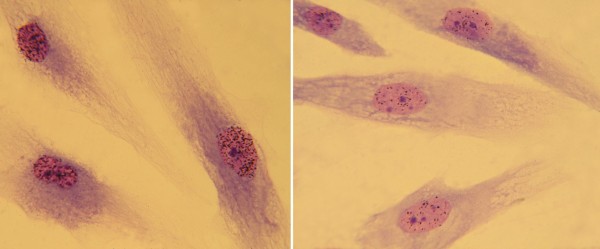
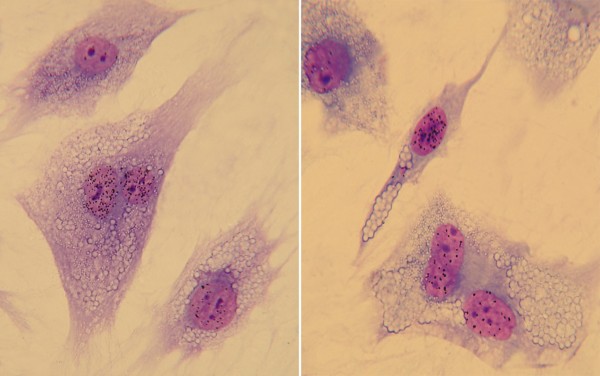
Verification
Claims the paper makes
The claims and statistics of this paper haven’t been checked yet.
Run the check — free, no account needed. It reads the open-access text and checks the sources it cites.
Claims other papers make about this one
Each is checked against this paper’s own text: does it say what the citing paper says it does?
In the citing paper
“These include the conditions with mutations in NER pathways (presented in Table 3) such as xeroderma pigmentosum (XP) [149,150], Cockayne syndrome (CS) [151,152], trichothiodystrophy (TTD) [153,154,155,156], UV-sensitive syndrome (UV-SS), and cerebro-oculo-facioskeletal syndrome (COFS) [157,158,159].”
From Focus on UV-Induced DNA Damage and Repair—Disease Relevance and Protective Strategies (2020) · cites this paper as [150]
In the citing paper
“Another indirect evidence for the implication of photoinduced damage to DNA in carcinogenicity is provided by the high incidence of skin tumors in most of the complementation groups A-G of xeroderma pigmentosum patients (17,18) who suffer from deficiencies in nucleotide excision repair (19).”
From Photoinduced Damage to Cellular DNA: Direct and Photosensitized Reactions† (2012) · cites this paper as [17]
In the citing paper
“Photolesions engage the nucleotide excision repair (NER) pathway, which corrects UV-induced DNA damage in a multistep process involving numerous repair factors including XPA, ERCC1, ERCC3 (XP-B), XPC, ERCC2 (XP-D), DDB2 (XP-E), ERCC4 (XP-F) and ERCC5 (XP-G)”
From RETRACTED: PKA-Mediated Phosphorylation of ATR Promotes Recruitment of XPA to UV-Induced DNA Damage (2014) · cites this paper as Lehmann et al., 2011
Self-check
Percentages, sums and reported differences re-computed from the paper’s own numbers.
The self-check needs the paper’s full text.
Citations
Cites
The XPV (xeroderma pigmentosum variant) gene encodes human DNA polymerase η
Masutani, C., Kusumoto, R., Yamada, A., Dohmae, N., Yokoi, M., Yuasa, M., Araki, M., Iwai, S., Takio, K., & Hanaoka, F. (1999) · Nature · doi:10.1038/21447 · Cited by 1,292
Kraemer, K. H. (1987) · Archives of Dermatology · doi:10.1001/archderm.123.2.241 · Cited by 1,216
Robbins, J. H., Kraemer, K. H., Lutzner, M. A., Festoff, B. W., & COON, H. G. (1974) · Annals of Internal Medicine · doi:10.7326/0003-4819-80-2-221 · Cited by 748
Lehman, A. R., Kirk-Bell, S., Arlett, C. F., Paterson, M. C., Lohman, P. H., de Weerd-Kastelein, E. A., & Bootsma, D. (1975) · Proceedings of the National Academy of Sciences · doi:10.1073/pnas.72.1.219 · Cited by 614
Bradford, P. T., Goldstein, A. M., Tamura, D., Khan, S. G., Ueda, T., Boyle, J., Oh, K.-S., Imoto, K., Inui, H., Moriwaki, S.-I., et al. (2011) · Journal of Medical Genetics · doi:10.1136/jmg.2010.083022 · Cited by 480
Kleijer, W. J., Laugel, V., Berneburg, M., Nardò, T., Fawcett, H., Gratchev, A. N., Jaspers, N. G. J., Sarasin, A. R., Stefanini, M., & Lehmann, A. R. (2008) · DNA repair · doi:10.1016/j.dnarep.2008.01.014 · Cited by 278
Self-citationAndrews, A. D., Barrett, S. F., & Robbins, J. H. (1978) · Proceedings of the National Academy of Sciences · doi:10.1073/pnas.75.4.1984 · Cited by 250
Molecular analysis of mutations in DNA polymerase η in xeroderma pigmentosum-variant patients
Broughton, B. C., Cordonnier, A. M., Kleijer, W. J., Jaspers, N. G. J., Fawcett, H., Raams, A., Garritsen, V. H., Stary, A., Avril, M., Boudsocq, F., et al. (2002) · Proceedings of the National Academy of Sciences · doi:10.1073/pnas.022473899 · Cited by 176
Self-citationDaya-Grosjean, L., & Sarasin, A. (2005) · Mutation Research - Fundamental and Molecular Mechanisms of Mutagenesis · doi:10.1016/j.mrfmmm.2004.11.013 · Cited by 142
Hirai, Y., Kodama, Y., Moriwaki, S., Noda, A., Cullings, H. M., MacPhee, D. G., Kodama, K., Mabuchi, K., Kraemer, K. H., Land, C. E., et al. (2006) · Mutation research. Fundamental and molecular mechanisms of mutagenesis · doi:10.1016/j.mrfmmm.2006.06.010 · Cited by 140
Cited by
Sorted by citations
Items 301–343 of 343
Whole Exome Sequencing of a Patient with a Milder Phenotype of Xeroderma Pigmentosum Group C
Seo, J.-I., Nishigori, C., Ahn, J. J., Ryu, J. Y., Lee, J., Lee, M., Kim, S. K., & Jeong, K. (2023) · Medicina · doi:10.3390/medicina59040699
Marginal Mandibulectomy and Oral Rehabilitation of Xeroderma Pigmentosum Patient
da Silva, I. F. V., de Toledo, G. L., Silami, F. D. J., Bhering, C. L. B., & Moreno, A. (2023) · Journal of Craniofacial Surgery · doi:10.1097/scs.0000000000009329
Sarcomatoid Carcinoma of Orbit in a Patient With Xeroderma Pigmentosum
Banjade, P., Itani, A., Kandel, K., Acharya, S., Sharma, M., Shrestha, G. B., & Surani, S. (2023) · Journal of Medical Cases · doi:10.14740/jmc4110
FRĄCZ, G., Dobko, K., Agata, G. L. A. C., KULIGA, K., Musz, K., SEJNOWSKA, N., Socha, A., Surowiec, A., ŚNIEŻEK, K., & Zając, A. (2023) · Journal of Education Health and Sport · doi:10.12775/jehs.2023.14.01.012
DNA Repair Disorders with Cutaneous Features
Fassihi, H. (2016) · Wiley eBooks · doi:10.1002/9781118441213.rtd0079
Xeroderma pigmentosum group G with pellagroid rash: A rare presentation
Garg, S., Garg, K., Thakur, V., & Behera, B. (2023) · Pediatric Dermatology · doi:10.1111/pde.15416
Xeroderma pigmentosum with aggressive periodontitis - A rare case series
SundarRaj, S., Ram, S. P. S., & Kumar, S. P. M. (2024) · Biomedicine · doi:10.51248/.v43i6.3189
DNA Repair Disorders with Cutaneous Features
Fassihi, H. (2024) · Wiley eBooks · doi:10.1002/9781119709268.rook076
Hozhabrpour, A., Mojbafan, M., Palizban, F., Vahidnezhad, F., Talebi, S., Amani, M., Garshasbi, M., Naghavi, A., Khalesi, R., Mansouri, P., et al. (2024) · DNA repair · doi:10.1016/j.dnarep.2024.103633
Matemba, L. E., Shayo, E. H., Masemo, A., Nassor, N. K., Ally, M. S., & Msovela, J. (2024) · BMJ Open · doi:10.1136/bmjopen-2023-077741
Un cas de xeroderma pigmentosum observé au CNHU-HKM de Cotonou
Guéréndo, P., Diané, B. F., Agbéssi, N., Koudoukpo, C., Akpadja, F., & Dégboé, B. (2024) · European Scientific Journal ESJ · doi:10.19044/esipreprint.4.2024.p568
Senapati, D., Osama, M. A., Das, S., Mendiratta, V., & Singh, S. (2024) · Journal of Maxillofacial and Oral Surgery · doi:10.1007/s12663-024-02269-3
Oncogenic genodermatoses in paediatric patients with skin of colour: a review
Fazelpour, S., Deverapalli, S. C., & Nguyen, B. (2024) · Clinical and Experimental Dermatology · doi:10.1093/ced/llae306
Sarin, R. (2024) · Springer eBooks · doi:10.1007/978-981-99-3378-5_74
Corneal manifestations of xeroderma pigmentosa in a heavily pigmented patient
Sandhur, B. S., Zhang, C., & Lillvis, J. H. (2024) · Journal of Ophthalmic Research and Practice · doi:10.25259/jorp_25_2024
Kuhlen, M., Weins, A. B., Stadler, N., Angelova-Toshkina, D., & Frühwald, M. C. (2024) · World Journal of Pediatrics · doi:10.1007/s12519-024-00853-8
Luong, T. L. A., Hoang, T. L., Tran, D. P., Le, T. M., Tran, H., Ho, P. T., Hoang, H. N., Giang, H., Vu, D. L., Dinh, N. H., et al. (2024) · Personalized Medicine · doi:10.1080/17410541.2024.2393073
Hardcastle, C., Sarmiento, I. J. K., Mencacci, N. E., & Johnson, K. S. (2025) · Archives of Clinical Neuropsychology · doi:10.1093/arclin/acaf041
Ophthalmic and Cutaneous Manifestation of Xeroderma Pigmentosum in a 21-Year-Old Man: A Case Report
Moreno, B. A., Lutwak, M., & Skopit, S. (2025) · Cureus · doi:10.7759/cureus.85947
The Role of Artificial Intelligence in Skin Cancer Detection: Advancements and Challenges
Najah, Q., Almosilhy, N. A., & AlEdani, E. M. (2025) · Updates in clinical dermatology · doi:10.1007/978-3-031-78139-1_4
Fegter, O., Cerny, B. M., & Soble, J. R. (2025) · Case Reports in Neurological Medicine · doi:10.1155/crnm/6424739
Verma, A., Singh, M., Ramappa, M., Ali, H., & Chaurasia, S. (2025) · Cornea · doi:10.1097/ico.0000000000004013
Melanoma: a genetics guide for surgeons
Browne, F. J., Bollard, S. M., Ormond, P., Kelleher, F. C., McVeigh, T. P., & Potter, S. (2026) · Melanoma Research · doi:10.1097/cmr.0000000000001082
Lachheb, S., Lagha, M. I., & Riahi, M. H. (2025) · IEEE International Conference on Advances in Data-Driven Analytics and Intelligent Systems (ADACIS) · doi:10.1109/adacis65663.2025.11436247
Wu, J., & Jiang, C. (2026) · Frontiers in Oncology · doi:10.3389/fonc.2026.1780597
From Xeroderma Pigmentosum to malignant melanoma: case of an 8-year-old boy
bin Shabbir, M. U., Fatima, F., Hussain, F., Abbasi, S. A., Ali, G., Saleem, H. B., & Mahato, R. K. (2026) · Oxford Medical Case Reports · doi:10.1093/omcr/omag027
Involvement of TFIIH in NER factors mediated chromatin remodeling
Singh, A. (2014) · theses.fr (ABES) · doi:10.70675/9a7cf956z3bdaz44c5za560za206d78e4cea
Epigenetic regulation of gene expression during melanocyte and melanoma development
Laurette, P. (2016) · theses.fr (ABES) · doi:10.70675/b22b69c4z85a0z409czaccczc882ea46e923
Kasraian, Z. (2018) · theses.fr (ABES) · doi:10.70675/a1868dd1z7486z4a30z9abbz9078cd2b51e3
RNAi and Chemical-Based High Content Screening for the Normalization of XPC Phenotyope
Kobaisi, F. (2021) · theses.fr (ABES) · doi:10.70675/e34b8c43z081az4c41zad64z8e0c753e5c20
Coelho, A. A., Dias, E. P. S., & Kipnis, A. (2026) · Frontiers in Systems Biology · doi:10.3389/fsysb.2026.1686085
Chikhaoui, A., Tounsi, H., Nabouli, I., Jones, M., Jenni, R., Ahmed, M. B., Naouali, C., Zghal, M. A., Turki, H., & Yacoub‐Youssef, H. (2026) · BMC Cancer · doi:10.1186/s12885-026-15966-8
Skin Manifestations of Hereditary Cancer Syndromes: A Clinicopathologic Review
Colbert, M. D., Mittal, S., Ghebrehiwet-Kuflom, J., Lehman, J. S., Erickson, L. A., & Aghazadeh, N. (2026) · Advances in Anatomic Pathology · doi:10.1097/pap.0000000000000534
Benlili, M., Arreyouchi, D., & Oufkir, A. A. (2026) · Cureus · doi:10.7759/cureus.110911
XPA confers ability of endonucleases to act processively and to incise damaged nucleosomal DNA
Lambert, M. W., & Lambert, W. C. (2026) · Experimental Biology and Medicine · doi:10.3389/ebm.2026.10902
Senotherapeutic potential against xeroderma pigmentosum
王雪冰, Nishida, M., Yoshioka, A., Chung, C., Hashimoto, S., Tanizawa, H., Ohta, S., Noma, K.-I., & Fukumoto, T. (2026) · Stem Cell Research & Therapy · doi:10.1186/s13287-026-05227-7
Xeroderma Pigmentosum Monozygotic Twins: Same Mutation Divergent Clinical Outcomes
Júnior, J. P. D. S., dos Santos, M. C. F., da Silva, L. G., da Silva, W. J., Corradi, C., Munford, V., Balbino, V. D. Q., Campos, T. D. L., Menck, C. F. M., & Silva, J. D. A. (2026) · Human Mutation · doi:10.1155/humu/7247751
Rosenstein, B. S., & Karp, J. M. (2026) · Elsevier eBooks · doi:10.1016/b978-0-443-13468-5.00015-1
Metadata
- Authors
- Lehmann, A. R., McGibbon, D., & Stefanini, M.
- Affiliations
- University of Sussex (GB)
- St Thomas' Hospital (GB)
- Istituto di Genetica Molecolare (IT)
- Corresponding author
- Lehmann, Alan R
- ORCID
- Lehmann, Alan R
- Venue
- Orphanet Journal of Rare Diseases
- Published
- 2011
- Volume
- 6
- Issue
- 1
- Pages
- 70
- ISSN
- 1750-1172 (ISSN-L)
- PMC
- PMC3221642
- OpenAlex
- W4244842284
- Cited by
- 343
- References
- 17
- Citations by year
- 2026: 14 · 2025: 18 · 2024: 23 · 2023: 21 · 2022: 33 · 2021: 34 · 2020: 27 · 2019: 26 · 2018: 20 · 2017: 29 · 2016: 27 · 2015: 20 · 2014: 24 · 2013: 17 · 2012: 10
- FWCI
- 6.63
- Type
- journal article
- Language
- en
- Open access
- gold
- doi.org
- Licence
- cc-by
- Locations
- Orphanet Journal of Rare Diseases (publishedVersion, cc-by)
- Europe PMC (PubMed Central) (publishedVersion, cc-by)
- PubMed Central (publishedVersion, cc-by)
- PubMed (publishedVersion)
- Sussex Research Online (University of Sussex) (submittedVersion)
- DOAJ (DOAJ: Directory of Open Access Journals) (submittedVersion, cc-by-sa)
- Figshare (submittedVersion)
- Funders
- Associazione Italiana per la Ricerca sul Cancro
- Topics
- Life Sciences › Biochemistry, Genetics and Molecular Biology › Molecular Biology › DNA Repair Mechanisms
- Health Sciences › Medicine › Dermatology › Genetic and rare skin diseases.
- Health Sciences › Medicine › Dermatology › Skin Protection and Aging
- Keywords
- xeroderma pigmentosum, DNA repair deficiency, UV-induced DNA damage, sun sensitivity, skin cancer predisposition, lentiginosis, photodermatosis, Cockayne syndrome, prenatal diagnosis, neurological complications
- MeSH terms
- DNA Repair, Europe, Humans, Japan, Neoplasms, Nervous System Diseases, United States, Xeroderma Pigmentosum
About these checks
Registry, retraction, Cites and statistics results are computed, not judged, with one exception: a printed reference that no index lists is read once by a model before it counts as a citation error. Claims are extracted by a model and kept only when their quote appears verbatim in the text; each cited source is then checked, with a model’s help, for whether it says what the claim relies on. Those verdicts can be wrong — read the claim’s quote and the cited source before relying on one.
Statistics and arithmetic are recomputed, not judged.
Confidence bands are shown only for fields calibrated on our annotated test set. None is calibrated yet, so no band is shown.
What counts as a claim ›How we measure confidence ›How we check this ›
Are you an author, or do you see a problem with this page? Request a review
