

The DOI matches its Crossref record; 45 of the 45 references it cites were found in a registry or an index.
Aβ reduction in BACE1 heterozygous null 5XFAD mice is associated with transgenic APP level
Open accessAbstract
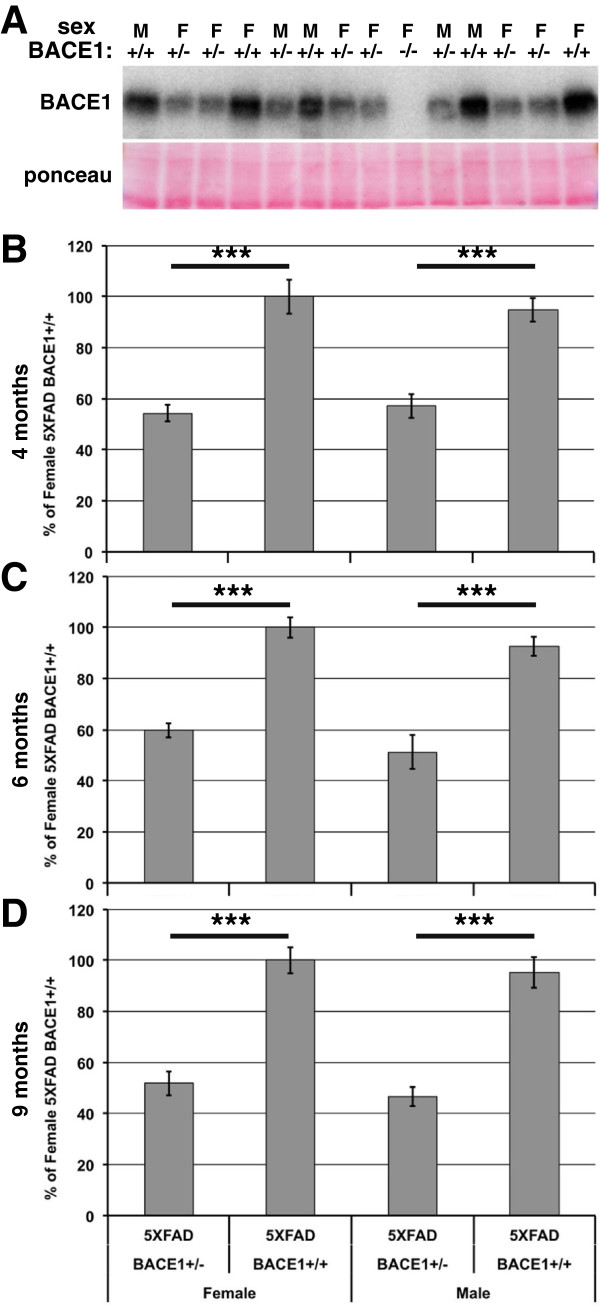
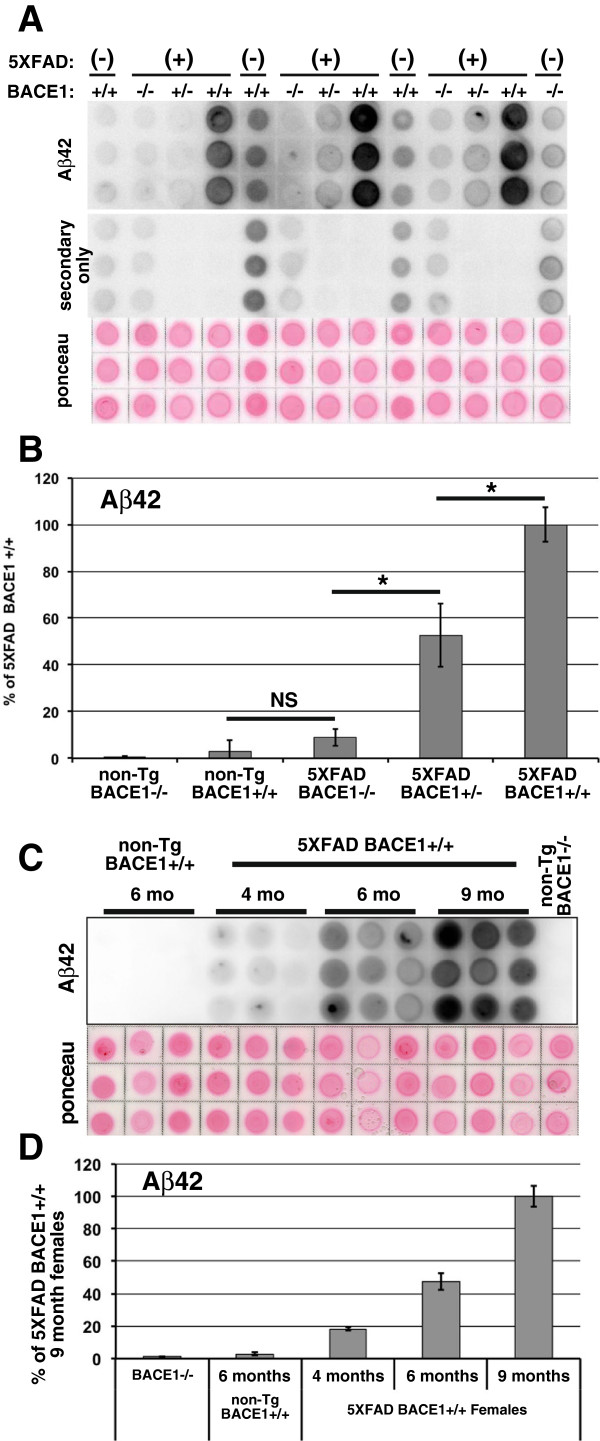
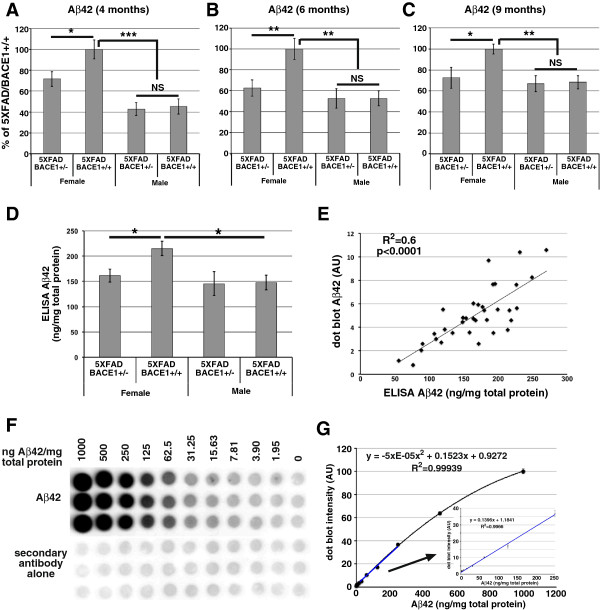
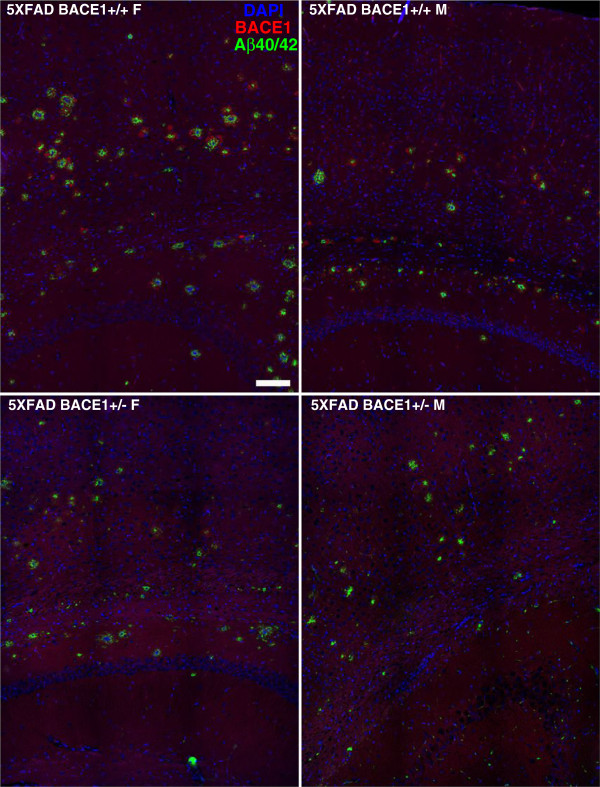
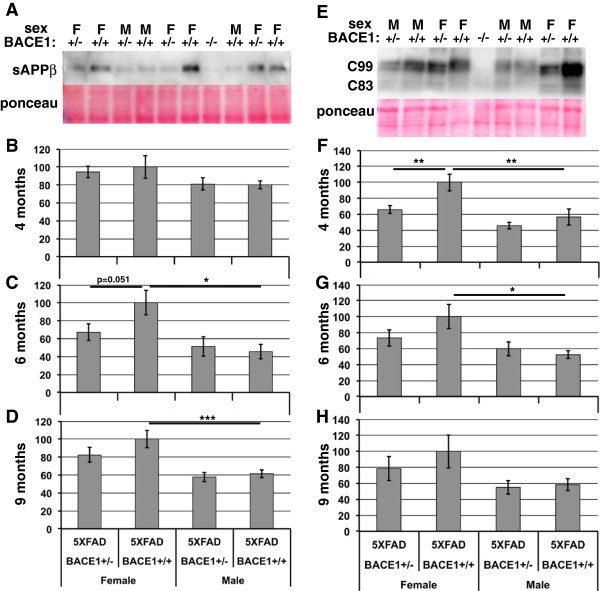
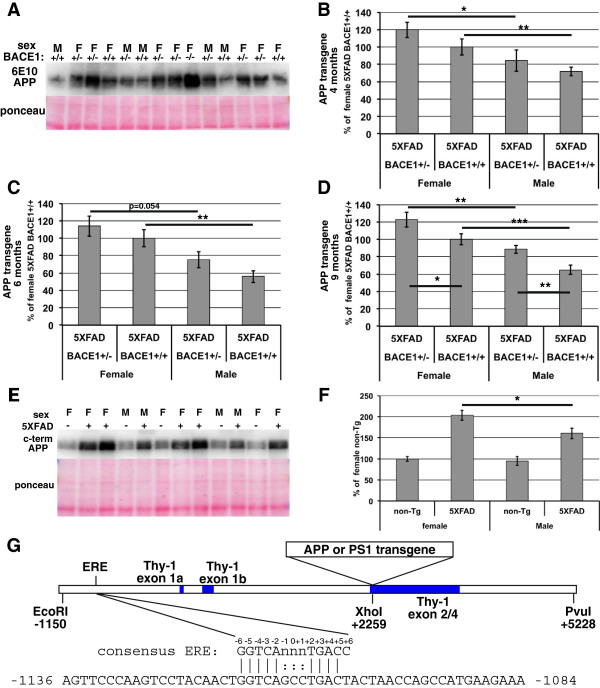
BACKGROUND: The β-secretase, BACE1, cleaves APP to initiate generation of the β-amyloid peptide, Aβ, that comprises amyloid plaques in Alzheimer's disease (AD). Reducing BACE1 activity is an attractive therapeutic approach to AD, but complete inhibition of BACE1 could have mechanism-based side-effects as BACE1-/- mice show deficits in axon guidance, myelination, memory, and other neurological processes. Since BACE1+/- mice appear normal there is interest in determining whether 50% reduction in BACE1 is potentially effective in preventing or treating AD. APP transgenic mice heterozygous for BACE1 have decreased Aβ but the extent of reduction varies greatly from study to study. Here we assess the effects of 50% BACE1 reduction on the widely used 5XFAD mouse model of AD. RESULTS: 50% BACE1 reduction reduces Aβ42, plaques, and BACE1-cleaved APP fragments in female, but not in male, 5XFAD/BACE1+/- mice. 5XFAD/BACE1+/+ females have higher levels of Aβ42 and steady-state transgenic APP than males, likely caused by an estrogen response element in the transgene Thy-1 promoter. We hypothesize that higher transgenic APP level in female 5XFAD mice causes BACE1 to no longer be in excess over APP so that 50% BACE1 reduction has a significant Aβ42 lowering effect. In contrast, the lower APP level in 5XFAD males allows BACE1 to be in excess over APP even at 50% BACE1 reduction, preventing lowering of Aβ42 in 5XFAD/BACE1+/- males. We also developed and validated a dot blot assay with an Aβ42-selective antibody as an accurate and cost-effective alternative to ELISA for measuring cerebral Aβ42 levels. CONCLUSIONS: 50% BACE1 reduction lowers Aβ42 in female 5XFAD mice only, potentially because BACE1 is not in excess over APP in 5XFAD females with higher transgene expression, while BACE1 is in excess over APP in 5XFAD males with lower transgene expression. Our results suggest that greater than 50% BACE1 inhibition might be necessary to significantly lower Aβ, given that BACE1 is likely to be in excess over APP in the human brain. Additionally, in experiments using the 5XFAD mouse model, or other Thy-1 promoter transgenic mice, equal numbers of male and female mice should be used, in order to avoid artifactual gender-related differences.
Overview
The claims and statistics of this paper haven’t been checked yet.
Run the check — free, no account needed. It reads the open-access text and checks the sources it cites.
Integrity signals
Registry
Cites
Statistics
Figures
Verification
Claims the paper makes
The claims and statistics of this paper haven’t been checked yet.
Run the check — free, no account needed. It reads the open-access text and checks the sources it cites.
Claims other papers make about this one
Each is checked against this paper’s own text: does it say what the citing paper says it does?
The source backs part of the claim, not all of it — or backs it for a different population, condition or comparison.
In the citing paper
“Consistent with the reported phenotypes of the 5XFAD model17, we found that Aβ accumulation in females was almost double that of males.”
From Effects of SPI1-mediated transcriptome remodeling on Alzheimer's disease-related phenotypes in mouse models of Aβ amyloidosis (2024) · cites this paper as [17]
Experimental — accuracy not yet measuredThe source backs part of the claim, not all of it — or backs it for a different population, condition or comparison.
In the citing paper
“Consistent with the reported phenotypes of the 5XFAD model17, we found that Aβ accumulation in females was almost double that of males.”
From Effects of SPI1-mediated transcriptome remodeling on Alzheimer's disease-related phenotypes in mouse models of Aβ amyloidosis (2024) · cites this paper as [17]
Experimental — accuracy not yet measuredThe cited source says what the claim attributes to it.
In the citing paper
“Because 5XFAD mouse model has a significant sex difference in Aβ levels and amyloid deposition17, we performed all statistical analyses for males and females separately.”
From Effects of SPI1-mediated transcriptome remodeling on Alzheimer's disease-related phenotypes in mouse models of Aβ amyloidosis (2024) · cites this paper as [17]
The cited source says what the claim attributes to it.
In the citing paper
“Because 5XFAD mice are known to have a sex-dependent difference in the extent of amyloid accumulation (25), we designed our study to consider sex difference, analyzing the results separately between male and female mice.”
From Deletion of Abi3 gene locus exacerbates neuropathological features of Alzheimer’s disease in a mouse model of Aβ amyloidosis (2021) · cites this paper as [25]
In the citing paper
“Females also appear to have increased BACE1 activity, a β-secretase processing enzyme which cleaves pAPP and produces pathogenic Aβ fragments [40,41], ultimately leading to increased amyloid plaque burden compared to male 5XFAD mice [41,42].”
From Centella Asiatica Improves Memory and Promotes Antioxidative Signaling in 5XFAD Mice (2019) · cites this paper as [40]
Self-check
Percentages, sums and reported differences re-computed from the paper’s own numbers.
The self-check needs the paper’s full text.
Citations
Cites
Oakley, H., Cole, S. L., Logan, S., Maus, E., Shao, P., Craft, J., Guillozet-Bongaarts, A., Ohno, M., Disterhoft, J., Van Eldik, L., et al. (2006) · The Journal of Neuroscience · doi:10.1523/jneurosci.1202-06.2006 · Cited by 3,530 · cited 5×
“To accomplish these goals, we modeled partial BACE1 inhibition by crossing BACE1 mice [3,5,11] with 5XFAD transgenic mice that exhibit aggressive, early-onset amyloid pathology [27].”
BackgroundMethodInfluentialAlzheimer-type neuropathology in transgenic mice overexpressing V717F β-amyloid precursor protein
Games, D., Adams, D., Alessandrini, R., Barbour, R., Borthelette, P., Blackwell, C., Carr, T., Clemens, J., Donaldson, T., Gillespie, F., et al. (1995) · Nature · doi:10.1038/373523a0 · Cited by 2,516
Citron, M., Oltersdorf, T., Haass, C., McConlogue, L., Hung, A. Y., Seubert, P., Vigo-Pelfrey, C., Lieberburg, I., & Selkoe, D. J. (1992) · Nature · doi:10.1038/360672a0 · Cited by 1,757
BACE1 is the major β-secretase for generation of Aβ peptides by neurons
Cai, H., Wang, Y., McCarthy, D. B., Wen, H., Borchelt, D., Price, D. L., & Wong, P. C. (2001) · Nature Neuroscience · doi:10.1038/85064 · Cited by 1,087
Trafficking and Proteolytic Processing of APP
Haass, C., Kaether, C., Thinakaran, G., & Sisodia, S. (2012) · Cold Spring Harbor Perspectives in Medicine · doi:10.1101/cshperspect.a006270 · Cited by 1,075
Luo, Y., Bolon, B., Kahn, S., Bennett, B. D., Babu-Khan, S., Denis, P., Fan, W., Kha, H., Zhang, J., Gong, Y., et al. (2001) · Nature Neuroscience · doi:10.1038/85059 · Cited by 1,001
The Genetics of Alzheimer's Disease
Bertram, L., & Tanzi, R. E. (2012) · Progress in molecular biology and translational science · doi:10.1016/b978-0-12-385883-2.00008-4 · Cited by 794
The genetics of Alzheimer disease
Tanzi, R. E. (2012) · Cold Spring Harbor Perspectives in Medicine · doi:10.1101/cshperspect.a006296 · Cited by 727
Roberds, S. L. (2001) · Human Molecular Genetics · doi:10.1093/hmg/10.12.1317 · Cited by 705
Control of Peripheral Nerve Myelination by the ß-Secretase BACE1
Willem, M., Garratt, A. N., Novak, B., Citron, M., Kaufmann, S., Rittger, A., DeStrooper, B., Saftig, P., Birchmeier, C., & Haass, C. (2006) · Science · doi:10.1126/science.1132341 · Cited by 703
Cited by
Sorted by citations
Items 101–200 of 213
Speers, A. B., García‐Jaramillo, M., Feryn, A. B., Matthews, D. G., Lichtenberg, T., Caruso, M. A., Wright, K. M., Quinn, J. F., Stevens, J. F., Maier, C. S., et al. (2021) · Frontiers in Pharmacology · doi:10.3389/fphar.2021.788312 · Cited by 29
“Studies in 5xFAD mice have found that female mice display greater molecular pathology (Sadleir et al., 2015; Bundy et al., 2019), higher levels of cerebral Aβ42 (Sadleir et al., 2015), and a greater Aβ plaque burden than male mice (Bhattacharya et al., 2014; Reid and Darvesh, 2015).”
BackgroundCui, J., Ait‐Ghezala, G., Sambamurti, K., Gao, F., Shen, Y., & Li, R. (2021) · Journal of Neuroscience · doi:10.1523/jneurosci.0864-20.2021 · Cited by 26
A novel process driving Alzheimer's disease validated in a mouse model: Therapeutic potential
Greenfield, S. A., Cole, G. M., Coen, C. W., Frautschy, S. A., Singh, R. P., Mekkittikul, M., Garcia‐Ratés, S., Morrill, P. R., Hollings, O., Passmore, M., et al. (2022) · Alzheimer s & Dementia Translational Research & Clinical Interventions · doi:10.1002/trc2.12274 · Cited by 27
Devi, L., & Ohno, M. (2015) · Neuroscience · doi:10.1016/j.neuroscience.2015.08.037 · Cited by 28
“Collectively, although it is unclear why APP overexpression was so low in a cohort of 5XFAD males tested by Sadleir et al. (2015) with anti-C-terminal APP (Y188), it seems reasonable to conceive that levels of β-cleaved metabolites are consistently sensitive to reductions by BACE1…”
BackgroundResultInfluentialHöfling, C., Morawski, M., Zeitschel, U., Zanier, E. R., Moschke, K., Serdaroglu, A., Canneva, F., von Hörsten, S., Simoni, M. G. D., Forloni, G., et al. (2016) · Aging Cell · doi:10.1111/acel.12508 · Cited by 28
Todorovic, S. T., Lončarević‐Vasiljković, N., Jović, M., Sokanovic, S. J., Kanazir, S., & Mladenović, A. (2019) · Mechanisms of Ageing and Development · doi:10.1016/j.mad.2019.111195 · Cited by 26
Sex differences in a murine model of Cerebral Amyloid Angiopathy
Maniskas, M. E., Mack, A. F., Morales‐Scheihing, D., Finger, C. E., Zhu, L., Paulter, R., Urayama, A., McCullough, L. D., & Manwani, B. (2021) · Brain Behavior & Immunity - Health · doi:10.1016/j.bbih.2021.100260 · Cited by 26
“It has been speculated that an active estrogen response element exists on the Thy 1 promotor of Tg-SwDI mice (using prediction analysis), but this has not been established in-vivo (Sadleir et al., 2015).”
BackgroundApproaches to Reduce CRISPR Off-Target Effects for Safer Genome Editing
Chapman, J. E., Gillum, D. R., & Kiani, S. (2017) · Applied Biosafety · doi:10.1177/1535676017694148 · Cited by 25
Almandoz-Gil, L., Welander, H., Ihse, E., Khoonsari, P. E., Musunuri, S., Lendel, C., Sigvardson, J., Karlsson, M., Ingelsson, M., Kultima, K., et al. (2017) · Free Radical Biology and Medicine · doi:10.1016/j.freeradbiomed.2017.07.004 · Cited by 25
Hendrickx, J. O., Martinet, W., Dam, D. V., & Meyer, G. R. Y. D. (2021) · Frontiers in Molecular Biosciences · doi:10.3389/fmolb.2021.651215 · Cited by 28
Chambers, N., Coyle, M., Sergio, J., Lanza, K., Saito, C., Topping, B., Clark, S. D., & Bishop, C. (2021) · European Journal of Neuroscience · doi:10.1111/ejn.15106 · Cited by 24
Bouter, C., Irwin, C., Franke, T. N., Beindorff, N., & Bouter, Y. (2021) · Frontiers in Medicine · doi:10.3389/fmed.2021.745064 · Cited by 27
“In contrast, several studies demonstrated higher levels of APP and Aβ42 as well as an increased plaque pathology in female 5XFAD mice (48, 59, 60).”
ResultPetrisko, T. J., Gómez-Arboledas, Á., & Tenner, A. J. (2021) · Advances in immunology · doi:10.1016/bs.ai.2021.09.003 · Cited by 23
Witucki, Ł., & Jakubowski, H. (2023) · Cells · doi:10.3390/cells12050746 · Cited by 24
“SDS-soluble and formic acid (FA)-soluble Aβ fractions, which contain the bulk of Aβ [36], as well as a minor RIPA-soluble Aβ fraction were obtained.”
MethodTherapeutic Effects of Aripiprazole in the 5xFAD Alzheimer’s Disease Mouse Model
Jeong, Y. J., Son, Y., Park, H.-J., Oh, S. J., Choi, J. Y., Ko, Y.-G., & Lee, H. (2021) · International Journal of Molecular Sciences · doi:10.3390/ijms22179374 · Cited by 20
“As the pattern of beta amyloid accumulation and neuroinflammation is more severe in female 5xFAD mice than in males [33,34], we used only female 5xFAD and age-matched WT mice in our study.”
MethodQuan, Q., Qian, Y., Li, X., & Li, M. (2019) · Journal of Alzheimer s Disease · doi:10.3233/jad-190026 · Cited by 21
Han, M., Seo, H., Choi, H., Lee, E., & Park, J. (2021) · Frontiers in Neuroscience · doi:10.3389/fnins.2021.685977 · Cited by 22
SENP1 and SENP2 regulate SUMOylation of amyloid precursor protein
Maruyama, T., Abe, Y., & Niikura, T. (2018) · Heliyon · doi:10.1016/j.heliyon.2018.e00601 · Cited by 20
Michelon, C. M., Michels, M., Abatti, M. R., Vieira, A. A. D. S., Borges, H. D. M., Dominguini, D., Barichello, T., & Dal‐Pizzol, F. (2019) · Molecular Neurobiology · doi:10.1007/s12035-019-01808-1 · Cited by 20
Armbrust, F., Bickenbach, K., Marengo, L., Pietrzik, C. U., & Becker‐Pauly, C. (2021) · Biochimica et Biophysica Acta (BBA) - Molecular Cell Research · doi:10.1016/j.bbamcr.2021.119164 · Cited by 21
Sex differences and the role of estrogens in the immunological underpinnings of Alzheimer's disease
Price, B. R., Walker, K. A., Eissman, J. M., Suryadevara, V., Sime, L. N., Hohman, T. J., & Gordon, M. N. (2025) · Alzheimer s & Dementia Translational Research & Clinical Interventions · doi:10.1002/trc2.70139 · Cited by 25
“118,121 Not all findings are consistent, however.”
Low, J. D., Bartberger, M. D., Chen, K., Cheng, Y., Fielden, M. R., Gore, V., Hickman, D., Liu, Q., Sickmier, E. A., Vargas, H. M., et al. (2017) · MedChemComm · doi:10.1039/c7md00106a · Cited by 18
Rassi, Z. E., & Puangpila, C. (2016) · Electrophoresis · doi:10.1002/elps.201600413 · Cited by 19
Shah, S. Z. A., Zhao, D., Taglialatela, G., Khan, S. H., Hussain, T. A., Dong, H., Lai, M., Zhou, X., & Yang, L. (2017) · Neurotherapeutics · doi:10.1007/s13311-016-0500-0 · Cited by 18
RetractedAlam, M. R., & Singh, S. (2023) · Inflammopharmacology · doi:10.1007/s10787-023-01259-0 · Cited by 19
Minding the Gap: Exploring Neuroinflammatory and Microglial Sex Differences in Alzheimer’s Disease
Reed-Geaghan, E. G., & Keller-Norrell, P. R. (2023) · International Journal of Molecular Sciences · doi:10.3390/ijms242417377 · Cited by 19
Peripheral HMGB1 is linked to O3 pathology of disease‐associated astrocytes and amyloid
Ahmed, C., Greve, H. J., Garza-Lombó, C., Malley, J. A., Johnson, J., Oblak, A. L., & Block, M. L. (2024) · Alzheimer s & Dementia · doi:10.1002/alz.13825 · Cited by 18
“Male transgenic 5xFAD mice hemizygous for five familial , 62,63 risking a ceiling effect when combined with O 3 exposure; thus, to prevent potentially confounding analyses, only male mice were used in the current study.”
MethodTams, A. L. M., Sanz‐Morello, B., Westi, E. W., Mouhammad, Z. A., Andersen, J. V., Freude, K., Vohra, R., Hannibal, J., Aldana, B. I., & Kolko, M. (2021) · Cellular and Molecular Neurobiology · doi:10.1007/s10571-021-01126-y · Cited by 19
Cuddy, L. K., Alia, A. O., Salvo, M. A., Chandra, S., Grammatopoulos, T. N., Justman, C. J., Lansbury, P. T., Mazzulli, J. R., & Vassar, R. J. (2022) · Molecular Neurodegeneration · doi:10.1186/s13024-022-00561-9 · Cited by 17
“Since sex-based effects in the 5XFAD mouse model have been reported for steady-state APP levels and plaque burden [45, 46], we performed immunoblots of male and female mice treated with vehicle, LNK-754 or lonafarnib separately for transgenic APP expression (Fig.”
BackgroundHe, Y., Pan, S., Xu, M., He, R., Huang, W., Song, P., Huang, J., Zhang, H., & Hu, Y. (2017) · The FASEB Journal · doi:10.1096/fj.201700064r · Cited by 17
Transcorneal electrical stimulation enhances cognitive functions in aged and 5XFAD mouse models
Yu, W. S., Aquili, L., Wong, K. H., Lo, A., Chan, L. L. H., Chan, Y., & Lim, L. W. (2022) · Annals of the New York Academy of Sciences · doi:10.1111/nyas.14850 · Cited by 17
Yao, Y., Nzou, G., Alle, T., Tsering, W., Maimaiti, S., Trojanowski, J. Q., Lee, V. M. ‐., Ballatore, C., & Brunden, K. R. (2020) · Alzheimer s & Dementia · doi:10.1002/alz.12144 · Cited by 17
Tilki, E. K., & Dikmen, M. (2021) · PLoS ONE · doi:10.1371/journal.pone.0260633 · Cited by 16
Pan, A. L., Audrain, M., Sakakibara, E., Joshi, R., Zhu, X., Wang, Q., Wang, M., Beckmann, N. D., Schadt, E. E., Gandy, S., et al. (2022) · Cells · doi:10.3390/cells11233880 · Cited by 16
“male 5xFAD-GFP compared to WT-GFP, consistent with previous reports that female 5xFAD develop more severe neuropathology than age-matched males [48,49], while 2 DEGs were found in male 5xFAD-DUSP4 when compared to male 5xFAD-GFP (Figure S8D,E).”
BackgroundResultChen, F., Ma, L., Liu, Q., Zhou, Z., & Yi, W. (2024) · Metabolism · doi:10.1016/j.metabol.2024.156097 · Cited by 15
Taha, H. B., Birnbaum, A., Matthews, I., Aceituno, K., Leon, J., Thorwald, M. A., Godoy-Lugo, J. A., & Cortés, C. J. (2024) · GeroScience · doi:10.1007/s11357-024-01345-3 · Cited by 17
Peng, A.-X., Gao, Y., Zhuang, X., Lin, Y., He, W., Wang, Y., Chen, W., Chen, T., Huang, X., Yang, R., et al. (2019) · Frontiers in Pharmacology · doi:10.3389/fphar.2019.01391 · Cited by 15
Ebrahimi-Ghiri, M., Shahini, F., & Zarrindast, M. (2021) · Metabolic Brain Disease · doi:10.1007/s11011-021-00851-z · Cited by 15
Cognitive decline, Aβ pathology, and blood–brain barrier function in aged 5xFAD mice
Nehra, G., Promsan, S., Yubolphan, R., Chumboatong, W., Vivithanaporn, P., Maloney, B. J., Lungkaphin, A., Bauer, B., & Hartz, A. M. S. (2024) · Fluids and Barriers of the CNS · doi:10.1186/s12987-024-00531-x · Cited by 14
“Although female 5xFAD mice exhibit worse Aβ pathology than males due to estrogen-regulated hAPP overexpression, sex differences in the vessel architecture have been previously noted for older 5xFAD mice [49, 50].”
BackgroundHone‐Blanchet, A., Bohsali, A. A., Krishnamurthy, L. C., Shahid, S. S., Lin, Q., Zhao, L., Loring, D. W., Goldstein, F. C., John, S. E., Fleischer, C. C., et al. (2021) · Neurobiology of Aging · doi:10.1016/j.neurobiolaging.2021.09.016 · Cited by 14
Bax, M., Balez, R., Muñoz, S. S., Do‐Ha, D., Stevens, C. H., Berg, T., Cabral-da-Silva, M. C., Engel, M., Nicholson, G. A., Yang, S., et al. (2019) · Stem Cell Research · doi:10.1016/j.scr.2019.101530 · Cited by 14
Breast cancer type 1 and neurodegeneration: consequences of deficient DNA repair
Leung, E., & Hazrati, L. (2021) · Brain Communications · doi:10.1093/braincomms/fcab117 · Cited by 14
Quan, Q., Ma, X., Li, M., Li, X., & Yuan, H. (2023) · Experimental and Therapeutic Medicine · doi:10.3892/etm.2023.12319 · Cited by 11
“Some molecules, such as BACE1 (32,33) and IDE (10,11), can be regulated transcriptionally by PPAR γ , and are involved in the patho‑ genesis of AD.”
BackgroundSadleir, K. R., Popović, J., Khatri, A. W., & Vassar, R. J. (2022) · PLoS ONE · doi:10.1371/journal.pone.0263332 · Cited by 11
Gadhavi, J. D., Patel, M., Bhatia, D. D., & Gupta, S. K. (2021) · Biochimie · doi:10.1016/j.biochi.2021.09.012 · Cited by 11
Cerebrospinal fluid endo-lysosomal proteins as potential biomarkers for Huntington’s disease
Lowe, A. J., Sjödin, S., Rodrigues, F. B., Byrne, L. M., Blennow, K., Tortelli, R., Zetterberg, H., & Wild, E. J. (2020) · PLoS ONE · doi:10.1371/journal.pone.0233820 · Cited by 11
Systems genetics identifies modifiers of Alzheimer’s disease risk and resiliencePreprint
Neuner, S. M., Hohman, T. J., Richholt, R., Bennett, D. A., Schneider, J. A., Jager, P. L. D., Huentelman, M. J., O’Connell, K. M. S., & Kaczorowski, C. C. (2017) · bioRxiv (Cold Spring Harbor Laboratory) · doi:10.1101/225714 · Cited by 11
“No main effect of sex was observed [F(1, 153) = 1.4, p = 0.25], in contrast to a previous report using a single genetic background suggesting the 5XFAD model preferentially affect females (Sadleir et al., 2015).”
ResultInfluentialFlores-Fernández, J. M., Pesch, V., Sriraman, A., Chimal‐Juárez, E., Amidian, S., Wang, X., Duckering, C., Fang, A., Reithofer, S., Ma, L., et al. (2024) · Bioengineering & Translational Medicine · doi:10.1002/btm2.10665 · Cited by 9
Pan, A. L., Audrain, M., Sakakibara, E., Joshi, R., Zhu, X., Wang, Q., Wang, M., Beckmann, N. D., Schadt, E. E., Gandy, S., et al. (2024) · Frontiers in Aging Neuroscience · doi:10.3389/fnagi.2024.1400447 · Cited by 9
Guo, L., Li, R., Zhang, Y. F., Qin, T. Y., Li, Q. S., Li, X. X., & Qi, Z. (2017) · Journal of Animal Physiology and Animal Nutrition · doi:10.1111/jpn.12722 · Cited by 9
Colín-Martínez, E., la Fuente-Muñoz, C. E. D., & Arias, C. (2024) · Neurochemical Research · doi:10.1007/s11064-024-04224-7 · Cited by 8
“This promoter contains an estrogen response-like element that, as suggested, can explain the higher expression of transgenes in females [47 , 48 ].”
BackgroundEmerging role of neural stem/progenitor cell secretome in brain inflammatory response modulation
Łukowicz, K., Grygier, B., & Basta‐Kaim, A. (2025) · Pharmacological Reports · doi:10.1007/s43440-025-00733-6 · Cited by 8
Shah, S. Z. A., Zhao, D., Taglialatela, G., Hussain, T. A., Dong, H., Sabir, N., Mangi, M. H., Wu, W., Lai, M., Zhang, X., et al. (2019) · International Journal of Molecular Sciences · doi:10.3390/ijms20051144 · Cited by 9
Sex-based dimorphisms in expression of BDNF and BACE1 in bipolar patients
Ghafouri‐Fard, S., Taheri, M. N., Arsang‐Jang, S., Oskooei, V. K., & Omrani, M. D. (2019) · Comprehensive Psychiatry · doi:10.1016/j.comppsych.2019.02.008 · Cited by 8
dos Santos, T. F. O., Santos, E. R., Bispo, J. M. M., Souza, M. F., de Gois, A. M., Lins, L. C. R. F., Silva, R. H., Ribeiro, A. M., Marchioro, M., & dos Santos, J. R. (2020) · Experimental Gerontology · doi:10.1016/j.exger.2020.111198 · Cited by 8
Woo, N., Kim, S. K., Sun, Y., & Kang, S. H. (2017) · Journal of Chromatography B · doi:10.1016/j.jchromb.2017.11.033 · Cited by 8
Kaur, S., Kumari, D., & Dandekar, M. P. (2025) · Molecular Neurobiology · doi:10.1007/s12035-024-04685-5 · Cited by 7
Calcines-Rodríguez, L., Noyes-Martel, N., Becker, J. D., Nguyen, S. K., Osabutey, M., Trojanczyk, L., Majewska, A. K., & O’Banion, M. K. (2025) · Journal of Neuroinflammation · doi:10.1186/s12974-025-03659-1 · Cited by 8
“However, the ERE sequence contains a base pair mutation that deviates from the consensus sequence, and thus it is unclear whether it is active or even functional [102].”
The growth and reproduction performance of TALEN-mediated β-lactoglobulin-knockout bucks
Ge, H., Cui, C., Liu, J., Luo, Y., Quan, F., Jin, Y., & Zhang, Y. (2016) · Transgenic Research · doi:10.1007/s11248-016-9967-z · Cited by 7
Kadam, R., Harish, M., Dalvi, K., & Teni, T. R. (2020) · Cell Biochemistry and Function · doi:10.1002/cbf.3600 · Cited by 7
Aquaporin-4 Mediated Aggregation of Alzheimer’s Amyloid β-Peptide
Maroli, N. (2023) · ACS Chemical Neuroscience · doi:10.1021/acschemneuro.3c00233 · Cited by 7
Marshall, J. P. S., Huynh, K., Lancaster, G. I., Ng, J., Collins, J. M., Pernes, G., Liang, A., Featherby, T. J., Mellet, N. A., Drew, B. G., et al. (2024) · iScience · doi:10.1016/j.isci.2024.108800 · Cited by 8
“Sadleir et al. 20 have previously published findings that suggests a differential transgenic expression level of APP in females compared to males in the 5xFAD model, likely due to an estrogen response element in the Thy1-promoter.”
BackgroundSex Differences in Metabolite–Immune Circuits of Neuroinflammation
Saminathan, P., Corey, M., Gibbons, A., Rayadurgam, M., Reddy, N., Ramesh, P., & Sharma, S. (2026) · Immunological Reviews · doi:10.1111/imr.70114 · Cited by 8
The MIR-NAT MAPT-AS1 does not regulate Tau expression in human neurons
Policarpo, R., Wolfs, L., Martínez‐Montero, S., Vandermeulen, L., Royaux, I. E., Peer, G. V., Mestdagh, P., Sierksma, A. S. R., Strooper, B. D., & d’Ydewalle, C. V. O. (2025) · PLoS ONE · doi:10.1371/journal.pone.0314973 · Cited by 5
Dogra, N., Nagpal, D., Aeri, V., Ahmad, S., & Katare, D. P. (2021) · All Life · doi:10.1080/26895293.2021.1994472 · Cited by 6
Gupta, R. V., & Kumar, P. (2021) · Gene Reports · doi:10.1016/j.genrep.2021.101442 · Cited by 6
Borgstedt, L., Bratke, S., Blobner, M., Pötzl, C., Ulm, B., Jungwirth, B., & Schmid, S. (2022) · Frontiers in Neuroscience · doi:10.3389/fnins.2022.1033729 · Cited by 6
Plucińska, K., Mody, N., Dekeryte, R., Shearer, K., Mcilroy, G. D., Delibegović, M., & Platt, B. (2020) · Nutritional Neuroscience · doi:10.1080/1028415x.2020.1806190 · Cited by 7
1D continuous gel electrophoresis composition for the separation of deamidated proteins
Boudier-Lemosquet, A., Mahler, A., Bobo, C., Moreau, V., & Priault, M. (2021) · Methods · doi:10.1016/j.ymeth.2021.03.002 · Cited by 6
Ban, C., Zhang, Q., Feng, J., Li, H., Qiu, Q., Tian, Y., & Li, X. (2017) · BMC Psychiatry · doi:10.1186/s12888-017-1530-9 · Cited by 5
p35 Hemizygous Deletion in 5xFAD Mice Increases Aβ Plaque Load in Males but Not in Females
Barrett, T., Marchalant, Y., & Park, K. H. J. (2019) · Neuroscience · doi:10.1016/j.neuroscience.2019.08.017 · Cited by 5
Kynigopoulos, D., Fella, E., Shahabian, L., Christodoulou, C. C., Papacharalampous, R., Diskos, K., Vagiaki, L. E., Sidiropoulou, K., Pipis, M., Kleopa, K. A., et al. (2025) · Frontiers in Neuroscience · doi:10.3389/fnins.2025.1636624 · Cited by 4
Ackshota, N., Friedlander, A., Hershkovich, O., Gurevich, M., Givon, U., Sakhini, M., & Achiron, A. (2020) · Clinical Spine Surgery A Spine Publication · doi:10.1097/bsd.0000000000000952 · Cited by 4
Savva, K., Zachariou, M., Kynigopoulos, D., Fella, E., Vitali, M.-I., Kosofidou, X., Spyrou, M., Sargiannidou, I., Panayiotou, E., Dietis, N., et al. (2023) · Life · doi:10.3390/life13051095 · Cited by 4
Interaction of amisulpride with GLUT1 at the blood-brain barrier. Relevance to Alzheimer’s disease
Boyanova, S., Lloyd-Morris, E., Corpe, C. P., Rahman, K. M., Farag, D. B., Page, L. K., Wang, H., Fleckney, A. L., Gatt, A. P., Troakes, C., et al. (2023) · PLoS ONE · doi:10.1371/journal.pone.0286278 · Cited by 5
Kawahara, K., Hasegawa, T., Hasegawa, N., Izumi, T., Sato, K., Sakamaki, T., Ando, M., & Maeda, T. (2024) · Journal of Neurochemistry · doi:10.1111/jnc.16078 · Cited by 4
“APP23 mice and 5xFAD mice are transgenic mice that use the Thy1 promoter, which may affect the AD pathogenesis of sex-difference (Sadleir et al., 2015).”
BackgroundMarongiu, R., Platholi, J., Park, L., Yu, F., Sommer, G., Woods, C., Milner, T. A., & Glass, M. J. (2025) · Frontiers in Molecular Biosciences · doi:10.3389/fmolb.2025.1597130 · Cited by 7
Karahan, H., Lüle, S., & Kelicen‐Uğur, P. (2018) · Pharmacology · doi:10.1159/000488765 · Cited by 4
Pregabalin Treatment does not Affect Amyloid Pathology in 5XFAD Mice
Sadleir, K. R., Popovoic, J., Zhu, W., Reidel, C. T., Do, H., Silverman, R. B., & Vassar, R. J. (2021) · Current Alzheimer Research · doi:10.2174/1567205018666210713125333 · Cited by 4
“There was no effect of pregabalin on transgenic APP, as expected, but as we have previously observed that females had higher levels of human APP [55].”
Neuharth, J., Hernandez, K. A., Bernholtz, J., Edwards, H., & Stewart, A. (2025) · Biology of Sex Differences · doi:10.1186/s13293-025-00788-3 · Cited by 3
“%) of these studies cite Sadleir et al., 2015 (Fig.”
Age and sex dependent hippocampal neuronal hyperactivity in Alzheimer model mice
Hegnet, E., Häkli, S., Koivisto, H., Miettinen, P. O., Jin, N., Gureviciene, I., & Tanila, H. (2025) · Experimental Neurology · doi:10.1016/j.expneurol.2025.115632 · Cited by 3
Piyarungsri, K., Chuammitri, P., Pringproa, K., Pila, P., Srivorakul, S., Sornpet, B., & Pusoonthornthum, R. (2023) · Journal of Feline Medicine and Surgery · doi:10.1177/1098612x231208937 · Cited by 3
Ono, M., Ito, T., Yamaki, S., Hori, Y., Zhou, Q., Zhao, X., Muramoto, S., Yamamoto, R., Furuyama, T., Sakata‐Haga, H., et al. (2024) · Heliyon · doi:10.1016/j.heliyon.2024.e28821 · Cited by 3
Ma, L., Liu, S., Du, J., Niu, Y., Hou, P.-F., Shu, Q., Ma, R., Wu, S., Qu, Q., & Lv, Y.-L. (2020) · Neurobiology of Learning and Memory · doi:10.1016/j.nlm.2019.107155 · Cited by 3
Rodriguez, L. C., Noyes-Martel, N., Becker, J. D., Majewska, A. K., & O’Banion, M. K. (2025) · bioRxiv (Cold Spring Harbor Laboratory) · doi:10.1101/2025.03.28.646050 · Cited by 3
Li, Y., Go, M. A., Zhang, H., Aleksynas, R., Kim, J., Gao, M., Prado, S., Sastre, M., & Schultz, S. R. (2026) · Advanced Science · doi:10.1002/advs.77419 · Cited by 3
Novikov, V., Timothy, L. T. C., Fan, J., Sadek, K., Cowan, M. F., Onuska, K. M., Duennwald, M. L., Prado, V. F., & Prado, M. A. M. (2025) · Journal of Neurochemistry · doi:10.1111/jnc.70204 · Cited by 2
“The Thy-1 promoter used to drive TDP-43 expression in TAR4 mice has an estrogen response element, with previous studies attributing some sex-specific outcomes in transgenic mice to this element (Forner et al. 2021; Sadleir et al. 2015).”
Role of BACE1 in Cognitive Function, from Alzheimer’s Disease to Traumatic Brain Injury
Lombardo, S., & Tesco, G. (2016) · Elsevier eBooks · doi:10.1016/b978-0-12-802851-3.00008-5 · Cited by 2
Sharma, B., Rodarte, D., Goyal, G., Rodriguez, S., & Kumar, S. (2025) · Molecular Neurobiology · doi:10.1007/s12035-025-05130-x · Cited by 2
Nikolaeva, N. S., Maltsev, A. V., Овчинников, Р. К., Sokolov, V. B., Aksinenko, A. Y., Bovina, E. V., & Kinzirsky, A. S. (2019) · Biology Bulletin · doi:10.1134/s1062359019030075 · Cited by 2
Saha, D., Sun, X., Yang, W., Luo, J., & Zheng, W. (2026) · JACS Au · doi:10.1021/jacsau.6c00126 · Cited by 2
Identification and characterization of antibodies elicited by human cystatin C fragment
Behrendt, I., Prądzińska, M., Spodzieja, M., Czaplewska, P., Kołodziejczyk, A. S., Szymańska, A., Kasprzykowski, F., Lundström, S. L., Zubarev, R. A., & Rodziewicz‐Motowidło, S. (2017) · Journal of Molecular Recognition · doi:10.1002/jmr.2689 · Cited by 1
Marongiu, R., Platholi, J., Park, L., Yu, F., Sommer, G., Woods, C., Milner, T. A., & Glass, M. J. (2025) · bioRxiv (Cold Spring Harbor Laboratory) · doi:10.1101/2025.03.14.643317 · Cited by 1
Loss of Ataxin-1 Elevates BACE1 Expression and Impairs Axonal Targeting in the CerebrumPreprint
Suh, J., Romano, D., Herrick, S. P., Hooli, B. V., Oram, M. K., Mullin, K., Wasco, W., Schmahmann, J. D., Albers, M. W., & Tanzi, R. E. (2018) · SSRN Electronic Journal · doi:10.2139/ssrn.3155885
Advancement and Challenges in Parkinson’s Disease: A Recent Outlook
Mohammed, M., & Alenezi, S. K. (2020) · Springer eBooks · doi:10.1007/978-981-15-5167-3_8
Posttranslational modifications of TDP-43
Rahman, S. (2021) · Elsevier eBooks · doi:10.1016/b978-0-12-820066-7.20002-7
Yan, R. (2019) · Faculty Opinions – Post-Publication Peer Review of the Biomedical Literature · doi:10.3410/f.736877185.793568031
Interaction of amisulpride with GLUT1 at the blood-brain barrier. Relevance to Alzheimer’s diseasePreprint
Boyanova, S. T., Lloyd-Morris, E., Corpe, C. P., Rahman, K. M., Farag, D. B., Page, L. K., Wang, H., Fleckney, A. L., Gatt, A. P., Troakes, C., et al. (2023) · bioRxiv (Cold Spring Harbor Laboratory) · doi:10.1101/2023.05.15.540749
Zhong, Z., Ulmschneider, M. B., & Lorenz, C. D. (2025) · bioRxiv · doi:10.1101/2025.06.26.661739
Alzheimer’s Disease: Pathophysiological and Therapeutical Insights
Tyagi, K., Sarup, P., & Malik, J. (2025) · Nutritional neurosciences · doi:10.1007/978-981-95-2736-6_1 · Cited by 1
Metadata
- Authors
- Sadleir, K. R., Eimer, W. A., Cole, S. L., & Vassar, R.
- Affiliations
- Northwestern University (US)
- Corresponding author
- Vassar, Robert
- Venue
- Molecular Neurodegeneration
- Published
- 2015-01-07
- Volume
- 10
- Issue
- 1
- Pages
- 1-1
- ISSN
- 1750-1326 (ISSN-L)
- PMC
- PMC4297413
- OpenAlex
- W2137860879
- Cited by
- 213
- References
- 45
- Citations by year
- 2026: 15 · 2025: 18 · 2024: 14 · 2023: 12 · 2022: 12 · 2021: 42 · 2020: 18 · 2019: 22 · 2018: 18 · 2017: 22 · 2016: 18 · 2015: 2
- FWCI
- 14.74
- Type
- journal article
- Language
- en
- Open access
- gold
- doi.org
- Licence
- cc-by
- Locations
- Molecular Neurodegeneration (publishedVersion, cc-by)
- Europe PMC (PubMed Central) (publishedVersion, cc-by)
- PubMed Central (publishedVersion, cc-by)
- PubMed (publishedVersion)
- Funders
- Northwestern University (CA060553, NCI CA060553)
- National Institutes of Health (CA-060553, AG022560, NCI CA060553)
- National Institute on Aging (RF1AG022560, R01AG030142, R01AG022560, 5T32AG00026, F32AG033445)
- National Cancer Institute (CA 060553, NCI CA060553, P30CA060553)
- Topics
- Life Sciences › Neuroscience › Cellular and Molecular Neuroscience › Alzheimer's disease research and treatments
- Health Sciences › Medicine › Psychiatry and Mental health › Dementia and Cognitive Impairment Research
- Life Sciences › Neuroscience › Neurology › Neuroinflammation and Neurodegeneration Mechanisms
- Keywords
- BACE1, amyloid-beta, amyloid-beta 42, 5xFAD mice, Alzheimer's disease, sex differences, estrogen response element, dot blot, amyloid plaques, BACE1 inhibition, axon guidance, myelination, memory impairment
- MeSH terms
- Alzheimer Disease, Animals, Brain, Disease Models, Animal, Heterozygote, Humans, Memory, Mice, Transgenic, Amyloid beta-Peptides, Aspartic Acid Endopeptidases, Mice, Knockout, Amyloid Precursor Protein Secretases, Plaque, Amyloid
About these checks
Registry, retraction, Cites and statistics results are computed, not judged, with one exception: a printed reference that no index lists is read once by a model before it counts as a citation error. Claims are extracted by a model and kept only when their quote appears verbatim in the text; each cited source is then checked, with a model’s help, for whether it says what the claim relies on. Those verdicts can be wrong — read the claim’s quote and the cited source before relying on one.
Statistics and arithmetic are recomputed, not judged.
Confidence bands are shown only for fields calibrated on our annotated test set. None is calibrated yet, so no band is shown.
What counts as a claim ›How we measure confidence ›How we check this ›
Are you an author, or do you see a problem with this page? Request a review
