

Does neuroinflammation fan the flame in neurodegenerative diseases?
Open accessThe DOI matches its Crossref record; 144 of the 145 references it cites were found in a registry or an index.
Abstract
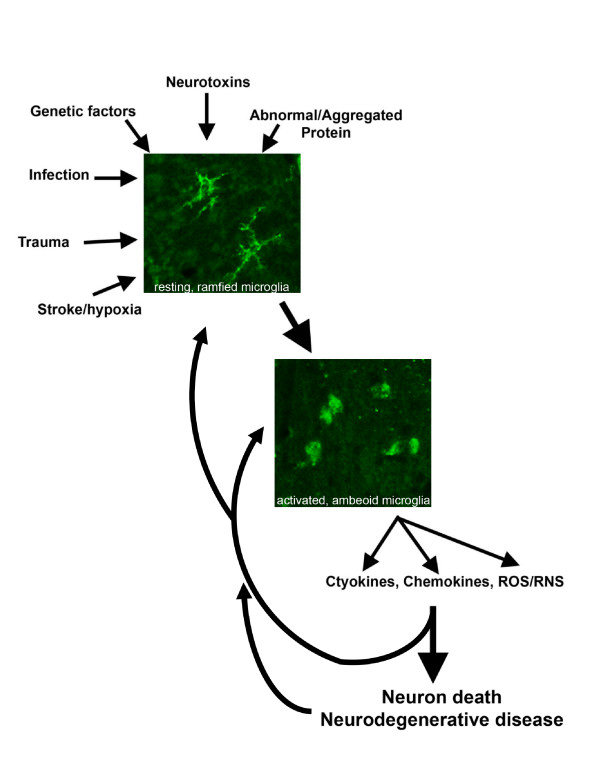
While peripheral immune access to the central nervous system (CNS) is restricted and tightly controlled, the CNS is capable of dynamic immune and inflammatory responses to a variety of insults. Infections, trauma, stroke, toxins and other stimuli are capable of producing an immediate and short lived activation of the innate immune system within the CNS. This acute neuroinflammatory response includes activation of the resident immune cells (microglia) resulting in a phagocytic phenotype and the release of inflammatory mediators such as cytokines and chemokines. While an acute insult may trigger oxidative and nitrosative stress, it is typically short-lived and unlikely to be detrimental to long-term neuronal survival. In contrast, chronic neuroinflammation is a long-standing and often self-perpetuating neuroinflammatory response that persists long after an initial injury or insult. Chronic neuroinflammation includes not only long-standing activation of microglia and subsequent sustained release of inflammatory mediators, but also the resulting increased oxidative and nitrosative stress. The sustained release of inflammatory mediators works to perpetuate the inflammatory cycle, activating additional microglia, promoting their proliferation, and resulting in further release of inflammatory factors. Neurodegenerative CNS disorders, including multiple sclerosis (MS), Alzheimer's disease (AD), Parkinson's disease (PD), Huntington's disease (HD), amyotrophic lateral sclerosis (ALS), tauopathies, and age-related macular degeneration (ARMD), are associated with chronic neuroinflammation and elevated levels of several cytokines. Here we review the hallmarks of acute and chronic inflammatory responses in the CNS, the reasons why microglial activation represents a convergence point for diverse stimuli that may promote or compromise neuronal survival, and the epidemiologic, pharmacologic and genetic evidence implicating neuroinflammation in the pathophysiology of several neurodegenerative diseases.
Overview
The claims and statistics of this paper haven’t been checked yet.
Free: it reads the open-access text and checks the first 5 claims that cite a source we can check. Create a free account to check every claim.
Integrity signals
Registry
Cites
Statistics
Figures
Verification
Claims the paper makes
The claims and statistics of this paper haven’t been checked yet.
Free: it reads the open-access text and checks the first 5 claims that cite a source we can check. Create a free account to check every claim.
Claims other papers make about this one
Each is checked against this paper’s own text: does it say what the citing paper says it does?
The source backs part of the claim, not all of it — or backs it for a different population, condition or comparison.
In the citing paper
“Just like in peripheral tissues, aging leads to a chronic low-grade inflammation in the brain (42), which occurs in the absence of any obvious pathogen.”
From Cellular senescence in brain aging and neurodegenerative diseases: evidence and perspectives (2018) · cites this paper as [42]
Experimental — accuracy not yet measuredThe check wasn’t confident either way, so it gives no verdict — never disputed.
In the citing paper
“Not only has chronic neuroinflammation been shown to increase α-synuclein deposition in various synucleinopathy animal models (51–56), but when these animals were treated with drugs to reduce neuroinflammation, α-synuclein neuropathology also decreased (57, 58).”
From LRRK2 mediates microglial neurotoxicity via NFATc2 in rodent models of synucleinopathies (2020) · cites this paper as [51]
Experimental — accuracy not yet measured
Self-check
Percentages, sums and reported differences re-computed from the paper’s own numbers.
The self-check needs the paper’s full text.
Citations
Cites
MACDONALD, M. (1993) · Cell · doi:10.1016/0092-8674(93)90585-e · Cited by 8,366
Rosen, D. R., Siddique, T., Patterson, D., Figlewicz, D. A., Sapp, P., Hentati, A., Donaldson, D., Goto, J., O'Regan, J. P., Deng, H.-X., et al. (1993) · Nature · doi:10.1038/362059a0 · Cited by 7,062 · cited 11×
“In pre-clinical mouse models, certain anti-inflammatory treatments aimed at suppressing microglia activation have been shown to increase the life expectancy of mice expressing human mutant SOD1 by more than 30% [140].”
InfluentialGoate, A., Chartier-Harlin, M.-C., Mullan, M., Brown, J., Crawford, F., Fidani, L., Giuffra, L., Haynes, A., Irving, N., James, L., et al. (1991) · Nature · doi:10.1038/349704a0 · Cited by 4,659 · cited 1×
“Although the etiology of sporadic AD in humans is unknown, mutations in Amyloid Precursor Protein (APP) or components of its processing machinery (β-secretase and γ-secretase) result in overproduction of Aβ1-40 and 142 peptides and are sufficient to cause disease [11-17].”
Inflammation and Alzheimer’s disease
Akiyama, H. (2000) · Neurobiology of Aging · doi:10.1016/s0197-4580(00)00124-x · Cited by 4,514
Microglia-mediated neurotoxicity: uncovering the molecular mechanisms
Block, M. L., Zecca, L., & Hong, J.-S. (2007) · Nature Reviews Neuroscience · doi:10.1038/nrn2038 · Cited by 4,110 · cited 1×
“, auto-amplification of reactive oxygen species, nitric oxide, and superoxide radicals to form highly oxidizing peroxynitrite species)[7,105-108].”
Immunization with amyloid-β attenuates Alzheimer-disease-like pathology in the PDAPP mouse
Schenk, D., Barbour, R., Dunn, W., Gordon, G., Grajeda, H., Guido, T., Hu, K., Huang, J., Johnson-Wood, K., Khan, K., et al. (1999) · Nature · doi:10.1038/22124 · Cited by 3,160
McGeer, P. L., Itagaki, S., Boyes, B. E., & McGeer, E. G. (1988) · Neurology · doi:10.1212/wnl.38.8.1285 · Cited by 2,990
Bard, F., Cannon, C., Barbour, R., Burke, R.-L., Games, D., Grajeda, H., Guido, T., Hu, K., Huang, J., Johnson-Wood, K., et al. (2000) · Nature Medicine · doi:10.1038/78682 · Cited by 2,012 · cited 1×
“Passive immunization of PDAPP mice peripherally infused with antibodies that recognize aggregated Aβ in neuritic plaques rapidly increased microglial clustering around plaques detectable by in vivo multiphoton microscopy [74] and reduced plaque burden and AD pathology in PDAPP mice [75].”
Citron, M., Oltersdorf, T., Haass, C., McConlogue, L., Hung, A. Y., Seubert, P., Vigo-Pelfrey, C., Lieberburg, I., & Selkoe, D. J. (1992) · Nature · doi:10.1038/360672a0 · Cited by 1,757
Onset and Progression in Inherited ALS Determined by Motor Neurons and Microglia
Boillée, S., Yamanaka, K., Lobsiger, C. S., Copeland, N. G., Jenkins, N. A., Kassiotis, G., Kollias, G., & Cleveland, D. W. (2006) · Science · doi:10.1126/science.1123511 · Cited by 1,623 · cited 1×
“For example, ablating microglial expression of mutant SOD 1 (mSOD1) or transplanting bone marrow from wild-type mice into mSOD1 transgenic mice increases the life span of mutant mice [133,134], suggesting that SOD1 mutations may indirectly contribute to neuronal death by affecting glial rather than neuronal function.”
Cited by
Items 301–400 of 777
Zonisamide regulates basal ganglia transmission via astroglial kynurenine pathway
Fukuyama, K., Tanahashi, S., Hoshikawa, M., Shinagawa, R., & Okada, M. (2013) · Neuropharmacology · doi:10.1016/j.neuropharm.2013.08.002 · Cited by 41
Helluy, S., & Frédéric Thomas, A. (2010) · Parasites & Vectors · doi:10.1186/1756-3305-3-38 · Cited by 41
Inflammasomes are neuroprotective targets for sex steroids
Slowik, A., & Beyer, C. (2015) · The Journal of Steroid Biochemistry and Molecular Biology · doi:10.1016/j.jsbmb.2015.02.013 · Cited by 41
Upregulation of Suppressor of Cytokine Signaling 3 in Microglia by Cinnamic Acid
Chakrabarti, S., Jana, M., Roy, A., & Pahan, K. (2018) · Current Alzheimer Research · doi:10.2174/1567205015666180507104755 · Cited by 43
Modulating Neuroinflammation as a Prospective Therapeutic Target in Alzheimer’s Disease
Lee, E., & Chang, Y. (2025) · Cells · doi:10.3390/cells14030168 · Cited by 49
Aguirre, A., Maturana, C. J., Harcha, P. A., & Sáez, J. C. (2013) · Mediators of Inflammation · doi:10.1155/2013/893521 · Cited by 42
Neuroinflammation in organophosphate-induced neurotoxicity
Guignet, M. A., & Lein, P. J. (2018) · Advances in neurotoxicology · doi:10.1016/bs.ant.2018.10.003 · Cited by 54
Kirkley, K. S., Popichak, K. A., Hammond, S. L., Davies, C., Hunt, L., & Tjalkens, R. B. (2019) · Neurobiology of Disease · doi:10.1016/j.nbd.2019.02.020 · Cited by 37
Nicola, A. F. D., Meyer, M., Guennoun, R., Schumacher, M., Hunt, H., Belanoff, J. K., de Kloet, E. R., & Deniselle, M. C. G. (2020) · International Journal of Molecular Sciences · doi:10.3390/ijms21062137 · Cited by 42
Lin, C.-T., Lecca, D., Yang, L.-Y., Luo, W., Scerba, M. T., Tweedie, D., Huang, P.-S., Jung, Y.-J., Kim, D. S., Yang, C.-H., et al. (2020) · eLife · doi:10.7554/elife.54726 · Cited by 38
Martin, C. J. (2014) · Frontiers in Neuroscience · doi:10.3389/fnins.2014.00211 · Cited by 42
Wang, J., Yang, Z.-T., Liu, C., Zhao, Y., & Chen, Y. (2012) · International Journal of Molecular Medicine · doi:10.3892/ijmm.2012.1179 · Cited by 45
Zusso, M., Mercanti, G., Belluti, F., Martino, R. M. C. D., Pagetta, A., Marinelli, C., Brun, P., Ragazzi, E., Lo, R., Stifani, S., et al. (2017) · British Journal of Pharmacology · doi:10.1111/bph.13746 · Cited by 41
Senescent accelerated prone 8 (SAMP8) mice as a model of age dependent neuroinflammation
Fernández, A., Quintana, E., Velasco, P., Moreno-Jimenez, B., de Andrés, B., Gaspar, M.-L., Liste, I., Vilar, M., Mira, H., & Cano, E. (2021) · Journal of Neuroinflammation · doi:10.1186/s12974-021-02104-3 · Cited by 40
Huntington's Disease: An Immune Perspective
Nayak, A., Ansar, R., Verma, S. K., Bonifati, D. M., & Kishore, U. (2011) · Neurology Research International · doi:10.1155/2011/563784 · Cited by 40
Role of microglia autophagy and mitophagy in age-related neurodegenerative diseases
Lin, M., Yu, H., Xie, Q., Xu, Z., & Shang, P. (2023) · Frontiers in Aging Neuroscience · doi:10.3389/fnagi.2022.1100133 · Cited by 43
Marfia, G., Navone, S. E., Hadi, L. A., Paroni, M., Berno, V., Beretta, M., Gualtierotti, R., Ingegnoli, F., Levi, V., Miozzo, M., et al. (2016) · Stem Cells and Development · doi:10.1089/scd.2015.0268 · Cited by 36
Repurposing Immunomodulatory Imide Drugs (IMiDs) in Neuropsychiatric and Neurodegenerative Disorders
Jung, Y. J., Tweedie, D., Scerba, M. T., Kim, D. S., Palmas, M. F., Pisanu, A., Carta, A. R., & Greig, N. H. (2021) · Frontiers in Neuroscience · doi:10.3389/fnins.2021.656921 · Cited by 38
Sphingosine Kinase 1 Deficiency Exacerbates LPS-Induced Neuroinflammation
Grinkina, N., Karnabi, E., Damania, D., Wadgaonkar, S., Muslimov, I. A., & Wadgaonkar, R. (2012) · PLoS ONE · doi:10.1371/journal.pone.0036475 · Cited by 43
Cerebrovascular inflammation: A critical trigger for neurovascular injury?
Naveed, M., Zhou, Q., & Han, F. (2019) · Neurochemistry International · doi:10.1016/j.neuint.2019.03.011 · Cited by 38
Doroszkiewicz, J., Mroczko, J., Winkel, I., & Mroczko, B. (2024) · Journal of Clinical Medicine · doi:10.3390/jcm13175057 · Cited by 42
Desforges, N. M., Hebron, M. L., Algarzae, N. K., Lonskaya, I., & Moussa, C. (2012) · International Journal of Alzheimer s Disease · doi:10.1155/2012/345472 · Cited by 45
Nam, K. N., Kim, K. A., Cho, K., Jung, W., Park, J., Cho, S., Park, S., Park, T., Kim, Y. S., & Lee, E. H. (2013) · Cell Biochemistry and Function · doi:10.1002/cbf.2959 · Cited by 36
Ren, Y., Ye, M., Chen, S., & Ding, J. (2016) · Medical Science Monitor · doi:10.12659/msm.898400 · Cited by 35
Микроглия в гомеостазе центральной нервной системы и нейровоспалении
Gogoleva, V. S., Друцкая, М. С., & Атретханы, К.-С. Н. (2019) · Molecular Biology · doi:10.1134/s0026898419050057 · Cited by 48
Althafar, Z. M. (2022) · Molecules · doi:10.3390/molecules27134124 · Cited by 35
Potential Role of Honey in Learning and Memory
Othman, Z., Zakaria, R., Hussain, N. H. N., Hassan, A., Shafin, N., Al-Rahbi, B., & Ahmad, A. H. (2015) · Medical Sciences · doi:10.3390/medsci3020003 · Cited by 40
Majde, J. A. (2010) · Medical Hypotheses · doi:10.1016/j.mehy.2010.02.023 · Cited by 35
Du, M., Otalora, L., Martin, A., Moiseyev, G. P., Vanlandingham, P. A., Wang, Q., Farjo, R. A., Yeganeh, A., Quiambao, A. B., & Farjo, K. M. (2015) · Molecular and Cellular Biology · doi:10.1128/mcb.00181-15 · Cited by 38
Yang, S., Liu, W., Lü, S., Tian, Y., Wang, W., Ling, T.-J., & Liu, R. (2016) · ACS Chemical Neuroscience · doi:10.1021/acschemneuro.6b00091 · Cited by 37
Anti-Inflammatory and Neuroprotective Effects of PGE2 EP4 Signaling in Models of Parkinson’s Disease
Pradhan, S., Salinas, K. J., Garduno, A. C., Johansson, J. U., Wang, Q., Manning-Bog, A., & Andreasson, K. I. (2016) · Journal of Neuroimmune Pharmacology · doi:10.1007/s11481-016-9713-6 · Cited by 39
Aguilar-Castillo, M. J., Cabezudo‐García, P., Martín, G. G., López-Moreno, Y., Estivill‐Torrús, G., Ciano-Petersen, N. L., Oliver‐Martos, B., Narváez, M., & Serrano-Castro, P. J. (2024) · International Journal of Molecular Sciences · doi:10.3390/ijms25126488 · Cited by 38
Kumari, S., Dhapola, R., Sharma, P., Paidlewar, M., Vellingiri, B., Medhi, B., & HariKrishnaReddy, D. (2025) · Ageing Research Reviews · doi:10.1016/j.arr.2025.102883 · Cited by 37
Cannas, S., Tonini, B., Belà, B., Prinzio, R. D., Pignataro, G., Simone, D. D., & Gramenzi, A. (2020) · Journal of Veterinary Behavior · doi:10.1016/j.jveb.2020.09.002 · Cited by 38
Pilipović, K., Župan, Ž., Dolenec, P., Mršić‐Pelčić, J., & Župan, G. (2015) · Progress in Neuro-Psychopharmacology and Biological Psychiatry · doi:10.1016/j.pnpbp.2015.01.003 · Cited by 36
Valentine, C., Steffert, T., Mitcheltree, H., & Steemers, K. (2024) · Buildings · doi:10.3390/buildings14051292 · Cited by 36
The Roles of RhoA/ROCK/NF-κB Pathway in Microglia Polarization Following Ischemic Stroke
Lu, W., Wang, Y., & Wen, J. (2024) · Journal of Neuroimmune Pharmacology · doi:10.1007/s11481-024-10118-w · Cited by 37
NLRP3 inflammasome activation in the thymus of MPTP-induced Parkinsonian mouse model
Wen, L., Zhang, Q.-S., Heng, Y., Chen, Y., Wang, S., Yuan, Y., & Chen, N. (2018) · Toxicology Letters · doi:10.1016/j.toxlet.2018.02.003 · Cited by 36
Vitamin D and Depression in Women: A Mini-review
Boulkrane, M. S., Fedotova, J., Kolodyaznaya, V. S., Micale, V., Drago, F., van den Tol, A. J. M., & Baranenko, D. (2019) · Current Neuropharmacology · doi:10.2174/1570159x17666191108111120 · Cited by 39
Sun, X., Zhang, T., Zhao, Y. D., Cai, E., Zhu, H., & Liu, S. (2020) · Phytomedicine · doi:10.1016/j.phymed.2020.153348 · Cited by 36
Xin, J., Zeng, D., Wang, H., Sun, N., Khalique, A., Zhao, Y., Wu, L., Pan, K., Jing, B., & Ni, X. (2020) · PeerJ · doi:10.7717/peerj.10125 · Cited by 28
Tyrtyshnaia, A. A., Bondar, A., Konovalova, S. P., Sultanov, R. M., & Manzhulo, I. (2020) · International Journal of Molecular Sciences · doi:10.3390/ijms21249703 · Cited by 34
Maheshwari, S., Dwyer, L., & Sîrbulescu, R. F. (2023) · Neurobiology of Disease · doi:10.1016/j.nbd.2023.106077 · Cited by 36
Noh, M., Cho, K., Kim, H., Kim, S.-M., & Kim, S. H. (2014) · Neuroscience Letters · doi:10.1016/j.neulet.2014.05.001 · Cited by 34
Exendin-4 antagonizes Aβ1-42-induced attenuation of spatial learning and memory ability
Wang, X., Wang, L., Jiang, R., Xu, Y., Zhao, X., & Li, Y. (2016) · Experimental and Therapeutic Medicine · doi:10.3892/etm.2016.3742 · Cited by 39
Neuroinflammation and Neurodegeneration
Morales, I., Farias, G. A., Cortés, N., & Maccioni, R. B. (2016) · InTech eBooks · doi:10.5772/64545 · Cited by 41
Zakirova, Z., Reed, J. M., Crynen, G. C., Horne, L., Hassan, S., Mathura, V. S., MULLAN, M. J., Crawford, F., & Ait‐Ghezala, G. (2017) · PROTEOMICS - CLINICAL APPLICATIONS · doi:10.1002/prca.201600190 · Cited by 34
Pramotton, F. M., Spitz, S., & Kamm, R. D. (2024) · Advanced Science · doi:10.1002/advs.202403892 · Cited by 39
Sandström, J., Antinori, P., Zurich, M., Rosset, R., Aschner, M., Glück, F., Scherl, A., & Monnet‐Tschudi, F. (2014) · NeuroToxicology · doi:10.1016/j.neuro.2014.04.005 · Cited by 35
Sharma, A., Bajaj, P., Bhandari, A., & Kaur, G. (2020) · Neurochemistry International · doi:10.1016/j.neuint.2020.104891 · Cited by 38
Bechter, K. (2011) · Neurology Psychiatry and Brain Research · doi:10.1016/j.npbr.2011.06.003 · Cited by 35
Nemeth, C. L., Glasper, E. R., Harrell, C. S., Malviya, S. A., Otis, J. S., & Neigh, G. N. (2014) · PLoS ONE · doi:10.1371/journal.pone.0108399 · Cited by 35
Khalilpour, S., Latifi, S., Behnammanesh, G., Majid, A. M. S. A., Majid, A. S. A., & Tamayol, A. (2016) · Journal of the Neurological Sciences · doi:10.1016/j.jns.2016.12.044 · Cited by 37
Delivanoglou, N., Boziki, M. K., Theotokis, P., Kesidou, E., Touloumi, O., Dafi, N., Nousiopoulou, E., Lagoudaki, R., Grigoriadis, N., Charalampopoulos, I., et al. (2020) · Journal of Neuroinflammation · doi:10.1186/s12974-020-1708-9 · Cited by 35
ASK1 modulates the expression of microRNA Let7A in microglia under high glucose in vitro condition
Song, J., & Lee, J. E. (2015) · Frontiers in Cellular Neuroscience · doi:10.3389/fncel.2015.00198 · Cited by 33
Dafnis, I., Tzinia, A. K., Tsilibary, E. C., Zannis, V. I., & Chroni, A. (2012) · Neuroscience · doi:10.1016/j.neuroscience.2012.03.013 · Cited by 32
A non-canonical function of eukaryotic elongation factor 1A1: Regulation of interleukin-6 expression
Schulz, I., Engel, C., Niestroj, A. J., Kehlen, A., Rahfeld, J., Kleinschmidt, M., Lehmann, K., Roßner, S., & Demuth, H. (2014) · Biochimica et Biophysica Acta (BBA) - Molecular Cell Research · doi:10.1016/j.bbamcr.2014.01.022 · Cited by 33
Means, J. C., Lopez, A. A., & Koulen, P. (2020) · Cellular and Molecular Neurobiology · doi:10.1007/s10571-019-00781-6 · Cited by 35
Tweedie, D., Frankola, K. A., Luo, W., Li, Y., & Greig, N. H. (2011) · The Open Biochemistry Journal · doi:10.2174/1874091x01105010037 · Cited by 34
Sanabria‐Castro, A., Alape‐Girón, A., Flores-Díaz, M., Echeverri-McCandless, A., & Parajeles, A. (2024) · Reviews in the Neurosciences · doi:10.1515/revneuro-2023-0091 · Cited by 35
Mirza, J., Ganguly, A., Ostrovskaya, A., Tusher, A., & Viswanathan, R. (2020) · Psychosomatics · doi:10.1016/j.psym.2020.05.022 · Cited by 31
Zhang, R., Tu, J.-B., Ran, R.-T., Zhang, W., Tan, Q., Tang, P., Kuang, T., Cheng, S., Chen, C., Jiang, X., et al. (2020) · Neurotoxicity Research · doi:10.1007/s12640-020-00286-x · Cited by 31
Microglia are involved in the protection of memories formed during sleep deprivation
Gentry, N. W., McMahon, T., Yamazaki, M., Webb, J. M., Arnold, T. D., Rosi, S., Ptáček, L. J., & Fu, Y. (2021) · Neurobiology of Sleep and Circadian Rhythms · doi:10.1016/j.nbscr.2021.100073 · Cited by 35
Varied Composition and Underlying Mechanisms of Gut Microbiome in Neuroinflammation
Farooq, R. K., Alamoudi, W., Alhibshi, A., Rehman, S., Sharma, A. R., & Abdulla, F. A. (2022) · Microorganisms · doi:10.3390/microorganisms10040705 · Cited by 34
PGE2 Inhibits IL-10 Production via EP2-Mediated β-Arrestin Signaling in Neuroinflammatory Condition
Chu, C., Chen, S., Wang, Q., Langenbach, R. J., Li, H., Zeldin, D. C., Chen, S., Wang, S., Gao, H., Lu, R., et al. (2014) · Molecular Neurobiology · doi:10.1007/s12035-014-8889-0 · Cited by 31
Heterogeneity of Microglia Phenotypes: Developmental, Functional and Some Therapeutic Considerations
Yuan, Y., Wu, C., & Ling, E. (2019) · Current Pharmaceutical Design · doi:10.2174/1381612825666190722114248 · Cited by 31
C/EBPβ expression in activated microglia in amyotrophic lateral sclerosis
Valente, T., Mancera, P., Tusell, J. M., Serratosa, J., & Saura, J. (2011) · Neurobiology of Aging · doi:10.1016/j.neurobiolaging.2011.09.019 · Cited by 35
Doursout, M., Schurdell, M. S., Young, L. M., Osuagwu, U., Hook, D. M., Poindexter, B. J., Schiess, M. C., Bick, D. L. M., & Bick, R. J. (2013) · Journal of Interferon & Cytokine Research · doi:10.1089/jir.2012.0088 · Cited by 33
Maleki, M. F., Nadri, H., Kianfar, M., Edraki, N., Eisvand, F., Ghodsi, R., Mohajeri, S. A., & Hadizadeh, F. (2021) · Bioorganic Chemistry · doi:10.1016/j.bioorg.2021.104684 · Cited by 30
Neuroprotective Effects of Cistanches Herba Therapy on Patients with Moderate Alzheimer’s Disease
Li, N., Wang, J., Ma, J., Gu, Z., Jiang, C. Q., Yu, L., & Xiao-jie, F. (2015) · Evidence-based Complementary and Alternative Medicine · doi:10.1155/2015/103985 · Cited by 35
Singh, R., & Bansal, R. (2016) · ACS Chemical Neuroscience · doi:10.1021/acschemneuro.6b00313 · Cited by 30
Verma, R., Hoda, F., Arshad, M., Iqubal, A., Siddiqui, A. N., Khan, M. A., Haque, S. E., Akhtar, M., & Najmi, A. K. (2021) · Medical Cannabis and Cannabinoids · doi:10.1159/000515042 · Cited by 36
Neuroinflammation in Schizophrenia: An Overview of Evidence and Implications for Pathophysiology
Ermakov, E. A., Mednova, I. A., Boiko, A. S., & Ivanova, S. А. (2025) · Journal of Integrative Neuroscience · doi:10.31083/jin27636 · Cited by 31
Mosley, R. L., & Gendelman, H. E. (2010) · Experimental Neurology · doi:10.1016/j.expneurol.2009.12.018 · Cited by 31
Chiang, Y.-H., Wu, Y.-C., & Chi, S.-C. (2017) · Developmental & Comparative Immunology · doi:10.1016/j.dci.2017.01.002 · Cited by 31
Translating cell therapies for neurodegenerative diseases: Huntington’s disease as a model disorder
Rosser, A., Busse, M. E., Gray, W., Badin, R. A., Perrier, A. L., Wheelock, V., Cozzi, E., Perpiñá, U., Salado-Manzano, C., Mills, L. J., et al. (2022) · Brain · doi:10.1093/brain/awac086 · Cited by 31
“Striatal cell loss in Huntington’s disease is not uniform, progresses over time and is associated with neuroinflammation.(41) Therefore, whether to deliver the cell therapy to areas of maximal cell loss or cell preservation or with greater or lesser levels of neuroinflammation remains unknown, as imaging these variabl…”
Role of neurosteroids in experimental 3-nitropropionic acid induced neurotoxicity in rats
Kumar, P., Kumar, P., Khan, A. G., Deshmukh, R. R., & Sharma, P. L. (2013) · European Journal of Pharmacology · doi:10.1016/j.ejphar.2013.11.036 · Cited by 30
Siu, C. R., Balsor, J. L., Jones, D. G., & Murphy, K. M. (2015) · Frontiers in Neuroscience · doi:10.3389/fnins.2015.00138 · Cited by 32
Selective benefits of simvastatin in bitransgenic APPSwe,Ind/TGF-β1 mice
Papadopoulos, P., Tong, X., & Hamel, É. (2013) · Neurobiology of Aging · doi:10.1016/j.neurobiolaging.2013.07.010 · Cited by 29
Sairazi, N. S. M., Sirajudeen, K. N. S., Mustapha, M., Mummedy, S., Asari, M. A., & Sulaiman, S. A. (2018) · Evidence-based Complementary and Alternative Medicine · doi:10.1155/2018/7287820 · Cited by 33
Unknown fates of (brain) oxidation or UFO: Close encounters with neuronal senescence
Walton, C. C., & Andersen, J. K. (2019) · Free Radical Biology and Medicine · doi:10.1016/j.freeradbiomed.2019.01.012 · Cited by 26
Toscano, R., Millán-Linares, M. C., Lemus‐Conejo, A., Claro, C., Sánchez‐Margalet, V., & la Paz, S. M. (2019) · The Journal of Nutritional Biochemistry · doi:10.1016/j.jnutbio.2019.108248 · Cited by 31
Sun, P., Lun, P., Ji, T., Wan, D., Liu, X., Chen, X.-D., & Yu, S. (2021) · Neural Regeneration Research · doi:10.4103/1673-5374.322475 · Cited by 28
Inhibition of NLRP1 inflammasome improves autophagy dysfunction and Aβ disposition in APP/PS1 mice
Li, X., Zhang, H., Liu, Y., Dong, X., Han, Y., Su, Y., Li, W., & Li, W. (2023) · Behavioral and Brain Functions · doi:10.1186/s12993-023-00209-8 · Cited by 30
Hanna, D. M. F., Tadros, M. G., & Khalifa, A. E. (2015) · Progress in Neuro-Psychopharmacology and Biological Psychiatry · doi:10.1016/j.pnpbp.2015.02.005 · Cited by 29
Luo, X.-L., Liu, S., Wang, L., Zhang, Q.-Y., Xu, P., Pan, L., & Hu, J. (2016) · European Journal of Pharmacology · doi:10.1016/j.ejphar.2016.02.013 · Cited by 32
Marzocco, S., Adesso, S., Alilou, M., Stuppner, H., & Schwaiger, S. (2017) · Molecules · doi:10.3390/molecules22061003 · Cited by 30
Prabhakara, K. S., Kota, D. J., Jones, G. H., Srivastava, A. K., Cox, C. S., & Olson, S. D. (2018) · Molecular Therapy · doi:10.1016/j.ymthe.2018.06.022 · Cited by 33
Lee, J., Nam, J. H., Nam, Y., Nam, H. Y., Yoon, G., Ko, E., Kim, G.-C., Bautista, M. R., Capule, C. C., Koyanagi, T., et al. (2018) · Journal of Neuroinflammation · doi:10.1186/s12974-018-1321-3 · Cited by 29
Cyclic adenosine monophosphate in acute ischemic stroke: some to update, more to explore
Xin, M., Feng, J., Hao, Y., You, J., Wang, X., Yin, X. L., Shang, P., & Ma, D. (2020) · Journal of the Neurological Sciences · doi:10.1016/j.jns.2020.116775 · Cited by 30
Dynamic nanoassemblies for imaging and therapy of neurological disorders
Zhang, L., Sun, H., Zhao, J., Lee, J., Low, L. E., Gong, L., Chen, Y., Wang, N., Zhu, C., Lin, P., et al. (2021) · Advanced Drug Delivery Reviews · doi:10.1016/j.addr.2021.113832 · Cited by 28
Yang, S., Yang, Y., Chen, C., Wang, H., Ai, Q., Lin, M.-Y., Zeng, Q., Zhang, Y., Gao, Y., Li, X., et al. (2021) · Frontiers in Pharmacology · doi:10.3389/fphar.2021.670586 · Cited by 31
CCR4 and CCR5 Involvement in Monocyte-Derived Macrophage Migration in Neuroinflammation
Kim, J. Y., Kim, J., Huang, M., Kosonen, R., & Lee, J. E. (2022) · Frontiers in Immunology · doi:10.3389/fimmu.2022.876033 · Cited by 32
Edan, R. A., Luqmani, Y. A., & Masocha, W. (2013) · PLoS ONE · doi:10.1371/journal.pone.0057827 · Cited by 29
Sweet and Sour - Oxidative and Carbonyl Stress in Neurological Disorders
Harris, R. A., & Amor, S. (2011) · CNS & Neurological Disorders - Drug Targets · doi:10.2174/187152711794488656 · Cited by 31
Kang, S.-M., More, S. V., Park, J., Kim, B.-W., In, P. J., Yoon, S., & Choi, D. (2014) · Pharmacological Reports · doi:10.1016/j.pharep.2013.08.015 · Cited by 29
Wong, S. Q., Pontifex, M. G., Phelan, M. M., Pidathala, C., Kraemer, B. C., Barclay, J. W., Berry, N. G., O’Neill, P. M., Burgoyne, R. D., & Morgan, A. (2018) · Neurobiology of Disease · doi:10.1016/j.nbd.2018.06.013 · Cited by 30
Neuroinflammation and Alzheimer's disease: Unravelling the molecular mechanisms
Kakkar, A., Singh, H., Singh, B. K., Kumar, A., Mishra, A. K., & Chopra, H. (2025) · Journal of Alzheimer s Disease · doi:10.1177/13872877251374353 · Cited by 30
“134 Some in vivo studies of tau phosphorylation have been conducted by treating primary cultures with a phosphatase inhibitor on the MAP, inducing its auto-phosphorylation.”
Modulators of microglia: a patent review
Papa, S., Caron, I., Rossi, F., & Veglianese, P. (2016) · Expert Opinion on Therapeutic Patents · doi:10.1517/13543776.2016.1135901 · Cited by 29
Vrechi, T. A. D. M., Crunfli, F., Costa, A. P., & Torrão, A. D. S. (2017) · Neurotoxicity Research · doi:10.1007/s12640-017-9839-1 · Cited by 28
Metadata
- Authors
- Frank-Cannon, T. C., Alto, L. T., McAlpine, F. E., & Tansey, M. G.
- Affiliations
- Emory University (US)
- The University of Texas Southwestern Medical Center (US)
- Cancer Research UK (GB)
- Corresponding author
- Tansey, Malú G
- ORCID
- Tansey, Malú G
- Venue
- Molecular Neurodegeneration
- Published
- 2009-11-16
- Volume
- 4
- Issue
- 1
- Pages
- 47-47
- ISSN
- 1750-1326 (ISSN-L)
- PMC
- PMC2784760
- OpenAlex
- W2127936752
- Cited by
- 751
- References
- 145
- Citations by year
- 2026: 21 · 2025: 31 · 2024: 43 · 2023: 38 · 2022: 41 · 2021: 49 · 2020: 72 · 2019: 48 · 2018: 46 · 2017: 55 · 2016: 54 · 2015: 56 · 2014: 59 · 2013: 43 · 2012: 36
- FWCI
- 20.02
- Type
- journal article
- Language
- en
- Open access
- gold
- doi.org
- Licence
- cc-by
- Locations
- Molecular Neurodegeneration (publishedVersion, cc-by)
- PubMed Central (publishedVersion, cc-by)
- PubMed (publishedVersion)
- DOAJ (DOAJ: Directory of Open Access Journals) (submittedVersion, cc-by-sa)
- OakTrust (Texas A&M University Libraries) (submittedVersion)
- Funders
- National Institute of Neurological Disorders and Stroke (R01NS049433)
- Topics
- Life Sciences › Neuroscience › Neurology › Neuroinflammation and Neurodegeneration Mechanisms
- Life Sciences › Neuroscience › Biological Psychiatry › Tryptophan and brain disorders
- Life Sciences › Neuroscience › Neurology › Neurological Disease Mechanisms and Treatments
- Keywords
- neuroinflammation, neurodegenerative diseases, microglial activation, chronic neuroinflammation, oxidative stress, nitrosative stress, cytokines, chemokines, multiple sclerosis, Alzheimer's disease, Parkinson's disease, Huntington's disease, amyotrophic lateral sclerosis, tauopathy, age-related macular degeneration
About these checks
Registry, retraction, Cites and statistics results are computed, not judged, with one exception: a printed reference that no index lists is read once by a model before it counts as a citation error. Claims are extracted by a model and kept only when their quote appears verbatim in the text; each cited source is then checked, with a model’s help, for whether it says what the claim relies on. Those verdicts can be wrong — read the claim’s quote and the cited source before relying on one.
Statistics and arithmetic are recomputed, not judged.
Confidence bands are shown only for fields calibrated on our annotated test set. None is calibrated yet, so no band is shown.
What counts as a claim ›How we measure confidence ›How we check this ›
Are you an author, or do you see a problem with this page? Request a review
Data sources
Bibliographic data: Semantic Scholar, OpenAlex, Crossref.
Contains information from the Semantic Scholar Academic Graph Datasets, made available under the ODC Attribution License (ODC-BY 1.0).
Semantic Scholar’s data is described in: Kinney, R., et al. (2023). The Semantic Scholar Open Data Platform. arXiv:2301.10140.
