

Does neuroinflammation fan the flame in neurodegenerative diseases?
Open accessThe DOI matches its Crossref record; 144 of the 145 references it cites were found in a registry or an index.
Abstract
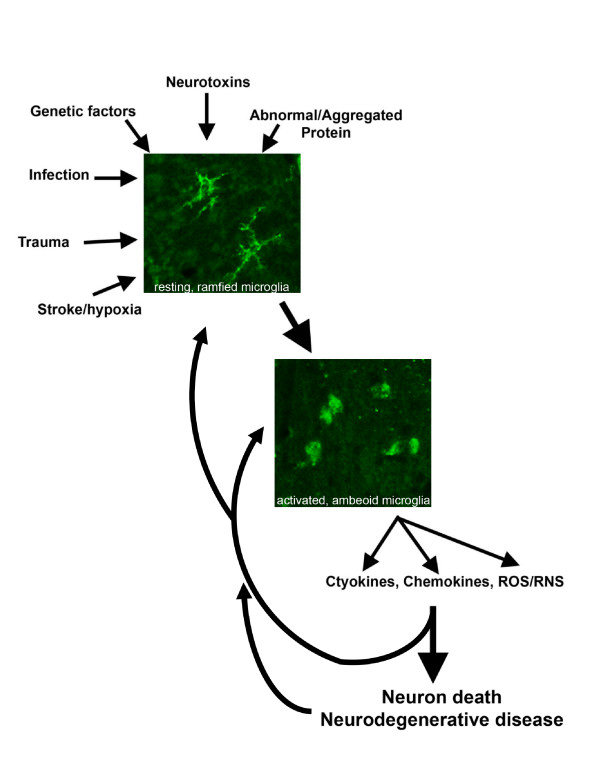
While peripheral immune access to the central nervous system (CNS) is restricted and tightly controlled, the CNS is capable of dynamic immune and inflammatory responses to a variety of insults. Infections, trauma, stroke, toxins and other stimuli are capable of producing an immediate and short lived activation of the innate immune system within the CNS. This acute neuroinflammatory response includes activation of the resident immune cells (microglia) resulting in a phagocytic phenotype and the release of inflammatory mediators such as cytokines and chemokines. While an acute insult may trigger oxidative and nitrosative stress, it is typically short-lived and unlikely to be detrimental to long-term neuronal survival. In contrast, chronic neuroinflammation is a long-standing and often self-perpetuating neuroinflammatory response that persists long after an initial injury or insult. Chronic neuroinflammation includes not only long-standing activation of microglia and subsequent sustained release of inflammatory mediators, but also the resulting increased oxidative and nitrosative stress. The sustained release of inflammatory mediators works to perpetuate the inflammatory cycle, activating additional microglia, promoting their proliferation, and resulting in further release of inflammatory factors. Neurodegenerative CNS disorders, including multiple sclerosis (MS), Alzheimer's disease (AD), Parkinson's disease (PD), Huntington's disease (HD), amyotrophic lateral sclerosis (ALS), tauopathies, and age-related macular degeneration (ARMD), are associated with chronic neuroinflammation and elevated levels of several cytokines. Here we review the hallmarks of acute and chronic inflammatory responses in the CNS, the reasons why microglial activation represents a convergence point for diverse stimuli that may promote or compromise neuronal survival, and the epidemiologic, pharmacologic and genetic evidence implicating neuroinflammation in the pathophysiology of several neurodegenerative diseases.
Overview
The claims and statistics of this paper haven’t been checked yet.
Free: it reads the open-access text and checks the first 5 claims that cite a source we can check. Create a free account to check every claim.
Integrity signals
Registry
Cites
Statistics
Figures
Verification
Claims the paper makes
The claims and statistics of this paper haven’t been checked yet.
Free: it reads the open-access text and checks the first 5 claims that cite a source we can check. Create a free account to check every claim.
Claims other papers make about this one
Each is checked against this paper’s own text: does it say what the citing paper says it does?
The source backs part of the claim, not all of it — or backs it for a different population, condition or comparison.
In the citing paper
“Just like in peripheral tissues, aging leads to a chronic low-grade inflammation in the brain (42), which occurs in the absence of any obvious pathogen.”
From Cellular senescence in brain aging and neurodegenerative diseases: evidence and perspectives (2018) · cites this paper as [42]
Experimental — accuracy not yet measuredThe check wasn’t confident either way, so it gives no verdict — never disputed.
In the citing paper
“Not only has chronic neuroinflammation been shown to increase α-synuclein deposition in various synucleinopathy animal models (51–56), but when these animals were treated with drugs to reduce neuroinflammation, α-synuclein neuropathology also decreased (57, 58).”
From LRRK2 mediates microglial neurotoxicity via NFATc2 in rodent models of synucleinopathies (2020) · cites this paper as [51]
Experimental — accuracy not yet measured
Self-check
Percentages, sums and reported differences re-computed from the paper’s own numbers.
The self-check needs the paper’s full text.
Citations
Cites
MACDONALD, M. (1993) · Cell · doi:10.1016/0092-8674(93)90585-e · Cited by 8,366
Rosen, D. R., Siddique, T., Patterson, D., Figlewicz, D. A., Sapp, P., Hentati, A., Donaldson, D., Goto, J., O'Regan, J. P., Deng, H.-X., et al. (1993) · Nature · doi:10.1038/362059a0 · Cited by 7,062 · cited 11×
“In pre-clinical mouse models, certain anti-inflammatory treatments aimed at suppressing microglia activation have been shown to increase the life expectancy of mice expressing human mutant SOD1 by more than 30% [140].”
InfluentialGoate, A., Chartier-Harlin, M.-C., Mullan, M., Brown, J., Crawford, F., Fidani, L., Giuffra, L., Haynes, A., Irving, N., James, L., et al. (1991) · Nature · doi:10.1038/349704a0 · Cited by 4,659 · cited 1×
“Although the etiology of sporadic AD in humans is unknown, mutations in Amyloid Precursor Protein (APP) or components of its processing machinery (β-secretase and γ-secretase) result in overproduction of Aβ1-40 and 142 peptides and are sufficient to cause disease [11-17].”
Inflammation and Alzheimer’s disease
Akiyama, H. (2000) · Neurobiology of Aging · doi:10.1016/s0197-4580(00)00124-x · Cited by 4,514
Microglia-mediated neurotoxicity: uncovering the molecular mechanisms
Block, M. L., Zecca, L., & Hong, J.-S. (2007) · Nature Reviews Neuroscience · doi:10.1038/nrn2038 · Cited by 4,110 · cited 1×
“, auto-amplification of reactive oxygen species, nitric oxide, and superoxide radicals to form highly oxidizing peroxynitrite species)[7,105-108].”
Immunization with amyloid-β attenuates Alzheimer-disease-like pathology in the PDAPP mouse
Schenk, D., Barbour, R., Dunn, W., Gordon, G., Grajeda, H., Guido, T., Hu, K., Huang, J., Johnson-Wood, K., Khan, K., et al. (1999) · Nature · doi:10.1038/22124 · Cited by 3,160
McGeer, P. L., Itagaki, S., Boyes, B. E., & McGeer, E. G. (1988) · Neurology · doi:10.1212/wnl.38.8.1285 · Cited by 2,990
Bard, F., Cannon, C., Barbour, R., Burke, R.-L., Games, D., Grajeda, H., Guido, T., Hu, K., Huang, J., Johnson-Wood, K., et al. (2000) · Nature Medicine · doi:10.1038/78682 · Cited by 2,012 · cited 1×
“Passive immunization of PDAPP mice peripherally infused with antibodies that recognize aggregated Aβ in neuritic plaques rapidly increased microglial clustering around plaques detectable by in vivo multiphoton microscopy [74] and reduced plaque burden and AD pathology in PDAPP mice [75].”
Citron, M., Oltersdorf, T., Haass, C., McConlogue, L., Hung, A. Y., Seubert, P., Vigo-Pelfrey, C., Lieberburg, I., & Selkoe, D. J. (1992) · Nature · doi:10.1038/360672a0 · Cited by 1,757
Onset and Progression in Inherited ALS Determined by Motor Neurons and Microglia
Boillée, S., Yamanaka, K., Lobsiger, C. S., Copeland, N. G., Jenkins, N. A., Kassiotis, G., Kollias, G., & Cleveland, D. W. (2006) · Science · doi:10.1126/science.1123511 · Cited by 1,623 · cited 1×
“For example, ablating microglial expression of mutant SOD 1 (mSOD1) or transplanting bone marrow from wild-type mice into mSOD1 transgenic mice increases the life span of mutant mice [133,134], suggesting that SOD1 mutations may indirectly contribute to neuronal death by affecting glial rather than neuronal function.”
Cited by
Items 201–300 of 777
Neuroprotection by IFN-γ via astrocyte-secreted IL-6 in acute neuroinflammation
Sun, L., Li, Y., Jia, X., Wang, Q., Li, Y., Hu, M., Tian, L., Yang, J., Xing, W., Zhang, W., et al. (2017) · Oncotarget · doi:10.18632/oncotarget.16990 · Cited by 72
Bellanti, F., Iannelli, G., Blonda, M., Tamborra, R., Villani, R., Romano, A., Calcagnini, S., Mazzoccoli, G., Vinciguerra, M., Gaetani, S., et al. (2017) · Journal of Alzheimer's Disease · doi:10.3233/jad-160942 · Cited by 68
El-Sahar, A. E., Rastanawi, A. A., El-Yamany, M. F., & Saad, M. A. (2020) · Life Sciences · doi:10.1016/j.lfs.2020.118076 · Cited by 70
Wang, B., Zhang, Y., Cao, W. J., Wei, X., Chen, J., & Ying, W. (2016) · Neurochemical Research · doi:10.1007/s11064-016-1981-2 · Cited by 76
Uren, R. T., & Turnley, A. M. (2014) · Frontiers in Molecular Neuroscience · doi:10.3389/fnmol.2014.00039 · Cited by 64
Kumar, P., Kalonia, H., & Kumar, A. (2011) · European Journal of Pharmacology · doi:10.1016/j.ejphar.2011.11.030 · Cited by 73
Degeneration of Dopaminergic Neurons Due to Metabolic Alterations and Parkinson’s Disease
Song, J., & Kim, J. (2016) · Frontiers in Aging Neuroscience · doi:10.3389/fnagi.2016.00065 · Cited by 77
Chatterjee, P., Zetterberg, H., Goozee, K., Lim, C. K., Jacobs, K. R., Ashton, N. J., Hye, A., Pedrini, S., Sohrabi, H. R., Shah, T., et al. (2019) · Journal of Neuroinflammation · doi:10.1186/s12974-019-1567-4 · Cited by 69
Martin-Ruiz, C., Williams-Gray, C. H., Yarnall, A. J., Boucher, J. J., Lawson, R. A., Wijeyekoon, R. S., Barker, R. A., Kolenda, C., Parker, C., Burn, D. J., et al. (2019) · Journal of Parkinson’s Disease · doi:10.3233/jpd-191724 · Cited by 58
Huang, X., Chen, Y., Zhang, H., Ma, Q., Zhang, Y.-W., & Xu, H. (2012) · Neurobiology of Aging · doi:10.1016/j.neurobiolaging.2011.10.007 · Cited by 68
Nicolas, S., Cazareth, J., Zarif, H., Guyon, A., Heurteaux, C., Chabry, J., & Petit-Paitel, A. (2017) · Frontiers in Cellular Neuroscience · doi:10.3389/fncel.2017.00352 · Cited by 74
Elsallabi, O., Patruno, A., Pesce, M., Cataldi, A., Carradori, S., & Gallorini, M. (2022) · Molecules · doi:10.3390/molecules27030738 · Cited by 67
Association of glial fibrillary acid protein, Alzheimer's disease pathology and cognitive decline
Peretti, D. E., Boccalini, C., Ribaldi, F., Scheffler, M., Marizzoni, M., Ashton, N. J., Zetterberg, H., Blennow, K., Frisoni, G. B., & Garibotto, V. (2024) · Brain · doi:10.1093/brain/awae211 · Cited by 72
Khan, A. G., Jamwal, S., Bijjem, K. R. V., Prakash, A. K., & Kumar, P. (2014) · Neuroscience · doi:10.1016/j.neuroscience.2014.12.018 · Cited by 67
Nunes, A. K. S., Rapôso, C., Luna, R. L. D. A., da Cruz‐Höfling, M. A., & Peixoto, C. A. (2012) · Cytokine · doi:10.1016/j.cyto.2012.06.011 · Cited by 75
Zhang, X., Wang, B., O’Callaghan, P., Hjertström, E., Jia, J., Gong, F., Zcharia, E., Nilsson, L. N. G., Lannfelt, L., Vlodavsky, I., et al. (2012) · Acta Neuropathologica · doi:10.1007/s00401-012-0997-1 · Cited by 65
CX3CL1/CX3CR1 in Alzheimer’s Disease: A Target for Neuroprotection
Chen, P., Zhao, W., Guo, Y., Xu, J., & Yin, M. (2016) · BioMed Research International · doi:10.1155/2016/8090918 · Cited by 64
Bel, E. A. D., Bortolanza, M., Pereira, M. D. S., Bariotto‐dos‐Santos, K., & Raisman‐Vozari, R. (2016) · Synapse · doi:10.1002/syn.21941 · Cited by 73
Xu, H., Qin, W., Xiao, H., Mu, S., Zhu, J., Lu, W., & Luo, Y. (2018) · Journal of Neuroinflammation · doi:10.1186/s12974-018-1117-5 · Cited by 69
Wirz, K. T. S., Bossers, K., Stargardt, A., Kamphuis, W., Swaab, D. F., Hol, E. M., & Verhaagen, J. (2013) · Neurobiology of Aging · doi:10.1016/j.neurobiolaging.2012.11.008 · Cited by 65
Cebrián, C., Loike, J. D., & Sulzer, D. (2014) · Current Topics in Behavioral Neurosciences · doi:10.1007/7854_2014_356 · Cited by 65
Hambali, A., Kumar, J., Hashim, N. F. M., Maniam, S., Mehat, M. Z., Cheema, M. S., Mustapha, M., Adenan, M. I., Stanslas, J., & Hamid, H. A. (2021) · Frontiers in Physiology · doi:10.3389/fphys.2021.712317 · Cited by 60
Seyfried, N. T., Gozal, Y. M., Donovan, L. E., Herskowitz, J. H., Dammer, E. B., Xia, Q., Ku, L., Chang, J., Duong, D. M., Rees, H. D., et al. (2012) · Journal of Proteome Research · doi:10.1021/pr2010814 · Cited by 64
Self-citationRedox Imbalance and Viral Infections in Neurodegenerative Diseases
Limongi, D., & Baldelli, S. (2016) · Oxidative Medicine and Cellular Longevity · doi:10.1155/2016/6547248 · Cited by 62
Abdel‐Salam, O. M. E., Hamdy, S. M., Seadawy, S. A. M., Galal, A. F., Abouelfadl, D. M., & Atrees, S. S. (2015) · Comparative Clinical Pathology · doi:10.1007/s00580-015-2182-0 · Cited by 70
Knight, E. M., Brown, T. M., Gümüsgöz, S., Smith, J. C. M., Waters, E. J., Allan, S. M., & Lawrence, C. B. (2012) · Disease Models & Mechanisms · doi:10.1242/dmm.010173 · Cited by 58
A novel small-molecule agonist of PPAR-γ potentiates an anti-inflammatory M2 glial phenotype
Song, G. J., Nam, Y., Jo, M., Jung, M., Koo, J. Y., Cho, W., Koh, M., Park, S. B., & Suk, K. (2016) · Neuropharmacology · doi:10.1016/j.neuropharm.2016.06.009 · Cited by 69
Li, Y., Severance, E. G., Viscidi, R. P., Yolken, R. H., & Xiao, J. (2019) · Infection and Immunity · doi:10.1128/iai.00139-19 · Cited by 71
Zhao, J., Bi, W., Zhang, J., Xiao, S., Zhou, R., Tsang, C. K., Lu, D., & Zhu, L. (2020) · Brain, Behavior, and Immunity · doi:10.1016/j.bbi.2020.04.052 · Cited by 60
Ghosh, A., Birngruber, T., Sattler, W., Altendorfer‐Kroath, T., Ratzer, M., Sinner, F. M., & Pieber, T. R. (2014) · PLoS ONE · doi:10.1371/journal.pone.0098143 · Cited by 66
Bansal, R., & Singh, R. (2017) · Medicinal Research Reviews · doi:10.1002/med.21458 · Cited by 65
Kennedy, D. O. (2019) · Sports Medicine · doi:10.1007/s40279-018-1007-0 · Cited by 69
Implications of heparan sulfate and heparanase in neuroinflammation
Zhang, X., Wang, B., & Li, J.-P. (2014) · Matrix Biology · doi:10.1016/j.matbio.2013.12.009 · Cited by 59
Nicotinic Acetylcholine Receptor Signaling in Neuroprotection
Akaike, A., Shimohama, S., & Misu, Y. (2018) · Springer eBooks · doi:10.1007/978-981-10-8488-1 · Cited by 67
Neuroinflammation Mechanisms and Phytotherapeutic Intervention: A Systematic Review
Kaur, N., Chugh, H., Sakharkar, M. K., Dhawan, U., Chidambaram, S. B., & Chandra, R. (2020) · ACS Chemical Neuroscience · doi:10.1021/acschemneuro.0c00427 · Cited by 69
The Role of Microglia in the Homeostasis of the Central Nervous System and Neuroinflammation
Gogoleva, V. S., Drutskaya, M. S., & Атретханы, К.-С. Н. (2019) · Molecular Biology · doi:10.1134/s0026893319050054 · Cited by 65
Role of iNOS-NO-cGMP signaling in modulation of inflammatory and myelination processes
Rapôso, C., Luna, R. L. D. A., Nunes, A. K. S., Thomé, R., & Peixoto, C. A. (2014) · Brain Research Bulletin · doi:10.1016/j.brainresbull.2014.04.002 · Cited by 64
Park, J., Lee, S., Shon, J., Kim, K., Lee, H. J., Kim, K., Lee, B.-Y., Oh, S., KIM, N. K., & Kim, O. J. (2019) · Cytotherapy · doi:10.1016/j.jcyt.2019.04.054 · Cited by 61
Food‐Origin Mycotoxin‐Induced Neurotoxicity: Intend to Break the Rules of Neuroglia Cells
Pei, X., Zhang, W., Jiang, H., Liu, D., Liu, X., Li, L., Li, C., Xiao, X., Tang, S., & Li, D. (2021) · Oxidative Medicine and Cellular Longevity · doi:10.1155/2021/9967334 · Cited by 61
Kanno, T., Tanaka, K., Yanagisawa, Y., Yasutake, K., Hadano, S., Yoshii, F., Hirayama, N., & Ikeda, J. (2012) · Free Radical Biology and Medicine · doi:10.1016/j.freeradbiomed.2012.09.010 · Cited by 67
Xu, X., Warrington, A. E., Bieber, A. J., & Rodriguez, M. (2011) · CNS Drugs · doi:10.2165/11587830-000000000-00000 · Cited by 61
Askari, V. R., Fereydouni, N., Rahimi, V. B., Askari, N., Sahebkar, A. H., Rahmanian‐Devin, P., & Samzadeh‐Kermani, A. (2018) · Biomedicine & Pharmacotherapy · doi:10.1016/j.biopha.2018.02.098 · Cited by 60
Kelly, R. L., Joers, V. L., Tansey, M. G., McKernan, D. P., & Dowd, E. (2020) · Molecules · doi:10.3390/molecules25030453 · Cited by 62
Self-citationNeuroinflammation in the Cerebellum and Brainstem in Friedreich Ataxia: An [ 18F ]‐ FEMPA PET Study
Khan, W., Corben, L. A., Bilal, H., Vivash, L. E., Delatycki, M. B., Egan, G. F., & Harding, I. H. (2021) · Movement Disorders · doi:10.1002/mds.28825 · Cited by 65
Bridge Between Neuroimmunity and Traumatic Brain Injury
Kelso, M. L., & Gendelman, H. E. (2013) · Current Pharmaceutical Design · doi:10.2174/13816128113196660653 · Cited by 57
Park, S. Y., Yi, E. H., Kim, Y., & Park, G. (2019) · International Journal of Nanomedicine · doi:10.2147/ijn.s195218 · Cited by 57
Role of pattern recognition receptors of the neurovascular unit in inflamm-aging
Wilhelm, I., Nyúl-Tóth, Á., Kozma, M., Farkas, A. E., & Krizbai, I. A. (2017) · American Journal of Physiology-Heart and Circulatory Physiology · doi:10.1152/ajpheart.00106.2017 · Cited by 56
The Importance of Phosphoinositide 3-Kinase in Neuroinflammation
Wright, B., King, S. P., & Suphioglu, C. (2024) · International Journal of Molecular Sciences · doi:10.3390/ijms252111638 · Cited by 60
Nam, K. N., Yae, C. G., Hong, J., Cho, D., Lee, J. H., & Lee, E. H. (2013) · Biotechnology Letters · doi:10.1007/s10529-013-1192-8 · Cited by 56
Hossain, M. S., Abe, Y., Ali, F., Youssef, M., Honsho, M., Fujiki, Y., & Katafuchi, T. (2017) · The Journal of Neuroscience · doi:10.1523/jneurosci.3941-15.2017 · Cited by 57
The Impact of Microglia on Neurodevelopment and Brain Function in Autism
Luo, Y., & Wang, Z. (2024) · Biomedicines · doi:10.3390/biomedicines12010210 · Cited by 57
Regulation of microglia effector functions by tumor necrosis factor signaling
Harms, A. S., Lee, J., Nguyen, T. A., Chang, J., Ruhn, K. M., Treviño, I., & Tansey, M. G. (2012) · Glia · doi:10.1002/glia.21254 · Cited by 54
Self-citationEnabling nanomaterial, nanofabrication and cellular technologies for nanoneuromedicines
Mallapragada, S. K., Brenza, T. M., McMillan, J., Narasimhan, B., Sakaguchi, D. S., Sharma, A. D., Zbarska, S., & Gendelman, H. E. (2015) · Nanomedicine Nanotechnology Biology and Medicine · doi:10.1016/j.nano.2014.12.013 · Cited by 59
Koller, E. J., Brooks, M. M. T., Golde, T. E., Giasson, B. I., & Chakrabarty, P. (2017) · Molecular Neurodegeneration · doi:10.1186/s13024-016-0142-z · Cited by 54
Blood-Based Biomarkers of Neuroinflammation in Alzheimer’s Disease: A Central Role for Periphery?
Angiulli, F., Conti, E., Zoia, C. P., Da Re, F., Appollonio, I., Ferrarese, C., & Tremolizzo, L. (2021) · Diagnostics · doi:10.3390/diagnostics11091525 · Cited by 52
Parker, D. C., Mielke, M. M., Yu, Q., Rosenberg, P. B., Jain, A., Lyketsos, C. G., Fedarko, N. S., & Oh, E. S. (2013) · International Journal of Geriatric Psychiatry · doi:10.1002/gps.3802 · Cited by 54
Boridy, S., Soliman, G. M., & Maysinger, D. (2012) · Nanomedicine · doi:10.2217/nnm.12.16 · Cited by 56
Wang, J., Wu, W., Huang, H., Li, W., Chen, H.-Q., & Yin, Y. (2016) · Neurotoxicity Research · doi:10.1007/s12640-016-9648-y · Cited by 58
Perga, S., Martire, S., Montarolo, F., Navone, N. D., Calvo, A., Fuda, G., Marchet, A., Leotta, D., Chiò, A., & Bertolotto, A. (2017) · Neurotoxicity Research · doi:10.1007/s12640-017-9724-y · Cited by 57
HIV‐1 Tat C modulates NOX 2 and NOX 4 expressions through miR‐17 in a human microglial cell line
Jadhav, V. S., Krause, K., & Singh, S. K. (2014) · Journal of Neurochemistry · doi:10.1111/jnc.12933 · Cited by 51
Activated Microglia in Cortical White Matter Across Cognitive Aging Trajectories
Gefen, T., Kim, G., Bolbolan, K., Geoly, A., Ohm, D., Oboudiyat, C., Shahidehpour, R., Rademaker, A., Weintraub, S., Bigio, E. H., et al. (2019) · Frontiers in Aging Neuroscience · doi:10.3389/fnagi.2019.00094 · Cited by 50
Wang, X., Sun, X., Niu, M., Zhang, X., Wang, J., Zhou, C., & Xie, A. (2020) · Frontiers in Neuroscience · doi:10.3389/fnins.2020.00353 · Cited by 51
Chesworth, R., Gamage, R. V., Ullah, F., Sonego, S., Millington, C., Fernandez, A. M., Liang, H., Karl, T., Münch, G. W., Niedermayer, G., et al. (2021) · Frontiers in Neuroscience · doi:10.3389/fnins.2021.699329 · Cited by 54
Gemfibrozil, a Lipid-lowering Drug, Induces Suppressor of Cytokine Signaling 3 in Glial Cells
Ghosh, A., & Pahan, K. (2012) · Journal of Biological Chemistry · doi:10.1074/jbc.m112.346932 · Cited by 51
Godoy, M. C. P., Ferrari, C. C., & Pitossi, F. J. (2010) · Journal of Neuroimmunology · doi:10.1016/j.jneuroim.2010.02.018 · Cited by 55
Angeloni, S., Freschi, M., Marrazzo, P., Hrelia, S., Beghelli, D., Juan-García, A., Juan, C., Caprioli, G., Sagratini, G., & Angeloni, C. (2021) · Oxidative Medicine and Cellular Longevity · doi:10.1155/2021/6620913 · Cited by 50
Rett syndrome and other autism spectrum disorders—brain diseases of immune malfunction?
Derecki, N. C., Privman, E., & Kipnis, J. (2010) · Molecular Psychiatry · doi:10.1038/mp.2010.21 · Cited by 50
Time-dependent dual effect of microglia in ischemic stroke
Fan, P., Wang, S., Chu, S., & Chen, N. (2023) · Neurochemistry International · doi:10.1016/j.neuint.2023.105584 · Cited by 55
Saal, K., Galter, D., Roeber, S., Bähr, M., Tönges, L., & Lingor, P. (2017) · Brain Pathology · doi:10.1111/bpa.12346 · Cited by 50
McFarland, A. J., Davey, A. K., & Anoopkumar-Dukie, S. (2017) · Mediators of Inflammation · doi:10.1155/2017/2582745 · Cited by 47
Resolvin D1 Attenuates Mpp+-Induced Parkinson Disease via Inhibiting Inflammation in PC12 Cells
Xu, J., Gao, X., Yang, C., Chen, L., & Chen, Z. (2017) · Medical Science Monitor · doi:10.12659/msm.901995 · Cited by 47
Autophagy Modulators and Neuroinflammation
Cho, K. S., Lee, J. H., Cho, J., Cha, G., & Song, G. J. (2018) · Current Medicinal Chemistry · doi:10.2174/0929867325666181031144605 · Cited by 53
Luo, T., Qin, J., Liu, M., Luo, J., Ding, F., Wang, M., & Zheng, L. (2015) · Inflammation Research · doi:10.1007/s00011-015-0798-9 · Cited by 51
Determination of LC50 and sub-chronic neurotoxicity of diesel exhaust nanoparticles
Durga, M., Devasena, T., & Rajasekar, A. (2015) · Environmental Toxicology and Pharmacology · doi:10.1016/j.etap.2015.06.024 · Cited by 51
Sairazi, N. S. M., Sirajudeen, K. N. S., Asari, M. A., Mustapha, M., Mummedy, S., & Sulaiman, S. A. (2015) · Evidence-based Complementary and Alternative Medicine · doi:10.1155/2015/972623 · Cited by 50
Environmental Circadian Disruption Increases Stroke Severity and Dysregulates Immune Response
Ramsey, A. M., Stowie, A. C., Castañón‐Cervantes, O., & Davidson, A. J. (2020) · Journal of Biological Rhythms · doi:10.1177/0748730420929450 · Cited by 51
Song, X., Singh, M. V., Lee, K. E., Vinayagam, R., & Kang, S. G. (2024) · International Journal of Molecular Sciences · doi:10.3390/ijms252212003 · Cited by 55
Glycoprotein NMB: an Emerging Role in Neurodegenerative Disease
Budge, K. M., Neal, M. P., Richardson, J. R., & Safadi, F. F. (2017) · Molecular Neurobiology · doi:10.1007/s12035-017-0707-z · Cited by 50
Gendy, A. M., El-Sadek, H. M., Amin, M. M., Ahmed, K. A., El-Sayed, M. K., El-Haddad, A. E., & Soubh, A. A. (2022) · Life Sciences · doi:10.1016/j.lfs.2022.121317 · Cited by 46
Niranjan, R., Mishra, K. P., & Thakur, A. K. (2018) · Molecular Neurobiology · doi:10.1007/s12035-018-0950-y · Cited by 47
Zhang, Y., Qu, X., Tao, L., Zhai, J., Gao, H., Song, Y.-Q., & Zhang, S. (2019) · Pharmaceutical Biology · doi:10.1080/13880209.2019.1698619 · Cited by 47
Qi, Y., Zou, L.-B., Wang, L.-H., Jin, G., Pan, J.-J., Chi, T.-Y., & Ji, X.-F. (2013) · Journal of Pharmacological Sciences · doi:10.1254/jphs.13031fp · Cited by 45
Samidurai, M., Palanisamy, B. N., Bargues-Carot, A., Hepker, M., Kondru, N. C., Manne, S., Zenitsky, G. D., Jin, H., Anantharam, V., Kanthasamy, A. G., et al. (2021) · Frontiers in Aging Neuroscience · doi:10.3389/fnagi.2021.661505 · Cited by 46
The impact of architectural form on physiological stress: a systematic review
Valentine, C. (2024) · Frontiers in Computer Science · doi:10.3389/fcomp.2023.1237531 · Cited by 47
Shmuel-Galia, L., Klug, Y., Porat, Z., Charni, M., Zarmi, B., & Shai, Y. (2017) · Journal of Biological Chemistry · doi:10.1074/jbc.m117.784983 · Cited by 46
Targeting Phosphodiesterases—Towards a Tailor-Made Approach in Multiple Sclerosis Treatment
Schepers, M., Tiane, A., Paes, D., Sanchez, S., Rombaut, B., Piccart, E., Rutten, B. P. F., Brône, B., Hellings, N., Prickaerts, J., et al. (2019) · Frontiers in Immunology · doi:10.3389/fimmu.2019.01727 · Cited by 47
Rajasekaran, S., & Sudhandiran, G. (2015) · Brain Research · doi:10.1016/j.brainres.2015.04.043 · Cited by 45
Dowie, M. J., Grimsey, N. L., Hoffman, T., Faull, R. L. M., & Glass, M. (2014) · Journal of Chemical Neuroanatomy · doi:10.1016/j.jchemneu.2014.06.004 · Cited by 50
Reviewing the Role of Resveratrol as a Natural Modulator of Microglial Activities
Porro, C., Cianciulli, A., Calvello, R., & Panaro, M. (2015) · Current Pharmaceutical Design · doi:10.2174/1381612821666150928155612 · Cited by 44
Singh, D., Agrawal, A., Singal, C. M. S., Pandey, H. S., Seth, P., & Sharma, S. K. (2020) · Molecular Brain · doi:10.1186/s13041-020-00569-6 · Cited by 45
Yuan, L.-J., Zhang, M., Chen, S., & Chen, W. (2020) · Molecular and Cellular Endocrinology · doi:10.1016/j.mce.2020.111053 · Cited by 45
Metabolic Reprograming of Mononuclear Phagocytes in Progressive Multiple Sclerosis
Tannahill, G. M., Iraci, N., Gaude, E., Frezza, C., & Pluchino, S. (2015) · Frontiers in Immunology · doi:10.3389/fimmu.2015.00106 · Cited by 47
Kazak, F., & Yarım, G. F. (2017) · Neuroscience Letters · doi:10.1016/j.neulet.2017.07.059 · Cited by 45
Molecular Bases of Alzheimer’s Disease and Neurodegeneration: The Role of Neuroglia
Luca, A., Calandra, C., & Luca, M. (2018) · Aging and disease · doi:10.14336/ad.2018.0201 · Cited by 39
Circular RNA CircCCNB1 sponges micro RNA-449a to inhibit cellular senescence by targeting CCNE2
Yu, A. Q., Wang, Z. X., Wu, W., Chen, K. Y., Yan, S. R., & Mao, Z. B. (2019) · Aging · doi:10.18632/aging.102449 · Cited by 45
Caspases Playing in the Field of Neuroinflammation: Old and New Players
Venero, J. L., Burguillos, M. Á., & Joseph, B. (2013) · Developmental Neuroscience · doi:10.1159/000346155 · Cited by 52
Xu, L., Zhang, D., Shoji, H., Duan, C., Zhang, G., Isaji, T., Wang, Y., Fukuda, T., & Gu, J. (2018) · Biochimica et Biophysica Acta (BBA) - General Subjects · doi:10.1016/j.bbagen.2018.12.008 · Cited by 43
Inflammation: A Major Target for Compounds to Control Alzheimer’s Disease
Maccioni, R. B., Navarrete, L. P., González, A., González-Canacer, A., Guzmán-Martínez, L., & Cortés, N. (2020) · Journal of Alzheimer's Disease · doi:10.3233/jad-191014 · Cited by 40
Allen, S. P., Seehra, R. S., Heath, P. R., Hall, B., Bates, J., Garwood, C. J., Matuszyk, M. M., Wharton, S. B., & Simpson, J. E. (2020) · International Journal of Molecular Sciences · doi:10.3390/ijms21218028 · Cited by 45
Altered IL-2, IL-6 and IL-8 serum levels in schizophrenia patients with tardive dyskinesia
An, H.-M., Tan, Y.-L., Shi, J., Wang, Z.-R., Soars, J. C., Wu, J. Q., Yang, F.-D., Huang, X., & Zhang, X. Y. (2015) · Schizophrenia Research · doi:10.1016/j.schres.2014.12.037 · Cited by 46
Metadata
- Authors
- Frank-Cannon, T. C., Alto, L. T., McAlpine, F. E., & Tansey, M. G.
- Affiliations
- Emory University (US)
- The University of Texas Southwestern Medical Center (US)
- Cancer Research UK (GB)
- Corresponding author
- Tansey, Malú G
- ORCID
- Tansey, Malú G
- Venue
- Molecular Neurodegeneration
- Published
- 2009-11-16
- Volume
- 4
- Issue
- 1
- Pages
- 47-47
- ISSN
- 1750-1326 (ISSN-L)
- PMC
- PMC2784760
- OpenAlex
- W2127936752
- Cited by
- 751
- References
- 145
- Citations by year
- 2026: 21 · 2025: 31 · 2024: 43 · 2023: 38 · 2022: 41 · 2021: 49 · 2020: 72 · 2019: 48 · 2018: 46 · 2017: 55 · 2016: 54 · 2015: 56 · 2014: 59 · 2013: 43 · 2012: 36
- FWCI
- 20.02
- Type
- journal article
- Language
- en
- Open access
- gold
- doi.org
- Licence
- cc-by
- Locations
- Molecular Neurodegeneration (publishedVersion, cc-by)
- PubMed Central (publishedVersion, cc-by)
- PubMed (publishedVersion)
- DOAJ (DOAJ: Directory of Open Access Journals) (submittedVersion, cc-by-sa)
- OakTrust (Texas A&M University Libraries) (submittedVersion)
- Funders
- National Institute of Neurological Disorders and Stroke (R01NS049433)
- Topics
- Life Sciences › Neuroscience › Neurology › Neuroinflammation and Neurodegeneration Mechanisms
- Life Sciences › Neuroscience › Biological Psychiatry › Tryptophan and brain disorders
- Life Sciences › Neuroscience › Neurology › Neurological Disease Mechanisms and Treatments
- Keywords
- neuroinflammation, neurodegenerative diseases, microglial activation, chronic neuroinflammation, oxidative stress, nitrosative stress, cytokines, chemokines, multiple sclerosis, Alzheimer's disease, Parkinson's disease, Huntington's disease, amyotrophic lateral sclerosis, tauopathy, age-related macular degeneration
About these checks
Registry, retraction, Cites and statistics results are computed, not judged, with one exception: a printed reference that no index lists is read once by a model before it counts as a citation error. Claims are extracted by a model and kept only when their quote appears verbatim in the text; each cited source is then checked, with a model’s help, for whether it says what the claim relies on. Those verdicts can be wrong — read the claim’s quote and the cited source before relying on one.
Statistics and arithmetic are recomputed, not judged.
Confidence bands are shown only for fields calibrated on our annotated test set. None is calibrated yet, so no band is shown.
What counts as a claim ›How we measure confidence ›How we check this ›
Are you an author, or do you see a problem with this page? Request a review
Data sources
Bibliographic data: Semantic Scholar, OpenAlex, Crossref.
Contains information from the Semantic Scholar Academic Graph Datasets, made available under the ODC Attribution License (ODC-BY 1.0).
Semantic Scholar’s data is described in: Kinney, R., et al. (2023). The Semantic Scholar Open Data Platform. arXiv:2301.10140.
