

Does neuroinflammation fan the flame in neurodegenerative diseases?
Open accessThe DOI matches its Crossref record; 144 of the 145 references it cites were found in a registry or an index.
Abstract
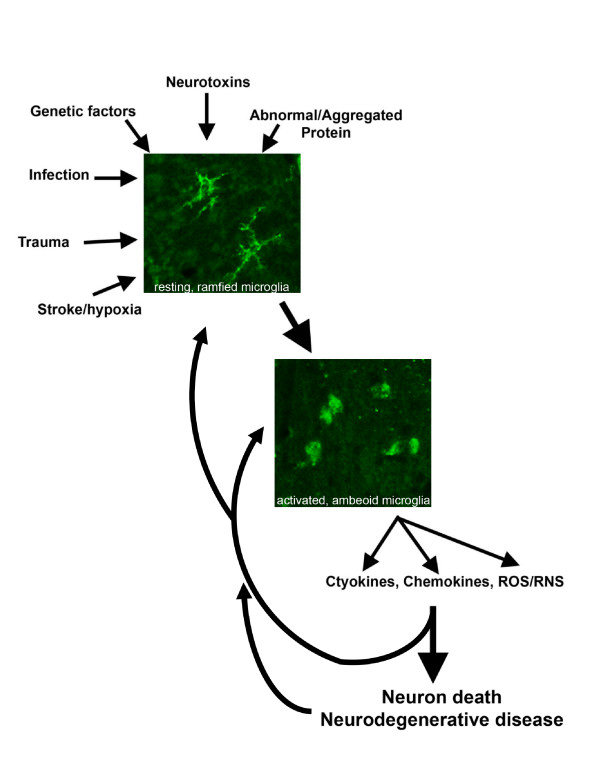
While peripheral immune access to the central nervous system (CNS) is restricted and tightly controlled, the CNS is capable of dynamic immune and inflammatory responses to a variety of insults. Infections, trauma, stroke, toxins and other stimuli are capable of producing an immediate and short lived activation of the innate immune system within the CNS. This acute neuroinflammatory response includes activation of the resident immune cells (microglia) resulting in a phagocytic phenotype and the release of inflammatory mediators such as cytokines and chemokines. While an acute insult may trigger oxidative and nitrosative stress, it is typically short-lived and unlikely to be detrimental to long-term neuronal survival. In contrast, chronic neuroinflammation is a long-standing and often self-perpetuating neuroinflammatory response that persists long after an initial injury or insult. Chronic neuroinflammation includes not only long-standing activation of microglia and subsequent sustained release of inflammatory mediators, but also the resulting increased oxidative and nitrosative stress. The sustained release of inflammatory mediators works to perpetuate the inflammatory cycle, activating additional microglia, promoting their proliferation, and resulting in further release of inflammatory factors. Neurodegenerative CNS disorders, including multiple sclerosis (MS), Alzheimer's disease (AD), Parkinson's disease (PD), Huntington's disease (HD), amyotrophic lateral sclerosis (ALS), tauopathies, and age-related macular degeneration (ARMD), are associated with chronic neuroinflammation and elevated levels of several cytokines. Here we review the hallmarks of acute and chronic inflammatory responses in the CNS, the reasons why microglial activation represents a convergence point for diverse stimuli that may promote or compromise neuronal survival, and the epidemiologic, pharmacologic and genetic evidence implicating neuroinflammation in the pathophysiology of several neurodegenerative diseases.
Overview
The claims and statistics of this paper haven’t been checked yet.
Free: it reads the open-access text and checks the first 5 claims that cite a source we can check. Create a free account to check every claim.
Integrity signals
Registry
Cites
Statistics
Figures
Verification
Claims the paper makes
The claims and statistics of this paper haven’t been checked yet.
Free: it reads the open-access text and checks the first 5 claims that cite a source we can check. Create a free account to check every claim.
Claims other papers make about this one
Each is checked against this paper’s own text: does it say what the citing paper says it does?
The source backs part of the claim, not all of it — or backs it for a different population, condition or comparison.
In the citing paper
“Just like in peripheral tissues, aging leads to a chronic low-grade inflammation in the brain (42), which occurs in the absence of any obvious pathogen.”
From Cellular senescence in brain aging and neurodegenerative diseases: evidence and perspectives (2018) · cites this paper as [42]
Experimental — accuracy not yet measuredThe check wasn’t confident either way, so it gives no verdict — never disputed.
In the citing paper
“Not only has chronic neuroinflammation been shown to increase α-synuclein deposition in various synucleinopathy animal models (51–56), but when these animals were treated with drugs to reduce neuroinflammation, α-synuclein neuropathology also decreased (57, 58).”
From LRRK2 mediates microglial neurotoxicity via NFATc2 in rodent models of synucleinopathies (2020) · cites this paper as [51]
Experimental — accuracy not yet measured
Self-check
Percentages, sums and reported differences re-computed from the paper’s own numbers.
The self-check needs the paper’s full text.
Citations
Cites
MACDONALD, M. (1993) · Cell · doi:10.1016/0092-8674(93)90585-e · Cited by 8,366
Rosen, D. R., Siddique, T., Patterson, D., Figlewicz, D. A., Sapp, P., Hentati, A., Donaldson, D., Goto, J., O'Regan, J. P., Deng, H.-X., et al. (1993) · Nature · doi:10.1038/362059a0 · Cited by 7,062 · cited 11×
“In pre-clinical mouse models, certain anti-inflammatory treatments aimed at suppressing microglia activation have been shown to increase the life expectancy of mice expressing human mutant SOD1 by more than 30% [140].”
InfluentialGoate, A., Chartier-Harlin, M.-C., Mullan, M., Brown, J., Crawford, F., Fidani, L., Giuffra, L., Haynes, A., Irving, N., James, L., et al. (1991) · Nature · doi:10.1038/349704a0 · Cited by 4,659 · cited 1×
“Although the etiology of sporadic AD in humans is unknown, mutations in Amyloid Precursor Protein (APP) or components of its processing machinery (β-secretase and γ-secretase) result in overproduction of Aβ1-40 and 142 peptides and are sufficient to cause disease [11-17].”
Inflammation and Alzheimer’s disease
Akiyama, H. (2000) · Neurobiology of Aging · doi:10.1016/s0197-4580(00)00124-x · Cited by 4,514
Microglia-mediated neurotoxicity: uncovering the molecular mechanisms
Block, M. L., Zecca, L., & Hong, J.-S. (2007) · Nature Reviews Neuroscience · doi:10.1038/nrn2038 · Cited by 4,110 · cited 1×
“, auto-amplification of reactive oxygen species, nitric oxide, and superoxide radicals to form highly oxidizing peroxynitrite species)[7,105-108].”
Immunization with amyloid-β attenuates Alzheimer-disease-like pathology in the PDAPP mouse
Schenk, D., Barbour, R., Dunn, W., Gordon, G., Grajeda, H., Guido, T., Hu, K., Huang, J., Johnson-Wood, K., Khan, K., et al. (1999) · Nature · doi:10.1038/22124 · Cited by 3,160
McGeer, P. L., Itagaki, S., Boyes, B. E., & McGeer, E. G. (1988) · Neurology · doi:10.1212/wnl.38.8.1285 · Cited by 2,990
Bard, F., Cannon, C., Barbour, R., Burke, R.-L., Games, D., Grajeda, H., Guido, T., Hu, K., Huang, J., Johnson-Wood, K., et al. (2000) · Nature Medicine · doi:10.1038/78682 · Cited by 2,012 · cited 1×
“Passive immunization of PDAPP mice peripherally infused with antibodies that recognize aggregated Aβ in neuritic plaques rapidly increased microglial clustering around plaques detectable by in vivo multiphoton microscopy [74] and reduced plaque burden and AD pathology in PDAPP mice [75].”
Citron, M., Oltersdorf, T., Haass, C., McConlogue, L., Hung, A. Y., Seubert, P., Vigo-Pelfrey, C., Lieberburg, I., & Selkoe, D. J. (1992) · Nature · doi:10.1038/360672a0 · Cited by 1,757
Onset and Progression in Inherited ALS Determined by Motor Neurons and Microglia
Boillée, S., Yamanaka, K., Lobsiger, C. S., Copeland, N. G., Jenkins, N. A., Kassiotis, G., Kollias, G., & Cleveland, D. W. (2006) · Science · doi:10.1126/science.1123511 · Cited by 1,623 · cited 1×
“For example, ablating microglial expression of mutant SOD 1 (mSOD1) or transplanting bone marrow from wild-type mice into mSOD1 transgenic mice increases the life span of mutant mice [133,134], suggesting that SOD1 mutations may indirectly contribute to neuronal death by affecting glial rather than neuronal function.”
Cited by
Items 101–200 of 777
Target- and Mechanism-Based Therapeutics for Neurodegenerative Diseases: Strength in Numbers
Trippier, P. C., Labby, K. J., Hawker, D. D., Mataka, J., & Silverman, R. B. (2013) · Journal of Medicinal Chemistry · doi:10.1021/jm3015926 · Cited by 160
Quinti, L., Dayalan Naidu, S., Träger, U., Chen, X., Kegel-Gleason, K., Llères, D., Connolly, C., Chopra, V., Low, C., Moniot, S., et al. (2017) · Proceedings of the National Academy of Sciences · doi:10.1073/pnas.1614943114 · Cited by 140
Md, S., Bhattamisra, S. K., Zeeshan, F., Shahzad, N., Mujtaba, M. A., Meka, V. S., Radhakrishnan, A. K., Kesharwani, P., Baboota, S., & Ali, J. (2017) · Journal of Drug Delivery Science and Technology · doi:10.1016/j.jddst.2017.09.022 · Cited by 148
Dexter, D. T., Statton, S. A., Whitmore, C. L., Freinbichler, W., Weinberger, P., Tipton, K. F., Corte, L., Ward, R. J., & Crichton, R. R. (2010) · Journal of Neural Transmission · doi:10.1007/s00702-010-0531-3 · Cited by 147
Valera, E., Spencer, B. J., & Masliah, E. (2015) · Neurotherapeutics · doi:10.1007/s13311-015-0397-z · Cited by 144
Sharan, P., & Vellapandian, C. (2024) · Cureus · doi:10.7759/cureus.67595 · Cited by 249
Cholinergic Modulation of Glial Function During Aging and Chronic Neuroinflammation
Gamage, R., Wagnon, I., Rossetti, I., Childs, R., Niedermayer, G., Chesworth, R., & Gyengesi, E. (2020) · Frontiers in Cellular Neuroscience · doi:10.3389/fncel.2020.577912 · Cited by 131
Liu, Q., Zhang, Y., Liu, S., Liu, Y., Yang, X., Liu, G., Shimizu, T., Ikenaka, K., Fan, K., & Ma, J. (2019) · Journal of Neuroinflammation · doi:10.1186/s12974-019-1398-3 · Cited by 126
Chtourou, Y., Aouey, B., Kebieche, M., & Fetoui, H. (2015) · Chemico-Biological Interactions · doi:10.1016/j.cbi.2015.06.036 · Cited by 151
Impact of Plant-Derived Flavonoids on Neurodegenerative Diseases
Costa, S. L., da Silva, V. D. A., Souza, C. D. S., dos Santos, C. C., Paris, I. B., Muñoz, P., & Segura‐Aguilar, J. (2016) · Neurotoxicity Research · doi:10.1007/s12640-016-9600-1 · Cited by 141
Yap, J. K. Y., Pickard, B. S., Chan, E. W. L., & Gan, S. Y. (2019) · Molecular Neurobiology · doi:10.1007/s12035-019-1638-7 · Cited by 137
Kim, S., Jung, U. J., & Kim, S. R. (2025) · Journal of Clinical Medicine · doi:10.3390/jcm14020386 · Cited by 152
Potter, K. A., Jorfi, M., Householder, K. T., Foster, E. J., Weder, C., & Capadona, J. R. (2014) · Acta Biomaterialia · doi:10.1016/j.actbio.2014.01.018 · Cited by 137
Kennedy, D. O. (2014) · Advances in Nutrition · doi:10.3945/an.114.006320 · Cited by 132
Yang, G., Meng, Y., Li, W., Yong, Y., Fan, Z., Ding, H., Wei, Y., Luo, J., & Ke, Z. (2011) · Brain Pathology · doi:10.1111/j.1750-3639.2010.00445.x · Cited by 122
Gaskill, P. J., Carvallo, L., Eugenin, E. A., & Berman, J. W. (2012) · Journal of Neuroinflammation · doi:10.1186/1742-2094-9-203 · Cited by 132
Viral infections and their relationship to neurological disorders
Wouk, J., Rechenchoski, D. Z., Rodrigues, B. C. D., Ribelato, E. V., & Faccin-Galhardi, L. C. (2021) · Archives of Virology · doi:10.1007/s00705-021-04959-6 · Cited by 119
Nguyen, L., Lucke-Wold, B. P., Mookerjee, S., Kaushal, N., & Matsumoto, R. R. (2017) · Advances in Experimental Medicine and Biology · doi:10.1007/978-3-319-50174-1_10 · Cited by 118
The Impact of Uremic Toxins on Cerebrovascular and Cognitive Disorders
Assem, M., Lando, M., Grissi, M., Kamel, S., Massy, Z. A., Chillon, J., & Hénaut, L. (2018) · Toxins · doi:10.3390/toxins10070303 · Cited by 128
Harms, A. S., Barnum, C. J., Ruhn, K. A., Varghese, S., Treviño, I., Blesch, A., & Tansey, M. G. (2011) · Molecular Therapy · doi:10.1038/mt.2010.217 · Cited by 116
Self-citationToll-like receptors are key players in neurodegeneration
Arroyo, D. S., Soria, J. A., Gaviglio, E. A., Rodriguez-Galan, M. C., & Iribarren, P. (2011) · International Immunopharmacology · doi:10.1016/j.intimp.2011.05.006 · Cited by 117
Assessing the contribution of inflammation in models of Alzheimer's disease
Johnston, H., Boutin, H., & Allan, S. M. (2011) · Biochemical Society Transactions · doi:10.1042/bst0390886 · Cited by 114
Purinergic mechanisms in neuroinflammation: An update from molecules to behavior
Beamer, E., Gölöncsér, F., Horváth, G., Bekő, K., Otrokocsi, L., Koványi, B., & Sperlágh, B. (2016) · Neuropharmacology · doi:10.1016/j.neuropharm.2015.09.019 · Cited by 101
Autophagy in inflammation, infection, neurodegeneration and cancer
Arroyo, D. S., Gaviglio, E. A., Peralta Ramos, J. M., Bussi, C., Rodriguez-Galan, M. C., & Iribarren, P. (2014) · International Immunopharmacology · doi:10.1016/j.intimp.2013.11.001 · Cited by 115
Hoban, D. B., Connaughton, E., Connaughton, C., Hogan, G., Thornton, C., Mulcahy, P. J., Moloney, T. C., & Dowd, E. (2012) · Brain Behavior and Immunity · doi:10.1016/j.bbi.2012.10.001 · Cited by 125
Retinal ganglion cell death in glaucoma: Exploring the role of neuroinflammation
Russo, R., Varano, G. P., Adornetto, A., Nucci, C., Corasaniti, M. T., Bagetta, G., & Morrone, L. A. (2016) · European Journal of Pharmacology · doi:10.1016/j.ejphar.2016.03.064 · Cited by 120
Mitochondria Dysfunction and Neuroinflammation in Neurodegeneration: Who Comes First?
Peggion, C., Calí, T., & Brini, M. (2024) · Antioxidants · doi:10.3390/antiox13020240 · Cited by 124
Time-dependent effects of CX3CR1 in a mouse model of mild traumatic brain injury
Febinger, H. Y., Thomasy, H. E., Pavlova, M. N., Ringgold, K. M., Barf, P. R., George, A. M., Grillo, J. N., Bachstetter, A. D., Garcia, J. A., Cardona, A. E., et al. (2015) · Journal of Neuroinflammation · doi:10.1186/s12974-015-0386-5 · Cited by 110
Zhao, Z., Wang, Y., Zhou, R., Li, Y., Gao, Y., Tu, D., Wilson, B., Song, S., Feng, J., Hong, J.-S., et al. (2020) · Journal of Neuroinflammation · doi:10.1186/s12974-020-1728-5 · Cited by 109
A novel role for protein tyrosine phosphatase 1B as a positive regulator of neuroinflammation
Song, G. J., Jung, M., Kim, J.-H., Park, H., Rahman, M. H., Zhang, S., Zhang, Z., Park, D. H., Kook, H. Y., Lee, I., et al. (2016) · Journal of Neuroinflammation · doi:10.1186/s12974-016-0545-3 · Cited by 115
Quek, H., Cuní‐López, C., Stewart, R., Colletti, T., Notaro, A., Sun, Y., Guo, C. C., Lupton, M. K., Nguyen, T. H., Oikari, L. E., et al. (2022) · Journal of Neuroinflammation · doi:10.1186/s12974-022-02421-1 · Cited by 124
Baratz-Goldstein, R., Tweedie, D., Rubovitch, V., Luo, W., Yoon, J. S., Hoffer, B. J., Greig, N. H., & Pick, C. G. (2011) · Journal of Neurochemistry · doi:10.1111/j.1471-4159.2011.07377.x · Cited by 112
Scuderi, C., Stecca, C., Valenza, M., Ratano, P., Bronzuoli, M. R., Bartoli, S., Steardo, L., Pompili, E., Fumagalli, L., Campolongo, P., et al. (2014) · Cell Death & Disease · doi:10.1038/cddis.2014.376 · Cited by 100
Role of Prostaglandins in Neuroinflammatory and Neurodegenerative Diseases
Lima, I. V. D. A., Bastos, L. F. S., Limborço‐Filho, M., Fiebich, B. L., & de Oliveira, A. C. P. (2012) · Mediators of Inflammation · doi:10.1155/2012/946813 · Cited by 127
Sundaram, J. R., Poore, C. P., Sulaimee, N. H. B., Pareek, T., Cheong, W. F., Wenk, M. R., Pant, H. C., Frautschy, S. A., Low, C.-M., & Kesavapany, S. (2017) · Journal of Alzheimer s Disease · doi:10.3233/jad-170093 · Cited by 105
Kunis, G., Baruch, K., Miller, O., & Schwartz, M. (2015) · The Journal of Neuroscience · doi:10.1523/jneurosci.3644-14.2015 · Cited by 105
Evidence and perspectives of cell senescence in neurodegenerative diseases
Si, Z., Sun, L., & Wang, X. (2021) · Biomedicine & Pharmacotherapy · doi:10.1016/j.biopha.2021.111327 · Cited by 105
Serrano-Castro, P. J., Estivill-Torrús, G., Cabezudo-García, P., Reyes-Bueno, J. A., Ciano Petersen, N., Aguilar-Castillo, M. J., Suárez-Pérez, J., Jiménez-Hernández, M. D., Moya-Molina, M. Á., Oliver-Martos, B., et al. (2020) · Neurología (English Edition) · doi:10.1016/j.nrleng.2020.04.002 · Cited by 78
Tetracycline repurposing in neurodegeneration: focus on Parkinson’s disease
Bortolanza, M., Nascimento, G. C., Socías, S. B., Ploper, D., Chehín, R. N., Raisman‐Vozari, R., & Bel, E. A. D. (2018) · Journal of Neural Transmission · doi:10.1007/s00702-018-1913-1 · Cited by 109
Microglia and inflammation: conspiracy, controversy or control?
Fernandes, A., Miller-Fleming, L., & Pais, T. F. (2014) · Cellular and Molecular Life Sciences · doi:10.1007/s00018-014-1670-8 · Cited by 103
Nakhate, K. T., Bharne, A. P., Verma, V. S., Aru, D. N., & Kokare, D. (2018) · Biomedicine & pharmacotherapy = Biomedecine & pharmacotherapie · doi:10.1016/j.biopha.2018.02.052 · Cited by 92
Redox active metals in neurodegenerative diseases
Acevedo, K. M., Masaldan, S., Opazo, C., & Bush, A. I. (2019) · JBIC Journal of Biological Inorganic Chemistry · doi:10.1007/s00775-019-01731-9 · Cited by 103
Bond, W. S., & Rex, T. S. (2014) · Frontiers in Immunology · doi:10.3389/fimmu.2014.00523 · Cited by 106
MicroRNA-Let-7a regulates the function of microglia in inflammation
Cho, K. J., Song, J., Oh, Y., & Lee, J. E. (2015) · Molecular and Cellular Neuroscience · doi:10.1016/j.mcn.2015.07.004 · Cited by 99
Santhanasabapathy, R., Vasudevan, S., Anupriya, K., Pabitha, R., & Sudhandiran, G. (2015) · Neuroscience · doi:10.1016/j.neuroscience.2015.08.067 · Cited by 104
Askari, V. R., & Shafiee-Nick, R. (2019) · Life Sciences · doi:10.1016/j.lfs.2018.12.059 · Cited by 98
A Paradigm for Post-Covid-19 Fatigue Syndrome Analogous to ME/CFS
Mackay, A. (2021) · Frontiers in Neurology · doi:10.3389/fneur.2021.701419 · Cited by 107
Lee, B., Sur, B., Park, J.-H., Kim, S.-H., Kwon, S., Yeom, M., Shim, I., Lee, H., & Hahm, D. (2013) · Biomolecules & Therapeutics · doi:10.4062/biomolther.2013.053 · Cited by 98
Zadina, J. E., Nilges, M. R., Morgenweck, J., Zhang, X., Hackler, L., & Fasold, M. B. (2015) · Neuropharmacology · doi:10.1016/j.neuropharm.2015.12.024 · Cited by 99
Cobourne-Duval, M. K., Taka, E., Mendonca, P., & Soliman, K. F. A. (2018) · Journal of Neuroimmunology · doi:10.1016/j.jneuroim.2018.04.018 · Cited by 101
Damiani, F., Cornuti, S., & Tognini, P. (2023) · Neuropharmacology · doi:10.1016/j.neuropharm.2023.109491 · Cited by 100
Cytokine expression and microglial activation in progressive supranuclear palsy
Fernández-Botrán, R., Ahmed, Z., Crespo, F. A., Gatenbee, C., Gonzalez, J., Dickson, D. W., & Litvan, I. (2011) · Parkinsonism & Related Disorders · doi:10.1016/j.parkreldis.2011.06.007 · Cited by 93
Liao, D., Xiang, D., Dang, R., Xu, P., Wang, J., Han, W., Fu, Y., Yao, D., Cao, L., & Jiang, P. (2018) · Oxidative Medicine and Cellular Longevity · doi:10.1155/2018/9125601 · Cited by 96
Lipocalin 2 as a link between ageing, risk factor conditions and age-related brain diseases
Dekens, D. W., Eisel, U. L. M., Gouweleeuw, L., Schoemaker, R. G., Deyn, P. P. D., & Naudé, P. J. W. (2021) · Ageing Research Reviews · doi:10.1016/j.arr.2021.101414 · Cited by 99
Shi, S., Liang, D., Chen, Y., Xie, Y., Wang, Y., Wang, L., Wang, Z., & Qiao, Z. (2016) · European Journal of Immunology · doi:10.1002/eji.201545855 · Cited by 94
Neuroprotection as a Therapeutic Target for Diabetic Retinopathy
Hernández, C., Monte, M. D., Simó, R., & Casini, G. (2016) · Journal of Diabetes Research · doi:10.1155/2016/9508541 · Cited by 105
Sterile Neuroinflammation and Strategies for Therapeutic Intervention
Banjara, M., & Ghosh, C. (2017) · International Journal of Inflammation · doi:10.1155/2017/8385961 · Cited by 86
MiR-124 and the Underlying Therapeutic Promise of Neurodegenerative Disorders
Han, D., Dong, X., Zheng, D., & Nao, J. (2020) · Frontiers in Pharmacology · doi:10.3389/fphar.2019.01555 · Cited by 90
Denver, P., & McClean, P. L. (2018) · Neural Regeneration Research · doi:10.4103/1673-5374.238608 · Cited by 95
Interleukin-18, From Neuroinflammation to Alzheimers Disease
Bossu, P., Ciaramella, A., Salani, F., Vanni, D., Palladino, I., Caltagirone, C., & Scapigliati, G. (2010) · Current Pharmaceutical Design · doi:10.2174/138161210794519147 · Cited by 89
Necroptosis Mediates TNF-Induced Toxicity of Hippocampal Neurons
Liu, S., Wang, X., Li, Y., Xu, L., Yu, X., Ge, L., Li, J., Zhu, Y., & He, S. (2014) · BioMed Research International · doi:10.1155/2014/290182 · Cited by 95
Femminella, G. D., Ninan, S., Atkinson, R., Fan, Z., Brooks, D. J., & Edison, P. (2016) · Journal of Alzheimer’s Disease · doi:10.3233/jad-150827 · Cited by 88
Role of microglia-neuron interactions in diabetic encephalopathy
Liu, Y., Li, M., Zhang, Z., Ye, Y., & Zhou, J. (2017) · Ageing Research Reviews · doi:10.1016/j.arr.2017.12.005 · Cited by 94
Wang, Y.-W., Zhou, Q., Zhang, X., Qian, Q.-Q., Xu, J.-W., Ni, P.-F., & Qian, Y.-N. (2017) · Journal of Neuroinflammation · doi:10.1186/s12974-017-1002-7 · Cited by 86
Montanari, S., Scalvini, L., Bartolini, M., Belluti, F., Gobbi, S., Andrisano, V., Ligresti, A., Di Marzo, V., Rivara, S., Mor, M., et al. (2016) · Journal of Medicinal Chemistry · doi:10.1021/acs.jmedchem.6b00609 · Cited by 83
Button, E. B., Mitchell, A. S., Domingos, M. M., Chung, J. H. ‐., Bradley, R. M., Hashemi, A., Marvyn, P. M., Patterson, A. C., Stark, K. D., Quadrilatero, J., et al. (2014) · Lipids · doi:10.1007/s11745-014-3882-y · Cited by 79
Neuroinflammation in Huntington’s Disease: New Insights with 11 C-PBR28 PET/MRI
Lois, C., González, I., Izquierdo-García, D., Zürcher, N. R., Wilkens, P., Loggia, M. L., Hooker, J. M., & Rosas, H. D. (2018) · ACS Chemical Neuroscience · doi:10.1021/acschemneuro.8b00072 · Cited by 84
Emerging Role of Sirtuin 2 in Parkinson’s Disease
Liu, Y., Zhang, Y., Zhu, K., Chi, S., Wang, C., & Xie, A. (2020) · Frontiers in Aging Neuroscience · doi:10.3389/fnagi.2019.00372 · Cited by 94
Farooq, R. K., Tanti, A., Ainouche, S., Roger, S., Belzung, C., & Camus, V. (2018) · Psychoneuroendocrinology · doi:10.1016/j.psyneuen.2018.07.016 · Cited by 83
Belpomme, D., Campagnac, C., & Irigaray, P. (2015) · Reviews on Environmental Health · doi:10.1515/reveh-2015-0027 · Cited by 97
CLR01 protects dopaminergic neurons in vitro and in mouse models of Parkinson’s disease
Bengoa‐Vergniory, N., Faggiani, E., Ramos‐Gonzalez, P., Kirkiz, E., Connor‐Robson, N., Brown, L., Siddique, I. A., Li, Z., Vingill, S., Cioroch, M., et al. (2020) · Nature Communications · doi:10.1038/s41467-020-18689-x · Cited by 88
Does neuroinflammation turn on the flame in Alzheimer's disease? Focus on astrocytes
Steardo, L., Bronzuoli, M. R., Iacomino, A., Esposito, G., Steardo, L., & Scuderi, C. (2015) · Frontiers in Neuroscience · doi:10.3389/fnins.2015.00259 · Cited by 79
Neuroinflammation and Non-motor Symptoms: The Dark Passenger of Parkinson’s Disease?
Barnum, C. J., & Tansey, M. G. (2012) · Current Neurology and Neuroscience Reports · doi:10.1007/s11910-012-0283-6 · Cited by 86
Self-citationMelittin restores proteasome function in an animal model of ALS
Yang, E. J., Kim, S. H., Yang, S. C., Lee, S. M., & Choi, S. (2011) · Journal of Neuroinflammation · doi:10.1186/1742-2094-8-69 · Cited by 82
Thalamic inflammation after brain trauma is associated with thalamo-cortical white matter damage
Scott, G., Hellyer, P. J., Ramlackhansingh, A. F., Brooks, D. J., Matthews, P. M., & Sharp, D. J. (2015) · Journal of Neuroinflammation · doi:10.1186/s12974-015-0445-y · Cited by 78
Audet, M.-C. (2019) · Frontiers in Neuroendocrinology · doi:10.1016/j.yfrne.2019.100772 · Cited by 76
Valera, E., Ubhi, K., Mante, M., Rockenstein, E., & Masliah, E. (2014) · Glia · doi:10.1002/glia.22610 · Cited by 77
Emerging roles of microglial cathepsins in neurodegenerative disease
Lowry, J. R., & Klegeris, A. (2018) · Brain Research Bulletin · doi:10.1016/j.brainresbull.2018.02.014 · Cited by 86
SFRP1 modulates astrocyte-to-microglia crosstalk in acute and chronic neuroinflammation
Rueda‐Carrasco, J., Martín‐Bermejo, M. J., Pereyra, G., Mateo, M. I., Borroto, A., Brosseron, F., Kummer, M. P., Schwartz, S., López‐Atalaya, J. P., Alarcón, B., et al. (2021) · EMBO Reports · doi:10.15252/embr.202051696 · Cited by 82
Hochstrasser, T., Ullrich, C., Sperner‐Unterweger, B., & Humpel, C. (2011) · Neuroscience · doi:10.1016/j.neuroscience.2011.03.070 · Cited by 90
Mechanisms Involved in Spinal Cord Central Synapse Loss in a Mouse Model of Spinal Muscular Atrophy
Tarabal, O., Caraballo-Miralles, V., Cardona-Rossinyol, A., Correa, F. J., Olmos, G., Lladó, J., Esquerda, J. E., & Calderó, J. (2014) · Journal of Neuropathology & Experimental Neurology · doi:10.1097/nen.0000000000000074 · Cited by 88
Selective targeting of microglia by quantum dots
Minami, S. S., Sun, B., Popat, K., Kauppinen, T., Pleiss, M., Zhou, Y., Ward, M. E., Floreancig, P., Mucke, L., Desai, T., et al. (2012) · Journal of Neuroinflammation · doi:10.1186/1742-2094-9-22 · Cited by 80
Blockade of Glutamine Synthetase Enhances Inflammatory Response in Microglial Cells
Palmieri, E. M., Menga, A., Lebrun, A., Hooper, D. C., Butterfield, D. A., Mazzone, M., & Castegna, A. (2017) · Antioxidants & Redox Signaling · doi:10.1089/ars.2016.6715 · Cited by 74
LRRK2 mediates microglial neurotoxicity via NFATc2 in rodent models of synucleinopathies
Kim, C., Beilina, A., Smith, N., Li, Y., Kim, M., Kumaran, R., Kaganovich, A., Mamais, A., Adame, A., Iba, M., et al. (2020) · Science Translational Medicine · doi:10.1126/scitranslmed.aay0399 · Cited by 86
Sangaran, P. G., Ibrahim, Z. A., Chik, Z., Mohamed, Z., & Ahmadiani, A. (2021) · Molecular Neurobiology · doi:10.1007/s12035-020-02227-3 · Cited by 82
Interferon-γ induces progressive nigrostriatal degeneration and basal ganglia calcification
Chakrabarty, P., Ceballos-Diaz, C., Lin, W.-L., Beccard, A., Jansen-West, K., McFarland, N. R., Janus, C., Dickson, D., Das, P., & Golde, T. E. (2011) · Nature Neuroscience · doi:10.1038/nn.2829 · Cited by 79
Polito, R., Torre, M. E. L., Moscatelli, F., Cibelli, G., Valenzano, A. A., Panaro, M. A., Monda, M., Messina, A., Monda, V., Pisanelli, D., et al. (2023) · International Journal of Molecular Sciences · doi:10.3390/ijms24043102 · Cited by 82
Miller, E. D. (2012) · Advances in experimental medicine and biology · doi:10.1007/978-1-4614-0653-2_17 · Cited by 92
Chen, S.-H., Oyarzabal, E. A., & Hong, J.-S. (2016) · Current Opinion in Pharmacology · doi:10.1016/j.coph.2015.10.001 · Cited by 76
Koeberle, P. D., Wang, Y., & Schlichter, L. C. (2009) · Cell Death and Differentiation · doi:10.1038/cdd.2009.113 · Cited by 83
Rangaraju, S., Raza, S. A., Pennati, A., Deng, Q., Dammer, E. B., Duong, D., Pennington, M. W., Tansey, M. G., Lah, J. J., Betarbet, R., et al. (2017) · Journal of Neuroinflammation · doi:10.1186/s12974-017-0906-6 · Cited by 75
Self-citationSimone, C., Ramirez, A., Bucchia, M., Rinchetti, P., Rideout, H., Papadimitriou, D., Re, D. B., & Corti, S. (2016) · Cellular and Molecular Life Sciences · doi:10.1007/s00018-015-2106-9 · Cited by 71
The Role of Glycogen Synthase Kinase 3 Beta in Neuroinflammation and Pain.
Maixner, D. W., & Weng, H.-R. (2013) · Journal of Pharmaceutics & Pharmacology · doi:10.13188/2327-204x.1000001 · Cited by 122
Farmen, K., Tofiño-Vian, M., & Iovino, F. (2021) · Frontiers in Cellular Neuroscience · doi:10.3389/fncel.2021.680858 · Cited by 77
Kim, M., Kim, S.-O., Lee, M., Lee, J. H., Jung, W., Moon, S., Kim, Y.-S., Cho, K., Ko, C., & Lee, E. H. (2014) · European Journal of Pharmacology · doi:10.1016/j.ejphar.2014.06.037 · Cited by 76
Inhibition of Neuroinflammation in LPS-Activated Microglia by Cryptolepine
Olajide, O. A., Bhatia, H. S., de Oliveira, A. C. P., Wright, C. W., & Fiebich, B. L. (2013) · Evidence-Based Complementary and Alternative Medicine · doi:10.1155/2013/459723 · Cited by 70
Shultz, S. R., Bao, F., Weaver, L. C., Cain, D. P., & Brown, A. (2013) · Journal of Neuroinflammation · doi:10.1186/1742-2094-10-26 · Cited by 69
Lo, J. Y., Kamarudin, M. N. A., Hamdi, O. A. A., Awang, K., & Kadir, H. A. (2015) · Food & Function · doi:10.1039/c5fo00607d · Cited by 84
Allosteric modulation of sigma‐1 receptors by SKF 83959 inhibits microglia‐mediated inflammation
Wu, Z., Li, L., Zheng, L. T., Xu, Z., Guo, L., & Zhen, X. (2015) · Journal of Neurochemistry · doi:10.1111/jnc.13182 · Cited by 75
Ethanol-Induced Neurodegeneration and Glial Activation in the Developing Brain
Saito, M., Chakraborty, G., Hui, M., Masiello, K., & Saito, M. (2016) · Brain Sciences · doi:10.3390/brainsci6030031 · Cited by 79
Metadata
- Authors
- Frank-Cannon, T. C., Alto, L. T., McAlpine, F. E., & Tansey, M. G.
- Affiliations
- Emory University (US)
- The University of Texas Southwestern Medical Center (US)
- Cancer Research UK (GB)
- Corresponding author
- Tansey, Malú G
- ORCID
- Tansey, Malú G
- Venue
- Molecular Neurodegeneration
- Published
- 2009-11-16
- Volume
- 4
- Issue
- 1
- Pages
- 47-47
- ISSN
- 1750-1326 (ISSN-L)
- PMC
- PMC2784760
- OpenAlex
- W2127936752
- Cited by
- 751
- References
- 145
- Citations by year
- 2026: 21 · 2025: 31 · 2024: 43 · 2023: 38 · 2022: 41 · 2021: 49 · 2020: 72 · 2019: 48 · 2018: 46 · 2017: 55 · 2016: 54 · 2015: 56 · 2014: 59 · 2013: 43 · 2012: 36
- FWCI
- 20.02
- Type
- journal article
- Language
- en
- Open access
- gold
- doi.org
- Licence
- cc-by
- Locations
- Molecular Neurodegeneration (publishedVersion, cc-by)
- PubMed Central (publishedVersion, cc-by)
- PubMed (publishedVersion)
- DOAJ (DOAJ: Directory of Open Access Journals) (submittedVersion, cc-by-sa)
- OakTrust (Texas A&M University Libraries) (submittedVersion)
- Funders
- National Institute of Neurological Disorders and Stroke (R01NS049433)
- Topics
- Life Sciences › Neuroscience › Neurology › Neuroinflammation and Neurodegeneration Mechanisms
- Life Sciences › Neuroscience › Biological Psychiatry › Tryptophan and brain disorders
- Life Sciences › Neuroscience › Neurology › Neurological Disease Mechanisms and Treatments
- Keywords
- neuroinflammation, neurodegenerative diseases, microglial activation, chronic neuroinflammation, oxidative stress, nitrosative stress, cytokines, chemokines, multiple sclerosis, Alzheimer's disease, Parkinson's disease, Huntington's disease, amyotrophic lateral sclerosis, tauopathy, age-related macular degeneration
About these checks
Registry, retraction, Cites and statistics results are computed, not judged, with one exception: a printed reference that no index lists is read once by a model before it counts as a citation error. Claims are extracted by a model and kept only when their quote appears verbatim in the text; each cited source is then checked, with a model’s help, for whether it says what the claim relies on. Those verdicts can be wrong — read the claim’s quote and the cited source before relying on one.
Statistics and arithmetic are recomputed, not judged.
Confidence bands are shown only for fields calibrated on our annotated test set. None is calibrated yet, so no band is shown.
What counts as a claim ›How we measure confidence ›How we check this ›
Are you an author, or do you see a problem with this page? Request a review
Data sources
Bibliographic data: Semantic Scholar, OpenAlex, Crossref.
Contains information from the Semantic Scholar Academic Graph Datasets, made available under the ODC Attribution License (ODC-BY 1.0).
Semantic Scholar’s data is described in: Kinney, R., et al. (2023). The Semantic Scholar Open Data Platform. arXiv:2301.10140.
