

Does neuroinflammation fan the flame in neurodegenerative diseases?
Open accessThe DOI matches its Crossref record; 144 of the 145 references it cites were found in a registry or an index.
Abstract
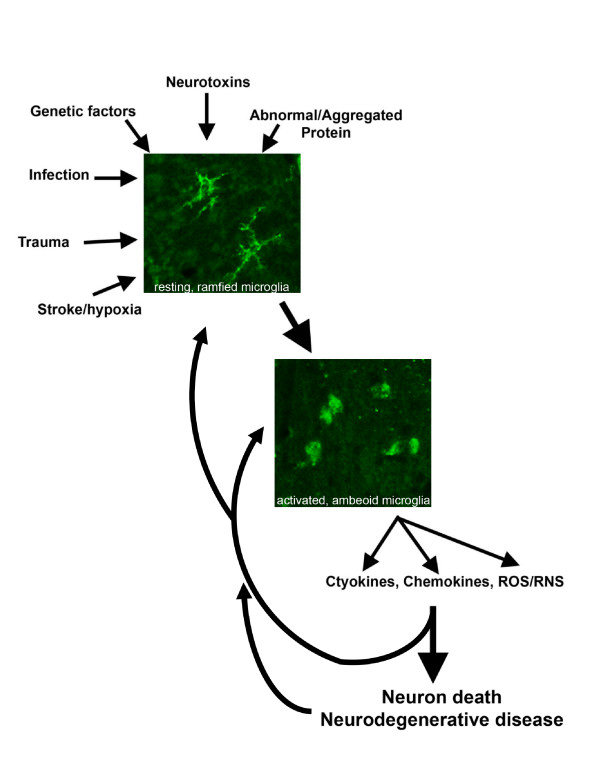
While peripheral immune access to the central nervous system (CNS) is restricted and tightly controlled, the CNS is capable of dynamic immune and inflammatory responses to a variety of insults. Infections, trauma, stroke, toxins and other stimuli are capable of producing an immediate and short lived activation of the innate immune system within the CNS. This acute neuroinflammatory response includes activation of the resident immune cells (microglia) resulting in a phagocytic phenotype and the release of inflammatory mediators such as cytokines and chemokines. While an acute insult may trigger oxidative and nitrosative stress, it is typically short-lived and unlikely to be detrimental to long-term neuronal survival. In contrast, chronic neuroinflammation is a long-standing and often self-perpetuating neuroinflammatory response that persists long after an initial injury or insult. Chronic neuroinflammation includes not only long-standing activation of microglia and subsequent sustained release of inflammatory mediators, but also the resulting increased oxidative and nitrosative stress. The sustained release of inflammatory mediators works to perpetuate the inflammatory cycle, activating additional microglia, promoting their proliferation, and resulting in further release of inflammatory factors. Neurodegenerative CNS disorders, including multiple sclerosis (MS), Alzheimer's disease (AD), Parkinson's disease (PD), Huntington's disease (HD), amyotrophic lateral sclerosis (ALS), tauopathies, and age-related macular degeneration (ARMD), are associated with chronic neuroinflammation and elevated levels of several cytokines. Here we review the hallmarks of acute and chronic inflammatory responses in the CNS, the reasons why microglial activation represents a convergence point for diverse stimuli that may promote or compromise neuronal survival, and the epidemiologic, pharmacologic and genetic evidence implicating neuroinflammation in the pathophysiology of several neurodegenerative diseases.
Overview
The claims and statistics of this paper haven’t been checked yet.
Free: it reads the open-access text and checks the first 5 claims that cite a source we can check. Create a free account to check every claim.
Integrity signals
Registry
Cites
Statistics
Figures
Verification
Claims the paper makes
The claims and statistics of this paper haven’t been checked yet.
Free: it reads the open-access text and checks the first 5 claims that cite a source we can check. Create a free account to check every claim.
Claims other papers make about this one
Each is checked against this paper’s own text: does it say what the citing paper says it does?
The source backs part of the claim, not all of it — or backs it for a different population, condition or comparison.
In the citing paper
“Just like in peripheral tissues, aging leads to a chronic low-grade inflammation in the brain (42), which occurs in the absence of any obvious pathogen.”
From Cellular senescence in brain aging and neurodegenerative diseases: evidence and perspectives (2018) · cites this paper as [42]
Experimental — accuracy not yet measuredThe check wasn’t confident either way, so it gives no verdict — never disputed.
In the citing paper
“Not only has chronic neuroinflammation been shown to increase α-synuclein deposition in various synucleinopathy animal models (51–56), but when these animals were treated with drugs to reduce neuroinflammation, α-synuclein neuropathology also decreased (57, 58).”
From LRRK2 mediates microglial neurotoxicity via NFATc2 in rodent models of synucleinopathies (2020) · cites this paper as [51]
Experimental — accuracy not yet measured
Self-check
Percentages, sums and reported differences re-computed from the paper’s own numbers.
The self-check needs the paper’s full text.
Citations
Cites
MACDONALD, M. (1993) · Cell · doi:10.1016/0092-8674(93)90585-e · Cited by 8,366
Rosen, D. R., Siddique, T., Patterson, D., Figlewicz, D. A., Sapp, P., Hentati, A., Donaldson, D., Goto, J., O'Regan, J. P., Deng, H.-X., et al. (1993) · Nature · doi:10.1038/362059a0 · Cited by 7,062 · cited 11×
“In pre-clinical mouse models, certain anti-inflammatory treatments aimed at suppressing microglia activation have been shown to increase the life expectancy of mice expressing human mutant SOD1 by more than 30% [140].”
InfluentialGoate, A., Chartier-Harlin, M.-C., Mullan, M., Brown, J., Crawford, F., Fidani, L., Giuffra, L., Haynes, A., Irving, N., James, L., et al. (1991) · Nature · doi:10.1038/349704a0 · Cited by 4,659 · cited 1×
“Although the etiology of sporadic AD in humans is unknown, mutations in Amyloid Precursor Protein (APP) or components of its processing machinery (β-secretase and γ-secretase) result in overproduction of Aβ1-40 and 142 peptides and are sufficient to cause disease [11-17].”
Inflammation and Alzheimer’s disease
Akiyama, H. (2000) · Neurobiology of Aging · doi:10.1016/s0197-4580(00)00124-x · Cited by 4,514
Microglia-mediated neurotoxicity: uncovering the molecular mechanisms
Block, M. L., Zecca, L., & Hong, J.-S. (2007) · Nature Reviews Neuroscience · doi:10.1038/nrn2038 · Cited by 4,110 · cited 1×
“, auto-amplification of reactive oxygen species, nitric oxide, and superoxide radicals to form highly oxidizing peroxynitrite species)[7,105-108].”
Immunization with amyloid-β attenuates Alzheimer-disease-like pathology in the PDAPP mouse
Schenk, D., Barbour, R., Dunn, W., Gordon, G., Grajeda, H., Guido, T., Hu, K., Huang, J., Johnson-Wood, K., Khan, K., et al. (1999) · Nature · doi:10.1038/22124 · Cited by 3,160
McGeer, P. L., Itagaki, S., Boyes, B. E., & McGeer, E. G. (1988) · Neurology · doi:10.1212/wnl.38.8.1285 · Cited by 2,990
Bard, F., Cannon, C., Barbour, R., Burke, R.-L., Games, D., Grajeda, H., Guido, T., Hu, K., Huang, J., Johnson-Wood, K., et al. (2000) · Nature Medicine · doi:10.1038/78682 · Cited by 2,012 · cited 1×
“Passive immunization of PDAPP mice peripherally infused with antibodies that recognize aggregated Aβ in neuritic plaques rapidly increased microglial clustering around plaques detectable by in vivo multiphoton microscopy [74] and reduced plaque burden and AD pathology in PDAPP mice [75].”
Citron, M., Oltersdorf, T., Haass, C., McConlogue, L., Hung, A. Y., Seubert, P., Vigo-Pelfrey, C., Lieberburg, I., & Selkoe, D. J. (1992) · Nature · doi:10.1038/360672a0 · Cited by 1,757
Onset and Progression in Inherited ALS Determined by Motor Neurons and Microglia
Boillée, S., Yamanaka, K., Lobsiger, C. S., Copeland, N. G., Jenkins, N. A., Kassiotis, G., Kollias, G., & Cleveland, D. W. (2006) · Science · doi:10.1126/science.1123511 · Cited by 1,623 · cited 1×
“For example, ablating microglial expression of mutant SOD 1 (mSOD1) or transplanting bone marrow from wild-type mice into mSOD1 transgenic mice increases the life span of mutant mice [133,134], suggesting that SOD1 mutations may indirectly contribute to neuronal death by affecting glial rather than neuronal function.”
Cited by
Items 401–500 of 777
Brezzo, G., Simpson, J. E., Ameen‐Ali, K. E., Berwick, J., & Martin, C. J. (2020) · Brain Behavior & Immunity - Health · doi:10.1016/j.bbih.2020.100074 · Cited by 30
Ma, J., Gao, J., Niu, M., Zhang, X., Wang, J., & Xie, A. (2020) · Frontiers in Aging Neuroscience · doi:10.3389/fnagi.2020.580068 · Cited by 27
Fenton Reaction in vivo and in vitro. Possibilities and Limitations
Muranov, K. O. (2024) · Biochemistry (Moscow) · doi:10.1134/s0006297924140074 · Cited by 31
The use of non-steroidal anti-inflammatory drugs in neurological diseases
Terzi, M., Altun, G., Şen, S., Kocaman, A., Kaplan, A. A., Yurt, K. K., & Kaplan, S. (2017) · Journal of Chemical Neuroanatomy · doi:10.1016/j.jchemneu.2017.03.003 · Cited by 26
Lower serum interleukin-2 levels in schizophrenic patients with tardive dyskinesia
Liu, H., Kang, Y., Liang, J., Li, C., Xiu, M., Chen, D., Yang, F., Wang, F., Wu, G., Haile, C. N., et al. (2012) · Psychiatry Research · doi:10.1016/j.psychres.2012.01.002 · Cited by 28
Zhang, X., Meng, W., Wang, H., Hu, Y., Sun, H., & Jia, J. (2024) · Journal of Translational Medicine · doi:10.1186/s12967-024-05680-z · Cited by 26
The metabolic engine of cognition: microglia–neuron interactions in health, ageing and disease
Asimakidou, E., Pluchino, S., Silva, B. A., & Peruzzotti‐Jametti, L. (2025) · Nature Metabolism · doi:10.1038/s42255-025-01409-4 · Cited by 30
Meyer, M., Kruse, M. S., Garay, L. I., Lima, A. E., Roig, P., Hunt, H., Belanoff, J. K., de Kloet, E. R., Deniselle, M. C. G., & Nicola, A. F. D. (2019) · Brain Research · doi:10.1016/j.brainres.2019.146551 · Cited by 28
Platelets, Thromboinflammation and Neurovascular Disease
Sun, Y., & Langer, H. F. (2022) · Frontiers in Immunology · doi:10.3389/fimmu.2022.843404 · Cited by 31
Increased levels of MIP-1 α in CSF and serum of ALS
Yang, X., Gao, L., Wu, X., Zhang, Y., & Zang, D. (2015) · Acta Neurologica Scandinavica · doi:10.1111/ane.12513 · Cited by 25
Park, S. Y., Choi, M. J., Park, G., & Choi, Y. W. (2017) · International Journal of Molecular Medicine · doi:10.3892/ijmm.2017.3350 · Cited by 27
NOX2 inhibition enables retention of the circadian clock in BV2 microglia and primary macrophages
Muthukumarasamy, I., Buel, S. M., Hurley, J., & Dordick, J. S. (2023) · Frontiers in Immunology · doi:10.3389/fimmu.2023.1106515 · Cited by 24
Farshbaf, M. J., Forouzanfar, M., Ghaedi, K., Kiani‐Esfahani, A., Peymani, M., Nejati, A. S., Izadi, T., Karbalaie, K., Noorbakhshnia, M., Rahgozar, S., et al. (2016) · Molecular and Cellular Biochemistry · doi:10.1007/s11010-016-2764-4 · Cited by 28
Neuroinflammation and Oxidative Injury in Developmental Neurotoxicity
Milatović, D., Zaja‐Milatovic, S., BREYER, R. M., Aschner, M., & Montine, T. J. (2017) · Elsevier eBooks · doi:10.1016/b978-0-12-804239-7.00055-x · Cited by 30
Jayakumar, P., Martínez-Moreno, C. G., Lorenson, M. Y., Walker, A. M., & Morales, T. (2021) · Cellular and Molecular Neurobiology · doi:10.1007/s10571-021-01087-2 · Cited by 25
Wei, T., Wang, L., Tang, J., Ashaolu, T. J., & Olatunji, O. J. (2022) · Metabolic Brain Disease · doi:10.1007/s11011-022-00923-8 · Cited by 23
Hood, J. L., Morabito, M. V., Martinez, C. R., Gilbert, J. A., Ferrick-Kiddie, E. A., Ayers, G. D., Chappell, J. D., Dermody, T. S., & Emeson, R. B. (2014) · Molecular and Cellular Neuroscience · doi:10.1016/j.mcn.2014.06.001 · Cited by 23
A novel role for earthworm peptide Lumbricusin as a regulator of neuroinflammation
Seo, M., Lee, J. H., Baek, M., Kim, M., Ahn, M., Kim, S. H., Yun, E., & Hwang, J. (2017) · Biochemical and Biophysical Research Communications · doi:10.1016/j.bbrc.2017.06.154 · Cited by 25
Cognitive Decline and Alzheimer’s Disease in Old Age: A Sex-Specific Cytokinome Signature
Boccardi, V., Paolacci, L., Remondini, D., Giampieri, E., Poli, G., Curti, N., Cecchetti, R., Villa, A., Ruggiero, C., Brancorsini, S., et al. (2019) · Journal of Alzheimer s Disease · doi:10.3233/jad-190480 · Cited by 25
Bazan, N. G., Halabi, A., Ertel, M. K., & Petasis, N. A. (2012) · Elsevier eBooks · doi:10.1016/b978-0-12-374947-5.00034-1 · Cited by 26
Synthesis of [18F]PS13 and Evaluation as a PET Radioligand for Cyclooxygenase-1 in Monkey
Taddei, C., Morse, C. L., Kim, M.-J., Liow, J., Santamaria, J. A. M., Zhang, A., Manly, L. S., Zanotti‐Fregonara, P., Gladding, R. L., Zoghbi, S. S., et al. (2021) · ACS Chemical Neuroscience · doi:10.1021/acschemneuro.0c00737 · Cited by 23
McMenamin, M. M., & Wood, M. J. A. (2010) · Gene Therapy · doi:10.1038/gt.2010.2 · Cited by 24
Luo, W., Yu, Q.-S., Salcedo, I., Holloway, H. W., Lahiri, D. K., Brossi, A. R., Tweedie, D., & Greig, N. H. (2011) · Bioorganic & Medicinal Chemistry · doi:10.1016/j.bmc.2011.05.029 · Cited by 23
Gromadzka, G., & Członkowska, A. (2010) · International Journal of Neuroscience · doi:10.3109/00207454.2010.523131 · Cited by 24
A protein interaction map identifies existing drugs targeting SARS-CoV-2
Cava, C., Bertoli, G. R., & Castiglioni, I. (2020) · BMC Pharmacology and Toxicology · doi:10.1186/s40360-020-00444-z · Cited by 22
Ravenhill, S. M., Evans, A. H., & Crewther, S. G. (2023) · Antioxidants · doi:10.3390/antiox12051117 · Cited by 26
Obesity-induced neuronal senescence: Unraveling the pathophysiological links
Ghosh, P., Fontanella, R. A., Scisciola, L., Taktaz, F., Pesapane, A., Basilicata, M. G., Tortorella, G., Matacchione, G., Capuano, A., Vietri, M. T., et al. (2024) · Ageing Research Reviews · doi:10.1016/j.arr.2024.102533 · Cited by 25
Network medicine in drug design: implications for neuroinflammation
Ghosh, S., & Basu, A. (2012) · Drug Discovery Today · doi:10.1016/j.drudis.2012.01.018 · Cited by 25
Does any drug to treat cancer target mTOR and iron hemostasis in neurodegenerative disorders?
Farshbaf, M. J., & Ghaedi, K. (2016) · BioMetals · doi:10.1007/s10534-016-9981-x · Cited by 22
Schölwer, I., Habib, P., Voelz, C., Rolfes, L., Beyer, C., & Slowik, A. (2020) · Molecular Neurobiology · doi:10.1007/s12035-020-01909-2 · Cited by 22
Feng, X., Yang, F., & Chung, C. Y. (2020) · Brain Research · doi:10.1016/j.brainres.2020.146846 · Cited by 24
Ekladious, S. T., & Sayed, N. S. E. (2018) · Behavioural Pharmacology · doi:10.1097/fbp.0000000000000407 · Cited by 22
The neuroimmune-neuroplasticity interface and brain pathology
Hayley, S. P. (2014) · Frontiers in Cellular Neuroscience · doi:10.3389/fncel.2014.00419 · Cited by 21
Didonna, A., Cantó, E., Shams, H., Isobe, N., Zhao, C., Caillier, S. J., Condello, C., Yamate-Morgan, H., Tiwari-Woodruff, S. K., Mofrad, M. R. K., et al. (2019) · Journal of Autoimmunity · doi:10.1016/j.jaut.2019.04.003 · Cited by 21
Astiz, M., Diz-Chaves, Y., & García‐Segura, L. M. (2013) · Toxicology and Applied Pharmacology · doi:10.1016/j.taap.2013.07.008 · Cited by 25
MRI visualization of neuroinflammation using VCAM-1 targeted paramagnetic micelles
Garello, F., Pagoto, A., Arena, F., Buffo, A., Blasi, F., Alberti, D., & Terreno, E. (2017) · Nanomedicine Nanotechnology Biology and Medicine · doi:10.1016/j.nano.2017.10.002 · Cited by 24
Role of Brain Neuroinflammatory Factors on Hypertension in the Spontaneously Hypertensive Rat
Avolio, E., Pasqua, T., Vito, A. D., Fazzari, G., Cardillo, G., Alò, R., Cerra, M. C., Barni, T., Angelone, T., & Canonaco, M. (2018) · Neuroscience · doi:10.1016/j.neuroscience.2018.01.067 · Cited by 23
A Bcr-Abl Inhibitor GNF-2 Attenuates Inflammatory Activation of Glia and Chronic Pain
Song, G. J., Rahman, M. H., Jha, M. K., Gupta, D. P., Park, S. H., Kim, J., Lee, S. H., Lee, I. K., Sim, T., Bae, Y. C., et al. (2019) · Frontiers in Pharmacology · doi:10.3389/fphar.2019.00543 · Cited by 21
Grifasi, I. R., Evans, W. A., Rexha, A. D., Sako, L. W., & Marshall, S. A. (2019) · International review of neurobiology · doi:10.1016/bs.irn.2019.10.018 · Cited by 21
Navarro, E., Norden, D. M., Trojanowski, P. J., Godbout, J. P., & López, M. G. (2021) · Molecules · doi:10.3390/molecules26082107 · Cited by 22
Chemokine Receptor Ccr7 Restricts Fatal West Nile Virus Encephalitis
Bardina, S. V., Brown, J. A., Michlmayr, D., Hoffman, K. W., Sum, J., Pletnev, A. G., Lira, S. A., & Lim, J. K. (2017) · Journal of Virology · doi:10.1128/jvi.02409-16 · Cited by 22
Zou, Y., Zhang, J., Chen, L., Xu, Q., Yao, S., & Chen, H. (2025) · Pharmaceutics · doi:10.3390/pharmaceutics17030388 · Cited by 24
Nakamura, Y., Kimura, S., Takada, N., Takemura, M., Iwamoto, M., Hisaoka‐Nakashima, K., Nakata, Y., & Morioka, N. (2020) · Neurochemistry International · doi:10.1016/j.neuint.2020.104751 · Cited by 21
Cullen, P., & Sun, D. (2023) · Frontiers in Ophthalmology · doi:10.3389/fopht.2023.1217137 · Cited by 21
Marek, D., Papin, S., Ellefsen, K., Niederhäuser, J., Isidor, N., Ransijn, A., Poupon, L., Spertini, F., Pantaleo, G., Bergmann, S., et al. (2012) · Journal of Neuroinflammation · doi:10.1186/1742-2094-9-238 · Cited by 21
Kanegan, M. J. V., Dunn, D., Kaltenbach, L. S., Shah, B. D., Dong, H., McCoy, D. D., Yang, P., Peng, J., Shen, L., Du, L., et al. (2016) · Scientific Reports · doi:10.1038/srep25626 · Cited by 21
Zhang, J., Wang, C., Shi, H., Wu, D., & Ying, W. (2018) · Frontiers in Cellular Neuroscience · doi:10.3389/fncel.2018.00343 · Cited by 22
Rojas, A., Amaradhi, R., Banik, A., Jiang, C., Abreu-Melon, J., Wang, S., Dingledine, R. J., & Ganesh, T. (2021) · Neurotherapeutics · doi:10.1007/s13311-020-00969-5 · Cited by 20
Anwar, M. M., Özkan, E., Shomalizadeh, N., Sapancı, S., Özler, C., Kesibi, J., & Özdemir, Y. (2023) · Frontiers in Neuroscience · doi:10.3389/fnins.2022.1041461 · Cited by 20
Global Brain Transcriptome Analysis of a Tpp1 Neuronal Ceroid Lipofuscinoses Mouse Model
Domowicz, M. S., Chan, W., Vázquez, P. N. C., Henry, J. G., Ware, C. B., Andrade, J., Dawson, G., & Schwartz, N. B. (2019) · ASN NEURO · doi:10.1177/1759091419843393 · Cited by 21
Paeonol attenuates inflammation-mediated neurotoxicity and microglial activation
Lee, E., Nam, K. N., Woo, B.-C., Moon, S., Park, S.-U., Park, J., Hwang, J., Bae, H.-S., & Ko, C. (2013) · Neural Regeneration Research · doi:10.4103/1673-5374.121567 · Cited by 20
Targeting KVchannels rescues retinal ganglion cells in vivo directly and by reducing inflammation
Koeberle, P. D., & Schlichter, L. C. (2010) · Channels · doi:10.4161/chan.4.5.12790 · Cited by 28
Reversal of haloperidol-induced orofacial dyskinesia and neuroinflammation by isoflavones
Mezzomo, N. F., Schmitz, I. D. S., de Lima, V. B., Dorneles, G. P., Schaffer, L. F., Boeck, C. R., Romão, P. R. T., & Peroza, L. R. (2021) · Molecular Biology Reports · doi:10.1007/s11033-021-07003-7 · Cited by 21
Neshan, M., Malakouti, S. K., Kamalzadeh, L., Makvand, M., Campbell, A., & Ahangari, G. (2021) · Journal of Alzheimer s Disease · doi:10.3233/jad-210480 · Cited by 21
Niu, Q., Li, D., Zhang, J., Piao, Z., Xi, Y., Xi, Y., Kamal, N. N. S. N. M., Lim, V., Li, P., & Yin, Y. (2024) · Ageing Research Reviews · doi:10.1016/j.arr.2024.102593 · Cited by 21
Activation of Innate Immune Responses in the Central Nervous System during Reovirus Myelitis
Schittone, S. A., Dionne, K. R., Tyler, K. L., & Clarke, P. (2012) · Journal of Virology · doi:10.1128/jvi.00171-12 · Cited by 21
Stacey, D., Redlich, R., Büschel, A., Opel, N., Grotegerd, D., Zaremba, D., Dohm, K., Bürger, C., Meinert, S., Förster, K., et al. (2016) · Genes Brain & Behavior · doi:10.1111/gbb.12318 · Cited by 20
Chronic methamphetamine exposure significantly decreases microglia activation in the arcuate nucleus
Lloyd, S. A., Corkill, B., Bruster, M., Roberts, R. L., & Shanks, R. A. (2017) · Journal of Chemical Neuroanatomy · doi:10.1016/j.jchemneu.2017.03.001 · Cited by 21
Stress-Induced NLRP3 Inflammasome in Human Diseases
Alcocer‐Gómez, E., Castejón‐Vega, B., & Cordero, M. D. (2017) · Advances in protein chemistry and structural biology · doi:10.1016/bs.apcsb.2017.02.002 · Cited by 21
Neuroinflammation as a therapeutic target in neurodegenerative diseases
Gordon, R., & Woodruff, T. M. (2017) · Elsevier eBooks · doi:10.1016/b978-0-12-805120-7.00003-8 · Cited by 25
JWH133 inhibits MPP+-Induced inflammatory response and iron influx in astrocytes
Jia, Y., Deng, H., Qin, Q., & Ma, Z. (2020) · Neuroscience Letters · doi:10.1016/j.neulet.2020.134779 · Cited by 18
Systems modeling of white matter microstructural abnormalities in Alzheimer's disease
Horgusluoglu, E., Xiao, G., Wang, M., Wang, Q., Zhou, X., Nho, K. T., Saykin, A. J., Schadt, E. E., & Zhang, B. (2020) · NeuroImage Clinical · doi:10.1016/j.nicl.2020.102203 · Cited by 19
Cellular senescence in vivo: From cells to tissues to pathologies
Kumar, A., Bano, D., & Ehninger, D. (2020) · Mechanisms of Ageing and Development · doi:10.1016/j.mad.2020.111308 · Cited by 20
Microglia in Prion Diseases: Angels or Demons?
Peggion, C., Stella, R., Lorenzon, P., Spisni, E., Bertoli, A., & Massimino, M. L. (2020) · International Journal of Molecular Sciences · doi:10.3390/ijms21207765 · Cited by 19
Cuní‐López, C., Stewart, R., Quek, H., & White, A. R. (2022) · Cells · doi:10.3390/cells11101662 · Cited by 21
Nagayach, A., Bhaskar, R., & Patro, I. K. (2022) · Journal of Chemical Neuroanatomy · doi:10.1016/j.jchemneu.2022.102160 · Cited by 20
Neuronal RING finger protein 11 (RNF11) regulates canonical NF-κB signaling
Pranski, E. L., Dalal, N. V., Herskowitz, J. H., Orr, A. L., Roesch, L. A., Fritz, J. J., Heilman, C. J., Lah, J. J., Levey, A. I., & Betarbet, R. S. (2012) · Journal of Neuroinflammation · doi:10.1186/1742-2094-9-67 · Cited by 23
Indanone: a promising scaffold for new drug discovery against neurodegenerative disorders
Bansal, R., Singh, R., Dutta, T. S., Dar, Z. A., & Bajpai, A. (2024) · Drug Discovery Today · doi:10.1016/j.drudis.2024.104063 · Cited by 19
Tong, G., Izquierdo, P., & Raashid, R. A. (2017) · The Open Neurology Journal · doi:10.2174/1874205x01711010027 · Cited by 18
Tennakoon, A., Katharesan, V., Musgrave, I., Koblar, S. A., Faull, R. L. M., Curtis, M. A., & Johnson, I. (2021) · Journal of Neuroscience Research · doi:10.1002/jnr.24996 · Cited by 21
Microglia in Glioblastomas: Molecular Insight and Immunotherapeutic Potential
Nusraty, S., Boddeti, U., Zaghloul, K. A., & Brown, D. A. (2024) · Cancers · doi:10.3390/cancers16111972 · Cited by 17
Peroza, L. R., Schaffer, L. F., de Freitas, C. M., Leal, C. Q., Ferrari, M. C., Duarte, M. M. F. M., & Fachinetto, R. (2016) · Neurochemical Research · doi:10.1007/s11064-016-1961-6 · Cited by 21
Yaacob, W. M. H. W., Long, I., Zakaria, R., & Othman, Z. (2018) · Current Nutrition & Food Science · doi:10.2174/1573401315666181130103456 · Cited by 18
Bi, W., Cheng, X., Zeng, Z., Zhou, R., Luo, R., Zhang, J., & Zhu, L. (2021) · Neurological Research · doi:10.1080/01616412.2020.1866353 · Cited by 18
Correa, F., Ljunggren, E., Patil, J., Wang, X., Hagberg, H., Mallard, C. E., & Sandberg, M. (2013) · NeuroImmunoModulation · doi:10.1159/000347161 · Cited by 20
Morioka, N., Hisaoka‐Nakashima, K., & Nakata, Y. (2018) · Springer eBooks · doi:10.1007/978-981-10-8488-1_5 · Cited by 25
Hamezah, H. S., Durani, L. W., Yanagisawa, D., Ibrahim, N. F., Aizat, W. M., Makpol, S., Ngah, W. Z. W., Damanhuri, H. A., & Tooyama, I. (2019) · Journal of Alzheimer s Disease · doi:10.3233/jad-181171 · Cited by 18
Treating inflammation in childhood neurodegenerative disorders
Lim, M. J. (2011) · Developmental Medicine & Child Neurology · doi:10.1111/j.1469-8749.2010.03902.x · Cited by 17
Prothrombin Kringle-2: a potential inflammatory pathogen in the parkinsonian dopaminergic system
Leem, E., Jeong, K. H., Won, S.-Y., Shin, W.-H., & Kim, S. R. (2016) · Experimental Neurobiology · doi:10.5607/en.2016.25.4.147 · Cited by 16
Bocharova, O. V., Fisher, A., Pandit, N. P., Molesworth, K., Mychko, O., Scott, A. J., Makarava, N., Ritzel, R., & Baskakov, I. V. (2023) · Brain Pathology · doi:10.1111/bpa.13116 · Cited by 16
Ruffini, N., Klingenberg, S., Heese, R., Schweiger, S., & Gerber, S. (2022) · Frontiers in Aging Neuroscience · doi:10.3389/fnagi.2022.866886 · Cited by 17
Liu, S., Xu, P., Luo, X., Hu, J., & Liu, X. (2016) · Neurochemical Research · doi:10.1007/s11064-016-1870-8 · Cited by 16
Enhanced drug delivery by a prodrug approach effectively relieves neuroinflammation in mice
Montaser, A. B., Kuiri, J., Natunen, T., Hruška, P., Potěšil, D., Auriola, S. O. K., Hiltunen, M. O., Terasaki, T., Lehtonen, M., Jalkanen, A. J., et al. (2022) · Life Sciences · doi:10.1016/j.lfs.2022.121088 · Cited by 17
Qin, F., Zhao, Y., Shang, W. H., Zhao, Z., Qian, X., Zhang, B., & Cai, H. (2018) · Cellular and Molecular Biology · doi:10.14715/cmb/2018.64.10.23 · Cited by 16
Amyotrophic Lateral Sclerosis and Multiple Sclerosis Overlap: A Case Report
Trojsi, F., Sagnelli, A., Cirillo, G., Piccirillo, G., Femiano, C., Izzo, F., Monsurrò, M. R., & Tedeschi, G. (2012) · Case Reports in Medicine · doi:10.1155/2012/324685 · Cited by 18
Ożarowski, M., Przystanowicz, J., & Adamczak, A. (2013) · Herba Polonica · doi:10.2478/hepo-2013-0028 · Cited by 19
Shi, H., Huang, L., Wang, Q., Zhang, N., Lv, C., Lin, C., Shao, L., Xia, D., Zhao, Z., Yang, G., et al. (2025) · International Journal of Surgery · doi:10.1097/js9.0000000000003030 · Cited by 15
Subedi, L., & Yumnam, S. (2021) · International Journal of Molecular Sciences · doi:10.3390/ijms22020965 · Cited by 15
Li, Q., Li, X., Hu, H., Ma, Y., Ou, Y., Wang, A.-Y., Tan, L., & Yu, J. (2023) · Journal of Alzheimer s Disease · doi:10.3233/jad-221136 · Cited by 15
Feng, H., Zhang, Z., Lyu, W., Kong, X., Li, J., Zhou, H., & Wei, P. (2023) · Molecular Neurobiology · doi:10.1007/s12035-023-03864-0 · Cited by 15
Steiner, G. Z., Bensoussan, A., Liu, J., Hohenberg, M. I., & Chang, D. (2018) · Trials · doi:10.1186/s13063-018-2912-0 · Cited by 16
Arab, A., Kučerová, J., Minsterová, A. Š., Dražanová, E., Szabó, N., Starčuk, Z., Rektorová, I., & Khairnar, A. (2019) · Neurotoxicity Research · doi:10.1007/s12640-019-00068-0 · Cited by 15
Kom, H. H., Nageshwar, M., Srilatha, K., & Reddy, K. P. (2019) · Journal of Applied Pharmaceutical Sciences · doi:10.7324/japs.2019.90412 · Cited by 10
Titze-de-Almeida, S. S., Lustosa, C., Horst, C. H., Bel, E. A. D., & Titze‐de‐Almeida, R. (2014) · Neurochemical Research · doi:10.1007/s11064-014-1449-1 · Cited by 17
Castellini, G., Wu, F. C. W., Finn, J. D., O'Neill, T. W., Lean, M. E. J., Pendleton, N., Rastrelli, G., Rutter, M. K., Gacci, M., Ricca, V., et al. (2016) · Psychosomatic Medicine · doi:10.1097/psy.0000000000000328 · Cited by 15
Allopregnanolone and its antagonist modulate neuroinflammation and neurological impairment
Bäckström, T. C., Doverskog, M., Blackburn, T. P., Scharschmidt, B. F., & Felipo, V. (2024) · Neuroscience & Biobehavioral Reviews · doi:10.1016/j.neubiorev.2024.105668 · Cited by 16
The Multifaceted Role of LRRK2 in Parkinson’s Disease
Ho, D. H., Han, S. J., & Son, I. (2025) · Brain Sciences · doi:10.3390/brainsci15040407 · Cited by 16
Potential for Cell-Mediated Immune Responses in Mouse Models of Pelizaeus-Merzbacher Disease
Southwood, C. M., Fyk‐Kolodziej, B. E., Dachet, F., & Gow, A. (2013) · Brain Sciences · doi:10.3390/brainsci3041417 · Cited by 16
Breast cancer type 1 and neurodegeneration: consequences of deficient DNA repair
Leung, E., & Hazrati, L. (2021) · Brain Communications · doi:10.1093/braincomms/fcab117 · Cited by 17
Traub, J., Frey, A., & Störk, S. (2023) · Life · doi:10.3390/life13020329 · Cited by 17
Metadata
- Authors
- Frank-Cannon, T. C., Alto, L. T., McAlpine, F. E., & Tansey, M. G.
- Affiliations
- Emory University (US)
- The University of Texas Southwestern Medical Center (US)
- Cancer Research UK (GB)
- Corresponding author
- Tansey, Malú G
- ORCID
- Tansey, Malú G
- Venue
- Molecular Neurodegeneration
- Published
- 2009-11-16
- Volume
- 4
- Issue
- 1
- Pages
- 47-47
- ISSN
- 1750-1326 (ISSN-L)
- PMC
- PMC2784760
- OpenAlex
- W2127936752
- Cited by
- 751
- References
- 145
- Citations by year
- 2026: 21 · 2025: 31 · 2024: 43 · 2023: 38 · 2022: 41 · 2021: 49 · 2020: 72 · 2019: 48 · 2018: 46 · 2017: 55 · 2016: 54 · 2015: 56 · 2014: 59 · 2013: 43 · 2012: 36
- FWCI
- 20.02
- Type
- journal article
- Language
- en
- Open access
- gold
- doi.org
- Licence
- cc-by
- Locations
- Molecular Neurodegeneration (publishedVersion, cc-by)
- PubMed Central (publishedVersion, cc-by)
- PubMed (publishedVersion)
- DOAJ (DOAJ: Directory of Open Access Journals) (submittedVersion, cc-by-sa)
- OakTrust (Texas A&M University Libraries) (submittedVersion)
- Funders
- National Institute of Neurological Disorders and Stroke (R01NS049433)
- Topics
- Life Sciences › Neuroscience › Neurology › Neuroinflammation and Neurodegeneration Mechanisms
- Life Sciences › Neuroscience › Biological Psychiatry › Tryptophan and brain disorders
- Life Sciences › Neuroscience › Neurology › Neurological Disease Mechanisms and Treatments
- Keywords
- neuroinflammation, neurodegenerative diseases, microglial activation, chronic neuroinflammation, oxidative stress, nitrosative stress, cytokines, chemokines, multiple sclerosis, Alzheimer's disease, Parkinson's disease, Huntington's disease, amyotrophic lateral sclerosis, tauopathy, age-related macular degeneration
About these checks
Registry, retraction, Cites and statistics results are computed, not judged, with one exception: a printed reference that no index lists is read once by a model before it counts as a citation error. Claims are extracted by a model and kept only when their quote appears verbatim in the text; each cited source is then checked, with a model’s help, for whether it says what the claim relies on. Those verdicts can be wrong — read the claim’s quote and the cited source before relying on one.
Statistics and arithmetic are recomputed, not judged.
Confidence bands are shown only for fields calibrated on our annotated test set. None is calibrated yet, so no band is shown.
What counts as a claim ›How we measure confidence ›How we check this ›
Are you an author, or do you see a problem with this page? Request a review
Data sources
Bibliographic data: Semantic Scholar, OpenAlex, Crossref.
Contains information from the Semantic Scholar Academic Graph Datasets, made available under the ODC Attribution License (ODC-BY 1.0).
Semantic Scholar’s data is described in: Kinney, R., et al. (2023). The Semantic Scholar Open Data Platform. arXiv:2301.10140.
