

Modulation of γ-secretase by EVP-0015962 reduces amyloid deposition and behavioral deficits in Tg2576 mice
Open accessThe DOI matches its Crossref record; 60 of the 60 references it cites were found in a registry or an index.
Abstract
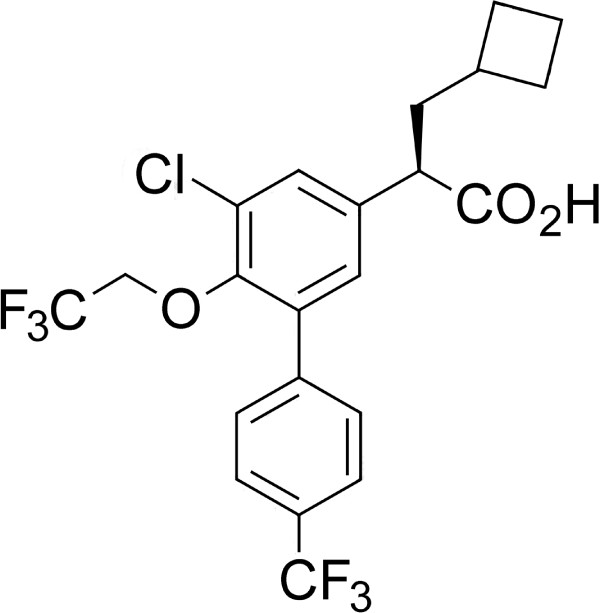
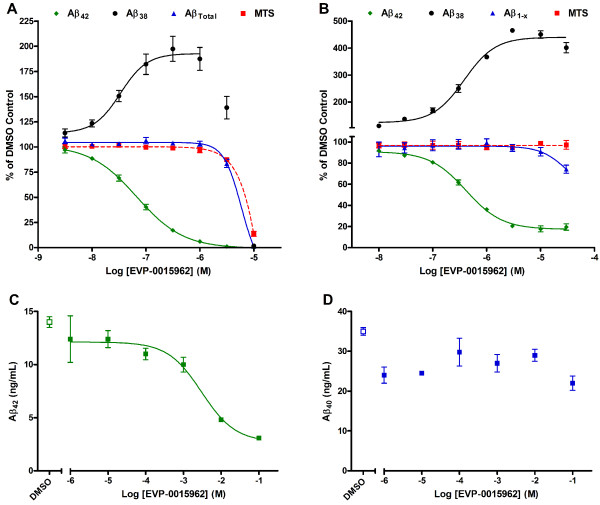
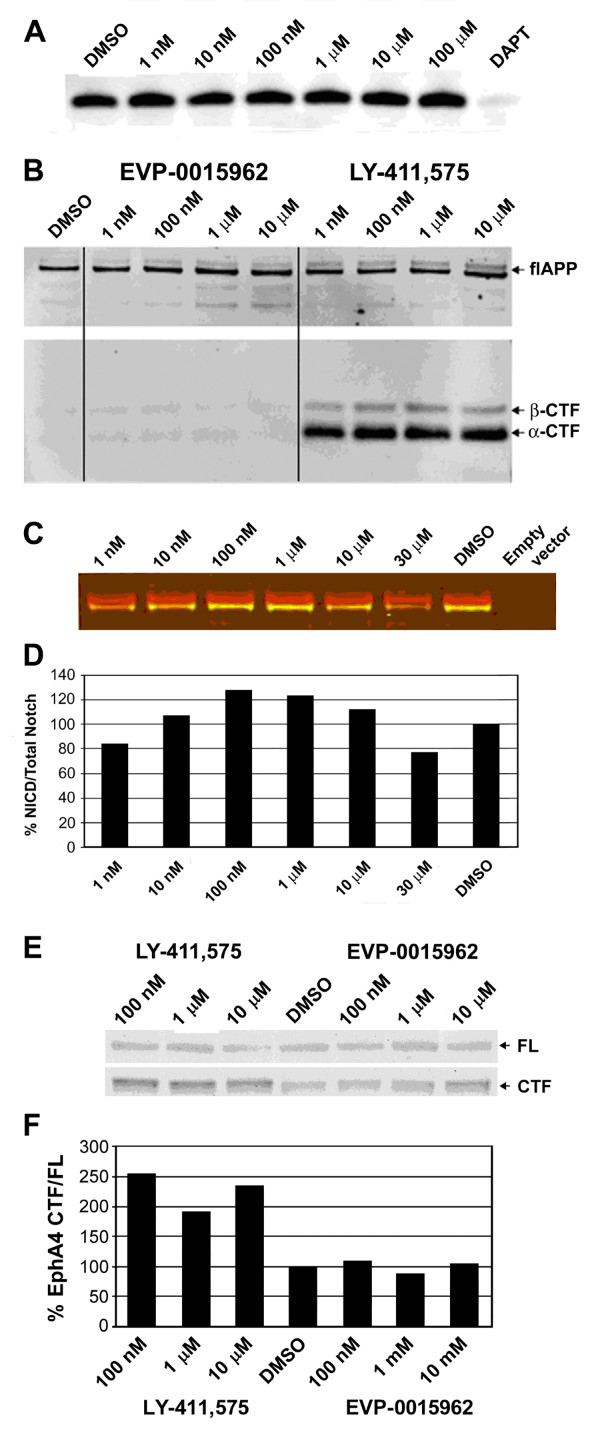
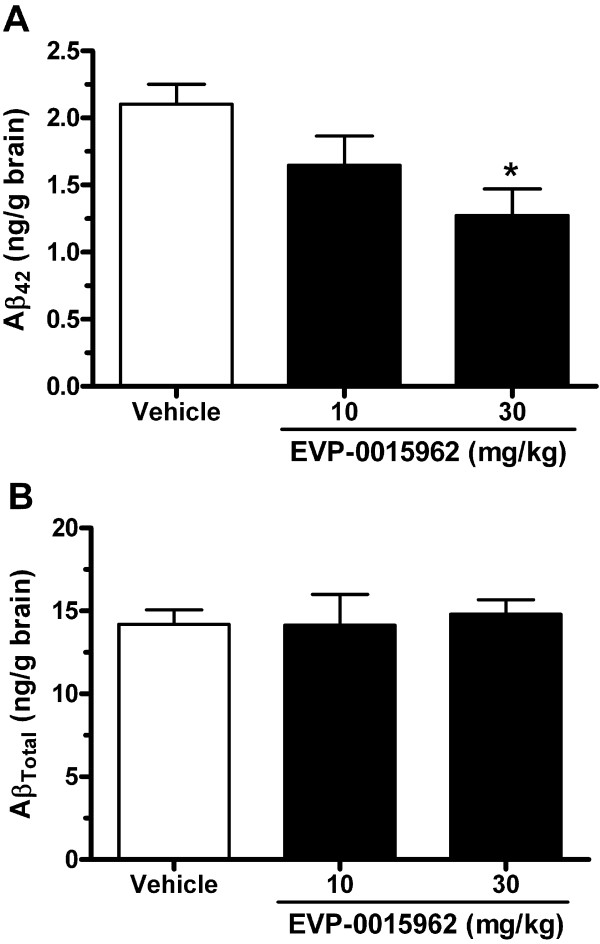
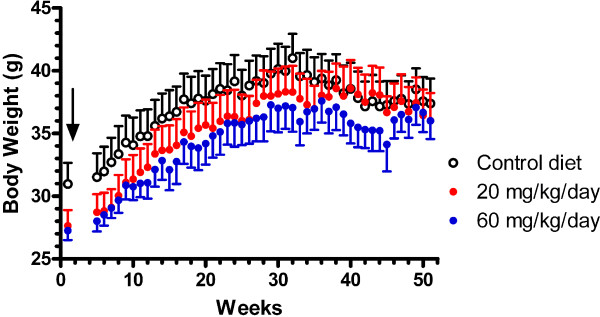
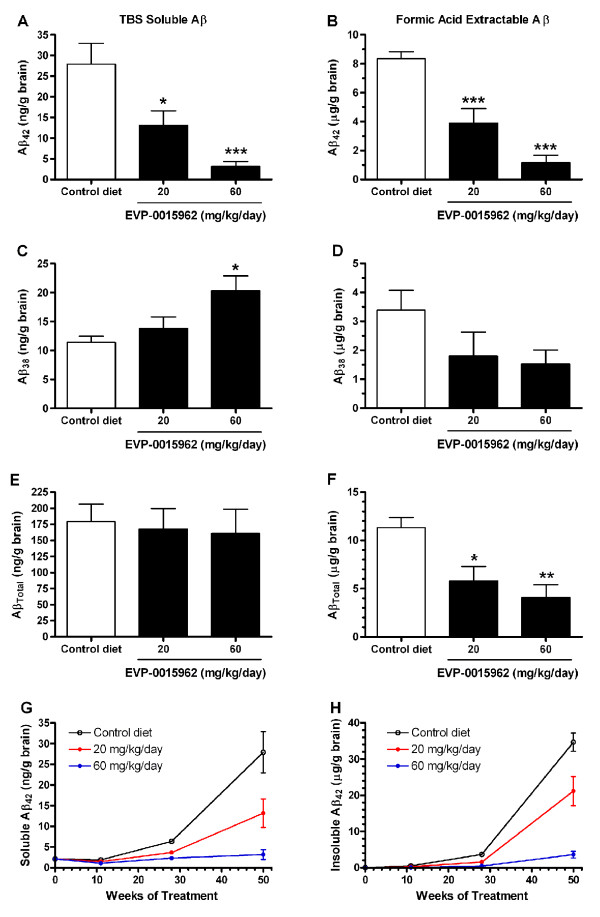
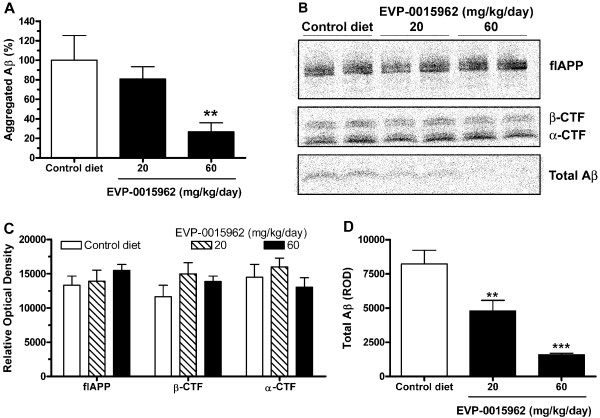
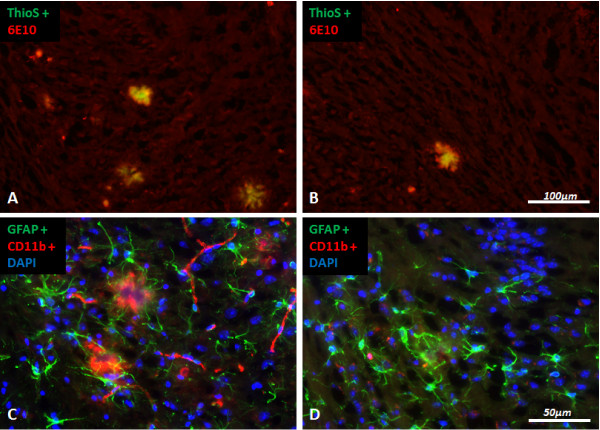
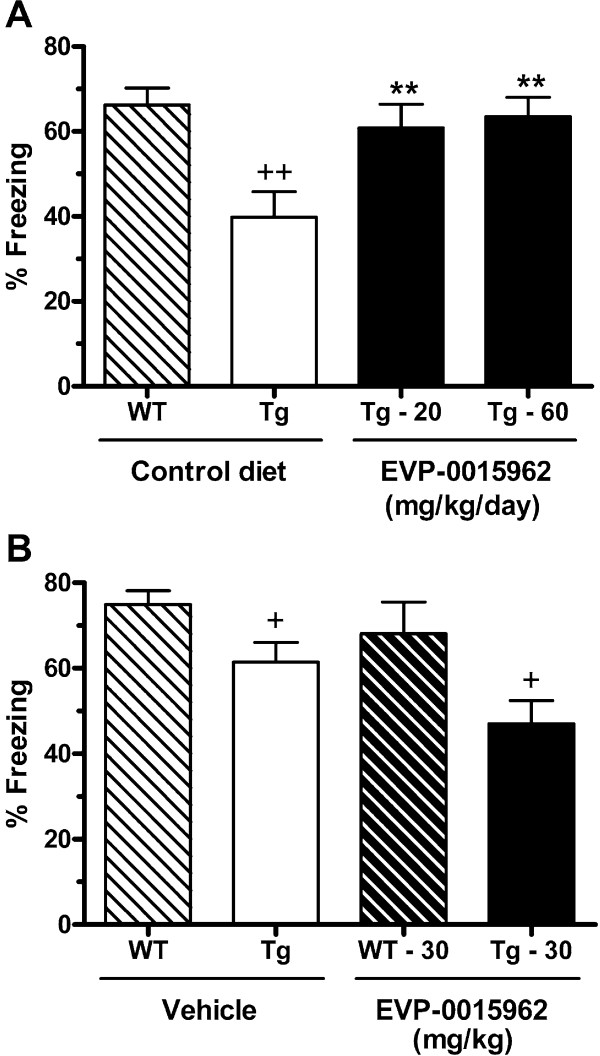
Background: A hallmark of Alzheimer’s disease is the presence of senile plaques in human brain primarily containing the amyloid peptides Aβ 42 and Aβ 40. Many drug discovery efforts have focused on decreasing the production of Aβ 42 through γ-secretase inhibition. However, identification of γ-secretase inhibitors has also uncovered mechanism-based side effects. One approach to circumvent these side effects has been modulation of γ-secretase to shift Aβ production to favor shorter, less amyloidogenic peptides than Aβ 42, without affecting the overall cleavage efficiency of the enzyme. This approach, frequently called γ-secretase modulation, appears more promising and has lead to the development of new therapeutic candidates for disease modification in Alzheimer’s disease. Results: Here we describe EVP-0015962, a novel small molecule γ-secretase modulator. EVP-0015962 decreased Aβ 42 in H4 cells (IC 50 = 67 nM) and increased the shorter Aβ 38 by 1.7 fold at the IC 50 for lowering of Aβ 42. Aβ Total, as well as other carboxyl-terminal fragments of amyloid precursor protein, were not changed. EVP-0015962 did not cause the accumulation of other γ-secretase substrates, such as the Notch and ephrin A4 receptors, whereas a γ-secretase inhibitor reduced processing of both. A single oral dose of EVP-0015962 (30 mg/kg) decreased Aβ 42 and did not alter Aβ Total peptide levels in a dose-dependent manner in Tg2576 mouse brain at an age when overt Aβ deposition was not present. In Tg2576 mice, chronic treatment with EVP-0015962 (20 or 60 mg/kg/day in a food formulation) reduced Aβ aggregates, amyloid plaques, inflammatory markers, and cognitive deficits. Conclusions: EVP-0015962 is orally bioavailable, detected in brain, and a potent, selective γ-secretase modulator in vitro and in vivo. Chronic treatment with EVP-0015962 was well tolerated in mice and lowered the production of Aβ 42, attenuated memory deficits, and reduced Aβ plaque formation and inflammation in Tg2576 transgenic animals. In summary, these data suggest that γ-secretase modulation with EVP-0015962 represents a viable therapeutic alternative for disease modification in Alzheimer’s disease.
Overview
The claims and statistics of this paper haven’t been checked yet.
Free: it reads the open-access text and checks the first 5 claims that cite a source we can check. Create a free account to check every claim.
Integrity signals
Registry
Cites
Statistics
Figures
Verification
Claims the paper makes
The claims and statistics of this paper haven’t been checked yet.
Free: it reads the open-access text and checks the first 5 claims that cite a source we can check. Create a free account to check every claim.
Claims other papers make about this one
Each is checked against this paper’s own text: does it say what the citing paper says it does?
The source backs part of the claim, not all of it — or backs it for a different population, condition or comparison.
In the citing paper
“It also improved the memory deficits in AD model mice.317”
From Amyloid β-based therapy for Alzheimer’s disease: Challenges, successes and future (2023) · cites this paper as [317]
Experimental — accuracy not yet measured
Self-check
Percentages, sums and reported differences re-computed from the paper’s own numbers.
The self-check needs the paper’s full text.
Citations
Cites
McKhann, G. M., Knopman, D. S., Chertkow, H., Hyman, B. T., Jack, C. R., Kawas, C. H., Klunk, W. E., Koroshetz, W. J., Manly, J. J., Mayeux, R., et al. (2011) · Alzheimer's & Dementia · doi:10.1016/j.jalz.2011.03.005 · Cited by 18,657
Neuropathological stageing of Alzheimer-related changes.
Braak, H., & Braak, E. (1991) · Acta Neuropathologica · doi:10.1007/bf00308809 · Cited by 16,123
Alzheimer's Disease: Genes, Proteins, and Therapy
Selkoe, D. J. (2001) · Physiological Reviews · doi:10.1152/physrev.2001.81.2.741 · Cited by 6,063 · cited 3×
“Mutations in PS, the putative catalytic site of the γ-secretase complex, and in APP around the γ-secretase cleavage site, were shown to increase the ratio of Aβ42/Aβ40, strengthening support for γ-secretase inhibition for disease modification in AD [8,12].”
BackgroundInflammation and Alzheimer’s disease
Akiyama, H. (2000) · Neurobiology of Aging · doi:10.1016/s0197-4580(00)00124-x · Cited by 4,514
Amyloid plaque core protein in Alzheimer disease and Down syndrome.
Masters, C. L., Simms, G., Weinman, N. A., Multhaup, G., McDonald, B. L., & Beyreuther, K. (1985) · Proceedings of the National Academy of Sciences · doi:10.1073/pnas.82.12.4245 · Cited by 4,431 · cited 5×
“Since Aβ deposits contain all lengths of Aβ peptides but are primarily composed of Aβ42 and Aβ40 [4-7], this finding is consistent with a reduction in Aβ deposition and is supportive of a potential disease”
BackgroundResultInfluentialCorrelative Memory Deficits, Aβ Elevation, and Amyloid Plaques in Transgenic Mice
Hsiao, K., Chapman, P., Nilsen, S., Eckman, C., Harigaya, Y., Younkin, S., Yang, F., & Cole, G. (1996) · Science · doi:10.1126/science.274.5284.99 · Cited by 4,210
Brewer, G. J., Torricelli, J. R., Evege, E. K., & Price, P. J. (1993) · Journal of Neuroscience Research · doi:10.1002/jnr.490350513 · Cited by 2,325
Karran, E., Mercken, M., & Strooper, B. D. (2011) · Nature Reviews Drug Discovery · doi:10.1038/nrd3505 · Cited by 2,188 · cited 6×
“Aβ42 was significantly lowered in both the TBS soluble and formic acid extractable fractions (TBS, F[2,12] = 12.”
BackgroundInfluentialA presenilin-1-dependent γ-secretase-like protease mediates release of Notch intracellular domain
De Strooper, B., Annaert, W., Cupers, P., Saftig, P., Craessaerts, K., Mumm, J. S., Schroeter, E. H., Schrijvers, V., Wolfe, M. S., Ray, W. J., et al. (1999) · Nature · doi:10.1038/19083 · Cited by 2,100
Deficiency of presenilin-1 inhibits the normal cleavage of amyloid precursor protein
De Strooper, B., Saftig, P., Craessaerts, K., Vanderstichele, H., Guhde, G., Annaert, W., Von Figura, K., & Van Leuven, F. (1998) · Nature · doi:10.1038/34910 · Cited by 1,818 · cited 2×
“the γ-secretase substrates [15,19,29-33].”
Result
Research works printed but not linked: 3
- Kim KS Wen GY Bancher C Chen CMJ Sapienza VJ Hong H Wisniewski HM Detection and quantitation of amyloid B-peptide with 2 monoclonal antibodies Neurosci Res Commun 1990 7 113 122
- Shapiro G Chesworth R Tetrasubstituted benzenes 2009 PCT publication WO2009/086277
- Bottenstein JE Barker JL, McKelvy JF Defined media for dissociated neural cultures Current Methods in Cellular Neurobiology 1983 John Wiley and Sons, New York 107 130 Volume 4
Cited by
Amyloid β-based therapy for Alzheimer’s disease: Challenges, successes and future
Zhang, Y., Chen, H., Li, R., Sterling, K., & Song, W. (2023) · Signal Transduction and Targeted Therapy · doi:10.1038/s41392-023-01484-7 · Cited by 988
“It also improved the memory deficits in AD model mice.(317) Unfortunately, all of them have been discontinued in the clinical trials.”
BackgroundInconsistencies and Controversies Surrounding the Amyloid Hypothesis of Alzheimer's Disease
Morris, G. P., Clark, I. A., & Vissel, B. (2014) · Acta Neuropathologica Communications · doi:10.1186/s40478-014-0135-5 · Cited by 522
γ-Secretase inhibitors and modulators
Golde, T. E., Koo, E. H., Felsenstein, K. M., Osborne, B. A., & Miele, L. (2013) · Biochimica et Biophysica Acta (BBA) - Biomembranes · doi:10.1016/j.bbamem.2013.06.005 · Cited by 272
Self-citationDevelopment and Mechanism of γ-Secretase Modulators for Alzheimer’s Disease
Crump, C. J., Johnson, D. S., & Li, Y.-M. (2013) · Biochemistry · doi:10.1021/bi400377p · Cited by 171
Targeting Amyloidogenic Processing of APP in Alzheimer’s Disease
Zhao, J., Liu, X., Xia, W., Zhang, Y., & Wang, C. (2020) · Frontiers in Molecular Neuroscience · doi:10.3389/fnmol.2020.00137 · Cited by 162
Metadata
- Authors
- Rogers, K., Felsenstein, K. M., Hrdlicka, L., Tu, Z., Albayya, F., Lee, W., Hopp, S., Miller, M.-J., Spaulding, D., Yang, Z., Hodgdon, H., Nolan, S., Wen, M., Costa, D., Blain, J.-F., Freeman, E., De Strooper, B., Vulsteke, V., Scrocchi, L., Zetterberg, H., Portelius, E., Hutter-Paier, B., Havas, D., Ahlijanian, M., Flood, D., Leventhal, L., Shapiro, G., Patzke, H., Chesworth, R., & Koenig, G.
- Affiliations
- FORUM Pharmaceuticals (United States) (US)
- KU Leuven (BE)
- Amorfix (Canada) (CA)
- National Hospital for Neurology and Neurosurgery (GB)
- University of Gothenburg (SE)
- QPS (Austria) (AT)
- Corresponding author
- Koenig, Gerhard
- ORCID
- Venue
- Molecular Neurodegeneration
- Published
- 2012-12
- Volume
- 7
- Issue
- 1
- Pages
- 61-61
- ISSN
- 1750-1326 (ISSN-L)
- PMC
- PMC3573960
- OpenAlex
- W2153156005
- Cited by
- 75
- References
- 60
- Citations by year
- 2026: 4 · 2025: 3 · 2024: 6 · 2023: 5 · 2022: 1 · 2021: 3 · 2020: 7 · 2019: 4 · 2018: 2 · 2017: 7 · 2016: 8 · 2015: 5 · 2014: 12 · 2013: 7
- FWCI
- 5.15
- Type
- journal article
- Language
- en
- Open access
- gold
- doi.org
- Licence
- cc-by
- Locations
- Molecular Neurodegeneration (publishedVersion, cc-by)
- Europe PMC (PubMed Central) (publishedVersion, cc-by)
- PubMed Central (publishedVersion, cc-by)
- PubMed (publishedVersion)
- DOAJ (DOAJ: Directory of Open Access Journals) (submittedVersion)
- Topics
- Life Sciences › Neuroscience › Cellular and Molecular Neuroscience › Alzheimer's disease research and treatments
- Health Sciences › Medicine › Psychiatry and Mental health › Dementia and Cognitive Impairment Research
- Health Sciences › Medicine › Pharmacology (medical) › Cholinesterase and Neurodegenerative Diseases
- Keywords
- γ-secretase modulators, Alzheimer's disease, amyloid-beta 42, amyloid plaques, Tg2576 mice, neuroinflammation, memory impairment, oral bioavailability, amyloid precursor protein, disease-modifying therapy
- MeSH terms
- Alzheimer Disease, Animals, Behavior, Animal, Biphenyl Compounds, Humans, Mice, Transgenic, Phenylpropionates, Propionates, Transfection, Amyloid beta-Peptides, Cell Line, Tumor, Mice, Amyloid Precursor Protein Secretases
About these checks
Registry, retraction, Cites and statistics results are computed, not judged, with one exception: a printed reference that no index lists is read once by a model before it counts as a citation error. Claims are extracted by a model and kept only when their quote appears verbatim in the text; each cited source is then checked, with a model’s help, for whether it says what the claim relies on. Those verdicts can be wrong — read the claim’s quote and the cited source before relying on one.
Statistics and arithmetic are recomputed, not judged.
Confidence bands are shown only for fields calibrated on our annotated test set. None is calibrated yet, so no band is shown.
What counts as a claim ›How we measure confidence ›How we check this ›
Are you an author, or do you see a problem with this page? Request a review
Data sources
Bibliographic data: Semantic Scholar, OpenAlex, Crossref.
Contains information from the Semantic Scholar Academic Graph Datasets, made available under the ODC Attribution License (ODC-BY 1.0).
Semantic Scholar’s data is described in: Kinney, R., et al. (2023). The Semantic Scholar Open Data Platform. arXiv:2301.10140.
