

The DOI matches its Crossref record; 103 of the 103 references it cites were found in a registry or an index.
ApoE4 induces Aβ42, tau, and neuronal pathology in the hippocampus of young targeted replacement apoE4 mice
Open accessAbstract
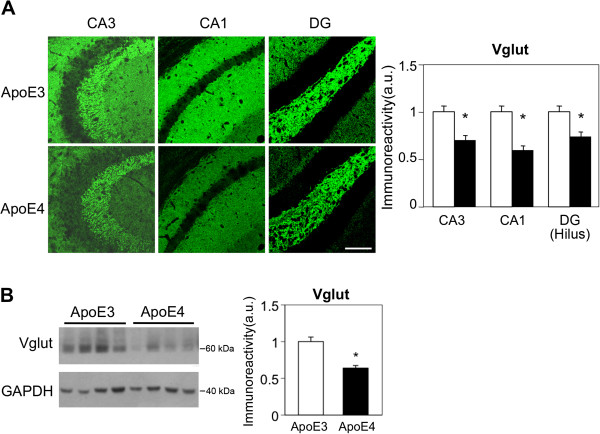
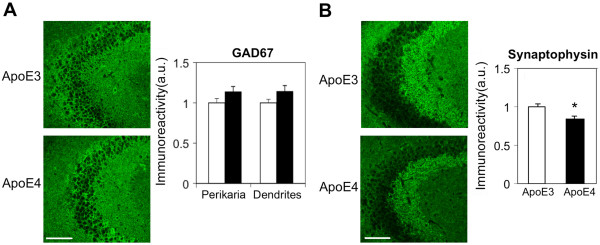
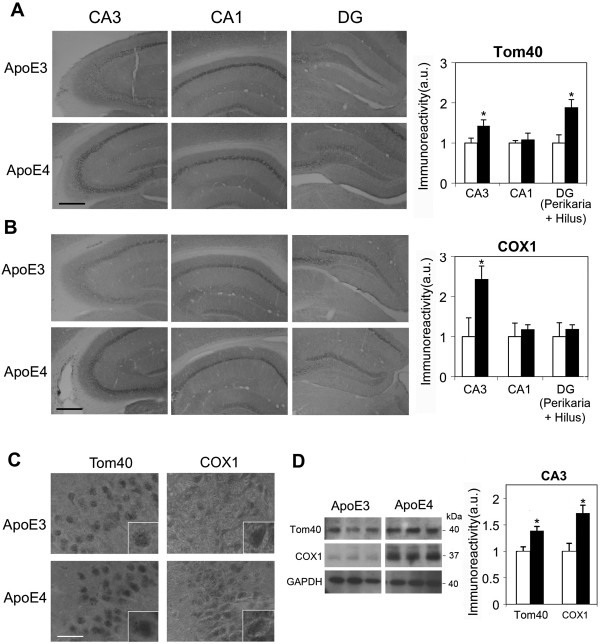
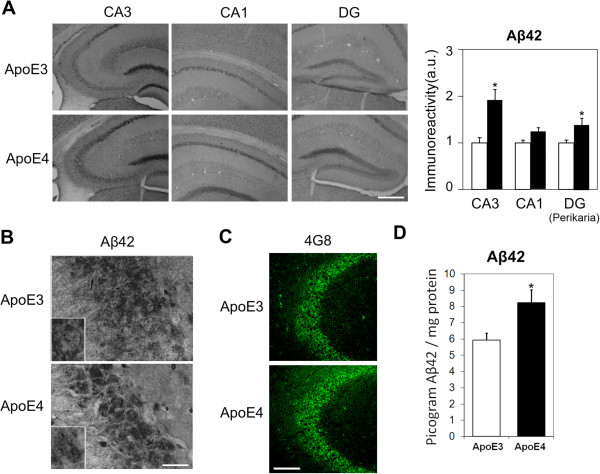
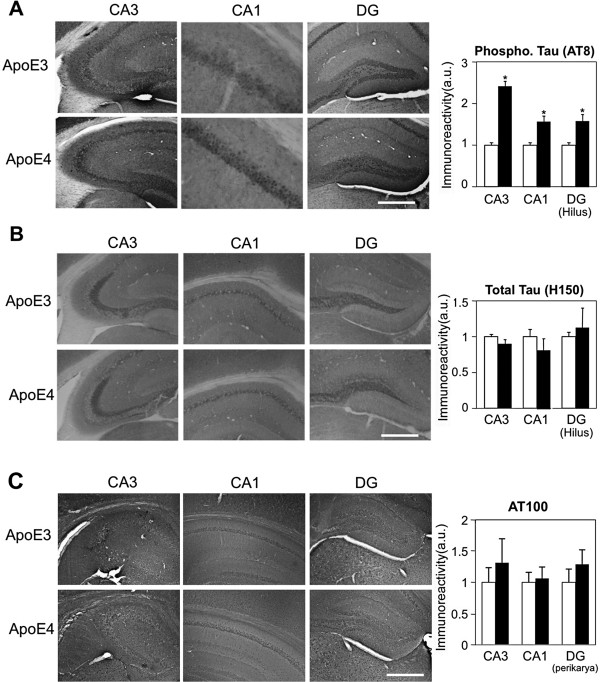
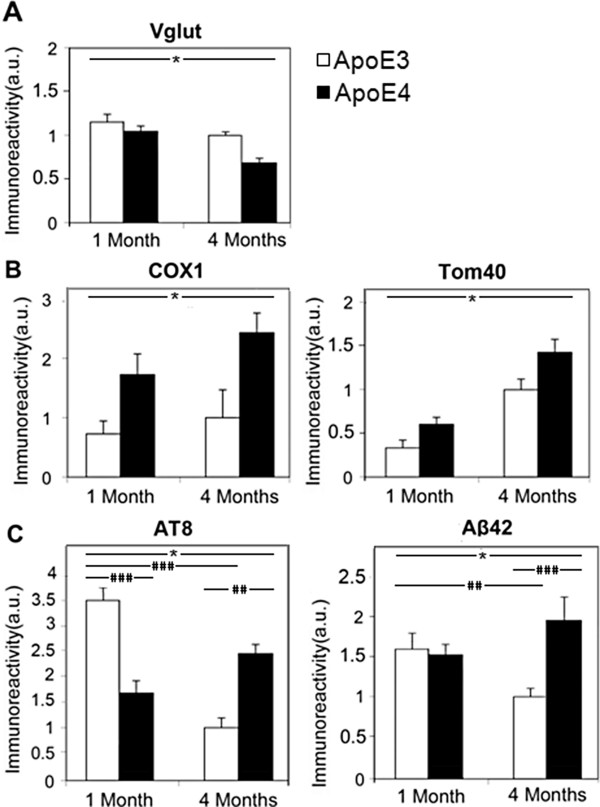
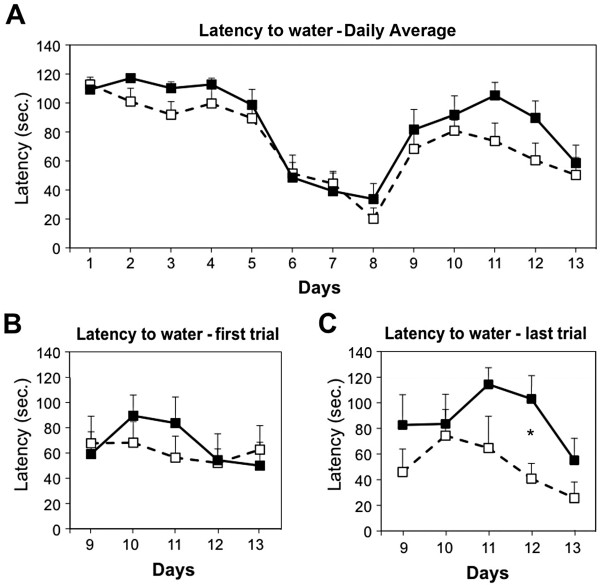
Background: Recent findings suggest that the pathological effects of apoE4, the most prevalent genetic risk factor for Alzheimer’s disease (AD), start many years before the onset of the disease and are already detectable at a young age. In the present study we investigated the extent to which such pathological and cognitive impairments also occur in young apoE4 mice. Results: This study revealed that the levels of the presynaptic glutamatergic vesicular transporter, VGlut, in the CA3, CA1, and DG hippocampal subfields were lower in hippocampal neurons of young (4-month-old) apoE4-targeted replacement mice than in those of the apoE3 mice. In contrast, the corresponding inhibitory GABAergic nerve terminals and perikarya were not affected by apoE4. This synaptic effect was associated with hyperphosphorylation of tau in these neurons. In addition, apoE4 increased the accumulation of neuronal Aβ42 and induced mitochondrial changes, both of which were specifically pronounced in CA3 neurons. Spatial navigation behavioral studies revealed that these hippocampal pathological effects of apoE4 are associated with corresponding behavioral impairments. Time-course studies revealed that the effects of apoE4 on tau hyperphosphorylation and the mitochondria were already apparent at the age of 1 month and that the apoE4-driven accumulation of neuronal Aβ and reduced VGlut levels evolve later and are apparent at the age of 2–4 months. Furthermore, the levels of tau phosphorylation decrease in apoE3 mice and increase in apoE4 mice between 1 and 4 months, whereas the levels of Aβ42 decrease in apoE3 mice and are not affected in apoE4 mice over the same time period. Conclusions: These findings show that apoE4 stimulates the accumulation of Aβ42 and hyperphosphorylated tau and reduces the levels of VGlut in hippocampal neurons of young apoE4-targeted replacement mice and that these neurochemical effects are associated with cognitive impairments. This model is not associated with hypothesis-driven mechanistic manipulations and is thus most suitable for unbiased studies of the mechanisms underlying the pathological effects of apoE4.
Overview
The claims and statistics of this paper haven’t been checked yet.
Run the check — free, no account needed. It reads the open-access text and checks the sources it cites.
Integrity signals
Registry
Cites
Statistics
Figures
Verification
Claims the paper makes
The claims and statistics of this paper haven’t been checked yet.
Run the check — free, no account needed. It reads the open-access text and checks the sources it cites.
Claims other papers make about this one
Each is checked against this paper’s own text: does it say what the citing paper says it does?
The source backs part of the claim, not all of it — or backs it for a different population, condition or comparison.
In the citing paper
“Previous studies have reported LTP deficits in APOE4-carrying mice compared to APOE3-carrying mice, in addition to morphological alterations in CA1 hippocampal neurons such as shortened dendritic length, reduced spine density, decreased levels of the presynaptic glutamatergic transporter vGLUT and GABAergic interneuron loss [79–81].”
From Analysis of early effects of human APOE isoforms on Alzheimer’s disease and type III hyperlipoproteinemia pathways using knock-in rat models with humanized APP and APOE (2024) · cites this paper as [80]
Experimental — accuracy not yet measuredThe source backs part of the claim, not all of it — or backs it for a different population, condition or comparison.
In the citing paper
“Both regions are thought to be critical for ApoE4 fragment-related neurotoxicity and mitochondrial impairment, rather than full-length protein [29,31].”
From Apoe4 and Alzheimer’s Disease Pathogenesis—Mitochondrial Deregulation and Targeted Therapeutic Strategies (2023) · cites this paper as [31]
Experimental — accuracy not yet measuredThe cited source says what the claim attributes to it.
In the citing paper
“previous studies revealed that ApoE4 promotes the accumulation of P-tau especially in CA3 hippocampal neurons of ApoE4-TR mice, which was accompanied by cognitive deficits [31]”
From Apoe4 and Alzheimer’s Disease Pathogenesis—Mitochondrial Deregulation and Targeted Therapeutic Strategies (2023) · cites this paper as [31]
Self-check
Percentages, sums and reported differences re-computed from the paper’s own numbers.
The self-check needs the paper’s full text.
Citations
Cites
Neuropathological stageing of Alzheimer-related changes.
Braak, H., & Braak, E. (1991) · Acta Neuropathologica · doi:10.1007/bf00308809 · Cited by 16,123
Corder, E. H., Saunders, A. M., Strittmatter, W. J., Schmechel, D. E., Gaskell, P. C., Small, G. W., Roses, A. D., Haines, J. L., & Pericak-Vance, M. A. (1993) · Science · doi:10.1126/science.8346443 · Cited by 9,429
Alzheimer's Disease: Genes, Proteins, and Therapy
Selkoe, D. J. (2001) · Physiological Reviews · doi:10.1152/physrev.2001.81.2.741 · Cited by 6,063
Amyloid plaque core protein in Alzheimer disease and Down syndrome.
Masters, C. L., Simms, G., Weinman, N. A., Multhaup, G., McDonald, B. L., & Beyreuther, K. (1985) · Proceedings of the National Academy of Sciences · doi:10.1073/pnas.82.12.4245 · Cited by 4,431
Association of apolipoprotein E allele ϵ4 with late‐onset familial and sporadic Alzheimer's disease
Saunders, A. M., Strittmatter, W. J., Schmechel, D., St. George-Hyslop, P. H., Pericak-Vance, M. A., Joo, S. H., Rosi, B. L., Gusella, J. F., Crapper-MacLachlan, D. R., Alberts, M. J., et al. (1993) · Neurology · doi:10.1212/wnl.43.8.1467 · Cited by 3,786
Lee, V. M.-Y., Goedert, M., & Trojanowski, J. Q. (2001) · Annual Review of Neuroscience · doi:10.1146/annurev.neuro.24.1.1121 · Cited by 2,480
Buée, L., Bussière, T., Buée‐Scherrer, V., Delacourte, A., & Hof, P. R. (2000) · Brain Research Reviews · doi:10.1016/s0165-0173(00)00019-9 · Cited by 2,142
The clinical use of structural MRI in Alzheimer disease
Frisoni, G. B., Fox, N. C., Jack, C. R., Scheltens, P., & Thompson, P. M. (2010) · Nature Reviews Neurology · doi:10.1038/nrneurol.2009.215 · Cited by 2,113
Alzheimer's disease and Down's syndrome: Sharing of a unique cerebrovascular amyloid fibril protein
Glenner, G. G., & Wong, C. W. (1984) · Biochemical and Biophysical Research Communications · doi:10.1016/0006-291x(84)91209-9 · Cited by 1,693
The role of apolipoprotein E in Alzheimer's disease
Kim, J., Basak, J. M., & Holtzman, D. M. (2009) · Neuron · doi:10.1016/j.neuron.2009.06.026 · Cited by 1,661
Research works printed but not linked: 1
- Michaelson DM, Ishai L, Ori L, Anat B, Alex N: Counteracting the pathological effects of apoE4 in vivo with anti apoE4 mAbs. ApoE, ApoE Receptors & Neurodegeneration Symposium; Mayo Clinic Jacksonville Florida. 2012
Cited by
Sorted by citations
Items 101–118 of 118
Kim, J. H., Park, S., Jung, H., Lee, E.-H., Lee, E., Lee, J.-J., & Sohn, J.-H. (2025) · International Journal of Molecular Sciences · doi:10.3390/ijms26125718 · Cited by 2
Lost in Space and Thought: Navigating the Cognitive Map in Alzheimer’s Disease
Zhao, B., Zhou, S., Wei, T., Xu, J., Geng, C., Wang, Z., & Tang, Y. (2025) · Neuroscience Bulletin · doi:10.1007/s12264-025-01541-x · Cited by 2
Zhang, H., Chiu, P. W., Ip, I. N., Liu, T., Wong, G. H. Y., Song, Y., Wong, S. W. H., Herrup, K., & Mak, H. K. (2021) · European Journal of Neuroscience · doi:10.1111/ejn.15399 · Cited by 1
Group 1 mGluR stimulation rescues APOE4-mediated translation defects in neurons
Radhakrishna, B. K., Kaladiyil, A. P., Chakraborty, A., Gautam, V., & Muddashetty, R. S. (2025) · Life Science Alliance · doi:10.26508/lsa.202503287 · Cited by 3
Kim, D.-H., & In-Jae, K. (2020) · Exercise Science · doi:10.15857/ksep.2020.29.2.178 · Cited by 1
Suppressing APOE4-induced mortality and cellular damage by targeting VHLPreprint
Jiang, W. I., Cao, Y., Xue, Y., Ji, Y., Winer, B. Y., Zhang, M., Singhal, N. S., Pierce-Shimomura, J. T., Chen, S., & Dengke, K. (2024) · bioRxiv (Cold Spring Harbor Laboratory) · doi:10.1101/2024.02.28.582664 · Cited by 1
Structure-function analysis of the Vesicular glutamate transporter 1 (VGLUT1) C-terminus
Jordan, J.-C. (2015) · Universitätsbibliothek der FU Berlin Hochschulschriftenstelle u. Dokumentenserver · doi:10.17169/refubium-8460
Safieh, M., Liraz, O., Ovadia, M., & Michaelson, D. M. (2022) · Research Square · doi:10.21203/rs.3.rs-2343150/v1
Self-citationYukti, Sharma, A., Dhar, S., Ojha, R., & Prajapati, V. K. (2025) · Advances in protein chemistry and structural biology · doi:10.1016/bs.apcsb.2025.11.004
Use of rodent models in drug discovery for Alzheimer’s disease
Barrett, J. E., Mathiasen, J. R., & McGonigle, P. (2025) · Elsevier eBooks · doi:10.1016/b978-0-443-30008-0.00018-1
Wang, X., Zhang, X., Liu, J., Zhang, J., Liu, C., Cui, Y., Song, Q., Hou, Y., Wang, Y., Zhang, Q., et al. (2024) · Figshare · doi:10.6084/m9.figshare.25599864
Increased alcohol drinking and seizure susceptibility in female humanized ApoE4 knockin rats
Choi, C. Y., Venegas, J. J., Rauch, S. M., Walter, F. A., Ryan, J. N., Machireddy, M., Weisz, J. M., Tracy, G., Baker, A. J., Floresco, S., et al. (2026) · Physiology & Behavior · doi:10.1016/j.physbeh.2026.115308
Chen, F., Zhang, H., Huang, Y., Zhu, J., Cui, F., Liang, S., Li, Y., Wang, Y., Xie, X., & Liu, R. (2026) · Acta Biochimica et Biophysica Sinica · doi:10.3724/abbs.2026085
Zhang, X., Zhuang, D., Lai, C., Zheng, C., Soh, Z. D., Wagner, S. K., Cai, V. Y., Yang, Z., Wang, S., Geng, X., et al. (2026) · Progress in Retinal and Eye Research · doi:10.1016/j.preteyeres.2026.101504
Human Stem Cell-Derived Models of the Alzheimer’s Disease Neuroimmune System
Summers, R., Quang, D., & Johnson, N. R. (2026) · International Journal of Molecular Sciences · doi:10.3390/ijms27167360 · Cited by 1
Gene therapy in Alzheimer’s disease (AD)
Bemanalizadeh, M., Ashrafi, M., Eslami, M., Moein, S., Kazemi, A., & Mansouri, V. (2026) · Elsevier eBooks · doi:10.1016/b978-0-443-40467-2.00014-2
Rodulfo-Cárdenas, R., Biosca-Brull, J., Barberà-Parada, S., Gabaldón-Díaz, R., Ruiz-Sobremazas, D., Blanco, J., Cabré, M., Domingo, J. L., López-Granero, C., Sánchez-Santed, F., et al. (2026) · Neurotoxicology · doi:10.1016/j.neuro.2026.103580
Membrane-Coated DNA Nanoflowers Attenuate Cognitive Decline in Apolipoprotein E4 Mice
Hang, Z., Sun, C., Cai, S., Bian, X., Zhou, L., Wen, Y., & Xing, C. (2026) · ACS Applied Materials & Interfaces · doi:10.1021/acsami.6c10103
Metadata
- Authors
- Liraz, O., Boehm-Cagan, A., & Michaelson, D. M.
- Affiliations
- Tel Aviv University (IL)
- Corresponding author
- Michaelson, Daniel M
- ORCID
- Michaelson, Daniel M
- Venue
- Molecular Neurodegeneration
- Published
- 2013-05-17
- Volume
- 8
- Issue
- 1
- Pages
- 16-16
- ISSN
- 1750-1326 (ISSN-L)
- PMC
- PMC3659080
- OpenAlex
- W2096068616
- Cited by
- 118
- References
- 103
- Citations by year
- 2026: 7 · 2025: 14 · 2024: 11 · 2023: 6 · 2022: 5 · 2021: 10 · 2020: 7 · 2019: 12 · 2018: 7 · 2017: 10 · 2016: 9 · 2015: 7 · 2014: 11 · 2013: 2
- FWCI
- 6.73
- Type
- journal article
- Language
- en
- Open access
- gold
- doi.org
- Licence
- cc-by
- Locations
- Molecular Neurodegeneration (publishedVersion, cc-by)
- Europe PMC (PubMed Central) (publishedVersion, cc-by)
- PubMed Central (publishedVersion, cc-by)
- PubMed (publishedVersion)
- Funders
- European Commission
- Topics
- Life Sciences › Neuroscience › Cellular and Molecular Neuroscience › Alzheimer's disease research and treatments
- Health Sciences › Medicine › Psychiatry and Mental health › Dementia and Cognitive Impairment Research
- Life Sciences › Neuroscience › Neurology › Neuroinflammation and Neurodegeneration Mechanisms
- Keywords
- APOE ε4, Alzheimer's disease, amyloid-beta 42, tau hyperphosphorylation, vesicular glutamate transporter, glutamatergic neurotransmission, hippocampus, CA3 neurons, mitochondrial dysfunction, GABAergic synapses, APOE3, targeted replacement mice
- MeSH terms
- Aging, Alzheimer Disease, Animals, Behavior, Animal, Cognition Disorders, Enzyme-Linked Immunosorbent Assay, Fluorescent Antibody Technique, Hippocampus, Humans, Immunohistochemistry, Mice, Transgenic, Neurons, Phosphorylation, Immunoblotting, Amyloid beta-Peptides, tau Proteins, Microscopy, Confocal, Genetic Predisposition to Disease, Vesicular Glutamate Transport Proteins, Mice, Apolipoprotein E4
About these checks
Registry, retraction, Cites and statistics results are computed, not judged, with one exception: a printed reference that no index lists is read once by a model before it counts as a citation error. Claims are extracted by a model and kept only when their quote appears verbatim in the text; each cited source is then checked, with a model’s help, for whether it says what the claim relies on. Those verdicts can be wrong — read the claim’s quote and the cited source before relying on one.
Statistics and arithmetic are recomputed, not judged.
Confidence bands are shown only for fields calibrated on our annotated test set. None is calibrated yet, so no band is shown.
What counts as a claim ›How we measure confidence ›How we check this ›
Are you an author, or do you see a problem with this page? Request a review
