

The DOI matches its Crossref record; 103 of the 103 references it cites were found in a registry or an index.
ApoE4 induces Aβ42, tau, and neuronal pathology in the hippocampus of young targeted replacement apoE4 mice
Open accessAbstract
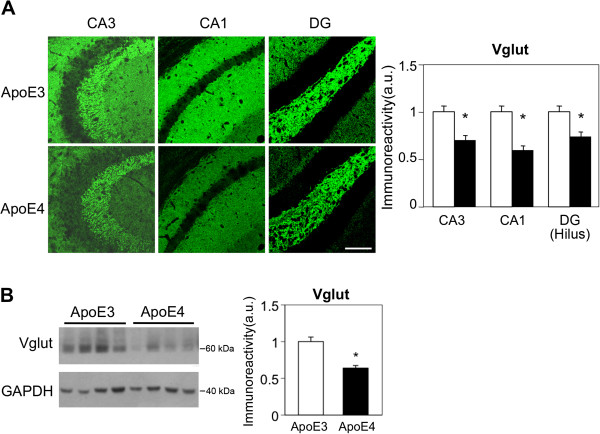
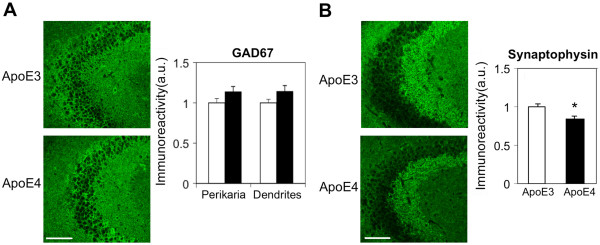
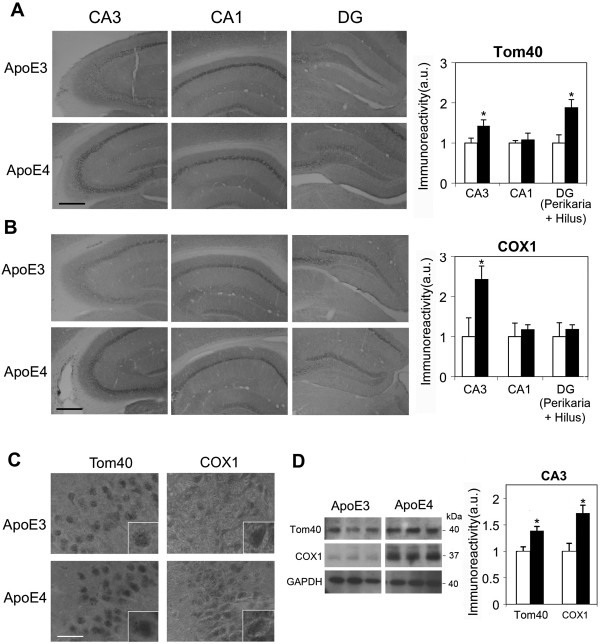
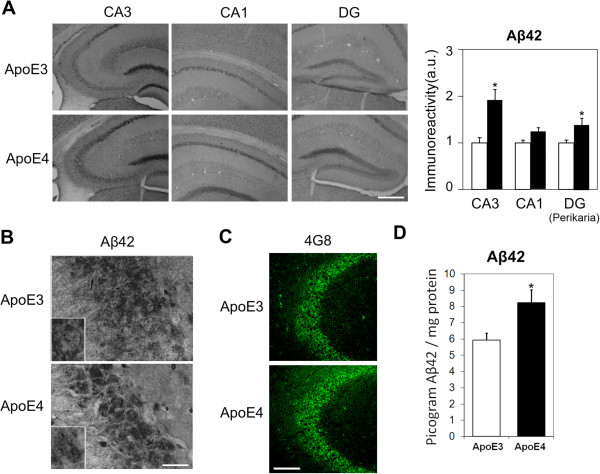
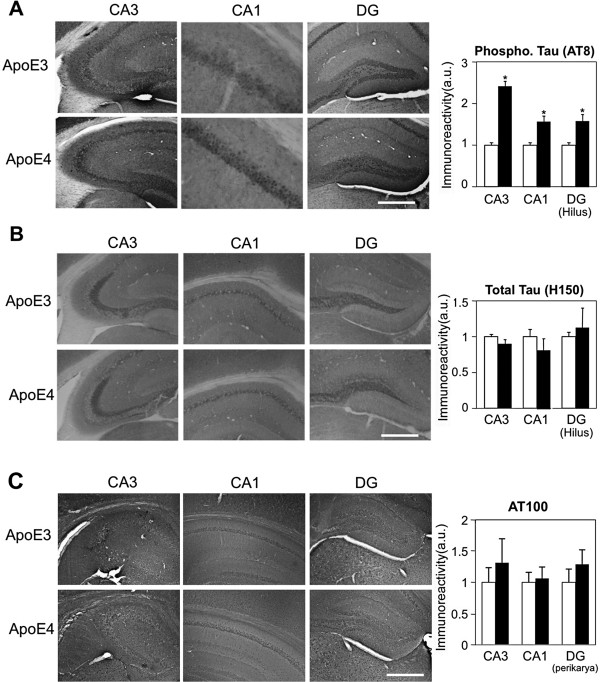
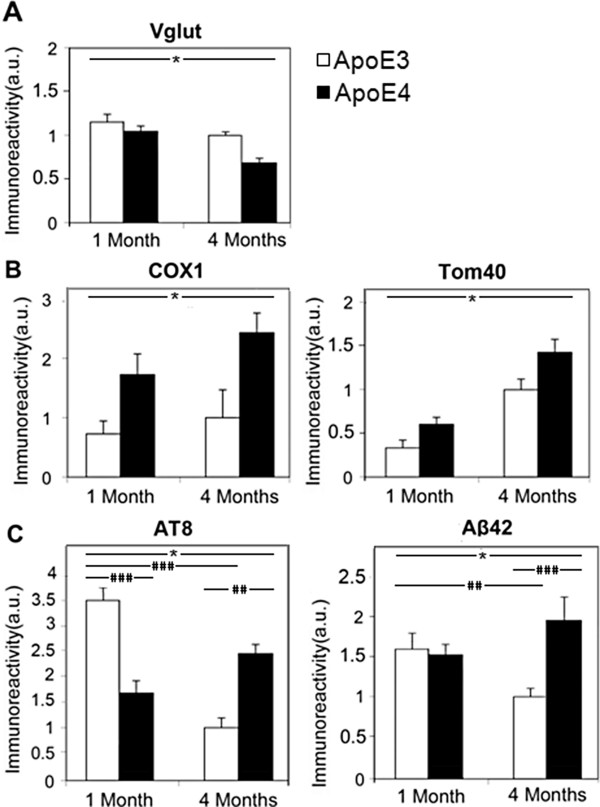
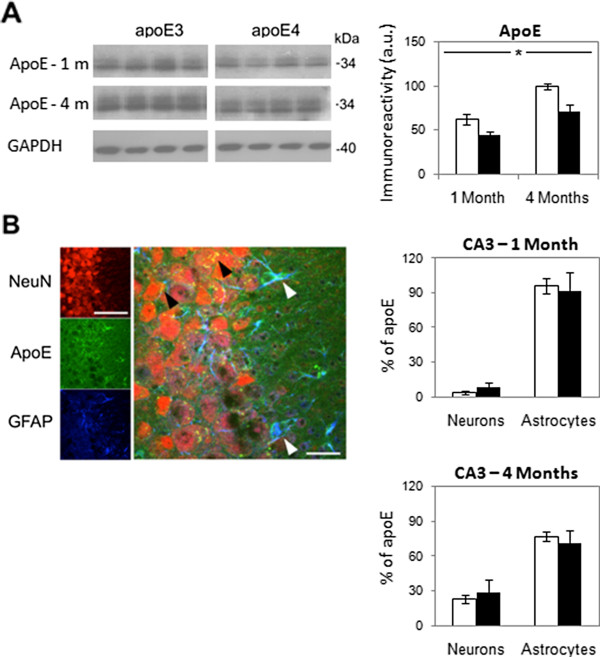
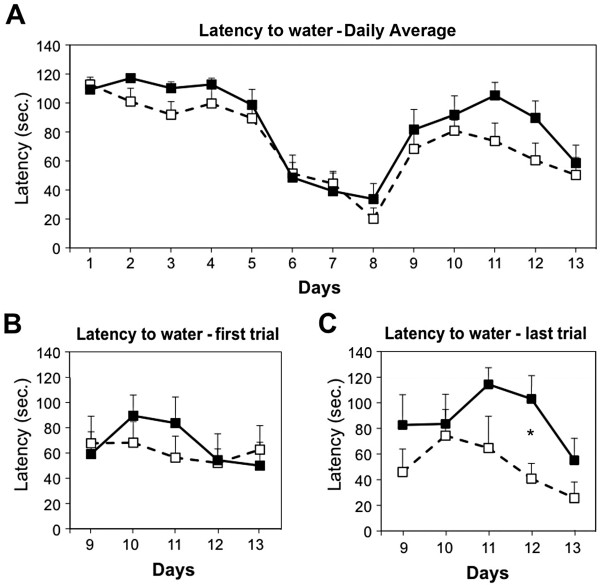
Background: Recent findings suggest that the pathological effects of apoE4, the most prevalent genetic risk factor for Alzheimer’s disease (AD), start many years before the onset of the disease and are already detectable at a young age. In the present study we investigated the extent to which such pathological and cognitive impairments also occur in young apoE4 mice. Results: This study revealed that the levels of the presynaptic glutamatergic vesicular transporter, VGlut, in the CA3, CA1, and DG hippocampal subfields were lower in hippocampal neurons of young (4-month-old) apoE4-targeted replacement mice than in those of the apoE3 mice. In contrast, the corresponding inhibitory GABAergic nerve terminals and perikarya were not affected by apoE4. This synaptic effect was associated with hyperphosphorylation of tau in these neurons. In addition, apoE4 increased the accumulation of neuronal Aβ42 and induced mitochondrial changes, both of which were specifically pronounced in CA3 neurons. Spatial navigation behavioral studies revealed that these hippocampal pathological effects of apoE4 are associated with corresponding behavioral impairments. Time-course studies revealed that the effects of apoE4 on tau hyperphosphorylation and the mitochondria were already apparent at the age of 1 month and that the apoE4-driven accumulation of neuronal Aβ and reduced VGlut levels evolve later and are apparent at the age of 2–4 months. Furthermore, the levels of tau phosphorylation decrease in apoE3 mice and increase in apoE4 mice between 1 and 4 months, whereas the levels of Aβ42 decrease in apoE3 mice and are not affected in apoE4 mice over the same time period. Conclusions: These findings show that apoE4 stimulates the accumulation of Aβ42 and hyperphosphorylated tau and reduces the levels of VGlut in hippocampal neurons of young apoE4-targeted replacement mice and that these neurochemical effects are associated with cognitive impairments. This model is not associated with hypothesis-driven mechanistic manipulations and is thus most suitable for unbiased studies of the mechanisms underlying the pathological effects of apoE4.
Overview
The claims and statistics of this paper haven’t been checked yet.
Run the check — free, no account needed. It reads the open-access text and checks the sources it cites.
Integrity signals
Registry
Cites
Statistics
Figures
Verification
Claims the paper makes
The claims and statistics of this paper haven’t been checked yet.
Run the check — free, no account needed. It reads the open-access text and checks the sources it cites.
Claims other papers make about this one
Each is checked against this paper’s own text: does it say what the citing paper says it does?
The source backs part of the claim, not all of it — or backs it for a different population, condition or comparison.
In the citing paper
“Previous studies have reported LTP deficits in APOE4-carrying mice compared to APOE3-carrying mice, in addition to morphological alterations in CA1 hippocampal neurons such as shortened dendritic length, reduced spine density, decreased levels of the presynaptic glutamatergic transporter vGLUT and GABAergic interneuron loss [79–81].”
From Analysis of early effects of human APOE isoforms on Alzheimer’s disease and type III hyperlipoproteinemia pathways using knock-in rat models with humanized APP and APOE (2024) · cites this paper as [80]
Experimental — accuracy not yet measuredThe source backs part of the claim, not all of it — or backs it for a different population, condition or comparison.
In the citing paper
“Both regions are thought to be critical for ApoE4 fragment-related neurotoxicity and mitochondrial impairment, rather than full-length protein [29,31].”
From Apoe4 and Alzheimer’s Disease Pathogenesis—Mitochondrial Deregulation and Targeted Therapeutic Strategies (2023) · cites this paper as [31]
Experimental — accuracy not yet measuredThe cited source says what the claim attributes to it.
In the citing paper
“previous studies revealed that ApoE4 promotes the accumulation of P-tau especially in CA3 hippocampal neurons of ApoE4-TR mice, which was accompanied by cognitive deficits [31]”
From Apoe4 and Alzheimer’s Disease Pathogenesis—Mitochondrial Deregulation and Targeted Therapeutic Strategies (2023) · cites this paper as [31]
Self-check
Percentages, sums and reported differences re-computed from the paper’s own numbers.
The self-check needs the paper’s full text.
Citations
Cites
Neuropathological stageing of Alzheimer-related changes.
Braak, H., & Braak, E. (1991) · Acta Neuropathologica · doi:10.1007/bf00308809 · Cited by 16,123
Corder, E. H., Saunders, A. M., Strittmatter, W. J., Schmechel, D. E., Gaskell, P. C., Small, G. W., Roses, A. D., Haines, J. L., & Pericak-Vance, M. A. (1993) · Science · doi:10.1126/science.8346443 · Cited by 9,429
Alzheimer's Disease: Genes, Proteins, and Therapy
Selkoe, D. J. (2001) · Physiological Reviews · doi:10.1152/physrev.2001.81.2.741 · Cited by 6,063
Amyloid plaque core protein in Alzheimer disease and Down syndrome.
Masters, C. L., Simms, G., Weinman, N. A., Multhaup, G., McDonald, B. L., & Beyreuther, K. (1985) · Proceedings of the National Academy of Sciences · doi:10.1073/pnas.82.12.4245 · Cited by 4,431
Association of apolipoprotein E allele ϵ4 with late‐onset familial and sporadic Alzheimer's disease
Saunders, A. M., Strittmatter, W. J., Schmechel, D., St. George-Hyslop, P. H., Pericak-Vance, M. A., Joo, S. H., Rosi, B. L., Gusella, J. F., Crapper-MacLachlan, D. R., Alberts, M. J., et al. (1993) · Neurology · doi:10.1212/wnl.43.8.1467 · Cited by 3,786
Lee, V. M.-Y., Goedert, M., & Trojanowski, J. Q. (2001) · Annual Review of Neuroscience · doi:10.1146/annurev.neuro.24.1.1121 · Cited by 2,480
Buée, L., Bussière, T., Buée‐Scherrer, V., Delacourte, A., & Hof, P. R. (2000) · Brain Research Reviews · doi:10.1016/s0165-0173(00)00019-9 · Cited by 2,142
The clinical use of structural MRI in Alzheimer disease
Frisoni, G. B., Fox, N. C., Jack, C. R., Scheltens, P., & Thompson, P. M. (2010) · Nature Reviews Neurology · doi:10.1038/nrneurol.2009.215 · Cited by 2,113
Alzheimer's disease and Down's syndrome: Sharing of a unique cerebrovascular amyloid fibril protein
Glenner, G. G., & Wong, C. W. (1984) · Biochemical and Biophysical Research Communications · doi:10.1016/0006-291x(84)91209-9 · Cited by 1,693
The role of apolipoprotein E in Alzheimer's disease
Kim, J., Basak, J. M., & Holtzman, D. M. (2009) · Neuron · doi:10.1016/j.neuron.2009.06.026 · Cited by 1,661
APP Processing and Synaptic Function
Kamenetz, F., Tomita, T., Hsieh, H., Seabrook, G., Borchelt, D., Iwatsubo, T., Sisodia, S., & Malinow, R. (2003) · Neuron · doi:10.1016/s0896-6273(03)00124-7 · Cited by 1,644
Schmechel, D. E., Saunders, A. M., Strittmatter, W. J., Crain, B. J., Hulette, C. M., Joo, S. H., Pericak-Vance, M. A., Goldgaber, D., & Roses, A. D. (1993) · Proceedings of the National Academy of Sciences · doi:10.1073/pnas.90.20.9649 · Cited by 1,525
An english translation of alzheimer’s 1907 paper, “über eine eigenartige erkankung der hirnrinde”
Stelzmann, R. A., Norman Schnitzlein, H., & Reed Murtagh, F. (1995) · Clinical Anatomy · doi:10.1002/ca.980080612 · Cited by 1,455
Apolipoprotein E controls cerebrovascular integrity via cyclophilin A
Bell, R. D., Winkler, E. A., Singh, I., Sagare, A. P., Deane, R., Wu, Z., Holtzman, D. M., Betsholtz, C., Armulik, A., Sallstrom, J., et al. (2012) · Nature · doi:10.1038/nature11087 · Cited by 1,293 · cited 4×
“Recent in vivo and in vitro studies revealed that apoE4 impairs the blood brain barrier (BBB) [94,95].”
BackgroundResultInfluentialHuman ApoE isoforms differentially regulate brain amyloid-β peptide clearance
Castellano, J. M., Kim, J., Stewart, F. R., Jiang, H., DeMattos, R. B., Patterson, B. W., Fagan, A. M., Morris, J. C., Mawuenyega, K. G., Cruchaga, C., et al. (2011) · Science Translational Medicine · doi:10.1126/scitranslmed.3002156 · Cited by 1,242
ApoE-Directed Therapeutics Rapidly Clear β-Amyloid and Reverse Deficits in AD Mouse Models
Cramer, P. E., Cirrito, J. R., Wesson, D. W., Lee, C. Y. D., Karlo, J. C., Zinn, A. E., Casali, B. T., Restivo, J. L., Goebel, W. D., James, M. J., et al. (2012) · Science · doi:10.1126/science.1217697 · Cited by 1,050
Mitochondria take center stage in aging and neurodegeneration
Beal, M. F. (2005) · Annals of Neurology · doi:10.1002/ana.20624 · Cited by 957
Holtzman, D. M., Bales, K. R., Tenkova, T., Fagan, A. M., Parsadanian, M., Sartorius, L. J., Mackey, B., Olney, J., McKeel, D., Wozniak, D., et al. (2000) · Proceedings of the National Academy of Sciences · doi:10.1073/pnas.050004797 · Cited by 937
ApoE Promotes the Proteolytic Degradation of Aβ
Jiang, Q., Lee, C. Y. D., Mandrekar, S., Wilkinson, B., Cramer, P., Zelcer, N., Mann, K., Lamb, B., Willson, T. M., Collins, J. L., et al. (2008) · Neuron · doi:10.1016/j.neuron.2008.04.010 · Cited by 876
Differential Effects of Apolipoproteins E3 and E4 on Neuronal Growth in Vitro
Nathan, B. P., Bellosta, S., Sanan, D. A., Weisgraber, K. H., Mahley, R. W., & Pitas, R. E. (1994) · Science · doi:10.1126/science.8171342 · Cited by 795
Cerebral metabolic and cognitive decline in persons at genetic risk for Alzheimer’s disease
Small, G. W., Ercoli, L. M., Silverman, D. H. S., Huang, S.-C., Komo, S., Bookheimer, S. Y., Lavretsky, H., Miller, K., Siddarth, P., Rasgon, N. L., et al. (2000) · Proceedings of the National Academy of Sciences · doi:10.1073/pnas.090106797 · Cited by 790
Reiman, E. M., Chen, K., Liu, X., Bandy, D., Yu, M., Lee, W., Ayutyanont, N., Keppler, J., Reeder, S. A., Langbaum, J. B. S., et al. (2009) · Proceedings of the National Academy of Sciences · doi:10.1073/pnas.0900345106 · Cited by 785
Apolipoprotein E and Apolipoprotein E Receptors: Normal Biology and Roles in Alzheimer Disease
Holtzman, D. M., Herz, J., & Bu, G. (2012) · Cold Spring Harbor Perspectives in Medicine · doi:10.1101/cshperspect.a006312 · Cited by 782
apoE isoform–specific disruption of amyloid β peptide clearance from mouse brain
Deane, R., Sagare, A., Hamm, K., Parisi, M., Lane, S., Finn, M. B., Holtzman, D. M., & Zlokovic, B. V. (2008) · Journal of Clinical Investigation · doi:10.1172/jci36663 · Cited by 771
APOLIPOPROTEIN E ALLELES AS RISK FACTORS IN ALZHEIMER'S DISEASE
Roses, M. D. (1996) · Annual Review of Medicine · doi:10.1146/annurev.med.47.1.387 · Cited by 707
β-amyloid precursor protein-deficient mice show reactive gliosis and decreased locomotor activity
Zheng, H., Jiang, M., Trumbauer, M. E., SIRINATHSINGHJI, D. J. S., Hopkins, R., Smith, D. W., HEAVENS, R. P., Dawson, G. R., Boyce, S., Conner, M. W., et al. (1995) · Cell · doi:10.1016/0092-8674(95)90073-x · Cited by 699
Lewis, D., Campbell, M., Terry, R., & Morrison, J. (1987) · The Journal of Neuroscience · doi:10.1523/jneurosci.07-06-01799.1987 · Cited by 578
Sullivan, P. M., Mezdour, H., Aratani, Y., Knouff, C., Najib, J., Reddick, R. L., Quarfordt, S. H., & Maeda, N. (1997) · Journal of Biological Chemistry · doi:10.1074/jbc.272.29.17972 · Cited by 575
Apolipoprotein E promotes astrocyte colocalization and degradation of deposited amyloid-β peptides
Koistinaho, M., Lin, S., Wu, X., Esterman, M., Koger, D., Hanson, J., Higgs, R., Liu, F., Malkani, S., Bales, K. R., et al. (2004) · Nature Medicine · doi:10.1038/nm1058 · Cited by 571
Strittmatter, W. J., Saunders, A. M., Goedert, M., Weisgraber, K. H., Dong, L. M., Jakes, R., Huang, D. Y., Pericak-Vance, M., Schmechel, D., & Roses, A. D. (1994) · Proceedings of the National Academy of Sciences · doi:10.1073/pnas.91.23.11183 · Cited by 474
Quantitative assessment of cortical synaptic density in Alzheimer's disease
Scheff, S. W., DeKosky, S. T., & Price, D. A. (1990) · Neurobiology of Aging · doi:10.1016/0197-4580(90)90059-9 · Cited by 446
Strittmatter, W. J., Weisgraber, K. H., Goedert, M., Saunders, A. M., Huang, D., Corder, E. H., Dong, L., Jakes, R., Alberts, M. J., Gilbert, J. R., et al. (1994) · Experimental Neurology · doi:10.1006/exnr.1994.1019 · Cited by 433
Clogging of axons by tau, inhibition of axonal traffic and starvation of synapses
Mandelkow�, E. (2003) · Neurobiology of Aging · doi:10.1016/j.neurobiolaging.2003.04.007 · Cited by 412
Brecht, W. J., Harris, F. M., Chang, S., Tesseur, I., Yu, G.-Q., Xu, Q., Dee Fish, J., Wyss-Coray, T., Buttini, M., Mucke, L., et al. (2004) · The Journal of Neuroscience · doi:10.1523/jneurosci.4315-03.2004 · Cited by 403
Huang, Y., Liu, X. Q., Wyss-Coray, T., Brecht, W. J., Sanan, D. A., & Mahley, R. W. (2001) · Proceedings of the National Academy of Sciences · doi:10.1073/pnas.151254698 · Cited by 392
Intraneuronal β-amyloid accumulation and synapse pathology in Alzheimer’s disease
Gouras, G. K., Tampellini, D., Takahashi, R. H., & Capetillo-Zarate, E. (2010) · Acta Neuropathologica · doi:10.1007/s00401-010-0679-9 · Cited by 372
Chen, Y., Durakoglugil, M. S., Xian, X., & Herz, J. (2010) · Proceedings of the National Academy of Sciences · doi:10.1073/pnas.0914984107 · Cited by 368
Deficiency in neuronal TGF-β signaling promotes neurodegeneration and Alzheimer’s pathology
Tesseur, I., Zou, K., Esposito, L., Bard, F., Berber, E., Can, J. V., Lin, A. H., Crews, L., Tremblay, P., Mathews, P., et al. (2006) · Journal of Clinical Investigation · doi:10.1172/jci27341 · Cited by 355
Impact of Apolipoprotein E (ApoE) Polymorphism on Brain ApoE Levels
Riddell, D. R., Zhou, H., Atchison, K., Warwick, H. K., Atkinson, P. J., Jefferson, J., Xu, L., Aschmies, S., Kirksey, Y., Hu, Y., et al. (2008) · The Journal of Neuroscience · doi:10.1523/jneurosci.1972-08.2008 · Cited by 346
Andrews-Zwilling, Y., Bien-Ly, N., Xu, Q., Li, G., Bernardo, A., Yoon, S. Y., Zwilling, D., Yan, T. X., Chen, L., & Huang, Y. (2010) · The Journal of Neuroscience · doi:10.1523/jneurosci.4040-10.2010 · Cited by 326
Zheng‐Fischhöfer, Q., Biernat, J., Mandelkow, E., Illenberger, S., Godemann, R., & Mandelkow�, E. (1998) · European Journal of Biochemistry · doi:10.1046/j.1432-1327.1998.2520542.x · Cited by 322
Arendt, T., Schindler, C., Brückner, M. K., Eschrich, K., Bigl, V., Zedlick, D., & Marcova, L. (1997) · The Journal of Neuroscience · doi:10.1523/jneurosci.17-02-00516.1997 · Cited by 319
Rusinek, H., De Santi, S., Frid, D., Tsui, W.-H., Tarshish, C. Y., Convit, A., & de Leon, M. J. (2003) · Radiology · doi:10.1148/radiol.2293021299 · Cited by 281
Pre-Clinical Detection of Alzheimer's Disease Using FDG-PET, with or without Amyloid Imaging
Mosconi, L., Berti, V., Glodzik, L., Pupi, A., Santi, S. D., & de Leon, M. J. (2010) · Journal of Alzheimer s Disease · doi:10.3233/jad-2010-091504 · Cited by 279
Nishitsuji, K., Hosono, T., Nakamura, T., Bu, G., & Michikawa, M. (2011) · Journal of Biological Chemistry · doi:10.1074/jbc.m111.225532 · Cited by 275
Ye, S., Huang, Y., Müllendorff, K., Dong, L., Giedt, G., Meng, E. C., Cohen, F. E., Kuntz, I. D., Weisgraber, K. H., & Mahley, R. W. (2005) · Proceedings of the National Academy of Sciences · doi:10.1073/pnas.0508693102 · Cited by 275
Has the amyloid cascade hypothesis for Alzheimer's disease been proved?
Hardy, J. (2006) · Current Alzheimer Research · doi:10.2174/156720506775697098 · Cited by 242
Tesseur, I. C., Dorpe, J. V., Spittaels, K., den Haute, C. V., Moechars, D., & LEUVEN, F. V. (2000) · American Journal Of Pathology · doi:10.1016/s0002-9440(10)64963-2 · Cited by 239
APOE genotype alters glial activation and loss of synaptic markers in mice
Zhu, Y., Nwabuisi‐Heath, E., Dumanis, S. B., Tai, L. M., Yu, C., Rebeck, G. W., & Ladu, M. J. (2012) · Glia · doi:10.1002/glia.22289 · Cited by 224
ApoE4 Decreases Spine Density and Dendritic Complexity in Cortical Neurons In Vivo
Dumanis, S. B., Tesoriero, J. A., Babus, L. W., Nguyen, M. T., Trotter, J. H., Ladu, M. J., Weeber, E. J., Turner, R. S., Xu, B., Rebeck, G. W., et al. (2009) · The Journal of Neuroscience · doi:10.1523/jneurosci.4026-09.2009 · Cited by 220
Tau-dependent microtubule disassembly initiated by prefibrillar β-amyloid
King, M. E., Kan, H.-M., Baas, P. W., Erişir, A., Glabe, C. G., & Bloom, G. S. (2006) · The Journal of Cell Biology · doi:10.1083/jcb.200605187 · Cited by 215
Chen, H.-K., Ji, Z.-S., Dodson, S. E., Miranda, R. D., Rosenblum, C. I., Reynolds, I. J., Freedman, S. B., Weisgraber, K. H., Huang, Y., & Mahley, R. W. (2011) · Journal of Biological Chemistry · doi:10.1074/jbc.m110.151084 · Cited by 209
Reduced Hippocampal Volume in Healthy Young ApoE4 Carriers: An MRI Study
O’Dwyer, L., Lamberton, F., Matura, S., Tanner, C. J., Scheibe, M., Miller, J., Rujescu, D., Prvulovic, D., & Hampel, H. J. (2012) · PLoS ONE · doi:10.1371/journal.pone.0048895 · Cited by 199
Glabe, C. C. (2006) · Springer eBooks · doi:10.1007/0-387-23226-5_8 · Cited by 193
Sunderland, T., Mirza, N., Putnam, K. T., Linker, G., Bhupali, D., Durham, R., Soares, H., Kimmel, L., Friedman, D., Bergeson, J., et al. (2004) · Biological Psychiatry · doi:10.1016/j.biopsych.2004.07.021 · Cited by 179
Avila, J., Dominguez, J., & Díaz‐Nido, J. (1994) · The International Journal of Developmental Biology · doi:10.1387/ijdb.8074993 · Cited by 167
Microglial Activation in Alzheimer Disease: Association with APOE Genotype
Egensperger, R., Kösel, S., von Eitzen, U., & Graeber, M. B. (1998) · Brain Pathology · doi:10.1111/j.1750-3639.1998.tb00166.x · Cited by 164
Hartman, R. E., Wozniak, D. F., Nardi, A., Olney, J. W., Sartorius, L., & Holtzman, D. M. (2001) · Experimental Neurology · doi:10.1006/exnr.2001.7715 · Cited by 157
Neuronal death: where does the end begin?
Conforti, L., Adalbert, R., & Coleman, M. P. (2007) · Trends in Neurosciences · doi:10.1016/j.tins.2007.02.004 · Cited by 152
The APOE ɛ4 allele modulates brain white matter integrity in healthy adults
Heise, V, Filippini, N., Ebmeier, K. P., & Mackay, C. E. (2011) · Molecular Psychiatry · doi:10.1038/mp.2010.90 · Cited by 152
Harris, F. M., Brecht, W. J., Xu, Q., Mahley, R. W., & Huang, Y. (2004) · Journal of Biological Chemistry · doi:10.1074/jbc.m408127200 · Cited by 151
Valla, J., Yaari, R., Wolf, A. B., Kusne, Y., Beach, T. G., Roher, A. E., Corneveaux, J. J., Huentelman, M. J., Caselli, R. J., & Reiman, E. M. (2010) · Journal of Alzheimer s Disease · doi:10.3233/jad-2010-100129 · Cited by 150
Common Variants in Psychiatric Risk Genes Predict Brain Structure at Birth
Knickmeyer, R. C., Wang, J., Zhu, H., Geng, X., Woolson, S., Hamer, R. M., Konneker, T., Lin, W., Styner, M., & Gilmore, J. H. (2014) · Cerebral Cortex · doi:10.1093/cercor/bhs401 · Cited by 149
Levi, O., Jongen‐Rêlo, A. L., Feldon, J., Roses, A. D., & Michaelson, D. M. (2003) · Neurobiology of Disease · doi:10.1016/s0969-9961(03)00045-7 · Cited by 147
Self-citationTesseur, I. C., Dorpe, J. V., Bruynseels, K., Bronfman, F. C., Sciot, R., Lommel, A. V., & LEUVEN, F. V. (2000) · American Journal Of Pathology · doi:10.1016/s0002-9440(10)64788-8 · Cited by 140
In Vivo Effects of ApoE and Clusterin on Amyloid-β Metabolism and Neuropathology
Holtzman, D. M. (2004) · Journal of Molecular Neuroscience · doi:10.1385/jmn:23:3:247 · Cited by 139
Nakamura, T., Watanabe, A., Fujino, T., Hosono, T., & Michikawa, M. (2009) · Molecular Neurodegeneration · doi:10.1186/1750-1326-4-35 · Cited by 124
ApoE isoform affects LTP in human targeted replacement mice
Trommer, B. L., Shah, C., Yun, S. H., Gamkrelidze, G., Pasternak, E. S., Ye, G. L., Sotak, M., Sullivan, P. M., Pasternak, J. F., & LaDu, M. J. (2004) · NeuroReport · doi:10.1097/00001756-200412030-00020 · Cited by 124
Marzolo, M.-P., & Bu, G. (2009) · Seminars in Cell & Developmental Biology · doi:10.1016/j.semcdb.2008.10.005 · Cited by 122
Reduced levels of human apoE4 protein in an animal model of cognitive impairment
Sullivan, P. M., Han, B., Liu, F., Mace, B. E., Ervin, J. F., Wu, S., Koger, D., Paul, S., & Bales, K. R. (2011) · Neurobiology of Aging · doi:10.1016/j.neurobiolaging.2009.05.011 · Cited by 113
Ze, E. A. D. V., Compaan, J. C., de Boer, M., & Luiten, P. (1992) · Journal of Neuroscience · doi:10.1523/jneurosci.12-12-04808.1992 · Cited by 110
Genetic variation at a single locus and age of onset for Alzheimer's disease
Lutz, M. W., Crenshaw, D. G., Saunders, A. M., & Roses, A. D. (2010) · Alzheimer s & Dementia · doi:10.1016/j.jalz.2010.01.011 · Cited by 101
Belinson, H., Lev, D., Masliah, E., & Michaelson, D. M. (2008) · The Journal of Neuroscience · doi:10.1523/jneurosci.5633-07.2008 · Cited by 101 · cited 8×
“In view of the documented presynaptic and mitochondria-related effects of apoE4 and the cross talk between apoE4 and tau [32,33,49,50], the study focuses on these parameters and on assessing the extent to which these effects are associated with cognitive impairments and the age at which they evolve.”
BackgroundMethodInfluentialSelf-citationApolipoprotein E and β‐amyloid (1–42) regulation of glycogen synthase kinase‐3β
Cedazo-Mı́nguez, Á., Popescu, B. O., Blanco‐Millán, J. M., Akterin, S., Pei, J. ‐., Winblad, B. G., & Cowburn, R. F. (2003) · Journal of Neurochemistry · doi:10.1046/j.1471-4159.2003.02088.x · Cited by 99
Bekris, L. M., Lutz, F., & Yu, C. (2011) · Journal of Human Genetics · doi:10.1038/jhg.2011.123 · Cited by 99
Buttini, M., Akeefe, H., Lin, C. J., Mahley, R. W., Pitas, R. E., Wyss‐Coray, T., & Mucke, L. (2000) · Neuroscience · doi:10.1016/s0306-4522(00)00069-5 · Cited by 98
APOE related alterations in cerebral activation even at college age
Scarmeas, N. (2005) · Journal of Neurology, Neurosurgery & Psychiatry · doi:10.1136/jnnp.2004.053645 · Cited by 97
Positive Effects of Cholinergic Stimulation Favor Young APOE ɛ4 Carriers
Marchant, N. L., King, S. L., Tabet, N., & Rusted, J. M. (2010) · Neuropsychopharmacology · doi:10.1038/npp.2009.214 · Cited by 96
Molecular dissection of the paired helical filament
Goedert, M., Spillantini, M. G., Jakes, R., Crowtherp, R. A., Vanmechelen, E., Probst, A., Götz, J., Bürki, K., & Cohen, P. (1995) · Neurobiology of Aging · doi:10.1016/0197-4580(95)00017-9 · Cited by 94
Accelerated hippocampal atrophy in Alzheimer's disease with apolipoprotein E ε4 allele
Mori, E., Lee, K., Yasuda, M., Hashimoto, M., Kazui, H., Hirono, N., & Matsui, M. (2002) · Annals of Neurology · doi:10.1002/ana.10093 · Cited by 91
Sokolow, S., Luu, S. H., Nandy, K., Miller, C. A., Vinters, H. V., Poon, W. W., & Gylys, K. H. (2011) · Neurobiology of Disease · doi:10.1016/j.nbd.2011.08.027 · Cited by 90
Leroy, A., Landrieu, I., Huvent, I., Legrand, D., Codeville, B., Wieruszeski, J.-M., & Lippens, G. (2010) · Journal of Biological Chemistry · doi:10.1074/jbc.m110.149419 · Cited by 86
Xu, P., Li, Y., Qin, X., Scherzer, C. R., Xu, H., Schmechel, D. E., Hulette, C. M., Ervin, J. F., Gullans, S. R., Haines, J. L., et al. (2005) · Neurobiology of Disease · doi:10.1016/j.nbd.2005.07.004 · Cited by 77
ApoE ε4 is associated with eIF2α phosphorylation and impaired learning in young mice
Segev, Y., Michaelson, D. M., & Rosenblum, K. (2012) · Neurobiology of Aging · doi:10.1016/j.neurobiolaging.2012.06.020 · Cited by 72
Self-citationAβ42 neurotoxicity in primary co-cultures: effect of apoE isoform and Aβ conformation
Manelli, A. M., Bulfinch, L. C., Sullivan, P. M., & LaDu, M. J. (2007) · Neurobiology of Aging · doi:10.1016/j.neurobiolaging.2006.05.024 · Cited by 72
Kariv-Inbal, Z., Yacobson, S., Berkecz, R., Péter, M., Janáky, T., Lütjohann, D., Broersen, L. M., Hartmann, T., & Michaelson, D. M. (2012) · Journal of Alzheimer s Disease · doi:10.3233/jad-2011-111265 · Cited by 70
Self-citationKlein, R. C., Mace, B. E., Moore, S. D., & Sullivan, P. M. (2010) · Neuroscience · doi:10.1016/j.neuroscience.2010.10.027 · Cited by 67
Cambon, K., Davies, H. A., & Stewart, M. G. (2000) · Neuroscience · doi:10.1016/s0306-4522(00)00065-8 · Cited by 63
Cognitive Function and Apolipoprotein E in Very Old Adults: Findings From the Nun Study
Riley, K. P., Snowdon, D. A., Saunders, A. M., Roses, A. D., Mortimer, J. A., & Nanayakkara, N. (2000) · The Journals of Gerontology Series B · doi:10.1093/geronb/55.2.s69 · Cited by 63
Conejero‐Goldberg, C., Hyde, T. M., Chen, S., Dreses‐Werringloer, U., Herman, M. M., Kleinman, J. E., Davies, P., & Goldberg, T. E. (2010) · Molecular Psychiatry · doi:10.1038/mp.2010.57 · Cited by 56
Fukuda, T., Heizmann, C. W., & Kosaka, T. (1997) · Brain Research · doi:10.1016/s0006-8993(97)00683-5 · Cited by 53
Xu, P., Li, Y., Qin, X., Kroner, C. C., Green-Odlum, A., Xu, H., Wang, T.-Y., Schmechel, D. E., Hulette, C. M., Ervin, J. F., et al. (2007) · Molecular and Cellular Neuroscience · doi:10.1016/j.mcn.2007.06.009 · Cited by 48
Mechanisms of synaptic pathology in Alzheimer’s disease
Masliah, E. (1998) · Journal of neural transmission. Supplementum · doi:10.1007/978-3-7091-6467-9_13 · Cited by 46
Belinson, H., & Michaelson, D. M. (2009) · Journal of Neural Transmission · doi:10.1007/s00702-009-0218-9 · Cited by 38
Self-citationSpatial navigation in the Morris water maze: working and long lasting reference memories
Baldi, E., Efoudebe, M., Lorenzini, C. A., & Bucherelli, C. (2005) · Neuroscience Letters · doi:10.1016/j.neulet.2004.12.029 · Cited by 37
Rösner, H., Rebhan, M., Vacun, G., & Vanmechelen, E. (1995) · International Journal of Developmental Neuroscience · doi:10.1016/0736-5748(95)00042-f · Cited by 27
Belinson, H., Kariv-Inbal, Z., Kayed, R., Masliah, E., & Michaelson, D. M. (2010) · Journal of Alzheimer s Disease · doi:10.3233/jad-2010-101008 · Cited by 24
Self-citationPhosphorylation state of tau in the hippocampus of apolipoprotein E4 and E3 knock-in mice
Kobayashi, M., Ishiguro, K., Fukui, Y., Yokoyama, M., & Fujita, S. C. (2003) · Neuroreport · doi:10.1097/00001756-200304150-00008 · Cited by 23
Zepa, L., Frenkel, M., Belinson, H., Kariv-Inbal, Z., Kayed, R., Masliah, E., & Michaelson, D. M. (2011) · International Journal of Alzheimer’s Disease · doi:10.4061/2011/792070 · Cited by 23
Self-citationDifferential phosphorylation of tau proteins during kitten brain development and Alzheimer's disease
Riederer, B. M., Mourton-Gilles, C., Frey, P., Delacourte, A., & Probst, A. (2001) · Journal of Neurocytology · doi:10.1023/a:1011991207942 · Cited by 22
Inbar, D., Belinson, H., Rosenmann, H., & Michaelson, D. M. (2010) · Neurodegenerative Diseases · doi:10.1159/000283477 · Cited by 14
Self-citationHaas, A., Liraz, O., & Michaelson, D. M. (2012) · Neurodegenerative Diseases · doi:10.1159/000334902 · Cited by 11
Self-citation[Amyloid PET in Alzheimer research].
Ishii, K. (2010) · PubMed · Cited by 1
Research works printed but not linked: 1
- Michaelson DM, Ishai L, Ori L, Anat B, Alex N: Counteracting the pathological effects of apoE4 in vivo with anti apoE4 mAbs. ApoE, ApoE Receptors & Neurodegeneration Symposium; Mayo Clinic Jacksonville Florida. 2012
Cited by
Sorted by citations
Amyloid Beta: Structure, Biology and Structure-Based Therapeutic Development
Chen, G.-F., Xu, T.-H., Yan, Y., Zhou, Y.-R., Jiang, Y., Melcher, K., & Xu, H. E. (2017) · Acta Pharmacologica Sinica · doi:10.1038/aps.2017.28 · Cited by 1,965
Apolipoprotein E and Alzheimer disease: pathobiology and targeting strategies
Yamazaki, Y., Zhao, N., Caulfield, T. R., Liu, C.-C., & Bu, G. (2019) · Nature Reviews Neurology · doi:10.1038/s41582-019-0228-7 · Cited by 1,425
ApoE4: an emerging therapeutic target for Alzheimer’s disease
Safieh, M., Korczyn, A. D., & Michaelson, D. M. (2019) · BMC Medicine · doi:10.1186/s12916-019-1299-4 · Cited by 449
Self-citationAmyloid toxicity in Alzheimer’s disease
Reiss, A. B., Arain, H. A., Stecker, M. M., Siegart, N. M., & Kasselman, L. J. (2018) · Reviews in the Neurosciences · doi:10.1515/revneuro-2017-0063 · Cited by 447
Targa Dias Anastacio, H., Matosin, N., & Ooi, L. (2022) · Translational Psychiatry · doi:10.1038/s41398-022-02024-7 · Cited by 401
Metadata
- Authors
- Liraz, O., Boehm-Cagan, A., & Michaelson, D. M.
- Affiliations
- Tel Aviv University (IL)
- Corresponding author
- Michaelson, Daniel M
- ORCID
- Michaelson, Daniel M
- Venue
- Molecular Neurodegeneration
- Published
- 2013-05-17
- Volume
- 8
- Issue
- 1
- Pages
- 16-16
- ISSN
- 1750-1326 (ISSN-L)
- PMC
- PMC3659080
- OpenAlex
- W2096068616
- Cited by
- 118
- References
- 103
- Citations by year
- 2026: 7 · 2025: 14 · 2024: 11 · 2023: 6 · 2022: 5 · 2021: 10 · 2020: 7 · 2019: 12 · 2018: 7 · 2017: 10 · 2016: 9 · 2015: 7 · 2014: 11 · 2013: 2
- FWCI
- 6.73
- Type
- journal article
- Language
- en
- Open access
- gold
- doi.org
- Licence
- cc-by
- Locations
- Molecular Neurodegeneration (publishedVersion, cc-by)
- Europe PMC (PubMed Central) (publishedVersion, cc-by)
- PubMed Central (publishedVersion, cc-by)
- PubMed (publishedVersion)
- Funders
- European Commission
- Topics
- Life Sciences › Neuroscience › Cellular and Molecular Neuroscience › Alzheimer's disease research and treatments
- Health Sciences › Medicine › Psychiatry and Mental health › Dementia and Cognitive Impairment Research
- Life Sciences › Neuroscience › Neurology › Neuroinflammation and Neurodegeneration Mechanisms
- Keywords
- APOE ε4, Alzheimer's disease, amyloid-beta 42, tau hyperphosphorylation, vesicular glutamate transporter, glutamatergic neurotransmission, hippocampus, CA3 neurons, mitochondrial dysfunction, GABAergic synapses, APOE3, targeted replacement mice
- MeSH terms
- Aging, Alzheimer Disease, Animals, Behavior, Animal, Cognition Disorders, Enzyme-Linked Immunosorbent Assay, Fluorescent Antibody Technique, Hippocampus, Humans, Immunohistochemistry, Mice, Transgenic, Neurons, Phosphorylation, Immunoblotting, Amyloid beta-Peptides, tau Proteins, Microscopy, Confocal, Genetic Predisposition to Disease, Vesicular Glutamate Transport Proteins, Mice, Apolipoprotein E4
About these checks
Registry, retraction, Cites and statistics results are computed, not judged, with one exception: a printed reference that no index lists is read once by a model before it counts as a citation error. Claims are extracted by a model and kept only when their quote appears verbatim in the text; each cited source is then checked, with a model’s help, for whether it says what the claim relies on. Those verdicts can be wrong — read the claim’s quote and the cited source before relying on one.
Statistics and arithmetic are recomputed, not judged.
Confidence bands are shown only for fields calibrated on our annotated test set. None is calibrated yet, so no band is shown.
What counts as a claim ›How we measure confidence ›How we check this ›
Are you an author, or do you see a problem with this page? Request a review
