

Altered microglial response to Aβ plaques in APPPS1-21 mice heterozygous for TREM2
Open accessThe DOI matches its Crossref record; 40 of the 40 references it cites were found in a registry or an index.
Abstract
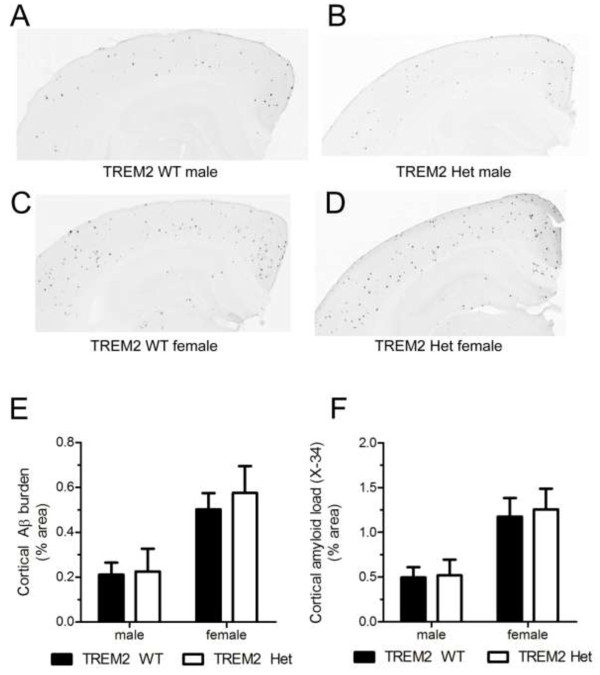
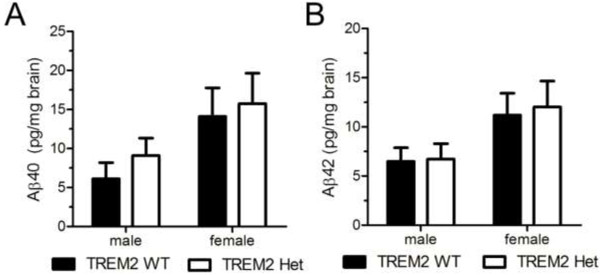
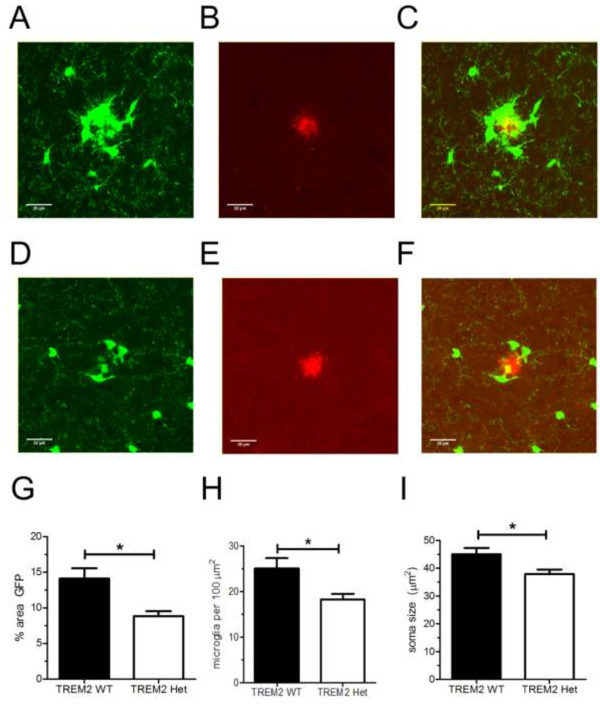
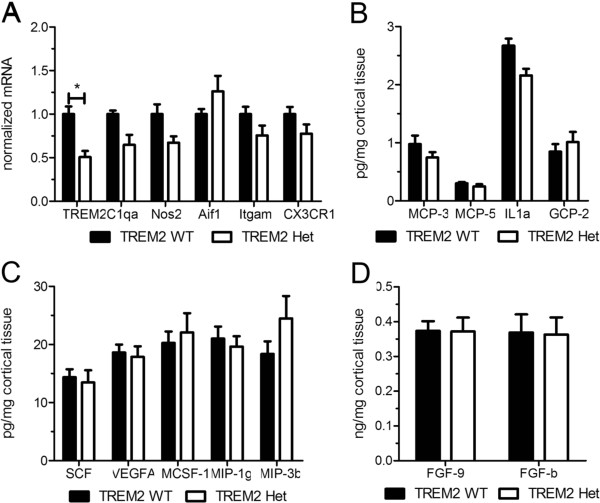
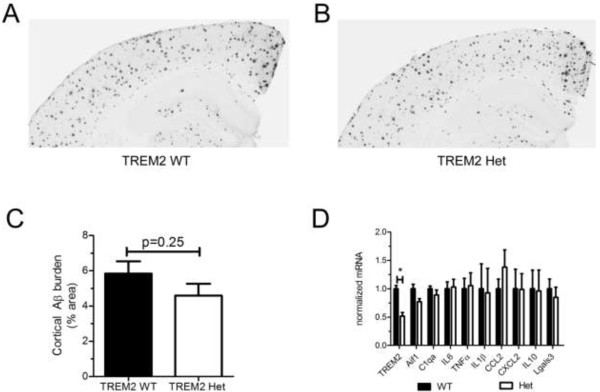
BACKGROUND: Recent genome-wide association studies linked variants in TREM2 to a strong increase in the odds of developing Alzheimer's disease. The mechanism by which TREM2 influences the susceptibility to Alzheimer's disease is currently unknown. TREM2 is expressed by microglia and is thought to regulate phagocytic and inflammatory microglial responses to brain pathology. Given that a single allele of variant TREM2, likely resulting in a loss of function, conferred an increased risk of developing Alzheimer's disease, we tested whether loss of one functional trem2 allele would affect Aβ plaque deposition or the microglial response to Aβ pathology in APPPS1-21 mice. RESULTS: There was no significant difference in Aβ deposition in 3-month old or 7-month old APPPS1-21 mice expressing one or two copies of trem2. However, 3-month old mice with one copy of trem2 exhibited a marked decrease in the number and size of plaque-associated microglia. While there were no statistically significant differences in cytokine levels or markers of microglial activation in 3- or 7-month old animals, there were trends towards decreased expression of NOS2, C1qa, and IL1a in 3-month old TREM2+/- vs. TREM2+/+ mice. CONCLUSIONS: Loss of a single copy of trem2 had no effect on Aβ pathology, but altered the morphological phenotype of plaque-associated microglia. These data suggest that TREM2 is important for the microglial response to Aβ deposition but that a 50% decrease inTREM2 expression does not affect Aβ plaque burden.
Overview
The claims and statistics of this paper haven’t been checked yet.
Free: it reads the open-access text and checks the first 5 claims that cite a source we can check. Create a free account to check every claim.
Integrity signals
Registry
Cites
Statistics
Figures
Verification
Claims the paper makes
The claims and statistics of this paper haven’t been checked yet.
Free: it reads the open-access text and checks the first 5 claims that cite a source we can check. Create a free account to check every claim.
Claims other papers make about this one
Each is checked against this paper’s own text: does it say what the citing paper says it does?
The cited source doesn’t support the claim as written.
In the citing paper
“Functional studies demonstrated that deletion of Trem2 altered amyloid pathology in opposite directions depending on the stage of the disease (20–23), but overexpression of TREM2 reduced the pathology in transgenic mouse models of amyloidosis (24).”
From Deletion of Abi3 gene locus exacerbates neuropathological features of Alzheimer’s disease in a mouse model of Aβ amyloidosis (2021) · cites this paper as [21]
Checked by a reasoning model — may be wrong.
Experimental — accuracy not yet measuredThe source backs part of the claim, not all of it — or backs it for a different population, condition or comparison.
In the citing paper
“In mouse models of AD, complete TREM2 deficiency or TREM2 haploinsufficiency results in markedly less clustering of microglia around Aβ plaques (114, 128, 129).”
From Microglia Function in the Central Nervous System During Health and Neurodegeneration (2017) · cites this paper as [128]
Experimental — accuracy not yet measuredThe source backs part of the claim, not all of it — or backs it for a different population, condition or comparison.
In the citing paper
“TREM2 was recently demonstrated to be essential for promoting microglial cell association with plaques44–49.”
From Interplay between innate immunity and Alzheimer disease: APOE and TREM2 in the spotlight (2018) · cites this paper as [44]
Experimental — accuracy not yet measuredThe source backs part of the claim, not all of it — or backs it for a different population, condition or comparison.
In the citing paper
“References 44– 47 show that TREM2 promotes microglial clustering around amyloid-β plaques and demonstrate a disease-stage dependent effect of TREM2 deficiency on amyloid-β pathology.”
From Interplay between innate immunity and Alzheimer disease: APOE and TREM2 in the spotlight (2018) · cites this paper as [44]
Experimental — accuracy not yet measured
7 more claims about this paper
Create a free account to see every claim other papers make about this one.
Self-check
Percentages, sums and reported differences re-computed from the paper’s own numbers.
The self-check needs the paper’s full text.
Citations
Cites
Corder, E. H., Saunders, A. M., Strittmatter, W. J., Schmechel, D. E., Gaskell, P. C., Small, G. W., Roses, A. D., Haines, J. L., & Pericak-Vance, M. A. (1993) · Science · doi:10.1126/science.8346443 · Cited by 9,429 · cited 1×
“To date the two strongest identified LOAD genetic risk factors are the well-studied apolipoprotein ε4 (APOE4) allele and several recently identified variants in the triggering receptor expressed on myeloid cells-2 (TREM2) gene [2-4].”
BackgroundTREM2 Variants in Alzheimer's Disease
Guerreiro, R., Wojtas, A., Bras, J., Carrasquillo, M., Rogaeva, E., Majounie, E., Cruchaga, C., Sassi, C., Kauwe, J. S. K., Younkin, S., et al. (2013) · New England Journal of Medicine · doi:10.1056/nejmoa1211851 · Cited by 3,020 · cited 3×
“Discussion TREM2 variants, particularly the R47H mutation, strongly increase the risk of developing AD, however how TREM2 affects AD and AD pathology is unknown [3,4].”
BackgroundJung, S., Aliberti, J., Graemmel, P., Sunshine, M. J., Kreutzberg, G. W., Sher, A., & Littman, D. R. (2000) · Molecular and Cellular Biology · doi:10.1128/mcb.20.11.4106-4114.2000 · Cited by 2,632 · cited 1×
“To facilitate analysis of microglia we took advantage of the CX3CR1-GFP mice which in the CNS express GFP specifically within microglia [17].”
BackgroundVariant of TREM2 Associated with the Risk of Alzheimer's Disease
Jonsson, T., Stefansson, H., Steinberg, S., Jonsdottir, I., Jonsson, P. V., Snaedal, J., Bjornsson, S., Huttenlocher, J., Levey, A. I., Lah, J. J., et al. (2013) · New England Journal of Medicine · doi:10.1056/nejmoa1211103 · Cited by 2,558 · cited 2×
“Discussion TREM2 variants, particularly the R47H mutation, strongly increase the risk of developing AD, however how TREM2 affects AD and AD pathology is unknown [3,4].”
BackgroundInitiative, T. A. D. N., Hollingworth, P., CHARGE consortium, EADI1 consortium, Harold, D., Sims, R., Gerrish, A., Lambert, J.-C., Carrasquillo, M. M., Abraham, R., et al. (2011) · Nature Genetics · doi:10.1038/ng.803 · Cited by 1,997 · cited 1×
“Although we did not detect a TREM2-dependent difference in Aβ plaque burden, another microglialassociated protein genetically associated with AD, CD33, appears to substantially influence Aβ deposition [30-33].”
BackgroundElmore, M. R. P., Najafi, A. R., Koike, M. A., Dagher, N. N., Spangenberg, E. E., Rice, R. A., Kitazawa, M., Matusow, B., Nguyen, H., West, B. L., et al. (2014) · Neuron · doi:10.1016/j.neuron.2014.02.040 · Cited by 1,968 · cited 1×
“glial proliferation and viability [26-28].”
Naj, A. C., Jun, G., Beecham, G. W., Wang, L.-S., Vardarajan, B. N., Buros, J., Gallins, P. J., Buxbaum, J. D., Jarvik, G. P., Crane, P. K., et al. (2011) · Nature Genetics · doi:10.1038/ng.801 · Cited by 1,901 · cited 1×
“Although we did not detect a TREM2-dependent difference in Aβ plaque burden, another microglialassociated protein genetically associated with AD, CD33, appears to substantially influence Aβ deposition [30-33].”
BackgroundTakahashi, K., Rochford, C. D. P., & Neumann, H. (2005) · The Journal of Experimental Medicine · doi:10.1084/jem.20041611 · Cited by 1,124 · cited 8×
“TREM2 expression in microglia is associated with phagocytic clearance of extracellular debris, such as apoptotic neurons, raising the possibility that TREM2 could regulate microglial mediated clearance of extracellular Aβ, and ultimately amyloid plaque deposition [8].”
BackgroundInfluentialWang, Y., Szretter, K. J., Vermi, W., Gilfillan, S., Rossini, C., Cella, M., Barrow, A. D., Diamond, M. S., & Colonna, M. (2012) · Nature Immunology · doi:10.1038/ni.2360 · Cited by 1,011 · cited 1×
“glial proliferation and viability [26-28].”
Self-citationAlzheimer’s Disease Risk Gene CD33 Inhibits Microglial Uptake of Amyloid Beta
Griciuc, A., Serrano-Pozo, A., Parrado, A. R., Lesinski, A. N., Asselin, C. N., Mullin, K., Hooli, B., Choi, S. H., Hyman, B. T., & Tanzi, R. E. (2013) · Neuron · doi:10.1016/j.neuron.2013.04.014 · Cited by 1,004 · cited 2×
“CD33 appears to inhibit microglial uptake of Aβ in vitro and genetic deletion of CD33 in APPSWE/PS1ΔE9 mice reduces Aβ plaque burden [30].”
BackgroundRapid appearance and local toxicity of amyloid-β plaques in a mouse model of Alzheimer’s disease
Meyer-Luehmann, M., Spires-Jones, T. L., Prada, C., Garcia-Alloza, M., de Calignon, A., Rozkalne, A., Koenigsknecht-Talboo, J., Holtzman, D. M., Bacskai, B. J., & Hyman, B. T. (2008) · Nature · doi:10.1038/nature06616 · Cited by 987
Self-citationAβ42‐driven cerebral amyloidosis in transgenic mice reveals early and robust pathology
Radde, R., Bolmont, T., Kaeser, S. A., Coomaraswamy, J., Lindau, D., Stoltze, L., Calhoun, M. E., Jäggi, F., Wolburg, H., Gengler, S., et al. (2006) · The EMBO Reports · doi:10.1038/sj.embor.7400784 · Cited by 986 · cited 1×
“In this study we tested whether loss of a single trem2 allele affected Aβ plaque burden in APPPS1-21 mice[16].”
BackgroundMicroglia: Scapegoat, saboteur, or something else?
Aguzzi, A., Barres, B. A., & Bennett, M. L. (2013) · Science · doi:10.1126/science.1227901 · Cited by 836
The Genetics of Alzheimer's Disease
Bertram, L., & Tanzi, R. E. (2012) · Progress in Molecular Biology and Translational Science · doi:10.1016/b978-0-12-385883-2.00008-4 · Cited by 760
Cutting Edge: TREM-2 Attenuates Macrophage Activation
Turnbull, I. R., Gilfillan, S., Cella, M., Aoshi, T., Miller, M., Piccio, L., Hernandez, M., & Colonna, M. (2006) · The Journal of Immunology · doi:10.4049/jimmunol.177.6.3520 · Cited by 688 · cited 1×
“TREM2-DAP12 signaling inhibits Toll-like receptor (TLR)-dependent cytokine production and bone marrow derived macrophages from TREM2 KO mice exhibit increased expressed inflammatory cytokine production in response to microbial stimulation [29].”
BackgroundSelf-citationPaloneva, J., Manninen, T., Christman, G., Hovanes, K., Mandelin, J., Adolfsson, R., Bianchin, M., Bird, T., Miranda, R., Salmaggi, A., et al. (2002) · The American Journal of Human Genetics · doi:10.1086/342259 · Cited by 683 · cited 1×
“Individuals that are homozygous for loss of function mutations in either TREM2 or TYROBP (DAP12) suffer from polycystic lipomembranous osteodysplasia and sclerosing leukoencephalopathy (PLOSL) which is characterized by early onset dementia and cystic bone lesions [6].”
BackgroundMicroglial dysfunction in brain aging and Alzheimer's disease
Mosher, K. I., & Wyss-Coray, T. (2014) · Biochemical Pharmacology · doi:10.1016/j.bcp.2014.01.008 · Cited by 618 · cited 1×
“As the resident macrophages in the brain, microglia are hypothesized to mediate both a beneficial phagocytic clearance of Aβ from the brain, and a detrimental chronic inflammatory phenotype resulting in neurotoxicity [20].”
BackgroundCD33 Alzheimer's disease locus: altered monocyte function and amyloid biology
Initiative, T. A. D. N., Bradshaw, E. M., Chibnik, L. B., Keenan, B. T., Ottoboni, L., Raj, T., Tang, A., Rosenkrantz, L. L., Imboywa, S., Lee, M., et al. (2013) · Nature Neuroscience · doi:10.1038/nn.3435 · Cited by 570 · cited 1×
“lower CD33 expression [30,34].”
Dynamics of the Microglial/Amyloid Interaction Indicate a Role in Plaque Maintenance
Bolmont, T., Haiss, F., Eicke, D., Radde, R., Mathis, C. A., Klunk, W. E., Kohsaka, S., Jucker, M., & Calhoun, M. E. (2008) · The Journal of Neuroscience · doi:10.1523/jneurosci.4814-07.2008 · Cited by 526 · cited 3×
“that a decrease in plaque-associated microglia could result in larger Aβ plaques [14].”
BackgroundBertram, L., Lange, C., Mullin, K., Parkinson, M., Hsiao, M., Hogan, M. F., Schjeide, B. M. M., Hooli, B., DiVito, J., Ionita, I., et al. (2008) · The American Journal of Human Genetics · doi:10.1016/j.ajhg.2008.10.008 · Cited by 511 · cited 1×
“Although we did not detect a TREM2-dependent difference in Aβ plaque burden, another microglialassociated protein genetically associated with AD, CD33, appears to substantially influence Aβ deposition [30-33].”
BackgroundSelf-citationBouchon, A., Hernández-Munain, C., Cella, M., & Colonna, M. (2001) · The Journal of Experimental Medicine · doi:10.1084/jem.194.8.1111 · Cited by 460 · cited 5×
“TREM2 encodes a transmembrane protein possessing an extracellular IgG-like ligand binding domain and an intracellular region that associates with the immunoreceptor tyrosine based activating motif (ITAM)-containing signaling adaptor protein DAP12 [5].”
BackgroundInfluentialSelf-citationRegulation of Microglial Proliferation during Chronic Neurodegeneration
Gómez-Nicola, D., Fransen, N. L., Suzzi, S., & Perry, V. H. (2013) · The Journal of Neuroscience · doi:10.1523/jneurosci.4440-12.2013 · Cited by 407 · cited 1×
“glial proliferation and viability [26-28].”
Rayaprolu, S., Mullen, B., Baker, M., Lynch, T., Finger, E., Seeley, W. W., Hatanpaa, K. J., Lomen-Hoerth, C., Kertesz, A., Bigio, E. H., et al. (2013) · Molecular Neurodegeneration · doi:10.1186/1750-1326-8-19 · Cited by 404 · cited 1×
“The discovery that variants in TREM2 strongly increase the odds of developing not only AD, but also Parkinson’s disease, amyotrophic lateral sclerosis, and frontotemporal dementia underscores the important role that the innate immune system plays in neurodegenerative disease and suggests that TREM2 subserves a benefic…”
BackgroundFormation and maintenance of Alzheimer's disease β-amyloid plaques in the absence of microglia
Grathwohl, S. A., Kälin, R. E., Bolmont, T., Prokop, S., Winkelmann, G., Kaeser, S. A., Odenthal, J., Radde, R., Eldh, T., Gandy, S., et al. (2009) · Nature Neuroscience · doi:10.1038/nn.2432 · Cited by 401
Schmid, C. D., Sautkulis, L. N., Danielson, P. E., Cooper, J., Hasel, K. W., Hilbush, B. S., Sutcliffe, J. G., & Carson, M. J. (2002) · Journal of Neurochemistry · doi:10.1046/j.1471-4159.2002.01243.x · Cited by 351 · cited 1×
“Within the brain, TREM2 is expressed by microglia and appears to regulate microglial-mediated phagocytic clearance of cellular debris and the inflammatory response of microglia to pathology, however the endogenous ligand(s) for TREM2 are unknown [7-10].”
BackgroundStyren, Hamilton, R. L., Styren, G. C., & Klunk, W. E. (2000) · Journal of Histochemistry & Cytochemistry · doi:10.1177/002215540004800906 · Cited by 290 · cited 1×
“We further examined whether TREM2 affected amyloid deposition by staining brain sections with X-34, a dye that binds to fibrillar Aβ [18].”
BackgroundBlockade of TREM‐2 exacerbates experimental autoimmune encephalomyelitis
Piccio, L., Buonsanti, C., Mariani, M., Cella, M., Gilfillan, S., Cross, A. H., Colonna, M., & Panina‐Bordignon, P. (2007) · European Journal of Immunology · doi:10.1002/eji.200636837 · Cited by 284 · cited 1×
“Within the brain, TREM2 is expressed by microglia and appears to regulate microglial-mediated phagocytic clearance of cellular debris and the inflammatory response of microglia to pathology, however the endogenous ligand(s) for TREM2 are unknown [7-10].”
BackgroundSelf-citationTREM2 Variant p.R47H as a Risk Factor for Sporadic Amyotrophic Lateral Sclerosis
Cady, J., Koval, E. D., Benitez, B. A., Zaidman, C., Jockel-Balsarotti, J., Allred, P., Baloh, R. H., Ravits, J., Simpson, E., Appel, S. H., et al. (2014) · JAMA Neurology · doi:10.1001/jamaneurol.2013.6237 · Cited by 262 · cited 1×
“The discovery that variants in TREM2 strongly increase the odds of developing not only AD, but also Parkinson’s disease, amyotrophic lateral sclerosis, and frontotemporal dementia underscores the important role that the innate immune system plays in neurodegenerative disease and suggests that TREM2 subserves a benefic…”
BackgroundTREM2 is upregulated in amyloid plaque-associated microglia in aged APP23 transgenic mice
Frank, S., Burbach, G. J., Bonin, M., Walter, M., Streit, W., Bechmann, I., & Deller, T. (2008) · Glia · doi:10.1002/glia.20710 · Cited by 247 · cited 1×
“TgCRND8 mice suggesting that TREM2 is involved in the microglial response to Aβ plaque deposition [3,11,12].”
BackgroundBondolfi, L., Calhoun, M., Ermini, F., Kuhn, H. G., Wiederhold, K.-H., Walker, L., Staufenbiel, M., & Jucker, M. (2002) · The Journal of Neuroscience · doi:10.1523/jneurosci.22-02-00515.2002 · Cited by 213 · cited 1×
“microglia [21,24].”
Aβ-Induced Inflammatory Processes in Microglia Cells of APP23 Transgenic Mice
Bornemann, K. D., Wiederhold, K.-H., Pauli, C., Ermini, F., Stalder, M., Schnell, L., Sommer, B., Jucker, M., & Staufenbiel, M. (2001) · The American Journal of Pathology · doi:10.1016/s0002-9440(10)63945-4 · Cited by 206 · cited 1×
“Plaque-associated microglia also assume an amoeboid morphology with larger cell somas than non-plaque associated microglia [21].”
BackgroundInsights into TREM2 biology by network analysis of human brain gene expression data
Forabosco, P., Ramasamy, A., Trabzuni, D., Walker, R., Smith, C., Bras, J., Levine, A. P., Hardy, J., Pocock, J. M., Guerreiro, R., et al. (2013) · Neurobiology of Aging · doi:10.1016/j.neurobiolaging.2013.05.001 · Cited by 180 · cited 1×
“Genetic network analysis of TREM2 expressed in the brain linked TREM2 to genes involved in regulating cytoskeletal rearrangements required for phagocytosis and migration [22].”
BackgroundTREM2 and β-Catenin Regulate Bone Homeostasis by Controlling the Rate of Osteoclastogenesis
Otero, K., Shinohara, M., Zhao, H., Cella, M., Gilfillan, S., Colucci, A., Faccio, R., Ross, F. P., Teitelbaum, S. L., Takayanagi, H., et al. (2012) · The Journal of Immunology · doi:10.4049/jimmunol.1102836 · Cited by 171 · cited 1×
“stimulating factor (M-CSF)-induced osteoclast precursor cell proliferation [25].”
BackgroundSelf-citationMelchior, B., Garcia, A. E., Hsiung, B.-K., Lo, K. M., Doose, J. M., Thrash, J. C., Stalder, A. K., Staufenbiel, M., Neumann, H., & Carson, M. J. (2010) · ASN Neuro · doi:10.1042/an20100010 · Cited by 134 · cited 1×
“TgCRND8 mice suggesting that TREM2 is involved in the microglial response to Aβ plaque deposition [3,11,12].”
BackgroundSieber, M. W., Jaenisch, N., Brehm, M., Guenther, M., Linnartz-Gerlach, B., Neumann, H., Witte, O. W., & Frahm, C. (2013) · PLoS ONE · doi:10.1371/journal.pone.0052982 · Cited by 130 · cited 2×
“In contrast, TREM2 KO mice exhibited decreased inflammatory cytokine production compared to TREM2 WT mice in the middle cerebral artery occlusion model of stroke concomitant with decreased localization of activated microglia within the glial scar [10].”
BackgroundFormation and maintenance of Alzheimer’s disease beta-amyloid plaques in the absence of microglia
Grathwohl, S., Kälin, R. E., Bolmont, T., Prokop, S., Winkelmann, G., Kaeser, S. A., Odenthal, J., Radde, R., Eldh, T., Gandy, S., et al. (2010) · e-Neuroforum · doi:10.1515/nf-2010-0107 · Cited by 84 · cited 1×
“onstrated that a four-week ablation of microglia had no effect on Aβ plaque burden in APPPS1-21 or APP23 mice, suggesting that, over the short term, Aβ plaque growth was not significantly impacted by microglia [35].”
BackgroundStudying M1 and M2 States in Adult Microglia
Gaikwad, S. M., & Heneka, M. T. (2013) · Methods in Molecular Biology · doi:10.1007/978-1-62703-520-0_18 · Cited by 42 · cited 3×
“Real-time qPCR was conducted with TaqMan primers (Life Technologies)[19] and the TaqMan Universal PCR Master Mix (Life Technologies) using an ABI Prizm 7500 thermocycler.”
BackgroundMethodInfluentialKoth, L. L., Cambier, C. J., Ellwanger, A., Solon, M., Hou, L., Lanier, L. L., Abram, C. L., Hamerman, J. A., & Woodruff, P. G. (2010) · The Journal of Immunology · doi:10.4049/jimmunol.0901171 · Cited by 34 · cited 1×
“In the periphery TREM2-DAP12 signaling is important for chemotaxic macrophage migration to the lungs following exposure to cigarette smoke, supporting the hypothesis that TREM2 can regulate macrophage migration to sites of injury [23].”
BackgroundThe Biology of Alzheimer Disease
Landau, S. M., & Doraiswamy, P. M. (2012) · JAMA · doi:10.1001/jama.308.18.1925 · Cited by 30
The biology of Alzheimer disease
Selkoe, D. J., Mandelkow�, E., & Holtzman, D. M. (2012) · Cold Spring Harbor Laboratory eBooks · Cited by 21
Self-citation
Cited by
The amyloid hypothesis of Alzheimer's disease at 25 years
Selkoe, D. J., & Hardy, J. (2016) · EMBO Molecular Medicine · doi:10.15252/emmm.201606210 · Cited by 6,164
“Deleting one TREM2 allele in hAPP tg mice significantly decreased the number of microglia associated with Ab deposits (Ulrich et al, 2014).”
BackgroundAlzheimer Disease: An Update on Pathobiology and Treatment Strategies
Long, J. M., & Holtzman, D. M. (2019) · Cell · doi:10.1016/j.cell.2019.09.001 · Cited by 3,204
“5 months of age (after plaque deposition), suggesting an age or amyloid burden effect (Ulrich et al., 2014).”
Self-citationMicroglia Function in the Central Nervous System During Health and Neurodegeneration
Colonna, M., & Butovsky, O. (2017) · Annual Review of Immunology · doi:10.1146/annurev-immunol-051116-052358 · Cited by 2,894
Self-citationInflammation as a central mechanism in Alzheimer's disease
Kinney, J. W., Bemiller, S. M., Murtishaw, A. S., Leisgang, A. M., Salazar, A. M., & Lamb, B. T. (2018) · Alzheimer's & Dementia: Translational Research & Clinical Interventions · doi:10.1016/j.trci.2018.06.014 · Cited by 2,253
Immune attack: the role of inflammation in Alzheimer disease
Heppner, F. L., Ransohoff, R. M., & Becher, B. (2015) · Nature Reviews Neuroscience · doi:10.1038/nrn3880 · Cited by 2,134
Metadata
- Authors
- Ulrich, J. D., Finn, M. B., Wang, Y., Shen, A., Mahan, T. E., Jiang, H., Stewart, F. R., Piccio, L., Colonna, M., & Holtzman, D. M.
- Affiliations
- Washington University in St. Louis (US)
- Corresponding author
- Holtzman, David M
- ORCID
- Venue
- Molecular Neurodegeneration
- Published
- 2014-06-03
- Volume
- 9
- Issue
- 1
- Pages
- 20-20
- ISSN
- 1750-1326 (ISSN-L)
- PMC
- PMC4049806
- OpenAlex
- W2123047934
- Cited by
- 302
- References
- 40
- Citations by year
- 2026: 17 · 2025: 19 · 2024: 19 · 2023: 16 · 2022: 24 · 2021: 38 · 2020: 26 · 2019: 33 · 2018: 32 · 2017: 26 · 2016: 22 · 2015: 26 · 2014: 4
- FWCI
- 13.50
- Type
- journal article
- Language
- en
- Open access
- gold
- doi.org
- Licence
- cc-by
- Locations
- Molecular Neurodegeneration (publishedVersion, cc-by)
- PubMed Central (publishedVersion, cc-by)
- PubMed (publishedVersion)
- Digital Commons@Becker (Washington University School of Medicine) (submittedVersion)
- Funders
- National Multiple Sclerosis Society (JF 2144A2/1)
- Cure Alzheimer's Fund
- Multiple Sclerosis Society
- National Institutes of Health
- National Institute of Neurological Disorders and Stroke (F32-NS083187-01A1, F32NS083187)
- Topics
- Life Sciences › Neuroscience › Neurology › Neuroinflammation and Neurodegeneration Mechanisms
- Life Sciences › Neuroscience › Cellular and Molecular Neuroscience › Alzheimer's disease research and treatments
- Life Sciences › Biochemistry, Genetics and Molecular Biology › Molecular Biology › Inflammasome and immune disorders
- Keywords
- TREM2, Alzheimer's disease, amyloid plaques, microglia, plaque-associated microglia, microglial activation, NOS2, C1QA, interleukin-1 alpha, loss-of-function alleles, genetic susceptibility
- MeSH terms
- Alzheimer Disease, Animals, Disease Models, Animal, Female, Heterozygote, Male, Membrane Glycoproteins, Mice, Transgenic, Receptors, Immunologic, Amyloid beta-Protein Precursor, Microglia, Mice, Presenilin-1, Plaque, Amyloid, Real-Time Polymerase Chain Reaction
About these checks
Registry, retraction, Cites and statistics results are computed, not judged, with one exception: a printed reference that no index lists is read once by a model before it counts as a citation error. Claims are extracted by a model and kept only when their quote appears verbatim in the text; each cited source is then checked, with a model’s help, for whether it says what the claim relies on. Those verdicts can be wrong — read the claim’s quote and the cited source before relying on one.
Statistics and arithmetic are recomputed, not judged.
Confidence bands are shown only for fields calibrated on our annotated test set. None is calibrated yet, so no band is shown.
What counts as a claim ›How we measure confidence ›How we check this ›
Are you an author, or do you see a problem with this page? Request a review
Data sources
Bibliographic data: Semantic Scholar, OpenAlex, Crossref.
Contains information from the Semantic Scholar Academic Graph Datasets, made available under the ODC Attribution License (ODC-BY 1.0).
Semantic Scholar’s data is described in: Kinney, R., et al. (2023). The Semantic Scholar Open Data Platform. arXiv:2301.10140.
