

Altered microglial response to Aβ plaques in APPPS1-21 mice heterozygous for TREM2
Open accessThe DOI matches its Crossref record; 40 of the 40 references it cites were found in a registry or an index.
Abstract
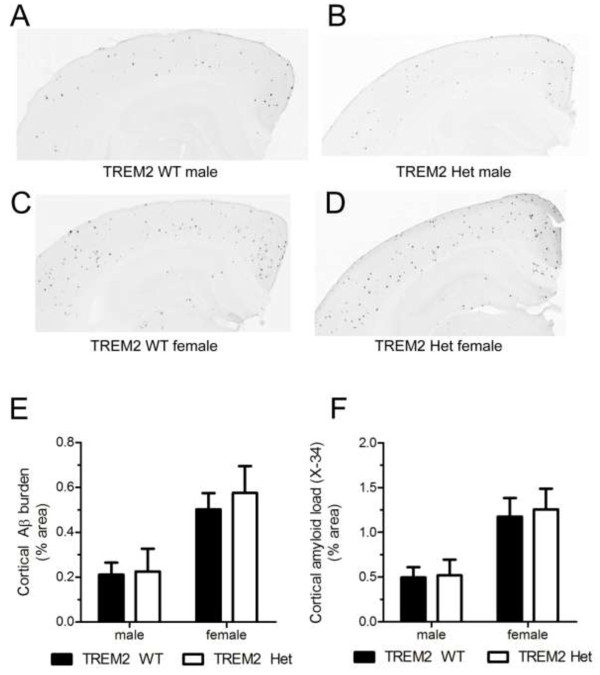
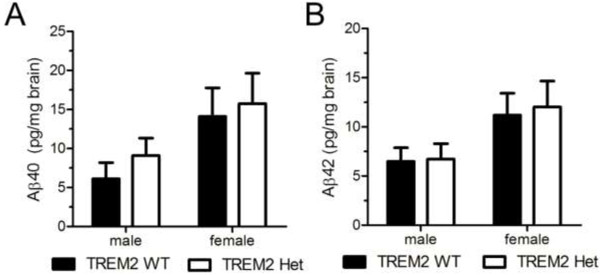
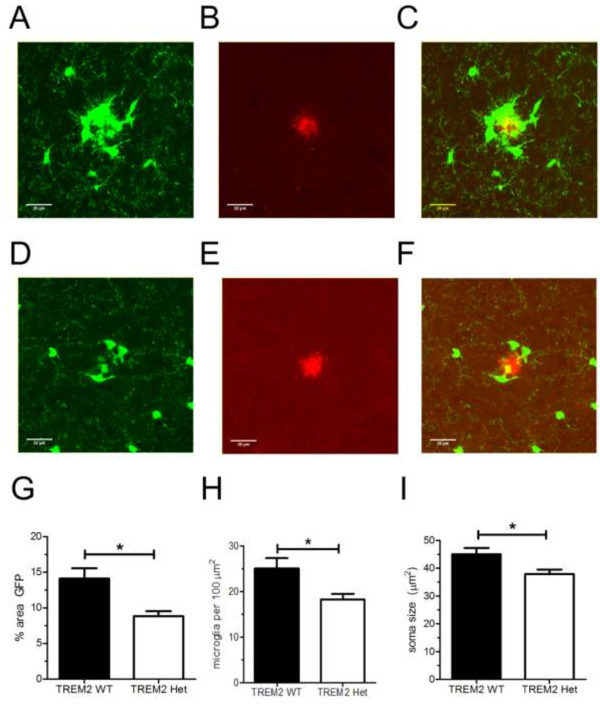
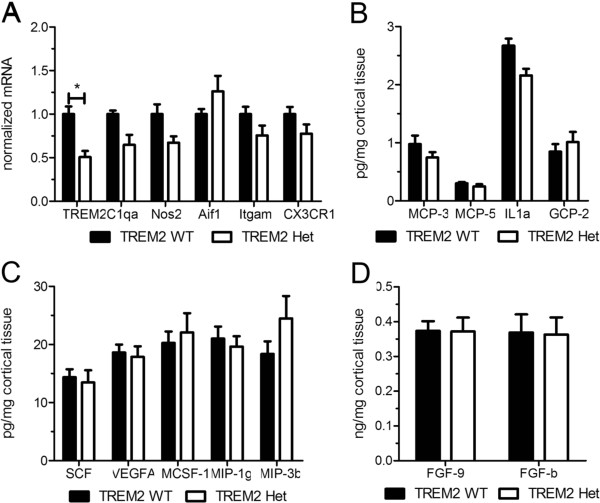
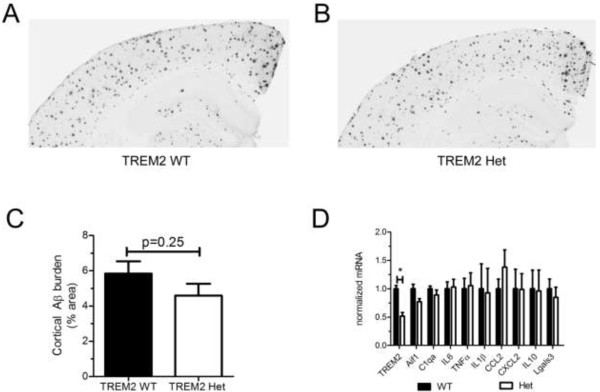
BACKGROUND: Recent genome-wide association studies linked variants in TREM2 to a strong increase in the odds of developing Alzheimer's disease. The mechanism by which TREM2 influences the susceptibility to Alzheimer's disease is currently unknown. TREM2 is expressed by microglia and is thought to regulate phagocytic and inflammatory microglial responses to brain pathology. Given that a single allele of variant TREM2, likely resulting in a loss of function, conferred an increased risk of developing Alzheimer's disease, we tested whether loss of one functional trem2 allele would affect Aβ plaque deposition or the microglial response to Aβ pathology in APPPS1-21 mice. RESULTS: There was no significant difference in Aβ deposition in 3-month old or 7-month old APPPS1-21 mice expressing one or two copies of trem2. However, 3-month old mice with one copy of trem2 exhibited a marked decrease in the number and size of plaque-associated microglia. While there were no statistically significant differences in cytokine levels or markers of microglial activation in 3- or 7-month old animals, there were trends towards decreased expression of NOS2, C1qa, and IL1a in 3-month old TREM2+/- vs. TREM2+/+ mice. CONCLUSIONS: Loss of a single copy of trem2 had no effect on Aβ pathology, but altered the morphological phenotype of plaque-associated microglia. These data suggest that TREM2 is important for the microglial response to Aβ deposition but that a 50% decrease inTREM2 expression does not affect Aβ plaque burden.
Overview
The claims and statistics of this paper haven’t been checked yet.
Free: it reads the open-access text and checks the first 5 claims that cite a source we can check. Create a free account to check every claim.
Integrity signals
Registry
Cites
Statistics
Figures
Verification
Claims the paper makes
The claims and statistics of this paper haven’t been checked yet.
Free: it reads the open-access text and checks the first 5 claims that cite a source we can check. Create a free account to check every claim.
Claims other papers make about this one
Each is checked against this paper’s own text: does it say what the citing paper says it does?
The cited source doesn’t support the claim as written.
In the citing paper
“Functional studies demonstrated that deletion of Trem2 altered amyloid pathology in opposite directions depending on the stage of the disease (20–23), but overexpression of TREM2 reduced the pathology in transgenic mouse models of amyloidosis (24).”
From Deletion of Abi3 gene locus exacerbates neuropathological features of Alzheimer’s disease in a mouse model of Aβ amyloidosis (2021) · cites this paper as [21]
Checked by a reasoning model — may be wrong.
Experimental — accuracy not yet measuredThe source backs part of the claim, not all of it — or backs it for a different population, condition or comparison.
In the citing paper
“In mouse models of AD, complete TREM2 deficiency or TREM2 haploinsufficiency results in markedly less clustering of microglia around Aβ plaques (114, 128, 129).”
From Microglia Function in the Central Nervous System During Health and Neurodegeneration (2017) · cites this paper as [128]
Experimental — accuracy not yet measuredThe source backs part of the claim, not all of it — or backs it for a different population, condition or comparison.
In the citing paper
“TREM2 was recently demonstrated to be essential for promoting microglial cell association with plaques44–49.”
From Interplay between innate immunity and Alzheimer disease: APOE and TREM2 in the spotlight (2018) · cites this paper as [44]
Experimental — accuracy not yet measuredThe source backs part of the claim, not all of it — or backs it for a different population, condition or comparison.
In the citing paper
“References 44– 47 show that TREM2 promotes microglial clustering around amyloid-β plaques and demonstrate a disease-stage dependent effect of TREM2 deficiency on amyloid-β pathology.”
From Interplay between innate immunity and Alzheimer disease: APOE and TREM2 in the spotlight (2018) · cites this paper as [44]
Experimental — accuracy not yet measured
7 more claims about this paper
Create a free account to see every claim other papers make about this one.
Self-check
Percentages, sums and reported differences re-computed from the paper’s own numbers.
The self-check needs the paper’s full text.
Citations
Cites
Corder, E. H., Saunders, A. M., Strittmatter, W. J., Schmechel, D. E., Gaskell, P. C., Small, G. W., Roses, A. D., Haines, J. L., & Pericak-Vance, M. A. (1993) · Science · doi:10.1126/science.8346443 · Cited by 9,429 · cited 1×
“To date the two strongest identified LOAD genetic risk factors are the well-studied apolipoprotein ε4 (APOE4) allele and several recently identified variants in the triggering receptor expressed on myeloid cells-2 (TREM2) gene [2-4].”
BackgroundTREM2 Variants in Alzheimer's Disease
Guerreiro, R., Wojtas, A., Bras, J., Carrasquillo, M., Rogaeva, E., Majounie, E., Cruchaga, C., Sassi, C., Kauwe, J. S. K., Younkin, S., et al. (2013) · New England Journal of Medicine · doi:10.1056/nejmoa1211851 · Cited by 3,020 · cited 3×
“Discussion TREM2 variants, particularly the R47H mutation, strongly increase the risk of developing AD, however how TREM2 affects AD and AD pathology is unknown [3,4].”
BackgroundJung, S., Aliberti, J., Graemmel, P., Sunshine, M. J., Kreutzberg, G. W., Sher, A., & Littman, D. R. (2000) · Molecular and Cellular Biology · doi:10.1128/mcb.20.11.4106-4114.2000 · Cited by 2,632 · cited 1×
“To facilitate analysis of microglia we took advantage of the CX3CR1-GFP mice which in the CNS express GFP specifically within microglia [17].”
BackgroundVariant of TREM2 Associated with the Risk of Alzheimer's Disease
Jonsson, T., Stefansson, H., Steinberg, S., Jonsdottir, I., Jonsson, P. V., Snaedal, J., Bjornsson, S., Huttenlocher, J., Levey, A. I., Lah, J. J., et al. (2013) · New England Journal of Medicine · doi:10.1056/nejmoa1211103 · Cited by 2,558 · cited 2×
“Discussion TREM2 variants, particularly the R47H mutation, strongly increase the risk of developing AD, however how TREM2 affects AD and AD pathology is unknown [3,4].”
BackgroundInitiative, T. A. D. N., Hollingworth, P., CHARGE consortium, EADI1 consortium, Harold, D., Sims, R., Gerrish, A., Lambert, J.-C., Carrasquillo, M. M., Abraham, R., et al. (2011) · Nature Genetics · doi:10.1038/ng.803 · Cited by 1,997 · cited 1×
“Although we did not detect a TREM2-dependent difference in Aβ plaque burden, another microglialassociated protein genetically associated with AD, CD33, appears to substantially influence Aβ deposition [30-33].”
BackgroundElmore, M. R. P., Najafi, A. R., Koike, M. A., Dagher, N. N., Spangenberg, E. E., Rice, R. A., Kitazawa, M., Matusow, B., Nguyen, H., West, B. L., et al. (2014) · Neuron · doi:10.1016/j.neuron.2014.02.040 · Cited by 1,968 · cited 1×
“glial proliferation and viability [26-28].”
Naj, A. C., Jun, G., Beecham, G. W., Wang, L.-S., Vardarajan, B. N., Buros, J., Gallins, P. J., Buxbaum, J. D., Jarvik, G. P., Crane, P. K., et al. (2011) · Nature Genetics · doi:10.1038/ng.801 · Cited by 1,901 · cited 1×
“Although we did not detect a TREM2-dependent difference in Aβ plaque burden, another microglialassociated protein genetically associated with AD, CD33, appears to substantially influence Aβ deposition [30-33].”
BackgroundTakahashi, K., Rochford, C. D. P., & Neumann, H. (2005) · The Journal of Experimental Medicine · doi:10.1084/jem.20041611 · Cited by 1,124 · cited 8×
“TREM2 expression in microglia is associated with phagocytic clearance of extracellular debris, such as apoptotic neurons, raising the possibility that TREM2 could regulate microglial mediated clearance of extracellular Aβ, and ultimately amyloid plaque deposition [8].”
BackgroundInfluentialWang, Y., Szretter, K. J., Vermi, W., Gilfillan, S., Rossini, C., Cella, M., Barrow, A. D., Diamond, M. S., & Colonna, M. (2012) · Nature Immunology · doi:10.1038/ni.2360 · Cited by 1,011 · cited 1×
“glial proliferation and viability [26-28].”
Self-citationAlzheimer’s Disease Risk Gene CD33 Inhibits Microglial Uptake of Amyloid Beta
Griciuc, A., Serrano-Pozo, A., Parrado, A. R., Lesinski, A. N., Asselin, C. N., Mullin, K., Hooli, B., Choi, S. H., Hyman, B. T., & Tanzi, R. E. (2013) · Neuron · doi:10.1016/j.neuron.2013.04.014 · Cited by 1,004 · cited 2×
“CD33 appears to inhibit microglial uptake of Aβ in vitro and genetic deletion of CD33 in APPSWE/PS1ΔE9 mice reduces Aβ plaque burden [30].”
Background
Cited by
The amyloid hypothesis of Alzheimer's disease at 25 years
Selkoe, D. J., & Hardy, J. (2016) · EMBO Molecular Medicine · doi:10.15252/emmm.201606210 · Cited by 6,164
“Deleting one TREM2 allele in hAPP tg mice significantly decreased the number of microglia associated with Ab deposits (Ulrich et al, 2014).”
BackgroundAlzheimer Disease: An Update on Pathobiology and Treatment Strategies
Long, J. M., & Holtzman, D. M. (2019) · Cell · doi:10.1016/j.cell.2019.09.001 · Cited by 3,204
“5 months of age (after plaque deposition), suggesting an age or amyloid burden effect (Ulrich et al., 2014).”
Self-citationMicroglia Function in the Central Nervous System During Health and Neurodegeneration
Colonna, M., & Butovsky, O. (2017) · Annual Review of Immunology · doi:10.1146/annurev-immunol-051116-052358 · Cited by 2,894
Self-citationInflammation as a central mechanism in Alzheimer's disease
Kinney, J. W., Bemiller, S. M., Murtishaw, A. S., Leisgang, A. M., Salazar, A. M., & Lamb, B. T. (2018) · Alzheimer's & Dementia: Translational Research & Clinical Interventions · doi:10.1016/j.trci.2018.06.014 · Cited by 2,253
Immune attack: the role of inflammation in Alzheimer disease
Heppner, F. L., Ransohoff, R. M., & Becher, B. (2015) · Nature Reviews Neuroscience · doi:10.1038/nrn3880 · Cited by 2,134
The Cellular Phase of Alzheimer’s Disease
De Strooper, B., & Karran, E. (2016) · Cell · doi:10.1016/j.cell.2015.12.056 · Cited by 1,990
Microglia emerge as central players in brain disease
Salter, M. W., & Stevens, B. (2017) · Nature Medicine · doi:10.1038/nm.4397 · Cited by 1,767
TREM2 Lipid Sensing Sustains the Microglial Response in an Alzheimer’s Disease Model
Wang, Y., Cella, M., Mallinson, K., Ulrich, J. D., Young, K. L., Robinette, M. L., Gilfillan, S., Krishnan, G. M., Sudhakar, S., Zinselmeyer, B. H., et al. (2015) · Cell · doi:10.1016/j.cell.2015.01.049 · Cited by 1,736
“Trem2−/−Cx3cr1+/GFPAPPPS1–21 mice were generated in a similar manner, as previously described (Ulrich et al., 2014).”
InfluentialSelf-citationTREM2 Maintains Microglial Metabolic Fitness in Alzheimer’s Disease
Ulland, T. K., Song, W. M., Huang, S. C.-C., Ulrich, J. D., Sergushichev, A., Beatty, W. L., Loboda, A. A., Zhou, Y., Cairns, N. J., Kambal, A., et al. (2017) · Cell · doi:10.1016/j.cell.2017.07.023 · Cited by 1,263
Self-citationAmyloid β-based therapy for Alzheimer’s disease: Challenges, successes and future
Zhang, Y., Chen, H., Li, R., Sterling, K., & Song, W. (2023) · Signal Transduction and Targeted Therapy · doi:10.1038/s41392-023-01484-7 · Cited by 988
“Aβ plaques in AD model mice.(174,175,178) The reduction of TREM2 in Aβ-associated macrophages also altered astrocytosis detected by glial fibrillary acidic protein (GFAP) and S100β.”
BackgroundSpangenberg, E., Severson, P. L., Hohsfield, L. A., Crapser, J., Zhang, J., Burton, E. A., Zhang, Y., Spevak, W., Lin, J., Phan, N. Y., et al. (2019) · Nature Communications · doi:10.1038/s41467-019-11674-z · Cited by 939
TREM2-mediated early microglial response limits diffusion and toxicity of amyloid plaques
Wang, Y., Ulland, T. K., Ulrich, J. D., Song, W., Tzaferis, J. A., Hole, J. T., Yuan, P., Mahan, T. E., Shi, Y., Gilfillan, S., et al. (2016) · Journal of Experimental Medicine · doi:10.1084/jem.20151948 · Cited by 840
“In 4-mo-old APP PS1-21 mice lacking TREM2, however, hippocampal Aβ accumulation was paradoxically reduced despite the myeloid cell defect, a finding that was interpreted to indicate that TREM2 deficiency protects against AD pathogenesis (Jay et al., 2015).”
BackgroundInfluentialSelf-citationYuan, P., Condello, C., Keene, C. D., Wang, Y., Bird, T. D., Paul, S. M., Luo, W., Colonna, M., Baddeley, D., & Grutzendler, J. (2016) · Neuron · doi:10.1016/j.neuron.2016.05.003 · Cited by 817
“While loss of Trem2 in vitro disrupts Ab phagocytosis by microglia (Kleinberger et al., 2014), Trem2-haplodeficient AD-like mice have shown inconsistent results with respect to the amounts of cerebral Ab deposition (Jay et al., 2015; Ulrich et al., 2014; Wang et al., 2015).”
Self-citationMicroglia in Neurological Diseases: A Road Map to Brain-Disease Dependent-Inflammatory Response
Bachiller, S., Jiménez-Ferrer, I., Paulus, A., Yang, Y., Swanberg, M., Deierborg, T., & Boza-Serrano, A. (2018) · Frontiers in Cellular Neuroscience · doi:10.3389/fncel.2018.00488 · Cited by 707
“…reduced risk of AD (Huang et al., 2017), as well as an allelic variant of the TREM2, a cell-surface receptor exclusively of microglial cells (Colonna, 2003) which is associated to increased risk for developing AD up to threefold (Jonsson et al., 2013; Abduljaleel et al., 2014; Ulrich et al., 2017).”
BackgroundFilipello, F., Morini, R., Corradini, I., Zerbi, V., Canzi, A., Michalski, B., Erreni, M., Markicevic, M., Starvaggi-Cucuzza, C., Otero, K., et al. (2018) · Immunity · doi:10.1016/j.immuni.2018.04.016 · Cited by 695
“In a mouse model of AD, reduced TREM2 results in lower number of microglia surrounding plaques (Ulrich et al., 2014), reduced plaque compaction, and axonal dystrophy (Yuan et al.”
BackgroundSelf-citationJay, T. R., Miller, C. M., Cheng, P. J., Graham, L. C., Bemiller, S., Broihier, M. L., Xu, G., Margevicius, D., Karlo, J. C., Sousa, G. L., et al. (2015) · Journal of Experimental Medicine · doi:10.1084/jem.20142322 · Cited by 682
“the effect size previously observed in APPPS1;Trem2+/ mice (Ulrich et al., 2014).”
BackgroundThree dimensions of the amyloid hypothesis: time, space and 'wingmen'
Musiek, E. S., & Holtzman, D. M. (2015) · Nature Neuroscience · doi:10.1038/nn.4018 · Cited by 662
Self-citationMicroglia-mediated T cell infiltration drives neurodegeneration in tauopathy
Chen, X., Firulyova, M., Manis, M., Herz, J., Smirnov, I., Aladyeva, E., Wang, C., Bao, X., Finn, M. B., Hu, H., et al. (2023) · Nature · doi:10.1038/s41586-023-05788-0 · Cited by 609
Self-citationInterplay between innate immunity and Alzheimer disease: APOE and TREM2 in the spotlight
Shi, Y., & Holtzman, D. M. (2018) · Nature Reviews Immunology · doi:10.1038/s41577-018-0051-1 · Cited by 595
Self-citationNew insights on the role of microglia in synaptic pruning in health and disease
Hong, S., Dissing-Olesen, L., & Stevens, B. (2016) · Current Opinion in Neurobiology · doi:10.1016/j.conb.2015.12.004 · Cited by 557
Loss of TREM2 function increases amyloid seeding but reduces plaque-associated ApoE
Parhizkar, S., Arzberger, T., Brendel, M., Kleinberger, G., Deussing, M., Focke, C., Nuscher, B., Xiong, M., Ghasemigharagoz, A., Katzmarski, N., et al. (2019) · Nature Neuroscience · doi:10.1038/s41593-018-0296-9 · Cited by 555
Self-citationOlmos-Alonso, A., Schetters, S. T. T., Sri, S., Askew, K., Mancuso, R., Vargas-Caballero, M., Holscher, C., Perry, V. H., & Gomez-Nicola, D. (2016) · Brain · doi:10.1093/brain/awv379 · Cited by 532
Leyns, C. E. G., Ulrich, J. D., Finn, M. B., Stewart, F. R., Koscal, L. J., Remolina Serrano, J., Robinson, G. O., Anderson, E., Colonna, M., & Holtzman, D. M. (2017) · Proceedings of the National Academy of Sciences · doi:10.1073/pnas.1710311114 · Cited by 517
Self-citationDagher, N. N., Najafi, A. R., Kayala, K. M. N., Elmore, M. R. P., White, T. E., Medeiros, R., West, B. L., & Green, K. N. (2015) · Journal of Neuroinflammation · doi:10.1186/s12974-015-0366-9 · Cited by 505
Heckmann, B. L., Teubner, B. J. W., Tummers, B., Boada-Romero, E., Harris, L., Yang, M., Guy, C. S., Zakharenko, S. S., & Green, D. R. (2019) · Cell · doi:10.1016/j.cell.2019.05.056 · Cited by 503
“, 2014), Ig-superfamily receptors including TREM2 (Ulrich et al., 2014; Wang et al., 2016; Zhao et al., 2018), scavenger receptors (SR) (Wilkinson and El Khoury, 2012) and complement receptors (Doens and Fernandez, 2014).”
New insights into the role of TREM2 in Alzheimer’s disease
Gratuze, M., Leyns, C. E. G., & Holtzman, D. M. (2018) · Molecular Neurodegeneration · doi:10.1186/s13024-018-0298-9 · Cited by 489
Self-citationDisease Progression-Dependent Effects of TREM2 Deficiency in a Mouse Model of Alzheimer's Disease
Jay, T. R., Hirsch, A. M., Broihier, M. L., Miller, C. M., Neilson, L. E., Ransohoff, R. M., Lamb, B. T., & Landreth, G. E. (2017) · The Journal of Neuroscience · doi:10.1523/jneurosci.2110-16.2016 · Cited by 457
“Collectively, these studies demonstrated that TREM2 deficiency reduces accumulation of myeloid cells around plaques (Ulrich et al., 2014; Jay et al., 2015; Wang et al., 2015) and attenuates inflammation-related gene expression (Jay et al.”
BackgroundThe contribution of neuroinflammation to amyloid toxicity in Alzheimer's disease
Minter, M. R., Taylor, J. M., & Crack, P. J. (2016) · Journal of Neurochemistry · doi:10.1111/jnc.13411 · Cited by 451
TREM2, microglia, and neurodegenerative diseases
Yeh, F. L., Hansen, D. V., & Sheng, M. (2017) · Trends in Molecular Medicine · doi:10.1016/j.molmed.2017.03.008 · Cited by 440
“These deficits occurred in a gene dose-dependent manner (intermediate phenotype with heterozygous Trem2 KO) and validated an earlier study that looked only at Trem2 heterozygotes and observed similar deficits [141].”
ResultTREM2 in Neurodegenerative Diseases
Jay, T. R., von Saucken, V. E., & Landreth, G. E. (2017) · Molecular Neurodegeneration · doi:10.1186/s13024-017-0197-5 · Cited by 427
TREM2 variants: new keys to decipher Alzheimer disease pathogenesis
Colonna, M., & Wang, Y. (2016) · Nature Reviews Neuroscience · doi:10.1038/nrn.2016.7 · Cited by 418
Self-citationTREM2 Acts Downstream of CD33 in Modulating Microglial Pathology in Alzheimer's Disease
Griciuc, A., Patel, S., Federico, A. N., Choi, S. H., Innes, B. J., Oram, M. K., Cereghetti, G., McGinty, D., Anselmo, A., Sadreyev, R. I., et al. (2019) · Neuron · doi:10.1016/j.neuron.2019.06.010 · Cited by 378
“In agreement with previous studies, TREM2 knock-out decreased clustering of Iba1+ cells around plaques (Jay et al., 2015; Ulrich et al., 2014; Wang et al., 2015).”
Self-citationDo glia drive synaptic and cognitive impairment in disease?
Chung, W.-S., Welsh, C. A., Barres, B. A., & Stevens, B. (2015) · Nature Neuroscience · doi:10.1038/nn.4142 · Cited by 385
Development of a Chimeric Model to Study and Manipulate Human Microglia In Vivo
Hasselmann, J., Coburn, M. A., England, W., Figueroa Velez, D. X., Kiani Shabestari, S., Tu, C. H., McQuade, A., Kolahdouzan, M., Echeverria, K., Claes, C., et al. (2019) · Neuron · doi:10.1016/j.neuron.2019.07.002 · Cited by 380
Zhong, L., Xu, Y., Zhuo, R., Wang, T., Wang, K., Huang, R., Wang, D., Gao, Y., Zhu, Y., Sheng, X., et al. (2019) · Nature Communications · doi:10.1038/s41467-019-09118-9 · Cited by 371
McQuade, A., Kang, Y. J., Hasselmann, J., Jairaman, A., Sotelo, A., Coburn, M., Shabestari, S. K., Chadarevian, J. P., Fote, G., Tu, C. H., et al. (2020) · Nature Communications · doi:10.1038/s41467-020-19227-5 · Cited by 361
Loss of TREM2 function increases amyloid seeding but reduces plaque-associated ApoE
Parhizkar, S., Arzberger, T., Brendel, M., Kleinberger, G., Deußing, M., Focke, C., Nuscher, B., Xiong, M., Ghasemigharagoz, A., Katzmarski, N., et al. (2019) · doi:10.7892/boris.125653 · Cited by 352
Self-citationTREM2 deficiency impairs chemotaxis and microglial responses to neuronal injury
Mazaheri, F., Snaidero, N., Kleinberger, G., Madore, C., Daria, A., Werner, G., Krasemann, S., Capell, A., Trümbach, D., Wurst, W., et al. (2017) · The EMBO Reports · doi:10.15252/embr.201743922 · Cited by 351
Beyond the neuron–cellular interactions early in Alzheimer disease pathogenesis
Henstridge, C. M., Hyman, B. T., & Spires-Jones, T. L. (2019) · Nature Reviews Neuroscience · doi:10.1038/s41583-018-0113-1 · Cited by 348
TREM2 function impedes tau seeding in neuritic plaques
Leyns, C. E. G., Gratuze, M., Narasimhan, S., Jain, N., Koscal, L. J., Jiang, H., Manis, M., Colonna, M., Lee, V. M. Y., Ulrich, J. D., et al. (2019) · Nature Neuroscience · doi:10.1038/s41593-019-0433-0 · Cited by 332
Self-citationElucidating the Role of TREM2 in Alzheimer’s Disease
Ulrich, J. D., Ulland, T. K., Colonna, M., & Holtzman, D. M. (2017) · Neuron · doi:10.1016/j.neuron.2017.02.042 · Cited by 325
“Multiple studies from mouse models of Ab deposition and post-mortem human brain sections have consistently found that TREM2 promotes microglial clustering around fibrillar Ab plaques (Table 2) (Jay et al., 2015, 2017; Ulrich et al., 2014; Wang et al., 2015, 2016; Yuan et al., 2016).”
BackgroundSelf-citationPhagocytosis in the Brain: Homeostasis and Disease
Galloway, D. A., Phillips, A. E. M., Owen, D. R. J., & Moore, C. S. (2019) · Frontiers in Immunology · doi:10.3389/fimmu.2019.00790 · Cited by 307
Humanized TREM2 mice reveal microglia-intrinsic and -extrinsic effects of R47H polymorphism
Song, W. M., Joshita, S., Zhou, Y., Ulland, T. K., Gilfillan, S., & Colonna, M. (2018) · Journal of Experimental Medicine · doi:10.1084/jem.20171529 · Cited by 305
“However, this is not totally unexpected, given seeming dependency on time point and gene dose in other studies of TREM2 in AD mouse models (Ulrich et al., 2014; Jay et al., 2015, 2017).”
BackgroundResultSelf-citationThe Triggering Receptor Expressed on Myeloid Cells 2 Binds Apolipoprotein E
Bailey, C. C., DeVaux, L. B., & Farzan, M. (2015) · Journal of Biological Chemistry · doi:10.1074/jbc.m115.677286 · Cited by 303
“In some mouse experiments, TREM2 deficiency is protective against pathology or has minimal effect on disease progression (24, 26).”
BackgroundBemiller, S. M., McCray, T. J., Allan, K., Formica, S. V., Xu, G., Wilson, G., Kokiko-Cochran, O. N., Crish, S. D., Lasagna-Reeves, C. A., Ransohoff, R. M., et al. (2017) · Molecular Neurodegeneration · doi:10.1186/s13024-017-0216-6 · Cited by 299
“reduced levels of several cytokine mRNAs [20, 21].”
Microglia in Alzheimer Disease: Well-Known Targets and New Opportunities
Hemonnot, A.-L., Hua, J., Ulmann, L., & Hirbec, H. (2019) · Frontiers in Aging Neuroscience · doi:10.3389/fnagi.2019.00233 · Cited by 298
“Although P2X4R is decreased in AD brain patients and neuronal P2X4R seems to modulate Aβ-induced neuronal death (Varma et al., 2009), no work has yet been performed on microglial P2X4R in AD.”
BackgroundApoE facilitates the microglial response to amyloid plaque pathology
Ulrich, J. D., Ulland, T. K., Mahan, T. E., Nyström, S., Nilsson, K. P., Song, W. M., Zhou, Y., Reinartz, M., Choi, S., Jiang, H., et al. (2018) · Journal of Experimental Medicine · doi:10.1084/jem.20171265 · Cited by 297
“20171265 1048 reduced plaque-associated microgliosis, and Trem2-deficient mice exhibit altered plaque morphology and increased neuritic dystrophy, suggestive of a role for microglia in shaping the gross structure of plaques and reducing plaque-associated toxicity (Ulrich et al., 2014; Wang et al., 2015, 2016; Yuan et…”
Self-citationEmerging roles of innate and adaptive immunity in Alzheimer’s disease
Chen, X., & Holtzman, D. M. (2022) · Immunity · doi:10.1016/j.immuni.2022.10.016 · Cited by 297
Self-citationTREM2 regulates microglial cell activation in response to demyelination in vivo
Cantoni, C., Bollman, B., Licastro, D., Xie, M., Mikesell, R., Schmidt, R., Yuede, C. M., Galimberti, D., Olivecrona, G., Klein, R. S., et al. (2015) · Acta Neuropathologica · doi:10.1007/s00401-015-1388-1 · Cited by 296
“Another study in an AD mouse model showed a decrease of plaque-associated microglia in mice with only one copy of TREM2 [81].”
Self-citationMicroglia in Alzheimer’s disease: pathogenesis, mechanisms, and therapeutic potentials
Miao, J., Ma, H., Yang, Y., Liao, Y., Lin, C., Zheng, J., Yu, M., & Lan, J. (2023) · Frontiers in Aging Neuroscience · doi:10.3389/fnagi.2023.1201982 · Cited by 293
“Exploring TREM2: modulating microglial activity as a therapeutic strategy for AD Although TREM2-dependent activities may not significantly reduce amyloid plaque load in mouse models, they can promote plaque compaction and alleviate plaque-associated neuritic pathology (Ulrich et al., 2014; Wang et al., 2016; Meilandt…”
BackgroundCuyvers, E., & Sleegers, K. (2016) · The Lancet Neurology · doi:10.1016/s1474-4422(16)00127-7 · Cited by 284
TREM2-Ligand Interactions in Health and Disease
Kober, D. L., & Brett, T. J. (2017) · Journal of Molecular Biology · doi:10.1016/j.jmb.2017.04.004 · Cited by 284
Fernandez, C. G., Hamby, M. E., McReynolds, M. L., & Ray, W. J. (2019) · Frontiers in Aging Neuroscience · doi:10.3389/fnagi.2019.00014 · Cited by 277
“These DAMs have increased APOE expression that is triggered following a downregulation in homeostatic genes such as CX3CR1 and P2Y12 (Keren-Shaul et al., 2017; Krasemann et al., 2017).”
BackgroundThe MS4A gene cluster is a key modulator of soluble TREM2 and Alzheimer’s disease risk
Deming, Y., Filipello, F., Cignarella, F., Cantoni, C., Hsu, S., Mikesell, R., Li, Z., Del-Aguila, J. L., Dube, U., Farias, F. G., et al. (2019) · Science Translational Medicine · doi:10.1126/scitranslmed.aau2291 · Cited by 271
Self-citationThe Trem2 R47H variant confers loss-of-function-like phenotypes in Alzheimer's disease
Cheng-Hathaway, P. J., Reed-Geaghan, E. G., Jay, T. R., Casali, B. T., Bemiller, S. M., Puntambekar, S. S., von Saucken, V. E., Williams, R. Y., Karlo, J. C., Moutinho, M., et al. (2018) · Molecular Neurodegeneration · doi:10.1186/s13024-018-0262-8 · Cited by 252
Impact of TREM2R47H variant on tau pathology–induced gliosis and neurodegeneration
Gratuze, M., Leyns, C. E. G., Sauerbeck, A. D., St-Pierre, M.-K., Xiong, M., Kim, N., Serrano, J. R., Tremblay, M.-È., Kummer, T. T., Colonna, M., et al. (2020) · Journal of Clinical Investigation · doi:10.1172/jci138179 · Cited by 252
Self-citationMicroglial Aβ Receptors in Alzheimer’s Disease
Yu, Y., & Ye, R. D. (2015) · Cellular and Molecular Neurobiology · doi:10.1007/s10571-014-0101-6 · Cited by 247
Immune hyperreactivity of Aβ plaque-associated microglia in Alzheimer's disease
Yin, Z., Raj, D., Saiepour, N., Van Dam, D., Brouwer, N., Holtman, I. R., Eggen, B. J. L., Möller, T., Tamm, J. A., Abdourahman, A., et al. (2017) · Neurobiology of Aging · doi:10.1016/j.neurobiolaging.2017.03.021 · Cited by 238
“Loss of a single allele of Trem2 could alter the morphological phenotype of A b plaque-associated microglia (Ulrich et al., 2014).”
Kober, D. L., Alexander-Brett, J. M., Karch, C. M., Cruchaga, C., Colonna, M., Holtzman, M. J., & Brett, T. J. (2016) · eLife · doi:10.7554/elife.20391 · Cited by 238
Self-citationSayed, F. A., Telpoukhovskaia, M., Kodama, L., Li, Y., Zhou, Y., Le, D., Hauduc, A., Ludwig, C., Gao, F., Clelland, C., et al. (2018) · Proceedings of the National Academy of Sciences · doi:10.1073/pnas.1811411115 · Cited by 229
“Interestingly, in amyloid mouse models, TREM2 haploinsufficiency did not affect the expression of pro- or antiinflammatory markers at early or later stages of amyloid pathology (8), but reduced microglia number (10).”
BackgroundMattei, D., Ivanov, A., Ferrai, C., Jordan, P., Guneykaya, D., Buonfiglioli, A., Schaafsma, W., Przanowski, P., Deuther-Conrad, W., Brust, P., et al. (2017) · Translational Psychiatry · doi:10.1038/tp.2017.80 · Cited by 222
Emerging Microglia Biology Defines Novel Therapeutic Approaches for Alzheimer’s Disease
Lewcock, J. W., Schlepckow, K., Di Paolo, G., Tahirovic, S., Monroe, K. M., & Haass, C. (2020) · Neuron · doi:10.1016/j.neuron.2020.09.029 · Cited by 221
TREM2, microglia, and Alzheimer’s disease.
Qin, Q., Teng, Z., Liu, C., Li, Q., Yin, Y., & Tang, Y. (2021) · Mechanisms of Ageing and Development · doi:10.1016/j.mad.2021.111438 · Cited by 219
The role of the immune system in Alzheimer disease: Etiology and treatment
Jevtic, S., Sengar, A. S., Salter, M. W., & McLaurin, J. (2017) · Ageing Research Reviews · doi:10.1016/j.arr.2017.08.005 · Cited by 215
Activated microglia mitigate Aβ-associated tau seeding and spreading
Gratuze, M., Chen, Y., Parhizkar, S., Jain, N., Strickland, M. R., Serrano, J. R., Colonna, M., Ulrich, J. D., & Holtzman, D. M. (2021) · Journal of Experimental Medicine · doi:10.1084/jem.20210542 · Cited by 215
“We observed reduced plaque-associatedmicroglia in T2KO mice as previously reported (Jay et al., 2015; Ulrich et al., 2014; Wang et al., 2015).”
Self-citationAmyloid-β and Tau at the Crossroads of Alzheimer’s Disease
Gallardo, G., & Holtzman, D. M. (2019) · Advances in Experimental Medicine and Biology · doi:10.1007/978-981-32-9358-8_16 · Cited by 198
Self-citationClaes, C., Danhash, E. P., Hasselmann, J., Chadarevian, J. P., Shabestari, S. K., England, W. E., Lim, T. E., Hidalgo, J. L. S., Spitale, R. C., Davtyan, H., et al. (2021) · Molecular Neurodegeneration · doi:10.1186/s13024-021-00473-0 · Cited by 197
Early-Onset Alzheimer’s Disease: What Is Missing in Research?
Ayodele, T., Rogaeva, E., Kurup, J. T., Beecham, G., & Reitz, C. (2021) · Current Neurology and Neuroscience Reports · doi:10.1007/s11910-020-01090-y · Cited by 193
The role of innate immune genes in Alzheimer's disease
Griciuc, A., & Tanzi, R. E. (2021) · Current Opinion in Neurology · doi:10.1097/wco.0000000000000911 · Cited by 192
“Moreover, TREM2 knock-out impaired microglial activation and clustering around plaques [73,88,91], and disrupted the microglial barrier [89,92].”
BackgroundFunctional Studies of Missense TREM2 Mutations in Human Stem Cell-Derived Microglia
Brownjohn, P. W., Smith, J., Solanki, R., Lohmann, E., Houlden, H., Hardy, J., Dietmann, S., & Livesey, F. J. (2018) · Stem Cell Reports · doi:10.1016/j.stemcr.2018.03.003 · Cited by 193
“While murine models of neurodegenerative disease indicate that loss or dysfunction of TREM2 signaling impacts uponmicroglial function and disease progression (Ulrich et al., 2014; Yuan et al., 2016), the precise role of TREM2 in microglial biology and the consequences of its dysregulation in neurodegenerative disease…”
BackgroundAlzheimer’s Disease, Oligomers, and Inflammation
Forloni, G., & Balducci, C. (2018) · Journal of Alzheimer’s Disease · doi:10.3233/jad-170819 · Cited by 194
Glutamate and GABA in Microglia-Neuron Cross-Talk in Alzheimer’s Disease
Czapski, G. A., & Strosznajder, J. B. (2021) · International Journal of Molecular Sciences · doi:10.3390/ijms222111677 · Cited by 191
Targeting microglia for the treatment of Alzheimer’s Disease
Wes, P. D., Sayed, F. A., Bard, F., & Gan, L. (2016) · Glia · doi:10.1002/glia.22988 · Cited by 185
“Studies have consistently found a striking reduction in the number of microglia surrounding Ab plaques in AD mouse models genetically lacking one or both copies of TREM2 (Jay et al., 2015; Ulrich et al., 2014; Wang et al., 2015).”
BackgroundResultGenetics ignite focus on microglial inflammation in Alzheimer’s disease
Malik, M., Parikh, I., Vasquez, J. B., Smith, C., Tai, L., Bu, G., LaDu, M. J., Fardo, D. W., Rebeck, G. W., & Estus, S. (2015) · Molecular Neurodegeneration · doi:10.1186/s13024-015-0048-1 · Cited by 161
Alzheimer’s Disease Pathogenesis: Role of Autophagy and Mitophagy Focusing in Microglia
Eshraghi, M., Adlimoghaddam, A., Mahmoodzadeh, A., Sharifzad, F., Yasavoli-Sharahi, H., Lorzadeh, S., Albensi, B. C., & Ghavami, S. (2021) · International Journal of Molecular Sciences · doi:10.3390/ijms22073330 · Cited by 158
Toward more predictive genetic mouse models of Alzheimer’s disease
Onos, K. D., Sukoff Rizzo, S. J., Howell, G. R., & Sasner, M. (2016) · Brain Research Bulletin · doi:10.1016/j.brainresbull.2015.12.003 · Cited by 156
AD-linked R47H- TREM2 mutation induces disease-enhancing microglial states via AKT hyperactivation
Sayed, F. A., Kodama, L., Fan, L., Carling, G. K., Udeochu, J. C., Le, D., Li, Q., Zhou, L., Wong, M. Y., Horowitz, R., et al. (2021) · Science Translational Medicine · doi:10.1126/scitranslmed.abe3947 · Cited by 155
High‐affinity interactions and signal transduction between Aβ oligomers and TREM 2
Lessard, C. B., Malnik, S. L., Zhou, Y., Ladd, T. B., Cruz, P. E., Ran, Y., Mahan, T. E., Chakrabaty, P., Holtzman, D. M., Ulrich, J. D., et al. (2018) · EMBO Molecular Medicine · doi:10.15252/emmm.201809027 · Cited by 154
“Studies that showed effects on Ab deposition reported changes in Ab loads were rather modest and regional in nature (Ulrich et al, 2014; Wang et al, 2016).”
BackgroundInfluentialSelf-citationLue, L., Schmitz, C. T., Serrano, G., Sue, L. I., Beach, T. G., & Walker, D. G. (2015) · Brain Pathology · doi:10.1111/bpa.12190 · Cited by 154
“Instead, it reduced the number and area of microglia associated with amyloid plaques (48).”
BackgroundResultTREM2 Function in Alzheimer’s Disease and Neurodegeneration
Ulrich, J. D., & Holtzman, D. M. (2016) · ACS Chemical Neuroscience · doi:10.1021/acschemneuro.5b00313 · Cited by 154
Self-citationMicroglial dysfunction connects depression and Alzheimer’s disease
Santos, L. E., Beckman, D., & Ferreira, S. T. (2016) · Brain, Behavior, and Immunity · doi:10.1016/j.bbi.2015.11.011 · Cited by 154
“…evidence suggests Please cite this article in press as: Santos, L.E., et al. Microglial dysfunction co http://dx.doi.org/10.1016/j.bbi.2015.11.011 that changes in microglial kynurenine production may also be present in neurodegenerative disorders (Maddison and Giorgini, 2015; Vécsei et al., 2013).”
BackgroundInfluentialThe Important Interface Between Apolipoprotein E and Neuroinflammation in Alzheimer’s Disease
Kloske, C. M., & Wilcock, D. M. (2020) · Frontiers in Immunology · doi:10.3389/fimmu.2020.00754 · Cited by 152
C9orf72 deficiency promotes microglial-mediated synaptic loss in aging and amyloid accumulation
Lall, D., Lorenzini, I., Mota, T. A., Bell, S., Mahan, T. E., Ulrich, J. D., Davtyan, H., Rexach, J. E., Muhammad, A. K. M. G., Shelest, O., et al. (2021) · Neuron · doi:10.1016/j.neuron.2021.05.020 · Cited by 147
Self-citationMicroglial inflammation and phagocytosis in Alzheimer's disease: Potential therapeutic targets
Nizami, S., Hall‐Roberts, H., Warrier, S., Cowley, S. A., & Di Daniel, E. (2019) · British Journal of Pharmacology · doi:10.1111/bph.14618 · Cited by 147
“The effect on Aβ phagocytosis was not replicated by other studies with TREM2−/+‐ and TREM2 KO‐AD mice (Song et al., 2018; Ulrich et al., 2014) and TREM2 KO non‐AD mice (Zhao et al., 2018), reflecting the previously observed inconsistencies in plaque numbers between mouse models.”
ResultHaass, C., & Selkoe, D. (2022) · PLOS Biology · doi:10.1371/journal.pbio.3001694 · Cited by 145
“Moreover, microglia seem to interact with all other steps of the amyloid cascade such as diffuse (nonfibrillar) and mature (largely fibrillar) plaques [50,55] and tau-triggered cell death [56] (Fig 1B).”
BackgroundHuman iPSC‐derived microglia: A growing toolset to study the brain's innate immune cells
Hasselmann, J., & Blurton‐Jones, M. (2020) · Glia · doi:10.1002/glia.23781 · Cited by 145
“…TREM2 gene variants with AD risk (Guerreiro, Wojtas, et al., 2013; Jonsson et al., 2013), the resulting decreases in migration and barrier formation in response to Aβ plaques were first identified in multiple mouse models of AD (Jay et al., 2015; Ulrich et al., 2014; Y. Wang et al., 2015).”
BackgroundCerebrospinal fluid soluble TREM2 in aging and Alzheimer’s disease
Henjum, K., Almdahl, I. S., Årskog, V., Minthon, L., Hansson, O., Fladby, T., & Nilsson, L. N. G. (2016) · Alzheimer's Research & Therapy · doi:10.1186/s13195-016-0182-1 · Cited by 143
Zhou, J., Yu, W., Zhang, M., Tian, X., Li, Y., & Lü, Y. (2019) · Neurochemical Research · doi:10.1007/s11064-019-02748-x · Cited by 139
Cooray, R., Gupta, V. B., & Suphioglu, C. (2020) · Molecular Neurobiology · doi:10.1007/s12035-020-02054-6 · Cited by 163
“The complete knock-out of TREM-2 in ADmice models showed affected microglial activation decreasing the amount ofmicroglia around the plaques [29]; however, the precise mechanism is yet to be understood.”
BackgroundAlzheimer's Disease: The Role of Microglia in Brain Homeostasis and Proteopathy
Clayton, K. A., Van Enoo, A. A., & Ikezu, T. (2017) · Frontiers in Neuroscience · doi:10.3389/fnins.2017.00680 · Cited by 134
“…with some stipulating that TREM2 in microglia increase phagocytosis and clearance of Aβ (Wang et al., 2015; Xiang et al., 2016; Yuan et al., 2016), while others have suggested that disruption of TREM2 reduces amyloid plaque load (Ulrich et al., 2014; Jay et al., 2015; Krasemann et al., 2017).”
BackgroundMicroglia in Alzheimer’s disease: A multifaceted relationship
ElAli, A., & Rivest, S. (2016) · Brain, Behavior, and Immunity · doi:10.1016/j.bbi.2015.07.021 · Cited by 134
“Finally, it has proposed that although TREM2 is important for macrophage/microglial cell response to Aβ, a 50% decrease in TREM2 expression in these cells does not affect cerebral Aβ load (Ulrich et al., 2014).”
BackgroundHow to reprogram microglia toward beneficial functions
Fumagalli, M., Lombardi, M., Gressens, P., & Verderio, C. (2018) · Glia · doi:10.1002/glia.23484 · Cited by 133
“…activation and phagocytosis, facilitates Aβ plaque buildup, and injury of adjacent neurons in mouse model of AD (Jay, von Saucken, & Landreth, 2017; Ulrich et al., 2014; Y. Wang et al., 2015; Y. Wang et al., 2016; Yuan et al., 2016) and results in impaired elimi- nation of supernumerary synapses…”
BackgroundMicroglia-Mediated Neuroprotection, TREM2, and Alzheimer’s Disease: Evidence From Optical Imaging
Condello, C., Yuan, P., & Grutzendler, J. (2018) · Biological Psychiatry · doi:10.1016/j.biopsych.2017.10.007 · Cited by 131
“Several groups have reported that TREM2 deficiency in AD mice leads to reduced microglial numbers around amyloid deposits (59,60,62) owing to lower proliferation rates (38,43,64), reduced metabolic fitness (65), and increased death (60).”
Parhizkar, S., Gent, G., Chen, Y., Rensing, N. R., Gratuze, M., Strout, G. W., Sviben, S., Tycksen, E., Zhang, Q., Erdmann-Gilmore, P., et al. (2023) · Science Translational Medicine · doi:10.1126/scitranslmed.ade6285 · Cited by 158
Self-citationTargeting innate immunity for neurodegenerative disorders of the central nervous system
Andreasson, K. I., Bachstetter, A. D., Colonna, M., Ginhoux, F., Holmes, C., Lamb, B., Landreth, G., Lee, D. C., Low, D., Lynch, M. A., et al. (2016) · Journal of Neurochemistry · doi:10.1111/jnc.13667 · Cited by 126
Self-citationTREM2: Potential therapeutic targeting of microglia for Alzheimer's disease
Li, Y., Xu, H., Wang, H., Yang, K., Luan, J., & Wang, S. (2023) · Biomedicine & Pharmacotherapy · doi:10.1016/j.biopha.2023.115218 · Cited by 126
Teter, B., Morihara, T., Lim, G. P., Chu, T., Jones, M. R., Zuo, X., Paul, R. M., Frautschy, S. A., & Cole, G. M. (2019) · Neurobiology of Disease · doi:10.1016/j.nbd.2019.02.015 · Cited by 124
“For example, 50% TREM2 loss altered microglial morphology but had little effect on plaques (Ulrich et al., 2014) or increased plaques (Cheng-Hathaway et al.”
BackgroundNLRP3 inflammasome signalling in Alzheimer's disease
McManus, R. M., & Latz, E. (2024) · Neuropharmacology · doi:10.1016/j.neuropharm.2024.109941 · Cited by 144
“…genes that increase the risk for developing AD, such as Triggering receptor expressed on myeloid cells 2 (TREM2), CD33 and complement receptor 1 (CR1) (Naj et al., 2011; Bellenguez et al., 2022), many of which affect microglial phagocytosis (Butler et al., 2021; Ulrich et al., 2014).”
BackgroundLeveraging preclinical models for the development of Alzheimer disease therapeutics
Scearce-Levie, K. A., Sanchez, P. E., & Lewcock, J. W. (2020) · Nature Reviews Drug Discovery · doi:10.1038/s41573-020-0065-9 · Cited by 129
Mitochondrial Regulation of Microglial Immunometabolism in Alzheimer’s Disease
Fairley, L. H., Wong, J. H., & Barron, A. M. (2021) · Frontiers in Immunology · doi:10.3389/fimmu.2021.624538 · Cited by 120
Metadata
- Authors
- Ulrich, J. D., Finn, M. B., Wang, Y., Shen, A., Mahan, T. E., Jiang, H., Stewart, F. R., Piccio, L., Colonna, M., & Holtzman, D. M.
- Affiliations
- Washington University in St. Louis (US)
- Corresponding author
- Holtzman, David M
- ORCID
- Venue
- Molecular Neurodegeneration
- Published
- 2014-06-03
- Volume
- 9
- Issue
- 1
- Pages
- 20-20
- ISSN
- 1750-1326 (ISSN-L)
- PMC
- PMC4049806
- OpenAlex
- W2123047934
- Cited by
- 302
- References
- 40
- Citations by year
- 2026: 17 · 2025: 19 · 2024: 19 · 2023: 16 · 2022: 24 · 2021: 38 · 2020: 26 · 2019: 33 · 2018: 32 · 2017: 26 · 2016: 22 · 2015: 26 · 2014: 4
- FWCI
- 13.50
- Type
- journal article
- Language
- en
- Open access
- gold
- doi.org
- Licence
- cc-by
- Locations
- Molecular Neurodegeneration (publishedVersion, cc-by)
- PubMed Central (publishedVersion, cc-by)
- PubMed (publishedVersion)
- Digital Commons@Becker (Washington University School of Medicine) (submittedVersion)
- Funders
- National Multiple Sclerosis Society (JF 2144A2/1)
- Cure Alzheimer's Fund
- Multiple Sclerosis Society
- National Institutes of Health
- National Institute of Neurological Disorders and Stroke (F32-NS083187-01A1, F32NS083187)
- Topics
- Life Sciences › Neuroscience › Neurology › Neuroinflammation and Neurodegeneration Mechanisms
- Life Sciences › Neuroscience › Cellular and Molecular Neuroscience › Alzheimer's disease research and treatments
- Life Sciences › Biochemistry, Genetics and Molecular Biology › Molecular Biology › Inflammasome and immune disorders
- Keywords
- TREM2, Alzheimer's disease, amyloid plaques, microglia, plaque-associated microglia, microglial activation, NOS2, C1QA, interleukin-1 alpha, loss-of-function alleles, genetic susceptibility
- MeSH terms
- Alzheimer Disease, Animals, Disease Models, Animal, Female, Heterozygote, Male, Membrane Glycoproteins, Mice, Transgenic, Receptors, Immunologic, Amyloid beta-Protein Precursor, Microglia, Mice, Presenilin-1, Plaque, Amyloid, Real-Time Polymerase Chain Reaction
About these checks
Registry, retraction, Cites and statistics results are computed, not judged, with one exception: a printed reference that no index lists is read once by a model before it counts as a citation error. Claims are extracted by a model and kept only when their quote appears verbatim in the text; each cited source is then checked, with a model’s help, for whether it says what the claim relies on. Those verdicts can be wrong — read the claim’s quote and the cited source before relying on one.
Statistics and arithmetic are recomputed, not judged.
Confidence bands are shown only for fields calibrated on our annotated test set. None is calibrated yet, so no band is shown.
What counts as a claim ›How we measure confidence ›How we check this ›
Are you an author, or do you see a problem with this page? Request a review
Data sources
Bibliographic data: Semantic Scholar, OpenAlex, Crossref.
Contains information from the Semantic Scholar Academic Graph Datasets, made available under the ODC Attribution License (ODC-BY 1.0).
Semantic Scholar’s data is described in: Kinney, R., et al. (2023). The Semantic Scholar Open Data Platform. arXiv:2301.10140.
