

The DOI matches its Crossref record; 127 of the 127 references it cites were found in a registry or an index.
The role of the LRRK2 gene in Parkinsonism
Open accessAbstract
Parkinson's disease (PD), like many common age-related conditions, has been recognized to have a substantial genetic component. Multiple lines of evidence suggest that Leucine-rich repeat kinase 2 (LRRK2) is a crucial factor to understanding the etiology of PD. LRRK2 is a large, widely expressed, multi-domain and multifunctional protein. LRRK2 mutations are the major cause to inherited and sporadic PD. In this review, we discuss the pathology and clinical features which show diversity and variability of LRRK2-associated PD. In addition, we do a thorough literature review and provide theoretical data for gene counseling. Further, we present the evidence linking LRRK2 to various possible pathogenic mechanism of PD such as α-synuclein, tau, inflammatory response, oxidative stress, mitochondrial dysfunction, synaptic dysfunction as well as autophagy-lysosomal system. Based on the above work, we investigate activities both within GTPase and outside enzymatic regions in order to obtain a potential therapeutic approach to solve the LRRK2 problem.
Overview
The claims and statistics of this paper haven’t been checked yet.
Run the check — free, no account needed. It reads the open-access text and checks the sources it cites.
Integrity signals
Registry
Cites
Statistics
Figures
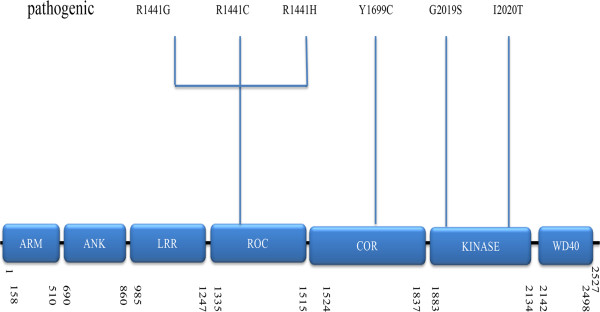
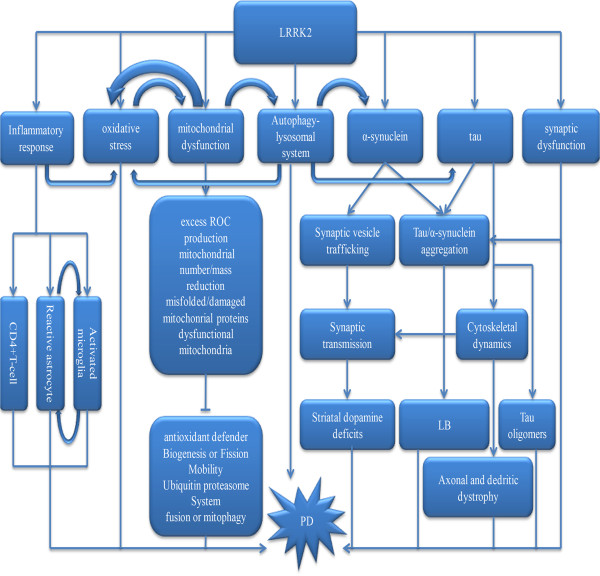
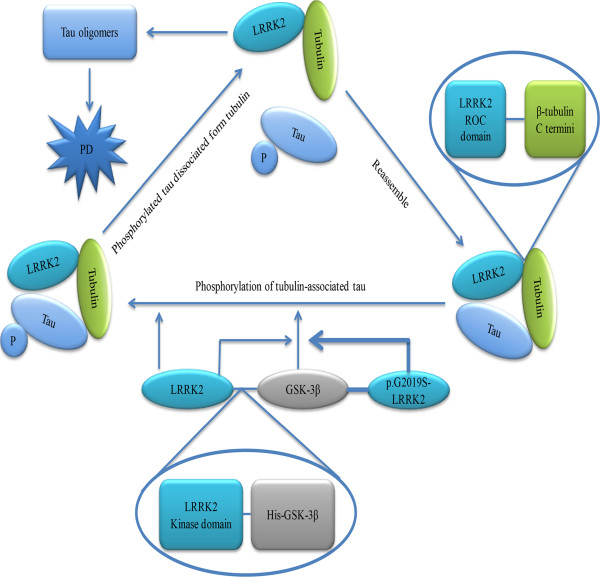
Verification
Claims the paper makes
The claims and statistics of this paper haven’t been checked yet.
Run the check — free, no account needed. It reads the open-access text and checks the sources it cites.
Claims other papers make about this one
Each is checked against this paper’s own text: does it say what the citing paper says it does?
The source backs part of the claim, not all of it — or backs it for a different population, condition or comparison.
In the citing paper
“It is characterized by filamentous and oligomeric 𝛂 -synuclein ( 𝛂 -syn) accumulation, and degeneration of dopaminergic neurons in the substantia nigra pars compacta (SNpc) leading to motor impairments (357, 616).”
From Blood-Brain Barrier: From Physiology to Disease and Back (2019) · cites this paper as [357]
Experimental — accuracy not yet measuredThe cited source says what the claim attributes to it.
In the citing paper
“The most common LRRK2 mutation, G2019S (gain of function), is associated with 2% of sporadic cases and 6% of familial cases (357).”
From Blood-Brain Barrier: From Physiology to Disease and Back (2019) · cites this paper as [357]
In the citing paper
“LRRK2 (PARK8) gene mutations are the most common genetic cause of both familial and sporadic PD.257”
From Microglia in neurodegenerative diseases: mechanism and potential therapeutic targets (2023) · cites this paper as [257]
Self-check
Percentages, sums and reported differences re-computed from the paper’s own numbers.
The self-check needs the paper’s full text.
Citations
Cites
Repertoires of Autophagy in the Pathogenesis of Ocular Diseases
Li, Y., Jiang, Q. L., Cao, G.-F., Yao, J., & Yan, B. (2015) · Cellular Physiology and Biochemistry · doi:10.1159/000373980 · Cited by 16,351
Staging of brain pathology related to sporadic Parkinson’s disease
Braak, H., Tredici, K. D., Rüb, U., de Vos, R. A. I., Jansen Steur, E. N. H., & Braak, E. (2003) · Neurobiology of Aging · doi:10.1016/s0197-4580(02)00065-9 · Cited by 10,777
Tau-mediated neurodegeneration in Alzheimer’s disease and related disorders
Ballatore, C., Lee, V. M.-Y., & Trojanowski, J. Q. (2007) · Nature Reviews Neuroscience · doi:10.1038/nrn2194 · Cited by 2,174
Lysosomes: fusion and function
Luzio, J. P., Pryor, P. R., & Bright, N. A. (2007) · Nature Reviews Molecular Cell Biology · doi:10.1038/nrm2217 · Cited by 1,807
Mice Lacking α-Synuclein Display Functional Deficits in the Nigrostriatal Dopamine System
Abeliovich, A., Schmitz, Y., Fariñas, I., Choi-Lundberg, D., Ho, W.-H., Castillo, P. E., Shinsky, N., Verdugo, J. M. G., Armanini, M., Ryan, A., et al. (2000) · Neuron · doi:10.1016/s0896-6273(00)80886-7 · Cited by 1,722
Inhibition of Macroautophagy Triggers Apoptosis
Boya, P., González‐Polo, R. A., Casares, N., Perfettini, J., Dessen, P., Larochette, N., Métivier, D., Meley, D., Souquère, S., Yoshimori, T., et al. (2005) · Molecular and Cellular Biology · doi:10.1128/mcb.25.3.1025-1040.2005 · Cited by 1,669
Bender, A., Krishnan, K. J., Morris, C. M., Taylor, G. A., Reeve, A. K., Perry, R. H., Jaros, E., Hersheson, J. S., Betts, J., Klopstock, T., et al. (2006) · Nature Genetics · doi:10.1038/ng1769 · Cited by 1,570
Healy, D. G., Falchi, M., O'Sullivan, S. S., Bonifati, V., Durr, A., Bressman, S., Brice, A., Aasly, J., Zabetian, C. P., Goldwurm, S., et al. (2008) · The Lancet Neurology · doi:10.1016/s1474-4422(08)70117-0 · Cited by 1,425
Wu, D. C., Jackson-Lewis, V., Vila, M., Tieu, K., Teismann, P., Vadseth, C., Choi, D.-K., Ischiropoulos, H., & Przedborski, S. (2002) · The Journal of Neuroscience · doi:10.1523/jneurosci.22-05-01763.2002 · Cited by 1,183
Tau pathology in Alzheimer disease and other tauopathies
Iqbal, K., del C. Alonso, A., Chen, S., Chohan, M. O., El-Akkad, E., Gong, C.-X., Khatoon, S., Li, B., Liu, F., Rahman, A., et al. (2005) · Biochimica et Biophysica Acta (BBA) - Molecular Basis of Disease · doi:10.1016/j.bbadis.2004.09.008 · Cited by 1,037
Cited by
Sorted by citations
Items 101–200 of 252
Evidence for prehistoric origins of the G2019S mutation in the North African Berber population
Haj, R. B. E., Salmi, A., Regragui, W., Moussa, A., Bouslam, N., Tibar, H., Benomar, A., Yahyaoui, M., & Bouhouche, A. (2017) · PLoS ONE · doi:10.1371/journal.pone.0181335 · Cited by 26
Benzothiazole-Based LRRK2 Inhibitors as Wnt Enhancers and Promoters of Oligodendrocytic Fate
Zaldivar-Diez, J., Li, L., Garcia, A. M., Zhao, W.-N., Medina-Menendez, C., Haggarty, S. J., Gil, C., Morales, A. V., & Martinez, A. (2020) · Journal of Medicinal Chemistry · doi:10.1021/acs.jmedchem.9b01752 · Cited by 20
Tang, X., Xing, S., Ma, M., Xu, Z., Guan, Q., Chen, Y., Feng, F., Liu, W., Chen, T., Chen, Y., et al. (2023) · Journal of Medicinal Chemistry · doi:10.1021/acs.jmedchem.2c01552 · Cited by 33
Deletion of autophagy-related gene 7 in dopaminergic neurons prevents their loss induced by MPTP
Niu, X., Huang, H.-J., Zhang, J., Zhang, C., Chen, W., Sun, C., Ding, Y., & Liao, M. (2016) · Neuroscience · doi:10.1016/j.neuroscience.2016.09.037 · Cited by 24
PINK1 is a target of T cell responses in Parkinson’s disease
Williams, G. P., Freuchet, A., Michaelis, T., Frazier, A., Tran, N. K., Lima-Júnior, J. R., Phillips, E. J., Mallal, S. A., Litvan, I., Goldman, J. G., et al. (2024) · Journal of Clinical Investigation · doi:10.1172/jci180478 · Cited by 34
LRRK2 A419V variant is a risk factor for Parkinson's disease in Asian population
Li, K., Tang, B., Liu, Z., Kang, J.-F., Zhang, Y., Shen, L. H., Li, N., Yan, X., Xia, K., & Guo, J. (2015) · Neurobiology of Aging · doi:10.1016/j.neurobiolaging.2015.07.012 · Cited by 25
The endoplasmic reticulum stress response in disease pathogenesis and pathophysiology
Manalo, R. V. M., & Medina, P. M. B. (2017) · Egyptian Journal of Medical Human Genetics · doi:10.1016/j.ejmhg.2017.07.004 · Cited by 25
Fan, L., Zhang, S., Li, X., Hu, Z., Yang, J., Zhang, S., Zheng, H., Su, Y., Luo, H., Liu, X., et al. (2022) · Brain Pathology · doi:10.1111/bpa.13124 · Cited by 24
Yılmaz, Ş. G., Geyik, S., Neyal, A. M., Soko, N. D., Bozkurt, H., & Dandara, C. (2016) · OMICS A Journal of Integrative Biology · doi:10.1089/omi.2016.0040 · Cited by 24
Differences in Survival across Monogenic Forms of Parkinson's Disease
Lanore, A., Casse, F., Tesson, C., Courtin, T., Menon, P. J., Sambin, S., Mangone, G., Mariani, L., Lesage, S., Brice, A., et al. (2023) · Annals of Neurology · doi:10.1002/ana.26636 · Cited by 23
A neuroscience perspective of the gut theory of Parkinson's disease
Smith, L. M., & Parr‐Brownlie, L. C. (2018) · European Journal of Neuroscience · doi:10.1111/ejn.13869 · Cited by 25
Han, K. A., Yoo, L., Sung, J. Y., Chung, S. A., Um, J. W., Kim, H., Seol, W., & Chung, K. C. (2017) · Frontiers in Cellular Neuroscience · doi:10.3389/fncel.2017.00125 · Cited by 23
Johnson, S. L., Iannucci, J., Seeram, N. P., & Grammas, P. (2020) · Biochemical and Biophysical Research Communications · doi:10.1016/j.bbrc.2020.04.068 · Cited by 22
Saikia, B. J., Bhardwaj, J., Paul, S. C., Sharma, S., Neog, A., Paul, S. R., & Binukumar, B. K. (2023) · Mechanisms of Ageing and Development · doi:10.1016/j.mad.2023.111838 · Cited by 19
Ranaldi, E. D. L. R. M. C., Nuytemans, K., Martinez, A., Luca, C. C., Keane, R. W., & Vaccari, J. P. D. R. (2023) · Pharmaceuticals · doi:10.3390/ph16060883 · Cited by 22
Kim, Y. H., Beak, S. H., Charidimou, A., & Song, M. (2016) · Journal of Alzheimer s Disease · doi:10.3233/jad-150769 · Cited by 20
Retinal Changes in Parkinson’s Disease: A Non-invasive Biomarker for Early Diagnosis
Subramaniam, M. D., Janaki, P. A., Abishek Kumar, B., Janani, G., Nair, A. P., Mahalaxmi, I., & Vellingiri, B. (2023) · Cellular and Molecular Neurobiology · doi:10.1007/s10571-023-01419-4 · Cited by 23
Mousavi, H., Rimaz, M., & Zeynizadeh, B. (2024) · ACS Chemical Neuroscience · doi:10.1021/acschemneuro.4c00055 · Cited by 21
Vargas-Rodríguez, P., Cuenca-Martagón, A., Castillo-González, J., Serrano-Martínez, I., Luque, R. M., Delgado, M., & González-Rey, E. (2023) · International Journal of Molecular Sciences · doi:10.3390/ijms241814117 · Cited by 25
Xia, N., Cabin, D. E., Fang, F., & Pera, R. A. R. (2022) · Frontiers in Neuroscience · doi:10.3389/fnins.2022.894620 · Cited by 19
Pluripotent Stem Cells for Modelling and Cell Therapy of Parkinson’s Disease
Lebedeva, O. S., & Lagarkova, M. A. (2018) · Biochemistry (Moscow) · doi:10.1134/s0006297918090067 · Cited by 19
Banerjee, R., Raj, A., Potdar, C., Pal, P. K., Yadav, R., Kamble, N. L., Holla, V. V., & Datta, I. (2023) · Cells · doi:10.3390/cells12121592 · Cited by 18
Jiang, X., Ganesan, P., Rengarajan, T., Choi, D., & Arulselvan, P. (2018) · Biomedicine & Pharmacotherapy · doi:10.1016/j.biopha.2018.06.162 · Cited by 19
Yılmaz, A., Ugur, Z., Ustun, I., Akyol, S., Bahado-Singh, R. O., Maddens, M. E., Aasly, J. O., & Graham, S. F. (2020) · Cells · doi:10.3390/cells9112394 · Cited by 18
Ding, X., Stasi, L. P., Dai, X., Long, K., Peng, C., Zhao, B., Wang, H., Sun, C., Hu, H., Wan, Z., et al. (2018) · Bioorganic & Medicinal Chemistry Letters · doi:10.1016/j.bmcl.2018.11.054 · Cited by 17
Tatullo, M., Codispoti, B., Spagnuolo, G., & Zavan, B. (2019) · Brain Sciences · doi:10.3390/brainsci9120358 · Cited by 17
Therapeutic innovation in Parkinson’s disease: a 2020 update on disease-modifying approaches
Colombo, D., Pnevmatikou, P., Melloni, E., & Keywood, C. (2020) · Expert Review of Neurotherapeutics · doi:10.1080/14737175.2020.1800454 · Cited by 18
Acetylome in Human Fibroblasts From Parkinson's Disease Patients
Yakhine-Diop, S. M. S., Rodríguez‐Arribas, M., Martínez-Chacón, G., Uribe-Carretero, E., Gómez‐Sánchez, R., Aiastui, A., de Munaín, A. L., Pedro, J. M. B., Niso‐Santano, M., González‐Polo, R. A., et al. (2018) · Frontiers in Cellular Neuroscience · doi:10.3389/fncel.2018.00097 · Cited by 17
Psychosis in Parkinson’s Disease: A Lesson from Genetics
Angelopoulou, E., Bougea, A. M., Papageorgiou, S. G., & Villa, C. (2022) · Genes · doi:10.3390/genes13061099 · Cited by 16
Advances in Gene Therapy Techniques to Treat LRRK2 Gene Mutation
Chung, S., & Lee, S. (2022) · Biomolecules · doi:10.3390/biom12121814 · Cited by 17
A Review of Genetic and Gene Therapy for Parkinson’s Disease
Dumbhare, O., & Gaurkar, S. S. (2023) · Cureus · doi:10.7759/cureus.34657 · Cited by 16
The Impact of microRNAs on Mitochondrial Function and Immunity: Relevance to Parkinson’s Disease
Guedes, B. F. S., Cardoso, S. M., & Esteves, A. R. (2023) · Biomedicines · doi:10.3390/biomedicines11051349 · Cited by 16
Promising rodent models in Parkinson's disease
Imbriani, P., Sciamanna, G., Santoro, M., Schirinzi, T., & Pisani, A. (2017) · Parkinsonism & Related Disorders · doi:10.1016/j.parkreldis.2017.07.027 · Cited by 15
Zhang, M., Li, C., Ren, J., Wang, H., Fang, Y., Wu, J., & Tang, Y. (2022) · Frontiers in Aging Neuroscience · doi:10.3389/fnagi.2022.909303 · Cited by 16
Is There a Shared Etiology of Olfactory Impairments in Normal Aging and Neurodegenerative Disease?
Parvand, M., & Rankin, C. H. (2019) · Journal of Alzheimer s Disease · doi:10.3233/jad-190636 · Cited by 15
C. elegans to model autophagy-related human disorders
Wong, S. Q., Kumar, A. V., Mills, J., & Lapierre, L. R. (2020) · Progress in molecular biology and translational science · doi:10.1016/bs.pmbts.2020.01.007 · Cited by 14
Tiwari, S., & Singh, S. (2020) · The Neuroscientist · doi:10.1177/1073858420942211 · Cited by 14
Oh, J., Jo, S., Park, K. W., Lee, E., Lee, S. H., Hwang, Y. S., Jeon, H. R., Ryu, Y., Yoon, H. J., Chun, S., et al. (2023) · Experimental & Molecular Medicine · doi:10.1038/s12276-023-00952-y · Cited by 13
Usenko, T. S., Timofeeva, A., Beletskaia, M., Basharova, K. S., Baydakova, G., Bezrukova, A. I., Grunina, M. N., Emelyanov, A., Miliukhina, I. V., Zakharova, E. Y., et al. (2024) · Journal of Integrative Neuroscience · doi:10.31083/j.jin2301016 · Cited by 12
Identification and Validation of Oxidative Stress-Related Hub Genes in Parkinson’s Disease
Zhu, L., Chen, D., Wang, X., & He, C. (2024) · Molecular Neurobiology · doi:10.1007/s12035-024-04622-6 · Cited by 13
Loeffler, D. A., Aasly, J. O., LeWitt, P. A., & Coffey, M. P. (2019) · Journal of Parkinson s Disease · doi:10.3233/jpd-191630 · Cited by 13
Mind the Gap: LRRK2 Phenotypes in the Clinic vs. in Patient Cells
Goveas, L. M., Mutez, E., Chartier‐Harlin, M., & Taymans, J. (2021) · Cells · doi:10.3390/cells10050981 · Cited by 14
Kumar, S., Yadav, N., Pandey, S., & Thelma, B. K. (2018) · Journal of Genetics · doi:10.1007/s12041-018-0953-5 · Cited by 11
Genetic correlation between thyroid hormones and Parkinson’s disease
Xu, J., Zhao, C., Liu, Y., Xu, C., Qin, B., & Liang, H. (2022) · Clinical & Experimental Immunology · doi:10.1093/cei/uxac044 · Cited by 11
Usenko, T. S., Senkevich, K. A., Basharova, K. S., Bezrukova, A. I., Baydakova, G., Tyurin, A., Beletskaia, M., Kulabukhova, D. G., Grunina, M. N., Emelyanov, A., et al. (2023) · Gene · doi:10.1016/j.gene.2023.147639 · Cited by 11
Snoderly-Foster, L. J., & Olivas, W. M. (2022) · PLoS ONE · doi:10.1371/journal.pone.0275235 · Cited by 9
Is Disrupted Mitophagy a Central Player to Parkinson’s Disease Pathology?
Ko, T. K., & Tan, D. J. Y. (2023) · Cureus · doi:10.7759/cureus.35458 · Cited by 9
Pande, R., Huang, Y., Teeple, E. A., Joshi, P. K., Flores‐Morales, A., Latta‐Mahieu, M., Sardi, S. P., Cedazo-Mı́nguez, Á., Klinger, K. W., Madden, S. L., et al. (2021) · bioRxiv (Cold Spring Harbor Laboratory) · doi:10.1101/2021.05.06.442950 · Cited by 9
Neurons Specialize in Presynaptic Autophagy: A Perspective to Ameliorate Neurodegeneration
Mishra, A. K., Tripathi, M. K., Kumar, D., & Gupta, S. P. (2024) · Molecular Neurobiology · doi:10.1007/s12035-024-04399-8 · Cited by 9
Autophagy Process in Parkinson’s Disease Depends on Mutations in the GBA1 and LRRK2 Genes
Bezrukova, A. I., Basharova, K. S., Emelyanov, A., Rybakov, A. V., Miliukhina, I. V., Пчелина, С. Н., & Usenko, T. S. (2025) · Biochemical Genetics · doi:10.1007/s10528-025-11125-z · Cited by 9
Role of Autophagy and Mitophagy in Neurodegenerative Disorders
Kapil, L., Kumar, V., Kaur, S., Sharma, D., Singh, C., & Singh, A. (2023) · CNS & Neurological Disorders - Drug Targets · doi:10.2174/1871527322666230327092855 · Cited by 9
Mohamed, M. E., El-Shafae, A. M., Fikry, E., Elbaramawi, S. S., Elbatreek, M. H., & Tawfeek, N. (2023) · Frontiers in Pharmacology · doi:10.3389/fphar.2023.1322181 · Cited by 8
Broken strands, broken minds: Exploring the nexus of DNA damage and neurodegeneration
Stavgiannoudaki, I., Goulielmaki, E., & Garinis, G. A. (2024) · DNA repair · doi:10.1016/j.dnarep.2024.103699 · Cited by 8
PINK1 is a target of T cell responses in Parkinson’s diseasePreprint
Williams, G. P., Michaelis, T., Lima-Júnior, J. R., Frazier, A., Tran, N. K., Phillips, E. J., Mallal, S. A., Litvan, I., Goldman, J. G., Alcalay, R. N., et al. (2024) · bioRxiv (Cold Spring Harbor Laboratory) · doi:10.1101/2024.02.09.579465 · Cited by 8
The design and development of LRRK2 inhibitors as novel therapeutics for Parkinson’s disease
Bai, X., Zhu, J., Chen, Y., & Sun, H. (2024) · Future Medicinal Chemistry · doi:10.1080/17568919.2024.2444875 · Cited by 8
Advances in autophagy for Parkinson’s disease pathogenesis and treatment
Zhang, X., Zhang, H., Dong, J., Cai, H., & Le, W. (2025) · Ageing and Neurodegenerative Diseases · doi:10.20517/and.2024.33 · Cited by 10
Homozygous mutation of the LRRK2 ROC domain as a novel genetic model of parkinsonism
Chen, M., & Wu, R. (2022) · Journal of Biomedical Science · doi:10.1186/s12929-022-00844-9 · Cited by 7
Fernández‐Moriano, C., González‐Burgos, E., & Gómez-Serranillos, M. P. (2017) · Wiley eBooks · doi:10.1002/9783527803781.ch6 · Cited by 7
Potdar, C., Jagtap, S., Singh, K., Yadav, R., Pal, P. K., & Datta, I. (2024) · Stem Cells and Development · doi:10.1089/scd.2023.0283 · Cited by 6
A Comprehensive Study of miRNAs in Parkinson’s Disease: Diagnostics and Therapeutic Approaches
Siddique, Y. H., & Owais, S. (2022) · CNS & Neurological Disorders - Drug Targets · doi:10.2174/1871527321666220111152756 · Cited by 6
pink1, atp13a2 and uchl1 expressions are affected by inflammation in the brain
Moriya, S., Tan, V. P. Y., Yee, A. K., & Parhar, I. S. (2019) · Neuroscience Letters · doi:10.1016/j.neulet.2019.134330 · Cited by 8
Rath, S. N., Ray, M., & Patri, M. (2020) · Gene Reports · doi:10.1016/j.genrep.2020.100947 · Cited by 7
Boros, F. A., Maszlag-Török, R., Vágvölgyi-Sümegi, E., Pesei, Z. G., Klivènyi, P., & Vécsei, L. (2019) · Neuroscience Letters · doi:10.1016/j.neulet.2019.05.014 · Cited by 6
Usenko, T. S., Basharova, K. S., Bezrukova, A. I., Grigor’eva, E. V., Pavlova, S. V., Baydakova, G., Nikolaev, M. A., Николаевич, Г. И., Khegay, O. V., Miliukhina, I. V., et al. (2025) · Journal of Neurochemistry · doi:10.1111/jnc.70214 · Cited by 5
The Role of Thyroid Hormones in Neurodegenerative Disorders: Opportunities and Challenges
Zhang, Y., Hao, M., Li, Y., Cheng, K., & Zhang, C. (2025) · Molecular Neurobiology · doi:10.1007/s12035-025-05290-w · Cited by 10
Khalili, A., Safarian, N., van Wijngaarden, E. W., Zoidl, G., Zoidl, G., & Rezai, P. (2023) · Journal of Neuroscience Research · doi:10.1002/jnr.25241 · Cited by 5
Current and Potential Approaches for Defining Disease Signatures: a Systematic Review
Stemmer, A., Galili, T., Kozlovski, T., Zeevi, Y., Marcus-Kalish, M., Benjamini, Y., & Mitelpunkt, A. (2019) · Journal of Molecular Neuroscience · doi:10.1007/s12031-019-01269-0 · Cited by 5
Narcolepsy in Parkinson's disease with insulin resistance
Chunduri, A., Crusio, W. E., & Delprato, A. (2020) · F1000Research · doi:10.12688/f1000research.27413.1 · Cited by 5
Valderhaug, V. D., Ramstad, O. H., van de Wijdeven, R., Heiney, K., Nichele, S., Sandvig, A., & Sandvig, I. (2020) · bioRxiv (Cold Spring Harbor Laboratory) · doi:10.1101/2020.05.02.073726 · Cited by 5
Stern, S., Lau, S., Manole, A., Rosh, I., Percia, M., Ezer, R. B., Shokhirev, M. N., Qiu, F., Schafer, S. T., Mansour, A. A., et al. (2022) · bioRxiv (Cold Spring Harbor Laboratory) · doi:10.1101/2021.12.31.474654 · Cited by 5
Panda, M., Fakitsa, M., Markaki, M., & Tavernarakis, N. (2025) · Advanced Drug Delivery Reviews · doi:10.1016/j.addr.2025.115655 · Cited by 4
Vu, D. T., Sibran, W., Metousis, A., Vandewynckel, L., Eraslan, B., Goveas, L. M., Itang, E. C. M., Deldycke, C., Garcia, A. F., Lefebvre, R., et al. (2026) · Molecular Systems Biology · doi:10.1038/s44320-026-00190-0 · Cited by 3
Leveraging genetic diversity to understand monogenic Parkinson's disease's landscape in AfrAbia.
Mohamed, W. M. Y. (2023) · PubMed Central · Cited by 4
Delgado‐Goñi, T., Connor‐Robson, N., Cioroch, M., Paisey, S. J., Marshall, C., Lane, E. L., Hauton, D., McCullagh, J., Magill, P. J., Cragg, S. J., et al. (2025) · Scientific Reports · doi:10.1038/s41598-025-99580-x · Cited by 4
Li, H., He, J., Xuan, T., Gu, S., Niu, X., Ren, Y., Zhan, X., & Cheng, J. (2025) · Brain and Behavior · doi:10.1002/brb3.70596 · Cited by 4
Detection of the steroid receptor interacting protein, PAK6, in a neuronal cell line
Goyette, S. R., Schott, E., Uwimana, A., Nelson, D. W., & Boganski, J. (2019) · Heliyon · doi:10.1016/j.heliyon.2019.e01294 · Cited by 4
Mabrouk, R. (2022) · Journal of Imaging · doi:10.3390/jimaging8030056 · Cited by 4
Effect of leucine-rich repeat kinase 2 (LRRK2) on protein synthesis
Kim, H. J., Son, I., & Seol, W. (2018) · Animal Cells and Systems · doi:10.1080/19768354.2017.1422803 · Cited by 3
Kolaříková, K., Vodička, R., Vrtěl, R., Štellmachová, J., Procházka, M., Menšíková, K., Bartoníková, T., Fürst, T., Kaňovský, P., & Géryk, J. (2022) · Life · doi:10.3390/life12010121 · Cited by 3
G2019S Mutation of LRRK2 Increases Autophagy via MEK/ERK Pathway
Yakhine-Diop, S. M. S., Rodríguez‐Arribas, M., Gómez‐Sánchez, R., Pizarro‐Estrella, E., Niso‐Santano, M., González‐Polo, R. A., Pedro, J. M. B., & Fuentes, J. M. (2016) · Elsevier eBooks · doi:10.1016/b978-0-12-802936-7.00005-2 · Cited by 3
Ren, Y.-H., Niu, X., Huang, H.-J., Hao, X., Wang, P.-X., Chi, Y.-L., Ding, Y., & Liao, M. (2017) · Neuroscience Letters · doi:10.1016/j.neulet.2017.11.037 · Cited by 3
Yılmazer, S., Candaş, E., Genç, G., Alaylıoğlu, M., Şengül, B., Gündüz, A., Apaydın, H., Kızıltan, G., Ertan, S., Dursun, E., et al. (2020) · NeuroMolecular Medicine · doi:10.1007/s12017-020-08619-x · Cited by 3
The Evolving Landscape of Parkinson's Disease Research: Current Challenges and Future OutlookPreprint
Tenchov, R., Sasso, J. M., & Zhou, Q. A. (2024) · ChemRxiv · doi:10.26434/chemrxiv-2024-fp9nj-v2 · Cited by 2
Zacharias, A. M., O’Connor, C. D., Topouza, D. G., Fang, Z. Y., Ghazinejad, H., Chen, H., Duan, Q., & Ghasemlou, N. (2025) · Communications Biology · doi:10.1038/s42003-025-08371-7 · Cited by 5
Genetic predispositions and nutritional strategies: a review of nutrigenomics in Parkinson’s disease
Mohamed, Y. A., Nadeem, A. A. A., Ismail, L. M., Ghallab, Y. K., Ouédraogo, R. J., Elhelw, J., Ahmed, M., & Tharwat, E. K. (2025) · Neuroscience · doi:10.1016/j.neuroscience.2025.12.012 · Cited by 2
USP25 inhibition ameliorates Parkinson’s disease by restoring mitophagy
Xu, Y., Jin, K., Chen, J., Li, Z., Zhu, Z., Su, X. W., Shen, J., Zhou, B., Cao, Z., Lou, L., et al. (2026) · Proceedings of the National Academy of Sciences · doi:10.1073/pnas.2516471123 · Cited by 2
Daykin, E. C., Poffenberger, C. N., Do, J., Ryan, E., Tayebi, N., Sidransky, E., Lopez, G. J., & Hadley, D. W. (2023) · Journal of Genetic Counseling · doi:10.1002/jgc4.1677 · Cited by 3
Khan, M. R., Rahman, R. A., Rashid, M. H., & Islam, M. S. (2024) · Neuroprotection/Neuroprotection (Chichester, England. Print) · doi:10.1002/nep3.59 · Cited by 2
Boulaamane, Y., Khedraoui, M., Chtita, S., Touati, I., Sadoq, B., Britel, M. R., & Maurady, A. (2024) · ChemistrySelect · doi:10.1002/slct.202403473 · Cited by 2
Boosting Brain Clean-Up: Can Targeting UPS Genes Offer Neuroprotection?
Mannan, A., Sharma, A., & Singh, T. G. (2025) · Molecular Neurobiology · doi:10.1007/s12035-025-05263-z · Cited by 2
Heat Shock Protein 70 and Molecular Confession During Neurodegeneration
Panchal, K., Kumar, A., & Tiwari, A. K. (2018) · Heat shock proteins · doi:10.1007/978-3-319-89551-2_1 · Cited by 2
Therapeutic potential of leucine-rich repeat kinase 2 inhibitors for Parkinson's disease treatment
Sahoo, S., Padhy, A. A., Kumari, V., Shivani, K., & Mishra, P. (2022) · Elsevier eBooks · doi:10.1016/b978-0-323-91287-7.00011-9 · Cited by 2
Zhu, W. M., Neuwirth, L. S., & Cadet, P. (2023) · Pharmacology · doi:10.1159/000533775 · Cited by 2
Dysfunction of mitochondria as the basis of Parkinson’s disease
Popis, M. (2018) · Medical Journal of Cell Biology · doi:10.2478/acb-2018-0027 · Cited by 2
Narcolepsy in Parkinson's disease with insulin resistance
Chunduri, A., Crusio, W. E., & Delprato, A. (2021) · F1000Research · doi:10.12688/f1000research.27413.2 · Cited by 5
The Evolving Landscape of Parkinson's Disease Research: Current Challenges and Future OutlookPreprint
Tenchov, R., Sasso, J. M., & Zhou, Q. A. (2024) · ChemRxiv · doi:10.26434/chemrxiv-2024-fp9nj · Cited by 1
(2015) · Therapeutic Targets for Neurological Diseases · doi:10.14800/ttnd.629 · Cited by 1
Mohamed, W. M. Y., Eltantawy, M. A., Agarwal, V., Bandrés‐Ciga, S., Makarious, M. B., Mecheri, Y., Zewde, Y. Z., Kamel, W. A., Al-Mubarak, B. R., Alzoubi, K. H., et al. (2024) · Journal of Integrative Neuroscience · doi:10.31083/j.jin2308152 · Cited by 1
The genetic face of brain diseases
Shehryar, Z. (2024) · Elsevier eBooks · doi:10.1016/b978-0-443-28822-7.00012-x · Cited by 1
Molecular mechanisms of exercise-induced neuroprotection against Parkinson's disease
Lee, Y., Ju, B., Cheon, Y., Mishra, N., Fletcher, E., Koutakis, P., Javan, G. T., & Jang, Y. C. (2025) · Sports Medicine and Health Science · doi:10.1016/j.smhs.2025.05.004 · Cited by 1
Metadata
- Authors
- Li, J.-Q., Tan, L., & Yu, J.-T.
- Affiliations
- Qingdao University (CN)
- Corresponding author
- Tan, Lan
- Yu, Jin-Tai
- ORCID
- Venue
- Molecular Neurodegeneration
- Published
- 2014-11-12
- Volume
- 9
- Issue
- 1
- Pages
- 47-47
- ISSN
- 1750-1326 (ISSN-L)
- PMC
- PMC4246469
- OpenAlex
- W2145005920
- Cited by
- 249
- References
- 127
- Citations by year
- 2026: 9 · 2025: 18 · 2024: 24 · 2023: 29 · 2022: 27 · 2021: 15 · 2020: 28 · 2019: 30 · 2018: 30 · 2017: 17 · 2016: 12 · 2015: 10
- FWCI
- 1.79
- Type
- journal article
- Language
- en
- Open access
- gold
- doi.org
- Licence
- cc-by
- Locations
- Molecular Neurodegeneration (publishedVersion, cc-by)
- Europe PMC (PubMed Central) (publishedVersion, cc-by)
- PubMed Central (publishedVersion, cc-by)
- PubMed (publishedVersion)
- Funders
- National Natural Science Foundation of China (81371406, ZR2011HZ001, 81171209, 81471309, ZR2010HQ004)
- Natural Science Foundation of Shandong Province (ZR2011HZ001, ZR2010HQ004)
- Topics
- Health Sciences › Medicine › Clinical Neurology › Parkinson's Disease Mechanisms and Treatments
- Life Sciences › Biochemistry, Genetics and Molecular Biology › Molecular Biology › Nuclear Receptors and Signaling
- Health Sciences › Medicine › Clinical Neurology › Deep Brain Stimulation and Movement Disorders
- Keywords
- LRRK2, Parkinson's disease, leucine-rich repeat kinase 2, LRRK2 mutations, alpha-synuclein, tau protein, neuroinflammation, oxidative stress, mitochondrial dysfunction, synaptic dysfunction, autophagy-lysosome pathway, therapeutic target
- MeSH terms
- Leucine-Rich Repeat Serine-Threonine Protein Kinase-2, Animals, Humans, Protein Serine-Threonine Kinases, Parkinsonian Disorders
About these checks
Registry, retraction, Cites and statistics results are computed, not judged, with one exception: a printed reference that no index lists is read once by a model before it counts as a citation error. Claims are extracted by a model and kept only when their quote appears verbatim in the text; each cited source is then checked, with a model’s help, for whether it says what the claim relies on. Those verdicts can be wrong — read the claim’s quote and the cited source before relying on one.
Statistics and arithmetic are recomputed, not judged.
Confidence bands are shown only for fields calibrated on our annotated test set. None is calibrated yet, so no band is shown.
What counts as a claim ›How we measure confidence ›How we check this ›
Are you an author, or do you see a problem with this page? Request a review
