

Social support moderates stress effects on depression
Open accessThe DOI matches its Crossref record; 45 of the 45 references it cites were found in a registry or an index.
Abstract
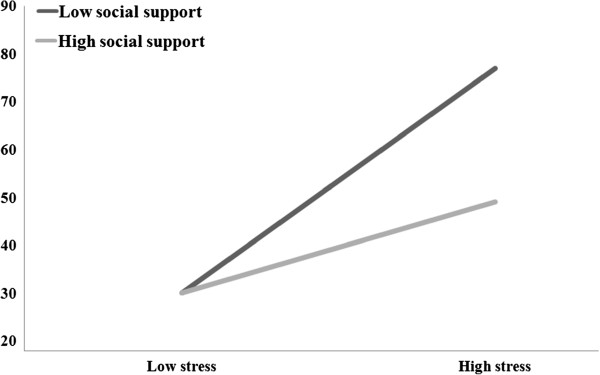
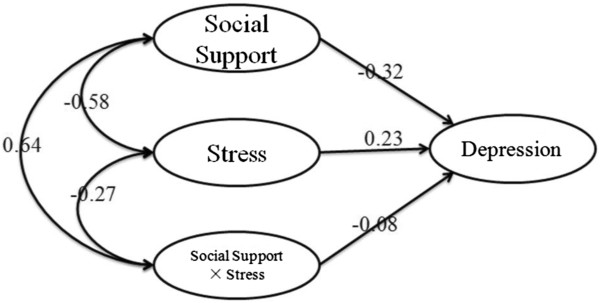
This study examined the moderator effect of social support on the relationship between stress and depression of university students. A total of 632 undergraduate students completed the measures of perceived stress, perceived social support, and depression. Hierarchical regression analysis showed that social support moderated the association between stress and depression. Undergraduate students with high stress reported higher scores in depression than those with low stress with low social support level. However, the impact of stress on depression was much smaller in the high social support group compared with that in the low social support group.
Overview
The claims and statistics of this paper haven’t been checked yet.
Free: it reads the open-access text and checks the first 5 claims that cite a source we can check. Create a free account to check every claim.
Integrity signals
Registry
Cites
Statistics
Figures
Verification
Claims the paper makes
The claims and statistics of this paper haven’t been checked yet.
Free: it reads the open-access text and checks the first 5 claims that cite a source we can check. Create a free account to check every claim.
Claims other papers make about this one
Each is checked against this paper’s own text: does it say what the citing paper says it does?
The source backs part of the claim, not all of it — or backs it for a different population, condition or comparison.
In the citing paper
“It has been reported that MDD patients often lack social support, and receiving adequate social support can confer greater resistance to stress and prevent the occurrence and recurrence of MDD. 330 , 331”
From Major depressive disorder: hypothesis, mechanism, prevention and treatment (2024) · cites this paper as [331]
Experimental — accuracy not yet measuredThe source backs part of the claim, not all of it — or backs it for a different population, condition or comparison.
In the citing paper
“This finding suggests that functional support may be an important protective factor against MDD. 331 , 335”
From Major depressive disorder: hypothesis, mechanism, prevention and treatment (2024) · cites this paper as [331]
Experimental — accuracy not yet measuredThe source backs part of the claim, not all of it — or backs it for a different population, condition or comparison.
In the citing paper
“Studies have reported that when controlling for all other variables, each aspect of social support is clearly associated with MDD, and to some extent, the occurrence of panic disorder in patients with MDD is more strongly associated with poor functional support.”
From Major depressive disorder: hypothesis, mechanism, prevention and treatment (2024) · cites this paper as [331]
Experimental — accuracy not yet measuredThe source backs part of the claim, not all of it — or backs it for a different population, condition or comparison.
In the citing paper
“Being able to turn to others and experience others as helpful is commonly regarded as a resource that buffers depression, anxiety and stress [7, 116].”
From The development of compassionate engagement and action scales for self and others (2017) · cites this paper as [116]
Experimental — accuracy not yet measuredIn the citing paper
“In a recent study of 632 students, Wang et al. [116] found that social support significantly moderated the effect of stress on depression.”
From The development of compassionate engagement and action scales for self and others (2017) · cites this paper as [116]
Self-check
Percentages, sums and reported differences re-computed from the paper’s own numbers.
The self-check needs the paper’s full text.
Citations
Cites
Baron, R. M., & Kenny, D. A. (1986) · Journal of Personality and Social Psychology · doi:10.1037/0022-3514.51.6.1173 · Cited by 91,532 · cited 1×
“Hierarchical regression procedures were performed to test the moderating effect of social support on the relationship of stress and depression [30].”
MethodThe Multidimensional Scale of Perceived Social Support
Zimet, G. D., Dahlem, N. W., Zimet, S. G., & Farley, G. K. (1988) · Journal of Personality Assessment · doi:10.1207/s15327752jpa5201_2 · Cited by 13,339
A self-rating depression scale
ZUNG, W. W. K. (1965) · Archives of General Psychiatry · doi:10.1001/archpsyc.1965.01720310065008 · Cited by 9,813 · cited 2×
“SDS, developed by Zung [27], is a self-report measure of depression consisting of 20 items, with a four-point scale ranging from (1) a little of the time to (4) most of the time.”
BackgroundMechanisms Linking Social Ties and Support to Physical and Mental Health
Thoits, P. A. (2011) · Journal of Health and Social Behavior · doi:10.1177/0022146510395592 · Cited by 4,076
Testing moderator and mediator effects in counseling psychology research.
Frazier, P. A., Tix, A. P., & Barron, K. E. (2004) · Journal of Counseling Psychology · doi:10.1037/0022-0167.51.1.115 · Cited by 4,037 · cited 1×
“The social support and stress variables were standardized before testing for moderating effect to reduce problems related to multicolinearity between the interaction term and the main effects [31].”
MethodEpidemiology of women and depression
Kessler, R. (2003) · Journal of Affective Disorders · doi:10.1016/s0165-0327(02)00426-3 · Cited by 2,006 · cited 1×
“depression have a dose-response relationship [13,14].”
A systematic review of studies of depression prevalence in university students
Ibrahim, A. K., Kelly, S. J., Adams, C. E., & Glazebrook, C. (2013) · Journal of Psychiatric Research · doi:10.1016/j.jpsychires.2012.11.015 · Cited by 1,988 · cited 1×
“Previous studies have found that depressive symptoms are widespread in college students [7].”
BackgroundMental health problems and help-seeking behavior among college students
Hunt, J., & Eisenberg, D. (2010) · Journal of Adolescent Health · doi:10.1016/j.jadohealth.2009.08.008 · Cited by 1,949 · cited 1×
“Studies that focus on college students’ mental health problems are gradually increasing because of significant increase in the incidence of mental disorder among college students [1-3].”
BackgroundPosttraumatic stress disorder: the burden to the individual and to society.
Kessler, R. C. (2000) · PubMed · Cited by 1,714
KOSSEK, E. E., PICHLER, S., BODNER, T., & HAMMER, L. B. (2011) · Personnel Psychology · doi:10.1111/j.1744-6570.2011.01211.x · Cited by 1,284 · cited 1×
“[41-43].”
Cited by
Items 101–200 of 308
Desrumaux, P., Hellemans, C., Malola, P., & Jeoffrion, C. (2021) · Le travail humain · doi:10.3917/e.th.843.0233 · Cited by 17
Kim, Y., Lee, H., & Lee, M. (2022) · International Journal of Public Health · doi:10.3389/ijph.2022.1604643 · Cited by 20
“In addition to the direct effect of social support on mental health, perceived social support significantly moderates the effect of perceived discrimination [15], stress [16], and job stressors on depression [17].”
BackgroundMiao, Y.-F., Dong, X., Li, D., Zhang, T., Wu, Y., & Pan, C. (2023) · Journal of Affective Disorders · doi:10.1016/j.jad.2023.08.045 · Cited by 17
Effect of counselling with men on perceived stress and social support of their pregnant wives
Mohammadpour, M., Mohammad‐Alizadeh‐Charandabi, S., Malakouti, J., Mohammadi, M. N., & Mirghafourvand, M. (2020) · Journal of Reproductive and Infant Psychology · doi:10.1080/02646838.2020.1792428 · Cited by 22
“High stress and low levels of social support are two important factors in the incidence and prevalence of depression (Wang et al., 2014).”
BackgroundKim, J., Han, A., Piatt, J. A., & Kim, J. (2020) · Health Promotion Perspectives · doi:10.34172/hpp.2020.59 · Cited by 19
Werneck, A. O., Stubbs, B., Kandola, A. A., Hamer, M., & da Silva, D. R. P. (2021) · Journal of Psychiatric Research · doi:10.1016/j.jpsychires.2021.05.049 · Cited by 18
Redityani, N. L. P. A., & Susilawati, L. K. P. A. (2021) · Jurnal Psikologi Udayana · doi:10.24843/jpu.2021.v08.i01.p09 · Cited by 40
Liu, D. (2016) · Current Psychology · doi:10.1007/s12144-016-9520-5 · Cited by 19
“, family, relatives, and friends), that reflects one’s closeness with social relations (Muschalla et al. 2009; Oh et al. 2014; Wang et al. 2014).”
BackgroundHuda, N., Shaw, M. K., Chang, H., Erwin, E., Putri, S. T., & Pranata, S. (2024) · BMC Public Health · doi:10.1186/s12889-024-17863-w · Cited by 29
“Moreover, the power of spirituality in conjuncture with social support may reinforces someone’s coping when facing problems [40, 41].”
BackgroundCosta‐Cordella, S., Vivanco-Carlevari, A., Rossi, A., Arévalo-Romero, C. A., & Silva, J. R. (2022) · International Journal of Public Health · doi:10.3389/ijph.2022.1604401 · Cited by 20
“, the presence of a significant other dampens the HPA axis stress response) that would modulate the response in front of stressors diminishing depressive symptoms and improving mood [17, 19].”
BackgroundKim, K., Jung, S. J., Cho, S. M. J., Park, J. H., & Kim, H. C. (2019) · Journal of Preventive Medicine and Public Health · doi:10.3961/jpmph.19.114 · Cited by 17
“Stratification by representative values of participants was used in several previous related studies of Asian young adults, including Korean medical students [26,27].”
BackgroundResultArı, E., Soysal, G. C., Basran, J. K., & Gilbert, P. (2022) · Frontiers in Psychology · doi:10.3389/fpsyg.2022.780077 · Cited by 15
Liu, H., Tan, Q., & Mai, H. (2023) · International Journal of Environmental Research and Public Health · doi:10.3390/ijerph20032342 · Cited by 20
Luo, Y., & Sato, Y. (2021) · Healthcare · doi:10.3390/healthcare9030258 · Cited by 23
University students coping with COVID-19 challenges: Do they need help?
Schiff, M., Pat‐Horenczyk, R., & Benbenishty, R. (2022) · Journal of American College Health · doi:10.1080/07448481.2022.2048838 · Cited by 15
“30,31 In the context of the COVID-19 pandemic, providing social support could be challenging because of requirements for social distancing and frequent closures.”
BackgroundRichdale, A., Chetcuti, L., Hayward, S., Abdullahi, I., Morris, E., & Lawson, L. (2023) · Autism Research · doi:10.1002/aur.2899 · Cited by 13
“, 2020); and social supports moderated the relationship between stress and depression in university students (Wang et al., 2014).”
BackgroundEdison, S., & Haynie, D. L. (2023) · Women & Criminal Justice · doi:10.1080/08974454.2023.2246955 · Cited by 22
“Moreover, social support can be particularly protective in buffering the experience of traumatic events, such as victimization (Kelman et al., 2022; Wang et al., 2014; Wilks, 2008).”
Patil, D. M., Bajaj, A., Supraja, T. A., Chandra, P. S., & Satyanarayana, V. A. (2021) · Archives of Women s Mental Health · doi:10.1007/s00737-021-01111-w · Cited by 15
“Social support has been found to be an important predictor for mental health and has been proposed to affect the association between ACEs and mental health, with a recent study conducted in South India finding it moderated the association between life events and postpartum depressive symptoms (Gariépy et al. 2016; Kis…”
ResultSingh, J., Kumar, P., & Kar, S. K. (2021) · SpringerBriefs in psychology · doi:10.1007/978-3-030-70726-2_2 · Cited by 19
Depression in Female Veterans Returning from Deployment: The Role of Social Factors
Sairsingh, H. A., Solomon, P., Helstrom, A. W., & Treglia, D. (2017) · Military Medicine · doi:10.1093/milmed/usx065 · Cited by 13
Social support and bidimensional mental health among primary-level teachers during COVID-19 crisis
Casanova, B. E. C., Felix, C. A. C., Balingit, N. D. Z., de Vera, A. M. F., Briones, M. D. M., & Aruta, J. J. B. R. (2022) · International Journal of School & Educational Psychology · doi:10.1080/21683603.2022.2105998 · Cited by 16
“For instance, higher levels of social support were associated with lower depressive symptoms among college students in the US (Hefner & Eisenberg, 2009) and China (X. Wang et al., 2014).”
BackgroundWang, S., Li, J., Zhao, X., Zhou, M., Zhang, Y., Yu, L., Yang, Z., & Yang, J. (2023) · Journal of Psychiatric Research · doi:10.1016/j.jpsychires.2023.10.051 · Cited by 14
Hale-Gallardo, J. L., Kreider, C. M., Castañeda, G., LeBeau, K., Varma, D. S., Knecht, C., Ripley, D. C., & Jia, H. (2022) · International Journal of Environmental Research and Public Health · doi:10.3390/ijerph192013447 · Cited by 15
Yamada, Y., Ćepulić, D., Coll‐Martín, T., Debove, S., Gautreau, G., Han, H., Rasmussen, J. S., Tran, T. P., Travaglino, G. A., & Lieberoth, A. (2020) · PsyArXiv (OSF Preprints) · doi:10.31234/osf.io/v7cep · Cited by 13
Ghassemi, E. Y., Thorseth, A. H., Roch, K. L., Heath, T., & White, S. (2023) · PLoS ONE · doi:10.1371/journal.pone.0286494 · Cited by 12
Tang, L., Zhang, C., & Cui, Y. H. (2025) · Psychology in the Schools · doi:10.1002/pits.23405 · Cited by 19
“In Wang et al.'s (2014) study, social support played a significant moderating role in the relationship between stress and depression among students.”
Bhuiyan, N., Kang, J. H., Papalia, Z., Bopp, C. M., Bopp, M., & Mama, S. K. (2020) · Journal of American College Health · doi:10.1080/07448481.2020.1810055 · Cited by 12
Yu, S., Yao, X., Sang, Y., Yu, L., Shen, Y., Che, X., Ding, Y., & Huang, Y. (2022) · Nursing Open · doi:10.1002/nop2.1408 · Cited by 11
“A literature review indicated that social support systems are important protective factors for individuals experiencing adversity or stressful events (Wang et al., 2014).”
BackgroundScheunemann, A., Kim, A. W., Moolla, A., & Subramaney, U. (2023) · PLOS ONE · doi:10.1371/journal.pone.0277392 · Cited by 11
“Social support was one of the most endorsed coping strategies [15], which is notable in the role that relationships may play in decreasing the risk of mortality [44] and mental health issues [45, 46].”
BackgroundSeixas, A. A., James, C., Jean‐Louis, G., Butler, M. J., Zizi, F., & Gardner, A. A. (2015) · Journal of Depression & Anxiety · doi:10.4172/2167-1044.1000194 · Cited by 13
“Other studies have found that social support may generally protect an individual from serious mental illness or facilitate greater recovery and symptom reduction from comorbid posttraumatic stress and depression [30-34].”
BackgroundThe Correlation of Sexual Dysfunction with Prenatal Stress and Quality of Life: A Path Analysis
Alidost, F., Dolatian, M., Shams, J., Nasiri, M., & Sarkhoshpour, E. (2017) · Iranian Red Crescent Medical Journal · doi:10.5812/ircmj.55686 · Cited by 12
“Not only do these events lead to physiological responses, but also cause behavioral changes, including loss of appetite, reduced sexual activity, and increased feelings of depression, anxiety, aggression, and irritation (44, 45).”
BackgroundVameghi, R., Akbari, S. A. A., Sajjadi, H., Sajedi, F., & Majd, H. A. (2017) · International Journal of Women s Health and Reproduction Sciences · doi:10.15296/ijwhr.2018.47 · Cited by 11
“Wang et al found that people with lower levels of social support suffer from greater levels of stress and depression (60).”
BackgroundLindsey, S., Hiskey, S., Irons, C., & Andrews, L. (2022) · OBM Integrative and Complementary Medicine · doi:10.21926/obm.icm.2203039 · Cited by 10
Aliche, C. J., Idemudia, E. S., & Uche, P. (2024) · OMEGA - Journal of Death and Dying · doi:10.1177/00302228241302195 · Cited by 12
“Thus, Wang et al. (2014) has proposed that social support may be an important factor that could potentially moderate the relationship.”
Kang, M., Joo, M., Hong, H., & Kang, H. (2021) · Nutrients · doi:10.3390/nu13082626 · Cited by 14
Moulis, L., Le, S. M., Hai, V. V., Hương, D. T., Minh, K. P., Oanh, K. T. H., Rapoud, D., Quillet, C., NhamThi, T. T., Vallo, R., et al. (2023) · Frontiers in Psychiatry · doi:10.3389/fpsyt.2023.1233844 · Cited by 9
“Similarly, social support, as defined in our study as being in a relationship, was a protective factor for depression, probably because of both its social and its emotional support impacts (60, 61).”
BackgroundAdam‐Troian, J., Bonetto, É., Varet, F., Arciszewski, T., & Dezecache, G. (2021) · Evolutionary Behavioral Sciences · doi:10.1037/ebs0000202 · Cited by 8
Bosmans, G., de Walle, M. V., Bijttebier, P., Winter, S. D., Heylen, J., Ceulemans, E., & Raedt, R. D. (2020) · Psychologica Belgica · doi:10.5334/pb.550 · Cited by 10
Zhang, M., Wu, Y., Ji, C., & Wu, J. (2022) · International Journal of Environmental Research and Public Health · doi:10.3390/ijerph19063348 · Cited by 12
Ooi, H. X., Hamzah, A. B., & Thien, L. M. (2023) · Participatory Educational Research · doi:10.17275/per.23.49.10.3 · Cited by 20
Xie, Z.-L., Kai-peng, G., Li, J., Qin, L.-W., & Wu, Y. (2025) · BMC Public Health · doi:10.1186/s12889-025-23759-0 · Cited by 22
“Specifically, loneliness may provoke PIU, which in turn escalates the risk of depression, while perceived social support plays a critical role in preventing the onset of depression, reducing its severity, and alleviating depressive symptoms [6, 9, 15, 16, 31].”
InfluentialHassan, S.-U.-N., KHURSHID, E., & Batool, S. (2021) · NUST Journal of Social Sciences and Humannities · doi:10.51732/njssh.v1i1.3 · Cited by 12
Tegegne, S. S., & Fentie, Y. (2022) · Frontiers in Psychiatry · doi:10.3389/fpsyt.2022.965035 · Cited by 8
“is under stress, a lack of strong social support will make him/her underestimate the problem and results in enhancing their perceived complications (38).”
BackgroundLiu, Z., Zhao, L., Wang, S., Gao, Y., & Zhang, L. (2022) · International Journal of Environmental Research and Public Health · doi:10.3390/ijerph192416750 · Cited by 12
Exploring self‐care practices of African American informal kinship caregivers
Washington, T., Walton, Q. L., Kaye, H., Hong, J. S., & Cook, B. L. (2023) · Child & Family Social Work · doi:10.1111/cfs.13047 · Cited by 10
Parental conflict and cyberbullying among Chinese adolescents: A moderated mediation analysis
He, D., Liu, Q., & Li, X. (2023) · Children and Youth Services Review · doi:10.1016/j.childyouth.2023.107084 · Cited by 9
Matulessy, A., Saragih, S., Nawafil, N., Perdana, H., & Pandin, M. G. R. (2021) · Preprints.org · doi:10.20944/preprints202101.0013.v1 · Cited by 8
“This is supported by the research of Wang et al. (2014) who found that student groups receiving high social support will effect on reducing stress levels that lead to depression.”
Jonsson, E., & Dennhag, I. (2023) · Scandinavian Journal of Child and Adolescent Psychiatry and Psychology · doi:10.2478/sjcapp-2023-0012 · Cited by 9
“Research has shown that the ability to receive compassion from others buffers symptoms of depression, anxiety, and stress (37, 38) and that compassionate social support has a significant impact on resilience to stress and on the outcomes of numerous medical illnesses (39).”
BackgroundGeller, K. S., Capito, A. M., & Marsh, Z. T. (2024) · MOJ Sports Medicine · doi:10.15406/mojsm.2024.07.00154 · Cited by 15
Chan, S., Chung, G. K.-K., Chan, Y.-H., Lee, T. S.-K., Chen, J., Wong, H., Chung, R. Y., Chen, Y., & Ho, E. S. C. (2024) · European Journal of Psychology of Education · doi:10.1007/s10212-024-00882-x · Cited by 11
“Interpersonal connections and social support have been shown to avoid unforeseen crises (Sheldon Cohen, 1984; Wang et al., 2014).”
Živčić–Bećirević, I., Smojver‐Ažić, S., Dorčić, T. M., & Birovljević, G. (2021) · Drustvena istrazivanja · doi:10.5559/di.30.2.06 · Cited by 14
Self-perceived loneliness and depression during the Covid-19 pandemic: a two-wave replication study
Carollo, A., Bizzego, A., Gabrieli, G., Wong, K. K., Raine, A., & Esposito, G. (2022) · UCL Open Environment · doi:10.14324/111.444/ucloe.000051 · Cited by 12
Morton, S. C. M., Everhart, R. S., Dautovich, N. D., & Chukmaitov, A. S. (2023) · Journal of American College Health · doi:10.1080/07448481.2023.2286462 · Cited by 8
“…both perceived availability and actual received social support can both have a positive impact on coping with stress and mental health, 22,23,55,56 the different aspects of social support may operate through fundamentally different mechanisms to influence the association between discrimination…”
Amin, A., Hong, Y., & Mazhar, B. (2025) · International Journal of Human-Computer Interaction · doi:10.1080/10447318.2025.2537788 · Cited by 7
“It is well-established that individuals who have access to strong social support networks are better able to cope with stress and manage difficult emotions (Wang et al., 2014).”
Bai, H., Wang, G., & Hu, Y. (2025) · Acta Psychologica · doi:10.1016/j.actpsy.2025.104985 · Cited by 8
Barrett, B. W., Abraham, A. G., Dean, L. T., Plankey, M. W., Friedman, M. R., Jacobson, L. P., Teplin, L. A., Gorbach, P. M., & Surkan, P. J. (2020) · Social Psychiatry and Psychiatric Epidemiology · doi:10.1007/s00127-020-01940-7 · Cited by 6
COVID-19 Concern and Stress in Bangladesh: Perceived Social Support as a Predictor or Protector
Uddin, M. K., Islam, M. N., & Ahmed, O. (2022) · Trends in Psychology · doi:10.1007/s43076-022-00158-7 · Cited by 7
“There are a number of studies on the relationship between perceived social support and psychological problems such as stress, anxiety, and depression (e.g., Awang et al., 2014; Bukhari & Afzal, 2017; Safree et al., 2010; Wang et al., 2014).”
dos Santos, S. B., Machado, W. D. L., Fernandez, L. L., de Pádua, A. C., Hoffmann, S., Calvetti, P. Ü., Schaab, B. L., & Reppold, C. T. (2023) · Psicologia Reflexão e Crítica · doi:10.1186/s41155-022-00244-w · Cited by 11
“Corroborating with the findings described on this construct, studies suggest that the impact of stress on depression can be reduced in individuals with greater social support, avoiding the feeling of loneliness (Faramarzi et al., 2015; Wang et al., 2014).”
ResultMajor depressive disorder in post-secondary students attending foodbanks in France
Ramblière, L., Leservoisier, C., Bedo, Y., Macalli, M., Lebugle, A., Douay, C., & Guénée, L. (2023) · Frontiers in Public Health · doi:10.3389/fpubh.2023.1177617 · Cited by 6
“Social support, self-esteem and self-rated health are closely correlated, with one predicting the other (30, 31).”
BackgroundMpinga, K., Rukundo, T., Mwale, O., Kamwiyo, M., Thengo, L., Ruderman, T., Matanje, B., Munyaneza, F., Connolly, E., Kulisewa, K., et al. (2023) · Global Health Action · doi:10.1080/16549716.2023.2241808 · Cited by 7
“that increasing social support, either through formal mental health services or informally within the family unit, can alleviate depression symptoms [43,45,46].”
Backgroundvon Keyserlingk, L., Moeller, J., Heckhausen, J., Eccles, J. S., & Arum, R. (2023) · Zeitschrift für Erziehungswissenschaft · doi:10.1007/s11618-023-01185-5 · Cited by 12
“In summary, as predicted, perceived social support during their fall term predicts students’ well-being in stressful situations (Fruehwirth et al. 2021; Gopalan et al. 2022; Wang et al. 2014).”
InfluentialFamily Social Support and Behavior of Children with Caries in Doing Dental and Oral Care
Indrianingsih, N., Prasetyo, Y. B., & Kurnia, A. D. (2018) · Jurnal Keperawatan · doi:10.22219/jk.v9i2.5480 · Cited by 6
Sule, H. M. (2019) · International Journal of HIV/AIDS Prevention Education and Behavioural Science · doi:10.11648/j.ijhpebs.20190501.19 · Cited by 7
Werneck, A. O., Schuch, F. B., Fernandes, R. A., Stubbs, B., Szwarcwald, C. L., & da Silva, D. R. P. (2021) · Mental health and physical activity · doi:10.1016/j.mhpa.2021.100390 · Cited by 7
Network Learning Approaches to study World HappinessPreprint
Dixit, S., Chaudhary, M., & Sahni, N. (2020) · arXiv (Cornell University) · doi:10.48550/arxiv.2007.09181 · Cited by 18
“Further, social support has been shown to reduce negative affect [[49]; [7]].”
Chen, J., He, X., Shen, Y., Zhao, Y., Cui, C., & Liu, Y. (2022) · Frontiers in Psychology · doi:10.3389/fpsyg.2022.948653 · Cited by 5
Zhang, S. Y., Jin, W., Fan, S., Wang, Q., Liu, Y., Fu, Z., Zhang, Q., Jiang, N., & Wang, J. (2025) · Schizophrenia Research · doi:10.1016/j.schres.2025.03.024 · Cited by 8
Wang, G., Fram, N. R., Carstensen, L. L., & Berger, J. (2022) · Frontiers in Sociology · doi:10.3389/fsoc.2022.848098 · Cited by 5
Perceived social support attenuates increased hostile reactions to traumatic threat
Napolitano, S. C., Balling, C. E., Peckinpaugh, I. K., Samuel, D. B., & Lane, S. P. (2023) · Journal of Clinical Psychology · doi:10.1002/jclp.23567 · Cited by 8
“Research indicates that increased perceived social support uniquely buffers against the pernicious effects of stress, such that the more perceived social support an individual reports, the more that support buffers against significant psychological distress (Olstad et al., 2001; Wang et al., 2014).”
Shah, S. A. A., Ye-zhuang, T., Shah, A. M., & Mamirkulova, G. (2020) · International Journal of Mental Health and Addiction · doi:10.1007/s11469-020-00440-8 · Cited by 6
“In the second step, the Pearson correlation was conducted among the study variables and hierarchical regression was used for testing the moderating role of emotional intelligence on the association between fear of terror and personal burnout (Wang et al. 2014).”
MethodCunningham, L. D., Salgado, E., Aalsma, M. C., Garabrant, J. M., Staples, J. K., Gordon, J. S., & Salyers, M. P. (2021) · BMC Pediatrics · doi:10.1186/s12887-021-02942-3 · Cited by 7
Edison, S., & Haynie, D. L. (2024) · Criminal Justice and Behavior · doi:10.1177/00938548241268008 · Cited by 7
“…assessed through one of two methods: a subjective evaluation of an individual’s sense of social belonging in a particular environment or a quantitative count of their social connections to others within that context (Brissette et al., 2000; Seeman et al., 2002; Thoits, 1995; Wang et al., 2014).”
InfluentialIslas-Cota, E., Acosta, C. O., & Rodríguez, L.-F. (2022) · IEEE/WIC/ACM International Conference on Web Intelligence and Intelligent Agent Technology (WI-IAT) · doi:10.1109/wi-iat55865.2022.00112 · Cited by 6
“Thus, high levels of SS make it easier to establish better self-esteem, increase the perception of their ability to cope with stress, and reinforce the perception of their ability to solve problems and minimize the severity of stressors [44].”
BackgroundLiu, H., Fu, L., Liang, X., Zhang, J., Zhang, L., Zhai, Y., & Zhao, J. (2025) · BMC Psychology · doi:10.1186/s40359-025-02945-0 · Cited by 8
“Among the risk factors, family variables, such as the parent–child relationship, are especially important [84], considering that family is the first microsystem for children and has immense influence on their psychological development.”
Zhang, Z., Liu, W., Zhang, C., & Sun, L. (2025) · Frontiers in Public Health · doi:10.3389/fpubh.2025.1625269 · Cited by 10
“This self-imposed isolation and sense of loneliness stem not only from negative interactions within the family but can also extend to broader interpersonal relationships (45).”
Setyawan, H., Denny, H. M., Nurjazuli, N., & Dewi, E. K. (2022) · The Open Public Health Journal · doi:10.2174/18749445-v15-e2210190 · Cited by 10
Exploring Well-being in College Students: The Influence of Resilience and Social Support
Calonia, J. T., Javier, J. A., Umpa, P. M. M., Lantican, R. L., Barber, K. F. E., & Marquez, N. R. A. (2024) · International Journal of Innovative Science and Research Technology (IJISRT) · doi:10.38124/ijisrt/ijisrt24may2411 · Cited by 9
“Additionally, Farrell & Langrehr (2017) and Wang et al. (2014) emphasized that students are embedded in a network of connections that provide them with substantial emotional and practical backing.”
BackgroundA dance movement therapy intervention with adolescent victims of trauma in Mumbai
Chettiar, C., & Mascarenhas, C. (2024) · Body Movement and Dance in Psychotherapy · doi:10.1080/17432979.2024.2411958 · Cited by 5
“Research shows that subjective perception that support would be available if needed may reduce and prevent depression (Wang et al., 2014).”
Aljamili, A. A., Alyousif, L., Barhoush, M. M., & Almasoud, R. (2024) · Journal of Family Medicine and Primary Care · doi:10.4103/jfmpc.jfmpc_1824_23 · Cited by 5
Bina, R., Levy, D., Alfayumi‐Zeadna, S., Mesquita, A. R., Costa, R. A., Domínguez‐Salas, S., Wilson, C. A., Osório, A., Vousoura, E., Uka, A., et al. (2025) · Midwifery · doi:10.1016/j.midw.2025.104295 · Cited by 5
Peng, J., Zhang, J., Zhao, K., Wang, X., Wu, Y. Q., Fang, P., & Lv, J. (2021) · Frontiers in Psychology · doi:10.3389/fpsyg.2021.677015 · Cited by 4
Self-citationTaştan, S. B. (2021) · Sosyal Politika Çalışmaları Dergisi · doi:10.21560/spcd.vi.881001 · Cited by 5
Feeling Fat and Depressed? Dimensions of Self‐Concept That Affect Men
McGregor, C. C., Kaminski, P. L., & McFarland, M. B. (2020) · Journal of College Counseling · doi:10.1002/jocc.12155 · Cited by 5
Factors Affecting the Mental Well-Being of Undergraduate Students in Karachi
Ismail, Z., & Shujaat, N. (2018) · Advances in Social Sciences Research Journal · doi:10.14738/assrj.53.3704 · Cited by 8
Ferguson, S. E., Nelson, J. A., & Duffy, M. C. (2024) · Journal of College Student Mental Health · doi:10.1080/28367138.2024.2393394 · Cited by 4
“Recent evidence has shown social support acts as a significant moderator between stress and depressive symptoms among Chinese college students (Shi, 2021; Wang et al., 2014).”
ALGILANAN TOPLUMSAL DESTEK ÖLÇEĞİ’NİN TÜRKÇE FORMU PSİKOMETRİK ÖZELLİKLERİNİN İNCELENMESİ
Aydoğan, D., Eryigit‐Madzwamuse, S., Demir, Ö. O., Aksu, G., & Özdemir, Y. (2024) · Sosyal Politika Çalışmaları Dergisi · doi:10.21560/spcd.vi.1394842 · Cited by 4
Factors associated with depressive disorders in college students using quantile regression analysis
Xu, H., Zhang, C., Wang, Z., Zhang, C., Peng, L., & Liu, X. (2025) · BMC Psychiatry · doi:10.1186/s12888-025-07334-w · Cited by 5
Doku, P. N., Ananga, M. K., Jehu-Appiah, N., Mensah, K. A., Debrah, T. P., & Nsatimba, F. (2023) · PLOS Global Public Health · doi:10.1371/journal.pgph.0001599 · Cited by 3
“Thurman & Kidman [48] suggested that education will increase parents’ empathy and alleviate frustrations.”
BackgroundInfluentialKalkan, F., & Cemaloğlu, N. (2023) · International Journal of Contemporary Educational Research · doi:10.52380/ijcer.2023.10.2.485 · Cited by 6
“Wang et al. (2014), on the other hand, found that teacher support has a positive effect on student happiness and satisfaction.”
Depression and Social Support in Mothers of Children with Cerebral Palsy: A Longitudinal Study
Park, E. (2023) · Journal of Child and Family Studies · doi:10.1007/s10826-023-02668-z · Cited by 6
“The dominant view on the relationship between social support and depression is that low social support increases the risk of depression (Stice et al., 2004; Wang et al., 2014).”
Yang, M., Pérez‐Rojas, A. E., & Miller, M. J. (2024) · Counselling Psychology Quarterly · doi:10.1080/09515070.2024.2304299 · Cited by 6
“For instance, Shi (2021) and Wang, Cai, Qian, and Peng (2014) discovered that social support was a significant moderator of the relationship between stress and depression among Chinese college students.”
Wang, Z. (2025) · Frontiers in Psychology · doi:10.3389/fpsyg.2025.1502128 · Cited by 4
“Students’ perceived social support, on the other hand, refers to the recognition and motivation that students receive from their families, teachers, and peers (Wang et al., 2014).”
An Illustration of Interpersonal Psychotherapy for Perinatal Depression
Tan, H. J. R. (2020) · Case Reports in Psychiatry · doi:10.1155/2020/8820849 · Cited by 3
Batubara, M., Meidina, A., & Rahman, S. S. (2022) · Indonesian Psychological Research · doi:10.29080/ipr.v4i2.729 · Cited by 3
Leshem, B., Kashy‐Rosenbaum, G., Schiff, M., Benbenishty, R., & Pat‐Horenczyk, R. (2023) · International Journal of Environmental Research and Public Health · doi:10.3390/ijerph20042799 · Cited by 4
Drew, A. L., Gregus, S. J., Steggerda, J. C., Slep, A. M. S., Herrera, C., Cavell, T. A., & Spencer, R. (2023) · Military Psychology · doi:10.1080/08995605.2023.2187165 · Cited by 5
“Likewise, although social support moderates youths’ experiences of stress and depression (Wang et al., 2014), if youth with preexisting mental health concerns had limited access to support from peers or adults, their symptoms may have been exacerbated (Fegert et al., 2020).”
BackgroundForoughi, A., Khanjani, S., Naseri, M., & Goodarzi, G. (2023) · Iranian Journal of Psychiatry and Behavioral Sciences · doi:10.5812/ijpbs-120516 · Cited by 4
“Seeking social support is positively correlated with a higher quality of life in children and adolescents (36), higher resilience against stress (37), lower reactivity in adolescents (38), and lower stress and depression levels (39).”
BackgroundHatimah, N. A., Dewi, E. M. P., Halima, A., & Basti, B. (2023) · KnE Social Sciences · doi:10.18502/kss.v8i19.14368 · Cited by 3
“As an important environmental resource in an individual’s social life, social support affects a person’s physical and mental health and behavior patterns, and has a very close relationship with the generation, development, control, and prevention of depression [30].”
BackgroundDepression as an outcome or cause of sexual dysfunctions: A review study
Bağlama, B. (2017) · Global Journal of Psychology Research New Trends and Issues · doi:10.18844/gjpr.v7i3.2857 · Cited by 3
Tomai, M., & Lauriola, M. (2022) · Frontiers in Psychology · doi:10.3389/fpsyg.2022.773447 · Cited by 4
Metadata
- Authors
- Wang, X., Cai, L., Qian, J., & Peng, J.
- Affiliations
- Kunming University (CN)
- Beijing Normal University (CN)
- Air Force Medical University (CN)
- Corresponding author
- Qian, Jing
- Peng, Jiaxi
- Venue
- International Journal of Mental Health Systems
- Published
- 2014-11-13
- Volume
- 8
- Issue
- 1
- Pages
- 41-41
- ISSN
- 1752-4458 (ISSN-L)
- PMC
- PMC4242489
- OpenAlex
- W2103274674
- Cited by
- 309
- References
- 45
- Citations by year
- 2026: 17 · 2025: 26 · 2024: 24 · 2023: 39 · 2022: 45 · 2021: 48 · 2020: 36 · 2019: 22 · 2018: 18 · 2017: 16 · 2016: 11 · 2015: 6 · 2014: 1
- FWCI
- 26.53
- Type
- journal article
- Language
- en
- Open access
- gold
- doi.org
- Licence
- cc-by
- Locations
- International Journal of Mental Health Systems (publishedVersion, cc-by)
- Europe PMC (PubMed Central) (publishedVersion, cc-by)
- PubMed Central (publishedVersion, cc-by)
- PubMed (publishedVersion)
- Topics
- Social Sciences › Psychology › Developmental and Educational Psychology › Student Stress and Coping
- Social Sciences › Psychology › Clinical Psychology › Health and Well-being Studies
- Social Sciences › Psychology › Social Psychology › Stress and Burnout Research
- Keywords
- social support, perceived stress, depression, moderating effect, university students, undergraduate students, mental health
About these checks
Registry, retraction, Cites and statistics results are computed, not judged, with one exception: a printed reference that no index lists is read once by a model before it counts as a citation error. Claims are extracted by a model and kept only when their quote appears verbatim in the text; each cited source is then checked, with a model’s help, for whether it says what the claim relies on. Those verdicts can be wrong — read the claim’s quote and the cited source before relying on one.
Statistics and arithmetic are recomputed, not judged.
Confidence bands are shown only for fields calibrated on our annotated test set. None is calibrated yet, so no band is shown.
What counts as a claim ›How we measure confidence ›How we check this ›
Are you an author, or do you see a problem with this page? Request a review
Data sources
Bibliographic data: Semantic Scholar, OpenAlex, Crossref.
Contains information from the Semantic Scholar Academic Graph Datasets, made available under the ODC Attribution License (ODC-BY 1.0).
Semantic Scholar’s data is described in: Kinney, R., et al. (2023). The Semantic Scholar Open Data Platform. arXiv:2301.10140.
