

Social support moderates stress effects on depression
Open accessThe DOI matches its Crossref record; 45 of the 45 references it cites were found in a registry or an index.
Abstract
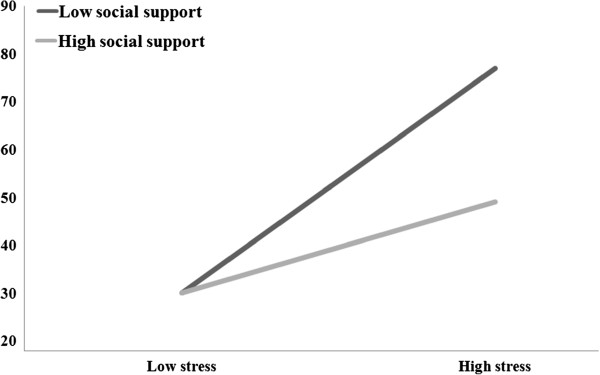
This study examined the moderator effect of social support on the relationship between stress and depression of university students. A total of 632 undergraduate students completed the measures of perceived stress, perceived social support, and depression. Hierarchical regression analysis showed that social support moderated the association between stress and depression. Undergraduate students with high stress reported higher scores in depression than those with low stress with low social support level. However, the impact of stress on depression was much smaller in the high social support group compared with that in the low social support group.
Overview
The claims and statistics of this paper haven’t been checked yet.
Free: it reads the open-access text and checks the first 5 claims that cite a source we can check. Create a free account to check every claim.
Integrity signals
Registry
Cites
Statistics
Figures
Verification
Claims the paper makes
The claims and statistics of this paper haven’t been checked yet.
Free: it reads the open-access text and checks the first 5 claims that cite a source we can check. Create a free account to check every claim.
Claims other papers make about this one
Each is checked against this paper’s own text: does it say what the citing paper says it does?
The source backs part of the claim, not all of it — or backs it for a different population, condition or comparison.
In the citing paper
“It has been reported that MDD patients often lack social support, and receiving adequate social support can confer greater resistance to stress and prevent the occurrence and recurrence of MDD. 330 , 331”
From Major depressive disorder: hypothesis, mechanism, prevention and treatment (2024) · cites this paper as [331]
Experimental — accuracy not yet measuredThe source backs part of the claim, not all of it — or backs it for a different population, condition or comparison.
In the citing paper
“This finding suggests that functional support may be an important protective factor against MDD. 331 , 335”
From Major depressive disorder: hypothesis, mechanism, prevention and treatment (2024) · cites this paper as [331]
Experimental — accuracy not yet measuredThe source backs part of the claim, not all of it — or backs it for a different population, condition or comparison.
In the citing paper
“Studies have reported that when controlling for all other variables, each aspect of social support is clearly associated with MDD, and to some extent, the occurrence of panic disorder in patients with MDD is more strongly associated with poor functional support.”
From Major depressive disorder: hypothesis, mechanism, prevention and treatment (2024) · cites this paper as [331]
Experimental — accuracy not yet measuredThe source backs part of the claim, not all of it — or backs it for a different population, condition or comparison.
In the citing paper
“Being able to turn to others and experience others as helpful is commonly regarded as a resource that buffers depression, anxiety and stress [7, 116].”
From The development of compassionate engagement and action scales for self and others (2017) · cites this paper as [116]
Experimental — accuracy not yet measuredIn the citing paper
“In a recent study of 632 students, Wang et al. [116] found that social support significantly moderated the effect of stress on depression.”
From The development of compassionate engagement and action scales for self and others (2017) · cites this paper as [116]
Self-check
Percentages, sums and reported differences re-computed from the paper’s own numbers.
The self-check needs the paper’s full text.
Citations
Cites
Baron, R. M., & Kenny, D. A. (1986) · Journal of Personality and Social Psychology · doi:10.1037/0022-3514.51.6.1173 · Cited by 91,532 · cited 1×
“Hierarchical regression procedures were performed to test the moderating effect of social support on the relationship of stress and depression [30].”
MethodThe Multidimensional Scale of Perceived Social Support
Zimet, G. D., Dahlem, N. W., Zimet, S. G., & Farley, G. K. (1988) · Journal of Personality Assessment · doi:10.1207/s15327752jpa5201_2 · Cited by 13,339
A self-rating depression scale
ZUNG, W. W. K. (1965) · Archives of General Psychiatry · doi:10.1001/archpsyc.1965.01720310065008 · Cited by 9,813 · cited 2×
“SDS, developed by Zung [27], is a self-report measure of depression consisting of 20 items, with a four-point scale ranging from (1) a little of the time to (4) most of the time.”
BackgroundMechanisms Linking Social Ties and Support to Physical and Mental Health
Thoits, P. A. (2011) · Journal of Health and Social Behavior · doi:10.1177/0022146510395592 · Cited by 4,076
Testing moderator and mediator effects in counseling psychology research.
Frazier, P. A., Tix, A. P., & Barron, K. E. (2004) · Journal of Counseling Psychology · doi:10.1037/0022-0167.51.1.115 · Cited by 4,037 · cited 1×
“The social support and stress variables were standardized before testing for moderating effect to reduce problems related to multicolinearity between the interaction term and the main effects [31].”
MethodEpidemiology of women and depression
Kessler, R. (2003) · Journal of Affective Disorders · doi:10.1016/s0165-0327(02)00426-3 · Cited by 2,006 · cited 1×
“depression have a dose-response relationship [13,14].”
A systematic review of studies of depression prevalence in university students
Ibrahim, A. K., Kelly, S. J., Adams, C. E., & Glazebrook, C. (2013) · Journal of Psychiatric Research · doi:10.1016/j.jpsychires.2012.11.015 · Cited by 1,988 · cited 1×
“Previous studies have found that depressive symptoms are widespread in college students [7].”
BackgroundMental health problems and help-seeking behavior among college students
Hunt, J., & Eisenberg, D. (2010) · Journal of Adolescent Health · doi:10.1016/j.jadohealth.2009.08.008 · Cited by 1,949 · cited 1×
“Studies that focus on college students’ mental health problems are gradually increasing because of significant increase in the incidence of mental disorder among college students [1-3].”
BackgroundPosttraumatic stress disorder: the burden to the individual and to society.
Kessler, R. C. (2000) · PubMed · Cited by 1,714
KOSSEK, E. E., PICHLER, S., BODNER, T., & HAMMER, L. B. (2011) · Personnel Psychology · doi:10.1111/j.1744-6570.2011.01211.x · Cited by 1,284 · cited 1×
“[41-43].”
Cited by
Major depressive disorder: hypothesis, mechanism, prevention and treatment
Cui, L., Li, S., Wang, S., Wu, X., Liu, Y., Yu, W., Wang, Y., Tang, Y., Xia, M., & Li, B. (2024) · Signal Transduction and Targeted Therapy · doi:10.1038/s41392-024-01738-y · Cited by 1,244
“331,335 Social support itself, especially emotional support, 340 may alleviate and prevent depressive symptoms, and support from family members or friends can replace formal health care.”
BackgroundSocial Networking Sites, Depression, and Anxiety: A Systematic Review
Seabrook, E. M., Kern, M. L., & Rickard, N. S. (2016) · JMIR Mental Health · doi:10.2196/mental.5842 · Cited by 763
“Social support has additionally been shown to moderate relationships between stress and depression, with greater levels of social support acting as a buffer to depressive symptoms [42].”
The development of compassionate engagement and action scales for self and others
Gilbert, P., Catarino, F., Duarte, C., Matos, M., Kolts, R., Stubbs, J., Ceresatto, L., Duarte, J., Pinto-Gouveia, J., & Basran, J. (2017) · Journal of Compassionate Health Care · doi:10.1186/s40639-017-0033-3 · Cited by 527
“In a recent study of 632 students, Wang et al. [116] found that social support significantly moderated the effect of stress on depression.”
BackgroundFamily and Academic Stress and Their Impact on Students' Depression Level and Academic Performance
Deng, Y., Cherian, J., Khan, N. U. N., Kumari, K., Sial, M. S., Comite, U., Gavurova, B., & Popp, J. (2022) · Frontiers in Psychiatry · doi:10.3389/fpsyt.2022.869337 · Cited by 371
“(109) indicated that, among the possible risk factors for depression, family relationships need special consideration since elements like parenting styles and family dynamics influence how children grow.”
BackgroundHuang, L., & Zhang, T. (2022) · The Asia-Pacific Education Researcher · doi:10.1007/s40299-021-00608-3 · Cited by 179
Kupferberg, A., & Hasler, G. (2023) · Journal of Affective Disorders Reports · doi:10.1016/j.jadr.2023.100631 · Cited by 170
The relationships between empathy, stress and social support among medical students
Park, K. H., Kim, D.-H., Kim, S. K., Yi, Y. H., Jeong, J. H., Chae, J., Hwang, J., & Roh, H. (2015) · International Journal of Medical Education · doi:10.5116/ijme.55e6.0d44 · Cited by 158
Lee, C., Dickson, D. A., Conley, C. S., & Holmbeck, G. N. (2014) · Journal of Social and Clinical Psychology · doi:10.1521/jscp.2014.33.6.560 · Cited by 163
Figueiredo‐Braga, M., Cornaby, C., Cortez, A., Bernardes, M., Terroso, G., Figueiredo, M., Mesquita, C. D. S., Costa, L., & Poole, B. D. (2018) · Medicine · doi:10.1097/md.0000000000011376 · Cited by 168
Lieberoth, A., Lin, S.-Y., Stöckli, S., Han, H., Kowal, M., Gelpí, R., Chrona, S., Tran, T. P., Jeftić, A., Rasmussen, J. S., et al. (2021) · Royal Society Open Science · doi:10.1098/rsos.200589 · Cited by 156
“Social and practical support from groups such as one’s family, friends and colleagues can moderate the effect of concern for the disease or other sources of stress on one’s psychological well-being [43,44].”
Agbaria, Q., & Mokh, A. A. (2022) · International Journal of Mental Health and Addiction · doi:10.1007/s11469-021-00486-2 · Cited by 121
“…support make it easier for the individual to establish better self-esteem, increase the individual’s perception of their ability to cope with the stress, and strengthen the individual’s perception of their capability to solve problems and minimize the severity of stressors (Wang et al. 2014).”
BackgroundResultYamada, Y., Ćepulić, D., Coll‐Martín, T., Debove, S., Gautreau, G., Han, H., Rasmussen, J. S., Tran, T. P., Travaglino, G. A., Blackburn, A. M., et al. (2021) · Scientific Data · doi:10.1038/s41597-020-00784-9 · Cited by 136
Freire, T., & Ferreira, G. (2018) · International Journal of Adolescence and Youth · doi:10.1080/02673843.2016.1262268 · Cited by 119
Hermanto, N., Zuroff, D. C., Kopala‐Sibley, D. C., Kelly, A. C., Matos, M., Gilbert, P., & Koestner, R. (2016) · Personality and Individual Differences · doi:10.1016/j.paid.2016.04.055 · Cited by 143
Workplace bullying, mental distress, and sickness absence: the protective role of social support
Nielsen, M. B., Christensen, J. O., Finne, L. B., & Knardahl, S. (2019) · International Archives of Occupational and Environmental Health · doi:10.1007/s00420-019-01463-y · Cited by 115
“Levels of support are related to the generation, development, control, and prevention of depression (Wang et al. 2014).”
BackgroundRen, Y., & Li, M. (2020) · Journal of Affective Disorders · doi:10.1016/j.jad.2020.01.152 · Cited by 97
Xu, G., Xue, M., & Zhao, J. (2023) · International Journal of Environmental Research and Public Health · doi:10.3390/ijerph20065147 · Cited by 134
Han, R. T., Kim, Y.-B., Park, E.-H., Kim, J. Y., Ryu, C., Kim, H. Y., Lee, J., Pahk, K., Shanyu, C., Kim, H., et al. (2018) · Frontiers in Molecular Neuroscience · doi:10.3389/fnmol.2018.00246 · Cited by 93
“, 2013) and share common pathophysiology and risk factors, including abnormal activity in the amygdala and social stressors, respectively (England and Sim, 2009; Grav et al., 2012; Wang et al., 2014).”
BackgroundWang, Y., & Peng, J. (2017) · International Journal of Mental Health and Addiction · doi:10.1007/s11469-017-9736-0 · Cited by 93
“Furthermore, researches points out depression, hopelessness, and other negative emotions are induced by long-term stress with invalid coping (Barnett and Hyde 2001; Peng et al. 2014; Searle et al. 2014; Wang et al. 2014; Zhang et al. 2014a, b).”
BackgroundSelf-citationSomebody to lean on: Social relationships predict post-treatment depression severity in adults
Hallgren, M., Lundin, A., Tee, F. Y., Burström, B., & Forsell, Y. (2017) · Psychiatry Research · doi:10.1016/j.psychres.2016.12.060 · Cited by 78
Green, Z. A., Faizi, F., Jalal, R., & Zadran, Z. (2021) · International Journal of Social Psychiatry · doi:10.1177/00207640211057729 · Cited by 110
“Various studies have demonstrated the role of perceived social support as a stress-buffering variable; for instance, between academic stress and depression (Chen, 2018), stress and depression (Wang et al., 2014), and negative life events and depression (Miloseva et al., 2017).”
BackgroundRösel, I., Bauer, L. L., Seiffer, B., Deinhart, C., Atrott, B., Sudeck, G., Hautzinger, M., & Wolf, S. (2022) · Psychiatry Research · doi:10.1016/j.psychres.2022.114559 · Cited by 88
Coping and Resilience in the Transition to Adulthood
Leipold, B., Munz, M., & Michéle-Malkowsky, A. (2018) · Emerging Adulthood · doi:10.1177/2167696817752950 · Cited by 104
West, J. S. (2017) · Social Science & Medicine · doi:10.1016/j.socscimed.2017.09.031 · Cited by 83
Hou, X.-L., Wang, H.-Z., Hu, T.-Q., Gentile, D. A., Gaskin, J., & Wang, J.-L. (2019) · Journal of Behavioral Addictions · doi:10.1556/2006.8.2019.26 · Cited by 74
“Prior studies have shown that college students can benefit from using SNS, for example, SNS use not only is positively related to subjective well-being (Wang, Jackson, Gaskin, & Wang, 2014), but also can enhance self-esteem (Gonzales & Hancock, 2011).”
BackgroundXiao, S., Shi, L., Dong, F., Zheng, X., Xue, Y., Zhang, J., Xue, B., Lin, H. Y., Ouyang, P., & Zhang, C. (2021) · Aging & Mental Health · doi:10.1080/13607863.2021.1947965 · Cited by 89
“Greater social support can enhance the coping ability of patients with chronic diseases, thereby minimizing the occurrence of psychological distress (Wang et al., 2014).”
BackgroundAdams, K. L., Saunders, K., Keown‐Stoneman, C. D. G., & Duffy, A. C. (2021) · BMJ Open · doi:10.1136/bmjopen-2020-047393 · Cited by 102
The role of resilience in higher education: A meta-ethnographic analysis of students' experiences
Ang, W. H. D., Shorey, S., Hoo, M. X. Y., Chew, H. S. J., & Lau, Y. (2021) · Journal of Professional Nursing · doi:10.1016/j.profnurs.2021.08.010 · Cited by 102
Zhuo, L., Wu, Q., Le, H., Li, H., Zheng, L., Ma, G., & Tao, H. (2021) · International Journal of Environmental Research and Public Health · doi:10.3390/ijerph18030981 · Cited by 68
“In a study among 632 undergraduate students, social support was confirmed to moderate the relationship between stress and depression [36].”
BackgroundLim, A. Y., Lee, S. H., Jeon, Y.-J., Yoo, R., & Jung, H. Y. (2018) · Journal of Korean Medical Science · doi:10.3346/jkms.2018.33.e149 · Cited by 86
Hish, A. J., Nagy, G. A., Fang, C. M., Kelley, L., Nicchitta, C. V., Dzirasa, K., & Rosenthal, M. Z. (2019) · CBE—Life Sciences Education · doi:10.1187/cbe.19-03-0060 · Cited by 64
Woon, L. S.-C., Sidi, H. B., Ravindran, A., Gosse, P. J., Mainland, R. L., Kaunismaa, E. S., Hatta, N. H., Arnawati, P., Zulkifli, A. Y., Mustafa, N., et al. (2020) · BMC Psychiatry · doi:10.1186/s12888-020-02615-y · Cited by 63
Polikandrioti, M., Vasilopoulos, G., Koutelekos, I. G., Panoutsopoulos, G. I., Gerogianni, G., Alikari, V., Dousis, E., & Zartaloudi, A. (2020) · International Wound Journal · doi:10.1111/iwj.13348 · Cited by 76
“Significantly, more social support may enhance patients' coping capacities and problem-solving strategies, may alleviate the stress of living with a chronic illness, thus minimising the intensity of depression.(12) Perceived social support is also positively associated with improved self-management among individuals w…”
BackgroundYao, S., Chen, J., Yu, X., & Sang, J. (2016) · Current Psychology · doi:10.1007/s12144-016-9447-x · Cited by 78
Work-integrated learning and the importance of peer support and sense of belonging
McBeath, M. L., Drysdale, M., & Bohn, N. (2017) · Education + Training · doi:10.1108/et-05-2017-0070 · Cited by 97
Çi̇çek, I., Emin Şanlı, M., Arslan, G., & Yıldırım, M. (2024) · Psihologija · doi:10.2298/psi220613009c · Cited by 60
Stress, social support and their relationship to depression and anxiety among Latina immigrant women
Ryan, D. E., Tornberg-Belanger, S. N., Perez, G., Maurer, S., Price, C. J., Rao, D., Chan, K. C. G., & Ornelas, I. J. (2021) · Journal of Psychosomatic Research · doi:10.1016/j.jpsychores.2021.110588 · Cited by 68
Geng, Y. (2016) · Journal of Health Psychology · doi:10.1177/1359105316677295 · Cited by 92
“However, internal factors, such as selfefficacy, coping style, and personal trait, significantly affect SWB (Wang et al., 2014; Xiao et al., 2014).”
BackgroundKishore, M. T., Satyanarayana, V. A., Ananthanpillai, S. T., Desai, G., Bhaskarapillai, B., Thippeswamy, H., & Chandra, P. S. (2018) · International Journal of Social Psychiatry · doi:10.1177/0020764018789193 · Cited by 62
“Since it is not always possible to prevent negative life events, appropriate intervention programmes need to be planned to enhance adequate social support to deal with the impact of the same (Wang et al., 2014).”
BackgroundResultEffects of Envy on Depression: The Mediating Roles of Psychological Resilience and Social Support
Xiang, Y., Dong, X., & Zhao, J. (2020) · Psychiatry Investigation · doi:10.30773/pi.2019.0266 · Cited by 65
Triana, R., Keliat, B. A., & Sulistiowati, N. M. D. (2019) · Humanities & Social Sciences Reviews · doi:10.18510/hssr.2019.715 · Cited by 76
“A study by (Wang et al., 2014), showed a decrease in stress and depression levels in adolescents with high social support.”
BackgroundNagy, E., Moore, S., Silveira, P. P., Meaney, M. J., Levitan, R. D., & Dubé, L. (2020) · Journal of Mental Health · doi:10.1080/09638237.2020.1793118 · Cited by 55
“For example, studies have shown higher social support to buffer the effects of stress on depression (Dalgard et al., 1995; Takizawa et al., 2006; Wang et al., 2014), while others have found that it does not (Reid & Taylor, 2015).”
BackgroundResultMa, P. W., & Shea, M. (2019) · Journal of Career Development · doi:10.1177/0894845319827650 · Cited by 73
Li, Y., Liang, F., Xu, Q., Gu, S., Wang, Y., Li, Y., & Zeng, Z. (2021) · Frontiers in Psychology · doi:10.3389/fpsyg.2021.618105 · Cited by 61
Li, K., Wang, H., Siu, O. L., & Yu, H. (2024) · Journal of Happiness Studies · doi:10.1007/s10902-024-00749-4 · Cited by 73
“…literature suggests that social support helps individuals cope with life adversity and stress and helps individuals to get through tough situations (Wang et al., 2014), and that grit helps students maintain perseverance and enthusiasm for long-term goals and control their emotions and desires in…”
InfluentialKhusaifan, S. J., & Keshky, M. E. S. E. (2016) · International Psychogeriatrics · doi:10.1017/s1041610216001824 · Cited by 54
Tang, W., & Dai, Q. (2018) · Psychiatry Research · doi:10.1016/j.psychres.2018.09.027 · Cited by 54
Ding, C., Chen, X., Wang, W., Yu, B., Yang, H., Li, X., Deng, S., Yan, H., & Li, S. (2019) · AIDS and Behavior · doi:10.1007/s10461-019-02713-3 · Cited by 43
Ma, L., Li, Y., Wang, J., Zhu, H., Yang, W. Y. L., Cao, R., Qian, Y., & Feng, M. (2015) · PLoS ONE · doi:10.1371/journal.pone.0127849 · Cited by 47
“Social support could moderate the association between stress and depression and was found to have effects on depressive and anxiety symptoms[39,40].”
BackgroundSandoval-Obando, E., Alcaide, M., Salazar-Muñoz, M., Peña-Troncoso, S., Hernández-Mosqueira, C., & Gimenez-Serrano, S. (2021) · International Journal of Environmental Research and Public Health · doi:10.3390/ijerph19010045 · Cited by 49
Zhu, X., Sun, Y., Zhang, C., & Liu, H. (2017) · Molecular Medicine Reports · doi:10.3892/mmr.2017.6353 · Cited by 38
“These stimuli are divided into acute and chronic stress, according to the duration and intensity of episodes (1-4).”
Lieberoth, A., Lin, S.-Y., Stöckli, S., Han, H., Kowal, M., Chrona, S., Gelpí, R., Tran, T. P., Jeftić, A., Çakal, H., et al. (2021) · PsyArXiv (OSF Preprints) · doi:10.31234/osf.io/f7ghw · Cited by 39
Adewuya, A. O., Oladipo, O. E., Ajomale, T., Adewumi, T. A., Momodu, O., Olibamoyo, O., Adesoji, O., Adegbokun, A., & Adegbaju, D. A. (2021) · The International Journal of Psychiatry in Medicine · doi:10.1177/0091217421996089 · Cited by 39
“The social causation model assumes that social support is an antecedent of well-being, and lack of social support causes psychological distress.(42) Social support may relieve depression by improving self-esteem and decreasing negative cognition.”
BackgroundTesting the Strain Theory of Suicide – The Moderating Role of Social Support
Lew, B., Chistopolskaya, K. A., Liu, Y., Talib, M. A., Mitina, O. V., & Zhang, J. (2019) · Crisis · doi:10.1027/0227-5910/a000604 · Cited by 46
Zhong, Y., Schroeder, L., Gao, Y., Guo, X., & Gu, Y. (2021) · International Journal of Environmental Research and Public Health · doi:10.3390/ijerph18020633 · Cited by 46
Rathakrishnan, B., Singh, S. S. B., & Yahaya, A. (2022) · Sustainability · doi:10.3390/su14063250 · Cited by 52
“While when a student is stressed, social support helps them underestimate the risks and types of stress by increasing their perceived coping abilities [35].”
Coping with stress in college: an examination of spirituality, social support, and quality of life
Roming, S., & Howard, K. J. (2019) · Mental Health Religion & Culture · doi:10.1080/13674676.2019.1674794 · Cited by 46
“Additionally, Wang et al. (2014) found that a high level of social support makes it easier for one to establish better self-esteem, increases an individual’s perceived ability to cope with the stress, and increases the individual’s perception of their capability to solve problems and minimise the…”
BackgroundInfluentialStubbs, J. M., Achat, H. M., & Schindeler, S. (2021) · BMC Health Services Research · doi:10.1186/s12913-021-07013-y · Cited by 38
Interventions in Chinese Undergraduate Students’ Mental Health: Systematic Review
Shan, Y., Ji, M., Xie, W., Li, R., Qian, X., Zhang, X., & Hao, T. (2022) · Interactive Journal of Medical Research · doi:10.2196/38249 · Cited by 44
“Social support from family members, friends, colleagues, relatives, and neighbors [104], and from educational authorities, college and university management, students’affairs counselors, and mental health providers proposed in many of the 49 included studies can deliver critical and effective interventions, mitigating…”
BackgroundDirect and Indirect Effects of Family Functioning on Loneliness of Elderly Chinese Individuals
Zhou, G., Wang, Y., & Yu, X. (2016) · Current Psychology · doi:10.1007/s12144-016-9512-5 · Cited by 41
“This finding consistent with previous research conducted in Western countries (Knutson and Woszidlo 2014; Luo et al. 2012; Wang et al. 2014; Yu et al. 2016).”
BackgroundResultFang, C. Y., Handorf, E. A., Rao, A. D., Siu, P. T., & Tseng, M. (2020) · Journal of Racial and Ethnic Health Disparities · doi:10.1007/s40615-020-00869-6 · Cited by 41
“Studies of Asian Americans have demonstrated that greater social support attenuated the association of various stressors with psychological distress [9] and mental health outcomes [15] including depressive symptoms [12], thus providing support for the stress-buffering hypothesis.”
BackgroundZhang, W., Yang, X., Zhao, J., Yang, F., Jia, Y., Cui, C., & Yang, X. (2020) · Journal of Medical Internet Research · doi:10.2196/22227 · Cited by 35
“Social support, which is perceived as care or help from others, has a protective effect on depression by regulating stress, as presented in previous studies [38,39], and it is closely associated with the generation, control, and prevention of mental disorders.”
BackgroundInstitut Agama Islam Negeri Madura, I., Solichin, M. M., Muhlis, A., Institut Agama Islam Negeri Madura, I., Ferdiant, A. G., & Institut Agama Islam Negeri Madura, I. (2021) · International Journal of Instruction · doi:10.29333/iji.2021.14355a · Cited by 62
Li, X., Zhang, N., & He, X. (2020) · The British Journal of Social Work · doi:10.1093/bjsw/bcaa193 · Cited by 33
Kim, H., & Florack, A. (2021) · Frontiers in Psychology · doi:10.3389/fpsyg.2021.668272 · Cited by 16
“Although social support from significant others and interpersonal communications have been reported to alleviate negative psychological reactions toward health crises (Griffin and Dunwoody, 2000; Mak et al., 2009; Wang et al., 2014), sudden quarantine rules and unknown global challenges with much uncertainty might lea…”
BackgroundStress and Mental Health: A Focus on COVID-19 and Racial Trauma Stress
Dush, C. M. K., Manning, W. D., Berrigan, M. N., & Hardeman, R. R. (2022) · RSF The Russell Sage Foundation Journal of the Social Sciences · doi:10.7758/rsf.2022.8.8.06 · Cited by 37
“Ro-mantic relationships (Feinstein et al. 2016) and social support are a key buffers of stress (Wang et al. 2014), yet sexual minorities tend to have less access to social support (Tate and Patter-son 2019; Gustafson, Manning, and Dush 2022).”
Moderating Effect of Emotional Intelligence on the Relationship between Rumination and Anxiety
Liu, M., & Ren, S. (2016) · Current Psychology · doi:10.1007/s12144-016-9510-7 · Cited by 33
“Hierarchical regression was applied to test the moderating effect of emotional intelligence on the relationship between rumination and anxiety (Wang et al. 2014).”
MethodThe modifying effects of social support on psychological outcomes in patients with heart failure.
Blumenthal, J. A., Zhu, Y., Koch, G. G., Smith, P. J., Watkins, L. L., Hinderliter, A. L., Hoffman, B. M., Rogers, J. G., Chang, P. P., O’Connor, C. M., et al. (2019) · Health Psychology · doi:10.1037/hea0000716 · Cited by 31
Shih, T.-Y., Cheng, S.-L., Chang, S. H., & Sun, H.-F. (2020) · Archives of Psychiatric Nursing · doi:10.1016/j.apnu.2020.06.004 · Cited by 32
Fear of COVID-19, anxiety, and social support among college students
Mauer, V. A., Littleton, H., Lim, S., Sall, K. E., Siller, L., & Edwards, K. M. (2022) · Journal of American College Health · doi:10.1080/07448481.2022.2053689 · Cited by 31
“Research with college students finds that social support often moderates the relation between stress and psychological distress, 29,30 and this may be true for COVID-19 related fear and anxiety, as well.”
BackgroundPucker, H. E., Temes, C. M., & Zanarini, M. C. (2019) · Personality Disorders Theory Research and Treatment · doi:10.1037/per0000337 · Cited by 34
Improving Well-Being in Higher Education: Adopting a Compassionate Approach
Maratos, F. A., Gilbert, P., & Gilbert, T. (2019) · Springer eBooks · doi:10.1007/978-3-030-15970-2_18 · Cited by 33
Bhatt, K. B., Apidechkul, T., Srichan, P., & Bhatt, N. (2020) · BMC Psychiatry · doi:10.1186/s12888-020-02863-y · Cited by 29
“[45] found that good social support helps to improve one’s self-esteem and lessens negative cognition, which helps to reduce depression in adolescents.”
BackgroundGorgol, J., Stolarski, M., & Bullock, B. (2021) · Journal of Sleep Research · doi:10.1111/jsr.13520 · Cited by 26
“Knowing that social and emotional support is protective for both physical and mental wellbeing (Wang et al., 2014), we argue for the development of specific interventions focussing on increasing social support among evening- oriented individuals.”
BackgroundChiang, J. J., Chen, E., & Miller, G. E. (2018) · Nature Human Behaviour · doi:10.1038/s41562-018-0316-5 · Cited by 28
Social support, resilience and life satisfaction in families with special needs children
Yıldırım, A. E. S., Kumaş, Ö. A., & YAZICIOĞLU, T. (2024) · Journal of Pediatric Nursing · doi:10.1016/j.pedn.2024.11.001 · Cited by 45
Peng, J., Zhang, J., Zhao, L., Fang, P., & Shao, Y. (2020) · International Journal of Environmental Research and Public Health · doi:10.3390/ijerph17134675 · Cited by 36
Self-citationYang, X., Liu, R., Ding, Y., Hong, W., & Ding, Z. (2022) · Current Psychology · doi:10.1007/s12144-022-02951-0 · Cited by 32
“A series of cross-sectional and longitudinal empirical studies have provided supporting evidence for the above view from the aspects of parent–child, peer, or teacher–student relationships (Cohen & Wills, 1985; Pössel et al., 2013; Quach et al., 2015; Wang et al., 2014).”
BackgroundMethodCan I count on you? Social support, depression and suicide risk
Silva, C., McGovern, C., Gomez, S. H., Beale, E. E., Overholser, J. C., & Ridley, J. (2023) · Clinical Psychology & Psychotherapy · doi:10.1002/cpp.2883 · Cited by 33
Stewart, R. A., Patel, T. A., McDermott, K. A., & Cougle, J. R. (2022) · Journal of Affective Disorders · doi:10.1016/j.jad.2022.04.026 · Cited by 22
Zhou, M., Li, F., Yan-hong, W., Chen, S., & Wang, K. (2020) · Journal of Medical Internet Research · doi:10.2196/18458 · Cited by 25
“More precisely, it can act as a buffer to alleviate the negative influence of stress on depression [33].”
BackgroundAnxiety and depression in first-year university students: the role of family and social support
Estrella-Proaño, A., Rivadeneira, M. F., Alvarado, J., Murtagh, M., Guijarro, S., Alomoto, L., & Cañarejo, G. (2024) · Frontiers in Psychology · doi:10.3389/fpsyg.2024.1462948 · Cited by 35
The relationship between the older adults’ adaptation to old age and perceived social support level
Yılmaz, C. K., & Kil, A. (2020) · Çukurova medical journal (Online)/Çukurova medical journal · doi:10.17826/cumj.638504 · Cited by 30
Yang, Y., & Xiao-zhou, L. (2022) · Frontiers in Psychology · doi:10.3389/fpsyg.2022.836461 · Cited by 32
“Children’s quality of life affects not only their healthy physical and mental development but also, to a certain extent, the prosperity and wealth of the country, because children represent the future thereof (Wang, 2014; Lu et al., 2016).”
BackgroundZsila, Á., Urbán, R., & Demetrovics, Z. (2018) · Psychiatry Research · doi:10.1016/j.psychres.2018.08.001 · Cited by 27
Xiong, G., Wang, C., & Ma, X. (2023) · International Journal of Environmental Research and Public Health · doi:10.3390/ijerph20043225 · Cited by 25
Avinun, R., Nevo, A., Knodt, A. R., Elliott, M. L., Radtke, S. R., Brigidi, B. D., & Hariri, A. R. (2017) · Journal of Neuroscience · doi:10.1523/jneurosci.1734-17.2017 · Cited by 21
“tably, poor sleep does not always lead to the onset of depression, suggesting that other factors, both intrinsic and extrinsic, may modulate this association as has been reported for other forms of common stressors (Caspi et al., 2003; Abela and Skitch, 2007; Nikolova et al., 2012; Wang et al., 2014).”
ResultDuan, W., & Mu, W. (2017) · Quality of Life Research · doi:10.1007/s11136-017-1721-3 · Cited by 23
“Consistent with the results of other studies, the additional evidence of the validity of the SOS-SC was provided by the moderating effects of social support on the relationship between the SOS-SC and depression symptom [55].”
ResultThe Role of Stress in the Social Support–Mental Health Relationship
Watkins, K., & Hill, E. M. (2018) · Journal of College Counseling · doi:10.1002/jocc.12094 · Cited by 35
Xu, Y., Pu, S.-S., Li, Y., & Zhong, B. (2022) · Frontiers in Psychiatry · doi:10.3389/fpsyt.2022.822185 · Cited by 24
“First, social support can buffer the negative effect of a stressful event on the mental health of individuals (37).”
BackgroundKaewpila, W., Thaipisuttikul, P., Awirutworakul, T., Jumroonrojana, K., Pitidhammabhorn, U., & Stevens, F. C. J. (2020) · International Journal of Medical Education · doi:10.5116/ijme.5fbe.4ce5 · Cited by 27
The Impact of the Quantity and Quality of Social Support on Patients with Chronic Pain
McMurtry, M., Viswanath, O., Cernich, M., Strand, N. H., Freeman, J., Townsend, C. O., Kaye, A. D., Cornett, E. M., & Wie, C. S. (2020) · Current Pain and Headache Reports · doi:10.1007/s11916-020-00906-3 · Cited by 19
Yohannes, K., Mokona, H., Abebe, L., Feyisso, M., Tesfaye, A., Tesfaw, G., & Ayano, G. (2020) · BMC Public Health · doi:10.1186/s12889-020-09794-z · Cited by 22
Perceived Stress, Perceived Social Support, and Global Health in Adults with Chronic Pain
Castarlenas, E., Galán, S., Solé, E., Roy, R., Sánchez‐Rodríguez, E., Jensen, M. P., & Miró, J. (2023) · International Journal of Behavioral Medicine · doi:10.1007/s12529-023-10250-6 · Cited by 32
Narupan, N., Seeherunwong, A., & Pumpuang, W. (2022) · BMC Psychiatry · doi:10.1186/s12888-022-03739-z · Cited by 25
Few-Electrode EEG from the Wearable Devices Using Domain Adaptation for Depression Detection
Wu, W., Ma, L., Lian, B., Cai, W., & Zhao, X. (2022) · Biosensors · doi:10.3390/bios12121087 · Cited by 21
Santelices, M. P., Tagle, F., & Immel, N. F. (2021) · Children · doi:10.3390/children8050387 · Cited by 26
Guèvremont, A., Boivin, C., Durif, F., & Graf, R. (2022) · Journal of Consumer Behaviour · doi:10.1002/cb.2083 · Cited by 23
“research that revealed that social support moderates the negative effects of stress (Wang et al., 2014).”
BackgroundKim, H., & Son, H. (2019) · International Journal of Environmental Research and Public Health · doi:10.3390/ijerph16224502 · Cited by 19
“In addition, economic strain or hardship, lack of social support, and social isolation are well-known risk factors for both depression and fatigue [39,54,55].”
BackgroundShah, A. S., Alonso, Á., Whitsel, E. A., Soliman, E. Z., Vaccarino, V., & Shah, A. J. (2021) · Journal of the American Heart Association · doi:10.1161/jaha.120.017172 · Cited by 19
Metadata
- Authors
- Wang, X., Cai, L., Qian, J., & Peng, J.
- Affiliations
- Kunming University (CN)
- Beijing Normal University (CN)
- Air Force Medical University (CN)
- Corresponding author
- Qian, Jing
- Peng, Jiaxi
- Venue
- International Journal of Mental Health Systems
- Published
- 2014-11-13
- Volume
- 8
- Issue
- 1
- Pages
- 41-41
- ISSN
- 1752-4458 (ISSN-L)
- PMC
- PMC4242489
- OpenAlex
- W2103274674
- Cited by
- 309
- References
- 45
- Citations by year
- 2026: 17 · 2025: 26 · 2024: 24 · 2023: 39 · 2022: 45 · 2021: 48 · 2020: 36 · 2019: 22 · 2018: 18 · 2017: 16 · 2016: 11 · 2015: 6 · 2014: 1
- FWCI
- 26.53
- Type
- journal article
- Language
- en
- Open access
- gold
- doi.org
- Licence
- cc-by
- Locations
- International Journal of Mental Health Systems (publishedVersion, cc-by)
- Europe PMC (PubMed Central) (publishedVersion, cc-by)
- PubMed Central (publishedVersion, cc-by)
- PubMed (publishedVersion)
- Topics
- Social Sciences › Psychology › Developmental and Educational Psychology › Student Stress and Coping
- Social Sciences › Psychology › Clinical Psychology › Health and Well-being Studies
- Social Sciences › Psychology › Social Psychology › Stress and Burnout Research
- Keywords
- social support, perceived stress, depression, moderating effect, university students, undergraduate students, mental health
About these checks
Registry, retraction, Cites and statistics results are computed, not judged, with one exception: a printed reference that no index lists is read once by a model before it counts as a citation error. Claims are extracted by a model and kept only when their quote appears verbatim in the text; each cited source is then checked, with a model’s help, for whether it says what the claim relies on. Those verdicts can be wrong — read the claim’s quote and the cited source before relying on one.
Statistics and arithmetic are recomputed, not judged.
Confidence bands are shown only for fields calibrated on our annotated test set. None is calibrated yet, so no band is shown.
What counts as a claim ›How we measure confidence ›How we check this ›
Are you an author, or do you see a problem with this page? Request a review
Data sources
Bibliographic data: Semantic Scholar, OpenAlex, Crossref.
Contains information from the Semantic Scholar Academic Graph Datasets, made available under the ODC Attribution License (ODC-BY 1.0).
Semantic Scholar’s data is described in: Kinney, R., et al. (2023). The Semantic Scholar Open Data Platform. arXiv:2301.10140.
