

Social support moderates stress effects on depression
Open accessThe DOI matches its Crossref record; 45 of the 45 references it cites were found in a registry or an index.
Abstract
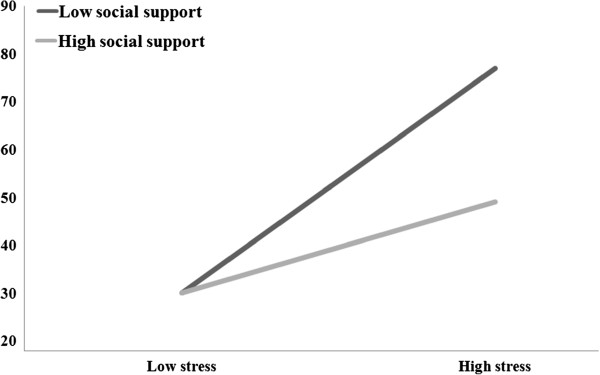
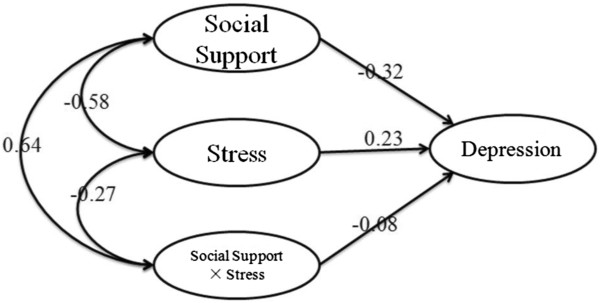
This study examined the moderator effect of social support on the relationship between stress and depression of university students. A total of 632 undergraduate students completed the measures of perceived stress, perceived social support, and depression. Hierarchical regression analysis showed that social support moderated the association between stress and depression. Undergraduate students with high stress reported higher scores in depression than those with low stress with low social support level. However, the impact of stress on depression was much smaller in the high social support group compared with that in the low social support group.
Overview
The claims and statistics of this paper haven’t been checked yet.
Free: it reads the open-access text and checks the first 5 claims that cite a source we can check. Create a free account to check every claim.
Integrity signals
Registry
Cites
Statistics
Figures
Verification
Claims the paper makes
The claims and statistics of this paper haven’t been checked yet.
Free: it reads the open-access text and checks the first 5 claims that cite a source we can check. Create a free account to check every claim.
Claims other papers make about this one
Each is checked against this paper’s own text: does it say what the citing paper says it does?
The source backs part of the claim, not all of it — or backs it for a different population, condition or comparison.
In the citing paper
“It has been reported that MDD patients often lack social support, and receiving adequate social support can confer greater resistance to stress and prevent the occurrence and recurrence of MDD. 330 , 331”
From Major depressive disorder: hypothesis, mechanism, prevention and treatment (2024) · cites this paper as [331]
Experimental — accuracy not yet measuredThe source backs part of the claim, not all of it — or backs it for a different population, condition or comparison.
In the citing paper
“This finding suggests that functional support may be an important protective factor against MDD. 331 , 335”
From Major depressive disorder: hypothesis, mechanism, prevention and treatment (2024) · cites this paper as [331]
Experimental — accuracy not yet measuredThe source backs part of the claim, not all of it — or backs it for a different population, condition or comparison.
In the citing paper
“Studies have reported that when controlling for all other variables, each aspect of social support is clearly associated with MDD, and to some extent, the occurrence of panic disorder in patients with MDD is more strongly associated with poor functional support.”
From Major depressive disorder: hypothesis, mechanism, prevention and treatment (2024) · cites this paper as [331]
Experimental — accuracy not yet measuredThe source backs part of the claim, not all of it — or backs it for a different population, condition or comparison.
In the citing paper
“Being able to turn to others and experience others as helpful is commonly regarded as a resource that buffers depression, anxiety and stress [7, 116].”
From The development of compassionate engagement and action scales for self and others (2017) · cites this paper as [116]
Experimental — accuracy not yet measuredIn the citing paper
“In a recent study of 632 students, Wang et al. [116] found that social support significantly moderated the effect of stress on depression.”
From The development of compassionate engagement and action scales for self and others (2017) · cites this paper as [116]
Self-check
Percentages, sums and reported differences re-computed from the paper’s own numbers.
The self-check needs the paper’s full text.
Citations
Cites
Baron, R. M., & Kenny, D. A. (1986) · Journal of Personality and Social Psychology · doi:10.1037/0022-3514.51.6.1173 · Cited by 91,532 · cited 1×
“Hierarchical regression procedures were performed to test the moderating effect of social support on the relationship of stress and depression [30].”
MethodThe Multidimensional Scale of Perceived Social Support
Zimet, G. D., Dahlem, N. W., Zimet, S. G., & Farley, G. K. (1988) · Journal of Personality Assessment · doi:10.1207/s15327752jpa5201_2 · Cited by 13,339
A self-rating depression scale
ZUNG, W. W. K. (1965) · Archives of General Psychiatry · doi:10.1001/archpsyc.1965.01720310065008 · Cited by 9,813 · cited 2×
“SDS, developed by Zung [27], is a self-report measure of depression consisting of 20 items, with a four-point scale ranging from (1) a little of the time to (4) most of the time.”
BackgroundMechanisms Linking Social Ties and Support to Physical and Mental Health
Thoits, P. A. (2011) · Journal of Health and Social Behavior · doi:10.1177/0022146510395592 · Cited by 4,076
Testing moderator and mediator effects in counseling psychology research.
Frazier, P. A., Tix, A. P., & Barron, K. E. (2004) · Journal of Counseling Psychology · doi:10.1037/0022-0167.51.1.115 · Cited by 4,037 · cited 1×
“The social support and stress variables were standardized before testing for moderating effect to reduce problems related to multicolinearity between the interaction term and the main effects [31].”
MethodEpidemiology of women and depression
Kessler, R. (2003) · Journal of Affective Disorders · doi:10.1016/s0165-0327(02)00426-3 · Cited by 2,006 · cited 1×
“depression have a dose-response relationship [13,14].”
A systematic review of studies of depression prevalence in university students
Ibrahim, A. K., Kelly, S. J., Adams, C. E., & Glazebrook, C. (2013) · Journal of Psychiatric Research · doi:10.1016/j.jpsychires.2012.11.015 · Cited by 1,988 · cited 1×
“Previous studies have found that depressive symptoms are widespread in college students [7].”
BackgroundMental health problems and help-seeking behavior among college students
Hunt, J., & Eisenberg, D. (2010) · Journal of Adolescent Health · doi:10.1016/j.jadohealth.2009.08.008 · Cited by 1,949 · cited 1×
“Studies that focus on college students’ mental health problems are gradually increasing because of significant increase in the incidence of mental disorder among college students [1-3].”
BackgroundPosttraumatic stress disorder: the burden to the individual and to society.
Kessler, R. C. (2000) · PubMed · Cited by 1,714
KOSSEK, E. E., PICHLER, S., BODNER, T., & HAMMER, L. B. (2011) · Personnel Psychology · doi:10.1111/j.1744-6570.2011.01211.x · Cited by 1,284 · cited 1×
“[41-43].”
Cited by
Items 201–300 of 308
Demidenko, J., Routasalo, P. E., Helminen, M., Åstedt-Kurki, P. M., Paavilainen, E., & Suominen, T. (2017) · Clinical Nursing Studies · doi:10.5430/cns.v6n2p1 · Cited by 3
“Social support has been investigated in relation to several clinical conditions like mental disorders,[22] cancer,[15] and heart disease,[3] and was found to be sufficient, but ED settings not been researched.”
BackgroundKakulapati, V., & Reddy, S. M. (2020) · Lecture notes in electrical engineering · doi:10.1007/978-981-15-3125-5_10 · Cited by 3
Self-Perceived Loneliness and Depression During the COVID-19 Pandemic: a Two-Wave Replication StudyPreprint
Carollo, A., Bizzego, A., Gabrieli, G., Wong, K. K., Raine, A., & Esposito, G. (2021) · doi:10.14324/111.444/000095.v1 · Cited by 6
Linh, T. T., Huy, H. N., Huong, T. T., & Ha, T. T. K. (2025) · Journal of Workplace Behavioral Health · doi:10.1080/15555240.2025.2540439 · Cited by 2
“On the other hand, literature reviews also provide evidence for the moderating role of social support in buffering stress (Che et al., 2018; Jafry et al., 2021; Wang et al., 2014).”
Zhao, J., Gong, J., Zhou, J. W., Ke, X., Li, Y., & Lu, M. (2025) · SAGE Open · doi:10.1177/21582440251365683 · Cited by 2
“…a person exhibits in the face of adversity, and social support serves as a protective factor of psychological resilience, furnishing individuals with sufficient environmental resources to cope with severe stress and facilitating the growth of their psychological resilience (X. Wang et al., 2014).”
The burden of poverty-related shame: Impact of comparative environment and social support
Zhan, S., & Hiraishi, K. (2025) · Acta Psychologica · doi:10.1016/j.actpsy.2025.105676 · Cited by 2
Li, H., Wang, X., Chen, W., Li, N., Tong, J., Fang, J., Wen, H., Wang, J., Heng, C., Feng, X., et al. (2025) · BMC Nursing · doi:10.1186/s12912-025-03946-5 · Cited by 3
“Although previous studies have suggested that mobile phones can offer social support [76]. compulsive use tends to exacerbate psychological outcomes.”
Self-citationInformal Caregiving for a Person with Dementia: The Role of Social and Psychological Capital
Cassidy, T. (2019) · JOJ Nursing & Health Care · doi:10.19080/jojnhc.2019.10.555776 · Cited by 3
Alza, N., Armalita, R., & Puspasari, D. (2021) · International Journal of Research in Counseling and Education · doi:10.24036/00445za0002 · Cited by 6
Maduku, D. K. (2022) · Global Business Review · doi:10.1177/09721509221093893 · Cited by 2
“These forms of support could either cushion people from the harmful effects of stressful life events or assist them to recover more readily from the effects of such events (Wang et al., 2014).”
Characteristics of Panic Buying During Disaster: Pre-disaster, Disaster, and Post-disaster Phase
Singh, R. K., Khadka, S., & Gautam, K. (2022) · Springer eBooks · doi:10.1007/978-3-031-10278-3_8 · Cited by 3
Engay, J. M. A., & Manda, A. R. (2024) · Journal of Affective Disorders Reports · doi:10.1016/j.jadr.2024.100747 · Cited by 3
Ho, S., Palka, J. M., Mersch, J. A., Martin, W. B., & Howe‐Martin, L. (2024) · Journal of Cancer Survivorship · doi:10.1007/s11764-023-01479-x · Cited by 3
“Wang and colleagues (2014) discovered that if high-stress individuals also reported high support, the impact of stress on their depression was much smaller than those of low-stress and low-support [44].”
Niyonsenga, J., Uwingeneye, L., Musabyemariya, I., Nteziryayo, J. P., Siboyintore, T., Sagahutu, J. B., Cavallini, F., Rutembesa, E., Jansen, S., Monacelli, N., et al. (2024) · Heliyon · doi:10.1016/j.heliyon.2024.e36903 · Cited by 4
“…on the psychological well-being of people [35] and that higher levels of social support can lessen the negative effects of stressful events on a person ’ s mind and body, weaken the link between stress and mental disorders and thus lessen the severity and generation of mental disorders [36,37].”
BackgroundYolanda, E., & Rahayuningsih, I. (2022) · Jurnal Ilmu Psikologi dan Kesehatan (SIKONTAN) · doi:10.47353/sikontan.v1i3.509 · Cited by 2
Lee, J., & Gang, M. (2018) · International Journal of Advanced Nursing Education and Research · doi:10.21742/ijaner.2018.3.1.17 · Cited by 2
Socio-Medical Aspects of Depression Among Elderly Adults in Serbia
Radevic, S. R., Djonović, N., Mihailović, N., Simić-Vukomanović, I., Janicijevic, K. M., Sekulić, M., & Kocic, S. S. (2018) · Serbian Journal of Experimental and Clinical Research · doi:10.1515/sjecr-2017-0065 · Cited by 2
“When it comes to a social support, among respondents who have a strong social support over 90% of them do not have symptoms of depression, while among those with poor social support every fourth respondent has a mild depressive symptoms or depressive episode, which is in accordance with results from the literature tha…”
ResultAmani, S., Ebrahimi, H., Mirghafourvand, M., & shafaie, F. S. (2018) · International Journal of Women s Health and Reproduction Sciences · doi:10.15296/ijwhr.2019.18 · Cited by 2
“The scores are classified into three groups of high (126175), moderate (76-125), and low social support (25-75).”
BackgroundResultThe Psychology of Spirituality and Religion in Health Care
de Vries, J. (2019) · Springer eBooks · doi:10.1007/978-3-030-04420-6_2 · Cited by 3
Hashim, S., Ghazali, H. B., Mohamad, S. F., Rasdi, R. M., & Othman, M. (2019) · International Journal of Academic Research in Business and Social Sciences · doi:10.6007/ijarbss/v9-i6/6071 · Cited by 3
Arshad, E. A. M. A. (2021) · Türk bilgisayar ve matematik eğitimi dergisi · doi:10.17762/turcomat.v12i5.2163 · Cited by 2
“According to [13], social support can provide problem solving strategies to the individual, reduce the importance of the problem, and alleviate the harmful effects of stress experience.”
BackgroundDatta, B. K., Coughlin, S. S., Ayadi, J., Majeed, B., & Ansa, B. E. (2023) · Behavioral Medicine · doi:10.1080/08964289.2023.2259045 · Cited by 2
“50 The effect of stress on mental health, however, could be moderated by social support, 51 which serves as a protective factor against perceived stress.”
Vargas Perla, A. (2018) · Archives of Depression and Anxiety · doi:10.17352/2455-5460.000033 · Cited by 2
Amid Armed Conflict: Perceptions and the Psychological Impact of Covid-19 in Western LibyaPreprint
Tresh, M. (2021) · doi:10.31234/osf.io/fuhs9 · Cited by 2
Matrángolo, G. (2021) · El Servicio de Difusión de la Creación Intelectual (National University of La Plata) · doi:10.35537/10915/130294 · Cited by 4
Badamas, O. L. (2023) · Forum Ilmu Sosial · doi:10.15294/fis.v50i1.44236 · Cited by 2
“In a study conducted by Wang, Cai, Qian and Peng (2014) on the moderator effect of social support on the relationship between stress and depression of university students, it was observed that adolescents' depression is affected by parental support.”
BackgroundDegago, E. D., Koech, D. K., & Molnár, E. (2024) · Vezetéstudomány / Budapest Management Review · doi:10.14267/veztud.2024.05.02 · Cited by 2
Understanding linear interaction analysis with causal graphs
Kim, Y., & Jung, G. (2024) · British Journal of Mathematical and Statistical Psychology · doi:10.1111/bmsp.12369 · Cited by 3
Ademoyegun, A. B., Ibitoye, A. G., Afolabi, J. O., Awotidebe, T. O., & Mbada, C. E. (2025) · Journal of Contemporary Studies in Epidemiology and Public Health · doi:10.29333/jconseph/17215 · Cited by 1
“Studies have shown that psychological stress initiates or worsens depression among university students [21, 22, 24, 25].”
Riyadi, R., Fatimah, J. M., & Hasrulah, H. (2025) · Frontiers in Human Dynamics · doi:10.3389/fhumd.2025.1658154 · Cited by 3
A study on the mechanism of older adult’s health in China: mediated by depression symptoms
Lĭ, H., & Yu, H. (2025) · Current Psychology · doi:10.1007/s12144-025-08884-8 · Cited by 2
“Empirical evidence supports this framework, studies have shown that higher levels of social support are associated with lower depressive symptoms and better life satisfaction in older populations (Liu et al., 2016; Wang et al., 2014).”
Malik, N. I., Atta, M., Zahra, A., Quratulain, Ahmad, J. B., & Ahmed, F. (2026) · Asian Perspectives on Public Health. · doi:10.1007/978-981-95-2321-4_17 · Cited by 1
Liu, J., Chen, Y., & Orji, A. (2026) · Frontiers in Psychology · doi:10.3389/fpsyg.2026.1846925 · Cited by 1
Recovery from Long COVID: How College Students Thrive During Lockdown
Cabacungan, A. M., Delima, K. R. M., Mortiz, J. N. B., Paguta, L. D. C., & Billones, R. R. (2022) · Tazkiya Journal of Psychology · doi:10.15408/tazkiya.v10i2.26341 · Cited by 5
Algones, C. J. L., & Israel, G. F. G. (2023) · International Journal of Research Publications · doi:10.47119/ijrp1001271620235074 · Cited by 1
Abbas, H. M. A., Gull, V. I., & Ghaffar, K. (2018) · Information Management and Business Review · doi:10.22610/imbr.v9i6.2040 · Cited by 3
Pamungkas, Y. P., & Gayatri, R. W. (2019) · International Conference on Sports Sciences and Health (ICSSH) · doi:10.2991/icssh-18.2019.51 · Cited by 2
“On the other hand social support can be helpful in coping with stress, also help a person to achieve self-esteem and self-efficacy as well as control your emotions [48].”
Background서유진, & Kim, J. M. (2018) · The Korean Journal of Woman Psychology · doi:10.18205/kpa.2018.23.2.001 · Cited by 1
DESOLATION OF STRESS IN WOMEN: CAUSES WHICH TRANSFORM STRESS INTO EXTREMISM AND VIOLENCE
Kazimi, A. B., & Zehra.Kazimi, A. (2020) · IJASOS- International E-journal of Advances in Social Sciences · doi:10.18769/ijasos.616041 · Cited by 2
Pengaruh dukungan sosial dan regulasi emosi terhadap kecenderungan depresi di Surabaya
Putriana, H., & Gunatirin, E. Y. (2021) · Intisari Sains Medis · doi:10.15562/ism.v12i3.1192 · Cited by 10
Delgado, M. E. P., Pérez, J. J. M., García-Moreno, M. A., López, C. A., Cordón, R. D. A., & González-Salvador, T. (2022) · Clínica Contemporánea · doi:10.5093/cc2022a4 · Cited by 3
“…Clínica Contemporánea (2022), 13, e4, 1-18 https://doi.org/10.5093/cc2022a4 © 2022 Colegio Oficial de la Psicología de Madrid ISSN: 1989-9912 2016; Szkody y McKinney, 2020; Wang et al., 2014) y que la falta de apoyo social puede asociarse a procesos de duelo complicado (Burke y Neimeyer, 2012).”
BackgroundInfluentialShahzadi, S., & Khan, W. (2022) · International Journal of Health Sciences · doi:10.53730/ijhs.v6ns3.7963 · Cited by 2
Burnout in Inclusion Primary School Teachers: Testing the Role of Social Support
Safitri, J., & Prastika, N. D. (2022) · Psikostudia Jurnal Psikologi · doi:10.30872/psikostudia.v11i2.7590 · Cited by 3
A Cross-Sectional Study on Empathy and its Association With Stress in Medical Students
Sharma, R., Sapkota, A., Acharya, A., Luintel, P., Paudel, L., Sharma, S., & Pradhan, S. N. (2022) · International Journal of Occupational Safety and Health · doi:10.3126/ijosh.v12i3.44432 · Cited by 1
Academic Stress among University Students and Its Effect on Mental Health
Banu, R. P. (2015) · Shodhganga · Cited by 1
feng, Y. Q., Zhang, C., Yang, G., Qi, M., Kaminga, A. C., Huang, H., & Yan, J. (2020) · Research Square · doi:10.21203/rs.3.rs-54145/v1 · Cited by 1
“Social support has been identi ed as a protective factor for mental health[12], and is known to regulate the effects of stress on anxiety[13].”
BackgroundJones, L. D., Salgado, E., Aalsma, M. C., Garabrant, J. M., Staples, J. K., Gordon, J. S., & Salyers, M. P. (2020) · Research Square · doi:10.21203/rs.3.rs-61499/v1 · Cited by 3
Self-Perceived Loneliness and Depression During the COVID-19 Pandemic: a Two-Wave Replication StudyPreprint
Carollo, A., Bizzego, A., Gabrieli, G., Wong, K. K., Raine, A., & Esposito, G. (2022) · doi:10.14324/111.444/000095.v2 · Cited by 2
Self-Perceived Loneliness and Depression During the COVID-19 Pandemic: a Two-Wave Replication StudyPreprint
Carollo, A., Bizzego, A., Gabrieli, G., Wong, K. K., Raine, A., & Esposito, G. (2022) · doi:10.14324/111.444/000095.v3 · Cited by 1
An Interpersonal Model of Depression: A Psychophysiological Perspective
Pritchard, K. J. (2016) · EngagedScholarship @ Cleveland State University (Cleveland State University)
Influences of self-construals and personality styles on international students' depressive symptoms.
Liu, Y. (2016) · ThinkIR: The University of Louisville's Institutional Repository (University of Louisville) · doi:10.18297/etd/2505
Seixas, A. A., James, C., Jean‐Louis, G., Butler, M. J., Zizi, F., & Gardner, A. A. (2015)
Ghobadzadeh, M. (2017) · University of Minnesota Digital Conservancy (University of Minnesota) · Cited by 1
Roming, S. (2018) · Cited by 1
Ironside, A. K. (2019) · HARVEST (University of Saskatchewan) · Cited by 3
Nadira, H., & Primasari, I. (2019) · International Conference on Intervention and Applied Psychology (ICIAP) · doi:10.2991/iciap-18.2019.26
“In line with the research conducted by Wang Cai, Qian, and Peng (2014) social support helped to alleviate harmful effects of a stressful experience, enhanced coping strategies, and provided problem-solving strategies (Wang et al., 2014).”
ResultNogueira, M. J. (2020) · SAGE Publications Ltd eBooks · doi:10.4135/9781529718263 · Cited by 1
Moderating Variables in the Relationship Between Self-Criticism and Depression
Desgagné, G. (2019) · ERA: Education and Research Archive (University of Alberta) · doi:10.7939/r3-wzdh-x983 · Cited by 1
Algılanan Yönetici Desteğinin Çalışanların Stres ve Depresyon Düzeylerine Etkisi
Süreyya, E. C. E. (2020) · Toplum Bilimleri Dergisi · doi:10.29228/tbd.2007.43437
Socijalna podrška, stres, izgaranje i zdravlje kod policijskih službenika
Jelaš, I. G., Dević, I., & Karlović, R. (2020) · Sigurnost · doi:10.31306/s.62.4.1 · Cited by 1
Stress Proliferation and Disability over the Life Course
West, J. S. (2021)
SOCIAL SUPPORT AND SELF-ESTEEM ON TENDENCY OF DEPRESSION IN ADOLESCENT WOMEN
Larasati, B. S., & Weliangan, H. (2021) · International Journal of Research Publications · doi:10.47119/ijrp100791620212037
“Some research results that can support by Wang, Cai, Qian & Peng (2014) states that individuals with high levels of depression have low social support and conversely individuals with low depression scores have high social support.”
Relationship between Social Support and Depressive Symptoms among Undergraduate University Students
Jailani, A. M., & Lourdunathan, P. (2021) · IIUM JOURNAL OF HUMAN SCIENCES · doi:10.31436/ijohs.v3i1.196 · Cited by 1
Textual Sentiment Analysis using Machine Learning and NLP: A Review
Sharma, N., Veenadhari, S., & Kulhare, R. (2021) · Soft Computing Research Society eBooks · doi:10.52458/978-81-95502-00-4-51
Romantic Relationships, Mental Health and Academic Performance in Medical School – A Pilot Study
Guishard‐Pine, J., Amaefuna, U. E., Cooke, T., Eltahir, M., Nwaigwe, A., Osimosu, B., Patel, P. H., & Williams, D. (2020) · Journal of Behavioral Health and Psychology · doi:10.33425/2832-4579/20018
"Rising Levels of Stress of Corporate Professionals and its Relationship with Values"
Chadha, M. A., & Verma, M. S. (2022) · International Journal of Research Publication and Reviews · doi:10.55248/gengpi.2022.3.7.11
Prevalence of depressive symptoms and its determinants among staff members Minia University, Egypt
Mageed, A. S. A. E., ahmed, S., Khalifa, M., Hassan, E. E., & Latief, O. K. A. E. (2022) · Minia Journal of Medical Research · doi:10.21608/mjmr.2022.156259.1165
Wachsende Abhängigkeit der Jugendlichen von sozialen Medien
Kothambikar, A. (2022) · Springer eBooks · doi:10.1007/978-3-658-39489-9_2
Growing Social Media Addiction Among Youth
Kothambikar, A. (2023) · Springer eBooks · doi:10.1007/978-3-031-34382-7_2
From SNS stressors’ perspectives to understand prosocial behavior: a contingency model
Hsu, L., & Kao, H.-Y. (2023) · Journal of Contemporary Marketing Science · doi:10.1108/jcmars-03-2023-0007
บรรเจิดถาวร, จ., & เหล่ารุจิสวัสดิ์, ภ. (2017) · doi:10.58837/chula.the.2017.1545
ภาวะสุขภาพจิตและปัจจัยที่เกี่ยวข้องในนิสิตชั้นปีที่ 1 คณะวิศวกรรมศาสตร์ จุฬาลงกรณ์มหาวิทยาลัย
ทุ่มขนอน, ก., & กาญจนถวัลย์, บ. (2021) · Chula Digiverse · doi:10.58837/chula.the.2021.1077
Öğrencilerin Stres, Depresyon, Kaygı ve Kariyer İyimserliğinde Şehir Farkı: Ampirik bir Araştırma
Süreyya, E. C. E. (2023) · Uluslararası Sosyal ve Eğitim Bilimleri Dergisi · doi:10.20860/ijoses.1373033 · Cited by 1
Causes of Stress Among Students in Education Institutions
Oloo, Z. O. (2023) · Advances in higher education and professional development book series · doi:10.4018/979-8-3693-0708-3.ch008
Tan, F., Rachel, J. M. O., Kee, J. L., Lim, X. Y., Long, S., Rane, N., Lu, S. H., Hashim, N., Chen, H., Meaney, M. J., et al. (2024) · Research Square · doi:10.21203/rs.3.rs-4090111/v1
Effect of childbirth experience on the psychological well-being of postpartum women in Accra, Ghana
Azusong, E., Teye‐Kwadjo, E., & Asante, K. O. (2024) · Journal of Reproductive and Infant Psychology · doi:10.1080/02646838.2024.2329721 · Cited by 1
“Other work has found that perceived social support can moderate the link between psychological morbidity and health outcomes (Affram et al., 2019; Stanton et al., 2014; Wang et al., 2014), including childbirth outcomes (Castelar-Ríos et al., 2022).”
Okeke, D. O., Udoh, S., Ac, J., & John, E. (2024) · Ibom Medical Journal · doi:10.61386/imj.v7i2.434
Chen, X., Wang, Q., Hong, X., & Lin, W. (2025) · Journal of Psychology in Africa · doi:10.32604/jpa.2025.065760 · Cited by 1
“When teacher-provided social support is substantial, students perceive higher levels of self-acceptance, which encourages them to be more proactive in exploring their environment and addressing growth challenges (Wang et al., 2014).”
Molins, M., Molins, F., Gonzalez, L., Aliño, M., Duque, A., & Mesa‐Gresa, P. (2025) · medRxiv · doi:10.1101/2025.05.16.25327781
“More importantly, the significant interaction between perceived stress and social support suggests that social support may act as a buffer in the stress - depression relationship in older adults, consistent with findings in the general population (Wang et al., 2014).”
THE IMPACT OF COVID-19 INFECTION ON PATIENTS HOSPITALIZED IN PSYCHIATRY HOSPITAL WARDS
Florek, S., Florczyk, I., Malec, A. K., Buszman, K., Sołtys, W., & Gorczyca, P. W. (2023) · Zeszyty Naukowe Wyższej Szkoły Humanitas w Sosnowcu Pedagogika · doi:10.5604/01.3001.0054.4346
Stres Polisi: Menguji Peran Fleksibilitas Kognitif dan Dukungan Sosial
Kristianingsih, S. A., Ambarwati, K. D., & Pombadju, V. L. A. (2025) · Bulletin of Counseling and Psychotherapy · doi:10.51214/002025071199000
Wang, F., Lin, Y., & Hong, L. (2025) · SSRN Electronic Journal · doi:10.2139/ssrn.5350107
Reflective versus Brooding Rumination: Impact on Tour Guides’ Emotion, Flexibility, and Resilience
Zou, Y., Zhong, H., Hao, F., & Ng, W. (2025) · Journal of Hospitality & Tourism Research · doi:10.1177/10963480251369506
“The absence of in-group support compounds the psychological toll of brooding rumination, depleting resources necessary for problem-solving and ultimately compromising career resilience (Cohen & Wills, 1985; Wang et al., 2014).”
Lee, O. N., Jeon, S.-E., Sun, B., & Kang, Y.-S. (2025) · Research in Community and Public Health Nursing · doi:10.12799/rcphn.2025.00990
“The more social support an individual obtains, the easier it is for them to attain a sense of self-esteem and self-efficacy, helping them manage stress more effectively or strengthen their problem-solving skills [27].”
Zhang, C., Tian, X. S., Li, M., Liu, Y., Gao, Y. H., & Li, J. (2025) · Journal of Neural Transmission · doi:10.1007/s00702-025-03037-4 · Cited by 3
“Greater social support was associated with lower perceived stress and decreased levels of depression (Lau et al. 2014; Wang et al. 2014; Yang et al. 2010; Leonard et al. 2020).”
Nam, J., & Choi, M. Y. (2025) · Asian Communication Research · doi:10.20879/acr.2025.22.017
Liu, F., Fang, R., Wang, X., Lu, R., Wang, B., & Wang, Y. (2025) · Aging & Mental Health · doi:10.1080/13607863.2025.2585504 · Cited by 1
“Previous studies identified mastery (nicolaisen et al., 2018), self-esteem (Rector & Roger, 1997), and social support (Wang et al., 2014) as compensatory elements shielding individuals’ mental health from stress.”
Self-citationWoon, L. S., Sidi, H. B., Ravindran, A. V., Gosse, P. J., Mainland, R. L., Kaunismaa, E. S., Hatta, N. H., Arnawati, P., Zulkifli, A. Y., Mustafa, N., et al. (2020) · Figshare · doi:10.6084/m9.figshare.12291833
Doku, P., Ananga, M. K., Jehu-Appiah, N., Akohene, K. M., Debrah, T. P., & Nsatimba, F. (2022) · Research Square · doi:10.21203/rs.3.rs-2129553/v1
Cunningham, L. D., Salgado, E., Aalsma, M. C., Garabrant, J. M., Staples, J. K., Gordon, J. S., & Salyers, M. P. (2021) · Figshare · doi:10.6084/m9.figshare.16892974
Merrill, R. A., & Cao, C. (2026) · Psychiatry International · doi:10.3390/psychiatryint7010018
“Another study found depression with a similar effect [24].”
Gratitude Moderates the Relationship Between Perceived Support, Stress, and Mental Health in Women
Deichert, N. T., & Fekete, E. M. (2026) · European Journal of Mental Health · doi:10.5708/ejmh.21.2026.0050
“…has research found that greater levels of social support predict reduced levels of stress (Zell & Stockus, 2025), studies also show that the association between stress and negative psychological outcomes is weaker for individuals with higher levels of support (Chao, 2012; X. Wang et al., 2014).”
Xingchao, W. A. N. G., & Ma, Y. (2026) · Journal of Youth and Adolescence · doi:10.1007/s10964-026-02317-w · Cited by 1
Self-citationSi, K., Yan, C., Xiang, W., Xiao, B., Wang, X., Wei, X., Li, J. F., & Liu", C. (2026) · Biomedical Signal Processing and Control · doi:10.1016/j.bspc.2026.110429
Self-citationAcademic stress and coping strategies among Vietnamese healthcare students: A cross-sectional study
Nguyen, D. T., Pham, N. H., Nguyen, N. M. H., & Nguyen-Thi, T.-T. (2026) · Multidisciplinary Science Journal · doi:10.31893/multiscience.2026941
“Additionally, Wang et al. (2014) reported that strong social support not only increases self-esteem but also enhances individuals' confidence in their ability to cope with stress, solve problems, and view challenges less negatively.”
Yang, J., Jin, X., Shi, L., Shi, D., Cui, J., Wang, K., Liu, H. R., Xing, X., & Dong, C. (2026) · BMC Psychiatry · doi:10.1186/s12888-026-08420-3
“…reached the smallest significant effect, suggesting that reduced affiliative warmth makes a modest but independent contribution to symptom severity, consistent with the documented role of social disconnection in exacerbating psychological distress in substance use disorder populations [30, 31].”
Khalid, J., Ashraf, M. U., Nordin, N. M., Hafeez, M. R., & Mi, C. (2026) · Acta Psychologica · doi:10.1016/j.actpsy.2026.107508
Metadata
- Authors
- Wang, X., Cai, L., Qian, J., & Peng, J.
- Affiliations
- Kunming University (CN)
- Beijing Normal University (CN)
- Air Force Medical University (CN)
- Corresponding author
- Qian, Jing
- Peng, Jiaxi
- Venue
- International Journal of Mental Health Systems
- Published
- 2014-11-13
- Volume
- 8
- Issue
- 1
- Pages
- 41-41
- ISSN
- 1752-4458 (ISSN-L)
- PMC
- PMC4242489
- OpenAlex
- W2103274674
- Cited by
- 309
- References
- 45
- Citations by year
- 2026: 17 · 2025: 26 · 2024: 24 · 2023: 39 · 2022: 45 · 2021: 48 · 2020: 36 · 2019: 22 · 2018: 18 · 2017: 16 · 2016: 11 · 2015: 6 · 2014: 1
- FWCI
- 26.53
- Type
- journal article
- Language
- en
- Open access
- gold
- doi.org
- Licence
- cc-by
- Locations
- International Journal of Mental Health Systems (publishedVersion, cc-by)
- Europe PMC (PubMed Central) (publishedVersion, cc-by)
- PubMed Central (publishedVersion, cc-by)
- PubMed (publishedVersion)
- Topics
- Social Sciences › Psychology › Developmental and Educational Psychology › Student Stress and Coping
- Social Sciences › Psychology › Clinical Psychology › Health and Well-being Studies
- Social Sciences › Psychology › Social Psychology › Stress and Burnout Research
- Keywords
- social support, perceived stress, depression, moderating effect, university students, undergraduate students, mental health
About these checks
Registry, retraction, Cites and statistics results are computed, not judged, with one exception: a printed reference that no index lists is read once by a model before it counts as a citation error. Claims are extracted by a model and kept only when their quote appears verbatim in the text; each cited source is then checked, with a model’s help, for whether it says what the claim relies on. Those verdicts can be wrong — read the claim’s quote and the cited source before relying on one.
Statistics and arithmetic are recomputed, not judged.
Confidence bands are shown only for fields calibrated on our annotated test set. None is calibrated yet, so no band is shown.
What counts as a claim ›How we measure confidence ›How we check this ›
Are you an author, or do you see a problem with this page? Request a review
Data sources
Bibliographic data: Semantic Scholar, OpenAlex, Crossref.
Contains information from the Semantic Scholar Academic Graph Datasets, made available under the ODC Attribution License (ODC-BY 1.0).
Semantic Scholar’s data is described in: Kinney, R., et al. (2023). The Semantic Scholar Open Data Platform. arXiv:2301.10140.
