

Cell-matrix interactions in dermal repair and scarring
Open accessThe DOI matches its Crossref record; 95 of the 95 references it cites were found in a registry or an index.
Abstract
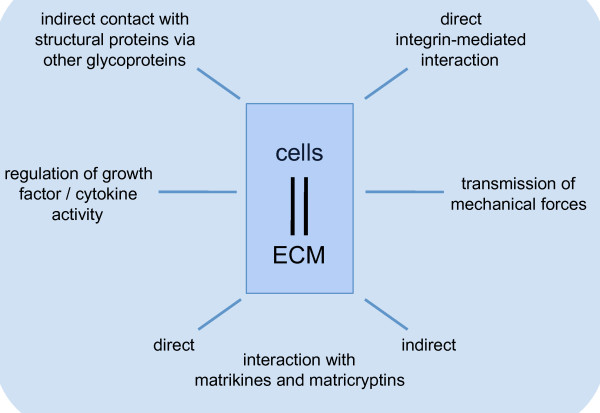
Regulation of cellular functions during dermal repair following injury is complex and critically dependent on the interaction of cells with the surrounding extracellular matrix (ECM). The ECM comprises various families of macromolecules that form the structural scaffold of the tissue, but also carry distinct biological activities. After injury to the skin, the defect is filled by a provisional matrix that is invaded by inflammatory cells, sprouting blood vessels and fibroblasts. In a later phase, the wound contracts, the tissue is replaced by mature connective tissue produced by activated fibroblasts, and a scar is formed. All cells involved communicate directly with the ECM by integrins and other matrix receptors. These transmit signals and induce adaptive responses to the environment by the embedded cells. The ECM or proteolytic fragments of individual ECM constituents exert defined biological activities influencing cell survival, differentiation of myofibroblasts, ECM synthesis and turnover, wound angiogenesis and scar remodeling. Extensive crosstalk exists between ECM and growth factors, and between growth factors and integrins. ECM-cell contact also enables direct transmission of mechanical tension, which then modulates many activities of all cellular players. Understanding this complex interplay is important to provide a basis for designing effective wound therapy and for strategic interference with mechanisms that have gone out of control in fibrotic conditions.
Overview
The claims and statistics of this paper haven’t been checked yet.
Free: it reads the open-access text and checks the first 5 claims that cite a source we can check. Create a free account to check every claim.
Integrity signals
Registry
Cites
Statistics
Figures
Verification
Claims the paper makes
The claims and statistics of this paper haven’t been checked yet.
Free: it reads the open-access text and checks the first 5 claims that cite a source we can check. Create a free account to check every claim.
Claims other papers make about this one
Each is checked against this paper’s own text: does it say what the citing paper says it does?
In the citing paper
“The cells in question are “attracted” to the wound area according to the chemotactic PDGF, EGF, IGF-1, and TGF-β gradient where the proliferation of these cells takes place (stimulated by growth factors) and, after that the synthesis of ECM components and formation of “granulation” tissue starts [24, 39, 66, 67].”
From The role of the extracellular matrix components in cutaneous wound healing (2014) · cites this paper as [66]
Self-check
Percentages, sums and reported differences re-computed from the paper’s own numbers.
The self-check needs the paper’s full text.
Citations
Cites
Hynes (2002) · doi:10.1016/s0092-8674(02)00971-6 · Cited by 8,606
Myofibroblasts and mechano-regulation of connective tissue remodelling
Tomasek, J. J., Gabbiani, G., Hinz, B., Chaponnier, C., & Brown, R. A. (2002) · Nature Reviews Molecular Cell Biology · doi:10.1038/nrm809 · Cited by 4,290 · cited 2×
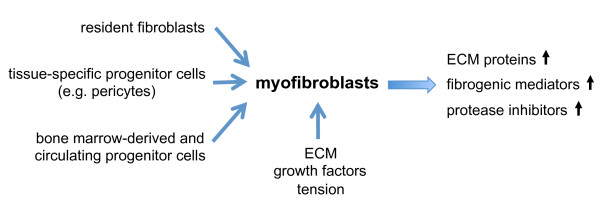
“Induction of ED-A fibronectin, in turn, requires presence of TGFb together with mechanical tension, indicating that complex paracrine and autocrine networks are involved in regulating myofibroblast formation in wound healing [70,78].”
BackgroundThe Extracellular Matrix: Not Just Pretty Fibrils
Hynes, R. O. (2009) · Science · doi:10.1126/science.1176009 · Cited by 3,527 · cited 1×
“factors from degradation [40,41].”
RHO GTPASES: Biochemistry and Biology
Jaffe, A. B., & Hall, A. (2005) · Annual Review of Cell and Developmental Biology · doi:10.1146/annurev.cellbio.21.020604.150721 · Cited by 3,009 · cited 1×
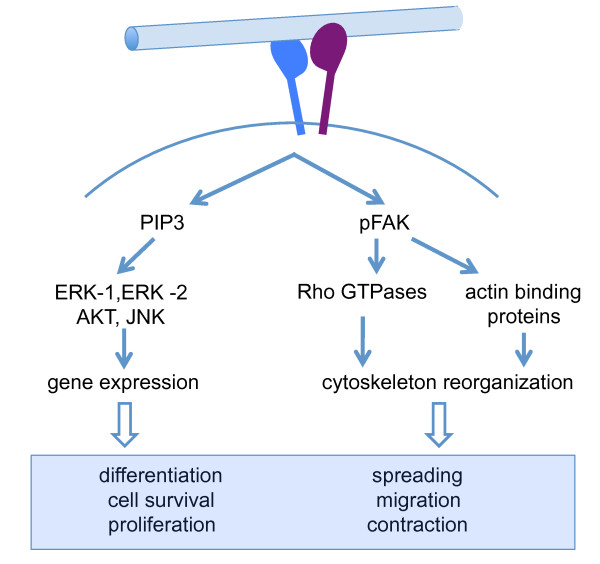
“This is then followed by cytoskeletal rearrangements, modulation of Rho GTPase activity, and reorganization of actin binding proteins, affecting virtually all cellular functions [59] (Figure 1).”
BackgroundBalaban, N. Q., Schwarz, U. S., Riveline, D., Goichberg, P., Tzur, G., Sabanay, I., Mahalu, D., Safran, S., Bershadsky, A., Addadi, L., et al. (2001) · Nature Cell Biology · doi:10.1038/35074532 · Cited by 2,132 · cited 1×
“Mechanical forces act on focal adhesions, resulting in further structural maturation [72,86].”
BackgroundMunger, J. S., Huang, X., Kawakatsu, H., Griffiths, M. J. D., Dalton, S. L., Wu, J., Pittet, J.-F., Kaminski, N., Garat, C., Matthay, M. A., et al. (1999) · Cell · doi:10.1016/s0092-8674(00)80545-0 · Cited by 2,076 · cited 1×
“Binding of latent TGF-b to integrin avb6, which is abundantly expressed by keratinocytes in wound epithelium and in chronic wounds [61], induces a conformational change in the latent complex, resulting in unmasking of the mature TGF-b moiety, presentation to TGF-b receptors on adjacent cells, and induction of TGF-b si…”
BackgroundKlinge, U., Park, J.-K., & Klosterhalfen, B. (2013) · Pathobiology · doi:10.1159/000348446 · Cited by 1,783
The myofibroblast in wound healing and fibrocontractive diseases
Gabbiani, G. (2003) · The Journal of Pathology · doi:10.1002/path.1427 · Cited by 1,630 · cited 1×
“Myofibroblasts have long been associated with wound repair and fibrosis [77].”
BackgroundCellular mechanotransduction: putting all the pieces together again
Ingber, D. E. (2006) · The FASEB Journal · doi:10.1096/fj.05-5424rev · Cited by 1,627 · cited 1×
“A clear distinction of the different attachment sites is more difficult, but these structures are equally important and establish a direct connection between the surrounding ECM and the cell nucleus [87,88].”
BackgroundRole of Extracellular Matrix in Adaptation of Tendon and Skeletal Muscle to Mechanical Loading
KJÆR, M. (2004) · Physiological Reviews · doi:10.1152/physrev.00031.2003 · Cited by 1,586 · cited 1×
“If mechanical tension is removed, those tissues undergo atrophy, indicating the important role of mechanical signals for maintaining proper functioning of the organism [84].”
Background
Cited by
Items 101–200 of 205
Muscle physiology in spasticity and muscle stiffness
Raghavan, P. (2025) · Toxicon · doi:10.1016/j.toxicon.2025.108350 · Cited by 18
Melnikov, B. F., Pivneva, S. V., & Trifonov, M. A. (2017) · International Conference on Information Technology and Nanotechnology (ITNT) · doi:10.18287/1613-0073-2017-1902-43-50 · Cited by 15
“Besides, one of the most frequently discussed in biocybernetics problems is that the recovery of the distance matrix, when weknow a part of the completed element sonly [11, 20].”
BackgroundThe Amazing Power of Cancer Cells to Recapitulate Extraembryonic Functions: The Cuckoo's Tricks
Arias, J. I., Aller, M., Prieto, I., Arias, A., de Julian, Z., Yang, H., & Árias, J. (2011) · Journal of Oncology · doi:10.1155/2012/521284 · Cited by 13
“Granulation tissue is then repopulated with fibroblasts to produce a more densely collagenous extracellular matrix which is more akin to the matrix found in interstitial stroma [25].”
BackgroundGranulation Tissue Formation and Remodeling
Häkkinen, L., Larjava, H., & Koivisto, L. (2012) · Wiley eBooks · doi:10.1002/9781118704509.ch6 · Cited by 17
Cell‐Derived Matrix: Production, Decellularization, and Application of Wound Repair
Xu, Y., Yao, Y., & Gao, J. (2024) · Stem Cells International · doi:10.1155/2024/7398473 · Cited by 14
“When applied to wound models, ASC-CDM mediates cellular behavior through integrin-mediated signaling pathways on cell surfaces and regulates fi broblasts and keratinocyte actions, thus promoting wound closure [104, 105].”
MethodZhang, J., Wang, W., Liu, D., Shi, H., Song, X., Gao, Y., Zhou, X., Liu, X., Chen, Z., & Guo, J. (2024) · European Polymer Journal · doi:10.1016/j.eurpolymj.2024.113209 · Cited by 14
Salerno, S., Messina, A., Giordano, F., Bader, A., Drioli, E., & Bartolo, L. D. (2016) · Materials Science and Engineering C · doi:10.1016/j.msec.2016.11.008 · Cited by 14
Zhang, S., Huang, F., Gates, M., White, J. T., & Holmberg, E. G. (2010) · Journal of Neuroscience Methods · doi:10.1016/j.jneumeth.2010.06.022 · Cited by 11
Han, X., Liu, H., Chen, M., Gong, L., Pang, H., Deng, X., & Jin, Y. (2016) · RSC Advances · doi:10.1039/c6ra11179c · Cited by 10
Faria-Tischer, P. C. S., Ribeiro-Viana, R., & Tischer, C. A. (2019) · Elsevier eBooks · doi:10.1016/b978-0-12-816872-1.00007-8 · Cited by 12
EDA Fibronectin Microarchitecture and YAP Translocation during Wound Closure
Patten, J., Halligan, P., Bashiri, G., Kegel, M., Bonadio, J. D., & Wang, K. (2025) · ACS Biomaterials Science & Engineering · doi:10.1021/acsbiomaterials.4c02019 · Cited by 10
Growth factors in fetal and adult wound healing
Pratsinis, H., & Kletsas, D. (2016) · Elsevier eBooks · doi:10.1016/b978-1-78242-455-0.00002-1 · Cited by 7
Sabbatini, M., Bosetti, M., Borrone, A., Moalem, L., Taveggia, A., Verna, G., & Cannas, M. F. (2016) · Journal of Tissue Engineering · doi:10.1177/2041731416671278 · Cited by 8
Tissue fibrosis: a pathomechanistically unresolved challenge and scary clinical problem
Eckes, B., & Eming, S. A. (2016) · Experimental Dermatology · doi:10.1111/exd.13165 · Cited by 8
Self-citationCell-Instructive Biomaterials with Native-Like Biochemical Complexity
Marjan, T., Lafuente‐Gómez, N., Rampal, A., Mooney, D. J., Peyton, S. R., & Qazi, T. H. (2025) · Annual Review of Biomedical Engineering · doi:10.1146/annurev-bioeng-120823-020209 · Cited by 8
Role of integrin signalling through integrin‐linked kinase in skin physiology and pathology
Eckes, B., Krieg, T., & Wickström, S. A. (2014) · Experimental Dermatology · doi:10.1111/exd.12429 · Cited by 8
Self-citationGonçalves, V. D. P., Steffens, J. P., Rossa, C., & Spolidório, L. C. (2022) · Inflammation Research · doi:10.1007/s00011-022-01553-7 · Cited by 7
“The formation of ECM constitutes an important step, as it provides a scaffold for cell adhesion and critically regulates and organizes the growth, movement and differentiation of cells within it [3, 32, 33].”
BackgroundEffect of gold nanoparticles on postoperative peritoneal adhesions in rats
Mohammadpour, A. H., Tavassoli, A., Khakzad, M. R., Zibaee, E., Afshar, M., Hashemzaei, M., & Karimi, G. (2015) · DOAJ (DOAJ: Directory of Open Access Journals) · doi:10.7508/nmj.2015.03.006 · Cited by 7
Engineered alternative skin for partial and full-thickness burns
Wessels, Q. (2014) · Bioengineered · doi:10.4161/bioe.28598 · Cited by 7
“The interactions between cells and the ECM affects gene transcription, modifies growth factor signaling, and this in turn has an effect on ECM deposition by fibroblasts.(24) Work by Fisher and colleagues in 2009(25) and more recently(26) in 2013 demonstrated that age-related dermal collagen fragmentation negatively im…”
BackgroundZaarour, R. F., Saha, D., Dey, R., Dutta, A., Kumar, P., Rana, I., Pulianmackal, A. J., Rizvi, A., Misra, N., Breton, L., et al. (2022) · Experimental Dermatology · doi:10.1111/exd.14573 · Cited by 11
Ge, Z., Li, B., Zhou, X., Yang, Y., & Zhang, J. (2016) · Molecular and Cellular Biochemistry · doi:10.1007/s11010-016-2834-7 · Cited by 8
Mistry, K., Richardson, G., Vleminckx, S., Smith, R., Gevaert, E., & Lovat, P. E. (2024) · Wound Repair and Regeneration · doi:10.1111/wrr.13177 · Cited by 6
“9 In particular, integrin α 2 β 1, a collagen receptor expressed by both keratinocytes and dermal fibroblasts recognises specific motifs present within collagen such as GFOGER, leading to the autopho-sphorylation of focal adhesion kinase (FAK) and downstream activation of signalling pathways such…”
Kafili, G., Niknejad, H., Tamjid, E., & Simchi, A. (2025) · Progress in Materials Science · doi:10.1016/j.pmatsci.2025.101542 · Cited by 7
Kameni, L. E., Griffin, M., Berry, C. E., Shariatzadeh, S., Downer, M. A., Valencia, C., Fazilat, A. Z., Nazerali, R. S., Momeni, A., Januszyk, M., et al. (2024) · Radiation Oncology · doi:10.1186/s13014-024-02472-z · Cited by 6
Koller, T. (2019) · manuelletherapie · doi:10.1055/a-0822-1722 · Cited by 6
3‐photon fluorescence imaging of sulforhodamine B‐labeled elastic fibers in the mouse skin in vivo
He, C., Gan, M., Deng, X., Liu, H., Qiu, P. S., & Wang, K. (2019) · Journal of Biophotonics · doi:10.1002/jbio.201900185 · Cited by 7
Tentorium Cerebelli: Muscles, Ligaments, and Dura Mater, Part 1
Bordoni, B., Simonelli, M., & Laganà, M. M. (2019) · Cureus · doi:10.7759/cureus.5601 · Cited by 8
Feng, B., Dou, J., Li, Y., Wang, Y., Wu, C., Lan, X., Su, Y., & Zhang, X. B. (2025) · Frontiers in Pharmacology · doi:10.3389/fphar.2025.1648540 · Cited by 7
“Finally, as apoptosis of vascular cells and myo fi broblasts heralds the end of healing, the conversion of cell-rich granulation tissue into collagen-fi lled cells results in scarless healing (Eckes et al., 2010; Reinke and Sorg, 2012).”
Manipulating the healing response
Azzimonti, B., Sabbatini, M., Rimondini, L., & Cannas, M. F. (2016) · Elsevier eBooks · doi:10.1016/b978-1-78242-455-0.00004-5 · Cited by 7
Mechanisms of Development of Passive Mechanical Muscle Stiffness
Raghavan, P., Stecco, A., Menon, R. G., Cowman, M. K., & Regatte, R. R. (2022) · Springer eBooks · doi:10.1007/978-3-030-96900-4_6 · Cited by 7
Benadiba, M., Serruya, R., & Maor, Y. (2018) · Heliyon · doi:10.1016/j.heliyon.2018.e00821 · Cited by 4
“In this way, these molecules play an essential role in sensing the environment and controlling cell shape and motility (Eckes et al., 2010).”
BackgroundSerial Casting as an Effective Method for Burn Scar Contracture Rehabilitation: A Case Series
Schetzsle, S., Lin, W. W. C., Purushothaman, P., Ding, J., Kwan, P. O., & Tredget, E. E. (2023) · Journal of Burn Care & Research · doi:10.1093/jbcr/irad078 · Cited by 4
Song, X., Li, D., Guo, T., Zou, X., Liu, X., Zhou, X., Bin, Z., Chen, Z., & Guo, J. (2025) · International Journal of Biological Macromolecules · doi:10.1016/j.ijbiomac.2025.145118 · Cited by 7
Çimen, S. G., Atila, K., Çimen, S., Sözmen, M. K., & Canda, T. (2013) · Cited by 4
A Heterotopic Xenograft Model of Human Airways for Investigating Fibrosis in Asthma
Hackett, T., Ferrante, S. C., Hoptay, C. E., Engelhardt, J. F., Ingram, J. L., Zhang, Y., Alcala, S. E., Shaheen, F., Matz, E., Pillai, D. K., et al. (2016) · American Journal of Respiratory Cell and Molecular Biology · doi:10.1165/rcmb.2016-0065ma · Cited by 4
Biocompatible Scaffolds: An Effective Means for Improving Islet Cells Viability and Function
Reza, J., & Ghahary, A. (2017) · International Journal of Diabetes and Clinical Research · doi:10.23937/2377-3634/1410076 · Cited by 4
“This ECM mediated signalling controls many cellular functions including differentiation, survival, and migration [20].”
BackgroundApplication of Human Adipose Stem Cell (hADSC) in Collagen Gel on Rat Deep Dermal Burn
Junaidi, H., Sari, P., Septiara, D. P., Pawitan, J. A., & Yunaini, L. (2019) · OnLine Journal of Biological Sciences · doi:10.3844/ojbsci.2019.192.202 · Cited by 4
“Moreover, the process of wound healing also form an extracellular matrix as a framework for cell adhesion so that cells can grow, differentiate and migrate well (Eckes et al., 2010).”
BackgroundDifferent Approaches to Solving the Problem of Reconstructing the Distance Matrix Between DNA Chains
Melnikov, B. F., Тренина, М. А., & Мельникова, Е. А. (2020) · Communications in computer and information science · doi:10.1007/978-3-030-46895-8_17 · Cited by 5
Vacuum Massage in the Treatment of Scars
Moortgat, P., Meirte, J., Daele, U. V., Anthonissen, M., Vanhullebusch, T., & Maertens, K. (2020) · Springer eBooks · doi:10.1007/978-3-030-44766-3_54 · Cited by 4
Predicting and characterising protein damage in the extracellular matrix
Eckersley, A., Ozols, M., O'Connor, C., Bell, M., & Sherratt, M. J. (2021) · Journal of Photochemistry and Photobiology · doi:10.1016/j.jpap.2021.100055 · Cited by 4
Tissue regeneration: Fetal to adult transition
Aloysius, A. (2022) · Elsevier eBooks · doi:10.1016/b978-0-12-824064-9.00020-4 · Cited by 5
Alizadeh-Otaghvar, H., Moradi, F., Sadigh, N., Raoofi, A., Darabi, S., Rustamzadeh, A., Ghadimi, T., Rezaie, M. J., Seidkhani, E., Ahadi, R., et al. (2022) · Acta Histochemica · doi:10.1016/j.acthis.2022.151930 · Cited by 4
Stem cells and tissue engineering in plastic surgery: an update
Evans, G. R. D., & Widgerow, A. D. (2020) · Plastic and Aesthetic Research · doi:10.20517/2347-9264.2019.53 · Cited by 4
“During processing with collagenase, they found an abundance of cells known as the stromal vascular fraction (SVF) that includes red and white blood cells, immune cells, endothelial cells, and stem cell precursors([56-80]).”
The Role of Mesenchymal Stem Cells in Skin Wound Healing
Sanjari, T., Hajjar, T., & Momeni‐Moghaddam, M. (2015) · DOAJ (DOAJ: Directory of Open Access Journals) · doi:10.22067/jcmr.v7i2.51937 · Cited by 4
“Conversion of fibroblast to myofibroblast and expression of α-SMA depend on combination of mechanical tension and TGF-β1 (Eckes et al., 2010).”
InfluentialAn approach to analysis of the similarity of DNA-sequences
Melnikov, B. F., Мельникова, Е. А., Pivneva, S. V., & Trenina, M. (2018) · International Conference on Information Technology and Nanotechnology (ITNT) · doi:10.18287/1613-0073-2018-2212-63-72 · Cited by 4
“…problems considered in the biocybernetics is the problem of restoration of the distance matrix between DNA sequences (below we simply shall write “DNA matrix”), in which not all elements of the matrix under consideration are known at the input of the algorithm, see [7, 8] , compare also [9, 10].”
BackgroundWound healing and scar formation
Myers, S. R., & Ghanem, A. M. (2015) · doi:10.1002/9781118655412.ch1 · Cited by 4
“40 Mechanosensing in the skin is a feature not just of fibroblasts but also of keratinocytes and nociceptors.”
BackgroundWound Healing Applications of Nanomaterials
Şentürk, B., Uzunallı, G., Mammadov, R., Guler, M. O., & Tekinay, A. B. (2016) · Wiley eBooks · doi:10.1002/9781118987483.ch5 · Cited by 4
“, 1991), stimulate the resident fibroblast population into secreting a new ECM that contains collagen type III, fibronectin, GAG, proteoglycans, and hyaluronic acid (Eckes et al., 2010).”
BackgroundZhao, M., Liu, Y., Lv, S., Mi, T., Wang, N., Zhang, S., & Liu, H. (2025) · Microbiology Spectrum · doi:10.1128/spectrum.01587-25 · Cited by 3
“A subpopulation of fibroblasts differentiates into α-smooth muscle actin-positive myofibroblasts, which promote wound contraction (19, 20).”
Impact of sex hormones on postoperative outcomes in plastic surgery: a narrative review
Lv, X., Xiang, C. J., Zheng, Y., Lv, X., Zhou, W., & Zhu, J. (2025) · Frontiers in Surgery · doi:10.3389/fsurg.2025.1587708 · Cited by 5
“Fibroblasts — key cells secreting extracellular matrix (ECM) to support skin integrity against mechanical stress (33, 34) — interact with ECM via integrins and matrix receptors to regulate cellular responses (35).”
Kent, D. L. (2015) · Eye · doi:10.1038/eye.2015.140 · Cited by 4
Alkhilani, M. A., Hammoodi, O. T., Emran, H. A., & Alhayani, W. A. (2024) · Veterinary Medicine International · doi:10.1155/2024/6641975 · Cited by 3
“…but they did not reach the degree of healing in the two treated groups B and C. Te formation of the ECM represents another important step as it provides a scafold for cell adhesion and critically regulates and organizes the growth, movement, and diferentiation of the cells within it [30, 35].”
BackgroundInfluentialOn one problem of reconstructing matrix distances between chains of DNA
Melnikov, B. F., Тренина, М. А., & Kochergin, A. S. (2018) · IFAC-PapersOnLine · doi:10.1016/j.ifacol.2018.11.413 · Cited by 4
Mazini, L., Rochette, L., & Malka, G. (2020) · IntechOpen eBooks · doi:10.5772/intechopen.91233 · Cited by 6
Apriasari, M. L., Pramitha, S. R., Puspitasari, D., & Ernawati, D. S. (2021) · Tropical Journal of Pharmaceutical Research · doi:10.4314/tjpr.v18i3.12 · Cited by 8
Wound Physiology and Experimental Wound Models: Traditional Review
Köprülü, R. E. P., Mutlu, G., İPEKÇİ, E., & Okur, M. E. (2022) · Journal of Literature Pharmacy Sciences · doi:10.5336/pharmsci.2022-88482 · Cited by 4
Kim, C., Cha, S., Chun, M. Y., Kim, B., Choi, M. Y., & Cheon, Y. (2015) · Development & Reproduction · doi:10.12717/dr.2015.19.3.145 · Cited by 2
“The interaction of cell and its surrounding matrix is important in repair and scar of dermis (Eckes et al., 2010) and the stability of the integument depends on the physiological conditions.”
BackgroundScaffolds for epithelial and hair follicle regeneration
Torres, H. M., & Wang, H. (2019) · Elsevier eBooks · doi:10.1016/b978-0-08-102561-1.00009-9 · Cited by 2
Effects of luteolin on intra peritoneal adhesion bands in rat
Hashemzaei, A. M., Badrooze, B. A., Tabrizian, C. K., Iranshahi, D. M., Shahraki, E., Khatibani, F. E. A., & Shahraki, G. J. (2016) · Journal of Fundamental and Applied Sciences · doi:10.4314/jfas.8vi2s.1 · Cited by 2
“Following the activation, inflammatory cytokines including tumor necrosis factor (TNF-α) and other cytokines release into the peritoneum cavity [2-4].”
BackgroundCritical factors affecting cells behavior in microfluidic chips
Attarilar, S., Ebrahimi, M., & Wang, L. (2023) · Elsevier eBooks · doi:10.1016/b978-0-12-823536-2.00004-3 · Cited by 2
Ingegneri, A., & Romanelli, M. (2020) · Springer eBooks · doi:10.1007/978-3-030-45351-0_40 · Cited by 3
Marschall, J. S. (2016) · ThinkIR: The University of Louisville's Institutional Repository (University of Louisville) · doi:10.18297/etd/2453 · Cited by 1
“Lastly, Eckes and others described a provisional matrix form that can be well-populated by immune cells during wound healing [100].”
BackgroundPhytotherapeutic insights into wound healing: unveiling the potential of Agrimonia eupatoria L.
Čoma, M., Fialová, S. B., Mučaji, P., & Gál, P. (2025) · Phytochemistry Reviews · doi:10.1007/s11101-025-10203-9 · Cited by 2
“…ECM remodeling by secreting matrix metalloproteinases, which degrade the provisional fibrin scaffold, and by depositing structural ECM components such as collagen, proteoglycans, hyaluronic acid, glycosaminoglycans, and fibronectin (Gill and Parks 2008; Nissinen and Kahari 2015; Eckes et al. 2010).”
Bolovan, A. D., Hogea, B. G., Amaricai, E. C., Tapardea, A.-R., Abu-Awwad, A., & Căţan, L. (2025) · Journal of Functional Morphology and Kinesiology · doi:10.3390/jfmk11010021 · Cited by 1
MMPs at Work: Deciphering Their Role in the Cellular Mechanisms of Orthodontic Tooth Movement
Patrão, M. R., Pereira, P. M., Caldeira, J., & Salema‐Oom, M. (2026) · International Journal of Molecular Sciences · doi:10.3390/ijms27010542 · Cited by 3
Effect of Oxidative Stress on Matrix Remodeling and Diseases
Mukherjee, S., Vichare, A., & Majumder, A. (2026) · Biology of extracellular matrix · doi:10.1007/978-3-032-22618-1_9 · Cited by 1
Landsman, A. S., & Dinh, T. (2012) · Humana Press eBooks · doi:10.1007/978-1-61779-791-0_15 · Cited by 2
Fetal subcutaneous cells have potential for autologous tissue engineering
Ekblad, Å., Westgren, M., Fossum, M., & Gotherstrom, C. O. T. (2018) · Journal of Tissue Engineering and Regenerative Medicine · doi:10.1002/term.2639 · Cited by 1
Figueira, T. G., dos Santos, F. V., & Yoshioka, S. A. (2022) · Journal of Biomaterials Science Polymer Edition · doi:10.1080/09205063.2022.2068946 · Cited by 1
Köller, T., Meier, P., Pasquale, C., & Rüegg, C. (2022) · Praxis · doi:10.1024/1661-8157/a003951 · Cited by 1
MULTIHEURISTIC APPROACH TO COMPARE THE QUALITY OF DEFINED METRICS ON THE SET OF DNA SEQUENCES
Melnikov, B. F., Pivneva, S. V., & Трифонов, М. А. (2017) · Sovremennye informacionnye tehnologii i IT-obrazovanie. · doi:10.25559/sitito.2017.2.235 · Cited by 2
Specific Non-Coding RNAs Involve in and Regulate the Transcriptional Network during Keloid Formation
Zhang, X., Song, L., Ma, Y., Zhou, Z., Luo, Q., Zhang, J., Yang, Y., Liu, L., & Guan, L. (2025) · Critical Reviews in Eukaryotic Gene Expression · doi:10.1615/critreveukaryotgeneexpr.2025056805 · Cited by 1
Mazini, L. (2019) · Journal of Embryology & Stem Cell Research · doi:10.23880/jes-16000122 · Cited by 5
Grundlagen zur Gewebephysiologie und Wundheilung
Köller, T. (2022) · Springer eBooks · doi:10.1007/978-3-662-63534-6_3 · Cited by 1
Systemic sclerosis. Novel molecular and epidemiological features of disease.
Andréasson, K. (2013) · Lund University Publications (Lund University)
Scientific Viewpoints with Emphasis on Dermal Cellular Regeneration in Wound Sites
Solomon, D. E. (2014) · Open Journal of Regenerative Medicine · doi:10.4236/ojrm.2014.31003
“Figure I in Widgerow’s 2012 (Part I) article [9] on bioengineered matrices [15] [16] suggest that in a stiff wound bed, there is more ECM production than in a soft (interpreted here, perhaps naively, as being similar to “moist”) wound bed.”
BackgroundInfluentialThe R oles of Matrix-Associated Periostin in an In Vitro Model of Hypertrophic Scarring
Crawford, J. (2014) · Scholarship@Western (Western University)
Applications of human skin in vitro
Lönnqvist, S. (2015) · Linköping University medical dissertations · doi:10.3384/diss.diva-123313
Epithelial-mesenchymal dialogue during skin wound healing
Chong, K. H. C. (2014) · DR-NTU (Nanyang Technological University) · doi:10.32657/10356/61824
“Using deletion mutants, it was demonstrated that the N-terminal domain containing fragment (17-207) and not the C-terminal fibrinogenlike domain containing fragment (207—460) increased the plasma triglyceride levels in mice(276,277).”
BackgroundWound Healing Potential of Human Neonatal Mesenchymal Cells in an Animal Model of Hyperglycemia
Fouadi, M. (2012) · TSpace (University of Toronto)
Analysis of the role of Rho GTPases in epithelial cells
Stanley, A. (2014) · Arrow@dit (Dublin Institute of Technology) · doi:10.13025/16338
de Moura, F. B. R. (2017) · doi:10.14393/ufu.di.2017.182 · Cited by 5
Oliver-Kozup, H. A. (2013) · The Research Repository @ WVU (West Virginia University) · doi:10.33915/etd.570
The Diagnosis and Treatment of Common Wounds Encountered in Primary Care
Roesing, T. L., & Andrews, J. (2019) · Springer eBooks · doi:10.1007/978-3-030-18065-2_22
Reye, G. (2021) · Queensland University of Technology · doi:10.5204/thesis.eprints.211468
Extracellular matrix derived peptides and mesenchymal stem cell motility
Dempsey, S. G. (2016) · Open Access Victoria University of Wellington | Te Herenga Waka (Figshare) · doi:10.26686/wgtn.17152088
Effects of gallic acid on intraperitoneal adhesion bands in rats.
Hashemzaei, M., Tabrizian, K., Koohkan, M. J., Shahraki, M. K., Rezaee, R., Ghorani, V., & Shahraki, J. (2022) · PubMed Central · doi:10.22038/ajp.2022.19811
“Many substances like reactive oxygen species (ROS) scavengers (Binda et al., 2003), COX inhibitors (Guvenal et al., 2001), TNF-α antagonists (Kaidi et al., 1995), statins (Aarons et al., 2007) and hyaluronate/carboxymethyl cellulose (Binda et al., 2003; Demirbag et al., 2005) that can alleviate…”
BackgroundEfficacy and Safety of Extracellular Matrix on Wound Healing After Picosecond Laser Therapy
Li, A., Lin, X., Mao, X., & Sun, Q. (2023) · Dermatologic Surgery · doi:10.1097/dss.0000000000003773
“layer.(21) Subsequently, the wound contracts, and the mature collagen fibers replace the initial scar tissues.”
BackgroundKöller, T. (2024) · Springer eBooks · doi:10.1007/978-3-031-24137-6_14
Lizarazo-Fonseca, L., Salguero, G., Guerrero, L., & Silva-Cote, I. (2025) · Biomaterials and Biosystems · doi:10.1016/j.bbiosy.2025.100122 · Cited by 1
“…conditions, the wound healing process can be impaired, leading to fibroproliferative dysfunction This results in excessive deposition and morphological alterations s of collagen and other extracellular matrix (ECM) proteins, ultimately causing both functional and aesthetic complications [3,4].”
Gene Expression of CTGF in Human Dermal Fibroblasts When Exposed to TGF-β and IL-1α
Dahlbom, M. (2014) · DiVA (Digitala Vetenskapliga Arkivet)
Kameni, L. E., Griffin, M., Berry, C. E., Shariatzadeh, S., Downer, M. A., Valencia, C., Fazilat, A. Z., Nazerali, R. S., Momeni, A., Januszyk, M., et al. (2024) · Figshare · doi:10.6084/m9.figshare.26739285
Kameni, L. E., Griffin, M., Berry, C. E., Shariatzadeh, S., Downer, M. A., Valencia, C., Fazilat, A. Z., Nazerali, R. S., Momeni, A., Januszyk, M., et al. (2024) · Figshare · doi:10.6084/m9.figshare.26739282
Devarajan, Y., Prakash, K. S., & Pitchaimani, A. (2026) · In vitro models · doi:10.1007/s44164-025-00102-w
Alkhilani, M. A., Hammoodi, O. T., Tala’a, A. A., & Al‐Nuaimy, W. (2026) · Veterinary Medicine International · doi:10.1155/vmi/6649280
Development and In vitro Evaluation of an RGD-Functionalized Chitosan Derivative for Wound Healing
Hansson, A. (2012) · theses.fr (ABES) · doi:10.70675/ef92ca1bzc08bz45ebz8b93z558c1ed6b520
Alves, A. (2017) · theses.fr (ABES) · doi:10.70675/25024b4az5385z49f2z9e61z3c1bf278e9b9
Carrancá, M. (2020) · theses.fr (ABES) · doi:10.70675/9ebfc782zc8faz41e7zb6baz17728233e051 · Cited by 2
Metadata
- Authors
- Eckes, B., Nischt, R., & Krieg, T.
- Affiliations
- University of Cologne (DE)
- Corresponding author
- Krieg, Thomas
- Venue
- Fibrogenesis & Tissue Repair
- Published
- 2010-03-11
- Volume
- 3
- Issue
- 1
- Pages
- 4-4
- ISSN
- 1755-1536 (ISSN-L)
- PMC
- PMC2855519
- OpenAlex
- W2130454566
- Cited by
- 205
- References
- 94
- Citations by year
- 2026: 8 · 2025: 13 · 2024: 12 · 2023: 8 · 2022: 17 · 2021: 12 · 2020: 12 · 2019: 11 · 2018: 11 · 2017: 9 · 2016: 20 · 2015: 14 · 2014: 17 · 2013: 13 · 2012: 11
- FWCI
- 13.64
- Type
- journal article
- Language
- en
- Open access
- hybrid
- doi.org
- Licence
- cc-by
- Locations
- Fibrogenesis & Tissue Repair (publishedVersion, cc-by)
- PubMed Central (publishedVersion, cc-by)
- PubMed (publishedVersion)
- Funders
- Deutsche Forschungsgemeinschaft (SFB829, KR558/14)
- Universität zu Köln
- Topics
- Health Sciences › Medicine › Surgery › Wound Healing and Treatments
- Life Sciences › Biochemistry, Genetics and Molecular Biology › Cell Biology › Cellular Mechanics and Interactions
- Health Sciences › Medicine › Immunology and Allergy › Cell Adhesion Molecules Research
- Keywords
- cell-matrix interactions, extracellular matrix, skin wound healing, scar formation, integrins, fibroblasts, myofibroblast differentiation, wound angiogenesis, wound contraction, scar remodeling, mechanical tension, growth factor signaling, fibrosis, wound care
About these checks
Registry, retraction, Cites and statistics results are computed, not judged, with one exception: a printed reference that no index lists is read once by a model before it counts as a citation error. Claims are extracted by a model and kept only when their quote appears verbatim in the text; each cited source is then checked, with a model’s help, for whether it says what the claim relies on. Those verdicts can be wrong — read the claim’s quote and the cited source before relying on one.
Statistics and arithmetic are recomputed, not judged.
Confidence bands are shown only for fields calibrated on our annotated test set. None is calibrated yet, so no band is shown.
What counts as a claim ›How we measure confidence ›How we check this ›
Are you an author, or do you see a problem with this page? Request a review
Data sources
Bibliographic data: Semantic Scholar, OpenAlex, Crossref.
Contains information from the Semantic Scholar Academic Graph Datasets, made available under the ODC Attribution License (ODC-BY 1.0).
Semantic Scholar’s data is described in: Kinney, R., et al. (2023). The Semantic Scholar Open Data Platform. arXiv:2301.10140.
